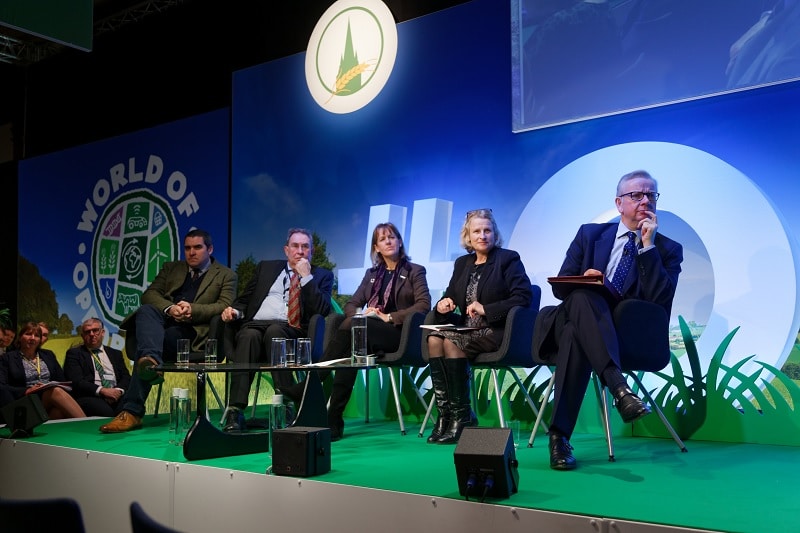
Minette Batters, President of NFU, gets update on Agri-Tech

Agri-TechE

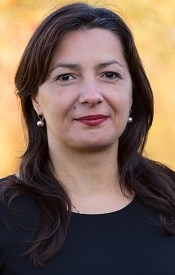
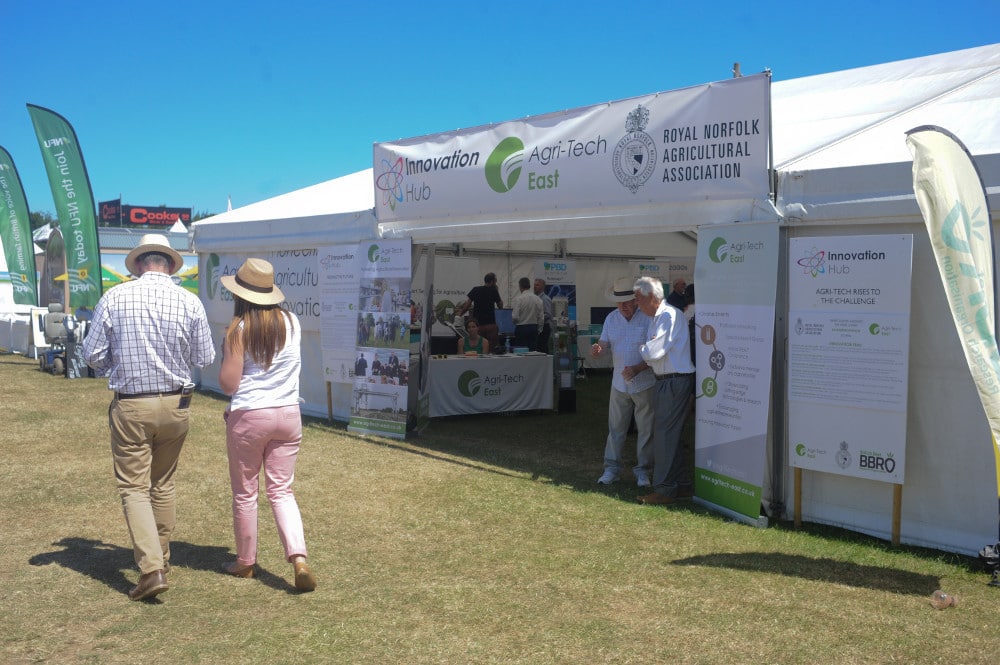
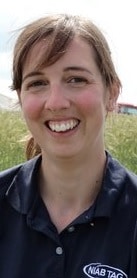
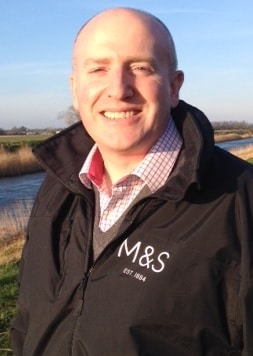
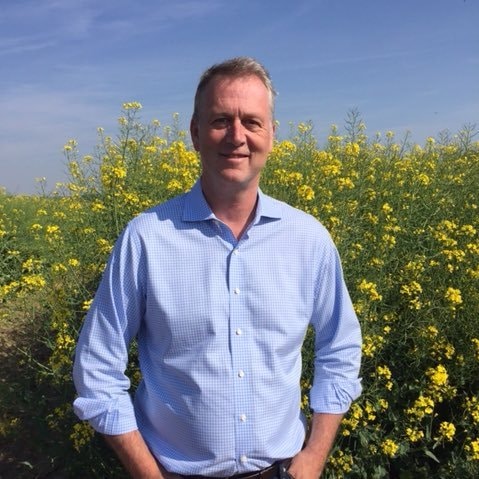
Minette Batters NFUIt was a pleasure to meet Minette Batters who has just completed her first 100 days as the NFU president.  We gave her a short tour of the Innovation Hub to show the diversity of technologies being developed here.

She later spoke to Chris Hill of the EDP and said that a key concern among farmers at the Royal Norfolk Show was business uncertainty.
“There has been a diversity of opinion here. A lot of people are embracing the opportunities and some are very nervous about what lies ahead.
“Farmers are a pretty resilient bunch and they are used to evolving. There is definitely going to be a change and it is a question of whether they are going to get on the train and embrace that change.”

BBRO electronic sugar beet
Vicky Foster says electronic sugar beet will provide new insights

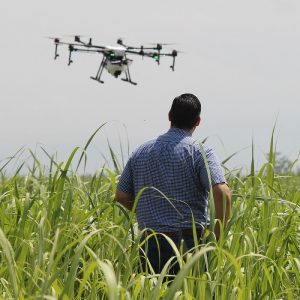
Innovations on show included ways of providing alerts to farmers through imaging, sensors and trackers that allow remote monitoring of plants and livestock and fine control of their environment.  These types of technology can make the incremental improvements that reduce risk and improve productivity.
Sponsors of the Innovation Hub, BBRO were showing an electronic beet that could be used to understand the impact of the harvester on sugar beet.
Vicky Foster of BBRO explained that some varieties  are more sensitive to handling than others.  Improving the design of the harvester informed by the electronic beet could reduce loss at harvest.


How does best practice become common practice?

Agri-TechE Blog
Agri-TechE

Innovation Insights at Cereals 2018 (web)

The season for agricultural trade shows, open days, field walks, demonstration farm visits, technical seminars, and other industry events is at its peak right now, offering a wealth of opportunities for farmers to see best practice in action. But how can we speed up the process by which best practice becomes common practice, and what are the barriers to be overcome?

It is widely hoped that innovation is the key to tackling this gap

As we outlined in our report last year, From Grass Roots to Blue Skies, there is a major productivity gap between the best-performing farms and the rest. While soil type, weather and other factors may play a role, the disparity between the Championship league producers and the farmers struggling to make a living is significant – but potentially addressable.
From Grass Roots to Blue Skies - a vision for agri-techIt is widely hoped that innovation is the key to tackling this gap. Among our membership alone we are seeing the development of novel sensors, imaging and positioning technologies, data platforms, robotics, automation, chemistries and engineering solutions, all of which are designed to improve efficiency, productivity and sustainability of the industry.
The theory suggests that the “early adopter” farmers will trial new methods, services, practices and technologies, and that their experiences will help trigger “spillover” into the mainstream industry. Suitably de-risked by someone else, perhaps with a recommendation by a trusted colleague and an “in-person” sight of something on another farm, means a farmer or cooperative is more likely to follow by example and be persuaded into investment and adoption of a new way of working.
Yet how effective is this spillover effect? How can it be accelerated and farmers given confidence in new research outputs and technological developments, especially when margins are so tight and there is so much uncertainty in the industry? A better mechanism is needed for helping incentivise this spillover without disadvantaging the lead adopters who have taken most of the risk.

De-risking innovation in agri-tech

As we discussed in last month’s blog, the public sector is looking to help de-risk this process and help innovation adoption be more widely accessible to more farmers and growers. Through its Industrial Strategy it aims to focus more on innovation adoption to increase productivity and boost farm incomes.
The creation of so-called “What Works” centres, organisations which almost literally kick the tyres of new innovations to assess their performance, has gained traction in other sectors. They are designed to help the public sector make better decisions based on evidence – one of which is the National Institute for Health and Care Excellence, which provides guidance, advice and even standards around the adoption of new pharmaceuticals and care practices by the NHS in the UK.
Of course, agriculture and horticulture are not public services, but the potential for such a centre to provide independent, evidence-based guidance on the latest new technologies and their efficacy would be a way to help inform and accelerate the adoption of new innovations by farmers. Happily, discussions are underway to consider the feasibility of such a centre for UK agriculture.

Independence is vital

Future systems need to help the best farmers get even better, while the rest also improve. This will be a combination of a few farmers making big step changes which will eventually filter across the wider industry, as well as lots of farmers taking smaller incremental steps.
Mechanisms to disseminate best practice, an independent centre to help farmers triage the myriad of new innovations, and most importantly, encouraging the continued role of farmers as trusted sources of information about new ways of working. That’s the future of knowledge exchange in agriculture.

Innovation Insights showcases growth of agri-tech cluster

Agri-TechE

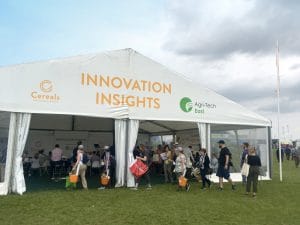
Cereals_2018_LogoJust four years after Agri-TechE launched at Cereals, we are hosting a new ‘Innovation Insights’ event at Cereals 2018. Around 30 of our member organisations from across the value-chain will be giving two-minute elevator pitches, providing a snapshot of how the diverse cluster has developed.
Director Dr Belinda Clarke comments: “Agri-TechE was established with the recognition that to create true innovation you need to provide novel solutions to industry problems. By bringing scientists and technologists from different fields together with potential end-users and industry experts we have facilitated the rapid growth of a thriving agri-tech sector.
“Our membership is now national and international and we are particularly delighted to see so many early stage companies and young entrepreneurs attracting the interest and support of the farming community.”
Antony Yousefian is the Director UK of the international smart sensing company 30MHz, which now supports a number of clients in the sector; however his knowledge of farming was initially very limited.
“Agriculture is not like any of other industry; it is incredible how Agri-TechE has really enabled our understanding and helped us to navigate the vast agriculture world. Innovation and the will to innovate is in abundance in UK agriculture, though sometimes it needs someone to light the match. This is what Agri-TechE does best and we are proud to be a member.”
Express Weather - Angshujyoti Das, CEOAngshujyoti Das, founder and CEO of Express Weather, came into contact with Agri-TechE when Dr Clarke presented at a conference at Hyderabad. It designs and implements weather stations.
He says: “Our Farmneed app is running successfully among Indian horticulture growers. We see a good opportunity for such a bespoke data and content delivery engine for the European and African markets where agriculture is facing tremendous risk from climate change. We were in search of an opportunity to understand more deeply and collaborate with the ecosystem, so meeting with Agri-TechE during mid 2017 came like a fortune. We are participating in ‘Cereals’ with open mind and eyes.”
It is particularly rewarding that younger entrepreneurs are seeing agri-tech as an exciting sector. Olombria was set up after a successful student project, and is developing an ‘alternative pollinator’ for the fruit industry.
Olombria - Tashia TuckerCo-founder and CEO Tashia Tucker comments: “We first got involved during the REAP conference last year and then joined as a ‘Seedling’ level membership. The support we have been given has been invaluable. It has helped us accelerate our knowledge of key organisations relevant to our work, and the diverse events that we have attended so far have introduced us to some key partners, expanded our understanding of different funding mechanisms as well as facilitated media exposure that has allowed us to reach a wider audience.
“We are looking forward to taking part in the Innovation Insights event during Cereals 2018 and the opportunity to discuss our work with the other attendees.”
Agronomex - Pascale MartinPascale Martin of start-up Agronomex participated in the GROW agri-tech business plan competition, which provides mentoring and support for entrepreneurs with a strong business concept. Pascale was one of the finalists in 2017 and pitched to potential investors and partners her plan for an online B2B fruit and vegetables marketplace.
She says this was the springboard she needed: “Agri-TechE has been very supportive, providing feedback and making introductions. Additionally, through the events organised over the year, it has created a unique ecosystem that has facilitated communication between the different actors of the industry, which is extremely important for a young company like ours.”
There will be an opportunity to hear from a wide range of members at the Innovation Insights marquee on Day 1 of Cereals, Wednesday 13th June, from 3 – 5 pm.
Find out more about Innovation Insights at Cereals 2018 here.
You can also see what we did at our launch at Cereals 2014 here and here!

Sugar beet research refines the sweet spot

Meet the Network
Agri-TechE

Vicky Foster, Head of BBROSugar beet is grown in East Anglia and East Midlands and is used as an ingredient in foods, beverages and pharmaceuticals with co-products used for animal feed and bioenergy. Yields have increased by 25 per cent over the last ten years and this has been achieved with the invaluable support of the British Beet Research Organisation (BBRO), a levy organisation that implements and commissions research specifically for the UK sugar beet industry.
Vicky Foster has recently joined as Head of BBRO and she brings a wealth of expertise from her previous role at AHDB. We caught up with her and asked her a few questions about her new role and plans for BBRO.
Q. You have recently been appointed Head of BBRO, but before this you were Head of Research & Knowledge Exchange Programme Management at AHDB – what attracted you to BBRO?
VF. I have a real passion for science; translating this new knowledge so it delivers valuable information on farm and makes a real difference to growers is what drives me. The opportunity to lead the BBRO at this key time for the industry is very exciting.
During my time with the AHDB I saw many changes, particularly in the way the knowledge exchange programme developed to incorporate a wide range of different mediums and a much more targeted approach, and also how partnerships and collaborations with other organisations can be nurtured to deliver better value for levy payers.
I believe the BBRO is a leading player in the industry but there areas where there is scope to further improve the service it can offer and I am keen to be part of that and to contribute to an organisation that is valued and has a positive impact.
Sugar beet seedsQ. Sugar beet is the only UK crop that has seen yield improvement year on year. Can you give some examples of how BBRO has helped the industry achieve this?
VF. The significant investment made by the BBRO into the Recommended List has been key to yield improvements. This is a jointly funded activity with the British Society of Plant Breeders and aims to test the genetic potential of new varieties under a range of different UK conditions. Whilst the trials do not necessarily follow on-farm practice, their purpose is to push the system to see what can be achieved. Although investment in breeding programmes and new varieties is vital in delivering increased UK sugar beet yields, this is only part of the picture, without the underpinning agronomy and new knowledge that BBRO has delivered in this area we would not be where we are today.
Research into crop protection and crop nutrition, testing new products and technologies, and a better understanding of crop physiology have all played a key role. For example, in the last couple of years we have also been focussing on minimising losses through a better understanding of damage that occurs during harvesting and storage, an area, which hasn’t had as much attention as it merits.
Sugar beetQ. BBRO has recently introduced a new approach to field trials to allow closer engagement with farmers – please can you explain this and how it is going?

VF. The BBRO demonstration farms is a new concept that is just entering its second year. The main objective of these sites is to be able to demonstrate some of our research and new technology on a real farm situation and encourage growers to understand more about benchmarking and yield potential. They are not designed to provide huge replicated field trials but to provide smaller robust experiments and a platform for engagement with growers and to allow us to have a ‘look and see’ at some new proof of concept principles in a low risk and cost effective way. We have one demonstration farm in each sugar factory area giving us contact points across the main beet growing areas. It is well known that peer to peer learning is some of the best and we believe that by getting closer to the growers in this way we can help facilitate that.
Q BBRO is sponsoring the Innovation Hub at the Royal Norfolk Show – what will you be showing?
VF. Innovation is key to a successful future and innovation in how we farm and produce our food must be at the top of the list. BBRO is very pleased to be sponsoring the Innovation Hub again to demonstrate to the general public and other industries how British agriculture is leading the way. We will be demonstrating our new electronic beet that is helping us to better understand some of the stresses on the beet during harvest. We can put the electronic beet through the harvester, follow its progress and collect real time data. From this we can identify the key pressure points, information which can be fed back to the manufacturers for future development or used to refine machine settings in the field to reduce damage. Looking forward is there something that you see as really exciting for the industry?
I believe we are entering really exciting times with our ability to link improved crop modelling and forecasting with new technologies, with this we will be in a better position to provide bespoke information that can be used at an individual farm level.
More information about the Innovation Hub at Royal Norfolk Show (27-28 June 2018).

Timely farming at the Innovation Hub, Royal Norfolk Show

Agri-TechE

It is time for change – acting fast and making minimal interventions can reduce the use of inputs such as water, fertiliser or plant protection, and can also enhance animal welfare. The Innovation Hub at the Royal Norfolk Show (27-28 June 2018) is looking at ways that technology can provide alerts to farmers, from monitoring livestock behaviour to detecting disease, and how new knowledge about genomics can be used to accelerate plant-breeding programmes and improve the resilience and nutritional value of our food crops.
The Hub, sponsored by the British Beet Research Organisation (BBRO), brings together members of Agri-TechE – a diverse group of technologists, farmers and researchers – to provide an insight into how new thinking is helping to overcome the challenges of feeding more with less.
On show:
Electronic sugar beet measures harvester damage – by monitoring growth patterns, disease pressures and crop recovery, BBRO is helping sugar beet growers build upon the astonishing yields of 2017-18. A highlight at the show is the announcement of the winner of the Beet Yield Challenge at 14:00 on the 27th June.
From flight to fight in 24 hours Hummingbird collates and analyses aerial imaging from satellites, drones and fixed wing aeroplanes, alerting farmers to variations in crop development, nitrogen deficiency or disease risk. It will demonstrate how this is enabling action before there is an impact on the crop.
Crops have feelings too – we get stressed when conditions are too hot or cold, but how about your crop? 30MHz has developed a smart sensing toolkit that captures the microclimate at crop level. This information is crucial for the decision making to enable timely delivery of the right nutrients and irrigation and for 30MHz in the Exhibitiondisease prevention.
Soil loss no longer a dirty secret – underground activity of microbes and earthworms is vital for soil health and resilience to adverse weather. Niab will showcase traditional and novel ways to enhance the insurgence of these activists.
Proven disease free in hours – regular monitoring of cattle health, especially before transport, could be a powerful way to prevent the spread of bovine TB and Johne’s disease. PBD Biotech has created a rapid, precise test that can be used to identify both of these economically important diseases from a simple blood test.
System to follow the herd – the Movetech Telemetry technology, developed by University of East Anglia scientist Dr Aldina Franco, tracks and monitors normal animal behaviour so farmers and animal conservationists can build patterns and identify abnormal behaviour. See it in action at the Hub.
Robot eye sees more – walking the fields to see the progress of their work is now in the past for breeders with the aid of computer vision. Earlham Institute will show how its technologies CropQuant, SeedGerm and AirSurf are utilising state-of-the-art computer vision, image analysis and machine learning to aid plant breeding.
Better spuds for year-round chips – crisps and chips are eaten 24/7 but the potato has a fixed growing season and it is highly vulnerable to late blight, which can decimate the crop in a few weeks of cloudy, wet weather. The Sainsbury Laboratory is looking at wild relatives of our humble spud to discover new sources of disease resistance to protect the crop.Fruit - Saving waste in horticulture
Eat yourself well – all living things need fuel, and both humans and animals get their fuel from plants. The John Innes Centre is working to understand how plants, such as wheat, use, store and produce nutrients. Game-changers include: a variety of wheat that is bio-fortified with iron (1 billion people suffer from iron deficiency worldwide); a purple tomato that boosts the nutrients in your pizza topping; and a resistant starch that could help tackle diabetes.
More information about the Royal Norfolk Show.

On the Innovation Trail at the Royal Norfolk Show

Agri-TechE

The Tenstar Tractor Simulator will be on the Innovation Trail at the Norfolk Show
The Tenstar Tractor Simulator, courtesy of Easton Otley College

A simulator for tractor training, the world’s biggest beet eater and a virtual sheep wrangler will be among the highlights of a unique Innovation Trail that showcases technology being demonstrated at the Royal Norfolk Show on 27-28 June 2018. To add some fun there will be a challenge to see who can find all the tech stands and tweet a selfie using #AgriInnovation – can you catch ‘em all?
The trail culminates at the Innovation Hub, where there will be an opportunity to see a selection of latest research and developments hosted by Agri-TechE and sponsored by the British Beet Research Organisation (BBRO).
Director of Agri-Tech, Belinda Clarke, said: “The digitisation of farming is making it an attractive career choice, especially for those who don’t want to be working in an office all the time. With the Innovation Trail and Hub we are showing why agri-food is an exciting industry and how technology has the power to deliver improved productivity for farmers.
“Within the Innovation Hub we are featuring emerging technology that can help farmers make faster decisions or incremental interventions that can reduce inputs, enhance animal welfare and improve efficiency so a great finish – or starting point – for the trail.”
From fundamental research in the Hub to market-ready technology in the field, the all-new Innovation Trail will include:
State-of-the-art Beet Eater – British Sugar shows off the world’s first 9-row tanker sugar beet harvester. The Beet Eater 925 is capable of topping, lifting, cleaning and transporting sugar beet at around three hectares of sugar beet per hour.
The Tenstar Tractor Simulator – Easton and Otley College brings the simulation technology used by surgeons, pilots and astronauts to the tractor training-field. Regardless of bad weather, student-drivers can practice on their own, without the need of instructors.
The forefront of farm machinery – Norfolk Farm Machinery Club will roll out their robotic tractors, camera-operated automatic hoes, a new self-propelled sprayer and many more innovations besides!
Driverless vehicles and drones – Harper Adams University will profile the first project in the world to plant, tend and harvest spring barley with only autonomous vehicles and drones. The ground-breaking ‘Hands Free Hectare’ project is run in partnership with Precision Decisions.
Looking to the future – Savills will provide an insight into what we could expect from the major restructuring already taking place within UK agriculture.
Efficiencies at your fingertips – Brown & Co’s latest software and services can help you stay ahead of the curve and locate your sheep. See if you can find them.
Established innovators – Ben Burgess, one of the most established names in agricultural equipment, will share their experience and insights into the latest machinery on the market.
The Innovation Trail will culminate at The Innovation Hub, where Agri-TechE members will be highlighting technology that can provide alerts to farmers, from monitoring livestock behaviour to detecting disease, as well as new knowledge about, for example, how genomics can be used to improve the resilience and nutritional value of our food crops.
Dr Vicky Foster, Head of BBRO, sponsors of the Innovation Hub, commented: “The Royal Norfolk Show offers the perfect forum for farmers, producers and big business to come together and discuss the innovations that they can then put into practice on the ground. The BBRO through its research and knowledge exchange has helped the industry deliver year on year improvements in yield, and we wanted to support others in the agri industry to be as productive as they possibly can be.”
Royal Norfolk Agricultural Association Show & Programmes Director Mark Nicholas added: “The Innovation Trail adds a fresh dimension to the cutting-edge agricultural technologies that we profile at the Show each year, expanding on our regular Innovation Hub. We hope the Trail, with stops across the Show, will really add to showgoers’ experience and exploration of the showground – especially with more going on than ever before.”
More information about the Innovation Trail is available in the show guide or from the Agri-TechE Innovation Hub at stand 271. To be in with a chance to win, showgoers should tweet a selfie with each innovation using #AgriInnovation.

Innovation Insights at Cereals – an overview of agri-tech

Agri-TechE

CerealsDo you want a quick overview of the latest, exciting agri-tech that is emerging in the UK?

This year Agri-TechE and Cereals are partnering to host Cereals’ first ever ‘Innovation Insights’.
Agri-TechE has challenged its members – farmers, technologists, researchers – to summarise their new products, services or research interests in a series of 2-minute lightning presentations.
The independent organisation is building a business cluster to facilitate innovation. Director of Agri-TechE Dr Belinda Clarke explains: “By bringing in new players, many of them from outside the industry, and making it easy for them to network with potential end-users, we are seeing new solutions to intransigent problems and accelerating the rate of adoption for new technologies.
“Cereals is a great opportunity for our members to extend this dialogue and find potential partners and customers. Innovation Insights offers an opportunity to see a snap-shot of the latest developments.”
The new feature comes as a direct result of feedback from the farmer advisory board. As event director Jon Day explains:  “We’ve been working closely with both the exhibitor and farmer advisory board to ensure this year’s event delivers what the industry needs. One of the overwhelming pieces of feedback we have received is the need for increased innovative content.” The  introduction of Innovation Insights meets that need.
Come and join us at 3pm on Day 1 (13 June) in the Innovation Insights Marquee in the centre of the crop plots with AHDB (stand 467) and meet the innovators!

  • 30 MHz – allows real time information about the crop growing environment or storage conditions to be collected automatically from wireless sensors.
  • Agrimetrics – a catalyst for new data solutions across the agrifood sector.
  • Agronomex – provides improved procurement of fresh produce through an integrated sourcing system.
  • Eastern Agri-TechE Innovation Hub – offers farmers more value through novel waste solutions.
  • Express Weather – delivers bespoke weather reporting to improve risk assessment.
  • Fieldmargin – a digital farm map and log book that makes it easier to record and communicate tasks.
  • Germains Seed Technology – improving seed performance with technology.
  • G’s Fresh – using multiple data sources to improve prediction of demand and timing of harvest.
  • Hutchinsons (Omnia) – collates soil, crop and yield data as multi-layered field maps to provide improved decision support.
  • John Innes Centrecombating important combinable crop losses by combining expertise in Brassica genomics, high-throughput phenotyping, bioinformatics and mathematical modelling of biological processes.
  • KisanHub – captures data from trials research and communicates it in real time to researchers and farmers.
  • Map of Agriculture – providing customer insights and market intelligence for agriculture.
  • Niab – improving root development in wheat to enable better yields with reduced inputs.
  • Olombria – using chemical volatiles to persuade flies to become better pollinators.
  • Outfield – low cost, accurate surveys of land use to deliver high resolution maps for farm management.
  • Prodata – creates alerts and warnings by rapid processing of field data to, for example, improve irrigation or better estimate harvest dates.
  • Rothamsted Research – using earthworms as indicators of soil health.
  • Sentry – uses the latest technology to encourage experienced farm managers to innovate and improve returns.
  • Smart AKIS – collating and disseminating updates on smart farming technologies such as robotics.
  • Stable – helping dairy, livestock and arable farmers manage volatile prices and input costs.
  • Timac Agro – offers a unique type of phosphate that offers improved availability.
  • University of Cambridge; Rural Business Research benchmark your farm performance
  • University of Essex – improving photosynthesis and water use efficiency in wheat and barley
  • University of Hertfordshire – a new prediction system for powdery mildew that gives growers 48 hour warning.
  • University of Lincoln transforming farming with robotics and artificial intelligence.
  • Weather Logistics – state-of-the-art seasonal forecasts providing local insights into flood risk and drought
  • Yagronegotiates better prices for agri chemicals through price checking and benchmarking.

Also visit our members on stands at the show – list of exhibitors here. 
More information about Cereals.

Ceres Agritech Knowledge Exchange Partnership to boost multidisciplinary agri-tech research

Agri-TechE

The agri-food research community across the East of England has received a boost with a £4.78m investment in the new Ceres Agritech Knowledge Exchange Partnership.

Ceres Agritech Knowledge Exchange Partnership
Ceres is the goddess of agriculture

The Ceres Agritech Knowledge Exchange Partnership is a three year collaboration between Universities of Cambridge, East Anglia, Hertfordshire, Lincoln and Reading and the research institutes John Innes Centre, Rothamsted Research and Niab (the National Institute of Agricultural Botany).
Dr Belinda Clarke, Director of Agri-TechE says: “The grand challenges in agri-tech require a multi-disciplinary approach and we hope that the establishment of Ceres will facilitate this.
“Collectively the research base has considerable capability in fields such as nutrition,  genomics, biologics, informatics, artificial intelligence, satellite imaging, sensors and remote sensing, diagnostics, meteorology, precision farming, but all too often these specialisms reside in silos.
“As a independent business-led membership organisation, we look forward to working with Ceres to ensure emerging agri-tech is fit for purpose and it can be rapidly adopted by industry.
“Innovation requires a framing of the problems in a way that makes it possible for all stakeholders, particularly endusers, to provide direction and input.  The growing agri-tech cluster enjoys the involvement of all elements of the agri-food value chain –  from producers through to retailers – this makes it an ideal test-bed for new thinking coming out of research.”
More information about Ceres available here
Note: The Ceres funding is part of an investment of £67 million through Research England’s Connecting Capability Fund in new collaborative projects to drive forward the commercialisation of university research across the country.

Chance to shape Defra funding for agri-tech

Agri-TechE

Ben Rayner, Defra
Ben Rayner, Defra

Agri-TechE is hosting a Defra workshop on 24th April that provides an opportunity for everyone with an interest in agri-tech to help shape the future delivery of funding.
The aim is to gather views on the current delivery options, the lessons learnt and the value achieved and to look at ways to improve in the future.
Ben Rayner of the Food Chain Innovation Team at Defra comments: “We are keen to hold this workshop with Agri-TechE to establish relationships and gain feedback from a wider stakeholder group.
“We are hoping this session will provide views, input and data on possible delivery options for future agri-tech R&D and identify potential synergies and other resources.
“We have this opportunity to innovate and a greater diversity of views will provide challenge for our thinking and better solutions going forward.”
The Secretary of State Michael Gove outlined the government’s vision for agriculture in a speech to the Oxford Farming Conference in January. This provided a taster of the Government’s Command Paper on the future of farming, which has recently been published.

In summary, the four key areas of his address were:

  • Develop a coherent policy on food that integrates the needs of consumers, agriculture businesses, the environment, public health and other enterprises.
  • Give farmers and land managers the tools to prepare properly for the changes that are coming.
  • To use the concept of ‘public money for public goods’ to create a new method of financial support for farmers that rewards good stewardship.
  • To ensure that natural capital thinking is built into the government’s approach to promote good decision-making over land use and sustainable management of assets.

The workshop will bring delegates up to speed on the latest policy developments and provide an overview of possible new incentives for industry to invest in innovation and new technologies to increase their profitability.

These proposals could include:

  • Collaborative grants for R&D funds
  • Catalyst projects
  • Research through industry focused PhD fund
  • Capital Investment

The workshop will be held immediately before the Pollinator “Trust, Provenance and Blockchain – impacts and opportunities for agriculture” on 24 April at the Sainsbury Laboratory, University of Cambridge, Bateman Street, Cambridge CB2 1LR
To register for the workshop. 
Delegates are welcome to attend one or both of the events, note there is a charge for non-members to attend the Pollinator.

Useful sources of information

Government consultation ‘Future for Food, Farming and the Environment’

Blockchain generating confidence with smart contracts

Meet the Network
Agri-TechE

Marcus de Wilde, Applied BlockchainFood fraud could be losing the food and drink industry up to £12bn annually, according to a report by NFU Mutual (2017), and high profile cases of deliberate substitution of and tampering with food has impacted consumer confidence.
A technology called blockchain, which provides a secure audit trail for transactions in the food value-chain, could be a way of proving the provenance of products, and this is the theme of our 24th April Pollinator networking event.
Marcus de Wilde is Enterprise Lead at Applied Blockchain, an application development company focused on distributed ledger technology and smart contracts. He is one of the speakers at the event and explains that blockchain technology supports trust and transparency within the agri-food industry.
“Smart supply chain technology can provide confidence on a number of levels,” Marcus says. “For example, I had a recent conversation with a client who has fisheries in his portfolio. This got me to consider the value of traceability from the point of view of ethical sustainability and tackling the issues of foodborne illnesses as well as the practical problem of how to add a fish to a blockchain!”
Blockchain technologies give users a way to create a time-stamped, tamper-proof record of all transactions or ‘data events’ that occur between participants on a network.
Cannabis fieldMarcus gives an example: “One of the applications I’m going to talk about is the use of blockchain in North American cannabis cultivation and distribution. Here blockchain is being used to meet the demands of regulators, consumers, supply chain relationships and financing outside of traditional banking systems.
“Agriculture is all about the supply chain; this touches on the work of producers, commodity traders, warehouses, financiers, insurers, logistics – and that’s before you even begin to think about the consumer.
“I’m working with a number of clients in agriculture and I think this case-study will map well to the type of problems and use cases that the industry is tackling.”
Marcus explains that blockchain is well suited to traceable products although there is still a requirement for external technological infrastructure to help achieve this.
“Blockchain creates a data source that is ‘trustless’ where, in place of a centralised authority, data is validated through the consensus of the crowd.
“There are lots of opportunities to help companies and producers in agriculture consider how to optimise their operations and consider new business models.
“At Applied Blockchain we’ve worked on individual problems across all of these and are eager for the chance to ‘join the dots’ across a single supply chain.
“There is even more that blockchain technologies are capable of and I look forward to discussing these at the event in April.”
Applied Blockchain‘Trust, Provenance and Blockchain – impacts and opportunities for agriculture’ is being held on 24 April 2018 at the Sainsbury Laboratory, Cambridge – see more about the Pollinator on our events page.
Read the NFU Mutual report on their website here.
Visit the Applied Blockchain website here.

Business Secretary Greg Clark announces £90 million for agri-tech

Agri-TechE

Greg Clark MP
(Parliamentary copyright images are reproduced with the permission of Parliament)

A new £90 million investment to make it easier for farmers and agricultural supply-chain businesses to embrace technology and innovation has been announced by the Secretary of State for Business, Energy and Industrial Strategy Secretary the Rt Hon Greg Clark MP. The funding will help to bring together the UK’s world-class agri-food sector with expertise in robotics, AI and data science.
Clark revealed the exciting news in his keynote address at the National Farmers’ Union conference, saying:
“As part of the Industrial Strategy, we announced a Transforming Food Production Challenge and I’m delighted to announce the government will invest £90 million to make this challenge a reality.
“This will include the creation of ‘Translation Hubs’ bringing together farmers and growers businesses, scientists and Centres for Agricultural Innovation to apply the latest research to farming practice.”
The Business Secretary highlighted Rothamsted Research’s CROPROTECT app and Ordnance Survey’s satellite mapping as being particularly beneficial to farming and food production.
“The agricultural sector is the biggest industrial sector in the UK,” Clark told the conference attendees. “Employing almost 4 million people, it is larger than the automotive and aerospace sectors combined.
“For your unique role in stewardship and in feeding the nation like big industry, you need to be profitable and we need to help make the conditions right for investment in the future.
“With the technological revolution that is happening, the skills of the farming workforce need to keep pace. New technologies require new abilities and today’s modern British farmer is a Swiss-Army-Knife of skills. An engineer, an environmentalist, a data scientist a biochemist, an energy producer, a tourism entrepreneur, and an investor too.”
UK Research and Innovation will shortly open a new expressions of interest call for more industry-led challenges that will form part of the next wave of the Industrial Strategy Challenge Fund.
Government investment will help to support the agri-food sector by:

  • Creating new Challenge Platforms to bring together business, farmers and academics on priority research projects
  • Supporting Innovation Accelerators to explore commercial potential of new technology
  • Demonstrating innovative agri-tech projects and how they will work in practice
  • Launching a research programme to identify and accelerate international priorities and export opportunities for pioneering technologies

“I have known all my life that farming is foundational not just to our economy, but to our country,” said Clark. “Providing the food and drink we live on and stewarding the countryside that is so much part of our national and local identity means there is no more essential industry.”
Read the full announcement on gov.uk here.

Working with scientists – Andy Cureton of BBSRC explains how

Agri-TechE

Andy CuretonAhead of our Pollinator event “Finding the Funding”, we asked speaker Andy Cureton, Head of Business Engagement of BBSRC, to explain how the organisation – which is a major strategic funder of the biosciences – supports business.

Q. Has the way that the BBSRC works with business changed over the last three years? Can you give some examples of its approach and how the relationship has developed?

BBSRC has a long track record of working with businesses within the agriculture sector and more importantly making sure business are able to work with the universities and the research institutes that we invest research funding in.

Engagement between academic researchers and business, not only ensures that research, from its earliest stage is relevant to business’s needs, but also helps to accelerate the translation of the outcomes of research projects into new products, processes or practices that benefit business.

Over the last few years we have been looking at different approaches to enable engagement. We have supported the establishment of networks to bring together researchers and businesses to better understand and address industry relevant research challenges, for example ARCH-UK for the aquaculture sector.

We have also actively involved Businesses in the scoping of research projects through ‘Sandpits’ ensuring much closer alignment between business need and research.

Q. Science is about asking big questions, innovation is about solving problems in new ways – could it be argued that there is potentially a important role for scientists to be used more as experts within the innovation process rather than trying to ‘translate blue sky research into business’?

Scientists have a role to play throughout the innovation process and researchers we fund have a responsibility to enable benefit to arise from the research they carry out. This can happen in a variety of ways, for some this may be translating blue skies research into business in other cases it may be ensuring policy makers are aware of research outcomes that can inform policy development. 

There is also a really important role that scientists can play in knowledge exchange, informing the development of innovations based on the broad base of expertise they have gained from their research. Knowledge Transfer Partnerships enable academics and businesses to work together in this way and have been successful in the agriculture sector.

Q. Many innovative farmers would like to work more closely with researchers – does the BBSRC support this and do you have any success stories to share?

BBSRC is looking at what its role should be in enabling researchers and farmers to work together. As a Research Council we support research at its earliest stages but alongside that we do have a responsibility to ensure that research we support benefits society. 

As a part of this we have been working with Innovative Farmers and looking at their Field Lab model as a way of supporting greater engagement between the academic researchers we support and farmers. Not only does this enable farmers to access academic research expertise but it also informs further research opportunities.

For example, an Innovative Farmers project looking at helping hens get more protein from eating insects while they range has informed a research project between Bristol University and Stonegate which has received £500,000 funding from BBSRC.

Q. Much of science research is not accessible to non-academics as it locked behind the paywall of publications – does the BBSRC recognise this as a problem? Is it trying to make research more accessible?

BBSRC, along with other Research Councils, is fully committed to making the outputs from its funded research publicly available. All researchers that we fund have to comply with an open access policy meaning that there must be unrestricted, on-line access to peer-reviewed and published research papers. Beyond this policy we work with other partners such as AHDB who we have worked with to disseminate research outcomes from horticulture research projects. Information on all grants funded by the Research Councils and Innovate UK alongside the outcomes of the research are available on Gateway to Research (http://gtr.rcuk.ac.uk).

SMART-AKIS workshop: Finding the Funding – The Research and Business Guide to Smart Agri-TechE Finance
King’s Lynn Innovation Centre, Innovation Drive, King’s Lynn, PE30 5BY, 22 March, 2018