Policy priorities for UK agri-science and innovation

Agri-TechE

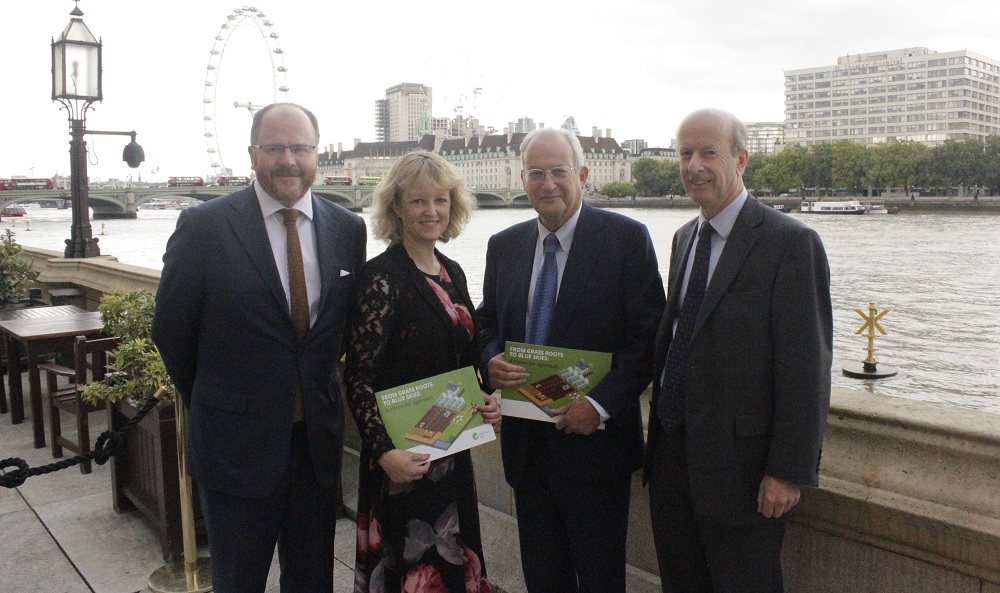
Agri-TechE is joining AHDB and NFU in providing expert input to the next meeting of the All-Party Parliamentary Group on Science and Technology in Agriculture, the meeting is focussing on the policy priorities for UK agri-science and innovation.

APPG Science and Technology in Agriculture
(Parliamentary copyright images are reproduced with the permission of Parliament)

The APPG on Science and Technology in Agriculture provides an important forum for debate among UK politicians and stakeholders and seeks to identify any policy, knowledge-based or regulatory barriers to its development and application.
A number of recent industry reports have sparked calls for a revolution in UK farm productivity and efficiency, and a new vision to ensure the effective delivery and uptake of on-farm innovation.
The expert speakers include:
Tom Hind, Chief Strategy Officer at AHDB – the Horizon report Driving productivity growth together sets out a five-point plan to drive growth in UK agricultural productivity.
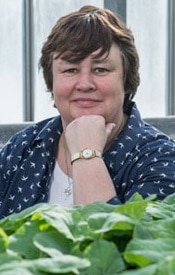
Dr Belinda Clarke, Director of Agri-Tech – its report From grass roots to blue skies: A vision for agri-tech suggests that the current production model for UK agriculture is not sustainable economically or environmentally, and sets out a new vision for the agri-tech sector.
Dr Helen Ferrier, Chief Science and Regulatory Affairs Adviser at NFU to provide a farming industry perspective and report on the outcomes from workshop organised jointly with Rothamsted to explore R&D priorities for UK agriculture.
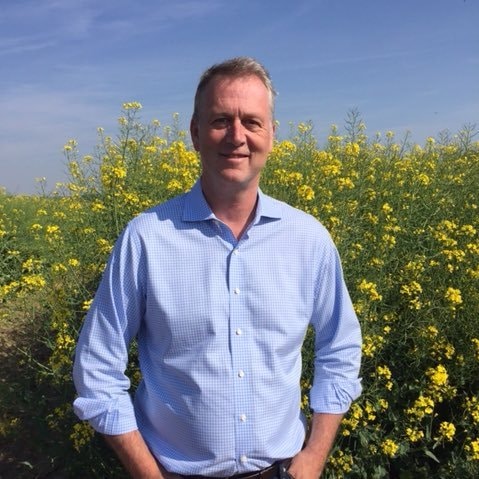
Professor David Leaver – whose original report for the APPG on R&D priorities in UK agriculture was instrumental in helping to make the case for the Agri-TechE Strategy. Professor Leaver is to offer some personal reflections on the progress made in addressing the key recommendations in his 2010 report.
Belinda comments: “It is privilege to be given the opportunity to address the APPG and a great opportunity to put forward our vision for the agri-tech sector. Science and innovation has a critical role in the future of the agri-food sector and I am looking forward to meeting the group and hearing their input and questions.”

REAP 2017 report: Today’s knowledge meets tomorrow’s technology

Agri-TechE

Land is finite, so the big question is how best to manage this precious resource to provide enough nutritious food for our population – not just in this decade, but generation after generation.
REAP 2017 approached this issue from a number of perspectives and despite the huge challenges facing the industry, the mood was one of optimism, with an impressive dialogue about the emerging science and technology that is swelling the innovation pipeline.
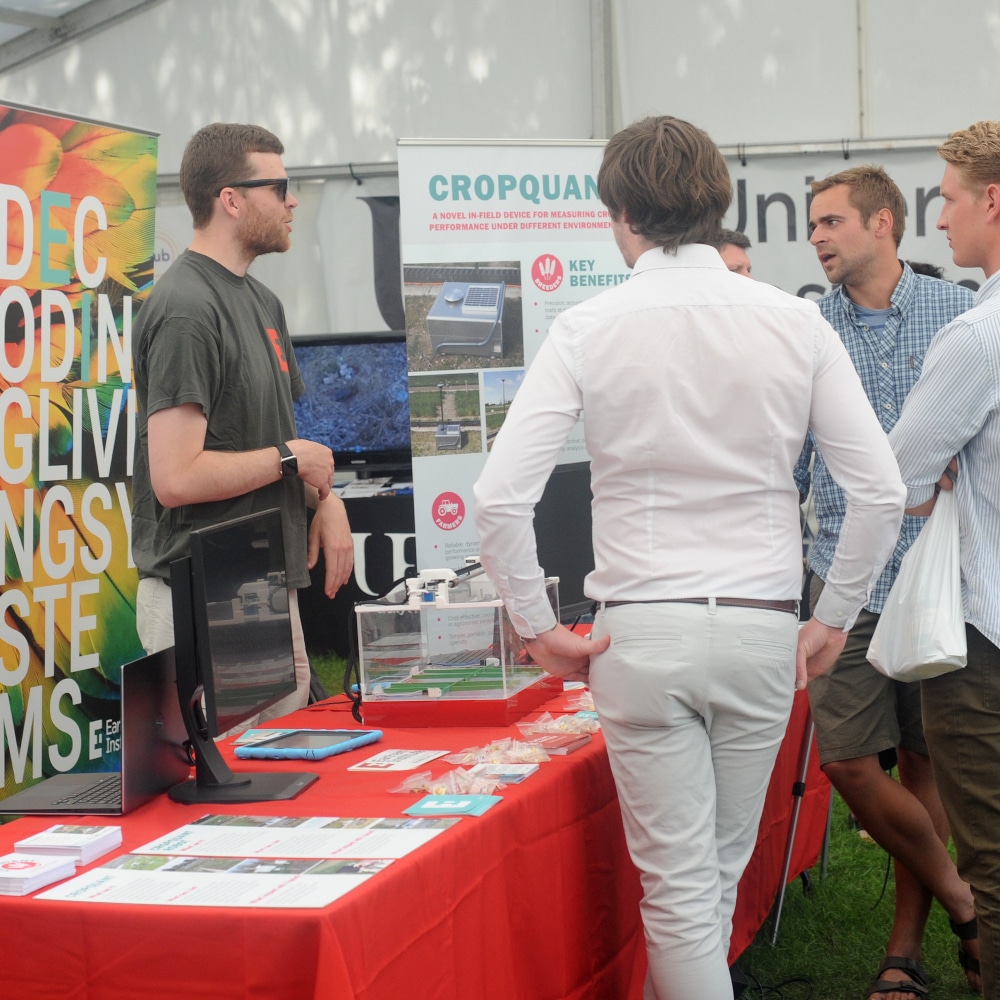
REAP 2017 - Different perspectives, same goalThe Start-Up Showcase was again a highlight of the conference and the supporting technology exhibition profiled a number of early stage companies that have shown significant progress over recent years.

The wrap up session was a lively debate on the sofa.
We have attempted to capture this energy and enthusiasm in the REAP report and look forward to hearing your views and feedback on what to include in this year’s conference.

REAP 2018 will be on 7th November 2018. 

Rate of change accelerating 

Maria Giraudo and Belinda Clark at REAP 2017
María Beatriz Giraudo, Argentinian farmer and proponent of no-till, brought an international perspective to the debate.

Comparing this conference to our first REAP in 2014, it is clear that the revolution in agri-tech is already well advanced. However, Brexit and the uncertainty it creates has become another driver for an even faster rate of change. The only thing that is certain is that change is underway.
This is why at Agri-TechE we create an environment for farmers, producers, technologists, researchers and investors to get together to help shape the direction of change to enhance the productivity, profitability and sustainability of the sector.
If you would like to get involved as a member of Agri-TechE or attend one of our events do get in touch.
You can read the report online here, or download the pdf directly here.

Using AI to fix fractured value chains: a path best tackled facing forward

Meet the Network
Agri-TechE

Matthew Smith, Microsoft ResearchMatthew Smith was an ecologist before he joined Microsoft to lead the development of new predictive models for environmental systems, he spoke to us a couple of years ago and in that time the digitisation of agriculture has gathered momentum.
We caught up with him ahead of the Pollinator “The AI’m of machine learning” to ask him how he sees things developing.
Q. What do you think have been the most important developments in the ‘digitisation of agriculture’ since you last spoke at an Agri-TechE meeting?
Probably the establishment of the UK centres of excellence in agri-tech. I think we’ll look back at those and see them as hugely important early incubators for much of the improvements we see in the field and further up the supply chain. Beyond that, the roll out of the multiple flavours of agri-tech services as genuine businesses or applications, rather than just ideas. Thinking here about agri robots, aerial image analysis and connected livestock.
Q The market seems to be consolidating – Do you think there is still an opportunity for young innovative companies to create businesses or is it best for them to concentrate on interoperability with the dominant platforms?
I think there are more innovation opportunities than there ever were. The prevailing platforms should provide more opportunities for innovators; and that would be the sign of a good platform. Innovators should be more liberated now, as they will need to build less from scratch and can assume that many of the building blocks exist. Instead they should focus on creating new business capabilities that will deliver value.
Q What are you working on at the moment that is exciting you?
I’ve always been excited by information services for the food supply chain. Finding ways through which the right information can get to the right people, at the right time, in the right way. Right now that information supply chain still doesn’t exist, as it should. It is fragmented and inefficient. That is having a real impact on the health of our agri-food supply chains in terms of waste, price and sustainability.
Wonderfully, technology is approaching a maturity to make the information supply chains the world needs; harnessing things like cloud computing, IoT, AI and block chain. I have the privilege to be working on how to make such systems work, from both business and technical perspectives. It gives me a great sense of purpose.
Q Do you think the future is ‘farming as a service’ – with sophisticated contractors managing much of the work remotely – or do you think the technology will improve the decision making of farmers and enable them to offer new services/ use land more efficiently?
I think both will feature heavily in future and they will interact with each other in complex ways making it impossible to know how this will play out (no one knows!). “As a service” should give more time back to farmers and landowners to develop their business and their landscapes in direction they need to go. There are many aspects of farming and wider land management that don’t get the attention they should do right now.
We need to restore our soils, we need well-balanced landscape management, we need a broader societal appreciation of agriculture and rural landscapes. That said, the minute we develop our agricultural practices in a more sustainable, more well rounded, more diverse direction than can be automated the model for “as a service” changes – there are many more things to be accounted for.
What’s for sure: this is an unknown path we are all on, so it’s best tackled facing forwards.
Matthew Smith, Director of Business Development, Microsoft, will be presenting at the Agri-TechE Pollinator “The AI’m of machine learning in agriculture” on 20 February 2018 at The Sainsbury Laboratory, 47 Bateman Street, Cambridge, CB2 1LR.

The >sudo : grow hackathon

Agri-TechE

sudo hackathon3,2,1….HACK!   We’re mixing things up this year and instead of our national GROW agri-tech business plan competition, we’re going to be running an AgriTech hackathon in partnership with Allia Serious Impact 7-8 April in Cambridge.


(more…)

Save the date – Agri-TechE Week 2018

Agri-TechE

Agri-TechE Week 2018We are planning a great programme for this year, but in the meantime a huge thank you to everyone who hosted, organised or attended events for Agri-TechE Week 2017.
Events ranged from water catchments and metaldehyde, to adding value to horticultural waste, discussions about agricultural economics and tractor tyre innovations – we were so pleased to see so many people taking part in the week of activities.
It was an enlightening week and prompted many discussions.
Agri-TechE Week will run from 5-9 November 2018.

Follow the money

Agri-TechE

Follow the moneyFunding is complex and we aim to sign-post the best opportunities for Agri-TechE on our website in the funding section.

Together with Smart- AKIS we are trying to demystify the process with a dedicated networking meeting hosted  to present and discuss the different routes.
This includes presentations from:
Eastern Agri-TechE Growth Initiative – funding of between £10,000 to £150,000 for small and medium-sized enterprises (SMEs) in the regional agri-tech sector
Knowledge Transfer Partnership – a national programme that helps businesses improve their competitiveness and productivity through collaborative research with academic and research partners. The business partner must be capable of making significant use of the knowledge, skills and/or capability to be transferred
Innovate UK – funding for UK businesses to support the delivery of game changing or disruptive innovations with significant potential for impact on the UK economy.
BBSRC – allocates funding to research projects. UK’s bioscience research base receives £16.6 million from the Industrial Strategy Challenge Fund.
Douglas Bomford Trust – Funds individuals to help advance knowledge, understanding, practice, and competence in the application of engineering and technology to achieve sustainable agri-food systems.
More information about funding.
Top Tips from a previous Pollinator.
More information is available on the events page.
This event is help in partnership with Smart-AKIS

Looking forward

Meet the Network
Agri-TechE

Norfolk broads
As the Secretary of State for Environment, Food and Rural Affairs commented at the Oxford Farming Conference last week “…if we want to preserve that which we cherish – a thriving agricultural sector, a healthy rural economy, beautiful landscapes, rich habitats for wildlife, a just society and fair economy – then we need to be able to shape change rather than seeking to resist it.”
We start the year with a Pollinator that aims to help farmers understand how to cost and value – in financial terms – the natural capital assets they have and also the contextual specificity of the land use.  For example, would a reservoir in dry Norfolk be “worth” more than one on the Somerset Levels which is prone to flooding? And how can a farmer assign a real financial value to the benefits, both to the environment and the business, to that asset? Similarly wildflower margins that encourage pollinating insects – what quantified benefits can be seen for crop yield?
From the work that we have been doing we know that farmers face real difficulties in calculating (or even estimating) return on investment (ROI)  of some new practices or technologies, and this is a real barrier to their adoption and commercial integration into their business. Farmers have invested significant time and energy over the years into environmental stewardship – but how do they quantify the benefit of maintaining a healthy balance within the ecosystem? Join us at the Norwich Research Park on January 24th to discuss it. We’ll also be talking about agricultural audit systems using blockchain technologies at our Pollinator in April.
We are also looking forward to welcoming a new member to our team to help progress projects that will allow us to better understand these complex questions.
The desire for change is being underpinned by an increase in funding for innovation. According to Saville investment in agri-tech has increased from £50m in 2010 to £850m in 2016, this shows the confidence that the investment community has in the sector and of its increasing importance.
Improving the dialogue between producers, researchers, engineers and technologists to ensure that the agri-tech being developed is fit for purpose will be a continuing theme for us in 2018.
Our developing events programme for the year can be viewed here and our growing portfolio of industry reports can be viewed here.  As always it is your involvement that makes the difference so if you are ready to embrace and direct change then get involved.

Defra’s new farming rules for water drive need for valuing natural capital

Agri-TechE

DefraManaging the land to protect water quality will be one of the topics discussed at our January Pollinator meeting Counting the Cost, Value and Benefits of Natural Capital in Agriculture.
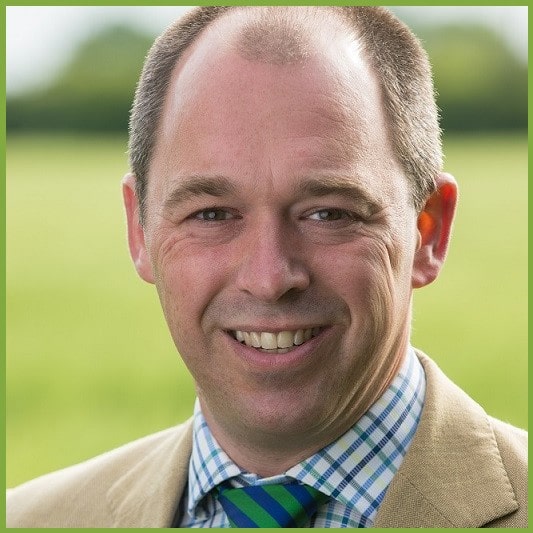
Speaker Professor Paul Leinster, Professor of Environmental Assessment at Cranfield University, is a member of the government’s Natural Capital Committee. Paul has been advising on how to value natural capital so that integrated farming systems that benefit both farmers and water companies can be incentivised.
The new rules, which come into force in April 2018, include a number of measures covering:

  • Usage – plan the use of manures and fertilisers and test for Phosphorus, Potassium, Magnesium, pH and Nitrogen levels in the soil at least every 5 years
  • Storage – organic manures must not be stored on land within 10 metres of inland freshwaters or within 50 metres of a well or borehole
  • Application – organic manures or manufactured fertilisers must not be applied if the soil is waterlogged, flooded, or snow covered or within 10 metres of water sources. Care taken to assess where there is a ‘significant risk of pollution’, eg slope of land, proximity to water courses, weather conditions
  • Protection against soil erosion – reasonable precautions need to be taken to prevent significant soil erosion and runoff from land management and cultivation practices (such as seedbeds, tramlines, rows, beds, stubbles [including harvested land with haulm], polytunnels and irrigation)
  • Positioning of livestock feeders – again should not be positioned within 10 metres of inland freshwaters or within 50 metres of a well or borehole within 10 metres of any inland freshwaters or coastal waters

If you can make an economic case for a change in land use, to reduce water pollution or minimise flood risks, then you can pay or charge an economic value for it.
For example, if a land owner agreed to accept flood waters this could protect residential properties. But how do you value changes in land management that provide benefits for other people? Would farmers be paid to provide this service?
Big data is now making it possible to do these types of calculations, creating a new way to assess the value of natural capital. David Burton of Natural England will be discussing this.
Our other speaker, Alice Midmer, IFM Manager at LEAF (Linking Environment And Farming), will be explaining new thinking in ‘Agro-Ecology’ which is focused on a more integrated approach that will take these issues into account.
Award winning arable farmer, Poul Hovesen, will also be talking about his experiences. Yields at Salle Farm are consistently and substantially above the national average, demonstrating how precision farming balanced with respect for the environment can also be profitable.
For more information see the event details.

Recommended Lists – chance to have your say

Agri-TechE

Recommended lists - have your sayAll breeders wait with anticipation for the launch of the AHDB Recommended Lists for cereals and oilseeds (RL) which are the result of extensive trials.  The presentation of the lists is continually being improved and the AHDB is seeking input on their clarity.
This year the Lists gained 22 new varieties including a new variety of biscuit wheat, Elicit, developed by Elsoms.  The Group 3 wheats have been under pressure in recent years with yields worryingly low. This has resulted in low supplies to the domestic and export markets, creating a competitive opportunity for producers.

New biscuit wheat

David Coop of Elsoms was delighted with the inclusion. He comments: “Elicit is new to the 2018/19 Recommended List and will help to fill this market segment. It offers a winning combination of high yields and disease resistance.”
The AHDB comments that of particular note is Elicit’s septoria rating, which is the highest of all the Group 3 varieties, and only exceeded by six varieties on the whole of the Recommended List. Additionally, Elicit has good resistance to other diseases, including yellow rust and brown rust. As a result Elicit also has the highest untreated yield of this group.
For winter barley, there were three new six-row winter feed varieties recommended for the advances they bring to this group. This includes one new conventional six-row feed variety, KWS Astaire, has been recommended. This variety combines good treated yield with a superb package of disease resistance and achieves the highest untreated yield, not only of the six-row feed varieties, but of the whole winter barley Recommended List.

Improving the RL

The AHDB is considering improvements to the way it presents its Recommended Lists and has a survey to gauge opinion of the current RL publications. For example the Winter oilseed rape varieties are presented on a single UK table for the first time with varieties differentiated by region.
AHDB Senior Crop Production Scientist, Dr Jenna Watts, said: “It is important to us that we listen to the people who use the Recommended Lists, to make sure that we continue to provide farmers, agronomists and industry with the best possible information and make the RL fit for the future.”
The survey can be found online at cereals.ahdb.org.uk/varieties
Summaries of the new AHDB Recommended Lists are available on the AHDB website at cereals.ahdb.org.uk/varieties.
A print edition of the AHDB Recommended Lists for cereals and oilseeds booklet will be distributed in Spring 2018

Ones to watch – Agri-TechE tipped by European Business Awards

Agri-TechE

European Business Awards One to Watch

We are delighted to announce that Agri-TechE has been selected to appear on the 2018 European Business Awards – Ones to Watch List for the United Kingdom. It is the only organisation involved in farming and agriculture and one of only 20 in the less than £5m turnover category.

The European Business Awards have been running since 2007 and previous winners include household names such as BMW, IKEA, Zurich and Leroy Merlin. But the awards are particularly designed to discover and showcase companies that were not as well-known and bringing them greater prominence such as Tangle Teezer, SamHall, Coffee Island, The Cambridge Satchel Company and Brompton Bicycles.

The awards are sponsored by RSM, The London Stock Exchange and Germany Trade and Invest and aims to support the creation of stronger, more successful, innovative and ethical business communities.

The panel of  judges  was drawn from across Europe and comment that Agri-TechE was chosen as it demonstrates exceptional achievement and reflects the programme’s core values of innovation, success and ethics.

Adrian Tripp, CEO of the European Business Awards, said: “The ‘Ones to Watch’ lists will set a benchmark of success for the European business community. The talent, dedication and innovation at the heart of these companies creates jobs and opportunity, and is what drives their country’s prosperity.”

Jean Stephens, CEO of sponsor RSM, said: “We work with companies across Europe and beyond, advising them on all areas of their business and we are passionate about encouraging success and prosperity.To be listed as a ‘Ones to Watch’ is a real accolade.”

Agri-Tech will now have the chance to compete in one of the 12 categories of the European Business Awards to become a National Winner in in the UK. If successful, it will then take part in the grand final in May 2018 and a chance to enter a public vote, which attracts attention and support from across the globe.

European Business Awards 

From Worms to Blockchain, and Crop Stress to Artificial Intelligence

Agri-TechE

Agri-TechE 2018Jargon used by technologists can be an obstacle to its adoption, so we are busting it this year by selecting the most relevant of the emerging technology streams and exploring its value for agriculture. Farming also has its ‘in phrases’ and we will de-mystify these and see how value can be achieved by taking a fresh approach.  Here are a few of the events we are planning – if you would like to see a subject included for the following year then do contact us. 
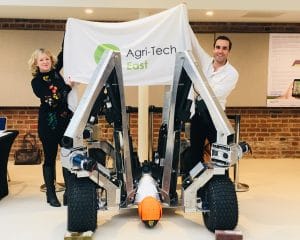
(more…)

Early stage companies showcased at REAP

Agri-TechE

Our popular Start-Up Showcase at REAP highlighted some of the great new ideas and businesses that are bringing new thinking to agri-tech – a summary is below, and more details about each can be found via the links.

Start-Up Showcase - Small Robot CompanySmall Robot Company to offer farming-as-a-service model

Robots are to be made available in a ‘Farming as a Service’ model. Small Robot Company is to offer a subscription service, which will see the farm ‘digitised’ and with seeding, feeding and weeding managed by robots.

The service links together a series of robots with a clever ‘operating system’. It starts by collecting accurate and up-to-date information about a crop, plant by plant. Eventually, each process – from knowing when to plant, to all aspects of crop care, to knowing when to harvest – will be automated.

Click here to read more


Start-Up Showcase - AgrilytixAgrilytix making satellite sourced data accessible to farmers

Agrilytix Ltd is developing an agricultural monitoring system that uses satellite imagery and machine learning to provide enhanced decision support for smaller farmers in challenging environments.

Click here to read more


Farm-r brings equipment time-share to farming

Start-Up Showcase - Farm-r

Sharing agricultural equipment makes economic sense to farmers as the cost and efficiency of the machinery has increased in recent years. Entrepreneur Dan Robinson is launching a company Farm-r at REAP to offer a market place to bring time-share to agriculture

Click here to read more


Start-Up Showcase - Connecting FoodConnecting Food uses Blockchain to secure food quality

Product recalls, such as following the recent Fipronil contamination of eggs, erode consumer confidence and damage brands. Early stage company Connecting Food is developing an authentication system that would allow food operators get real-time insight into whether a given product meets End Product Specifications (EPS)

Click here to read more


Start-Up Showcase - Petiole

Petiole makes measuring leaf area faster, more accurate and less tedious

Leaves give good insights into the health and vigour of a crop and so the ability to measure leaf area quickly and effectively is important to agricultural scientists, breeders, ecologists and chemists. Early-stage company Petiole has developed a way to use the camera on a mobile phone to provide a cheap, fast, accurate measure of leaf area.

Click here to read more


Start-Up Showcase - PhytoponicsPhytoponics inflatable modules make quality hydroponics affordable
A new approach to deep water hydroponics that incorporates deep water culture, ebb and flood system, aeration, ventilation and plant support all within one inflatable growing module, has been launched by early-stage company Phytoponics at REAP. The flexible system provides an affordable entry into hydroponics and is quick to install.

Click here to read more


The Start-Up Showcase was sponsored by Innovate UK.

REAP 2017