Get the latest agri-tech news, events and opportunities direct to your inbox
Phytoponics inflatable modules make quality hydroponics affordable
Agri-TechE
A new approach to deep water hydroponics that incorporates deep water culture, ebb and flood system, aeration, ventilation and plant support all within one inflatable growing module, has been launched by early-stage company Phytoponics at REAP. The flexible system provides an affordable entry into hydroponics and is quick to install.
The idea of Phytoponics came out of frustration with the limitations of current systems as co-founder and CEO Adam Dixon explains:
“Currently the leading systems use drip-irrigated on raised gutters with ventilation socks below,” he says. “The system is vulnerable to temperature variations and gives inconsistent yields and quality unless heavily optimised.
“Phytoponics uses a deep-water system which offers higher nutrient levels and good ventilation control, which provides much greater consistency in temperature.
“By making it flexible we can mass manufacture the modules more cheaply and ship them rolled up – saving space – and install them quickly. It is simply unroll, inflate, connect and grow. This brings the total installation cost of a high performance hydroponic system right down.”
“This method also makes the hydroponics difficult to steal, which is a problem for the industry. The thief would have to take a whole 20m long module, drain it, de-inflate it and roll it up. The more expensive parts can be locked up in a secure unit on the side, with the system controlled from there.”
Dixon has patented the technology and assembled a team including a world-leading hydroponic grower and a technical expert in biotechnology systems. Together they have designed a commercial scale vine system for horticulture.
Dixon took part in the Start-Up Showcase at REAP, presenting his system to a roomful of producers, agronomists, technologists and scientists. Currently based in Cardiff, he hopes to relocate to Cambridge to be close to the target audience of commercial growers.
“We want to reach commercial growers in the UK and people looking to start a hydroponic farm. We are also looking to connect with local commercial greenhouse and non-salad growers, and to raise investment so that we can get to work developing and trialling our system ready for commercial launch in 2018.”
For more information about Phytoponics visit phytoponics.com
Get the latest agri-tech news, events and opportunities direct to your inbox
Petiole launches smartphone camera app to measure leaf areas
Agri-TechE
Leaves give good insights into the health and vigour of a crop and so the ability to measure leaf area quickly and effectively is important to agricultural scientists, breeders, ecologists and chemists. Early-stage company Petiole has developed a way to use the camera on a mobile phone to provide a cheap, fast, accurate measure of leaf area.
Dr Maryna Kuzmenko, CEO of Petiole, explains: “Leaf area is an important variable in agriculture and ecology studies where it is used to calculate light interception, evapotranspiration, nutrient uptake, irrigation response and plant growth.
“However the current methods are time-consuming, expensive and have limited capacities, so Petiole was developed to offer an alternative. It is a mobile app that measures leaf area with a smartphone camera.
“Andrii Seleznov, now Petiole CTO, developed the idea after hearing about the limitations of the existing systems from his friend and ecologist Viacheslav Bykov. Bykov was sampling poplar leaves as part of his project for the Institute of Evolutionary Ecology at the National Academy of Sciences of Ukraine.
“In particular he found the low memory store, the lack of data synchronization, the weight and the glaring LCD display made the products inconvenient when working for long periods in field conditions.
“To help his friend, Andrii developed a mobile app that uses a smartphone camera to provide precise measurements, of unlimited samples in a short period of time.”
The application uses a Computer Vision algorithm that accurately measures leaf area in less than in a second. Petiole is a good fit for obtaining ground data to support application of Unmanned Aerial Vehicle (UAV) methods or satellite imagery.
It can be used everywhere and is applicable to a wide variety of crops and plants and is non-destructive. The accuracy has been tested and proved by real experiments in the laboratories of the four leading educational institutions in Ukraine.
Dr Kuzmenko says: “We hope that participation in the REAP Start-Up Showcase will raise our profile with people struggling with problem of ineffective leaf area measurement and they will find that Petiole is the ideal solution for their needs.”
Get the latest agri-tech news, events and opportunities direct to your inbox
Launch of Farm-r at REAP brings equipment time-share to farming
Agri-TechE
Sharing agricultural equipment makes economic sense to farmers as the cost and efficiency of the machinery has increased in recent years. Entrepreneur Dan Robinson is launching the company Farm-r at REAP to offer a marketplace to bring time-share to agriculture.
It was while working in the agriculture supply industry that Robinson spotted a common phenomenon at the many farms he visited each week.
“I noticed that almost all the farms had machinery they didn’t use all the time and when they did use their equipment it was at different times to their neighbours,” he says.
“This set me thinking that maybe farmers could start sharing their machinery with each other and make their farms more efficient, but they needed a mechanism for supporting this and ensuring that the equipment was in good condition.”
He set up Farm-r in 2017 to meet this need. It is a farmer-to-farmer marketplace that allows them to rent equipment and services.
“With Farm-r it is now possible to earn money from unused machinery or to access specialist equipment when it is required,” explains Robinson. “It is a mutually beneficial situation.”
Changing old habits has been his key challenge, he reveals. “For many farm businesses the idea of sharing is new and slightly daunting but when we explain the efficiency gains, the impact it will have on their bottom line and how easy it is to use the app they are usually very keen.”
Robinson is keen to talk to people with equipment that they would like to rent out.
Get the latest agri-tech news, events and opportunities direct to your inbox
Good taste and fresh ideas from M&S at REAP
Meet the Network
Agri-TechE
Matt O’Hagan, Senior Agronomist at M&S
“M&S is looking at ways to increase the nutritional value of food, particularly by increasing levels of the vitamins and minerals found in vegetables, that may be lacking from peoples’ diets,” says Matt O’Hagan, Senior Agronomist at Marks & Spencer.
A suntanned mushroom rich in Vitamin D is one of the developments by Marks & Spencer aimed at boosting the nutrition and flavour of vegetables. Matt will be speaking at REAP about how the company encourages sustainable practice by farmers, and also the important role of new technology and precision farming.
Themed ‘Today’s Knowledge Meets Tomorrow’s Technology’, REAP will focus on the emerging agri-tech that is securing a productive, profitable and sustainable future.
“There is a lot of merit in the older varieties, particularly for flavour. Many of these old varieties have been lost, as they couldn’t stand up to today’s commercial practices. Identifying the traits that make them more sustainable and matching that with how we farm in the future, will be an important way to capture the best of what we have now and improve on that.”
Matt has been with M&S for over four years, and prior to that he was the Technical Development Director at DPS, developing its exotic fruit business.
Enhancing nutritional value with lighting
Vitamin D is vital for healthy bones and the body can make it from sunlight, however many people suffer from a deficiency, as during autumn and winter the sun in the UK is not strong enough to produce the vitamin D they need.[1] Since it is difficult to get vitamin D from food alone, M&S makes all of its breads with yeast that produces the vitamin naturally.
The retailer is also expanding this enhancement to other products as Matt explains:
“We have developed Vitamin D enriched mushrooms. The mushrooms go through a process of absorbing a specific ultraviolet light, which effectively gives them a ‘suntan’. When eaten, the Vitamin D is readily used by the body.”
“Looking to the future, the use of LED and indoor systems will be more commonplace. Whether that is urban farming remains to be seen, but it has a lot of potential, as you can grow products anywhere without glass.”
Within an enclosed area robotics become a closer reality and Matt sees the benefit for vegetable cultivation in the upcoming years of uncertainty.
He explains: “I think robotics have to start playing a part, particularly with labour issues on the back of Brexit, and to keep costs under control. This is important in the vegetable sector, as hand labour is still predominant. If we can find solutions to some of the harvesting problems, it will be a massive win.”
Benefiting from Precision Farming
Nutrition can also be enhanced through good agricultural practice as the fertility of the soil determines the amount of protein and vitamins in the food.
“I think we’ve only just scratched the surface of precision farming,” says Matt. “M&S has looked at Controlled Traffic Farming, yield maps and how we can use inputs more efficiently.
“As an industry, I don’t think we pay enough attention to the health of our soils; whether it is the level of organic matter, the number of cultivations undertaken and the release of carbon.
“It is critical to understand what is actually happening in our soils. It is a complete circle, as when you have healthier soil, you have a healthier crop with the potential to reduce the amounts of inputs that you are using. “
Farming for the Future
“Marks & Spencer has a ‘Farming for the Future’ programme, where we encourage our farmers and growers to use technology to future-proof their businesses,” says Matt. “It might be looking at alternative energy, improving soil health or animal welfare.
“We reward suppliers and growers who have shown initiative and are making their businesses wholly sustainable.
“For example, we have a number of growers using Anaerobic Digestion plants to power their facilities and reducing the amount of fertiliser that they use.”
However, Matt agrees that it is difficult to measure the sustainability performance and believes that the agri-food sector is not fully up to grips with how to analyse the available information.
Sustainability Metrics
He says: “Some businesses are looking at how they can use big data and measure sustainability performance – if you can’t measure it, you can’t manage it.
“We can look at demonstration farms to see the impact of a particular method of farming over time, but there aren’t many of those farms around. I think it’s an area that we need to look at further.
“Also there needs to be an alignment between the different stakeholders on sustainability metrics – and agreement on what they need to be. If you have someone coming from a wholly environmental perspective, they will have a different set of criteria to someone from a production-oriented background.”
Old ways benefit from new thinking
Crop rotation was invented in Norfolk a few centuries ago and Matt believes that it can be improved in the future.
“We are pretty good when it comes to potato and carrot rotation, but perhaps less so with brassicas. We are just realising the benefits of cover crops, as there is often a lot of bare area in the field for large periods of the year when growing vegetables.”
He considers it possible to bring back valuable aspects of older crop varieties, which were phased out over time.
“It comes down to breeding,” explains Matt. “You have to select the right variety and identify what traits give good taste and flavour.
“Many of these old varieties are now defunct, because they couldn’t stand up to today’s commercial practices. So it is about identifying the valuable traits for future farming.”
Matt O’Hagan of Marks & Spencer is set to speak at this year’s ‘Realising our Economic and Agricultural Potential’ (REAP) conference on Tuesday 7th November, at the Wellcome Gencome Campus Conference Centre in Hinxton, Cambridge. For further information and registration details, please click here.
Marks & Spencer (M&S) is a major British multinational retailer headquartered in the City of Westminster, London. It is listed on the London Stock Exchange and is a constituent of the FTSE 100 Index.
Get the latest agri-tech news, events and opportunities direct to your inbox
Glittering prizes
Agri-TechE
Delighted to be short-listed by Eastern Daily Press for its Knowledge Catalyst Award in the 2017 EDP Business Awards. Even if lightening doesn’t strike twice and we are not fortunate enough to win again, it always gives us a warm feeling to be a finalist.
The judges commented that: “Agri-TechE is an organisation which excels in the distribution of knowledge, bringing together companies of all sizes to share their expertise.
“In the past year it has adopted a global outlook, and works with companies outside of agriculture to transfer their knowledge into the sector. Agri-TechE has ambitions to grow, and plans to embed new knowledge through both recruitment and research.”
Prof David Russell and Prof Rob Field of Iceni Diagnostics
Gold dust
Joining us as finalists are Iceni Diagnostics, a spin-out from UEA and JIC, which has developed a cool test for flu which uses a quick dipstick test using sugar labelled with gold.
If the virus is detected it changes colour and it can distinguish between human and avian flu. The test can easily be done on-farm without the need for a lab.
Iceni is working with a network of clinicians and researchers.
Crystal clear
Also in the running is Lintott Control Systems who work across the water industry to provide advanced waste water control systems.
Get the latest agri-tech news, events and opportunities direct to your inbox
How roots respond to changes in soil revealed
Research Digest
Agri-TechE
A hormonal tug-of-war helps plant roots navigate their journey through the soil. As the root grows the meristem cells at the tip continuously divide, they are left behind in relation to the moving root tip. When these cells reach a certain distance from the tip, called the transition position, they stop dividing and instead start elongating until reaching their maximum lengths, but why?
The question asked by scientists at John Innes Centre and Sapienza University, Rome, was “how do cells “know” when they have reached the transition position between division and elongation? What signal do they read out? ”
The researchers used mathematical and computer modelling with molecular genetics to show how roots can regulate their growth via the interactions of two antagonistic hormones, auxin and cytokinin.
Dr Veronica Grieneisen of the John Innes Centre, explains positional information is a common feature in all developing organisms:
“Cells, although initially all identical, need to change fate or behaviour according to where they are located in the embryo or organ. This is positional information.
The scientists looked at the “positional information” available at the transition zone that would enable cells to know they are at the right location to transit behaviour from dividing (meristem zone) to elongating (elongation zone), and how this information is established and positioned.
They established that the hormone auxin was present at very high levels at the root tip to maintain certain cells as stem cells, and that this was the result of fast dynamics of auxin swirling around due to PINs (proteins that pump auxin through the root).
Their computational work had revealed how these currents of auxin allowed the auxin maximum and its associated gradient to move together with the growing root, providing part of the necessary positional information required to coordinate the meristem zone.
Further recent work, however, showed that auxin does not regulate the transition alone. Antagonistic cross-talk between auxin and another hormone, cytokinin, could both stabilise the size of the meristem zone, and even change it – thus, either stabilizing root growth, or changing its velocity.
Dr Grieneisen continues: “By merely sensing relative changes in auxin, cells robustly notice that they have reached the auxin minimum and thus the point of transition, triggering their switch in behaviour.”
Experiments using Arabidopsis roots demonstrated that a tug-of-war between cytokinin and auxin results in this auxin minimum being positioned either closer to the root tip (if cytokinin is “winning” the tug-of-war), or it being positioned further away from the tip (when auxin is “winning” the tug-of-war).
In nature this mechanism allows the root to respond to its environment, proliferating in favourable conditions while restricting growth in adversity.
The findings are published in the paper An Auxin Minimum Triggers the Developmental Switch from Cell Division to Cell Differentiation in the Arabidopsis Root PNAS: http://www.pnas.org/content/early/2017/08/17/1705833114.abstract
Post Overview
2nd October 2017
Agri-TechE
Agri-TechE Article
Uncategorised
Share this Page:
Related Posts
New chemistries deliver major innovation in fertiliser
Get the latest agri-tech news, events and opportunities direct to your inbox
A Vision For Agri-Tech
Agri-TechE
Agricultural production is stalling and the current farming model may be unsustainable but there is potential to make a radical improvement. Agri-Tech’s members have identified a number of levers where productivity, sustainability and profitability can be increased and presented this in a report “From Grass Roots to Blue Skies: a vision for agri-tech” at the House of Lords.
Dr Belinda Clarke, Director of Agri-Tech, says: “Over the last 30 years technology has allowed us to do more with fewer people but there have been few incentives to increase output.
“Now there is a huge opportunity to look at production and land management from a different perspective and introduce new business models and technologies that will improve productivity in a sustainable way.
“We are concentrating on what works well, perhaps in other industry sectors or geographies, and seeing how it can be applied by some of the UK’s most skilled farmers.
“Good science is vital to understand the big questions. Innovation is needed to solve today’s challenges and this can come from unexpected places.” The multi-disciplinary membership of Agri-TechE has identified a number of levers where productivity, sustainability and profitability can be increased (see graphic below).
Agri-TechE is a membership organisation that brings together farmers with scientists, technologists and investors to bring fresh thinking and new expertise to the challenges of production and land management.
Belinda continues: “We are concentrating on what works well, perhaps in other industry sectors or geographies, and seeing how it can be applied by some of the UK’s most skilled farmers.
“Our approach is to put the person with an intractable problem in contact with people that might have solutions. The key is to help all parties frame their challenges in a way that the others can appreciate.
“Farming is actually a complex business. By encouraging people with different perspectives to participate in workshops and networking events as a community we have been able to identify where innovation is needed.”
In just three years it has stimulated a number of initiatives that have enabled innovative producers to meet non-traditional players and collaborate in new ways. The results have included projects such as:
improved forecasting of demand for lettuces to reduce waste and release resources for alternative crops;
development of a digital platform that makes data from multiple sources, including international markets, accessible to farmers;
alternative methods for storing potatoes that overcome the withdrawal of current treatments.
This experience is captured in its new report: “From Grass Roots to Blue Skies: a vision for agri-tech” which also includes recommendations to support the agri-tech revolution. We have also produced a video of the launch at the House of Lords – you can watch it above or on YouTube here.
Get the latest agri-tech news, events and opportunities direct to your inbox
Latest thinking and first in the field
Agri-TechE
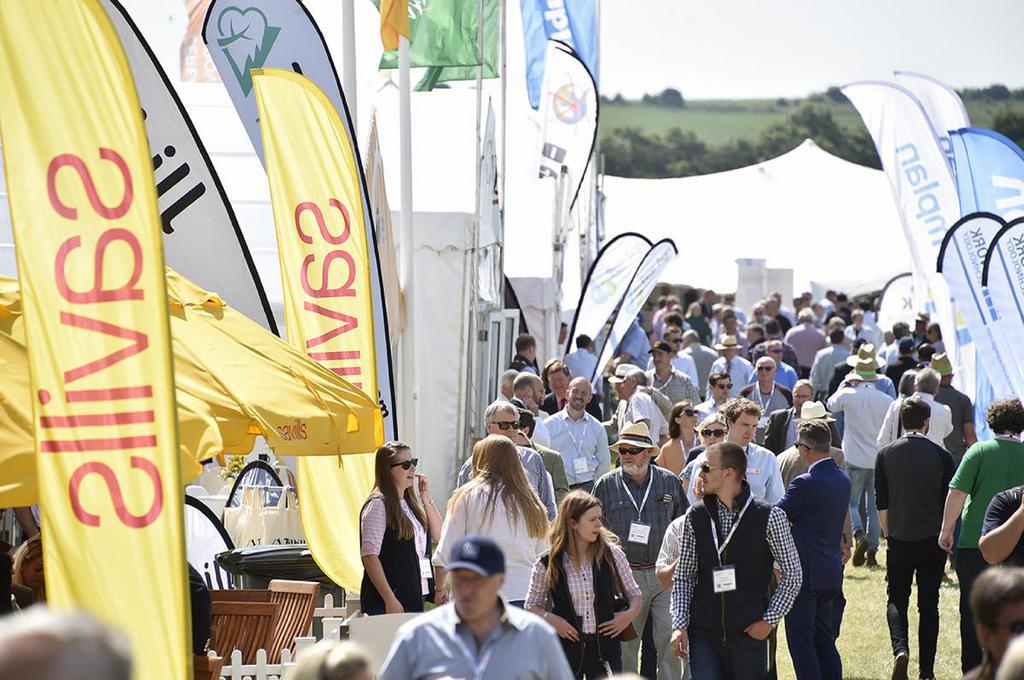
The striking thing about Agri-TechE Week is the calibre and diversity of the people taking part and the opportunities to interact with them. The events are designed to enable a free flow of discussion and ideas between all the participants.
The political landscape is changing rapidly and this is affecting agricultural policy.
Get the latest agri-tech news, events and opportunities direct to your inbox
REAP Start-up Showcase is a launchpad for businesses
Agri-TechE
“When I pitched Arlabion at the very first REAP conference it was to test the industry reaction and interest; we did not even have a company registered,” remembers Ella Kalnina, co-founder of Arlabion. “Since then we have set up a company and attracted seed investment from GM&C Life Sciences Fund.”
Arlabion is developing next generation seed treatment products for sustainable crop management. The company’s new product TRIVAZEN™ is an agrochemical to combat Fusarium in wheat, onions and other crops.
Ella was exploring the best routes to the market when she was invited to present in the Start-up Showcase at REAP. This resulted in introductions to the top experts in wheat research and seed breeding which has validated Arlabion’s approach to the wheat pathogen problem.
TRIVAZEN™ is currently undergoing trials with Niab prior to product registration. Kalnina says:
“Through Agri-TechE we got access to the best research capabilities in plant science – Niab, John Innes Centre and University of Essex.
“We are developing new chemistry mainly for protecting crops from diseases that affect early growth of plants. It is a long and expensive process and a lot of trials have to be completed until the product can reach farmers. Our achievements are more technical than business centred.
“We managed to prove that our product TRIVAZEN™ is effective in protecting crops from pathogens that are currently difficult or impossible to control; examples include Septoria in wheat and Fusarium in onions. We are continuing trials on other crops and the results are extremely promising.”
The start-up showcase has provided a launch pad for 16 early stage companies and some, such as PBD Biotech which has developed a fast, effective and highly specific test for tuberculosis in animals are now returning to be in the exhibition area.
This year’s Showcase will be announced on the day but here are a few that we prepared earlier.
Get the latest agri-tech news, events and opportunities direct to your inbox
Richard Anscombe new chair of Agri-TechE Stakeholder Group
Agri-TechE
As rain stops play again, predictive weather forecasts and improved sensor technologies are two of the developments Richard Anscombe – the new chair of the Agri-TechE Stakeholder Group – would like to see in the near future.
Anscombe, Chief Executive of Fram Farmers, a leading UK farmer-owned cooperative for purchasing and grain marketing, is a great believer in innovation and was delighted to accept the position of chair for Agri-Tech.
Anscombe comments: “I was delighted to be asked to chair the Agri-TechE Stakeholder Group. I have a lot of respect for what Dr Belinda Clarke [Director of Agri-Tech] has achieved and for the calibre of the team that she has brought together.”
“Agri-TechE is good at linking up the many and varied players, from research through to on-farm practices and all points in between,” he explains. “Seeing great research commercialised and put into practical use is both exciting and rewarding, especially with the pace of change of technology and innovation in our sector and the challenges for on-farm profitability post-Brexit. The East of England has all the key elements in place to lead the way!”
Boosting the harvest result
In particular he believes that advancements in weather prediction would support regional farmers and comments: “Wet weather has made for a stop-start harvest, effecting wheat qualities over recent days [mid to late August]. Although the picture is better than many had feared back in May when we looked down the barrel of a too-dry growing period and were worried about significant crop failures.
“Rains came at the right time, but have hindered harvest. Although many would have taken this harvest outcome as it is better than at the most worrying times in the late Spring.”
“Weather prediction is a key area for investment, helping farmers to predict near-term weather more accurately and alter immediate planting/harvesting plans as a direct result of high quality, predictable weather data would be beneficial,” says Anscombe.
Fram Farmers has over 50 years of experience and is the purchasing, grain marketing and administrative function of 1400 farming businesses across the UK.
“An important part of Fram Farmers’ remit is to make our members aware of new technology that can be deployed practically on-farm,” says Anscombe. “Agri-TechE is and will continue to be a go-to place for our members to understand how their businesses can benefit from deploying new technology.”
“In the future, the pace of technology will never be slower than it is today! A sobering thought perhaps, but an exciting one too when we consider the very real and practical benefits that technology advancement is bringing to our sector. Minimum tillage and Controlled Traffic Farming is one example.
“The emergence of sensor technology, robotics and advancements in predictive weather are examples of where our sector will continue its technological evolution, a process that Agri-TechE adds value to now and will continue to in the future.”
Agri-TechE is the UK’s first and largest membership organisation for agri-tech, bringing together businesses and academia across different disciplines to improve productivity, efficiency and sustainability of agriculture and horticulture.
Belinda Clarke, Director of Agri-TechE says: “We are grateful to have a strong depth of experience at the helm of the Agri-TechE Stakeholder Group. I look forward to working with Richard, accelerating innovation and entrepreneurship in agri-tech.”
The Agri-TechE Stakeholder Group comprises of leaders in the industry, including Vice Chair Poul Hoveson, Director of Farming at Holkham Farming Company, Dr Tina Barsby of Niab, Dr Julian Little of Bayer CropScience and Calum Murray of Innovate UK. To read more about the Stakeholder Group, click here.
Get the latest agri-tech news, events and opportunities direct to your inbox
New faces and new thinking in the Stakeholder Group
Agri-TechE
The Stakeholder Group provides a useful sounding board for the activities of Agri-Tech. By inviting champions from different parts of the community we gain grass roots insights which are invaluable.
We are delighted to announce new members John Barrett, Director of Sentry Norfolk, and Robert Dennis of agriVue.
John Barrett has managed the Ditchingham Farms estate, near Bungay in Norfolk, on behalf of Sentry since 2001. He manages nine farms with a team of four full-time employees.
Soils are a keen interest for John. Soils on the estate range from heavy Beccles Series Clay to lighter, sandier soils to the southern end. Large quantities of organic matter are brought in from local livestock farms to maintain the soil in good health. Cropping is predominantly based around wheat, with break crops of oilseed rape, spring beans, maize and sugar beet.
An unusual feature of the estate is the Chartley herd of rare cattle which has been owned by the Shirley family for over 700 years and provides free-range beef.
Robert Dennis is also a farmer on the family farm in Suffolk. He has recently diversified and become the director of agriVue, specialising in the use of UAVs (‘drones’) to analyse crop health, weed pressure and poor drainage areas in fields. He takes a keen interest in farm diversification projects, believing multiple sources of income are vital for the long-term survival of family farms. He believes that drones have a key part to play in the drive for sustainable intensification as they enable farmers to closely monitor and target inputs.
As a farmer, Robert understands what the industry is looking for from new technologies and hopes to play a role in helping to deliver them.
Both men have different perspectives and will strengthen the breadth and depth of the Stakeholder Group.
Post Overview
1st September 2017
Agri-TechE
Agri-TechE Article
Uncategorised
Share this Page:
Related Posts
Innovation Hub – What will farming look like in the year 2030
Get the latest agri-tech news, events and opportunities direct to your inbox
Farming on the edge: is saline farming an option?
Agri-TechE
Although a storm surge on the scale of Hurricane Harvey is unlikely, lowland farmers in the Wash are acutely aware of the risk of salt water encroaching on their land. Dr Iain Gould, Senior Lecturer in Agri-food Technology at the University of Lincoln, will be exploring options for farmland at risk of coastal flooding in a seminar during Agri-TechE Week, including a discussion of saline farming.
He says: “We have seen that farmland management post-flood can be really influential in reducing the level of salts in a soil. We also have found that the economic value of farmland protected by sea defences could be much larger than previously thought.”
Dr Gould’s team have spent the last year looking at both the physical and economic impacts of coastal flooding on agriculture, with a particular focus around The Wash region. He continues: “Salt damage can remain in soils for some years after flooding, so we have been investigating remediation strategies in farmland that has been flooded by salt water in previous flood events.”
The results of the University’s work will help to inform the new 4.5-year EU-funded project looking at the potential to grow crops in saline conditions across the North Sea region. The cultivation of crops with some degree of salt tolerance in threatened areas may potentially offer a solution and, as such, the project will investigate whether ‘saline farming’ is a viable option. This could also incentivise the technological innovations needed to develop crops with greater salt tolerance and also create local food brands.
Presentations and an interactive workshop will be hosted by the Lincoln Institute for Agri-Food Technology (LIAT) on 6 November at the Riseholme Campus, Riseholme Hall, Lincoln.

 Agri-TechE
 “Phytoponics uses a deep-water system which offers higher nutrient levels and good ventilation control, which provides much greater consistency in temperature.
 Dixon took part in the Start-Up Showcase at REAP, presenting his system to a roomful of producers, agronomists, technologists and scientists. Currently based in Cardiff, he hopes to relocate to Cambridge to be close to the target audience of commercial growers.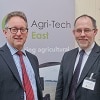

 Leaves give good insights into the health and vigour of a crop and so the ability to measure leaf area quickly and effectively is important to agricultural scientists, breeders, ecologists and chemists. Early-stage company Petiole has developed a way to use the camera on a mobile phone to provide a cheap, fast, accurate measure of leaf area.
 “In particular he found the low memory store, the lack of data synchronization, the weight and the glaring LCD display made the products inconvenient when working for long periods in field conditions.





 Sharing agricultural equipment makes economic sense to farmers as the cost and efficiency of the machinery has increased in recent years. Entrepreneur Dan Robinson is launching the company Farm-r at REAP to offer a marketplace to bring time-share to agriculture.
 “This set me thinking that maybe farmers could start sharing their machinery with each other and make their farms more efficient, but they needed a mechanism for supporting this and ensuring that the equipment was in good condition.”






 “Marks & Spencer has a














 The striking thing about Agri-TechE Week is the calibre and diversity of the people taking part and the opportunities to interact with them. The events are designed to enable a free flow of discussion and ideas between all the participants.




 “When I pitched Arlabion at the very first REAP conference it was to test the industry reaction and interest; we did not even have a company registered,” remembers Ella Kalnina, co-founder of Arlabion. “Since then we have set up a company and attracted seed investment from GM&C Life Sciences Fund.”


 As rain stops play again, predictive weather forecasts and improved sensor technologies are two of the developments Richard Anscombe – the new chair of the Agri-TechE Stakeholder Group – would like to see in the near future.
 In particular he believes that advancements in weather prediction would support regional farmers and comments: “Wet weather has made for a stop-start harvest, effecting wheat qualities over recent days [mid to late August]. Although the picture is better than many had feared back in May when we looked down the barrel of a too-dry growing period and were worried about significant crop failures.



 John Barrett has managed the Ditchingham Farms estate, near Bungay in Norfolk, on behalf of Sentry since 2001. He manages nine farms with a team of four full-time employees.
 Robert Dennis is also a farmer on the family farm in Suffolk. He has recently diversified and become the director of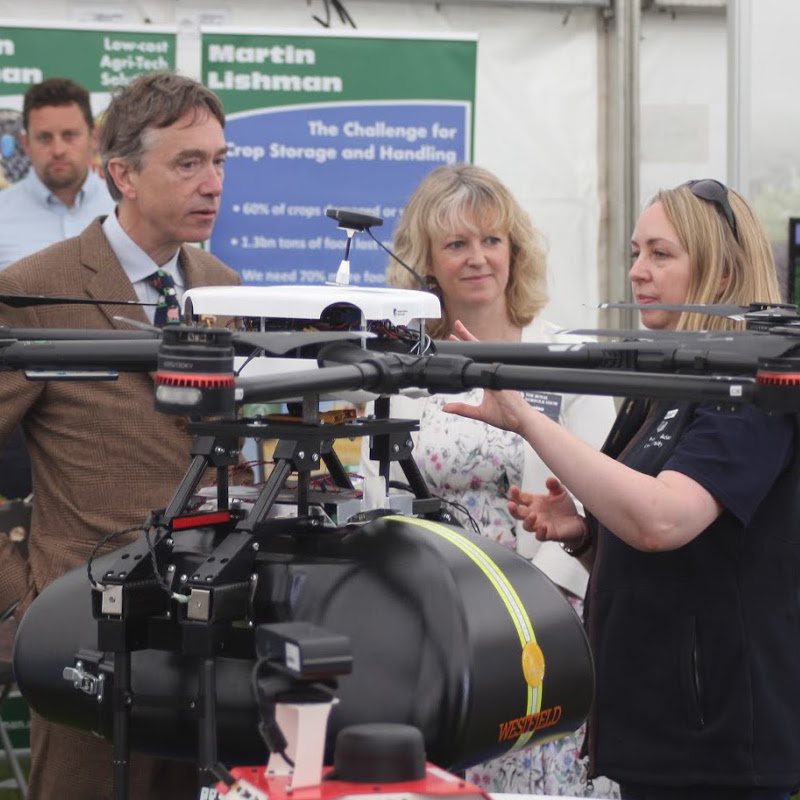



 Although a storm surge on the scale of Hurricane Harvey is unlikely, lowland farmers in the Wash are acutely aware of the risk of salt water encroaching on their land. Dr Iain Gould, Senior Lecturer in Agri-food Technology at the University of Lincoln, will be exploring options for farmland at risk of coastal flooding in a seminar during Agri-TechE Week, including a discussion of saline farming.