Get the latest agri-tech news, events and opportunities direct to your inbox
Wellies and wireless – Agri-TechE meets CW International Conference
Agri-TechE
The internet of agri-things is capturing the imagination of technologists and this is demonstrated by an agri-tech strand at the CW International Conference on 26 June.
Agri-Tech, together with Allia, a social enterprise facilitator, are delighted to present the agri-tech session and provide an introduction to this vibrant sector.
Agri-food is one of the last sectors of the economy to become fully digitised despite exhaustive requirements from regulators, retailers and others in the value chain for data. This creates a major opportunity for non-traditional players to support the industry according to Dr Belinda Clarke, director of Agri-Tech, in a blog on the CWIC website.
However, agri-food is a complex industry, there are many players, the value chains are convoluted and the great outdoors is ever changing. So domain knowledge is vital for success.
Wellies and Wireless
The agri-tech strand “Wellies and Wireless’ is designed to show how companies with digital technologies have penetrated the market and how the agri-tech cluster supports growth.
The session will include Agri-TechE members Stevie Archer, Business Engineer for 30MHz and Ian Wheal, CEO & Co-Founder of Breedr, and also Ben Crowther, CTO & Co-Founder of LettUs Grow. They will discuss how their solutions are creating major disruptions in the way that the agri-food industry operates.
More information is available here.
Want to develop domain knowledge?
Agri-TechE is also organising Agriculture 101, a unique overview which provides an introduction to the sector for newcomers This one day overview aims to:
Provide an overview of the main players and current challenges
Articulate the market opportunities
Offer ways to engage with the sector
Signpost next steps for those interested in developing prototypes and working with early adopters.
Get the latest agri-tech news, events and opportunities direct to your inbox
Up-skilling agri-tech
Agri-TechE Blog
Agri-TechE
One of the spin-off benefits from the rising profile of agri-robots is that it is making the sector an appealing career option for a tech-savvy younger generation.
The need to attract new ideas and skills into the agri-food industry is a subject that is never far away when you get a couple of farmers in the same room.
We’ve been having a number of discussions (even more than usual!) about skills in the sector recently, not least as part of the Agricultural Productivity Working Group (reporting to the Food and Drink Sector Council); about the pressing need for land-based skills training in the east of England with the Further Education Commissioner; and, most recently, conversations with a number of large employers recruiting and training agricultural engineers, mechanics and hydraulics experts (you can watch a vlog from member Refox, with our Director Belinda Clarke, on the subject below).
As agri-tech innovations continue to progress towards market, and exciting new technologies reach widespread commercial reality, questions have arisen about the impact of these solutions on the role of the farmer, pack house or dairy manager, and – the journalists’ favourite question – whether robots will replace human labour on farms.
Need for digital revolution
Ironically, it is the shortage of labour and the need for greater responsiveness to the environment and consumer demands that is driving the adoption of digital technologies.
It has been the introduction of machinery on to farms that has enabled so many smaller family operations to keep in business. From our analysis, “From Grass Roots to Blue Skies” productivity has increased by reducing the head count. One person with a few tractors and other specialist equipment now does the work of a team of people.
With the need to reduce labour to maintain margins, farming seems to have lost its ability to respond with precision to the conditions at field level. It is time consuming for one farmer to walk the walk, if this is the only person available to do all the other work.
This model is being disrupted by technology and, in particular, the promise of automation in the form of robotics.
Gaining information about growth stages of iceberg lettuce, for example, is allowing greater precision in forecasting yield dates and matching this with predicted consumption. Introducing a robotic harvester into the mix will enable differential harvesting of the lettuce heads that are reaching the right stage of maturity.
This type of process is increasing the range of skills needed in farming and diversifying the location of these people and their expertise. No longer will the industry need to rely on low skilled manual labour living on the farm.
Increasing professionalism
Instead it will attract professional farm managers with a desire to improve the soil, crops and yield, and an army of motivated people with skills in data visualisation, logistics, forecasting and analysis.
Agri-food is of fundamental importance to our economy. Plant-based materials are used in packaging, clothing, pharmaceuticals and energy generation. Agriculture in all its forms also offers an alternative to fossil fuels for the production of bio-degradable plastics.
The skills challenge facing the industry is well documented – and not unique to agriculture and horticulture. Skilled technical staff are recognised to be the critical backbone of many sectors. But it was only during a recent discussion with a major machinery manufacturer that it really hit home how dependent the industry is on the technical staff, present and future, and on whom many food-producing businesses depend.
Our Pollinator this month considers how far robots can go to make life on the farm easier, and the potential for swarm robots to be the workforce of the future. (Spoiler alert – we think there will always a place for the higher skilled Managers of the Machines!)
We’re excited to be considering the potential for the technology and the progress that innovation is making towards inter-connected robot teams working together on farms and the implications this has for the shape of the wider industry.
Get the latest agri-tech news, events and opportunities direct to your inbox
We welcome Fiona to our team
Agri-TechE
Fiona Rust joins Agri-Tech
We are delighted to announce that Fiona Rust will be joining us in mid March to help us as we develop our events portfolio and work with our expanding membership . Fiona will also be supporting the development of our vibrant Young Innovators’ Forum by working with the early career researchers and industry professionals to help them connect up.
In addition to our own events, we have also created opportunities for members to have a presence at other industry events under the Agri-TechE ‘umbrella’. At Cereals and CropTech last year and at the European Association of Potato Research Conference and The Royal Norfolk Show among the events later this year.
Behind the scenes, Agri-TechE also provides other support for members both individually through introductions and by having input into policy meetings around innovation; that could impact or benefit them. As the membership increases the opportunities are more wide-ranging. For example, we are working on a number of initiatives that will provide an international dimension to our membership support.
With Fiona’s support Becky will be able to dedicate more of her time to working with members and ensuring they make the most of their membership.
Fiona has an agricultural background and is very active in the Essex Young Farmers Club. This year she is the Ashdon and Saffron Walden club chairman and county magazine editor alongside holding various roles in the committee for the Essex Young Farmers’ annual show.
Agri-TechE director Belinda Clarke says: “Fiona has also been a teacher, and is a brilliant communicator, having won national awards for public speaking! We are excited that her unique combination of experiences will bring a fresh perspective and useful input into the team.”
Fiona comments: “What drew me to the job was the opportunity to progress the work I’m doing within a sector which I am passionate about.”
We are looking forward to welcoming Fiona to the Agri-TechE team.
Get the latest agri-tech news, events and opportunities direct to your inbox
Five is the magic number – Norfolk Farming Conference 2019
Agri-TechE Blog
Agri-TechE
They say good things come in threes. At the recent Norfolk Farming Conference they seemed to come in fives.
From the breakthroughs expected to advance agri-food by 2030, to the key drivers of innovation in UK agriculture, and to understanding consumer insights and trends, it was all about the fives. Five breakthrough opportunities that use a convergent approach to create advances in food and agriculture
A recent report by the National Academies of Science, Engineering and Medicine in the USA highlighted five science breakthroughs that promise to advance food and agriculture by 2030.
Prof Sir John Beddington’s overview of these demonstrated just how well-placed we are in the UK – from research and companies – to deliver them
Five approaches:
Taking a “systems approach” to understand how different part of the food and agriculture system interact and how to leverage this for benefit
Developing precise, accurate, field-deployable sensors and biosensors to improve rapid detection and monitoring
Applying and integrating data sciences, software tools, and systems models to create advanced analytics for managing the food and agricultural system more effectively
The ability to perform routine gene editing of agriculturally important organisms to improve traits.
Understanding the relevance of the microbiome to agriculture and using this knowledge to improve crop production, transform feed efficiency, and increase resilience to stress and disease.
All the underpinning tech and innovation to do just this is either already in routine use in the field, or in the development stage in industry and academia in the UK. Five ways investment in innovation supports UK agriculture
The question posed (and answered!) by Rt Hon George Freeman MP was whether innovation can help UK agriculture prosper. A rhetorical question, maybe, but the answer was yes, and for five reasons.
Use of precision agriculture increases productivity
The innovation agenda will attract people into the sector at the beginning of their careers
Technology improves traceability – for delivering accountability, responsibility and even health benefits
Contributing to the so-called “bioeconomy” – a recent strategy was published highlighting how harnessing the power of biosciences and biotech can deliver food, feed and fuels – and agriculture is a key part of this story.
Innovation can create a platform for accessing and exporting to global markets.
Five macro trends that define consumer behaviours
The final five was from UEA’s Prof Andrew Fearne, who outlined the so-called “macro trends” – now very well understood thanks to data science applied to purchasing activities – that define consumer behaviours around food:
A Changing Nation – ageing, increasingly diverse with more people living with parents or grandparents
Health and Wellness – 60 % of adults claim to check the food they buy is “good for them”
Redefining Value – whether it is price or a promotion, or brand loyalty that people perceive gives “value”
Social Conscience – people claim to care about welfare and the environment, but actual change is slow to happen
Confident and Connected – Millennials are embracing their “digital selves” and have an increasing appetite for other diets (such as veganism)
So among all these bunches of fives, where can more benefit be gained from adoption of new technologies on farm? The answer is simple – the impact of new tech must align with the business strategy. Whether the target is to reduce costs, improve biodiversity, increase efficiency, reduce waste or produce a higher value premium product, the tech must contribute to the overall ambition.
Finally, the question everyone should ask themselves when considering the adoption of new technology is “do I have the capability to use it – and will it help manage one of more of the following FIVE factors of costs, risk, yield, profit and sustainability?”
High fives all round…..
Post Overview
8th February 2019
Agri-TechE
Agri-TechE Article
Uncategorised
Share this Page:
Related Posts
Environment Secretary to explore future of farming at Royal Norfolk Show
Get the latest agri-tech news, events and opportunities direct to your inbox
Brilliant start to the year – variety of new agri-tech members
Agri-TechE
Within the first few weeks of 2019 we have welcomed 12 new members to Agri-Tech, including several from overseas. The influence of the cluster is definitely not defined by geography.
Some of the new agri-tech members include:
Cambridge Consultants , which has an impressive record of innovation and is a strong player in agri-tech. It is using its system design experience gained from working across multiple disciplines to develop precision agriculture technologies. This embraces metering and mixing systems, novel and highly precise sensors, low-cost wireless networks and data analysis platforms. enLight has gained a reputation for developing and implementing technology that transforms lighting infrastructure, it is now looking to deploy its Internet of Things knowledge to improve connectivity in smart farming. Fotenix is a spinout from the University of Manchester and provides three-dimensional multispectral crop analysis. Co-founded by Professor Bruce Grieve, Director of e-Agri Sensors Centre at the University, and Dr Charles Veys, the company offers a new online crop analysis tool, that aims to help improve yield quality and shelf life significantly. Charles comments that with the technology, producers and agronomists can identify plant characteristics earlier in the season, well before they become visible to even the sharpest agricultural eye. GrantTree is able to provide support to those wishing to access government funding. They work with over 550 of the UK’s most innovative and fastest growing SME technology companies including SMEs, Governments, Universities and research organisations. Grow Biotech is a medical cannabis biotech and intellectual property company. Its first two R&D projects aim to develop tools and processes for cannabis production that meet the quality standards of the pharmaceutical community. Pix4D is a German company developing cutting-edge software that converts images taken by hand, drone or plane into survey-grade accurate and 2D mosaics, 3D surface models and point clouds. Sencropis a French start-up with a new base in Cambridge. It is creating a network of weather stations and tools to give real-time input into decision-making. Smartbell brings the expertise of an experienced herdsman to an automated dairy system. It is able to detect changes in behaviour by individual animals that may indicate that they are in pain, becoming fertile, pregnant or unwell or not eating.
We are delighted to have these companies on board and look forward to working with them to broker connections with others in the community.
For more information about benefits of Agri-TechE membership click here.
Post Overview
1st February 2019
Agri-TechE
Agri-TechE Article
Uncategorised
Share this Page:
Related Posts
New Opportunity Zone provides access to the skills you need
Get the latest agri-tech news, events and opportunities direct to your inbox
Growing the future reports underlines the value of plant science
Agri-TechE
Growing the Future is a new report by The Royal Society of Biology about opportunities arising in plant sciences. From left to right: Professor Rick Mumford FRSB, Dr Belinda Clarke CBiol FRSB and Professor Dale Sanders FRSB (Photo credit: RSB
The report describes the potential of plant science to improve fundamental knowledge, enable the improvement of diet quality, increase crop productivity, enhance environmental sustainability and create new products and manufacturing processes
It was launched at a breakfast meeting in the Houses of Parliament, bringing together leading plant scientists, MPs and peers, researchers and education specialists, along with representatives of government departments and the Research Councils
Among many initiatives described in the report are programmes directed at
developing crops with improved yield and nutritional content to help address food shortages and poor diet quality
producing plants resistant to pests and diseases to reduce the hunger, economic costs and environmental footprint associated with crop losses, and to reduce reliance on ecologically harmful pesticides.
creation of advanced crops for bioenergy, bioremediation, bio-based products and novel high value products,
Get the latest agri-tech news, events and opportunities direct to your inbox
The Power of Plants
Agri-TechE Blog
Agri-TechE
The resilience of plants never fails to amaze. They provide food, feed, fuel, fibre and pharmaceuticals – while anchored in one place and having to tolerate changes in temperature, moisture and light, as well as being at the mercy of passing pests, grazing animals and invading pathogens. Last week saw a delegation of plant and crop scientists head to the House of Commons to celebrate the power of plants and ensure they stay high on the policy agenda.
The UK Plant Sciences Federation has been overseeing work to design a “roadmap” for plant and crop sciences over the next few decades. Supported by the Royal Society of Biology, the work has resulted in “Growing The Future” – a report which was presented last week to MPs, funders and policy-makers.
Is closed loop production an alternative?
The report highlights the opportunities for the UK to partner internationally to harness the potential of plants. It also considers use in alternative closed loop production systems (we’ll be talking about this in our Controlled Environment Agriculture meeting next month!) as well as in broadacre farming systems. Their potential to help deliver ecosystem services has also not been missed.
A key conclusion is the need to maintain the UK’s leading position globally in plant and crop science. Some of the world’s premier plant scientists have come from the UK – think top wheat breeder John Bingham FRS (developed Maris Huntsman and Hereward wheat varieties), agricultural botanist Sir Rowland Biffin (the first Director of the Plant Breeding Institute) and Sir William Bateson (first Director of the John Innes institute who coined the term “genetics”).
Current UK-based plant and crop scientists leading the world are, happily, too numerous to name individually.
Will NASA introduce younger people to plant science?
The UK’s excellence in plant sciences stands on the shoulders of thousands of person-years of painstaking, laborious specimen collecting, illustrating, preserving and storing samples to inform taxonomy and development. Years of increasingly effective plant breeding, enabled by an understanding of genetics, through to the last 50 years of molecular biology, the discovery and application of the first tools of plant transformation, the ability to sequence and synthesise DNA, and create novelty via synthetic biology.
Yet despite the ubiquitous nature of plants in our lives, studying them in any depth is somehow less attractive to people at the beginning of their careers. Human or animal biology and medicine remain stubbornly more popular.
This is not a new problem – efforts have been underway for years to introduce more plant sciences into the school curriculum – with, it must be said, some success. So how can we help today’s students watching NASA’s Seeds in Space growing on the International Space Station become the next Barbara McClintock (Nobel Prize-Winner for her work on maize chromosomes), Gregor Mendel (known for his research on inheritance in peas) or even Beatrix Potter (renowned and talented botanist when not hanging out with friends Peter, Jeremy and Jemima)?
Public engagement in plant sciences is another key pillar to the UKPSF report. The hazards of failing to engage with consumers about new crops, foods, and ways of managing fields, hedgerows, trees and woods is widely recognised. The UKPSF report calls for broad, ongoing debate about new technologies, crop varieties and plant protection products, which can then inform decisions about their regulation and use.
Plant-based diet raising expectations
The current trend of eating a more plant-based diet is likely to put even more expectation on these extraordinary organisms as we seek newer varieties, require them to live in constantly changing and potentially more extremes environments, and to work even harder in our agriculture.
Sensitively harnessing their unique biology that makes them perfect partners for animal, microbial and insect life on earth – and integrating it with other technologies – is surely one of the greatest opportunities for humans.
Get the latest agri-tech news, events and opportunities direct to your inbox
Oxford Farming Conference – whichever path, technology is an enabler
Agri-TechE Blog
Agri-TechE
From floating farms to rewilding, the rise of social media influencers and the promise of technology, not to mention pending political events, the mood at the 2019 Oxford Farming Conference clearly reflected the need to face and embrace change. When asked via live poll how confident they feel about the future of British agriculture, OFC delegates responses ranged from “buoyant” (19%), and “confident” (37%), to “apprehensive” (38%) and “Help!” (5%).
Brexit looms
Michael Gove warns a no- deal Brexit means we face overall tariff rates of around 11% on agricultural products
As Secretary of State Michael Gove wryly noted in his speech that followed, a politician generally experiences this spectrum of emotions in a single day, however they did broadly reflect the spread of views throughout the conference.
The opportunities are clearly there to be explored, while the potential costs and risks of a no-deal Brexit led some to be at the “Help!” end of the spectrum.
A clear call was also issued by the NFU President for “warm words” around maintaining food production standards to be enshrined in law to mitigate the threat of cheaper, lower quality imports.
Having accepted change is coming, the next question is how soon, at what cost, and at what scale. The first two questions are potentially dependent on the political events of the coming months, but the question of scale remains an even bigger challenge.
Elsewhere, Defra’s Chief Scientist, Prof Ian Boyd contends that dramatic, disruptive solutions are needed (for example, large scale vertical farming, insect production, cellular agriculture for animal-free meat and milk products) – incremental improvements are just not going to deliver the increasing demands for food production, environmental benefits and business competitiveness.
Others see a continuum where current good practice is rewarded and incentivised further to effect gradual change and incremental technological improvements are the way to progress. So big sweeping disruption, or gradual change?
The crossroads at which British agriculture currently stands has many other “either / or” decisions on its metaphorical signpost, all of which will have a major impact on the future of the industry and OFC2019 highlighted many of them. Leave or Remain (if that is still an option)? Deal or No Deal? Natural capital management or food productivity? Profit or public good?
Happily most delegates when asked by a show of hands felt that productive agriculture and environmental stewardship were not mutually exclusive and can be co-delivered. But how well placed are we as an industry to accommodate both in order to deliver the transformational changes being called for by Ian Boyd? It is critical that future policies, farmer incentives and sensible impact metrics will allow this to happen.
Rise of social media influencers
Julie Borlaug says agriculture needs to overhaul the way it communicates with the public
Elsewhere in the conference other transitions from “old” to “new” were being discussed. Julie Borlaug (grand-daughter of Norman Borlaug – the so-called “father of the Green Revolution”) reflected on the ongoing challenge of communication around new agricultural technologies.
The democratisation of knowledge via the channel of social media has enabled the rise of influencers who tout the benefits of so-called “gluten-free” vegetables, salt and even mattresses!
Julie Borlaug also commented on the need to shift from profit to purpose, hierarchies to networks, privacy to transparency, and controlling to empowerment.
Get these right, she argued, and you are on your way to real change.
And what of research, innovation and new technologies?
Artificial intelligence on farms, controlled environmental production for micro-veg, speed breeding of cereals, and even harnessing the “circular economy” where cows carry out “biomass upcycling” on floating farms – technology was mentioned almost without exception in every talk.
Technology features more strongly on the second day with presentations from Matt Smith from Microsoft and Cristobal Uauy of JIC and also Kate Pressland talking about the Innovative Farmers Programme.
Suffolk farmer and AHDB Strategic Farm host Brian Barker issued a call-to-arms to scientists to spend more time on farms, citing collaboration and attention to detail as being the key to unlocking the potential of successful use of science-based decision-making for the industry. In a closing poll following the Science lecture by Sir Mark Walport (CEO of UK Research and innovation) 81 % of delegates felt that publicly funded research and innovation has the ability to make a difference in farming.
And that is without the wealth of innovation underway in the private sector which is already coming onto the market. Innovation is ubiquitous, enabling and empowering. It is one of the key enablers which will help agriculture and horticulture – both in the UK and beyond – achieve its full potential, whichever path we choose.
Post Overview
7th January 2019
Agri-TechE
Agri-TechE Article
Uncategorised
Share this Page:
Related Posts
Smart and Sustainable – Innovation Hub at the Royal Norfolk Show
Get the latest agri-tech news, events and opportunities direct to your inbox
Oxford Farming Conference – latest on Agricultural Bill
Agri-TechE
The Oxford Farming Conference always stimulates much debate, but with the current political turmoil it should be a lively affair.
The headlining political briefing will see the latest developments in the proposed British Agricultural Policy presented by the Defra Secretary of State and this will be followed by a panel session with his opposition counterpart and NFU President Minette Batters and Dr Clive Black of Research at Shore Capital.
It is anticipated that the discussion will include plans for the new livestock traceability service and the need to put food at the heart of the Agricultural Bill.
The NFU comments that food was noticeably absent from the Agricultural Bill when it was published in September – but making it central to UK policy is a moral obligation, argues NFU president Minette Batters.
She argues that as climate change becomes more serious, the UK may be able to produce food when many parts of the world won’t, making it a “moral imperative” to use British land to grow food, while still having a strong environmental focus. Writing in a blog on the OFC website she observes that it’s not just about food security – but water and green energy security too.
“When I look at how Holland looks after and treats its water system…it is prepared for times of flood and drought,” she says.
Linking food, farming, water, energy and the environment requires a joined up approach that forges partnerships across the whole agri-food industry and others too, says Ms Batters. NFU Chairman Minette Batters meets Agri Tech members at the Norfolk Show, 2018.
Ms Batters came to visit the Agri-TechE Innovation Hub at the Royal Norfolk Show this year and was impressed with the range of solutions on show.
Many Agri-TechE members are participating in OFC and this includes: AHDB, BASF, Breedr and Map of Ag who are sponsors. Oxford Farming Conference 2- 4th January 2019.
Get the latest agri-tech news, events and opportunities direct to your inbox
REAP Report – Agri-TechE For A Productive Future
Agri-TechE
There was a upbeat mood at the Agri-TechE conference REAP 2018, as farmers, growers, technologists and researchers looked towards innovation as a way to create a more productive future.
With the uncertainties around Brexit, the first Agricultural Bill in 70 years and the loss of core agrichemicals, agriculture is at a crossroads, and the discussion at REAP was all about doing things differently.
Delegates were asked to focus on a big question: how to prioritise investment in innovation in agri-tech? Should it be to extract greater value from current crops and practices? Or should we have a greater ambition and see this as an opportunity to radically change the way we use our land and generate food components?
This question was approached in different ways through the day. The emerging technology, the discussions and the big debate are all captured in this REAP report and also in a video made on the day. Read the report online here or download it here.
If this stimulates your thinking why not come along to one of our networking meetings or join Agri-TechE to make your contribution to the future of agricultural production.
Get the latest agri-tech news, events and opportunities direct to your inbox
CropTec Agri-TechE debut
Agri-TechE
Farming is all about decisions, and improving the quality of the information available can make a big difference not just to the yield but, crucially, to the profitability.
Decision support is the theme of Agri-Tech’s stand at CropTec 28-29th November 2018 at East of England Showground. It is the first time the independent membership organisation has had a formal presence at the show.
Director Dr Belinda Clarke says: “Farming is complex. The market is volatile, the weather is changeable and so is the soil; conditions can vary considerably across a single field. We are now seeing the adoption by farmers of intelligent systems that can predict consumer demand, forecast yield and inform cultivation strategies.
“Our stand will provide an overview of exciting emerging technologies and also those that are already proving their value in the field.”
Start-up Showcase
Lizzie Creed, Receptive Technologies, speaking as part of the REAP 2018 Start-Up Showcase
Three of the exciting newcomers profiled in the Start-up Showcase at REAP conference will be on the Agri-TechE stand at CropTec: Receptive Technologies: One person is killed every 11 days in agriculture despite an overwhelming volume of information and process. Farm365 is a new app-based tool that uses a mobile phone to read QR codes on equipment, making it easier to fit health and safety checks into everyday practice, and creates electronic reports that help compliance. Axomap: The best crisps are made from potatoes that have higher dry matter content; Axomap’s remote sensing drone makes it easier to spot the individual plants that are producing spuds with these desirable qualities. Nova Extraction: Increasing interest in the use of herbal essences and cannabis oil for health and wellbeing has created a demand for high quality, pure botanical extracts. Early-stage company Nova Extraction has developed the world’s first industrial, off-grid, clean-tech extractor. It is now available for flower, herb and food producers to rent, providing producers with affordable and consistent technology to extract flavours or fragrances in-field.
Also featured will be new Agri-TechE members, including:
Irrigation from Howseman Agriculture Howseman Agriculture, which is offering a smart irrigation system that uses 25-30 per cent less water than a traditional hose and reel system with a fraction of the labour input. It gained an “Innovation for Water” award at this year’s Lincolnshire Show. Consus Fresh Solutions, which supports quality assurance and traceability post-harvest. The easy to use software captures information about product quality, storage conditions, labour and packaging and makes it readily available for audits such as BRC Fresh Produce Standards, Assured Produce Standards.
By automating the process, Consus helps fruit, flower and producers to comply with UK and EU regulations, meet the contractual requirements of their customers, save time and reduce waste.
Also on the Agri-TechE stand will be: Outfield, Farmscan AG,Germains, Itaka Solutions, uVue Technologies, Agrimetrics and Rothamsted Centre for Research and Enterprise (RoCRE)
Strong representation of members at CropTec
Dr Clarke continues: “Agri-TechE was established with the recognition that to create true innovation you need to provide novel solutions to industry problems. By bringing scientists and technologists from different fields together with potential end-users and industry experts we have facilitated the rapid growth of a thriving agri-tech sector.”
Antony Yousefian of smart sensing company 30MHz, which will also be at the show, agrees. Initially his knowledge of farming was limited but they now have a number of clients using low cost sensors to provide real time monitoring of stress in plants. He says: “Innovation and the will to innovate is in abundance in UK agriculture, though sometimes it needs someone to light the match, and this is what Agri-TechE does best.”
Other members at the show will include: AHDB, BASF, Bayer, Elsoms Seeds, Harper Adams University, Hummingbird Technologies,PGRO, Prodata Weather Systems,Rothamsted Research, RTK Farming, Sentry Limited, Small Robot Company,Syngenta, University of Hertfordshire, University of Lincoln.
Post Overview
7th December 2018
Agri-TechE
Agri-TechE Article
Uncategorised
Share this Page:
Related Posts
Agri-TechE Week 2018: Big data and the supply chain
Get the latest agri-tech news, events and opportunities direct to your inbox
Start-Ups showcase exciting agri-tech opportunities at REAP
Agri-TechE
Nicole Sadd, RoCRE, chairing the Start-Up Showcase at REAP 2018
Improving consistence of products in alignment with customer specifications was one of the themes at REAP this year.
Increasing accuracy in managing and predicting quality of products and using digital technologies to understand and connect with markets will both improve productivity and reduce waste.
Both the technology exhibition and the Start-up Showcase featured new ways of achieving this.
A number of exciting early-stage agri-tech companies seeking support, advice, connections and investment were invited to appear in the showcase.
In previous years this opportunity has been the launch pad for business growth for a number of companies including: Small Robot Company, Olombria, Hummingbird Technologies, PBD Biotech and 30MHz.
The session was introduced by Nicole Sadd, Executive Director at RoCRE. This innovation centre at Rothamsted Research has also provided support for several of the companies featured.
Selective harvesting? New drone app identifies best potato plants for crisps
Keith Geary, Axomap
The best crisps are made from potatoes that have higher dry matter content – Axomap’s remote sensing drone makes it easier to spot the individual plants that are producing spuds with these desirable qualities.
“Higher dry matter means potatoes absorb less moisture and oil during frying, and are also less likely to caramelise so they don’t go brown and look burnt,” Axomap founder Keith Geary explains.
He comments that strategic harvesting is the next big opportunity: “It is difficult to get potatoes to grow uniformly. Given the variations across a field, inevitably your crop is going to be inconsistent.
“Selectively harvesting high value produce at just the right time offers huge potential.
“We’re interested in trying to improve the quality of potatoes harvested so producers are confident in their saleable yield.”
Beef producers to meet changing consumer preferences
Ian Wheal, Breedr
Changing customer tastes mean that almost half of prime beef now fails to meet ideal market specifications, resulting in lower prices for producers and waste in the value chain.
Breedr co-founder Ian Wheal explains: “There is a big consumer drive towards steaks and burgers, however the EU-wide EUROP grading system used to value beef was designed when rump was the main piece of beef consumed.
“As a result farmers are flying blind when trying to meet the specifications of retailers for meat with less fat and improved taste.”
Breedr has developed an easy-to-use app that will help farmers finish cattle to retailers’ specifications with greater precision, underpinned by the data to evidence this. The company launched the Field to Yield trial with Rothamsted Research at North Wyke to improve the metrics available to farmers.
Chalante developing new weapon against cattle nematodes
Simon Aspland, Chalante
Increasing resistance to anthelmintics, anti-parasitic drugs used to treat worms (nematodes) in cattle and other animals, is threatening the viability of the international livestock industry. There have been no new drug families with novel modes of action in cattle for 30 years.
Now early-stage company Chalante has developed a parasiticide with a novel mode of action that promises a new approach to tackle this problem which impacts productivity.
General manager Simon Aspland explains: “Most anthelmintics disrupt neuromuscular transmission in the nematode by focusing on a specific molecular target. This has put the nematode under evolutionary pressure and it has been able to develop resistance.
“Our drugs target different molecular targets, so this will be a new resistance breaking product.”
DryGro offers arid regions high protein sustainable alternative to soy
Sean Peters, DryGro
It might be considered a nuisance by pond owners, but ‘duckweed’ offers a high protein alternative to soy that can be grown in arid countries with very little water. Start-up company DryGro is set to disrupt a huge global market, with a growing system for Lemnoideae that promises to revolutionise animal production in sub-Saharan countries
DryGro founder Sean Peters explains: “Lemnoideae is a simple round-leaved pondweed that multiplies quickly on the surface of water, is rich in protein and is a viable alternative to soy which is widely used in animal feed.
“We have developed a technology that would allow it to be grown in an enclosed environment using recycled water. This creates the opportunity for a sustainable source of high-grade animal feed to be grown close to livestock producers and their local markets.”
FOLIUM Science’s new ‘guided biotic’ triggers salmonella self-digestion
Ed Fuchs, FOLIUM Science
A feed additive that will protect young chicks against common bacterial infections such as salmonella and E.coli has been developed by early-stage company FOLIUM Science. Initial trials of its ‘Guided Biotic’ were seen to restore the natural balance of the healthy microbiome and revealed unexpected improvements in wellbeing.
The highly specific anti-bacterial technology can trigger a natural process in the target pathogen that guides the bacteria’s own enzymes to digest its cell material.
Co-founder Edward Fuchs says it provides a potential solution to the growing problem of antimicrobial resistance.
“Our patented approach is highly specific; by removing only the pathogenic bacteria it leaves the animal with an intact healthy microbiome.
“Preliminary trials in chickens indicate that reducing the disease burden improves the weight gain of the birds and removes the need to use antibiotics.”
Farming’s fatal record – could new farm safety app save time and lives?
Lizzie Creed, Receptive Technologies
One person is killed every 11 days in agriculture despite an overwhelming volume of information and process. Farm365 is a new app-based tool that uses a mobile phone to read QR codes on equipment, making it easier to fit health and safety checks into everyday practice, and creates electronic reports that help compliance.
Lizzie Creed, founder of the agricultural consultancy Receptive Technologies, developed Farm365 after a decade working in agriculture and realising that every mention of health and safety was met with a groan, despite agriculture’s fatal injury record being 18 times higher than all other main industries. The app launched at REAP.
Nova Extraction launches world’s first industrial off-grid essence extractor
Alex Novitskiy, Nova Extraction
Increasing interest in the use of herbal essences and cannabis oil for health and wellbeing has created a demand for high quality, pure botanical extracts. Early-stage company Nova Extraction has developed the world’s first industrial, off-grid, clean-tech extractor.
It is now available for flower, herb and food producers to rent, providing producers with affordable and consistent technology to extract flavours or fragrances in-field.
Nova Extraction’s new autonomous extractor uses supercritical carbon dioxide (CO2) technology, originally developed for decaffeination of green coffee beans.
Company co-founders Alex Novitskiy and Sergey Soshin re-engineered the process and have designed a unique piece of equipment that can be deployed almost anywhere in the world, without the need for electricity or water.
Digital marketplace to help Colombian farmers trade without intimidation
Jacqui Poon, Farming Data
A complex supply chain and violent middlemen can mean that the price difference between the farm gate and local store can be as much as 300% for small Colombian farmers.
Farming Data has developed of an integrated digital marketplace accessed through Android phones that provides a virtual marketplace for two-way information sharing. It supports trading by geotagging or setting a proxy location for producers and capturing specific requests from buyers on the frequency or varieties of crops they are seeking, level of ripeness, and other variables that enable producers to better meet demand.
Farming Data co-founder Jacqui Poon announced that 1,000 farmers will be piloting the platform. She said: “Our digital marketplace is about arming producers – often women – with information about current market demands to bring about healthy competition.”
Post Overview
30th November 2018
Agri-TechE
Agri-TechE Article
Uncategorised
Share this Page:
Related Posts
Agri-TechE Week 2018: Big data and the supply chain

 Agri-TechE
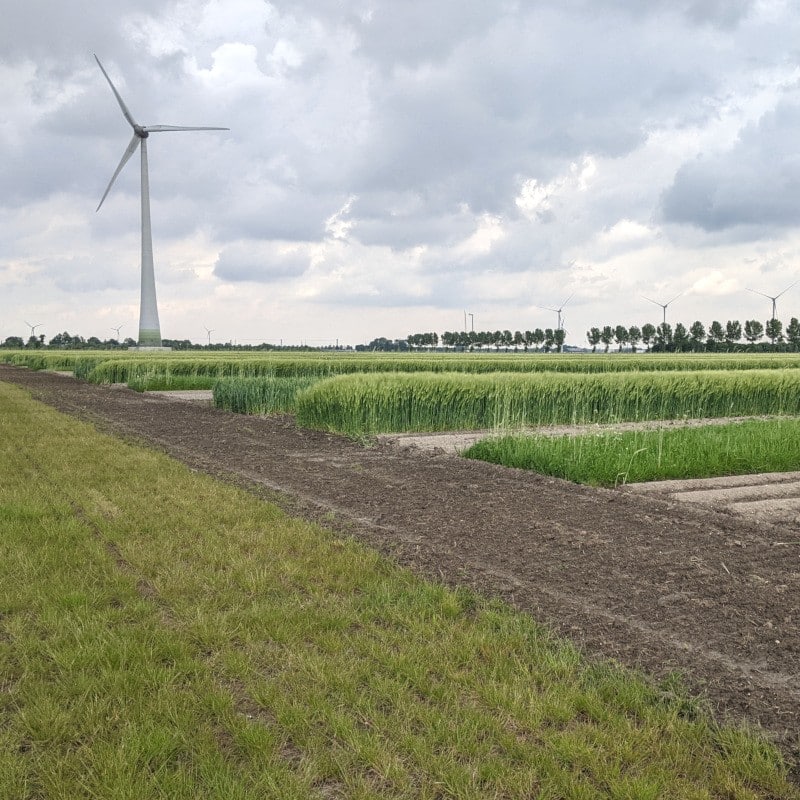
  The internet of agri-things is capturing the imagination of technologists and this is demonstrated by an agri-tech strand at the CW International Conference on 26 June.



 Agri-TechE
  One of the spin-off benefits from the rising profile of agri-robots is that it is making the sector an appealing career option for a tech-savvy younger generation.





 They say good things come in threes. At the recent Norfolk Farming Conference they seemed to come in fives.




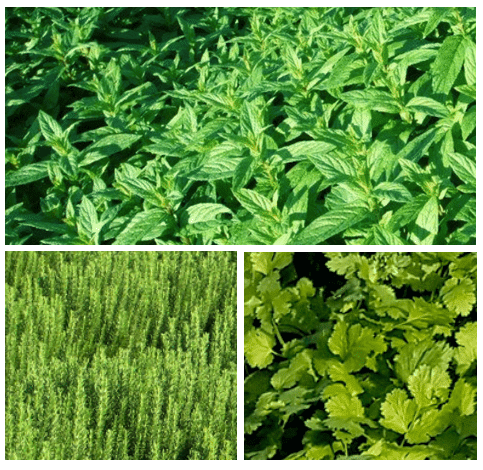
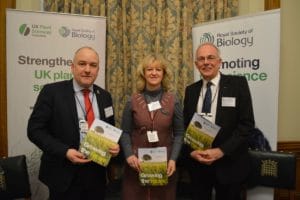


 The resilience of plants never fails to amaze. They provide food, feed, fuel, fibre and pharmaceuticals – while anchored in one place and having to tolerate changes in temperature, moisture and light, as well as being at the mercy of passing pests, grazing animals and invading pathogens. Last week saw a delegation of plant and crop scientists head to the House of Commons to celebrate the power of plants and ensure they stay high on the policy agenda.
 The UK’s excellence in plant sciences stands on the shoulders of thousands of person-years of painstaking, laborious specimen collecting, illustrating, preserving and storing samples to inform taxonomy and development. Years of increasingly effective plant breeding, enabled by an understanding of genetics, through to the last 50 years of molecular biology, the discovery and application of the first tools of plant transformation, the ability to sequence and synthesise DNA, and create novelty via synthetic biology.