A central signal sorting hub has been revealed for plants

Research Digest
Agri-TechE

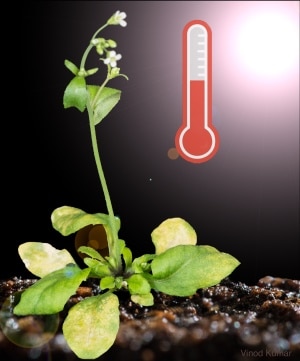
In the wild plants are constantly sensing and responding to a multitude of signals by appropriately coordinating biological processes.
Seasonal cues such as day length and temperature influence how quickly plants grow and how well they can fend off pests and pathogens. This remarkable ability is enables plants to thrive in their local environments.
Until now the mechanism that controls this process has not been well understood. New research from the John Innes Centre, which appears in the journal Cell Reports, sheds light on this fascinating question.
Dr Vinod Kumar of the John Innes Centre explains: “Our study reveals the existence of a central signal sorting hub, which fine tunes growth and immunity in line with key seasonal cues.”
At the centre of this signaling hub are DET1 and COP1, two key proteins known for their role in light signalling and growth control. This study exposes a novel role of these proteins in plant defense. DET1 and COP1 along with the transcription factor PIF4 control the coordination of growth and immunity in response to day length and temperature.
“We used Arabidopsis in our study. Given the evolutionary conservation there is a strong likelihood that this could also be true for other systems including important crops, ”added Dr Sreeramaiah Gangappa, the first author of the paper.
The next stage, says Dr Kumar, is to explore in greater detail to understand how the hub functions. “We have shown that a common signalling machinery is in operation for environmental signalling. The next exciting challenge is to understand the molecular mechanisms by which it operates.”
Understanding the mechanisms by which plants interact with their environment to define adaptive traits, such as growth and immunity, could be important in crop breeding in the long run – especially in the context of global climate change.
Read the full article; DET1 and COP1 Modulate the Coordination of Growth and Immunity in Response to Key Seasonal Signals in Arabidopsis

REAP 2018 – latest agri-tech

Agri-TechE

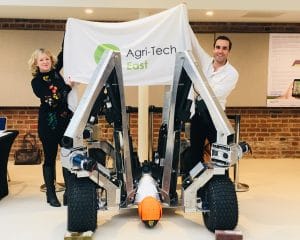
A small taster of the technology exhibition at REAP – featured in the video are: Thorvald robot from University of Lincolnshire; Analytik; Olombria; Drone AG; PlaterBio; Harry from Small Robot Company; EnviroMonitors; facial recognition from Consus Fresh Solutions; Robot-Fish from University of Essex. (more…)

Triple helix approach to agri-tech innovation underpins UK farming future

Agri-TechE

Belinda Clarke of Agri-TechE and Sam Watson Jones from Small Robot Company reveal Harry at REAP 2018

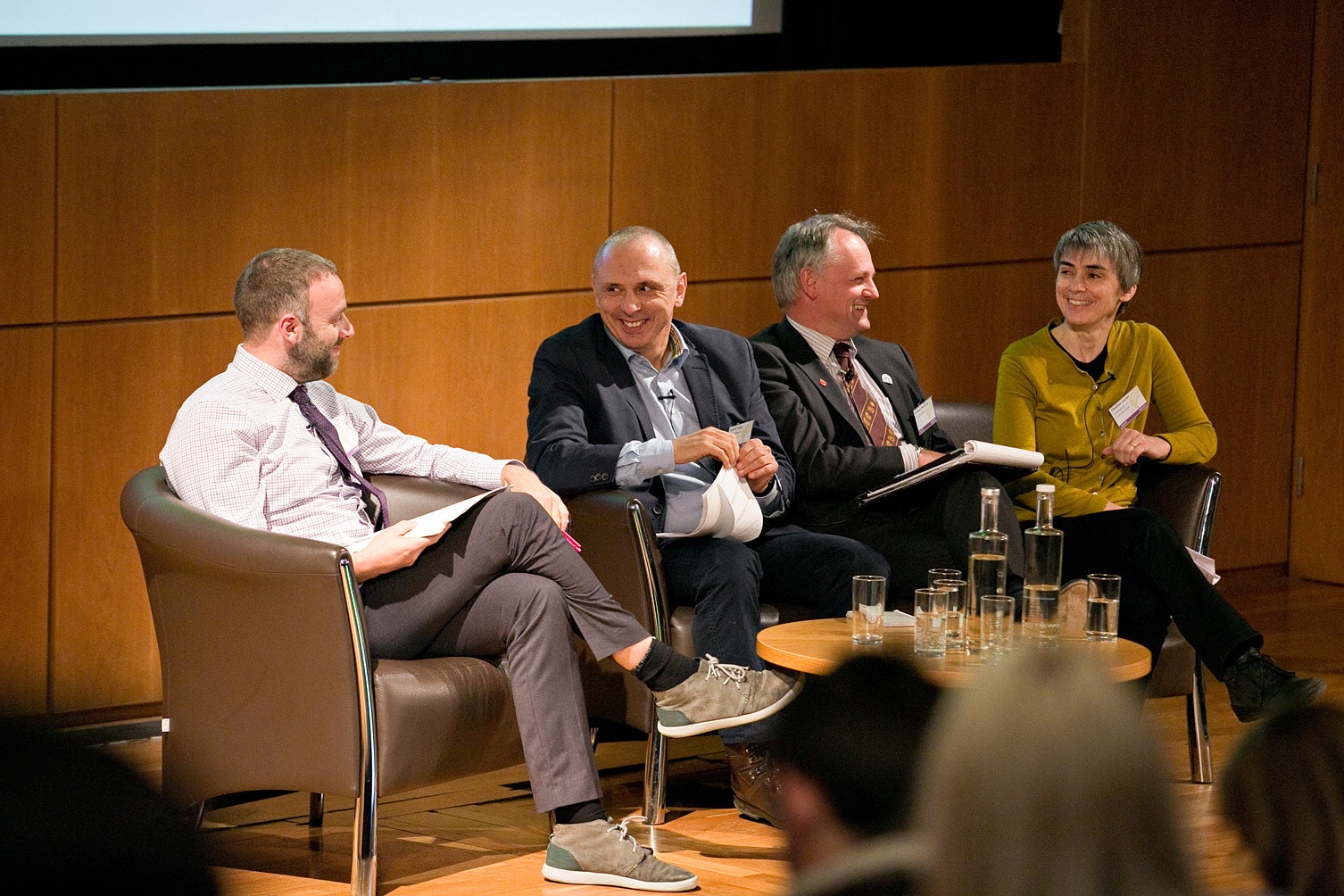
By delivering a ‘triple-helix’ model for innovation – which brings together industry, research and government – Agri-TechE is helping to facilitate the rapid growth of the agri-tech sector. Priorities for future investment in agri-tech is the theme for its fifth annual REAP conference, held on 7 November in Cambridge. The event started with an exclusive breakfast meeting where invited farmers were given the ear of government to give input into its R&D proposals, and culminated in a lively debate where experts from different disciplines argue their case for a technology that will provide the greatest returns. (more…)

Agri-TechE Week 2018: Solving the challenges of crop protection

Agri-TechE

Professor John Senior, Pro Vice-Chancellor of Research and Enterprise, introduces the event

This event at the University of Hertfordshire explored the innovative and cutting edge solutions being developed to improve crop protection in the face of environmental change.
The University of Hertfordshire works collaboratively with farmers, crop protection and plant breeding companies, government research bodies and agricultural charities, and the event emphasised that research is strongly linked to industry needs.
Some of these collaborations were the focus of discussion at the event, including: understanding interactions between light leaf spot and phoma stem canker in oil seed rape (ADAS, RSK, Uni of Herts); identifying resistance to phoma stem canker and light leaf spot (Uni of Herts, KWS); potato cycst nematode diagnostics (Syngenta and Uni of Herts through Keith Davie’s start up); and an automated smart trap for wheat pathogen detection which is near commercialisation (Uni of Hert, Bayer, FERA).
A number of cross sector initiatives were present at the event, such as Hertfordshire Science Partnership, which is involved in delivering healthy and sustainable food economy in Letchworth Garden City.
Also represented was The Green Triangle, a partnership between BRE, Rothamsted Research, St Albans City and District Council and Oaklands College, and discussion focused on how they are looking to promote green industries and sustainability (for example agriculture, environmental, construction etc).
A prime example of the application of a technology used in one discipline (in this case from the Physics Department) to agriculture is the use of optical remote sensing technology (LIDAR) for agriculture e.g. bio-forecasting. It could also be used for mapping water flow and monitoring soil erosion. LIDAR is extensively used for mapping in archaeology, and although it is still at proof-of-concept stage it sounds very exciting.
The event concluded with a tour of the University’s New Science Building; Laura Bouvet commented “Thank you very much for the tour – It was great to learn about exciting research on spore traps, genetic resistance against OSR diseases and nematode control.”
The afternoon concluded with a tour of the New Science Building

The afternoon concluded with a tour of the New Science Building

 
See more about Agri-TechE Week 2018

Agri-TechE Week 2018: Big data and the supply chain
Agri-TechE

Helping producers benefit from objective consumer insights was one of the subjects discussed at ‘Big Data and the Supply Chain’,  the Norfolk-based Agri-TechE Week event hosted by the Royal Norfolk Agricultural Association in partnership with University of East Anglia and Easton & Otley College.

Delegates got an overview of how different types of data can be used across the food supply chain. At the field level data includes: yield, weather (temperature, wind, rain fall), fuel consumption, engine performance. At the livestock level it will be: carcass composition, gut health, indoor environment data such as temperature, humidity etc. At the consumer level it includes: shopping habits such as where customers shop, what they buy, how often and how much is spent.  (more…)

Exciting programme of interactive events launched at REAP

Agri-TechE
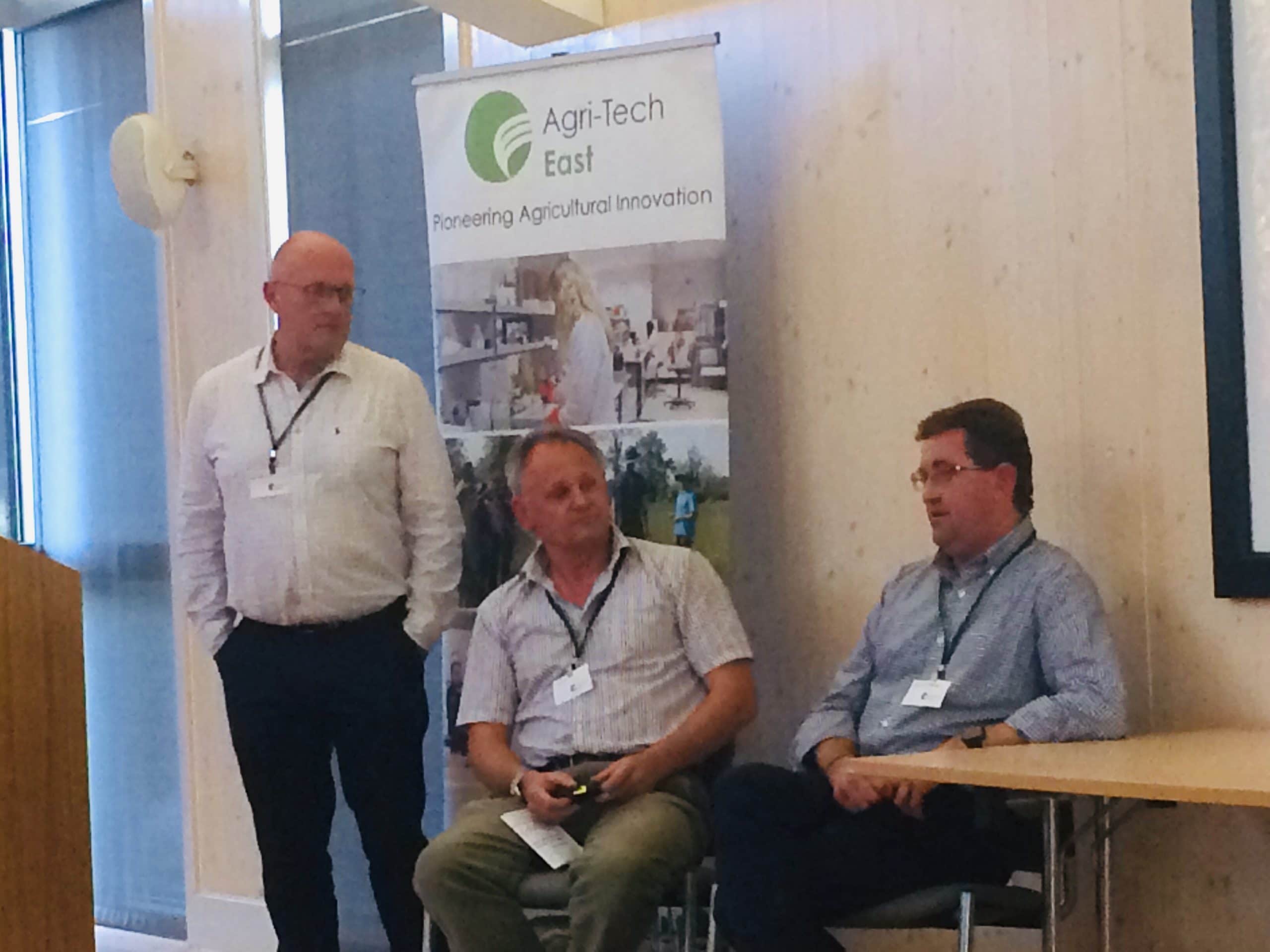
“The discussions and debate you have heard today is just the start,” Dr Belinda Clarke, Director of Agri-Tech, said at REAP. “Ideas generation is an essential part of the innovation process and we will be continuing this with a series of inspirational events in 2019.”
The outline programme is on the website now.
The focus of Agri-Tech’s approach is to help frame the challenges so that they can be understood by individuals with expertise in other areas. This leads to collaborations between people that wouldn’t otherwise meet, which can stimulate new ideas.
A good example of the type of projects that can emerge is this collaboration between two Agri-TechE members: Sentry, one of the largest farming companies in the UK, and early-stage company Yagro.

Met thorough Agri-TechE event

John Barrett, Sentry
John Barrett, Director at Sentry Norfolk

John Barrett is Director at Sentry Norfolk and here’s what he had to say about Yagro: “At Sentry we regularly review our farming practices to stay ahead of the curve, especially in this volatile time for UK farming. As a large farming company with many sites, it is essential we have best business practice across all farming operations.
“We came to know about Yagro through Agri-TechE and watched them from inception in 2016, keen to see how a new player in the industry would get on and differentiate itself. On behalf of our landowners and investors, we needed confidence that Yagro’s technology and business model would work.
“Our farms bought fuel in different ways; some through buying groups, others shopped around, and some had sole supply relationships. We wanted a unified best practice that all our farms could use – and that saved us time and money.
“We benchmarked our fuel buying against Yagro’s independent market data. The analysis showed that using the Yagro Marketplace for our fuel buying was an obvious way forward.”

Has it saved you money?

Yagro CEO Gareth Daviesat the Start-Up Showcase at REAP 2015
Yagro CEO Gareth Davies at the Start-Up Showcase at REAP 2015

“Yes, and plenty of it too! We’ve already saved nearly £4,000, and on track to save around £45k over a full year.
“What’s difficult to calculate is the time saving: some of our farms would spend a couple of hours on the phone ringing around suppliers just to get a price. Now, technology does it all for us, and we can focus on the value-adding aspects of farming, knowing that Yagro’s independent tech tool is working on our behalf in the background.”

Excited to be at the forefront 

“We are excited to continue development with Yagro, building more technologies to help us on farm, and it is great to be at the forefront of tech in UK agriculture. With savings north of £120k per year to be had, it’s a no-brainer.”
If you want to put innovation at the heart of your organisation in 2019 – put the events in your diary now!

Agri-TechE Week 2018: Above, Below and Around at Essex Uni
Agri-TechE
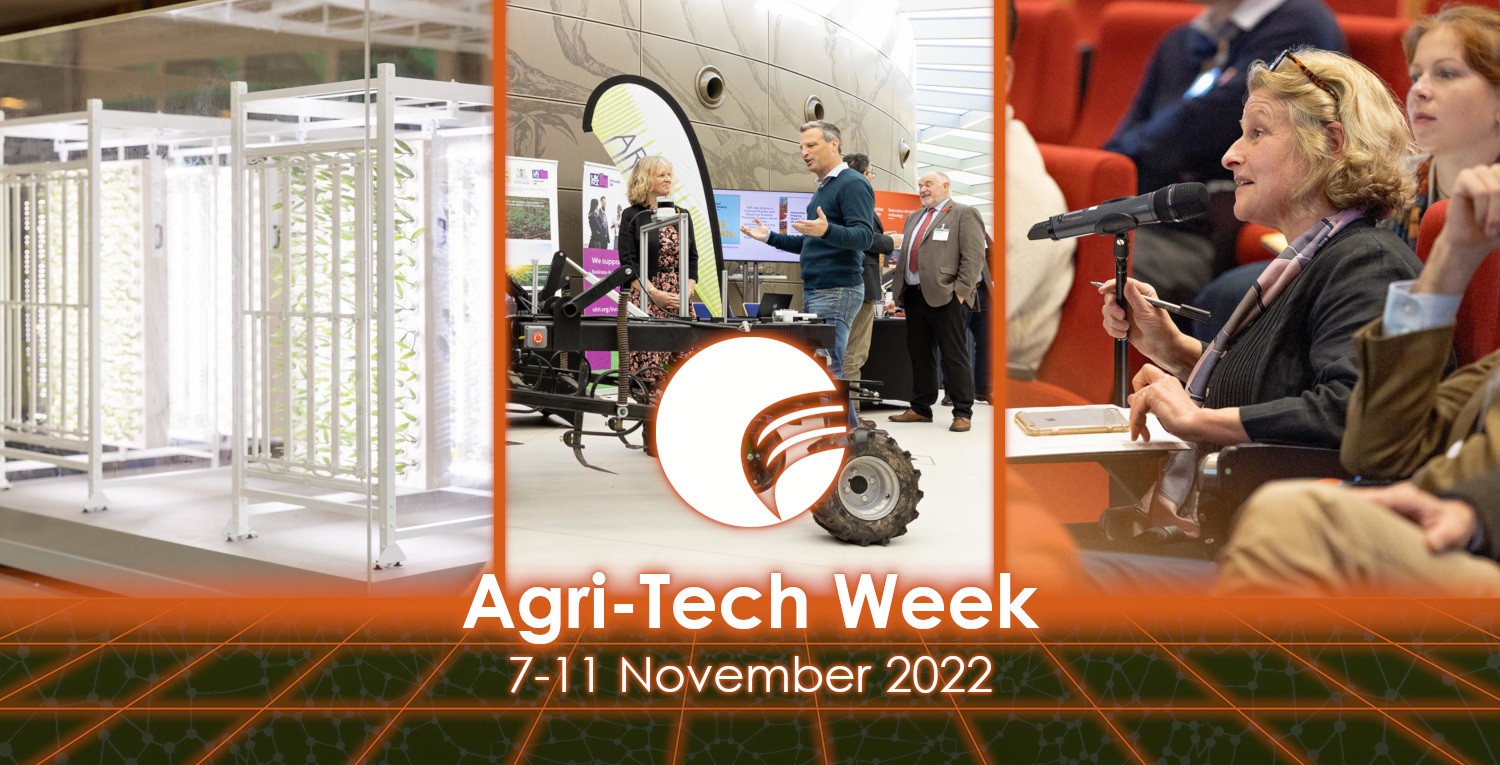
University of Essex  launched its new Plant Science Innovation Centre at its Agri-TechE Week event and showcased its £11.8 million STEM (Science, Technology, Engineering, and Mathematics) building in this Agri-TechE Week event.

The delegates enjoyed a journey  “Above, Below and Around”  with a number of demonstrations and talks about drones, agricultural robotics, plant health, soil health and a lot of other exciting research.

Jim Stevens from the School of Biological Sciences, Uni of Essex looking at chlorophyll fluorescence in strawberries.

The day started with Prof Tracy Lawson introducing the research in her group which is focused on photosynthesis, acclimation and stress. The group has pioneered research into chlorophyll fluorescence to measure plant health, from nutrient deficiency through to disease susceptibility.
Going below ground to look at biology and biodiversity of soil featured a talk by Dr Alex Dumbrell. He is investigating the response of Arbuscular mycorrhizal fungi, a beneficial type of fungi, to different levels of CO2. He is untangling data to better understand what this means in the context of climate change.
Dr Javier Andreu, lecturer in computer science at Uni of Essex poses with humanoid robot Pepper and Dr Kirstie Cochrane, EIRA director.

Presentations included a discussion of strawberry production at Tiptree – famous for their  delicious jams – to support the robotics, they are looking at the psychology of strawberry harvesting by tracking the eye movements of the pickers.
Laura Bouvet said it was a very enjoyable event: “It’s been a really good event today, with collaboration across sectors. It was interesting to see how Tiptree is collaborating with engineering dept at Essex Uni.
“A key message that came out during the networking and the presentations, was that the farmers were in the room to put some of the research outcomes into perspective. For example, looking at the Arbuscular mycorrhizal fungi in the soil and UAV for surveying.
“Dr Kirstie Cochrane rounded off an excellent afternoon of talks by describing how the University is enabling innovation in AI and biotech with the multi-partner project EIRA.”
See more about Agri-TechE Week 2018



Agri-TechE Week 2018: Scientific Advances in Agriculture

Agri-TechE

As part of Agri-TechE Week 2018 Earlham Institute presented a three-part workshop featuring Carousel Activities of live demonstrations, laboratory tours and finished with transforming food workshop discussions.
The aim of the event ‘Scientific Advances in Agriculture’ was to facilitate discussions between scientists on the Norwich Research Park and the local agricultural community to encourage greater collaboration.

from L to R: Frank Domoney (Anglia Maghreb Smart City), Luke Dewing (farming apprentice in the crop trials team at JIC) and Peter Bickerton (Earlham Institute)

The presentations included:
MinION live genome sequencing demonstration – Dr Peter Bickerton, Scientific Communications and Outreach Manager.
Biomanufacturing insect pheromones to control agricultural pests – Dr Nicola Patron, Synthetic Biology Group Leader.
The Future of Wheat Breeding – Dr Anthony Hall, Head of Plant Genomics.
The in-field crop monitoring system demonstration by Dr Ji Zhou, Phenomics Project Leader, was very popular as it featured the CropQuant robot.
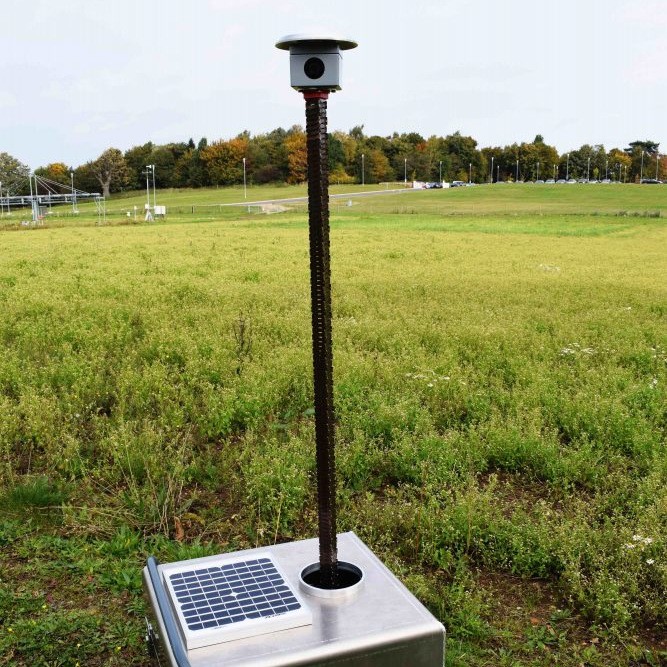
CropQuant provides continuous monitoring in-field of the micro-climate, providing unique insights into crop performance. It monitors the crop growth and its growing environment using a suite of sensors and an imaging ‘eye’ that can extend up to three metres. This allows visualisation of the crop canopy as it grows.
CropQuant
Dr Belinda Clarke, Director of Agri-Tech, controlling the CropQuant robot using her smartphone, which had been hooked up to be able to wirelessly control the robot (which had previously appeared at REAP 2017).

The data is processed using machine-learning based algorithms to create a very detailed picture of the way that a particular variety of wheat grows in the field, allowing comparison between different genotypes and a better understanding of how performance can be enhanced. It is well known that there is often a big gap between the potential yield of wheat and that actually attained.
The data obtained from CropQuant will allow analysis of the multiple factors involved to provide better models for forecasting and also decision making about application of fertiliser or the best timing for harvest. Dr Ji Zhou explains that the environmental factors that determine crop growth – soil moisture, humidity, temperature (ambient and soil) and light level – can now be measured easily with cheap sensors built into the robot, which then feed into the growth predictive model.

The event was very successful; Dr Belinda Clarke commented: “It was a good evening last night at Earlham – they were really thoughtful about how they organised the event and there were a number of farmers there, which was excellent.”

Earlham Institue
L to R: Philip Simons (Prime Agriculture), George Leonard (Home Farm Nacton), Luke Dewing (farming apprentice in the crop trials team at JIC), Karim Gharbi (Earlham Institute), Iain Flint (G’s Growers), and Frank Domoney (Anglia Maghreb Smart City)


See more about Agri-TechE Week 2018

Thinking beyond boundaries

Agri-TechE Blog
Agri-TechE

Thinking beyond boundariesWith conference season upon us again, we’re revving up for the wealth of commentary, insights and opinions that will be shared across the industry. The recent World Agri-TechE Innovation Summit in London saw investors, entrepreneurs and agri-businesses converge to discuss the new trends, opportunities and challenges facing the industry – with the aim of “building agri-food systems fit for the global consumer.” (more…)
Hackathons are international phenomenon

Agri-TechE

HackathonAgro 2018The winning team from the Uruguay HackathonAGRO are to join us at REAP and we are looking forward to comparing learning points.

HackathonAGRO is co-organised by the British Embassy Montevideo and took place in September at the Expo Prado 2018.
It was an open competition for researchers, entrepreneurs and experts in information technologies, agriculture and business. The other organisers are the Cámara Uruguaya de Tecnologías de la Información (CUTI), Asociación Rural del Uruguay (ARU) and Agencia Nacional de Desarrollo (ANDE).
The challenge was to develop a business model and a viable product or prototype capable of using technology to solve a defined agricultural problem.
Four challenges were presented to the participants, each team had to pick one and had 48 hours to develop a solution. They were supported by mentors and given help in the form of presentations made by experts in different areas.

The challenges were:

  1. Harness and sustainable management of natural fields for livestock production
  2. Monitoring and effective control of ticks on the livestock fields
  3. Recognition and control strategies for Capim Annoni, a silent invader
  4. Monitoring and control of movement and estate stock per paddock and field

11 teams took part in the competition.  The winners presented a solution for the control of Capim Annoni, known as the ‘tough love grass’, a grass that is a similar pest to blackgrass in the UK.

Tackling the Brazilian equivalent of blackgrass

The team composed of Emilio Sarturi, Manuel Lorenzo and Joao Antonio Martins found a way to track down Capim Annoni using a multi-spectral camera to identify it effectively, and selected appropriate equipment to remove it once found.
Each team was formed by people from different disciplines. For example, in the winning team’s case, Manuel Lorenzo studies administration and works at Tata Consultancy Services, while Emilio Sarturi works in the banking software area, and Joao Antonio Martins offers consulting services in farming administration.
Lorenzo said: “It was a learning experience, working with people from other areas opens your mind.”  Team-mate Martins said the team were confident in the viability of their solution.
Leonardo Loureiro, President of the Uruguayan Chamber of Information Technologies, mentioned that he was profoundly impressed by the overall quality of the presented proposals.
As a reward the winning team will travel to London with flight tickets and accommodation included, to share their insights with attendees at the REAP 2018 conference, and will also visit Harper Adams University, which specialises in careers linked to agronomy and technology.
We are looking forward to welcoming them to REAP.
REAP 2018

New chemistries deliver major innovation in fertiliser

Agri-TechE

A innovative company based at the Rothamsted Centre for Research and Enterprise has made a breakthrough by combining biological and chemical technologies in the development of a new type of fertiliser.
This new approach to agro-chemistry and others are to be discussed at the next Pollinator meeting on 9th October.
With regulatory uncertainty for some current crop management solutions this meeting is particularly timely, Dr Belinda Clarke, Director of Agri-Tech, comments: “We know farmers and growers are keen to be involved in the direction and implementation of trials of new technologies, such as fertilisers, which is exactly why we hold ‘Pollinator’ events to provide an opportunity to hear first-hand about the pipeline of agri-tech innovative.”

New approach to fertiliser

Nitrogen is vital to build plant proteins and increase growth, however it is thought that less than 40 per cent of nitrogen in commercial fertilisers makes it to the plant. “You either have a water soluble product that is leaked out, or locked up depending on the soil’s characteristic. Or you have something that isn’t water soluble and is hard for the plant to absorb,” explains Cyril Cappe, CEO of plant and animal nutrition specialists TimacAgro UK.
TimacAgro UK have a team of over 100 R&D scientists working to develop new fertiliser technologies at their parent company, the Roullier Group’s Global Innovation Centre in France. By taking into account the full crop cycle and focusing on the nutrient efficiency, rather than just the fertiliser’s nutrient quantities, TimacAgro UK claim they have managed to develop the industry’s first major innovation in fertiliser for decades.
Aerial view of RothamstedTimacAgro UK are based at the Rothamsted, where the world’s first commercial mineral fertiliser, single superphosphate (SSP), was invented. This led to the development of the modern plant nutrient industry in the mid-1800s.
TimacAgro will be joined by other large and small developers of next generation chemistries including Arlabion, Bayer Crop Science, De Sangosse, ECO-FP and Hockley Agro at Rothamsted’s Harpenden centre (AL5 2JQ) on 9 October, 4-7pm.
More information about the event is available at agritechenew.wpengine.com/events

Beware the hype!

Agri-TechE Blog
Agri-TechE

Expectations have never been higher about the promise and return for agricultural technologies. Enlightened interpretation of “big data,” routine deployment of robotics and automation, connected devices and farm machinery via the “Internet of Things”, and distributed ledger technology to build trust across the agri-food supply chain.
All are indeed poised to potentially transform and disrupt the industry.
Yet amidst all this anticipation, it is worth reflecting on the need to manage carefully the expectations of farmers, investors, politicians and the media about the speed, scale and cost of widespread implementation of disruptive innovations.

Beware of hype

The so-called “hype curve” was developed in the USA and, while it has been somewhat controversial in its use and interpretation, it aims to illustrate the phases of maturation of emerging technologies
Since the publication of the UK’s agri-tech strategy in 2013, Government has clearly demonstrated its strong commitment to agri-tech.
The strategy was launched with £160m of funding to create the four Centres of Agricultural Innovation, and launch the agri-tech Catalyst fund for collaborative R&D.
More recently the Industrial Strategy Challenge Fund has seen the announcement of £90M of investment towards “transforming food production; the first call has a strong technology flavour.
Yet this money comes with high expectations from Government, not unreasonably, that its investment will result in increased productivity, wider adoption of technologies on-farm and a reduction of inputs. Which in turn will lead to more, higher skilled jobs, increased exports, and a greater contribution to the UK economy from agriculture and horticulture.

But the clock is ticking….

The short-term nature of election cycles mean that the pressure is on to deliver. The four-year Industrial Strategy covers all sectors, so agri-food is seen as just one of a number of industries which need to demonstrate a return on the Government’s investment.
Similarly, investors are keen to see new agricultural technologies rapidly gaining traction in the market, increasing the valuation of the company, and hence their potential returns when the company is sold or floated. Even the media risks becoming bored of what they perceive as too many “me-too” solutions and are keen to uncover the Next Big Thing.
Whether you think the hype curve mirrors real life, the risks and the issues facing agri-tech are very real. Decisions – around public policy, private investments and market analysis are all eagerly anticipating the launch of a raft of new technologies and solutions.

Yet innovation needs patience

To launch a new tech-based product or service onto the market before it is truly robust, reliable and ready risks undermining the market and leads to disillusionment and rejection.
Worse, we risk seeing policy decisions made based on the anticipation and expectation of widespread commercial adoption of a new way of farming – such as automation with robotics – within the very short-term.
It is vital that those making decisions based on the expectation of the performance of new technologies do so with their eyes open and their minds informed. A realistic sense of cost, timescale and the potential hurdles to be knocked down in order to see widespread commercial reality is crucial.
As welcome and vital as financing is for new innovations, sometimes just throwing money at the problem and expecting rapid results won’t work.
Here, there is a crucial role for government to support this investment with the right levers and incentives…..and patience.