Exciting programme of events lined up for 2020!

Agri-TechE

It’s our mission through 2020 to focus on some of the most relevant emerging technologies and explore their real value for the agriculture of the future. Mindful of the changes facing the industry and the central role of innovation and delivery of impact, our events programme aims to help you view new opportunities with a fresh eye and an open mind. Here are a few of the events we are planning (subject to change – check out our events page for up to date information).
 

Learn, Celebrate and Network!

13th January, Storey’s Field Centre, Eddington, Cambridge
With some exciting new announcements, Agri-TechE members are warmly invited to join us for afternoon tea and meet key leaders in Innovate UK and Defra responsible for funding and policy in the agri-food sector. Join us to meet new collaborators, customers and connect with other members of the UK’s leading agri-tech innovation ecosystem!
Read more here.
 

Nothing to Wine About – Uncorking the Opportunities for Innovation in Viticulture

11th Feb, Cambridge Consultants, Cambridge
The transformation of plant products into alcohol is one of the oldest industries which is both art and a science. But technology is helping change the way vineyards and orchards are managed, using state-of-the-art technologies and decision-making solutions. Here we’ll be discussing the opportunities and entry points for tech to continue to support the growing viticulture industry and showcasing some of the current solutions and market opportunities. And maybe a sample or two…
Read more here.
 

Controlled Environment Agriculture – The Industry is Growing Up

18th March, John Innes Centre, Norwich
It’s back! Our 2019 CEA event attracted the key players in the vertical farming industry from the UK and beyond, as well as interested growers, technologists and researchers. So we’re doing it again in 2020! With talks, panel sessions, discussion and exhibition opportunities, as well as an update on the progress of the global vertical farming industry, we’ll be celebrating the success so far and exploring the bottlenecks still to be busted.
Read more here and see what happened at the 2019 CEA event here.
 

Keeping a Sunny Outlook – De-risking Agriculture Through Weather-Tech

April 29th, Hethel Engineering Centre, Norwich
Forecasting, monitoring and mitigating the impacts of weather on agriculture has always been at the heart of farming. This Pollinator will explore some of the start-ot-the-art solutions to help farmer stay one step ahead of the weather, and as climate change brings ever more extreme weather events, how the supply chain can insure against and help mitigate risks.
Read more here.
 

From Farmer to Pharma—and Beyond

14th May – Fowden Hall, Rothamsted Research, Harpenden
The use of plants for regulated therapeutic use and other applications is growing worldwide and represents a major opportunity for growers to produce higher value crops. This is your opportunity to meet the key players in the value chain and learn more about the agronomy of these crops, new variety development, processing solutions and needs, regulatory requirements and potential routes to market.
Read more here.
 

GROW Agri-TechE Business Competition Plan—Final

4th June, Sainsbury Laboratory, University of Cambridge
An invitation-only opportunity to meet and question the finalists planning new tech businesses for the industry.
Could you be one of those finalists? Do you have a good agri-tech idea or business concept and want to take it to market? Find out more about GROW here.
 

Novel and Alternative Crops – Improving the Rotation AND the Bottom Line?

17th June, 1.30 – 6.30pm, Earlham Institute, Norwich
Consumer tastes and trends are changing, and with them is an opportunity for agriculture. From ancient grains to unusual legumes, an increased demand for veg-based products and plant milks, this represents a chance for change. We’ll be hearing about the ups and downs of growing alternative crops to explore new markets and drive on-farm profitability, as well as potentially growing crops suited to a changing climate.
Read more here.
 

Seeing the Wood for the Trees – Innovation for Agroforestry and Soil Carbon Capture

16th September 2pm – 5.30pm, Suffolk
Silvo-arable and silvo-pasture systems, as well as farming forests could help UK agriculture reach next zero carbon emissions by 2040. But tree planting requires long-term planning and a clear understanding of the natural capital potential as well as anticipated economic benefits, as well as tech for tree management, including mapping and visualisation above and below ground, carbon capture and incentives.
Read more here.
 

Agriculture 101

22nd September, Future Business Centre, Cambridge
Revisiting our sell-out entry-level overview of the industry for those new-to-agriculture.
Read more here.
 

Advances in Breeding for Agriculture – New Tools for New Solutions

8th October Niab, 1.30pn – 6.30pm Sophi Taylor Building
Improvements in crops, livestock and insects are possible thanks to advanced tools of breeding, using molecular and genetic techniques. Here we will have an update on where advanced breeding is helping harness new and ancient traits as well as exploring the regulatory landscape for their management and application.
Read more here.
 

Agri-TechE Week 2020

9th—13th November, Various locations
Agri-TechE Week is back once again! An opportunity to meet new customers, clients, collaborators and customers colleagues and find out the latest in new technologies and innovations in the agri-food tech value chain, with our central REAP Conference.

One Agriculture is a great theme says Adrian Percy CTO for UPL

Meet the Network
Agri-TechE

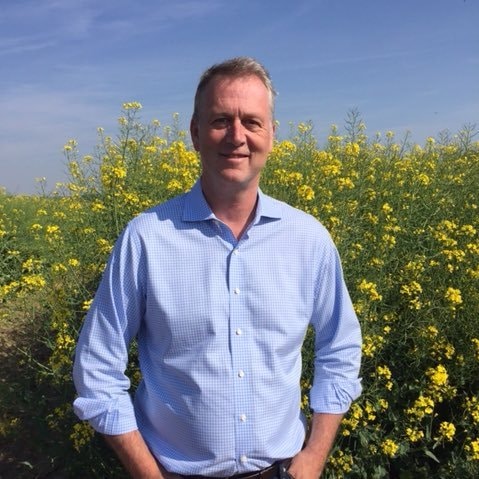
Adrian Percy, CTO for UPL
Adrian Percy, CTO for global food solutions UPL is to chair the REAP sofa session

“One Agriculture is a great theme for the REAP conference. There is a need to drive innovation in a different way from what’s traditionally been done within our industry,” comment Adrian Percy,  recently appointed Chief Technology Officer for the global crop solution company UPL, who is to chair the Sofa Session at Agri-Tech’s inspirational REAP conference.
He continues: “The generation of entrepreneurs coming through are purpose driven. I think they’re looking to have an impact that can be measured in many ways, including something that is good for the planet.
“Increasingly, people are looking for that win-win in terms of a product that is efficacious, is profitable and useful and also enhances environmental sustainability. When you’ve got all of that you really are in a sweet spot and have the basis for a successful product or business. Most of the start-ups working in this area are very keenly attuned to all these different aspects.”

Open innovation approach

UPL, is headquartered in India with an R&D hub centred in North Carolina, the organisation is looking to create win-win situations for all its stakeholders.
UPL has chosen to not develop an extensive in-house research platform and pursues a different R&D approach to many of the incumbent agrochemical companies. Instead it partners with entrepreneurs and external scientists to capture the best ideas and get disruptive technologies out into the market, by providing strengths in in-house development, field trials, regulatory affairs leveraged with an international footprint.
This novel approach to open innovation is the reason why Adrian joined UPL; he comments: “It is a really exciting approach. All the big crop protection companies with their own internal discovery engines are struggling to keep the same innovation rate of the past. At the same time, there is tremendous development in new scientific approaches coming from smaller companies and across from different sectors, such as bio-pharma.
“UPL is using its Open Ag approach to drive innovation in a different way from what’s traditionally been done within the industry. It believes that food production needs to undergo a transformation, which will be driven by new technology.”

Zeba buffers soils against adverse impacts

UPL Zeba is a patented soil enhancement technology, the culmination of a research led by USDA.
UPL Zeba is a patented soil enhancement technology.

Recent innovations at UPL include Zeba, a product based on corn starch which increases retention of water in soils and then degrades providing food for microbes improving soil health.
Adrian continues: “Zeba sits on both the axis of water management, water efficiency, water saving but also soil health. This is the type of technology that is needed to supplement everything that’s already been done with nutrition and fertilisers and crop protection tools”

Advisor to agri-tech investor

Alongside his role at UPL, Adrian is also an advisor to early-stage companies and works with a west coast USA venture capital group, Finistere Ventures, which is actively investing in agri-tech. So, he has visibility of much emerging agri-tech and is looking forward to meeting the innovators at REAP.
“REAP will provide a  great opportunity for dialogue about concerns for the future and the opportunities to address them with new technology and approaches. The people we’ve got on the panel at REAP are fantastic examples of those who are looking to positively impact our planet.
“It’s going to be fun – I’m looking forward to it.”
Find out more about REAP at reapconference.co.uk

Farm-led R&D offers more than numbers

Agri-TechE Blog
Agri-TechE

Farming businesses that participate in research have ‘first footer’ advantage when it comes to the adoption of new techniques and tools, but it also requires an investment of time and resources and this can be difficult to balance with the demands of the day job.
However we have seen the far-reaching benefits first-hand.

Funding for farmer-led research 

It was interesting to hear feedback at the REAP Farmers Breakfast last year, when Defra ran the second of two workshops looking at how farmers can be encouraged and supported to engage with research programmes.  The response was positive but the need for professional project management of the projects was stressed and also the need to researchers and technologists to have some common domain knowledge.
Encouragingly we have seen that a number of the recent funding calls reflect feedback from farmers.
To support the call for more domain knowledge we ran a sell-out Agriculture 101 event a few weeks ago to offer insights into the industry for newcomers.

There are many ways to implement farmer-led research and one example is a field lab. 

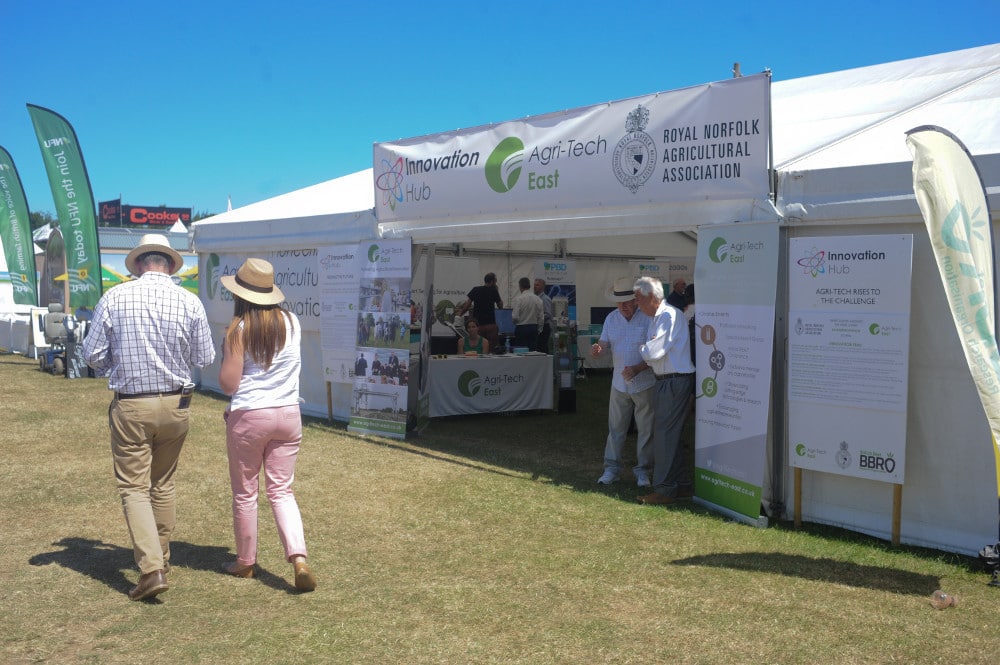
It was at the Innovation Hub at the Royal Norfolk Show that the idea for a farmers’ trial of liquid digestate came about.  Six farms were involved in the Innovative Farmers Field Lab and the project had some specific objectives around determining nitrate levels and application times.  But interestingly, when the farmers came to present at a recent Pollinator and hear the findings of the research the numbers were not their key concern.
Field Lab presentationThey talked about the Breckland soil being like ‘sand through their fingers’ and the need to do something to improve the organic content to ‘ensure there was soil for future generations’.  The trial had become much more than just an academic exercise to reduce the cost of inputs.
“It is a fantastic journey we are on,”  commented Andrew Blenkiron.  “The real numbers only time will tell, but we are making an effort to do something better and we will make it work.”
Stephen Temple commented As farmers we need to be seen to do the right thing for emissions and the planet.”
James Beamish, Farming Director of Holkham Estate,  explained his longterm aim was to reduce dependence on artificial fertiliser and move to all organic amendments. The farm grazes sheep on the cover crop over the winter returning manure to the ground. Nick Sheppard from Upton Suffolk Farms said his soil was becoming ‘blowing sand’ and his aim was to build for the future.
The benefits of applying the digestate also went beyond the measurables of the study.  The discussion with other farmers in the room quickly went on to water retention and wider management of pests and weeds, the role of cover crops within a rotation.
The farmers were also more interested in observed differences, one had taken aerial images to look at the colour of the cash crop across the trial site. The number of earthworms and the texture of the soil were more tangible outcomes than the numbers.
The scientific work led by Niab is revealing interesting findings particularly around the microbial ecosystem within the soil and the nutrient cycling but the scientists quickly realised there are big differences between a controlled laboratory experiment and aLydia Smith Field Lab field trial on a working farm.

Unpredictable weather, time pressures, unfamiliarity with data collection techniques, inconsistencies between the protocol on different farms, intrinsic differences between and within the trial strips have meant that new thinking is required to determine if the findings are significant in scientific terms.

Integrating data 

Putting field data into a wider context makes it more meaningful and adds value.  Comparing the results between the six farms, created a discussion around the reasons for the differences, for example, did the timing of application make the difference or was it the heavy rain at the start of the season?
The multi-factors involved lends itself to data modelling and analysis.  This is becoming more accessible as farm management software provides a nationally standardised system for recording crop input application, field and yield maps and animal movements and medication.
We are seeing more systems emerging that can help make sense of diverse data inputs and use them for prediction or for modelling different scenarios. With these developments farm-based research will become more meaningful.

Need for consistency

As the importance of generating valuable intellectual property has increased in recent decades, it is critical for researchers to be able to evidence the date and conditions under which a new discovery was made. In the laboratory, recording of experimental design, conditions, results and conclusions requires meticulous detail, with the aim that other scientists can replicate the experiment if necessary.  It proves when and how the concept was originally created and the results generated, which is important to show who had the original idea.
No-one is suggesting that on-farm research requires this level of detail and potential scrutiny, but perhaps now is the time to create a standardised system of recording research conditions and results.

Call for simplified data collection

Creating a comparable and simple way for recording experimental approaches and results from on farm trials will help ensure value capture, reduce duplication and help to  reveal new insights and long-term trends.
(And while we’re talking R&D, don’t forget to talk to your accountant about claiming R&D tax credits….farming is the most under-utilised industry for claiming this really important benefit!)

Benefit of on-farm diagnostic for wheat rust fungi demonstrated in Ethiopia

Research Digest
Agri-TechE

Wheat rust fungi have threatened crop production almost since the dawn of agriculture. There are many different strains of rust, all with unique characteristics that cannot be told apart without lengthy in-lab tests. The best defence is to grow varieties resistant to infection and now scientists have developed MARPLE, a hand-held DNA sequencing device, that can define the precise strain of the wheat rust fungus in a farmer’s field within just 48 hours of collecting samples.
Knowing which wheat rust strains are in the local area can feed into advising which wheat varieties are safest to grow. This new mobile surveillance technique will give researchers  vital time needed to spot and control emerging epidemics.

Trial in Ethiopia

Benefit of on-farm diagnostic for wheat rust fungi demonstrated in Ethiopia
Image from John Innes Centre

The best way to stay ahead of the rusts is to quickly identify and track the disease in the field, the new approach is described in a paper; ‘MARPLE, a point-of-care, strain-level disease diagnostics and surveillance tool for complex fungal pathogens‘  published in BMC Biology. It shows how a research partnership reduced the speed of diagnostics from many months in high-end labs, to just 2 days from the side of an Ethiopian field.
Dr Dave Hodson, a rust pathologist at CIMMYT in Ethiopia and co-author comments: ‘Knowing which strain you have, is critical information that can be incorporated into early warning systems and results in more effective control of disease outbreaks in farmer’s fields” said

Rapid diagnosis

The new MARPLE (Mobile And Real-time PLant disEase) diagnostic platform the researchers created, targets parts of the rust genetic code that can be sequenced on the portable MinION sequencing platform from Oxford Nanopore.
First author Dr Guru Radhakrishnan from the John Innes Centre explains: “This helps us tell strains apart and quickly recognise those we’ve seen before or spot new ones that could be a new threat.”
“What started as a proof of concept is now already being used in the field,’ said Dr Saunders, “this development will enable increased surveillance of crop disease pressure and more targeted control.”
For their work on creating the MARPLE platform, the team were awarded Innovator of the Year award for international impact from the Biotechnology and Biological Sciences Research Council in May this year. Following this award and through the support of the CGIAR Inspire challenge and the Delivering Genetic Gain in Wheat Project, a further four field stations across Ethiopia will be setup to use the MARPLE mobile lab.
“This is real national and international work that ultimately helps the resource-poor farmers” said Dr Badada Girima, Rust Pathologist, Delivering Genetic Gain in Wheat program.
Read more on the John Innes Centre website.

Agri-TechE named Networking Group of the Year at SME Cambridgeshire Business Awards

Agri-TechE

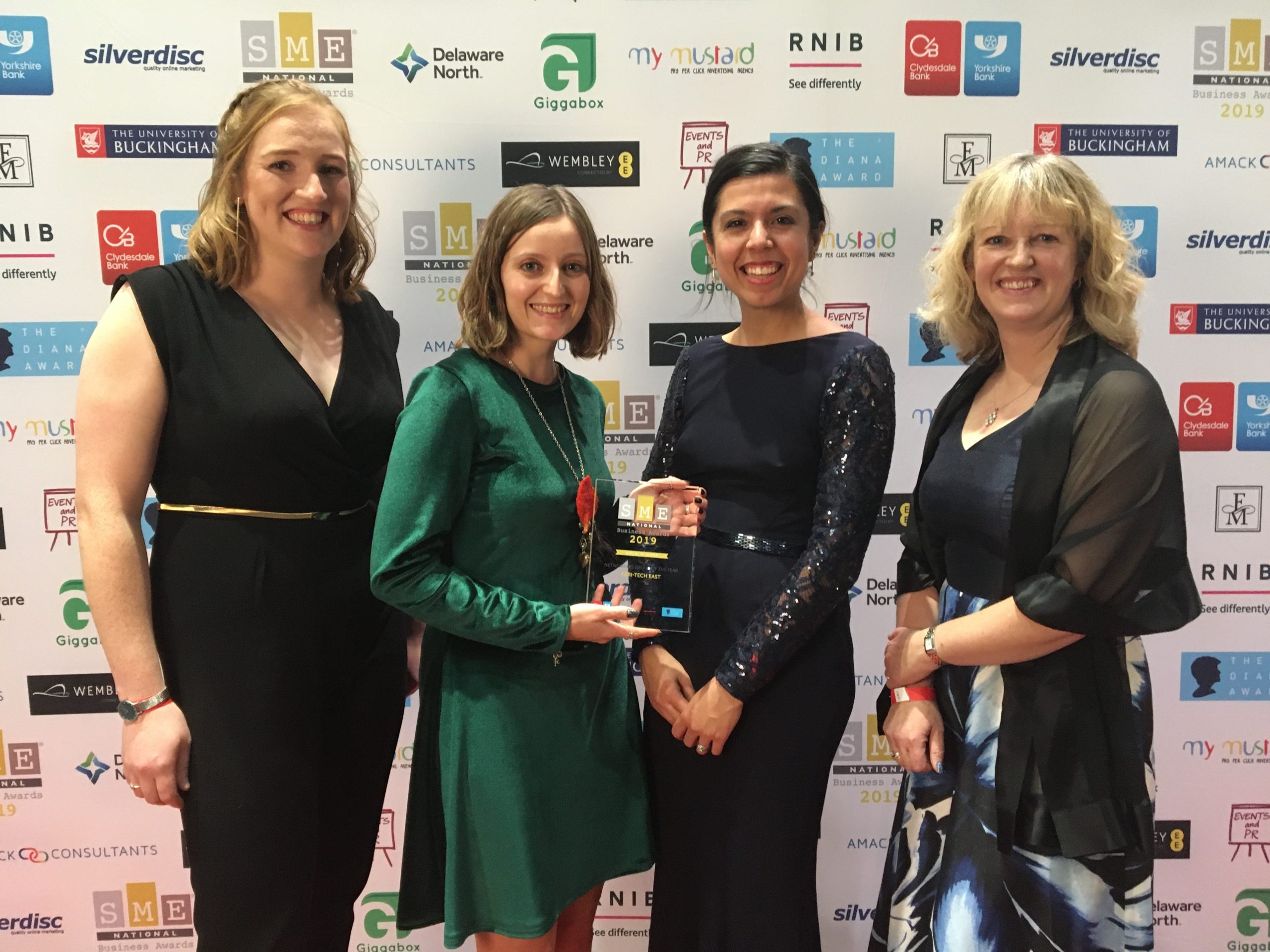
Networking Group of the Year 2019 - AwardWe are excited to announce that  Agri-TechE was named Networking Group of the Year at the SME Cambridgeshire Business Awards during an awards ceremony at Duxford Imperial War Museum on Thursday 4 July. The awards celebrate businesses and individuals that have demonstrated success and provided an impressive contribution within their industry.
Belinda Clarke, Director of Agri-Tech, says: “To win an award is always an honour, particularly as Cambridgeshire has many excellent networking groups and organisations, many of whom are very well established. In just five-years our network has attracted many high quality businesses showing the value of membership. 
“We are not geographically restricted to the “east” – our members come from far and wide and we work hard to provide membership benefits that reflect the increasingly international outlook of our network.
SME Award winner - Networking Group of the Year 2019“To win a business award is always special – and as we are often mistaken for being government funded it is good to have recognition that Agri-TechE is a business!  We receive no core public funding and as such are an independent commercially-driven organisation that has grown organically through membership, sponsorship and event revenues.
“This award is a great endorsement for the hard work of the team and huge thanks go to all of them, particularly Becky, Laura and Fiona, and our members who support the work we do and the wider agri-tech ecosystem.”
If you are interested in joining Agri-Tech’s award-winning network take a look at the benefits here, as well as the businesses you’ll be joining here. And you don’t even need to be a member to enjoy our events – see what networking opportunities we provide throughout the year here.

Innovation Hub – What will farming look like in the year 2030

Agri-TechE

We asked exhibitors at the Innovation Hub at the Royal Norfolk Show to share their views of the future, to identify the drivers for change and to show how their technology is part of the roadmap.

“We see a future where automated machinery will work collaboratively. For example imaging from drones will be used to direct sprayers to target specific areas of the field at exactly the right time, reducing costs and chemical use and minimising soil damage.”
“We’ve seen the increasing adoption of sensors and drones; the next step is integrating their data into ‘Smart Farming’ frameworks which will enable farmers to maintain yields while reducing inputs and improving biodiversity.”

“From water quality monitoring to animal tracking to soil pH, as well as vehicle tracking, pumping systems and light levels, all of it will be in one place. In addition, the system itself can make decisions when necessary.”

Click here – To see more comments and photographs from the show

HRH Countess of Wessex at agri-tech Innovation Hub
HRH Countess of Wessex meets Megan Platt and Debbie Heeks of Harper Adams

HRH Countess of Wessex talks to David Aarons of enLight

University of Essex at RNS 2019 2
Visualising plant photosynthesis

https://www.agritechenew.wpengine.com/royal-norfolk-show-innovation-hub-2019/

Call to participate in National Food Strategy

Agri-TechE

Do you have strong feelings about the future of the UK’s food system?  What do we need to make it fit for the 21st Century?
National Food Strategy National Food StrategyHenry Dimbleby – co-founder of restaurant chain Leon and of the Sustainable Restaurant Association – has been appointed by Environment Secretary Michael Gove to lead the first major review of the UK food system in nearly 75 years.

He will investigate the entire food system, from field to fork, and consider what changes are needed to ensure that it:

  • Delivers safe, healthy, affordable food, regardless of where people live or how much they earn;
  • Is robust in the face of future shocks;
  • Restores and enhances the natural environment for the next generation;
  • Is built upon a resilient and sustainable agriculture sector;
  • Is a thriving contributor to our urban and rural economies, delivering well paid jobs and supporting innovative producers and manufacturers.

His recommendations will result in a new National Food Strategy, set to be published in 2020.
If you want to contribute to the discussion then more information is available here. 
 

Smart and Sustainable – Innovation Hub at the Royal Norfolk Show

Agri-TechE

Smart and sustainable is the theme of the Innovation Hub at the Royal Norfolk Show.  As the cost of technology for sensing and monitoring falls, and powerful computing becomes more available, it is becoming feasible to situate low-cost detectors in the field, on machinery or on drones to collect information about crop performance, weather, soil, pests and post-harvest diseases. This information can then be used for remote management, directing autonomous vehicles or strategic planning and modelling.
BBRO – showing how soil can be visualised in three dimensions to help growers understand the way plants interacts with the soil. Also a novel infield aphid monitoring and testing system supported by web-based reporting that makes it possible to map virus transmission across the whole of the UK sugar beet growing region.
Delta-Tthe benefits of current soil sensors and profiling systems that support canopy analysis. Communications between sensors and with farm systems is increasingly important and the latest dashboard offering will show how this is achieved.
DroneAG will be showing its range of drones and how AI can be used to extract insights from raw data.
enLight will be using a live feed from Honingham Thorpe Farms, to show how real-time data collected from sensors detecting: water levels, bird scarer, power monitoring and grain store monitoring , can be displayed to assist remote management.
Harper Adams University demonstrating how automated vehicles, hoeing machines and spray drones can further reduce chemical usage, compaction and human labour
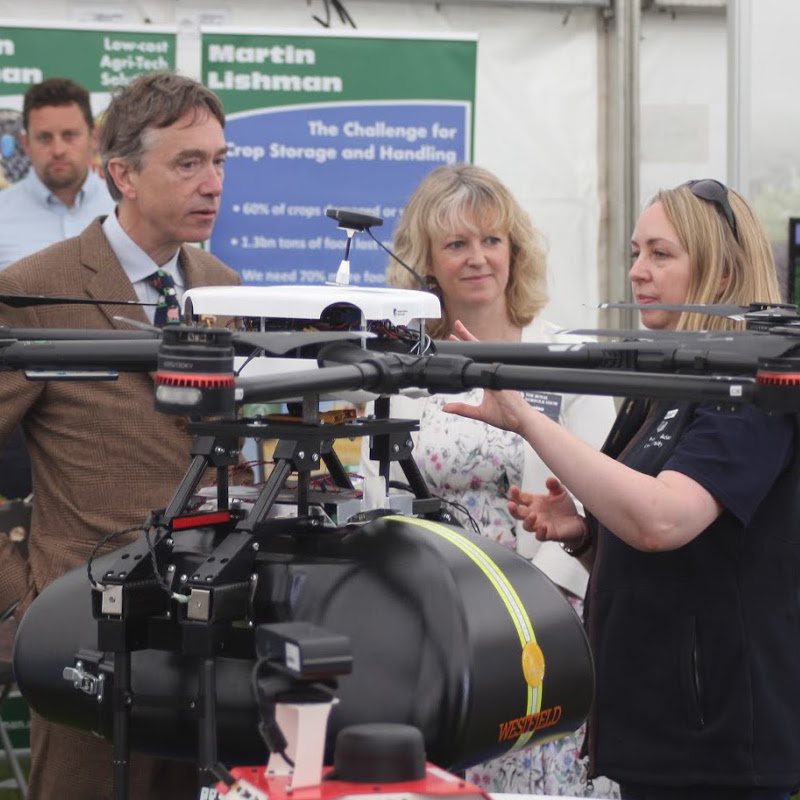
Martin Lishman improving post-harvest storage with energy efficient crop cooling systems and ImpacTrack is a new, low-cost data logger that replicates the movement of fruit and vegetables during handling and transport.
Niabexploring the potential of cultivating densely grown crops in soil free conditions
Prodata – environmental monitoring solutions and in field crop monitoring
Roboscientific – early warning of disease using Volatile Organic Compounds given off by infected animals.
University of East Anglia is to showcase WeedingTech, a novel herbicide-free solution that uses a biodegradable foam from natural plant oils to suppress weeds
University of Essex increasing ‘crop per drop’ by looking at the relationship between plant phenotype (crop variety), water use and yield.

The Innovation Hub at the Royal Norfolk Show creates an opportunity for members of Agri-TechE to showcase emerging technologies. We asked them to look ahead ten years to identify the drivers for change and the technologies needed to address them. See what they think here.

More information about the Innovation Hub at the Royal Norfolk Show 

REAP 2019 – Innovating towards One Agriculture – launched

Agri-TechE

Feeding people well is as important as feeding people enough – producing safe, nutritious and sustainable food should be a priority, to ensure the health of humans, animals and the environment.
REAP 2019 - Innovating for One AgricultureThe theme for REAP 2019 is “Innovating Towards One Agriculture”, a vision for food production and ecosystem service delivery that builds on the “One Health” concept, pioneered by the World Health Organisation.

Experts from different spheres will explore how the agri-food system of the 21st Century will require a combination of new technologies, improved knowledge, enabling policies and regulations, as well as collaborative, innovative thinking.
Although agriculture-driven growth and food security are face major challenges – poor soil health is threatening yields, extreme weather events are increasing, water usage is becoming unsustainable – some of these threats can also be mitigated through innovative farming practice.
Agri-tech is a key enabler
Digital technologies have significant potential to improve efficiencies in water use, breeding technologies can increase nutritional value, new products that harness beneficial microorganisms can improve soil health and resilience in crops, precision in livestock rearing reduces methane production …..
Find out at REAP how a ”One Agriculture” approach can make farm businesses productive, profitable and sustainable.
To discuss opportunities to exhibit at the conference click here. 

Cereals 2019 – members highlights

Agri-TechE

The week of Cereals is usually a hot one – but we will leave the prediction to our members such as Prodata Weather Systems and Sencrop who will be exhibiting at the show.

Highlights at Cereals 2019 include:

AHDB Theatre talks include ‘how resilient is your business’ and ‘Best practice in integrated pest management’
Niab soil pit -Step down and discover a unique perspective of soil structure and cover crop mixes. Get a worm’s eye view of how the products on display affect the soil.
Harper Adams ‘hands free hectare’ -The Hands Free Hectare team will be returning to Cereals this year with another demonstration; this time using their autonomous ISEKI tractor.
Savills’ Emily Nortontalks about Natural Capital accounting in the Conservation Agriculture Theatre
Hutchinsons – launching TerraMap a new soil mapping service
CRM AgriCommodities – launching GrainInsight to support the marketing of grain
Bayer – announces four successors to the farmer favourite oilseed rape varieties
Elsoms – celebrates 175 years of great crops

A quick shout-out to our members who will be at Cereals 2019
(with stand numbers where known)

  • AF Group (327)
  • Agrimetrics (235a)
  • AHDB (431)
  • Barclays (305)
  • Bayer (527)
  • CropAngel
  • CRM Agri Commodities (343)
  • De Sangosse (324)
  • DroneAg
  • East of England Agricultural Association
  • Easton and Otley College (237)
  • Elsoms Seeds (518)
  • Fram Farmers (269)
  • Harper Adams University (512)
  • Hummingbird Technologies
  • Hutchinsons (500)
  • Martin Lishman (934)
  • Niab TAG (531)
  • NFU Mutual (333)
  • Pix4D
  • PGRO (430)
  • Prodata Weather Systems (405)
  • Rothamsted Research (435)
  • Roythornes Solicitors (304)
  • Savills (335)
  • Sencrop SAS (517)
  • Sentry (511)
  • University of Lincoln (224)

More information about Cereals 12-13 June, Lincs  click here 

Autonomous machines and remote control in Innovation Hub

Agri-TechE

The Innovation Hub at the Royal Norfolk Show this year will be looking towards the connected farm where sensors and monitors provide early warning of risks from disease, weeds and adverse weather, autonomous machines support 24/7 cultivation, and prevention and  resilience are key management strategies.
The Innovation Hub will feature eleven members demonstrating new products, near market and emerging technologies.
See more information about members at the Royal Norfolk Show here. 

Agri-tech deal flow – its all in the timing

Agri-TechE Blog
Agri-TechE

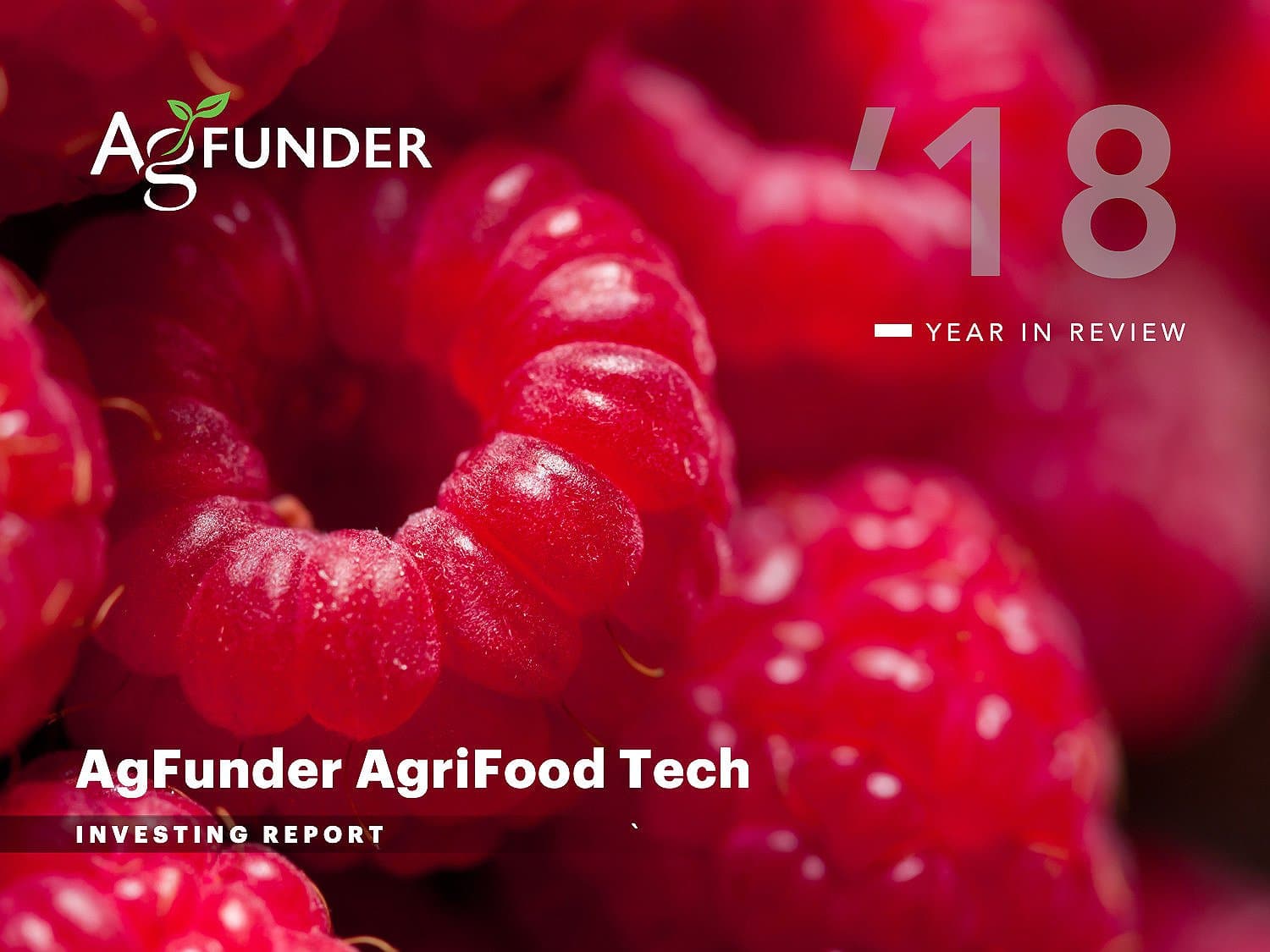
The planning of our next agri-tech hackathon has got us thinking about the agri-tech deal flow and the  importance of vibrant, patient and confident venture / investment communities. So we’ve been both inspired and challenged by findings of the recent recent Agfunder AgriFoodTech Investing report which reveals global reveals global highlights and trends in the industry.

Headline figures are encouraging

Agfunder report Globally, a massive $16.9bn was invested by 1776 unique investors across 1450 deals last year. This is compared with $5.4bn in 2014. There was a 21 % increase in “seed” investment (ie very early stage companies), and more later stage deals were done, reflecting the ongoing evolution and maturation of businesses.

Importantly for investor confidence, the biggest ever “exit” in agri-food tech took place last year, when Merck acquired digital animal tech company Antelliq for $2.4bn. Increasing commitment in automation, digital agriculture and widening of scope to include fish as well as livestock has helped build value in the company (although it’s been a very slow burn – the company can trace its history back to 1955).
Investment in farm-based robotics, mechanisation and equipment saw 83 start-ups collectively attract 56 % more finance than in 2017; and the appetite grows to do things differently via so-called “novel farming systems” (vertical farming, insect production) attracted 54 deals, 2 of which were worth over $100m.

So what’s the problem?

Against this backdrop of global success, 2018 saw no UK-based farm-tech mergers or acquisitions in the top 20 deals in 2018; there was just one UK exit – insect control company Oxitec – which was sold for $160m.
Agri-tech investments in the UK were down as compared with last year – both in value and numbers of deals, and as compared with other countries
We don’t believe it is lack of investors, lack of access to finance, nor even access to quality deal flow. The AgFunder report points to the benefits of accelerator programmes such as Y Combinator and Radicle in the USA and SproutX in Australia and, admittedly, we have fewer of those in the UK. But we don’t even think that’s the big issue either.

We think it’s more a matter of timing

From a big flurry of deal flow until 2016, we subsequently saw a slight dip in investment-ready propositions. Neither business coaching, nor leadership training, nor access to world-class accommodation could have accelerated the pace – even accessing finance was probably not the limiting step.
Most likely, it was simply the technologies just weren’t ready and needed more time before going to investors.
Lots of trials have been in progress, much (expensive, quality, quiet) development work has been undertaken, and many value propositions are now refined and robust.
So yes, it’s been a quiet(er) time from the UK in terms of agri-tech investment. But we are confident we’re seeing an end to that slight hiatus, with some of the most exciting start-ups we have seen for a while entering the investment arena.

See them at REAP

Some of them will be speaking at the Start-Up Showcase at our 2019 REAP conference in November. And hopefully we’ll be helping fill the agri-tech pipeline with ideas generated from our second hackathon we’re hosting in July.
In terms of the larger companies (too old to be called start-ups) they are also working hard to build value, generate revenues – either to attract later stage investment or consider their plans for exit.
As someone once said – “you can’t jump from little things to big things. It takes time and patience.”