Get the latest agri-tech news, events and opportunities direct to your inbox
Agri-TechE Newsletter
Agri-TechE members rise to challenge of COVID-19
Agri-TechE
Adversity brings out the best in some people and a challenge such as Coronavirus has spurred a number of organisations into action. We have been very interested to see how organisations have leveraged the cluster to accelerate innovation and have created a Response to COVID-19 section on the website to highlight this innovation. Improved testing for Coronavirus – cheap, DIY, home-based testing would be a game changer, enabling confirmation that key workers are free of the illness and others freedom to travel and work. Iceni Diagnostics is fast-tracking a method of identifying the virus using its unique signature of sugars, unlike DNA these codes do not change, enabling the diagnostics to have a high degree of accuracy and long life expectancy. The challenge of shortage of labour and disrupted supply chains stimulated the Lincoln Institute of Agri-Food Technology to take an Open Innovation approach to find automation solutions. The initial fact finding webinar had an enthusiastic response, much from non-traditional players. Reducing food miles for urban populations – vertical farming enables more fresh produce to be grown in smaller areas. LettUs Grow has fast-tracked production of two of its farm modules and will be donating the produce to those in need in Bristol. Cambridge companies to meet COVID-19 ventilator challenge in 6 weeks – Cambridge Consultants is working collaboratively to develop and manufacture next generation ventilators. Prediction of customer demand and crop yields is not based on algorithms that are appropriate for the current situation. Mantle Labs and Agri-EPI have come together to offer the support of its visualisation platform Geobotanics, free of charge to overcome this issue. Reduced field inspections – remote monitoring can take the place of field visits, deemed ‘non-essential’. METOS has seen an increase in demand for its wireless, solar powered monitoring systems. Shortage of PPE, hand sanitiser and ventilators – the Norwich Research Park is utilising all its resources and those of non-traditional suppliers to develop faster ways to deliver these essential supplies to the NHS. Maintaining safe working distances – Pathfindr has rapidly developed a custom version of its Asset Beacon for safe personal distancing in the workplace. The device emits a short audible alarm when another wearer is detected within 2 metres, advising both wearers to check and increase their distance. Supporting early-stage companies – many companies are struggling and the innovative ones are at risk of being lost which will have a long term impact on the economy. The Satellite Applications Catapult and Barclays Eagle Labs are among several members offering signposting to resources to support this pipeline.
To read more about these developments look at our “Response to COVID-19 “ section.
Get the latest agri-tech news, events and opportunities direct to your inbox
Small Bright Lights
Agri-TechE
The current climate is not one where many businesses are talking about hiring. Times are tough, particularly for traditional businesses and service industries like travel, tourism, bars, and restaurants. But there are some small bright lights that shine at the end of this dark tunnel.
Tech startups are growing. These teams thrive in remote work environments, they adapt quickly and many are continuing to grow despite the challenges presented in the global marketplace.
One such example is Farmable, an Oslo-based agtech startup building technology for precision horticulture or more specifically, orchard management.
“Farmers are still working tirelessly around the world and they are keen to try technology that can simplify their operations and improve traceability. The rise of coronavirus only accelerates the pressure on the agriculture industry to ensure transparency across systems.Offering simple, digital tools to farmers is the critical starting point for sharing information throughout a supply chain,” says Farmable CEO Lars Blikom.
Farmable’s product has been gaining traction in the last few months, particularly in Australia, Germany and the United Kingdom. To support the rapid growth, the team had been recruiting a Chief Marketing Officer before coronavirus forced a stop to normal daily routines. For many businesses, any recruitment activity has quickly come to a grinding halt with the rising uncertainty of the economic climate.
“Our board was asking if we might need to take layoffs, and the immediate response was NO – agriculture doesn’t stop and our team is running full speed with both technical development and market activities,” explains Blikom.
For tech startups, employee salaries are often the largest part of operating costs so choosing to add another team member is a big decision. Despite being in the middle of a global pandemic, Farmable’s recruitment process was determined to forge ahead.
“There was really no question of stopping the process due to a lockdown,” says Blikom. ”We simply adapted our recruiting process and signed the deal.”
Farmable’s new Chief Marketing Officer is Vidhi Kumar, and she will join the fast-paced team on June 1st.
“Whether it is working remotely or in office, lockdown or no lockdown, we are doing our best to support agriculture through an accelerated period of change,” emphasizes Blikom. “We are excited to be growing our team and welcoming Vidhi to Farmable despite this new normal.”
Get the latest agri-tech news, events and opportunities direct to your inbox
Agricultural bill returns to Parliament
Agri-TechE
The Agriculture Bill is proposing to radically change the way that food production and countryside stewardship is managed in the UK.
For many years, farmers has been paid a government subsidy, which has been set by the European Commission under the Common Agriculture Policy. This system of direct payments is linked to the amount of land farmed, and while there have been some incentives for environmental management, these are set to change.
Replacing Direct Payments
The intention of the Agriculture Bill is to provide a commitment to Direct Payments for 2020 and then to phase this out over a period of seven years and introduce a new ‘Environmental Land Management’ (ELM) scheme that is intended to reward investment in technology and other measures that will improve productivity and reduce environmental impacts.
Environment Secretary Theresa Villiers said: “Our landmark Agriculture Bill will transform British farming, enabling a balance between food production and the environment which will safeguard our countryside and farming communities for the future. This is one of the most important environmental reforms for many years, rewarding farmers for the work they do to safeguard our environment and helping us meet crucial goals on climate change and protecting nature and biodiversity.”
Need for meaningful data
The success of the scheme depends on the ability to collect meaningful data and analyse it effectively. This would need to include baseline data about the current state of the natural environment and market data from across the value chain.
Dr Belinda Clarke, Director for Agri-TechE (formerly Agri-Tech), comments: “We know our members – across the entire value chain – will welcome renewed progress of the Agriculture Bill through Parliament.
“There is an opportunity for some bold thinking, supported by high quality metrics, to help farmers improve their productivity and for “public goods” be quantified and delivered in a meaningful way.
“A number of organisations within the Agri-TechE network are developing and implementing new innovations and practices that will offer the necessary visibility, efficiency and sustainability needed in the agri-food system. We are confident these will be a crucial element of delivering new ambitious vision described by the Agriculture Bill.”
Countryside Stewardship offers transition
Individuals can still apply for Countryside Stewardship (CS) agreements in the first years of the transition, allowing them to secure longer-term funding while the system changes. CS also allows individuals to put in place environmental practices that will prepare them for the new Environmental Land Management (ELM) scheme.
Get the latest agri-tech news, events and opportunities direct to your inbox
Oxford Real Farming Conference – some highlights
Agri-TechE
Oxford Town Hall was the venue -credit Hugh Warwick From “Rotation Rebellion’ to ‘circular farming’, new carbon calculators and the future of bread and wheat, discussions at the Oxford Real Farming Conference were wide-ranging, diverse and conducted in the historic setting of Oxford Town Hall.
A National UK Food Strategy
While many of the sessions were standing room only, the main hall overflowed to hear Henry Dimbleby update delegates on his current work on the National Food Strategy.
Unintended consequences
Working across Government departments, Dimbleby’s starting point was to look back at the food system, reflecting on the human ingenuity to solve a problem (food shortage) and the unintended consequences of those historic decisions.
Post-war years saw a focus on increasing food production in the UK, coupled with Borlaug’s famous research underpinning the Green Revolution, leading to increased use of genetics, application of synthetic nitrogen, and irrigation practices. “Focus on calorie production led to humans getting fat and sick, and drove out Nature.”
Fast forward several decades, and the immediate problem of hunger was solved, but the increased calorie consumption has led to obesity and diet-related disease, as well as the unintended consequence of these farming practices generating carbon emissions. As agricultural yields increased, the wildlife inhabiting the land decreased.
Dimbley’s mission, therefore, is to recognises what has gone wrong, and devise a plan to rectify it. Echoing themes we discussed at REAP 2019, he highlighted the challenge of reconciling the scientific “reductionist” approach with the integrated systems approach, and recognising that Nature is a not a well-designed machine consisting of predictable parts, but a complex, dynamic inter-dependent system.
Work on the Strategy is ongoing, with an interim report due in Spring 2020 and Government White Paper promised six months later.
Food and Drink Sector Council – Agricultural Productivity Working Group (Defra)
Tim Morden, Defra’s Deputy Director of Farm Productivity, discussed a report presented by a Sector Council sub-group chaired by Sir Peter Kendall of the AHDB.
Recommendations include:
Drive effective use of data
Transform knowledge exchange
Collaborate around mission-led approaches to research
Drive uptake of professional training and development
Enable rural infrastructure
Defra is currently planning how to align these with its priorities for the sector which include:
providing investment – grants for farmers
supporting R&D – to enable science-based approaches to innovation
building capability and skills – to improve business performance
structural changes – to improve flexibility and fairness for farmers in the supply chain and tenancy agreements
Counting Carbon, Not Calories
It was a rare talk at the conference that didn’t include the word “carbon” and the Holy Grail of how to calculate and value carbon on farms was much discussed.
With an agreement that more research is needed, some practical measures are underway to help farmers get a handle on this tricky metric. The Farm Carbon Cutting Toolkit is a farmer-led programme, working with scientists to provide the underpinning data.
A new functionality was launched at ORFC – to calculate sequestered carbon as well as calculating carbon emissions from across the farm.
With some clever tools to also calculate methane from carbon dioxide equivalents, this can at least start to provide a baseline for where the major carbon emitting and sequestering activities are on farms, and the balance between them.
The Transition to the Circular Farm
Trail-blazing farmers from the east of England were out in force at the conference, in a session around Circular Farming – featuring
Callum Weir (Wimpole Hall Estate, Cambs),
Nick Padwick (Ken Hill Estate, north Norfolk),
Martin Lines (Nature Friendly Farming Network, Cambs)
George Young (Fobbings Farm, Essex).
As well as hearing the inspiring stories of how these farmers are making a “circular farm” a practical – and profitable – reality, delegates also heard about the FABulous Farmers programme. This is a €4m programme with 12 pilot regions across 5 EU countries. The UK pilots are in the East, South West and Pembrokeshire and is free to join.
Support for move to regenerative agriculture
Financing transitions to a more regenerative, circular agriculture is a key part of the conversation.
Structures such as community shares , loans and grants are available, but speakers in this session advised not assuming a big upfront injection of capital would be needed.
Strategic planning and sweating existing assets, coupled with a willingness to take a more knowledge-intensive approach to understanding soils, biological pest control and the holistic system means that new capital may not necessarily be needed.
Reform of the UK tax system will also help. At present, delivery of ecosystem services and management of land in countryside schemes doesn’t qualify as a trading business, hence can’t benefit from tax relief.
Evidently these conversations are ongoing to try and simplify the complex current system.
Bigger Picture Conclusions
Need to protect future generations – credit Hugh Warwick
The sentiment emerging from the ORFC was that the UK is facing an opportunity to rewrite the rulebook. Measuring “what matters”, and devising new metrics for “success” are going to be the new normal. Wellbeing – Globally, consumption and increasing GDP are the traditional economic growth indicators, but some countries (such as Iceland, Scotland and New Zealand) are starting to consider health and wellbeing as targets as well. Carbon storage – Policies to help maximise carbon storage and the financial models around these are likely to be key, and encouraging use of government levers such as public procurement to create new markets is underway. Resilience– Geo-political disruption, leading to issues such as fires, drought and flooding, are likely to potentially affect trade deals and could drive a need for greater resilience in food production. This creates new opportunities for farmers and the food system. Business efficiency – Public investment to help improve land management, and a functioning marketplace are going to be key to deliver changes in the way food is produced. Social change – Finally, the mental wellbeing of those in the industry mustn’t be overlooked. With such unprecedented change and uncertainty, the rhetoric being played out over social media, and the transition into a new structure of the industry may not be without its casualties.
This is a conversation that affects all parts of the agri-food ecosystem – and we all have a responsibility.
Quotes of the Conference
“Fertiliser is better out of a bum than a bag!” “We need to generate value not volume as farmers. Nourishment, not tonnage should be the goal.” “‘Less but better’ is the way forward with meat and dairy.”
Post Overview
13th January 2020
Agri-TechE
Agri-TechE Article
Uncategorised
Share this Page:
Related Posts
Growing the future reports underlines the value of plant science
Get the latest agri-tech news, events and opportunities direct to your inbox
What is the value of a network?
Agri-TechE Blog
Agri-TechE
By participating in the UK’s SME Business Awards, we had to think deeply about what we do and the impact we are having.
Our category was networking group of the year, so we took our inspiration from some of the thinking from the early pioneers of the internet. Admittedly they were talking about telecommunications and computing networks, but we think the analogy stands up well. Agri-TechE ‘Networking Group of the Year’ – winners of national SME awards. With the award from left Fiona, Becky, Laura, Belinda Metcalfe’s Law measures value
For example, Metcalfe’s Law states that the value of a network is proportional to the square of participants. Or put simply, every time you connect another person into a network, and therefore able to make more connections, the impact is multiplied and becomes exponential.
In computing terms, this means if there are 10 connections, the potential value of that network is 10 x 10 = 100. For social networks, the more users, the more effective the service becomes.
Once the artificial intelligence and machine learning kicks in, it becomes even more useful. Business is about people
Understanding that the number of connected users in a system increases its impact isn’t rocket science, but there are some differences between computing networks and business ones. The most obvious is that business networks involve people.
And while theoretically every member can connect with every other member, they sometimes need a bit of help to do that, unlike computers. And the intelligence behind making those links is never artificial!
We often remind our members that the benefits of being part of the network are proportional to the amount of engagement they have with is – almost unknowingly, we have been putting Metcalfe’s Law in action.
We recognise everyone is busy and that the only people who think full-time about how to ensure that the Agri-TechE network continues to deliver value to its members are its 4.5 staff!!
So we try to be the human equivalents of those computing connections which work so seamlessly between machines, and try to replicate that between our members.
In our discussions with farmers, policy makers and tech companies, we often hear the mantra “measure to manage” – when discussing how to improve productivity in livestock and crops and to demonstrate the impact of environmental management measures.
The answer is 50,625
So how does the impact of our network measure up?! At the time of writing, we have calculated the potential “effect” of our network to our members to be 50,625 and rising (excluding the wider agri-tech community with whom we routinely work).
While this is a pretty meaningless statistic it does demonstrate that impact is a function of the number of connected users in the system, and that’s where we are constantly trying to increase our impact – by brokering, connecting and facilitating new relationships and connections.
We were so proud to be crowned Networking Group of the Year 2019 at the SME Business Awards. Helping our members is at the heart of everything we do. And now we can measure it, we can improve it even more.
What’s your “Metcalfe Metric?!”
Get the latest agri-tech news, events and opportunities direct to your inbox
Agri-TechE becomes Agri-TechE
Agri-TechE
Agri-TechE has become Agri-TechE from January 2020 to reflect the expansion of its membership beyond the east of England. It has increased its award wining team, with the addition of Alex Dinsdale to support its growth plans.
Agri-Tech, a business focussed membership organisation, has outgrown its name
Director Dr Belinda Clarke says this is a welcome endorsement of the success of the organisation. She explains: “Agri-TechE was established to bring together farmers and growers with scientists, technologists and entrepreneurs to create a global innovation hub in agri-tech, it seemed an ambitious vision. “However, the concept quickly captured the imagination and support of individuals from a wide range of backgrounds, and together we have built a vibrant agri-tech cluster that is not restricted by geography.
“Although the name Agri-TechE worked well for us in the early days – as it showcased the innovation emerging from the east of England – it has become clear that we have now effectively outgrown our name.
“Our members now come from across the UK and from overseas. The research community has always had a global outlook and early stage agri-tech companies need to go international quickly to gain market share.
“We are very pleased to welcome Alex Dinsdale to the team to help us move to this next phase. We will still be promoting the fantastic work that is happening across the east of England but widening our horizons and those of our members to opportunities further afield.
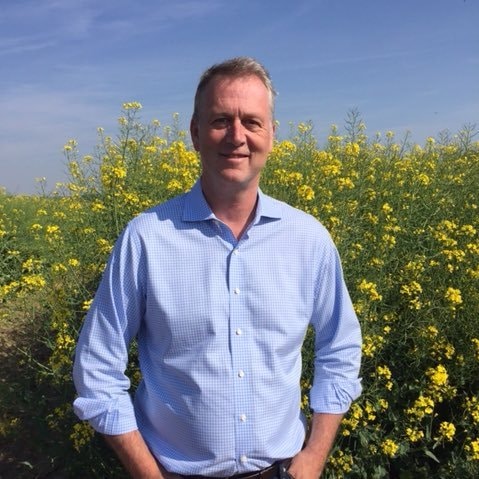
Alex deep roots in agriculture
Alex Dinsdale has a strong agricultural background gained from over ten years working for the National Farmers Union. His more recent experience has been with agri-tech start-up URSULA Agriculture, one of the first companies to introduce drones to farming, and precision farming business SOYL, which has led the way in the use of yield mapping and precise nutrient application. South Korean Delegation came to REAP after Belinda was invited to present at a conference in the country earlier in the year. Alex top right.
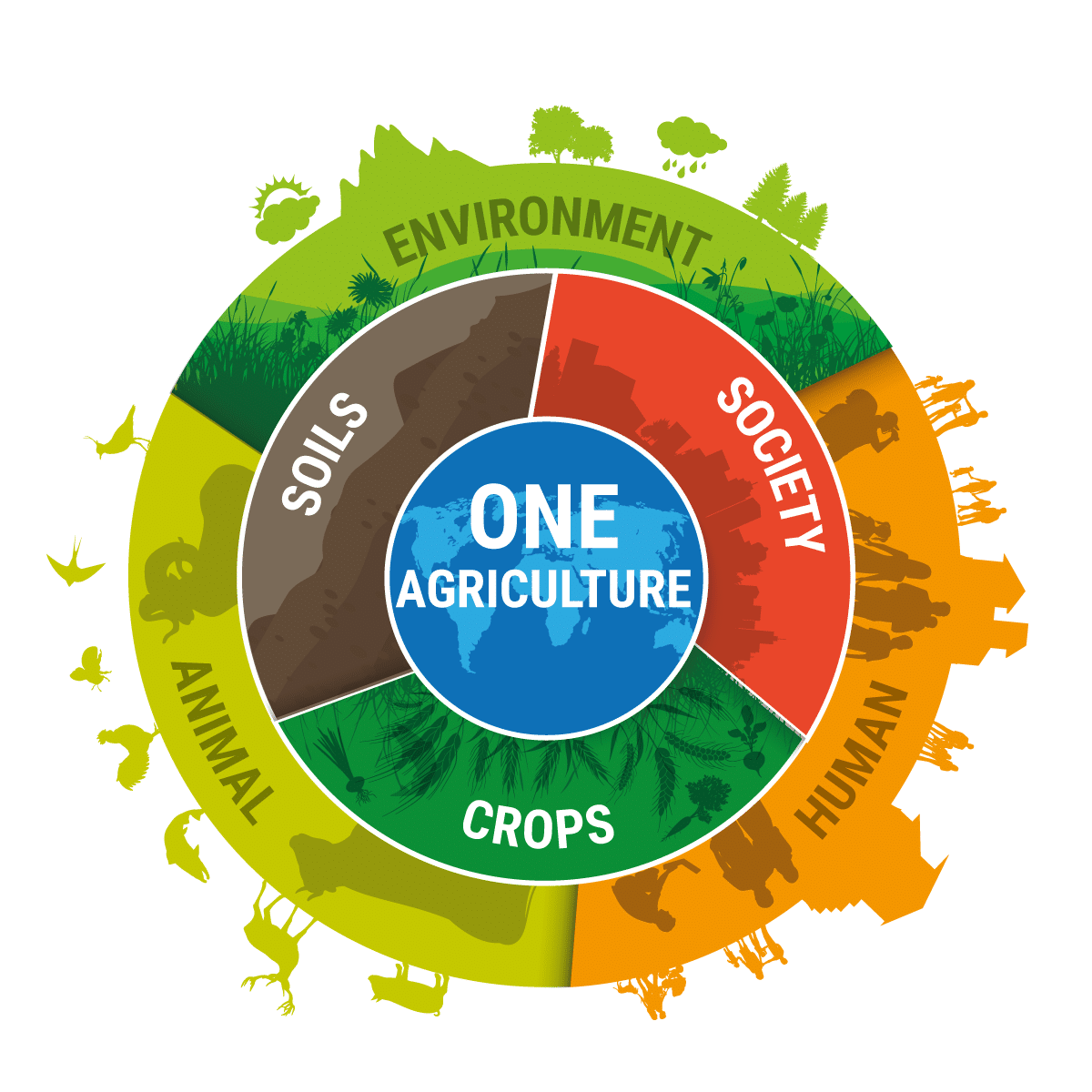
Alex says: “By bringing together food production, technology and the natural environment as part of ‘One Agriculture’, Agri-TechE is driving forward an approach that will see agriculture’s environmental sustainability continue to improve. I am very interested in exploring how agri-tech can be used to increase the sustainability and productivity of agriculture.”
Alex’s particular interest is in approaches such as regenerative agriculture, which encompasses improved soil management, carbon sequestration and habitat restoration, and he believes that these will have a far greater impact on-farm when integrated alongside the latest in agricultural technology and data utilisation.
He says: “The rapid advances in agricultural innovation and technology that we’ve seen over the past few years are very exciting and represent massive environmental, economic and social opportunities.
Agri-TechE has played an important role in supporting these activities and I am delighted to join the team as the organisation enters a new phase in its growth.
Looking to 2020
Agri-Tech, finished 2019 by winning ‘National Networking Group of the Year‘ at the SME Business Awards 2019 at Wembley.
Agri-TechE ’s plans for 2020 include: thought-provoking networking meetings; visits for members to agri-tech clusters in Missouri in the USA and Saskatchewan in Canada; an agri-tech business plan competition to develop a pipeline of young companies; and inward investment opportunities.
“I am looking forward to helping members develop their potential and to supporting Agri-TechE in promoting agri-tech everywhere,” says Alex.
To keep in touch with developments sign up to our newsletter – click here.
Post Overview
19th December 2019
Agri-TechE
Agri-TechE Article
Uncategorised
Share this Page:
Related Posts
Take your soil health agri-tech to Canada with 2022 HARVEST Program
Get the latest agri-tech news, events and opportunities direct to your inbox
January deadlines for major agri-tech funding calls
Agri-TechE
If you are looking for funding then do check the deadlines, many close in January 2020. GCRF AgriFood Africa Innovation Awards – deadline 6th January 2020
For projects between an African partner and a UK research partner that is likely to lead to a longer-term relationship. Innovate UK Smart Grants – deadline 8th January 2020
Smart is the new name for Innovate UK’s ‘Open grant funding’ programme. Innovate UK welcomes projects that overlap with the grand challenge areas but it is also keen to support projects in other areas. All SMEs involved in funded projects will also be offered business growth support from the Enterprise Europe Network (EEN). Transforming Food Production Challenge – collaborating with China – deadline 15th January 2020
UK-China: precision for enhancing agricultural productivity. Businesses can apply for a share of up to £5 million of Innovate UK funding, to work with Chinese partners on developing new smart farming technologies.
ISCF Future food production systems funding call is looking for ambitious solutions that can help move UK food production towards a sustainable future.
RDPE Growth Programme provides grants for rural start-ups and businesses to purchase state-of-the-art equipment and machinery to grow their business. For more information about funding calls
Post Overview
18th December 2019
Agri-TechE
Agri-TechE Article
Uncategorised
Share this Page:
Related Posts
REAP 2019 – Innovating towards One Agriculture – launched
Get the latest agri-tech news, events and opportunities direct to your inbox
National Networking Group of the Year awarded to Agri-Tech
Agri-TechE
Delighted to be awarded ‘Networking Group of the Year’ at Wembley
Agri-TechE has been awarded the accolade of National Networking Group of the Year at the SME Business Awards 2019, in a glittering black tie gala at Wembley on the 6th December against strong competition from across the UK.
It is well recognised that SMEs (small and medium enterprises) drive innovation and competition in many economic sectors. Every year the SME Business Awards celebrate the businesses that have delivered an impressive contribution within their industry.
Commenting on winning the award, Director Belinda Clarke, said: “We are delighted to have won this national award, as it recognises the dedication and commitment that Agri-Tech’s small team offers our members of all sizes; championing innovation in food and farming.
“And to win a business award is always special; as we are often mistaken for being government funded, it is good to have the acknowledgement that Agri-TechE is a business! We receive no core public funding and have grown organically through giving value to our membership. “We have many exciting plans and events for 2020 and being awarded National Networking Group of the Year is a fantastic way to round-off 2019!”
Presentation of the national award follows the announcement earlier this year (4 July) that Agri-TechE won the ‘Networking Group of the Year’ at the SME Cambridgeshire Business Awards. Finalists and winners from all 17 SME Business Awards categories were amongst the 600-plus guests at the prestigious awards in London on Friday.
Join the award winning network
To join Agri-Tech’s award-winning network and take advantage of all the benefits available, please visit Agri-TechE membership page.
Our cutting-edge industry events are available to both members and non-members – see what events and networking opportunities we provide throughout the year, here.
You can find out more about the members who have already joined our vibrant agri-tech cluster, on our Member Directory page.
Get the latest agri-tech news, events and opportunities direct to your inbox
The Future is Agri-tech Everywhere
Agri-TechE Blog
Agri-TechE
This is the time of year for taking stock, reviewing the year and planning for the next season.
Perhaps the biggest change this year is the way agriculture been so high profile
Agriculture has been the topic of many political and public discussions, in the UK and beyond.
The debate about climate change and emissions has raised awareness of the need for shifts in global diets, the importance of maintaining the balance of natural ecosystems and the value of better prediction of weather and water management.
As a result, the food and land use debate, along with the wider bioeconomy, have become higher profile in the policy agenda and the need for agri-tech solutions is more clearly articulated.
We have seen greater understanding of the need for agri-tech driving investment in start-ups:
DroneAg – exceeded its crowdfunding target to develop its software to automate crop monitoring with drones
KisanHub –raised £3.4M to build on its crop intelligence platform
30MHz – raised 3.5Eu to develop its agri-tech platform
Breedr – raised £2.2m to develop its precision livestock network
Small Robot Company – raised a further £1.2 million for developing its robots as a service model
It has been interesting to see how many of entrepreneurs behind these businesses are bringing expertise developed in other sectors into agriculture. The result is a generation of innovators with a knowledge of agriculture and skills in data management, AI, logistics and marketing; commercial expertise that is helping to transform the industry.
GROW – turning a good idea into a brilliant business
We know from Cambridge University’s work on Smart Specialisation that our “Innovation ecosystem” ecosystem is a good place to start an agri-tech business. It contains a research community experienced at managing collaborative projects, a growing number of incubators offering business support and pioneering farmers willing to trial new technology and approaches.
The commercialisation of innovative ideas is a risky business, but within the Agri-TechE community there is a wealth of knowledge, experience and connections that can provide support.
To help fast-track the growth of agri-tech businesses we are harnessing that supportive, expert community through a new GROW agri-tech business plan competition for 2020.
GROW helps those with a concept, that has commercial potential, to gain the industry input they need to build a robust plan and start to talk to potential collaborators, investors and end-users.
A number of entrepreneurs assisted through participation in the GROW programme have gone on to create agri-tech businesses and we’re looking forward to meeting the new crop of ideas ready to benefit the industry.
Encouraging best practice underpinned by science
Learning points from early adopters of on farm energy generation was discussed ‘warts and all’ at one of our regular ‘Pollinator’ meetings. The application of its by-product – digestate – as an organic replacement for artificial fertilisers, was the topic of lively debate at a further meeting.
These networking meetings offered the opportunity for farmers to talk about their experiences and gain input from researchers about the science behind it.
Anaerobic digestion – turning a waste product into energy and soil improver – has the potential to significantly reduce the need for nitrogen-based fertilisers, which are a major contributor to greenhouse gas emissions. The flip-side is that it also has the potential to reduce input costs and build soil health increasing farm productivity.
By providing a facilitating environment for these types of discussion Agri-TechE has played an important role in promoting the exchange of this knowledge within the cluster.
In addition, raising the profile of the innovators to farmers remains at our core, through our various activities.
In the Start-up Showcase at REAP we featured EcoNomad, this early stage company is developing a low cost AD plant that can be used by a small holder. Immediately by ‘plugging in’ to the cluster this company has gained profile with potential partners and collaborators.
Looking forward to 2020 we will be giving a platform to other emerging areas of agri-tech that have huge potential.
Agri-TechE has been working closely with the Missouri Partnership to facilitate The Missouri Agri-TechE Connect Programme, which provides a gateway for UK businesses to the heart of US agricultural production.
We are also continuing our relationship with the Canadian HARVEST programme, which has seen members introduced to leading Saskatchewan agriculture companies and professionals.
At REAP we were joined by a delegation from South Korea, a team that won that Uruguay Hackathon, Mark Sutherland, CMO of the Missouri Partnership, and a delegation from Dublin – to mention a few. The increasing interest from across the UK and overseas in engaging with Agri-TechE has meant that we have outgrown our name. Although our heart is very much in the east of England, our activities are not restricted by geography.
For this reason from January we are becoming Agri-TechE .
Still the same in essence but encouraging engagement everywhere for the benefit of all.
Post Overview
6th December 2019
Agri-TechE
Agri-TechE Article
Uncategorised
Share this Page:
Related Posts
Defra’s new farming rules for water drive need for valuing natural capital
Get the latest agri-tech news, events and opportunities direct to your inbox
Agri-TechE welcomes Alex Dinsdale to our team!
Agri-TechE
We are pleased to announce that Agri-TechE has welcomed a new member to our award-winning team, Alex Dinsdale, to help support our future growth plans, in keeping with the fact that so many of our members are based in the wider UK and internationally.
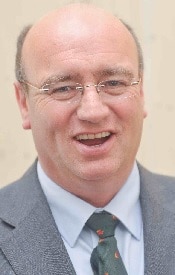
Alex comes to Agri-TechE from precision farming business SOYL, where he was area manager for Norfolk for the past three and a half years. Prior to a stint at an agri-tech start-up business called URSULA Agriculture, Alex was with the NFU in a variety of roles for around ten years. Alex says: “I’m really excited to be joining Belinda and her colleagues at Agri-TechE and am looking forward very much to helping the organisation grow.
“The developments in agricultural innovation and technology that we’ve seen over the past few years – and are continuing to witness – represent massive environmental, economic and social opportunities, that Agri-TechE has helped support, promote and develop so well over the past few years.
“East Anglia has a fabulous record here, as well as a great collection of world-leading organisations and research institutions. But, of course, there is plenty more potential elsewhere and I’m looking forward to exploring how Agri-TechE can work effectively with more companies and organisations across the wider UK, and beyond, to help agricultural technology, innovation and sustainability to develop.
“I have always had a strong interest in both technology and the natural environment, and I am really excited by how Agri-TechE is leading the way in bringing these two seemingly disparate themes together. Approaches including regenerative agriculture – encompassing improved soil management, carbon sequestration and habitat restoration – will generate a far greater impact on-farm when integrated alongside the latest in agricultural technology and data utilisation. Bringing these themes together as part of ‘One Agriculture’, with Agri-TechE driving forward this approach, will see agriculture’s environmental sustainability continue to improve.”
We at Agri-TechE are very much looking forward to working with Alex – and if you want to say hello keep an eye out for Alex at our future events!

 Agri-TechE





















 Director Dr Belinda Clarke says this is a welcome endorsement of the success of the organisation. She explains: “Agri-TechE was established to bring together farmers and growers with scientists, technologists and entrepreneurs to create a global innovation hub in agri-tech, it seemed an ambitious vision. “However, the concept quickly captured the imagination and support of individuals from a wide range of backgrounds, and together we have built a vibrant agri-tech cluster that is not restricted by geography.









 Agri-TechE