From micro-scape to landscape: innovating at the frontier

Agri-TechE

One encouraging observation from this challenging period has been the rapid response of the agri-food industry – it has kept things moving and the population fed.
Farmers have kept producing. Factories and processing plants have been kept running with skeleton teams, staff have seamlessly moved to working from home, supply chains have adapted to different markets by changing packaging and moving online.
However, the need for more automation, improved methods of forecasting and prediction that can cope with extreme conditions, and new methods of seeing the whole picture and managing the fine details beneath – have all become more clearly articulated.
Managing at different scales is to be the theme of our REAP 2020 conference.

Lockdown weather – sunny for some

Catching up with our members and others, in the zoom meetings that now have become such a feature of life, we have gained an interesting snapshot of the industry and how agri-tech is needed to address its current and future challenges.
Over recent weeks we have learnt that the farmers are working flat out to get the crops in the ground – but too wet has become quickly too dry and the logistics of recruiting and training British workers to replace experienced staff has proved challenging. Field trials and essential work in the plant houses is continuing but much of the lab work has been put on ice and research sponsors although frustrated are understanding. Retailers are seeing huge spikes in demand for unexpected products and experiencing shortages of others – who would have thought we were a nation of bakers!
In the main, the food supply chains have proved resilient and responsive.
The exception is where produce was destined for the catering and restaurant trade. A big driver of change over recent years has the increase in calories consumed outside of the home and this has created a parallel supply system, which has been exposed as vulnerable. During lockdown, produce such as prime beefsteaks and milk has been badly impacted but those able to sell direct to retail or the consumer have seen unprecedented demand.

Technology comes into its own

Technology as the enabling factor has come into sharp relief, while some say we are entering a new world; others see it as more that the trends are accelerating.
In recent years across the agri-tech cluster we have seen the emergence of platform technologies that simplify the capture of data from different sources and provide support for analysis; or for reaching markets. Being able to quickly assimilate information and communicate effectively with suppliers and buyers are characteristics of the businesses that are performing well at the moment.
Going forward, if the industry is to grasp the ambition of a carbon neutral world, the potential of virtual supply chains, and the competitive advantage of farming sustainably with lower inputs and higher quality outputs, then it needs good tools and best practice.

REAP 2019 – Moving towards One Agriculture

In REAP 2019 we took the theme of One Agriculture – examining how animal health, human health, society, the environment and food production are intrinsically linked creating a win-win for innovations that play to this bigger picture.
For REAP 2020 we are taking this system approach further and looking at what agri-tech is needed for One Agriculture to connect up the system at different levels, from the microscopic to the landscape.
The Agriculture Bill and the Environment Bill are potentially the biggest change to the UK agriculture industry in decades. Significant environmental targets to reach net zero now sit alongside the ever-increasing pressure to produce safe, healthy food in a cost-effective way.
Improved tools are needed to measure and monitor progress if improvements are to be rewarded.
If the indices are to include: carbon sequestration in fields; increase in beneficial insects in field margins; greater biodiversity in hedgerows; reduction in GHG emissions, then robust and automated methods are needed to measure the base-line and subsequent improvements.
REAP 2020 will explore the need to manage innovation at different scales, from molecular processes in plants, animals and microbes, through soil, field and farm level, to catchment level agriculture and landscape systems.
There are existing tools that aim to improve systems at all these different scales, but often they are not connected or integrated, and the interactions within and between the different levels are not considered.
Enabling farmers to understand the impact of interventions at a micro-level and how they can impact at a landscape level – and vice versa – is going to be key to maximising the potential for this approach.

REAP 2020 – From micro-scape to landscape: innovating at the frontier

As we announce the theme for REAP 2020, we are also issuing a call-to-arms to the researchers and technology developers to identify the emerging innovations that can be harnessed to enable the agri-food system to be managed at different scales, from micro-organism to macro-management of land.
A quick straw poll of some representative members has identified their priorities for the future:

  • Carbon farming and carbon capture
  • Diversification – interest in alternative crops such as legumes to offer plant-based protein, hemp for fibre and pharmaceuticals
  • Sustainability and soil health
  • Applying a systems approach to crop management
  • Improving safety
  • Achieving net zero
  • Response to the Environment Bill, Agricultural Bill and Trade Bill

This next generation of tools must be user-centric and automate the capture the inputs that are needed for monitoring, measuring and managing.
More information about REAP 2020

Agri-TechE Week – BASIS Points

Agri-TechE

For participants of Agri-TechE Week 2021 wanting to register for the associated BASIS points.

  • If you have attended more than one event you will need to complete a separate form for each event.
  • Telling us about what you have found out at the event will help us know you have earned your points.
  • Please include an email address, on the rare occasion the details submitted will not be accepted by BASIS we can contact you for updated details. This email will not be stored on our database and will not be used in any other circumstances.

REAP 2020: Welcome to our agri-tech innovation ecosystem

Agri-TechE

REAP is where those passionate about agri-tech meet to exchange ideas.
Agri-TechE is the catalyst behind a unique ecosystem that is accelerating the rate of innovation. A key feature of REAP is the Start-up Showcase, an opportunity to have early sight of emerging technologies with the potential to revolutionise agricultural production.
Over 90 percent of the early-stage companies featured at REAP now have commercial products or services that meet the real-world challenges of food production. They have benefited from access to investment, business support, collaborators and farming partners within the supportive Agri-TechE network.
Innovation is driven by inspirational individuals. So, if you are a farmer or grower with a challenge or a business idea, an entrepreneur with an exciting technology, a researcher with a breakthrough, or an investor looking for the next ‘big thing’, then reserve your place at REAP now.
Our Agri-TechE team has a good idea of who you should be talking to and this personalised brokerage is being extended at REAP by AI facilitated networking.
You may have to bring your own coffee but those encounters – that make the innovation ecosystem vibrant – will be happening on an international scale at REAP 2020. For REAP 2020, we have invited three companies from our previous conferences – Outfield, Breedr and Arable Labs – to share their journeys from concept to on-farm commercial adoption. All have made a significant impact transforming agricultural practice. Together with their farmer partners, they will discuss how to integrate innovation within a farming business and the benefits that can be achieved through working together.
Read more Start-Up Showcase success stories. Visitors to the Technology Hub will have a keen interest in agri-tech. So, if you have an agri-tech product or service you want to showcase, why not exhibit? The immersive format will make it easy for national and international delegates to find your stand and AI facilitated brokerage supports one-on-one chats
Read more about the Technology Hub and online brokerage Novel control of nematodes, aphids and cabbage stem flea beetle; use of crop sensing tech in field vegetables; implications of the ‘new normal’ on agricultural production – these are just some of the subjects to be covered in a series of events in Agri-TechE Week. Hosts include: ADAS, ADHB, Niab, Norwich Research Park, Royal Norfolk Agricultural Association.
Find out more about Agri-TechE Week 2020

Highlights for REAP 2020 

  • A revolutionary approach to improving soil health based on best practice from the world’s top farmers
  • Farmer-technologist collaborations that are creating impact
  • Start-Up Showcase offering first chance to see ground-breaking innovation
  • Leading scientists giving their edit of the most exciting discovery science
  • AI facilitated networking and brokerage
  • An interactive sofa session with expert insights to stimulate lively discussion from the floor

Going ‘virtual’ creates the opportunity for greater interaction with world-leading experts from across the agri-food value chain, making REAP the best investment of time you will make all year.

Booking information

The earlybird rate for booking exhibitor stands and buying tickets to attend ends on the 30th September, so book soon to take advantage of the best rate.
If you’re a farmer/grower or full time student get your application in by 12th October for the bursary to attend for £40(+VAT), kindly sponsored by AF.
Find out about previous recipients’ experience of attending REAP with the bursary: Emma, Technical Manager and George, PhD Student.

Read more about the sponsors.

REAP 2020,  9am – 4pm
Tuesday 10 November 2020

For more information on how to join this virtual event:

reapconference.co.uk

REAP 2020: From micro-scape to landscape – innovating at the frontier

Agri-TechE

Managing complexity is the biggest challenge for agriculture, as every variable – from the microbes in the soil to global weather patterns – can impact productivity, profitability and sustainability.
Agri-TechE ’s REAP Conference is taking a farmer-centric view of emerging agri-tech that promises improved decision-making at every level. Scroll down to read more.
This year’s conference will include:

  • A revolutionary approach to improving soil health based on best practice from the world’s top farmers
  • Farmer-technologist collaborations that are creating impact
  • Start-Up Showcase offering first chance to see groundbreaking innovation
  • Leading scientists giving their edit of the most exciting discovery science
  • AI facilitated networking and brokerage
  • An interactive sofa session with expert insights to stimulate lively discussion from the floor

Going ‘virtual’ creates the opportunity for greater interaction with world-leading experts from across the agri-food value chain, making REAP the best investment of time you will make all year. Soil is a good example of how new methods are needed both to see the whole picture and also to manage the fine details. Getting it right offers the opportunity of greater productivity and also potential of reward for public goods, as Professor David R Montgomery, author of acclaimed “Growing a Revolution” and keynote speaker at REAP, explains.
Read more from David R Montgomery The REAP conference is a cornerstone of the Agri-TechE calendar, with networking and partnering high on the agenda for many delegates. This year we are taking it to a new dimension to offer an immersive online experience with AI-enabled brokerage to ensure you make valuable connections.
Read more about the Technology Hub and online brokerage Outfield, Breedr and Arable Labs have all made significant impact since they launched in the REAP Start-Up Showcase just a few years ago. We have invited them and their farmer partners, back to REAP to share their journeys from concept to on-farm commercial adoption. They will discuss how to integrate innovation into current practice and the benefits that can be achieved.
Take a look at some of the Start-Up Showcase success stories

Read more about the sponsors.

REAP 2020,  9am – 4pm
Tuesday 10 November 2020

For more information on how to join this virtual event:

reapconference.co.uk

GRAVITY Challenge Innovation Briefing

Agri-TechE

GRAVITY Challenge is a global innovation programme that aims to inspire the development of creative solutions to grand challenges. It is facilitating access to satellite data, supporting its usage and offering the chance to work with potential end-users.
There are a number of challenges set by industry – Agri-TechE is working with Agrimetrics to set a challenge on behalf of the agricultural sector around the role of space technologies in helping agriculture reach net zero greenhouse emissions.
Agrimetrics will supply access to its datasets which can be combined with the earth observation data being made available through GRAVITY.
Those interested in submitting a team of innovators are invited to a workshop on 22nd July 2020.
Deloitte, AWS, and the Satellite Applications Catapult, are coming together to host the GRAVITY Challenge Innovator Briefing, which will provide an overview of:

  • The GRAVITY Challenge and its aims
  • Benefits to innovators
  • How can innovators get involved (including timelines for registrations, challenge release dates and concept development)

GRAVITY Challenge 02 is an opportunity for bilateral engagement between Australian and the UK Innovators and Challenge providers to gain visibility and access to international end users, customers and collaborators. 

More information and registration 

New research reveals grain analysis indicates success of nutrient management strategy

Agri-TechE

ADAS discusses new YEN nutrition service in Virtual Innovation Hub
The value of using grain analysis to diagnose phosphate deficiencies has been recognised for the first time. New recommendations for cereal crops and phosphate (P), outlined in the AHDB’s recently revised Nutrient Management Guide (RB209), are based on the culmination of ten years of research.

Nutrient management with Yen
ADAS has developed YEN Nutrition to help growers keep on top of new guidelines

To help farmers benefit from this work, ADAS is launching ‘YEN Nutrition’, starting with a ‘Share-to-Learn’ Grain Nutrient Benchmarking service, which it will be discussing in the Virtual Innovation Hub.
The ‘principles of nutrient management and fertiliser use’ section of the Nutrient Management Guide has been revised with the benefit of a new understanding of soil health and the bioavailability of nutrients and includes updated information on crop analysis, soil sampling and phosphate management.
A new recommendation is that harvested materials from all crops (grain or non-grain) should be analysed routinely for P and other nutrients, to augment conventional routine soil testing. This will help to diagnose adequacy of P supplies as well as building intelligence about adequacy of other nutrients, and it will improve on-farm estimates of nutrient removals by any crop.
For good nutrient management, the total supply of nutrients from all these sources must meet, but not exceed, crop demand.
Crops obtain nutrients from several sources:

  • Mineralisation of soil organic matter (all nutrients)
  • Deposition from the atmosphere (mainly nitrogen and sulphur)
  • Weathering of soil minerals (especially potash)
  • Biological nitrogen fixation (legumes)
  • Application of organic materials (all nutrients)
  • Application of manufactured fertilisers (all nutrients)

Nutrients are applied as organic materials or fertilisers if the supply from other sources is unlikely to meet crop demand.
However, estimating crop demand and inherent soil supply is complex as these vary with species (and sometimes variety of the crop), yield potential, soil properties, weather (especially rainfall) and intended use (e.g. human food or livestock feed).
There are several tools for supporting this decision-making, but as Prof Roger Sylvester-Bradley, Head of Crop Performance at ADAS, comments: “Soil analysis tells us about soil availability and leaf analysis tells us about the immediate crop status – that is, the balance between uptake and use.
“It is important to register the different purposes that soil, leaf and grain analyses play, and that they are best used together, not as alternatives.
“Grain analysis adds particular value as it tells us about final crop performance. The grain stores most of the crop’s uptake of P, Nitrogen (N), Sulphur (S), Magnesium (Mg), Zinc (Zn) and Copper (Cu). Grain analysis summarises the combined effects of soil availability, fertilisers used and their efficiencies, crop rooting and topsoil moisture.
“We now advocate analysis of grain samples at harvest to gain an indication of the success of the overall nutrient management strategy. To support seasonal benchmarking of nutrient status, we will be sharing yields and additional crop and soil information.”
ADAS has used grain analysis for 2019 and the previous three harvests, and these have provided interesting insights.
Prof Sylvester-Bradley explains: “Although the 2019 data showed similar findings to the previous seasons – about 25% of the samples were deficient in N and about 50% deficient in P – the analysis also revealed that potassium (K) and Mg deficiencies were much more common in 2019 than in previous seasons. This may have been due to the dry April or the wet June in 2019, but the majority of samples were noticeably low in one or the other or both!
“We are looking to investigate this further at harvest 2020 with farmers engaged in YEN Nutrition; this will provide them with analysis and benchmarking of grain nutrient levels from six or more identified fields.”
The Nutrient Management Guide also revealed changes concerning phosphorus management, described by AHDB as “the first significant revision on phosphorus management for nearly 40 years”.
Phosphorous is important for energy transfer within a plant so is fundamental to life, however it comes from just two main sources: as natural P from manure, or manufactured P from crushed rocks from only a few sources in the world.
Prof Sylvester-Bradley continues: “Grain analysis is useful to find out about nutrient off-takes and this is especially useful in helping to guide P and K fertiliser decisions. However, critical thresholds are not available for all nutrients or are not yet reliable, so seasonal benchmarking enables each grower to see their own results set against all other crops in each season, and see whether their crops had high, average or low levels of each nutrient.
“Whilst we are introducing YEN Nutrition with just seasonal benchmarking this year, we are planning to add interactive benchmarking for next year; this will enable each advisor or farmer to compare their own results with any other subset of results – e.g. crop, variety, soil type, soil index, region, etc. – for any nutrient. In other words, anyone can start doing their own site-specific research at the click of a mouse.”
 
YEN Nutrition aims to provide the industry with a network and trustworthy site-specific results. It is being launched now, starting with its Grain Nutrient Benchmarking service. More information and registration can be found via the YEN website: www.yen.adas.co.uk/projects/yen-nutrition
More information about The Nutrient Management Guide: https://ahdb.org.uk/knowledge-library/nutrient-management-guide-rb209-amendments

Welcoming James Phillips to our Stakeholder Group

Agri-TechE

Agri-TechE are delighted to welcome James Phillips as the latest new addition to the Agri-TechE Stakeholder Group.

Agri-TechE is constantly working to keep our offering current and relevant to our diverse range of organisations in our membership, from those undertaking discovery research, to farmers and growers, to so-called “ecosystem enablers” and large and small agri-businesses. “We are so lucky to have a highly-engaged, challenging and supporting Stakeholder Group to ensure our activities align with the rapidly changing needs and opportunities of agri-tech” comments Agri-TechE ’s Director, Belinda Clarke “And we are thrilled that James has kindly agreed to be part of that Group, which is so important to our strategy and delivery.”
“It’s an exciting time at the moment with lots of strategic development and forums like Agri-TechE are invaluable to get a sense of the needs and opportunities of the sector” commented James, about his appointment.
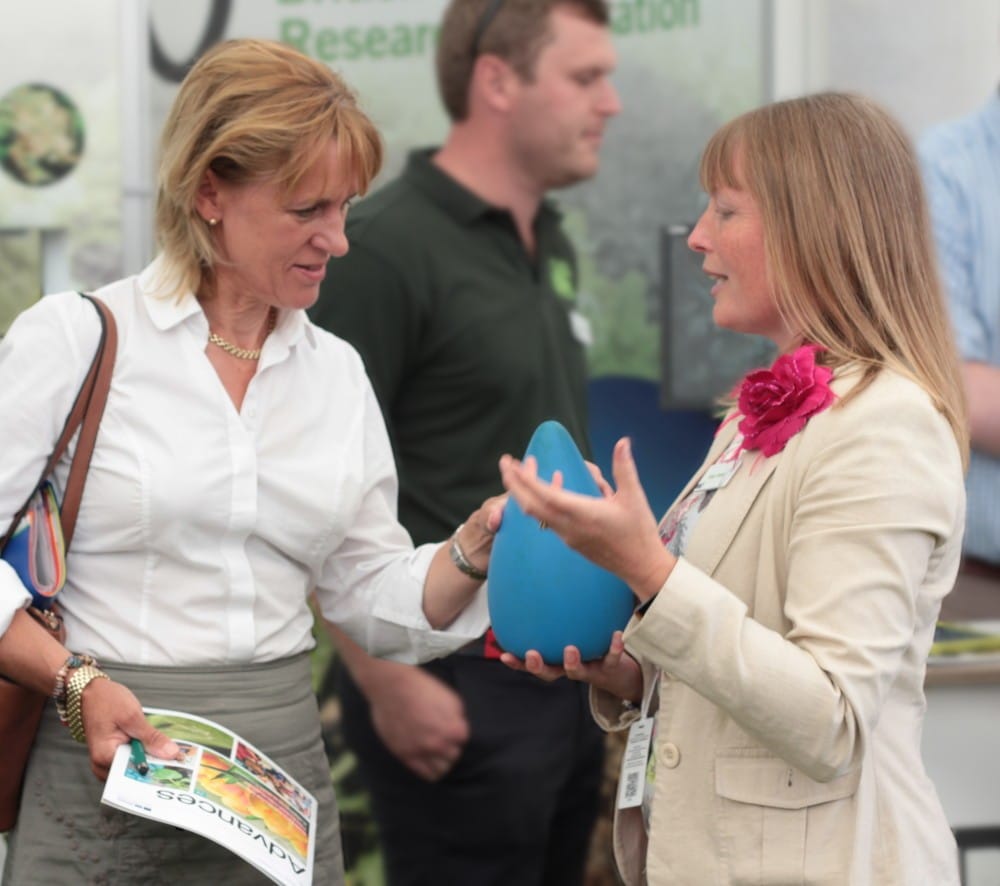
James succeeds Dr Andy Cureton on the Stakeholder Group who is moving to a new role within UK Research and Innovation.

Ensuring mutual benefit from early agri-tech trials

Agri-TechE Blog

Agri-TechE
The agri-tech innovation pipeline remains full, and the need for activities to help showcase new, evidence-based opportunities to farmers has probably never been stronger. However the relationship between tech developer and early adopter needs to managed carefully to ensure both partners gain mutual benefit from agri-tech trials.
It’s the time of year for some of the most prolific networking and information-gathering among the UK industry, which usually involves attending farm-based events, meeting up at trade and agricultural shows, and watching machinery and field demonstrations.
A lot of the year’s benchmarking, learning, inspiration, sharing of best practice and strengthening social capital is done in early summer, with a view to informing future planning and decision-making.
It hardly needs saying that this year that process is having to be very different.

Evidence gathering 

The recent experience of the GROW agri-tech business plan competition, along with the conversations we are having with agri-tech start-ups working with farmers, have made us think about how best to maintain those continued interactions.
How can the sector ensure that the crucial generation and gathering of evidence and showing the value of new innovations continues to be part of the agri-tech revolution?
Work with partner organisations round the world has included lengthy discussions around how early stage companies and farmers can work together as co-development partners on agri-tech innovations, and the need to get the terms of the relationship right from the outset. Many of the farmers in the Agri-TechE network are keen to be among the first to access more innovative, cost-effective or environmentally-beneficial ways of managing their land, crops or animals.

And working with start-ups is a great way for farmers to get early sight of new tools, tech, products or services. But while the appetite is big, there is potential for expectations to be mis-aligned, and for the commercial basis to the relationship to be unclear, leading to problems further down the line.

A role in development

Many farmers are willing to offer access to their land, facilities or sites to test out new innovations in a “real world” setting. This is a vital part of the innovation process – as what has worked in a lab, a workshop or under controlled trial conditions may behave very differently on-farm or in a new environment.
But when does a “trials host” become a “co-development partner” and, ultimately, a “customer?” As the relationship evolves, the underlying financial basis of that relationship also potentially needs to adapt as well. For farmers, there could be an “opportunity cost” in offering land for trials, and in other impacts associated with having to manage a crop or livestock differently. Farm staff need to be briefed. Data may need to be recorded and there is an additional time cost in talking to the innovator(s) about what has and hasn’t worked.
Often, that input is given willingly, due to an inherent personal interest, hope for competitive “first-mover” advantage, and / or an altruistic commitment to improvement of the industry. Often that is also remunerated by the company (but not always!). But as the innovation progresses towards the market and commercial reality, there comes a time where the start-up will be seeking first customers.

Maintaining relationships in agri-tech trials 

And what better early customer that the early adopter who has had input into the development process and see first-hand how it works?
This is where it can sometimes go wrong.
Having “invested” time and potentially effort and resource in helping to shape, guide and advise the direction and performance of a new innovation, it can be a delicate discussion to segue a farmer into becoming a paying customer – especially at full price.
Understandably, start-ups are usually keen to build value and begin to generate revenues, so the valuable farmer case study, and end-user insights will be key to their go-to-market strategy. But at what cost?

Trusted and fair

Ensuring the crucial farmer / innovator relationship stays open, trusted and fair as the innovation moves to commercial reality is a skill that the most successful start-ups will have.
Making the transition from co-development partner to customer needs to be painless for all concerned.
We encourage start-ups to think about the commercial basis of their relationship with farmers early on. Think about how that relationship will need to adapt. And how it evolves equitably for everyone.

Extracting value from niche crops

Agri-TechE
Alternative crops can boost soil health
Alternative crops are attracting interest

Growth in demand for plant-based drinks, now a £7.5bn market, has boosted the value of some alternatives to the wheat and barley crops that cover 65% of the UK croppable land area. Growers of these more unusual crops, from oats to onions to herbs, are coming together for the Agri-TechE webinar on Wednesday 17th June, titled ‘Novel and Alternative Crops – Improving the rotation and the bottom line’.

Speaker, Brin Hughes, of Bedford-based Richardson Milling, has seen demand for oats increase and is keen to help new growers avoid the pitfalls: “When looking at oat varieties, it’s a good idea to talk to your merchant to understand what the end user is looking for, rather than simply choosing the highest yielding variety.”

Herbs, legumes and novel crops

With unprecedented demand amongst consumers for plant-based products, such as pulses for alternative proteins, the market is seemingly poised for those farmers willing to make a change. And doing so can yield multiple benefits.
Soya, for example, is an excellent alternative source of protein. Bruce Knight, CEO of Legume Technology, will be discussing the soil-regenerating benefits this crop can bring to a rotation in the UK.
Meanwhile, herbs are important for flavour compounds but can also yield valuable biopharmaceuticals. David Bond, of Norfolk Mint Growers, is a strong proponent of crop diversity. He will be discussing mint, rosemary and coriander, and how to add value to a product by processing.
More exotic vegetables also offer potential. Edward Blanchard, of Three Musketeers LTD and Suffolk Produce, will be weighing up the successes his businesses have had with root vegetables, from sweet potatoes to onions and parsnips.
Rounding off the discussion, Dr Mike Salter, R&D Facilitator at AB Agri, will give an overview of food proteins and his thoughts on where they’ll come from in the future.
To give your thoughts and questions, click here to listen to the discussion at 3pm on Wednesday 17th June.

Members @ CerealsLIVE2020

Agri-TechE

Head over to Twitter to see all of the tweets about our members .

Here’s a full rundown of all our Agri-TechE members that exhibited at CerealsLIVE2020.
AHDB 402 – As content partners we are proud to be sponsoring the seminars focused on key topics of relevance to the sector; crop protection, environment, natural capital and the upcoming challenges and opportunities for the industry. You can view our technical research and knowledge exchange resources and register for digital webinars running throughout June.
Barclays 205 – Dedicated support for the UK farming sector. We’re proud to support Cereals LIVE2020 and we hope you’ll be able to join Oliver McEntyre, Barclays National Agriculture Strategy Director session for making yourself more employable and marketable in the sector which is available from 1 June.
BASF Plc, 1120 – The InVigor® portfolio offered by BASF supports a range of hybrids that are especially vigorous in the autumn, and several of which have some of the best spring vigour available.  With the addition of Integral® Pro seed treatment to all the InVigor® varieties as well as a Risk Share programme covering all varieties, growing an InVigor® hybrid will get your oilseed rape crop off to the best start. Find out more about each of our InVigor® varieties and which one is tailored to suit your farm best.
Bayer, 1115
Ben Burgess, 514 – Ben Burgess has been serving the local farming community since 1931 and has supplied grounds care equipment since 1962. We also specialise in selling quality used agricultural, construction and grounds care machinery across the UK or for export worldwide.
Cambridge Global Payments, 1028 – hosting a webinar on Thursday 11th June at 9:15 – 10am titled ‘Budgeting and Risk management’ with our focus on how foreign exchange movements can impact agri-businesses and make a huge difference to profit margins. Cambridge Mercantile Risk Management, a FLEETCOR company (NYSE:FLT), is a leading provider of cross-border payment services and currency risk management solutions. As a trusted partner of agribusinesses for over 25 years, Cambridge delivers innovative products designed to address unique business needs.
CHAP, 1029 – CHAP will be showing CropMonitor Pro, the optimal decision support tool for crop pest and disease control. CropMonitor Pro generates robust and validated updates and alerts to support pest and disease control decisions. It will help you identify optimal times to spray, show available spray windows and provide independent information on pesticides available to you.
De Sangosse, 232 – De Sangosse is a European leader in complementary chemistry and molluscicides providing growers with innovative new approaches to protecting crops against disease, pests and the effects of adverse weather from seed to harvest.
East of England Agricultural Association, 121 – The Society’s education initiative, Kids Country (@KidsCountryUK), has created a range of brilliant #LockdownLearning content for Key Stage 1 & 2 children based around food, farming and the countryside : www.kids-country.co.uk/home-activities-resources
Elsoms, 403 – Vist the Elsoms virtual Cereals plot tour to inform your varietal choices this coming season. You will be able to take a look at some of our top varieties at the moment, across wheat, barley and hybrid rye. Each variety has its own technical sheet that you can download for future reference.
fieldmargin, 122 – “The app farmers have been waiting for”. fieldmargin brings mapping, issue tracking, field work, inputs and reporting into one place. Up-to-the-minute farm information is at your fingertips, whether in the field, in the cab, at your desk or on the sofa. The fieldmargin team will be on live chat throughout the day, and are participating in a number of webinars over the event, from tech insights from farmers, to record keeping for environmental stewardship – you can see the full schedule on their blog post.
Fram Farmers, 107 – Operating for over 60 years, Fram Farmers is the purchasing, grain marketing, invoice and payment function for over 1400 farming businesses across the UK. We are here to source inputs at the best value for our members, and saving them valuable time by being their partners in crop marketing and inputs purchasing.
Harper Adams University, 806 – Catch some of our researchers taking part in CerealsLIVE2020 webinar sessions on Precision Farming Technologies and Precision Farming Application, and catch the latest videos from our world-first Hands Free Farm project in the Innovation and Technology zone.
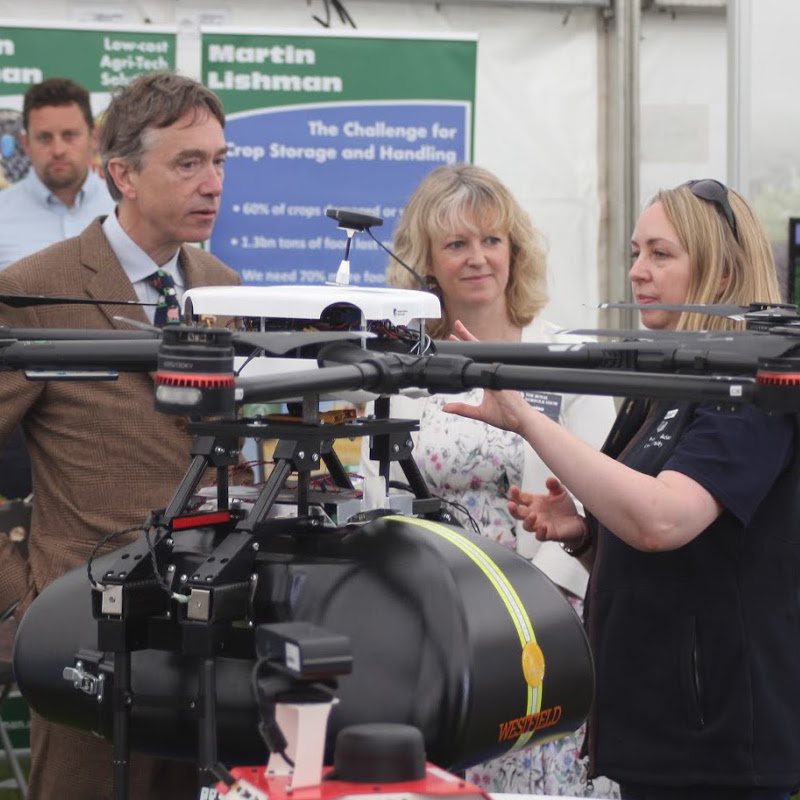
Martin Lishman, 929 – Martin Lishman innovations meet the ever-changing challenges facing farmers today. Using Agri-TechE technologies to meet these challenges will be the theme of the Martin Lishman stand at Cereals Live 2020.  Simple solutions that not only solve the problem, but often bring multiple benefits to the end user. Bourgault low disturbance Versatile Opener System (VOS) helps conserve soil moisture and maintain structure when drilling. Crop storage conditions can be optimised with fully wireless automatic monitoring and cooling systems leading to not only higher quality but also significant savings on energy costs. High accuracy testing equipment for not only grain but also the potato industry helps maintain quality and drastically reduce post-harvest losses due to spoilage and damage.
Metos UK, 940 – Our solutions for agriculture help farmers and landowners to improve the quality of their crop, increase yield and reduce waste, through weather monitoring and forecast modelling, disease modelling, pest monitoring, irrigation optimisation, soil pH and nutrient analysis, work scheduling, vehicle tracking and more.
NFU Mutual, 228 – We’re now the insurance company of choice for three quarters of UK farmers: small farms, large ones and everything in between. After all, we know the industry inside-out. As a mutual, we have no shareholders to generate profits for. We’re here for our members, and it’s our job to be the type of business they like us to be. We don’t just provide protection for farms.
Niab, 1117 – Niab is bringing the CerealsLIVE2020 Event to the farmer’s front room with mix of online videos and webinars featuring Niab specialists and advisers direct from the show plots near Duxford in Cambridgeshire. Over 125 different crop and variety plots had been planned on the stand, providing a backdrop to the latest technical advice and research in variety choice, independent agronomy, soil and rotation management, crop genetics and data science. As part of the event there will be a demo on Monday evening from the Niab Innovation Farm plots with Dr Lydia Smith and AgriEcology and Technical Director Bill Clark is speaking at a seminar sessions on Wednesday morning.
ProData Weather Stations, 958 – “It is clear that farmers and growers value the EnviroMonitor, but one question which sensibly arises is around the ongoing cost of their data plans.  We have responded to this with our new offer saving them just under £450.”The offer will be available to those purchasing an EnviroMonitor based system at CerealsLIVE2020. Read the story.
Rothamsted Research, 418 – Rothamsted scientists are using hi-tech imaging to automate in-field ear counting. Find out how this can help wheat growers to make fast and accurate yield estimates at Rothamsted’s virtual stand
Savills, 224 – Our services cover; architecture, building consultancy, rural planning, estate management, forestry (investment and management), professional consultancy (tax, valuation, expert witness), farms and estate sales and purchasing, food and farming, renewable energy, energy brokerage and strategic projects.
Sencrop, 236 – With these ultra-local and reliable data, Sencrop makes it easy to decide the course of action they should take in any weather event, and make the right agronomic choices at the right time: crop protection / sowing / irrigation…visit them and live chat to learn about their two week trial and access to weather stations local to you!
Sentry, 508 – As a progressive, forward thinking company, we understand the prominence of diversification with the British Farming Landscape and the potential it can unlock. So back in 2019 we utilised this ideology – launching our Seed Potato Enterprise. With large areas of virgin, unirrigated land, along with a collective team of conscientious, localised farmers, Sentry identified an opportunity to produce high quality seed potatoes. Collaborating with Robert Lindley Limited, this venture was launched at our Leicestershire site growing Orchestra, and our Norfolk site growing Melody.
Small Robot Company – Small Robot Company will preview and demonstrate its first prototype of its ‘Advice Engine’ Wilma, an artificial intelligence system which will get farmers ‘robot ready’. SRC’s first commercial software product, Wilma will provide a farm management information tool which will allow farmers to pull together and aggregate farm data. This will give farmers a much more holistic view of their farms, supporting much more informed decision-making. Working together with SRC’s Tom robot, Wilma will also enable farmers to manage their farms with per plant precision. Wilma will be delivered as a commercial product to SRC trial farms in October 2020.
University of Hertfordshire, 225 – The Hertfordshire Science Partnership, part funded by the Hertfordshire LEP and ERDF, provides support and R&D investment to SMEs, enabling them to access state of the art facilities and academic expertise.
University of Lincoln, 132 – The Lincoln Institute for Agri-Food Technology (LIAT) aims to support and enhance productivity, efficiency, and sustainability in food and farming through research, education, and technology. We offer a range of opportunities in BASIS and FACTS as well as MSc and PhD study focussing on agri-food, robotics and automation.
 
Find out more and take part on the CerealsLIVE2020 website: cerealsevent.co.uk

Innovation Hub at the Royal Norfolk Show goes virtual

Agri-TechE

–Innovation Hub live right now! Click here to get in–

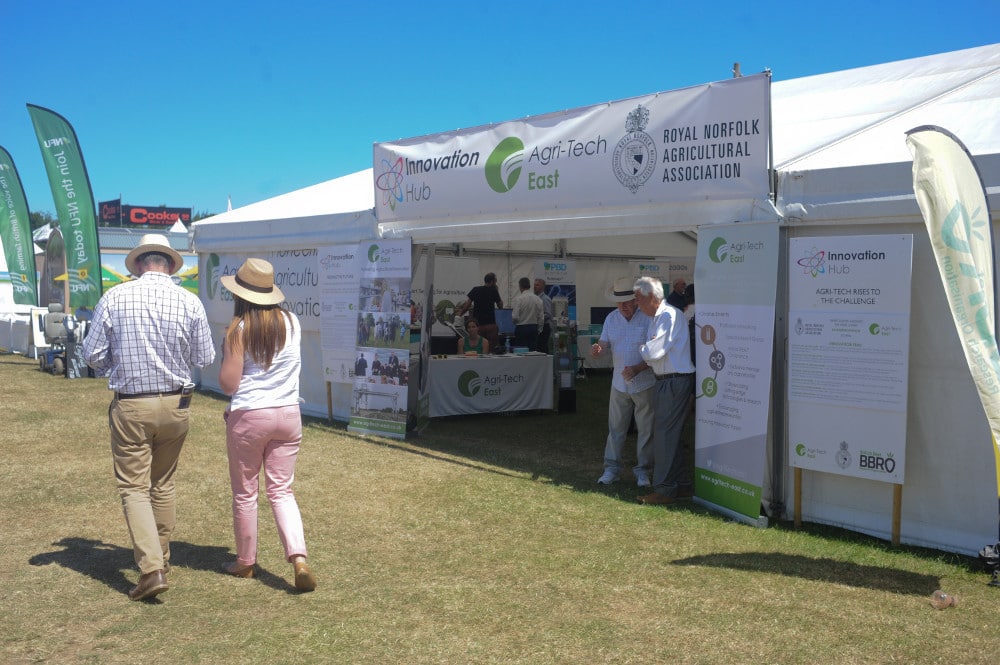
The Innovation Hub, hosted by Agri-TechE on behalf of the Royal Norfolk Agricultural Association, creates an opportunity to drop in and discuss an emerging technology or a challenge directly with a technologist or researcher.
Sadly, the Royal Norfolk Show has been cancelled this year but keen that the ‘show must go on’ we are recreating this experience virtually.
We will be asking the demonstrators a number of challenging questions; for example: Can coffee beans and waste paper help solve our global challenges? Should we be feeding the plant not the soil with phosphorous? 2019 was a year of extremes – can resilience be improved?
You will have the opportunity to ‘eavesdrop’ on the conversations and to ask your own questions.

1: Following new guidance on improving bioavailability of phosphorous, should we be feeding the plant not the soil?

The Nutrient Management Guide (RB209) helps growers make the most of organic materials and balance the benefits of fertiliser use against the costs – both economic and environmental. New recommendations on phosphorous management are the first in nearly 40 years how should the industry respond? 
Discuss 10 years of research on phosphorous has, for the first time, shown how deficiencies can be detected with grain analysis. ADAS will be launching ‘YEN Nutrition’ and will discuss how analysis of grain samples at harvest can be used to infer the success of nutrient management strategies, providing a comprehensive post-mortem on each crop’s nutrition (from germination to maturity). Improved methods for precision fertiliser application can make inputs more effective. Hockley Agro UK – will be discussing how biodegradable wetting agents can be used to deliver foliar fertilisation more effectively. The effects of phosphorus and potassium fertilisers and the regular use of farmyard manure have been compared in a 120-year-old trial on a clay loam soil in Suffolk.  Historically soil phosphate (P) availability has been the main driver of yield, however this did not appear to be the case in 2019 when the yield of winter wheat was good across the site. Niab will be discussing the New Farming System programme which is focussed on three inter-related themes: fertility building and cover crops; approaches to tillage; and use of soil amendments.

2. Learning the lessons of 2019 – can we improve resilience to extreme conditions?

As growers of potatoes and sugar beet reel from the removal of key chemicals from their armoury, a number of new tools and techniques are showing promise for increasing resilience both within the crop and post-harvest.  Are these innovations available now?  If not what is needed for farmers to gain the benefit?
Discuss Advanced breeding techniques that inhibit sprouting in potatoes could help overcoming withdrawal of chemicals. The Sainsbury Laboratory is working on a technology that would enable the suppression of enzymes that convert starch to sugar. This would allow storage at low temperatures while maintaining quality for processing. There are many reasons why legislators should reappraise gene editing as this technology would increase resilience to adverse conditions. The control of tuber populations during the growing season could increase saleable yield even under extreme weather conditions. Crop4Sight will discuss its ‘toolbox’ of insights that allow in-season benchmarking of crop development to enable timely interventions. Beneficial insects can increase pest control, and improving the resilience of soils can mitigate the impact of extreme weather. BBRO will be sharing the lessons learnt during 2019, the first year of growing sugar beet without seed treatments. Another of its projects highlights how sugar beet, when included in a rotation, can provide to break the cycle of weeds and diseases.

3. Can we address global challenges with repurposed agricultural by-products?

Single use plastics and soil degradation are two of the challenges that could be addressed by innovative use of agricultural waste products. Creating a market for these resources would also improve the sustainability of production.  What are the innovations that could be introduced now and when would their benefits be realised?
Discuss Agricultural by-products can be used to create bioresins for construction materials. Cambond – will be discussing how it is possible to harness the complex chemistry of plants, together with energy from the sun, to provide a globally useful and sustainable substitute for toxic oil-based chemicals used in plastics and building materials. Paper crumble, a co-product of paper recycling, offers the potential to enrich soil, improve retention of water and nutrients, and increase productivity. Paper crumble can also be used as a route to increase soil carbon as a long-term carbon sink. University of East Anglia – is investigating ways to build soil carbon stocks to build a healthier soil and help farmers deliver a ‘public good’. Paper crumble also contains plant nutrients and trace elements and can offer an uplift in beneficial chemicals. Greenworld is working with UEA to investigate the benefits of PC to soil structure. More details about how to get involved in the virtual Innovation Hub can be found on the event page.  Grab a sun hat and a cold drink and get ready to meet us there.

Burleigh Dodds Chapters Online

Agri-TechE

Burleigh Dodds Chapters Online is a new service developed by Burleigh Dodds Science Publishing, an award winning “climate-smart” publisher in agricultural science. This new service gives users full control to create custom-made chapter collections on topics and themes important to them. This is made possible through the development of a unique taxonomy that groups chapters into relevant subject areas driven by theme, for example (pests & diseases, health & welfare) or product (cereals, fruit, pigs).
With many currently working from home, access to resources that may have previously been available in the workplace can be lost or restricted. As a content provider, Burleigh Dodds know how important it is for agriculture professionals, farmers and farm businesses, as well as students and researchers to retain continued access to key research. With Burleigh Dodds Chapters Online, those boxes are ticked!

READING EXPERIENCE
Chapter collections purchased via Burleigh Dodds Chapters Online can be read online and offline via a reading app for mobile and desktop.


MEMBER BENEFITS
Special introductory offer: Apply for a 30-day free trial and receive 20% discount off any chapter collection purchased before 31st July 2020.

Find out more on their website: https://www.bdschapters.com/