AgriGate Hub gaining momentum

Agri-TechE

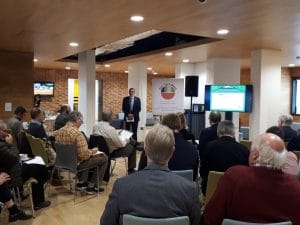
agrigate launch plaqueKeen to support the work of the Eastern AgriGate Research Hub, at Hasse Fen near Soham, Agri-Tech now has a base at the hub – which places us firmly in the heartland of our members activities.

AgriGate supports commercial scale research aimed at increasing the productivity and reduce crop wastage before produce reaches the processor and retailer. It also provides space, equipment and support for early stage businesses such as Entomics, who we have helped get established.

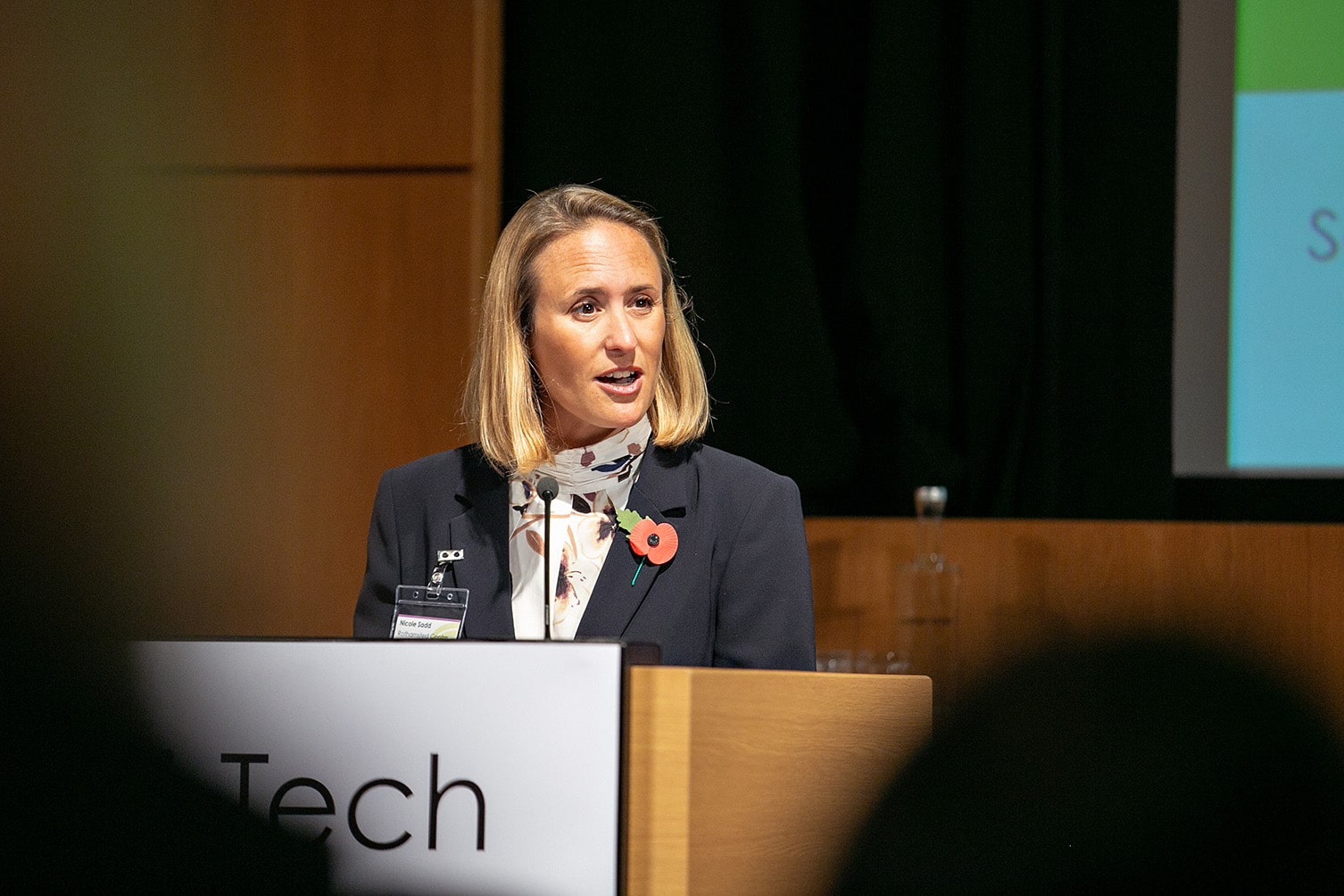
Director Belinda Clarke believes that the move will offer benefits for all: “We are planning to hold events at AgriGate, including working with Niab to help bring research and industry leaders to the hub for thought leadership sessions and discussions which will lead to new collaborations and ideation for technical developments.

“We are looking forward to working with the other tenants to help exchange and disseminate ideas and new thinking for the industry.”

Hasse Fen was selected as the location for the hub as it has a unique combination of Fenland soils.

The Hub will improve the research capabilities of the region’s agri-businesses and it has been built with £600,000 of growth initiative funding from the Greater Cambridge Greater Peterborough Enterprise Partnership, through the Eastern Agri-TechE Growth Initiative.

Urban farming under Clapham

Agri-TechE

If you missed Daniel Cross, Managing Director of G’s Fresh Salads, at our ‘Undercover Agents’ Pollinator talking about their involvement in the unique ‘Growing Underground’ farm in Clapham then you may be interested to see the film.

Sitting thirty-three meters underneath the busy streets of Clapham, a disused air raid shelter from the Second World War is currently producing sustainable and fresh produce, thanks to a new initiative called Growing Underground. These forgotten tunnels provide a pest-free, climate-controlled environment that is close to point of need.

The Growing Underground team were the stars of a video produced by Microsoft which offers the chance to see some of their facilities and hear about their aims.

You can view the video below:


If you are having trouble with the video player above you can view it on YouTube here.

For more information click here.

Cereal killer samples taken directly from the field to improve the Recommended List

Agri-TechE

Dr Jenna Watts, AHDB 2 webAn increase in deadly “cereal killers” – rust fungi that are affecting resistant wheat strains – is a growing concern. Wheat, one of the most profitable crops in the UK, is grown on more land area than any other commercial food, and the global wheat trade exceeds that of any other crop. In order to protect crops from diseases that are becoming increasingly diverse, growers and industry should look towards the Recommended List, an in-depth list that assists the industry in making informed decisions on variety choice.

AHDB Cereals & Oilseeds invest 13% of their total levy income in the Recommended List (RL). It represents years of work by plant breeding companies, researchers at AHDB and collaborations with BSPB, MAGB and nabim.

Among its many attributes are the disease ratings, which provide growers with independent information on varietal resistance to the important UK cereal and oilseed diseases. According to Dr Jenna Watts, Research and Knowledge Transfer Manager at AHDB, this information can be used as part of an integrated disease management plan.

She says: “There are questions over the future of fungicide availability due to the development of fungicide resistance and the potential for legislative change; therefore, varietal disease resistance is likely to become even more important. The information provided by the ratings can also be used to help prioritise fungicide sprays.”

The RL is able to provide recommendations through the vital collection of field data. Dr Watts says: “The RL requires a large number of trials in order to provide the grower with the most accurate picture of variety performance as possible.”

Within the trials program, there are three different types to calculate the disease ratings: untreated trials, disease observation plots and inoculated trails.

Dr Watts continues: “The inoculated trials are particularly important as a high disease pressure is established that pulls out the differences between resistant and susceptible varieties. It is these differences that the RL disease ratings aim to represent.

“There is a high awareness of the RL by growers, industry and researchers. Cereal growers require a lot of technical crop information, and the RL fulfils part of this. In addition, data generated by the RL may be requested and used by research organisations for research projects that will be of benefit to the industry.”

Dr Jenna Watts, AHDB webThe RL disease ratings are underpinned by work done on the United Kingdom Cereal Pathogen Virulence Survey (UKCPVS). This AHDB and APHA funded project, led by Niab, has been monitoring cereal rusts and mildews in the UK for more than 40 years, detecting and identifying new races of disease that can emerge on previously resistant varieties. The new approach of field pathogenomics, led by TGAC and in collaboration with UKCPVS, has the potential to assist the RL with rapidly assessing the threat that each new race may pose to commercial varieties.

Dr Watts believes that advances in the field pathogenomics approach will lead to better disease monitoring activities. She says: “The tests are rapid and relatively cheap, compared to traditional pathotyping techniques, meaning more samples can be analysed. It is also possible to identify and confirm the host variety of a sample.

“However, it is important that results can be interpreted in a similar way to the results of traditional pathotyping techniques to ensure they are of immediate value to growers and plant breeders.”


Dr Watts will be speaking at the Pollinator ‘Rusts and Other Cereal Killers’ on 12 April. Find out more and book your ticket here.

Field pathogenomics offers new insights in fight against rust

Meet the Network
Agri-TechE

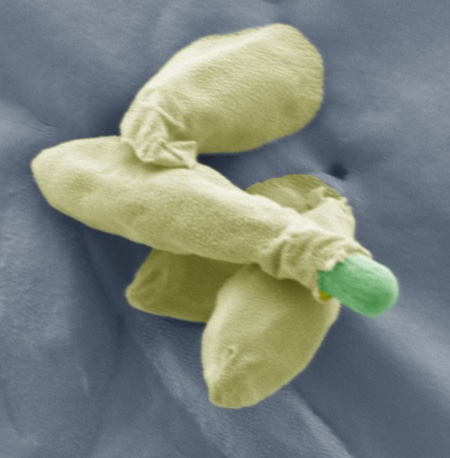
Sarah HoldgateField pathogenomics, which uses genetics alongside traditional disease assessment to identify different races or groups of fungi, is giving new insights into rust fungi, a disease that affects cereal and wheat crops in unpredictable ways. This is enabling researchers to provide more informed recommendations to growers and industry.

The goal of the field pathogenomics method is to apply gene-sequencing technology to the surveillance of rust populations and undertake comprehensive global population genetic analyses of this important plant pathogen.

The UK Cereal and Pathogen Virulence Survey (UKCPVS) is funded by APHA and AHDB, and managed by Niab. It has been monitoring cereal rusts and mildews in the UK for more than 40 years, detecting and warning industry and growers of new races of disease emerging on resistant varieties.

Diseased samples are obtained by the UKCPVS from a group of regular contributors, including farmers, agronomists, breeders and official trials operators. As part of the Field Pathogenomics project, collaborations with 13 other rust pathology labs across the world has seen samples from a further five continents. Some of these samples are then used to create isolates of rust pathogens, and stored at the UKCPVS laboratories.

Changes detected

UKCPVS has seen recent changes in yellow rust and brown rust situations.

Dr Sarah Holdgate, Manager of UKCPVS gives an example: “In 2011, we saw the arrival of the Warrior race of yellow rust to the UK. Initially we thought that this was one single race; however, as part of the field pathogenomics method we found that it was more diverse, and consisted of several genetically different race groups which had a potentially different origin to isolates found in the UK previously. “Sometimes isolate rust samples from the Warrior race look like older races of yellow rust, such as the Solstice race, making it easy for researchers to misinterpret the behaviour of these two separate pathogens.

“Using the genotypic information, we have been able to show that these two isolates are genetically distinct, and it should therefore not be assumed they will behave the same way when it comes to crops in the field.” Dr Holdgate also comments that the field pathogenomics approach has been important in interpreting results from subsequent years.

She says: “As we get more results in, we can compare the different race profiles with isolates found in the UK as well as those found in other countries to track the spread of the race. Most recently, in 2014 we were able to use this knowledge to identify the Kranich race of yellow rust in the UK, which originated in Denmark and Sweden in 2011.”

Dr Holdgate stresses the importance of submitting diseased samples as soon as they’re observed in the field. She says: “The best way for the UKCPVS to identify the underlying races is to sample directly from the outbreak, so it is essential that samples are taken as soon as something strange is observed in the field.”

Rusts and other Cereal Killers 

At the Pollinator on 12th April, Dr Holdgate will be talking about how to alert growers of changes in the populations of wheat yellow rust, wheat brown rust and powdery mildew. Dr Diane Saunders, Project Leader, JIC / TGAC will be talking about Field Pathogenomics and Jenna Watts, Research and Knowledge Transfer Manager, AHDB Cereals will be discussing the Recommended List disease ratings.

More information is available here. 

‘Kranich’ yellow rust race detected in UK

Agri-TechE

The ‘Kranich’ yellow rust race has been detected in the UK for the first time, AHDB has announced in its Crop Research News.

As a result of the latest development, growers are being asked to monitor all winter wheat varieties, including those with a high disease rating, and report abnormal amounts of yellow rust to the UK Cereal Pathogen Virulence Survey (UKCPVS).

If you would like more information about UKCPVS there will be an opportunity to hear project leader Dr Sarah Holdgate,speak at our April Pollinator “Rusts and Other Cereal Killers”  on the 12 April 2016 at Niab.

There will also be report on the latest findings in the next edition of Crop Research News.

AHDB crop research news

Research Digest
Agri-TechE

The February 2016 issue of AHDB crop research news covers a number of topical issues such as pest control guidance where pesticides have been withdrawn.

(more…)

Elsoms Seeds vegetable crop review

Agri-TechE

Brassica variety review

SkywalkerIn our summer cauliflower range, Bejo’s new variety Liria has performed very well, particularly in the dry stressful conditions throughout July and August. Liria has good protection for a summer cauliflower and opens up just before full maturity. The ability of this variety to be a classic two cut cauliflower which is easier to harvest, makes it an ideal variety for the UK market place.

In our autumn cauliflower range Skywalker has again shown during this season why it is so popular with the growers. Skywalker has an excellent frame with a strong white curd, ideal for early autumn production. Broccoli Covina, our new introduction, has received a lot of interest from UK growers. Covina’s performance during the 2104 season was exceptional. It’s ability to withstand stressful growing conditions and produce a quality head has created a large interest for this variety.

Onion/Leek variety review

lr_GZ_009130_Onion-Rijnsburger_HyskyThe past season saw some interesting results from onion varieties. A wet/cold August saw a delay to harvesting and some staining issues going into store. A cooler dry spring caused some crops to be in the smaller fraction. As earlies go Hybing, Hybound, and Hypark continue to perform outstandingly.

In the past few years’ fusarium has become a problem for growers. Hence our breeders have been looking for genetic material showing levels of fusarium resistance. Hysky has shown these traits and is now being grown more commercially. Hysky also yields and stores very well. Last year we entered several new varieties in trials with both Niab and VCS. These presented themselves very well, in particular Hytune and Hyway. Hytune is the top yielding variety and is an early. Hyway is later maturing so a possible replacement for Armstrong. This is good news for growers for our programme going forward.

In our red onion range, our newest introduction Red Light is very early and very high yielding, making it useful for growers to bridge the gap between sets and seed crops. It is also available as first year set. In our maincrop maturing reds, the Red Tide is producing good yields of quality bulbs. Our leek variety Rally is a first/second early. It does not bolt, gives good yields in the 60-70% prepack and stands well. Runner then follows on which comes in as a second early. Curling is a variety we hope growers will see more of in the future. Being late maturing (Christmas and onwards). it produces a nice length leek and good yield and also shows some frost tolerance.

Carrot and Parsnip variety review

Carrots

natuna_webThe Bejo breeders continue to work in the UK on improved quality, foliage health and the possibility of extending the early part of the production season as well as later varieties with storage suitability. Improved disease resistance, particularly cavity spot for the UK is a high priority, and newer varieties with higher resistance are now being used commercially with good results.

New introductions to our range include the maincrop maturing variety Norfolk. Norfolk has once again given very positive commercial results in 2015, and will be used in large areas for 2016 production. Suitable for sowing from late march to early June, it has produced attractive well filled roots with a high percentage marketable. Norfolk produces very healthy and upright foliage.

Elsoms are also pleased to offer Natuna, which is mid-season maturing and has again given very promising commercial results in 2015. Suitable for sowing from early April onwards, it has produced very high quality roots with above average yields. Roots are strong against splitting and breaking. Healthy and upright foliage.

Parsnips

Pearl_311013Breeding reliable and robust new varieties is key. High yields,packout and quality are required in new varieties along with flexibility.

Our breeders key goals are to improve quality, colour, disease resistance (particularly canker), reduce crop wastage caused by bruising and to extend the UK production season by producing earlier maturing and later varieties with longer term storage potential. Improved flavour and shelf life are also attributes we are working on.

Our variety Panorama gave outstanding results in 2015/16, and is now established as one of the leading commercial varieties in the UK. Panorama is proving its flexibility and reliability for production throughout autumn into early winter. Panorama has good weight distributing throughout the root, and the colour is attractive.

A high percentage of marketable product and good levels of general disease resistance. Parsnip Pearl is a main crop-late maturing variety and is now a key variety in many grower’s parsnip programmes.

Pearl offers high quality, smooth attractive roots with excellent colour, combined with high pack out percentages and very long term field storage potential. Good levels of general disease resistance.

Images from Elsoms.

First eight-parent MAGIC genetic map for wheat announced

Research Digest
Agri-TechE
Heat map of chromosome 1A in Niab2015 (photo from Wiley)

Multiparent Advanced Generation Intercross (MAGIC) mapping populations offer unique opportunities and challenges for marker and QTL mapping in crop species.

Researchers from Niab and the Department of Plant Sciences, University of Cambridge, have constructed the first eight-parent MAGIC genetic map for wheat, comprising 18 601 SNP markers.

The accuracy of the map has been validated against the wheat genome sequence and found an improvement in accuracy compared to published genetic maps. The map shows a notable increase in precision resulting from the three generations of intercrossing required to create the population. This is most pronounced in the pericentromeric regions of the chromosomes. Sixteen percent of mapped markers exhibited segregation distortion (SD) with many occurring in long (>20 cM) blocks.

Some of the longest and most distorted blocks were collinear with noncentromeric high-marker-density regions of the genome, suggesting they were candidates for introgression fragments introduced into the bread wheat gene pool from other grass species.

The researchers further investigated two of these linkage blocks in detail and found strong evidence that one on chromosome 4AL, showing SD against the founder Robigus, is an interspecific introgression fragment.

The completed map is available from http://www.niab.com/pages/id/326/Resources.

Undercover and underground: new LEDs making light work

Agri-TechE

Is it possible to grow lettuces underground?  As pressure increases to find new ways to grow perishable goods to improve market response and reduce waste we are going undercover to find out what enterprising growers are doing.

G’s Fresh, with a fine reputation for precision production of lettuces and other vegetables in open fields, have also been experimenting with going underground. In our March Pollinator, Daniel Cross will be discussing a trial that is using the constant temperature of disused air-raid shelters as an opportunity to experiment with growing lettuces in a totally controlled environment.

LEDs are more efficient that normal lamps and offer the advantage that they can be optimised to produce light of specific wavelengths and even alter these during the day to emulate natural daylight. The falling cost of LEDs and greater uptake from industry means we are approaching the tipping point where alternative approaches to salad cultivation may be possible. Daniel says there is still much to be done but early results look promising.

Joining him will be Simon Pearson, Senior Lecturer at the University of Lincoln Holbeach Centre for Food Manufacturing, to explain how LEDs can be used for covered crops.

Ian Collison
Ian Collison

We will also hear from Ian Collinson about how he has invested in new technology that is able to bunch flowers like a human – improving the quality and speed of production.

Additionally, there will also be an opportunity for an insider’s guide to the Sainsbury’s Laboratory Greenhouses. These state-of-the-art glasshouses are among the finest in the world and this will be a rare chance to find out more about the exciting research that is taking place.

More information can be found on our events page.

Opening the DEFRA treasure trove will create opportunities for new types of applications

Agri-TechE
Image from Environment Agency
LIDAR image from Environment Agency

3D visualisations of landscapes, real time data on water quality and levels, market data on stocks of cereals held on farms and usage of cereals by maltsters – are just some of the diversity of data to be made available by DEFRA in June. We will investigate how value can be extracted from this bonanza at a special SIG meeting in March.

DEFRA’s transition to becoming a department that’s ‘open by default’ will unlock a treasure trove of data with agricultural potential.  To investigate this further we have invited Ellen Broad, Expert Adviser to the Secretary of State, to talk to us about what data will be available and how if can be used by the agri-tech community.

Ellen says:”Over the course of this next six months, DEFRA be releasing more data to do with things like groundwater and waterways, erosion, animal movements and plants, all of which could have exciting potential. Because all of these datasets are openly licensed, they’re free for agricultural companies to access, use and share for their own purposes.”
Last year the Environment Agency went through a similar process and it released data collected by one of the most advanced visualising systems.

Light detection data used by national parks and gamers

For the past 17 years The Environment Agency has been capturing LIDAR (Light Detection & Ranging) data in England. LIDAR uses a laser to scan and map the landscape from above and is widely considered to be the best method for collecting very dense and accurate elevation data across the landscape.

LIDAR data has been used to help the work of the Environment Agency, creating flood models, assessing coastal change and analyse how land is used.

Ellen comments: “Already we’ve seen the release of key datasets like the Lidar 3D height data being picked up and used for a range of external purposes, by national parks, urban planners, agricultural data companies, archaeologists, even gamers!”

This shows the range of potential applications for this data.

Other European countries have already released data and we have a case-study from the Netherlands explaining how geo-positioned land parcels have been used to give fields a ‘post-code’ and allow information about cropping, soil types, average NDVI values to be attributed to a field and analysed.

SIG meeting

Bringing together the interests of our Big Data and Remote Sensing and Monitoring SIGs, this event is aimed at farmers, agronomists, agri-data companies and others developing agri-business support tools, so that we can collectively explore and understand the implications of “DEFRA’s Data – Opening Up the Treasure Trove”. The meeting will be held at Rothamsted Research on 9th March 10.30-15.00 – click here to learn more.


Field labs provide evidence to support change

Agri-TechE

It is so mild this year that everything has sprouted early and in some places blackgrass is already above the crops. Across the region farmers will be experimenting with new regimes such as pre-emergence herbicides, later sowing, even grazing by sheep, but how will the learning points from this be shared? The Innovative Farmer initiative has been designed to do just this.

One farmer comments that there is a real need for field labs: “It is difficult to get proof in agriculture. Lots of things are accepted practice but have few trials or quantifiable evidence to support them. We need practical methods supported by evidence. Proof is more useful than received wisdom and makes it easier to manage a farm effectively. We need simple, tested methods that actually help on real farms, even if it’s not as sexy as GPS guidance or Bluetooth connected machines. There’s not a lot of support for more traditional farming.”

Benefits of Field Labs

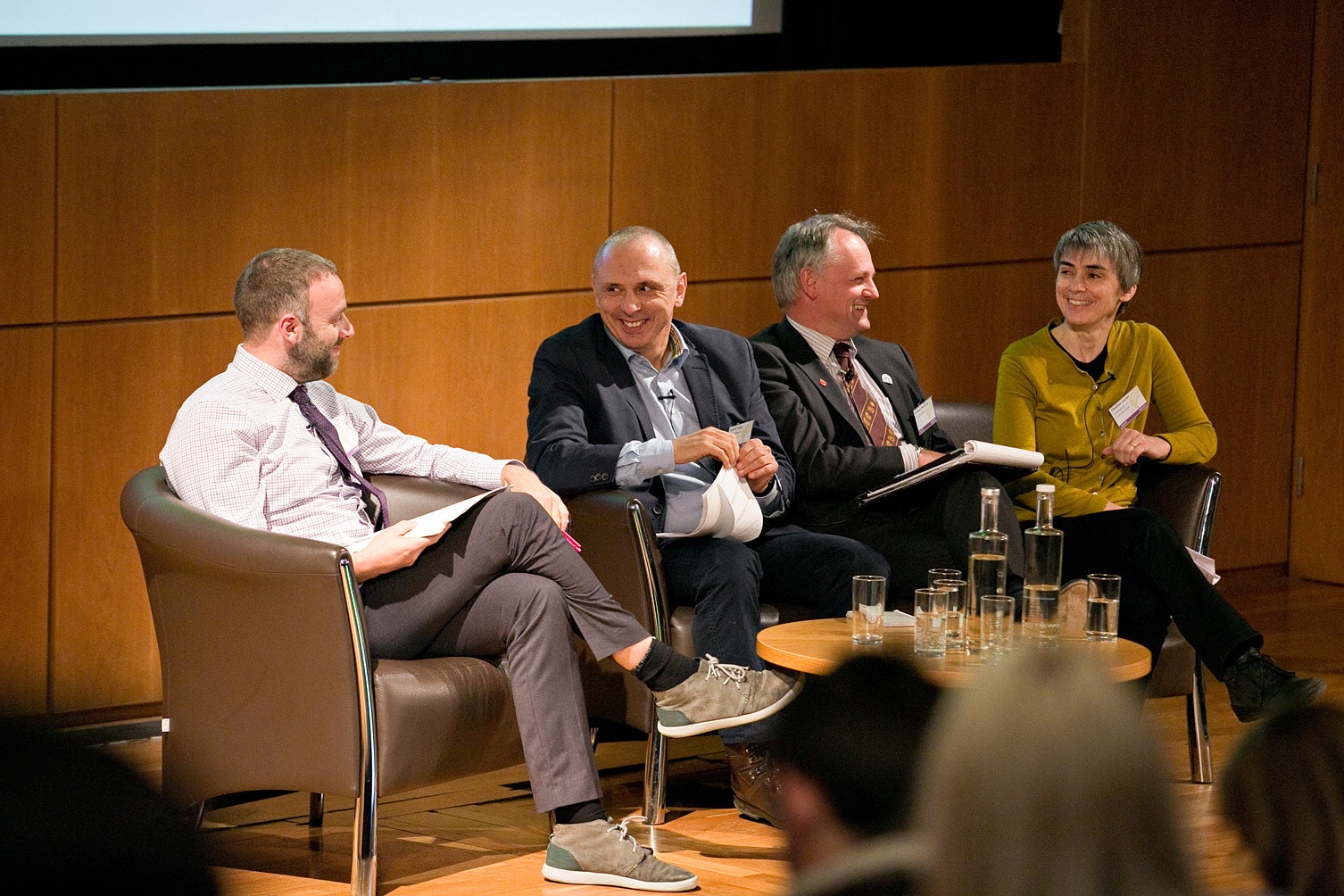
This is one of the benefits of the new Innovative Farmer initiative being discussed at our February Pollinator, which aims to bring together groups of farmers with a similar interest to encourage them to share experiences and provide scientific trials ‘in the field’ under real world conditions.  At the meeting ‘Pipettes and Ploughs’ we will have farmers who have participated discussing their experiences and scientists talking about how to make the results meaningful along with new findings from two of the ongoing Field Labs.

Image from LEAF
Image from LEAF

Caroline Drummond MBE, Chief Executive of LEAF (Linking Environment And Farming) is to chair the meeting. LEAF develops and promotes Integrated Farm Management through the setting up of demonstration farms and management tools for farmers and Caroline identifies recent research into cover crops, integrated pest management and soil management, particularly with regard to minimum and zero tillage as of particular relevance. 

She says that the meeting will bring  “new thinking, relevant research and innovation.” She explains:” From our activities we have found that both farmers and researchers have benefited from closer interaction questioning, experimenting and pushing the boundaries to improve performance and bring about change. I am looking forward to the debate.”

A report from the meeting is available here.

Arlabion brings new generation seed treatment from Latvia

Agri-TechE

Ella Kalnina, Arlabion

Arlabion is an agri-tech startup developing new generation seed treatment products – fungal inhibitors and plant activators – for sustainable crop management.  Ella Kalnina, company co-founder, was exploring the best routes to the market when she was introduced to Dr Belinda Clarke and Agri-Tech. (more…)