What technology will help you farm profitably and sustainably?

Agri-TechE
Sustaintable intensification
River Ant (credit: How Hill Trust)

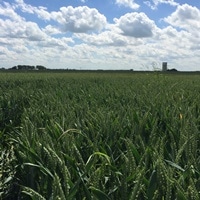
Louis Baugh’s farm at Neatishead Hall, Norfolk, is bordered by two Sites of Special Scientific Interest, and is also located in the Ant Valley which is designated as a wetland area of international importance.  This creates a huge challenge and the big question is “how can you run a profitable farm within such an environmentally sensitive area?”

It was to explore how to farm sustainably while maintaining viability that DEFRA set up its Sustainable Intensification Research Platform (SIP) in 2014 and the early findings from one of the three SIP projects is to be discussed at a meeting delivered by the project leaders Niab together with Agri-TechE on 14th September 2016.

A whole-farm-business approach

IFM is a practical, whole-farm-business approach that aims to improve the economic, environmental and social performance of farms, by optimising the use of all resources on the farm including soil, water, air, staff, machinery, capital, wildlife habitats and landscape features.

To be successfully IFM requires a good understanding of beneficial husbandry principles and traditional methods of farming, while addressing regulation and embracing innovation. It also includes a risk management approach that anticipates, assesses, manages and develops contingency plans for any unplanned and/or natural events.

SIP Project 1 ”Integrated Farm Management (IFM) for improved economic, environmental and social performance” aims to develop an approach that farmers can implement within the opportunities presented by their sectors and location.  It has a number of study farms to demonstrate a range of alternative farm management practices and the project is developing tools to improve decision support.

Louis Baugh will be talking about the challenges of farming profitably and sustainably within an environmentally vulnerable area. For example maintaining a herd of pedigree holstein dairy cows on peat marshes is made possible by drainage water being pumped up and into the river by an Internal Drainage Board pump.

Protecting the environment

The farm has a well established Countryside Stewardship scheme. This helps the farming operations to coexist alongside the species-rich natural environment, which includes barn owls, marsh harriers, lapwings, skylarks, oystercatchers, otters and the swallowtail butterfly. The stewardship comprises wildflower meadows, conservation headlands, wild bird feeding plots, and 24km of grass margins, almost one third of which have permissive footpaths in place.

Stuart Knight Niab
Stuart Knight, Niab Lead of SIP Project 1

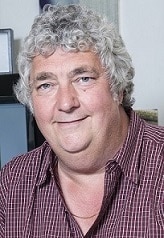
He believes that measures to address water quality must be based on scientific evidence, be carefully targeted, and must enthuse and engage farmers: “the costs to farm businesses of implementing measures must not outweigh the environmental benefits of the improvements”.  He also considers that farmers would benefit from “carefully targeted advice and information to help farmers improve their soil management techniques, thereby conserving the long-term fertility and productivity of this precious resource.”

Also speaking will be Stuart Knight of Niab and SIP1 Project lead, who says: “I believe Sustainable Intensification poses tough challenges but also offers great opportunities for UK farming, and I hope that we can contribute to ensuring a profitable and sustainable future for the industry.”

An important element of the project is evaluate the decision support tools that are available and create a list of characteristics that characterise effective tools and use this to encourage manufacturers to design relevant and user-friendly tools in the future.  There will be a discussion of this and a number of companies developing such tools will be invited to participate.

The programme is still evolving so if you would like to participate in the tools discussion then do get in contact.

Click here for more information about the event and to book.

Agri-TechE Catalyst funding round 6 launched

Agri-TechE

When the Agri-TechE Strategy was launched in 2014 it committed a fund for investment in agri-tech projects called the Agri-TechE Catalyst. There have so far been five rounds, and the sixth has just been launched.

The DFID funding in Round 6 is aimed at encouraging UK businesses and universities to work with developing country partners on agri-tech innovations. It is open to UK based businesses of any size working in collaboration with others, and projects must include one member from an eligible developing country.

The following areas are priorities for DFID funding in Round 6:

  • integrating smallholders into supply chains
  • meeting quality standards and improving productivity
  • creating new supply chains
  • increasing the value of production to smallholders
  • improving access to appropriate innovation in developing countries
  • innovation that increases rural income through improved processing / storage
  • control of crop pests, weeds and diseases

Funding is available for a proportion of the total project costs (25% – 70% depending on the size of the company).

Allowable project costs are capped at:

  •  £150,000 to £400,000 for early-stage technical feasibility studies
  • up to £1.5 million for industrial research
  • up to £800,000 for late-stage experimental development

Deadlines

  • Register online from 11 July 2016
  • Briefing event – webinar on 1 August 2016
  • Deadline for registration – 26 October 2016 (expressions of interest for industry research)
  • Deadline for application – 2 November 2016

Full details on www.gov.uk Funding Competition: Agri-TechE Catalyst

$1 million funding for agri-tech start-up KisanHub

Agri-TechE

We are delighted that KisanHub, an early stage company that presented at our first Pollinator meeting, has raised $1 million. The company already has a vibrant user base with over a thousand farmers and many large enterprises.

KisanHub has developed a farming enterprise software platform that makes sense of disparate operational and agronomic data. It is able to simplify complex decisions to help make agriculture more predictable and profitable, moving farming enterprises from intuition-based decision-making to one that is based on objective analysis and helping farmers to grow more and use less inputs.
The $1 million seed round was led by Notion Capital with contributions that included Niab, a current customer and strategic partner.

KisanHub is helping to drive a technology-driven shift in agriculture, both in terms of the growing of produce as well as supply chain management. Giles Barker, COO and Co-Founder, says:  “There is a growing need for solutions to help farmers deliver sustainable growth. This investment will give us the ability to enhance and deliver our offering to a greater number of these farmers both in the UK and internationally.”

Patrick Norris of Notion Capital comments that KisanHub has a unique proposition and it is well positioned to transform the way global agricultural enterprises make decisions to increase yield and reduce costs. He says: “We are very excited to be backing an outstanding team and we look forward to working with them to build a very successful business.”

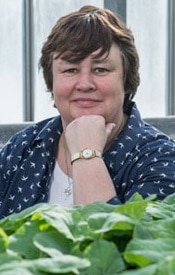
For Niab KisanHub offers the potential to help it deliver solutions to inform crop management and business processes in the agricultural and horticultural sectors. CEO Dr Tina Barsby says: “Evidence from practical experience has underpinned Niab’S belief in KisanHub’s potential and the decision to invest.”

Dr Belinda Clarke, Director of Agri-Tech, says: “KisanHub has benefited from support of the cluster, and there is an increasing pipeline of new agri-tech business ideas developing with the support of this unique ecosystem – as was demonstrated recently with the GROW business plan competition.  This makes the Start-Up Showcase at REAP all the more exciting and a highlight of the year.”

Giles Barker (fourth from left) attended the official launch of the Eastern AgriGate Research Hub, at Hasse Fen near Soham, during Agri-TechE Week 2015:

Key attendees at the Agrigate launch

Andrew Burgess (Head of Agriculture, Produce World); Mark Pendlington (Chairman, New Anglia Local Enterprise Partnership and Group Director, Anglian Water); Tina Barsby (CEO Niab); Giles Barker (COO and co-Founder, KisanHub); Ben Tam (Innovation Programme Manager, Anglian Water);Belinda Clarke (Director, Agri-Tech); George Freeman MP; Martin Lutman (Programme Manager, Eastern Agri-TechE Growth Initiative); Mark Reeve (Chairman, Greater Cambridge / Greater Peterborough Local Enterprise Partnership) Effie Mutasa-Göttgens (Project Manager, AgriGate [Niab])

Will digital agriculture deliver the next revolution?

Meet the Network
Agri-TechE

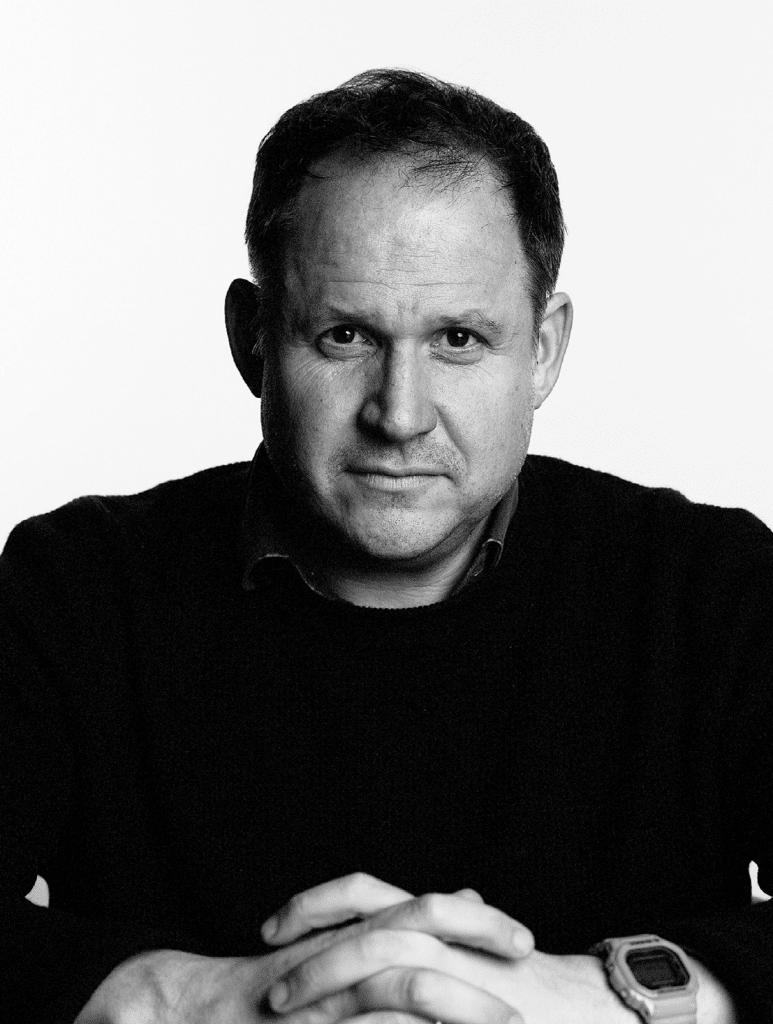
David Hickie, PA Consulting“Innovative new thinking is integral to the future of agriculture and we see the digital overtaking the physical,” says David Hickie, Technology Lead for FMCG at PA Consulting and a speaker at the REAP Conference 2016 in November.

David has 20 years of experience in research and development, including senior levels in Unilever and PepsiCo, which included work across the supply chain. He now is based at PA Consulting , a global innovation, technology and consulting firm.

We interviewed David about the shift in mindset needed to tackle new challenges in the industry…

Creating a marketplace for technology

Agri-Tech is a good meeting point for the marketplace – our observation is that there is still a big gap between the large companies involved in the food supply chain and the SMEs who are driving innovation in agriculture. PA Consulting joined Agri-TechE to see if we could help in both the creation and delivery of the market; to look at ways of attracting big companies to invest in finding and scaling up technology to solve their challenges.

We are not here to compete with the guys who have created the latest and greatest device, but to help figure out the industrial application and turn theory into practice when it comes to delivering the next revolution in agriculture.

‘Digital Agriculture’

We have observed that over the last 10 to 20 years many industries have digitised. Telephones have gone from a thing on the wall with a cable to something in your pocket that connects to the internet. As for the financial industry, who remembers cheque books?

The rate determining step in the evolution of an industry is the ability of its innovators to build the business models to get new ideas into the marketplace.

As industries digitise, innovations come from surprising angles and many incumbents can’t keep up as a result large companies are investing huge sums in acquiring new capabilities. Monsanto has invested around $1 billion in recent years acquiring companies with promising new technologies.

Globally, the digital agriculture industry is forecast to be worth $15 billion by 2021. However, many companies in the agro-science, machinery and technology sectors are struggling to position themselves for the future.

What about the farmer?

The
The ‘Digitising Agriculture’ report – click to go to download page.

Integrating and making sense of data is a big challenge for a farmer. All this information is designed to help, but it doesn’t come without risks; even small mistakes in interpreting the mountain of data available can lead to lost crops and profits. Compounding the data challenge, the world is changing around us. Whilst much agricultural knowledge is ‘passed down through the generations’, methods need to change not only to boost yield to feed a hungry world but also to mitigate the effects of climate change. Alongside all these risks, it seems to us that there are many piecemeal, incompatible technology solutions.

Our ‘Digitising Agriculture’ report looks at how other industries have reinvented themselves, with the result that the digital world has overtaken the analogue world – we predict that the same will happen to farming.

Coalescence

While some companies, particularly those focused on machinery and technology, are open to new collaborations – which undoubtedly will create new products, new services and new industries for the benefit of the whole supply chain – the agriculture industry model evolved out of the analogue world.

The challenge is that the market for digital agriculture is still nascent and there isn’t an obvious route to coalesce around new technology platforms.

It’s not yet clear where digitising agriculture will create most value, or how to overcome the many barriers to technology adoption. However, many of the required technologies exist; it’s about selection, application, proving them, prototyping them, building one, and getting it to work. This is where PA fits in: we can help reinvent industries by scaling up technologies and building markets. I haven’t yet seen why there won’t be such a revolution, but I think to create it there needs to be a bit of a push.

Physics not chemistry for crop protection

New thinking is needed; if we were to reinvent crop protection, for instance, we might consider using physics, not chemistry: perhaps we would build a drone equipped with a laser, a camera and an intelligent processor and zap the pests.

Something we are looking at for the developing world is getting greater value from mobile phone devices. On a typical large farm, there may be hundreds of farmhands out in the fields, all with a phone on them – there is no reason why their phones shouldn’t generate information that is then fed back to the business.

For instance, a microscope can be added onto a smartphone to look at leaf development. You don’t need to go to every plant in the farm, but a few plants can be chosen for a representative picture of an area. It can then be worked out what the situation is in that field and if it needs water and fertiliser for example.

This is the kind of project we are working on – creating new knowledge by making use of what’s already there.

About PA Consulting

PA ConsultingPA Consulting is an award-winning global innovation, technology and consulting firm with over 2,600 employees operating globally. For over 70 years, it has partnered with organisations to help them innovate and grow; envisioning and delivering new businesses, brands, products and services, and helping its clients build their innovation and technology strategies and capabilities.


REAP

IEA joins cluster to develop environmental big data analysis

Agri-TechE

The Institute for Environmental Analytics (IEA) was established last year to support the development of skills in environmental big data analysis. To strengthen its ties with the agri-food sector IEA has become a member of  Agri-TechE and the cluster organisation is to become its 19th Partner, alongside the likes of Microsoft Research, Sainsbury’s, Met Office and the Centre for Ecology and Hydrology –  just a few of its diverse partners.

Belinda Clarke, explains that the relationship with the IEA and its other partners will complement the existing activities within the ecosystem and provide access to new thinking on big data analytics.

The IEA collaborates across five key sectors – agri-food, insurance and financial services, infrastructure, logistics and utilities, Colin McKinnon, CEO of the IEA, said: “Given the widespread interest in using data analytics to improve the food production sector, we are really pleased to have Agri-TechE as a partner. With its extensive links across the sector allied to the resources of the existing IEA partners, I’m sure we will be able to explore many interesting projects over the coming years.”

Game Changing Technologies in Agriculture

Research Digest
Agri-TechE

3D printing for custom chemicals, aquaponics, sentinel plants, remote sensing, Internet of Things, prescription farming – were all identified as Game Changing Technologies in Agriculture in a think piece by Riaz Bhunnoo, Head of Global Food Security following a workshop hosted by his organisation earlier this year.

Game Changing Technologies in AgricultureInterestingly all these technology areas are already being developed by organisations within the Agri-TechE cluster and have featured in recent Agri-TechE Pollinator events; demonstrating how attending Agri-TechE events brings you closer to the people that are pushing back the boundaries.

3D printing for custom chemicals – is one of the areas that PA Consulting is exploring and consultant David Hickie will be talking about this at REAP.

Aquaponics combines growing plants in soil without water with fish farming – Aponic has developed a system to do just this and is attracting international interest, the company were finalists in GROW,  the UK’s first Agri-TechE  business plan competition.

Sentinel plants – these are plants that give early warning of environmental threat such as disease. Dr Mike Birkett from Rothamsted Research discussed the science behind companion planting at the first Remote Sensing and Monitoring Special Interest Group meeting.  He said: “Early onset of pest damage in crop plants is accompanied by production and emission of volatile organic compounds, even before normal and recognisable symptoms appear. This phenomenon can be exploited in portable detection systems to determine the health of the crop. Better understanding of the chemicals produced, or biomarkers as they are called, provides a terrific opportunity to develop new smart crop protection strategies.

“This SIG being launched by Agri-TechE provides just the right platform to foster new collaborations in pursuit of that goal.”

Remote Sensing Farmer’s son Max Bruner, CEO of Mavrx, is one of Agri-Tech’s international members. He spoke about the adoption of remote sensing for agriculture at a Pollinator meeting. He said : “America, as you know, is a very large country but our company covers the entire US corn, wheat and soya bean industry, which spans 18 states. To do this we use an ‘Uber’ based model to provide coverage. A farmer requests our services and we get the nearest of our light aircraft pilots to fly over their fields to take images.”

Internet of ThingsThis is an expression coined first by the founder of Cambridge company RedBite, who were one of the companies involved in the Pollinator meeting ‘The Internet of (agri) things’   which was presented by ARM and Microsoft, two companies at the cutting edge of this technology.

Prescription farming – was discussed by Michael Lee of Syngenta Ventures, who gave a keynote at GROW, he identified this as part of the disruptive technologies that are set to be game changers in agriculture

Game Changing Technologies in Agriculture

The report can be read here game-changing-technologies-agriculture

Disruptive technology is to be discussed by inspirational speakers at the REAP conference on Wednesday 9th November and offers the opportunity to meet and exchange views with farmers and growers that are implementing new approaches and with the scientists and technologists that are working with them to translate the latest advances into robust solutions.

More information about REAP. 

First web portal for Brassica will accelerate improvements

Research Digest
Agri-TechE

brassica information portalThe Brassica Information Portal (BIP), released by TGAC,  will provide a single point of access to all data from pre-breeding trait scoring experiments performed on Brassica species. Scoring the beneficial traits assists Brassica breeders improve crop yields, increase nutritional benefits and reduce the carbon footprint through biofuel production.

The Brassica genus contains a range of versatile vegetable, forage and crop plants including: cabbage, broccoli, swede and rapeseed. The new standardised, curated data resource will allow the identification of beneficial genetic traits, for example, how rapeseed responds to different experimental conditions. Matching the characteristics (phenotypes) of plants with their genetic background, will better inform breeding programmes for crop improvement.

By enabling scientists to store and analyse large quantities of Brassica trait data, the portal will serve as a gateway for an integrated analysis of phenotypic and genotypic information using methods such as associative transcriptomics and QTL analysis.

Using new traits for marker assisted selection, Brassica breeders will be able to decrease the input of fertiliser and water, increase crop yield, quality and resilience of the plants. High concentrations of industrially important compounds can also be selected for in otherwise discarded parts of the plant, adding value to the crop (e.g. lubricants in waste straw).

Additional data includes information about to make rapeseed contain more oil for biofuel production.

This can all be done with conventional breeding methods, drawing from the list of genetic traits associated with plants in the new Brassica genus database.

With climate change impacting the UK with both droughts and floods, new pests arriving and thriving, old varieties may not be as resilient to these changes in the environment as newly bred ones. It is important to understand and create a diversity of vegetables to ensure resilience.

Dr Wiktor Jurkowski, Project lead and Group Leader at TGAC, said: “Data sharing today must be extensive, comprehensive, global and long-term. With the BIP, we help the Brassica Community to achieve these objectives.

“With all trait information in one place, and linked with genomics data, many new connections between the plant’s traits and responses in different experiments can be drawn, that was previously not possible. This database can, therefore, encourage integrative, big data analysis, which has become a crucial part of today’s Science.

“At the same time, it is a perfect example of collaborative work across UK and beyond. The Brassica Information Portal is derived from ‘Cropstore’, a database hosting Brassicas and other crops led by Prof Graham King (University of Southern Cross, Australia) and currently supported by the Renewable Industrial Products from Rapeseed (RIPR) project, led by Prof Ian Bancroft at the University of York and by BBSRC.”

Compromise would offer a third way

Agri-TechE

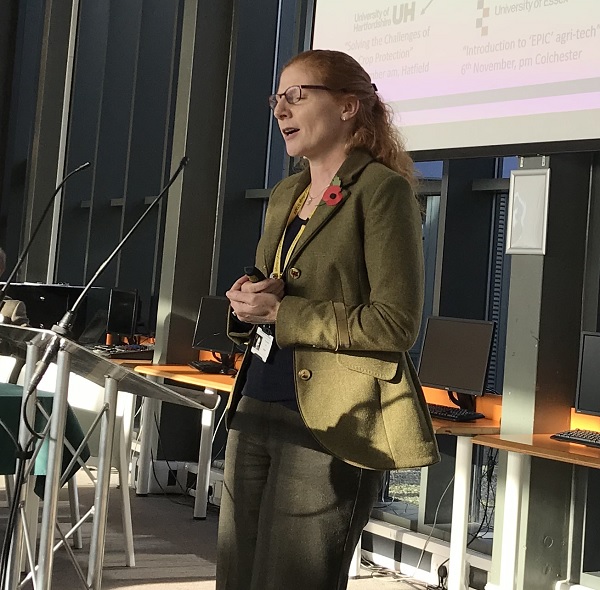
David Baulcombe_profileSometimes it is time to step back from a problem and look at the wider picture.  Prof Sir David Baulcombe, Head of the Department of Plant Sciences at the University of Cambridge and the Regius Professor of Botany, is one of the inspirational speakers at REAP and he suggests that there is a ‘third way’ when considering the future of crop protection.

Professor Baulcombe has a strong interest in the use of plant biotechnology for crop improvement, especially in addressing the problems of developing countries and believes this is not incompatible with traditional methods of cultivation and concerns over the environment.

(more…)

Missing link found in nitrogen fixation

Research Digest
Agri-TechE

Scientists at the John Innes Centre have discovered an important component in the process of nitrogen fixation in plants.  They have identified a key protein that facilitates the movement of calcium in plant cells. This movement of calcium signals to the plant that nitrogen-fixing bacteria are close-by and triggers the development of nodules on its roots to house these bacteria.

Professor Giles Oldroyd  said:

“This discovery demonstrates that there is a CNGC protein located at the edge of the nucleus in plant cells which controls the movement of calcium into the nucleus. This is an important step towards understanding nitrogen fixation in legumes and this understanding will help us to develop more efficient crops.”

Nitrogen is the most abundant gas in the atmosphere and legumes are able to take nitrogen out of the air and incorporate it into their cells. This is possible because legumes have developed a symbiotic relationship with a particular type of soil bacteria that are housed within their roots. These bacteria take up (or ‘fix’) the nitrogen and pass it to the plant in exchange for sugars and other nutrients. This function enables legumes to grow with less nitrogen fertiliser.

Professor Giles Oldroyd leads a research group at the John Innes Centre that aims to transfer the ability to fix nitrogen to other types of plants, like wheat or barley. This would increase growth and yield for these crops – particularly in developing countries where farmers have less access to nitrogen fertilisers.

Nodules on the roots of legumes help these plants to secure their own nitrogenNodules on the roots of legumes help these plants to secure their own nitrogen

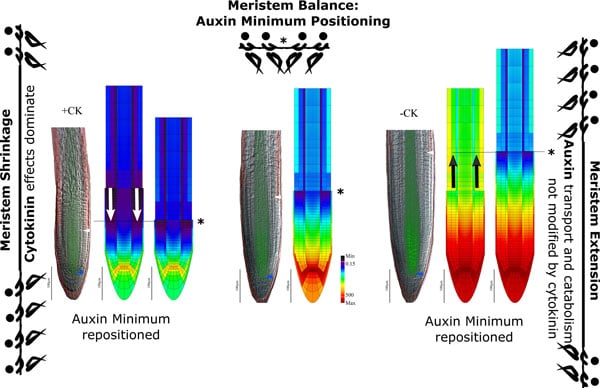
It has long been known that the interaction between plants and bacteria depends on movement of calcium in plant root cells. This movement of calcium takes place in the central nucleus of plant cells.

New research from the John Innes Centre lead by Dr Myriam Charpentier and Professor Giles Oldroyd discovered a set of critically important proteins, called cyclic nucleotide gated channel 15s (CNGC15s), which are essential for the movement of calcium into the nucleus. They found that the CNGC15s facilitate the calcium movement into the nucleus allowing the plant to transfer the information that the nitrogen-fixing soil bacteria are nearby.

This enables the plant to initiate the cellular and developmental processes that facilitate bacterial accommodation, allowing establishment of the nitrogen-fixing symbiosis and thus nitrogen fixation. Although this calcium movement is limited to the nuclei of plant cells, it has a large impact on how the whole plant will grow.


Dr Charpentier said:

“Although the presence of nuclear calcium signals in plants was demonstrated more than a decade ago, the exact identity of the nuclear calcium channel has remained a mystery. This research identifies the first nuclear calcium channel in plants. Calcium signalling is not only important for symbioses but also for many other processes happening in the plant during development and in response to the environment. Knowing the identity of the nuclear calcium channel will now enable us to better understand how plants use nuclear calcium signals to grow and respond to their environments.”

The paper “Nuclear-localised cyclic nucleotide gated channels mediate symbiotic calcium oscillations” is published on Friday 27 May in the journal Science. It was carried out in partnership with the University of Montpellier in France and was supported by the Biotechnology and Biological Sciences Research Council (BBSRC) and the European Research Council.

Talkin’ about a revolution

Agri-TechE

Difficult to get a better example of why the current business model for agriculture is not working!

Arthur Marshall, analyst for AHDB Potatoes, comments this week that average British ex-farm prices for potatoes are currently at their second-highest level ever recorded for this time of year, and with planting ongoing it is likely that the recent high price levels will have had an influence on planting decisions.

Why the agriculture model is broken
Click image to view larger

He says: “This time last year, there was a widespread response to low prices in reduced planted areas. In hindsight, we can see that this has contributed to very high prices despite record yields. Arguably, the high prices provide a genuine market incentive to plant more next season but of course it is impossible to know exactly how much and what will be needed.”

The result – as this graph from AHDB shows so clearly – is that next year the prices will fall in proportion to the amount of extra production, unless of course the Dutch and Poles have a disastrous harvest, in which case we might do okay.

The big question is why is it impossible to know how much is needed?  

There must be a maximum amount of chips and crisps that even the British can eat!

Other industries have sophisticated models that are able to predict demand and forecast production – and this technology is getting smarter.

Big data is being utilised by every industry, from transport and logistics to hotels and taxi firms, to create new types of service based on knowledge of customer demand and manage it profitably.

REAP challenging the status quo 

At REAP this year we will be looking at how other market sectors are using technology to disrupt the business model and if any are mature enough to apply to the agri-food industry, which would need to include grower confidence and contract arrangements.


Click here to find out how price drives planting decisions


REAP 2016 logo (transparent bg)

Agri-TechE members at Cereals

Agri-TechE
AHDB cereals
AHDB at Cereals 2015

Thinking about maple beans this year? Determined to cultivate a well structured soil next year?  Moving into energy crops?  Interested in local weather conditions? Want to know how farmers in the outback make a profit? Fancy some bugs for a snack?

Then come and check out some of the Agri-TechE members at Cereals this year. We have provided a handy round-up for you here.

Don’t forget if you are just starting out in farming or research and want to bridge the gap between lab and land then join us at the BBSRC stand for a special Young Innovators Forum event for some cakes and ale.

Special event for the Young Innovators’ Forum will be on stand 702 at Cereals from 15:30-17:00 on 15 June 2016, with an evening reception afterwards that will include wine and canapes.

To participate in the Young Innovators’ Forum Cereals event you need to register; find out more by clicking here.

New online tool helps predict gene expression in plants

Research Digest
Agri-TechE

A free online tool that makes it easier for non-specialists to interpret genomic information has been developed by scientists at The Genome Analysis Centre (TGAC) and The John Innes Centre. 

The tool called expVIP (expression Visualisation and Integration Platform) will help a global community of scientists understand more about important food crops, in particular about how plants grow under different environmental conditions.

ExpVIP allows researchers to submit information from any species into a single web-based tool that will provide a full analysis of their expression data. This enables scientists and breeders to know where and when genes are expressed in their favourite plants.

Dr Uauy said: “This new tool will accelerate scientific discoveries by enabling researchers and breeders to more easily place their discoveries in the context of previous knowledge.”

Most of the world’s major crops are polyploid, meaning they have multiple copies of a very similar set of genes. This makes analysis of gene expression notoriously difficult. However, expVIP is designed to tackle this effectively and simplifies the interpretation and linkage of this complex data.

As a proof-of-concept, the scientists used expVIP to analyse publicly available data from wheat plants grown under a variety of growth conditions. Over 400 datasets which were previously separate and were not easily accessible to most breeders and researchers have now been opened up and linked thanks to this resource. T

Analysis of genomic data is a key aspect of future strategies that researchers will use to develop improved crop species that are able to flourish in the world’s changing climate.

The work was supported by the BBSRC and  the International Wheat Yield Partnership (IWYP).

An explanation of the expVIP tool is available at http://www.wheat-expression.com/.