Get the latest agri-tech news, events and opportunities direct to your inbox
Agri-TechE Week: Using and reducing waste from fresh produce

Agri-TechE
7 November 2016
Hasse, Hasse Road, Nr Soham, Cambridgeshire
This event has now passed.
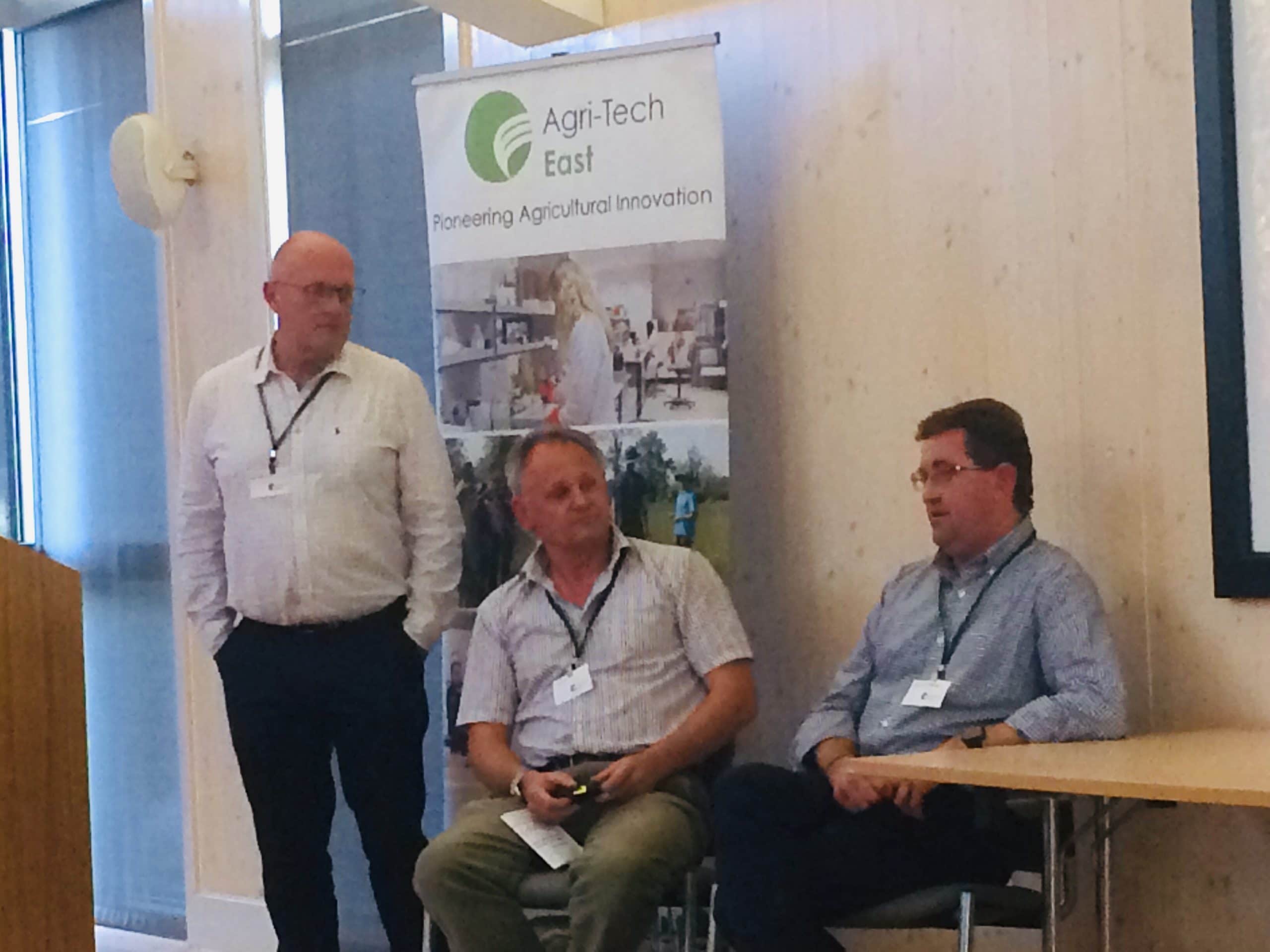
How to create value from materials that would otherwise be wasted is the theme of the ‘Talking Shop’ event that was hosted by Niab at Hasse, home of the Eastern AgriGate Research Hub.
A number of businesses that are successfully tackling this issue talked about their experiences and the discussion extended to include waste reduction at all stages of field production starting from inputs through to harvest and storage.
Companies presenting included ValueForm, which is using post-harvest straw as a more environmentally friendly alternative to paper or plastic for creating single-use disposable medical products, which may include bedpans, kidney trays and wash bowls.
Managing Director of Valueform, Prakash Korde, said: “We know that our medical products can meet the necessary standards for waterproofing and disposal requirements set by healthcare providers.”
Valueform estimate that disposable products used within the NHS could be made from a few thousand tonnes of straw.
Programme:
10.00 Coffee and networking
10.30 Introduction and overview of projects at the Eastern AgriGate Research Hub
Bioboost and Agrimetrics – Lydia Smith, Niab
Sustainable fruit production – Niab EMR
Novel weed control – Ubiqutek
11.15 Feedstocks and the potential for waste source and minimisation (business presentations)
Alternative sources of protein – Matt McLaren, Entomics
Improving forecasting to reduce waste – Charlie Kisby, G’s Fresh
Using straw as alternative to plastic for single-use packaging – Prakesh Korde, ValueForm
Sonic assisted biorefining to convert biomass into useful molecules – Steve Taylor, Celbius
Urban farming in warehouses and roof tops – Jason Hawkins-Row, Aponic
12.45 Lunch, networking and tour of demonstrations
To book:
This event has now passed.
For further information please contact Vivien Sulik or Dr Lydia Smith, : vivien.sulik@niab.com
Get the latest agri-tech news, events and opportunities direct to your inbox
Strengthening the UK’s leadership in CleanTech
Agri-TechE
In a continuation of our preview of the REAP Technology Exhibition (click here: To spray or not?), other demonstrations will include:-
‘Green Pallets’ – Cambond
Cambridge start-up Cambond has produced the world’s first moulded straw pallet. Pallet manufacture uses more than 100 million tonnes of wood a year.
“More than 4 billion wooden pallets are in use across the world, resulting in a considerable drain on forest resources,” says Gareth Roberts, Cambond co-founder. “There are significant carbon costs and recycling issues arising from the short working life of pallets.”
As a result, Cambond has created ‘green pallets’ by injecting of resin, water and chopped straw into a mould. The manufacturing process is compatible with existing processes and machinery, and as a sustainable and ecological substitute it could remove over 60 million tonnes of CO₂ per billion pallets.
At the REAP conference on 9 November, Cambond will showcase the pressed straw pallets, strawboards, pots made from straw and wood panels made with innovative biomass based green glue. The exhibition is a new feature of the conference, highlighting cutting-edge technology from national and international businesses.
Cambond’s Straw pallet
Gareth says: “We have developed a new technology to utilise agri-tech by-products such as straw, beet fibre and residues from bio-ethanol production.
“Using biomass based green resin and agricultural waste fibre can create a large number of products which will be cost effective to manufacture and easier to re-cycle. It presents a significant opportunity for de-carbonising many supply chains and provide a sustainable manufacturing process which will compete with standard products on cost.
“Cambond’s green glue and green pallets offer a sustainable, low carbon future and would strengthen the UK’s leadership in cleantech.”
Cambond has set up their first joint venture in China to commercialise the green glue technology and engineered woods, and are now looking to build manufacturing capacity in the UK and expand into Europe.
‘Smart Greenhouse’ – Bee Leaf
The Smart Greenhouse market is expected to increase to more than $1.2 billion by 2020, according to a recent report.[1] Tom Naylor, CEO of Bee Leaf, is capitalising on this rising trend, with the construction of a high tech renewable greenhouse in Shepreth, Cambridgeshire.
On 9 November, Bee Leaf will be showcasing their plans at the highly anticipated technology exhibition, during Agri-Tech’s REAP Conference. Tom believes that his company can produce cost effective and higher quality produce in comparison to traditionally field grown crops.
He says: “To maximise yield, quality and reliability, the greenhouse will use LED lights, a mobile gutter system and air handling units which will enable Co2 to be maintained at double the normal level leading to 25% extra yield. Capitalising on periodic market shortages, we will grow middle-tier crops, such as watercress and coloured variety lettuces against season.”
Bee Leaf will maintain a semi tropical climate by using renewable energy, cultivating crops that would not normally be economically grown in the UK. A mixture of LED and natural lighting will be deployed, with a reliance on the artificial light during dark winter months.
Tom Naylor, Bee Leaf CEO
“Blue and red LED lights will be deployed, as those spectrums induce vegetative growth,” explains Tom. “Modifying the wavelengths throughout the day, we can produce plants with high quality and a superior taste. The lights will also be inexpensive to run, as we have on-site electricity generation.”
“The greenhouse’s biogas plant will be loaded with feedstock each week for a 28 day anaerobic digestion cycle – this will be showered with microorganisms for fermentation and gas production. We also have a wood chip biomass boiler to provide supplemental heat when required.”
As the project uses renewable energy, it is likely to appeal to customers seeking quality and eco-friendly products. In addition, Bee Leaf will produce ready to eat items, avoiding industrial chlorine washes which reduce taste and shelf life. Washing and packing will take place on site and a clean greenhouse environment will be maintained.
“We have a great location within reach of wholesalers, manufacturers and distributors in London, and we can also supply most of the country. I am positive that our cost effective, locally grown produce will be competitive, and I look forward to sharing the greenhouse’s innovative design at REAP.”
Get the latest agri-tech news, events and opportunities direct to your inbox
Impact of Agri-TechE recognised with Knowledge Catalyst Award
Agri-TechE
Innovation starts with understanding the problem. By creating opportunities to get farmers involved earlier in agri-tech developments – in both the lab and the workshop – Agri-TechE has stimulated a range of exciting collaborative projects. Now its work as a ‘Knowledge Catalyst’ has been recognised with an award at the EDP Business Awards.
Belinda and Becky accept the Knowledge Catalyst EDP Business Award
Belinda Clarke, Director of Agri-TechE – who received the award last night (Thursday) with Becky Dodds, Agri-TechE vents and Membership Manager – says she is delighted to accept the award on behalf of all the individuals and organisations that have got involved in building a vibrant agri-tech cluster.
She says: “We have members at all points of the value chain and this is removing the obstacles to collaboration.
“It is much easier to ask a researcher about their work, or talk to head of sustainability at Kelloggs, if you have seen them speak at an informal regional meeting and had a chat with them over a coffee.
“Identifying those with the problems and bringing them together with others that have potential solutions is the exciting part and we are now seeing a number of initiatives emerging from this work.
“To win the Knowledge Catalyst Award is brilliant as it recognises the work of all these individuals that are getting actively involved and also the economic benefit that the cluster will return to the region.”
Many of the collaborations began after early-stage companies pitched in the ‘Start-up Showcase’ at the annual REAP conference – held in 2016 on Wednesday 9th November.
Example collaborations with business benefits facilitated by Agri-TechE include: soft robotics and predictive crop modelling for fresh produce, RFID tagging for stock and crop management, new crop growth and protection chemistries, use of temperature to regulate plant development and helping a number of companies gain investment.
Interactions have also resulted in attracting companies from Chile, Australia, Kenya and Latvia to establish bases and partnerships in the region.
“Agri-Tech’s commitment to the collection, sharing and harnessing of knowledge has helped to build a community,” the judges said ahead of the EDP Business Awards ceremony.
Mustard TV have produced a short ‘highlights’ video of the evening, including a comment from Belinda at about 1 minute 30 seconds into the video, which you can view on their Youtube channel at this link.
Get the latest agri-tech news, events and opportunities direct to your inbox
To spray or not? Spore trap provides three weeks’ notice
Agri-TechE
Image courtesy Fera-Science Limited
A new early warning device for Septoria, yellow rust and brown rust that gives farmers a three week window for deciding whether to spray or not is one of the demonstrations in the Technology Exhibition new for REAP this year.
Bayer CropScience will be exhibiting its automated spore trap. It can detect disease at the point of infection, up to three weeks before the symptoms are seen. This early notice will enable farmers to optimise their disease control programmes, increasing yields and profitability. Better targeting of fungicides may also help to reduce the risk of resistance.
“We have seen that even a big spike in spores only translates into disease if the conditions are favourable for infection. Also there is a latent period between detection of spores and the observation of visible symptoms,” says Will Charlton, Fungicide Product Manager at Bayer CropScience.
“This new information means that farmers will know when their crops have been infected up to three weeks before they can see the disease, allowing much more time to tackle the pathogen. “If however, the weather conditions were unsuitable for infection then they can do a risk assessment and may decide not to spray for that pathogen at all.”
The pathogen detection device is fully automated. Air is sucked through the device bringing fungal spores, which are trapped and identified using LAMP (loop mediated isothermal amplification) DNA amplification. This allows the farmer to see the number and type of spores; at present it identifies Septoria, yellow rust and brown rust in wheat.

Other demonstrations at REAP include:
A “lab on a smartphone” – PA Consulting
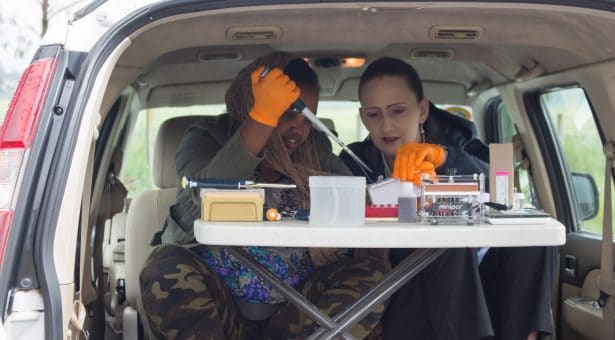
This year the wheat harvest had one of the highest protein content on record and some of that is the result of strategic spraying of nitrogen fertiliser at key growth stages. Too much and the expensive fertiliser is wasted, at the wrong time and the benefit is missed. To assess the levels of nitrogen the plant is able to access from the soil, it is useful to make regular samples of the plant’s leaves and roots, but this is time-consuming and the samples need to be processed in a lab. PA Consulting has developed a ‘lab on a smartphone’, which allows the analysis to be done in the field on a mobile device, fast access to results allows decisions to be made about spraying, allowing farmers to optimise the timing and volume of the application.

At REAP, PA Consulting’s innovation experts, scientists and engineers will be on hand for free 30 minute consultations. They can bring their experience of answering these challenges from around the world, and they hope to start exploring what you could individually benefit from on a case-by-case basis. Provide them with a brief summary of what you’d like to talk about, they’ll book you a time and make sure they have the right people there to talk to you. To book a slot for your free consultation, please send a short headline summary for discussion to aaron.croucher@paconsulting.com.
New Thorvald robot – University of Lincoln
Image courtesy University of Lincoln
Telling the difference between a crop and a weed is not a trivial problem, however machine vision technology being developed by University of Lincoln is able to do this. The robot is trained to identify the emerging crop at key stages allowing weeds to removed either mechanically or other physical measure instead of through the use of chemicals. The new Thorvald robot has also been designed to carry soil sensors. Recent research by the AHDB Cereals has shown that soils can vary every few metres so accurate soil mapping can help to determine more precision application of water or fertiliser, reducing waste.
Taking to the air – AgriVue
The health of a crop can be determined by rate of growth and the colour of the leaf canopy. These indicators can be monitored from the air allowing key information to be gained about stress on the crop – for example areas of soil compaction, poor drainage or competition from blackgrass. AgriVue will be demonstrating how drones equipped with a range of sensors can provide farmers and their advisors with a ‘bird’s-eye’ view of the crop.
Get the latest agri-tech news, events and opportunities direct to your inbox
We don’t understand enough how other markets work
Agri-TechE
“The notion that British agriculture – having not managed to export all that successfully in the free market – is suddenly going to do better when that safety net is removed is deluded,” Christoph Graf Grote, Operations Director of Spearhead International Ltd, will tell delegates at REAP .
“Other countries have invested far more in their agricultural research. I recently spent three days at Wageningen University in the Netherlands, which is now the world’s top agricultural university and is very impressive.
“The whole Dutch economy is much more based on food than ours and I generally feel that we don’t understand enough about what goes on in the rest of the EU.
“Our business has seen huge growth in Poland and the Czech Republic. They are much smaller economies but much effort is going into agriculture and money is being made.”
Chris has farmed in Norfolk and supported regional producers gain access to continental supermarkets.
Farming on a big scale
As Group Operations Director he is involved in the management of about 80,000ha across the UK, Poland, Czech Republic, Slovakia and Romania. He will be talking about farming on a large-scale at the Agri-TechE REAP conference and his perspective during the “Towards a new Agroeconomy” discussion session.
Chris is a keen advocate of collaborative working and sharing knowledge. He says: “What I like about Norfolk is the disproportionate percentage of people who are involved in the food industry and the science behind it.
“There are over 2,500 people just at the John Innes Centre, there is the Institute of Food Research and many associated businesses. Much of the UK food processing industry is in East Anglia – adding value and jobs.
“We have certainly got the science and the underlying facilities, to play in the top league and it’s extremely important we stay up there. That is a function of skills, knowledge, good facilities and in the end, cash. The UK has benefitted more than any other country from EU funding in this sector; I don’t quite see DEFRA making these additional contributions, should we lose them.
Chris is keen to hear the views of other speakers at REAP, which include technologists from Fujitsu and Lockheed Martin, talking about disruptive technology, fellow farmer Gary Zimmer from the USA who is a pioneer in Biological Farming, and the eminent Cambridge scientist Professor Sir David Baulcombe, head of the department of Plant Sciences, who suggests that there is a ‘third way’ when considering the future of crop protection.
Chris says: “The session I am involved in will be reviewing the issues discussed during the day and talking about future trends. I think we are at a very interesting time and developments in plant and soil science will have an amazing impact on current agricultural practices.”
Get the latest agri-tech news, events and opportunities direct to your inbox
Agri-TechE cluster best place to start a business
Agri-TechE
Robotics, big data, precision engineering, smart water management and plant science are some of the areas where the Agri-TechE business cluster has significant competitive advantage according to an independent report, “Making ‘smart specialisation’ smarter”, commissioned by the Government to support regional development. The cluster has been endorsed as a beacon for ‘productive collaboration and innovation’.
One of the authors, Carlos Lopez-Gomez from the University of Cambridge’s Institute for Manufacturing (IfM), says the cluster is uniquely positioned to address agricultural innovation and he says the “role of a proactive intermediary was considered a vital factor”.
He says: “It is clear that Agri-Tech, in its role as a business-focused cluster organisation, has strengthened connections among key players and provided certainty on how stakeholders from diverse communities can come together in a productive way.”
According to the report the cluster boasts an “integrated value chain that is a national leader in a number of horticultural and arable crops. It encompasses both small and large producers that are technologically aware, have strong links to international markets, and significant capacity to invest.”
Uniquely positioned
He concludes that there is a critical mass of intermediary institutions, technology-led companies and individuals, which positions firms and producers in the region ‘only one step away from new knowledge’, facilitating collaborative innovation.
Dr Belinda Clarke, Director of Agri-Tech, said: “The report provides evidence that this is possibly the best place in the world to test out new ideas. Not only do we have world-class research and technological capabilities in both engineering and plant sciences but also a network of progressive farmers and producers with a keen interest in testing technologies that offer competitive advantage.
“It is clear from experiences in other industries that new technology can disrupt value chains and provides both an opportunity and a risk to established businesses. This is why at the REAP conference we have invited technologists from companies such as Fujitsu, Lockheed Martin and PA Consulting to provide a global perspective of the technologies that show the potential for greatest impact.”
“It is fantastic to receive independent endorsement of the work of Agri-TechE and the value it has brought to the sector after only two years.”
Get the latest agri-tech news, events and opportunities direct to your inbox
Seizing the systems integration opportunity – Lockheed Martin at REAP
Meet the Network
Agri-TechE
“We are talking to large growers and agricultural businesses to find out how we can work together,” says George Hooper, Business Development Manager at Lockheed Martin in the UK. He is scheduled to speak at the ‘Perspectives on Disruptive Technology’ session during Agri-Tech’s REAP Conference on 9 November 2016.
Leading technologists from BT, Fujitsu and PA Consulting will also speak at the session, discussing radical new approaches to agriculture.
With the overarching theme of ‘Innovation for an Agricultural Revolution’, the conference will explore the current relationship between agriculture and technology, highlighting the potential for external innovation to be incorporated into the agri-food industry.
Most recognised for its background in global security and aerospace, Lockheed Martin is now establishing a presence in agriculture – part of its wider work in the manufacture and integration of advanced technology systems. George Hooper is responsible for this expansion; we spoke with him to find out more…
Expanding into Agri-TechE
Lockheed Martin is using data analytics expertise, Unmanned Air Vehicle (UAV) product range and their experience in systems integration to build an offering in agriculture. Hooper explains: “We are talking with agricultural businesses to find out what could be of interest and to set up a commercial model, and we are also looking for partners. At this present time, we are in a development phase and looking to launch something in 2017. At REAP, I will be discussing how we came into agribusiness, where I think our capabilities can help, and where future development is going to be of interest.”
Research and Development
The company is considering several applications for agriculture. This includes ‘LiDAR’, a surveying technology that measures distance with a laser light, and is commonly used by the Environment Agency and others to make high-resolution maps, with applications in water catchment. Hooper says: “One of the strands of our work is to look at what sensors we currently have, and how they can be applied to agriculture. Some of the areas we have looked also include ground penetrating radar, which could be used for root surveys and multi-spectral cameras, which could be used to monitor parasite infestations and moisture content.
Lockheed Martin is selling the ‘Indago’ UAV in the UK, which is used for both defence and commercial applications. Indago can be used to scout crops and conduct 3D terrain mapping. Alongside use of the high definition camera, one distributor is also utilising infrared, which creates interesting possibilities: “We are undertaking further sensor development, so that other types of sensors can be carried on UAVs of that size. Weight is a primary problem, but I don’t think that is going to be a long-term issue. The issue is always going to be about gathering huge amounts of data and making it useful to a farmer on the ground. We also need to think about the commercial models behind that.”
Systems Integration
Hooper sees a role for Lockheed Martin as a systems integrator. He explains: “Farmers often have multiple streams of data being gathered by machinery and the challenges of being able to integrate the data from these different systems is significant. “In addition to building Lockheed Martin’s presence in agriculture, I have 20 years of experience with an international post and parcels portfolio.
“Why this is relevant is that it is our software that is behind all of Royal Mail’s letter sorting machines around the country and we are able to integrate with all the makes of sorting machines. We believe our expertise in systems integration will be very useful as we look at the agricultural market.”
Post Overview
30th September 2016
Agri-TechE
Agri-TechE Article
Uncategorised
Share this Page:
Related Posts
Triple helix approach to agri-tech innovation underpins UK farming future
Get the latest agri-tech news, events and opportunities direct to your inbox
Agri-TechE Week: Sonic boom for waste
Agri-TechE
Lab scale sonic fermentation – Celbius
As food and other organic waste decomposes the bacteria and fungi feeding on it convert the material to another form. This process can be used to create secondary metabolites of enormous commercial importance, for example antibiotics can be made this way.
Steve Taylor of Celbius will be talking about how ultrasonication can be used to extract these important chemicals at ‘Talking Shop’ an event to be held at the Eastern AgriGate Research Hub during Agri-TechE Week.
Celbius and the John Innes Centre were recently awarded a grant to investigate the effects of ultrasonication on secondary metabolism. The project, led by Dr Andy Truman at the John Innes Centre, is investigating whether secondary metabolite pathways may be up regulated or otherwise modified beneficially through the application of low power ultrasound during the fermentation.
Celbius sister company Zembra have been using extracted plant materials to use a safe slug and snail repellent. Zlug® is a new natural slug barrier to combat the damage caused by slugs in the garden and in crop fields. The effectiveness of the product, which is fully biodegradable, was shown in trials at JIC. It acts as a barrier to deter slugs and snails from eating plants, and is safe for pets, birds and children.
Other companies will also be talking about their use of waste at the Talking Shop event which aims to facilitate mutually beneficial contacts.
Post Overview
28th September 2016
Agri-TechE
Agri-TechE Article
Uncategorised
Share this Page:
Related Posts
Benefit of on-farm diagnostic for wheat rust fungi demonstrated in Ethiopia
Get the latest agri-tech news, events and opportunities direct to your inbox
Higher average protein levels in GB wheat early results show
Research Digest
Agri-TechE
Newer varieties of wheat and late foliar sprays of nitrogen have led to the average protein level for GB wheat harvested in 2016 to be at the highest level for 10 years, according to the provisional results of AHDB Cereals & Oilseeds’ Cereal Quality Survey 2016.
For the 10,166 wheat samples analysed by 31 August, the provisional average protein level was 12.6%. However, at this early stage the results are based predominantly on nabim Group 1 & 2 varieties and are geographically biased towards Eastern and South Eastern England. As with previous years, this bias means the results are liable to change as the rest of the GB crop is harvested and analysed.
James Webster, AHDB Cereals & Oilseeds Analyst added: “Compared with previous first provisional results as at 31 August, the current provisional protein values for wheat are the highest they have been at this stage for the past four years, and nearly 1% higher than the previous three-year average.”
Another measure of the quality of the grain, the Hagberg Falling Number (HFN), has provisionally seen an increase on last year, at 319s in 2016 compared with 312s at this stage last year.
Within the wheat samples analysed, the provisional results represent the lowest specific weights for four years, with an overall average of 77.2Kg/hl. This year is still well above the levels witnessed at the provisional stage in 2012 (71.9Kg/hl).
Skyfall is most notable within the nabim Group 1 varieties, which has once again achieved a specific weight and HFN above the Group 1 average, plus a protein level only 0.1% below the average. Skyfall represents a large proportion (46%) of the Group 1 sample and also accounts for 23% of the total wheat data analysed at this stage.
As with previous years, the early provisional data has a regional bias towards the East and South East, representing 53% and 25% respectively of the total sample. It is also worth noting that nabim Group 1 varieties account 51% of the total sample. As such the current results are biased towards milling wheat varieties and are not a fair representation of the GB wheat crop as a whole. As further data and releases are published the regional and varietal biases will be addressed.
The 2016 average Specific weight, at 77.2 kg/hl, is the lowest provisional result since 2012. However, it is in line with the 2014 final result and marginally behind the three year average final result. The range for 2016 is 72.0-82.0 kg/hl
The average Hagburg Falling Number for 2016, at 319s, is above both the provisional and final results for 2015 and ahead of the three year average. The range for 2016 is 219s-413s.
The provisional average protein content at 12.6%, is highest provisional result since 2012. The range for 2016 is 10.2-15%
Post Overview
22nd September 2016
Agri-TechE
Agri-TechE Article
Uncategorised
Share this Page:
Related Posts
REAP 2019 – Innovating towards One Agriculture – launched
Get the latest agri-tech news, events and opportunities direct to your inbox
Technology demonstration at REAP
Agri-TechE
Image from arable.com
Look out for the impressive array of agri-tech on display at next month’s REAP conference 2016, from working robots to infield spore traps, to virtual advisers.
The annual agri-tech REAP conference has a brand new feature this year – an opportunity for industry and innovators to demonstrate their novel technologies to a top flight audience of progressive farmers, agronomists, industry experts and researchers.
We know that more people want to showcase their innovations at REAP than we have available speaking slots. We also know that farmers want to see first-hand how a new device, monitor, or service will actually work before introducing it into their business. As a result, we’re creating a hands-on, practical exhibition for attendees to discover some of the latest technologies available to help improve efficiency and yield on-farm.
For technical developers, this is your opportunity to bring new products or services to the industry and get industry user feedback and inputs, as well as finding potential co-development partners and customers.
For researchers, this is a unique chance to understand the impact potential of your work and to find some early- adopters who can inform the thinking as your innovation comes to market. You could also meet some farmers and end-users willing to trial and validate your ideas in the field, glasshouse or polytunnel.
For more information about participating in the technical exhibition, please click here.
Technologies being demonstrated include:
ask-Valerie, a virtual adviser from ADAS that will help the flow of knowledge between farmers and advisers
Spore Trap, an automated in-field pathogen detector developed in a collaboration led by Bayer CropScience
Pallets and pots made of moulded straw by Cambond
Automated weather monitoring from ProData Weather Systems
Real time measurement of field productivity by Rezatec
Pulsepod in-field monitors which compare actual with predicted performance from Arable Labs
Drones for monitoring and managing crop protection from agriVue
Web-based supply-chain management by YAGRO
Lab on a smartphone from PA Consulting
Handheld devices for grain testing and plant tissue analysis from Analytik
Also represented: Agrimetrics, providing support for smart analytics, and Innovative Farmers, a Soil Association initiative to create field labs.
More information about each of the exhibitors is available here.
Post Overview
1st September 2016
Agri-TechE
Agri-TechE Article
Uncategorised
Share this Page:
Related Posts
Agri-TechE Week showcases innovation across east of England
Get the latest agri-tech news, events and opportunities direct to your inbox
REAP ticket prize in Uruguay hackathon!
Agri-TechE
We are looking forward to welcoming the winner of Uruguay’s first HackathonAGRO to our agri-tech conference REAP.
The event is being organised by the British Embassy Montevideo to stimulate interest in agri-tech.
Alex Ongay and Pia Delisante of the Programme and Prosperity Team at the British Embassy say that the Hackathon is generating a lot of excitement and want they want the winners of the challenge to meet firsthand people who are using agri-tech to make a real difference – which is why a trip to REAP is perfect.
HackathonAGRO is to be held on 17 and 18 September 2016 at Expo Prado 2016 and will be an open competition for national teams of researchers, entrepreneurs and experts in information technology, agro and business.
The challenge will be to present a business model and a minimum viable product or prototype that uses technology to solve one or more agricultural problems in Uruguay. The hackathon, sponsored by IBM, aims to stimulate creative problem solving using a multi-disciplinary team.