Is Crowdfunding right for you?
 Agri-TechE
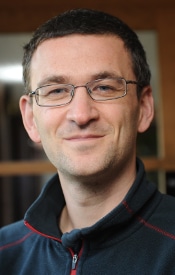
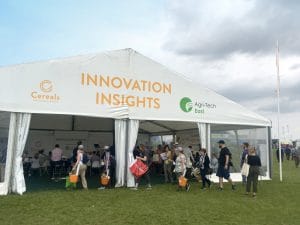
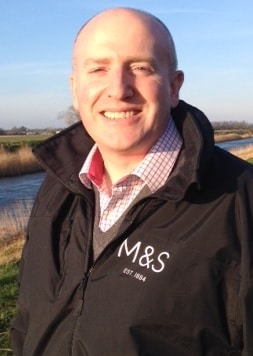
  “Crowdfunding is not a quick and easy solution, but it can be incredibly rewarding” says Paul Hughes, Head of Venture Development at Allia’s Future Business Centre. On 23 January 2017, he will deliver his insights into crowdfunding, at Agri-Tech’s ‘Show Me The Money! Focus on Funding’ event in Cambridge.
Crowdfunding uses smaller individual amounts of capital from the general public to finance a new business venture. We spoke with Paul about his top tips for crowdfunding, Allia’s support service and what advances he hopes to see from the agri-tech sector…
Allia Ltd is a not-for-profit organisation, supporting businesses dedicated to making a positive social impact. One of the organisation’s areas of activities includes the Future Business Centre – a purpose-built workspace and hub for impact enterprises. Workspace and enterprise support services are provided for ventures at any stage and across various industries, including agri-tech, healthcare and IoT.
Business beyond profit
“My role is to lead the Serious Impact programme, supporting aspiring entrepreneurs, current entrepreneurs or scaling SMEs,” says Paul.
Allia has an inherent set of values, directing its services at those who set up ‘a business beyond profit’: “Fundamentally, we work with entrepreneurs who set up businesses not solely for profit, but to achieve a positive impact as well.”
The Future Business Centre (the venue for the Agri-TechE event) also has a facility in Peterborough, where innovators are provided with prototyping and product design support, as well as business advice. For example, the Innovation Lab has a drone system that entrepreneurs can loan for trials, without the expense of purchasing a £10,000 drone.
“Ultimately for us, if businesses grow and create more employment, that creates a positive impact on society,” says Paul. “Our impact is creating employment and new businesses, which will then benefit society moving forwards.”
The positive impact of Agri-Tech

Having previously worked in the agri-tech sector (US agri-business investment banking and at a global tissue culturing business) Paul feels an affinity for the field.
He says: “The agri-tech sector embodies the positive impacts we can make, whether locally or globally – it’s what Agri-TechE is all about. If we can get more efficient food production, lower chemicals and lower use of water, we will improve society. I want cleaner products, less chemicals and a better planet.”
Paul is also a mentor for Agri-Tech’s GROW business planning competition which aims to find the next level of entrepreneurs, whether dealing with hardware, software or translational research.
Crowdfunding – not for amateurs
Paul’s presentation at Agri-Tech’s ‘Funding’ Pollinator will focus on ‘Crowdfunding,’ and assist delegates on putting theory into practice.
He says: “Crowdfunding is not a single solution for fundraising. It is one of many strategies and it is not right for everybody.”
Crowdfunding uses smaller individual amounts of capital from the general public to finance a new business venture. By using social media and websites, campaigns no longer have to rely on traditional sources of finance such as venture capitalists.
“It’s not just a case of throwing something on a website,” warns Paul. “You have to work incredibly hard for people to give you their hard-earned money and there is no guarantee you will be successful.
“However, it does allow you to have direct relationships with investors, whether they are large or small – and they will probably have a real interest in your success. For example, they may be farmers themselves and would love the opportunity to help test your product and use it in the future.”
While many are familiar with the concept of crowdfunding, it can be difficult to take those first steps. At Allia Future Business Centre clients receive support to help them decide which platforms might be appropriate, how to prepare and execute a crowdfunding campaign, and plan for the future if they are successful. It is rarely used in early stage development; the strategy is more relevant to a late stage pre-market product, when people are able to recognise the market opportunity being presented.
“Before deciding to take this route, you should attend crowdfunding events or talk to crowdfunding platforms – they will all try to help signpost” advises Paul. “Allia can also help you. If you want to get on a crowdfunding platform, many have specialisations. I can pick up the phone and connect you to with an appropriate platform such as SyndicateRoom, for example.”
“So while investing in crowdfunding is not for amateurs, it does mean that your friends and family can put in £50 and feel an affinity to your product.”
To hear Paul’s top tips for crowdfunding and more, please click here to register.
Post Overview
Agri-TechE Related Posts

Get notified on a new event date for From Farmer to Pharma – and Beyond

Agri-tech advice and collaboration improve profitability
Get notified on a new event date for Controlled Environment Agriculture: The Industry is Growing Up
Wheat prices to remain at historical high
What is the value of a network?
















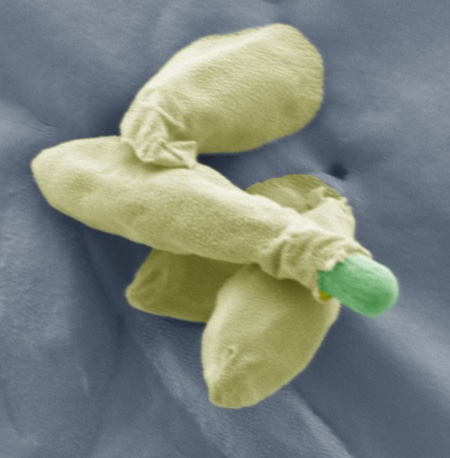





 The benefits and problems of fungi were explored at this Pollinator, together with new ideas of how best to tackle the increasing issue of invading Spanish slugs.
 Lab and workshop ideas eventually need testing at field scale – and field observations need to inform lab thinking. This Pollinator explored the concept of the Field Lab and how we could use it to bring together scientists, technologists and growers to test new ideas.
 Growing under cover has enabled an extension of the growing season and an increase in quality of many high value crops. This Pollinator saw discussions on new technologies in development to increase efficiency and reduce the costs of growing in a protected environment, including LED lighting, underground urban farming and vision systems to direct robots.
 Bringing together the interests of our Big Data and Remote Sensing and Monitoring Special Interest Groups, this event explored the content, format and opportunities over 8,000 data sets released from FEDRA’s reserves, and how businesses could prepare themselves to benefit.
 Plant pathology met crop disease modelling in this Pollinator, where growers, farmers, researchers and technologists shared new thinking and practices for disease management and resistance, and how the new technique of field pathogenomics is helping to provide disease screening across larger areas more cheaply and quickly than other methods.
 At this Pollinator we saw first-hand at the NE Salmon farm how Controlled Traffic Farming can make a different to reducing soils compaction, increasing yields and reducing inputs. Benefits already seen include: shallower cultivation with greater tilth, increased number of plant tillers and more plant available water.
 This event brought together technologists and end-users to find out about using geo-spatial information to see where the problem spots are in your field. The potential power of geo-spatial information in agriculture is far broader than in-field mapping; understanding the location of a field opens up a large number of potential data that can be linked to the field and used for in-field, whole field or multi-field analyses.
 The technologies available to help farmers increase yields without compromising soil quality and environmental factors were discussed at this Niab and Agri-TechE workshop. Presentations included technologies that increase yield, deliver variable rates, predict performance, reduce run-off, and overcome hostile environments.
 From delicate “soft” robotics mimicking manual picking, to larger scale precision management in open fields, we discussed the role and potential for robotics in the industry, and the technology and mechanisms needed to ensure they provide the service we need.
 The third annual Agri-TechE Week saw seminars, workshops and activities to promote the east of England as the UK’s innovation hub for agriculture and horticulture – including Agri-Tech’s own REAP conference.
 Click here to book your place.


 “Plant breeding makes a huge difference in virtually every area of everybody’s life,” says Dr Penny Maplestone, CEO of the British Society of Plant Breeders (BSPB). She is set to speak alongside experts in agronomy and agri-engineering at the festive opening of Agri-Tech’s 2017 ‘Pollinator’ series – ‘A New Agriculture – What Will the Future Hold?’ which has been rescheduled to 12th January 2017.
 The creation of new plant varieties is a complex and costly process, so steady investment is crucial. Plant breeders’ rights enable breeders to charge royalties for the use of their varieties. BSPB acts as their royalty collection agency.