VentureFest East to feature agri-tech

Agri-TechE

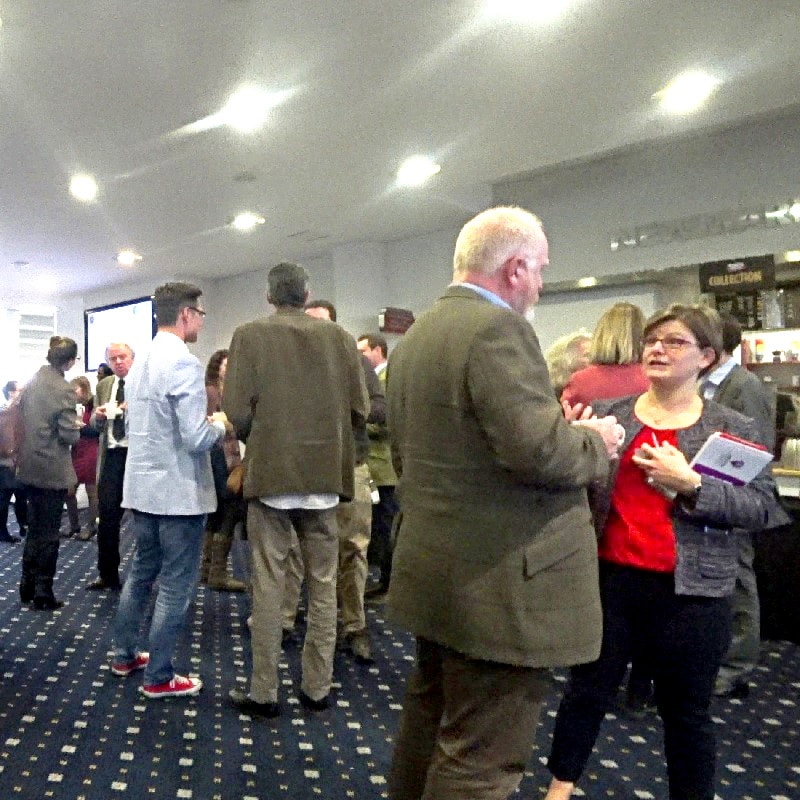
VFE logoVentureFest, part of the Innovate UK series of events, is to come to the east of England for the first time. It offers an opportunity to hear some of the region’s leading entrepreneurs, many of whom are now leading angel and VC investors in the next generation of innovation. The event is to be held at the Rowley Mile Racecourse in Newmarket on 24th May 2016.

Agri-TechE is hosting one of the breakout streams and William Kendall – Suffolk organic farmer, investor and entrepreneur, MD of New Covent Garden Soups and Green and Blacks and High Sheriff of Suffolk 2015 – will be giving his insights into the agri-tech investment scene.

William will be joined by Struan McDougall, CEO of Anglia Capital Group; Sean Butler, CEO of Cambridge Agri-TechE Ltd; and Martin Lutman, Programme Manager at Greater Cambridge Greater Peterborough Local Enterprise Partnership.

Dr Belinda Clarke, Director of Agri-Tech, explains: “There are many options available for funding new businesses in this sector, but it is often confusing for people new to the investment process. We are aiming to help explain the landscape and to showcase some examples of some early stage companies so that delegates can hear for themselves the journeys they have taken.”

For early birds there are a limited number of free tickets for this event – if you would like to attend then do contact us. 

More information about VentureFest East

VentureFest East team photo
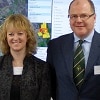
Venturefest East Team (click to view larger) From left: Mark Pendlington, Chairman of New Anglia LEP; Dr Soraya Jones, Board Member of the Knowledge Transfer Network (KTN) and Entrepreneur in Residence at St John’s Innovation Centre; Laura Welham-Halstead, Head of Communications and Connectivity at Greater Cambridge Greater Peterborough Local Enterprise Partnership (GCGP).

VentureFest East is the brainchild of St John’s Innovation Centre (SJIC), Greater Cambridge Greater Peterborough and New Anglia Local Enterprise Partnerships (LEPs), and is part of the Innovate UK series of events.  It provides opportunities to listen to the region’s innovation gurus.

David Gill, MD of SJIC, will be chairing the opening keynote. He comments: “VentureFest East is a unique opportunity to distill the knowledge and expertise from winning entrepreneurs and business insiders, which is valuable input to other innovative companies that we support.”

The event is also supported by Agri-Tech, Cambridge Cleantech, Cambridge Network, Cambridge Wireless, Games Eden and OneNucleus.

Dr Soraya Jones, KTN Board Member and Entrepreneur in Residence at SJIC, comments: “It’s great to see the local innovation eco-systems and clusters working together to showcase new, promising enterprises from the region.”

The number of enterprises in the East of England region grew by 7% in the year to March 2015, to around 243,000*. This compared with an increase of 3.86% in the total nationwide, itself the fastest rate of growth seen since the index was launched in 2012. Given the strengths within the region, VFE will provide a unique opportunity for the top company leaders, entrepreneurs and innovators to share ideas and experience from different sectors and to find new ways to develop partnerships.

This highly focused one-day event will feature world-class presentations including: Hermann Hauser, co-founder of investment company Amadeus Capital Partners and serial entrepreneur/investor; David Cleevely, international telecoms expert who founded and exited many successful companies, including Analysys Mason and Abcam, and Charles Cotton, the builder of global high-tech companies and author of ‘Cambridge, the Global Phenomenon: 50 years of Innovation and Enterprise’ and many more.

Find out more at www.venturefesteast.co.uk


*Source: Barclays and BGF Entrepreneurs Index, 2015

Note

Venturefest East is jointly delivered by Innovate UK, The Knowledge Transfer Network, St John’s Innovation Centre, Greater Cambridge Greater Peterborough Local Enterprise Partnership (GCGP), New Anglia Local Enterprise Partnership, sponsored by University of East Anglia, Taylor Vinters, Barclays Bank, SBRI Healthcare and Adnams, and supported by Alliantus Ltd, Agri-Tech, Cambridge Cleantech, Cambridge Network, Cambridge Wireless, GamesEden and One Nucleus.


Most complete bread wheat genome resource released

Research Digest
Agri-TechE

The most complete and accurate bread wheat genome assembly to date with 91 per cent (98,974 genes) of the total genome annotated and assembled; is now publicly available for download at the European Bioinformatics Institute’s (EBI) Ensembl database.

The new and improved wheat assembly will help wheat breeders to accelerate their crop improvement programmes and help researchers to discover genes for key traits such as yield, nutrient use and bread making qualities. As wheat is one of the world’s most vital crops, the new genomics resources will help secure future food supplies.

Prof Mike Bevan (Co Principal Investigator), said: “This new genome assembly enables new types of research in wheat. It has precise long-range information about the location of genes and repeats in the large and complex genome. We aim to facilitate the work of researchers worldwide by releasing the assemblies at an early stage.”

The released data will be a new resource for wheat researchers and breeders, building on the Wheat Initiative’s founding principles of collaboration through data sharing to help tackle the global challenge of feeding a population of nearly 10 billion by 2050.

Leading on from The Genome Analysis Centre’s (TGAC) previous announcement of their new bread wheat genome assembly, the Ensembl Plants pre-site has issued the first release of the genome assembly of Triticum aestivum cv. Chinese Spring, generated by TGAC.  Alignments of RNA-seq data from three different studies across 18 samples have additionally been located on the new assembly. The wheat genome’s data can be searched via the gene identifier in the text search box, or via BLAST (Basic Local Alignment Search Tool) to compare sequence matches. It comprises a total of 13.4GB of sequence data. Annotation will be progressively available over the upcoming months.

On the release of the full wheat genome data set, Project lead Prof Federica Di Palma, Director of Science at TGAC, said: “This is a remarkable achievement which exemplifies the kind of science that TGAC’s skilled and multidisciplinary staff are able to deliver.”

The full data set, with genes identified, is publicly available from EMBL-EBI’s Ensembl database.

This is a key milestone in the BBSRC funded research project “Triticeae Genomics for Sustainable Agriculture” in collaboration with TGAC, JIC, EMBL-EBI and Rothamsted Research. The data is also available for sequence searches (BLAST) at TGAC’s Grassroot Genomics platform.

TGAC is strategically funded by BBSRC and operates a National Capability to promote the application of genomics and bioinformatics to advance bioscience research and innovation.

Field labs give insights into blackgrass control and compost teas

Agri-TechE

Blackgrass reduction between sowing timesBlackgrass can be reduced by nearly 50% depending on the time of sowing of winter wheat, a new field lab has concluded. Findings from Innovative Farmers trials on a Suffolk farm and new results from a trial of ‘compost teas’ are to be announced by Liz Bowles, Head of Farming for the Soil Association, at the February Pollinator.

Field labs – which provide an opportunity to experiment with different cultivation techniques on a farm scale – are being explored in the meeting to show the benefits of involvement for both farmers and scientists.

Bowles will be joined at the Pollinator meeting by Ian Pigott, managing director of Thrales End Farm, which has been running a farm scale trial for many years, and also plant pathologist Prof Jon West of Rothamsted Research.

There will be an opportunity to hear about the findings of the two trials and to discuss the concept of a field lab.

Dr Belinda Clarke, Director of Agri-Tech, says that bringing the science into the field is beneficial not just for the farmers but also the researchers:

“There are considerable variables in the field that are not apparent to scientists working under perfect conditions in the lab. To increase resilience in crops we need more opportunities to experiment with a wider range of approaches.

“Hearing from both the farmers and the scientists at this meeting will be very interesting.”

For more information about “Pipettes and Ploughs: Taking the Lab to the Field”, 16.00 23rd February 2016 at Rothamsted Research see the events page. 

Coupling land-sparing with demand-side strategies could create greenhouse gas ‘sink’

Research Digest
Agri-TechE

ForestA new study suggests that by upping forest cover from 12% to 30% of UK land over the next 35 years – close to that of France and Germany, but still less than the European average – and restoring 700,000 hectares of wet peatland, these habitats would act as a carbon ‘sink’: sucking in and storing carbon.

This could be enough to meet government targets of 80% greenhouse gas reduction by 2050 for the farming industry. Agriculture currently produces around 10% of all the UK’s damaging greenhouse gas emissions.

Greenhouse gas emissions from global agriculture are increasing at around 1% per annum, yet substantial cuts in emissions are needed across all sectors. The challenge of reducing agricultural emissions is particularly acute, because the reductions achievable by changing farming practices are limited and are hampered by rapidly rising food demand.

Researchers from the University of Cambridge, ADAS, Rothamsted Research and UEA assessed the technical mitigation potential offered by: land sparing-increasing agricultural yields; reducing farmland area and actively restoring natural habitats on the land spared – restored habitats can sequester carbon and can offset emissions from agriculture.

Using the United Kingdom as an example, the team estimated net emissions in 2050 under a range of future agricultural scenarios and found that a land-sparing strategy has the technical potential to achieve significant reductions in net emissions from agriculture and land-use change.

Coupling land sparing with demand-side strategies to reduce meat consumption and food waste can further increase the technical mitigation potential, however economic and implementation considerations might limit the degree to which this technical potential could be realised in practice.

The research can be read here: The potential for land sparing to offset greenhouse gas emissions from agriculture

Digging into the detail of the Strategic Potato Farm

Research Digest
Agri-TechE

PotatoThe practical outcomes of AHDB Potatoes Strategic Potato Farm was the subject of a meeting in Rugeley (3 December 2015) where over forty potato growers, farm staff, seed breeders, advisors and agronomists met.


Seed rates, nutrient planning, cultivations, water management, in-field greening and precision farming were among the hot topics on the agenda.

AHDB Potatoes technical executive Hannah Goodwin, who organised the event, said, “AHDB Potatoes spends £1.5m annually on R&D topics chosen by the industry as being important to the sector. On-farm implementation of this R&D is absolutely vital to drive our £4.1bn industry forward and that’s why we’re here today.

“Our Strategic Potato Farm helps do just that and has only been possible with the immense support from innovative Staffordshire–based host farmers James and Sam Daw and their motivated team.”

Seed rates

Delving into the results kicked off with a passionate discussion on seed rates with a strong focus on the end-market specification.

“Industry has moved on from using all the seed in the shed to a focus on achieving target spacing to meet exact contract specification,” said Hannah. “Receiving the seed count and knowing the chronological age from the seed supplier is integral to achieving optimum stem number and final yield. But not all varieties behave in the same way in relation to stem production and seed age.”

Whole team approach

A resounding message from the floor was that achieving maximum marketable yield is only possible with a whole team approach. It was emphasised that no operations should be examined in isolation. Each unique field operation has a cumulative effect on the final specification and the field team need to share the vision and buy into the plans.

“Today’s discussions have far more gravitas with the specific knowledge in the room shared between seed specialists, tractor drivers, planter and harvester operatives, farmers and researchers,” said Hannah.

“One view today is that at pressured times of the season, such as planting, there is not enough checking back to see if our targets such as seed spacing has actually been achieved. A busy role such as the planter driver not only needs to calibrate and operate his machine he also has to concentrate on his nematicide application and communicate with the destoner/bedformer team operatives. These roles are crucial and need support from other members of the team on the ground.”

Soils

The unanimous view from delegates was that, over the years, soils have been increasingly overworked as more on-farm horse power has become available, but to the detriment of its structure. Many lessons were learnt from the extreme wet season of 2012 when many overworked soils slumped because the soil architecture didn’t maintain enough clot.

“Results from the SPot farm this year clearly showed that seedbeds could be cultivated much shallower than industry is used to without detrimental effect on yield or quality,” said Hannah. “The results gave a significant benefit to savings in work rate, fuel, labour but could also alleviate equipment depreciation and allow the opportunity to cultivate soils in shorter weather windows.

“In seasons where soil is dry at depth, cultivation can be deeper than normal without damaging soil, but this does not benefit productivity or profitability. Reported ease of harvesting and tuber damage levels were unaffected by seedbed depth, which should give growers the confidence to experiment more with shallower depths with controlled strips until your own optimum is found.”

PotatoThere has been tremendous interest in this area of work at the SPot farm with the cultivation areas always being an area for heated discussion and exchange of ideas. And delegates who had been to see the plots in the field were extremely interested hear the harvest results.

Philip Burgess, Head of Knowledge Transfer AHDB Potatoes summed up by saying that “Being able to see the plots in the field and then the positive results summarised here today gives growers confidence to review and change their current practices”.

Greening

An AHDB Fellowship study looking at greening in relation to planting depth, location and growth patterns of tubers and stolons within the ridge, along with varietal variances was discussed at length. “With some industry figures suggesting 10% of packhouse losses are attributable to greening there was huge enthusiasm to the value of this work,” concluded Hannah.

During the first growing season over 400 farmers visited the demonstration site via Hannah’s blog (strategicpotatofarm.blogspot.co.uk) which documents all the field operations and received nearly 4,000 visits. AHDB is extending the SPot farm activity to further locations for 2016, diary dates will be announced via potatoes.ahdb.org.uk/events

Resilience Through Innovation: REAP 2015 report

Agri-TechE

Resilience Through Innovation (REAP 2015)What does resilience mean to you? It stimulated many inspiring discussions at the REAP conference and our hope is that this will translate into new collaborations and innovation. To get a flavour of the event we have produced a report to capture the key themes, discussion points and outcomes.

You can view the report online here or download it here.

If you have a particular interest in one of the areas covered such as soilsbig datawatersensing and monitoring or crop breeding then you will be interested in our Special Interest Groups which take these subjects further.

New insights into Clostridium spores suggests control strategy

Research Digest
Agri-TechE

Researchers at the Institute of Food Research have established how clostridia bacteria emerge from spores. This could help them understand how these bacteria germinate and go on to produce the deadly toxin responsible for botulism, a lethal form of food poisoning, or cause food spoilage.

Clostridium botulinum bacteria produce the deadliest toxin known. Even tiny amounts of this toxin in food lead to botulism, which is fatal in 10% of cases. Clostridia bacteria survive in the environment as resilient, heat-resistant spores, so stringent safety measures are put in place in food processing. These ensure that botulism outbreaks are very rare, but to maintain food safety we need to understand as much as possible about how these bacteria survive and grow.

Scientists at the Institute of Food Research, which is strategically funded by the Biotechnology and Biological Sciences Research Council, have world-leading expertise in these bacteria, and have recently uncovered the genetic controls of spore germination in these bacteria. Now, in new research published in the journal Food Microbiology, they have visualised the structural changes spores undergo during germination.

Dr Jason Brunt worked with microscopist Kathryn Cross to produce images of the stages spores go through during germination. They examined Clostridium sporogenes, a close relative of Clostridium botulinum that although less dangerous, can cause significant food spoilage problems.

Their images showed that the spores have an outer covering, called an exosporium, with an aperture at one end. Closer examination showed that this aperture aligned with a spot on the spore where it ruptures during germination, and that the newly formed cell emerges through these holes. This suggests that the spores have polarity that aligns the structures correctly.

“We think that this polarity is genetically pre-determined in the dormant spore,” said Dr Jason Brunt. “Our long term aim is to formulate detailed strategies to interrupt these processes. This would be of great benefit to the food industry to help control these pathogenic and spoilage clostridia.”

Reference: Apertures in the Clostridium sporogenes spore coat and exosporium align to facilitate emergence of the vegetative cell, Jason Brunt et al, Food Microbiology doi:10.1016/j.fm.2015.04.013

Raspberry Pi offers a DIY approach to sensing

Agri-TechE
Make your own drone with Raspberry Pi
Image from Raspberry Pi and adafruit

Dan Maclean at The Sainsbury Laboratory (TSL) has been using a tiny, affordable Raspberry Pi, consumer digital cameras and a ‘kit drone’ to create a DIY crop imaging system.

Using expertise in computing visualisation he has created an open source, customisable remote sensing platform that is already being used by TSL in the laboratory and glasshouse to capture images of healthy and diseased plants.

Healthy plants reflect infrared waves, so detecting this reflection gives a great indication of photosynthetic capacity of plants which is a key influencer of crop yield.

Such DIY technologies have the benefit of being customisable and very low cost, and potentially another tool in the computer-savvy farmer / agronomists’ crop monitoring kit.

As a high throughput research tool the DIY drone is proving very valuable and cost-effective, however it has limitations in the field, where it needs ambient light and weather conditions. It might, however, be applicable in a glasshouse environment.

Dan was presenting at the recent Remote Sensing and Monitoring SIG meeting; a report of the meeting is available to members here.

Dates for your diary

Agri-TechE

Pollinators are Agri-Tech’s monthly network meetings and provide an opportunity to meet people that you wouldn’t normally meet, creating new opportunities for innovation.

We aim to inspire and facilitate discussions between participants with new ideas and fresh thinking, so people from all sectors and disciplines welcome—whether you’re a grower, a researcher, technologist or an entrepreneur, come along and join in!

The Good the Bad and the (B)ugly, 19 January, Norwich

We’ll hear about the limitations to growing particular crops in certain areas due to the pressure from slugs and bugs, with updates on the latest research to help control them. (Report now available)

Pipettes and Ploughs: Taking the Lab to the Field, 23 February, Rothamsted

Lab and workshop ideas eventually need testing at field scale – and field observations need to inform lab thinking. We’ll be exploring the concept of the Field Lab and how we could use it to bring together scientists, technologists and growers to test new ideas. (Report now available)

Undercover Agents – New Technologies for Controlled Environment Production, 22 March, Sainsbury Laboratory Cambridge

Growing under cover has enabled an extension of the growing season and an increase in quality of many high value crops. We’ll discuss new technologies in development to increase efficiency and reduce the costs of growing in a protected environment.

Rusts and other Cereal Killers, 12 April, Niab Park Farm, Cambridge

Plant pathology meets crop disease modelling in this Pollinator, where growers and farmers meet researchers and technologists to share new thinking and practices for disease management.

Symbiosis and Synergies: A Showcase of Successful Agri-TechE Collaborations, 11 May, Norwich

Following last year’s successful Synergies Pollinator, we’re delighted to showcase a new batch of successful collaborations between farmers and researchers.

The Connected Farm – Technology Fantasy or Grower Game-Changer?7 June, Cambridge

Machine-to-machine communication and the “Internet of Things” are expected to transform farming. But in what timescales, and how can we ensure cross-talk between devices, machinery and systems? This Pollinator explores what a “Connected Farm” would look like and how to start connecting it.

Weeding Out the Challenge of High Crop Yield, 7 July, Rothamsted

Weeds have a major impact on crop yield and farmers are lacking the chemistry to control them. This Pollinator will explore how changing the rotation, integrated weed management and more high-tech methods of weed control could help.

Counting the Cost (and Benefits) of New Innovations14 September, Norwich

Our popular ‘speed-dating’ mixing format returns for structured networking around how farmers can calculate return on their investment (ROI) in new innovations. We’ll be exploring ways of measuring ROI and other metrics that are – and aren’t – all about the money.

Robo-Cropping – The Potential for Precision Robotics in Agriculture, 11 October, Cambridge

From delicate “soft” robotics mimicking manual picking, to larger scale precision management in open fields, what is the role and potential for robotics in the industry?

Agri-TechE Week 2016November, various locations

Seminars, workshops and activities to promote the east of England as the UK’s innovation hub for agriculture and horticulture.

Christmas is Coming – Wish List for Santa14 December, Norwich

An end-of-year look at what new innovations industry experts would like to see developed. What new technologies and practises – or better use of existing ones – would really make a difference?

More details will be revealed for each event throughout the year so keep checking back to the website to stay up-to-date on the latest news.

Warning! Stealth slugs are coming!

Meet the Network
Agri-TechE

Ian Bedford, JICAccording to Dr Ian Bedford, an entomologist at the John Innes Centre, slugs are not only a nuisance, but they can be “quite a dangerous pest”.

He substantiates his rather bold statement by explaining: “Slugs can carry a host of harmful bacteria. This could include strains of E.Coli which have been shown to grow on their mucus; they can also be a host to parasites that live within the slug’s body. One of these is the heart worm parasite that can infest mammals such as dogs and foxes. If ingested, the heart of the infested animal becomes full of worms which can be fatal if left untreated.”

Adding to the gardener’s plight, the non-indigenous Spanish slug takes Dr Bedford’s obvious concern to another level. “I first noticed these slugs on my lawn and in my vegetable garden in 2012. They were different to our British slugs – growing much bigger, to as long as 16cm; they fed in packs, unlike our lone-feeding indigenous species; their diet was more diverse, including their voracious consumption of potato and onion tops, as well as dog faeces and dead animals.

In the spring of 2013 we found the slugs eating the tops of daffodils! “From the reports we’ve received this year and our own observations, it appears that Spanish slugs have been more prevalent during 2015 than in 2013, but less of a problem than in 2014 and 2012.

Although we’re not sure of the reason(s) for this, we’re assuming that it relates to a combination of unfavourable weather conditions and the fact that many people affected with Spanish slugs will have been reducing populations by collecting and destroying them. For example, I was collecting 30-50 each day from my garden during June/July, but this had reduced to less than 10 by Autumn.”

The Spanish slug is also much slimier than British species, he adds, which makes them very resilient to hot, dry weather, as well as some control options. This species is also a very prolific breeder, laying up to 400 eggs in its one year lifespan, compared to around 200 eggs per year by our native slugs.

Young Spanish slugs on leeks

According to Dr Bedford there are two Spanish species – Arion vulgaris, the Spanish slug, and Arion flagellus, the Spanish Stealth Slug, with the latter being less aggressive. The areas most affected by these invasive pests are East Anglia, the New Forest and the south east of England, with the Stealth Slug being more regularly sited in the west of England and up into Scotland.

Dr Bedford also points out that it is difficult to determine how they first arrived on our shores: “We can’t be sure how they first arrived here, although it is likely that individuals or eggs came across from Europe in the pots of imported plants.

“Their subsequent spread throughout the eastern counties could again be linked to the movement of plants as well as being through natural dispersals from the original outbreak(s). Along with the large number of eggs they produce during their lifetime, they can cover quite large distances when searching for suitable habitats.” He feels very strongly that home gardeners have an obligation to control this growing menace.

“In Norway the Spanish slug has become a huge problem over the 25 years since it was first identified in the country; if we don’t try and control its spread in the UK, it could soon become a serious problem to commercial crops as well as our home gardens.”

For this reason he has coordinated the setting up of the website slugwatch.co.uk, and is encouraging gardeners – and farmers – to register the location of any potential sightings. Primarily outbreaks of the Spanish slug can be identified by their behaviour and the huge numbers that can be seen (often many hundreds within a medium sized garden). “They seem to have a passion for meat and are strongly attracted to rabbit-flavoured cat or dog food,” says Dr Bedford.

“I suggest placing a large plastic drink bottle in the garden, containing a dollop of rabbit-flavoured cat food, to watch how the slugs react to it. Once you’ve caught some slugs you could then go onto the Slugwatch website to check what species you have.”

The control options are limited for Spanish slugs, so for home garden infestations, Dr Bedford recommends picking them up with gloved hands and drowning them in a bucket of soapy water overnight. Household bleach could also be used to sterilise the bucket before the contents are tipped into a hole in the soil and buried.

Spanish slug
A Spanish slug on a tomato

On no account, he says, should you cut them in half, nor squash them because of the risk of passing on the parasites to pets and other wildlife. Metaldehyde and Ferric phosphate-based slug pellets are both available for use against slugs and will control the Spanish slugs.

However, this is often impractical when large numbers of slugs are present. On a more positive note, of the 34 species of native slugs, only around six are regarded as problematic to growers. Dr Bedford comments: “Before the Spanish slug appeared, the grey field slug Deroceras reticulatum – mainly an issue for farmers – the Black Garden slug Arion hortensis – which attacks potatoes – and the Keeled Milax species of slugs – which feed on bulbs and tubers – were the most notorious species.

“The options for control of our native species, and possibly very small Spanish slugs of around 1g in weight, do include a biological option: Nemaslug, which kills slugs via microscopic eelworms specifically bred to kill just slugs and, if small enough, snails.”

Slug and other pest control was discussed at ‘The Good, the Bad and the (B)ugly’ Pollinator on 19th January at the Norwich Research Park by Dr Jonathan Clarke of the John Innes Centre, together with talks from Uta Paszkowski of the Department of Plant Sciences at University of Cambridge, and Tom Wood of Niab.

Willow good for wildlife, environment and biomass

Research Digest
Agri-TechE
Image courtesy of Rothamsted Research

Willows and miscanthus ( a grass) are grown commercially in the UK for bioenergy. These are perennial crops remaining in the ground for long periods and require low  inputs of fertiliser or pesticides. Rothamsted Research scientists examined the potential of these crops to enhance biodiversity at the landscape level.

Intensive farming of food crops for biofuel is controversial and results in well-documented negative impacts on farmland biodiversity, however, these dedicated biomass crops  are very different to food crops that are grown on an annual basis with high inputs. With the differences in management of the perennial bioenergy crops and annual food crops, it was hypothesised that there may be opportunities for enhancement of biodiversity in intensively management arable farmland, but this had not been demonstrated at the landscape level.

The researchers used biodiversity datasets collected throughout the UK from commercial arable and biomass bioenergy crops and demonstrate for the first time that the biomass crops enhance farmland biodiversity at the landscape -level. The study is published 30th November in the journal Global Change Biology Bioenergy.

Dr Alison Haughton, Rothamsted Research scientist who led the study, said: “In order to inform planting strategies of crops that can contribute to energy security whilst conserving and enhancing biodiversity, we need to carry out landscape level studies and examine a range of biodiversity indicators in detail. This is exactly what we did in this study”.

“Our analyses have revealed that the perennial cropping systems support greater abundances of plants and invertebrates, and that the communities of these indicators of biodiversity are quite different to those found in the biodiversity-impoverished arable cropping systems. Our findings can inform landscape-scale planting strategies for a more resilient and sustainable agriculture”.

Prof Angela Karp, who leads the Cropping Carbon strategic programme of research supported by the BBSRC at Rothamsted, commented: “We often hear most about the negative impacts of some bioenergy systems but this is really not the case for all bioenergy crops.

When grown on land less suited to food crops, in integrated farming systems, perennial biomass crops like willow and miscanthus bring multiple environmental benefits that help offset some of the negative consequences of intensive food production. Multifunctional land use of this kind will be essential in meeting the diverse needs of the UK bioeconomy”.

Publication: Dedicated biomass crops can enhance biodiversity in the arable landscape, Global Change Biology Bioenergy: http://onlinelibrary.wiley.com/doi/10.1111/gcbb.12312/full

Protein rich red clover boost from new breeding tool

Research Digest
Agri-TechE

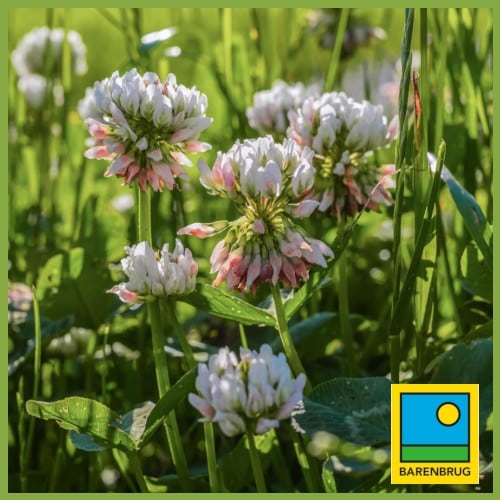
Red clover and other legume crops played an essential role in crop rotation before introduction of industrial nitrogen fertiliser production, however the clover only grows well for a few seasons as it doesn’t recover well from intensive grazing.  To improved its resilience  The Genome Analysis Centre (TGAC), in collaboration with IBERS, has sequenced and assembled the DNA of red clover to help breeders improve the beneficial traits of this important forage crop.

The red clover genome is published in Scientific Reports, a journal from the Nature publishing group.

Legumes boost soil fertility by assimilating nitrogen from the air and making it available to the roots, recruiting soil bacteria to help.

Red clover also provides a protein-rich livestock feed that boosts omega-3 fatty acids in ruminant milk. However, red clover only grows well for two or three seasons as it does not recover well from grazing by livestock. 

An ongoing project at TGAC and IBERS aims to use a collection of diverse natural lines of red clover for breeding new elite varieties more tolerant to grazing, thus making it more resilient leading to the adoption of red clover as a crop.

For the breeders, this draft genome provides a welcome tool, with which to speed up incorporation of traits that are beneficial for the clovers’ use in sustainable agriculture from natural populations of red clover plants sampled from all over Europe. Widening of the genetic diversity of the breeding populations will help to make red clover a more robust and reliable crop.

Therefore, the genome sequence promises to be a valuable platform for advances in studies of traits of biological and agronomic importance in forage crops.

Lead author Jose de Vega, Researcher at TGAC, said: “The publication of the red clover reference genome is an important milestone, as it represents the first genome sequence of the clover forage crops, which are key components of more sustainable livestock agriculture.

“The availability of the genome assembly will pave the way towards genomics-assisted breeding methods for forage legumes, and provide a platform for deeper understanding of the genetics of forage crop domestication.

“Red clover is attractive because of its high protein content, diversity and ability to fix atmospheric nitrogen, but to enhance its role in sustainable agriculture requires improvements in persistence, disease resistance, and tolerance to grazing.”

Senior author and project leader Leif Skøt from the Institute of Biological, Environmental and Rural Sciences (IBERS) at Aberystwyth University said: “The red clover genome puts us in a great position to incorporate and build on this resource. We work closely with Dr David Lloyd, IBERS forage legume breeder, so we are using our genomic tools to assist in improving the precision and speed of breeding better red clover varieties. This is very timely as the importance of legumes in sustainable agriculture is ‘rediscovered’.

“The collaboration between TGAC and IBERS reinforces the UK’s leadership in translating the development of genetic and genomic resources from fundamental science to applications with a potential impact on the local and national economy”. 

The development of a more sustainable agriculture is a key aspect of the UK research strategy, positioning both Institute’s as international leaders in biotechnology specifically in the area of forage legumes. This is delivering impact to a broad range of stakeholders and ensuring that the genomics resources will be translated to research and breeding programmes.

The study entitled: “Red clover (Trifolium pratense L.) draft genome provides a platform for trait improvement” is published in Scientific Reports, a journal of the Nature publishing group.

More information: www.tgac.ac.uk/news