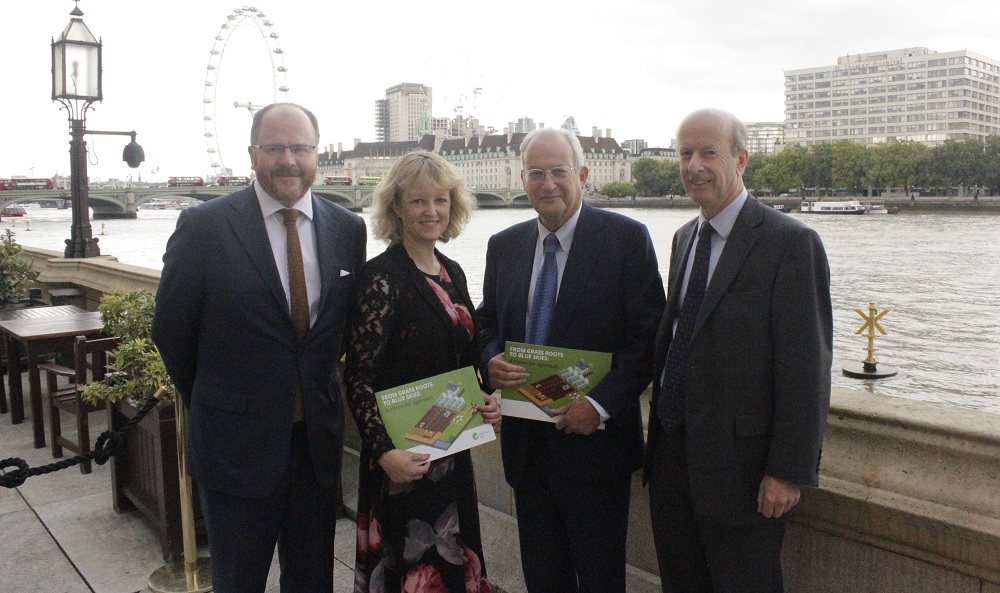
Move to resilience in new AHDB Cereals & Oilseeds list

Research Digest
Agri-TechE

Advances in agronomics and disease resistance sit alongside good yields in the new varieties selected for the Recommended Lists for cereals and oilseeds 2016/17 (RL), launched 30th November 2015. It offers a whole variety package for growers looking for innovative solutions as part of a risk management strategy.

AHDB Cereals & Oilseeds’ Dr Simon Oxley, who heads the Recommended Lists project, said: “Realistically, yield and quality acceptable to end-users remain the main drivers for selecting a variety but this year often sees good disease resistance without the associated penalty.”

Additions to this year’s Lists include wheat varieties with improved septoria tritici resistance, oilseed rape (OSR) with resistance to light leaf spot and phoma stem canker and the first specialist OSR variety with Turnip Yellows Virus (TuYV) resistance. The virus can potentially reduce yields of susceptible varieties by up to 26%.

Dr Oxley said: “Two intractable diseases affecting UK agriculture are light leaf spot in oilseed rape and septoria tritici in wheat. Both are challenging to control with fungicides and, looking not too far in the future, management is only likely to get harder”.

“You may also see some varieties which may not be a step change in yield, but they are a step change in the management of risk. The specialist TuYV resistant variety Amalie is a case in point.

“In RL trials, the management includes effective control of aphid vectors, so it is likely that in situations or seasons where the aphid vectors are poorly managed and crops are infected with the virus, the variety will perform relatively well compared with susceptible varieties,” he added.

Relative risk

Dr Oxley explained how the concept of ‘relative risk’ has been introduced to the RL selection criteria in order to ensure resilient varieties make it on to the Lists: “We have taken the criteria used in selecting a variety based on disease resistance, standing power and the risk of yield loss based on trials data to measure the relative risk of a new variety compared with an established one.

“Trialling varieties across variable seasons and throughout the UK from Aberdeenshire down to Kent and across to Cornwall and Northern Ireland, really puts them through their paces. New varieties have passed this tough test and performed favourably alongside the varieties that growers and the industry know well.”

The concept of relative risk will be explored further at this year’s AHDB Agronomists’ Conference, where Dr Oxley will present on What makes a good variety? Trade-offs for better agronomics. The conference, at Peterborough Arena on 8 December, will also see the launch of AHDB Cereals & Oilseeds’ Risk, resilience, reward communication theme, which will run through 2016.

In total, 32 cereals and oilseed varieties have been added to the Recommended Lists for 2016/17, while 47 varieties have been removed.

AHDB Cereals & Oilseeds has been working with breeders to determine when varieties should be removed from the RL. When varieties fall behind on disease standards, yield or are no longer the variety of choice by end-users, they will now be removed one year after they are out of trial.

Dr Oxley said: “Varieties are recommended on their merit. In some years advances in breeding are made and it is only right that if new varieties provide the industry with better quality, better disease resistance and better agronomics, these varieties are recommended.

“The focus is in providing new information on new varieties. Some growers will always want to continue to grow an established variety, since they have the experience of how they perform on their farm. Continuing trialling these varieties isn’t however likely to contribute more to understanding them.”

Summaries of the new AHDB Recommended Lists are available on the AHDB website at cereals.ahdb.org.uk/varieties

Imaging moves to new heights

Agri-TechE
Agri-TechE Remote Sensing and Monitoring SIG
Image courtesy of Skyview Robotics

‘Eye in the sky’ technology is becoming more affordable, but what is the most useful type of imaging and is it best to work with an experienced contractor or invest in your own technology? These are the issues to be discussed at the next meeting of the Agri-TechE Remote Sensing and Monitoring Special Interest Group.

Satellite imagery is widely available but lacks the detail that can be gained by UAVs (unmanned aerial vehicles), also known as drones.

James Foster-Clarke from Skyview Robotics explains that satellite imagery resolution is typically as low as 22 square metres per pixel which gives a grainy image and low definition. His company, which uses drones to fly low over the field, provides much greater information.

He says: “We able to provide images down to 1cm per pixel, giving a greater accuracy and more detailed information which can be gathered and analysed; for example, for weed and disease identification and to generate a biomass index.

“As the drones fly much closer to the canopy, the sensor can detect subtle differences in the canopy colour; this information is analysed using our own spectrometers. Using this research data we are building a database of plant histograms so that we can use the profiles to identify both weeds and diseases from the aerial images.

“This has resulted in the identification of blackgrass with 1cm resolution enabling farmers to record the populations and apply an accurate spraying programme to eradicate the weed.

“We can export our information into shape files, which are widely used by many software applications and also can be used by fertiliser spreaders, drills and sprayers, or alternatively into Google Earth.”

For some producers a bigger picture is required.

G’s Growers described, at the recent launch of the Eastern AgriGate Research Hub, how it was using imaging gained from using light manned planes. It is monitoring crop growth and developing detailed vegetation maps which provide improved intelligence when deciding field management strategy.

Agri-TechE Sensing in the Air RemSens SIG
Image courtesy of Skyview Robotics

Emma Garfield, of G’s says: “The advantage of an aircraft is that you can gain more height enabling whole fields to be captured in one image.

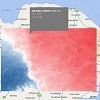
“The spectral images show canopy coverage with dark green areas indicating vigorous growth and red where there is poor growth. We find that we are able to detect crop canopy variation in advance of visual ground-based monitoring or crop walking.

“When this map is compared with a soil map it is clear that the poorer growth correlates with soil of a different type. Armed with this information it is then possible to make crop management decisions at a sub field scale.

“For example, to apply more fertiliser or organic matter selectively to the areas of poorer soil, or indeed to reduce the use of inputs and grow a different crop on these areas that can be used to produce biomass for the anaerobic digester.”

Regular monitoring is recommended with a frequency determined by the crop type and if there are any inherent problems in the field, such as blackgrass. Every time data is gathered it adds more knowledge.

Working with a specialist allows access to their expertise and sophisticated imaging, however some farmers want to do the monitoring and imaging themselves.

To assist with this, Dr Dan MacLean, head of bioinformatics at The Sainsbury Laboratory on the Norwich Research Park, is investigating how hobby drones, bought off the shelf, could be fitted with an appropriate high-resolution sensor to make it affordable for farmers to monitor their crops more regularly where there is a high disease or pest risk.

However, as drones become more popular, both for commercial purposes and aircraft hobbyists, the Civil Aviation Authority (CAA) has implemented rules and restrictions. To help navigate the legal ramifications, Peter Lee, a senior associate with law firm Taylor Vinters LLP and one of Europe’s leading unmanned system lawyers, will be answering questions at the meeting about current UK legislation.


The meeting ‘Sensing in the Air’ is being held by the Agri-TechE Remote Sensing and Monitoring Special Interest Group at Centrum, Norwich Research Park, Norfolk, NR4 7UG from 9.30am on the 1st December, 2015.

AgriGate ‘open for business’ says Minister for Life Sciences

Meet the Network
Agri-TechE
Emma Garfield with George Freeman at the AgriGate launch
Emma Garfield of G’s with George Freeman MP

Minister for Life Sciences, George Freeman MP, came to Cambridgeshire during Agri-TechE Week to officially open the new Eastern AgriGate Research Hub, at Hasse Fen near Soham.

The first of its kind in the UK, the hub will carry out commercial scale research to increase productivity and reduce crop wastage before produce reaches the processor and retailer.

George Freeman said: “I can’t tell you what a pleasure it is to be here to open this regional innovation centre, which is taking science out into the field.

Lucy Frazer,MP for South East Cambridgeshire; George Freeman MP; and Tina Barsby, CEO of Niab

“Since I persuaded the government to establish the Agri-TechE Strategy it has moved the sector up the agenda. I am impressed with the pace and scale in which Agri-TechE has responded to the opportunity that the strategy has created.

“We are all committed to reducing waste in the food chain and this is a win-win for both producers and consumers. This initiative needs to be underpinned by science and the ‘green tractor’ icon is a symbol that consumers can trust.

“It is incredibly exciting to see small businesses such as Kisan Hub pioneering new solutions and I hope it’s well on the way to becoming the ‘Google of agri-tech.’

“We need to inspire ambition and G’s Global is a good example of this with its junior apprentice scheme.

“Additionally the innovation being developed here has the potential to form the basis of a strong export business, and we need to take these products out into the world.”

Key attendees at the Agrigate launch

Andrew Burgess (Head of Agriculture, Produce World); Mark Pendlington (Chairman, New Anglia Local Enterprise Partnership and Group Director, Anglian Water); Tina Barsby (CEO Niab); Giles Barker (COO and co-Founder, KisanHub); Ben Tam (Innovation Programme Manager, Anglian Water);Belinda Clarke (Director, Agri-Tech); George Freeman MP; Martin Lutman (Programme Manager, Eastern Agri-TechE Growth Initiative); Mark Reeve (Chairman, Greater Cambridge / Greater Peterborough Local Enterprise Partnership) Effie Mutasa-Göttgens (Project Manager, AgriGate [Niab])

Slugs are on the slime and cost £100m a year

Agri-TechE

Slugs will be discussed at the Agri-TechE Pollinator in JanuarySlugs are on the increase and they are getting more determined. The first real sign of the scale of the problem was seen during the warm wet weather of 2012, which triggered an invasion of slugs not previously seen in the UK.

The John Innes Centre (JIC) warns new thinking is needed if we are to protect valuable food crops from future attacks and this is the subject of the January Pollinator.

Dr Jonathan Clarke, Business Development Manager at JIC, explains: “The former HGCA estimated that the UK loses £100m pa through slug damage to arable crops; for oil seed rape around 59% of the total area is affected by slugs.

“Many of the chemicals traditionally used to control slugs and flea beetles are being withdrawn from use because overuse may cause environmental damage. For example, one common molluscide Methaldehyde contaminates 81 of the country’s 647 reservoirs. Without these pesticides, however, the problem is going to get worse; we have already seen an increase in flea beetles this year, which had been virtually eradicated.”

The slugs are also getting more deadly. In 2012 East Anglia experienced infestations that were truly extraordinary, with large slugs being seen in their hundreds in many gardens!

One of these gardens belonged to Dr Ian Bedford, Head of Entomology the JIC on the Norwich Research Park. He found masses of brown, black, fawn or mustard coloured slugs up to 15cms long every morning on his lawn and suspected something odd was going on. Although these slugs looked like a native Arionid species, such as Arion ater (The Black slug) and A. rufus (The Red slug, which also display a wide range of colour forms), they certainly weren’t behaving like them.

Dr Bedford says: “Native Arionids are usually found in small numbers within damp environments where they mainly feed on decaying vegetation, whereas the invading slugs were active during daylight. They were also being seen on dry paths and were eating plants and vegetables that native slugs normally avoided. Onions, beans, turnips, cabbages and even garlic leaves were being consumed along with a vast number of seasonal ornamental plants. The invading slugs were also observed eating dead animals, dog faeces and bird food.”

He sent the slugs to Dr Les Noble, a malacologist at Aberdeen University, who identified the slugs as Arion vulgaris, The Spanish slug.

This was the first time that the Spanish slug had been officially recorded in the UK, and signalled the appearance of a serious new problem for growers and gardeners alike. The Spanish slug can protect itself from pesticides and predators by oozing a thick slime.

Dr Clarke says that the JIC has created a colony of native and invasive Spanish slugs and these are complemented by an assay platform that can be used to test the effectiveness of new molluscicides.

A Spanish slug, to be discussed at The Good The Bad And The (B)Ugly“The race is on to find target specific chemicals to improve defence against these pests,” says Dr Clarke. “We have been working with a number of companies to develop new control agents, one of which is an existing compound currently in agricultural use.

“We are also developing new non-chemical control strategies that will target specific slug species and flea beetles. These aim to provide selective control, protecting crops with minimal environmental impact.”

Bugs can also be beneficial and also speaking at the Agri-TechE Pollinator meeting was Dr Uta Paszkowski from the University of Cambridge Department of Plant Sciences, who explained how a common soil fungus can trigger the growth of plant roots by enabling plants to absorb more nutrients, creating a bio-fertiliser.

She says: “The research also found that mycorrhizal fungus can enmesh itself in the crop roots at a cellular level, pumping nutrients straight to the heart of the plant cells.

“Plants ‘colonised’ by the fungi get between 70 to 100% of their phosphate directly from these fungus tendrils – an enormous mineral boost.”

Also speaking at the Pollinator was Dr Thomas Wood, Senior Molecular Pathologist at Niab.

“The Good, the Bad and the (B)ugly” took place at the Centrum, Norwich Research Park on 19th January at 16.00.

AgriGate collaborative research to improve resource use efficiency

Agri-TechE

Key attendees at the Agrigate launch

Eastern AgriGate Research Hub, a new research centre dedicated to reducing crop and food waste and improving resource use efficiency in the horticultural and fresh produce supply chains has been opened by George Freeman MP, Parliamentary Under Secretary of State for Life Sciences and Lucy Frazer, MP for South East Cambridgeshire.

Speaking at the event Mr Freeman said:

“Building connections between the UK’s world-class science base and agri-businesses is a central pillar to our Agri-TechE Strategy to help farmers produce more food, with less land and less environmental impact.

“Drawing on the East of England’s strengths in food and farming, the Eastern AgriGate Research Hub will give businesses access to the facilities, skills and expertise needed to develop pioneering new technologies that will reduce crop wastage and boost productivity for food producers across the country.”

The Eastern AgriGate Research Hub, based at Hasse Fen near Soham and managed by Niab, is a well-equipped field station, carrying out commercial scale research to increase productivity and reduce crop wastage before produce reaches the processor and retailer.

It  has been built with £600,000 of growth initiative funding from the Greater Cambridge Greater Peterborough Enterprise Partnership, through the Eastern Agri-TechE Growth Initiative. Chairman Mark Reeve, said: “There are at least 69 other farming-based enterprises just within a 20 mile radius of the site; 46 businesses of those are directly allied to primary production and 20 are linked through the business supply chain.

“By accessing this field station, businesses can carry out commercial scale research to find practical solutions to the crop wastage issues that are challenging the industry. We are therefore pleased to have been able to provide funding to develop this new facility and look forward to seeing the results of work carried out here in the future.”

Niab Project Leader Dr Effie Mutasa-Göttgens comments that WRAP UK estimates that 16% of all food waste occurs before it arrives on retailers’ shelves.

“Led by Niab, working with this fantastic network of farming businesses, AgriGate enables producers, researchers and waste users to collaborate in developing commercial approaches to waste reduction and management. By linking small-scale research to business operations, they will be able to test novel solutions on a viable scale prior to significant investment in a final commercial system.”

Partners in AgriGate are already developing remote sensing and web-based predictive modelling tools to manage crop planting and harvest schedules and this was on show. Others are scoping research to work on safeguarding water resources and devising a simple and reliable soil health index system, accounting for soil microbes and able to assist with the management of plant health.

Image shows, from left to right: Andrew Burgess (Head of Agriculture, Produce World); Mark Pendlington (Chairman, New Anglia Local Enterprise Partnership and Group Director, Anglian Water); Tina Barsby (CEO Niab); Giles Barker (COO and co-Founder, KisanHub); Ben Tam (Innovation Programme Manager, Anglian Water); Belinda Clarke (Director, Agri-Tech); George Freeman MP; Martin Lutman (Programme Manager, Eastern Agri-TechE Growth Initiative); Mark Reeve (Chairman, Greater Cambridge / Greater Peterborough Local Enterprise Partnership and Managing Director, Chalcroft) Effie Mutasa-Göttgens (Project Manager, AgriGate [Niab])


Agri-TechE Week 2015

More complete and accurate wheat genome announced by TGAC

Research Digest
Agri-TechE

Wheat field

Wheat has a very large and complex genome, five times larger than that of human. It is made by the hybridisation of three closely related grasses, each of which has a large genome itself. Sequencing the wheat genome has been a complex problem that has confounded scientists for several years. Now The Genome Analysis Centre (TGAC) announces that a major milestone in this work has been achieved and that a more complete and accurate wheat genome assembly is to be made available to researchers.

The assembly – a gigantic jigsaw puzzle using billions of pieces that are very similar to each other – took three weeks to complete on one of the UK’s largest supercomputers, which was specially configured for work on wheat.

Food security

This landmark resource builds on international efforts in this area and will help wheat breeders accelerate their crop improvement programmes and researchers to discover genes for key traits such as yield, nutrient use and bread making quality.

As wheat is one of the world’s most vital crops, the new genomics resources will help secure future food supplies.

The wheat genome is now assembled into fewer and much larger chunks of DNA and covers regions that previous assemblies did not reach, such as complicated highly repetitive regions that form about 80 per cent of the DNA sequences.

Software resource

To assemble the wheat genome, Bernardo Clavijo, Algorithms Research and Development Team Leader at TGAC, made major modifications to a software, called DISCOVAR, developed by the Broad Institute, Cambridge US, (previously used for specialist applications in human genome assembly) in a collaboration established by Federica Di Palma, Director of Science of TGAC and Visiting Scientist at the Broad Institute.

In order to ensure all the complexity of the DNA sequence was preserved during assembly, he made a series of major overhauls to the software: “We centred our approach on achieving maximal coverage of the genome, by distinguishing repeats. We were very careful to use newly generated high-quality input data.”

These advances now mean the software can assemble several wheat genomes with high speed and great precision. This sets the stage for rapidly generating useful assemblies of many varieties of wheat, which is an essential step for breeding and research.

Variation from ancient varieties

“The capacity to sequence and assemble many wheat genomes efficiently breaks down major barriers to wheat crop improvement, ” comments Mike Bevan from the John Innes Centre (JIC) (Co-Principal Investigator). “We will now be able to exploit genetic variation from ancestral wheat varieties for crop improvement in new ways.”

Ksenia Krasileva, Group Leader at TGAC and TSL, who has conducted an initial assessment of the assemblies, agrees he says: “One of the most complex and large groups of genes in wheat are those that contribute to the nutritional and bread-making quality of the grain. These are all present in complete copies in the genome, suggesting other hard-to-assemble genes are also accurately represented.”

Steve Visscher, Deputy Chief Executive of the BBSRC, who funded the project, said: “BBSRC is delighted to have supported this work, which has made an important contribution to the G20-sponsored international Wheat Initiative. Many research groups are contributing to the global research effort to develop a fully assembled and aligned wheat genome sequence to access, understand and apply the richness of wheat genetic diversity to increase wheat yield, improve wheat’s tolerance to stresses, pathogens and pests, and improve the sustainability wheat production. It is fitting that this important step in unravelling the complex wheat genome, which is five times the size of the human genome, has adapted specialist software developed for the human genome assembly.”

Early release data publicly available

The early release of the data as a new resource for the world wheat researchers and breeders reflects the Wheat Initiative’s founding principles of sharing data and seeking synergy through collaboration to help tackle the global grand challenge of feeding a population of nearly 10 billion by 2050. The data will be available for sequence searches (BLAST) at TGAC’s Grassroot Genomics platform from November 12 2015. The full data set, with genes identified, will be publicly available from the European Bioinformatics Institute’s (EBI) Ensembl database at the end of 2015.

This is a key milestone in the BBSRC funded research project “Triticeae Genomics for Sustainable Agriculture” in collaboration with TGAC, JIC, the European Bioinformatics Institute and Rothamsted Research.

More information Grass Roots Genomics.


REAP: R&D from blue-sky to shop floor

Agri-TechE

Sue Lockhart at REAP 2015Sue Lockhart, Head of Agriculture for Sainsbury’s, described how the company is working closely with its suppliers across the east of England and the importance it attaches to R&D. The finding are then shared with its network.  One current research theme is in soil science.


JThe Agri-Supply Chain Panel at REAP 2015ackie Hunter, Chief Executive from BBSRC, outlined its agri-tech research strategy and described one particular project that is developing following on from a networking event hosted by Agri-Tech.

She also described the work the BBSRC is doing to educate consumers about the importance of ‘buying British’ and how the quality and safety of food is being assured through investment in science and high standards across the industry – see more in the BBSRC video below, or via YouTube here.


REAP Sponsors

Agri-TechE Week 2015

REAP: Preparing for the Producers’ Panel

Agri-TechE

Producers Panel at REAP 2015Savills’ Agribusiness team hosted a breakfast before the REAP conference to help the speakers on the Producers’ Panel  – Tim Whitehead, Brian Barker and Andrew Francis – prepare.  The input from around the table helped to strength test the presentations and gain insights from others.

This became a lively and informed discussion of the challenges faced and the opportunities that are being created by being able to talk face-to-face with experts and technologists.  One farmer described how a networking meeting hosted by Agri-TechE on the ‘Internet of Agri Things’ led to him showing a team of ecologists from Microsoft around his farm and others described how meeting scientists helped them to understand the fundamental science that can help inform management strategies in the field.

Prof Angela Karp, Scientific Director from Rothamsted Research, chaired the session.

Producers Breakfast

Producers’ Panel sponsored by

Agri-TechE Member Savills

REAP Sponsors

Agri-TechE Week 2015

REAP: Inclusive approach needed says Meurig Raymond NFU Chairman

Agri-TechE

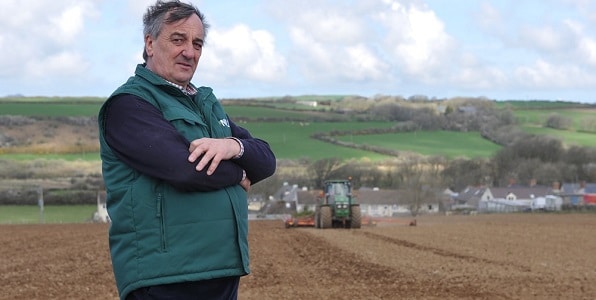
Meurig Raymond, NFU President, at REAP 2015The best agricultural knowledge and technologies must be available to every farmer to increase productivity potential – that was the message emphasised by the NFU President speaking at the Agri-TechE REAP Conference.

In his keynote speech Meurig Raymond said competitiveness, resilience and profitability are all critical to the sector and investment in agri-tech can help deliver these to all farmers.

Mr Raymond said: “All of us feel the pressures of rising costs, extreme weather, supply chain expectations, volatility, recession and regulation. Reaping the benefits of agri-tech shouldn’t be restricted to farmers who are fortunate enough.

“One of the NFU’s top asks of government is to increase investment in agri-science with a focus on applied research and knowledge exchange. Its continued support for the Agri-TechE Strategy is crucial for the sector.

“Agri-tech will enable farming to improve efficiency and, with this, reduce our trade deficits, reduce wastage, give us tools to manage volatility and a fair, transparent and functioning supply chain. All this will give farmers the confidence to invest.

“We also need science to understand the full environmental picture. Farmers need to know that their stewardship efforts to protect the environment are working. This is key to the industry’s resilience to environmental challenges.

“There are other hurdles. The NFU digital communications survey found that only 15% of farmers have a reliable mobile phone signal across the farm and over 60% don’t have fast enough broadband speed to do business. The government must accelerate the roll-out of high speed broadband to all rural areas.

“The UK agri-food sector is worth £103 billion and 13% of all employees work in the sector. Farmers provide the raw products for this industry – allowing them access to the best knowledge and technologies is vital to the industry’s innovation and growth.”


REAP Sponsors

Agri-TechE Week 2015

Agrimetrics: a chance to visit the new big ‘agri’ data centre

Agri-TechE

Mins-EusticeAndFreeman-launch-agrimetrics

A chance to visit Agrimetrics, which is headquartered at Rothamsted Research, and launched this week by life sciences minister George Freeman MP and farming minister George Eustice MP (pictured above, left and right respectively).  The centre is opening its doors for Agri-TechE Week when there will be an opportunity to find out more.

Agrimetrics will provide a single point of access for all publicly available data across the whole agri-food chain, encouraging wider and better use of data to enable innovation in the industry.

Professor John Crawford, CEO of Agrimetrics, says:

JohnCrawfordFeat “We have been speaking to farming groups and will be holding workshops to discuss the needs of the agricultural community. All industries need to critically engage with data integration and farming is no exception. Bringing together many data sets that previously haven’t been integrated will open many avenues for innovation.

“Being overwhelmed by data is completely normal; we’re hoping by simplifying the analysis component, we’ll find solutions to problems we can’t even imagine and take agriculture to the next level.”

The centre was founded by Rothamsted Research, the University of Reading, Niab and Scotland’s Rural College, and was created through Innovate UK to “contribute to a highly intelligent, productive, efficient, resilient and sustainable system.”

To see Agrimetrics for yourself and find out first-hand about the centre, click here to book your place to go along to the Agri-TechE Week event, “Big Data – what’s in it for farmers?” to be held on Monday 9th November.

Image from Agrimetrics.


ATW web banner with New Anglia


Farming £103 billion contribution to UK economy

Agri-TechE

Business Weekly sprayerThe value of the agri-tech sector was highlighted within a special supplement in Business Weekly.  The industry is buoyant with over £16 billion of inputs purchased over the last year.

The supplement, supported by Savills, provides a good overview of the special interest groups set up by Agri-TechE in its first year, which provide opportunities for technologists to gain greater understanding of the sector.


Business Weekly


ATW web banner with New Anglia


Call for more science input into agri-tech strategy from NFU President ahead of REAP

Agri-TechE

Meurig Raymond, NFU President, will be speaking at REAPMeurig Raymond, President of the National Farmers Union, is giving a keynote speech at REAP. In the NFU manifesto it says that there is a need to plan a  forward-thinking growth strategy for UK science. We asked him “where do you think the direction should come from in the science strategy for agriculture?”

MR. Sadly, there is a perception throughout the supply chain that there are ample supplies of food around the world at the moment. But we all know the dynamics – that the world is going to have to increase food production by 60% over the next 30 years. That’s a big challenge, it’s going to need investment, and it’s going to need all the modern technology that will be at our disposal.

When I look at the east of England I see a wealth of world-class science, you have the John Innes Centre, Rothamsted, Niab – all centres for excellence with a lot of research and development taking place, also there is now Agri-TechE developing a vibrant cluster.

So we have the scientists, we have the institutions, we have the people. We need to make certain that its well funded and joined up.


Q: So do you think it’s safe to leave the science strategy in the hands of the scientists then?

MR. Yes. Most definitely yes.

From my point of view I find it quite sad that scientists are not respected by society and by policy-makers as much as they were many years ago.  I’d like to see that respect return. We have some amazing scientists within the food and farming sector.


Q: You mention that we need a ‘functioning research pipeline’ and an ‘effective knowledge exchange infrastructure’. Do you not think it’s functioning at the moment? What do you think is the issue at the moment?

MR. The research centres, the levy boards, the AHDB all feed out information, but is it being read, studied and implemented? That is the next stage, isn’t it?

It’s about making information attractive and appropriate, and trying to encourage people to actually take up the message and use it. So it’s finding a way to get people to be more enthused. For example, I think there are some very good monitor farms around the country, which are doing some excellent work. But it’s important that the farming industry gets involved and actually gets behind what’s happening on these monitor farms.


Q: Do you feel that the NFU has a role in that?

MR. Most definitely, yes. We are very much part of the agri-tech strategy at a national level, and NFU East Anglia is involved at a regional level as well, so the NFU is another conduit for the translation of science.


Q: Following from that, a few years ago we had a disastrous harvest and the grain prices went high. During that time farmers invested in technology. This year we’ve had record yields and the prices have fallen, and some of the commodities are being sold for less than the cost of production. Do you think there’s any incentive for farmers to invest in technology to increase yields?

MR. We’ve seen some record yields across the country – I know the weather plays a huge part, but it’s a combination of the right weather conditions for the season plus the technology that’s available.

When farming was profitable three or four years ago it allowed farmers to invest, and that investment is now coming through within their business.

Now when I go around the country, I see a great number of farms adopting precision farming techniques; this investment can only come about through businesses being profitable.


Q: So you think the yields we’re seeing now are a direct result of their investment in precision farming technology?

MR. The weather has a huge part but yes. There is a higher level of professionalism in the industry.


Q: Talking about the weather, do you think there’s almost too much emphasis on yield, because now Niab is showing that yields in trial plots can’t be achieved in the field because of the shortage of water? Do you think that there should also be an emphasis on minimising loss and increasing resilience? Do you think that’s an area that’s been overlooked?

MR. Farmers in general are fairly resilient! But obviously we’ve been fortunate with the weather pattern in the last two seasons in the UK. Now I’m starting to hear there are some big issues on the back of climate change in south Australia; our Australian colleagues are going to struggle to have a harvest.

Water will be so important and we can overcome a possible water shortage by making certain an investment is made in both improved water storage during the winter period; and secondly by better techniques of applying that water.

It’s about the availability of water, storing the water at the right time and then applying it to the crops in the correct manner. That needs further research, and also signals from government that they are fully behind British farming and British horticulture in particular. There ought to be a level of infrastructure and allowance granted by the Treasury to encourage farmers to invest.

I understand Agri-TechE is looking at the water management strategy and how it can be best achieved.


NFU President Meurig RaymondQ: You talked about the younger farmers adopting more technology, and we’ve seen that a lot in the east here. That sort of technology tends to be concentrated on the larger farms, but still the most productive farms are often those that are owner managed, where there is somebody there who’s got the experience and knows exactly about the land and so on. There are two sorts of risks here: that those sorts of farmers might get driven out and we might lose that expertise; but also, how do we help those farmers to adopt more technology? Do you see this as a problem?

MR. No. As I travel around the country I see some fantastic, fabulous family farming units, where it may be father-son or father-daughter, who have a 400-500 acre combinable crop farm and are doing a superb job and the attention to detail is pretty amazing.

I can go to larger farmers where they have a management structure and they have some highly professional people within that management structure also looking at the best technology available and how to apply that on their farm.

The industry is progressing, there’s no doubt about that; it is becoming more professional – it has to – and at the end of the day we hear so much about sustainable intensification; that it’s about applying the right amount of nutrients, the right amount of plant protection, trying to increase the yields in those areas of the farm that can actually deliver those higher yields on the back of lower inputs.

It’s a case of everyone coming together from the research centres right down to the farm, and that pipeline has to be fairly flexible, has to be open, and people must recognise where to go to get the advice they need.


Q: So do you think perhaps that the more traditional farmers are not accessing that sort of expertise?

MR. People look for professional help and support. There wouldn’t be many arable farmers who don’t rely on an agronomist for some advice on their farm. People will study the Niab list for varieties; they’ll read what the benefits are for a certain variety over another for what suits their farm. The majority of farmers will then rely on an agronomist once the crop is in the ground, to actually advise them on what inputs to put into those crops.

So an  independent and objective agronomist sector is really important. And these people need to be up to speed with developments.


Q: So is that where the research institutions should be focussing their attention? Making sure they have a good pipeline to the farmers through the agronomists?

MR. Yes, that pipeline’s so important. Feeding that information down there, encouraging farmers to read that information, take it on board and study it. That’s the virtuous circle, as I see it.


Q: Lastly, what do you think is the biggest innovation that you’ve seen recently that’s transformed farming? 

MR. Big question! There is so much; it’s a combination of factors. I think in the arable sector it has to be precision farming.  The placement of fertiliser and plant protection products to within a few centimetres of where it is required. I think that has been a huge boost, from not wasting inputs, through to making certain it’s supplied to the right place, at the right time and so forth. That’s so important in the performance of the crop.

I guess as we look forward this is going to continue to improve, I know of farmers that are using drones to study the disease in their crops and so forth, and this type of information is all going to help as far as precision farming is concerned.

So I think that precision farming has probably been a big step in the right direction.


Agri-TechE REAP Conference 2015 Book now!