It’s chocs away with Muntons innovation!

Agri-TechE

Nigel Davies, Muntons“Most of our innovation is now around we ‘have a new fantastic ingredient, look what it does!’”, says Nigel Davies, Manufacturing and Sustainability Director of Muntons explaining the new inclusive strategy. The company, in association with FramFarmers, is opening up its Centre for Excellence on 10th November in Agri-TechE Week and Davies promises there will be some tasting on offer!

Muntons, a global leader in the production of liquid and dried malt extract for use in brewing, distilling and the food industries, will be giving talks and a site tour.  This includes the state-of-the-art anaerobic digester that ensures value is extracted from everything.

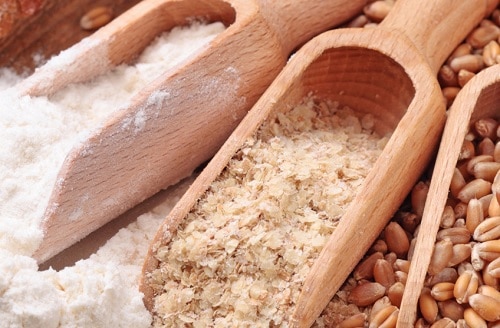
Davies continues: “We have had a centre for excellence for product development for quite a few years. One of our strengths is we can make malt into a product and tell the customer ‘this is what you need to do’, rather than just give them the powder.

“A chocolate muffin comes with a massive 42,000 kg CO2/tonne footprint, if you can substitute the chocolate with a malt product then you can immediately remove the transportation element of the cost and malt is also a cheaper ingredient. We have brewers and bakers on site and they have created the maltichoc muffin that is so good that in a blind taste tests people thought our muffins were a premium product”

Maltichoc muffins CO2

The company also works with its farmers to raise awareness of their carbon-footprint and offers help with how to address any issues, in a way that is also good for the farm.

“85% of farmers didn’t know how to engage with the idea of a carbon footprint,” says Davies. “6 months after we ran workshops on fertiliser use, alternate natural composts and so on … 85% now get it – the answer is to demystify the debate, simplifying the issue.”

There will also be discussions about the new anaerobic digestion facility and refreshments of the malty kind provided, with Muntons asking the question ‘Can you taste the difference?’

This event is hosted by Muntons and Fram Farmers.


Agri-TechE Week 2015 is sponsored by New Anglia Local Enterprise Partnership 

New Anglia Logo


Agri-TechE Week 2015Muntons

Round-up of latest agri-research

Agri-TechE


“Improve access to the latest research findings” this is a request that we often hear from the farming community, so along with a fantastic line-up of speakers at this year’s REAP conference we are also featuring a poster session from a cross section of the region’s research institutes to give a flavour of the work currently under way.

Posters are what the academics use at conferences to encapsulate a lot of information on a single sheet of paper.

Programmes include

Disease:

UK Cereal Pathogen Virulence Survey

The UKCPVS monitors cereal rusts and mildews in the UK, detecting and warning industry and growers of new races of disease emerging on resistant varieties.

NiabNETWORK.com

Online farm and field specific charts for disease risk. Allows access by phone or PC to alerts for sclerotinia, yellow and brown rust, fusarium mycotoxin and advice on spray timings and strategy.

Wheat:

Multiparent advanced generation intercross

MAGIC an innovative technique to increase the speed and efficiency of wheat breeding.

Wheat Improvement Strategic Programme

As part of the WISP Consortium thousands of new experimental wheat lines are being created that capture the diversity of primitive relatives of wheat such as wild emmer, durum wheat and wild goat grass.

Yield Enhancement Network

Most modern crops have large unfulfilled potential for growth and yield formation. The biophysical potential of crops is set by incident light energy, rainfall and soil water storage. Leading farms and research trials in the UK often achieve 12 tonnes per hectare. However, the average commercial farm produces around 8 tonnes per hectare, with no increase for 20 years. The Yield Enhancement Network – or YEN – exists to encourage any individual or organisation who is striving to close the gap between current yields and potential yields.

• WheatScan

Development of an In-field sensor to measure protein content of young wheat ears and provide estimate of the final protein content without the need to go to a laboratory.

Sugar beet

A novel pre-breeding strategy to reduce dependence on insecticides for virus yellows control in sugar beet

Virus yellows remain a key problem for the UK because the maritime climate favours the survival of the aphid vector. The UK beet industry invests up to £7M annually on insecticides for aphid control, without which virus yellows could cause losses of up to 50% of the national crop each year.

SporeID- innovative disease monitoring and diagnostics for improved efficiency of crop production

SporeID is a new project designed to minimise the impact of powdery mildew, rust and other potential foliar disease threats on the yield of the UK sugar beet crop. The project is bringing together novel diagnostic tools, crop disease modelling and yield forecasting to underpin grower decision making, and will investigate the potential impact of emerging disease on the crop.

Sustainable intensification

New Farming Systems

The NFS is a charitably funded initiative that is looking at energy usage and pollution risks in conventional rotation systems and developing this research to find ways to maintain or increase financial margins whilst reducing the footprint of conventional farming.

Precision farming in horticulture (PF-Hort)

PF-Hort is evaluating the potential of precision farming techniques to optimise soil and nutrient management for improved profitability in horticulture production systems. It includes a soil structure survey to determine soil structural condition under horticulture cropping systems and assessment of current soil management practices. A review of PF techniques will include: controlled traffic farming, soil mapping, remote sensing of crop canopies, variable rate inputs and yield mapping, to increase crop marketable yield and profitability.

The techniques with the greatest potential for uptake will be demonstrated and evaluated in field experiments on six commercial farms. A targeted knowledge transfer programme including six field trial open days and associated literature will facilitate rapid and widespread uptake of precision techniques within horticulture.


Agri-TechE REAP Conference 2015 Book now!


Agri-TechE Week 2015

Producers’ Panel sets agenda for REAP 11 November

Agri-TechE

The Producers’ Panel, kindly sponsored by Savills, sets the agenda for the REAP conference by articulating the big challenges facing growers. This session helps to define the opportunity space for scientists, technologists and engineers to consider potential solutions.

REAP 2015 speaker Brian BarkerFor example: Brian Barker, who farms Lodge Farm, which is a HGCA Monitor Farm, is very interested in using rotation to improve soil fertility. He says: “Improving the quality of the soil is a must for any farmer wanting to enhance their crop yield.

“We have run the farm on a 12-year crop rotation since the 1970s, to maintain yields and increase the biodiversity.

“However, we are continuously innovating and are currently trialling 6 different mixtures of green cover crops, including rye, oat and mustard over the winter to find which one produces the best microbiota for the soil. We anticipate that this will reduce the need for fertilisers and lower costs and it would be good to compare our experiences with others at REAP.”

SavillsAgri-TechE Member Savills is an appropriate sponsor for this important element of the conference, as the company partners with its rural clients to develop entrepreneurship, innovation and strategic solutions which deliver commercial results.

Producers on the panel this year:  Tim Whitehead, Farm Manager, Vine Farm, Royston; Brian Barker, EJ Barker and Sons, Stowmarket; Andrew Francis, Farms Manager, Elveden Estate.

To see the programme and register click here.


Agri-TechE REAP Conference 2015 Book now!

Agri-TechE Week showcases innovation across east of England

Agri-TechE

Agri-TechE Week 2015The programme of exciting events for Agri-TechE Week, 9-13 November, is shaping up and the range and diversity demonstrates clearly how the cluster has grown over the last year.

AgriMetrics

The week starts at Rothamsted Research with the event “Big Data – what’s in it for farmers?”, which will introduce the new AgriMetrics Centre”.  The new centre will provide a single portal to all of the publicly available and pre-competitive industry data relevant to the whole food system, drawn from datasets from around the world. Using this data to develop meaningful metrics for sustainability will be an important element of its work.  There will be an opportunity to find out more about the services the centre offers in a workshop session. Click here to book your place.

Beer and robots

On Tuesday there are two events. One at the National Centre for Food Manufacturing, University of Lincoln, will be looking at a range of emerging technologies, including those aimed at automating harvesting of salad crops and improving post-harvest storage. Book your place here.

The second is ‘The Business Case for Innovation’ in Suffolk at the home of Muntons, in association with FramFarmers. Muntons is a leading global player in the supply of malts, malt extracts, flours and flakes etc and at this event will be looking at how to embed innovation and new thinking about R&D and sustainability into a business .

The visit will include a site tour. Muntons has a centre of excellence, a purpose built facility that provides space and technology for innovation and product development in malt and malted ingredients and retail products.

The company also has a thriving home-brew product. There will be discussions about the new anaerobic digestion facility and perhaps even a taster or two…

Places for this event are limited so make sure to register your interest for the chance to attend.

Building resilience

On Wednesday is the Agri-TechE annual conference: REAP 2015 (Realising our Economic and Agricultural Potential). The theme this year is  “Resilience Through Innovation”. We have an excellent line-up of speakers which includes Sue Lockhart, Head of Agriculture at Sainsbury’s, Prof. Jackie Hunter, Chief Executive of BBSRC and Meurig Raymond, President of the National Farmers’ Union.

There will also be a “Producers’ Panel” of leading farmers to give a grassroots view of the needs of growers and a panel of technologists to respond to them.

Also at REAP there will be a Start-Up Showcase where early-stage businesses give an ‘elevator pitch’ to potential partners and investors.

Thought provoking

Moving on to Thursday, we have the RNAA Thought Leadership Lecture hosted by the Royal Norfolk Agricultural Association, with guest speaker Lord Haskins of Skidby (former Chairman of Northern Foods and Express Dairies), together with a networking session from the John Innes Centre which aims to give farmers the answer to the question “who do I talk to in science?” and will present a number of interactive exhibits showcasing JIC research. Find out more here.

Collaborative research 

Then rounding off the week will be the official opening of the Niab AgriGate Research Hub. Located in the heart of the Fens, it provides a facility for collaborative research aimed at reducing waste in the food supply chain and improving production efficiency. The hub supports technology transfer by housing both pilot and field scale research projects, with research ranging from soil health; field vegetable crop establishment; crop health; best practice for agronomy and rotation, right through to harvesting, post-harvest storage, processing and packaging.

This by-invitation-only event will provide an opportunity to see the facilities and discuss potential research projects. Click here to register your interest.

Further details of all these events are available via the Agri-TechE Week page.

Agri-tech Start-up Showcase benefits from RoCRE support

Agri-TechE

Supporting innovation is an important element of REAP, and many of the early stage companies who presented in last year’s agri-tech Start-Up Showcase benefited from the profile it gave them.

We are delighted that Rothamsted Centre for Research and Enterprise (RoCRE) is sponsoring Start-Up Showcase 2015 which will feature a number of budding businesses with ideas that address the big challenges facing the industry.

Small companies with new concepts can be important engines for innovation within larger agri-businesses, so the Start-up Showcase helps to foster the all-important culture of “open innovation” in agriculture and horticulture.

Agri-TechE member ArlabionLast year’s REAP conference featured 8 agri-tech start-ups, of whom 5 had follow-up discussions with investors, including one of our new members, crop protection company Arlabion. One of the other start-ups is now in the market with a new innovation in anaerobic digestion.

This year the Start-Up Showcase will feature innovations including solar-powered drip irrigation, a smart monitoring system for levels in storage tanks and a novel skincare product produced by plants.

Now is a good time to launch an agri-tech business. Industry insights suggest that global investments in agri-tech start-ups are starting to increase as confidence builds and new innovations led by impressive entrepreneurs with credible business cases are coming forward. In fact, many growth capital funds are prioritising agri-tech in current and future investment rounds.

RoCRE is an excellent fit as a sponsor for the Start-Up Showcase and it is using this opportunity to highlight it’s support for open innovation in agri-tech.

RoCRE, with its mission of opening up innovation in agri-tech is sponsoring the Start-up Showcase. RoCRE provides mixed office/lab business incubation space for start-ups and a new Innovation Hub, featuring a high quality space for collaborative research projects.

To see the programme and register click here.

Agri-TechE REAP Conference 2015 Book now!

Farmers requesting custom sensors

Agri-TechE
Soil Moisture Sense onion crop multi-depth sensors
Onion crop with multi-depth sensors to show how deep the crop has active roots and how much water remains available to it. Courtesy of Soil Moisture Sense

As more research provides evidence of the value of field-based sensors,  some producers are even specifying the functionality of their sensors to meet their requirements.

Tim Blyth, partner of Soil Moisture Sense and speaker at the forthcoming RemSens SIG meeting, says that findings emerging from research by potato expert David Firman of Niab and others is driving the development of more complex sensors.

He says: “Originally we sold probes that only measured soil moisture. Now we can monitor many parameters including nutrient content, rainfall, temperature and humidity.

“In fact we are consistently increasing what we can measure, even custom making sensors for some farmers. This gives a more detailed understanding of the crop’s needs so the grower can tailor the irrigation and fertiliser schedule, for example, to give optimum results.”

Tim Blyth and David Firman will be joined by Dr Richard Whalley from Rothamsted Research who will also be giving a talk on the opportunities for imaging below the soil surface in agriculture. One of the desired outcomes of the SIG will be to produce a roadmap of remote sensing needs from growers and farmers to direct future technology developments. To gain input for this there will be a facilitated group discussion on the issues raised and attendees can suggest how the technology can and should be developed.

The Agri-TechE RemSens SIG meeting “Getting to the Root and Branch of Remote Sensing and Monitoring” is to be held at the East of England Showground, Peterborough, Cambridgeshire, PE2 6XE from 13.30 on the 8th October 2015.

Advances in DNA sequencing are creating new tools for rapid breeding

Agri-TechE

wheat seeds white bg“Breeding wheat is difficult as its genome is massive – over five times that of humans – so it hasn’t yet been fully sequenced,” explains Chris Tapsell, from KWS, a global company that focuses on plant breeding. “In crops where sequencing data is available it is possible to more easily determine the genes that control a desired trait.

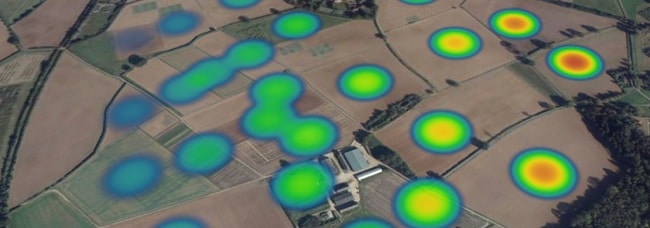
“We don’t yet have this information for wheat but what we do know is that some areas of DNA, called quantitative trait loci (QTL) are correlated to certain desirable features or phenotypes.

“The QTLs can be identified in the DNA sequence using molecular markers. If the markers are found in a particular plant this generally confirms that the desired trait is present.”

More recently, breeders have been studying a new tool that it’s hoped will further improve the efficiency of breeding and increase ‘Genetic Gain’ (the annual improvement in a trait such as yield).

Predicting a breeding value

This new technique is called genomic selection. Molecular markers across the whole of the wheat DNA are used to access a specific trait and give individual breeding lines a predicted ‘Breeding Value’, which is then used by the breeder for selection purposes. However, a vast amount of information is generated in this process and we need to make sure these predictions are robust.

Chris says: “The quantity of data required to prove these links are accurate are huge and expensive to collect, requiring complex analysis.

“We still need to show if this is cost effective in terms of the benefit over current rapid breeding methods.”

Professor Lars Østergaard from the John Innes Centre and Chris Tapsell will both be speaking about their work before the meeting takes on a ‘speed dating’ format allowing participants to discuss problems and solutions in relation to crop breeding.

You can read more about the discussions held at the Pollinator in the full report, which is available free to members on our Publications page.

wheat seeds white bg

Would better data visualisation improve farm profitability?

Agri-TechE

Powermap letterbox

Farmers need a better way to assess the economic optimum for fertiliser and other inputs argues Simon Ward, founder of Increment Ltd and one of the speakers at the next Agri-TechE ‘Big Data in Agriculture’ Special Interest Group meeting 29th September, Rothamsted Research.

Simon Ward, Increment, will be speaking at the next Big Data SIG

“Understanding the cost of production and relating this to the return on increased yield is very complex and the current benchmarking tools are of limited value,” he says.

Loss-making marginal spending

His comments are supported by research by Mark Reader of the Department of Land Economy at the University of Cambridge, one of the co-chairs of the SIG. In a recently released paper, ‘Loss-making marginal spending on crop variable inputs’, data from the Farm Business Survey 2004-2012 was used to assess the crop gross margins and input spending for conventional winter wheat and oilseed rape in England and Wales.

It concluded that although additional fertiliser increased yield, the economic value of this increase, in many cases, was less than the cost of the inputs. Reader concluded that unknowns such as yield, quality and price make it very difficult to estimate the economic optimum for inputs.

These conclusions are valid for a wide range of alternative economic models and subsets of the data.

Ward says that currently farmers benchmark themselves against comparable farms, ie those of a similar size and crop portfolio, but it is difficult to work out if additional expenditure results in a more profitable crop.

“If you compared all the wheat farmers in the UK, some use £80 of fertiliser per hectare and others £180; that’s a massive spread. If you are using £130, do you need to increase or decrease the amount? A farm using £180 per hectare might be more profitable but is this related to the inputs? It could be better soil, less disease, better weather, higher price.

“Therefore, I think this method is fundamentally flawed: it doesn’t tell you which inputs are related to profit.”

Extracting meaningful information

Improved data visualisation would help farmers to benchmark against their own data; keeping records over a period of time would allow a better helicopter view of where costs were incurred and revenue generated.

Precision farming has dramatically increased the amount of data available, from mini-weather stations giving field conditions, drones visualising crop health and telemetrics on machinery utilisation and fuel costs.

Matthew Smith, Microsoft Research, is co-chair of the Big Data SIG
Matthew Smith, Microsoft Research, is co-chair of the Agri-TechE Big Data SIG

Matthew Smith, computational ecologist at Microsoft Research and co-chair of the SIG, says:

“There are so many variables in agriculture, knowing as much as you can about each of them means you are in better position to create models to help informed decision making. However, you need a system in place that can extract meaningful information from this data. We need the input of farmers to determine what metrics they would find most insightful.”

Creating a personalised dashboard

Eric Hannell, Senior Project Consultant at Tableau, agrees. His particular interest is ‘dashboards’ which provide a snapshot of what is happening, hiding the complexity so that good decisions can be made.

“Even the perfect dashboard will only answer the questions you designed it to answer, so farmers need tools that they are able to tweak themselves so that they are tailored to their requirements. A good dashboard should be able to adapt to changes in needs and provide ad hoc visual analysis of the data.”

After the presentations there will be an opportunity for participants to discuss the issues in more depth.

Agri-Tech East’s ‘Taking Data Presentation Seriously’ Big Data Special Interest Group is being held at Rothamsted Research on the 29th September, 2015.

Find out more and register here.

Using precision farming technology for optimal yield, cost and profit

Agri-TechE

01 Nov 2016 – 09:30am

Trainer:  Ivan Grove, Harper Adams University

Open Innovation in agri-tech at REAP

Agri-TechE

“Come to REAP and make it happen” is the message of contributors to our new YouTube video.

Julius Joel (MD, Greens of Soham Ltd, part of Spearhead International), Matthew Smith (Microsoft Research) and Andrew Francis (Senior Farm Manager, Elveden Farm) discuss the benefits of participating in REAP, which is one of the best networking events in the agri-tech calendar.

All have found that the Agri-TechE events  – which are bringing new people into the sector  – have helped to broker contacts that would not otherwise have been made.

Hear their comments in the video below.


Agri-TechE REAP Conference 2015 Book now!

Agri-TechE Week 2015


Visualising data, experts give views at Big Data SIG

Agri-TechE
Visualising predictions of winter wheat yield using Microsoft Power Map for Excel.

Visualisation techniques such as graphics and maps can help to extract more value from data, but these technologies are not widely used by agricultural data service providers.

For example the introduction of new sensors and monitors are enabling farmers to collect large volumes of data but Matthew Smith, a computational ecologist at Microsoft and one of the co-chairs of the Big Data in Agriculture SIG, comments that the industry often lacks the tools to be able to extract meaningful information from these data sets.

He gives the example that many farmers are using Excel to help create graphs but there are some next-generation tools that visualise data in a more beneficial manner. For example the new Powermap tool allows data to be visualised on a map, making it much more useful to a producer and their advisors.

Eric Hannell, Senior Product Consultant,, Tableau and Simon Ward, Founder and MD, Increment Ltd will be discussing how to use data visualisation tools effectively at the next Big Data in Agriculture SIG meeting on the 29th September.

This event will explore the most useful way of presenting data to farmers and growers and the opportunities for modellers and software technologists to add value to this growing sector.

Update from Big Data SIG

Agri-TechE

Robert AllenRobert Allen of Greenvale AP is co-chair of the Agri-TechE Big Data SIG, which has two events scheduled for this autumn.

He says: “The first will look at the important issue of data visualisation (29th September) and the second will be a practical workshop on tools and methods for data analysis (24th November).

“Good data visualisation is a critical component of any data system; its aim should be to allow the end user to rapidly consume the relevant data at the right time, in the right place for the decision or process they are currently working on.

“Much of the recent investment and development of ‘ag data’ has, necessarily, focused on the technology for creating, collating and storing on-farm data. Data visualisation is the route to unlocking the potential in these datasets. This session will focus on the principles of data visualisation and how they can add clarity and value to your data.

“Extracting value and information from raw data inevitably requires data analysis. The data analysis workshop will be a hands-on practical day focused on the principles of data analysis through worked examples, it will cover, selecting the right data tools, data cleaning and preparation and basic data analysis methods.”

More information is available in events.