Patenting, Trademarks, Copyright, Trade Secrets...
In the next installment of our micro-learning series, we’ll explore potential legal solutions to help you keep your ideas safe and sound.

Farm Fodder Flow: Spring Grass Growth

Member News
The views expressed in this Member News article are the author's own and do not necessarily represent those of Agri-TechE.

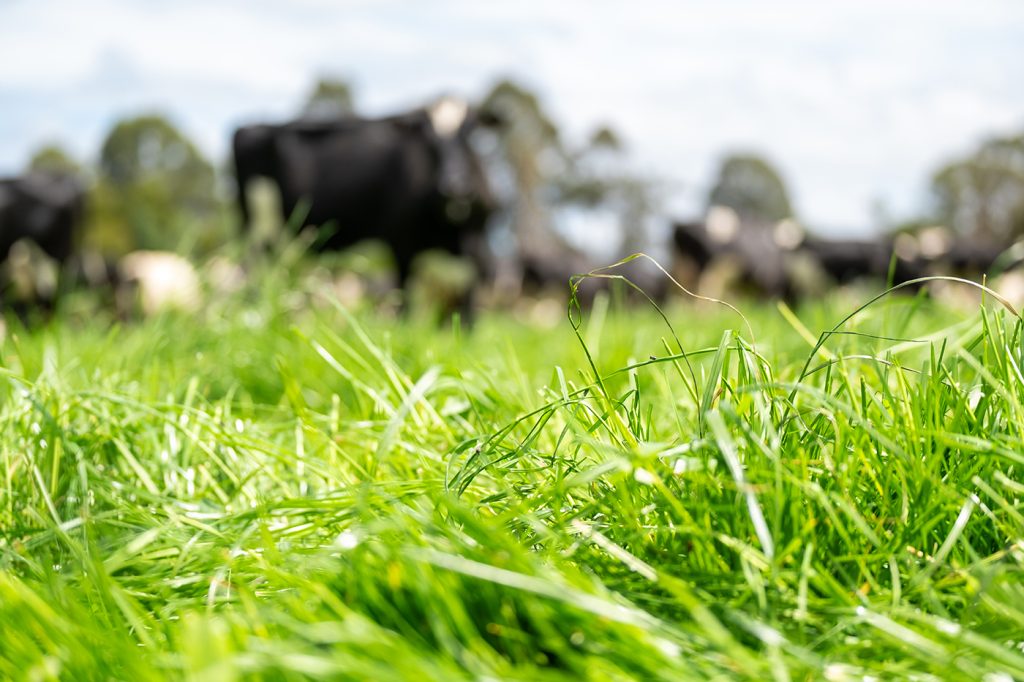
Spring Grass Growth: Why Patience Pays Off Before Turn-Out

When Spring arrives, the sun shines, the temperature creeps up, and the grass is greening, writes Barenbrug’s Agricultural Product Manager Janet MontgomerySurely that means turn-out’s just days away.

But think, has spring really arrived?

Only if you’re observing the meteorological calendar, where the official winter-to-spring transition occurs on 1st March. Those of us with a more traditional view of the seasons will be holding out for the spring equinox of 20th March – when daylight hours finally exceed those of darkness – to mark the change in season.

Either way, when it comes to grass, both the astronomical and the meteorological calendars are no more than a distraction. The only thing of importance is what’s happening in the field. And much of that will be the result of what happened at the tail end of the seasonal year.

That’s because one of the biggest influences on spring grass growth is how much cover was left in the fields in the autumn, and how much rest those fields needed over winter to be in sufficient good order to provide the desired spring cover.
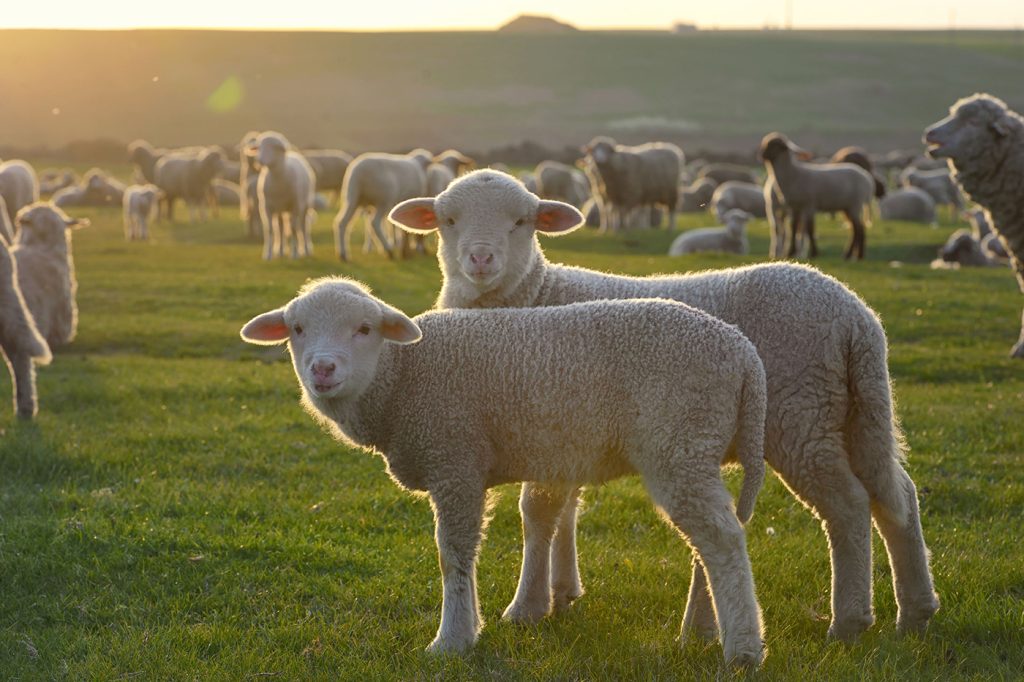
Spring Cover

What that spring cover looks like, or what it’s capable of, all depends on your plans for it. Your target – measured in kilograms of dry matter per hectare (DM kg/ha) – should be reached by the time you’re lambing, calving, or simply for turn-out after housing.

To achieve that, the grass must be given its best shot. And you’ll not do that by near-religious observance of a circled date on the calendar! Restock those fields before they’re ready, too early, too soon – and not only will the covers not be enough to sustain them, you’ll also find yourself facing the knock-on effects for the rest of the season…

…which is why it’s important to have the Farm Fodder Flow (FFF) principles foremost in your mind. How can you match your farm’s productive capacity to your animals’ dietary requirements? Careful planning, assessments and projection are the key.
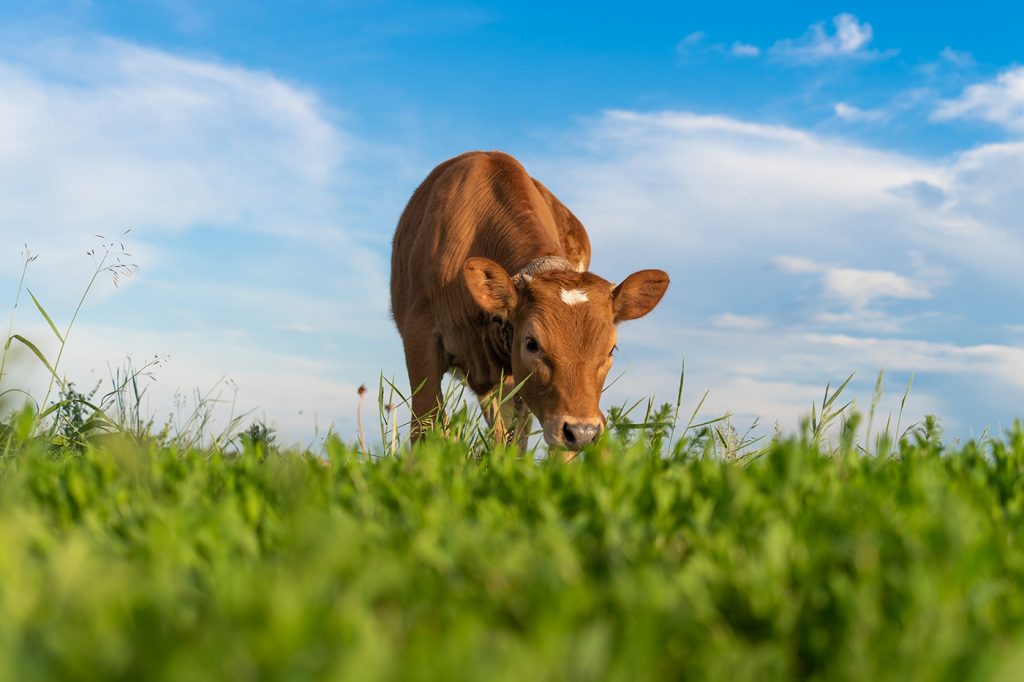
Conserved Feed

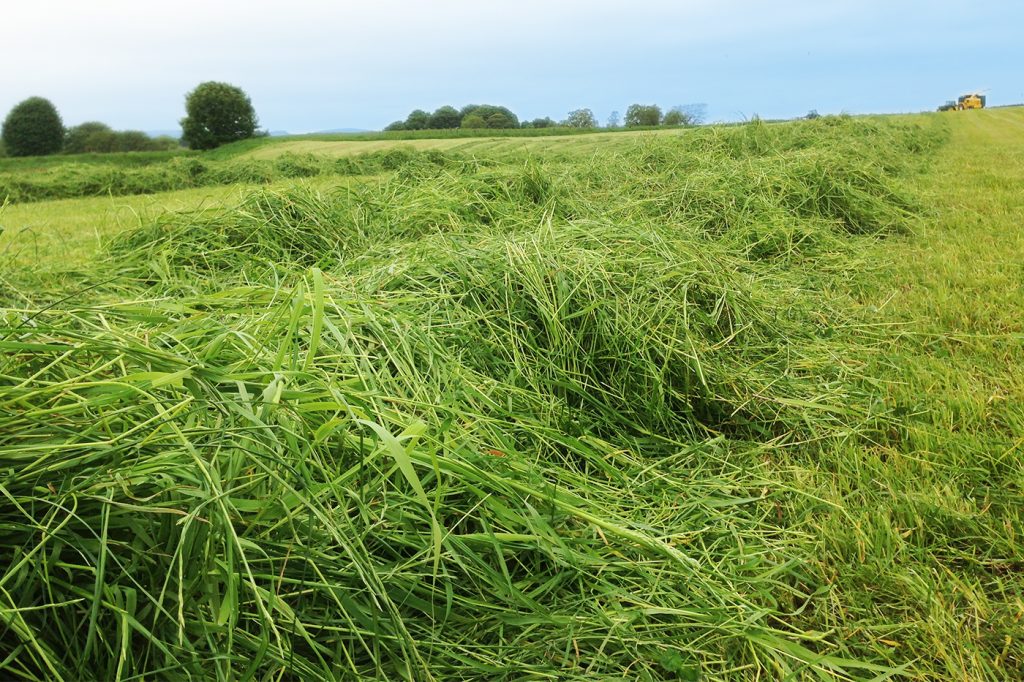
Right now, you’ll have a good idea of how much longer your conserved feed is likely to last. My advice is to keep using it until you’ve emptied the clamp. If you’ve enough feed to keep things in the shed, do it. It’s feed that’s already paid for. Your fields will thank you, and you might even find that it gives you extra ‘breathing space’ later in the season – Farm Fodder Flow principles coming into play – to close off an extra field to take an extra cut, and thus make use of a grass excess to cover a possible later shortfall.
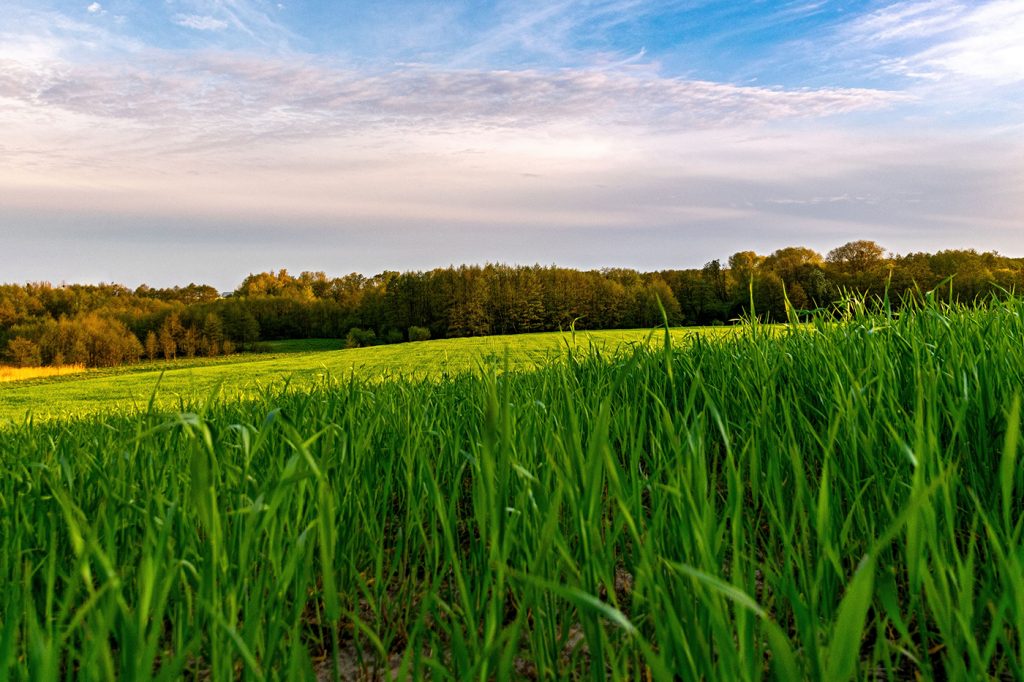
Final Check: Soil

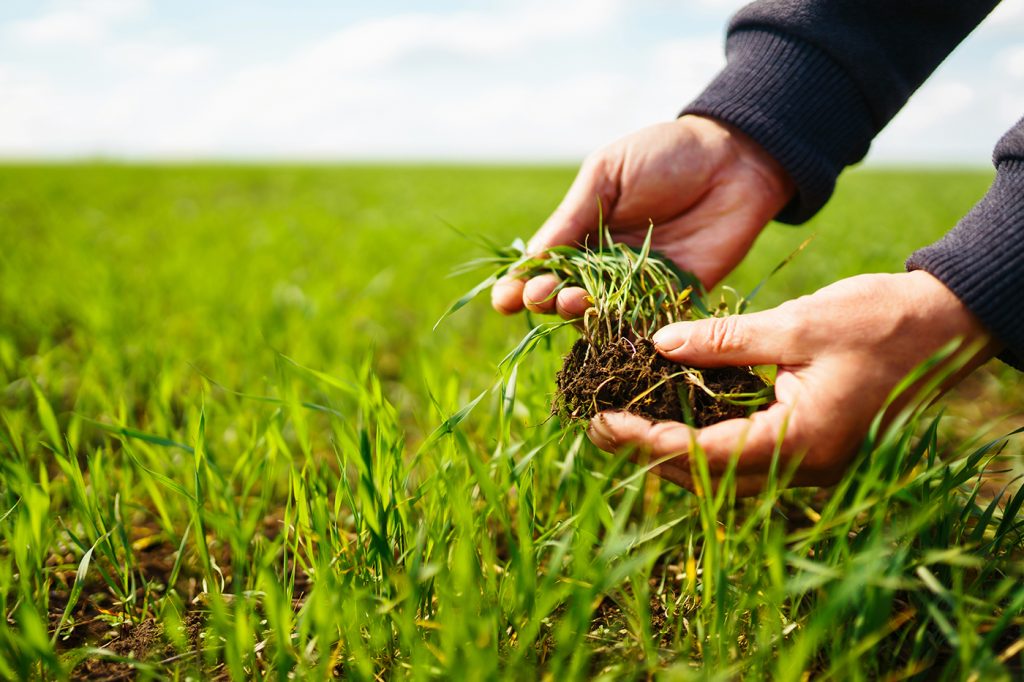
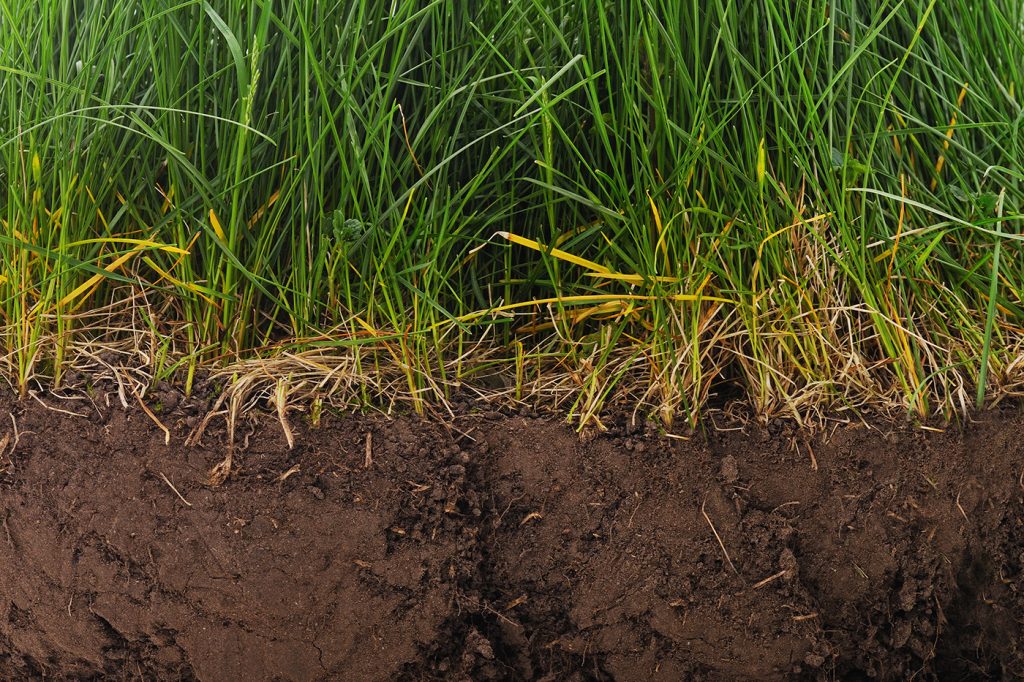
The final check is in the soil: its moisture, and its temperature. Be sure both are ‘in range’ before you sign off on that turn-out decision: moisture, to avoid any possible damage to soil structure, and temperature, because unless soil temperatures have reached 5°C, then the grass isn’t growing.

To sum it all up? Good grass comes to those who wait; don’t be too quick to open the gate.

  • *I have permission from the copyright holder to publish this content and images.

First-Cut Silage Strategy: Why Patience Pays Off

Member News
The views expressed in this Member News article are the author's own and do not necessarily represent those of Agri-TechE.

Think back to the start of Spring in 2024. Water, water, everywhere – and in many cases nary a blade of grass even breaking the surface.

That was the legacy of the wettest 18-month period ever recorded in England. Didn’t we pay for it, with a year for cautious, opportunistic cuts that often fell far short of expectations, both on quality and quantity. Our message was ‘Go Softly’, striking a balance between the two necessities: conserving feed, and conserving swards.

That made 2024 something of a year best forgotten. If you didn’t yourself run short of feed, I’ll bet you know someone who did.

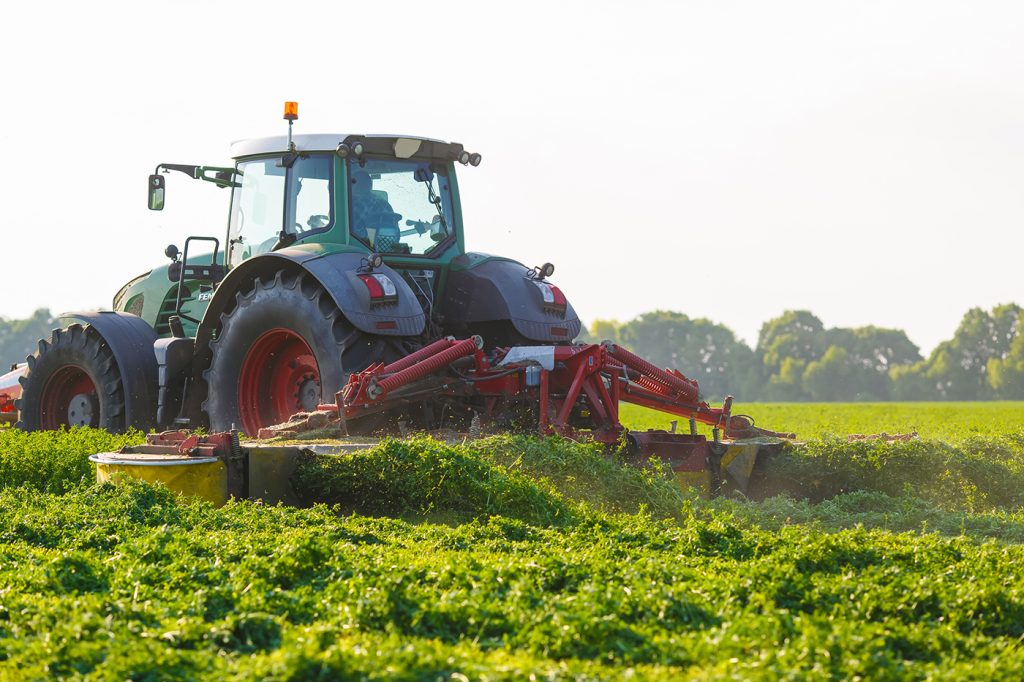
Yet with all that water now seeming a distant memory, coupled with the driest March for more than 60 years in 2025, it’s been very tempting to pursue not only an early turn-out to arrest the headache of low feed stocks, but to size-up an early first cut too.

Avoid the ‘Kid in a Candy Store’ Mistake

Those who follow my writings (Janet Montgomery – Barenbrug UK’s Agriculture Product Manager), might sense there’s a ‘but’ coming. You’d be right. I wouldn’t dissuade anyone from taking advantage of the current situation – in farming, we have to work with what we’re given and now is a perfect opportunity to start replenishing those lost stocks

But – and here it is – don’t act like the proverbial kid in a sweetshop, wide-eyed with wonder at the rich pickings. By all means take that early first cut, just exercise extreme caution.

High stakes

As the saying goes, the first cut is the deepest. Except in silage. Of all the cuts you’ll take this season, the stakes are the highest for the first. So don’t try to squeeze out extra yield ‘just in case’. Instead, hold back ‘just in case’.

Taking too much from the sward now could ruin the good growth for the rest of the season. By asking the sward for an extra 5% now, you could be paying a yield penalty far in excess of that by the time of the second cut, because there won’t have been sufficient time for it to recover biomass. You’re robbing the second cut of its potential.

Daughter tiller timing

We’ve talked about daughter tillers before, in our 3 Leaf Theory article. Each ryegrass plant can produce up to 3 such tillers: it’s the mechanism by which ryegrass vegetatively reproduces, and how sward density increases.

Daughter tillers are essential for sward resilience, boosting sward health and persistence, and preventing weed invasion. However, make that first cut too low and you’re putting the production of those daughter tillers at risk.

Soil Contamination

I hardly need add this, as everyone knows the risks inherent from soil contamination of silage. Nevertheless, some fields may still harbour damage – wheelings or uneven areas from poaching – from that wet weather of 2023-2024. Check out the fields and keep cutting and raking heights sufficient to avoid soil contact.

‘Just in case’

We never know what’s around the corner. That’s why this first cut is so strategically important. Because whether that ‘just in case’ is the wettest summer this century or a repeat of 2023’s dry spell, you’ll be thankful that by leaving a healthy residual, you’ve endowed your swards with the best gift of all: resilience.

  • *I have permission from the copyright holder to publish this content and images.

Organic Grass Farming – How to Build Better Swards with Strategic Seed Choices

Member News
The views expressed in this Member News article are the author's own and do not necessarily represent those of Agri-TechE.

What’s the Best Grass Variety for Organic Farming?

I’m often asked, “I’m farming organically. What’s the best grass variety for me?” – Janet Montgomery, Barenbrug UK’s Agriculture Product Manager.

OK, so it’s a good and valid question. But it’s not actually the question a grower wants to ask. What they should be asking – in making choices around any grass-growing system – is, “How do I get the best stand, the best sward, of desired species?”

The Common Goal: A High-Performing Sward

And that’s the question that’s common to both organic and non-organic systems, for the best possible grass production relies on a robust, healthy, dense population of grasses (and herbs and legumes) that together can give you the quality, resilience and exemplary biomass that will convince you (if you’re not already of that persuasion) why home-grown feeds hold the most promise for productivity and profitability.

Now, if you ARE farming grass organically, of course you have fewer options available to you. You can’t use chemicals, for a start. But that means turning to different tactics to achieve the same results – and it’s these tactics that others can adopt.

As a farmer, of course you have choices to make in the way you farm. You might choose, or even believe it’s your responsibility, to farm more effectively, more sustainably. With grass the most vital input in any dairying system, not to mention beef and sheep too, the strict regulations concerning organic production serve only to highlight the importance of home-grown feeds.

Reducing Feed Reliance and Embracing Regenerative Agriculture

Both organic and conventional farmers alike are looking to reduce their reliance on bought-in feed, and a recognition that some of the practices followed over many years by organic farmers are just as applicable in non-organic situations.

Here’s where we also consider the surge in regenerative agricultural practices. Yes, ‘regen’ can still be a little hard to tie down, but its central themes of soil health, carbon sequestration and biodiversity are now widely accepted.

What does that mean for the progressive grass farmer?

Well, let’s go back to that opening question. It’s not so much about variety per se, but the varietal characteristics necessary in an organic, or low/no-input production system. Remember, what we’re trying to do is to create an amazing plant stand. That demands a ‘Big Four’ basic elements: out-of-the-blocks emergence, rapid establishment, a high density from the get-go, and competition that knocks touchline football dads into a cocked hat.

Of course, many of our varieties exhibit all those characteristics in spades. Nevertheless, we’ve selected two in particular – Galgorm and Seagoe  – as the ‘best of the best’ to act as the base of our organic mixtures.

There’s also an element of pragmatism here: grass-seed blends must have a minimum of 70% organic seed to be described as such. Understandably, we don’t grow organic versions of every variety, and that’s why we’ve chosen these two: they really are out there in front, and capable of doing some very heavy lifting in meeting the ‘Big Four’ described above.

Herbal Leys, SFI and Biodiversity

Yet while mixtures intended for use in organic systems have always looked different from more conventional mixtures, reflecting the different objectives, in recent years those lines of distinction have blurred, as first herbal leys and then SFI mixtures, or swards for biodiversity, have become more common and more popular.

There’s quite an art to developing each grass mixture. I consider how species and varieties will perform in the circumstances, with one key question in mind for each mixture: what farming challenge am I trying to solve?

For example, am I looking for something that offers farmers a quick spring growth? Are we meant to be delivering winter tolerance? Is this mixture suitable for the summer dry?

Primary objectives for organic mixtures are weed suppression and nutrient management. We’re creating mixtures that can thrive without herbicides or synthetic fertiliser.

Yet cutting out those inputs, or at least reducing reliance on them, is where conventional farmers are beginning to show real interest too. It’s understandable: who wouldn’t want to avoid the expense and hassle of spraying for weeds, and to manage without chemical fertilisers, if a sward can make a good job of it by itself?

Swards ‘designed for organic’ typically sport a high tiller density, explains Janet, which creates a pasture that’s on the ‘offensive’ with a dense and healthy stand: weed seedlings can’t compete against grass, or grass-clover stands.

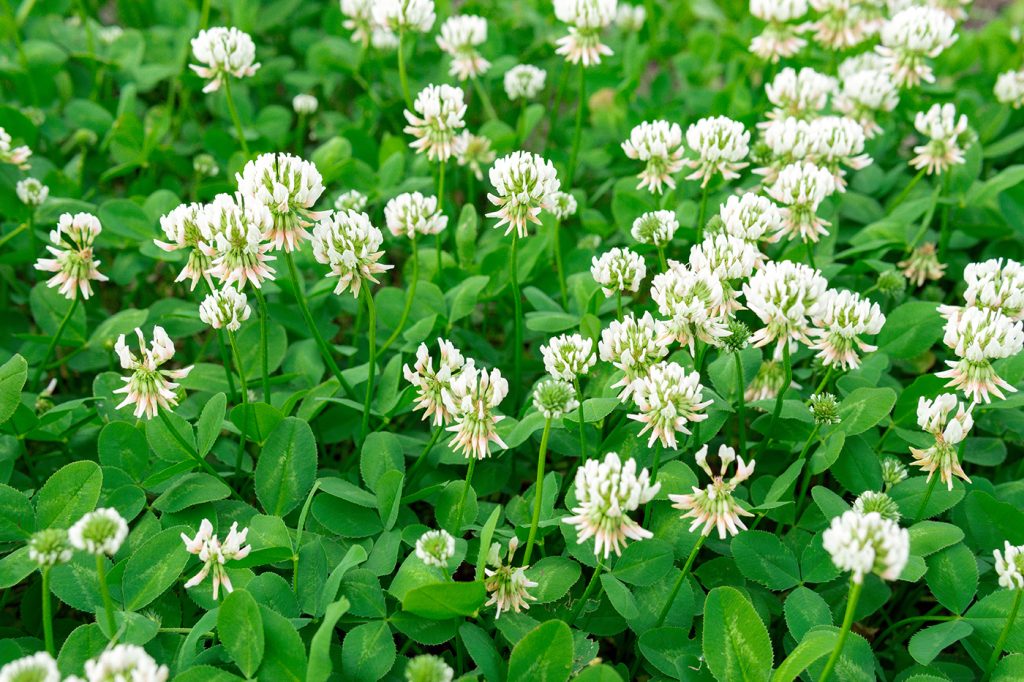
Then there’s white clover: it can reasonably provide up to around 150kg/ha of nitrogen. Red can reach as much as 200kg/ha.

The Role of Clover and Herbs in Soil & Animal Health

Clover, other legumes and herbs also have a ‘superhero power’ in the form of their roots. Diversity in root depth and structure is highly effective in improving nutrient cycling, and a varied sward brings activity in different zones, at different times through the year. This nutrient mobility has a tremendously beneficial effect on soil health and fertility.

Of course that’s great for the health of the sward. It’s also great for the health of your animals: research shows how these diverse swards offer grazing animals a more balanced – in terms of minerals and vitamins – intake, plus the different proteins available when grazing involves more than grass alone.

Deep Roots, Deep Resilience

Consider this: ryegrass roots grow to a depth of around 15cm. But tall fescue’s roots grow as deep as 1.5m, as can many herbs and legumes. That’s why mixed swards retain their productivity during dry periods.

Tall fescue’s a great example of how the organic movement has made the most of its own restrictions. They’ve simply added more tools to the toolbox. Their solutions are like a patchwork quilt. A solution here, an adaptation there, recognising that they don’t have the blanket options of agricultural chemicals and fertilisers.

Physical, cultural, temporal control. It’s these that allow for the variation in management approaches which together deliver the desired outcomes.

With that in mind, there’s no reason why you can’t be a conventional farmer who thinks like an organic farmer.

  • *I have permission from the copyright holder to publish this content and images.

The new government, a year on: what are Defra’s priorities?

Member News
The views expressed in this Member News article are the author's own and do not necessarily represent those of Agri-TechE.

This is a government for whom the honeymoon period ended swiftly. Desperate to demonstrate economic credibility, abiding by her fiscal rules has become an obsession for Chancellor Rachel Reeves. The commitment to balance day-to-day spending by 2029 is the driving force behind the policy decisions outlined in last autumn’s budget, many of which have had a significant impact on the cost of doing business in the UK.

For the farming community, the most significant of her decisions was changing inheritance tax rules for family farms. Sluggish economic growth and challenging geopolitical headwinds since then have worsened the government’s economic woes. Unprotected government departments, including the Department for Environment, Food & Rural Affairs (Defra), are bracing themselves for further cuts in June’s spending review and the autumn budget.

Against this backdrop, Defra ministers are struggling to communicate their policymaking priorities effectively. The government’s first year of policymaking has served up some unpalatable reforms for the industry, ranging from the changes to agricultural property relief to the abrupt closure of the Sustainable Farming Incentive. Whether these decisions should be attributed to government inexperience or political apathy depends largely on your own political perspective. Nevertheless, the government says it has big ambitions for the sector. For those watching eagerly from the sidelines, big questions remain for how they intend to achieve them.

Events may soon accelerate the political imperative for the government to bring some cohesion and clarity to the sector. Less than twelve months since the general election that delivered the Labour landslide and Keir Starmer to No.10, the world is already a very different place. Escalating global conflicts and increasing geopolitical instability are forcing governments to consider their own resilience and sustainability. The war in Ukraine and the Covid pandemic shone a light on the UK’s vulnerability to fluctuations in the cost of energy and fertilizer, which has a direct impact on the food supply chain in this country.  The government recognises that ‘food security is national security’ and solving the challenges of food security are set to climb to the top of the national political agenda in the coming years.

The resilience and sustainability of the sector will continue to dominate thinking at Defra, both through an environmental lens and regarding long-term profitability. Former NFU President Baroness Minette Batters has been appointed to lead a review of farm profitability, which will make a series of recommendations to the newly formed profitability unit within Defra. However, with acute pressures on public spending, there is firm recognition from ministers that increasing the profitability of the sector will be difficult without securing investment from the private sector. The government is keen to harness the power of private investment in nature restoration and natural capital investments. It has announced new green finance standards designed to drive economic growth and support investment in projects to restore rich habitats. It is also consulting on ways to increase the integrity of, and raise confidence in, voluntary carbon and nature markets.

This parliament will see greater collaboration between Defra ministers and the Department of Health and Social Care and the Department for Education, particularly on national food policy. Driven by concerns around food security and the soaring cost of obesity to the NHS, the departments are keen to shift how the nation thinks about and consumes food. Work to produce the new national food strategy is currently underway, due to deliver initial proposals later this year. To date, the government has sent strong signals that it is not afraid to adopt an interventionist approach when it comes to matters of public health. Its revisions to the sugar tax to decrease the thresholds and expand the scope of products is a sign of its willingness to use policy to achieve its objectives.

Seeing the complex policy challenges of food, health and farming as intrinsically linked seems obvious to most observers but for a government that tends to work in siloes it would be a huge shift in behaviour. There is a real opportunity for greater collaboration across government and the sector to put these key issues at the heart of policymaking. The challenge for government is getting it right when inexperience and acute pressure on public spending is high, so there is a clear role for businesses to share expertise, experience and excellence to inform high quality policymaking.

If you’d like to discuss this in more detail, including how GK Strategy can support you with government relations and communication, please contact Thea Southwell Reeves.

  • *I have permission from the copyright holder to publish this content and images.

Farm Fodder Flow: Go With The Flow

Member News
The views expressed in this Member News article are the author's own and do not necessarily represent those of Agri-TechE.

Encouraging farmers to adopt a more holistic approach to on-farm feed management, recognising that home-produced feed will always be more beneficial to the bottom line, this concept is known as Farm Fodder Flow.

Janet Montgomery, Agriculture Product Manager at Barenbrug, explains the concept of Farm Fodder Flow. Farmers have always had to juggle numerous tasks while mitigating the effects of external factors beyond their control.

Grass has been the cornerstone of many farming systems, supporting livestock enterprises ranging from beef and sheep to dairy to diversified operations. Farming today demands a strategic, data-driven approach to optimise returns and sustainability.

Rethinking Grass Management

Farmers must move beyond the ‘one size fits all’ grass strategies of the past. Modern farming, shaped by economic and environmental pressures, calls for bespoke solutions tailored to the unique needs of each enterprise. This is where the concept of Farm Fodder Flow comes into play.

Put simply, Farm Fodder Flow is about matching the farm’s productive capacity to the nutritional requirements of livestock through planning, assessment, and projections. It ensures the efficient use of home-produced feed, reducing reliance on purchased concentrates, while improving productivity.

Done well, it can also optimise labour requirements and provide higher-quality feed throughout the year, benefiting both the animals and the farm’s bottom line.

First Steps

Consider it a return to basics: what are your production goals? Are they sufficient? Where or how do you need to make changes? For livestock farmers, these goals might pertain to litres of milk, kilos of beef, lambs sold, or other measures relevant to the enterprise.

For example:

  • In a dairy system, how many days a year produce milk? What is the average production per cow?
  • Beef farmers may aim for specific weight gains or finishing times.
  • Sheep farmers might focus on lambing percentages or faster turnaround times for market-ready lambs.
  • Mixed enterprises should account for goals across all activities.

By assessing these goals, farmers can gain a clear understanding of their annual production targets and the feed demands of their livestock throughout the year.

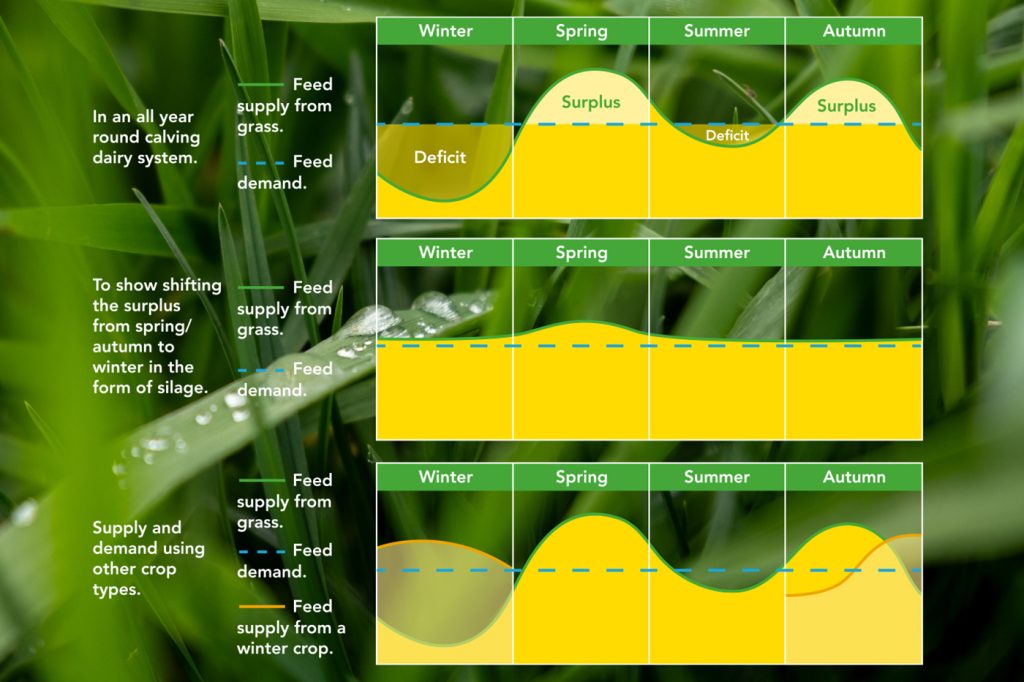
These graph curves are an example specific to an all-year round calving dairy system.

Supply and Demand

The next step is evaluating whether the available grass and forages meet the farm’s feed demand. Do your peaks in supply align with the nutritional needs of your livestock?

Most farms will identify a mismatch between the supply curve and the demand curve. Common strategies to address this include making silage or hay to bridge the feed gap during low-growth periods. However, Farm Fodder Flow takes this a step further by exploring ways to optimise both the quantity and quality of feed.

Improving the Flow

Adjusting the way silage is produced can make a significant difference. For instance, moving from a two-cut system to a four-cut system can improve the nutritional quality of silage, resulting in better feed conversion rates. Livestock fed on higher-quality silage often exhibit improved weight gain, milk yield, or overall performance.

Even without major changes to cutting schedules, practices such as grass indexing can help identify fields that need reseeding or maintenance, maximising the efficiency of the most productive areas.

Explore Alternatives

Don’t hesitate to consider alternatives to traditional silage. Short rotation crops like winter brassicas, Italian ryegrass, or forage rape can provide flexibility and a different nutritional profile. These crops are especially valuable as break crops in grass rotations, helping to manage weeds, improve soil health, and support long-term productivity goals.

A New Mindset

Farm Fodder Flow represents a shift in mindset. It’s not about wholesale changes but rather about refining and optimising current practices. By prioritising home-grown feed and recognising its superior nutritional and economic value, farmers can build more resilient and profitable systems.

This holistic approach empowers farmers to balance the demands of their enterprises with the resources available, ensuring sustainability and success in an ever-changing agricultural landscape.

  • *I have permission from the copyright holder to publish this content and images.

PES Technologies Secures £1.3M pre-Series A Funding following award-winning Product Launch

Member News
The views expressed in this Member News article are the author's own and do not necessarily represent those of Agri-TechE.

Success On and Off the Awards Podium

Following an outstanding awards season last year after our official launch—where PES Technologies proudly took home both the British Farming Awards Agri-TechE Innovator of the Year and the Fresh Produce Consortium Innovation Excellence Award—we’re excited to share that we’ve now secured £1.3 million in pre-Series A funding. This milestone reflects the strong confidence our investors, stakeholders, and the wider industry have in our product. With this momentum, we’re looking forward to making 2025 just as impactful!

Welcoming New Global Partners

We’re excited to welcome two new investors to the PES Technologies journey—both making their very first investment in a UK-based company!

Artesian, a leading global alternative investment management firm headquartered in Australia, has invested in PES through their GrainInnovate fund. Joining them is Agnition Ventures, the investment arm of Ravensdown, one of New Zealand’s largest and most respected fertiliser cooperatives.

Some words from our CEO, and Lead Investor TSP Ventures

Andrej Porovic, CEO and co-Founder of PES Technologies, said,
This funding round is a big show of confidence from our shareholders in both the product and the team. We are particularly delighted to be the first UK-based investments for both Artesian’s GrainInnovate Fund and Agnition Ventures – this is further validation that our product has global potential, and I look forward to their input as we build on our successful product launch last year by increasing market share and influence.”

Chris Smith, CEO of TSP Ventures, said “PES Technologies undoubtedly has a strong technology that provides substantial benefits for farmers, growers and agronomists as well as the overall environment. The company is now strongly post-revenue with a growing and impressive client list. Their product, in-field soil testing for 14 measures of physical, chemical and biological soil health done more cheaply, more quickly and more conveniently than current methods, results in cost savings, higher yields and long-term improved soil quality. We are delighted to lead the round and continue to be part of this impressive company.

160 year old research opens gateway to more nutritious and sustainable pea crops

Member News
The views expressed in this Member News article are the author's own and do not necessarily represent those of Agri-TechE.

Researchers at the John Innes Centre at Norwich Research Park have helped to solve a historical puzzle that could revolutionise the breeding of the humble pea and other legumes leading to improvements in their nutritional value and lessening the reliance on pesticides.

This landmark work, published in the journal Nature, comes at a time when peas and other legumes are being called upon both as sources of plant protein and as sustainable crops which can fix their own nitrogen. It could result in pea and other legume crops, needing less chemical fertiliser to grow, becoming more economically viable for future growers and potentially lowering land and river pollution.

The groundwork for this latest study was laid 160 years ago by Gregor Mendel, a citizen scientist. He famously performed a series of experiments in the mid-nineteenth century where he cross-bred 28,000 pea plants to understand how their traits were inherited by future generations. Although at that stage the concept of genes didn’t exist, Mendel concluded that plants were passing on hereditary ‘factors’ to their offspring that determined whether they inherited what turned out to be ‘dominant’ or ‘recessive’ versions of genes known as alleles.

Mendel’s work on peas was described by the science historian Allan Franklin as “the best experiments ever done.” He focused on seven pea traits: seed shape (round or wrinkled), seed colour (green or yellow), pod shape (constricted or inflated), pod colour (green or yellow), flower colour (purple or white), plant size (tall or dwarf) and position of flowers (axial or terminal).

Over many years of experiments, involving thousands of plants, he established fundamental rules of inheritance, how characteristics are passed down through the generations, and single-handedly laid the groundwork for the science of genetics.

Three of Mendel’s original seven pea traits had not been linked to a particular gene. That is until now. An international research collaboration between the John Innes Centre, the Chinese Academy of Agricultural Sciences (CAAS) and other contributors in China, France and the UK, has used genomics, bioinformatics and genetics to map the diversity  of a global pea collection and revealed the genes associated with the remaining three Mendel pea traits.

This new set of gene bank and genomic resources which will now be available to researchers and breeders worldwide could revolutionise pea breeding and research into this environmentally important crop.

Dr Noam Chayut, one of the study’s leading authors, at the John Innes Centre, said, “Our collaboration has created a genomic resource of extraordinary depth and breadth that includes the whole genome sequence data for the 700 pea types representing the global species diversity. We already have researchers and multi-national companies ordering seeds corresponding to the novel genomic resources which will revolutionise how companies breed peas and how scientists study them, right across the world.”

“In Mendel’s time, pea was an important crop that he wanted to improve by solving problems that were facing gardeners and growers at the time. This study not only shines a light on Mendel’s fundamental discoveries, but it also opens the route to growing pea in many parts of the world, including the UK. Pea is a crop which can deliver a sustainable source of plant-based protein and has a major role to play in the future of farming.

“The six-year study was only successful because of the interdisciplinary nature of the team, with each member bringing a necessary skill to the partnership. The most important and beautiful part of this research is the collaboration”.

The study’s researchers selected a genetically representative sample of around 700 pea accessions from the collection of 3,500 held at the John Innes Centre’s Germplasm Resource Unit, a national capability, funded by BBSRC. This generated 62 terabytes of raw data, comprising 25.6 trillion pieces of information which, if printed out, would cover 3.6 billion sheets of A4 paper.

From this data, amassed from the 700 pea genomes the team created a global genomic map of pea, from the highly bred and cultivated pea, through to locally adapted varieties from all around the world; called landraces, and wild relatives.

Using this map and a technique called Genome Wide Association Studies, they identified regions of the genomes that corresponded to valuable trait variation. The research has connected more than 70 agronomic traits to corresponding genomic locations. The many different genetic markers at each of these locations can be used to accelerate pea improvement.

Looking forward, the new resource, coupled with other modern technologies such as gene editing, long-read DNA and RNA sequencing, will open up unprecedented opportunities for novel gene discovery. It will also pave the way for more predictive breeding such as using AI models which can select combinations of genes to deliver better yielding, disease-resistant, agronomically viable pea plants.

Prof Shifeng Cheng of the CAAS Agricultural Genomics Institute at Shenzhen, said, “Mendel discovered what we now call the laws of inheritance without knowing what a gene was. Today, using modern tools, we can see the exact genes and the precise mutations that he unknowingly tracked.”

The market for pea protein is among the fastest-growing of those for all alternative protein sources and researchers want to learn more about creating productive pea plants specially studying genes associated with pod size, plant yield, seed protein content and resistance to disease.

  • *I have permission from the copyright holder to publish this content and images.

Digital Divide faced by Rural Businesses and Organisations

Member News
The views expressed in this Member News article are the author's own and do not necessarily represent those of Agri-TechE.

Digital Divide faced by Rural Businesses and Organisations  

Question: Are businesses and organisations really benefitting from technology (telecommunications) in rural areas?

Answer: Contrary to popular belief the honest answer is no they are not, and we shall outline some observations gathered from decades of being in the technology sector and present options.

The “digital divide” has been in place since the mid-1990’s and is still very much a real barrier today for a large amount of the UK’s rural communities and businesses. Just think about that for a moment there has been a quantifiable difference in the quantity and quality of technology availability for over 30 years, and successive governments and initiatives have done very little to remove or close the gap. The response from the technology “industry” is even more damning because they have always put profits before people and unless there was significant investment available from central government then they never looked at expanding technology outside of the cities. This means that pretty much the entire rural environment has made do with third rate infrastructure to operate their livelihoods over.

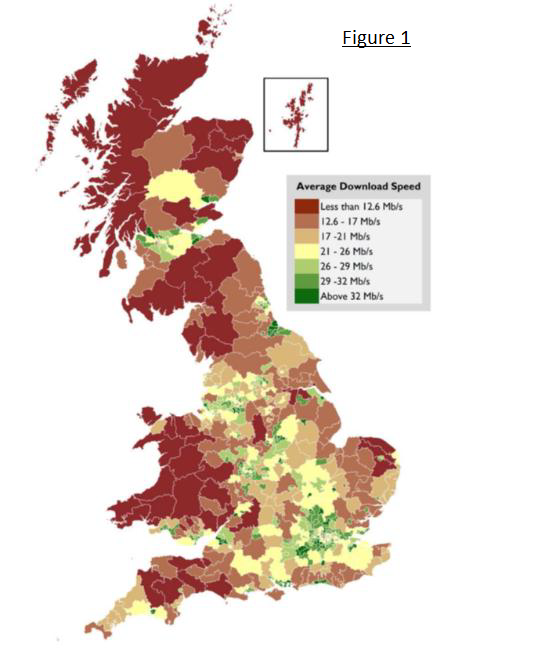
Things have become marginally improved over the last few years and mobile coverage and fibre connectivity are now creeping ever further into the rural domain but it is a slow process.   Even with this improvement the smart money is on there still being a considerable drop off between urban and rural locations. The image in figure 1 below was sourced from the House of Commons archives and provides a good indicator of how things are today even with the investments that have taken place.

Now the whole world got really pumped over the latest telecoms platform set to revolutionise the way we all communicate – 5G was going to allow us to have a shave on top of a mountain in Wales conducted by someone in the USA. The hype far outweighed the actual realities and capabilities of the commercial mobile network offerings; even in the urban areas the rollout of “true” 5G networks has been slow so just imagine the reality of those networks reaching the rural areas of the country. 5G networks require a massive investment to make them happen and this is not just about putting up new antennas, to build a 5G network requires fibre, power and much more to create the new platform.

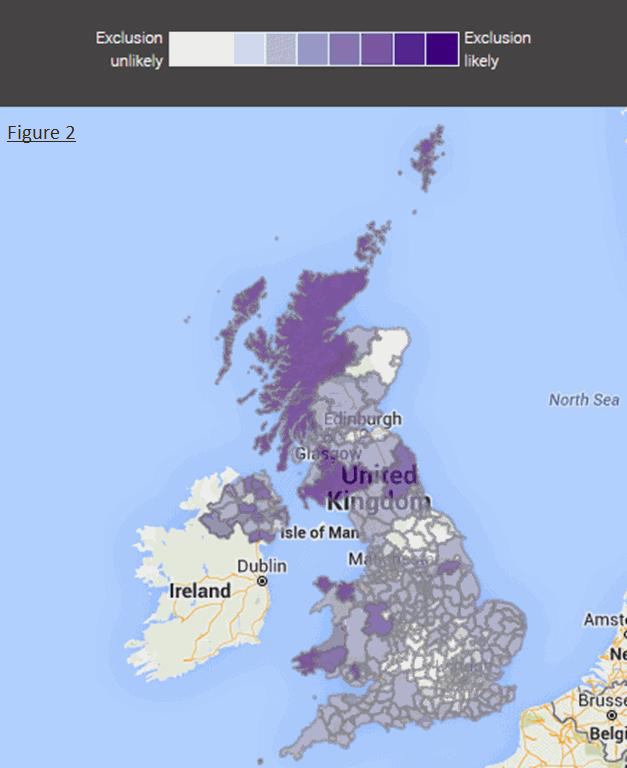
Figure 2 shows the likelihood of exclusion to good quality broadband. Quite a sobering thing to take on board. Unless you are in one of the major urbanisations in the UK there is a real risk you are going to be underserved in your telecom needs.

Facing these barriers, is there little wonder that rural communities and businesses feel that they have been forgotten by successive governments and organisations providing services? The big problem for everyone operating a business in the rural domain is that more and more of everyday services and 3rd party organisations now use increasing reliance on online services and tools to capture data. This includes everything from tax returns through to livestock records for DEFRA and ordering vital supplies to keep your business moving forward. It doesn’t stop there either the machinery that you use to conduct your work is also requiring connectivity so that it can send diagnostic data back to the manufacturer so that your tools can be maintained and avoidance of downtime due to malfunction can be decreased.

After reading the first statements you could easily form an opinion that technology and the benefits it brings are out of reach for rural entities, however you’d be wrong.  At C3R Technologies we pride ourselves on being able to bring technology to the rural environment and people who work and live there.

We don’t just say this but we have actually done this for ourselves at our North Yorkshire farm. We have built a demonstration facility that has the latest technology installed:

  • The very latest standard Wi-Fi network installed to provide data connectivity around the entire working yard area of the farm
  • IoT(sensors) and A.I.(analytical data capture & reporting) providing 24×7 monitoring of our power consumption, air/environmental quality and perimeter security monitoring to name but a few
  • Integrated CCTV that is linked to the security sensors
  • Satellite backhaul as there is no broadband connection available from any supplier
  • All applications hosted on the Cloud so full access to authorised persons from anywhere on the planet

These are the exact same technologies that we can bring to your locations and organisations to give the digital connectivity and bring efficiencies and security that are denied due to your location.

These demonstration technologies are just a snapshot of what C3R Technologies can bring to assist your business/organisation to benefit from, if it can be monitored it can be measured.

Want to find out more or a book a live demonstration then please contact us via our web pages www.c3rtechnologies.com or email us at hello@c3rtechnologies.com or call +44 3330 386 878.

Let us help you reap the benefits of using the right technology for the right scenario.

  • *I have permission from the copyright holder to publish this content and images.

World Food Prize Laureate winner to give 2025 John Innes Foundation Lecture

Member News
The views expressed in this Member News article are the author's own and do not necessarily represent those of Agri-TechE.

Dr Cary Fowler, former US Special Envoy for Global Food Security and 2024 World Food Prize winner will be delivering this year’s John Innes Foundation Lecture, ‘Trends – Trouble – Tenacity: The food security picture for 2050’. It will be held at the John Innes Conference Centre at Norwich Research Park starting from 1.30-2.30pm on Friday 23 May.

The preponderance of evidence indicates that we will fall far short of producing enough to meet global food demand and need by 2050. Climate, soil degradation and loss, water shortages, conflict, trade restrictions and underinvestment in agricultural research are combining to swell the numbers of food insecure and create an ugly world we should not bequeath to future generations.

No magic solutions exist but amongst the many good and positive things that could be done, a few are strategic and essential. Dr Fowler will examine the challenges and point to a few of the most important responses we could be making.

At the State Department Dr Fowler launched the ‘Vision for Adapted Crops and Soils’ initiative and organised 150 Nobel and World Food Prize Laureates to raise the alarm about the growing challenges to feeding the world’s people by 2050.

Previously, Dr Fowler led the Global Crop Diversity Trust and is best known for being the ‘father’ of the Svalbard Global Seed Vault.

You are welcome to attend in person so please register here.

(Please note that you do not need to register to attend in person if you are already planning to attend the whole of Jonathan Jones’ ‘Looking Back to Look Forward’ event at the same venue.)

You can also watch a livestream of the lecture here.

  • *I have permission from the copyright holder to publish this content and images.

Gardin Raises $4.5M with Breakthrough Photosynthesis Sensor & AI Platform

Member News
The views expressed in this Member News article are the author's own and do not necessarily represent those of Agri-TechE.

Gardin Raises $4.5M to Advance Precision Agriculture with Breakthrough Photosynthesis Sensor & AI Platform to Monitor Greenhouse Crop Health at Scale, in Real Time

Gardin Agritech has raised a $4.5M Seed 2 financing round led by Navus Ventures with participation from new investor Oxford Innovation Finance as well as existing investors LDV Capital, MMC Ventures, Seedcamp, Alchimia Investments and angel investors.

Gardin is growing their list of customers leveraging their novel optical photosynthesis sensor & AI that measures crop photosynthesis in real time, giving growers early insight into plant health and development. This allows for faster, more targeted interventions, resulting in improved yields, better crop quality and more efficient use of resources such as water, light and energy. Clients have reported up to 10x return on investment.

Since commercial launch in June 2023, Gardin’s sensors have been deployed across a wide range of environments – from polytunnels in Spain and Morocco to greenhouses in the Netherlands and Canada – and used successfully on more than 20 crop species, from algae to tomatoes. In 2025, the company is doubling down on light optimisation and energy efficiency enabling growers to make informed decisions, with trials already showing growers can achieve 20-30% in energy savings. Gardin’s technology also aids research into hardier seed varieties, contributing to a more sustainable and secure food supply.

The news comes at a critical time for the $200 billion global Controlled Environment Agriculture (CEA) market, which is expanding rapidly due to rising demand for reliable food supplies and decreasing setup costs.

Yet the sector faces mounting pressures: energy and labour costs have surged, emissions regulations are tightening and there’s a shortage of skilled growers to operate indoor farms, greenhouses and seed breeding businesses. Existing tools lack the sophistication to process vast amounts of data and deliver timely insights, leaving many operations struggling to adapt efficiently. This underscores a pressing need for AI-powered solutions capable of analysing large swathes of data in real time – enabling smarter, automated decisions and unlocking the full potential of precision agriculture.

Agriculture Investments Limited, one of the UK’s most progressive fruit producers, adopted Gardin’s technology after seeing its potential to deliver scalable, confident decision-making for more resilient, high-quality crops.

“We have been long believers that to truly optimise food production we need to be able to change the greenhouse climate to adapt to the crop’s needs but there was no solution on the market that could solve this with high confidence and scaleably…. Until we met Gardin. Gardin’s unique sensor + AI is able to detect changes in crop photosynthesis and provide clear, actionable insights based on that. As a result, within a couple of months of trialling Gardin’s product we decided to sign a multi-year contract,”

said David Moore, Director of Agriculture at Agriculture Investments.

Fromboer reports a 5% yield increase per square meter thanks to more uniform, high-quality production and improved cost control. “The sensor contributes to homogeneous production with high quality and cost control. Overall, I estimate yield is at least 5% higher per square meter,” said Leonard Boer, Owner & Head Grower at Fromboer.

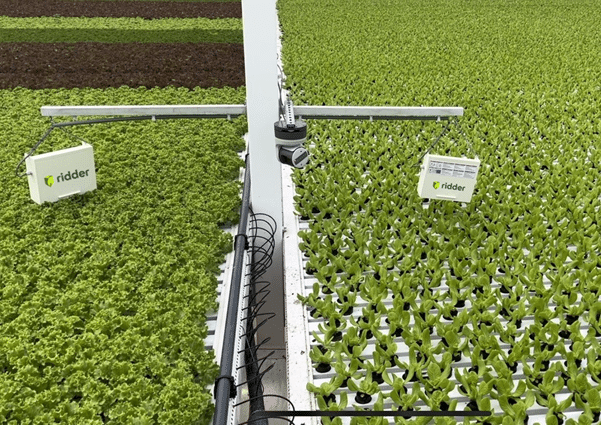
Ridder highlights Gardin’s ability to drive profitability boosts of up to 30%, yield gains of 15%, and early detection of crop stress weeks in advance – marking a shift from traditional climate control to data-driven “crop control.” “For many years now we have been able to effectively automate climate control around the crop, the next phase is to incorporate real time feedback from the crop and move from ‘climate control’ towards ‘crop control’. Gardin has developed the key technology to enable this,” said Sander Baraké, CTO at Ridder. “Results include profitability boosts of up to 30% by optimizing winter LED efficiency and maximising summer light. Yield increases of up to 15% and early detection of biotic and abiotic stresses by up to 4 weeks before crop walking,” he continued.

With this new round of funding, Gardin will enhance its platform and grow their commercial team to expand its customer base across continents.

Led by serial entrepreneur Sumanta Talukdar, who previously co-founded and exited WaveOptics for over $500 million, brings decades of experience across optics, photonics, sensors and computer science,

“Navus Ventures are in my opinion the best Ag focussed investor in Europe with a deep knowledge and network in this ecosystem. The whole Gardin team is very pleased to partner with Navus,” said Sumanta Talukdar, Founder & CEO of Gardin.

“Gardin has developed a unique affordable technology that gives growers an actual pulse on their plants and therefore business. A great addition to our portfolio and fit with our strategy and background, we are looking forward to helping Sumanta and the Gardin team through the next phase of commercial scaling,” said Jaap Zijlstra, director at Navus.

Researchers welcome the passing of Precision Breeding legislation for plants

Member News
The views expressed in this Member News article are the author's own and do not necessarily represent those of Agri-TechE.

“The future of plant science in England is bright” – researchers welcome the passing of Precision Breeding legislation for plants

Following the news that Parliament has passed the secondary legislation to implement the Genetic Technology (Precision Breeding) Act for plants in England, we welcome the benefits this offers, and the increased opportunities for plant and microbial science to improve the health of plants, people and the planet. 

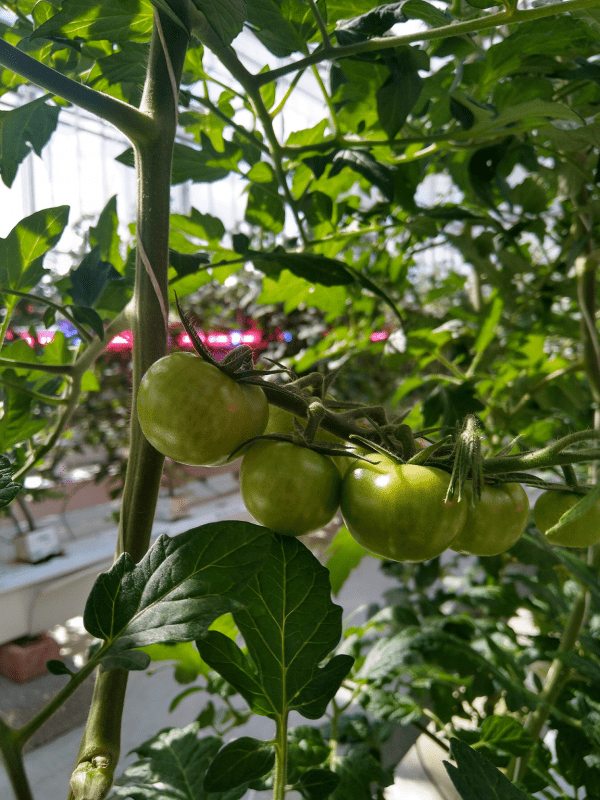
Our scientists have used precision breeding techniques to develop tomatoes fortified with vitamin D by gene editing a natural pathway so that tomatoes accumulate more provitamin D3. The passing of the secondary legislation means that this innovation could help millions of people with vitamin D deficiency, a growing issue linked to higher risk of cancer, dementia and many leading causes of mortality. 

Without this vital legislation, innovations like the gene edited tomato would be difficult to market and sell in England.  

Dr Penny Hundleby, Research Partnerships and HP3 Hub Lead at the John Innes Centre, said: “Precision breeding offers England a unique opportunity to lead the way in sustainable food production. Alongside our partners on the Norwich Research Park, we are fast becoming an epicentre of precision breeding. We are focussed on working together and collaborating with partners and investors to improve the sustainability and quality of food and farming for the future. 

“The passing of this forward-thinking legislation means that this science will be able to benefit the health of people, plants, and the planet. The use of precision breeding technologies in research will expand our understanding of plant genetics and strengthen the entire agricultural science ecosystem, reinforcing the country’s leadership in agricultural innovation.” 

Dr Jonathan Clarke, Head of Business Development at the John Innes Centre, said: “As an early adopter of this innovative technology in Europe, England can now benefit from investment from organisations wanting to commercially develop precision bred crops. The passing of this legislation allows the momentum to continue and furthers the economic viability of these important scientific innovations. 

“Our research capability and pedigree in this space is truly exciting, and this legislation has opened the door for our researchers to fully harness nature’s power and potential – to deliver huge benefits to society, supporting both farmers and consumers.” 

Professor Graham Moore FRS, Director of the John Innes Centre, said: “This legislation is a monumental step for science and innovation in England. Precision breeding has real potential to improve people’s lives, and I am proud to have seen this secondary legislation pass during the last few months of my tenure as Director. The future of plant science in England is bright.” 

This new secondary legislation policy change brings England more into line with the regulatory approaches taken by most countries outside of the EU, including Canada, Australia, Brazil, Argentina, the USA, and Japan. 

This announcement comes after a number of years of numerous high-profile engagements by the John Innes Centre team with MPs and policy makers, from submitting evidence to support policy making and through roundtables and meetings with All-Party Parliamentary Groups (APPGs), Defra and the Food Standards Agency, as well as events such as Agri-science week in Parliament.  

What is precision breeding? 

  • Precision breeding is a generic term used in the legislation for a raft of genetic technologies that allow breeders to make precise, targeted changes to the genetic code (DNA) of plants. It can be used to introduce beneficial new traits such as resistance to pests and diseases, improved nutritional value and climate resilience. 
  • Precision breeding, as defined in the legislation, results in a plant that could have been generated through traditional breeding or natural processes.  
  • Precision breeding is usually much faster and more precise than traditional breeding techniques, which can take decades to achieve the same results.

‘Nutrient superhighway’ can boost maize yields

Member News
The views expressed in this Member News article are the author's own and do not necessarily represent those of Agri-TechE.


  • Plant-fungal symbiosis can deliver as much as 80% of phosphorus needs and up to 20% of maize plant’s nitrogen requirement.
  • Mycelial network expands crop root surface area by factor of 300,000, boosting drought tolerance

Maize growers could boost yields by up to 12%, and boost drought tolerance, by inoculating the crop with arbuscular mycorrhizal fungi (AMF), says seed biostimulant specialist Legume Technology.

With soil temperatures across the country now at or beyond optimum levels for maize sowing, it’s the right time to consider using AMF to help the crop improve its nutrient acquisition.

“AMF delivers a biostimulatory effect across a broad spectrum of crops,” says Dr Mike Thomas, the company’s research and development manager.

“The fungus – a beneficial fungus – grows into a vast mycelial network throughout the soil in a field, colonising plant roots to create a symbiotic relationship that vastly improves the plant’s ability to scavenge nutrients and water,” Dr Thomas explains.

AMF has been shown to boost the plant’s acquisition of key nutrients such as nitrogen, phosphorus, potassium, silicon, sulphur and zinc. It does this thanks to powerful enzymes that it secretes into the soil, breaking down organic molecules that would otherwise be inaccessible to the crop.

“Of course, it doesn’t do this for ‘free’,” Dr Thomas points out. “In return, the plant feeds it with photosynthetic sugars, and that’s the symbiosis.”

But as the current dry spell focuses growers’ minds on the possible outlook for the rest of 2025, Dr Thomas also stresses how AMF can help crops maximise their water uptake.

“Many studies and trials have demonstrated AMF’s ability to confer improved drought tolerance on a crop. That’s because its mycelial network vastly increases the surface area available for water uptake.”

‘Staggering’ increase in root surface area

Dr Thomas says the scale of the mycelial network can be staggering.

“For every one square centimetre of maize root surface area, the mycelial network brings an additional 30 square metres of surface area.

“That’s the same area as the service box of a standard tennis court, or half a cricket pitch – so it’s easy to understand how, across a field, the mycelium can use that vast surface area to suck every last drop of moisture from the soil and deliver it to the plant.”

Studies have shown that, in optimal conditions, AMF can deliver as much as 80% of phosphorus needs and up to 20% of the plant’s nitrogen requirement.

The company’s trials with its own AMF product, MYCOFiX, confirm the fungus’ ability to deliver yield increases. At thirty individual trial sites across Europe, Africa and the United States, in different soils and climates, the average yield improvement in MYCOFiX-treated crops was 10%.

Dr Thomas says that the product costs between £8-10ha applied. “That’s a clear return on investment, irrespective of the crop’s intended end-use.”

Ideally, AMF applications are made before sowing, giving the mycelial network time to establish itself. But applications of MYCOFiX, which is formulated as AMF spores mixed with a seaweed carrier, can also be made as a seed dressing, in-furrow, or even post-drilling.

“The earlier the mycelial network establishes, the more time the crop has to benefit from it,” explains Dr Thomas. “But with soil temperatures where they are now, the mycelium will see rapid establishment.