Patenting, Trademarks, Copyright, Trade Secrets...
In the next installment of our micro-learning series, we’ll explore potential legal solutions to help you keep your ideas safe and sound.

Smart irrigation becoming more attractive option for spuds

Meet the Network
Agri-TechE

Irrigation from Howseman Agriculture
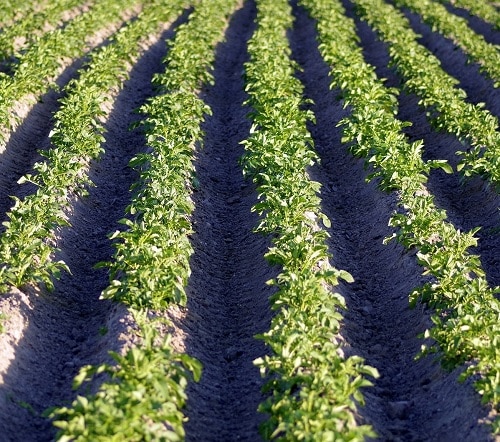
A sustained dry period, changes in water licences and shortage of labour are making smart irrigation systems more attractive to potato farmers, according to Andrew Howseman of Howseman Agriculture. He will be speaking at the next Agri-TechE Pollinator event, which is looking at smart irrigation, on 13th September 2018.
“Even farmers that have never needed irrigation before are considering it after this June,” says Andrew. “We’ve got people who’ve been irrigating for at least 50-60 days non-stop, which is completely unheard of.
Howseman irrigation 1
“The season was slow to get started with all of the potato crops and root crops planted late in wet and cold conditions – which weren’t conducive to good growing –and then the temperatures that we’ve seen and the prolonged dry hot weather will have had an impact. In my opinion, yield will be affected by both ends of the spectrum.
“Usually, people would irrigate for a couple of weeks and then we would have three quarters of an inch of rain and they’d have a week or ten days off before they started irrigating again. It’s normally a bit of an up and down rollercoaster really.
“But this year people started and haven’t stopped, to the extent that reservoirs are running out of water and growers have had to prioritise specific crops, such as potatoes over onions and carrots. That’s been the juggling act and it continues to be so.
Andrew with Lincolnshire Show award“A season like this is stretching labour, machinery and resources such as water to breaking point, really.”
This is where the drip system developed by Howseman Agriculture comes into its own. It puts the water where it is need and uses 25-30% less water than a traditional hose and reel system and is much less labour intensive. Its six row drip-tape layer recently gained an ‘Innovation for Water’ award at the Lincolnshire Show (image left).
Andrew continues: “Although this is an unusual year, even those who usually have lots of water have been worried and these dry spells could become more frequent and licensing stricter. With our system and a reservoir farmers have some insurance.”
Drip systems are perceived as expensive, but there is so much money riding on a crop of potatoes that the benefit of controlled water is becoming easier to justify. To help support the business case, Howseman Agriculture has started to offer a six-hectare package of drip tape irrigation together with installation and training so that growers can trial it without a big capital investment.
Andrew says: “We’re really pleased to work with Agri-TechE to help people evaluate new technology. We’ve got an open door for people to come and have a look around, open days, and if people want to see what we’re doing on some of the farms where we operate we are more than happy to extend an invitation for them to come and have a look.”
The Howseman  irrigation system
It seems likely that drier periods will become more frequent in future, which is creating more interest in smart irrigation. This is why Agri-TechE is featuring this subject in its next Pollinator on 13 September 2018, where there will be an opportunity to hear, in addition to Andrew: Paul Hammett, National Specialist, Water Resources, National Farmers’ Union; Prof Jerry Knox, Professor of Agricultural Water Management, Cranfield Water Science Institute (CWSI); Steve Moncaster, Supply Demand Strategy Manager, Anglian Water; Ed Bramham-Jones, Farm Advisor, Norfolk Rivers’ Trust; and Nigel Jupe, Chief Executive, Verdesian Ltd.
Venue: Easton Campus, Easton and Otley College, Norwich NR9 5DX
For more information about the event click here.
To see more about Howseman Agriculture visit howsemanagriculture.co.uk

Agri-TechE can help make us world class and competitive

Meet the Network
Agri-TechE

Tony Bambridge, B&C Farming“As an industry, I think we need to focus on things that the market really wants us to provide and where we have a chance of being world-class and competitive,” says Tony Bambridge, Managing Director of B&C Farming, who will be joining a debate about the priorities for agri-tech at Agri-Tech’s REAP Conference on the 7th November 2018.
“There will still be a need for British beef and oven chips are not going to start pouring in from Brazil. I think most East Anglian farmers actually produce products that are really needed by brewers, bakers, confectioners and the poultry industry – but there will need to be a rebalancing and refocusing of our market,” Bambridge says.
With significant changes already taking place in UK agriculture, he believes there is more to come: “We’re going to have to try and compete with those who have tremendous cost advantages in terms of land and labour, and with less regulatory measures. But they will have to compete with our traceability and unique products,” says Bambridge, who is also the NFU County Chair for Norfolk 2017-18.

Improving yield by reducing costs 

With a growing global population, including the UK’s 65 million mouths to feed three times a day, Tony is clear that improving yield while reducing costs is the only way UK agriculture will be able to remain competitive – particularly while game-changing techniques like gene editing are not yet permitted.
For Tony, agri-tech’s key role will be helping to make labour cost-saving measures: “We have to raise productivity and driving that, in part, is going to be how we can achieve more with our time and reduce labour costs.
“At B&C, we are investing in superfast computing and imaging to remove stones out of potatoes – in the coming years, I could see a situation where we have one operator actually controlling two or three or four vehicles in a field.
“In the next ten years, we will see some pretty significant changes in the structure of our industry.”

Gene editing has potential 

Although Bambridge sees incremental improvements in productivity he considers that gene editing has the potential to provide a step change.
“If we were permitted to use gene editing this would have a profound effect within a decade through reduced spoilage through pest and disease, improved yields and less waste. That would be a major step.”

Realistic pricing

Loaf of bread
However he also considers that encouraging more realistic pricing of products at the farm gate would improve sustainability.
He says: “A penny on a loaf of bread puts about £18 per tonne onto the wheat price. So, is your loaf of bread £1.12 or £1.13? Who actually looked at the price of bread last time they went out? Half a pence on the cost of a bag of oven chips puts £20 per tonne on the potatoes. If this went back to the producer it would off-set the lost of subsidies.”

REAP Debate 

The priorities for agri-tech is to be debated at REAP – a new feature for the conference. Producers, technologists, scientists and advisors will consider the question of if it is cheaper to import food than produce our own should agri-tech investment focus on other, more lucrative, uses of land?
The Agri-TechE REAP Conference is on Wednesday 7th November 2018, Wellcome Genome Campus Conference Centre, Hinxton, Cambridge, CB10 1RQ.

Novel agri-tech best way to produce enough safe, high-quality food whilst reducing environmental impact

Meet the Network
Agri-TechE

Dave Hughes SyngentaWhen Dave Hughes started working for Syngenta over 20 years ago his focus was chemistry but his interests and that of the company have developed and it is now a knowledge of biology that is providing new avenues for plant protection.
A new feature of the REAP conference this year is a debate about whether the priority for agri-tech innovation should still be food production or, if food can be produced more cost-efficiently somewhere else, should the emphasis be on more lucrative uses of land?
We asked Dave Hughes where he thinks the future direction for agri-tech lies.
Hughes is well placed to have an opinion: as Global Head of Technology Scouting, Hughes connects scientists and technologists from within Syngenta with scientists from other companies, research institutes and universities around the world creating collaborations focused on developing new technologies for agriculture. This multidisciplinary approach is reflected in the collaboration portfolio, which encompasses chemistry, synthetic biology, AI, robotics as well as genomics and engineering.

So what are the most interesting developments he is seeing at the moment?

“Our portfolio is diverse and much of the work is very early stage. Working with a range of scientists and technologies offers a spectrum of views and this creates a challenge to traditional thinking and a greater potential for innovation.
“One of the biggest technology disrupters is digital, which is radically changing the way farmers operate. This is a very dynamic space for innovation with a relatively low barrier for entry, so many companies, including start-ups and SMEs, are competing to find the best solutions for the grower.
“Another exciting opportunity I see at the moment is gene editing which can be used to create new traits in plants without introducing any foreign DNA. Many groups around the world are using this approach to create benefits for the consumer like improved flavour and nutritional content.
“The success of this technology is highly dependent on the regulatory environment. If it is recognised as no more risky than traditional breeding then it offers a huge opportunity to introduce traits benefiting the consumer in a way that has never been done before. Managed effectively this technology could be a real game changer allowing us to produce higher quality food within the same footprint.”
Hughes highlights a number of areas of special interest including the convergence of engineering and robotics. This is creating new applications such as precision agriculture and the use of AI to improve the way the company does research; mimicking the human brain to look at patterns in data and to extrapolate information from incomplete data.
“Greater understanding of fundamental biology is creating the opportunity for a new generation of highly specific pesticides. Particularly interesting is a new class of biocontrol agent based on a natural biomolecule called RNA. RNA has a sequence, just like DNA, and if a pest is treated with RNA of just the right sequence it can trigger a process which dials down the production of a specific protein of choice in the pest in a highly specific way.
This represents a new mode of action for pest control by enabling biomolecules to be developed that are much more specific than traditional pesticides, offering highly selective control of pests while protecting closely related beneficial species. Another new avenue for pest control is the use of biological agents such as bacteria; again these can be highly specific to a particular host. Hughes sees this as an exciting time to be involved in agriculture.

The market for non-food crops

“Feeding the population should be a priority,” continues Hughes, but he comments that growing crops for non-food uses is not new. “The issue is one of scale.”

Although the food versus fuel debate hinges on the relative value of the resources used and produced, growing some high value non-food crops would potentially make little impact on broad acre crops. Hughes gives the examples of plant-based pharmaceuticals such as taxol, opioids and Artemisia. Mapp Biopharmaceutical Inc. has produced a drug called ZMapp from tobacco leaves (right), which was used to combat the 2014 Ebola virus outbreak in West Africa. The Novartis Malaria Initiative is making antimalarial drugs based on Artemisia annua.
“Many of these crops, such as tobacco modified to produce vaccines, are cultivated in contained environments such as greenhouses on a relatively small scale, and so don’t compete with food crops. We are interested in this area and in supporting farmers whichever way the industry goes. UK agriculture has enormous potential and we are seeing great progress on a number of fronts,” says Hughes.

Call for objective decisions based on science evidence base 

Hughes has been asked to be an industry commentator on the Defra Health and Harmony Consultation.
“The key challenge is to support the productivity of UK agriculture and the quality and safety of our food whilst reducing the environmental impact of food production. I believe this is achievable, but we will need to embrace the best state-of-the-art technology to succeed.
“It is vital that decisions impacting the UK’s ability to feed itself are based on sound scientific evidence, not as a reaction to a few strong voices.
“The food security of our nation is vital, and any decisions affecting it should be based on an objective assessment of the very best available evidence. In a world of fake news and social media echo chambers this is becoming increasingly difficult.
“Small molecule chemistry has gained a poor reputation over the years but it is important to note that the use of synthetic pesticides in agriculture actually improves the quality, quantity and safety of our food, and by improving yields they give us a fighting chance of producing enough food in the future without having to plough up all of our remaining wild lands.”

No ‘best way’ 

“It is clear that a robust global food supply requires a diverse range of production systems. There is no single ‘best way’ of producing food: the choices farmers make depend on many factors from the microenvironment on their farms to the macroeconomic environment of the markets to their own attitude towards risk. This diversity is a good thing: it provides choice for the consumer and helps to buffer our food supply from unexpected events like extreme weather.
“We aim to provide the tools to help farmers drive the improvement of agriculture right across the spectrum of farming practices, from smallholders in Asia and Africa right up to large highly-mechanised farms in the USA and Brazil.
“I see a major opportunity arising to use technology to combine food quality, safety and productivity with improved environmental outcomes.”

DEBATE NEW FEATURE OF REAP 2018

This house believes supporting land-use for competitive sustainable UK food production should be the priority for agri-tech innovations”

Chair: Mark Suthern, Head of Agriculture, Barclays
To be discussed by

  • Dr Dave Hughes, Head of Global Technology Scouting, Syngenta
  • Dr Stuart Knight, Deputy Director, Niab
  • Prof. Claire Domoney, Head, Metabolic Biology Department, John Innes Centre
  • Tony Bambridge, Managing Director, B&C Farming, former NFU Norfolk Chairman
  • Andrew Spicer, CEO, Algenuity
  • William Cracroft-Eley, Lincolnshire farmer and Chairman, Terravesta
  • Guy Poppy, University of Southampton, Chief Scientific Advisor to the Food Standards Agency

More information about the speakers REAP 2018

Keeping spuds until June with smart storage

Meet the Network
Agri-TechE

“Potatoes can now easily be stored until June”, says Chris Lee of PJ Lee & Sons Ely about the new OmniCuro system form Omnivent that Highflyer Farms has installed to improve storage. The farm is one of the largest individual potato producers in the UK, serving chip shops the length and breadth of the country.
Omnivent was one of the presenters at the Post-Harvest Storage Pollinator, held at Sutton Bridge.
Rob Clayton of AHDB commented that the new high-yielding potato varieties need careful handling during storage. He says: “We are really pleased that the supply chain is introducing high-yielding varieties. It is part of the impetus that Great Britain needs to be more competitive against our competitors on mainland Europe.
“However, it takes time to ‘bed in’ the best store management techniques for each variety. Each can behave differently in terms of factors like rate of respiration, disease susceptibility etc. so store managers need to fine-tune their skills. Our team at Sutton Bridge can provide advice to those who have questions about storing a variety for the first time.”
Ronnie Laing of Omnivent talked about smart storage. He says: “For many years we have advised clients that the application of CIPC is more effective and efficient when applied in a controlled positive flow ventilation system, as opposed to free circuit or ‘room tower ventilation’. If the existing distribution systems can’t be modified, then we will recommend the introduction of speed inverters and flow separation curtains or walls according to ADHB guidance.”
Omnivent Omnicure systemThe new OmniCuro system uses a suction system to control for the fan speeds or fan groups. It can also switch or pulse particular fan groups on and off at a selectable time gap. This means precise control of the curtain of gas, ensuring it moves through the crop evenly and at slow speeds to provide coverage across the surface area. The process is not affected by flow deflection or hot spot creation due to over excessive exposure.
The return on investment can be measured in many ways. The fan running hours for an average season can be 40 to 50% lower than conventional systems; this is due to reactive accurate real time control that uses higher air capacity / mixing when and where it’s actually required. Other cost savings include: very low CIPC application rates: exceptional humidification control resulting in limited weight losses over a long storage season (3 or 4% on average). Successful long term quality potato storage at fry colour limiting storage temperatures till June /July.
Potato farmer Chris Lee has found adoption of the OmniCuro control system beneficial.
He continues: “Distribution of CIPC is excellent! The pulsing of fans is made extremely easy by the turning of a key. Rates are half that of other brands of stores. Total grams per tonne are in the region of 20 storing until June.PJ Lee Highflyer farms
“The service is fantastic with an exceptional knowledge base (they even have their own agronomist).
“Potatoes can EASILY be stored until June. There is minimal weight loss with the Omnibreeze’s, with only half the running hours where compared to the competition.
“Bloody amazing!” he said.
More information www.omnivent.nl

Three steps to raise seed investment

Meet the Network
Member News
Agri-TechE

What is Angel investment?

Hannah Smith, Anglia Capital GroupI help to operate a network of business angel investors across Norfolk and Suffolk, called Anglia Capital Group. We hold pitching events throughout the year at which carefully selected companies are invited to pitch to our investor-members for potential equity investment.

Angel investment is a form of finance for early-stage businesses provided by wealthy individuals, usually successful ex-entrepreneurs or professionals, in return for a share of equity in the business. It is typically one of the earliest equity investments made into a start-up business and is actually the largest source of early stage capital in the UK. Approximately £1.5 billion is invested in this format in the UK, per annum.

Business angels tend to band together in networks, like Anglia Capital Group, in order to share knowledge, expertise and to syndicate deals.

How do I achieve angel investment?

STEP 1: Put yourself in their shoes

Before you can begin to understand what an angel investor might be looking for in a business, you have to put yourself in their shoes.

Set aside between 10 to 20% of your investable capital to invest in high-risk securities.

You know that high risk investing could return much larger returns than low-risk investing, but you are also aware that you could lose everything you invest in this form overnight.

In order to try and achieve these potential high returns you are looking for products or services that are unique and that have the potential to disrupt whatever market place they intend to operate in. You are looking for innovation.

You most likely want to do a bit more than just put your money somewhere, you want to give time and knowledge alongside your capital, to a business that you feel you can work with and make a difference with.

When you invest in a business, you are tying yourself in to a close relationship with the company for an absolute minimum of three years, but sometimes up to ten!

Scale up businesses usually have more than one investment round, and you want to be sure that they will have enough capital to make it through to profitability. Will you have to invest more money in the business down the line?

You know that 90% of start-up businesses fail.

You are going to use your best judgement to make sure you are backing the right horses. So, this is where the due diligence comes in…

You’re going to look in depth at the business plan, the route to market, you’re going to do a market analysis, ask about their exit strategy (i.e. when and how am I going to see a return on my investment?), understand their intellectual property and protection, and scour their finances. But most of all you want to know that you trust and like the people that you are giving your investment to, that they are the right people to take their product or service to market.

In fact, 90% of business angels say that PEOPLE are the deal breaker.

STEP 2: The deal

Understand this: When you stand there in front of an angel investor and pitch your business, you are PROMISING that person that you GENUINELY BELIEVE that you can multiply their money SIGNIFICANTLY if they hand it over to you and your business.

STEP 3: Think about the small things that might put them off:

Mistakes in your business plan.

This is on par with mistakes on a CV… except that you could be asking someone for hundreds of thousands of pounds worth of investment and you can’t be bothered to triple check you spelling and grammar?

Incomplete information, or avoidance of the truth.

Just be honest otherwise it will look worse down the line, when whatever it was that you were hiding or exaggerating comes to the investors attention. Give the investor all of the information you have, don’t leave anything out, that is the least you can do.

Pre-occupation with the technology/ product.

Often founders are not from a business background. They are scientists, engineers, academics, inventors, etc, etc. And there is absolutely nothing wrong with that, as long as you can prove to investors that you, or someone in your management team, has the capability to think as much about your business strategy as you do your product. You need to be able to sell your product after you’ve built it! Remember, people are the most important aspect to a business angel. Surround yourself with advisors that can fill skill gaps and experience gaps in your management team.

Arrogance.

Sounds obvious, right? But a lot of entrepreneurs act as if they are entitled to investment, that they know everything, and that nothing can go wrong for them. Very off-putting and very wrong. Something always goes wrong and it is more comforting to an investor if the entrepreneur can accept this and be ready for it.

Also, don’t forget that when you invest in a start-up, you are signing up to at LEAST a three-year relationship with the entrepreneur…. Would you want to commit to a three-year relationship with someone that, frankly, you don’t like?

Keeping them waiting.

Recognise that investors have a lot of other options in terms of what they could do with their money. Do not keep them waiting, they will get bored and give their money to someone else! Make sure that you have everything ready before you start pitching, including legal documents, a full business plan and financials.

A silly company valuation.

Valuing their start-up is something a lot of entrepreneurs get stuck on. Understandably so, because it is extremely difficult to value a start-up business, in comparison to valuing an established business. The best thing to do is to look at what similar businesses, have been valued at, at a similar development stage, in a similar market.

And then think of your company like a cake… An investor wants to purchase a slice of your cake as he believes that your cake has the potential to become more expensive in the future, and then he will be able to sell his slice of the cake and make a profit. He has a £10 note to invest. If you price your cake at £40 he can buy 25% of the cake. He might well decide to invest his £10 for 25%, if your cake is a beautifully decorated, 3-tier wedding cake… he definitely will not if you have a cupcake!

Anglia Capital GroupThere are many other things to think about when approaching an angel investor, but every case is different. Ultimately, it is all about relationship management. Just put yourself in their shoes!

If you would like to speak to someone about potentially pitching your business to Anglia Capital Group, please contact Hannah@angliacapitalgroup.co.uk

No more lost sheep with Movetech sheep tracker device

Meet the Network
Agri-TechE

Losing sheep in a snowdrift or when about to give birth creates a severe economic loss to upland farmers, but now a new ultra lightweight tracking device offers a cost-effective way to monitor animal behaviour. 
The device was originally developed for tracking wild birds for research into migration, however the insights it offers into animals’ behaviour suggested that it might be of interest to livestock farmers.

The researchers from the University of East Anglia met with Jamie Lockhart, former Farm Manager at Honingham Thorpe Farms, to discuss potential applications. These included detection of eating habitats to provide early warning of ill health or food shortage; detection of lameness; unusual heart movements providing indication that the herd is being worried by a dog or locating the sheep in poor weather.

Stealing of sheep and deer is not uncommon so the device might provide early warning of a crime and the ability to track the animal if the device is undetected.
Aldina M.A. Franco is part of the research team; she comments: “There is a need to train the system before it can identify what is abnormal. This is achieved by collecting data and looking for patterns; if the animal behaves in a certain way for sometime and then changes this behaviour it can indicate stress or change in circumstances.”

Data management

Movetech devices use the mobile phone network to transmit the data. Where access to a network is not possible, they can store up to 60,000 records and will transmit these when network access is restored. The devices are network agnostic and will switch between networks depending on the strongest signal. In the UK, for example, they can access all the main carriers.
The information from the tag is sent to the Movetech server where it is stored and it can be simply  accessed via a standard web browser. There is also opportunity for the processing of the data and to determine various metrics from it – this can be tailored to each application. The standard device includes a GPS, accelerometer and temperature sensors. A barometric (pressure) sensor is also available. Accelerometers measure the change in movement (acceleration) of the tag and this can be used to infer aspects of the animal’s behaviour. It can be used as a mortality sensor (e.g. sudden decelerations such as when a bird is shot from the sky, or long periods of total inactivity).

Movetech experts in solar

Movetech are experts in wild animal tracking and use these devices in their research and sell them to other uses in the wildlife market. The devices are reliable and efficient and can be used in solar-powered versions (from 12 grams upwards) or using primary batteries. They can be easily integrated into other systems.
Movetech are expert in small solar-powered energy management systems and can use standard solar panels or very high efficiency (30% efficient) panels. The energy-harvesting system allows power to be generated, even in low light situations.

Future plans 

Phil Atkinson of the British Trust for Ornithology, one of the collaborators, says:  “Whilst we know the wild animal market, and are users of this technology ourselves, we are looking for partners to licence and develop the technology in other sectors in other markets.  “Livestock, pet and other asset tracking (e.g. drones) are all large markets and our devices would be suitable for all of these. The electronics in our smallest device weigh under 4 grams and these would be suitable for small animals and drones. Moving upwards we have larger devices that would be perfect for tracking larger animals.

“We of course do not lack ideas! We have a road map of what we want to achieve moving forward and this includes expanding the communications options to include download to local base stations, satellite data transfer to ensure truly global coverage and the development of ‘smart’ tags that process data on board and make decisions about how to respond based on this. We would be delighted to discuss and explore funding opportunities to make these ideas a reality.”

Find out more information about the Innovation Hub at the 2018 Royal Norfolk Show.

Read more articles on livestock technology in our Knowledge Hub.

Sugar beet research refines the sweet spot

Meet the Network
Agri-TechE

Vicky Foster, Head of BBROSugar beet is grown in East Anglia and East Midlands and is used as an ingredient in foods, beverages and pharmaceuticals with co-products used for animal feed and bioenergy. Yields have increased by 25 per cent over the last ten years and this has been achieved with the invaluable support of the British Beet Research Organisation (BBRO), a levy organisation that implements and commissions research specifically for the UK sugar beet industry.
Vicky Foster has recently joined as Head of BBRO and she brings a wealth of expertise from her previous role at AHDB. We caught up with her and asked her a few questions about her new role and plans for BBRO.
Q. You have recently been appointed Head of BBRO, but before this you were Head of Research & Knowledge Exchange Programme Management at AHDB – what attracted you to BBRO?
VF. I have a real passion for science; translating this new knowledge so it delivers valuable information on farm and makes a real difference to growers is what drives me. The opportunity to lead the BBRO at this key time for the industry is very exciting.
During my time with the AHDB I saw many changes, particularly in the way the knowledge exchange programme developed to incorporate a wide range of different mediums and a much more targeted approach, and also how partnerships and collaborations with other organisations can be nurtured to deliver better value for levy payers.
I believe the BBRO is a leading player in the industry but there areas where there is scope to further improve the service it can offer and I am keen to be part of that and to contribute to an organisation that is valued and has a positive impact.
Sugar beet seedsQ. Sugar beet is the only UK crop that has seen yield improvement year on year. Can you give some examples of how BBRO has helped the industry achieve this?
VF. The significant investment made by the BBRO into the Recommended List has been key to yield improvements. This is a jointly funded activity with the British Society of Plant Breeders and aims to test the genetic potential of new varieties under a range of different UK conditions. Whilst the trials do not necessarily follow on-farm practice, their purpose is to push the system to see what can be achieved. Although investment in breeding programmes and new varieties is vital in delivering increased UK sugar beet yields, this is only part of the picture, without the underpinning agronomy and new knowledge that BBRO has delivered in this area we would not be where we are today.
Research into crop protection and crop nutrition, testing new products and technologies, and a better understanding of crop physiology have all played a key role. For example, in the last couple of years we have also been focussing on minimising losses through a better understanding of damage that occurs during harvesting and storage, an area, which hasn’t had as much attention as it merits.
Sugar beetQ. BBRO has recently introduced a new approach to field trials to allow closer engagement with farmers – please can you explain this and how it is going?
VF. The BBRO demonstration farms is a new concept that is just entering its second year. The main objective of these sites is to be able to demonstrate some of our research and new technology on a real farm situation and encourage growers to understand more about benchmarking and yield potential. They are not designed to provide huge replicated field trials but to provide smaller robust experiments and a platform for engagement with growers and to allow us to have a ‘look and see’ at some new proof of concept principles in a low risk and cost effective way. We have one demonstration farm in each sugar factory area giving us contact points across the main beet growing areas. It is well known that peer to peer learning is some of the best and we believe that by getting closer to the growers in this way we can help facilitate that.
Q BBRO is sponsoring the Innovation Hub at the Royal Norfolk Show – what will you be showing?
VF. Innovation is key to a successful future and innovation in how we farm and produce our food must be at the top of the list. BBRO is very pleased to be sponsoring the Innovation Hub again to demonstrate to the general public and other industries how British agriculture is leading the way. We will be demonstrating our new electronic beet that is helping us to better understand some of the stresses on the beet during harvest. We can put the electronic beet through the harvester, follow its progress and collect real time data. From this we can identify the key pressure points, information which can be fed back to the manufacturers for future development or used to refine machine settings in the field to reduce damage. Looking forward is there something that you see as really exciting for the industry?
I believe we are entering really exciting times with our ability to link improved crop modelling and forecasting with new technologies, with this we will be in a better position to provide bespoke information that can be used at an individual farm level.
More information about the Innovation Hub at Royal Norfolk Show (27-28 June 2018).

The future of farming: integrating tradition and tech

Meet the Network
Agri-TechE

Thomas Mountain
What will farming look like in 20 years’ time? As we move more online, will there be a greater focus on software? How will inputs and outputs differ? What will be future farmers’ requirements? To help find answers, Richard Anscombe, of Agri-TechE Stakeholder Group, set up the Fram Farmers Next Generation Council.
The Next Generation Council, alongside initiatives like the Young Innovators’ Forum, aims to offer younger farmers across East Anglia – and further afield – networks for information-sharing, upskilling and ideas.
Thomas Mountain is one of four 20-somethings who manage the Council. We asked him to share what he is hearing from the next generation.

Staying ahead of the times

I don’t think it’s an unfair generalisation to say that the younger generation are more technologically interested and astute. One of the roles of the Next Generation Council is to capture those views and ensure they are heard now, as opposed to in 20 years’ time when they might take over the business.
It is important to have that insight coming through, as the earlier technology can be brought into agriculture the better.
Drone spraying and soil mapping are still in their infancy, but over the next 5 years this technology will increase exponentially in terms of quality and decrease on the cost, becoming much more readily available.
The earlier technology can be brought into agriculture the betterBut having a current understanding of this technology is key. We all know farmers have to plan 2 or 3 years in advance and it is extremely important to consider the latest technological developments now, just to make sure we are going to stay with the times.
Everything is going online: you go to any meeting now and, regardless of how old attendees are, they will get their laptops out and phones set up before the meeting starts. People are constantly checking emails, Facebook, Twitter, Whatsapp to ensure they don’t miss out on anything.
We are an information-hungry generation and we want to ensure we’re kept constantly updated.

Upskilling to achieve the best in British agriculture

For us, building community is as important as exploring new technology. A big part of that is communication, that’s not just online, but face-to-face communication too. Everything from conversations around succession to negotiation tactics.
If you’ve grown up on a farm, you might have always known you are going to farm, but you might never have been in a position to have had a bit of training on how to look at people or have someone say to you, “That’s good, but if you did just this differently it would put you in a slightly stronger positon”.
Like Agri-Tech, and many other agricultural organisations, our goal is to have the best British agriculture that we can. We have to have the most forward thinking agriculturalists, the most profitable farms and a really well-educated, well trained, disciplined generation of farmers coming through to back all of that up.

Becoming a driving force

Technology is in every other industry, but in some ways the farming industry is behind when we should be at the forefront.
The amount of technology employed in agriculture, the amount of knowledge, the amount of mechanics; we need to flip it around from picking up the pieces at the end of technological innovations to agriculture being the real driving force.
If you are part of the younger generation of farmers, young at heart, or would just like to find out more about Agri-Tech’s work, sign up for our Young Innovators’ Forum newsletter.

Using earthworms as indicators of soil health

Meet the Network
Agri-TechE
Using earthworms as indicators of soil health - Jackie Stroud, Rothamsted Research
Image from www.rothamsted.ac.uk

Earthworms are like the miner’s canary, indicating a problem with the underground world. They are sensitive to pH, water-logging, compaction, rotations, tillage and responsive to applications of organic matter. This is why there is a major project underway to investigate the use of earthworms as indicators of soil health.
Jackie Stroud, NERC Soil Security Fellow, is a world leading authority on earthworms, or “soil ecosystem engineers” as she calls them, and she has been investigating the relationship between type and abundance of earthworms and healthy soil.  She is one of the speakers at ‘Waiting for Worms’ the topic of our Water and Soil Health Special Interest Group event on 16th May 2018.
(more…)

Map of Agriculture predicting the market

Meet the Network
Agri-TechE

Forbes Elworthy, Map of AgricultureDo you want to know the outcome of the 2018 harvest? Map of Agriculture has already made its predictions across multiple crop types, using numerous data points and in-depth analysis.
Forbes Elworthy (pictured right) is CEO of Map of Ag, which is a global organisation with UK offices in Oxford and Woodbridge, and is a leader in the field of sustainable agriculture. Forbes’ family has been farming in New Zealand for 150 years. It was the sudden loss of his father that led to a return to farming and Elworthy saw first-hand how understanding market trends is vital to profitable agriculture.
“I made a lot of mistakes, trying new ways of doing things and going away from my father’s belief that Craigmore was suited to one third beef, one third sheep and one third deer.
“We took it to 65 per cent sheep because they were profitable that year. But other farmers were making that same calculation and then the price of sheep went down. We are now pretty close to being back at one third sheep, one third cattle and one third deer.”
Forbes co-founded Map of Ag to help manage farming systems better. It has become a pioneer of real time predictive marketing for agriculture.
Map of Ag’s market insights are based on data from 74,953 farms, with more than 4 million observations going back to the 1994 harvest and up to 150 layers of insight against each farm.
Forbes explains: “We are providing market intelligence on the most important issues in farming. By identifying new market trends our clients are able to create effective marketing strategies.
“Increasingly, we see farmers and their advisors using incoming data feeds to get to grips with their businesses.
“We have been helping them to combine wide swathes of data into a comprehensive view of their enterprise, from which they can make better on-farm management decisions to increase productivity, manage risks and benchmark costs and best practice.”

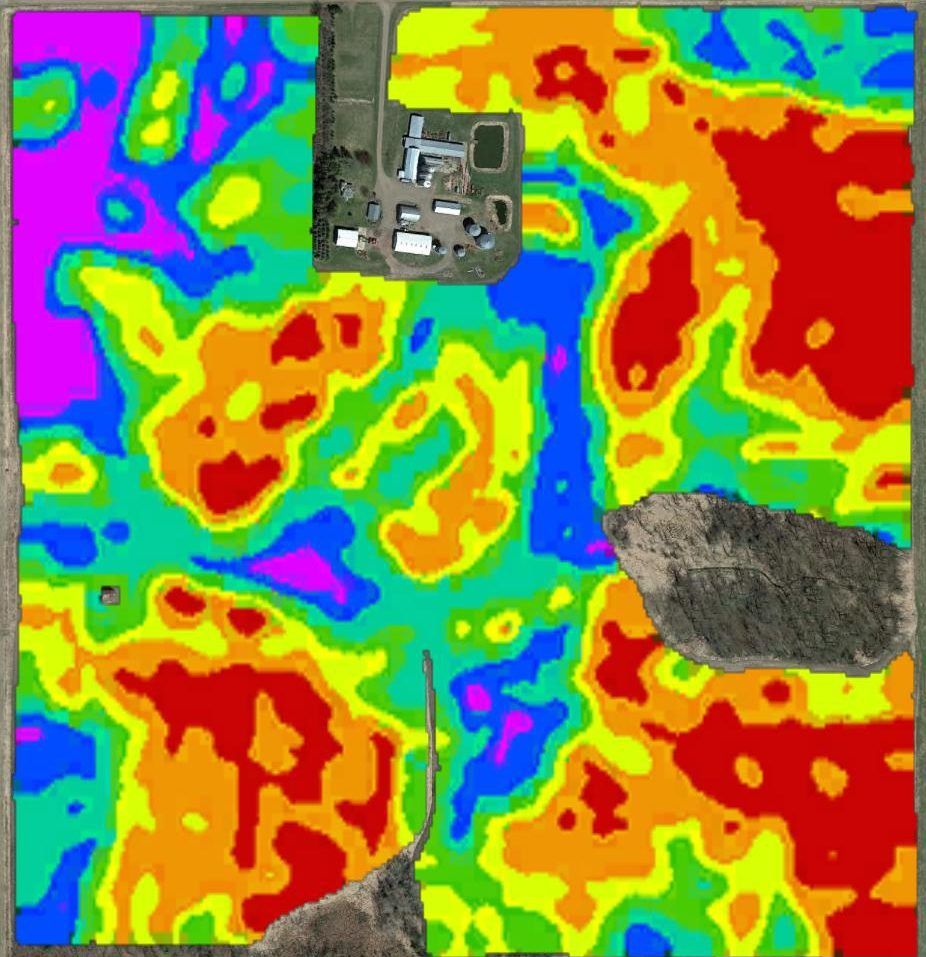
Map of Agriculture information map[click image to enlarge]

He gives the example of Andy Venables, a Cheshire dairy farmer who used insights provided by Map of Agriculture to improve the performance of his family farming business with 300 head of cattle.
“In Andy’s case, we focused on two key sources of data: British Cattle Movement Service (BCMS) data containing his livestock inventory, and dairy portal data which contains production data.
“By merging these two data fields on Andy’s behalf, along with third party data such as weather, we not only helped him to understand his herd’s performance in more detail but also enabled him to produce more accurate milk forecasts.
“Tracking key metrics daily gives farmers an opportunity to adjust forecasting as appropriate. This can significantly improve milk revenues, as an example, as being 7.5 per cent above or below your predicted figures can incur penalties.
“Additionally, monitoring the weather provides an indication of, for example, a damp May when silage quality is adversely affected or a drier summer when buffer feeding might be required increasing costs.”
Map of Agriculture is also working with beef famers in the UK in collaboration with a large restaurant chain to promote sustainable farming.
Forbes explains: “Due to the data landscape of the beef sector we are supplementing on-farm measures with third party data, such as remote sensing data. We help the farm aggregate this to measure economic, environmental and ethical (‘3Es’) performance of their enterprises.
“This objective information is helping to change farmer attitudes to the benefit of the data and also changing farmer behaviour.”
Map of Ag is helping farmers to “take control of their digital future”. Insights from Map of Ag modelling include:

  • Farm Structures Model UK – this was used to predict the rise in milling wheat and spring barley with consequent implications for input use (crop protection, seed usage and demand for fertiliser).
  • The new six-row barley varieties are now performing better than the two-row (wild type barley) with yields equivalent to wheat.
  • Precision application of fertiliser is likely to increase four-fold over the next five years, with an increasing focus on micronutrients.
  • Precision approaches to livestock management are also increasing.
  • There is increasing consolidation in the industry; compared to 1994 we are now modelling fewer farms, and farming bigger areas.
  • Argentine harvest 2017-18 predictions (across multiple crop types also livestock production).

Map of AgricultureSharing these insights with farms and agri-businesses is resulting in adjustments in value chain behaviour.
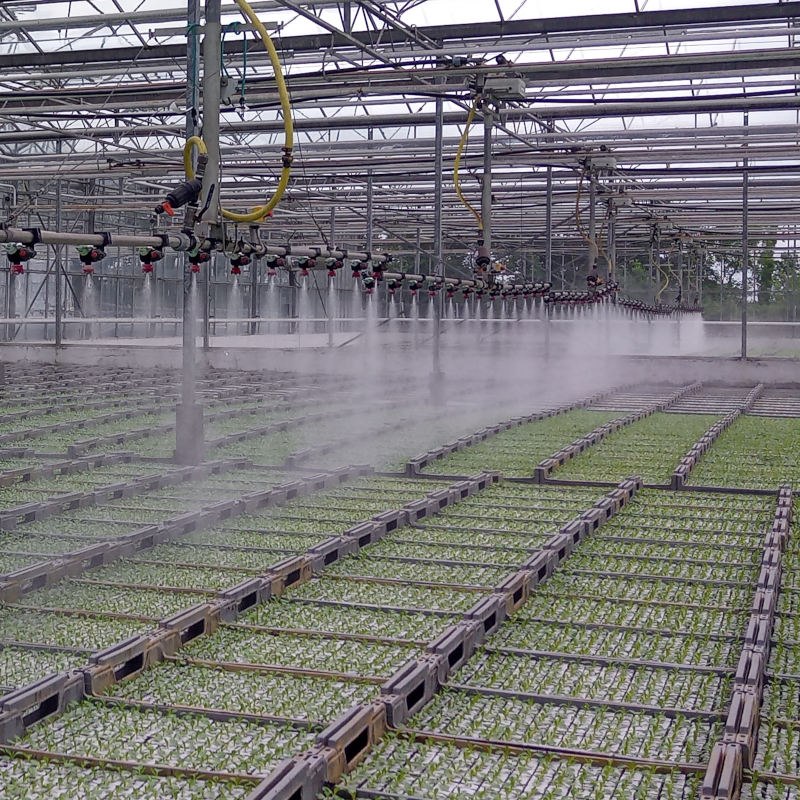
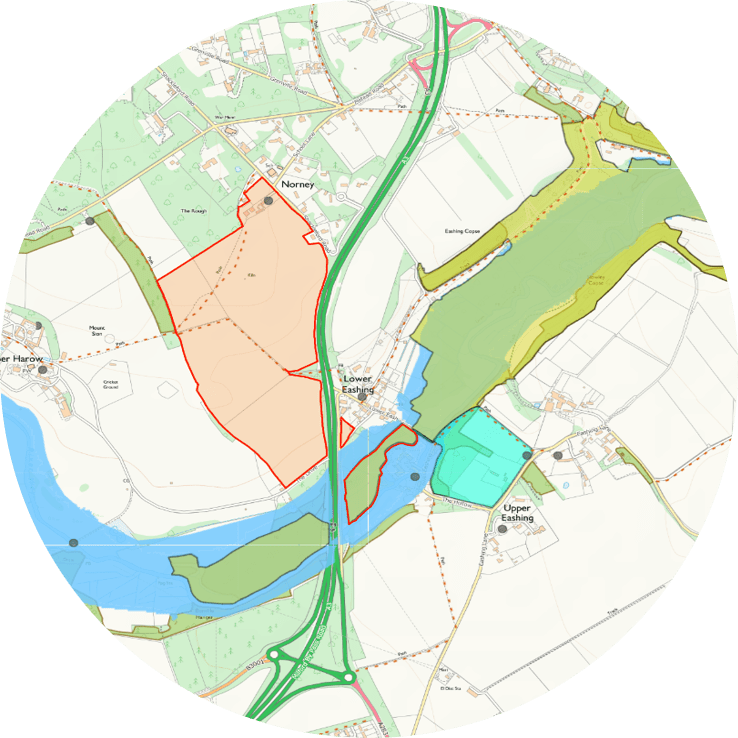
Forbes continues: “The founders of Map of Ag are farmers and we are eager to empower other farmers so they are in control of their data. The platform is designed so that individual farmers control the way their data flows to their counterparties and restricts the access to others – ‘It is the farmers’ data’. This is our vision for our industry.”
Forbes Elworthy will be speaking at the April Pollinator event ‘Trust, Provenance and Blockchain – impacts and opportunities for agriculture’ on 24 April at The Sainsbury Laboratory in Cambridge – read more information and book your place here.

Blockchain generating confidence with smart contracts

Meet the Network
Agri-TechE

Marcus de Wilde, Applied BlockchainFood fraud could be losing the food and drink industry up to £12bn annually, according to a report by NFU Mutual (2017), and high profile cases of deliberate substitution of and tampering with food has impacted consumer confidence.
A technology called blockchain, which provides a secure audit trail for transactions in the food value-chain, could be a way of proving the provenance of products, and this is the theme of our 24th April Pollinator networking event.
Marcus de Wilde is Enterprise Lead at Applied Blockchain, an application development company focused on distributed ledger technology and smart contracts. He is one of the speakers at the event and explains that blockchain technology supports trust and transparency within the agri-food industry.
“Smart supply chain technology can provide confidence on a number of levels,” Marcus says. “For example, I had a recent conversation with a client who has fisheries in his portfolio. This got me to consider the value of traceability from the point of view of ethical sustainability and tackling the issues of foodborne illnesses as well as the practical problem of how to add a fish to a blockchain!”
Blockchain technologies give users a way to create a time-stamped, tamper-proof record of all transactions or ‘data events’ that occur between participants on a network.
Cannabis fieldMarcus gives an example: “One of the applications I’m going to talk about is the use of blockchain in North American cannabis cultivation and distribution. Here blockchain is being used to meet the demands of regulators, consumers, supply chain relationships and financing outside of traditional banking systems.
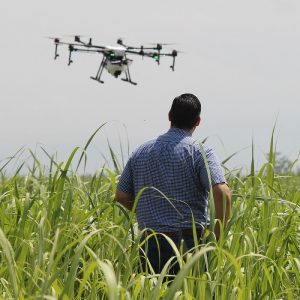
“Agriculture is all about the supply chain; this touches on the work of producers, commodity traders, warehouses, financiers, insurers, logistics – and that’s before you even begin to think about the consumer.
“I’m working with a number of clients in agriculture and I think this case-study will map well to the type of problems and use cases that the industry is tackling.”
Marcus explains that blockchain is well suited to traceable products although there is still a requirement for external technological infrastructure to help achieve this.
“Blockchain creates a data source that is ‘trustless’ where, in place of a centralised authority, data is validated through the consensus of the crowd.
“There are lots of opportunities to help companies and producers in agriculture consider how to optimise their operations and consider new business models.
“At Applied Blockchain we’ve worked on individual problems across all of these and are eager for the chance to ‘join the dots’ across a single supply chain.
“There is even more that blockchain technologies are capable of and I look forward to discussing these at the event in April.”
Applied Blockchain‘Trust, Provenance and Blockchain – impacts and opportunities for agriculture’ is being held on 24 April 2018 at the Sainsbury Laboratory, Cambridge – see more about the Pollinator on our events page.
Read the NFU Mutual report on their website here.
Visit the Applied Blockchain website here.

Using AI to fix fractured value chains: a path best tackled facing forward

Meet the Network
Agri-TechE

Matthew Smith, Microsoft ResearchMatthew Smith was an ecologist before he joined Microsoft to lead the development of new predictive models for environmental systems, he spoke to us a couple of years ago and in that time the digitisation of agriculture has gathered momentum.
We caught up with him ahead of the Pollinator “The AI’m of machine learning” to ask him how he sees things developing.
Q. What do you think have been the most important developments in the ‘digitisation of agriculture’ since you last spoke at an Agri-TechE meeting?
Probably the establishment of the UK centres of excellence in agri-tech. I think we’ll look back at those and see them as hugely important early incubators for much of the improvements we see in the field and further up the supply chain. Beyond that, the roll out of the multiple flavours of agri-tech services as genuine businesses or applications, rather than just ideas. Thinking here about agri robots, aerial image analysis and connected livestock.
Q The market seems to be consolidating – Do you think there is still an opportunity for young innovative companies to create businesses or is it best for them to concentrate on interoperability with the dominant platforms?
I think there are more innovation opportunities than there ever were. The prevailing platforms should provide more opportunities for innovators; and that would be the sign of a good platform. Innovators should be more liberated now, as they will need to build less from scratch and can assume that many of the building blocks exist. Instead they should focus on creating new business capabilities that will deliver value.
Q What are you working on at the moment that is exciting you?
I’ve always been excited by information services for the food supply chain. Finding ways through which the right information can get to the right people, at the right time, in the right way. Right now that information supply chain still doesn’t exist, as it should. It is fragmented and inefficient. That is having a real impact on the health of our agri-food supply chains in terms of waste, price and sustainability.
Wonderfully, technology is approaching a maturity to make the information supply chains the world needs; harnessing things like cloud computing, IoT, AI and block chain. I have the privilege to be working on how to make such systems work, from both business and technical perspectives. It gives me a great sense of purpose.
Q Do you think the future is ‘farming as a service’ – with sophisticated contractors managing much of the work remotely – or do you think the technology will improve the decision making of farmers and enable them to offer new services/ use land more efficiently?
I think both will feature heavily in future and they will interact with each other in complex ways making it impossible to know how this will play out (no one knows!). “As a service” should give more time back to farmers and landowners to develop their business and their landscapes in direction they need to go. There are many aspects of farming and wider land management that don’t get the attention they should do right now.
We need to restore our soils, we need well-balanced landscape management, we need a broader societal appreciation of agriculture and rural landscapes. That said, the minute we develop our agricultural practices in a more sustainable, more well rounded, more diverse direction than can be automated the model for “as a service” changes – there are many more things to be accounted for.
What’s for sure: this is an unknown path we are all on, so it’s best tackled facing forwards.
Matthew Smith, Director of Business Development, Microsoft, will be presenting at the Agri-TechE Pollinator “The AI’m of machine learning in agriculture” on 20 February 2018 at The Sainsbury Laboratory, 47 Bateman Street, Cambridge, CB2 1LR.