J A Kemp: Patenting Plants in Europe and the UK
 J A KEMP LLP
Plant patent-eligibility under the EPC J A Kemp
Background
Under Article 53(b) of the European Patent Convention (EPC), plant varieties and essentially biological processes for the production of plants cannot be patented. From the mid-1990s onwards, Article 53(b) EPC became controversial and the subject of several decisions of the EPO’s Enlarged Board of Appeal (EBA).
Following decision G1/98 (Novartis, 2000), a claim in which specific plant varieties are not individually claimed is allowable even though it may embrace (potentially many) such individual varieties. Plants can thus be patented if they can be claimed more generically.
Decisions G2/07 and G1/08 (Broccoli/Tomatoes I, 2010) relate to the definition of an “essentially biological” process for the production of plants. According to these decisions, a process which contains or consists of the steps of sexual crossing the whole genomes of plants and subsequently selecting plants is in principle unallowable.
Decision G3/19 (Pepper, 2020) and Rule 28(2) EPC confirm that plants that are the products of essentially biological (e. breeding) processes are also not patent-eligible1, so claims to them are unallowable.
Practice under this case law has also been helpfully codified in the EPO’s Guidelines for Examination, with several concrete examples provided of eligible and ineligible subject matter. Some issues are also addressed by a body of case law – principally the landmark EBA decisions above, but also cases from the Technical Boards of Appeal (TBAs). However, some uncertainties remain, and, as of early 2024, another fundamental issue is beginning to develop.
From the perspective of an Applicant, the following explores the patent-eligibility of various claim types, with comments on related issues such as scope of protection and patentability under other requirements of the EPC.
Patent-ineligible claims
In terms of claims to plants as products, it is clear even from Article 53(b) EPC itself that individual plant varieties are not patentable. However, this is not a significant concern in practice because this is also the norm internationally2, and Plant Variety Right (PVR) protection can be obtained instead.
As to claims to processes for producing plants, the term “essentially biological” in Article 53(b) EPC might be expected to require a weighing up of the different elements of the claimed process. In practice, however, the G2/07 and G1/08 decisions mentioned above (which exclude processes that include crossing/selection steps) are essentially used by EPO examiners to reject any claim that recites even a single breeding (crossing/selection) step. Processes defined entirely in terms of crossing/selection steps are thus of course unallowable, but so are those that, for example, begin with a transformation step, and go on to recite downstream breeding steps3. Similarly, a process of introgression of a trait, or of using a transgenic plant to generate further plants by breeding will be unallowable, as will claims that combine breeding and technical steps in other ways.
Following G3/19 and the introduction of Rule 28(2) EPC, claims to plants that are the products of such broadly defined essentially biological processes are also unallowable. In practice, essentially no plants obtained by processes of breeding (including introgression) as opposed to biotechnology can be claimed. This applies regardless of how the plant is defined. For example, a claim to a plant obtained by breeding will still be unallowable even if it is couched in terms of the presence of a beneficial gene because it is still the product of a breeding process. A claim to a plant obtained by a process consisting partly of breeding steps and partly of biotechnological ones such as transformation is also unallowable4.
Similarly, the EPO treats plant propagating material in the same way as a whole plant, to the extent that a claim to any plant part or tissue capable of propagation may be unallowable if the plant itself is patent-ineligible. We have encountered objections of this type to claims to a pollen grain, even though technical steps would in practice be required to grow a pollen grain into a plant.
Frequently, claims to the harvested/processed products of plants, even patentable ones, are also not themselves allowed even though the EPO’s Guidelines for Examination confirm that such claims are patent-eligible. This is for a different reason, namely that plant inventions are mostly manifested in other areas of the plant’s growth. Accordingly, products such as flour or oil obtained from them are often no different to those derived from conventional plants. For example, flour from the grain of a plant engineered for drought tolerance will typically not itself have any special characteristics just because the plant’s leaves retain water more effectively.
Patent-eligible claims
Notwithstanding the prohibition on patenting plant varieties, many claims to plants are in fact granted. This is because, in line with G1/98, plant claims are allowable if they can be written at a taxonomic level above that of a single variety. A claim will not be allowed if it amounts to nothing more than a collection of individual varieties but, where the invention lies in a trait, that can often be expressed more generically.
For example, a claim to a transgenic plant that contains a foreign gene (say from a bacterium or another plant) will generally be patent-eligible because the value of that invention is not confined to one variety. Similarly, even a narrower claim to a plant of a single species transformed in the same way will be patent-eligible as it is not a single variety. The same currently applies to so-called cisgenic plants in which the introduced gene is from the same species, to plants obtained by gene editing techniques such as CRISPR/Cas, and to technically produced mutant plants5.
Similarly, many process claims are allowable, as it is often possible to express a biotechnologically oriented invention in terms only of technical processes such as transformation, gene editing or mutation. As discussed above, it will not be possible to extend that claim up- or down-stream by adding breeding steps, and there will also be some claims to more complex, mixed processes that fail if the breeding steps cannot be validly dispensed with6. However, the majority of process claims relate to the introduction of one defined change by a biotechnological process, and these are routinely allowable. Claims entirely directed to screening or selection methods are also allowable. For example, it would be possible to claim a method for determining the outcome of a cross by detecting a certain marker sequence using PCR or another methodology, as long as either the marker or the technique itself represented a new and inventive contribution. Such claims are very similar to claims for sequence detection in medical diagnostics cases. Claims to other technical processes, such as plant tissue culture, are also patent-eligible.
Further, Article 64(2) EPC and corresponding provisions of national law extend the protection conferred by a process claim to products directly obtained by the claimed process. In the case of a method claim to the production of a plant, this is generally taken to mean the plant obtained immediately from the process, e.g. a first-generation transformant. It is currently, however, not clear to what extent screening or selection methods offer meaningful direct product protection. A claim to screening for a particular outcome from a cross may therefore not be infringed by dealing in plants identified using the method.
Article 8 of the EU Biotechnology Directive of 1998 further expands this protection to downstream generations of plants. Therefore, even though a process claim may only recite a step of, for example, transformation, it is still infringed by dealing not only in the first-generation plant directly obtained by the process, but also by dealing in plants downstream in the pedigree. Therefore, even where a product claim (which will in general naturally cover all generations) is not available, a process claim can have significant power. This tends to return some of the protection taken away by G2/07 and G1/08, in that, if the invention lies in what is introduced into the plant or the manner of the introduction, a process claim still reaches through to further plant generations.
Also, Article 53(b) EPC only relates to processes for producing plants. Other processes and uses, e.g. to extract useful products from plants, and some claims directed more towards agricultural practices7, are patentable on their own merits. The EPO’s Guidelines for Examination also call out the example of a seed coated with a beneficial chemical. Many other inventions in the plant science and agriculture area are also patentable for similar reasons, for example biotechnological products such as genes, vectors, constructs, agrochemicals, and agri-tech inventions such as farm equipment. Strategically, the best approach to maximise global protection is usually to claim everything possible and excise the claim types the EPO will not permit. It is worth conducting this review prior to EPO filing, in case there are no permitted claim types such that amendments can be entered, or to forego EPO filing if nothing can be done.
Other patentability requirements
In this regard, it is important to recognise that, although avoiding the Article 53(b) exclusion is a prerequisite and can be a significant hurdle, it is not the whole story. Any claim to a plant or a process for producing one has of course to comply with all the other requirements of the EPC. For example:
It may be necessary to make a deposit of biological material, typically seed, to ensure reproducibility and hence sufficiency of disclosure.
In claims to cisgenic, edited, or mutant plants, care has to be taken to ensure novelty. If the change made to the plant’s genome recreates a feature known in another genetic background, the claim may not be novel. It may be possible to circumvent this in a product claim by reciting an additional feature that could not be present in the pre-existing plant, for example that an introduced gene is driven by a heterologous promoter.
Inventive step/obviousness can also be a high hurdle in any EPO examination. In this area, one class of applications that are patent-eligible but hard to patent for inventive step reasons are so-called “event” cases, where the claim recites a plant that is transformed in a particular way at a particular location at which good expression is obtained. These can be enabled by making a deposit (see above), but EPO examiners tend to argue that they lack an inventive step because it is obvious to seek a beneficial location.
If sequence information is not available, for example in the case of a mutation, it can be difficult to satisfy the requirement for clarity. Marker information on the genomic position of a change may assist with this, especially if the markers are very close together.
The EPO’s strict approach to added subject matter and amendments can also be an issue. If a specification has been written with non-EPO (especially US) law in mind, it may be difficult to find basis (support) for the amendments ideal under Article 53(b) EPC. Please feel free to contact us at the drafting stage if input is needed on these issues.
In addition, there are some situations where a given plant could in principle be obtained either by technical processes as above or by breeding. This can, for example, arise in the case of gene-edited plants where the edit changes one allele into another and the resulting allele is already known in a different genetic background. In such a case, breeding could in principle have been used to bring that allele across into the recipient background. Here, the EPO will require the introduction of a disclaimer to the effect that plants obtained by an essentially biological process are excluded from the claim’s scope. How much of a difference this makes in practice depends on how realistic it would be to effect the same change by breeding. If that would not realistically be practical, the disclaimer has little practical impact. On the other hand, if breeding is a realistic alternative, the claim may be hollowed out in that third parties can benefit from the patent’s guidance about what goal to seek, but then obtain the same plant in a different way to avoid infringement.
Finally, it is worth noting that some older applications benefit from a more generous standard in some respects owing to a transitional provision in G3/198.
Uncertain areas – possible opportunities for protection
Other than the developing issue discussed below regarding NGT (gene-edited) plants, the EPO’s practice is currently mostly settled in the light of G3/19 and the earlier EBA decisions. The EPO’s comprehensive Guidelines for Examination (see above) reflect this. However, there are some possible claim types whose allowability is still uncertain, for example:
Claims to the use of a novel and inventive, but patent-ineligible plant (which might be a single variety or more generically defined) in a process to produce food, feed, or another plant product, or in another non-breeding process (including tissue culture or propagation). Such processes are arguably novel and inventive because any use of a novel and inventive product is by definition itself novel and inventive, and patent-eligible because they are processes for the production of something other than plants as such or exclude steps that could be considered essentially biological. If such claims were allowable, Article 64(2) EPC (see above) would render it an infringement to deal in the products obtained by the claimed process.
Claims to a plant that has a conventionally bred trait that makes it novel and inventive, but also a transgenic one, and claims to a process of transforming a novel and inventive, but conventionally bred, plant with a known transgene that confers another trait unrelated to the invention.
Claims to a non-propagating part (such as a leaf) or a cell of a novel and inventive plant that in itself is patent-ineligible. If allowable, such claims would in principle be infringed by the whole plant in the field, and by the use of the plant part to make a processed product.
Claims to food or feed products that retain the characteristics of a novel and inventive plant that in itself is patent-ineligible.
Claims to plants that are the progeny of two transgenic or edited parents. These are probably not allowable if framed in terms of a cross between those two parents. However, other options might exist, such as claiming the parents individually if they are independently inventive, or as a “breeding pair” if both transgenes/gene edits are required to give effect to the invention.
In the first four of the above, the question is whether it is permissible to derive novelty and inventive step from the conventionally bred parts of the plant’s genome, but to argue at the same time that the format of the claim removes it from the scope of Article 53(b) EPC. In the fifth, the combination of the two plants may be novel and inventive, but the issue is similarly whether presenting the two as elements of a combination that will be the subject of a cross is permissible. Obviously, it is also possible to argue that such approaches undermine the principles on which G3/19 was decided, and other issues might also arise9. However, it may be worth presenting such claims in the hope of securing comprehensive protection.
Uncertain areas – complexities and possible threats
One consideration to keep in mind is that the national patent laws of some European countries10 include a so-called breeders’ exemption to infringement, under which it is not an infringement to use the patented plant for the purpose of breeding, or discovering and developing other varieties. This is in addition to common general provisions to the effect that acts that are experimental or private and non-commercial in nature do not infringe. Under the EU Biotechnology directive (see above) and the national laws that implement it, there is also a farm-saved seed provision that permits farmers to use the product of one harvest of some crop species to propagate a crop and obtain a future harvest on their own holding.
None of these sector-specific provisions impact whether a patent will be granted by the EPO, but they are worth keeping in mind overall, as they may go to the effectiveness and attractiveness of the rights granted by the EPO. Further, because the legislation under which the Unified Patent Court (UPC) operates includes a breeders’ exemption, but some national laws of UPC contracting states do not, it may be worth considering both avoiding the election of a unitary patent and opting the resultant classical or “bundle” European patent out of the UPC’s jurisdiction in order to minimise the impact of breeders’ exemptions. This, however, has to be balanced against the greater cost of this route of protection and the fact that some key jurisdictions do have breeders’ exemptions anyway.
In the EU, another issue is also developing in relation to patent protection for gene-edited plants. In February 2024, the EU parliament voted to adopt a draft regulation in relation to plants obtained by what it describes as new genetic techniques (NGTs). These include, but are not limited to, plants obtained by gene-editing via CRISPR/Cas and similar systems. Other cisgenic and targeted mutagenesis approaches are also included.
The main thrust of the draft regulation is to reduce the regulatory burden that some NGT plants need to go through in order to be authorised for sale in the EU. Specifically, the proposal is to consider so-called “category 1” NGT plants equivalent to conventional plants and exempt them from the legislation on Genetically Modified Organisms (GMO). European regulation on GMO (i.e. originally transgenic, but also currently gene-edited) plants is of course infamously burdensome, such that very few have ever been approved. The category 1 plants that are potentially set for lower regulation are NGT plants that could in principle have been obtained by breeding processes, in that they do not include genetic material from outside the gene pool of the species in question (and those of other species with which it can be crossed). For example, gene-edited plants in which one known allele is switched to another known, but more desirable, allele would be category 1 NGT plants. The remaining “category 2” NGT plants would continue to be regulated in the same way as GMOs.
However, the European Parliament, which has a history of antagonism towards patenting in agriculture, has also amended the text it received from the EU Commission to propose a sweeping ban on patenting plants obtained by NGTs. Transgenic plants would be unaffected (but still very stringently regulated), but it is proposed to exclude, not only going forward but also retroactively, all NGT plants (not just those in category 1, and not just gene-edited plants) from patentability. It is also proposed to amend the EU Biotech directive’s provisions on patents accordingly.
If finalised in this form, such legislation would raise significant issues for applicants in the sector, in that PVRs would become the only option for protection of gene-edited and other NGT plants. PVRs are not necessarily or always less desirable than patents. Rather, they should best be thought of as a complementary right and part of an overall protection strategy. However, two big differences are that: (a) a PVR protects a single, individual variety, whereas a patent on a plant comprising a gene edit would more broadly protect a trait that could be used in multiple genetic backgrounds, and (b) it may only be possible to apply for a PVR later in the development process because it is necessary to provide physical plant material that meets so-called DUS11 criteria. PVRs are also always subject to a breeders’ exemption.
As well as these challenges, the Parliament’s proposal is also in conflict with the EPC and the practice/case law of the EPO, which is of course not an EU institution (and includes non-EU member states such as Switzerland and the UK). It is therefore not clear how or when the Parliament’s proposal would be implemented in practice, or whether national patent laws and the EPC could somehow diverge on this issue.
First, however, there remains a need for negotiation within the EU (between the Parliament (representing EU citizens), Commission (the EU’s professional civil service) and Council of Ministers (representing member state governments)) before any form of the Parliament’s proposal is finally adopted as law. It is possible that the Parliament’s proposals on patents will be reversed or at least moderated.
In the meantime, the practice of the EPO is unchanged. However, applicants in the sector need to keep aware of developments in this regard and tailor their intellectual property and general commercial strategies accordingly as matters develop.
Patenting plants in the UK
Although no longer a member of the EU, the UK of course remains an EPC member state, and its patent law, including the provisions relating to biotechnological inventions, is fundamentally in line with the EPC. Most UK patents on plants are granted by the EPO rather than through individual national applications. To the extent that UK patents might be applied for nationally via the UK Intellectual Property Office (UK IPO) rather than through the EPO, we believe the UK IPO’s practice would be in line with the EPO’s as discussed above.
However, unlike that in some continental European countries, UK patent law does not have a breeders’ exemption, and we have been advised by the UK IPO that there are no plans to introduce one now that the UK is outside the EU12.
Also, the UK has its own regulatory and legal framework for NGT plants. In terms of regulation, this is generally similar to what the EU now proposes, but it does not include any additional restrictions on patenting. The UK is also no longer bound to follow EU law-making in this or other respects. Therefore, if the EU Parliament’s proposal to restrict patenting of NGT plants comes to fruition, UK and EU law may diverge in that regard. What practical steps applicants should take in this event will depend on how the EPO reacts. However, there are scenarios in which some national UK filings may in future be treated more favourably than those made at the EPO.
Conclusions
Patent-eligibility, and the patenting of plants in Europe, is a complex area in view of legislative and case law developments over the years, but many claims to plants are currently allowable. Plant varieties and other plants obtained by breeding processes cannot be patented, but many plants obtained by biotechnological means can.
Plant breeding processes also cannot be patented, but biotechnological processes for obtaining plants can. Such claims can be powerful because of their reach over generations of plants bred from the initially obtained one.
Outside of patent-eligibility per se, patentability requirements are generally the same as for any other technology, but some sector-specific issues do arise. In terms of scope of protection, there are also sector-specific breeders’ and farm saved seed exemptions to infringement.
After some 25 years of controversy, what is patent-eligible under the EPC has been generally stable since the G3/19 decision of the EBA in 2020, but a new uncertainty is developing owing to the EU Parliament’s proposal to bar NGT plants from patentability. Applicants need to keep abreast of developments in this regard and tailor their IP strategies accordingly.
In the UK, the law and practice on patenting plants is general very similar to that under the EPC. However, if any form of the EU Parliament’s proposal to restrict patents on NGT plants is eventually adopted and enacted, UK and EU law may come to diverge on this point.
Regardless of these developments, PVRs should always be considered alongside patents, so as to maximise the protection available.
For more information, please contact us.
Footnotes
1. Reversing G2/12 and G2/13 (Broccoli/Tomatoes II, 2015), in which such plants were held patent-eligible. Under pressure from the EU, Rule 28(2) EPC was introduced in 2017 with a view to overriding these decisions, which were unpopular with breeders and legislators in a number of EPC member states. Rule 28(2) EPC was initially held by an EPO Technical Board of Appeal (TBA) to conflict with Article 53(b) EPC (as interpreted by G2/12 and G2/13) and hence not to be followed, but G3/19 confirmed the rule’s validity. For further discussion, see our commentary from the time.
2. The USA is an exception: in the USA, there are no restrictions analogous to Article 53(b) EPC, so plant varieties and breeding processes are both patentable. Plant variety protection (PVP) and (for some species) plant patents can also be obtained. In Europe and the UK, there are no specific plant patents, but PVR fulfils a similar role to both PVP and plant patents.
3. The Broccoli/Tomatoes I decisions do offer a derogation such that: “if a process contains within the steps of sexually crossing and selecting an additional step of a technical nature, which step by itself introduces a trait into the genome or modifies a trait in the genome of the plant produced, so that the introduction or modification of that trait is not the result of the mixing of the genes of the plants chosen for sexual crossing, then the process is not excluded from patentability …”. However, we are in practice not aware of any cases where this has been relied on successfully.
4. This is notwithstanding that Rule 28(2) EPC states that patent-ineligibility requires that the plant be “exclusively” obtained by means of an essentially biological process – this is not taken to mean that all of the steps by which it was obtained have to be essentially biological.
5. The aim of G1/98 was not to draw a distinction between plants obtained by breeding and those obtained by biotechnology, but between claims to individual varieties and those written more generically.
6. This is because G2/07 and G1/08 prohibit claims that contain “disguised” crossing steps. In our experience, this is not particularly consistently enforced, but some inventions do provoke an objection of this type.
7. For example, if a particular spacing of apple trees in an orchard were surprisingly shown to give an optimal yield, a process reciting planting the trees to achieve this would probably be patent-eligible.
8. In G3/19, an exception is made for applications/patents with a filing date before 1 July 2017, when Rule 28(2) EPC came into force. For these cases, the decisive case law is G2/12 and G2/13, under which the products of essentially biological were patent-eligible (even though essentially biological processes for the production of plants are not patentable owing to Article 53(b) EPC). This meant that a “conventionally” bred plant could in principle be claimed as long as all other requirements were met. In practice, this was always difficult, in particular because although it may be possible to define a trait at a high enough level of generality to avoid Article 53(b) EPC and G1/98, it tended to be difficult to define it precisely enough to meet the requirement for clarity under Article 84 EPC. A few applications were granted on this basis (see Board of Appeal decisions T1370/19 (positive on clarity) and T1988/12 (negative on clarity)). Some remain pending or under opposition/appeal.
9. For example, EPO examiners have tended to be resistant to claims to the application of a herbicide to a field of transgenic, herbicide resistant crop plants, such that the crop survives but weeds are killed. The applicant’s perspective on this would be that this is a use of the patentable crop plant, but the EPO’s perspective is frequently that the actual process of applying the herbicide is conventional and hence not inventive. In general, in such cases, the plants themselves are patentable, so this is not usually decisive.
10. For example, Germany, France, the Netherlands and Switzerland, but not the UK; the UPC agreement that creates the Unified Patent Court in which unitary patents and some “classic” or “bundle” European patents are litigated also contains a breeder’s exemption, so unitary patents and classic European patents that are not opted out of the UPC’s jurisdiction are in effect also subject to a breeder’s exemption.
11. Distinctness, uniformity, stability
12. When the UK was an EU member, there was a plan to introduce a breeders’ exemption to match the UPC legislation (see above), but we have been advised that this is now shelved.
Related Posts

Legal Battle highlights biological deposit issues in patent law

Small business, big savings: EPO Microentity Discounts

Thomas Wedd brings farm business expertise as Agri-TechE ‘s new Membership Manager

Opportunity or Uncertainty? What the government reshuffle means for food and agriculture businesses
Writtle has merged with ARU to become ARU Writtle

 Agri-TechE






 BASF
BASF



 Cambridge Consultants

 The Morley Agricultural Foundation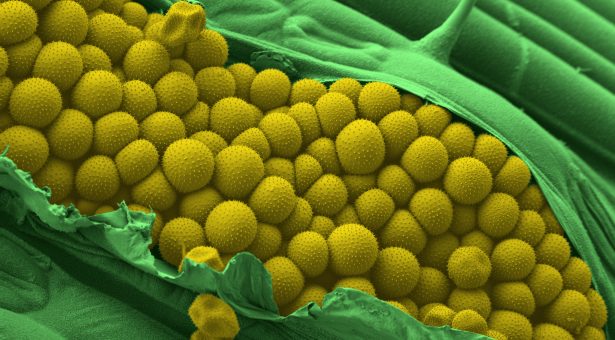

 Agri-TechE





 Processors and Growers Research Organisation (PGRO)


 Gardin Ltd













 Earlham Institute