The Productive Landscape: NatureTech for Profit and Planet
How can technology enable delivery of food, nature recovery, and climate resilience - all at once? The Head of the Environment Agency is asked: what's the national plan for dealing with land use pressures, plus you’ll hear from technologists and land managers working on nature-based and tech-enabled solutions for water, soils and climate adaptation.

Bee friendly oilseed rape

Research Digest
Agri-TechE

Bee friendly oilseed rape researchInsect pollination is important for oilseed rape but some varieties provide an inferior source of nectar.  Scientists researching the issue have found that the breeding system used can impact the amount and sugar content of the nectar.

The UK has around 250 bee species, including the domesticated honey bee. Like many other insect pollinators, these bees need sources of nectar and pollen. Lack of available food resources thought to be a major contributor to the decline in bee populations.

In the study, varieties produced by three different methods were tested: open-pollinated (OP), genic male sterility (GMS) hybrid and cytoplasmic male sterility (CMS) hybrid breeding systems.

Dr Jonathan Carruthers, previously a PhD student from Newcastle University working at Rothamsted Research, explained: “We measured a range of floral traits in varieties of winter OSR grown in a glasshouse to test for variation within and between breeding systems. Specifically, we quantified 24-hour nectar secretion rate, the amount, concentration and ratio of nectar sugars per flower, and the sizes and number of flowers produced per plant from 24 varieties.”

Analyses of the data demonstrated that while the amounts of nectar and sugar were similar in varieties within the same breeding system, they varied between the breeding systems, being significantly greater in GMS hybrids than in CMS hybrids and open-pollinated varieties.  The researchers concluded that plant breeding could be used to create crop varieties with pollinator-friendly traits, benefiting both pollination services and crop production.

Professor Juliet Osborne, of the Environment and Sustainability Institute at the University of Exeter, said: “We got the idea for this study from beekeepers. Several approached us to ask if we knew why some varieties of oilseed rape didn’t seem to give as good a honey crop from their hives as they expected.

“Differences in nectar might not be the only reason for variable honey yields, but the research does show that we shouldn’t assume all oilseed rape crops are going to provide the same resources for pollinators.”

Publication:
Carruthers et al. (2017) Oilseed rape (Brassica napus) as a resource for farmland insect pollinators: quantifying floral traits in conventional varieties and breeding systems. GCB Bioenergy, doi: 10.1111/gcbb.12438

Reed bed creates sustainable source of water for veg

Agri-TechE Article
Agri-TechE

Reed bed creates sustainable source of water for vegIf you buy organic carrots from a major retailer in the UK, they have likely been washed with water filtered through a reed bed at Produce World’s factory in Yaxley, near Peterborough.

“As an organic site, we invested in a natural water treatment process – a reed bed, to clean our water instead of using chemicals,” says Jamie Tointon, Head of Operations at Produce World.

Agri-Tech, the UK’s largest membership organisation for agri-tech, is holding a Water SIG (Special Interest Group) visit to the Yaxley site on 17 May, where attendees can learn about the installation and maintenance of a reed bed.

89% of water used by Produce World is processed through the natural filtration system which holds 12,000 cubic metres of water. The reed species used are the Common Reed (Phragmites Australis) and Bulrush (Typha Latifoli).

“As an organic facility, the decision to install a reedbed was more about narrative than economic benefits,” says Jamie. “However, when you break it down, the site was spending about £50,000 a year on chemicals. For a large site, our water bill is now relatively low.”

So how does the reed bed system work?

Jamie explains: “Dams slow the flow of water as it travels along the river. The water is then passed through four separate gravel filtration processes, giving solids in the water time to settle.

“The reeds transfer oxygen to their roots, which is utilised by diverse microorganisms. These microorganisms enhance the biological treatment function of the system. Water soaks through four individual pea gravel beds to be pumped into a holding lagoon. It’s a closed loop system, so clean water goes into the factory each morning for washing the vegetables, and the dirty water is returned to the lagoon in the evening for processing.”

There is little need for maintenance, other than managing the flow rate. Jamie believes that with enough space, a reed bed could be used by agribusinesses that use high volumes of water.  Visitors will get a feel for the size during the upcoming Agri-TechE event.

“A sustainable source of good quality water is critical in agriculture,” comments Dr Belinda Clarke, Director of Agri-Tech. “So we are excited to provide the opportunity to see Produce World’s reedbed at Yaxley, allowing participants to understand its benefits and how to install one for their own business. Places are strictly limited, so register your interest asap!”

In addition to the reed bed, Produce World has planted around 500 trees and shrubs to create a good habitat for wildlife, to compliment the Wildlife Trusts’ plans to convert nearby land back into wetlands. For further information on the Agri-TechE event, please click here to visit our events page.

Smarter farming and connected farmers

Agri-TechE Blog
Agri-TechE

A striking feature of the recent member ‘give and get exchange’ was the willingness of the growers to get involved in trials and be first adopters for technologies that might make them more productive, profitable or sustainable. Their enthusiasm was met with an equal commitment from the technologists to really understand what “smarter” means in an agricultural context; to find out from endusers how it would be useful to have the various components – crops, livestock, machinery, staff, control systems – connected to each other. (more…)

Innovation Hub 2017 at the Royal Norfolk Show

Agri-TechE Article
Agri-TechE
Alex Dinsdale, SOYL Area Manager for Norfolk
Alex Dinsdale, SOYL’s Area Manager for Norfolk

“The agricultural economy currently faces uncertainty, so it is more important than ever for farmers to have tools to better control their costs and improve performance,” says Alex Dinsdale, SOYL’s Area Manager for Norfolk. SOYL is one of multiple organisations exhibiting at the Royal Norfolk Show’s Innovation Hub, an initiative led by Agri-TechE and the Royal Norfolk Agricultural Association (RNAA).

“On a single farm, there is a great deal of variation between fields; in topography, soil type, and nutrition levels. Many crop inputs such as fertilisers interact with and are influenced by the soil. Tailoring these applications to the exact soil conditions can help to avoid under-applications – which can hold back yield and returns – and over-applications, which can waste money.”

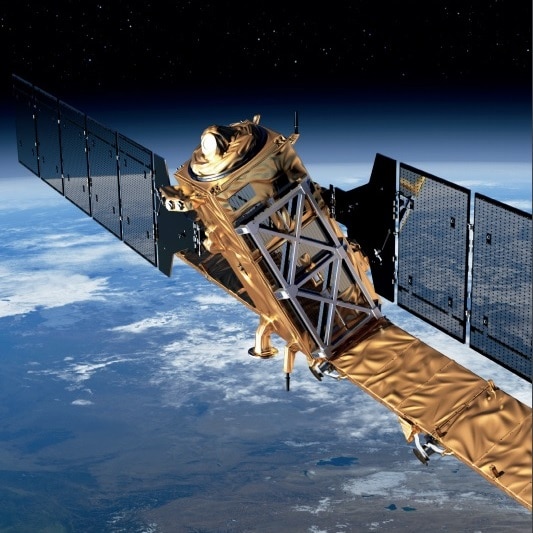
Taking advantage of the latest generation of satellites to track crop development, SOYL is set to showcase the benefits of precision soil sampling. Using an app on an iPad or iPhone, the company can show how to cost-effectively plan variable rate seed drilling and fertiliser spreading, as well as in-field crop scouting for pest damage, weed infestations and other problems.

Agrimetrics – the big data centre of excellence for the agri-food industry – will be exhibiting an easy-to-use Potato Yield Model.

Professor Mario Caccamo of Agrimetrics says: “Farmers can use their smartphones to collect information about planting date, emergence of the crops and images of the canopy to receive an update on the potential size and quality of potato tubers under the soil in their field.”

Camera phones offer the opportunity to understand the special world of spuds. Visitors to the stand will have the opportunity to see this in action, by taking images of a potato plant canopy.

Wensum AllianceIn addition, a 3D water catchment model, root systems and laboratory water analysis will be demonstrated by the University of East Anglia (UEA) to show how mitigation measures can limit the amount of nitrate that ends up in the river Wensum.

“The Wensum Alliance Demonstration Test Catchment Project provides an opportunity to test and assess the effectiveness of a variety of land management measures to reduce this pollution whilst maintaining farm profitability, which is of vital importance to the agricultural community,” says Ruth Welters, Relationship Manager at UEA.

The University of Essex will also be in attendance, with hands-on activities including monitoring photosynthetic efficiency and plant stress.  Meanwhile, Norfolk’s Crop Angel will be displaying Unmanned Aerial Vehicles (drones).

The Innovation Hub, sponsored by BBRO, will take place on 28 and 29 June 2017 on stand 271 at the Royal Norfolk Agricultural Association, Norfolk Showground, Dereham Road, Norwich.

Real-time diagnostics high on Euro farmers wish list

Agri-TechE Article
Agri-TechE

SmartAKIS

Robots and real-time diagnostics were on the wish list for farmers across Europe who were interviewed by researchers from the European initiative Smart AKIS. From UK to Serbia, Netherlands to Greece the results showed considerable regional variations in the requirements for smart farm technology (SFT), but a common theme was a keen appetite for innovation.

Agri-TechE is to host three Smart AKIS workshops that will profile the technology that is currently on the market, create a requirements specification from farmers and producers to inform improvements to these new tools and devices, and encourage early adopters to trial emerging technology. Smart Farming Technology is precision farming plus farm management information systems and, particularly, includes automation and robotics.

Innovative farmers

Research by Smart AKIS suggests that farmers will be up for the challenge. 77 percent of farmers interviewed said they experimented on their farms; the most popular (by number of mentions) included:

  1. Equipment: building, adapting, and adjusting machinery to improve work processes, testing new technologies
  2. Inputs: reducing and adapting fertilizer, herbicide, or fungicide applied
  3. Cultivation: including seeding, drilling, tillage, soil management and other management methods
  4. Cropping patterns: including trying new varieties, rotations
  5. Cover cropping: including green manure
  6. Disease control: biological control, tree pruning
  7. Irrigation: methods and management to reduce water use

SmartAKISSome of the experiments with new technologies are related to reducing or optimizing the inputs applied to crops, improving post-harvest technology (e.g. washing or drying equipment), or other cultivation techniques such as seeding or drilling. Others report experimenting with different crop varieties, some even using older varieties, focusing on legumes or trialling the use of cover crops and green manures.

Farmers were also asked if they could describe an improvement to existing machinery or SFT to make it more acceptable or useful for farmers. In total, 146 farmers (54%) provided suggestions for existing SFT.

These responses suggest that although the existing technology may cover needs, it might not work in a way that farmers would find helpful and this may be limiting their adoption.

Barriers to adoption 

The cost of smart farm technology was a large barrier to adoption, as were problems with compatibility between devices.

There seems a major opportunity here to increase adoption by:

  • reducing the complexity at the device level
  • improving data transfer between devices
  • transforming data collected by a device into useable and accessible information.

Robots on technology wish list

Lastly, farmers were asked what the one piece of technology is that would be the most useful to them and their farm – regardless of whether it exists or not.

Although many suggested improvements to existing SFT and systems, the largest proportion of farmers listed robots or autonomous machines for doing monotonous work processes. Second most frequently mentioned included real-time diagnostics, whether it is for soil, plant needs, or diseases.

  • Robots for monotonous work processes (e.g. weeding, hoeing, harvesting) (25%)
  • Real-time diagnostics via drones, satellite imagery, or smart phone sensors (e.g. soil characteristics, weather, nutrient needs, disease) (22%)
  • GPS and VRT (16%)
  • Better data presentation (9%)
  • Integrated farm management information system to connect all aspects of the farm (4%)
  • Lighter and smaller field machinery (to reduce impact on soils, reduce fuel use) (4%)
  • Improved irrigation management (3%)
  • Aerial imagery (3%)
  • Infrastructure to enable the use of SFT (i.e. internet connection) (2%)

Smarter, not harder

The first Smart AKIS workshop “Smarter, Not Harder: Open Innovation for Smart Farming is to be held on Elveden Estates, north Suffolk on 10th May 2017.

Dave Tinker, from the European Society of Agricultural Engineers, and a project partner working closely with Agri-Tech, says:

“We’re all really looking forward to these workshops, not only will we learn a lot from the experts being assembled, but we’ll also learn a lot about what will really help our local farmers in getting the best from ‘farming smarter’.

“Researchers and suppliers will be there as well so that ideas and needs are picked up and put into practice sooner. We plan that these workshops (21 are happening around Europe) will make Smart AKIS the network for Smart Farming around Europe and we look forward to seeing you there”.

Putting agri-tech at the heart of gov strategy

Agri-TechE Blog
Agri-TechE

Building Our Industrial StrategyWith phrases such as “productivity gap,” “reliance on flow of migrant labour” and “shortage of technical level skills”, one might think the recently published Green Paper (“Building Our Industrial Strategy”) is describing the UK’s agriculture sector.

While the words “agriculture” and “horticulture” (not to mention “agri-tech”) are entirely absent from the Green Paper, many of the themes are at the heart of the technological future of our industry.

And it’s vital that we as an industry have our input into the discussions.

Industry reinforcement

Agri-tech officials in the Dept of Business, Energy and Industrial Strategy have emphasised to us the importance of our industry reinforcing the messages that they have been presenting to Government about the continued need to support new innovations for agriculture and horticulture.

The Green Paper is a set of proposals for discussion and consideration, and an invitation to contribute collaboratively to their development. And this provides a major opportunity for agriculture and horticulture to view itself, quite rightly, as part of the UK’s largest manufacturing effort, and respond to the Green Paper.

There is a great story to tell. And the Government is asking us all to help tell it.

Smart agri-tech

Carlos Lopez-Gomez
Carlos Lopez-Gomez from IfM, one of the authors of the Smart Specialisation report.

The recent smart specialisation report we published in partnership with the University of Cambridge Centre for Science, Technology and Innovation Policy demonstrates the importance of location and connections in helping to build an effective innovation ecosystem for agri-tech.

With UK agriculture employing nearly half a million people, and contributing £9 billion to the UK economy, and the wider agri-food supply chain worth £106 billion with 4.5 million employees, it is clearly a significant economic driver. Agriculture and food also contribute a massive 70% to the UK’s so-called “bioeconomy.”

At a time when the Government is looking to consult on the technologies which the new Industrial Strategy Challenge Fund could support, it is vital that agriculture pivots its view of itself and where new innovations could help. Possible technologies which have been identified for support include:

  • robotics and artificial intelligence (including connected and autonomous vehicles and drones);
  • satellites and space technologies;
  • supercomputing, advanced modelling, and 5G mobile network;
  • biotechnology
  • smart and clean energy technologies (such as storage and demand response grid technologies);
  • manufacturing processes and materials of the future;

It isn’t difficult to envisage a soft-landing of new innovations from that list into many aspects of agriculture and horticulture, but we need to think how best the government can support these for the benefit of our industry.

The strategy aims to identify competitive strengths; it asks for input about how government can help, and it aims to set a trajectory for growth. Agriculture, along with the underpinning science and technology development, will be part of that growth – but we need to make our voice heard.

To respond to the strategy, please click here and make your views known by April 17th.

Tasty, appealing and nutritious

Agri-TechE Blog
Agri-TechE

fruit bowl‘We are what we eat’ is an old saying, but still rings true. As knowledge about how the body uses this vital fuel grows, the importance of making our crops both more nutritious and delicious is gaining pre-eminence.

Breeding for improved flavour and added value is the theme of our event on the 22nd February, which will focus on how new breeding and agronomic practices are influencing the flavours and health properties of some of our favourite foods. Sweetcorn, courgettes, broccoli, strawberries and wheat are among the staples to be discussed.

Out breeding to re-discover traits

Giant potatoThere isn’t much we can do with the weather, but it is possible to breed crops that are more resilient to it.

Most of our most common foods bear little relation – either in appearance or taste – to their ancestors. Tomatoes, for example, were small, green and hard, wild ancestors of potatoes grew up to 4 feet in height and wheat had tiny ears, fewer grains and was as tall as a person.

Many breeding programmes are looking to these wild relatives to re-discover traits which have been bred out of commercial varieties but could help improve human health, or bring environmental tolerances to new varieties.

Domestication and breeding aside, soil type and even agronomic practices can influence the nutritional content of some food crops, and new practices around hydroponic production are enabling certain flavour compounds in salad and herb crops to be enhanced.

Increasing nutritional value

Given the cost and timescale of bringing new crop varieties to market, and the variability of soils and management practices that can influence their taste and nutritional content, how do breeders and growers recoup the value when they are served up on consumers’ plates?

A real opportunity exists in establishing higher value food crops as mainstream choices for consumers, and agreeing how everyone in the value chain benefits from them.

Beneforte broccoli, for example, has higher levels of the compound which could reduce the risks of certain types of cancer, but retains the great broccoli flavour. It was bred in Norwich by cross-pollinating wild broccoli relatives with commercial varieties and is now available in a number of British supermarkets.

Benefit to value chain

Development of this new broccoli variety took 27 years and around £41m in public funding to bring to market. Investment in translational research seems like a big number, but is reasonably modest when compared to the estimated £1.2 billion that is needed to bring a new drug to patients.

strawberries featBreeding to extend the growing season of strawberries from weeks to months has transformed this berry from a treat to a nutritious snack staple and has made it the most high value product in the supermarket.

The investment in breeding has been recouped so many times that in the world of pharma it would be called a ‘blockbuster’.

An over-simplistic comparison maybe, but one which shows the contrast between pharma and farmer and how well placed we are in the UK to eat ourselves healthy.

We’ll be discussing these issues and much more in our meeting on 22nd February, but for now, may your 2017 healthy eating regimes be inspired and supported by great British produce.

George Freeman MP champions Open Innovation at Rothamsted forum

Agri-TechE Article
Agri-TechE

George Freeman speaking at ROIF

The challenges facing the agri-food industry need a collaborative approach to make real progress. By involving stakeholders from across the value-chain it is possible to develop sustainable solutions. This type of ‘Open Innovation’ was discussed at a Rothamsted forum which included a keynote from George Freeman MP about the government’s new industrial strategy.


A number of Agri-TechE members presented:

Delegates were then invited to propose what they considered to be the key challenges:

  • 22% voted for tackling resistance to pesticides and antibiotics
  • 15% for soil health
  • 14% for data and how to use it
  • 12% for how to grow more food and protect the environment
Aponic and George Freeman
Jason Hawkins-Row and George Freeman

The focus groups then brainstormed these issues. Outcomes from the event are to be captured in a white paper by the Rothamsted Open Innovation Forum (ROIF).

Chris Dunkley, chief executive of Rothamsted Centre for Research and Enterprise said: “It’s clear that adaptability and drive are requisite attributes for successful innovation, but there are also barriers to development, including lack of investment, an over-restrictive regulatory framework and, in some cases, poor public acceptance and understanding of new technology. By organising the Open Innovation Forum we wanted to bring people together to find answers to these barriers and solutions to the big questions facing the agri-food industry.”

For more information, visit roif.co.uk.

Hummingbird takes flight with early crop health monitoring

Meet the Network
Agri-TechE

HummingbirdThe main diseases that affect wheat each have their own spectral signature, which means they can be detected remotely, even before there are significant impacts on the crop.

Will Wells, CEO of Hummingbird Technologies, says: “Septoria is one the main diseases that affects wheat and there are many different species. With our technology, it is possible to detect the disease in early May, allowing key decisions to be made about crop protection.”

Agri-TechE member Hummingbird was one of the companies featured in the REAP 2016 Start-Up Showcase. Hummingbird is about to roll out its innovative drone-enabled solution, which encompasses early (and often pre-symptomatic) disease detection, precision weed mapping and accurate yield forecasting services.

Early detection

Since Will Wells founded the company in January 2016, the 14-strong team have developed a technology able to detect and learn about changes in crop health, by taking aerial images at critical decision-making points in the growing season, using drones mounted with custom-made multi-spectral sensors. This information is then sent to farmers via a simple app, providing them with actionable intelligence concerning fungicide applications and other input optimisations.

Will Wells, Hummingbird, at REAP16Increasingly across the industry, a technique called Normalized Difference Vegetation Index (NDVI) is used to determine the health of the plant canopy. Healthy plants strongly reflect NIR light, as it isn’t used for photosynthesis. When a plant is diseased or weak, reflection of NIR is greatly reduced. The infrared images are processed using software to create the NDVI, which can identify the affected areas with pinpoint accuracy. A mathematical algorithm can calculate the difference in what is being reflected across an area of crops.

Advanced analysis

However, Hummingbird’s technology is built around more advanced data capture and machine learning algorithms, providing greater detail and intelligence to farmers.

“There are two or three main diseases that affect wheat,” Will explains,“ and each one has a different spectral signature, which means you have to ‘listen’ to different wavelengths at different points in time and according to the crop cycle.

“We have developed software that uses artificial intelligence to learn when to be ‘worried’ about the yellow spot on the top leaf. This is achieved by combining the spectral information with data gathered on the rainfall, soil type and historic performance. The service will recommend, for example, that this symptom could be indicative of a specific pathogen. The other aspect of the technology is that it will be looking at feature-based symptoms, such as whether the leaf is shorter or blotchy, or has mildew.”

hummingbird-on-devicesAnother subset of innovative algorithms can detect blackgrass at very young stages, with 80% accuracy; with more trialing, they aim to be able to detect the weed at pre-emergence stages, which would have a huge effect on both costs and yields, as would confident forward-selling due to accurate yield forecasts (80% by the beginning of May).

Large land, big data

The Hummingbird drones fly over agricultural land eight times a season; the estimated 34 million data points collected per hectare are extracted and sent directly to Hummingbird’s cloud, along with data from all the accompanying ground-truthing data Hummingbird collects to validate their findings.

Here, the data is run through an extensive workflow of proprietary algorithms, enabling the pre-symptomatic disease detection, precision weed mapping, nutrient optimization and remote health monitoring. All this information is sent straight to the farmer within 24 hours, with clear advice on what to do next.

Will Wells, Hummingbird, at REAP16 (2)Hummingbird has a particular focus on large arable farms, where there is economy of scale. The company, currently based at Imperial College London, already has over 100,000 hectares in its stakeholder base across the UK – a large part from its cornerstone industry backer, Velcourt – and currently provides an end-to-end service that integrates with existing farm management software.

The next step in Hummingbird’s evolution is rolling out the technology in the UK, targeting large cereal crop estates, followed by further reach into Eastern Europe and Russia, where the market size is even greater.

Will is full of praise for REAP: “The REAP conference was a huge success for Hummingbird. We were blown away by the agronomic innovation and bioinformatic excellence on display. Indeed, it’s a great showcase for emerging talent and we were honored to have been a small part of it.

“At its core, Agri-TechE is the perfect platform for Hummingbird’s technology, providing us with the exposure and heavyweight partnership possibilities to fulfill our commercial roll-out potential.”

Find out more about Hummingbird at hummingbirdtech.com

The role of the agronomist is changing

Agri-TechE Article
Agri-TechE

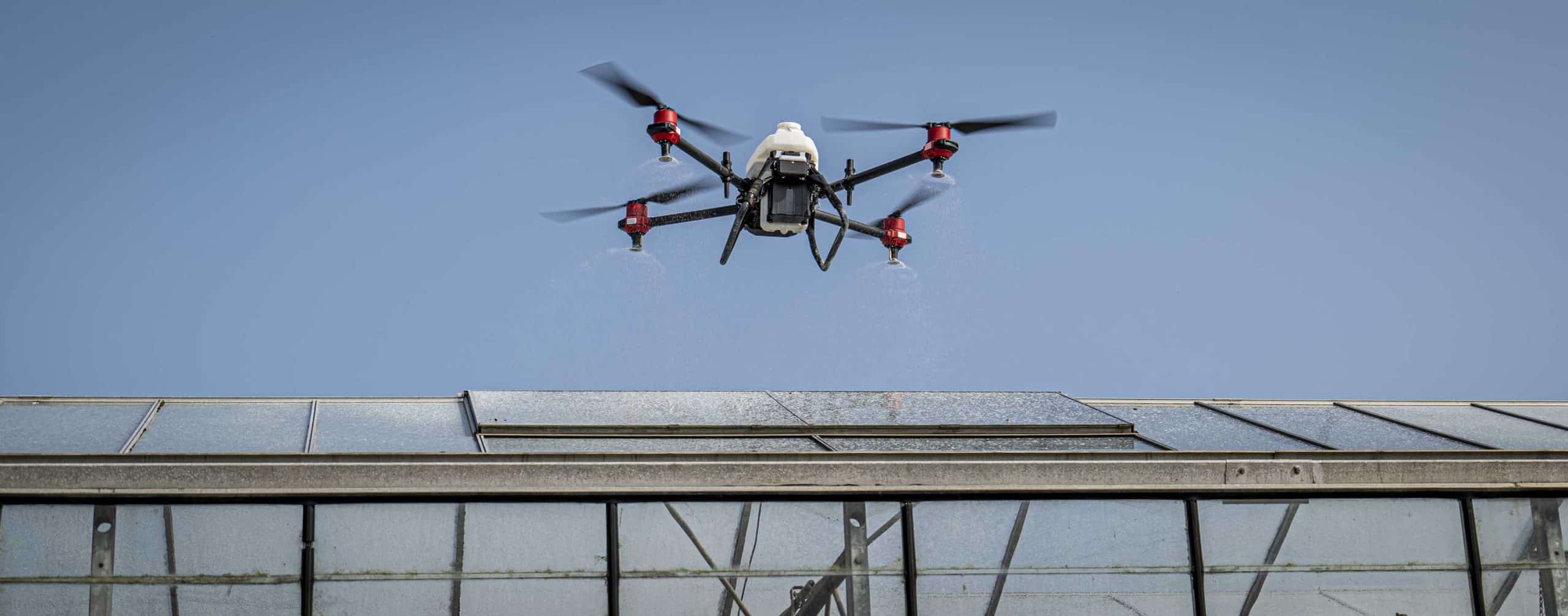
Jack Harris, AgrovistaRobotic sprayers and dual hoppers are just two of the ideas on the wish list for Agrovista’s Jack Harris. Always keeping an eye out for new technology, Jack is excited by the continuing improvement of robotics, drones and seed technology and gives his vision of the future.

He says: “There’s lots of work going on with autonomous machines and robotics at the moment, which could offer a 24 hour operating window for farmers. A robot sprayer could sit in the field waiting for the command to spray, and when provided it would spray in the correct weather conditions. If the weather deteriorates, it would stop, allowing farmers to focus on other jobs. Sounds a bit out there, but it could happen!

“When drones become safe enough to detect and avoid, and fly beyond visual line of sight, the farm could have a drone which scans the crops on a daily basis. This could be sent to the agronomist for targeted field walking. I am also looking forward to new seed technology. For example, if you have an area of a field which gets very dry and loses water, instead of increasing/decreasing seed rates why not have two hoppers on the drill – one with a drought tolerant variety and one with a normal variety.”

The Precision Farming Specialist will discuss these innovative ideas alongside leading experts from plant breeding and agri-engineering on January 12th, at the first Pollinator of 2017 ‘A new agriculture – what will the future hold?’

From cop to crop

Starting out his career in an entirely different role, Jack became introduced to farming and never looked back: “I was working on a friend’s farm after leaving the police, and someone suggested that I try agronomy, so I gave it a go and here I am!

“The role of agronomist continues to evolve, encompassing a lot more than just advice and agricultural chemicals. I discuss a wide range of services with customers, such as GPS soil sampling, drone technology, variable rate plans, mapping software, crop recording software and much more.”

Citing stagnant yields, costs and volatile prices as the main challenges facing farmers, these factors make running a sustainable business very tough. Despite its benefits, precision farming cannot answer this problem alone.

He says: “Precision farming shouldn’t be looked at as the magic cure for improving yields – it should be part of the tool box. When worked alongside seed, agricultural chemicals, good rotation and soil management, it allows you to measure, assess, target and improve.”

“If you use precision farming technology, you are trying to give the crop everything it needs to be successful. That could be varying seed and fertiliser across fields to give the crop what it needs or using GPS autosteer to reduce fuel and wasted overlaps. At the end of the day it’s the weather that decides yield, but precision farming can help set the crop up to achieve its potential.”

Pollinator: A New Agriculture – What Will the Future Hold?, Royal Norfolk Agricultural Association, Dereham Road, Norwich NR5 0TT 12 January, 2017

Click here to find out more.

Back to the Roots – Understanding Water Uptake in Sugar Beet

Research Digest
Agri-TechE

tamfPHD student at the University of Nottingham, Tamara Fitters, is working with the British Beet Research Organisation (BBRO) to understand why the roots of sugar beet take little water at depth. She started her project in 2014 and will be finishing in September 2018.

At REAP 2016, Tamara said that 10% of sugar beet yield is lost to drought, and that water uptake by sugar beet roots is minimal below 30 centimetres. A solution to improve water uptake could be discovered if the reasons for this issue are explored.

She is studying how tillage methods or soil management methods that can influence soil structure for water uptake. Also there is potential to breed drought tolerance in sugar beet varieties.


Agri-TechE Week: Raising the pulse of the UK pea and bean crop

Agri-TechE Article
Agri-TechE

11 November 2016

Rothamsted Research, Harpenden, Hertfordshire, AL5 2JQ

This event has no finished; members can access the report.

Peas and beans are rich in protein, gluten free, improve the soil fertility through nitrogen fixing and can break the pest cycle. So why are they not more widely grown?

This is partially because pulses have gained a reputation for being agronomically challenging to grow with unreliable yields.

This Agri-TechE Week event brought together growers and researchers to look at ways of improving consistency in pulse crop production.

Through a series of presentations, hands on demonstrations, and breakout group discussions, you’ll be taking a look at the research that can help inform agronomic practice around pulses. You’ll also be probing where the gaps remain in our collective knowledge to achieve consistently high yields for the UK pea and bean crop.

We heard from speakers and panelists including:

Pete Berry (ADAS); Becky Ward (PGRO); Pete Ianetta (James Hutton Institute); Peter Riley (Agronomist); Keith Costello (retired pea fieldsman)

There were be demonstrations from Rothamsted Research, John Innes Centre, and Niab.

Hosted by kind permission of the Rothamsted Centre for Research and Enterprise.

The day was chaired by James Wallace, Dalton Seeds.

Programme:

12.00 Arrive, registration, lunch and displays

12.45 Welcome and introduction

13.00 What we now know

  • Estimating the Yield Potential of Peas – Ian Smilie, ADAS
  • Product pipeline needs for a successful crop – Peter Riley, Agronomist
  • Optibean – outcomes and impact and future opportunities – Becky Ward, PGRO
  • Beans4Feed – outcomes and impact and future opportunities – Pete Ianetta, James Hutton Institute
  • VIP – 42 years with marrowfat peas (Very Important Pea) – Keith Costello, Specialist Pea Agronomist

14.15 Breakout groups

Breakout discussions will include:

  1. Roots and soils are key to legume crops success – is there any new research we can apply now?
  2. Crop development and protection to maximise yield is affected by several factors – what are they and how should they be prioritised by researchers?
  3. What traits should be in the pipeline to improve crop performance and seedling establishment?
  4. How can we build on and further expand existing research to boost yields consistently?
  5. How can agronomic and quality traits be co-developed? What do farmers and processors want?

15.15 Tea and exhibits

  • Improving the field bean Vicia faba for feed and food
  • Pulse protection and production
  • The power of genetic variation and pre-breeding in pulses for quality and other traits

15.45 Reconvene, workshop facilitators report back in plenary

16.25 Summing up and closing comments

16.30 Event close and depart


To book:


This event has now passed – contact us for more information.

Mailing List:

If you would like to hear about what Agri-TechE is up to, or about other events we run for both members/non-members of Agri-TechE please sign up using this link. We send about 2 emails a month, and you can unsubscribe at any time.


Agri-TechE Week 2016