YIF: New Stores at Elveden Estates

Agri-TechE
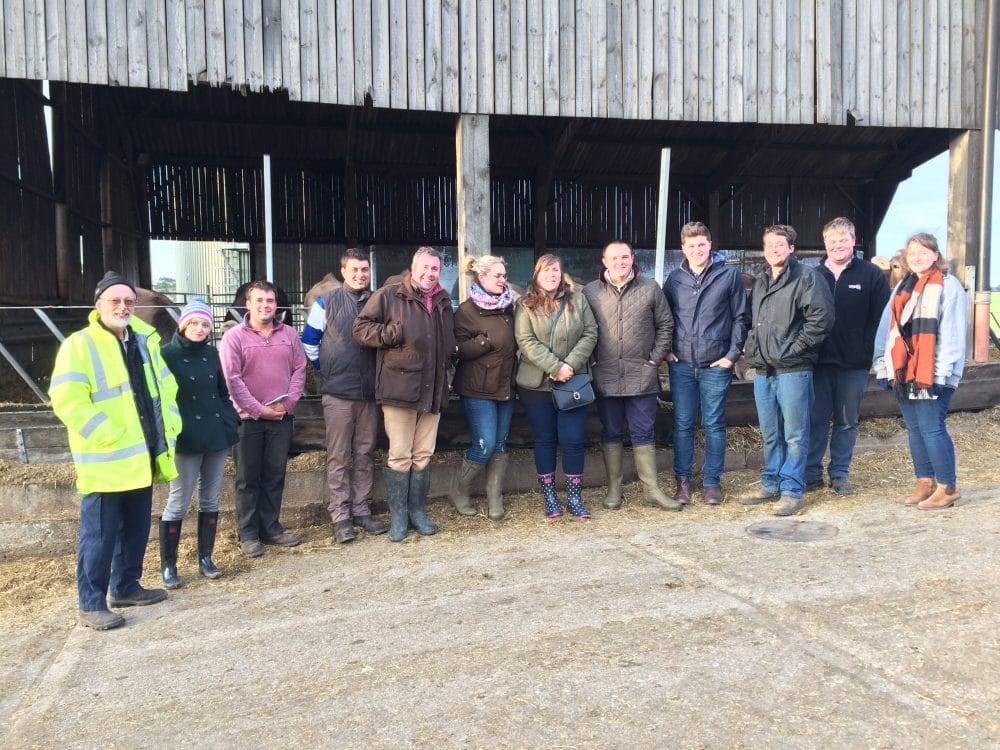
The Young Innovators’ Forum (YIF) visited Elveden Estates on 10 October. Read on to see what one of the participants, Roxanne Sicat from the Department of Plant Sciences at Cambridge University, thought about the visit.
Potato storage is not normally something that stirs one’s spirits. But, standing on a steel platform overlooking three storey’s worth of potatoes, I couldn’t help but marvel at the feats of engineering, botany, and farming that must’ve come together to make this Storage possible.
The potatoes were stored in wooden boxes, each holding 1 tonne worth of spuds. Andrew Francis, the Farm Manager at Elveden Estate, walked onto the sea of potatoes. He balanced on the wooden walls of the boxes, and told us about how the facility worked.
At Elveden, potatoes are stored in one of four buildings just like the one we were in. Using a sophisticated cooling system, potatoes are kept at low temperatures (3.5 to 4 degrees if they’re going to the grocer; 8 degrees if they’re to be pre-processed) to suppress dormancy breaking. By using a negative pressure system, Elveden is able to forgo using chloropropham, or CIPC. CIPC is a chemical that suppresses shoot growth in potatoes. In Andrew’s words, the storage facility allows Elveden to ensure “continuity of product for 52 weeks a year”.

 
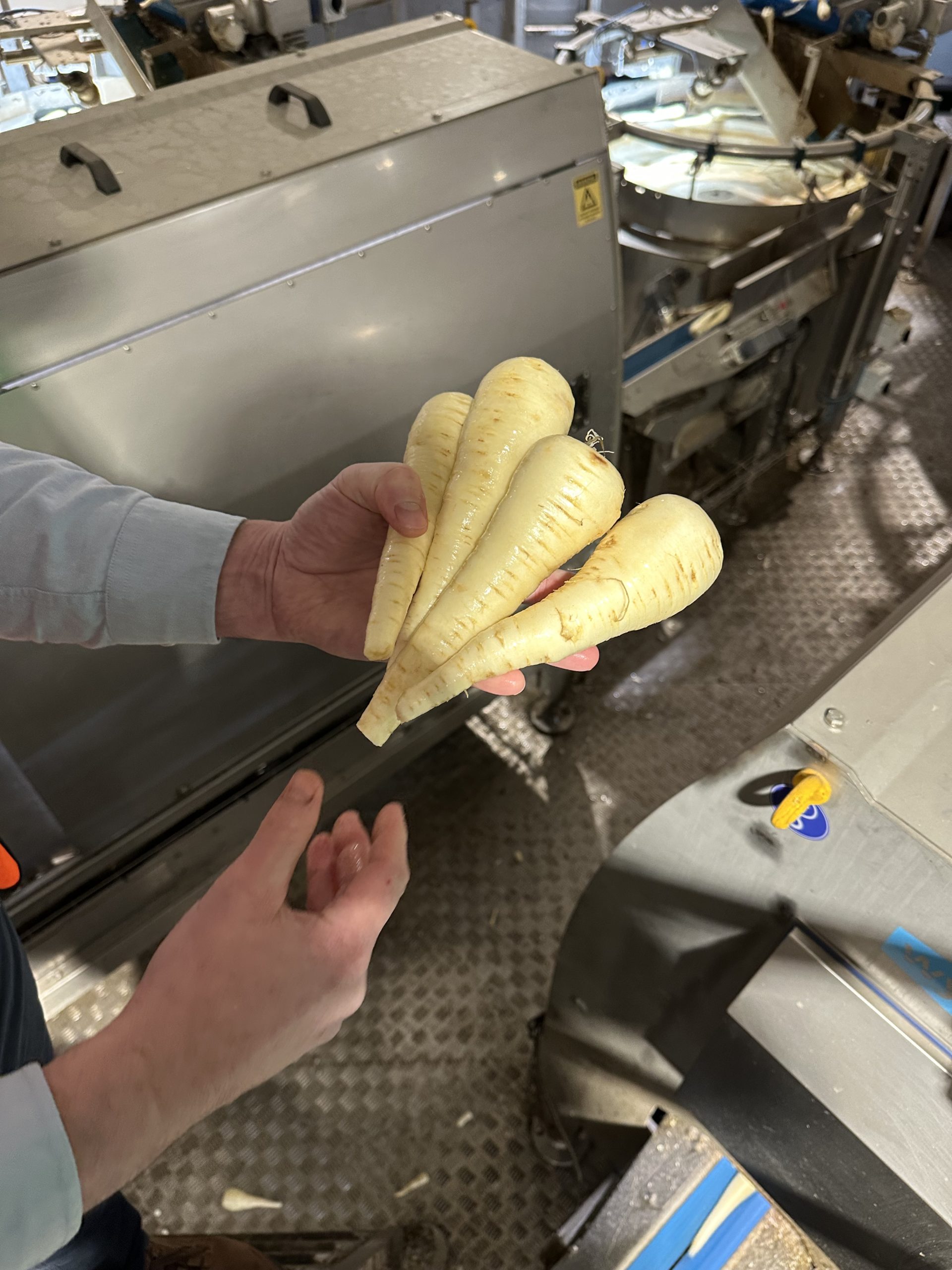
We then made our way to the potato grading site. Here, potatoes are graded (sorted by size) using a series of conveyor belts and grids. During the day, the machines are manned by seasonal workers. They also remove any spuds with “cosmetic defects”.
Next stop was the onion storage facility. Whereas the potato storage facility was kept cool, the onion storage site was sweltering. Hot, dry air (28 degrees Celsius) is pumped over
a capacity of 22’000 tonnes of onions day and night. By desiccating the outside layers of onions, the bulb gets shrink-wrapped in an airtight layer of skin. In this way, the onions are protected from Fusarium and other pathogens.
Protecting onions from rotting is no small task. If more than 10% of any onions in a single 19-tonne box is found diseased, then laws dictate the entire box of onions must be destroyed. As well as shrink-wrapping onions in their own skin, farm workers need to prevent weeds from being included in the onion storage box. Weeds, such as Fat Hen (Chenopodium album) introduce moisture. In turn, the moisture promotes rot.
Since weed growth coincides with the maturation of onions on the field, many farmers try to control weed growth with herbicides. With increasing pressure from consumers and the EU to reduce herbicide application, farmers and scientists need to work together to find alternative ways to secure the harvest.

As a plant sciences student, I was unaware of all the work that goes into making sure the harvest reaches store shelves. There is a whole body of hidden knowledge that goes into producing cheap, high-quality food – and I am very glad the Young Innovator’s Forum exposed me to it.
Roxanne is a Part II student at the Department of Plant Sciences, University of Cambridge.

Agri-Tech’s Young Innovators’ Forum, kindly sponsored by The Morley Agricultural Foundation, is designed to help farmers and scientists understand more about each other’s worlds through a series of free to attend events. Cambridgeshire events are coordinated through CambPlants and Cambridgeshire Young Farmers.

Increase yield by 10%, cut nitrogen by a fifth, make £9bn – find out how at REAP 2018

Meet the Network
Agri-TechE

A decade-long trial involving 21 million Chinese smallholders has shown it is possible to significantly improve crop yields while cutting use of nitrogen fertiliser by almost a fifth.

Zhenling Cui integrated soil-crop system management
Community involvement was a big part of the success behind Zhenling Cui’s integrated soil-crop system management project

The results provide strong evidence that a bespoke integrated soil-crop system management (ISSM) programme, developed by Cui Zhenling and his team at the China Agricultural University, is robust and versatile enough to support agricultural strategies that both enhance productivity and environmental performance.
To enable China to continue to feed its 1.4 billion population, while reducing the detrimental impact that food production was having on the environment, a new approach was required.
Cui Zhenling explains: “We first gathered the results of 13,123 field trials conducted on maize, rice and wheat farms across China’s vast agroecological zones to test the applicability of a comprehensive decision-support ISSM. The framework appeared to suit these needs.”
With data from the field trials, Cui’s project team developed evidence-based advice that was adapted for local conditions and given to farmers. “We developed crop model simulations for optimal use of solar and thermal resources in a given region and then, according to soil tests and the needs of specific crops, were able to combine a formula of nutrients and water to support individual crop strategies,” he says.

REAP looking at competitive sustainable production 

Cui Zhenling is providing a keynote at this year’s Agri-TechE REAP Conference.  The conference will be looking at how agri-tech innovation can support competitive sustainable food production.
The study, which was published in leading scientific journal Nature, is one of the most expansive studies into food production involving almost 200,000 collaborators, extension agents and agribusiness personnel in addition to 20.9 million smallholders.
The project’s decade of data shows an overall yield improvement of 10.8% – 11.5% and a reduction in the use of nitrogen fertilisers of between 14.7% – 18.1% per crop, when comparing ISSM based interventions and the prevailing practices of the farmers.

Agri sector £9 billion better off

Commenting on the outcome of the study, Cui says: “Production and environmental outcomes from the national campaign were positive, in line with expectations. In practice, the study led to a net increase of 33 megatonnes of grains and a decrease in use of 1.2 megatonnes of nitrogen fertiliser – equivalent to China’s agricultural sector being over £9billion better off.”
Cui Zhenling will be sharing his insight at Agri-Tech’s REAP Conference debate, held on Wednesday 7 November 2018 at Wellcome Genome Campus Conference Centre, Hinxton, Cambridge, CB10 1RQ.
REAP 2018

Burden of traceability eased with Consus

Meet the Network
Agri-TechE

Smaller vegetable, fruit and flower producers still using paper-based systems are struggling to meet the ever-increasing requirements of retailers for quality assurance and traceability, says Derek Thompson, co-founder of Consus Fresh Solutions, Bourne, Lincs. To address this the company has developed an intelligent software-based system to reduce the burden of audits and improve productivity. (more…)

Pea protein market valued at £26.7m

Agri-TechE Article
Agri-TechE

From creating novel foods to tackling Type 2 diabetes, new agri-tech and increasing genomic knowledge is unlocking the potential of the humble pea seed, explains Professor Claire Domoney, Head of Metabolic Biology at the John Innes Centre (JIC). She will be sharing her insights at Agri-Tech’s REAP Conference later this year (7 November).
According to recent research, the pea-protein market will be worth £26.7 million by 2020. With its low carbon footprint and strong nutritional benefits, new markets are opening up for this childhood vegetable and this interest is evidenced by Japanese snack producers relocating to the UK to benefit from the strength of its pea production and research-base.

Impact on human health

Claire’s research at JIC aims to understand the impact of pea-seed composition on nutrition and human health, including the benefits of increasing resistant starch composition. This starch is digested more slowly in the upper gut, which can lead to better blood glucose control and more sustained energy levels. Undigested starch moves on to the colon and feeds gut bacteria that can produce by-products with potential health benefits.
Claire explains: “Our research is showing that it is possible to develop legumes with higher levels of resistant starch and improved protein profiles, creating the potential to deliver novel and healthier food products. This can be pea flour to use within existing foods to help tackle obesity and Type 2 diabetes, but also to create specialised products with high nutritional value for coeliacs and people with wheat allergies. Breeding new varieties will take time, but that process is being speeded up by new technologies.”
New technologies are also enabling improved technical expertise and processes to modify or mask the earthy, sometimes bitter, flavour of pea protein, which is allowing for greater use in shakes, bars and baked foods. Claire’s work on the molecular and genetic control of seed traits in pea builds on JIC’s 108 years of pea research: “Crop wild ancestors had a much richer genome. Current genomic and genetic knowledge is already enhancing our ability to tap into wild relatives to identify those genes which have been lost from cultivated lines.”
Highlighting disease resistant genes as an example, Claire adds: “Disease resistant genes are needed in abundance, as chemicals are withdrawn from agricultural use and pathogens and pests continue to evolve at a very fast rate; we need a wealth of armoury to combat these.”

Priorities for agri-tech investment

The priorities for investment in agri-tech innovation are the subject of an all-new debate at this year’s REAP Conference. Claire will be one of an 8-strong panel of scientists, technologists and producers.
Speaking ahead of the debate, Claire commented: “In a very short space of time, both historically and evolutionarily, we have moved from food scarcity to food as a killer and promoter of disease. Rather than considering food production in terms of yield and calories produced, we need to consider the production of healthy food alongside the restoration of a healthy countryside and healthy population.”
Agri-Tech’s REAP Conference will be held on Wednesday 7 November 2018 at Wellcome Genome Campus Conference Centre, Hinxton, Cambridge, CB10 1RQ.
REAP 2018
 

Algae – the future of sustainable food and feed production?

Agri-TechE

Algae can provide a valuable source of high quality nutrition for humans and animals, according to Andrew Spicer, CEO of Algenuity, leaders in algal biology and industrial biotechnology. “There is considerable demand for nutritious, high protein micro-algae biomass for food and feed in Europe, and currently much of the short-fall is being met with imported biomass from Asia. The quality and stability of the supply chain is very poor, so there is a major opportunity here for the domestic industry,” explains Andrew, ahead of his involvement in a debate on the priorities of agri-tech investment at Agri-Tech’s REAP conference next month.

Vegan alternative to animal protein

Having spearheaded the development of Algenuity – the Algal Biotech Division of Spicer Consulting – for almost a decade now, Andrew sees algal biomass as a growth area that will alleviate the dependency on intensive land use.
“Micro-algae are an incredibly versatile, fully vegan and gluten free protein source which also contains micronutrients, vitamins, antioxidants and healthy oils,” he says. “In addition to being best-known currently for use as a food supplement, micro-algae can be formulated into all sorts of food products, from soups to pastas to energy bars and smoothies in addition to be included as a healthy and functional ingredient within animal feeds.”
Algenuity have become the go-to problem solvers for ‘algal biotech’, as Andrew explains: “We have started working with some of the bigger algal producing companies in Europe to show them how they can increase profitability by improving the productivity of the organism and reducing their raw costs as well as accessing new opportunities.”
Algenuity algae

Opportunities in biomedical 

The algal industry is looking beyond agriculture to find solutions in cosmetic, biomedical and other sectors too. “We are starting to develop other approaches to improve the output of desirable chemicals that are already natively produced by the algae,” he continues. “For example, the pigment that makes salmon go the nice pink colour is from an alga called Haematococcus pluvialis.”
Looking to the future, Andrew concludes: “It is a real growth area. Chlorella vulgaris, another strain we work with, is high in protein, has novel food status and is already being produced to quite a large scale globally – starting to satisfy ingredients for animal feed and even for human nutrition. “Microalgae is going to be one of the solutions for feeding the world – without being dependent on land.”

REAP debate 

Andrew will be one of eight panellists in the REAP debate, which is a new feature of the conference this year. Producers, technologists, scientists and advisors will consider the question if it is cheaper to import food than produce our own should agri-tech investment focus on other, more lucrative, uses of land?
The Agri-TechE REAP Conference is on Wednesday 7th November 2018, Wellcome Genome Campus Conference Centre, Hinxton, Cambridge, CB10 1RQ.
REAP 2018

Thinking beyond boundaries

Agri-TechE Blog
Agri-TechE

Thinking beyond boundariesWith conference season upon us again, we’re revving up for the wealth of commentary, insights and opinions that will be shared across the industry. The recent World Agri-TechE Innovation Summit in London saw investors, entrepreneurs and agri-businesses converge to discuss the new trends, opportunities and challenges facing the industry – with the aim of “building agri-food systems fit for the global consumer.” (more…)

Hackathons are international phenomenon

Agri-TechE

HackathonAgro 2018The winning team from the Uruguay HackathonAGRO are to join us at REAP and we are looking forward to comparing learning points.

HackathonAGRO is co-organised by the British Embassy Montevideo and took place in September at the Expo Prado 2018.
It was an open competition for researchers, entrepreneurs and experts in information technologies, agriculture and business. The other organisers are the Cámara Uruguaya de Tecnologías de la Información (CUTI), Asociación Rural del Uruguay (ARU) and Agencia Nacional de Desarrollo (ANDE).
The challenge was to develop a business model and a viable product or prototype capable of using technology to solve a defined agricultural problem.
Four challenges were presented to the participants, each team had to pick one and had 48 hours to develop a solution. They were supported by mentors and given help in the form of presentations made by experts in different areas.

The challenges were:

  1. Harness and sustainable management of natural fields for livestock production
  2. Monitoring and effective control of ticks on the livestock fields
  3. Recognition and control strategies for Capim Annoni, a silent invader
  4. Monitoring and control of movement and estate stock per paddock and field

11 teams took part in the competition.  The winners presented a solution for the control of Capim Annoni, known as the ‘tough love grass’, a grass that is a similar pest to blackgrass in the UK.

Tackling the Brazilian equivalent of blackgrass

The team composed of Emilio Sarturi, Manuel Lorenzo and Joao Antonio Martins found a way to track down Capim Annoni using a multi-spectral camera to identify it effectively, and selected appropriate equipment to remove it once found.
Each team was formed by people from different disciplines. For example, in the winning team’s case, Manuel Lorenzo studies administration and works at Tata Consultancy Services, while Emilio Sarturi works in the banking software area, and Joao Antonio Martins offers consulting services in farming administration.
Lorenzo said: “It was a learning experience, working with people from other areas opens your mind.”  Team-mate Martins said the team were confident in the viability of their solution.
Leonardo Loureiro, President of the Uruguayan Chamber of Information Technologies, mentioned that he was profoundly impressed by the overall quality of the presented proposals.
As a reward the winning team will travel to London with flight tickets and accommodation included, to share their insights with attendees at the REAP 2018 conference, and will also visit Harper Adams University, which specialises in careers linked to agronomy and technology.
We are looking forward to welcoming them to REAP.
REAP 2018

New chemistries deliver major innovation in fertiliser

Agri-TechE

A innovative company based at the Rothamsted Centre for Research and Enterprise has made a breakthrough by combining biological and chemical technologies in the development of a new type of fertiliser.
This new approach to agro-chemistry and others are to be discussed at the next Pollinator meeting on 9th October.
With regulatory uncertainty for some current crop management solutions this meeting is particularly timely, Dr Belinda Clarke, Director of Agri-Tech, comments: “We know farmers and growers are keen to be involved in the direction and implementation of trials of new technologies, such as fertilisers, which is exactly why we hold ‘Pollinator’ events to provide an opportunity to hear first-hand about the pipeline of agri-tech innovative.”

New approach to fertiliser

Nitrogen is vital to build plant proteins and increase growth, however it is thought that less than 40 per cent of nitrogen in commercial fertilisers makes it to the plant. “You either have a water soluble product that is leaked out, or locked up depending on the soil’s characteristic. Or you have something that isn’t water soluble and is hard for the plant to absorb,” explains Cyril Cappe, CEO of plant and animal nutrition specialists TimacAgro UK.
TimacAgro UK have a team of over 100 R&D scientists working to develop new fertiliser technologies at their parent company, the Roullier Group’s Global Innovation Centre in France. By taking into account the full crop cycle and focusing on the nutrient efficiency, rather than just the fertiliser’s nutrient quantities, TimacAgro UK claim they have managed to develop the industry’s first major innovation in fertiliser for decades.
Aerial view of RothamstedTimacAgro UK are based at the Rothamsted, where the world’s first commercial mineral fertiliser, single superphosphate (SSP), was invented. This led to the development of the modern plant nutrient industry in the mid-1800s.

TimacAgro will be joined by other large and small developers of next generation chemistries including Arlabion, Bayer Crop Science, De Sangosse, ECO-FP and Hockley Agro at Rothamsted’s Harpenden centre (AL5 2JQ) on 9 October, 4-7pm.
More information about the event is available at agritechenew.wpengine.com/events

(Un)Successful recruitment in agribusiness

Member News
Agri-TechE

Agri-TechE member RedfoxAs a professional recruiter in agri-business and food both in the UK and internationally for a number of leading businesses, I often get asked by clients “What are the characteristics of a successful person in the sectors we operate in?”

In response, I reel off a list off attributes such as optimism, persistence, ambition and high energy. But…an equally important question much less often asked is “What are the characteristics of unsuccessful people in our sectors?”
So as a bit of a public service to you all, here are some traits of those who are likely to lose you money, so you can then avoid them at your peril:

  1. They always have an excuse. These individuals never take any responsibility for their own mistakes but instead constantly blame everyone else. Occasional excuses are forgivable but serial offenders are in denial. Good management will confess shortcomings and try to learn from errors and improve on them.
  2. They talk and write gobbledegook. We all know these people. They try to blind management, colleagues, suppliers and retailers alike with technical nonsense, because they don’t actually know what they are doing. If they do not understand their clients, market, products and the economics of their business, then in all likelihood they will fail. And if they cannot explain it in plain English, expect the worst.
  3. It is always about them. While driven people are sometimes by nature selfish, their egos should not be so overwhelming that they alienate everyone. If that is the case, good people will not work for them and the business involved will not succeed.
  4. All talk and no action. Driven people are men and women of action. Ideas are wonderful but just dreams unless someone executes them.
  5. Are they just too nice? Anyone running a business is obliged to make a tough decision occasionally. A leader who wants to be liked too much and avoids conflict at all costs will end up in trouble.
  6. A favourite one – Being overly obsessed about salary and perks. People should be working to create a business and create some form of shareholder value. If they are in it for the money, they should become an employee in a far bigger organisation.
  7. Fixated over status. Being a senior level individual within a business is a privilege. But the reason to work hard is not the kudos but the satisfaction of creating something and proving detractors wrong.
  8. Financially illiterate. Anyone at the head of a serious business must be able to comfortably interpret financial statements and know the finances of their company. They must be familiar with margins and associated cash flow.
  9. Secretive backgrounds. Do your homework and background checking to turn over any stones to avoid perhaps initially plausible but unscrupulous individuals.
  10. No team. Successful people are often loners, but companies are collaborative affairs. If someone cannot retain recruits and motivate a management team, the odds are that the business will go the wrong way.
  11. Unhealthy. Check that new employees do not have serious pre-existing conditions that will potentially harm your business.
  12. Chaotic personal lives. Individuals with messy domestic arrangements are likely to be very distracted. This is not a moral observation this is a pure commercial one.
  13. Political. Most of us have no time for office politics. It seems that many who rise to the top in big companies do so principally owing to their skills at networking and advancing their careers. Those games don’t deliver performance only institutional decay. We have all seen this
  14. An inability to delegate. Micro managers never build great companies because of their desperation for control overrides the true needs of the business. So they inhibit its growth and end up with stunted dictatorships.
  15. Humourless. Life is too short and the need to laugh is paramount. Those who take themselves too seriously are no fun to be around. Even if they are money-makers, it isn’t worth enduring the boredom and conceit.

Max MacGillivray, RedFoxI expect you all have your own horror stories of disastrous appointments and sadly, I fear there are more bad leaders than good ones out there.
In terms of gaining the right people, make sure that your company website is modern, mobile friendly and with a clear path for great people to contact your business.
And make sure your recruitment process is fast, professional, enjoyable for one and all and for senior level appointments do not be afraid to run a full background and financial check. High calibre candidates will expect it and those that refuse don’t deserve to be in your business as they have something to hide.
MAX MACGILLIVRAY founded Redfox with the sole aim of specialising in mid-management to board level recruitment for the Fresh Produce, Agri-Business and Food Retail sectors. With a track record in successfully placing top-level candidates – including Chief Executives – for UK and international blue-chip businesses, Max and the Redfox team enjoy a proven reputation for excellence in finding talented professionals for their global client base.
www.redfoxexecutive.com

Science in the field – Elveden shows on-farm innovation

Agri-TechE

Early career farmers and scientists are being given the opportunity to visit one of the most advanced on farm post-harvest storage facilities in Europe.
Elveden Farms is giving members of the Young Innovators Forum (YIF) an opportunity to see its advanced Quality Control Lab and brand-new potato store – built to Elveden’s own specifications and housing up to 5000 tonnes of potatoes.

Emma Kelcher, Elveden and YIF
Emma Kelcher, Elveden Technical Manager

Elveden Technical Manager, Emma Kelcher, is passionate about using research to improve the quality of produce from field to packhouse and beyond.
She says: “I have always enjoyed the outdoors and research, I worked at the Cambridge University Farm on potato trials, and my job at Elveden combines both these elements. The lab here is really leading edge, and being involved in the build was really important”

Setting up Young Innovators Forum

“This is one of the reasons why I was so keen to work with Becky Dodds of Agri-TechE to set up the Young Innovators Forum. Farming is changing and developments in technology mean that the lead times are much shorter, you can get the benefits of research out into the field in a much shorter time.
“Getting farmers and scientists talking together to really understand what is going on in the field is vital and through YIF we are creating an informal opportunity to do this.”

High-tech spuds

The potato store at Elveden opened this year and uses environmental control of airflow and temperature, instead of chemicals, to maintain the quality of the produce. A second phase is planned that will take on-farm storage to 10,000 tonnes.
Emma’s role is looking after the whole quality chain from soil health, seed health to plant health through to delivery of quality British produce, across onions, potatoes, carrots and parsnips. This includes food safety management such as: HACCP field management, internal auditing in red tractor assurance, LEAF, Marks and Spencer Field to Fork.
The quality management extends further than the produce. The estate is also committed to wildlife conservation so all farming operations are carried out with this in mind.

On-farm R&D

Elveden is one of the AHDB SPot Farms so in addition to its own research it is involved in trials that aim to put the findings of potato research into practice.
The demonstration plots show techniques that are appropriate to the region and market sector in a commercial scale growing environment. A results day is planned for 10 January 2019.

More information 

Here Emma talk about how a bursary to REAP helped her get to know more about the industry.
To join the YIF visit on 10th October see more details here. 
Defra is consulting with farmers about on-farm R&D and Agri-TechE is hosting a breakfast to discuss this ahead of REAP.

About the Young Innovator Forum 

Agri-Tech’s Young Innovators’ Forum is an initiative, kindly sponsored by The Morley Agricultural Foundation. It is aimed at those from the research and grower communities who are just starting out in the industry and are the promising young leaders of the future.

Beware the hype!

Agri-TechE Blog
Agri-TechE

Expectations have never been higher about the promise and return for agricultural technologies. Enlightened interpretation of “big data,” routine deployment of robotics and automation, connected devices and farm machinery via the “Internet of Things”, and distributed ledger technology to build trust across the agri-food supply chain.
All are indeed poised to potentially transform and disrupt the industry.
Yet amidst all this anticipation, it is worth reflecting on the need to manage carefully the expectations of farmers, investors, politicians and the media about the speed, scale and cost of widespread implementation of disruptive innovations.

Beware of hype

The so-called “hype curve” was developed in the USA and, while it has been somewhat controversial in its use and interpretation, it aims to illustrate the phases of maturation of emerging technologies
Since the publication of the UK’s agri-tech strategy in 2013, Government has clearly demonstrated its strong commitment to agri-tech.
The strategy was launched with £160m of funding to create the four Centres of Agricultural Innovation, and launch the agri-tech Catalyst fund for collaborative R&D.
More recently the Industrial Strategy Challenge Fund has seen the announcement of £90M of investment towards “transforming food production; the first call has a strong technology flavour.
Yet this money comes with high expectations from Government, not unreasonably, that its investment will result in increased productivity, wider adoption of technologies on-farm and a reduction of inputs. Which in turn will lead to more, higher skilled jobs, increased exports, and a greater contribution to the UK economy from agriculture and horticulture.

But the clock is ticking….

The short-term nature of election cycles mean that the pressure is on to deliver. The four-year Industrial Strategy covers all sectors, so agri-food is seen as just one of a number of industries which need to demonstrate a return on the Government’s investment.
Similarly, investors are keen to see new agricultural technologies rapidly gaining traction in the market, increasing the valuation of the company, and hence their potential returns when the company is sold or floated. Even the media risks becoming bored of what they perceive as too many “me-too” solutions and are keen to uncover the Next Big Thing.
Whether you think the hype curve mirrors real life, the risks and the issues facing agri-tech are very real. Decisions – around public policy, private investments and market analysis are all eagerly anticipating the launch of a raft of new technologies and solutions.

Yet innovation needs patience

To launch a new tech-based product or service onto the market before it is truly robust, reliable and ready risks undermining the market and leads to disillusionment and rejection.
Worse, we risk seeing policy decisions made based on the anticipation and expectation of widespread commercial adoption of a new way of farming – such as automation with robotics – within the very short-term.
It is vital that those making decisions based on the expectation of the performance of new technologies do so with their eyes open and their minds informed. A realistic sense of cost, timescale and the potential hurdles to be knocked down in order to see widespread commercial reality is crucial.
As welcome and vital as financing is for new innovations, sometimes just throwing money at the problem and expecting rapid results won’t work.
Here, there is a crucial role for government to support this investment with the right levers and incentives…..and patience.

Laying foundations for Internet of Agri-Things

Meet the Network
Agri-TechE

East Anglia is one of five broadband “black spots” across the UK, according to a recent report by the Financial Times.
Improving this infrastructure is vital to support the digitisation of agriculture, Professor Gerard Parr is to say in his presentation at REAP.  He will be discussing a new initiative aimed at supporting the emerging Internet of Agri-Things.
Professor Gerard Parr, who started as the University of East Anglia’s (UEA) Head of Computing Sciences two years ago, is driving a unique initiative to create the East of England Smart Emerging Technologies Institute (EoE SETI).

Prof Gerard Parr REAP 2018 speaker PLACEHOLDER
Prof Gerard Parr to speak at REAP

Gerard intends to build on his 30 years’ experience, collaborating with agencies and organisations such as IBM and BT, to help create a unique research and innovation facility in the East of England. EoE SETI aims to design and implement a number of high-speed digital test beds to support innovation over fixed and wireless connections. For agrifood this includes artificial intelligence (AI), imaging, genomics, robotics and smart sensors as part of large scale trials.

A crucial but absent foundation

The 2017 East of England Science and Innovation Audit, commissioned by UK Government, recognised that Information and Communications Technology (ICT) is a crucial foundation for the functioning of key market sectors and the local economy.
However, most rural areas are still underserved by ICT. Commenting on the absence of a foundational, pervasive high-speed infrastructure in the region.
Gerard said: “There’s a huge amount of research talent in East Anglia, in animal, plant and human health expertise as well as in Internet technologies, Al, cyber security, telecommunications and cloud communications. But much of the region is still experiencing worse speeds than rural parts of India. We need to take these available innovations into the field.”Internet of Agri Things
To better understand the requirements and potential impact, the EoE SETI initiative is also planning interlinking Internet of Things testbeds, which will be deployed to benefit smart farming and the wider region.
The Internet of Things (IoT) refers to objects communicating with each other over remote wireless connections and this is becoming more feasible with the development of low cost, low energy, electronic devices – much of this work is happening in Cambridge, with increasing linked work taking place at UEA. The IoT is creating the opportunity for new types of decision-support for farmers.

Establishing an ‘Internet of Food Things’

Gerard has joined UEA from Ulster University in Northern Ireland, where he advised Government on the roll-out of superfast broadband. In the 2018 New Year Honours, Gerard received a MBE for his lead on a multi-million pound initiative that connected Ireland, the UK and North America with high-speed submarine connections and a global data centre for the benefit of the regional economy.
Most recently, the UAE Head of Computing Sciences – in partnership with the universities of Lincoln, Southampton, Surrey and the Open University – has achieved Government funding to establish The Internet of Food Things (IoFT). The network will bring together data and computer scientists, chemists and economists to investigate how AI, data analytics and emerging technologies can enhance the digitalisation of the UK food supply chain.
Gerard continues: “The food and agri-tech sectors are increasingly reliant on novel digital sensor, communications and Internet technologies. There are so many opportunities for bilateral engagement across different industries, but to underpin this we need a cohesive, large-scale solution based on excellent research for the longer term. Through the IoFT multidisciplinary network, we will investigate new innovations to help the sector improve security, robustness and productivity of their systems and plan for new market opportunities.”

Internet of Agri-Things 

Gerard will be giving a keynote address to other scientists, technologists, farmers and producers at this year’s Agri-TechE REAP Conference.
Also at REAP is a debate by a panel about the best use of agri-tech innovations and ICT, including the priorities for investment in agri-tech innovation.
The 2018 REAP Conference will be held on Wednesday 7 November at Wellcome Genome Campus Conference Centre, Hinxton, Cambridge, CB10 1RQ.
REAP 2018