Patenting, Trademarks, Copyright, Trade Secrets...
In the next installment of our micro-learning series, we’ll explore potential legal solutions to help you keep your ideas safe and sound.

The 25% Solution: Defra’s Approach to Harmonizing Agriculture and Environment

Member News
The views expressed in this Member News article are the author's own and do not necessarily represent those of Agri-TechE.

The Sustainable Farming Incentive (SFI) scheme was introduced in 2021 by The Department for Environment, Food & Rural Affairs (Defra) and began being rolled out in September 2023. The SFI pays farmers and land managers to take up and maintain sustainable farming and land management practices that protect the environment and support food production whilst also improving productivity.

Less than a year since its implementation on 26 March 2024, Defra announced a restriction on SFI. Under the new rules only a maximum of 25% of a farm’s land can be taken out of food production and placed into the SFI scheme. This is a concerted effort from Defra to try and strike a balance between environmental sustainability and the need for greater food production.

This decision is a response to concerns from the farming community that too much land was being diverted away from food production and into environmental schemes. While the SFI scheme is designed to encourage sustainable farming practices, there is also a recognition of the primary objective, that of course being food production. Hence the need to put in place some target restrictions. The six SFI actions affected by this cap are those that take land out of direct food production. Evidence showed that a small percentage of farmers applying for SFI in 2023, entered 80% or more of their farm into actions that involved taking land out of food production. This cap will now safeguard against this.

This change underscores the delicate balance that must be struck between environmental stewardship and food production. It highlights the ongoing challenge of ensuring that sustainability initiatives like the SFI scheme contribute positively to both the environment and the agricultural sector.

This comes at a time when our Welsh neighbours have recently announced the Sustainable Farming Scheme which will be introduced in 2026. The stated aims are to secure food production systems whilst safeguarding the environment simultaneously. Requirements to apply to the scheme requires farmers to have at least 10% tree cover on their farmland and to manage at least 10% of land as semi-natural habitats. This has been contentious and no doubt marks a significant shift in agricultural policy in Wales.

I highlight this as it will be an ongoing challenge to simultaneously safeguard the environment, whilst also ensuring that food production is secure and rural life and farmers’ ability to be profitable is also protected. The difficulty of this is almost tangible and will require flexibility and adaptability from both Defra and the rural community in order to strike the perfect balance.

KISS AI Survey – AI in business and marketing operations – your insight is needed

Member News
The views expressed in this Member News article are the author's own and do not necessarily represent those of Agri-TechE.

We are gathering valuable insights from our stakeholders and the wider industry on the integration and usage of Artificial Intelligence (AI) in business and marketing operations.

Your participation in this survey will help identify areas where support is needed, uncover industry trends and guide innovation.

We will share the anonymised results with everyone who completes the survey and provides an email address.

Please fill out the survey on our website here.

  • *I have permission from the copyright holder to publish this content and images.

How resilient are global agri-food supply chains?

Member News
The views expressed in this Member News article are the author's own and do not necessarily represent those of Agri-TechE.

The global population is projected to increase by more than a third, or 2.3 billion individuals, between 2009 and 2050. This surge in population will significantly impact food demand, particularly for income-sensitive food crops such as meat, dairy products, and vegetable oils.

The agri-food supply chain (AFSC) is a critical component of global food security, encompassing the entire process from production to consumption.

However, unbeknownst to many, AFSCs are increasingly complex and challenging and require innovation through the advent of sustainable practices, technological advancements and strategic planning to ensure food safety, quality and availability.

A new book – Frontiers in agri-food supply chains: Frameworks and case studies – takes a considered approach to detailing the recent developments across the sector which support the changing demands placed upon agri-food supply chains.

“This volume – edited by a trio of agri-food supply chain experts – delivers a very useful overview of how agri-food supply chains can help tackle current challenges related to climate change, sustainability requirements and the need for sufficient healthy food,” says Professor Jack van der Vorst, Wageningen University & Research in The Netherlands.

Technological advancements play a crucial role in enhancing AFSC efficiency. The integration of digital technologies such as the Internet of Things (IoT), blockchain, big data, and sensor technologies has shown promise in optimizing supply chain operations, ensuring data transparency, and improving traceability.

But not all AFSCs are the same and different regions bring forth different challenges and benefit from different innovations.

For example, the diversity of consumption patterns and the significant contributions of different activities across the supply chain highlight the complexity of Asia’s AFSCs. Challenges such as food safety, climate change, and geopolitical conflicts necessitate state-led interventions and the adoption of agri-food tech ecosystems to enhance supply chain resilience.

Whereas, improving AFSCs in Africa involves addressing challenges related to infrastructure, climate change, and market access. Implementing fair investment policies to attract green infrastructure investments and integrating global value chains are essential for enhancing food security and economic growth in the region.

One element that doesn’t fluctuate between regional AFSCs is the fundamental need for effective planning and control. Demand planning, forecasting, production planning, inventory management, and distribution are critical components that ensure efficiency and effectiveness.

The status of agri-food supply chains is marked by significant challenges and opportunities. Addressing these challenges through technological advancements, sustainable practices, and strategic planning is essential for ensuring food security and resilience in the face of global disruptions. Collaborative efforts and continuous innovation – as demonstrated in this new book – will be key drivers in shaping the future of AFSCs.

“We probably live in one of the most interesting times to study agri-food supply chains,” says Professor Sander de Leeuw, Chair in Operations Research and Logistics at Wageningen University and Research, The Netherlands and co-editor of this new book.

“This book aims to provide a foundation for understanding these complex systems and inspire further exploration into making agri-food supply chains more efficient, resilient and sustainable,” he adds.

  • *I have permission from the copyright holder to publish this content and images.

Agritech Thymes: A brief look at public prior use of plants in the US

Member News
The views expressed in this Member News article are the author's own and do not necessarily represent those of Agri-TechE.

In the US, plants can be protected by utility patents, plant patents and/or plant variety rights. Both types of patent are subject to the same novelty rules of USC §102, which states that public prior use counts as a disclosure which can destroy the novelty of an invention.

In a decision from the Federal Circuit in the US in 2023 relating to a utility patent application on a particular plant variety, it was held that merely having a new plant variety on display to the public and labelled with its variety name before the filing date is a citeable public prior use of the plant.

This case1 related to the US utility patent for a variety of Calibrachoa plant named ‘Cherry Star’ having a distinctive star pattern on the petals. Claim 1 defined the variety by said pattern as follows:

A Calibrachoa plant comprising at least one inflorescence with a radially symmetric pattern along the center of the fused petal margins wherein said pattern extends from the center of the inflorescence and does not fade during the life of the inflorescences, and wherein the Calibrachoa plant comprises a single half-dominant gene, as found in Calibrachoa variety ‘Cherry Star,’ representative seed having been deposited under ATCC Accession No. PTA-13363’.

The applicant sought a reissue of the patent, and during the examination process of said reissue application, they disclosed that the variety had been had displayed at a Home Depot store event, where the public were able to view it. The applicant argued that the novelty was not destroyed by displaying the plant because the public did not have possession of the genetics of the plant to enable it to be bred, and were not aware that Cherry Star was the result of a “single half-dominant gene” as claimed. The PTAB examined “whether the purposed use: (1) was accessible to the public; or (2) was commercially exploited”, and held that although the variety wasn’t sold or analysed by the public, because the intended use of the plant variety is ornamental and its petal pattern was seen, that this was a citeable disclosure.

The federal circuit have only once before considered prior use in the context of plants, back in 2015. This earlier US decision2 related to two plant patents for ‘Scarlet Royal’ and ‘Autumn King’ table grapes in which the variety was grown in public before filing, but in this case, the variety was not identified and the intended use of the plant was for consumption rather than ornamental. The court confirmed that the “grape varieties cannot be reliably identified simply by viewing the growing vines alone.” As such in that case, the disclosure was not deemed to be novelty-destroying. It seems that perhaps if the cherry star was not identified as such by the labelling, their case may have been stronger. Furthermore, it seems that arguments could have been presented around the feature of the claim that the pattern ‘does not fade’ which would not have been made available to the public at the short event.

This case somewhat surprisingly shows that in situations where the use of the invention, even under a utility patent, is one of an aesthetic or visual nature then displaying it can be enough to destroy novelty by prior use in the US. A reminder that patent applications should always be filed before disclosure, and relying on technical genetic features of plant claims may not be enough to ensure novelty over prior use.


This article was prepared by Partners Punita Shah and Ellie Purnell.
  • *I have permission from the copyright holder to publish this content and images.

Rootwave CEO: ‘Autonomous tech breeds reliability and farmer confidence’

Member News
The views expressed in this Member News article are the author's own and do not necessarily represent those of Agri-TechE.

Rootwave have been interviewed for an article on AgTechNavigator


UK-based RootWave has developed an eco-friendly weed control system that uses electricity instead of harmful chemicals to kill weeds. We spoke to its CEO Andrew Diprose to learn about how combining best-in-class power electronics, imaging and artificial intelligence can create ‘unrivalled’ weed control solutions.

Read the full article here.

Pheromone-Based Integrated Pest Management

Member News
The views expressed in this Member News article are the author's own and do not necessarily represent those of Agri-TechE.

As part of our “Back to the Future” project, we’re asking Agri-TechE members to reflect on how the agri-tech industry has evolved over the past decade and to share their vision for the next ten years. By compiling these insights, we aim to create a powerful outlook on the future of agriculture, a compelling call to arms for the industry driven by the diverse perspectives of our community.

This submission is part of the collection of reflections and predictions from our members, offering unique perspectives on the industry’s past milestones and future directions. Each contribution adds to a broader dialogue about the innovations and challenges that will shape the next decade in agri-tech.


Norwich Research Park event showcases research and technology platforms

Member News
The views expressed in this Member News article are the author's own and do not necessarily represent those of Agri-TechE.

Norwich Research Park event showcases the research and technology platforms innovative businesses can access


Anglia Innovation Partnership, the campus management organisation at Norwich Research Park, hosted its latest Enterprise Tuesday event on Tuesday 11 June at the John Innes Conference Centre, showcasing novel technology platforms and debating the value of ‘science push and industry pull’ activity in the cluster.


The event entitled ‘Research and Technology Platforms Open for Innovative Business’ presented case studies to explain how the specialist facilities were created, at the campus, how they are used in publicly funded research, on the campus, and their current and future potential application in industry.


Four of the platforms presented:


Dr Carolina Grandellis and Dr Iain MacAulay introduced the Biofoundry at the Earlham Institute, an engineering biology and automation facility for processing biological samples by using robots to do experiments faster and more accurately for microbiology and biotech companies wanting to screen a high number of bacterial strains.


Dr Alan Brailsford, Operations Manager, Quadram Institute presented information about QIB Extra which is the Quadram Institute’s commercial arm that works with industry partners in the food, diet and health sectors to provide its expertise and services to help develop their products with the profits being reinvested into further research.


Dr Penny Hundleby, Senior Scientist, John Innes Centre talked about the Crop Transformation platform which offers transformation and genome editing for a range of species including wheat, barley and Brassica crops. It can help to advance research in many areas of plant science by providing functional characterisation of genes of interest and by providing knock-out mutants using CRISPR/Cas9 based technologies.


Dr Ofir Meir, Chief Technology Officer at Tropic explained the working of its GEiGS (Gene Editing induced Gene Silencing) platform a frontrunner in the agriculture gene editing sector which uses universal gene editing tools such as CRISPR, to minimally edit the host’s own non-coding genes and redirect their silencing activity (RNAi) towards any desired target gene or gene family enabling critical disease resistance and valuable quality improvement traits across crops, livestock and aquaculture.


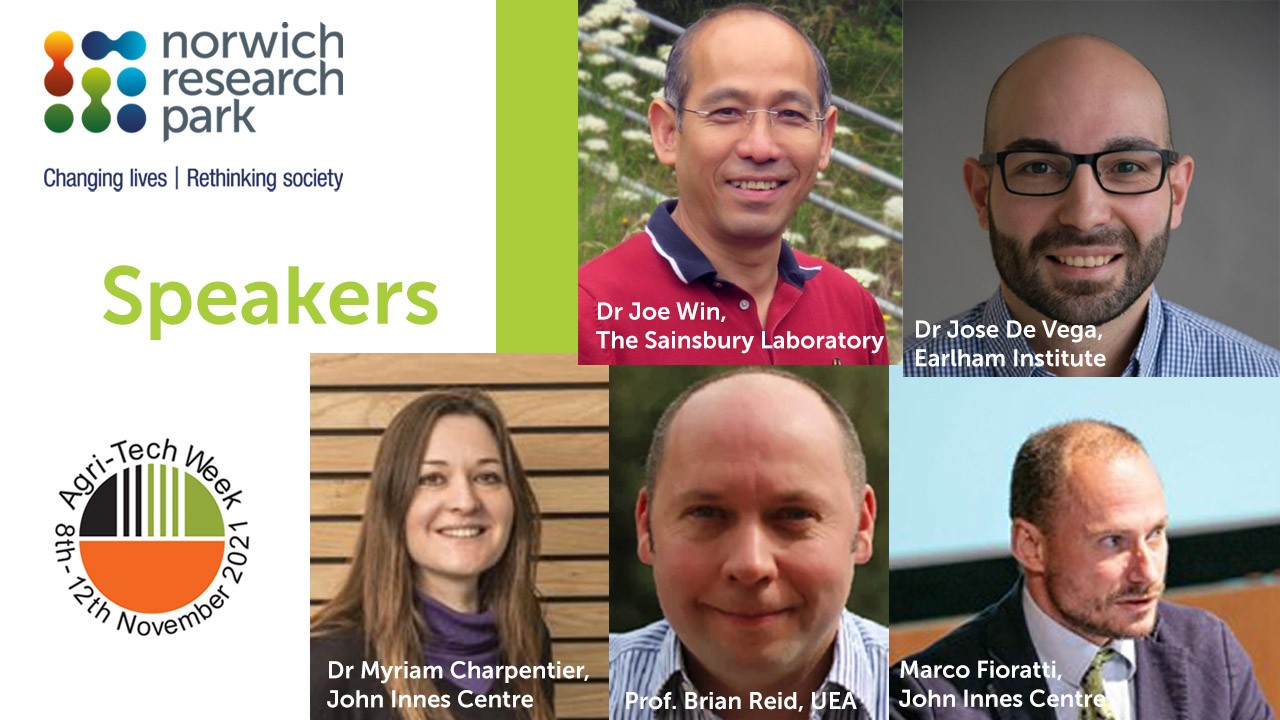
The second half of the event was a panel discussion –  ‘Strengthening engagement through ‘science push’ and ‘industry pull’’ chaired by Dr Nick Goodwin, COO of Anglia Innovation Partnership featuring James Phillips, Head of Translation and Innovations Capability at the Biotechnology and Biology Sciences Research Council (BBSRC), Linda Bedenik, Senior Policy and Public Affairs Manager, The Bioindustry Association, Luke Young, CEO and co-founder of Alora, Dr Jonathan Clarke, Head of Business Development at the John Innes Centre, Prof Brian Reid, Professor of Soil Science, UEA, Dr Jenny Longmore, Director of Research Operations, Norfolk & Norwich University Hospital and Dr Cathrina Edwards, PulseON Foods.


Roz Bird, CEO, Anglia Innovation Partnership, said: “Norwich Research Park is one of the largest research clusters in Europe, with over 30,000 people on site every day.


Our aim is to raise awareness of our technology and research platforms and encourage more research collaborations, and more industry access, to maximise the impact of the enormous amounts of publicly funded research taking place on the campus.


“These events are a really good way to highlight the genuinely fantastic opportunities that exist here and the importance of our facilities. We actively support fledgling companies with access to funding, facilitating collaborative partnerships and introducing them to useful business networks. Our unique combination of top-class facilities, access to funding and ease of collaboration means we can fast-track ideas to become viable start-up companies.


It was great to be able to show case unique technology and new enterprise activity yet again and to get a great response from our audience of over 100 delegates.”


  • *I have permission from the copyright holder to publish this content and images.

Commercialising Research in Sustainable Biostimulants

Member News
The views expressed in this Member News article are the author's own and do not necessarily represent those of Agri-TechE.

As part of our “Back to the Future” project, we’re asking Agri-TechE members to reflect on how the agri-tech industry has evolved over the past decade and to share their vision for the next ten years. By compiling these insights, we aim to create a powerful outlook on the future of agriculture, a compelling call to arms for the industry driven by the diverse perspectives of our community.

This submission is part of the collection of reflections and predictions from our members, offering unique perspectives on the industry’s past milestones and future directions. Each contribution adds to a broader dialogue about the innovations and challenges that will shape the next decade in agri-tech.

The Evolution of Land-Based Skills Training: Adapting to a Changing Landscape

Member News
The views expressed in this Member News article are the author's own and do not necessarily represent those of Agri-TechE.

As we progress through the fourth industrial and agricultural revolutions, land-based skills training is undergoing a significant transformation. Universities like Anglia Ruskin Writtle are at the forefront of this change, adapting their curricula to meet the evolving needs of the industry and address global challenges such as climate change, food security, and sustainable resource management.

One of the most prominent shifts in recent years has been the integration of technology into land-based education.  Traditional agricultural and environmental management practices are now augmented by digital tools and data-driven approaches.  Students are learning to use Geographic Information Systems (GIS), drone technology, and precision agriculture techniques.  They’re gaining skills in using satellite imagery for crop monitoring, employing soil sensors for optimised irrigation, and utilising big data analytics for yield prediction.  Looking ahead, we can expect increased investment in cutting-edge equipment and software, as well as partnerships with tech companies to develop specialised courses in agri-tech and environmental informatics.

Sustainability and climate resilience have also moved to the forefront of land-based skills training. Curricula now incorporate principles of agroecology, regenerative agriculture, and carbon sequestration.  Students are being trained not just to maximise yield, but to do so in a way that preserves biodiversity, minimises environmental imp act, and contr

ibutes to climate change mitigation. We are already seeing the development of specialised programmes in climate-smart agriculture, sustainable forestry, and ecosystem restoration.

Another significant trend is the shift towards interdisciplinary and holistic methodologies. Recognising the complex and interconnected nature of land management issues, educational institutions are breaking down traditional barriers between disciplines.  Students are encouraged to understand the interplay between agriculture, ecology, economics, and social sciences.  This holistic approach better prepares them for the multifaceted challenges they’ll face in their careers.

Practical, hands-on experience has also gained increased emphasis in land-based skills training. Universities have strengthened their ties with industry partners, offering more internships, work placements, and collaborative research projects.  This approach not only enhances students’ practical skills but also improves their employability by providing them with real-world experience and industry connections.  In the future, we will see the establishment of innovation hubs or incubators focused on land-based industries, providing students with opportunities to work on real-world problems and even develop their own start-ups.

The globalisation of agriculture and environmental management has necessitated a more international outlook in land-based skills training.  Programmes now feature more international learning opportunities, global case studies, and courses focused on diverse agricultural practices from around the world.  This trend is likely to intensify, with universities developing partnerships with institutions in different climatic zones and offering students unique insights into diverse land management challenges and solutions.

Lastly, there’s growing recognition of the importance of soft skills in land-based professions. Communication, leadership, problem-solving, and adaptability have become increasingly valued by employers.  ARU Writtle, for example, are responding by incorporating more group projects, presentations, and leadership opportunities into their curricula.  We have already seen the introduction of specific sessions on professional skills for land-based careers, such as stakeholder engagement, conflict resolution in resource management, or science communication.

As we look to the future, institutions like Anglia Ruskin University Writtle are well-positioned to lead the next wave of innovation in land-based skills training.  By embracing these evolving trends, universities can prepare graduates to tackle the complex land management challenges of tomorrow, contributing to sustainable land management and food security worldwide.


Mercedes-AMG PETRONAS F1 Team accelerates towards Net Zero with investments into carbon removal & innovation

Member News
The views expressed in this Member News article are the author's own and do not necessarily represent those of Agri-TechE.

We are pleased to announce a new round of investment into innovative carbon removal initiatives as part of our ambition to become one of the world’s most sustainable sports teams.

As a Formula One team racing on multiple continents, we have worked tirelessly to understand the environmental impact that we have and the role that we can play in driving change.

We are reducing our race team’s emissions, targeting a 75% reduction by 2030 and setting SBTi-aligned targets for our entire supply chain to hit Net Zero by 2040, in line with our Climate Pledge Commitment.

Emissions reduction remains our primary focus, but we recognise that some sectors within our footprint may have lingering residual emissions which will require the highest quality, lasting carbon removals.

Carbon removal projects actively remove carbon from the atmosphere. Removal can be achieved through both natural and technological solutions, offering storage in a variety of locations and over a range of timeframes.

In line with the recommendations of the Oxford Offsetting Principles, high quality projects with long durability and low risk of carbon being released back into the atmosphere can be used to counterbalance residual emissions in support of Net Zero strategies.

Recognising that the carbon removal market is still in its infancy, with new project types and methodologies, we have begun to invest in a blended portfolio of nature-based and permanent removal initiatives that we anticipate will help us meet our Net Zero targets in the short, medium, and long-term. We are supporting schemes operating in different geographies and at different scales to promote innovation, build confidence and help make the case for market growth.

The first project is a carbon removal purchase, facilitated by Frontier, and is our first investment in permanent, technology-based carbon removal solutions.

To compensate a portion of our residual emissions, carbon will be permanently sequestered on our behalf, via new technologies such as direct air capture, enhanced weathering, and biomass sequestration. Upfront purchases will help to scale the most promising carbon removal start-ups by providing them with guaranteed demand and development through forward-looking commitments.

We have also made a three-year commitment to a soil carbon removal project in the UK, generating credits which will help compensate for a portion of our residual carbon emissions.

These pioneering projects, breaking ground in their respective sectors, are part of our blended approach and transition towards high-integrity removals in line with the Oxford Offsetting Principles.

Alice Ashpitel, Head of Sustainability, Mercedes-AMG PETRONAS F1 Team: “Innovation is at the heart of everything we do, both on and off the track. These new projects reflect our commitment to pioneering solutions that not only mitigate our environmental impact but also drive broader change.

“We’ve explored many solutions, from immediate projects to future tech, that can help us implement innovative carbon removal methods and reach our long-term climate goals. Independent experts have guided us through the process in selecting the projects that we’re announcing today. We remain committed to driving emissions reduction, and we hope our investment in innovative removals initiatives will boost their impact and help the market grow.”


Accelerating Carbon Removal Technologies with Frontier

Our agreement with Frontier will help accelerate carbon removal technologies that store carbon permanently (> 1,000 years), do not compete for arable land and have a path to being affordable at scale (< $100/ ton), even if they’re not there today.

These are crucial requirements to ensure long-term viability and we anticipate our carbon removal credits with Frontier contributing to our permanent removals as early as 2027.

Hannah Bebbington, Strategy Lead at Frontier: “A lack of customer demand has been a huge blocker to progress in carbon removal. Purchases like that made by the Mercedes-AMG PETRONAS F1 Team send a clear signal to entrepreneurs and investors that the market is ready to scale up. Every business that is serious about climate needs to be doing this.”

Supporting the Adoption of Regenerative Agricultural Practices with Blaston Farm

Closer to home, we are investing in a project at Blaston Farm in Leicestershire where this initiative is set to inspire wider adoption of regenerative agricultural practices across the UK.

We are purchasing nature-based carbon removal credits from Respira International to compensate for residual carbon emissions in our footprint today. Here, we’re not just capturing carbon; we’re enhancing soil health, boosting crop productivity, nurturing biodiversity and empowering farmers with new revenue opportunities.

Our investment at Blaston Farm aligns with stringent registry standards, ensuring that each greenhouse gas reduction is precisely calculated. This pioneering project represents a new carbon accounting methodology which, alongside independent validation, will help us uphold the highest levels of credibility and trust.

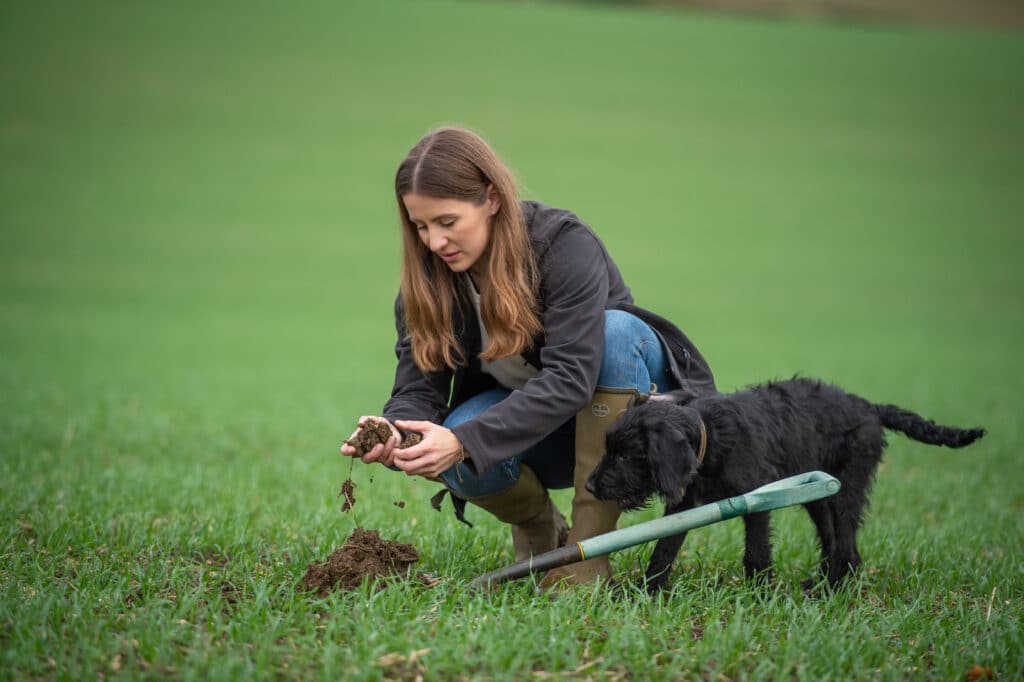
Soil is the world’s largest terrestrial carbon sink, emphasising the crucial role of soil management in climate change mitigation. A shift to Regenerative Agriculture has the potential to sequester atmospheric CO2, mitigating an estimated 5-10% of global emissions if widely adopted.

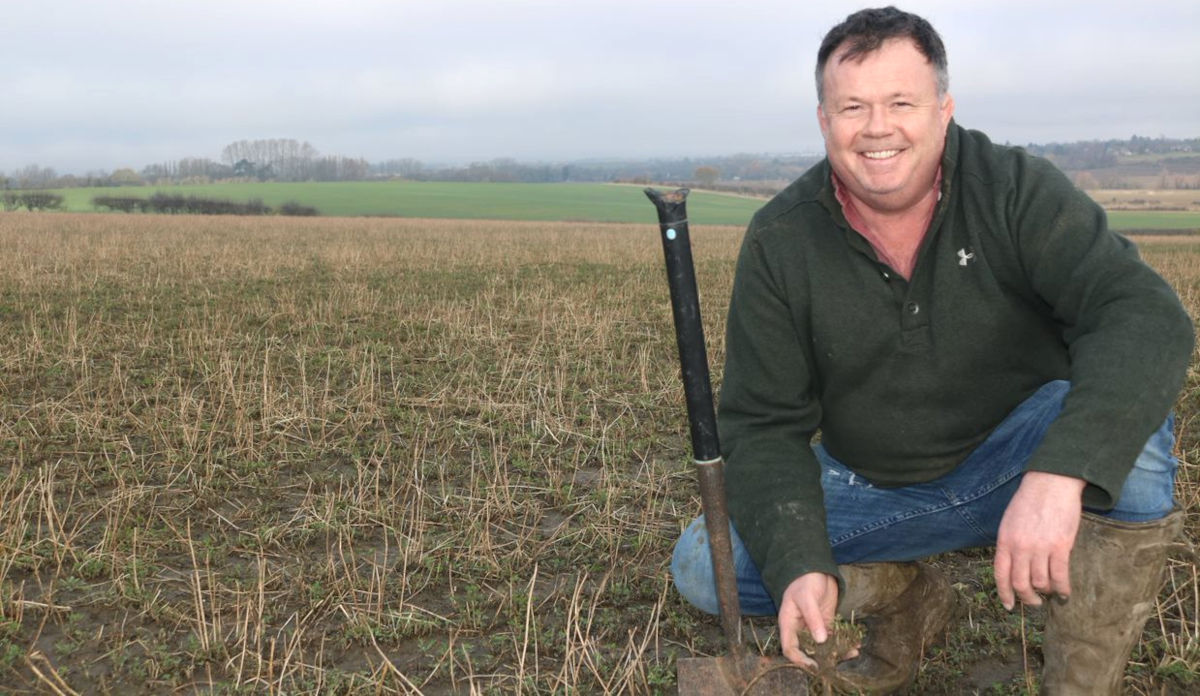
The project at Blaston Farm will demonstrate that conventional production systems are associated with soil organic carbon losses, whereas regenerative systems are recording gains.

David Wright, CEO of Ecometric: “Our highly accurate soil organic carbon monitoring system merges direct soil measurement with AI-driven image analysis. This fusion significantly enhances the accuracy and scalability compared to conventional systems. UK corporates are now empowered to actively participate in mitigating climate change through regenerative soil management, as demonstrated by changes in carbon stock. On behalf of Respira, Indigro and Hylton Murray-Philipson, Farmer and Estate Manager at Blaston Farm, we are delighted to collaborate with the Mercedes-AMG PETRONAS F1 Team offering them the potential to compensate for their ongoing emissions by funding domestic sequestration and, in turn, provide performance related financial reward back to the farm to incentivise their positive change”.

The investments announced today form part of our wider sustainability strategy and commitment to reach Net Zero.


Company at Norwich Research Park to grow rice on the ocean surface.

Member News
The views expressed in this Member News article are the author's own and do not necessarily represent those of Agri-TechE.

‘Ending world hunger, achieving food security and improved nutrition, and promoting sustainable agriculture’ is the United Nations’ no.2 goal. And, it’s one that a company based at Norwich Research Park is confident it can help solve by growing rice on the surfaces of the world’s oceans. Alora is aiming to create the world’s first ocean agriculture system with revolutionary technology that is set to increase yields, use zero freshwater and minimal land.

Alora is the first company in the world that is aiming to grow rice and other crops on the surface of the ocean. It has developed a patented genetic design that will enable its rice crop to grow in an ocean’s highly salinated environment. This means that crops can be grown without fertiliser or freshwater whilst achieving increased yields and incurring lower production costs. It has already developed a salt-tolerance trait allowing rice to grow in environments of up to 50% of the salinity of the oceans.

Using marine nutrients, a symbiotic approach and custom engineered soil replacement material, Alora’s Ocean Agriculture has higher yields than both traditional and modern methods of growing food, with the engineered platforms alone increasing yields by up to 70%.

Alora was co-founded by Luke Young (photo: left) and Rory Hornby (photo: right), both 28, who first met when they were studying for their science degrees at Durham University. Luke recalls, “We first became friends because we were the only two people on our course who wanted to talk about science outside of our lectures. We found that we were both fascinated by its potential and we talked about loads of ideas. But the important thing for both of us is that we wanted to apply the results of scientific research so that it could have a positive impact on society.”

There were many avenues open to the friends but the one that really got them excited was how to help solve the world’s hunger crisis. Ocean agriculture was the vision that they shared.

Rory explains, “The first question we needed to answer was why the world’s food shortage is such a crisis when billions of pounds are poured into it each year. The answers lies in the limitations of agriculture. One, is the amount of fertile land that is available which contains all of the nutrients needed to grow crops and the other, is the available source of good fresh water. We realised both of these can be found in our oceans and started designing our solution.”

The biggest issue they faced was that ocean water has a high salt content which is not normally a good environment for growing staple crops. The solution was to engineer salt-tolerant varieties of rice that would adapt to the ocean environment, being able to absorb the nutrients available and survive in water that is more salinated than a land-based environment.

They did this by employing gene editing techniques to identify and ‘switch on’ the salt-tolerant genes in the rice varieties which they patented. The plant’s stem cells are then transformed and can be regrown with an active salt tolerance. The rice is grown on ocean surface ‘farms’ which consist of a number of covered pods to protect the growing rice from birds and the weather.

This method of growing rice also has a positive environmental impact. Rice grown on land is responsible for creating 1.5% of all global greenhouse gas emissions which is linked to the bacteria in the soil that thrives in rice paddy fields. That issue is removed by growing rice on the ocean’s surface.

Such was the interest in their ideas that IndieBio, a biotech accelerator programme based in San Francisco in California, invited Luke and Rory to set up Alora there, where it funded a development programme for them. Whilst there, they caught the attention of a Singaporean investor who funded the $500,000 USD they needed to get things off the ground.

With the concept proven, they moved to Canada to continue their work developing their first crop with a high salt tolerance, their marine farms and a stealth bacterial technology with the target of launching their first ocean farm pilot in Singapore in 2022.

Having raised $3.7m from investors, they then set about searching for a base from which to build their business. Having visited many potential sites including San Diego and Boston in the US and Amsterdam in Europe, they decided that Norwich Research Park presented them with the best location.

Luke explains why, “I had known about the fantastic reputation the John Innes Centre has for plant science from a couple of friends who worked there, so knew of Norwich Research Park’s existence. But we did not know just how large and well-suited it was until we visited. The team from Anglia Innovation Partnership were very proactive in showing us around and pulling together an itinerary to meet key people on the campus.”

“As soon as we walked into the Centrum building, we knew this was going to be our home. The chance to work with the six partner institutions on the Park, the world-class facilities and the talent pool for us to dip into as we grow our business presented an unbeatable proposition. With plans for new buildings that we could move into as we expand coupled with so much else at our fingertips meant we were able to make the decision to move here in just 24 hours!”

The next 12 months is anticipated to be a very exciting one for Luke, Rory and their team. They are currently preparing to open their Series A funding round later this year where they hope to raise between $15-30m USD to fund the establishment of their site in Norwich and their pilot projects around the world. They are hiring now to help get their first products on the market which they anticipate to be in the salt-degraded soils of South America, South East Asia, South Africa and the USA.

Currently, they have a number of partnership and pilot projects being run across the globe in places such as the US, Grand Bahama Island, Kenya, Namibia, Madagascar, Singapore, Vietnam and India where they hope to start harvesting rice for the local populations.

The opportunity ahead of them is massive. The soil-based rice market is worth around $376bn, where up to one-third of irrigated paddies are impacted by salt intrusion today. Ocean-based rice farming, where costs such as irrigation, pesticides and fertilisers are not needed and yields are expected to be better than land-grown rice, is expected to deliver greater profitability and greater sustainability. Plus, there is the added benefit of a reduced carbon footprint. And they don’t intend to stop at rice. Soya bean and cotton are next on the list for ocean farming.

Roz Bird, CEO of Anglia Innovation Partnership, said, “We are absolutely delighted that Alora has chosen Norwich Research Park to grow its business and develop its truly innovative and game-changing products. As one of the largest research communities in Europe, offering access to specialist technology platforms, networks and expertise, to meet Alora’s evolving needs, I have no doubt that they will succeed, following in the footsteps of the likes of Colorifix and Tropic – finding solutions to some of the world’s most critical problems, such as food security, and at the same time creating new jobs for our local economy.”

  • *I have permission from the copyright holder to publish this content and images.

IoT Solutions – Made Easy

Member News
The views expressed in this Member News article are the author's own and do not necessarily represent those of Agri-TechE.

Customisable Designs

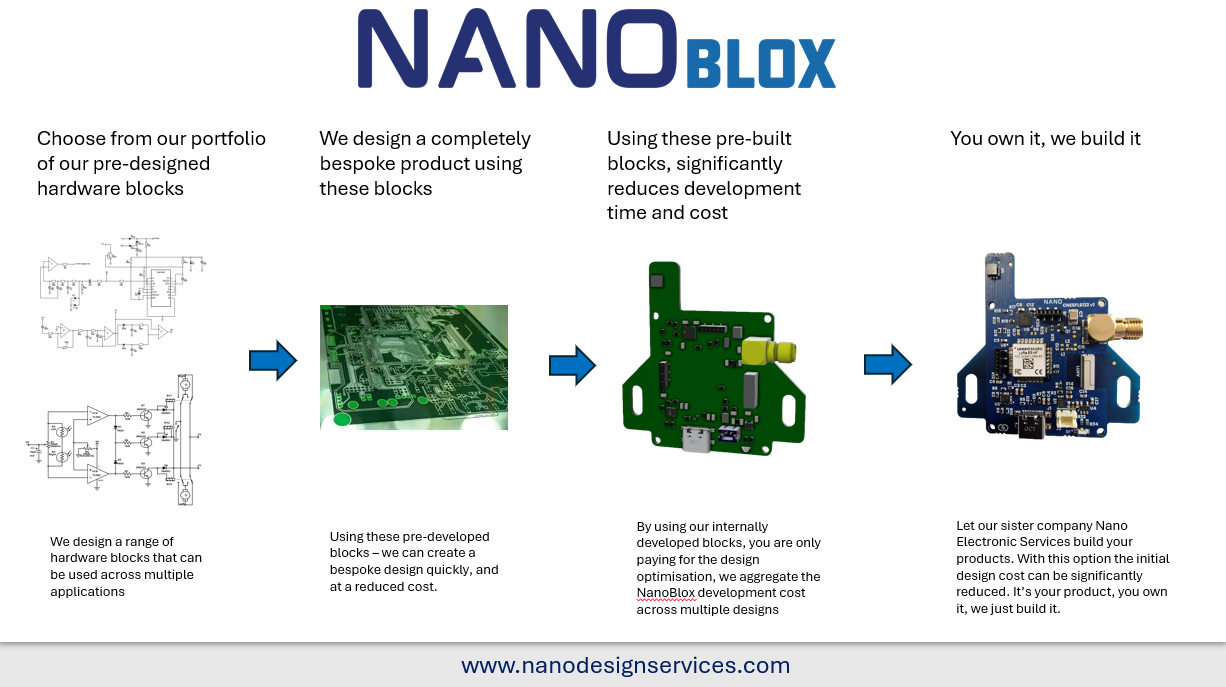
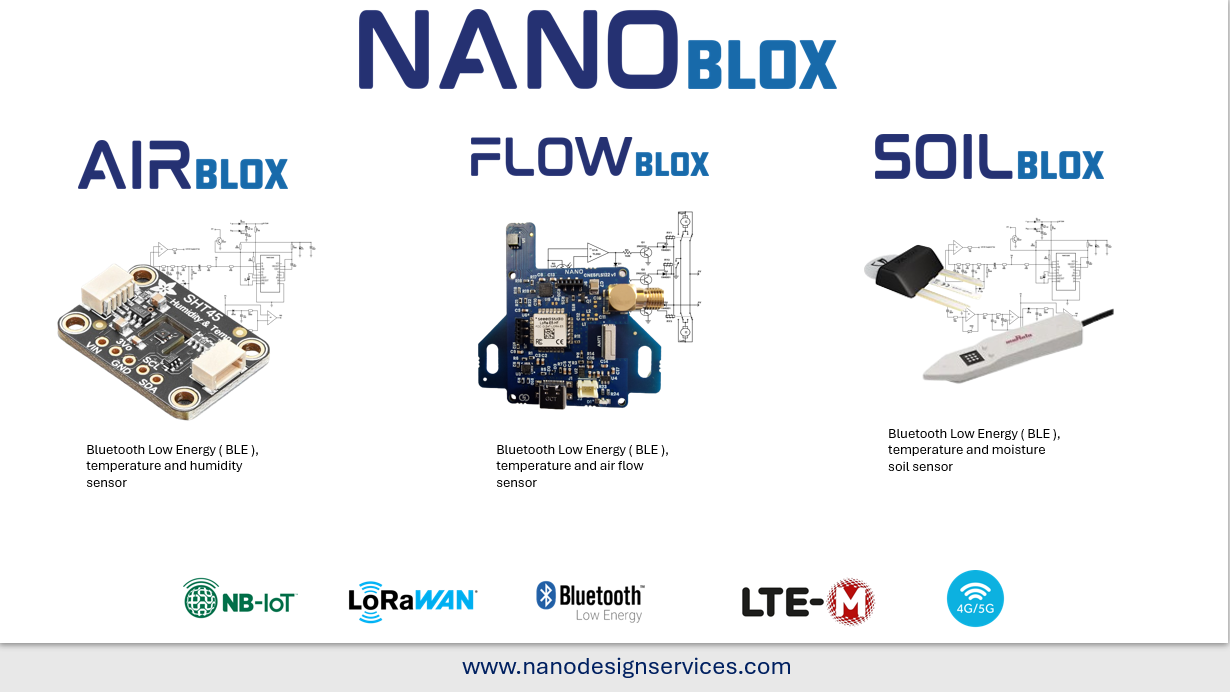
Select from one of our pre built CAD models. These designs are proven and tested and allow us to quickly create your own bespoke product from these core building blocks. Similar applications will use a common technology – IoT for example – will take a sensor input, maybe add some edge processing and then store data or send to the cloud. Why have different customers paying someone to design the same thing. This is where off the shelf hardware modules came from, allowing for easy design of common functions.

But what happens when the module isn’t quite right, there is a compromise, on space of functionality, or maybe the module becomes obsolete. NanoBlox takes this to the next stage, the module exists in the CAD system and can easily be modified to give customers exactly what they need, without having to pay for a full development. Instead only pay for the modifications – allowing for quicker time to market and reducing risk.

More at : www.nanodesignservices.com/nano-blox

  • *I have permission from the copyright holder to publish this content and images.