160 year old research opens gateway to more nutritious and sustainable pea crops

Member News
The views expressed in this Member News article are the author's own and do not necessarily represent those of Agri-TechE.

Researchers at the John Innes Centre at Norwich Research Park have helped to solve a historical puzzle that could revolutionise the breeding of the humble pea and other legumes leading to improvements in their nutritional value and lessening the reliance on pesticides.

This landmark work, published in the journal Nature, comes at a time when peas and other legumes are being called upon both as sources of plant protein and as sustainable crops which can fix their own nitrogen. It could result in pea and other legume crops, needing less chemical fertiliser to grow, becoming more economically viable for future growers and potentially lowering land and river pollution.

The groundwork for this latest study was laid 160 years ago by Gregor Mendel, a citizen scientist. He famously performed a series of experiments in the mid-nineteenth century where he cross-bred 28,000 pea plants to understand how their traits were inherited by future generations. Although at that stage the concept of genes didn’t exist, Mendel concluded that plants were passing on hereditary ‘factors’ to their offspring that determined whether they inherited what turned out to be ‘dominant’ or ‘recessive’ versions of genes known as alleles.

Mendel’s work on peas was described by the science historian Allan Franklin as “the best experiments ever done.” He focused on seven pea traits: seed shape (round or wrinkled), seed colour (green or yellow), pod shape (constricted or inflated), pod colour (green or yellow), flower colour (purple or white), plant size (tall or dwarf) and position of flowers (axial or terminal).

Over many years of experiments, involving thousands of plants, he established fundamental rules of inheritance, how characteristics are passed down through the generations, and single-handedly laid the groundwork for the science of genetics.

Three of Mendel’s original seven pea traits had not been linked to a particular gene. That is until now. An international research collaboration between the John Innes Centre, the Chinese Academy of Agricultural Sciences (CAAS) and other contributors in China, France and the UK, has used genomics, bioinformatics and genetics to map the diversity  of a global pea collection and revealed the genes associated with the remaining three Mendel pea traits.

This new set of gene bank and genomic resources which will now be available to researchers and breeders worldwide could revolutionise pea breeding and research into this environmentally important crop.

Dr Noam Chayut, one of the study’s leading authors, at the John Innes Centre, said, “Our collaboration has created a genomic resource of extraordinary depth and breadth that includes the whole genome sequence data for the 700 pea types representing the global species diversity. We already have researchers and multi-national companies ordering seeds corresponding to the novel genomic resources which will revolutionise how companies breed peas and how scientists study them, right across the world.”

“In Mendel’s time, pea was an important crop that he wanted to improve by solving problems that were facing gardeners and growers at the time. This study not only shines a light on Mendel’s fundamental discoveries, but it also opens the route to growing pea in many parts of the world, including the UK. Pea is a crop which can deliver a sustainable source of plant-based protein and has a major role to play in the future of farming.

“The six-year study was only successful because of the interdisciplinary nature of the team, with each member bringing a necessary skill to the partnership. The most important and beautiful part of this research is the collaboration”.

The study’s researchers selected a genetically representative sample of around 700 pea accessions from the collection of 3,500 held at the John Innes Centre’s Germplasm Resource Unit, a national capability, funded by BBSRC. This generated 62 terabytes of raw data, comprising 25.6 trillion pieces of information which, if printed out, would cover 3.6 billion sheets of A4 paper.

From this data, amassed from the 700 pea genomes the team created a global genomic map of pea, from the highly bred and cultivated pea, through to locally adapted varieties from all around the world; called landraces, and wild relatives.

Using this map and a technique called Genome Wide Association Studies, they identified regions of the genomes that corresponded to valuable trait variation. The research has connected more than 70 agronomic traits to corresponding genomic locations. The many different genetic markers at each of these locations can be used to accelerate pea improvement.

Looking forward, the new resource, coupled with other modern technologies such as gene editing, long-read DNA and RNA sequencing, will open up unprecedented opportunities for novel gene discovery. It will also pave the way for more predictive breeding such as using AI models which can select combinations of genes to deliver better yielding, disease-resistant, agronomically viable pea plants.

Prof Shifeng Cheng of the CAAS Agricultural Genomics Institute at Shenzhen, said, “Mendel discovered what we now call the laws of inheritance without knowing what a gene was. Today, using modern tools, we can see the exact genes and the precise mutations that he unknowingly tracked.”

The market for pea protein is among the fastest-growing of those for all alternative protein sources and researchers want to learn more about creating productive pea plants specially studying genes associated with pod size, plant yield, seed protein content and resistance to disease.

  • *I have permission from the copyright holder to publish this content and images.

Digital Divide faced by Rural Businesses and Organisations

Member News
The views expressed in this Member News article are the author's own and do not necessarily represent those of Agri-TechE.

Digital Divide faced by Rural Businesses and Organisations  

Question: Are businesses and organisations really benefitting from technology (telecommunications) in rural areas?

Answer: Contrary to popular belief the honest answer is no they are not, and we shall outline some observations gathered from decades of being in the technology sector and present options.

The “digital divide” has been in place since the mid-1990’s and is still very much a real barrier today for a large amount of the UK’s rural communities and businesses. Just think about that for a moment there has been a quantifiable difference in the quantity and quality of technology availability for over 30 years, and successive governments and initiatives have done very little to remove or close the gap. The response from the technology “industry” is even more damning because they have always put profits before people and unless there was significant investment available from central government then they never looked at expanding technology outside of the cities. This means that pretty much the entire rural environment has made do with third rate infrastructure to operate their livelihoods over.

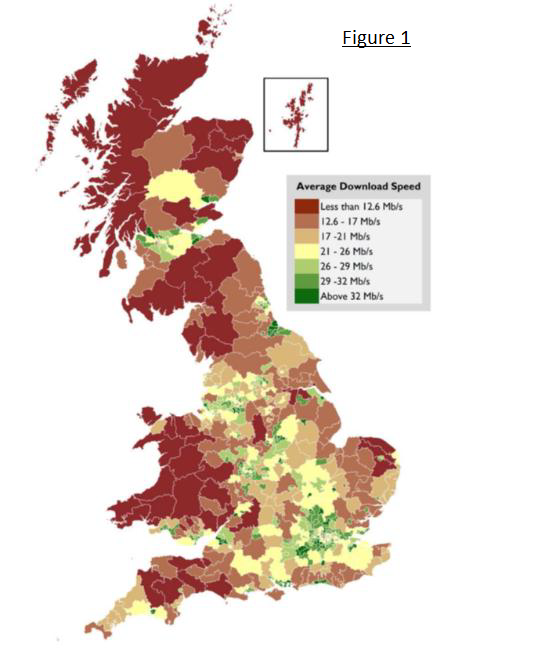
Things have become marginally improved over the last few years and mobile coverage and fibre connectivity are now creeping ever further into the rural domain but it is a slow process.   Even with this improvement the smart money is on there still being a considerable drop off between urban and rural locations. The image in figure 1 below was sourced from the House of Commons archives and provides a good indicator of how things are today even with the investments that have taken place.

Now the whole world got really pumped over the latest telecoms platform set to revolutionise the way we all communicate – 5G was going to allow us to have a shave on top of a mountain in Wales conducted by someone in the USA. The hype far outweighed the actual realities and capabilities of the commercial mobile network offerings; even in the urban areas the rollout of “true” 5G networks has been slow so just imagine the reality of those networks reaching the rural areas of the country. 5G networks require a massive investment to make them happen and this is not just about putting up new antennas, to build a 5G network requires fibre, power and much more to create the new platform.

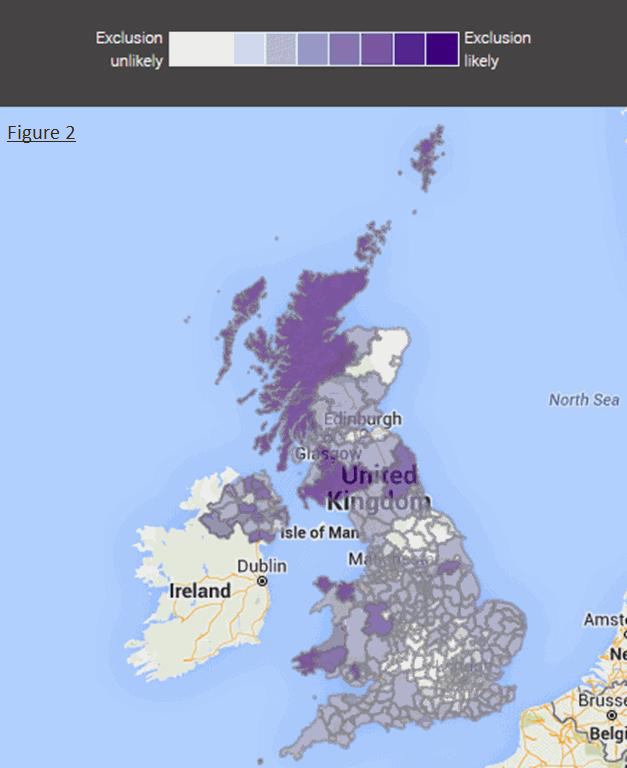
Figure 2 shows the likelihood of exclusion to good quality broadband. Quite a sobering thing to take on board. Unless you are in one of the major urbanisations in the UK there is a real risk you are going to be underserved in your telecom needs.

Facing these barriers, is there little wonder that rural communities and businesses feel that they have been forgotten by successive governments and organisations providing services? The big problem for everyone operating a business in the rural domain is that more and more of everyday services and 3rd party organisations now use increasing reliance on online services and tools to capture data. This includes everything from tax returns through to livestock records for DEFRA and ordering vital supplies to keep your business moving forward. It doesn’t stop there either the machinery that you use to conduct your work is also requiring connectivity so that it can send diagnostic data back to the manufacturer so that your tools can be maintained and avoidance of downtime due to malfunction can be decreased.

After reading the first statements you could easily form an opinion that technology and the benefits it brings are out of reach for rural entities, however you’d be wrong.  At C3R Technologies we pride ourselves on being able to bring technology to the rural environment and people who work and live there.

We don’t just say this but we have actually done this for ourselves at our North Yorkshire farm. We have built a demonstration facility that has the latest technology installed:

  • The very latest standard Wi-Fi network installed to provide data connectivity around the entire working yard area of the farm
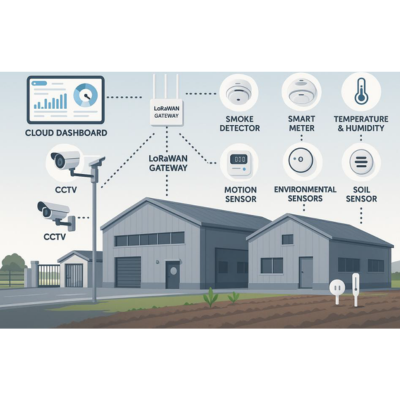
  • IoT(sensors) and A.I.(analytical data capture & reporting) providing 24×7 monitoring of our power consumption, air/environmental quality and perimeter security monitoring to name but a few
  • Integrated CCTV that is linked to the security sensors
  • Satellite backhaul as there is no broadband connection available from any supplier
  • All applications hosted on the Cloud so full access to authorised persons from anywhere on the planet

These are the exact same technologies that we can bring to your locations and organisations to give the digital connectivity and bring efficiencies and security that are denied due to your location.

These demonstration technologies are just a snapshot of what C3R Technologies can bring to assist your business/organisation to benefit from, if it can be monitored it can be measured.

Want to find out more or a book a live demonstration then please contact us via our web pages www.c3rtechnologies.com or email us at hello@c3rtechnologies.com or call +44 3330 386 878.

Let us help you reap the benefits of using the right technology for the right scenario.

  • *I have permission from the copyright holder to publish this content and images.

World Food Prize Laureate winner to give 2025 John Innes Foundation Lecture

Member News
The views expressed in this Member News article are the author's own and do not necessarily represent those of Agri-TechE.

Dr Cary Fowler, former US Special Envoy for Global Food Security and 2024 World Food Prize winner will be delivering this year’s John Innes Foundation Lecture, ‘Trends – Trouble – Tenacity: The food security picture for 2050’. It will be held at the John Innes Conference Centre at Norwich Research Park starting from 1.30-2.30pm on Friday 23 May.

The preponderance of evidence indicates that we will fall far short of producing enough to meet global food demand and need by 2050. Climate, soil degradation and loss, water shortages, conflict, trade restrictions and underinvestment in agricultural research are combining to swell the numbers of food insecure and create an ugly world we should not bequeath to future generations.

No magic solutions exist but amongst the many good and positive things that could be done, a few are strategic and essential. Dr Fowler will examine the challenges and point to a few of the most important responses we could be making.

At the State Department Dr Fowler launched the ‘Vision for Adapted Crops and Soils’ initiative and organised 150 Nobel and World Food Prize Laureates to raise the alarm about the growing challenges to feeding the world’s people by 2050.

Previously, Dr Fowler led the Global Crop Diversity Trust and is best known for being the ‘father’ of the Svalbard Global Seed Vault.

You are welcome to attend in person so please register here.

(Please note that you do not need to register to attend in person if you are already planning to attend the whole of Jonathan Jones’ ‘Looking Back to Look Forward’ event at the same venue.)

You can also watch a livestream of the lecture here.

  • *I have permission from the copyright holder to publish this content and images.

Gardin Raises $4.5M with Breakthrough Photosynthesis Sensor & AI Platform

Member News
The views expressed in this Member News article are the author's own and do not necessarily represent those of Agri-TechE.

Gardin Raises $4.5M to Advance Precision Agriculture with Breakthrough Photosynthesis Sensor & AI Platform to Monitor Greenhouse Crop Health at Scale, in Real Time

Gardin Agritech has raised a $4.5M Seed 2 financing round led by Navus Ventures with participation from new investor Oxford Innovation Finance as well as existing investors LDV Capital, MMC Ventures, Seedcamp, Alchimia Investments and angel investors.

Gardin is growing their list of customers leveraging their novel optical photosynthesis sensor & AI that measures crop photosynthesis in real time, giving growers early insight into plant health and development. This allows for faster, more targeted interventions, resulting in improved yields, better crop quality and more efficient use of resources such as water, light and energy. Clients have reported up to 10x return on investment.

Since commercial launch in June 2023, Gardin’s sensors have been deployed across a wide range of environments – from polytunnels in Spain and Morocco to greenhouses in the Netherlands and Canada – and used successfully on more than 20 crop species, from algae to tomatoes. In 2025, the company is doubling down on light optimisation and energy efficiency enabling growers to make informed decisions, with trials already showing growers can achieve 20-30% in energy savings. Gardin’s technology also aids research into hardier seed varieties, contributing to a more sustainable and secure food supply.

The news comes at a critical time for the $200 billion global Controlled Environment Agriculture (CEA) market, which is expanding rapidly due to rising demand for reliable food supplies and decreasing setup costs.

Yet the sector faces mounting pressures: energy and labour costs have surged, emissions regulations are tightening and there’s a shortage of skilled growers to operate indoor farms, greenhouses and seed breeding businesses. Existing tools lack the sophistication to process vast amounts of data and deliver timely insights, leaving many operations struggling to adapt efficiently. This underscores a pressing need for AI-powered solutions capable of analysing large swathes of data in real time – enabling smarter, automated decisions and unlocking the full potential of precision agriculture.

Agriculture Investments Limited, one of the UK’s most progressive fruit producers, adopted Gardin’s technology after seeing its potential to deliver scalable, confident decision-making for more resilient, high-quality crops.

“We have been long believers that to truly optimise food production we need to be able to change the greenhouse climate to adapt to the crop’s needs but there was no solution on the market that could solve this with high confidence and scaleably…. Until we met Gardin. Gardin’s unique sensor + AI is able to detect changes in crop photosynthesis and provide clear, actionable insights based on that. As a result, within a couple of months of trialling Gardin’s product we decided to sign a multi-year contract,”

said David Moore, Director of Agriculture at Agriculture Investments.

Fromboer reports a 5% yield increase per square meter thanks to more uniform, high-quality production and improved cost control. “The sensor contributes to homogeneous production with high quality and cost control. Overall, I estimate yield is at least 5% higher per square meter,” said Leonard Boer, Owner & Head Grower at Fromboer.

Ridder highlights Gardin’s ability to drive profitability boosts of up to 30%, yield gains of 15%, and early detection of crop stress weeks in advance – marking a shift from traditional climate control to data-driven “crop control.” “For many years now we have been able to effectively automate climate control around the crop, the next phase is to incorporate real time feedback from the crop and move from ‘climate control’ towards ‘crop control’. Gardin has developed the key technology to enable this,” said Sander Baraké, CTO at Ridder. “Results include profitability boosts of up to 30% by optimizing winter LED efficiency and maximising summer light. Yield increases of up to 15% and early detection of biotic and abiotic stresses by up to 4 weeks before crop walking,” he continued.

With this new round of funding, Gardin will enhance its platform and grow their commercial team to expand its customer base across continents.

Led by serial entrepreneur Sumanta Talukdar, who previously co-founded and exited WaveOptics for over $500 million, brings decades of experience across optics, photonics, sensors and computer science,

“Navus Ventures are in my opinion the best Ag focussed investor in Europe with a deep knowledge and network in this ecosystem. The whole Gardin team is very pleased to partner with Navus,” said Sumanta Talukdar, Founder & CEO of Gardin.

“Gardin has developed a unique affordable technology that gives growers an actual pulse on their plants and therefore business. A great addition to our portfolio and fit with our strategy and background, we are looking forward to helping Sumanta and the Gardin team through the next phase of commercial scaling,” said Jaap Zijlstra, director at Navus.

Researchers welcome the passing of Precision Breeding legislation for plants

Member News
The views expressed in this Member News article are the author's own and do not necessarily represent those of Agri-TechE.

“The future of plant science in England is bright” – researchers welcome the passing of Precision Breeding legislation for plants

Following the news that Parliament has passed the secondary legislation to implement the Genetic Technology (Precision Breeding) Act for plants in England, we welcome the benefits this offers, and the increased opportunities for plant and microbial science to improve the health of plants, people and the planet. 

Our scientists have used precision breeding techniques to develop tomatoes fortified with vitamin D by gene editing a natural pathway so that tomatoes accumulate more provitamin D3. The passing of the secondary legislation means that this innovation could help millions of people with vitamin D deficiency, a growing issue linked to higher risk of cancer, dementia and many leading causes of mortality. 

Without this vital legislation, innovations like the gene edited tomato would be difficult to market and sell in England.  

Dr Penny Hundleby, Research Partnerships and HP3 Hub Lead at the John Innes Centre, said: “Precision breeding offers England a unique opportunity to lead the way in sustainable food production. Alongside our partners on the Norwich Research Park, we are fast becoming an epicentre of precision breeding. We are focussed on working together and collaborating with partners and investors to improve the sustainability and quality of food and farming for the future. 

“The passing of this forward-thinking legislation means that this science will be able to benefit the health of people, plants, and the planet. The use of precision breeding technologies in research will expand our understanding of plant genetics and strengthen the entire agricultural science ecosystem, reinforcing the country’s leadership in agricultural innovation.” 

Dr Jonathan Clarke, Head of Business Development at the John Innes Centre, said: “As an early adopter of this innovative technology in Europe, England can now benefit from investment from organisations wanting to commercially develop precision bred crops. The passing of this legislation allows the momentum to continue and furthers the economic viability of these important scientific innovations. 

“Our research capability and pedigree in this space is truly exciting, and this legislation has opened the door for our researchers to fully harness nature’s power and potential – to deliver huge benefits to society, supporting both farmers and consumers.” 

Professor Graham Moore FRS, Director of the John Innes Centre, said: “This legislation is a monumental step for science and innovation in England. Precision breeding has real potential to improve people’s lives, and I am proud to have seen this secondary legislation pass during the last few months of my tenure as Director. The future of plant science in England is bright.” 

This new secondary legislation policy change brings England more into line with the regulatory approaches taken by most countries outside of the EU, including Canada, Australia, Brazil, Argentina, the USA, and Japan. 

This announcement comes after a number of years of numerous high-profile engagements by the John Innes Centre team with MPs and policy makers, from submitting evidence to support policy making and through roundtables and meetings with All-Party Parliamentary Groups (APPGs), Defra and the Food Standards Agency, as well as events such as Agri-science week in Parliament.  

What is precision breeding? 

  • Precision breeding is a generic term used in the legislation for a raft of genetic technologies that allow breeders to make precise, targeted changes to the genetic code (DNA) of plants. It can be used to introduce beneficial new traits such as resistance to pests and diseases, improved nutritional value and climate resilience. 
  • Precision breeding, as defined in the legislation, results in a plant that could have been generated through traditional breeding or natural processes.  
  • Precision breeding is usually much faster and more precise than traditional breeding techniques, which can take decades to achieve the same results.

‘Nutrient superhighway’ can boost maize yields

Member News
The views expressed in this Member News article are the author's own and do not necessarily represent those of Agri-TechE.


  • Plant-fungal symbiosis can deliver as much as 80% of phosphorus needs and up to 20% of maize plant’s nitrogen requirement.
  • Mycelial network expands crop root surface area by factor of 300,000, boosting drought tolerance

Maize growers could boost yields by up to 12%, and boost drought tolerance, by inoculating the crop with arbuscular mycorrhizal fungi (AMF), says seed biostimulant specialist Legume Technology.

With soil temperatures across the country now at or beyond optimum levels for maize sowing, it’s the right time to consider using AMF to help the crop improve its nutrient acquisition.

“AMF delivers a biostimulatory effect across a broad spectrum of crops,” says Dr Mike Thomas, the company’s research and development manager.

“The fungus – a beneficial fungus – grows into a vast mycelial network throughout the soil in a field, colonising plant roots to create a symbiotic relationship that vastly improves the plant’s ability to scavenge nutrients and water,” Dr Thomas explains.

AMF has been shown to boost the plant’s acquisition of key nutrients such as nitrogen, phosphorus, potassium, silicon, sulphur and zinc. It does this thanks to powerful enzymes that it secretes into the soil, breaking down organic molecules that would otherwise be inaccessible to the crop.

“Of course, it doesn’t do this for ‘free’,” Dr Thomas points out. “In return, the plant feeds it with photosynthetic sugars, and that’s the symbiosis.”

But as the current dry spell focuses growers’ minds on the possible outlook for the rest of 2025, Dr Thomas also stresses how AMF can help crops maximise their water uptake.

“Many studies and trials have demonstrated AMF’s ability to confer improved drought tolerance on a crop. That’s because its mycelial network vastly increases the surface area available for water uptake.”

‘Staggering’ increase in root surface area

Dr Thomas says the scale of the mycelial network can be staggering.

“For every one square centimetre of maize root surface area, the mycelial network brings an additional 30 square metres of surface area.

“That’s the same area as the service box of a standard tennis court, or half a cricket pitch – so it’s easy to understand how, across a field, the mycelium can use that vast surface area to suck every last drop of moisture from the soil and deliver it to the plant.”

Studies have shown that, in optimal conditions, AMF can deliver as much as 80% of phosphorus needs and up to 20% of the plant’s nitrogen requirement.

The company’s trials with its own AMF product, MYCOFiX, confirm the fungus’ ability to deliver yield increases. At thirty individual trial sites across Europe, Africa and the United States, in different soils and climates, the average yield improvement in MYCOFiX-treated crops was 10%.

Dr Thomas says that the product costs between £8-10ha applied. “That’s a clear return on investment, irrespective of the crop’s intended end-use.”

Ideally, AMF applications are made before sowing, giving the mycelial network time to establish itself. But applications of MYCOFiX, which is formulated as AMF spores mixed with a seaweed carrier, can also be made as a seed dressing, in-furrow, or even post-drilling.

“The earlier the mycelial network establishes, the more time the crop has to benefit from it,” explains Dr Thomas. “But with soil temperatures where they are now, the mycelium will see rapid establishment.

Cambridge-based business presented with award for its generative AI-based knowledge platform

Member News
The views expressed in this Member News article are the author's own and do not necessarily represent those of Agri-TechE.

Burleigh Dodds Science (BDS) Publishing – an independent publisher of content in sustainable and regenerative agriculture – today announced that they are the winners of the PLS AI Award for their innovative application of Artificial Intelligence (AI) across their content.

Representatives from the Burleigh Dodds team and their technology partner Librios, attended the Independent Publishing Awards ceremony, hosted by The Independent Publishers Guild, in London on 30th April, including Managing Director Rob Burleigh who accepted the award on behalf of the business.

“It’s such a great feeling to be recognised for the innovative work we’re doing with AI and the ways that we users can now interact with our content,” says Rob Burleigh.

“I can’t wait to take it back to the office and share the fantastic news with the rest of the team,” he adds.

Whilst other publishers have remained cautious about AI, BDS instead saw its emergence as an exciting opportunity to reach new markets and sales channels and disseminate author’s work more widely, whilst also providing users with a completely new experience.

And this ability to innovate resulted in the development of AgNetZero – a ground-breaking software-as-a-service (SaaS) solution which utilises the publisher’s internationally-trusted content to provide science-based evidence to stakeholders tasked with helping agriculture meet its net zero goals.

And perhaps it was their willingness to ‘grasp the nettle’ that made them stand out from the crowd, with judges commenting on their win:

“This is smart use of tech to leverage content and find new audiences. It shows how AI can be a positive for publishing when used right.”

This is the second time BDS have been successful at The Independent Publishers Awards. In 2018, they were awarded the Nick Robinson Newcomer Award for their innovative commissioning model and the successful development of a book programme with titles dedicated to sustainable agriculture and food systems.

  • *I have permission from the copyright holder to publish this content and images.

ADOPT Fund – Defra’s Farming Innovation Programme

Member News
The views expressed in this Member News article are the author's own and do not necessarily represent those of Agri-TechE.

We’re pleased to share that our CEO, Tim Isaac, is a Project Facilitator for the new Accelerating Development of Practices and Technologies Fund (ADOPT). This is part of Defra’s Farming Innovation Programme, with the aim to fund on-farm trial and demonstration projects to improve adoption of new ideas or solutions in the agricultural sector.

ADOPT sets out to invest up to £20.6 million over the next 2 years to empower practical farming solutions. The full ADOPT grant is for project costs between £50,000 and £100,000. There is also a Facilitator Support Grant of £2,500 for a farmer or grower to engage with an external project facilitator.

As a project facilitator, Tim will be able to provide support to your project through:

  • Providing expertise to ensure a successful project
  • Project management
  • Preparing administrative documents, such as reporting
  • Ensuring the project remains on track and is well communicated

From the 28th April 2025, you can apply for funding. Your project must:

  • Have total costs between £50,000 and £100,000
  • Last between 6 and 24 months
  • Start by 1 November 2025
  • End by 31 October 2027
  • Intend to exploit the results from or in England
  • Carry out all of its project work in the UK
  • Embrace open innovation principles and be willing to share results with other farmers, growers or foresters
  • Have a Project Facilitator as part of the project team who is listed in the ADOPT Innovate UK Business Connect database

Ceres Research are very happy to have an initial discussion with you about a project idea and how we might be able to help.

For further information on the ADOPT programme, please see here: ADOPT Fund: guidance now available for innovation funding – Farming

  • *I have permission from the copyright holder to publish this content and images.

Preparing Your Farm for AI: A Guide to Maximizing Farmable’s AI-Powered Potential

Member News
The views expressed in this Member News article are the author's own and do not necessarily represent those of Agri-TechE.


Preparing Your Farm for AI: A Guide to Maximizing Farmable’s AI-Powered Potential

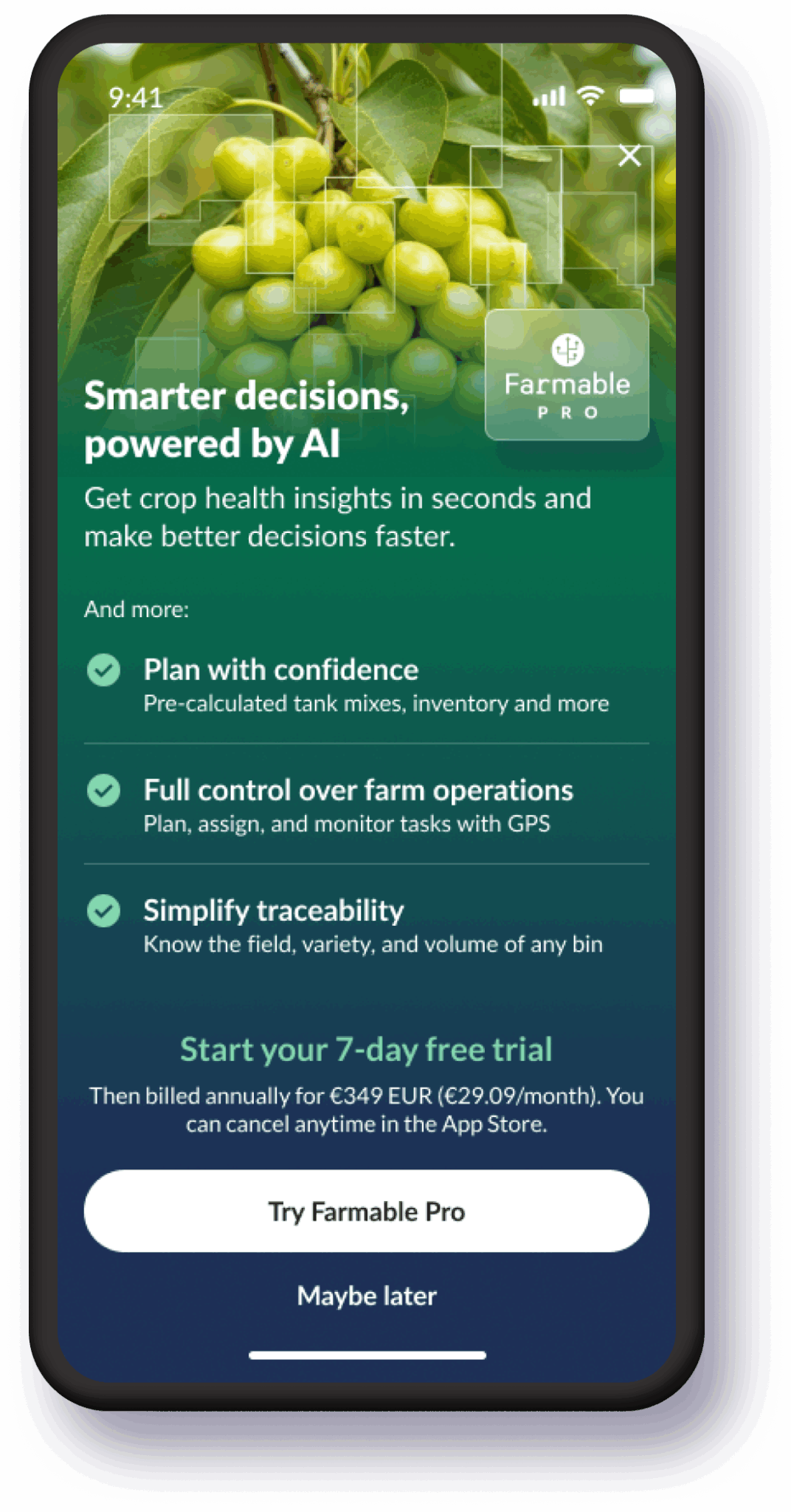
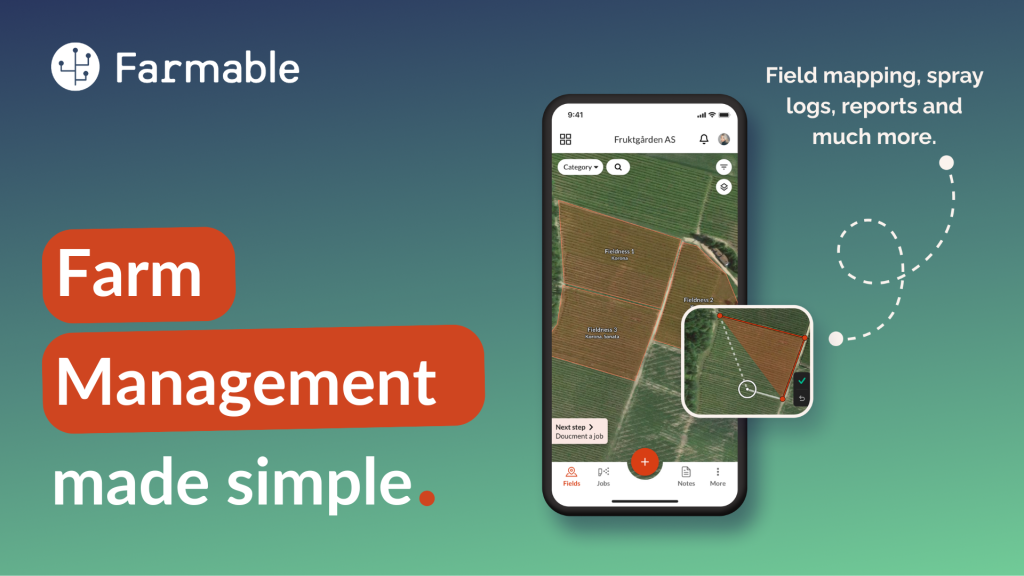
As farming evolves in the face of challenging regulation, labor shortages, and rising costs, Artificial Intelligence (AI) is becoming a game-changer for growers worldwide. AI can optimize operationsboost yields, and promote sustainability—but only if you set it up for success. At Farmable, we believe that preparing your farm for AI starts with the right tools, data, and operational logic. In this blog post, we’ll walk you through how to harness AI effectively using Farmable’s Farm Management Software (FMS) to transform your farm into a smarter, more efficient operation.

Why Farmable is Your Gateway to AI in Farming

Farmable’s FMS, available at farmable.tech, is designed to bridge the gap between traditional farming and cutting-edge AI technology. Unlike complex platforms that overwhelm with unnecessary features, Farmable prioritizes simplicity and practicality, making it easy for farmers to adopt AI without disrupting daily routines. By integrating securely AI systems, Farmable ensures that your farm’s unique operational logic is understood and that the right data fuels actionable insights.
To get the most out of AI, two pillars are essential: operational logic and secure data access. Let’s dive into how Farmable helps you master both and prepare your farm for the AI revolution.

Read the full article here.

  • *I have permission from the copyright holder to publish this content and images.

GlobalGAP Compliance for The Swart Familie Trust Farm

Member News
The views expressed in this Member News article are the author's own and do not necessarily represent those of Agri-TechE.

A Digital Revolution in Farming: Cornelius’ Testimonial on Farmable

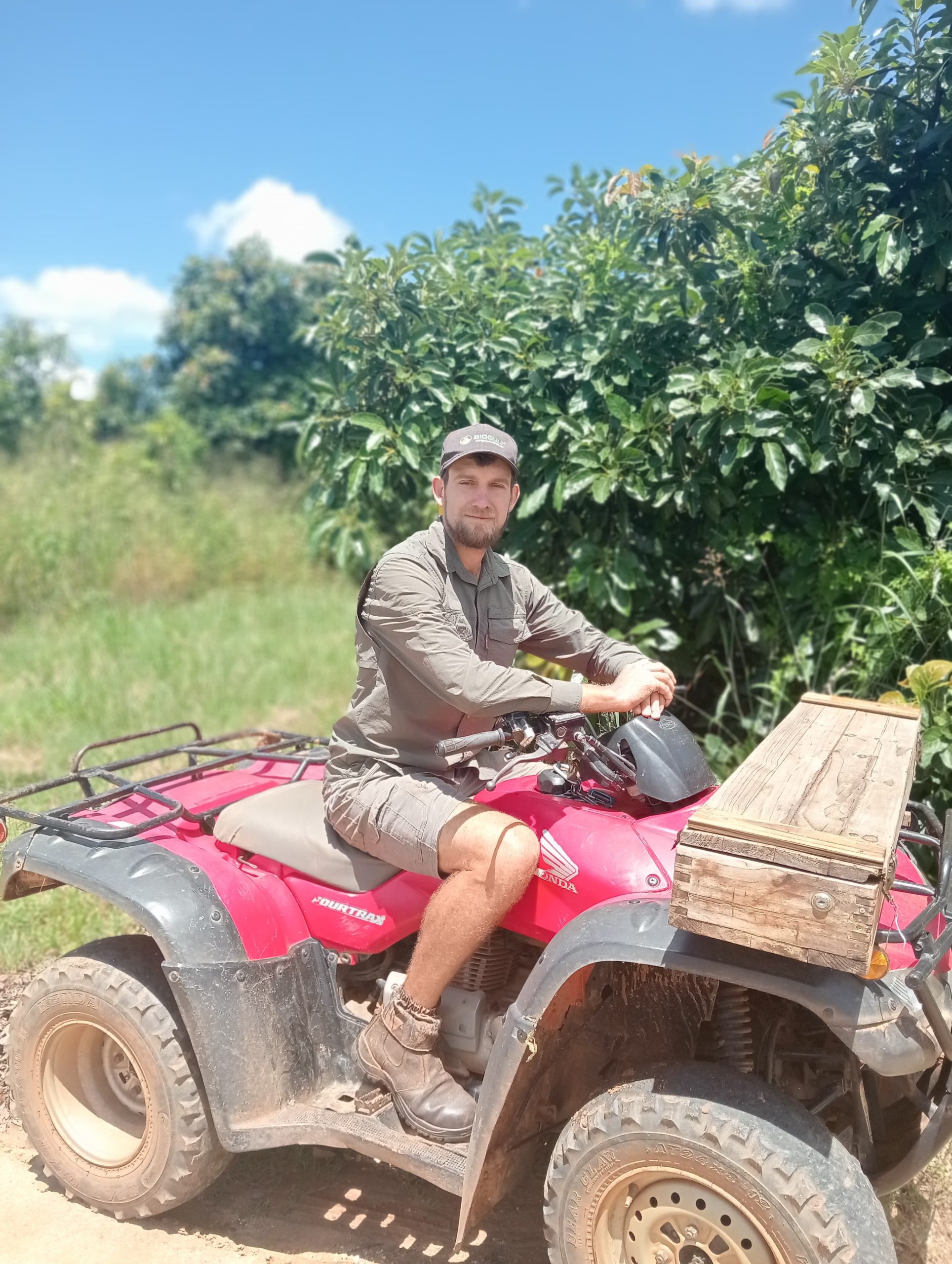
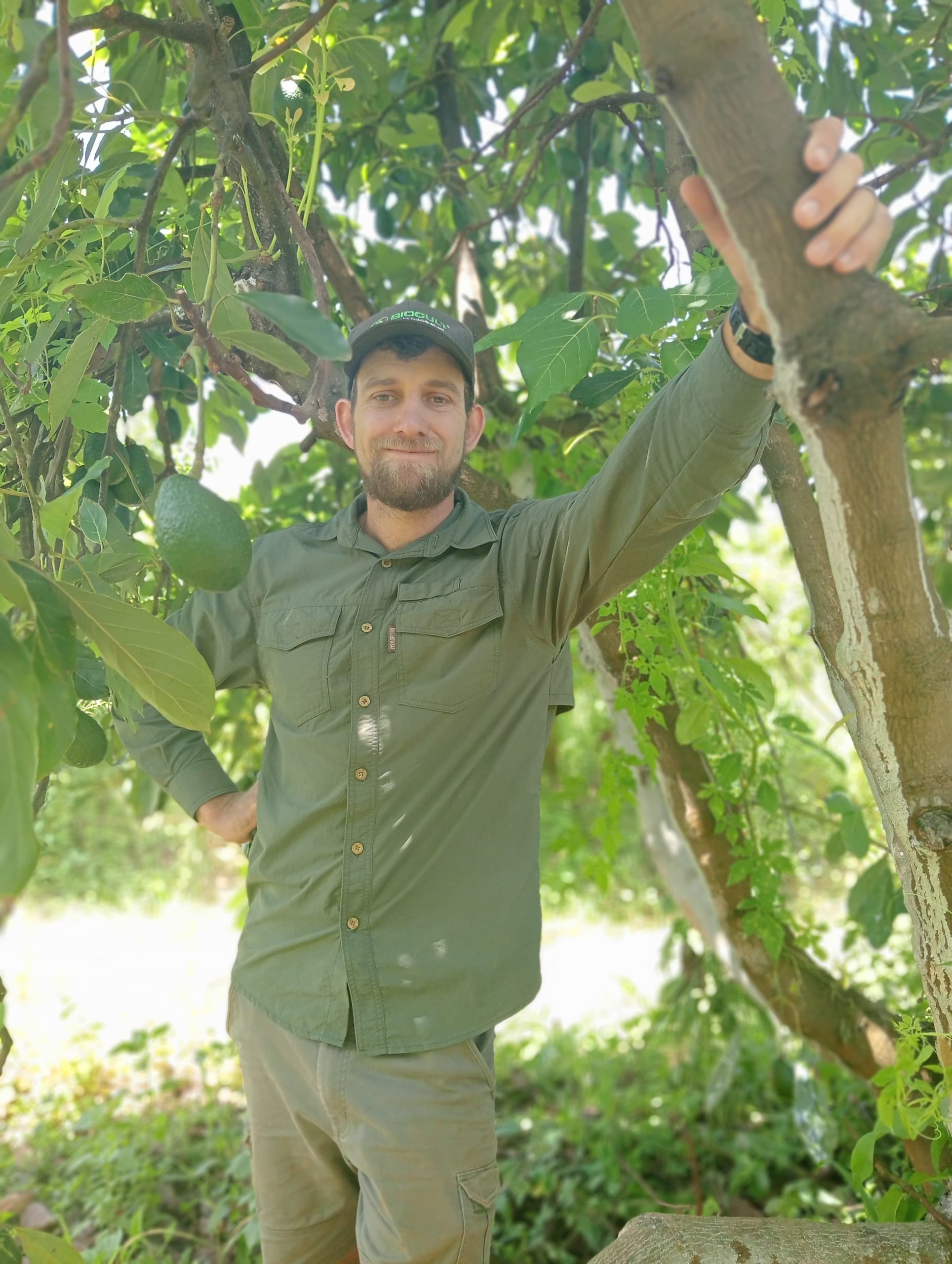
Growing up in Kiepersol, Hazyview, Mpumalanga, Cornelius Luus has always been deeply connected to the land. As part of a third-generation farming family, agriculture is not just a profession for him; it’s a way of life. The Swart Familie Trust farm, spanning 180 hectares with 53 hectares under production, specializes in avocados and macadamias while experimenting with smaller crops like butternuts. With 16 permanent employees, efficiency and precision are crucial to maintaining the farm’s success.

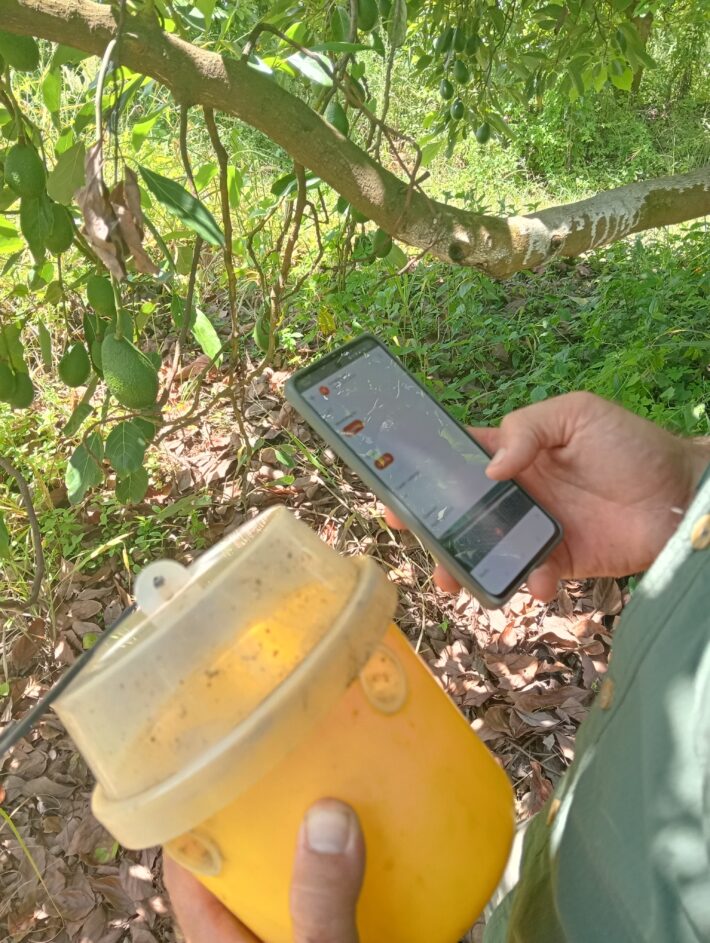
When tasked with implementing GlobalG.A.P. compliance, Cornelius initially relied on a simple notebook for data capturing. However, as the data requirements grew, so did the need for a better solution. Working on quad bikes in unpredictable weather conditions, he quickly realized the limitations of traditional record-keeping methods. “I started with a small notebook, then a bigger one, and eventually I thought—there has to be a better way,” he recalls. “We live in an app-driven world, so I searched for something digital that I could carry in my pocket.”

Read the full article here.

  • *I have permission from the copyright holder to publish this content and images.

What We Learned from Farmable’s AI Pilot

Member News
The views expressed in this Member News article are the author's own and do not necessarily represent those of Agri-TechE.

What We Learned from Farmable’s AI Pilot: Data Drives Smarter Farming

  • *I have permission from the copyright holder to publish this content and images.

UK Government Agri-TechE R&D Funding Released!

Member News
The views expressed in this Member News article are the author's own and do not necessarily represent those of Agri-TechE.

Fyto: Engineering Practical Innovation for AgriTech and Biotech

Newly released Innovate UK funding has opened new opportunities in Agri-Tech, and as part of the Agri-TechE family, Fyto believes that this funding has the potential to transform the sector and drive true innovation.

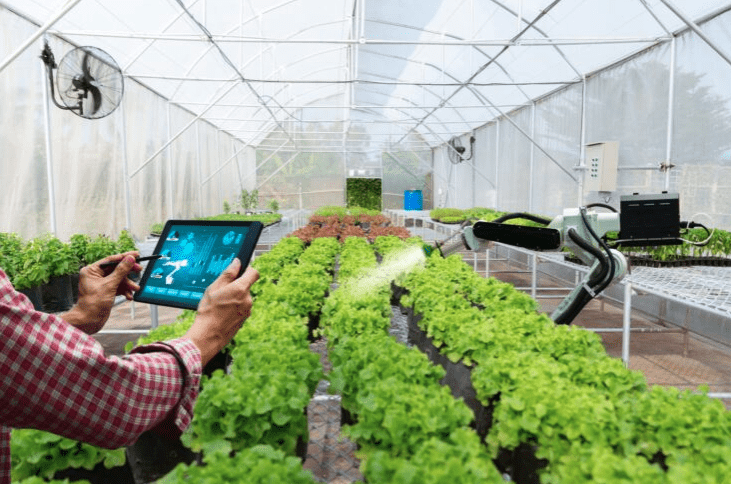
Whether it’s sensor-driven crop trials, precision automation, custom hardware design, or rapid prototyping, we are excited to be part of this next wave of Government support for agriculture, aimed directly at farmers and innovators in the agri-tech space.

Fyto offers hands-on technical engineering partnerships, project management, and bid writing support to collaborators seeking to develop cutting-edge solutions for the sector. We specialise in designing, building, and scaling technical solutions that power innovations in the agri-tech and biotech sectors.

We have a proven track record of successful bid writing, and project acceleration, taking technical solutions to the next level through our technical and pragmatic support. We’d be keen to hear what challenges you are facing and how you want to make a change for the better through your work.

We can support your project with:

Electronics

Sensors

Hardware integration

Data analysis, including AI models

Project Management

Funded project bidding 

We welcome partnerships across Innovate UK’s ADOPT initiatives and beyond, and are ready to support successful project delivery with technical strength and experienced project leadership.

Interested in collaborating? Let’s explore how Fyto can support your next funding application or project.

www.fyto.co.uk

info@fyto.co.uk

  • *I have permission from the copyright holder to publish this content and images.