Get the latest agri-tech news, events and opportunities direct to your inbox
Fungi could be ‘bio-fertiliser’
Research Digest
Agri-TechE
A common soil fungus can trigger the growth of plant roots enabling plants to absorb more nutrients creating a bio-fertiliser, according to new research by Uta Paszkowski, of the University of Cambridge’s Department of Plant Sciences.
The research also found that mycorrhizal fungus can enmesh itself in the crop roots at a cellular level pumping nutrients straight to the heart of the plant cells.
Plants ‘colonised’ by the fungi get between 70 to 100% of their phosphate directly from these fungus tendrils, an enormous mineral boost.
The hope is that mycorrhizal fungi could one day act as a ‘bio-fertiliser’ that ultimately replaces the need to mine phosphate from the ground for industrial fertiliser. Finding a replacement for mined phosphate is a critical problem, supply is expected to run out in 30-50 years and run-off pollutes water sources and causes algal growth.
Dr Uta Paszkowski says: “The big question we are trying to answer is whether and how we can make use of the biofertiliser capacity of mycorrhizal symbiosis in modern and more high input agricultural settings to allow more intensive farming methods.
Rice growing in a typical paddy field
“Cereals such as rice, wheat and maize feed billions of people every day and mycorrhizal fungi have a mutualistic relationship with cereals, going back to the earliest days of plant life. By analysing this ancient and common relationship we are gaining insights that could be used to breed crops with the best possible root architectural and symbiotic properties.” she said.
“Plant roots that have the capacity to explore the widest soil area absorb the most nutrients as a consequence and so are likely to have a greater crop yield. By finding out which parts of the genome are responsible for the best plant root systems we can start breeding for the best root ‘architecture’,” said Paszkowski.
Rice is best grown in highly irrigated paddy fields, but there are many parts of the world where this isn’t an option, and 40% of the world’s area for rice crop is grown ‘dry’. However, the plant-fungi relationship that creates enhanced crops actually works best in dry environments. Mycorrhizal fungi could be of huge benefit to those who rely on dry rice crops in some of the poorest areas of Asia and sub-Saharan Africa.
The main hurdle for researchers to overcome is the self-regulation of plants.
“Plants monitor their own nutritional state. If a plant has enough phosphate it will not allow fungus to enter root. We are working on ways to circumvent this so we can allow symbiosis to contribute in better developed countries ” said Paszkowski.
Mycorrhizal fungi are extremely common in all soils around the world, and are an ingredient in many ‘bio’ plant foods found in domestic garden centres, but have yet to be used for industrial agriculture.
Get the latest agri-tech news, events and opportunities direct to your inbox
Superwheat resilient to changing conditions
Agri-TechE
Wheat breeding over the last three hundred years or so has focused on just a few varieties and this is restricting the capacity of the plant to adapt to changing environments.
By recreating the original cross between an ancient wheat and wild grass species, that happened in the Middle East 10,000 years ago, Niab has developed a ‘superwheat’ that offers new sources of yield improvement, drought tolerance, disease resistance and input use efficiency for UK plant breeders and wheat growers.
Niab spans the crop development pipeline, with the specialist knowledge, skills and facilities required to support the improvement of agricultural and horticultural crop varieties, to evaluate their performance and quality, and to ensure these advances are transferred into on-farm practice.
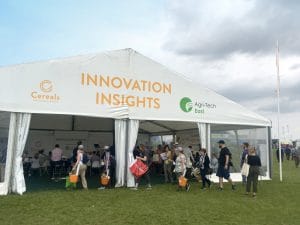
Niab is one of the exhibitors in the Innovation Zone at the Royal Norfolk Agricultural Show and will be talking about superwheat.
This is part of a new initiative by the Royal Norfolk Agricultural Association, which has partnered with Agri-TechE and NORMAC to showcase a variety of new approaches to farming and food production.
Post Overview
28th May 2015
Agri-TechE
Agri-TechE Article
Uncategorised
Share this Page:
Related Posts
Brilliant start to the year – variety of new agri-tech members
Get the latest agri-tech news, events and opportunities direct to your inbox
KisanHub
Agri-TechE
KisanHub is a Crop Intelligence Platform and was borne out of a desire to give farmers everywhere a sophisticated, meaningful yet, simple decision-support.
The platform connects enterprises with their growers to provide crop intelligence through crop specific apps and is focussed on in-season agronomy advice on pest/diseases, fertiliser application, irrigation management and yield prediction to reduce the input costs and improve profit margins. These insights are provided to farmers and their enterprises by assimilating and aggregating disparate datasets. The suite of applications fit around the enterprise’s needs, with the key operational and agronomic data being seamlessly shared throughout the platform. The aim of KisanHub is to connect agriculture for the benefit of farmers globally to help them grow more and use less.
KisanHub’s core technology brings together public and private data and the platform is built to connect farmers with the rest of the supply chain. This connectivity is achieved through the collaboration tools provided on the platform. This in turn empowers all the market participants to communicate with farmers for in-season operational, agronomic or business advisory services. The aggregated data on crops provide supply chain visibility to enterprises where such contractual relations with farmers exist. The platform provides advisory on pest/diseases, fertiliser application, irrigation management and yield prediction so farmers can apply right input of a right product at the right time and in the right quantity.
Get the latest agri-tech news, events and opportunities direct to your inbox
Extracting business benefit from ‘big data’
Agri-TechE
Andrew Spinks, B&C Farming
Data rich and information poor is an issue facing many growers and a compelling reason for Andrew Spinks, technical manager for Marsham-based B&C Farming Ltd, to get involved in Agri-Tech’s Big Data Special Interest Group. The SIG aims to help the industry improve the management and interpretation of agri-data for commercial benefit and the launch event is hosted by Plextek on the 29th April.
Andrew Spinks says: “Key to making better decisions regarding seed potato quality is understanding what the data means and interpreting it effectively.
“I am particularly interested to hear more about how mapping and visualisation of data collected on farm can be improved. So often we see a jumble of numbers and it is not until it is placed into charts or on maps that we can begin to process it and see patterns and solutions. I would like to hear about innovative and profit driving uses of data collected on the farm.
Dr Graham Maile, Director of Strategic Consulting at Plextek, comments that agriculture is the next big challenge for technologists who need to better understand the needs of agri-food industry.
“Big Data has the potential to provide information that feeds back from the farm to the seed producers, fertiliser manufactures, those conducting plant trials and create a virtuous circle.
“Techniques for analysis are developing rapidly in business sectors such as pharma, and in the public sector where there are national imperatives to identify security threats and to improve healthcare. This SIG meeting will be an opportunity for users and technologist to understand the needs and the business cases for Big Data in agriculture that will lead to higher profits and lower costs.”
B&C Farming Ltd are award winning contract farmers, producers of high quality seed potatoes and top class English horseradish. They currently samples data on disease and virus levels. Andrew explains:
“At B&C Farming Ltd, we aim to exceed customer expectations by producing seed potatoes, which are of outstanding quality. To do this we sample and collate data on a range of factors.
“We use a spreadsheet on a data sharing portal, which is accessed from our website. This is shared across the company to all who require it, from the planter driver to the agronomist.
“This data is key to recognising seed potato stock qualities and handling them correctly.
“As a business we have recently had interesting discussions about the ownership of the data that we produce. This data when combined with that of other growers could be invaluable in helping create a bigger picture for the industry and could be powerful in the hands of companies further up the food chain.
“This is a particularly interesting aspect of big data and something which I think as an industry we need to have an answer to.”
Graham agrees this is a business opportunity. The Plextek Group has experience of gathering and analysing very large datasets to look for trends and anomalies and to use this to determine behaviour, these techniques could be equally applied to predicting demand in agri-food. He says:
“Plextek is actively trying to understand how its capabilities can help the agri-food community. Similarly, it is seeking opportunities in agri-tech for its market leading Internet of Things (IoT) technologies and for its data visualisation concepts.
“It will only be by contact and discussion between users and solution providers that collaborations be established that will make Big Data in agriculture become established as a powerful means of improving yields, quality and economics.
“It is also hoped that the discussion will lead to ways of repurposing agricultural data for entirely new services and ventures which will return value to farmers.”
The launch event is generously sponsored by Plextek and speakers include Robert Allen, Research Manager of Greenvale AP, and Carl Atkin, Director of consultancy business Terravost.
The Agri-TechE Big Data SIG event “A Data Strategy for Agri-Business – Why Bother?” will be held on Wednesday 29 April at Plextek, Great Chesterford, CB10 1NY.
Get the latest agri-tech news, events and opportunities direct to your inbox
Big Data SIG launch
Agri-TechE
Under-investment in data technology will inherently limit the impact of initiatives striving to improve agriculture, warns Robert Allen of Greenvale AP, one of the UK’s leading suppliers of fresh potatoes. Robert is co-chair of Agri-Tech’s ‘Big Data’ special interest group which aims to put the needs of growers and producers at the heart of the technology developments.
Robert Allen explains that the core challenge is making ‘big data’ meaningful. He says: “The starting point is a clear and defined strategy of why and how they use data; this is essential if maximum commercial benefit is to be extracted.
“For example, understanding the impact of a new variety or piece of bio-technology requires the collection and interpretation of relevant data. Likewise, incremental improvements in commercial production can only be quantified by meaningful data collection, management and interpretation. Under-investment in data technology will inherently limit the impact of initiatives striving to improve agriculture.
“My talk will introduce what I believe are the key factors that need to be considered when designing and implementing a data strategy for an agricultural business.
“Data service providers produce solutions for elements of the production process but not its entirety. I see the SIG as an opportunity for growers and producers to develop confidence in how to better utilise their data and for data service providers to understand where they can deliver maximum benefit to their users.”
Robert gives the example of the potato sector where data on crop agronomy and meteorology is required for yield forecasting.
“In the potato sector, the commercial yield of a crop is determined by the gross yield, tuber size distribution and crop quality. In-season yield forecasting models provide valuable insight into final yields which can then be used for adjusting procurement and factory operational plans.
“However, accumulating the required data across a large portfolio of geographically distributed crops is challenging.
“Development of tools such as Niab-CUF’s CanopyCheck are streamlining the data collection process and allow effective information to be created, but much more work is needed in this area.”
Robert also views the SIG as an opportunity for those actively using agricultural data to meet and share ideas:
“On a personal level I extensively use open source technology and would be very interested in developing a user community where ideas, applications and skills in this area can be shared.”
The Agri-TechE Big Data SIG event “A Data Strategy for Agri-Business – Why Bother?” is generously sponsored by Plextek and will be held at its headquarters on Wednesday 29 April at Plextek, Great Chesterford, CB10 1NY.
Get the latest agri-tech news, events and opportunities direct to your inbox
Agri-tech advice and collaboration improve profitability
Agri-TechE
Michael Aubrey, Head of Agriculture, Mills and Reeve
The agri-tech sector is being taken increasingly seriously, which is illustrated by the acquisition last year of the farming business of the Co-operative Group by the Wellcome Trust advised by Mills & Reeve. The £249 million purchase was thought to be the largest ever open market purchase of agricultural land in the UK and the fourth largest globally for last year.
Mills & Reeve is sponsoring the Agri-TechE Pollinator event “Symbiosis and Synergies: The Secrets to Successful Agri-TechE Collaborations”, which will be held at Norwich Research Park on 21 April 2015.
Michael Aubrey, head of the agriculture team of national law firm Mills & Reeve, says that the food, drink and agriculture supply chain is both the largest manufacturing and the biggest service industry sector in Norfolk and Suffolk and innovation is vital to maintain competitively.
Michael says that: “The agricultural industry is accustomed to finding innovative solutions to deal with new challenges. By supporting this event and the development of the agri-tech cluster, we will be encouraging that innovation and growth. In particular collaboration at all levels will encourage new ideas and ways of doing things.
“One example of the way that new ideas help the industry to adapt to the continuing changes is the reaction to the introduction of the new ‘greening requirements’ under the Basic Payment Scheme (BPS), which now requires crop diversification.
“This is an issue for specialised farmers. Whilst compliance is not compulsory, few will wish to forgo the opportunity to claim up to 15% of the payment available to them so are we are already seeing a number of interesting approaches being adopted. Although many farmers choose to take the simplest route and grow the extra crop or crops to comply with the requirements, other solutions are being discussed such as arrangements for swapping land between neighbours.
“We also know of one farming company which previously has farmed land for a number of landowners under separate contracting agreements, is now taking the land under farm business tenancies instead, so that the diversification obligation may be spread more easily over a single larger holding.”
Michael also commented that the recent support for farmers in the budget and the availability of the new additional BPS payment for young farmers is to be welcomed, but may not go far enough.
“Whilst any help for farmers, young or otherwise, must be good news, we think it unlikely that the payment will be sufficient to have much impact. It will be worth up to 25% of the average value of a farmer’s entitlements, on only their first 90 entitlements, and the actual percentage will depend upon how many farmers apply. It can be claimed for a maximum of 5 years.
“It will provide some help to those young farmers already planning to set up new farming enterprises, but will in itself be unlikely to attract new young farmers in to the industry as access to capital is one of the primary constraints to new entrants to the industry.”
At the Agri-TechE Pollinator event “Symbiosis and Synergies: The Secrets to Successful Agri-TechE Collaborations, there will be an opportunity to hear about a range of collaborations. Barrie Wilkinson of Cambridge company Isomerase Therapeutics will describe how ‘natural products’ generated by microorganisms as part of a defence mechanism may provide an alternative to synthetic agrochemicals. A case-study will also be presented by Dan Hewitt, MD of Nelson County Foods, and Professor Rob Field, project leader for Biological Chemistry at John Innes Centre; their collaborative project is looking at new technologies for potato storage and is funded through the Agri-TechE Initiative.
Michael continues, “Networking events are an important part of a vibrant cluster which supports innovation and growth in the agriculture and food sectors, benefiting the region and ourselves as a key adviser to businesses operating in it. We are unique in having an agriculture practice with agricultural lawyers who work side by side with other specialist lawyers in our dedicated food and beverage sector to advise agri businesses and vertically integrated food businesses from plough to plate.
“The growth of the cluster fits well with developments at the Norwich Research Park, a massively important part of the local economy. We are very interested and involved in the Norwich Research Park’s development and are keen to support this at every opportunity.”
Get the latest agri-tech news, events and opportunities direct to your inbox
Collaboration unlocks legacy of science
Agri-TechE
Dr Jonathan Clarke says good time for collaborative research
It is now possible for organisations of all sizes to benefit from the accumulated knowledge of the region’s research institutes, comments Dr Jonathan Clarke, Head of Business Development, John Innes Centre. Developments such as the Agri-TechE Initiative also means there is money available to support it.
He says: “In the past there was often little interaction between scientists working in different disciplines which meant that the potential of work from one area was often not recognised by another.
“To address this, the research institutes on the Norwich Research Park have created multi-disciplinary initiatives that bring together plant biologists with chemists, microbiologists and others to look at the big picture. This is already producing new ways to increase the resilience of crops to rapid climatic change and to cope with poorer soil conditions.
“To support industry effectively requires two-way collaboration. Researchers have the expertise to mine the scientific literature for promising new approaches but industry also needs to articulate its needs.
“The funding released under the government’s agri-tech initiative is facilitating this and the exciting thing is that it is making it possible for many smaller organisations, such as growers groups, to consider accessing science for the first time.
“Through the cluster organisation Agri-Tech, of which JIC has become a founder member, both parties are finding it easier to identify areas of mutual interest. The networking meetings are facilitating interaction between groups that would never have previously had an opportunity to meet.”
The April Pollinator “The Secrets to Successful Agri-TechE Collaborations” features a case-study of a collaboration between JIC and Nelson Country Foods aimed at improving potato storage.
Get the latest agri-tech news, events and opportunities direct to your inbox
Enhancing efficacy of spray strategies
Agri-TechE
Clare Butler Ellis of Niab is to speak
The use of adjuvants and other spray strategies to increase yield while reducing input costs is the topic for discussion at the May Pollinator: “Innovation in yield protection and enhancement.”
In theory, varying the rate of fertiliser and crop protection application according to need will cut input costs while maintaining yield. In practice although technologies do exist to support this there is still a need for improved technology to help the decision-making and to allow more intelligent control over the spray application.
There are also encouraging developments in the use of adjuvants to enhance spray performance. These are additives that can increase the effectiveness of spraying – this can include agents to increase penetration, surfactants to increase coverage, spray modifiers to change the physical properties of the spray and suspension agents to maintain even distribution of active ingredients.
To create an active discussion of the issues facing farmers in the field, the recent developments in spray performance, and the use of adjuvants, and how to move beyond the next chemical ingredient, we have invited three leading experts to give their perspectives.
Dr Clare Butler Ellis, head of Silsoe Spray Applications, Niab, will outline the recent developments in spray technologies that enhance flow and control of application.
Alan East, Technical Manager for Interagro, will be discussing the role of adjuvants and how they can optimise spray performance. Interagro operates in 16 European countries and its products are tested in extreme conditions with niche and high value crops.
Dr Leslie May, Head of Discovery Biology at Syngenta will give his insights into how to move beyond the next new chemical active.
This is sure to create significant food for thought and the meeting will use a speed-dating format to help broker links between those developing the new concepts and the end users. This event is for anyone developing new inputs to promote crop performance in the field, including growth stimulants, soil conditioners, dust suppressants and pest management.
If you are a farmer, grower or agronomist, this is a chance to hear about the latest innovations, and understand better the pipeline of discovery that is bringing new ideas to the field.
You can read more about the discussions held at the Pollinator in the full report, which is available free to members on our Publications page.
Get the latest agri-tech news, events and opportunities direct to your inbox
Gov invests in ‘Big Data’ for agri-tech with Centre for Agri-Informatics
Agri-TechE
Good news for agri-tech in the budget. Rothamsted Research has been selected as the headquarters for a new Centre for Agricultural Informatics and Sustainability Metrics, which aims to make more effective use of datascience and modelling for the agri-food industry.
Sam White, Assistant Director of the Agri-TechE Industrial Strategy BIS, says that the £12m funding, which has been awarded to the consortium of business and academia, will put “the UK at the heart of the data revolution in agriculture”.
The consortium includes Rothamsted Research, National Institute of Agricultural Botany (Niab), University of Reading and Scotland’s Rural College (SRUC).
Dr Belinda Clarke, Director of Agri-Tech, says that it is a coup to have the centre located in the east of England and shows government recognition of the world-leading strengths of Niab and Rothamsted. She says: “This is a real opportunity to ensure that research is directed at business need.
“There is a strong agri-tech cluster developing in the east of England. We are bringing big players such as Microsoft and SME’s such as RedBite Solutions together with the growers and producers. This is creating the dialogue with research institutes that is needed to create solutions that are fit for purpose. The new informatics centre will enable us to fast-track the latest technology out into the hands of the people that need it.
“Involvement in the Agri-TechE Special Interest Groups – such as ‘Remote Sensing and Monitoring’ and ‘Big Data’ – are opportunities for interested parties to influence and gain access to the updates on latest developments.”
Get the latest agri-tech news, events and opportunities direct to your inbox
The Internet of Agri Things: watch this space
Agri-TechE
Matthew Smith, Microsoft Research
“Something big is on its way but we are not quite sure what form it will take” was one of the messages from the Pollinator “Internet of (Agri-)Things” which brought together companies such as Microsoft Research, nWave and RedBite who at the forefront of this technology with the agricultural community.
The Internet of Things refers to objects communicating with each other and this is becoming more feasible with the development of low cost, low energy, electronic devices.
This is creating the opportunity for new types of decision-support for farmers but technologists need to have feedback from the agricultural community on applications that would bring the greatest benefit.
The Pollinator is timely as a big development happening this year is a new open standard for a Low Power Wide Area Networks (LPWANs) which will enable small devices – sensors or actuators – to be placed 10km or further away from the base station.
Typically a device will be a sensor, such as soil moisture sensor, that sends small messages every hour, day or maybe not until something changes – so the bandwidth requirements are very small.
A benefit of an open standard is that the devices would be interoperable, which would encourage competition, therefore keeping the operational cost as low as possible.
Some real case studies
A number of case-studies were discussed of how the technology can be applied:
Track and trace – sensors on farm machinery and assets
Monitoring health and location of livestock – smart ear tags contain information about individual animal
Nutrition – a ‘bolus’ located in the stomach of a cow monitors feed quality, pH and output of greenhouse gases
Smart water irrigation – pivot water irrigation is a fixed structure where sprayers rotate around a central pivot. Linking water application to soil moisture can reduce water usage by up to 40%
Remote monitoring – fertiliser tank level and status were monitored remotely removing the need for local asset management. This improved logistics, increasing ROI and offered new insights into usage.
Other examples were shared from the floor, including that of a farmer who wanted a way of remote monitoring his pigs so that he could see when they bit off the nipple used to deliver water. Loss of the nipple caused flooding, which not only wasted water but also cost €20 per tonne to pump out the slurry. A simple text message to alert the farmer would quickly pay for itself.
Industry interest
Chairing proceedings were Matthew Smith and Drew Purvis, computational ecologists from Microsoft Research who are working on a number of agricultural challenges to which computational modelling can be applied.
They discussed how a changing climate, extreme weather events, increasing CO2 emissions and the need for increasing availability of resources, such as water, are all challenges where IoT can help.
For example, better real time information can lead to better prediction of extreme weather events. New ways of modelling data for crop performance can help inform more efficient crop management and field scale monitoring will allow optimal management of resources (water, fertilizer, pesticides), all of which will improve yields.
The phrase “Internet of Things” was first coined by Prof Duncan McFarlane from the IfM at the University of Cambridge, who is also a founder of RedBite Solutions.
Adrian Segens, Chief Technology Officer of RedBite Solutions, pointed out that “things” are very difficult to identify uniquely by software systems. So RedBite is turning “things” into “smart” things by making them uniquely identifiable and able to communicate by using technologies such as RFID and QR codes.
These codes, when located on objects such as packing trays or cattle ear tags, are easy to scan with a hand held reader making data capture very easy.
The ability to connect devices straight to the cloud has allowed fixed infrastructures such as servers to be removed. So there is now an opportunity to use the technology in the field.
NWave’s Vice President Matthew Bailey discussed how LPWANs, by using frequencies currently used by radio, will make it possible to have connectivity over long distances.
The importance of standards can’t be under-estimated as this will enable compatibility between devices and allow the development of global markets. This is the reason why a number of big players in the industry have formed the Weightless™ Special Interest Group to create the first global open standard for the IoT networks.
The Internet of (Agri-)Things Pollinator was proudly sponsored by S-Tech
IoT isn’t only about the devices
Alastair Taylor, CEO of the Institute of Agricultural Engineers, brought an additional dimensions to the discussion, reminding delegates that “Agri-Things” also includes the wider agri-ecosystem including plants, animals and soil, as well as the agri-people (the farmers, machinery technicians and the agronomists, for example).
A big challenge for the future will be changing perceptions, to encourage young engineers who think motor racing is an exciting career choice to consider the opportunities in agrifood instead. Perhaps a new job description is needed, describing the “precision farming technician” which will demonstrate the levels of complexities and new skills involved in harnessing IoT opportunities.
Bringing the tech to the field
The merits of bringing innovators and farmers closer together was again reinforced by comments from the speakers and audience, with Adrian Segens welcoming the chance to “really get deep” into the problems needing solutions.
A note of reassurance
Finally, a key point about terminology was made by Drew Purvis:
“Everyone, it appears, is wrestling with the new ‘buzz-words’ such as ‘big data’, ‘machine learning’, ‘the cloud’ and ‘wearables’. So if you are feeling unclear about how the wealth of opportunities relate to you as a farmer, grower or producer, that’s quite normal – so is everyone else right now!”
As Alastair Taylor concluded “I’ve never been so excited about the future – we now have technologies that previously didn’t exist to bring autonomous, intelligent, useful and productive innovations to the field.”
You can read more about the discussions held at the Pollinator in the full report, which is available free to members on our Publications page.
Get the latest agri-tech news, events and opportunities direct to your inbox
Agri-tech: Adding value to the food chain
Agri-TechE
Agri-TechE is pleased to release our report “Agri-tech: Adding value to the food chain”, which aims to capture some of the discussions we have been having with farmers and others in the food chain about how to extract greater value from research.
An objective of our inaugural REAP conference was to capture the requirements from the agri-food industry for innovation and to propose ways in which these needs can be addressed.
The below report has been produced to progress these discussions, by capturing some of the current discussions and indicating how Agri-Tech’s initiatives are moving the industry forward.
Get the latest agri-tech news, events and opportunities direct to your inbox
Funding for Agri-TechE some top tips
Agri-TechE
To help de-mystify the complex public sector agri-tech finance landscape we invited the leading funders to come to the first Pollinator of the year and give us their insights into funding available for business growth, R&D and academic-industry collaborations.
What was clear from the five speakers, who represented BBSRC, Innovate UK, the Eastern Enterprise Network, ADAPT Group and the Eastern Agri-TechE Growth Initiative was that public money is available, but it’s important to understand the eligibility criteria from the outset. Some funding streams are aimed at SMEs (“Small and Medium Enterprises”) – which is defined by the EU and the UK as having fewer than 250 employees and turning over less than €50M a year.
Know this before you consider applying!
However other grants are open to larger businesses looking to undertake R&D, and in the case of BBSRC, this is contingent on having an academic partner.
While Innovate UK is committed to funding R&D, BBSRC can support academic research, including projects in partnership with industry.
The European Commission remains a pot of huge opportunity but potentially challenging to access. With literally dozens of instruments open to SMEs, the sage advice was not to consider leading an EU proposal until you have been a partner in one.
For SMEs based across most parts of the east of England, the Eastern Agri-TechE Growth Initiative is a unique opportunity for business growth and R&D, and some great case studies are emerging from the funded projects.
Finally, the Agri-Innovation Venture Capital Fund (managed by ADAPT at the University of East Anglia), has funds invested by the Tsukuba Technology Seed Company that are available for investment into agri-tech businesses. Innovation support for agri-businesses is also available via the Incrops initiative.
So in conclusion….
Top Ten Tips from the “Focus on Funding” Pollinator:
1. There are a number of UK funding streams available to agri-tech businesses
2. Money is available for a range of agri-tech business activities, from early stage feasibility studies, to large scale industrial research…..but…..
3. …check your eligibility. Some schemes target SMEs only, while others welcome applications from larger businesses.
4. You will need to have a company registered in the UK to be eligible for many of the schemes. If you are a wholly-owned subsidiary of a parent based overseas, you need to check the rules.
5. Some public funds can’t support primary agricultural production as some parts of the sector may already be publicly supported through subsidies. Seek advice on this!
6. Funding instruments exist to help businesses (regardless of size) interact with the research base. These start at £5k, and go up to £multiM projects
7. Most grant schemes won’t give you all the money to fund your project. You need to be able to match the funding from other sources – the proportion you have to contribute varies depending on the scheme. Some will allow “in-kind” contributions while others require cash.
8. Embrace EU funding cautiously if it’s your first time, but don’t rule it out.
9. There is a limit to the amount of public funding businesses can receive. Don’t fall foul of State Aid Rules, which are in place to prevent anti-competitiveness
10. And finally, agri-tech businesses based in the east of England can access additional funding opportunities not available anywhere else in the UK!
If you would like copies of the speakers’ slides from the Pollinator, please contact us
You can read more about the discussions held at the Pollinator in the full report, which is available free to members on our Publications page.

 Agri-TechE


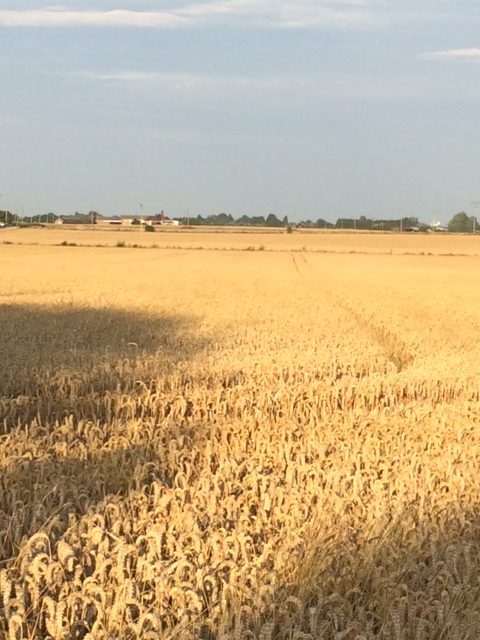

 Wheat breeding over the last three hundred years or so has focused on just a few varieties and this is restricting the capacity of the plant to adapt to changing environments.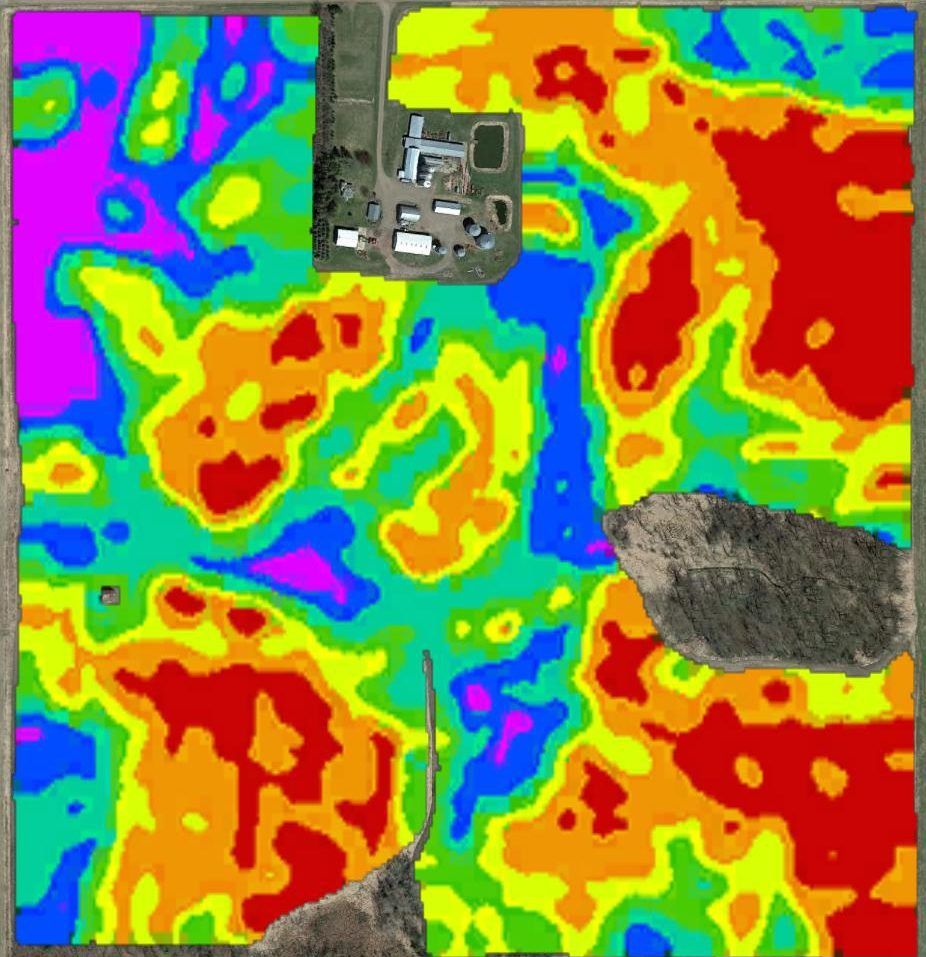

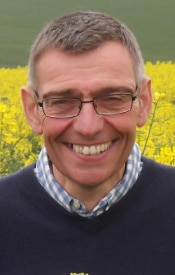











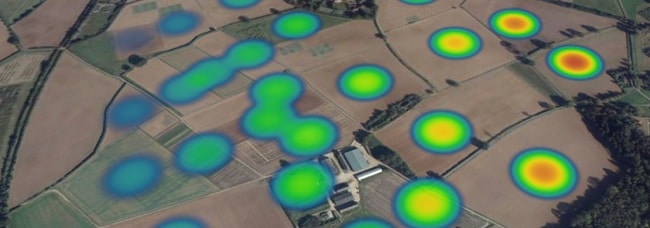

 Under-investment in data technology will inherently limit the impact of initiatives striving to improve agriculture, warns Robert Allen of Greenvale AP, one of the UK’s leading suppliers of fresh potatoes. Robert is co-chair of Agri-Tech’s ‘Big Data’ special interest group which aims to put the needs of growers and producers at the heart of the technology developments.
















 Good news for agri-tech in the budget. Rothamsted Research has been selected as the headquarters for a new Centre for Agricultural Informatics and Sustainability Metrics, which aims to make more effective use of datascience and modelling for the agri-food industry.