More appliance of science needed

Agri-TechE

Bill Clark NiabThere is a need for greater knowledge of the impact of on-farm environment on crop performance, says Bill Clark, Commercial and Technical Director for Niab.

Although yields in variety trials have continued to increase, the yield on-farm plateaued about 20 years ago. So there is a need not just for good science but also to understand better what is happening on the farm and how this impacts yield. This can be described as the ‘translation’ of science to practice.

For example, an issue that is particularly topical at the moment is black-grass. The season has worked in its favour this year and we have had one of the worst years on record. Blanket spraying of the crop is not the answer, as this just increases resistance to the small armoury of chemicals that we have at our disposal. There is scientific research in this area directed at identifying metabolic processes that are unique to black-grass which can be targeted by chemicals, but practical outcomes are still many years away.

Black grass strategy

The response in the short term has to be an integrated management strategy with a consideration of sowing date and density of sowing, cultivation techniques, use of rotation and precision spraying of affected areas. Many farmers are introducing their own strategies to manage black-grass including leaving land fallow and spraying intensively for a season or delaying sowing to spring in order to allow black-grass to germinate first and be sprayed off.

However, experimenting with these strategies in the field has an economic cost to the farmer and a limited guarantee of success. Here at Niab we have a team dedicated to management of black-grass; we are providing the scientific evidence base that is needed for on-farm decision-making, which includes an economic evaluation of the strategy so that farmers can model the benefits of one approach over another.

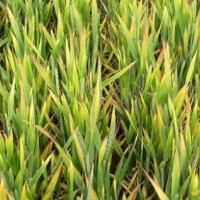
Another example of translational science in action is the management of yellow rust. Niab predicted last autumn that yellow rust would be prevalent this year. A new race of yellow rust from the Himalayas had been detected which was a completely new, not only in the UK, but new to Europe. One of the immediate recommendations was to use a triazole seed treatment in high risk areas, to reduce disease pressure the following spring.

Scientists at Niab are investigating these new varieties of yellow rust that are coming from outside Europe. This work will help plant breeders to develop new varieties with better disease resistance and help farmers manage the disease on their farms. Some of this work will take several years but some results are already being implemented on-farm. With the increasing frequency of mild winters the threat from yellow rust is increasing and the need for a sound evidence-base is becoming more economically important.

A unique role

Niab has a role of translating independent research into practice – a unique role in the UK. Other countries do have a national structure that integrates science and advice more closely, perhaps in the way that ADAS was structured in the early 80s. For example New Zealand has an organisation called FAR which carries out research and gives on-farm advice. Other countries such as France and Denmark have a combination of ‘high-science’ research institutes alongside near-market applied research institutes which ensure the translation of science into practice.

I am always very interested to gain the views of farmers, growers, advisers and scientists of the ways that best practice in the field can be disseminated and the types of information that they would like to see. Niab.

Microsoft and ARM head up “Internet of Agri-Things” Pollinator

Agri-TechE

FetchclimateSmart food packaging that tracks its temperature and environment through the supply chain to ensure it remains fresh, water sensors cheap enough to distribute across a field, smart audit documents that update themselves from data about inputs.  These are all applications for the Internet of Things which will enable objects to communicate with each other.  To ensure that the agri-food applications are relevant and beneficial to farmers and growers, Agri-TechE invited world-leading technologists in this area to present at the February Pollinator called appropriately the Internet of Agri-Things.

Gary Atkinson, Director of Emerging Technologies for ARM was one of the presenters and Matthew Smith and Drew Purvis from Microsoft chaired the discussion. Others included: Alastair Taylor, Chief Executive of IAgrE (Institute of Agricultural Engineers) and Adrian Segens of RedBite Solutions.

It may come as news to hear that Microsoft Research in Cambridge employs ecologists. The Computational Ecology and Environmental Science Group (CEES) within Microsoft aims to develop the new concepts, methods, and software tools needed to produce useful predictive models of ecological systems.

Ecologist and computational scientist Matthew Smith explains: “Our group has been operating for about 8 years and increasingly we have directed our scientific research and software development towards improved environmental modelling.”

One example is FetchClimate, a fast, intelligent, climate information retrieval service. It is designed to make it easy to retrieve information for any geographical region, at any grid resolution ranging from a few kilometres to a global scale. Data can be retrieved for any range of years, months and days within the year and even for specific hours within the day.Microsoft fieldwork edit

Matthew explains that over recent years agriculture has become a particular focus: “Recently we produced new process based agricultural models for wheat and maize. These can be calibrated to predict crop properties using heterogeneous datasets that include satellite imagery, historical ground based data and live feeds from devices.

“Now we’re looking to get some of these systems trialled to establish whether we can provide genuine impact for businesses. The  Agri-TechE Pollinator in February will be a great opportunity to engage with farmers and growers and others with an interest in this area. We have very keen interest in seeing where the discussions go and seeing if we can help orchestrate them in useful directions.”

A report from the Internet of Agri-Things Pollinator will be available shortly.

We are delighted that S-Tech kindly agreed to sponsor the event. S-Tech provides insurance, risk and financial management to the biotech and life science sectors among others and makes a valuable contribution to the technology cluster

From wild rocket to downy mildew, new projects receive funding

Agri-TechE

An innovative breeding system for a herb and salad producer, an investigation into downy mildew pathogens and new lighting to extend the growing season for a flower producer, are projects by three local businesses that will receive almost £250,000 of funding from the Eastern Agri-TechE Growth Initiative. The scope of these projects demonstrates how the East is at the forefront of agricultural innovation in the UK.

The successful funding recipients from this round are as follows:

New variety of Wild Rocket – CN Seeds Ltd, Ely

CN SeedsCN Seeds Ltd is a family run business that specialises in herbs and leafy salads.

Mark Hodgkinson from CN Seeds Ltd, said: “The Eastern Agri-TechE funding will enable CN Seeds to pilot a new breeding programme which, if successful, will help the company to overcome one of its biggest challenges in relation to developing new products, the length of time it takes to develop a new variety.”

“The pilot will begin within the company’s established Wild Rocket product range, and will involve integrating marker assisted selection into the breeding programmes through trialling new high tech equipment and utilising the services of local experts in the field of plant genetics. The desired outcome will be to make significant savings in both time and resources through being more accurate and consistent.”

New diagnostic assay for downy mildew,  Niab, Cambridge

Internationally recognised for its innovation in the plant science sector, Niab provide independent, science-based research and information for agriculture and horticulture. This funding will be used to investigate organisms collectively known as downy mildews that affect plant growth, in order to provide quality assurance for seed sales, as well as providing the basis for seed treatment decisions.

Project Leader, Dr Jane Thomas from Niab, said: “This project will add a new and unique set of services to our Niab Lab-test portfolio. The Eastern Agri-TechE Initiative funding has enabled us to develop the diagnostic assays which will underpin effective disease management for problematic downy mildew pathogens.”

Matthews Flower Growers Ltd (MFGL), Bury St Edmunds, Suffolk

MFGL is a successful producer of cut flowers in the area. It aims to take advantage of modern, clean technologies by constructing highly efficient glasshouses for the production of cut roses and lilies. The funding will be used to purchase a new LED lighting system which will enable the normal growing season to be extended.

Ian Matthews from Matthews Flower Growers Ltd, said: “The grant has enabled us to introduce the latest technology into our project, which will shorten production time and enhances plant growth. We are extremely grateful for all the hard work GCGP Enterprise Partnership put in on our behalf.”


Eastern Agri-TechE Growth InitiativeMark Reeve, Chairman of the Eastern Agri-TechE Growth Initiative and the Greater Cambridge Greater Peterborough Enterprise Partnership (LEP), explains: “Our area is driving forward advances in the Agri-TechE sector. By providing almost £2 million of targeted grants to local businesses we are ensuring that we help our local businesses to grow even further.

“From new machinery to help flower and plant growers be more efficient, through to vital sector research and development, the funding will help local businesses to expand and create more jobs for our area.

“We still have grants available so I would encourage any business within the Agri-TechE sector with plans to grow to get in contact with us to find out more.”

You can find out more by visiting www.agritechgrants.co.uk or calling 01480 277180.


Our January Pollinator – Agri-Tech: Focus on funding – will feature a talk by Martin Lutman, the Programme Manager at LEP. To find out more please click here.

Improving diets with mushroom cultivation

Agri-TechE

mushrooms

Mushrooms are a highly nutritious crop rich in protein and useful nutrients and cultivation requires less space than other crops.

Scientists at the Institute of Food Research are helping in the expansion and diversification of mushroom cultivation in Uganda.

The project ultimately aims to improve the diets of Ugandans, increase the incomes of local farmers and create a sustainable trade through training and research.

The project will establish a breeding programme and a Ugandan indigenous mushroom germplasm bank at UIRI. Soil samples will be collected and sent to scientists at the IFR to be analysed. As mushrooms grow close to the soil, they are prone to picking up soil microbes so appropriate measures must therefore be put in place to reduce the risk of contamination.

The Institute of Food Research has expertise in Clostridium botulinum, and has already partnered with the Shanghai Academy of Agricultural Science to get a better understanding of these types of issues with mushroom cultivation.

Additionally, spent mushroom compost (SMS) from Uganda will be sent to IFR for evaluating the potential for exploiting SMS in fuels and composts.

Remote monitoring and sensing market opportunities discussed at SIG

Agri-TechE
Remote Sensing and Monitoring SIG
Workshops were a key feature of the Remote Sensing and Monitoring SIG

Strip planting of ‘sentinel plants’ to detect and warn of pest attack, multispectral imaging to target crop protection, and the use of drones to monitor solar farm performance were some of the applications discussed at speakers at the first meeting of Agri-Tech’s Remote Sensing and Monitoring Special Interest Group.

Farmers and producers joined delegates from electronic design companies and sensor developers to discuss the how sensing and monitoring technologies can exploited within the agri-food industry.

There is considerable pressure, both economic and legislative, for farmers and growers to reduce their inputs of agrochemicals. Early detection of crop stress or pest attack would allow more precise and timely application of pesticides.

Tony Peloe, Head of Export Sales at Delta-T Devices is co-chair of the ‘Remote Sensing and Monitoring SIG’, says that a new generation of low-cost sensors capable of operating for many years on a single battery are opening the way for new applications. In addition, new technologies developed for the military and aimed at detecting, identifying, quantifying, predicting and alerting can be repurposed.

He said: “Farmers are only too keen to adopt tools and practices that offer demonstrable benefit. Most farmers have historically been avid users of weather forecasts, and many now have their own weather stations so they are used to acting on data inputs. “Farmers, in fact all producers, face a myriad of technical, legislative, commercial, social and environmental challenges. Some of these can be met now with existing or recently introduced products, whilst others are waiting for the technology to catch up – which is where the Sensor SIG might fit in.

“Agri-TechE is a welcome initiative and the SIGs are a fantastic way to get people from a range of backgrounds and interests to make contact, start conversations, and hopefully kick-start some collaborations.”

Rise of the drones

Part of the driver for the interest for monitoring is the emergence of very capable and keenly priced sensing platforms often based on drones and using familiar app style data display and analysis.

Elliott Corke from HexCam, one of three drone operators at the SIG, provides aerial photography via drone to farmers and research institutes. He has seen the new imaging systems as an opportunity to add extra value to the stills and video that he offers. “Multi-spectral cameras now make it possible to visualise weeds, such as blackgrass, and also to give an indication of the vigour and health of the crop.

“The technology is developing all the time but the important thing from my perspective is to understand what information would be the most useful to my clients. By bringing people together the SIG will help me to have those early conversations before I invest in new product developments.”

Farmers want business case

Jamie Lockhart from Honingham Thorpe Farm was one of a number of farmers and growers in the discussion, he commented that many farmers were using some type of remote sensing already and that where the technology was robust and the results merited the effort that they were keen to adopt new approaches. The issue was developing a strong enough business case based on field evidence.

Early warning by plants

The use of biological sensors was also discussed. Dr Mike Birkett from Rothamsted Research discussed the science behind companion planting and how growing ‘sentinel plants’ can provide the main crop with early warning of pest attack, He said: “Early onset of pest damage in crop plants is accompanied by production and emission of volatile organic compounds, even before normal and recognisable symptoms appear. This phenomenon can be exploited in portable detection systems to determine the health of the crop.

“Better understanding of the chemicals produced, or biomarkers as they are called, provides a terrific opportunity to develop new smart crop protection strategies. “The SIG being launched by Agri-TechE provides just the right platform to foster new collaborations in pursuit of that goal.”

Words into action

Delegates collectively recognised the opportunity to work together to optimise the use of new sensor technology particularly the need to ‘ground truth’ technology with demonstration fields. Two of the farms represented offered land and sites to help with trials and there was further discussion of creating a network of test sites. With expertise such as software engineering, electronics design, drone operators, plant scientists already present, the SIG Is well-placed to move forward with sensing technologies ranging in scale from the millimeter to hectares.

The first meeting of the ‘Remote Sensing and Monitoring SIG’ was kindly hosted by Hethel Engineering Centre, Norwich with the support of South Norfolk Council, more meetings are planned to discuss collaboration opportunities.

All eyes are on potato research

Agri-TechE

CUPGRA PotatoesEast Anglia is famed for its potatoes but the crop requires a high level of investment and this can be difficult to justify in years when the returns are low.


This is driving a trend in the industry towards smaller numbers of larger growers and the introduction of marketing groups to provide economies of scale and greater negotiating power.

One of these growers’ groups is Greens of Soham, the UK operating company for Spearhead International. Managing Director Julius Joel says that the company directly farms 5,500 hectares and a significant proportion of this is for potatoes for seed, salad and processing.

“Investment in R&D is important to us. Looking back there hasn’t been one game changing move that made a difference but more an amalgamation of small improvements that have provided marginal gains.

“We are looking to use a variety of tools better in small ways with the aim to avoid low yield in production. We want to maximise the average and the best and mitigate the risks.

“We value the work of the Potato Agronomy Unit and provide a trials service to several breeders to encourage the development of new varieties.”

The Potato Agronomy Unit was formerly part of the University of Cambridge but Head of Agronomy, David Firman, says that its research has benefited from its recent move to Niab.

“Access to a wider range of facilities and expertise at Niab has allowed us to expand our range of research activities and these were recognised earlier this year when we were awarded the Practice with Science Award at the Oxford Farming Conference.

“Part of the new focus has been the use of modeling for determining seed requirements and water use and also for forecasting yield.”

Julius agrees that this is an important area for development.

Julius Joel, MD, Greens of Soham

“All our sales are 100% contracted so we are looking to deliver as promised; therefore we are interested in technology that can help forecasting at all levels in the supply chain. Shared knowledge helps us to do everything better from the field through storage out to the end user.

“It is a demand led industry and we have seen a decline in fresh sales but an increase in frozen potatoes, particularly in the form of wedges and chips.”

David comments that new varieties need to address these trends:

“Although traditional varieties remain important for fresh market sales, some new varieties are beginning to take a significant market share. There are increasing numbers of newly introduced varieties, which collectively are important.

“New varieties often have improved traits attractive to consumers, including good appearance and low susceptibility to blemishing diseases and physiological disorders.

“Some also have improved agronomic characteristics and real advantages accrue when these are combined with important consumer traits.

“Effective introduction of new varieties often requires investment in trialing candidate varieties and developing variety specific agronomy and storage.

“For fresh market varieties, promotion is also invaluable to encourage consumer adoption but this is generally less important for processed potatoes.”

David says that current research to improve agronomy is as valid for the older varieties as those that have been recently introduced.

“A range of very effective agrochemicals for potato late blight has been developed by agrochemical companies over recent years and when applied well these generally protect crops from significant loss due to late blight.”

Despite recent advances, David doesn’t think that GM is set to be adopted just yet.

“Although strong resistance to blight through GM has been demonstrated it seems unlikely this will be available to UK farmers in the foreseeable future.

“Advances in knowledge of genetics have the potential to markedly improve the efficiency of breeding and selection. However, it is increasingly apparent that the advances in genetics are not being matched by the ability to characterise plants by their phenotypes (visual characteristics), so improvements in this area will be required in order for us to take advantage of the knowledge of genetics.

“This does create opportunities for advanced phenotyping through use of remote sensing and automation. Developments in this area are of considerable interest.”


From ideas to on-farm reality Agri-TechE Week 2014

Agri-TechE

Change pic smallHow do farmers and growers hear about new innovations in agriculture? And who is most trusted to bring news about the “Next Big Thing” that will boost yields, automate an existing tedious process, or make the farm more efficient, productive, profitable or sustainable? More importantly, once farmers have heard about (and like the sound of) a new innovation, what barriers to adoption exist?

These questions formed the basis of discussions at the Technology Translation Workshop at the Innovation for Agriculture East event, held at Trinity Park by kind permission of the Suffolk Agricultural Association and in association with FramFarmers.

Scene-setting with an overview of new innovations from the Antipodes and Denmark by 2014 Nuffield Scholar Mark Bowyer resulted in most delegates confessing to seeing ideas that were new to them. So there is much still to share and learn.

Technology and Trust

It appears there is no shortage of communication channels to farmers about new technologies. Agricultural Associations (not surprisingly, bearing in mind the location of the workshop!), events and conferences, along with newsletters from membership organisations were all mentioned. The media is also an important source of information, both the trade and news press and, surprisingly, social (Twitter, Facebook etc).

Overwhelmingly in the lead, however, was the role of personal communication. The shooting field was highlighted as a key networking opportunity for knowledge exchange by farmers, along with discussions with neighbours and vets (including those that have recently travelled and seen new innovations internationally).

But three channels emerged as being both trusted and highly sought for new innovation information.

1. The passionate and entrepreneurial, successful and innovative grower who acts as a champion and ambassador for a new product or method.

2. Grower groups, ideally around a demonstration trial, so that people can see the effect for themselves.

3.  Independent agronomist to validate new ideas was highlighted.

The key to all of these was the perception of independence, as least “not-for-profit.” This concept of “independence” is an interesting one.

Some delegates argued that having a product to sell alongside the advice might sometimes compromise neutrality. Yet as others pointed out, investment in new chemicals or varieties is long term, risky and expensive, meaning there is a crucial role for the commercial players in this space to develop and disseminate their latest innovation.

Therefore there is a considerable requirement for an independent authority to assess the new ideas. Part of this is currently carried outby the levy boards, but here there were mixed views. While some delegates felt that they were a highly trusted and important source of information about new research, others felt they didn’t even register on their list of channels for communication.

Similarly the role of the local research institute or University was mentioned – but only in passing. Trusted due to the independence maybe, but not the first port-of-call for new innovations – something we should look to change? “Regional” was also a phrase often heard, “will it work in my area, or is it only good in other locations?” – a local context for information is also important.

Breaking Down Barriers

Finally you are convinced. You’re impressed by the field trials you’ve seen, your most trusted friends have never looked back since they started it, and it’s all over the pages of the trade press as the Must Do for next season. But what are the barriers that might exist to actually committing to adopting a new product, service or approach? High capital costs and the risk associated with a lack of return on investment can make some new innovations difficult to access. Integrating them into existing systems on the farm may not be as easy as you’d hope, and it’s going to take a lot of time to oversee its adoption. Yet as some delegates pointed out, can you afford not to invest the time in looking at new ways to make your business more profitable and productive?

Access to grant money has become an expectation, and the mindset (“am I a farmer and spend all my time farming, or do I run a farming business?”) was highlighted as a potential barrier, as well as a tendency to “do it how we’ve always done it.” Of course, delegates rightly highlighted some of the major institutional and structural barriers to the smooth and seamless transition of technologies from the lab or workshop to the field or glasshouse. There were also some concerns about the regulatory and assurance attitude to change. Fragmentation of the innovation ecosystem, the apparent disconnect between fundamental and applied research, and the fact that innovators are not always the best communicators were all highlighted as barriers.

The whole UK “knowledge transfer” space is also a busy one – often with competition between those facilitators who are trying to help. Commercial interests among those developing new innovations also emerged again as an issue –either by “buying and killing” a competitive emerging technology, or the need to retain competitive advantage by ensuring lack of connectivity and inter-operability with other systems that might already be in place on the farm.

What should the future hold?

The key question remained as to how to improve things. The important role of independent, not-for-profit players communicating to the industry about new innovations was again re-emphasised. Better signposting, and alignment of all the players along the value chain, from fundamental research through to those adopting and using the technology. The importance of farmer/grower feedback into the innovation process also emerged as a theme, along with the need to communicate clearly as an industry back to funders and politicians that some of these challenges need a 25 year commitment, looking beyond many successive governments.

Co-operations with other industries will also help, in agriculture it was noted that sometimes there is tendency to try and re-invent something already available in a different industry. It is clear from the workshop that farmers need no convincing of the role of new innovations on the farm. Yet the journey of technology translation and knowledge exchange can be complex. But the role of the innovative, passionate (yes, the word was used a lot!) farmer who acts as an honest broker to share new ideas remains one of the most trusted knowledge transfer professionals for agricultural innovation. So where next? How can these people be encouraged and helped for the benefit of the whole industry? The subject of another workshop, perhaps…..?

© Mark Bowyer, NSch & Belinda Clarke NSch November 2014

Open Innovation will revitalise agriculture and food production

Agri-TechE
Julius Joel and Ed Moorhouse at REAP
Julius Joel (l) and Dr Ed Moorhouse (r) at REAP 2014

We have seen how ‘Open Innovation’ has worked in the pharmaceutical and high tech sectors now the time is right to see how it can be applied to agri-tech, was one of the opening comments by Julius Joel MD Greens of Soham and Chair of Agri-TechE Stakeholder Group to the REAP conference.

The conference was held fittingly in the grounds of the Niab Innovation Farm which demonstrated clearly how the industry has changed over recent years.

Julius went on to explain the market opportunity  that agri-tech represents. One that can be summarised in three big statements: there is an increase in demand for food: recent changes in legislation mean that UK agriculture is now competing on a world stage and needs to improve its productivity, and thirdly, the “Grand Challenges” of climate change, disease and health mean that we are looking for new agricultural solutions that will build greater resilience into our crops and higher nutritional value into foods.

What was clear from the conference is that there is also the will at all levels to revitalise the sector.  The interest in the sector was kick-started by the government’s  2013 Agri-Strategy which outlined the need for new technologies to revolutionise agriculture and food production  supported  with new sources of funding. This opened the door for a new approach to innovation.

“In other market sectors we have seen how “open innovation” can work” commented Julius. “Companies collaborating with each other and the academic sector to define the requirements and generate new solutions. A key element of this is to create a multi-disciplinary ecosystem of individuals and organisations with different perspectives and shared goals. This where Agri-TechE fits in. It is growing a cluster across the East of England of people with mutual interests and creating a platform where players at all stages of the food chain can articulate their needs.

“This openness allows entrepreneurs from other sectors to bring new ideas into the sector and will also help to fast track innovation into agriculture and horticulture. Agri-TechE has catalysed interest in the UK’s first Agri-TechE Week which has seen four events each with a different focus.”

Julius Joel and Ed Moorhouse during a break at REAP 2014
Julius Joel and Dr Ed Moorhouse during a break at REAP 2014

The Agri-Tech’s own conference “REAP –Recognising Economic and Agricultural Potential” concentrated on increasing the understanding between the key players. It successfully brought together: growers within the Producers’ Panel articulating their needs; academics participating in a discussion about the need from farmers for evidence-based research; food manufacturers explaining what they require from producers and how new models of interaction can share risk, and then a panel of entrepreneurs describing the new technologies they are bringing to the industry.

“If we are to meet the growing need for cost-effective, sustainable food production in a changing climate , it is imperative that we embrace new innovations. I am delighted that Agri-TechE has set itself the challenge of facilitating this process,” said Julius.

To view the longer report please click here.

Agri-TechE Week 2014


It’s a Farming World

Agri-TechE

Farming World Agri-TechE Week FeatureEast Anglia is at the heart of a global industry so it is only fitting that a new publication aimed at farmers in the region is called “Farming World”.

The pilot edition produced by Archant features a special 12-page section to coincide with Agri-TechE Week, a series of conferences and events showcasing the latest innovations in the sector, which takes place across region between November 8 and 16.

Shaun Lowthorpe, editor of the pilot edition, said: “ To many minds, farming is a traditional practice which conjures up nostalgic images of a long lost rural world. And yet the reality could not be further from the truth.

“In this one-off prototype publication, we wanted to move away from the stereotypes and tell the story of farming as it is today.

“And with the food and science research centres of Norwich and Cambridge on our doorstep, we also wanted to make the link between farming and science.”

He said he turned to Archant’s heritage when thinking of a name for the new product, after company archivist Rosemary Dixon found a picture in the archives showing the original Farming World, then published by Eastern Counties Newspapers, coming off the presses in 1959.

Farming World Issue 1 Front cover

“The original East Anglian Farming World was a weekly newspaper, produced by us, telling the story of farming and agriculture across the Eastern Counties,” he said.  “We felt the name was as fitting in 2014 as it was between 1959 and 1970 when the original Farming World was published.

“We want to further develop Farming World and hope to bring out more issues next year,” he added. “One of the aims of the prototype is to test what farmers think of the publication, and a questionnaire will be included inside so that we can carry out that research. As a thank you, we will enter all completed questionnaires into a draw to win an i-pad mini.”

If you would like to see the digital edition of Farming World please click here.


Agr-Tech Week 2014


PepsiCo and Kellogg’s join the innovation debate at REAP

Agri-TechE
REAP 2014 speaker Ian Noble
Ian Noble, Senior R&D director, PepsiCo

Senior innovators from PepsiCo and Kellogg’s are joining technologists, landowners and growers at the REAP (Realising our Economic and Agricultural Potential) conference on 12th November in Cambridge. Organised by Agri-Tech, the event addresses the big question “how can we improve alignment of R&D objectives at all stages of the supply chain from ‘lab to field to shelf’ in order to boost efficiency?”

Ian Noble, Senior R&D director at PepsiCo, will be giving a key note address, he is responsible for creating and delivering the company’s transformation innovation agenda in partnership with internal and external groups around the world, so he has a big picture view.

PepsiCo’s commitment to efficient production provides clear direction for their growers, according to Julius Joel, Director of Greens of Soham, part of Spearhead International Ltd Group, and chair of the Agri-Tech’s multi-disciplinary Stakeholder Group.  He says: “Boosting food quality and nutritional value remains an ongoing aspiration in food production. Progress needs to be built on clear statements of a desired end point and combined input from the supply chain partnerships channelled into delivery.

Julius Joel chair of Agri-TechE Stakeholder Group
Julius Joel, chair of Agri-TechE Stakeholder Group

“Sustainability in food chains is generally synonymous with efficiency, as it involves maximising all of crop yield, input utilisation efficiency and saleable production, with the added elements of environmental impact and the social responsibility to deliver healthy food. These are all widely shared interests, representing fertile territory rich with opportunities for innovation.”

A Start-Up Showcase at REAP has attracted entrepreneurs from outside of the agricultural industry.

Dr Belinda Clarke, director of Agri-TechE says this is encouraging. “We are looking to fast-track innovation within the industry. Already we have been successful in match-making entrepreneurs and scientists with potential partners and end-users and the conference will help to identify the sweet spots for future collaborations.”

REAP will be held 10:00-17:00 on 12 November 2014   Niab Park Farm, Cambridge CB24 9NZ.

For more information about REAP click here.


Agr-Tech Week 2014


Prawns, flowers and gluten-free oats among businesses funded by Agri-TechE grants

Agri-TechE

Copyright JA CollinsonA unique saltwater prawn hatchery, new machinery to help all-year-round production of fresh flowers and support for a gluten-free oat mill are just a few of the projects being funded by the Eastern Agri-TechE Growth Initiative.

Mark Reeve, Chairman of the Eastern Agri-TechE Growth Initiative and the Greater Cambridge Greater Peterborough Enterprise Partnership (LEP), explains: “We are pleased to be providing grant funding to such a wide range of projects. Our Initiative has already committed over £1.5 million of grant funding into the local area, but there is still so much more we can achieve. I look forward to making even more funding announcements in the near future.”

£300,000 has been invested into the Agri-TechE industry across the East of England thanks to the Eastern Agri-TechE Growth Initiative.
(more…)

Sustainable and profitable Hovesen shows the way

Agri-TechE

Poul Hovesen Farmer of the YearYields at Salle Farm are consistently and substantially above the national average, demonstrating how precision farming balanced with respect for the environment can also be profitable.


Salle Farm is home of the rotation and its estate manager, award winning arable farmer Poul Hovesen, follows a modern seven course rotation that is key to his successful strategy.

Poul is also a member of the Agri-TechE Stakeholder Group and will be part of a panel discussing the challenges of translating science into farming practice during Agri-TechE Week 2014. He was interviewed about this by Chris Hill, the recently appointed agricultural, food and farming editor at the Eastern Daily Press.

Poul says that farming is still vulnerable to climate change as freak weather becomes more common, and argues that science has a role in improving resilience within the industry: “Agri-TechE can help us to understand what went wrong and maybe even prevent it from going wrong again. We need the scientists to help us understand what we can do to improve our methods. For example, does it help to have cover crops? Does it help when we plough or should we have zero-till?

“There is a  need for a more joined up approach to research and development with teams working on soils and agro-chemicals.  As farmers we need to have an understanding and respect for what research can do for us and to be knowledgeable enough to challenge our advisors and agronomists. If we do not, it is not precision farming.”

Crop research is crucial for future sustainable food production, says Poul, but not to produce lots of varieties of wheat with little difference between them. The biggest benefit will come from helping farmers to identify which varieties would grow best on their land and under their field conditions.

“Hopefully agri-tech will bring together the people that have a passion for farming with scientists that will help them to understand it better – if so this will be a good outcome.”

To read the full interview please visit the EDP24 news page.

Poul will be speaking at the Agri-TechE Thought-Leadership Seminar as part of Agri-TechE Week 2014. To find out more please click here.

Agr-Tech Week 2014