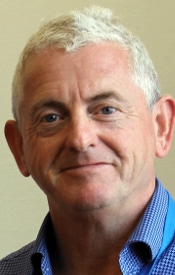
The Monitor Farm programme, run by cereals levy organisation HGCA, is expanding this autumn in order to reach more farmers around the UK, and this launch event aims to aid in the participation, collaboration and review of decision-taking of attendees.
To find out more about Agri-TechE Week 2014 please click here.
Organised by the Royal Norfolk Agricultural Association, a panel of experts will discuss the challenges of bringing science into practice and investigate the traditional role of the show society is changing to meet the challenges of the 21st century. Held in one of the world’s most advanced centres for life science research, this event aims to develop stronger leadership for the agri-tech sector.
To find out more about Agri-TechE Week 2014 please click here.
Post Overview
7th October 2014
Agri-TechE
Agri-TechE Article
Uncategorised
Share this Page:
Related Posts
Diego Durantini joins Agri-TechE as Interdisciplinary Manager
Agri-TechE hosts this event which will be an opportunity for innovators to road-test their ideas with end-users, investors to learn about new agri-tech products and services seeking finance, and for growers and producers to talk about their innovation needs.
For more details and the full programme and booking details please check out the REAP page here.
Get the latest agri-tech news, events and opportunities direct to your inbox
Event: Agri-TechE Week 2014: Innovation for Agriculture East
Agri-TechE
Innovation for Agriculture East, 13:00 – 16:40 11 November 2014, Trinity Park, Ipswich, Suffolk
With increasingly volatile farm gate prices, the smart use of inputs is one of the ways that farmers can increase the resilience of their operations. Use of technology to improve on-farm efficiency and the management of water resources are two of the themes for the Suffolk Agri-TechE Week 2014 event.
Robert Rous, chair of Suffolk Agriculture Association, says:
“With a keynote lecture by NFU Vice President Guy Smith, this event is an opportunity for farmers and technologists to take part in debates and discussions about the importance of new technologies, how to maximise the benefit of new innovations and how to make sure new technologies meet the needs of farmers.
“In addition, we will also be discussing the critical importance of an integrated approach to water management and what a 25 year plan for water for agriculture in the east of England should look like.”
The event, held in association with FramFarmers, is an important contribution to the UK’s first Agri-TechE Week, during which key elements of the east of England’s agricultural research, practice and business are to be showcased and debated.
This is a unique opportunity to work with like-minded people in your network to help influence policy-making and strategic directions of research and cluster development in the east of England.
Who should attend: Growers, farmers, producers, policy-makers, those interested in key topics such as integrated water management technology and innovation management within agriculture.
Robert Rous, Chair, Suffolk Agricultural Association
13:35 Keynote Address; Why UK Farming Needs Technology and a Progressive Approach
Guy Smith, Vice President, National Farmers’ Union
14:00 Workshop sessions
Workshop 1 – ‘Technology Transfer: From Research to On-Farm Reality’
Delivered by: Mark Bowyer, Head of Farming at ProduceWorld and 2014 Nuffield Scholar and Belinda Clarke, Director, Agri-TechE and 2001 Nuffield Scholar
Key topics to be addressed:
How do farmers currently hear about new innovations which are available or in development?
How can farmers better decide the potential value or impact of a new technology to them?
Who do farmers trust most to give them information about new innovations?
How can technology developers balance communication about things “in the pipeline” or should farmers only hear about new things that are available on the market now?
Workshop 2 – ‘Water in Agriculture: Managing Future Water Needs’
Delivered by: Martin Collison, Collison & Associates Ltd, Ruth Welters, Agri-TechE Water Cluster, University of East Anglia (UEA) and Steve Dorling, Weatherquest
Key topics to be addressed will be:
What are the main challenges with water in agriculture?
How are/will these challenges change over time?
What would a 25 year plan to secure water for agriculture include?
What technologies may allow us to manage water in agriculture more effectively?
16:00 Wrap-up session to include ‘Next steps’ from the key points of the workshops
16:30 Summary remarks from Guy Smith and Robert Rous
Get the latest agri-tech news, events and opportunities direct to your inbox
Norfolk farmer Poul Hovesen wins Farmer of the Year
Agri-TechE
We are delighted that Norfolk farmer Poul Hovesen has been awarded Farmer of the Year at the Farmer’s Weekly Awards, which were held on Thursday 2 October. Poul not only beat some strong competition to win the coveted top award, but also won the accolade of Arable Farmer of the Year for his work at Manor Farm, on the Holkham Estate, part of Salle Farms Company.
The award was presented by Defra secretary Liz Truss at the ceremony on Thursday night before more than 1,200 guests who celebrated the accomplishments of 45 finalists and winners.
Agri-TechE is also proud that Poul is part of our recently announced Stakeholder Group, and that he will be bringing his expertise and advice as one of the speakers for Agri-TechE Week.
Get the latest agri-tech news, events and opportunities direct to your inbox
Agri-TechE announces first SIG: ‘Water for Agriculture’
Agri-TechE
L-R: Andy Brown, Prof Kevin Hiscock and Dr Belinda Clarke
Today at the Anglian Water seminar ‘Growing innovation from water, food and agriculture’ it was announced that Agri-TechE is to take the discussion further by establishing a Special Interest Group called ‘Water for Agriculture’.
Each of the SIG’s will have two co-chairs taken from industry and academia.
We are delighted that Andy Brown, Head of Sustainability at Anglian Water, and Prof Kevin Hiscock, Professor of Environmental Sciences at UEA (University of East Anglia), have agreed to take these positions for the Water for Agriculture SIG.
Belinda Clarke says: “Today’s event, which is the last in a series of workshops hosted by Anglian Water, has demonstrated that there is a lively interest in this area and Agri-TechE is delighted to help build partnerships through our first SIG”.
More information about the SIG will be available shortly but if you would like to express your interest in the SIG do let us know.
Get the latest agri-tech news, events and opportunities direct to your inbox
HGCA event announced for Agri-TechE Week
Agri-TechE
Brian Barker
Agri-TechE and HGCA are delighted to announce a further event for Agri-TechE Week, which will launch the expansion of the HGCA Monitor Farms programme, to take place on Friday 14 November.(more…)
Post Overview
26th September 2014
Agri-TechE
Agri-TechE Article
Uncategorised
Share this Page:
Related Posts
BlightSense: Detecting Late Blight before it infects
Get the latest agri-tech news, events and opportunities direct to your inbox
Innovation opportunities in agri-tech
Agri-TechE
L-R: Giles Barker, COO, KisanHub; Jonathan Tole, Head of Operations Development, Produce World; Dr Belinda Clarke, Director, Agri-Tech; Sachin Shende, CEO, KisanHub, Guy Thallon, Group Sustainability and Research Manager, Produce World.
The launch of a new type of on-farm support tool and the announcement of a prototype online agri-tech discussion forum were two of the outcomes of Agri-Tech’s first Pollinator meeting.
Dr Belinda Clarke started the event with the announcement that Agri-TechE is developing and testing an online discussion forum, which is currently looking for further test volunteers. The aim of online system is to facilitate interaction within the agri-tech community.
The guest speakers – Produce World, one of the largest grower and packer groups in the country and a company that is actively investing and collaborating in innovation developments; and KisanHub, a high-technology start-up with an exciting new tool for supporting farmers and growers – then set the scene.
They described a rapidly changing environment, with huge market potential and some major challenges to overcome. This was then opened up to discussion with the floor, where it was immediately clear that the meeting had attracted a wide cross-section of interests, which created some exciting synergy in the discussions.
Innovation and sustainability
Jonathan Tole, Head of Operation Development at Produce World, explained that his strategy for development was in two parts: innovation and sustainability.
The sustainability strategy had several key strands.
As a major user of water, environmental stewardship was a priority and the group is working closely with Anglia Water and the Rivers Trust in the catchments of the Ouse and Cam rivers to ensure water quality and sustainable use of water.
This environmental responsibility was also practiced internally, with a policy of responsible sourcing.
The company has workplace culture focused on developing skills and enhancing career opportunities for staff within the industry. Produce World is working closely with universities to raise the profile of the agri-food industry as a good career choice, with the aim of attracting talent into the sector.
The company has invested in innovation in a structured way through its involvement in Knowledge Transfer Partnerships. Jonathan explained that this activity was focused on solving business problems but that this had also stimulated innovative solutions and opened up new areas of investigation.
For example the Soil-for-Life project looked at creating a knowledge-base about soils, which would be an invaluable resource for improving understanding of the nature of soil, the impact of various cultivation techniques and of the interaction between plants, water, nutrients and organic matter.
Jonathan identified a number of areas providing opportunities for innovation where they are looking for partners:
Improved water management – how to grow more with less water, how to clean vegetables with minimal water usage, and how to improve the efficiency of cooling and refrigeration to improve life expectancy of produce.
Interpretation of ‘big data’ – agriculture has a huge amount of knowledge but limited data. The issue is how to improve monitoring and collating of data and tools to interpret this so that it would be meaningful to farmers.
Maximising yield and meeting customer requirements – how to increase yield but to ensure minimum waste, for example through accurate forecasting and order prediction.
Enhancing health benefits – how to increase the nutritional value of vegetables, and to encourage greater consumption in line with government recommendations.
Jonathan stressed the value of Agri-TechE in creating a forum for discussion and opportunities to meet with others in the ecosystem to understand both what they can offer and their requirements.
KisanHub open for business
Giles Barker and Sachin Shende, co-founders of KisanHub, had some exciting news: they announced the launch of their technology platform and stressed that it was now open for business.
KisanHub is able to tailor and deliver bespoke solutions to meet the data analytics needs of their customers.
The company has been working hard on their new offering, which is focusing on the needs of farmers, research institutions and large agriculture corporations. It aims to unlocking data so that it can be used for meaningful decisionmaking.
It is also opening its hub to the research community to provide a platform through which farmers and others can use and interact with their models.
The discussion then widened out with questions and advice being given from the floor.
L-R: Giles Barker, COO, KisanHub; Jonathan Tole, Head of Operations Development, Produce World; Dr Belinda Clarke, Director, Agri-Tech; Sachin Shende, CEO, KisanHub, Guy Thallon, Group Sustainability and Research Manager, Produce World.
The issue of innovation and its protection was discussed from various perspectives and Calum Murray from Innovate UK (formerly known as Technology Strategy Board) stressed that there are a range of funding support tools available for agri-tech innovation through his organisation.
He also stressed the importance of involvement in the shaping of the new Centres for Innovation. Tina Barsby, CEO of Niab, agreed that the region was taking a keen interest in the Centres for Innovation and that several bids were underway to ensure that one or more nodes for the new infomatics centre would be based locally.
Jonathan Wiggin of NWave, a company developing low cost smart soil moisture sensors that could be deployed on wide area networks, stressed the value of the Pollinator and his interest in talking to members of the cluster about how his technology could provide a cost-effective solution to the problems of connecting sensors on a large scale.
NWave has recently formed a partnership with KisanHub and Niab to undertake a pre-commercial trial on Niab’s Innovation Farm. They are also currently involved in trials of a smart irrigation systems in the US by providing the real-time data which is used to control the irrigation system pro-actively.
Water water everywhere
Water was mentioned several times in the meeting, showing the keen interest in this area. Agri-TechE is involved in the meeting to be hosted by Anglia Water on 30th September, which is discussing innovation in water management for agriculture.
Get the latest agri-tech news, events and opportunities direct to your inbox
Can second wheat loss be overcome?
Agri-TechE
As the wheat harvest concludes, many farmers will be considering drilling with a second wheat. This can put pressure on yields, but to address this new varieties are being developed by breeders such as KWS.
Mark Dodds of KWS explains that the new variety KWS Lili has potential to be high performing even in this second sowing slot.
Get the latest agri-tech news, events and opportunities direct to your inbox
Agri-Strategy update
Agri-TechE
Some useful dates for those interested in the Centres for Agricultural Innovation are included in the latest Agri-TechE Strategy newsletter including a webinar on 11th September. You can also find dates for the catalyst funding which was mentioned in this month’s blog.
Get the latest agri-tech news, events and opportunities direct to your inbox
Bayer CropScience brings wheat variety testing to the UK
Agri-TechE
Wheat breeding received a boost in June 2014 when Andrew Orme, Managing Director of Bayer CropScience in the UK said, “The UK Government now has a positive policy on modern, productive, and sustainable agriculture for the first time in years and we are responding….this should send a clear message that we have serious intentions as a wheat seed company.”
Julian Little of Bayer CropScience
We asked Julian Little who is based in Bayer CropScience’s Cambridge office to expand on the announcement.
Q Bayer CropScience is better known for crop protection – is wheat breeding a new initiative for the company or is it the first time it has run a breeding programme in the UK?
JL. Whilst the company might be thought of in Europe as being mainly a crop protection company, elsewhere in the world, many farmers would see us very much as a seed company. Thus we are the number one hybrid oilseed rape in the world, number one cotton breeder, number one hybrid rice company (albeit outside China) and number four vegetable breeder. In the UK, we successfully launched our oilseed rape business a couple of years ago and are already selling some of the highest yielding hybrids such as Harper.
Q. Why do you think the time is right to start wheat variety testing?
JL. The imperative to improve food production is obvious, and whilst we have seen strides taken in many staple crops, improvements in wheat yields has been stubbornly slow. In the UK, an evolution in government policy towards a recognition that there was a need to promote modern, productive and sustainable agriculture has been very much noticed internationally, to the point where Bayer felt a need to respond positively. The decision to start the process of wheat-breeding, in this case, the commencement of wheat variety testing, was therefore fast-tracked. The publication of the AgriTech Strategy has been an important milestone, as much as a demonstration of UK commitment, as for the injection of some money into agricultural and plant science research.
Q. Why is Cambridge an attractive place to run wheat testing?
JL. The East of England is of course a dynamic area for plant science with centres of excellent in both Cambridge and Norwich. However, there is an equally valid reason for choosing this area – Cambridge lies in the centre of the most productive farmland in the UK!!
Q Will the wheat varieties be specific to UK conditions or will they be suitable for other markets as well?
JL. Wheat varieties are notoriously parochial but whilst the initial testing will be for UK conditions, we believe this will evolve into a facility for looking at varieties for Ireland and other maritime north west European countries.
Q. Will you use new DNA sequencing tools in your programme?
JL. Nothing has been excluded from our global wheat breeding programme. New breeding technologies are being used alongside conventional breeding techniques.
However, we do recognise that we will need significant changes in the politics surrounding the regulatory controls on GM before we can commercialise such varieties in the UK. Therefore, our initiation of a breeding programme here in the UK is focused entirely on non-GM varieties.
Post Overview
7th August 2014
Agri-TechE
Agri-TechE Article
Uncategorised
Share this Page:
Related Posts
Cost Effective IoT in Ag, The CropQuant in-field phenotyping platform
Get the latest agri-tech news, events and opportunities direct to your inbox
Report reveals East is national leader in UK crop productivity
Agri-TechE
Photo courtesy of HexCam
Nearly 160,000 people are employed in the wider East of England within agricultural production and its supporting industries such as food processing, wholesale and haulage, according to a report commissioned by Agri-Tech.
The report which aims to provide a base-line of economy activity driven by agricultural and horticultural production, has revealed that he region is the most productive area of the country producing 85% of UK sugar beet, 53% of peas and beans, 46% of vegetables and salads, 33% of potatoes, 32% of wheat, 30% of ornamentals and 24% of oilseed rape.
The value of farm gate output is estimated to be £4.1bn or 18% of the UK total.
The agriculture sector in region is amongst the most dynamic, productive and progressive in the world, with a record of innovation, investment and of progressive businesses.
This includes 150 market leaders or larger companies in agricultural supply, farming, food processing, machinery, chemicals, seed, logistics, marketing and input co-operatives as well as a wide range of related companies. The depth and breadth is not seen in any other part of the UK.
There is also an unrivalled concentration of national public and private research capabilities in the area.
Dr Belinda Clarke, Director of Agri-TechE says that there is capacity to improve further. “The research was commissioned to provide a snap-shot of the situation now. It demonstrates clearly the contribution that agriculture and horticulture is making to the UK economy.
“We want to build on this and create added value by assisting the translation of research out into the field. We are seeing a tremendous appetite for innovation from all sectors of the agri-tech community and think that we are in the right place and the right time to make a difference.”
Post Overview
5th August 2014
Agri-TechE
Agri-TechE Article
Uncategorised
Share this Page:
Related Posts
Russ Farn joins eg technology’s Board of Directors

 Agri-TechE





























 Some useful dates for those interested in the Centres for Agricultural Innovation are included in the latest