Get the latest agri-tech news, events and opportunities direct to your inbox
Watkins landrace collection resource for bread wheat
Agri-TechE
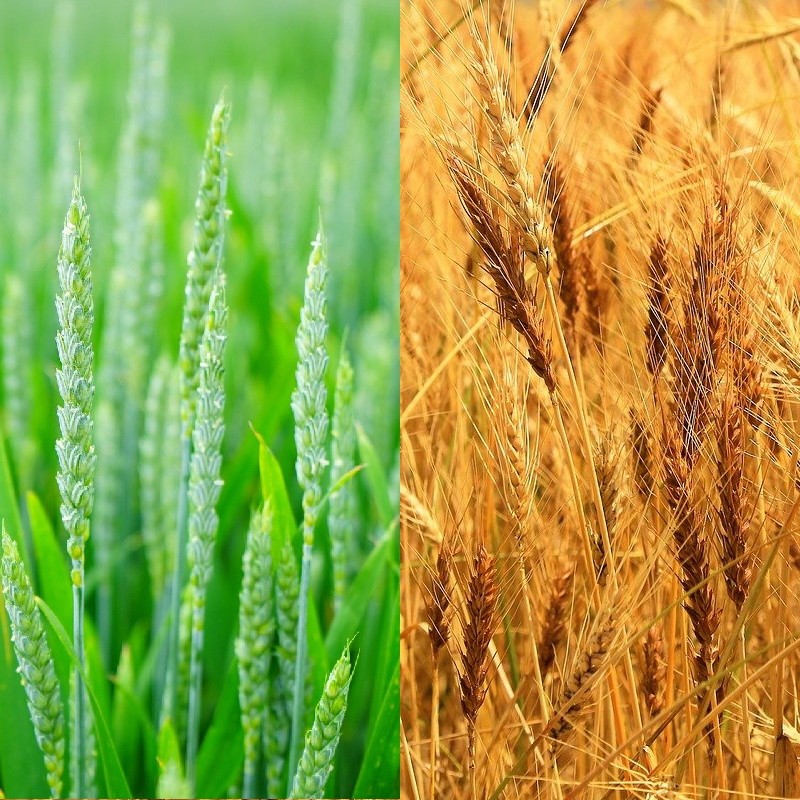
A high level of genetic diversity has been found in the A. E. Watkins bread wheat landrace collection, which is held at the John Innes Centre on the Norwich Research Park, according to the findings of a recent paper. Genotypic information was used to determine the population structure and to develop germplasm resources.
In the 1930s A. E. Watkins acquired landrace cultivars of bread wheat (Triticum aestivum L.) from official channels of the board of Trade in London, many of which originated from local markets in 32 countries.
The geographic distribution of the 826 landrace cultivars of the current collection, here called the Watkins collection, covers many Asian and European countries and some from Africa.
The cultivars were genotyped with 41 microsatellite markers in order to investigate the genetic diversity and population structure of the collection.
A high level of genetic diversity was found, higher than in a collection of modern European winter bread wheat varieties from 1945 to 2000. Furthermore, although weak, the population structure of the Watkins collection reveals nine ancestral geographical groupings.An exchange of genetic material between ancestral groups before commercial wheat-breeding started would be a possible explanation for this.
The increased knowledge regarding the diversity of the Watkins collection was used to develop resources for wheat research and breeding, one of them a core set, which captures the majority of the genetic diversity detected.
The understanding of genetic diversity and population structure together with the availability of breeding resources should help to accelerate the detection of new alleles in the Watkins collection.
Establishing the A. E. Watkins landrace cultivar collection as a resource for systematic gene discovery in bread wheat – Luzie U. Wingen, Simon Orford, Richard Goram, Michelle Leverington-Waite, Lorelei Bilham, Theofania S. Patsiou, Mike Ambrose, Jo Dicks, Simon Griffiths
Theoretical and Applied Genetics
August 2014, Volume 127, Issue 8, pp 1831-1842,
Post Overview
29th July 2014
Agri-TechE
Agri-TechE Article
Uncategorised
Share this Page:
Related Posts
Cereal killer samples taken directly from the field to improve the Recommended List
Get the latest agri-tech news, events and opportunities direct to your inbox
Wheat prices to remain at historical high
Agri-TechE
Relatively tight global feed grain supplies mean that, in 2014, UK wheat prices are likely to remain at a historically high level according to a report by the National Association of British and Irish Millers (nabim).
nabim estimated that this year world wheat production will be 712 million tonnes, which is the highest level for 5 years.
Get the latest agri-tech news, events and opportunities direct to your inbox
Ancient varieties and new technology key to food security
Agri-TechE
Global wheat consumption exceeded production in six out of the last eight years*. Although increasing yield to meet demand is important, improving resilience under adverse growing conditions is also vital.
Dr Belinda Clarke, director of Agri-Tech, will discuss how innovation emerging from the East of England is providing farmers with new tools to boost production in a Food Security panel discussion chaired by James Townshend, Business Ambassador for Agriculture, ahead of the Commonwealth Games, 24th July 2014.
Agri-TechE brings together farmers and growers with scientists, breeders and technologists. Dr Clarke explains that the region’s tradition of agricultural innovation is being reinvigorated with the emergence of new technologies in areas as varied as plant breeding, DNA sequencing, information management and advanced engineering.
Dr Clarke explains: “Traditional wheat breeding has focused on improving yield by selecting for desirable characteristics, but this can be at the expense of other attributes such as tolerance to drought or disease. This tends to create varieties that perform best when conditions are ideal and are often dependent on high inputs of fertiliser and pest control so a new approach is required.
Dr Belinda Clarke, Director of Agri-Tech
“The East of England has considerable knowledge of plant breeding with one of the largest global collections of wheat landraces. These are local varieties of domesticated wheat that are adapted to the natural and cultural environment and are stable under adverse conditions.
“These ancient varieties could provide alternative sources of yield, quality, drought tolerance or pest and disease resistance traits for current plant breeding programmes. This will help combat climate change, improve food security and better utilise current farming inputs.”
The international landrace collection was built up in the 1920s by University of Cambridge Lecturer Arthur Ernest Watkins. He encouraged staff at British consulates worldwide to collect over 1200 samples of wheat. The Germplasm Resources Unit is now housed at the John Innes Centre (JIC) on the Norwich Research Park alongside one of the most powerful genetic sequencing engines at The Genome Analysis Centre.
Other germplasm resources are available at Rothamsted Research; it has collated 150 different types (lines) of ancient wheat called Triticum monococcum to identify lines that have natural resistance to pests. Some of the best ancient wheat lines are now being crossed with modern wheat varieties using a novel breeding technique.
Dr Clarke continues “Now with new techniques, such as DNA marker assisted selection and others, we have more precise tools to help breeders to understand variation. This will allow us to re-evaluate older varieties and create crops that are naturally more resilient in the field.”
Chairing the Food Security session is James Townshend, Business Ambassador for Agriculture, CEO of Velcourt Farm Management and a strong advocate of creating demonstrations of new technology so that farmers can see the innovations that may significantly improve wheat yields.
Velcourt’s own R&D team has been working with JIC to investigate the use of markers to improve yield. Differences in a single “rung” of the DNA helix can impact the grain width, length and the number of spikelets.
Dr Cristobal Uauy, Wheat Geneticist at John Innes Centre.
Dr Cristobal Uauy, wheat geneticist JIC explains: “Although the differences are barely perceptible, over an entire field these changes can increase yield by roughly 5%, the equivalent of 700 loaves of bread per hectare.”
Farms in the region are also being used as a test bed for new technologies such as remote sensing and imaging which can support precision agriculture. Spectral imaging measures the health of the crop and also identifies areas for selective pest control, which is particularly beneficial where there is resistance to certain herbicides.
Dr Clarke says that the valuable data, from field trials collected with drone imaging and from yield data emerging from smart combine harvesters, are among the inputs that are driving an information revolution. Recent research by law firm Taylor Vinters estimates the agricultural market for unmanned systems will be worth $30bn over the next decade with applications in precision farming, monitoring and land use inspection.
“Agricultural management is data rich and automating the collection and management of data will greatly assist on-farm decision-making, “ says Dr Clarke. “We are seeing companies from the Cambridge cluster currently working in other industry sectors, looking with interest at agri-tech and seeing potential for applying their technology to collating, visualising and interpreting this complex data. We anticipate that the market for agri-informatics will be a major growth area.”
Agri-tech has been identified as one of the ways in which the world can increase food production sustainably. Dr Clarke believes that the east of England is in a prime position to deliver it.
British Business House is an event coordinated by UKTI to engage with international business leaders attending the Commonwealth Games in Glasgow.
*Research published by National Association of British and Irish Millers (nabim)
Post Overview
24th July 2014
Agri-TechE
Agri-TechE Article
Uncategorised
Share this Page:
Related Posts
Watkins landrace collection resource for bread wheat
Get the latest agri-tech news, events and opportunities direct to your inbox
Influential minds are working in agri-tech
Agri-TechE
Professor Sir David Baulcombe, Regius Professor of Botany and head of the Department of Plant Sciences at the University of Cambridge.
Standout researchers of the last decade are named in a new report by Thomson Reuters, which is a compilation of influential names in science. Nine scientists from research organisations within the Agri-TechE region are listed as among the top 1 % of highly cited scientists in the world.
Researchers from the John Innes Centre, Sainsbury Laboratory and University of Cambridge Plant Sciences Department have been named as undertaking research with the highest global impact.
The results, published on the website www.highlycited.com, demonstrate the research excellence in plant and crop bioscience within the Agri-TechE area.
The scientists are:
Professor Sir David Baulcombe, Regius Professor of Botany and head of the Department of Plant Sciences at the University of Cambridge. His research focusses on disease resistance in plants and in particular RNa silencing, which controls plant gene expression.
Professor Cyril Zipfel, head of laboratory and whose research is on plant innate immunity to disease.
Professor Sophien Kamoun, who studies the biology of filamentous plant pathogens, including the pathogen responsible for potato blight.
Professor Jonathan Jones, who works on plant-pathogen interactions and the development of biotechnological solutions to important crop diseases.
Dr Joe Win, a postdoctoral researcher in Professor Sophien Kamoun’s lab – Joe works on the pathogen responsible for blight affecting potatoes and tomatoes
Professor Alison Smith, who studies how plants metabolise sugars and starch and how these affect their growth and yield. Professor Caroline Dean, whose research on vernalization – the period of cold some plants need in order to flower – is leading other studies at the John Innes Centre and around the world, including into how plants will adapt to climate change.
Professor Giles Oldroyd, who leads research programmes on how cereal and maize crops could be genetically modified to ‘fix’ their own nitrogen from the air as peas and legumes can, with implications for reducing artificial fertilisers and improving yield in the UK and in countries which do not have access to nitrogen fertilisers.
Get the latest agri-tech news, events and opportunities direct to your inbox
ADAS scientist says cheers to Agri-Tech
Agri-TechE
Dr Daniel Kindred, Senior Research Scientist at ADAS, Boxworth.
Dr Daniel Kindred, Senior Research Scientist at ADAS Boxworth, was delighted to be the winner of a wine tasting and tour for two at Chilford Hall after visiting the Agri-TechE stand at Cereals.
The working farm at ADAS Boxworth is focused on winter wheat and oilseed rape grown on the heavy Hanslope series clay which is very sticky in winter and hard and cracked in summer. This is similar to over 20% of the arable land in England and Wales so it is a good test plot for farmers and others and enjoyed a successful open day earlier this summer.
Dr Kindred says: “Many thanks to Agri-TechE and good luck with all the new cluster-building activities within the east of England.”
Post Overview
23rd June 2014
Agri-TechE
Agri-TechE Article
Uncategorised
Share this Page:
Related Posts
More complete and accurate wheat genome announced by TGAC
Get the latest agri-tech news, events and opportunities direct to your inbox
Pollination boost from bee mix seeds
Agri-TechE
About one third of what humans eat relies on insect pollination. While biofuel crops continue to expand, increasing the demand for pollination, honeybee populations have not kept pace. Wild pollinators, such as bumblebees, have helped to make up some of the shortfall, but bumblebee populations are also under stress, with their numbers dropping by about 30% in the UK between 1950 and 1980.
Researchers have attributed that decline, in large part, to the loss of flowers and nests, habitat changes, agricultural chemicals, disease and possibly climate change, making it ever more important to protect wild bees. To address this a University of Cambridge academic has developed a flower seed mix, which aims to help the UK’s bee population by maximizing the availability of nectar and pollen during the growing season.
The Throw to Grow Bee Mix, which was formulated by Professor Beverley Glover, Director of the Cambridge University Botanic Garden, with Stuart Donders of Moles Seeds, is aimed at protecting, growing and strengthening the bee population by providing pollinators with a steady diet of flowers that thrive throughout the spring, summer and early autumn in the UK. By providing a reliable food source for the bee population, the pollinators can produce more queens – thereby increasing the following year’s bee population. Bees are also less likely to succumb to disease if they are well nourished.
“If you’re a honeybee in East Anglia you’re having a great time while the oilseed rape is out,” said Glover, whose know how was licensed by Cambridge Enterprise, Cambridge University’s commercialisation arm. “Then within a few weeks those crops go to seed and there’s nothing to eat, so the bees rely on gardens and wildflowers. It’s feast or famine for them. So we created a food source that was available across the entire growing season.”
The seed mix was developed using a scientific methodology, taking into account flower reward, timing, accessibility, visibility and texture. It includes a selection of colourful flowers, like snapdragon, borage and dahlia, specifically to appeal to bees’ vision, which captures light at the ultra-violet end of the spectrum. The mix is designed to blossom in a way that offers pollinators a steady supply of nectar and pollen, from the first bloom of the yellow fields of oilseed rape, when food is abundant, to the first autumn frost, when typically there is not enough nectar to go around.
The flower seed mix was trialled over two years at the Cambridge University Botanic Garden, the National Institute of Agricultural Botany in Cambridge (Niab), which spearheaded the development of the project, and at Moles Seeds in Colchester, which is the exclusive supplier.
“Bee mixes have existed in the past, put together in an ad-hoc way, but we decided to take a more scientific approach,” said Stuart Donders, Director of Moles Seeds.
Post Overview
20th June 2014
Agri-TechE
Agri-TechE Article
Uncategorised
Share this Page:
Related Posts
From micro-scape to landscape: innovating at the frontier
Get the latest agri-tech news, events and opportunities direct to your inbox
Agri-tech set to revitalise essential industry sector
Agri-TechE
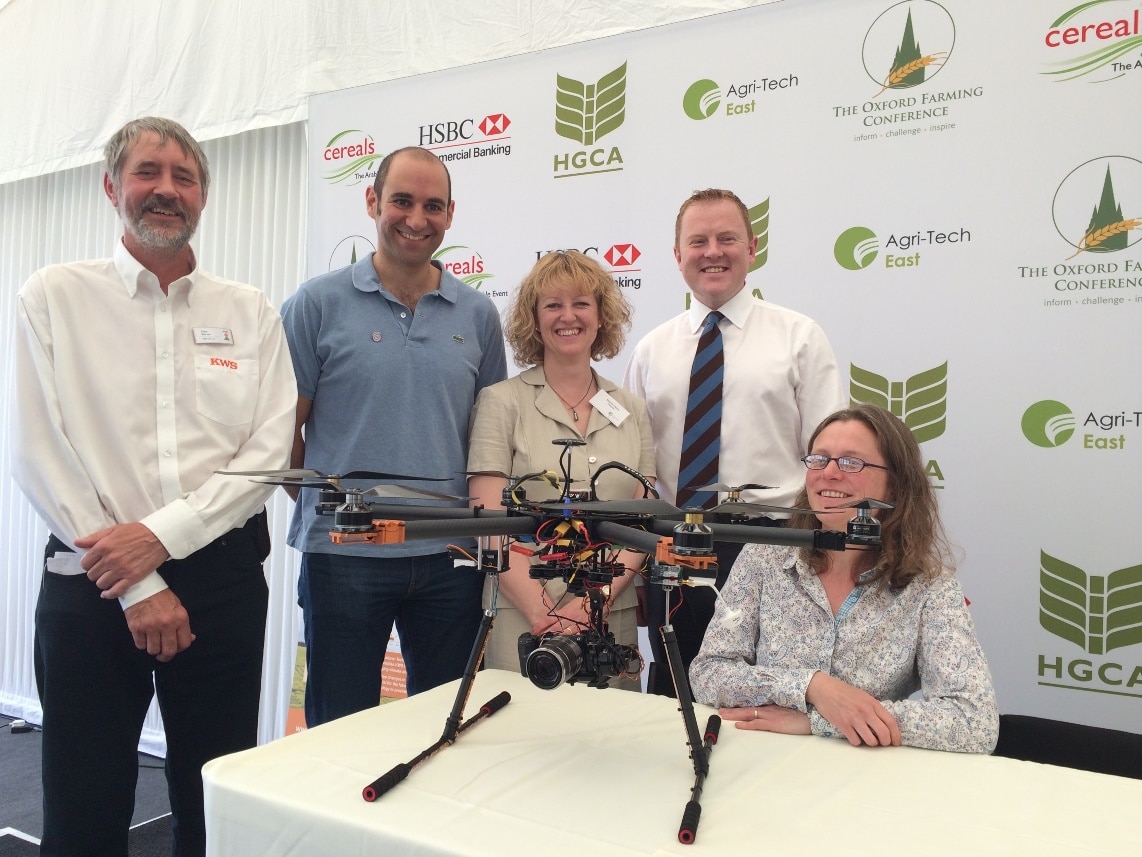
Speakers at the Agri-TechE Technical Seminar at Cereals 2014. From left to right: Peter Werner (KWS UK), Dr Cristobal Uuay (JIC & Niab), Dr Belinda Clarke (Agri-Tech), Peter Lee (Taylor Vinters LLP) and Dr Lynn Dicks (University of Cambridge).
Agri-tech provides the next focus for technology innovation offering tangible returns within short lead times says Dr Belinda Clarke, director of Agri-TechE at Cereals 2014. The organisation is creating a global innovation hub for the sector.
Dr Clarke comments: “Sustainable intensification, where the aim is to increase food production on existing farmland while minimising pressure on the environment, is the cornerstone of current agricultural research and policy. To achieve this we need new thinking and this is driving a new agricultural revolution.”
The membership organisation, launched earlier this year, brings together cutting-edge technology to accelerate the growth of agri-tech as an industry sector. Dr Clarke says that East of England is in a prime position to be a world-leading cluster in agri-tech; not only is the region renowned for agricultural best-practice but also for knowledge of plant breeding, DNA sequencing, information management and advanced engineering.
She continues: “We are seeing the opportunity for new technologies within imaging, sensing and monitoring to improve agricultural production and this is attracting the attention of non-traditional players. There is a growing need for improved data collection and interpretation in a way that is appropriate for decision making at all levels.
“At the same time new demands are being created for plant-based outputs. Not just for food, but also as specialty chemicals for the pharmaceutical industry and as biomass for energy. This is creating new markets and supply chains so the value of primary production is increasing.”
Agri-TechE hosted a technical seminar at Cereals 2014, with a panel of experts discussing how new technologies in breeding, monitoring and decision making have the potential to increase yield sustainably by 5% – 20%.
Dr Clarke chaired the seminar at Cereals: “At Agri-TechE we are bringing together farmers and growers with scientists, technologists and entrepreneurs to understand the challenges and work together to create a global innovation hub in agri-tech, which will offer significant economic benefits to the region.”
Post Overview
13th June 2014
Agri-TechE
Agri-TechE Article
Uncategorised
Share this Page:
Related Posts
Using AI to fix fractured value chains: a path best tackled facing forward
Get the latest agri-tech news, events and opportunities direct to your inbox
Niab leads taskforce on new sustainable intensification guidelines
Agri-TechE
Dr Jennifer Preston, Research Officer, Niab.
Niab is leading a £2 million Defra-funded research project to identify the most effective practices and test potential new farming systems to increase farm productivity while reducing environmental impacts and enhancing ecosystem services.
‘Project 1 – Integrated Farm Management for improved economic, environmental and social performance’ is one of three studies forming Defra’s £4.5 million Sustainable Intensification Research Platform, known as SIP.
The intention is to review existing methods for measuring the economic, environmental and social performance of farm businesses, and develop appropriate metrics for sustainable intensification (SI). Practical approaches to Integrated Farm Management will be identified and tested, and new approaches developed to support SI decision-making on farm at the end of the three-year project.
Niab’s Director of Crops and Agronomy and project lead Stuart Knight says: “New technologies offer a great opportunity to meet the challenge of improving productivity while benefiting the environment. We’re delighted to lead such an exciting collaboration of agricultural, environmental and social scientists, economists, stakeholders and policymakers from over 25 organisations, including universities, research organisations, charities, government agencies and industry.
“This is a unique opportunity to bring together the enormous amount of knowledge and information held across research and industry on agricultural land management. Ultimately, the aim is to translate this information into practical approaches to help farmers, land managers, the agri-food industry and policy makers balance economic, environmental and social outcomes of farming in their geographic and/or environmental situation.”
The project team will study farming practices for a set of farms across England and Wales. Data collected will provide a baseline against which future farm performance can be assessed. These SI metrics will be designed to be applicable to different farming systems and environments in England and Wales.
A practical Integrated Farm Management (IFM) approach will then be developed, with a set of SI practices taking into account the sector, environment and situation of farms. This includes practices identified from farms and horizon-scanning with key stakeholders to increase productivity, reduce costs, improve resource use efficiency, control pests and diseases, mitigate greenhouse gasses and pollution, and provide habitats for biodiversity. These will be tested on study farms, covering a range of locations, environments and farming types within the major crop and livestock sectors.
Niab’s research officer and project coordinator Jenny Preston says that to support the on-farm implementation of SI practices the research platform will be working with a wide range of stakeholders to develop a decision support and guidance framework.
“We will be cataloguing existing industry support tools and their effectiveness through surveys and farmer or advisor interviews, alongside farmer workshops to construct a list of desired results that can then be related to improved practices for IFM.”
The benefits of SIPs collaborative research platforms are expected to continue beyond the scope of the first three projects. It will provide a focal point for funders to pool resources, hosting long-term research to address objectives emerging from ongoing dialogue between stakeholders, researchers and policymakers.
Researchers and stakeholders working on projects linked to the SIP will establish a shared network of research sites and form an expert community of practice to coordinate translational research on farming systems and to engage in knowledge exchange activities. These will form a platform to host future research on farming systems and land management.
Post Overview
11th June 2014
Agri-TechE
Agri-TechE Article
Uncategorised
Share this Page:
Related Posts
National Networking Group of the Year awarded to Agri-Tech
Get the latest agri-tech news, events and opportunities direct to your inbox
Cereals 2014 Agri-TechE seminar: Innovation for agriculture
Agri-TechE
With sharply rising cereal prices and concerns about food security, agri-tech is becoming a growth area for innovation with many new technologies emerging in the sector. This is the focus of a technical seminar that Agri-TechE is hosting at 10.00am on Thursday 12th June
Agri-TechE is a new business focused cluster organisation that is bringing together farmers and growers with researchers and technologists, entrepreneurs and investors.
The East of England is in a prime position to be a world-leading cluster in agri-tech; not only is the region renowned for agricultural best-practice but also for knowledge of plant breeding, DNA sequencing, information management and advanced engineering.
The seminar will look at emerging technologies including new tools for breeders, on farm decision-making tools and remote monitoring by unmanned systems. For example: the global market for unmanned systems (in which the East of England is a leader) is estimated will be worth $30bn over the next decade with applications in precision farming, monitoring and land use inspection.
Click here for a handout containing more information about the technical seminar.
Additionally, on the Thursday Norwich company Hexcam will be showing its hexicopter on the Agri-TechE stand and will fly it over the trials site. Demonstrating how farmers will do their inspections in future. Elliott Corke of Hexcam welcomes Agri-TechE as it will provide an opportunity for him to meet farmers, breeders and researchers and understand better their needs so he can create a new service to support them.
Agri-TechE seminar, 10-11am on Day 2 Thursday 12th June in the Arable Conference marquee.
Speakers (10:00):
Time for an Agri-TechE Cluster – Dr Belinda Clarke, Agri-Tech
The wheat revolution – Dr Cristobal Uauy, John Innes Centre
Tools for improving yield – Peter Werner, KWS UK
The role of the flying eye – Peter Lee, Taylor Vinters LLP
What makes a good decision support tool? – Dr Lynn Dicks, University of Cambridge
Panel discussion (10:30 – 11:00)
Also Agri-TechE stand
Opportunities for grant funding for agri-tech innovation will be discussed at the Agri-TechE stand.
C-453-4 in the 4th avenue/ education area of the show
Get the latest agri-tech news, events and opportunities direct to your inbox
Plant-based alternatives to petrochemicals
Agri-TechE
Use of non-food products to produce speciality chemicals is a focus of work on the Norwich Research Park.
Professor Keith Waldron, of the Institute of Food Research (IFR) heads up a team of scientists on the Norwich Research Park looking at how the by-products of the agri-food industry can be used to create ‘second generation biofuels’ and other renewable industrial biochemicals, an emerging area with huge potential.
Yeast fermentation is the basis for the global bioethanol industry, which has a current value of around US$80 billion, and is part of the production process for a range of industrially important chemicals.
An important driver for the industry is the move from the current use of starch towards the use of fermentable sugars derived from lignocellulosic waste materials. An example is the pulp left after the processing of sugar beet. This still contains a high carbohydrate content, which is a good source of sugar for fermentation to ethanol and is relatively low in lignin, which means the treatment costs are lower.
Under Prof Waldron’s leadership, the IFR Biorefinery Centre based on the Park has installed a steam explosion pilot plant necessary for the pre-treatment of biomass prior to enzymatic release of sugars and fermentation. Together with the National Collection of Yeast Cultures (also housed at IFR) a programme of both fundamental and applied research is on-going in this economically important area.
Get the latest agri-tech news, events and opportunities direct to your inbox
Industrial biotech new growth opportunity
Agri-TechE
“This is a very exciting time to be working in science’, comments Professor Anne Osbourn who is the Director of the Norwich Research Park’s Industrial Biotechnology and Bioenergy Alliance (IBBA).
Creating a sustainable bioeconomy for the UK is a key strategic objective within Government and Norwich Research Park is well placed to advance fundamental and applied research in this area.
The Alliance aims to create a portfolio of expertise from across the schools of the University of East Anglia and the research institutes based on the Park, and to facilitate greater interaction with industry.
Prof Osbourn, previously Associate Research Director at the John Innes Centre, explains that the Alliance will have three major strands: fermentation of agri-food chain by-products to produce commodity and speciality chemicals; plant and microbial natural products and natural products chemistry; and bioenergy which includes bioelectrocatalysis.
She says; “There are many emerging areas of work that have synergies across the Park and we will be pulling these together into a coherent strategy. “For example, naturally occurring compounds have always been exploited by humans as sources of drugs, flavourings and fragrances but we are really only scratching the surface.
“The Norwich Research Park has a strong track record in natural products research, in particular antibiotics through its pioneering research into Streptomyces, which now accounts for over two-thirds of the clinically useful antibiotics of natural origin. This work is continuing with recent groundbreaking work in genomics.
“My background has been terpenes, the largest class of plant-derived natural products, which includes taxol (one of the most widely prescribed anticancer drugs) and artemisinin (the most potent antimalarial compound). This group of compounds represents tremendous chemical diversity that has so far been only poorly accessed and utilised by industry.
“If we can generate a library of different terpene structures and identify their functions then we have the potential to create new types of high value chemicals. This will be one of the objectives for the new Alliance.”
Another important strand of the Alliance is biorefining and Professor Keith Waldron, of the Institute of Food Research (IFR); an expert in this area has been appointed Associate Director of IBBA. He heads up a team of scientists on the Norwich Research Park looking at how the by-products of the agri-food industry can be used to create ‘second generation biofuels’ and other renewable industrial biochemicals, an emerging area with huge potential. Yeast fermentation is the basis for the global bioethanol industry, which has a current value of around US$80 billion, and is part of the production process for a range of industrially important chemicals.
An important driver for the industry is the move from the current use of starch towards the use of fermentable sugars derived from lignocellulosic waste materials. An example is the pulp left after the processing of sugar beet. This still contains a high carbohydrate content, which is a good source of sugar for fermentation to ethanol and is relatively low in lignin, which means the treatment costs are lower.
Under Prof Waldron’s leadership, the IFR Biorefinery Centre based on the Park has installed a steam explosion pilot plant necessary for the pre-treatment of biomass prior to enzymatic release of sugars and fermentation. Together with the National Collection of Yeast Cultures (also housed at IFR) a programme of both fundamental and applied research is on-going in this economically important area.
For Prof. Osbourn the Alliance creates the potential to offer new career opportunities for the next generation of scientists. “The development of a research and innovation campus on the Norwich Research Park offers opportunities for new types of collaboration between science and industry and I think that it will become an increasingly vibrant environment for young people entering the field. They will have the opportunity to become entrepreneurial in their thinking at an early stage.”
Post Overview
5th June 2014
Agri-TechE
Agri-TechE Article
Uncategorised
Share this Page:
Related Posts
From ideas to on-farm reality Agri-TechE Week 2014

 Agri-TechE










 Agri-TechE