Category: Livestock
Explore innovative technologies and practices for enhancing livestock health, welfare, and sustainability in modern agriculture.
Agri-TechE Newsletter
Get the latest agri-tech news, events and opportunities direct to your inbox
Explore innovative technologies and practices for enhancing livestock health, welfare, and sustainability in modern agriculture.
Get the latest agri-tech news, events and opportunities direct to your inbox
Predicting the nitrous oxide (N2O), ammonia, methane and carbon dioxide emissions generated by different livestock systems will become easier following the development of a model, by researchers at Rothamsted Research and the Bristol Veterinary School.
The computer model simulates the intricate workings of a livestock farm, accurately mimicking grass growth, the amount of beef and lamb it produces, and the greenhouse gas emissions of its animals. It will enable complex systems to be analysed without the need for realworld experiments.
Measurement of greenhouse gas emissions in livestock production is challenging. Emerging agri-tech to support the transition to net zero is to be discussed at an Agri-TechE event to be held at Rothamsted Research, Harpenden.
Lead author Dr Lianhai Wu said: “Our computer model accurately predicts animal and grass growth, greenhouse gas emissions, as well as nutrient and water cycling by taking into account the effects of factors such as livestock breed, climate, soil types and feed quality and quantity.
“The model could potentially integrate economic, environmental and social factors as well to provide decision makers with the ability to forecast, interpret and respond to potential threats or opportunities for UK livestock farmers.”
Ruminant livestock can make an important contribution to global food security by converting feed that is unsuitable for human consumption into high value food protein, however overuse of bought in feed and intensive production may create adverse environmental impacts.
The extended SPACSYS model enables estimates of ruminent growth under different feeding regimes. Intake of herbage (plants other than grass) and concentrates and the energy they contain was simulated in the component. Animal growth was validated by using liveweight data from over 200 finishing beef cattle and 900 lambs collected from the North Wyke Farm Platform (NWFP) in southwest England, UK, between 2011 and 2018.
Agriculture is the major source of NH3 emissions to the atmosphere, primarily deriving from livestock. The study provided insights into nitrogen cycles on a permanent pasture grazing system. It showed that 13% of the nitrogen applied as manure and deposited as excreta during grazing was lost to the air via ammonia volatilisation.
Of the inorganic nitrogen applied as Ammonium Nitrate at 190 to 260 kg ha−1, 37–61% was removed from the fields either as silage or animal intake. However, 15–26% was lost through surface runoff or drainage and 1.14% was emitted to the atmosphere as N2O.

It is novel to link animal, plant, soil and atmosphere together into a whole system model. By doing so it is possible to quantitatively investigate the dynamics of animal and grass production and nutrient fate, and their interactions under varied environmental conditions.
Through this study, the configuration for a permanent pasture grazing system has been validated. Researchers observe that the extended model has the potential to investigate the responses of the system on and consequences for a range of agronomic management and grazing strategies.
L. Wu, P. Harris, T.H. Misselbrook, M.R.F. Lee, Simulating grazing beef and sheep systems, Agricultural Systems, Volume 195, 2022,103307,ISSN 0308-521X.
Get the latest agri-tech news, events and opportunities direct to your inbox

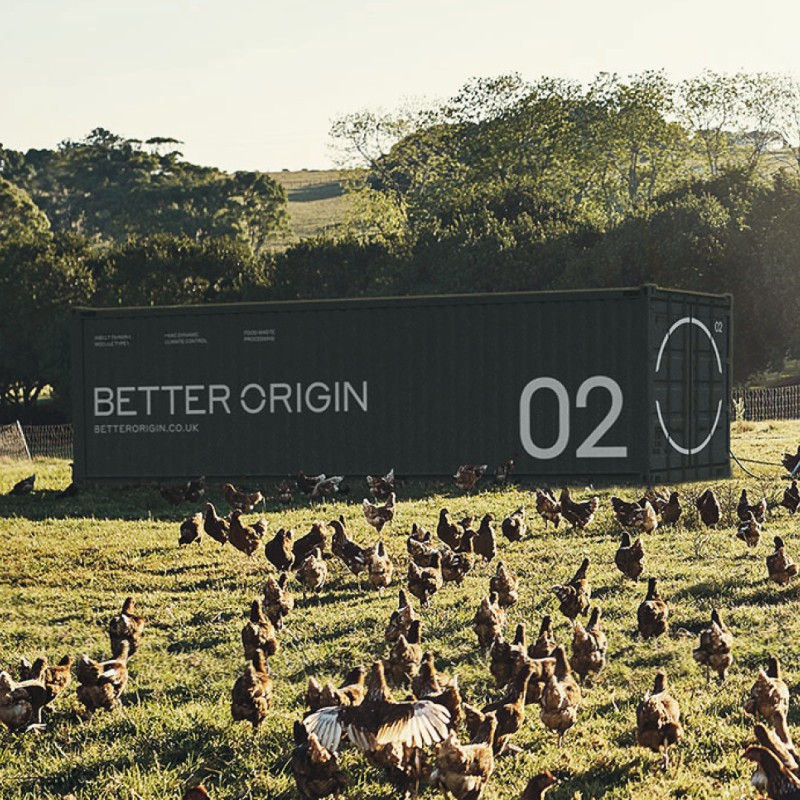
Better Origin is to provide insect mini farms for generating feed for 10 egg suppliers to Wm Morrison, UK’s fourth-largest grocer.
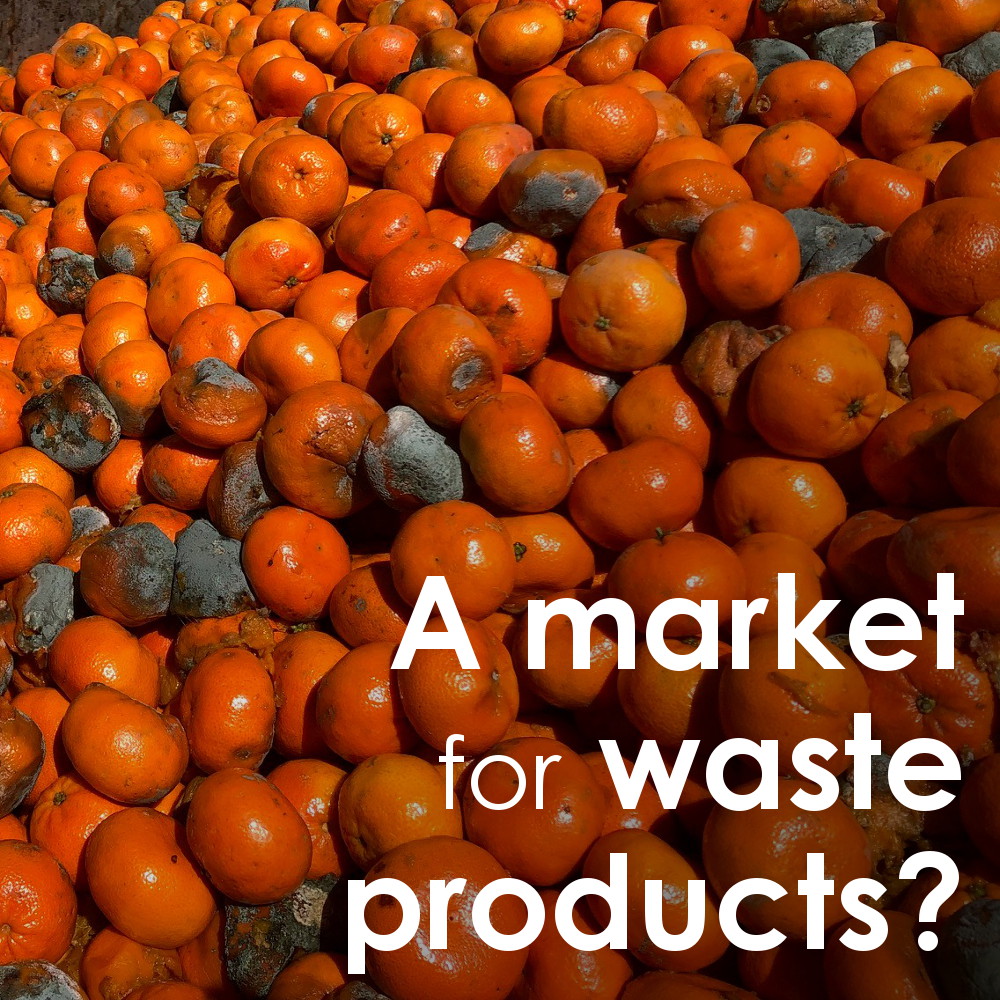
The automated farms are housed in shipping containers and will produce insects fed on waste from Morrisons’ fruit and vegetable processing site in Yorkshire as part of a “circular agriculture” scheme.
Insects are a natural feed for chickens, but rearing the birds indoors means that the bulk of the feed comes from soyabeans and grains. According to the British Free Range Egg Producers Association, the largest contributor to emissions on a free range egg farm is bought-in feed, which typically makes up more than 85 per cent of an egg’s carbon footprint.
The 320,000 free-range hens on the 10 farms will also be fed a supplementary diet of British beans, peas and sunflower seeds. Morrisons says it aims to start selling its carbon neutral eggs laid by insect-fed chickens next year.
More about Better Origin
Get the latest agri-tech news, events and opportunities direct to your inbox
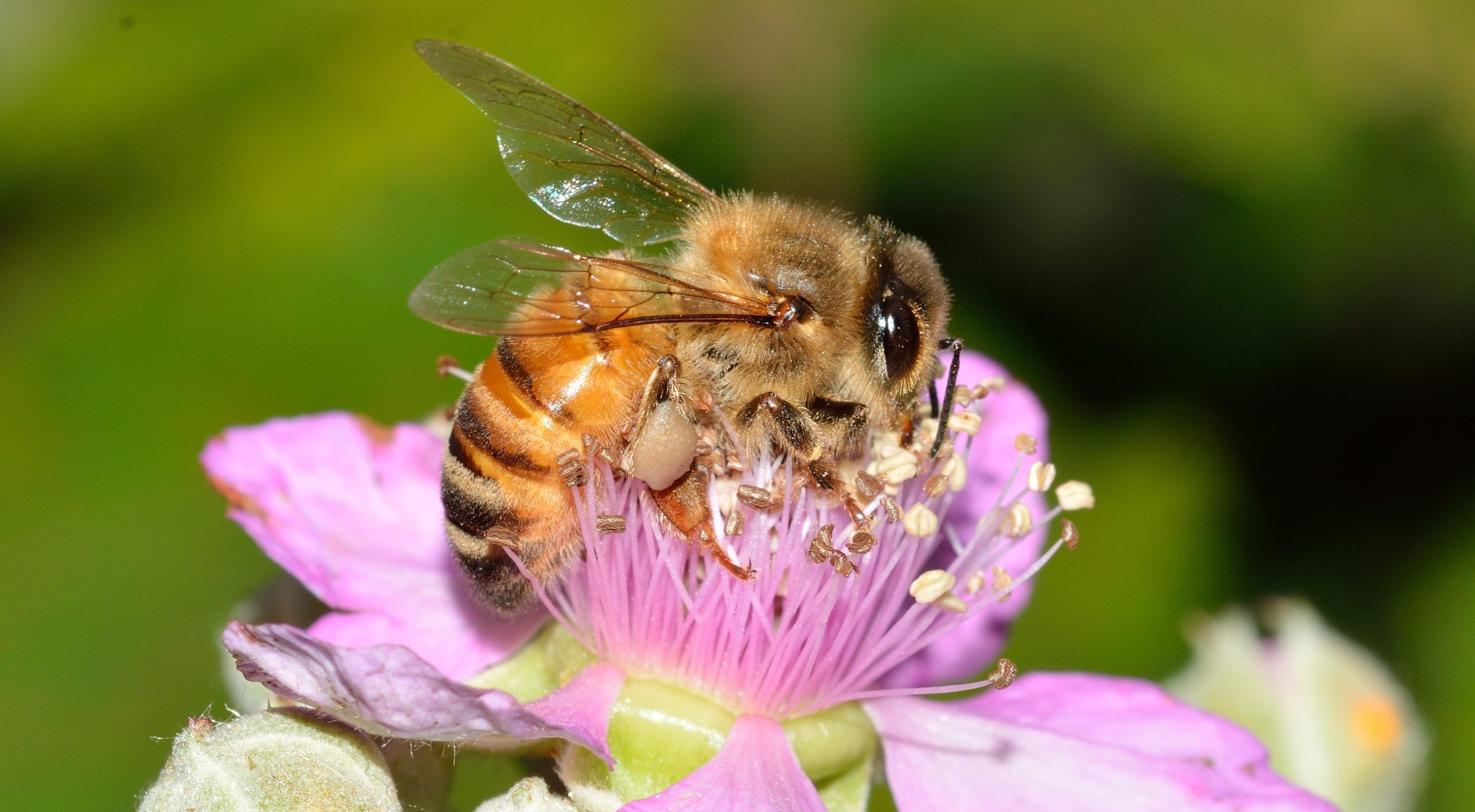
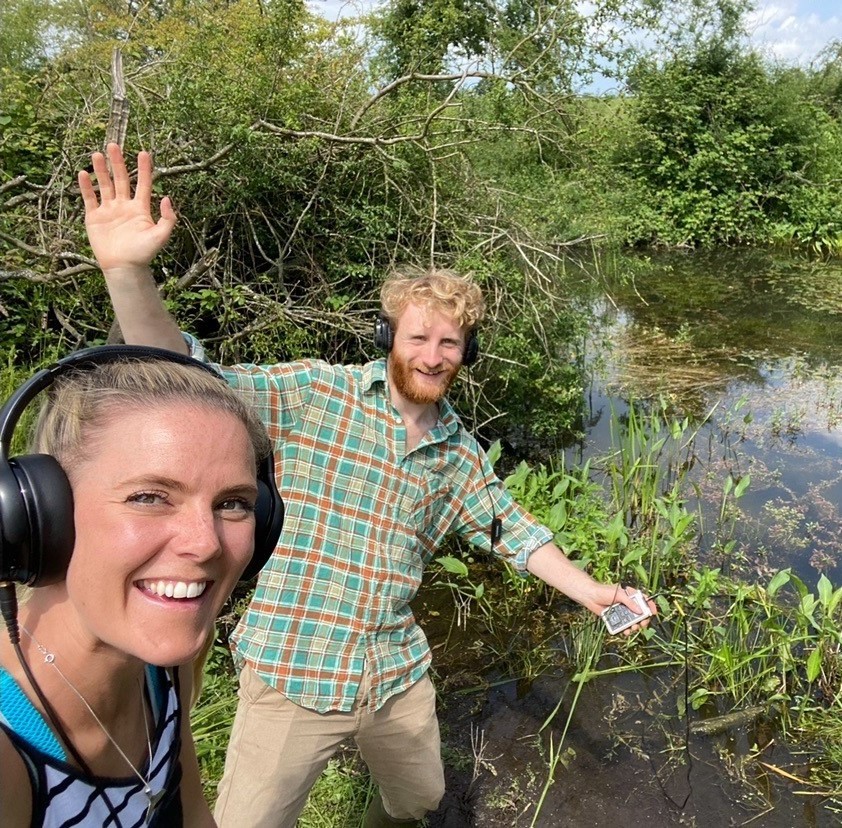
Targeted pollination can double the yield of soft fruit and increase the quality of the produce. To enable farmers to increase pollinator levels, AgriSound is launching an insect listening device called POLY, which displays a heat-map on a smartphone to show insect activity. It highlights pollination deficits on-farm as well as providing proof that interventions increase ecosystem services.
Casey Woodward, CEO of AgriSound, presented in the REAP 2021 Start-Up Showcase. He says: “We would love to meet people that have a genuine interest in getting pollination right and want to be working with us as early adopters.
“Once you have the ability to tell the difference between species of insects, you can then monitor biodiversity, which will provide evidence of natural capital assets.
“We’d like to talk to farmers and growers about their challenges and find out how to use our data in new ways.”
Find out more at agrisound.io.
Imagine a world where agriculture is not constrained by time. The ability to manage and manipulate time is increasing and REAP 2021 will explore the advances in technology and breakthroughs in science that is making this possible.
REAP brings together people from across the agri-tech ecosystem who believe that innovation is the engine for change. The conference bridges the gap between producer needs and technology solutions and showcases exciting agri-tech start-ups.
Get the latest agri-tech news, events and opportunities direct to your inbox
A new molasses bait spray, being developed by Cambridge-based Microbiotech in collaboration with Niab, will lure Spotted-Wing Drosophila, an invasive fruit fly, to its death before it has a chance to lay its eggs on fruit crops. The new product is not attractive to beneficial insects and only uses a tiny amount of insecticide against one of UK horticulture’s biggest threats.
Prof Ralph Noble, CEO and co-founder of Microbiotech, presented in the Start-Up Showcase at REAP 2021. He says bait sprays offer a huge time-saving:
“The amount of time required to apply a bait spray is probably about 10% of the time required to apply a standard spray, just because you don’t need to be covering the entire crop. You also don’t have to return to fill up the tank so often because you’re applying 40L per hectare rather than 500L.”
Ralph is keen to meet both fruit and mushroom growers interested in trials.
“We would be happy to include them in our development programmes. It’s always nice to do experiments on sites where the grower is actively getting something out of it.
“We’d also like to meet any companies who are testing new products, new growing media and new control methods; we’d be interested in including those products in our experiments. We also do commercial trials for companies, testing products against pest and disease problems.”
Find out more at microbiotech.co.uk
Imagine a world where agriculture is not constrained by time. The ability to manage and manipulate time is increasing and REAP 2021 will explore the advances in technology and breakthroughs in science that is making this possible.
REAP brings together people from across the agri-tech ecosystem who believe that innovation is the engine for change. The conference bridges the gap between producer needs and technology solutions and showcases exciting agri-tech start-ups.
Get the latest agri-tech news, events and opportunities direct to your inbox
Sarah’s research interests encompass developing more efficient forage-based ruminant production systems which result in consistent, high-quality products for the consumer whilst also safeguarding the environment.
She is currently leading the Cell Grazing project which aims to evaluate the environmental, economic, and social sustainability of traditional set-stocked grazing in comparison to a management intensive grazing system known as ‘techno-grazing’.
Sarah says:
“Techno-grazing is a management system based on the principle of ‘graze and rest’, where animals are fenced into a small area at very high stocking density and are rotated to new pastures every day or two.”
“Plenty of anecdotal evidence on farm suggests techno-grazing can improve productivity per hectare whilst yielding greater biodiversity and higher carbon sequestration in the soil – but there is little scientific evidence of this. If our research supports the claims then clearly it will be a win-win.”
Imagine a world where agriculture is not constrained by time. The ability to manage and manipulate time is increasing and REAP 2021 will explore the advances in technology and breakthroughs in science that is making this possible.
REAP brings together people from across the agri-tech ecosystem who believe that innovation is the engine for change. The conference bridges the gap between producer needs and technology solutions and showcases exciting agri-tech start-ups.
Get the latest agri-tech news, events and opportunities direct to your inbox
Until recently Marwa Mahmoud’s work was focussed on human behaviour understanding, automatically detecting social signals from facial expressions and body gestures in the context of automotive applications and healthcare. She is now applying her expertise in computer vision and machine learning to livestock, in particular to provide early warning of contagious disease in sheep.
She says: “Sheep are prey animals and so have evolved to hide signs of pain or lameness when predators are around. We are working on systems that can detect these signs of illness when humans are not present, using machine learning to predict early signs of pain and distress by automatically analysing their facial expressions and gait.”
Marwa is working with collaborators from University of Chester and University of Lincoln on field trials to gather training data to build robust machine learning models that are able to distinguish between healthy and ill sheep, the first step towards automated disease detection.
Imagine a world where agriculture is not constrained by time. The ability to manage and manipulate time is increasing and REAP 2021 will explore the advances in technology and breakthroughs in science that is making this possible.
REAP brings together people from across the agri-tech ecosystem who believe that innovation is the engine for change. The conference bridges the gap between producer needs and technology solutions and showcases exciting agri-tech start-ups.
Get the latest agri-tech news, events and opportunities direct to your inbox
“We are seeing major changes in the veterinary profession, particularly in the demographic and the type of support needed by farmers,” says Matthew Dobbs, a former farm vet and now Digital Practice Lead for Stonehaven Consultancy. He is joining the Sofa Session at REAP 2021. “A good farm vet now needs to be able to understand data, statistics and the risks to really advise and help the farmer and this includes the implementation of technology.”
Matthew works at board level for several UK and US vet businesses in addition to his support for a portfolio of UK-based agri-tech start-ups, leveraging his knowledge of livestock health along with a passion for innovation across business practices.
One of these areas is intelligent remote monitoring and he sees this an opportunity to save time by detecting ill health at an early stage.
“Lameness is probably the biggest welfare issue in the dairy industry,” says Matthew. “All farmers are obligated to record a mobility score for the animal every 3 months, so they assess how well its walking and whether it is lame or not, and they have to report that information to their milk purchaser or red tractor assessor.
“At the moment it’s a very laborious, painstaking task, full of bias and challenge because it’s the human eye and the farmer standing there with his clipboard. We estimate this takes about 6 hours a month or about £2.5k a year to do mobility scoring.”
Matthew is currently acting MD for AgSenze, developers of smart monitors for animal behaviour; audio and visual recordings of the animals are analysed to detect underlying health conditions that might not be detectable by eye and provide constant surveillance.
“AgSenze are looking to do this lameness monitoring automatically, by locating camera’s where they can record cattle movements and link them to the animal’s records. The visual signals are input into a machine learning algorithm that can diagnose early signs of lameness and it generates a list for the farmer of the cows that need attention. Early warning can help prevent lameness.”
Matthew sees the potential to extend the technology to other applications that currently rely on the human eye, this would increase the return on investment. For example, the company is looking at using the cameras and supporting models to monitor growth rates and body condition. When combined with weight this will provide automatic and objective grading of the animals.
Digitising this information and making it available to the abattoir would reduce the requirement to visit farmers or transport animals to market.
Matthew explains: “With the camera system an abattoir could look at the cows and make some very objective measures – ‘that cow has a body condition score of 3, it weighs 550kg, we know it will grade out at this grade when it gets slaughtered, so what we need the farmer to do is to feed up 3-4 other animals in that pen that aren’t quite at that grade, and then we’ll take the whole lot in in 2 weeks’ time’.
“So, if the farmer has a contract in place, the abattoir would commit to having those 10 animals, monitor them and call them in at the right time for them – so they’re at perfect spec.
“To close the loop, we are also looking at putting a camera in the lairage, where the animal first comes into the abattoir, to see if it graded out as well as expected. All this will feedback into the algorithm, so it is learning and improving all the time.”
Matt sees REAP as a great opportunity to meet partners and investors: “There may be other businesses out there who see an application for our technology that we haven’t thought about. Smart monitoring can be the eyes and ears for range of applications.”
REAP 2021 is on 10th November 2021 and provides an opportunity to network with people from across the ecosystem.
Imagine a world where agriculture is not constrained by time. The ability to manage and manipulate time is increasing and REAP 2021 will explore the advances in technology and breakthroughs in science that is making this possible.
REAP brings together people from across the agri-tech ecosystem who believe that innovation is the engine for change. The conference bridges the gap between producer needs and technology solutions and showcases exciting agri-tech start-ups.
Get the latest agri-tech news, events and opportunities direct to your inbox
In agriculture a lot of time is spent waiting for things to mature – fruit to sweeten, grains to fill, vegetables to ripen and livestock to grow up – this month we have seen evidence that agri-tech is growing up.
Raising crops and animals through that crucial development period – providing the best environment for their growth – is usually expensive, hard work, and sometimes stressful.
Nurturing a company through its birth, growing pains and scale-up, is no different – with one of the major goals being that someone else (customers, investors, other businesses) recognises and reward the value you have built in the business. That value hopefully increases as the business matures and attracts more revenues, investment and opportunities, leading to growth and expansion.
This month there have been some big wins for British agri-tech. These successes demonstrate the investment in time and money resulting in several home-grown businesses which are making their mark and showing that UK agri-tech is, indeed, growing up.
Yagro (featured in our REAP Start-Up Showcase in 2015) and Outfield have both revealed major developments this month – Yagro has joined forces with the Frontier Group and Outfield has raised £750,000 in a funding round, while Breedr (Start-Up Showcase 2018) has launched a crowd-funding campaign building on its success to date in the livestock / beef supply chain. Index-based insurance scale-up business Stable (featured in our Weather event March 2020) has also just announced a massive new investment of $46.5m after several years of building global leverage in insurance.
Although the UK has an impressive track record in R&D and frequently punches above its weight in terms of its research outputs, it is important to show this maturation to build investor confidence and demonstrate a flow of ideas and talent to attract the money – and more talent. And so the circle continues, resulting in a functional innovation ecosystem.
Global investment into agri-tech – particularly farm-focussed technologies (rather than downstream food / consumer-facing businesses) is buoyant despite the pandemic, and investment success is largely a matter of timing. The UK routinely ranks in the top 5 of countries in terms of investment into agri-tech. Capturing the value that has been created is exactly what building a business is about – just like farmers when they sell crops and livestock.
Like agriculture, growing a successful business is a large part of being in the right place at the right time. And waiting for time to pass – while working hard to protect, support and provide the right conditions for growth – is a much about growing a business as it is about running a farm.
Perseverance and resilience, with a dash of innovation and harnessing data driven insights, diversifying when it makes sense, listening to your customers, collaborating where you can and going it alone when you need to.
From individual farm businesses, to agri-tech empowered companies, to an innovation ecosystem. Growing up is not easy, nor should it be taken for granted. As the saying goes – growing old is mandatory, growing up is optional.
Imagine a world where agriculture is not constrained by time. The ability to manage and manipulate time is increasing and REAP 2021 will explore the advances in technology and breakthroughs in science that is making this possible.
REAP brings together people from across the agri-tech ecosystem who believe that innovation is the engine for change. The conference bridges the gap between producer needs and technology solutions and showcases exciting agri-tech start-ups.
Book Now
Get the latest agri-tech news, events and opportunities direct to your inbox
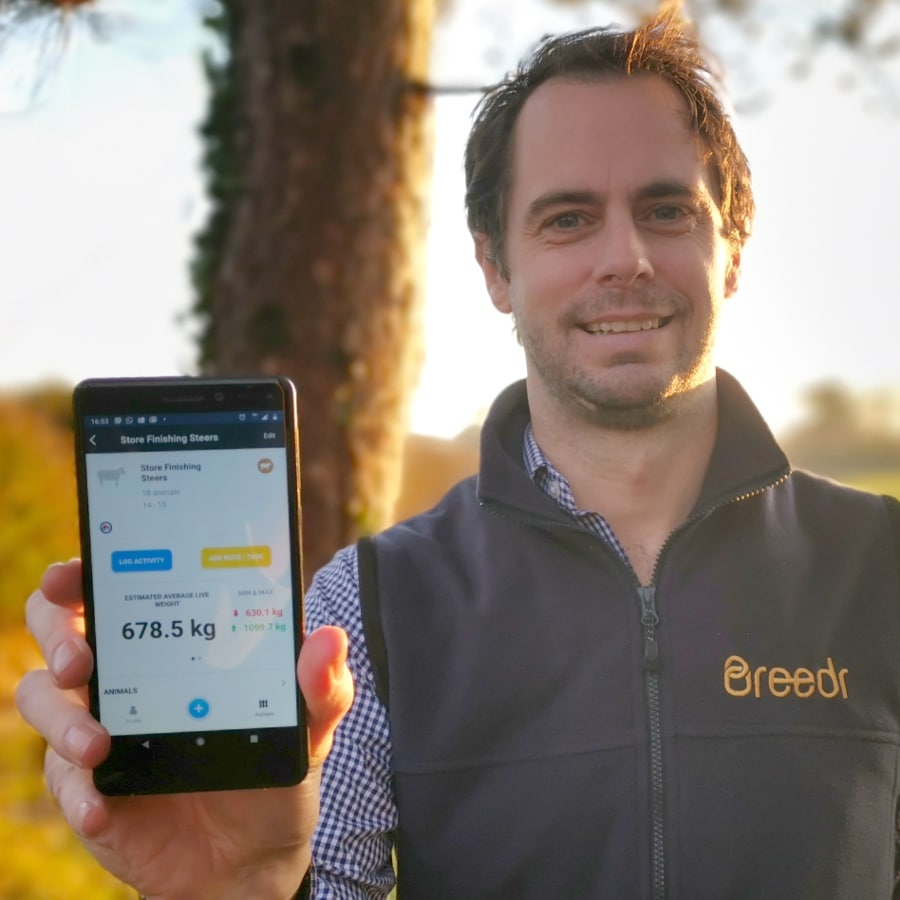
Breedr has announced that it will shortly be launching a crowdfunding campaign as part of its next round of investment.
Earlier this year Breedr announced a new risk-free way to buy and sell livestock, based on lifetime animal data and weights. The Breedr livestock trading platform means producers can buy and sell through the free app with certainty, with a price guarantee in case of any differential in the weight of weaned calves and stores between farms. Sellers are also ensured payment within 72 hours of collection.
Ian Wheal, founder of Breedr, says: “The ability for our customers to share in the success of Breedr is something that is really important to me, and crowdfunding is a great way for us to democratise our funding round by opening up the opportunity to everyone.
“The best part about crowdfunding is that it allows our customers and community to invest in Breedr at the same valuation as world-class investors including LocalGlobe & Forward Partners.
“Now is the perfect time to join us. The livestock & meat production market is worth $1.7tn— and we believe we are perfectly placed to positively drive sustainable change within the industry.”
Find out more about Breedr.
Get the latest agri-tech news, events and opportunities direct to your inbox
Widespread use of anti-viral drugs for animal healthcare creates a risk for human health. A new genomic engineering approach has proven successful in reducing spread of a respiratory disease in pigs, and offers an alternative approach to containing disease. One of the scientists behind the breakthrough, Professor Helen Sang of the Roslin Institute at the University of Edinburgh, is a speaker at the Agri-TechE event ‘Advances in Breeding for Agriculture – New Tools for New Solutions’ on 23rd September 2021. Professor Sang explains that use of genetic engineering has potential to be a much safer and more effective means of disease control in livestock: “In China, where over 5 billion chickens are currently raised, the management approach for bird flu is to use antiviral drugs.

“Antiviral drugs that are very similar to those used in human healthcare are a really bad idea for use in farmed animals, as their usage can cause resistance to the drug, which then removes the efficacy of the drug for use in humans if the disease does end up spreading.
“Finding a genetic way, either by conventional breeding or genome editing, to embed the resistance in the genetics can be a good tool for combatting disease.”
Genome editing is one of a number of advanced breeding techniques to be discussed at the forthcoming Agri-TechE meeting. Director Dr Belinda Clarke comments: “The use of New Genomic Technologies is currently restricted by legislation that predates the sequencing of the human genome and does not reflect the increasing diversity in the technology. Making legislation fit for purpose could bring many benefits.” Among the speakers will also be Mike Coffey, Professor of Livestock Informatics and Team Leader for Animal Breeding & Genomics at Scotland’s Rural College (SRUC), who will be discussing how breeding for particular traits can reduce the environmental impacts of cattle, while Professor Sang will describe the welfare benefits.

Porcine Respiratory and Reproductive Syndrome (PRRS) causes breathing problems and deaths in young animals and pregnant sows to lose their litters.
Professor Sang continues: “Vaccines are available for PRRS but are not fully effective, resulting in PRRS being an endemic disease of pigs in the UK, with the consequent economic losses and animal welfare challenges.
“A genetic approach that would give pigs protection against this disease would be good for the welfare of the pig and good for the farmer. The PRRS virus binds to a particular protein on the surface of cells of the pig, which enabled the use of genetic engineering by Professor Sang and her colleagues at the Roslin Institute to edit that protein in order to prevent infection by the virus.
“Colleagues used CRISPR-Cas9 to chop out part of the protein from the pig’s gene – they showed that the pig is still perfectly healthy and happy, but if you try and infect the pig with PRRS, it just won’t become infected. That shows really strong genetic resistance.”
Similar uses of Genetic Engineering could also help to prevent swine flu and bird flu, both of which hold risk of spreading to humans. Professor Sang is involved in work on the latter.
“We’re investigating using gene editing to edit a gene that was shown by colleagues at Imperial College London to be involved in bird flu virus infection. This is an exemplar of the sorts of things we can do with gene editing technology.”
The virtual event ‘Advances in breeding for agriculture – new tools for new solutions’ takes place on 23rd September 2021, and will feature: Gilad Gershon, CEO of Tropic Biosciences; Helen Sang, Personal Chair of Vertebrate Molecular Development at Roslin Institute; Ingo Hein, Senior Research Scientist at James Hutton Institute; Thomas Farrugia, CEO of Beta Bugs; Nathan Fairhurst, Commercial Operations Manager at Biocleave; and Mike Coffey, Professor of Livestock Informatics at SRUC.
Get the latest agri-tech news, events and opportunities direct to your inbox
Beta Bugs was set up to provide improved black soldier fly breeds for the rapidly emerging insect farming sector, which supplies animal feed industry.
Thomas Farrugia CEO of Beta Bugs explains: “Insects, such as the Black Soldier Fly, are excellent sources of protein for animal and aquaculture feed as well as a broad range of other
resources from bio-materials to fuel. However, having only recently been domesticated, insects, unlike other agricultural species, are far from optimised for industry. There are huge improvements to be made in efficiency, quality of produce and ease of farming.
“We set up Beta Bugs to address the missing link in the insect farming sector, which was genetics – and it’s the link that creates the most scalable impact for an industry. Our mission is to double productivity.
“So, we’re improving the performance of Black Soldier Flies by selecting for traits that improve performance – these include growth rate, development time, fecundity and survival rate, amongst others.
“We use classical breeding techniques, i.e selective breeding, to make improvements to our genetics. Black Soldier Fly has a very short generation time of only a few weeks, meaning that significant genetic progress can be made in a year. We’re using specific quantitative genetics approaches and complementary technologies to identify the top performers in our breeding programme.
“We distribute our breeds through our egg production facility, The Multiplier™, which is coming online this year. Initially this will supply Just-Fly™, our entry level product, which we are starting to take and supply orders for.”
“If I could change the regulations, I would focus on the use of insects in animal feed, and I would ask the UK government to make sure regulations here are keeping up with those in the EU and consider going beyond that to allow a wider use of what feedstuffs insects can be grown on, and what insects can be used for.”
Thomas is one of the speakers at the Agri-TechE event ‘Advances in Breeding for Agriculture – New Tools for New Solutions’ on 23rd September from 1.30pm – 5pm.

Find out more and book your place now.
Read more about advanced breeding on our Briefing page.