Explore advancements in the arable industry
Join us at CropTec, the UK’s leading technical event for the arable sector, on 14-15 January 2026 at the NEC Birmingham. Gain exclusive insights from industry-leading specialists and explore the latest innovations shaping the arable industry.

Exporting High Farming and Food Standards From the UK and NZ

Meet the Network
Agri-TechE

The possibility of Brexit is creating demand for comparative analysis, writes Forbes Elworthy, founder of Map of Ag, as he compares United Kingdom farming, which has significant government and EU intervention, to New Zealand, which is subsidy-free. This article is based on a talk given by Forbes at a UK Parliamentary dinner on this topic recently.

  1. Similarities of UK and NZ agriculture

NZ and UK farming are each endowed with excellent soils, maritime climates and broadly similar farmland resources – although NZ produces a wider range of produce extending as it does from almost sub-arctic to sub-tropical latitudes. Both produce premium quality foods for demanding middle class consumers. The UK primarily for its domestic market. NZ on the other hand to middle class consumers across Asia, Europe, America and Middle East.
Both countries are developing environmental strategies for their land use sectors. In the UK this builds on the Environmental Stewardship Pillar of the EU CAP – which provides a base from which new proposed environmental services payments can be extended if Brexit takes place (something not looking quite as likely today as it did when I made my speech in Parliament last Monday).
Irrespective of the Brexit morass the UK’s farming and food industry is showing impressive environmental ambitions. At the Oxford Farming Conference earlier this month Minette Batters, President of the NFU, outlined plans for UK farmers to achieve net zero greenhouse gas emissions by 2040 or earlier “to stay ahead of the competition in the global food and agriculture market”.
NZ’s not dissimilar environmental measures have their origins in NZ’s efforts to really be that “clean green” country leading the world in greenhouse gas, water, and management of biodiversity.
NZ takes our Paris commitments seriously. We’ve committed to establish an average of 100 m new trees per annum over 10 years. Assuming half on degraded land this will be a gain of 500,000 hectares in the NZ forest estate. Craigmore Sustainables has a major focus on forestry and hopes to contribute over 50,000 hectares to that afforestation.
NZ, like the EU, has decided not to release GM into our food production sector. Our customers simply do not want GM food. NZ farming, though strongly science-based and innovative, is ultimately market-led so we decided not to grow something our customers do not want.
More generally both countries are addressing the “de-commoditisation” of a sector that used to produce “commodity food” but is moving to “healthful nutrition”. In the widest sense including environmental health.

Some areas in which UK farming may be ahead of NZ
Exporting High Farming and Food Standards From the UK and NZOne area in which, in my view, UK and EU agriculture may be well ahead of NZ is in the process of linking farms to retailers and consumers. Unlike NZ, where farm-to-supermarket information flows are only satisfactory (many consumers are far away overseas), the UK has built over the past 20 years a world-class infrastructure of commercial and information links between farms and retailers. E.g. approximately 60% of UK dairy farms have long term, fixed price off-take agreements for their milk from retailers. An impressive achievement. As I am only too aware all NZ dairy farmers are exposed to the full volatility of the global milk market. NZ prices have ranged from 16 pence to 45 pence while most UK dairy farms received a steady 29 pence per litre.
Similar arrangements have emerged in UK beef, pork, chicken and fresh produce. These “aligned contract” relationships are not about just price, but embrace quality, security of supply, animal welfare and other values.
Another area of strength for British farmers’ is their positive relationship with the public. Perhaps because of public access to privately held farmland, taxpayers and consumers in the UK are generally supportive of their farmers and growers. Politicians on all sides in the UK are indicating that a large part of the current £3.2 bn of annual farm support payments are likely to continue, at least in some form. This is a remarkable illustration of how highly the United Kingdom values its farmers and landscape.
New Zealand, as is well known, does not subsidise its farmers. Further, attitudes of the public and government shifted in the past 20 years so that, currently, NZ farming is not as esteemed as it once was in the eyes of the public. One reason for this is behaviour of some NZ farms lagged in terms of especially nutrient pollution of rivers and streams. (Fortunately this is now being addressed by catchment-based farm nutrient loss management programs which recently lifted river water quality in Canterbury. However the NZ farming sector still has a way to go to fully regain the trust and support of our public).

Some areas NZ farming may be ahead of UK farming
NZ farm productivity gains, in 30 years since the removal of subsidies, have been spectacular. E.g. 66% reduction in the number of sheep is now producing the same amount of meat from 23% less land with a 40% reduction in GHG emissions per kg of lamb.
Between 1990 and 2010 NZ farmers transformed large amounts of land from grazing/arable to more intensive dairy farming – increasing per hectare revenues by 4 x. And jobs/ha by the same amount. This innovation was the leading reason for the revitalisation of rural towns after a slump in the rural economy after 1985.
More recently land has come out of dairy and into horticulture, a still higher value land use, typically increasing revenues per hectare (and employment) by 8 x – however this after a 4-year delay for conversion. Craigmore Sustainables estimate another $5 to 10 bn of necessary investment will take place to fully build out the NZ horticultural opportunity. It is worth noting that export sales from NZ horticulture have grown by 7% per annum for over two decades.
Compared to this level of innovation, although there have been some honourable exceptions, mainstream British farming e.g. cereals has not seen significant improvements in yields per hectare and factor productivity. It is hard not to conclude that the uptake of innovation in the EU, including in the UK, has been curtailed by subsidies.
As an amateur economist I cannot resist mentioning, as well, that economic policies that allow property owners to borrow money at 1% are also not great for innovation. They prop up the already wealthy and goose up asset prices, so that new entrants cannot innovate.
It has not escaped Michael Gove’s notice that subsidies make European and UK agriculture school tests that nobody fails. It maybe it is no accident he was brought from education to agriculture!
Although many regretted them at the time, I don’t know a single NZ farmer who would seek to return to production or area-based subsidy support

What happened in the NZ restructure?
Exporting High Farming and Food Standards From the UK and NZNZ discovered very suddenly that it was unable to subsidise the most important sector of its economy. As a result, subsidies were all removed at the same time.
Despite predictions that 20% of farmers would have to go only 1% of NZ farms entered receivership – although another 4% chose to go (sold their farms voluntarily) over the next five years. In general, environmental outcomes improved as a result. My father led NZ Federated Farmers for six years in the 80’s – negotiating the de-regulation and the end to subsidies. One of the positive achievements was that e.g. fertiliser use on average fell by 30% whereas farm production only fell by 10%.
Farmers believe we are “born” to grow more crops and livestock. We will happily do this even on marginal land, given the resource. Subsidies therefore almost always lead to over-intensification of land-use. Removal of subsidies helps farms focus on what soils and landscapes really should be farmed, and which should be used less intensively or not at all.

How might UK farm/food now progress – to “play to its strengths”

It appears the UK’s restructuring, in contrast to that in NZ, will be gradual and mixed. The proposed approach if well implemented, appears broadly logical and attractive. In my view, like renewable energy, the proposed environmental services strategy is a tremendous commercial opportunity for farmers especially hill farmers and smaller operators. In my view – and my wife and I do own a small Oxfordshire organic farm – it is privilege to farm in a country where farms can get taxpayer money to do things that many of us, in countries like NZ, seek to do anyway on our farms but without the benefit of government support.
However, the environmental services payments will need to be well designed – a major opportunity for the UK research and agtech sectors

Concluding ideas

I see major commercial and ethical opportunities for both NZ and the UK to export farm and food and environmental technology and standards to the world.
Specifically, I see the imposition of standards on imported food as a powerful way to promote UK exports of these tools and services as well as to lift food quality and environmental standards.
This strategy will “play to” an area where the UK is well ahead of NZ and in my view is world-leading. That is in the sharing by UK retailers of standards and other measures to link farmers and growers with these “representatives of the consumer”.
If you would like to support progress in this area, Map of Ag (www.mapof.ag) is currently expanding in the UK, Ireland, Netherlands, France, New Zealand, Australia and Argentina. Map of Ag does not sell services to farms directly but always partners with a farm/ food value chain organisation to help them organise data flows to and from the farms they serve.
Find out more here.

Revolutionising livestock disease management

Meet the Network
Agri-TechE

Dr Berwyn Clarke Agri-TechE REAP Conference 2016Despite recent advances in our knowledge of microbiology and genomics, many of the tests used to identify animal infections and support disease management are based on techniques developed over 30 years ago and are not always sufficiently sensitive to effectively control these diseases.
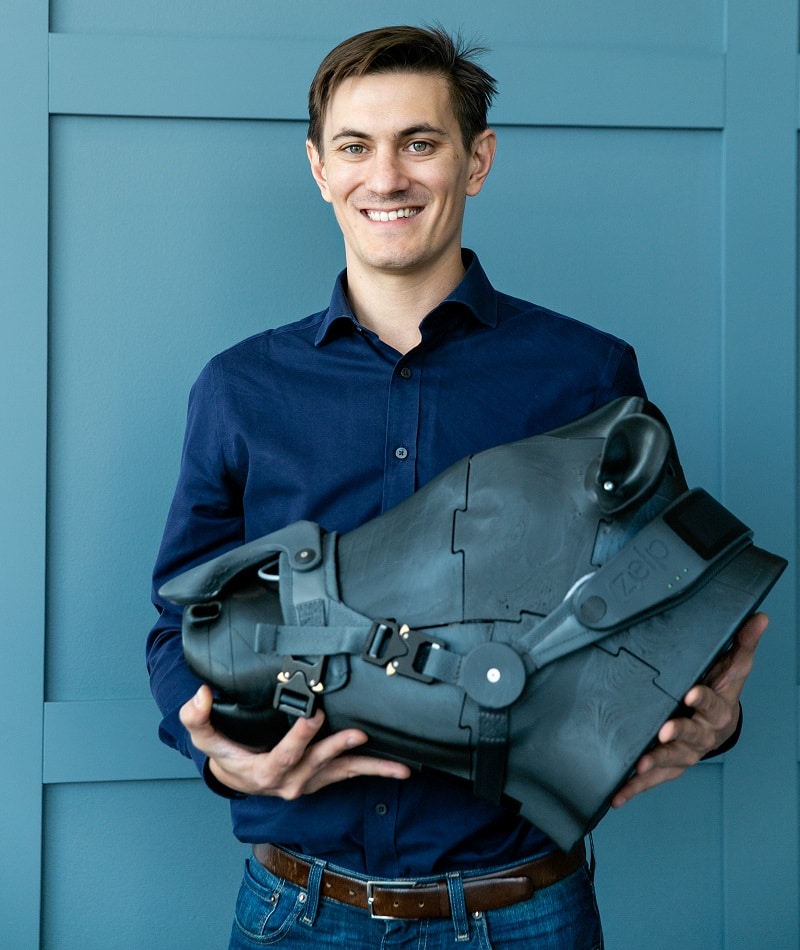
This is changing, with young companies within the agri-tech cluster using the latest science to develop powerful diagnostics. A number of people behind these companies will be speaking at the Agri-TechE Pollinator ‘The 3 Rs of Diagnostics: Rapid, Reliable and Robust’ on 13 February 2019.
A good example of technology that needs improvement is the skin test for bovine TB. The UK agri sector knows only too well that using this as the key diagnostic test for TB has proved inadequate in identifying enough infected animals to control the disease – currently at an estimated annual cost of £100 million to the UK taxpayer.

A new approach

We asked Dr Berwyn Clarke, CEO of PBD Biotech, to explain why a new approach is needed. He says:
“The current test for bovine TB is a skin test. The animal is exposed to extracts of the mycobacteria that cause this disease with a small injection into the skin.  If the animal shows an immune response – ie. the skin swells up – then it is assumed that the cow is infected with TB, and so it is culled and the farm is put under restriction until no more reactors are found.
“But the problem in using the skin test is that it is impossible to find animals in the early stage of infection and in some cases infected animals just don’t react at all, so it is difficult to eradicate the disease quickly.
“For some farms this can mean that, for months or years, they are unable to sell beef or milk and it is economically and emotionally devastating for those affected.
“The challenge in developing an effective diagnostic for mycobacteria is that the organism is very slow to grow using petri dish plates normally used to detect bacteria. Mycobacterium also has a very tough cell wall, so is difficult to break open to carry out DNA-based detection tests.
“We have developed a new approach using the latest science developed at the University of Nottingham, benefiting from recent advances in molecular biology.
“The method uses a type of virus, known as a phage, which only infects mycobacteria and can penetrate the thick cell wall. Once inside the mycobacteria the phage grows rapidly and breaks open the cell, releasing its DNA. This mycobacterial DNA can then be sensitively detected, even just a few cells, allowing confirmation of the presence or absence of bovine TB in samples within 6 hours.”
At the end of last year, after using Actiphage as part of a private eradication strategy, Devon vet Dick Sibley cleared a dairy herd of bovine TB reactors for the first time in 6 years. Following the success of this exercise, the UK Government acknowledged Actiphage’s potential and included the test in a new ‘Exceptional Private Use’ protocol so that it can now be used by farmers in England for chronic TB breakdowns.
PBD Biotech is a member of Agri-TechE and has greatly benefited from the networking and profile this has offered. Berwyn first presented PBD Biotech in the Start-Up Showcase at REAP 2016 and demonstrated in the Technology Exhibition at REAP 2017.
Dr Clarke said: “The company has come a long way in the past two years. We’ve gained funding, UK Government approval, proven efficacy in field trials, had our test patented and opened a subsidiary office in Canada. We are grateful for the support that Agri-TechE has given us.”

Early disease detection

Actiphage is not just effective for bovine TB, but also other endemic livestock diseases such as Johne’s disease. This is a chronic wasting disease transmitted from mother to calf by bacteria shed in manure, colostrum and milk.
The presence in milk of the bacterium that causes Johne’s disease (Mycobacterium avium subspecies paratuberculosis, MAP) is also being investigated as a potential concern for human health as it has been linked to Crohn’s disease.
However, like bovine TB, Johne’s disease has proved difficult to control. With less than 5% of infected animals developing clinical signs of disease, it is difficult to identify these animals before they begin to spread disease. Current tests only allow the reliable detection of MAP in animals once they are over 18 months old.
A study presented at the European Association of Veterinary Laboratory Diagnosticians (EAVLD) Congress in October 2018 showed that the Actiphage test could detect Johne’s disease in the blood of new born calves. The test therefore creates a window of opportunity for the dairy industry to improve disease control.
Additionally, a milk trial, recently published in the journal of Food Microbiology, confirmed that the Actiphage milk test was able to detect very low levels of MAP.
Dr Clarke explains: “In a controlled study Actiphage was able to detect just 1-2 mycobacteria cells per 50 ml of pasteurised milk, highlighting just how sensitive this technology is.
“Mycobacterial diseases are a global challenge for the whole livestock industry, so the scale of the problem PBD Biotech is addressing is enormous.  In addition to detecting bovine TB and Johne’s disease in cattle the method can be used to detect other species of mycobacteria in any animal host including other livestock, wildlife, exotic and domestic animals. In many cases, Actiphage is allowing infections to be accurately identified in these animals for the first time.
“This new technology has the potential to revolutionise the control and understanding of mycobacterial diseases in a range of species, giving vets and farmers a head start on the race to catch bovine TB, Johne’s disease and other mycobacterial infections in the hope of preventing unnecessary culls when these infections spread unchecked.”
More about PBD Biotech
Dr Clarke will be speaking alongside Agri-TechE members Analytik, RoboScientific and leaders in the field of diagnostics. The Agri-TechE Pollinator: The 3 Rs of Plant and Animal Diagnostics: Rapid, Reliable and Robust (Enough) will be held on 13 February 2019, 2.00 – 5.30pm, at Incubyte Ltd, Cambridge Innovation Park, Denny End Road, Waterbeach, Cambridge, CB25 9QE.

Dairy genomic indexes stand the test of time

Research Digest
Agri-TechE

Dairy genomic indexes stand the test of timeA major new study of Holstein dairy sires has confirmed that genomic indexes are a remarkably reliable predictor of actual daughter performance. This provides reassurance to the thousands of UK dairy producers who select service sires on the strength of an index based on their DNA.
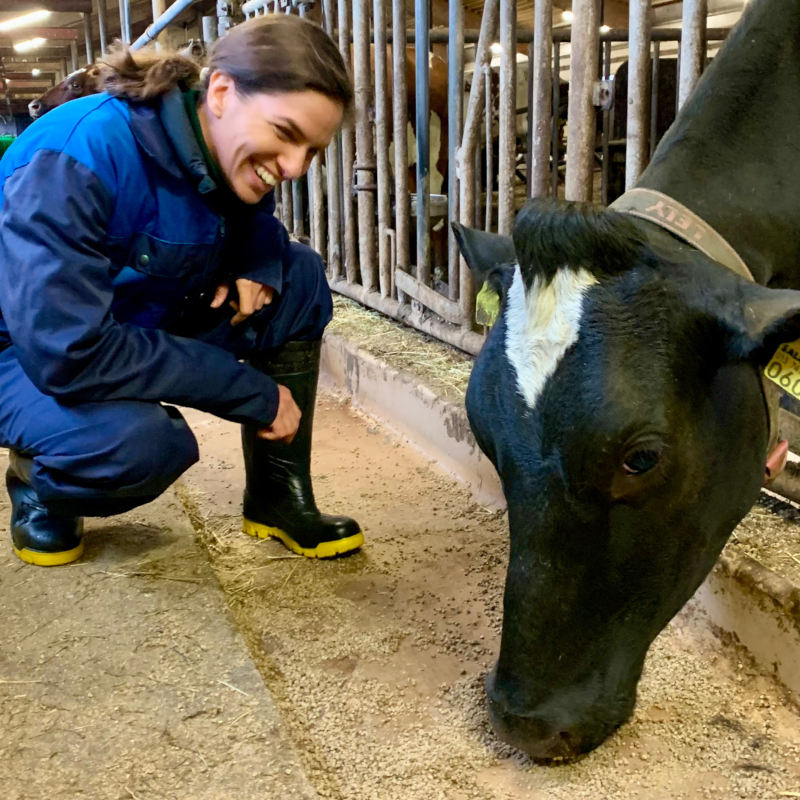
The study, undertaken by AHDB Dairy, included every genomic sire marketed in the UK in August 2014 and compared its genomic index at that time with its daughter-proven index in August 2018.
Some 7,745 bulls were included in the analysis which showed there was little difference between their average genomic index in 2014 and their proven index four years later.
Marco Winters, head of animal genetics for AHDB Dairy says: “This study should give complete reassurance that UK genomic indexes are amongst the most stable and reliable in the world. Provided they chose their service sires wisely, the many producers who put their faith in genomic indexes should have made substantial genetic gains in their herds.”
Genomic indexes were introduced by AHDB Dairy for bulls marketed in the UK in 2012. At that time, the technology to calculate the indexes was still in its early stages, and producers were made aware they were more likely to change over time than indexes for proven sires which already had many daughters milking.
However, the attraction of using these young sires was their generally superior genetics which would help producers breed better replacement dairy heifers. Thousands of producers took this opportunity and some now breed 100 per cent of their replacements from genomic sires. Across the UK, around 70 per cent of dairy replacements are now bred from these young bulls.
Full results from the study group are shown in Table 1. The correlation figure, also in the table, gives an indication of how close all of the sires are to that average change figure. Correlation figures for all traits were generally considered high, indicating there was a narrow spread of bulls around the average. In other words, as well as the average index in 2018 being close to, or the same as, the average in 2014, there was not a wide spread of bulls around that average. This means that most individual bulls’ indexes were close to their former prediction. The graph depicts this information in figures and indicates that between 2014 and 2018, 34.2 per cent of bulls’ indexes (in this case for Lifespan but equally applicable for other indexes) did not change at all and most others have changed very little.
A second analysis of a smaller sub-set of bulls which now have far more daughters showed exactly the same pattern. This gives further reassurance that as large numbers of daughters finally contribute to a bull’s index later in life, their indexes are still unlikely to see much change on average from their initial genomic predictions.
Marco continued: “We were confident in the system when we launched genomic indexes in the UK in 2012, and this analysis confirms the reliability of the techniques we used.”
Remarking that the UK teamed up with the USA, Canada and Italy to provide one of the largest reference populations in the word, he said this helped ensure the reliability of the UK indexes.
For more information visit dairy.ahdb.org.uk

FOLIUM Science’s new “guided biotic” triggers salmonella self-digestion

Agri-TechE

A feed additive that will protect young chicks against common bacterial infections such as salmonella and E.coli has been developed by early-stage company FOLIUM Science. Initial trials of its ‘Guided Biotic’ were seen to restore the natural balance of the healthy microbiome and revealed unexpected improvements in wellbeing.

Ed Fuchs, FOLIUM Science

Cambridge-based FOLIUM took part in the Start-Up Showcase at REAP 2018, where co-founder Edward Fuchs explained how its Guided Biotics provide an alternative to antibiotics and a potential solution to the growing problem of antimicrobial resistance in agriculture.
Fuchs says: “Our patented approach is highly specific; by removing only the pathogenic bacteria it leaves the animal with an intact healthy microbiome.
“Preliminary trials in chickens indicate that reducing the disease burden improves the weight gain of the birds and removes the need to use antibiotics.”
FOLIUM is developing a new class of highly specific anti-bacterial technology based on a natural biomolecule called RNA, which is delivered directly to the pathogen.
RNA has a sequence, just like DNA, and if specifically coded it can trigger a natural process in the target bacteria that guides the bacteria’s own enzymes to degrade and digest the cell material. The process leaves no residues and so overcomes the problems of resistance.
The ‘Guided Biotic’ enables highly selective control of unwanted bacteria – even those resistant to antibiotics – while protecting closely related beneficial species of bacteria.
It can be introduced to young birds or livestock via a probiotic to treat the gut and help stabilise the microbiome. Alternatively, it can be used to counter infection, and stop the creation of biofilms – colonies of bacteria that are difficult to treat.
FOLIUM is currently focused on animal nutrition and welfare, including poultry, swine, cattle and aquaculture, but sees potential for applications in plants as a bio-stimulant or novel form of seed protection.
Fuchs says that the initial trials have gone well: “We have a good collaborative network and the results from the trials have been promising, showing wider ranging benefits than we had expected.
“The next step is to investigate the benefits further with a feed to yield conversion trial and to prepare for regulatory approval. To support this we are looking for further funding alongside that of our long term investor Lundbeck Foundation.”
Find out more at www.foliumscience.com.

Breedr shows how livestock farmers can generate real value from EID tags

Meet the Network
Agri-TechE

Traceability and improving quality in food production are anticipated to be key themes at the Oxford Farming Conference. This follows recent announcements by the Defra Secretary of State of plans for a new livestock traceability service that uses electronic ID tags. Breedr will be at the conference to demonstrate how its new app can extract invaluable information from data collected by these tags, generating real value for farmers.
Ian Wheal is founder of Breedr, a productivity app for livestock farmers, which can be used to improve the profitability of every animal – increasing quality and reducing waste.
He comments that, given data about the breed of animal, live weight and growth rate, Breedr can estimate the optimum date for slaughter, which enables improved management of the animals. He says: “Keeping cattle, or other livestock, beyond the optimum cull date not only means wasted feed, but also additional fat which makes the meat less desirable.”
The value of a beef carcass is based on the EU-wide EUROP grid, which uses conformation and fat class. Cattle that fall outside the grid incur sizeable discounts. By analysing six years of data provided by Rothamsted Research’s North Wyke Farm, Breedr estimates that farmers could generate up to £400 additional revenue per animal by increasing meat yield through improved selection of dam/sire pairings and more accurate prediction of sale or slaughter date.
Wheal says: “EID tags, when used with a weigh beam, make it easier for farmers to capture information about live weight gain. This data, when combined with breeding data, can be used by Breedr to offer insights that will improve the quality of beef produced.
“Our aim is to make it easier for farmers to produce beef in spec and to have the data to provide the evidence. This will reduce the amount of waste for the processor and improve the price for the farmer. By building up a reputation for quality beef the farmer will be able to move to trading online and build relationships with processors and retailers. Breedr facilitates this.”
Breedr aims to create a virtuous circle where consumer behaviours and buying decisions are fed back through the value chain to inform decisions on breeding, feeding and animal welfare. Livestock producers can use Breedr to provide data evidence that they are producing premium meat.
The government’s Livestock Information Service will identify and track animal movements – initially cattle, sheep, pigs and goats – via electronic IDs and is set to come into action in the near future.
The Oxford Farming Conference is being held on 2-4 January 2019. The Politics Briefing is at 10.15 on Thursday 3 January. The headline political briefing will challenge the latest developments of the proposed British Agricultural Policy, presented by the Defra Secretary of State Michael Gove.
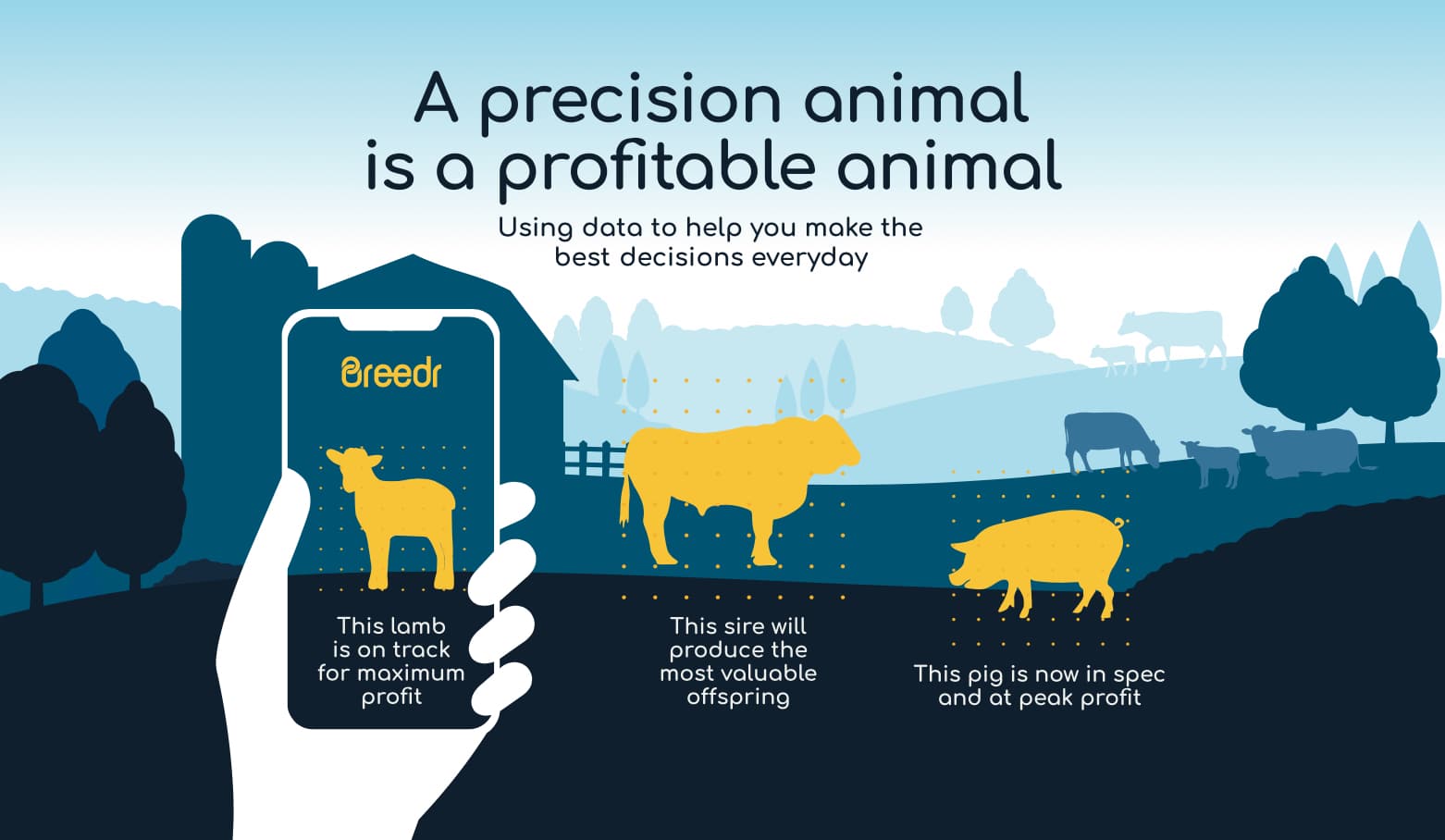
Breedr precision animal graphic

Chalante developing new weapon against cattle nematodes

Agri-TechE

Simon Aspland, ChalanteEarly-stage animal health biotech developing first novel chemistry for 30 years Increasing resistance to anthelmintics, anti-parasitic drugs used to treat worms (nematodes) in cattle and other animals, is threatening the viability of the international livestock industry. There have been no new drug families with novel modes of action in cattle for 30 years. Now early-stage company Chalante has developed a parasiticide with a novel mode of action that promises a new approach to tackle this problem which impacts productivity.
Chalante is one of eight emerging agri-tech companies featured in this year’s REAP Start Up Showcase, hosted by membership network Agri-TechE to profile the next big breakthroughs in agricultural innovation.
Simon Aspland (pictured) is General Manager of the animal health biotech, Chalante. He explains: “Most anthelmintics disrupt neuromuscular transmission in the nematode by focusing on a specific molecular target. This has put the nematode under evolutionary pressure and it has been able to develop resistance. “Our drugs target different molecular targets in nematodes, which they haven’t had a chance to develop a defence against yet, so this will be a new resistance breaking product.”
Cattle nematodes usually have a two-stage life-cycle, with eggs being shed in faeces. The larvae are able to live freely in pasture before being ingested by cattle. The larvae then migrate to the gut lining and mature to become worms. In the gut they absorb nutrients, depriving the host that then fails to thrive, reducing milk or meat production. Some cattle are resilient to the parasites and become carriers, re-infecting pastures through their faeces in future seasons.
Chalante With an effective anthelmintic and management of the environment it would be possible to control these damaging parasites. Chalante has gained seed funding to develop two lead programmes: a monthly chewable preventative for heartworm in dogs, which is a life-threatening mosquito borne condition; and an injectable parasiticide to treat gastrointestinal nematodes and lungworms in cattle and other livestock.

The company has conducted initial trials, which demonstrate that the chemistries are effective against macrocyclic lactone-resistant pests.
The company has now entered Series A funding raising with the aim of further developing this work. Simon, who did his PhD in Cambridge, has a strong track record in biotech. He says: “Chalante is the fifth company of which I’m a co-founder. The most recent, co-founded through my work for innovation company Acidophil (acidophil.com), was a crop protection company called AgriMetis, and work on insecticides for crops provided part of the inspiration for working on parasiticides for animals.”
AgriMetis (www.agrimetis.com) raised $10 million Series A, $23.5 million Series B and it just closed a publicised deal around an insecticide with leading agricultural company Monsanto. In addition to co-founding AgriMetis, Acidophil has supported the creation and early development of Chalante.
Simon sees similar potential for Chalante: “Our focus is on developing innovative parasiticides that specifically address major problems in the animal industry. Our goal is to advance these products through the early high-risk stages and then partner with companies with capacity and experience to bring these products to market.”
Dr Belinda Clarke, Director of Agri-Tech, which is developing an agri-tech cluster of farmers and producers, technologists and scientists, commented: “Resistance to antimicrobials and agro-chemicals is a growing, global problem for animal health and agriculture more widely. Chalante’s novel chemistry is a welcome addition to the armoury.”
Find out more at chalante.com.

Enabling beef producers to meet changing consumer preferences

Agri-TechE

Ian Wheal, BreedrChanging customer tastes mean that almost half of prime beef now fails to meet ideal market specifications*, resulting in lower prices for producers and waste in the value chain. Breedr has developed an easy-to-use app that will help farmers finish cattle to retailers’ specifications with greater precision, underpinned by the data to evidence this.
The company launched at REAP  the Field to Yield trial with Rothamsted Research at North Wyke, which aims to improve the metrics available to farmers. 
Breedr co-founder Ian Wheal (pictured) was brought up on a mixed livestock farm in Australia, where his father was one of the first to adopt electronic tagging. The tags capture information about the performance of individual animals and enable an audit trail to be created of medical interventions, time on grass etc.
Wheal explains that this knowledge of data-driven production has helped him to develop a decision support system for UK producers. He says: “There is a big drive towards loin (steaks) and mince (burgers) from consumers, however the current EU-wide EUROP grading system, which is used to value beef, was originally designed when rump was the main piece of beef consumed. “The result is that today’s farmers are flying blind when trying to meet the specifications of retailers for meat with less fat and improved taste.”
Data from the Agriculture and Horticulture Development Board (AHDB) suggests that if customers have a bad eating experience it can take up to 12 weeks for them to buy that specific cut of meat again.
Breedr’s Field to Yield project with Rothamsted Research is looking at ways to improve the metrics available to both farmers and processors, to truly understand the yield of an animal and the quality of its meat.
Wheal continues: “Currently producers use their experience and expertise to visually assess conformation and estimate carcass weight as a percentage of live weight, but it seems this no longer syncs with what retailers need for their customers. We are looking at ways to capture this information in a more evidence-based way that will provide farmers more meaningful insights.
“One example would be to provide better understanding of how genetics and breeding can create a desirable frame size. Also, to investigate how the use of 3D camera technology can help standardise measurement and give a much earlier predictor of value, and better align to the actual needs of a processor.”
BreedrBreedr aims to create a virtuous circle where consumer behaviours and buying decisions are fed back through the value chain to inform decisions on breeding, feeding and animal welfare, and livestock producers can provide data evidence that they are producing premium meat.

Breedr is working with Professor Michael Lee, Head of Sustainable Agricultural Sciences at Rothamsted Research North Wyke and Chair in Sustainable Livestock Systems at Bristol Veterinary School, on the Field to Yield project, which is funded by the Impact Labs. Prof Lee is excited by the project and comments: “Our research shows that it is possible to produce livestock with the desired attributes within 18 months from pasture based finishing, to balance the needs of production efficiency, product quality and environmental impact. But to achieve such targets requires excellent pasture management, appropriate animal genetics and visualisation tools to predict carcass and eating quality.”**
A spokesperson from the Impact Lab says: “Livestock makes a valuable contribution to the UK economy. Supporting farmers to produce high quality meat with lower inputs and reduced environmental impacts will improve their competitiveness in the global market.” Breedr aims to bring data to the supply chain that can help processors and retailers buy appropriate animals, increase usable meat for their need and reduce variance in supply.
Wheal comments that most buyers are now data-analysts: “If buyers have the evidence to show that a particular producer consistently produces meat of the desired quality then it becomes easier to assess fair value. “Data paves the way for a different type of relationship between producers and their customers where a quality product is rewarded and the guesswork is removed.”
Livestock producers interested in gaining early access to the Breedr technology are invited to take part in the Field to Yield trail.
More information is available www.breedr.co  
 References *AHDB data. **Takahashi et al. 2018 3 Wilkinson and Lee, 2018

Actiphage is ‘additional test’ farmers want to use, says Godfray TB review

Meet the Network
Agri-TechE

PBD Biotech’s Actiphage TB test is highlighted in the Godfray TB Review of the Government’s eradication strategy, published this week (13 November), as one of the additional tests that some farmers “would like to employ … to accelerate the removal of infected individuals and to better manage within herd transmission”.
PBD Biotech’s CEO Dr Berwyn Clarke, who responded to the review’s consultation call for submissions earlier this year, commented on Godfray’s recommendations: “It’s encouraging to see this independent review acknowledge farmers’ need for additional tests to better identify and manage TB on farm.
“There’s an increasing body of evidence that indicates the sensitivity of the existing skin test is much lower than previously thoughts, meaning many infected animals are being left in herd. It is vital that this hidden reservoir of infection is eradicated; otherwise, all other interventions will have very little benefit. And it casts doubt on whether TB-free status is genuinely the case.
“Actiphage’s sensitivity is higher than that of existing tests and trials have shown it is routinely able to detect live mycobacteria in blood or milk – at less than 10 mycobacterial cells per ml of sample.”
Studies demonstrate Actiphage’s reliability; a survey of SCCIT-positive UK cattle tested at slaughter, using Actiphage, found live Mycobacterium bovis in not only the blood of all animals with visible lesions but also in 93% of animals with no visible lesions  following post-mortem examination. In contrast, no mycobacteria were detected in blood samples from control animals that were taken from a high-biosecurity status herd known to be disease-free.
Dr Clarke continued: “The technology’s unique capacity to differentiate between live, or viable, and non-viable cells – meaning that it can also distinguish between a vaccinated and an infected animal – paves the way for new types of disease control when vaccines become available in the future, as called for as a priority by Professor Godfray.”
PBD Biotech’s highly sensitive and specific Actiphage assay was included in the Government’s ‘Exceptional private use’ policy for chronic TB breakdowns in England when it was updated 6 months ago. This new strategy was driven by the test’s field validation, during studies conducted by Devon-based vet Dick Sibley, who incorporated Actiphage into a disease management strategy to help clear a dairy herd that had been stricken with TB since 2012.
TB in cattle costs UK taxpayers £100m in compensation every year – with 33,000 infected animals slaughtered in 2017.
The Review, commissioned by Environment Secretary Michael Gove in February, aims to inform future strategies around the government’s goal of eradicating bovine TB by 2038. The report highlighted the need for stringent testing around cattle movements to clamp down on disease spread and greater flexibility in adapting bovine TB control measures as new research findings emerge.
Dr Clarke added: “Actiphage is involved in a number of further studies with bovine, ovine as well as exotic species in the UK and overseas. We are keen to work together with DEFRA to support the roll out of new disease management protocols, which include Actiphage, to achieve the most effective results for farmers and make the UK TB free.”
The Godfray report is now with Ministers who will consider its recommendations before publishing a response, setting out the next steps for the bovine TB Strategy.

Enabling livestock farmers to meet changing customer preferences

Meet the Network
Agri-TechE

Changing customer tastes mean that almost half of prime beef now fails to meet ideal market specifications, resulting in lower prices for livestock farmers and waste in the value chain.

Breedr has developed an easy-to-use app that will help farmers finish cattle to retailers’ specifications with greater precision, underpinned by the data to evidence this. The company is launching the Field to Yield trial with Rothamsted Research at North Wyke, to improve the metrics available to farmers, at Agri-Tech’s REAP Conference 2018.

Breedr co-founder Ian Wheal was brought up on a mixed livestock farm in Australia, where his father was one of the first to adopt electronic tagging. The tags capture information about the performance of individual animals and enable an audit trail to be created of medical interventions, time on grass etc.

Wheal explains that this knowledge of data-driven production has helped him to develop a decision support system for UK producers. He says: “There is a big drive towards loin (steaks) and mince (burgers) from consumers, however the current EU-wide EUROP grading system, which is used to value beef, was originally designed when rump was the main piece of beef consumed.

“The result is that today’s farmers are flying blind when trying to meet the specifications of retailers for meat with less fat and improved taste.”

Data from the Agriculture and Horticulture Development Board (AHDB) suggests that if customers have a bad eating experience it can take up to 12 weeks for them to buy that specific cut of meat again.

Breedr’s Field to Yield project with Rothamsted Research is looking at ways to improve the metrics available to both farmers and processors, to truly understand the yield of an animal and the quality of its meat.

Wheal continues: “Currently producers use their experience and expertise to visually assess conformation and estimate carcass weight as a percentage of live weight, but it seems this no longer syncs with what retailers need for their customers. We are looking at ways to capture this information in a more evidence-based way that will provide farmers more meaningful insights.

“One example would be to provide better understanding of how genetics and breeding can create a desirable frame size. Also, to investigate how the use of 3D camera technology can help standardise measurement and give a much earlier predictor of value, and better align to the actual needs of a processor.”

Breedr aims to create a virtuous circle where consumer behaviours and buying decisions are fed back through the value chain to inform decisions on breeding, feeding and animal welfare, and livestock producers can provide data evidence that they are producing premium meat.
Breedr is working with Professor Michael Lee, Head of Sustainable Agricultural Sciences at Rothamsted Research North Wyke and Chair in Sustainable Livestock Systems at Bristol Veterinary School, on the Field to Yield project, which is funded by the Impact Labs.

Prof Lee is excited by the project and comments: Our research shows that it is possible to produce livestock with the desired attributes within 18 months from pasture based finishing, to balance the needs of production efficiency, product quality and environmental impact. But to achieve such targets requires excellent pasture management, appropriate animal genetics and visualisation tools to predict carcass and eating quality.”1, 2

A spokesperson from the Impact Lab says: “Livestock makes a valuable contribution to the UK economy. Supporting farmers to produce high quality meat with lower inputs and reduced environmental impacts will improve their competitiveness in the global market.”

Breedr aims to bring data to the supply chain that can help processors and retailers buy appropriate animals, increase usable meat for their need and reduce variance in supply. Wheal comments that most buyers are now data-analysts: “If buyers have the evidence to show that a particular producer consistently produces meat of the desired quality then it becomes easier to assess fair value.

“Data paves the way for a different type of relationship between producers and their customers where a quality product is rewarded and the guesswork is removed.”

Livestock producers interested in gaining early access to the Breedr technology are invited to take part in the Field to Yield trail. More information is available www.breedr.co


References

1 Takahashi et al. 2018

2 Wilkinson and Lee, 2018

Algae – the future of sustainable food and feed production?

Agri-TechE

Algae can provide a valuable source of high quality nutrition for humans and animals, according to Andrew Spicer, CEO of Algenuity, leaders in algal biology and industrial biotechnology. “There is considerable demand for nutritious, high protein micro-algae biomass for food and feed in Europe, and currently much of the short-fall is being met with imported biomass from Asia. The quality and stability of the supply chain is very poor, so there is a major opportunity here for the domestic industry,” explains Andrew, ahead of his involvement in a debate on the priorities of agri-tech investment at Agri-Tech’s REAP conference next month.

Vegan alternative to animal protein

Having spearheaded the development of Algenuity – the Algal Biotech Division of Spicer Consulting – for almost a decade now, Andrew sees algal biomass as a growth area that will alleviate the dependency on intensive land use.
“Micro-algae are an incredibly versatile, fully vegan and gluten free protein source which also contains micronutrients, vitamins, antioxidants and healthy oils,” he says. “In addition to being best-known currently for use as a food supplement, micro-algae can be formulated into all sorts of food products, from soups to pastas to energy bars and smoothies in addition to be included as a healthy and functional ingredient within animal feeds.”
Algenuity have become the go-to problem solvers for ‘algal biotech’, as Andrew explains: “We have started working with some of the bigger algal producing companies in Europe to show them how they can increase profitability by improving the productivity of the organism and reducing their raw costs as well as accessing new opportunities.”
Algenuity algae

Opportunities in biomedical 

The algal industry is looking beyond agriculture to find solutions in cosmetic, biomedical and other sectors too. “We are starting to develop other approaches to improve the output of desirable chemicals that are already natively produced by the algae,” he continues. “For example, the pigment that makes salmon go the nice pink colour is from an alga called Haematococcus pluvialis.”
Looking to the future, Andrew concludes: “It is a real growth area. Chlorella vulgaris, another strain we work with, is high in protein, has novel food status and is already being produced to quite a large scale globally – starting to satisfy ingredients for animal feed and even for human nutrition. “Microalgae is going to be one of the solutions for feeding the world – without being dependent on land.”

REAP debate 

Andrew will be one of eight panellists in the REAP debate, which is a new feature of the conference this year. Producers, technologists, scientists and advisors will consider the question if it is cheaper to import food than produce our own should agri-tech investment focus on other, more lucrative, uses of land?
The Agri-TechE REAP Conference is on Wednesday 7th November 2018, Wellcome Genome Campus Conference Centre, Hinxton, Cambridge, CB10 1RQ.
REAP 2018

Moving on up – Innovation Hub at Royal Norfolk Show 2018

Agri-TechE

Agricultural shows have a strong track record in showcasing innovative thinking, providing an opportunity not only to see new developments but also to talk to the people behind them. The Innovation Hub buzzed with activity during the Royal Norfolk Show 2018, bringing this tradition up to date. We also had a number of special guests and announcements, and among those who visited the Hub were NFU President Minette Batters, RNAA President Ben Turner, and Chris Starkie, Chief Executive of New Anglia LEP.

Champion sugar beet growers

Salle Farms, winner of BBRO Beet Challenge, with Simon Bowen (right)

“Salle Farms achieved a yield of 121 t/ha representing over 95% of the crop’s potential yield…..phenomenal!” said Dr Simon Bowen, Knowledge Exchange & Crop Progression Lead at BBRO, announcing the first winner of the Beet Yield Challenge. BBRO were also sponsors of the Innovation Hub.

He put Salle Farms’ success down to good soil health and strong management.

The challenge makes an estimate of yield potential based on the farm’s soil capabilities, rainfall and degree days and then compares that with the actual yield achieved. Farms that share similar postcodes can deliver very different yields.

Simon continues: “Good practice is the element that makes the different. We are not looking for the highest yield, but for those that have closed the yield gap.”

The potential yield was calculated by a model based on extensive data sets from different seasons. Crops were monitored very closely, measuring plant establishment, crop canopy cover, weed, pest and diseases levels. The actual yield was calculated on delivery to one of the four British Sugar factories and assessed not just for yield but also for sugar content.

Simon continues: “Last year was record breaking, but this year will be very interesting. Crops were sown late but if we have repeat of the warm, sunny weather from the past few Autumns the sugar content may be on par. This is the type of information that we are hoping to glean from the challenge and the insights will be fascinating.

Proven disease free in hours

Other announcements included funding by New Anglia Capital for PBD Biotech.

PBD Biotech was part of the REAP start-up showcase in 2016 and has just launched its first product – a rapid, sensitive test for mycobacteria, the pathogen responsible for Bovine TB and Johne’s Disease – and has opened a subsidiary in Canada.

The company has benefited greatly from profile and networks gained through involvement with Agri-TechE and is gaining international interest in its products.

The funding by New Anglia Capital will help fuel its expansion plans.

Read more here.

System to follow the herd

Livestock has recently been added to Agri-Tech’s sphere of interest and a tracker developed by MoveTech was being shown by the University of East Anglia. The technology has been used to track birds successfully and was being demonstrated at the show for use with livestock. The tracker was attached to a sheep and it was possible to see which parts of the field had been grazed.

By understanding normal behaviour it would be possible also to see when an animal was showing signs of distress caused by illness or other factors.

A practical demonstration of the Movetech system was provided by Mark Nicholas, Director of the Royal Norfolk Show, who wore one of the trackers at the show – you can see his movements around the showgrounds here!

Rapid cropping

John Innes Centre was showing how it is possible to get six harvests a year from wheat by growing it under special lights – creating opportunities for new types of ‘urban farm’ or to grow this staple food in different geographies.

Additionally, gaining multiple harvests will accelerate research allowing knowledge that would previously have needed years of research to be achieved more quickly.

The lighting is also applicable to other crops.

How do plants feel?

Understanding how a plant is responding to its environment can enable you to control the conditions more precisely. For example, strawberries are sweeter if kept slightly short of water, and peppers lose their value if allowed to burn.

30MHz was showing how low cost, easy to use sensors could provide this intelligence. Monitoring multiple factors make it possible to fine-tune controls, reduce inputs and predict harvesting with greater accuracy.

Building resilience to blight

Blight is a serious problem for potatoes; a spell of warm wet weather can decimate the crop overnight. Protecting a crop requires massive amounts of fungicide at a cost to the industry and the environment. Wild types of the cultivated varieties are naturally resistant to blight.

It has been shown that by introducing genes from these varieties into the main crop potato Maris Piper can provide protection against blight. Other genes can also reduce browning, a condition that reduces the value of the potato for processing. The Sainsbury Laboratory was describing how it can developed the blight- resistant varieties.

Robotics on show

No agri-tech show is complete without a robot and Ben Turner, President of the RNAA, was introduced by Ji Zhou to CropQuant and its ‘seeing eye’, a robotic eye that grows with the crop to provide insights into the growing conditions in the field. Other exhibitors included Hummingbird, who showcased their system of collating and analysing aerial imaging from satellites; Innovation Hub sponsors BBRO, with their ‘Beet Eater’ sensor; and Niab was demonstrating traditional and novel ways to enhance the insurgence of underground microbes and earthworms.

No more lost sheep with Movetech sheep tracker device

Meet the Network
Agri-TechE

Losing sheep in a snowdrift or when about to give birth creates a severe economic loss to upland farmers, but now a new ultra lightweight tracking device offers a cost-effective way to monitor animal behaviour. 
The device was originally developed for tracking wild birds for research into migration, however the insights it offers into animals’ behaviour suggested that it might be of interest to livestock farmers.

The researchers from the University of East Anglia met with Jamie Lockhart, former Farm Manager at Honingham Thorpe Farms, to discuss potential applications. These included detection of eating habitats to provide early warning of ill health or food shortage; detection of lameness; unusual heart movements providing indication that the herd is being worried by a dog or locating the sheep in poor weather.

Stealing of sheep and deer is not uncommon so the device might provide early warning of a crime and the ability to track the animal if the device is undetected.
Aldina M.A. Franco is part of the research team; she comments: “There is a need to train the system before it can identify what is abnormal. This is achieved by collecting data and looking for patterns; if the animal behaves in a certain way for sometime and then changes this behaviour it can indicate stress or change in circumstances.”

Data management

Movetech devices use the mobile phone network to transmit the data. Where access to a network is not possible, they can store up to 60,000 records and will transmit these when network access is restored. The devices are network agnostic and will switch between networks depending on the strongest signal. In the UK, for example, they can access all the main carriers.
The information from the tag is sent to the Movetech server where it is stored and it can be simply  accessed via a standard web browser. There is also opportunity for the processing of the data and to determine various metrics from it – this can be tailored to each application. The standard device includes a GPS, accelerometer and temperature sensors. A barometric (pressure) sensor is also available. Accelerometers measure the change in movement (acceleration) of the tag and this can be used to infer aspects of the animal’s behaviour. It can be used as a mortality sensor (e.g. sudden decelerations such as when a bird is shot from the sky, or long periods of total inactivity).

Movetech experts in solar

Movetech are experts in wild animal tracking and use these devices in their research and sell them to other uses in the wildlife market. The devices are reliable and efficient and can be used in solar-powered versions (from 12 grams upwards) or using primary batteries. They can be easily integrated into other systems.
Movetech are expert in small solar-powered energy management systems and can use standard solar panels or very high efficiency (30% efficient) panels. The energy-harvesting system allows power to be generated, even in low light situations.

Future plans 

Phil Atkinson of the British Trust for Ornithology, one of the collaborators, says:  “Whilst we know the wild animal market, and are users of this technology ourselves, we are looking for partners to licence and develop the technology in other sectors in other markets.  “Livestock, pet and other asset tracking (e.g. drones) are all large markets and our devices would be suitable for all of these. The electronics in our smallest device weigh under 4 grams and these would be suitable for small animals and drones. Moving upwards we have larger devices that would be perfect for tracking larger animals.

“We of course do not lack ideas! We have a road map of what we want to achieve moving forward and this includes expanding the communications options to include download to local base stations, satellite data transfer to ensure truly global coverage and the development of ‘smart’ tags that process data on board and make decisions about how to respond based on this. We would be delighted to discuss and explore funding opportunities to make these ideas a reality.”

Find out more information about the Innovation Hub at the 2018 Royal Norfolk Show.

Read more articles on livestock technology in our Knowledge Hub.