Patenting, Trademarks, Copyright, Trade Secrets...
In the next installment of our micro-learning series, we’ll explore potential legal solutions to help you keep your ideas safe and sound.

Barclays investing in the future

Member News
Agri-TechE

Barclays can trace its earliest deal in UK Agriculture to being as far back as 1744 – in the following period of over 270 years since we have supported the sector through many periods of change and challenge.  While during that time we have also been at the forefront of Craig Sigley, Barclaysmuch change, innovation and financial sector firsts – from launching the world’s first cash dispenser in the 1960s to more recent innovations like cheque-imaging and Pingit, the phone-to-phone payment system. Clearly Barclays has an understanding of the need for innovation and, especially in this current era, the use of technology to improve efficiency and keep business productive, profitable, viable and vibrant.
Overall debt to the UK agricultural industry sat at over £18.5 billion in Quarter 4 2017, with credit balances sitting at over £7 billion in the same period – with debt levels being significantly higher the demand for funding and investment capital is clear. As a bank embedded within UK agriculture we often see the trends of agricultural expenditure as they happen, especially with little raw investment date available. While requests for land purchases always remain strong they in fact form less than half of the new funding requests – judged by amount. The large capital expense of a land purchase and long payback time on the investment means that some farms are looking at efficiency improvements and investment in infrastructure as a means of securing business viability in the longer term. Investment is across the board – robotic milking machines, GPS mapping for arable farms and some of the technology in use across the pig and poultry industry has been in place for many years.
From a banking perspective, not only does the investment provide efficiency and innovation it also provides an indication of the forward thinking nature of the management team. With most in the sector falling into the category of price-takers at the farm gate, it is management which most banks need to take a view on for any funding request.  However, it can also provide a huge amount of management data on enterprise performance, yields, and if tied in with a book keeping system it can all provide up-to-the minute management and financial information and ensure the business operator is in complete control of the production on the farm, and knowledgeable about finance requirement from working capital perspective – a sign of good business management.
The industry is alive with the buzz word that Agri-TechE has become and now it needs to look at how to embed new technologies into the industry swiftly and completely, as they happen. The technology that seems jaw-dropping today soon becomes tomorrow’s common place – just look at the innovation in mobile phones since they first appeared. A business which does not invest and embrace the latest innovation can soon become too out dated to catch up.

BarclaysIf you are looking to finance a budding business idea in the Agri-TechE sector or to invest in technology for your farming business to improve efficiency and competitiveness and want an informal chat, call Craig Sigley, Barclays Regional Agricultural Manager, on 07775 543705 to discuss how we might be able to help.

STABLE: An alternative to managing volatile prices

Member News
Agri-TechE

Introduction

Managing volatile prices is one of the farming industry’s biggest problems. Inelastic demand and supply means a small increase in supply, which can lead to a larger fall in prices.
We know that our productivity needs to improve to keep up with our international competitors. A once in a generation opportunity to improve our productivity is happening right now with the growth of Agritech. The opportunities within Precision Ag, IOT and Robotics is incredibly exciting and over the next 5-10 years they will transform our industry. However, a fundamental fact is often overlooked by developers, academics and policy makers.
Increasing use of technology requires increased investment; and investment requires confidence in the future.
As volatility increases, farmer confidence drops. Farmers need more predictable income to invest in new technology and bankers need reliable income to support a growing business.
To break this roadblock, farmers need a simple, affordable and low risk tool to help them manage the effects of volatile prices. Put simply they need a risk management tool designed and built for farmers, rather than financiers.

Current risk management tools – futures

‘Futures’ began in Chicago in 1848 as a simple risk transfer from farmers to speculators. From those early farmer-focused days, the market has become increasingly sophisticated and traded for short term speculation.

Key Features:

Expensive: Accounts require £25-50,000 to open
Risky: Margin calls need to be paid in 24 hours if the position moves against you
Complex: Bloomberg style screens and a steep learning curve
Time consuming: MIFID regulations mean that it can take 2-3 months just to open an account.
As a result, using ‘Futures’ as a risk management tool is not viable for any farm less than 400 hectares. That’s less than 3% of European farms and less than 1% globally.

A Stable alternative – insurance

Farmers need to transfer the risk of a price fall in a simple, affordable and low risk way. A more natural fit for farmers looking to simply reduce the risk of a price fall, is insurance. Time poor farmers are already familiar with insurance and the concept of paying a small fixed premium to remove a larger risk doesn’t require explanation. Revenue-based crop insurance in the USA is extremely popular and Stable has brought that same simplicity to British farming.
The Stable initiative is made up of over 200 British farmers, insurers, academics and developers. It’s also supported by Liverpool and Lisbon Universities.

Product Overview

As an industry, we pay a levy to the AHDB to collect ex farm price data on most UK farm commodities and input costs. This valuable industry data is high quality, independent and publicly available. Stable use these indices (rather than a single farmers own business), to calculate the risk of a price fall and settle any payments to replace a farmers lost income due to volatility.

Here’s how it works:

Farmers go online to www.stableprice.com After registering, they answer 3 simple questions. It takes 2 minutes:
How much would you like to insure?
How long do you want protection for?
What price do you want protecting from?
An instant quote is generated which the farmer can accept or reject. Payment is paid in advance or via monthly payments, just like insuring your car.
If the index price falls below the floor price the farmer selects, then Stable replaces the lost income automatically, with no claims process. If the index stays high then the farmer gets more for the physical crop, but loses the premium. It’s simple, low risk and affordable for dairy, livestock and arable farmers.
The platform was designed by a Nuffield Farming Scholar and after three years of R&D goes live in early 2018, supported by some of the UK’s biggest underwriters,stable
Our hope is that our groundbreaking insurance product can help to provide the financial confidence needed to unlock the potential of British farming and enable many more family farms to take advantage of the Agritech revolution.
For more information please visit www.stableprice.com

3 reasons why your pitch failed

Member News
Agri-TechE

Adelina Chalmers profile - 3 reasons why your pitch failed
Adelina Chalmers

Whether you are pitching internally (an idea to your team, boss or board), or pitching externally (to win a contract or investment), your audiences’ brain will prevent them from saying “YES”, unless they feel your conclusion makes them feel safe to act.
Here are three reasons why your pitch failed:
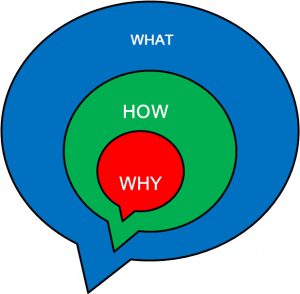
1. You were not clear about WHY exactly this is a problem you are looking to solve.
The most basic part of the human brain (amygdala) makes people feel threatened when you are proposing to solve (to their minds) a non-existent problem.
This may be because you were not clear what the problem is or the way you explained the problem made it not important enough to solve.
When you pitch, be very clear from the outset, in the simplest terms, what the problem is and why it needs to be solved.
2. You did not explain HOW you (or the client) is struggling because of this problem, HOW alternatives failed to solve it and HOW you reached the upcoming conclusion.
3 reasons why your pitch failedThe limbic (emotional) brain needs to be engaged in order to reach an agreement.

HOW do you engage the limbic brain?
Explain the problem, then tell the story how it is making things worse, how it is affecting you/the client and how past attempts to solve this problem (or the competition’s attempts) failed and how/why they failed. This will build up empathy as well as understanding as to how you came up with this solution, or how you reached the conclusion you need this much investment.
3. You were too abstract or complex about WHAT your solution is, WHAT it will do and WHAT you want from them.
The neocortex, the logical and third part of the brain, does not make decisions. It simply justifies the decisions it made in the first two layers of the brain.
Bring back the issues you described in the pitch and show how it solves each of them. WHAT your solution is must have a direct correlation to HOW it solves existing problems and WHY it is worth solving.
If you explained the WHY and the HOW well, by the time you get to your solution/ask (this is the “WHAT”) they will understand you and agree to give you what you want.
 
Adelina Chalmers profile - 3 reasons why your pitch failedAdelina Chalmers helps organisation deliver successful pitches both internally (to colleagues, bosses and boards within) as well as externally (to customers and investors to win contracts or investment).
Adelina’s clients include Agri-Tech, British Society for Plant Breeders, Niab, ARM, as well as Cambridge University, helping scientists from across the world learn how to launch their innovative technology by partnering with industry.
One of Adelina’s key skills that her clients love is that she can pitch to them their own pitch, on the spot, unrehearsed, and give them huge insights into their own project.
T: 07932 088 821 / W: www.genuineinsights.co.uk / E: Adelina@genuineinsights.co.uk

The circular bioeconomy – Farming, food and industry

Member News
Agri-TechE

At BioBridge we look at the market and regulatory aspects of developments in industrial biotechnology, analysing product or technology diversification, and looking for potential partners, writes Meredith Lloyd-Evans, Managing Director and Founder of the Cambridge-based company.
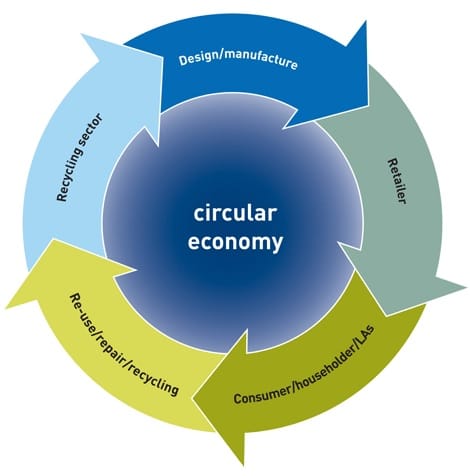
The ideas of interlinked processes are always on our mind and how they create the Circular Bioeconomy.
This concept, linking processes and companies so that side-streams from one become inputs into others, seems socially and environmentally virtuous and high in manufacturing efficiency.
An excellent and well-established example is British Sugar’s Wissington plant, valorising every part of the incoming sugar-beet loads in addition to the sugar, from sieved soil and aggregates, to betaine, to carbon dioxide for carbonated drinks, with excess heat and carbon dioxide used in tomato-production and, more recently, in cannabis cultivation for medicines.

Definition of waste is still an obstacle

One stumbling-block is that many side-streams are still defined as wastes that legally require discarding and cannot go for high-value uses.
This has a large impact on value of additional end-products; without legislation or standards, it blocks full value extraction even when specific processes are shown to be safe and effective at converting unpromising starting materials, such as undifferentiated food wastes or mixed domestic waste, into active components acceptable for human use in pharmaceuticals, cosmetics, nutritional supplements and other highly-regulated areas.
A start has been made in the EU with acceptance of food wastes for animal feeds*, which will help the efforts to use edible food wastes to feed insects and then produce insect oil and meal for animal feed and extracts of potentially higher-value molecules.

Getting multiple products from single source

The new trend of ‘multi-valorisation’ of raw materials is getting a lot of notice and research, development and innovation funding at national and international levels (here are two examples).
The BIC (Bio-Based Industries Consortium) is the outcome of EU support of this activity, and has now had several substantial funding calls, leading to projects in whey biorefineries, added-value products from algae, sustainable biocomposites, improved lignocellulose conversions, protein mining from cereal side streams and other promising ‘waste valorisation’ endeavours.
One of the areas I work in, blue biotechnology, recognises the usefulness of algae in first of all using side-streams such as heat, carbon dioxide and non-potable water, removing them from negative environmental balance, to produce the positives of processable biomass and cleaner water as outputs. It is now not just about algal biofuels.

Bioreactors create high value components on marginal land

Farmers could adapt non-arable or grazable land by having land-based flat-plate bioreactors for light-dependent microalgae or, if there is accessible coast, introduce suitable seaweeds, which are not only highly-productive of biomass for fractionation, but use excess nutrients introduced by river and coastal run-off of fertilisers and sewage and provide nurseries for young fish and crustacean larvae.
Once biomass from any source has been put into a manageable state, separation of components can begin, from high-fibre polymers and oligomers, anti-oxidant pigments and still-to-be-explored bioactives, to starches, oils and proteins, even before the energy value of the residues are exploited.

Circular economy is stimulating innovation

BioBridge-logoThe drive for innovation can be harnessed not only into a research aspect of exploring and exploiting all the molecules present, but into the technological side – engineering innovation is needed for down-stream processing, especially the steps involving de-watering – and into market-making for the end-products.

So, addressing the potential of the circular bioeconomy using agricultural, food and aquatic biomass can thus provide stimulus for innovation to everyone from academic scientists to market-makers via farmers, engineers and processors.
Contact me if you’d like an opportunities analysis and advice on possibilities in this area for your company or research activity:  mlloydevans@biobridge.co.uk.
 
*Commission Notice 2018/C 133/02 Guidelines for the feed use of food no longer intended for human consumption OJ 16.4.2018

Prodata take on new role as direct importer for Davis Weather Stations.

Member News
Agri-TechE

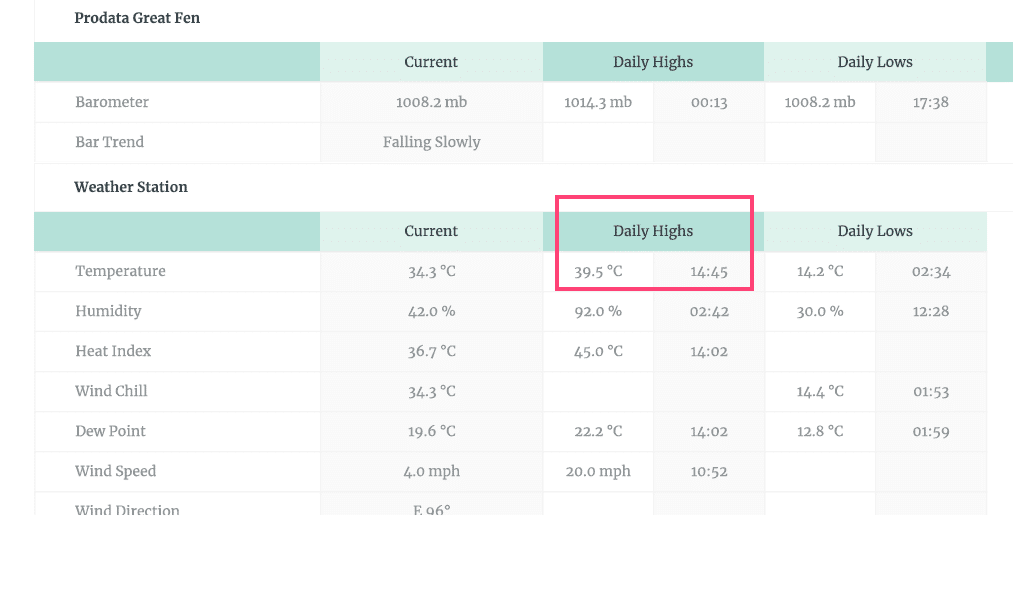
Prodata Weather Systems, the Ely-based weather and environmental monitoring system experts, are delighted to announce that they will be direct importers for the entire Davis Weather Monitoring Catalogue.
This is a new type of relationship for the two companies, although Prodata have been involved with the US-based Davis for many years.  Their strong relationship has meant that Prodata have been involved in undertaking important beta-testing new products for Davis.
Dr John Dann, managing director said: “Prodata have been Davis dealers for over 20 years.  However, this new deal will give us the ability to import weather systems directly from Davis, which will significantly enhance the services and supply options we can offer to other dealers and retail customers throughout the UK and Ireland.”
He added: “We greatly look forward to our new relationship with Davis and building on our long-held reputation for quality, excellence, support and service.  A solid and reliable set-up service is one of the main keys to our success with Davis products and we will be continuing to build on this approach.”
The Davis product range includes the innovative environmental monitoring system, EnviroMonitor.  This system is extensively used by those in the agricultural and horticultural sectors, but it can be utilised by businesses in other areas, predominately the construction, environmental and sport and leisure sectors.  For individual users and those will simpler needs, Prodata will continue to supply the well-established and renowned Vantage weather station range under this new deal.

(Un)Successful recruitment in agribusiness

Member News
Agri-TechE

Agri-TechE member RedfoxAs a professional recruiter in agri-business and food both in the UK and internationally for a number of leading businesses, I often get asked by clients “What are the characteristics of a successful person in the sectors we operate in?”

In response, I reel off a list off attributes such as optimism, persistence, ambition and high energy. But…an equally important question much less often asked is “What are the characteristics of unsuccessful people in our sectors?”
So as a bit of a public service to you all, here are some traits of those who are likely to lose you money, so you can then avoid them at your peril:

  1. They always have an excuse. These individuals never take any responsibility for their own mistakes but instead constantly blame everyone else. Occasional excuses are forgivable but serial offenders are in denial. Good management will confess shortcomings and try to learn from errors and improve on them.
  2. They talk and write gobbledegook. We all know these people. They try to blind management, colleagues, suppliers and retailers alike with technical nonsense, because they don’t actually know what they are doing. If they do not understand their clients, market, products and the economics of their business, then in all likelihood they will fail. And if they cannot explain it in plain English, expect the worst.
  3. It is always about them. While driven people are sometimes by nature selfish, their egos should not be so overwhelming that they alienate everyone. If that is the case, good people will not work for them and the business involved will not succeed.
  4. All talk and no action. Driven people are men and women of action. Ideas are wonderful but just dreams unless someone executes them.
  5. Are they just too nice? Anyone running a business is obliged to make a tough decision occasionally. A leader who wants to be liked too much and avoids conflict at all costs will end up in trouble.
  6. A favourite one – Being overly obsessed about salary and perks. People should be working to create a business and create some form of shareholder value. If they are in it for the money, they should become an employee in a far bigger organisation.
  7. Fixated over status. Being a senior level individual within a business is a privilege. But the reason to work hard is not the kudos but the satisfaction of creating something and proving detractors wrong.
  8. Financially illiterate. Anyone at the head of a serious business must be able to comfortably interpret financial statements and know the finances of their company. They must be familiar with margins and associated cash flow.
  9. Secretive backgrounds. Do your homework and background checking to turn over any stones to avoid perhaps initially plausible but unscrupulous individuals.
  10. No team. Successful people are often loners, but companies are collaborative affairs. If someone cannot retain recruits and motivate a management team, the odds are that the business will go the wrong way.
  11. Unhealthy. Check that new employees do not have serious pre-existing conditions that will potentially harm your business.
  12. Chaotic personal lives. Individuals with messy domestic arrangements are likely to be very distracted. This is not a moral observation this is a pure commercial one.
  13. Political. Most of us have no time for office politics. It seems that many who rise to the top in big companies do so principally owing to their skills at networking and advancing their careers. Those games don’t deliver performance only institutional decay. We have all seen this
  14. An inability to delegate. Micro managers never build great companies because of their desperation for control overrides the true needs of the business. So they inhibit its growth and end up with stunted dictatorships.
  15. Humourless. Life is too short and the need to laugh is paramount. Those who take themselves too seriously are no fun to be around. Even if they are money-makers, it isn’t worth enduring the boredom and conceit.

Max MacGillivray, RedFoxI expect you all have your own horror stories of disastrous appointments and sadly, I fear there are more bad leaders than good ones out there.
In terms of gaining the right people, make sure that your company website is modern, mobile friendly and with a clear path for great people to contact your business.
And make sure your recruitment process is fast, professional, enjoyable for one and all and for senior level appointments do not be afraid to run a full background and financial check. High calibre candidates will expect it and those that refuse don’t deserve to be in your business as they have something to hide.
MAX MACGILLIVRAY founded Redfox with the sole aim of specialising in mid-management to board level recruitment for the Fresh Produce, Agri-Business and Food Retail sectors. With a track record in successfully placing top-level candidates – including Chief Executives – for UK and international blue-chip businesses, Max and the Redfox team enjoy a proven reputation for excellence in finding talented professionals for their global client base.
www.redfoxexecutive.com

Solving real world problems in the real world

Member News
Agri-TechE

David Plummer, Managing Partner of Triage, gives his insights into solving intractable challenges. 

Solving real world problems in the real world

Real world problems

Why do we qualify the word problem with “real world”? There are a number of reasons but there are three I have observed to be consistently true.

  1. Many of the problems we are trying to solve aren’t, in fact, real. A good example of this is the dominant paradigm of global food security that says we need to increase food production by between 50 and 100% by 2050. We don’t.
  2. Many of the problems we are trying to solve are peculiar to “here”, i.e. they are not universal, presenting challenges around replication and scale.
  3. Our understanding of value, what it is and why it is valuable.

Only real world problems are worth solving. We help clients with all three.

Starting with the problem

In 2016 I lived in the US and spent a lot of time with agri food tech company founders and their backers.

The two questions I asked more than any other were “what problem are you trying to solve?”, and “what’s your business model?”. Without exception no-one could answer either; not a single one. It was, at best, technology chasing a problem.

It is not a surprise, therefore, that many of these companies have subsequently failed, some quietly through an “elegant” exit, with others more publicly, leaving investors with cumulative losses of hundreds of millions of dollars.

Is the problem the problem?

The best solutions nearly always come from an alternative definition of the problem. An example of this might be the number of solutions aimed at improving yield, but is yield really the problem we need to solve?

If the majority of the world’s farmers don’t make a profit, and profit is the difference between revenues and costs, then yield is but one of a number of important variables.

The work we are doing with farmers, farmer to farmer organisations, cooperatives, and others would suggest that yield isn’t the problem we need to solve, profit is, and our work on the highest and best use of land is yielding exceptional results.

Triage web photo fieldsKeeping it simple

We need to simplify the problems we are trying to solve. One of the questions we ask regardless of context is, “what one thing is going to make all of the difference?” The answer to this question doesn’t just keep it simple, it also gives us the one thing to focus on.

A great example of this is the work we are doing at a country level in Africa where one change universally adopted and measured in one way will add more than $2.9 billion to the economy.

Another is FarmView, a data platform providing data driven location intelligence that has achieved a number of sector firsts.

Systems thinking

Systems thinking is a discipline for seeing wholes, a way of seeing inter-relationships rather than things, and for seeing patterns of change rather than static snapshots.

Technology has enabled us to see things that we previously couldn’t, from the microscopic world within soils and their critical role in earth systems to understanding the complex and interdependent relationships of agricultural economics.

Similarly, Triage sees the whole and is leading a number of systems level projects including a National Plan that puts a redesign of the food system from the ground up at the centre of government policy and its’ industrial strategy.

Triage Professional InsightsThe bottom line

Our biggest challenge in solving real world problems in the real world, however, is not in solving real world problems, but in solving the human one, so we help clients get people right first.

If you are interested and would like to discuss any of the above, then please contact David Plummer on 07770 866235

www.triage.ag

Triage web photo Malaysia

Three steps to raise seed investment

Meet the Network
Member News
Agri-TechE

What is Angel investment?

Hannah Smith, Anglia Capital GroupI help to operate a network of business angel investors across Norfolk and Suffolk, called Anglia Capital Group. We hold pitching events throughout the year at which carefully selected companies are invited to pitch to our investor-members for potential equity investment.

Angel investment is a form of finance for early-stage businesses provided by wealthy individuals, usually successful ex-entrepreneurs or professionals, in return for a share of equity in the business. It is typically one of the earliest equity investments made into a start-up business and is actually the largest source of early stage capital in the UK. Approximately £1.5 billion is invested in this format in the UK, per annum.

Business angels tend to band together in networks, like Anglia Capital Group, in order to share knowledge, expertise and to syndicate deals.

How do I achieve angel investment?

STEP 1: Put yourself in their shoes

Before you can begin to understand what an angel investor might be looking for in a business, you have to put yourself in their shoes.

Set aside between 10 to 20% of your investable capital to invest in high-risk securities.

You know that high risk investing could return much larger returns than low-risk investing, but you are also aware that you could lose everything you invest in this form overnight.

In order to try and achieve these potential high returns you are looking for products or services that are unique and that have the potential to disrupt whatever market place they intend to operate in. You are looking for innovation.

You most likely want to do a bit more than just put your money somewhere, you want to give time and knowledge alongside your capital, to a business that you feel you can work with and make a difference with.

When you invest in a business, you are tying yourself in to a close relationship with the company for an absolute minimum of three years, but sometimes up to ten!

Scale up businesses usually have more than one investment round, and you want to be sure that they will have enough capital to make it through to profitability. Will you have to invest more money in the business down the line?

You know that 90% of start-up businesses fail.

You are going to use your best judgement to make sure you are backing the right horses. So, this is where the due diligence comes in…

You’re going to look in depth at the business plan, the route to market, you’re going to do a market analysis, ask about their exit strategy (i.e. when and how am I going to see a return on my investment?), understand their intellectual property and protection, and scour their finances. But most of all you want to know that you trust and like the people that you are giving your investment to, that they are the right people to take their product or service to market.

In fact, 90% of business angels say that PEOPLE are the deal breaker.

STEP 2: The deal

Understand this: When you stand there in front of an angel investor and pitch your business, you are PROMISING that person that you GENUINELY BELIEVE that you can multiply their money SIGNIFICANTLY if they hand it over to you and your business.

STEP 3: Think about the small things that might put them off:

Mistakes in your business plan.

This is on par with mistakes on a CV… except that you could be asking someone for hundreds of thousands of pounds worth of investment and you can’t be bothered to triple check you spelling and grammar?

Incomplete information, or avoidance of the truth.

Just be honest otherwise it will look worse down the line, when whatever it was that you were hiding or exaggerating comes to the investors attention. Give the investor all of the information you have, don’t leave anything out, that is the least you can do.

Pre-occupation with the technology/ product.

Often founders are not from a business background. They are scientists, engineers, academics, inventors, etc, etc. And there is absolutely nothing wrong with that, as long as you can prove to investors that you, or someone in your management team, has the capability to think as much about your business strategy as you do your product. You need to be able to sell your product after you’ve built it! Remember, people are the most important aspect to a business angel. Surround yourself with advisors that can fill skill gaps and experience gaps in your management team.

Arrogance.

Sounds obvious, right? But a lot of entrepreneurs act as if they are entitled to investment, that they know everything, and that nothing can go wrong for them. Very off-putting and very wrong. Something always goes wrong and it is more comforting to an investor if the entrepreneur can accept this and be ready for it.

Also, don’t forget that when you invest in a start-up, you are signing up to at LEAST a three-year relationship with the entrepreneur…. Would you want to commit to a three-year relationship with someone that, frankly, you don’t like?

Keeping them waiting.

Recognise that investors have a lot of other options in terms of what they could do with their money. Do not keep them waiting, they will get bored and give their money to someone else! Make sure that you have everything ready before you start pitching, including legal documents, a full business plan and financials.

A silly company valuation.

Valuing their start-up is something a lot of entrepreneurs get stuck on. Understandably so, because it is extremely difficult to value a start-up business, in comparison to valuing an established business. The best thing to do is to look at what similar businesses, have been valued at, at a similar development stage, in a similar market.

And then think of your company like a cake… An investor wants to purchase a slice of your cake as he believes that your cake has the potential to become more expensive in the future, and then he will be able to sell his slice of the cake and make a profit. He has a £10 note to invest. If you price your cake at £40 he can buy 25% of the cake. He might well decide to invest his £10 for 25%, if your cake is a beautifully decorated, 3-tier wedding cake… he definitely will not if you have a cupcake!

Anglia Capital GroupThere are many other things to think about when approaching an angel investor, but every case is different. Ultimately, it is all about relationship management. Just put yourself in their shoes!

If you would like to speak to someone about potentially pitching your business to Anglia Capital Group, please contact Hannah@angliacapitalgroup.co.uk

The future skills set of agri-tech workforce is in ‘our’ hands

Member News
Agri-TechE
Easton Otley study programme framework
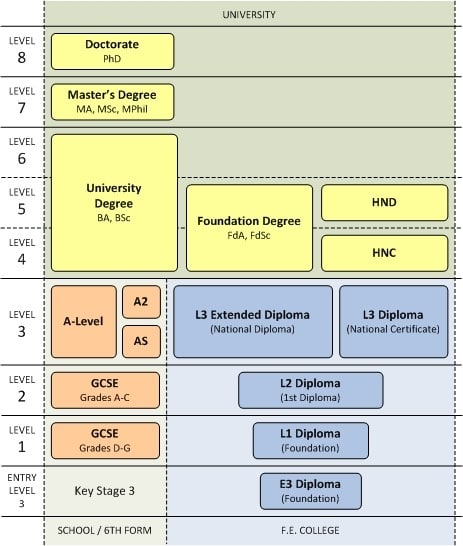
As colleges we have a ‘study programme’ framework to adhere to (click to enlarge)

The educational skills needs of our society have been constantly evolving as they should. The role of further education colleges is critical in ensuring vocational education is delivered to meet the skill needs of employers and the industries to which we serve.

The government’s EDUCATION ACT 2012 states that a young person must do one of the following until they are 18:

  • Stay in full-time education, for example at a college
  • Start an apprenticeship or traineeship
  • Spend 20 hours or more a week working or volunteering, while in part-time education or training

The opportunity to study whilst in work through an Apprenticeship:

NAME LEVEL EQUIVALENT EDUCATIONAL LEVEL
Intermediate 2 GCSE
Advanced 3 A level
Higher 4, 5, 6 and 7 Foundation degree and above
Degree 6 and 7 Bachelor’s or master’s degree
Easton Otley academic levels
Academic levels (click to enlarge)

We operate at the heart of one of the fastest growing economies in the country – here in the East, food, drink and agriculture is by far the biggest sector and employs the most people. It is critical that for colleges to stay credible and up to date we need to deliver the skills required by industry covering a range of specialist skills, sciences and innovation that will be needed in the coming decades.

However, it would be impossible and wrong for colleges to work in isolation as we would fail miserably. Success lies in active collaboration.

Easton and Otley College is the region’s specialist college for the land-based and agri-food sector and has an important strategic role in developing the local economy as the food chain is the largest manufacturing sector in New Anglia region, generating more GVA and jobs than any other sector. Technology is increasingly being used to address the significant challenges the sector has around productivity, competitiveness and skills shortages. As one of the sectors that will be affected by Brexit more than most, the agri-food sector will need many more skilled and qualified people to adopt and make best use of the new technologies designed to deliver more product, with less resource and with a reduced impact on our environment.

We are committed to the development of high-level programmes and qualifications to meet employers’ and skills shortages identified through LEP skill plans. We recognise that by working collaboratively with both other educational institutions and industry, we can have a much greater beneficial impact than we could individually by enhancing quality standards, increased coverage and improved efficiency of delivery.

We will become a national leader in specialist skills and sciences, a leading academic institution known for innovative ways in which to develop courses to meet the skills needs of our region and our society. We need to be at the forefront of developing technology, science and academic thought development as the country moves into a post Brexit era.

Easton and Otley CollegeIf you wold like to be at the forefront in collaborative and industry led training and upskilling the young people of our future please do get in touch.

Jane Townsend, Principal of Easton and Otley College: jane.townsend@eastonotley.ac.uk

Fintech and Agri-tech – where’s the linkage?

Member News
Agri-TechE

Chrissie Freear, PwCCan two industries with apparently different purposes really be thought of as comparable and able to support each other? The answer – yes, absolutely, says Chrissie Freear of the PwC Agri-tech team.

As joint leader of PwC’s R&D Financial Services team and recently taking on the exciting task of forming PwC’s Agri-tech team with PwC partner, Stephen Oldfield, I often get asked – “What’s the connection between Agri-tech and Fintech? How can you specialise in both?”

For me, it’s obvious – not only are both embracing many of the same technologies, such as blockchain, robotics and AI (Artificial Intelligence), and can clearly benefit from working together in evolving the application of these technologies – Agri-tech and Fintech businesses can support each other to solve strategic problems and grasp opportunities.

I recently came across a business that has developed a solution that combines satellite imagery, drone technology and data analytics to help farmers track crop performance more accurately. In developing their solution, the business identified the possibility of extending its use to the Insurance market to solve one of the major issues faced by Agri Insurers – how to accurately and easily value agricultural loss events. By using the data analytics and machine learning provided by this Agri-tech solution, insurers have a more accurate picture of the actual loss to farmers from insured events.

This is just one example of how tech innovations from one sector can be used to solve issues in another. There are many more, including the use of innovative weather prediction technology originally developed for the insurance market to help farmers identify potential future risks to crops.

However, this is more than just the sharing of technical solutions, Fintech and Agri-tech businesses have the opportunity to work together to achieve substantial and sustainable growth. Globally, one of the challenges facing the agricultural sector is that it is still fragmented and unorganised in certain key countries such as India and Africa, where the industry is dominated by smallholders. And this negatively impacts productivity.

It’s clear Agri-tech businesses have a fundamental role to play in overcoming productivity issues and many have developed brilliant solutions to help, but Fintech businesses also have a role to play. Many Fintech businesses offer new and innovative ways of accessing finance and marketplaces – using digital solutions accessed via mobile devices. This is particularly important in countries like Kenya and Rwanda where traditional methods of accessing global markets or providing finance are of limited use to smallholders due to the lack of credit history on which banks justify loans. Providing smallholders with a bigger marketplace and greater access to finance means that they are not only able to benefit from the productivity increases offered by scale, but also to finance for the purchase of Agri-tech solutions which provide major productivity improvements.

PWC logoI can see a real benefit of Fintech and Agri-tech businesses collaborating and working together, not only in developing technology but also in going to market to offer their products and services, helping to solve real-world problems.

A goal of the newly formed PwC Agritech team is to bring together knowledge, experience and relationships from other industries to help support Agri-tech businesses.

If you would like to find out more about the PwC Agritech team and how we can support your business, please contact Stephen Oldfield (stephen.m.oldfield@pwc.com) or Chrissie Freear (christalle.r.freear@pwc.com).

Agrimetrics showcases new developer portal to tackle big questions in agriculture

Member News
Agri-TechE

AgrimetricsHow do you value land use? How can you benchmark crop performance? How do you measure sustainability? These are big questions in agriculture. To help technology developers create the tools to support industry answering these questions, Agrimetrics has created a new Developer Portal that was demonstrated for the first time at Agri-Tech’s REAP conference. The portal will allow programmers access to national agri-food data, ordered in a consistent format so that multiple sources of information can be brought together in new ways.
Simon Davis, Head of Partnerships for Agrimetrics, the big-data centre of excellence, explains: “The UK has a rich legacy of data, not just about soil, weather and crop performance but also about ecosystem services provided by natural capital – for example environmental assessments and water catchment studies. Until now the value of this data has been limited as it is kept isolated in silos.

“Agrimetrics has developed a platform that can integrate these various datasets from multiple sources, making it available to developers to ‘plug and play’. This will allow agri-food data to be analysed in ways not possible before, and new solutions developed.”

The falling cost of sensors and imaging technology is making it easier for farmers to collect information about their own crops and growing conditions, but this data really becomes useful if it is combined to enable better benchmarking of performance against others. The new insights generated can also be used to enhance decision-making on productivity and sustainable best practice.

The Agrimetrics platform supports this type of analysis by linking national and international datasets from different public and private sources to a specific reference point, for example a location, field or a parish.

The new Developer Portal provides tools so that programmers can easily incorporate a wealth of relevant data into their own applications. This could be a dashboard that allows non-specialists to easily compare different scenarios or a handheld device that supports decision-making in the field.

Agrimetrics demonstrated at REAP two examples of how this can be achieved.

Agrimetrics
Agrimetrics’ David Flanders and Simon Davis at REAP

The Natural Capital Explorer is a dashboard developed with data from Defra and the Developer Portal. It brings together various indicators of the national ecosystem and applies them at parish level. This enables the ecosystem services and the impact on the environment provided by, for example, woodland, fens, and cover crops to be assessed objectively at a local level. The information is displayed graphically so that different parishes can be compared and implications of a change in land-use can be explored more effectively.

Davis explains that the dashboard has many applications, from mapping information across value-chains, to displaying data from different government sources to make integrated decisions about land use and environmental management.

The other application is Agrimetrics Data Combine, a web-based tool that provides support to decision making on crop varietal choice. The application provides benchmark information to users on the performance of alternative varieties in similar environmental conditions. It is based on data provided by farmers in exchange for the benchmark. By crowd-sourcing data, and combining it with data held in the portal, Agrimetrics is creating a comprehensive record on varietal performance in real-world conditions.

Agrimetrics was established as part of the Government’s Agri-TechE Strategy to add value to public data sets and provide the tools for its exploitation. The platform brings together data and makes it available in a consistent format so that it is ready to be analysed and used.

To find out more visit www.agrimetrics.co.uk .

Weatherquest advises growers

Member News
Agri-TechE

Weatherquest, based at Norwich Research Park provides detailed and application-specific weather forecasts, which allow business and the travelling public to manage the risks presented by the worst of the weather.

Its data is also being used in research to help find cold resilient brassicas, such as cauliflowers, to extend the cropping season. Jim Bacon, Managing Director of Weatherquest explains, “We give accurate and detailed weather information which is simply not available elsewhere. Most industrial practices are weather dependent, and often the weather forecasts on the TV are not detailed enough to make business decisions, so we fine-tune this service based on our individual client’s needs”.

The company was established by locally-based experienced forecasters when the Norwich Weather Centre closed in 2000. The team saw an opportunity for a consultancy service and with their links to the University of East Anglia (UEA) Environmental Sciences department they have incorporated the latest research into their weather prediction service.

Jim recalls, “One of my colleagues, Steve Dorling, was himself based at UEA on the Norwich Research Park. So setting up business on the research park seemed a natural location, it is well known for its ground breaking research and expertise, so we felt it was a good environment to be a part of. More recently we have started working with the John Innes Centre in support of their work on plant research.”

Prolonged cold weather can also create shortages of winter vegetables. Data from Weatherquest is currently being used by Judith Irwin, researcher in Crop Genetics at the John Innes Centre, in a research project aimed at improving resilience within the horticultural industry.

The main focus of the research is helping crops adapt to climate change, but the science can help build resistance to temperature variations too. “For brassicas such as cauliflower and broccoli we eat the flower buds of the plant and they require a period of cold known as vernalization to trigger the flowering mechanism. This varies between species and by examining the temperatures required by different varieties to vernalize, you can select those that need different periods of cold to flower.” Additionally by comparing mean winter temperatures from 1961 – 2006 the researchers have found that Cornwall on average enjoys winter temperatures 2°C higher than Lincolnshire, and that this influences how varieties mature in these areas.

This information can be used to prolong the flowering period by selecting varieties that vernalize at different temperatures. This would be desirable for supermarkets and also for farmers who would see an increase in the crop’s profitability, as they would crop for longer.

Jim explains that at some stage all food is dependent on a weather forecast. “This doesn’t just mean in terms of growing a crop, but also the shipping, transportation and freshness of that crop,” he says. “For example, one of our clients is the Port of Felixstowe. For them, wind and visibility information is vital. Ships are unable to enter or leave the docks if the wind is too high or visibility too low. Likewise, cranes are unable to unload cargo, such as food, off the ships if the weather conditions are not just right.” Jim concludes, “Winter is usually a busy period for us as people worry about travelling up and down the country to visit friends and family.

For the companies we work with, busy periods usually come when the weather is significantly different from the ‘norm’. We are able to predict when this is going to happen and communicate how it will affect our clients, before it has a detrimental result on their business.” For a personal weather forecast call Weatherquest on 09065 77 76 75 (nb.calls charged at £1.50 per min-network charges)