Better Origin raises $16million for insect mini-farms

Member News
Agri-TechE
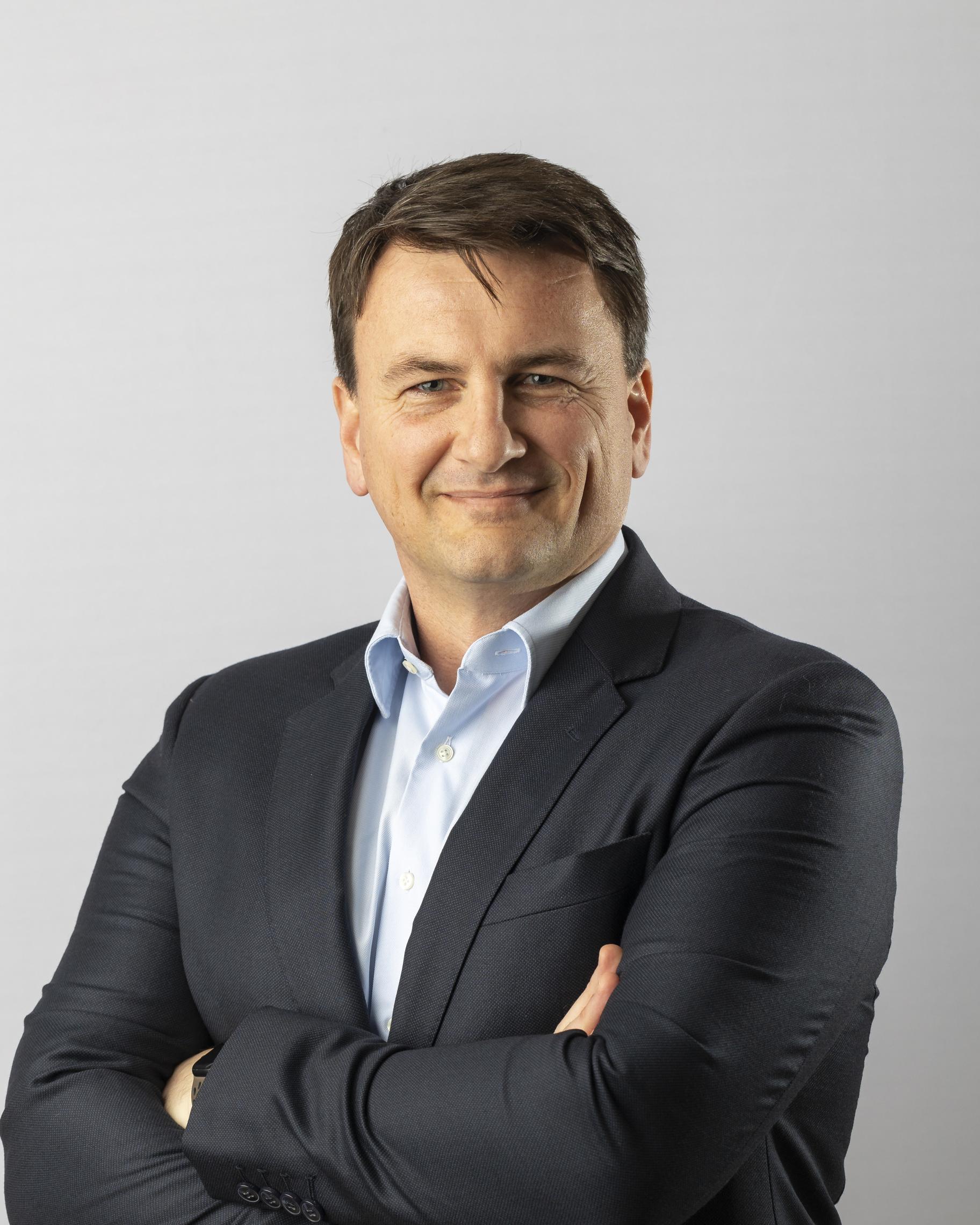
Fotis Fotiadis, CEO, Better Origin

Cambridge-based Better Origin, developers of AI enabled insect mini-farms that can fit inside shipping containers, has raised $16million in a Series A funding round.

Fotis Fotiadis, CEO and co-founder of Better Origin, says: “One of the biggest problems our generation will face is how to produce food sustainably and securely. Our solution is to localise the food supply chain and convert food waste back into food.

“We’re tackling a huge problem – the inefficiency of our broken food chain – but with support like this, we’re more motivated than ever.”

The $16 million funding round was led by UK investors Balderton Capital, with participation from existing investors Fly Ventures and Metavallon VC, and will be used to help the company scale internationally and grow the team.

“Fotis, Miha Pipan, and the Better Origin team are working to fundamentally change our broken food chain, for the benefit of everyone,” says Suranga Chandratillake, general partner at Balderton Capital. “Climate change, the pandemic, political tensions and our growing population have demonstrated time and again how fragile our current systems are. They’ve also shown how farming currently exacerbates the challenges we face and solutions so far are not leading to the wholesale change we need. Better Origin presents a new approach and we believe it can have a transformational effect on food and farming systems.”

More information about Better Origin.

AHDB Appoint Agrimetrics as Data Innovation Partner

Member News
The views expressed in this Member News article are the author's own and do not necessarily represent those of Agri-TechE.

AHDB has embarked on a project to make their data work harder for levy payers. To support this vital work, they have commissioned Agrimetrics as a strategic data innovation partner. The project will run from January 2021 to December 2022.

Core to AHDB’s Change Programme and Strategy 2021-2026 is bringing more data, insight and analysis together in an easy-to-use format to help farmers, growers and supply chains make better business decisions. Their goal is to be a leader in the provision of data to improve agricultural decision making.

“We’re aiming to make our data work much harder for levy payers,” says Simon Oxley, Head of Crop Production Systems at AHDB. “A clear winner for the industry lies in AHDB’s wealth of data in varieties, and crop monitoring which will be the foundation for future collaborations in integrated pest management practices, for weeds, diseases and insect pests, and their impact on improving farm businesses.”

AHDB delivers research, knowledge exchange activities and services, which create a diverse range of technical datasets. Most datasets are collected for a specific activity and comprise data from many different sources which are aggregated and delivered for a specific farmer-focused service or web tool.

FAIR data that works for levy payers

Key to making AHDB’s data work harder for levy payers will be to make FAIR data improvements: an acronym for making the data more Findable, Accessible, Interoperable and Reusable. To achieve this, Agrimetrics will apply classifications to AHDB’s data in a way that makes it far easier for humans and machines to find it, combine it and turn it into value.

Agrimetrics will bring their expertise and technology to bear in helping AHDB derive better value from these disparate datasets, both for levy payers and internal users. This will include developing a common data classification system and working to discover, classify and provide greater access to diverse technical and market intelligence datasets from across all six sectors of AHDB.

When the project concludes in 2022, users of AHDB’s datasets will be able to extract more valuable insights and make far greater use of the huge data resources that the organisation holds. Agrimetrics will work in collaboration with AHDB on two pilot programmes in the cereals and pork sectors that will show proof of concept of the added value that AHDB can provide to levy payers by integrating datasets.

Future-proofing AHDB

Agrimetrics will also conduct Horizon Scanning to provide greater insight and understanding of future data technologies from agriculture and other industries that are likely to become mainstream over the next five to 10 years. This knowledge will be essential to fully realise the potential of AHDB’s data assets and unlock the maximum value for the sector.

“As an organisation developing an advanced Data Marketplace for richly annotated agrifood data, Agrimetrics must stay abreast of the latest innovations to deliver a cost-effective evergreen service,” says Dr Matthew Smith, Chief Product Officer at Agrimetrics. “Horizon Scanning is part of our culture and we’re delighted to be able to support AHDB in ensuring they’re at the forefront of embracing future data innovations.”

“Agrimetrics’s extensive knowledge of emerging data technologies from the agricultural sector as well as related industries make them a natural partner for this task,” concludes Dr Matthew Smith.

Investing in the Future: Securing the Promise of Precision Agriculture

Member News
The views expressed in this Member News article are the author's own and do not necessarily represent those of Agri-TechE.

There are few pursuits as noble as providing food to feed a hungry world. And while you won’t find them in a field, organizations like YB AgTech, a division of Yellow Brick Capital, are vital to ensuring the future of farming. As the London-based company’s website says, “we are committed to contribute towards a sustainable future for the planet.” Yellow Brick does that by investing in “innovative private equity opportunities concentrating on food security via precision agriculture.”

The company recently named Johan van Zyl as Group CEO, replacing Johnathan Kol-Bar who will remain as Executive Chairman. van Zyl previously served as the company’s Chief Operating Officer. AgriBusiness Global interviewed van Zyl to learn what YB AgTech looks for in a company before it invests, what impact those companies will have on ag, and how it tracks and measures success. The original article can be found here.

Why/how does Yellow Brick Capital/YB AgTech view the agriculture market (why is it important and worthy of investment)?

Johan van Zyl: There is an ever-growing population that needs to be fed. The human population currently stands just shy of 8 billion people, with a growth rate north of 1.1 % year on year. That is double of what it was in 1974.

The answer does not lie in cultivating more land. Available agricultural land is decreasing. It needs to lie in utilizing more efficient, and more sustainable agricultural practices. We need to utilize our ever-evolving technologies and massive amounts of data available to us to educate and empower the more than 608 million family farms.

Governments do not know how to achieve sustainability levels, and need real guidance from role players with knowledge, experience, and the right tools. Various input and supply chain challenges, especially logistics, fertilizer costs, spiraling inflation, and the fragility brought to the forefront by COVID, are forcing countries to become self-dependent on local supply. Growers need affordable tools to empower all of them to become reliable suppliers in the food chain.

There is a need for the holistic viewing of the critical components of agriculture. And the right collaborations will allow these critical components to work in a centralized system allowing real influence on all levels of agriculture.

What makes a particular technology attractive to your organization?

van Zyl: Our specific focus is on education, empowerment, and plant nutrition, but any technology that will revolutionize the industry is always attractive. There are many start-ups, especially in agriculture, and it is a minefield navigating them all, but there are some real gems at the moment, which really do something different. Being able to bring all these services together in a single platform serving the grower, where technologies talk to each other, is a very attractive proposition going forward. We are doing it with irrigation and fertilization, and looking to grow this into other spaces.

Can you talk about your approach to investing (how involved in the management/ownership do you get)?

van Zyl: Currently we have three types of investments in our portfolio. The first is early-stage investments with potential and strong management to support that potential. Typically, these companies have products and technologies outside the scope of the operational aspect of Yellow Brick AgTech. One of our first investments was a company called PhyTech, one we are particularly proud of.

The other is investments into companies with an equity swap whereby we see the importance of the company and its technologies in our plant nutrition ecosystem. Companies such as I-Feeder Technologies and i-Plant Nutrition are examples.

The third is companies we start ourselves to fulfil a need we see in the market in our developments, such as Yellow Brick Indoor Farm, which will act as operational farm and testbed for our technologies, as well as an incubator for other agricultural technologies.

What does Yellow Brick AgTech offer these companies (money, ag expertise, management experience, etc.)?

van Zyl: All the above, and financial experience. With over 50 years in the agricultural market, another 45 years in the banking sector, and the support to invest when required, whoever is part of our portfolio knows they will get the right advice and support to make the company to not only reach its potential but be part of something special in adding value to sustainable agriculture.

What is the long-term strategy/philosophy/expectations for your investments?

van Zyl: A company needs to make money to fund its growth and operations. We will not be involved in a company if 1 and 1 does not make 11. Making 2 is simply not attractive. Although we do not only consider investments based on the balance sheet. If the company has a strong management, competitive advantage, or technology which is in-line with our vision, we will do our due diligence on whether it is a smart investment or not.

We are flexible in our outlook on investments and not adverse to risk and making a quick exit if the opportunity provides itself. Often though, especially if the company aligns with our core vision, we will take a very long-term view on it, delivering constant, predictable returns for our investors. Experience has taught us that if you are not flexible and willing to adapt, you will just be another once-successful company.

How do you measure success of your investments?

van Zyl: If the investment can make a sustainable impact that is a big plus in our eyes, whether it is directly or indirectly. Helping us succeed in this mission is something that is core around our vision. If the company has a net positive cash flow, which can be reinvested to help the company grow and innovate, we are already happy with what we achieve.

Yellow Brick AgTech has invested in Smart Fertilizer, a cloud-based sensor-less technology, I-Feeder Technologies, and PlantMetrics. What attracted you to these particular companies?

van Zyl: Smart Fertilizer was the first in the portfolio of active investments. Our Chairman, Johnathan Kol-Bar, realized that, after all these years in the banking industry, he wanted to help create a world for his grandchildren and their children. Smart Fertilizer (which has recently re-branded to i-Plant Nutrition) is a truly unique tool, where is unparalleled in the world, supporting the grower to use far less fertilizers while achieving higher yields with less risk. Since the first investment in Smart Fertilizer, the company, the algorithm, and the software have been through dramatic changes, and they are now a unique and leader in the nutrition space..

Through this investment, the realization came that it is one thing to have the software, or the “brain” as we refer to it, but you need the equipment to apply the output of the software. I was introduced to Johnathan, and as son of the founder of I-Feeder, a 40-year-old company, knew that to make the next step in the growth of I-Feeder, had to involve revolutionary technology. And that is where the partnership formed.

After the coming together of these two companies under the Yellow Brick AgTech umbrella, it just made sense to close the loop of the ecosystem. And the way to close it is to have the plant “talk” to us and tell us its requirements, while simultaneously using the Algorithm from i-Plant Nutrition, previously Smart Fertilizer Software, to ensure all environmental factors are taken into consideration. From there the start-up PlantMetrics, which was born in-house. We now have control over the whole offering from A to Z and doing so as an OEM (original equipment manufacturer) giving us a very deep level of knowledge.

We had a specific end goal in mind. A product offering with a focus on plant nutrition and built our investments around companies which can help us achieve this successfully.

We have a few more product offerings up our sleeve, which will tie into making this a more comprehensive offering, but this we will share in the coming months.

How will these companies’ products/services affect crop inputs (both traditional and biological)?

van Zyl: To be sustainable in agriculture is not an easy route. We must realize that we are asking growers to trust us to assist them in achieving their yield goals and doing it in a way which goes against what the generations before them did. Failure is not an option.

And sustainability in agriculture also evolves around protecting our natural resources. Open-field agriculture is here to stay, as much as there is a push for indoor farming. Even we are getting involved, through Yellow Brick IndoorFarm. Through i-Plant Nutrition (previously Smart Fertilizer Software), we are giving the growers recipes allowing them to apply less fertilizers, and at the right time. The more precise application has the implication that healthier crops are achieved, leading to less pesticides being required.

Interestingly enough, we just received the result back from one of our clients in Tonga, showing they took phosphorous totally out of their fertilization program after generations of doing it this way. A massive cost saving, but even more, a big win for the soil. And even having an increase in yield on top of this.

The plant sensor from PlantMetrics, will in real time send us the nutritional requirements of the plant. The implication is that no waiting from results from laboratories, getting the information straight from the plant, not soil or water, and giving the plant only that which it needs. This truly is going to shake up the industry.

GroPlant is a powerful tool that provides precise fertilization and sensorless irrigation solutions.

I-Feeder is the only hardware to have these functions integrated. The hardware is already the most efficient and precise way to apply the product and having i-Plant Nutrition as the brain of the system, and the sensors from PlantMetrics closing the loop, will lead to an ever-learning AI allowing the algorithm to become ever more data rich, and thereby more precise in the output.

We are now collaborating with a very well-known irrigation company in building a platform which integrate both irrigation and fertilization. GroPlant is truly exceptional. It is an unbiased recommendation and features two of the most data-rich algorithms available in the field, supporting the output. Along with satellite information incorporating weather conditions, this is the tool governments need to allow them to lower subsidies and achieve sustainability goals.

What other types of ag technology are your company looking to invest in?

We are not fixed in our outlook going forward. As much as we want to support and focus on plant nutrition, any technologies which will empower and educate the grower is an important growth tool.

The future in agriculture lies in finding a way to successfully utilize the data accumulated and apply this to enforce better decision making.

Artificial Intelligence will initially be a difficult sell in the agricultural realm, though various companies are making important in-roads into the sector. It is definitely a direction we are putting a lot of emphasis on.

Then also investing in the transitioning from synthetic fertilizers to organic fertilizers, chemical to biologic pest control. Good results have already been achieved, but a lot of research, trials, and data is needed to achieve this. Our experience with i-Plant Nutrition (Smart Fertilizer Software) allows us to already build our own algorithm, which will support the grower in knowing the right amounts to apply.

What else do we need to know?

Yellow Brick Capital is more than just agtech. We have a diversified portfolio, which includes real estate development, technology, and agtech. Headquartered in London, UK, with branches in the U.S., Brazil, and South Africa, and representation in Europe, Australia and other countries in LATAM, we realize the importance of local partnerships.

The change in how we utilize our resources though, needs to be technology and knowledge driven, and it is up to the people in the know to share this.

Our growth in the near term is focused on collaborating with companies who have the same mission and vision. If you appreciate the path, and know your company or technology can add value, feel free to reach out, and let’s see if we can have 1 and 1 make 11.


How to Make Fertiliser Last This Season

Member News
The views expressed in this Member News article are the author's own and do not necessarily represent those of Agri-TechE.

How to maximise yield potential in cereals in a year where fertiliser prices are high, and stocks are low.

In a year that is set to be dominated by rising input costs, farmers and agronomists are being encouraged to consider every fertiliser application with increasing scrutiny. Considering if the crop needs the ‘usual’ dose, the type of fertiliser and the weather conditions – all are factors which could save producers money without impacting yields, as Timac Agro UK’s technical manager, David Newton explains.

Taking it back to basics

As a starting point I would encourage everyone with crops in the ground to ‘walk their crops’. Don’t just rely on doing things the way you’ve always done them, as this could to lead to unnecessary applications or missed opportunities.

For example, many parts of the country experienced relatively mild temperatures during the first half of the winter. This means some crops could be further ahead in growth stages than expected.

As a result, these crops may not actually require an early nitrogen boost, and in some instances if one is made it could cause plants to become more vulnerable later on, this is where useful savings can be made without impacting the yield.

However, in some instances, crops that were exposed to the hard frosts in the winter may be showing signs of ‘stress’, which could impact crop performance. So, instead of a traditional nitrogen application I would recommend using an early application of a biostimulant, such as Fertiactyl Starter, which can support the crop by enhancing rooting and tillering. This should in turn encourage early nutrient absorption, so you’re making the most of every kilo of nitrogen applied throughout the season. It will also increase the crops resilience to climate stresses, for example drought, if it’s faced with such conditions later in the season.

  • Poor rooting,
  • Poor tillering,
  • Yellowing due to poor nutrient uptake,
  • Die-back of young growth
  • Disease and pest attack

Reacting to soil conditions

To make the most out of every kilo of fertiliser, it’s incredibly important that you react to your soil conditions. The weather experienced throughout the season will be different depending on where you are in the country, reiterating the importance that there is no single one-size-fits-all approach.

The Timac Agro team can help you take a bespoke approach on a farm-by-farm basis, assessing application timings and rates. To find out more about our range of enhanced fertilisers and soil conditioners click here.

GROWPURA TARGETS GLOBAL EXPANSION WITH FIRST INTERNATIONAL PATENT

Member News
The views expressed in this Member News article are the author's own and do not necessarily represent those of Agri-TechE.


We have taken the next step in our quest to capture a global market by securing IP protection in Singapore – our first overseas patent with more pending.  This follows success with our UK patent being granted and also a trademark with the USA.

Our innovative and advanced hydroponic vertical farming technology which enables the farming of crops in small spaces whilst ensuring even greater taste, greater quality and longer shelf life is pioneering the move towards this more sustainable way of plant growth.  By meeting both consumer and retailer needs, this patent protects over 6 years of research and development into the pioneering techniques we are fiercely proud of.

Nick Bateman, CEO of GrowPura, said: “From first launching this venture; penetrating international markets with our unrivalled technology has always been on our radar and so making our first meaningful move in the Asian market in such a short space of time is both exciting for us and a statement of intent as to how far and wide we believe this technology can be used.

“Food security is a major global concern and our systems help address a serious need by equipping farmers all around the world with the tools they need to sustain themselves, serve their local communities and even distribute to wider markets.

“We are pleased to have secured this patent in Singapore and expect many more to follow.”

The Wolfson Foundation supports a revolutionary new plant and microbial sciences hub

Member News
The views expressed in this Member News article are the author's own and do not necessarily represent those of Agri-TechE.

We are delighted to announce that the Wolfson Foundation is generously supporting The Sainsbury Laboratory and the John Innes Centre’s ambitious vision Healthy Plants, Healthy People, Healthy Planet (HP3), by awarding £1.1 million to the project.

This will contribute towards the development of an Advanced Technology Centre, a state-of-the-art facility for biomolecular sciences and bio-imaging. The Advanced Technology Centre will enable seamless, interdisciplinary science and advanced computational approaches to be taken in future. This will allow the institutes to be truly world-leading in plant and microbial sciences research and establish the Norwich site as a national research hub.

The  John Innes Centre and The Sainsbury Laboratory are committed to using their science to provide a step-change in capability that will enable us to tackle one of the world’s most significant scientific challenges. In the face of the climate emergency, it is imperative that agricultural production is transformed to become a net carbon zero activity that no longer relies on fossil fuels.

HP3 is a joint vision between two institutes that seeks to secure a safer, healthier and more sustainable future through the power of plant and microbial science.

Investment in new infrastructure to replace buildings established in the 1960s will revolutionise our capabilities and therefore maximise the potential benefits of plant and microbial research in achieving this vision. We are building a case for capital investment in cutting-edge, future-proofed facilities to supercharge national ability to translate scientific knowledge into practical solutions.

In the last few years, we have quickly garnered support from private and governmental stakeholders to create a UK hub for plant and microbial research. The HP3 project was highlighted in the UK Plant Science Research Strategy as the sort of specialised hub that should receive investment in order to provide world-class national capabilities. Last year, the project was also awarded £1,1 million by the UKRI to enable early-stage concept designs of our zero-carbon building.

Professor Nick Talbot FRS, Executive Director of The Sainsbury Laboratory, said: “The HP3 vision is a bold and ambitious one, which is what we need if we are to achieve net zero agriculture in the face of the climate emergency.  We are very excited that the Wolfson Foundation recognizes the enormous potential of plant and microbial sciences in helping us secure a safer, healthier and more sustainable future.

With the generous support of the Wolfson Foundation, the Advanced Technology Centre will enable us to be at the very cutting edge of plant and microbial research, with complete integration of structural, analytical and cell biology facilities with the latest approaches in artificial intelligence and machine learning.

We are very honoured to add the Wolfson Foundation’s prestigious name to our growing list of supporters. It is incredibly exciting to see how our ambitious vision for transforming global agriculture through innovation is becoming a reality.”

Professor Dale Sanders FRS, Director of the John Innes Centre, said: “This generous support from the Wolfson Foundation is an important step in delivering our ambitious plans for the future. We are delighted to have such a prestigious foundation backing the project.

Healthy Plants, Healthy People, Healthy Planet aims to enable a step change in plant and microbial science and this funding will support an innovative Advanced Technology Centre within a state-of-the-art research hub to provide solutions to some of the world’s most pressing challenges. It will support the UK as a global leader in plant and microbial science and enable researchers across the UK to address strategic challenges in plant and microbial sciences”.

Paul Ramsbottom, chief executive of the Wolfson Foundation, said: “The twin challenges of making food production more sustainable and protecting the planet’s natural resources are set against a backdrop of growing global population and a rapidly changing climate. These are issues that concern us all. We are delighted to award a grant to the ambitious HP3 initiative, which will transform the facilities of the John Innes Centre and The Sainsbury Laboratory – both international leaders in their field.”

Notes for Editors

The Wolfson Foundation is an independent charity with a focus on research and education. Its aim is to support civil society by investing in excellent projects in science, health, heritage, humanities and the arts. Since it was established in 1955, some £1 billion (£2 billion in real terms) has been awarded to more than 12,000 projects throughout the UK, all on the basis of expert review.

The Sainsbury Laboratory is an independent research institute that focuses on plant health for a sustainable future. It makes fundamental scientific discoveries in molecular plant-microbe interactions and applies these to reduce crop losses caused by plant diseases, particularly in low-income countries. Around one hundred and twenty staff and students work and study at the Laboratory which is located on the Norwich Research Park, United Kingdom. The Laboratory is generously supported by the Gatsby Charitable Foundation and by the University of East Anglia, wins competitive grants from the BBSRC, ERC and other research grant funding bodies and, for some research programmes, is funded by commercial companies. Established in 1987, highlights of The Sainsbury Laboratory include: discovery of RNA interference in plants by Prof. Sir David Baulcombe FRS as recognised by the Lasker Award and the Wolf Prize in Agriculture, discovery of the first immune receptor in plants by Prof. Jonathan Jones FRS, three current Group Leaders are Fellows of the Royal Society, and five researchers who have been on the Highly Cited Researchers list of top 1% scientists in the world since 2018.

The John Innes Centre is an independent, international centre of excellence in plant science, genetics and microbiology. Our mission is to generate knowledge of plants and microbes through innovative research, to train scientists for the future, to apply our knowledge of nature’s diversity to benefit agriculture, the environment, human health, and wellbeing, and engage with policy makers and the public.

We foster a creative, curiosity-driven approach to fundamental questions in bio-science, with a view to translating that into societal benefits. Over the last 100 years, we have achieved a range of fundamental breakthroughs, resulting in major societal impacts. Our new vision Healthy Plants, Healthy People, Healthy Planet is a collaborative call to action. Bringing knowledge, skills and innovation together to create a world where we can sustainably feed a growing population, mitigate the effects of climate change and use our understanding of plants and microbes to develop foods and discover compounds to improve public health.

The John Innes Centre is strategically funded by the UKRI-BBSRC (Biotechnology and Biological Sciences Research Council) and is supported by the John Innes Foundation through provision of research accommodation, capital funding and long-term support of the Rotation PhD programme.

Trendlines invests in agri-fintech company AgriG8

Member News
The views expressed in this Member News article are the author's own and do not necessarily represent those of Agri-TechE.

The Trendlines Group, is pleased to announce that its fund, The Trendlines Agrifood Fund, has invested in AgriG8 as its first foray into the thriving agri-fintech space.

Co-created in Q3 2021 with Golden Sunland Singapore, AgriG8 leverages on the diverse experiences of its founders and their in-depth knowledge in the smallholder agriculture sector to transform and set new standards in agri-financing.

Smallholder and family scale farms are the backbone of our global food system, yet many of them do not have access to financing. Globally, financial institutions have yet to efficiently access and accurately appraise these farmers as borrowers. However, given the right data and insights, financial institutions would be able to radically transform the sector, setting it on a more sustainable path. “AgriG8’s mission is to be the bridge between financial institutions and the enormous market of 475 million smallholder farmers globally,” said Mr David Chen, CEO of AgriG8.

Better farmers make better borrowers

Driven by big data and AI, smallholder farm advisory apps have advanced exponentially in the last decade. However, getting farmers to act on these insights remains a challenge. “Good advice has no real value unless the farmer decides to act on it,” said David.  AgriG8’s edge lies in its ability to use the data and insights to drive behavioral change in the farmers by encouraging sustainable agricultural practices through a gamification mechanism that creates real-world incentives in the form of differentiated borrowing rates and discounts on raw materials.

AgriG8 integrates real-time monitoring with proprietary farmers’ behavioral analysis to provide financial institutions the MRV (measurement, reporting, and verification) capabilities to reduce their lending risk. These features further validate the socio-environmental impact of their sustainability-linked loans (e.g., reduction of carbon footprint). AgriG8’s sustainable loan origination and credit assurance platform is designed to unlock urgently needed capital for millions of previously untapped borrowers. This platform also provides financial institutions the means to quantify and validate the new portfolios’ ESG performance – a market-rated benchmark gaining significance across all industries.

Future expansion

Together with Garuda Robotics as their key technology partner in platform and Artificial Intelligence development, AgriG8 will proceed with the pilot in Q1 2022, together with lending and NGO partners. The plan is to expand to Africa and Indonesia by Q3.

News of this investment was published in AgReadsYahoo Finance and PRNewswire

Trendlines sees a big gap in farmers’ access to sustainable financing especially for smallholder farmers in developing countries. We believe that AgriG8 brings a unique and creative approach to solving this problem. Their agronomy knowledge and innovative approach to farmer onboarding and retention will help financiers gain confidence in farmers’ performance and unlock an entirely new market segment.

Anton Wibowo, CEO, Trendlines Agrifood Innovation Centre

We are planning to add a carbon emissions measurement tool into our platform, allowing both farmers and lenders to further quantify their climate related mandates. Our goal is to provide new standards for agri-financing that benefits both the farmers and the lenders.

David Chen, CEO, AgriG8

Increasing the Utility of Non-Pathogenic Clostridia with CLEAVE™ Technology

Member News
The views expressed in this Member News article are the author's own and do not necessarily represent those of Agri-TechE.

Non-pathogenic clostridia are exploited for a diverse range of applications. These include established use within the solvent manufacturing industry, as well as utility for food production and treating cancer. Using our proprietary CRISPR-Cas technology, CLEAVE™, to directly manipulate the clostridial genome, we aim to both enhance existing applications and facilitate further development opportunities.

How are clostridia used for solvent manufacturing?

Solvent-producing clostridia have been of interest to researchers for over 100 years, with the advent of WW1 driving the use of Clostridium acetobutylicum for acetone production via the Weizmann acetone–butanol–ethanol (ABE) fermentation process. This represented the first large-scale industrial fermentation process of global significance and paved the way toward using ABE-producing clostridia for other forms of solvent manufacturing. However, while clostridia have become established tools for the chemical and biofuel markets, the associated cost of feedstocks has presented an ongoing challenge for those engaged in developing more sustainable fermentation routes1.

How are clostridia used in agricultural food production?

In addition to being exploited for the substances they naturally produce, clostridial strains are also used directly as dietary supplements within the food production industry. For example, Clostridium butyricum has been added to chicken feed to promote growth performance (for reduced production costs) and improve resistance to infectious diseases (as an alternative to using antibiotics), with studies showing it to be more tolerant of low pH compared with Lactobacillus and Bifidobacterium2. Clostridium butyricum has also demonstrated encouraging results within pig and goat production, where it has improved weight gain and feed efficiency3.

How are clostridia used to treat cancer?

Strategies utilizing clostridia to treat cancer are largely focused on selective tumour targeting and destruction. Clostridia-based methods investigated for oncology include clostridium directed enzyme prodrug therapy (CDEPT), where genetically engineered clostridial species function to cleave a pro-drug into an active form; clostridium directed antibody therapy (CDAT), which involves clostridial production of anti-tumour antibodies; and combined bacteriolytic therapy (COBALT), where clostridia known to demonstrate direct anti-tumour effects are administered with other forms of cancer treatment4.

Why clostridia?

The non-pathogenic clostridial strains are anaerobic, giving them a major advantage for improving or establishing processes where this feature is essential. Examples include applications targeting environments that are inherently deficient in oxygen, such as the gut microbiome, tumour microenvironment, and soil, as well as processes like anaerobic digestion and waste treatment. Additionally, the fact that non-pathogenic clostridia don’t produce endotoxins provides further opportunities to explore diverse applications.

What is CLEAVE™ and how can it be used to expand the capabilities of clostridia?

CLEAVE™ is our patented technology based on the CRISPR-Cas system, which creates precise modifications in the clostridial genome to accelerate the production of recombinant strains. It is suitable for all modifications, including single nucleotide polymorphisms (SNPs), deletions, insertions, and promoter exchange. Importantly, by eliminating the need for secondary selection markers, CLEAVE™ minimizes screening requirements and ensures the resultant strains are completely free of un-desired plasmids and antibiotic resistance markers.

What’s in biocleave’s clostridial pipeline?

To date, we have used our technology for the scalable production of high-quality recombinant proteins. Our product portfolio includes the clostridial toxin light and heavy chains, terpene synthases, and several recombinant protozoal proteins implicated in neglected tropical diseases (NTDs). Other product classes currently under development include poly ADP-ribose polymerases (PARPs), neurite growth inhibitors, and various signalling peptides.

Recombinant protein expression is just the beginning for clostridia – there is so much more these exciting microbes can do and we are working on ways to harness this untapped potential. To learn more about our clostridium platform and how it could accelerate your research, contact us today!

References:

  1. Poehlein A, Solano JDM, Flitsch SK, et al. Microbial solvent formation revisited by comparative genome analysis. Biotechnol Biofuels. 2017;10:58. Published 2017 Mar 9. https://doi.org/10.1186/s13068-017-0742-z
  2. Li W. Xu B, Wang L, et al. Effects of Clostridium butyricum on Growth Performance, Gut Microbiota and Intestinal Barrier Function of Broilers, Front. Microbiol., 08 December 2021 https://doi.org/10.3389/fmicb.2021.777456
  3. Cai L, Hartanto R, Zhang J, et al. Clostridium butyricum Improves Rumen Fermentation and Growth Performance of Heat-Stressed Goats In Vitro and In Vivo, Animals 2021, 11(11), 3261; https://doi.org/10.3390/ani11113261
  4. Umer B, Good D, Anné J, et al. Clostridial spores for cancer therapy: targeting solid tumour microenvironment. J Toxicol. 2012; 2012:862764. doi: https://doi.org/10.1155/2012/862764

Smart farming: why it pays to invest in technology

Member News
The views expressed in this Member News article are the author's own and do not necessarily represent those of Agri-TechE.

Farmers are increasingly under pressure to produce more, at higher quality and in a more sustainable way.

Automation and new technology can help farms achieve targets and increase profitability.

There may never have been a more testing time to be a farmer, as agriculture in the UK faces a perfect storm of challenging market conditions.

A rapidly growing population, climate change, soil degradation, rising energy costs, water pollution, biodiversity loss, and the commercial pressures of preserving farm workers’ livelihoods have all aligned to make agricultural food production tougher than ever.

Covid-19 has only intensified the situation and Brexit has affected the availability of the seasonal, migrant workforce, placing even more pressure on UK producers.

To counteract these challenges, experts believe it is vital that the industry innovates and embraces new technology to work alongside existing farming practices.

Agricultural technology, or agri-tech, is helping transform the food production sector by reducing the human input required to perform repetitive, labour-intensive jobs. And smart farming software applications can help to predict yields, automate irrigation and monitor soil health, as well as many other tasks.

Agri-tech applications

  • Robotics and autonomous vehicles
  • Automatic irrigation
  • Remote crop-yield optimisation
  • Management of livestock
  • Soil health monitoring
  • Greenhouse monitoring
  • Precise weather forecasting
  • Predictive analytics for crop sustainability
  • Weed control
  • Animal health monitoring

John Giles, Divisional Director of agri-food consultants, Promar International, says: “Farming is a difficult way of earning a living just now. We have the combination of a number of things coming together, making it challenging for even the most competent of farmers. 

“It’s imperative that we find and employ the appropriate technology to help take the strain. It’s not a silver bullet, but the use of technology can play a big part in mitigating these factors.”

A new revolution

Other parts of the farm-to-table supply chain are already employing smart technology, so it’s vital that agricultural businesses follow suit, says John.

“Britain’s history of innovation can be traced back to the agricultural revolution. We’ve always been at the forefront of innovation, but this is a new revolution.

“Food processing, storage and the rest of the supply chain are using AI [artificial intelligence] and other types of tech,” he says. “Farmers have to follow suit, otherwise they risk being left behind.

“There’s actually a bewildering amount of technology available now, and the biggest challenge is educating farmers about what is appropriate for their businesses.”

We’re at a pivotal crossroads in the industry at the moment and technology and innovation are underpinning it. So it’s a pretty safe bet that embracing technology is an investment in the future

Dr Belinda Clarke

Director, Agri-TechE

Agriculture and horticulture are facing four major problems: the global population is growing quickly, so there are more mouths to feed; there is a permanent shortage of staff available for harvesting; consumers increasingly want sustainably produced food; and there is the NFU’s challenge of achieving carbon neutrality by 2040.

The current world population of 7.6 billion is expected to reach 8.6 billion in 2030, 9.8 billion in 2050 and 11.2 billion in 2100. With the world’s population set to reach 9.8 billion by 2050, the UN has forecast that if current patterns of food consumption continue, approximately 60% more food will be required globally in 2050. 

What’s more, the UK is currently lagging behind other regions, with productivity increasing only 1% annually, as compared with 3% in the US and The Netherlands.

An investment in the future

Nearly all UK farms are already using some form of technology, whether it’s a GPS-enabled tractor, or a mobile weather app, says Dr Belinda Clarke, director of Agri-TechE , a membership group which advocates smarter farming.

“We’re at a pivotal crossroads in the industry at the moment and technology and innovation are underpinning it,” she says. “So it’s a pretty safe bet that embracing technology is an investment in the future.”

With a large choice of new agri-tech, she acknowledges that it can be difficult to know where to begin, but some of the most useful applications are the easiest to access and operate.

“Anything that will give you additional insights into your plants, your animals, your soils, is a good place to start,” she says. “Understanding the variability across the field and using that data to make informed decisions is key.”

By introducing advanced technologies, agri-enterprises can be more profitable, more efficient, safer and remain environmentally friendly.

While there are already robots milking cows, in the next few years many more smart robots will be introduced into the daily routines of farmers. 

For instance, robotic devices can be used to extract weeds from the ground, reducing the need for harmful pesticides. Or they can measure water or CO2 levels in the soil, without the need for back-breaking, manual testing.

Robotriks, based in Cornwall, is one business developing a robotic tool for farmers. The company’s autonomous tractor, the Robotriks Traction Unit (RTU) is in its final stages of testing, and will help farms monitor, plant and harvest crops, with minimal soil compaction impact. Its estimated cost of £7,500 should make it affordable for most agriculture businesses, too. 

Company Director Jake Shaw-Sutton says labour shortages, soil degradation and unpredictable weather patterns are making autonomous vehicles essential on a modern farm.

He says: “Having a small-platform robot – a miniature electric tractor effectively – that can go out and do all of the manual inspection for you, day and night, is a huge benefit to farm businesses.

“You could have one unit in one field and another unit in another field, performing a different set of tasks, feeding data back to a central point. It takes all of that manual management away, which gives the operator more time to focus on other issues.”

xarvio® FIELD MANAGER expands weather station connectivity with integration of METOS by Pessl Instruments and Sencrop

Member News
The views expressed in this Member News article are the author's own and do not necessarily represent those of Agri-TechE.

Cologne, Germany – xarvio® FIELD MANAGER, from BASF Digital Farming, has expanded weather station device connectivity options for farmers by enabling the integration of data from METOS by Pessl Instruments and Sencrop.

Enabling the connection of weather station devices from both recognized companies increases choice among compatible weather stations for xarvio® FIELD MANAGER customers. It also enhances crop production decisions, as hyper-local weather data from connected devices is seamlessly integrated into xarvio’s agronomic algorithms and models. xarvio® FIELD MANAGER constantly analyses the incoming weather data to support growth stage models, fertilization, crop protection and growth regulator timing, as well as product recommendations.

For xarvio® FIELD MANAGER customers with Sencrop devices, connection and weather data integration possibility is increased to now include Austria, Belgium, Czech Republic, Germany, Hungary, Netherlands, Poland, United Kingdom and Ukraine. In France, Sencrop has been integrated in xarvio® FIELD MANAGER since January 2021.

Linking a weather station device from either company with xarvio® FIELD MANAGER is a quick and smooth process using state-of-the-art IT security. Customers simply log into xarvio® FIELD MANAGER, click on “Weather stations” in the user settings menu, select the manufacturer of their weather station, then enter a unique key that is automatically generated by the device manufacturer. The process only takes minutes to complete, with the weather data from the connected device immediately integrated into xarvio® FIELD MANAGER.

“Our focus is on providing farmers with convenient and timely access to precise agronomic information and recommendations to optimize crop production”, says Parvathy Chandrasekhar, Global Product Manager xarvio® FIELD MANAGER, BASF Digital Farming GmbH.

“We already offer connection possibilities with the weather station devices from Arable, so adding METOS by Pessl Instruments and Sencrop gives customers greater choice. Furthermore, it highlights the value we place on partnering with leading-edge companies to deliver digital farming solutions that continually improve agronomic outcomes and support sustainability.”

Putting strawberries on your table a month early: a joint research project between Kroptek and Surexport

Member News
The views expressed in this Member News article are the author's own and do not necessarily represent those of Agri-TechE.

Kroptek and Surexport have started working in collaboration on an exciting project to sustainably grow strawberries, with the ultimate goal to fast-forward the strawberry season by a full month with the best quality of fruit. 

A mutually beneficial research project 

This project is a mutually beneficial research agreement between the British and Spanish companies, with Kroptek providing its expertise on horticultural lighting to sustainably grow strawberries within Surexport’s brand-new state-of-the-art 1Ha greenhouse in Huelva, in the south of Spain. 

Thanks to their advanced product development capabilities and agile manufacturing, Kroptek can deliver highly customised lighting solutions in a cost-effective manner. Surexport will be able to provide continuous feedback and propose adjustments in order to optimise the project setup and start harvesting delicious strawberries as early as the beginning of December. 

We’re eager to meet the needs of our customers and at the same time go ahead of the environmental standards. Kroptek gives us technical and material support to help us meet our goals and we’re excited to be partnering with them.” – Iván Pérez, Production Manager at Surexport

Testing the boundaries of sustainability 

In addition to the high-performance and energy-efficient LED lights, solar panels were also installed to power the operation with clean electricity. This packaged solution was provided by Kroptek, with the help of a local partner. 

It was important for both parties to evaluate the use of solar energy during the darker seasons in order to develop a commercially viable and environmentally sustainable solution as the project scales up.  

With the ongoing and escalating energy crisis in many countries, Kroptek is actively developing solutions that reduce power consumption in agriculture and generate power using solar energy. Most recently, Kroptek won grants from Innovate UK along with academic and commercial partners to develop photovoltaic glasshouse panels with testing to start this winter. 

About Surexport 

Surexport is one of the largest berries producers in Spain, with additional production facilities in Portugal and Morocco. They sell most of their production in Northern Europe, with their main customer base being major UK retailers.
For more information about Surexport, visit surexport.es/en/  

Data matters! Artificial Intelligence and Machine Learning in Agriculture

Member News
The views expressed in this Member News article are the author's own and do not necessarily represent those of Agri-TechE.

Nowadays, artificial intelligence and machine learning are being used in various agricultural applications.

But what are artificial intelligence and machine learning and how can they be used for agriculture?

Artificial intelligence (AI) is a concept that uses computers and machines to replicate the human mind’s problem-solving and decision-making abilities. Machine learning (ML), on the other hand, is a subset of AI that focuses on using data and algorithms to mimic the way humans learn while continuously improving accuracy.

ML is being utilised in agriculture to increase crop output and quality. Seed retailers combine the data with agricultural technology to develop better crops. It is used by pest control firms to identify different bacteria, bugs, and vermin. AI is used to determine which conditions will offer the highest yield.

Additionally, many businesses are increasingly employing deep learning algorithms and technology. Drones and other software are being used to gather data on the crops and the soil. They also work on the software to manage the soil’s fertility. Farmers can find effective strategies to save their produce and protect it from weeds by using innovative agricultural technologies. For the food technology industry, AI and ML are beneficial because crops are being managed and monitored by robots. Sensors assist in the collection of crop-related data.

However, it is not that easy…

To maximise efficiency, the future of farming lies in collecting and analysing data. To develop effective AI solutions and understand how smallholder farmers can use AI and ML, agri-tech companies need high-quality data. ML requires a lot of it; however, a large gap in data collection, preparation and benchmarking capabilities still exists today. This makes modelling a challenge.

Farmer Charlie aims to overcome these challenges bringing Wi-Fi internet connectivity to the field, weather and field sensors, and high-quality data evaluation to make farming more efficient for smallholder farmers.

-Farid Ibtida Tashbeeh