Inspirational thinkers share their views of different aspects of agri-tech.
Agri-TechE Newsletter
Get the latest agri-tech news, events and opportunities direct to your inbox
PlentySense – REAP 2023 Start-Up Showcase
Meet the Network
Agri-TechE
PlentySense offers real-time monitoring of soil nitrogen availability under growing crops
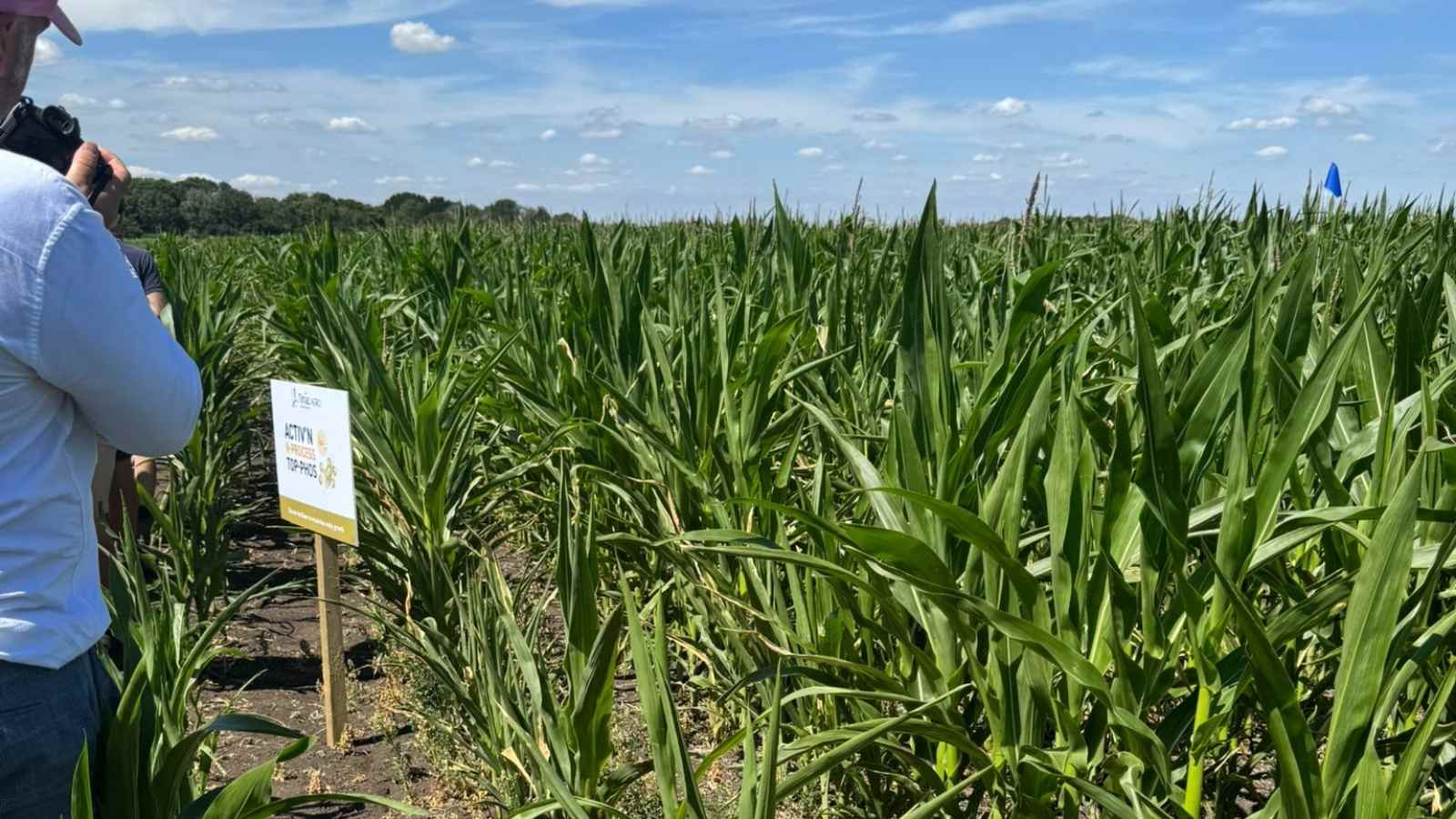
Around 50 percent of nitrogen (N) applied to crops is not taken up and can leach into the environment. Now sensors developed by PlentySense, a spinout from John Innes Centre, can measure the amount of nitrate taken up by the growing crop and the reserve available in the soil, thereby optimising fertiliser usage.
The first sensors are designed to measure nitrate, but Dr Yi Chen in the team of Professor Tony Miller, Chief Scientific Officer, is working on adjusting the sensor chemistry to quantity other nutrients, including potassium (K) and phosphate (P).
He says that the sensors give early actionable insights: “If aerial or satellite imaging used to measure the health of the crop indicates a yellowing of the leaves, then it is too late – yield has already been affected.
“Our sensors enable action to be taken that will ensure that the plant has the right amount of nutrition throughout the year without waste or yield penalty; this will have a huge financial and environmental benefit.”
Wednesday 8th November, 9:30 am – 6:30 pm Rowley Mile Conference Centre, Newmarket
Surviving and thriving under increasingly extreme and unpredictable challenges is the theme of the 2023 REAP conference. To build a productive, profitable and sustainable agri-food industry, we must move away from the comfort zone and become open to the new opportunities that exist when we ‘stretch’. Be a part of that future – bring yourself and your ideas to REAP.
Get the latest agri-tech news, events and opportunities direct to your inbox
Resurrect Bio – REAP 2023 Start-Up Showcase
Meet the Network
Agri-TechE
Resurrect Bio changes the code to unlock plant defences
Plants have a sophisticated immune system that has co-evolved as a defence against pathogens, but it may be lying inactive in many crop varieties. Now Resurrect Bio, a spinout from The Sainsbury Laboratory (TSL) in Norwich, has found a way to re-engineer the disease response mechanism in plants to restore resilience.
Speaking at Agri-TechE ’s REAP conference, Dr Cian Duggan, co-founder of Resurrect Bio, says: “Our research suggests there could be a multitude of resistance genes sitting in crop genomes that are suppressed by pathogens, and that we could potentially resurrect or otherwise improve. This intriguing possibility drove us to establish a spinout company.
“Essentially, we have resurrected resistance genes by bioengineering the helper receptor.
“And this doesn’t just apply to a specific gene; it can be implemented with a host of other resistance genes. This is a huge breakthrough and has potential to be a game-changer in plant protection.”
The initial targets are Soybean Cyst Nematode and Asian Soybean Rust which collectively cost the US more than $2Bn annually, Resurrect Bio is exploring how to re-engineer the disease response.
Wednesday 8th November, 9:30 am – 6:30 pm Rowley Mile Conference Centre, Newmarket
Surviving and thriving under increasingly extreme and unpredictable challenges is the theme of the 2023 REAP conference. To build a productive, profitable and sustainable agri-food industry, we must move away from the comfort zone and become open to the new opportunities that exist when we ‘stretch’. Be a part of that future – bring yourself and your ideas to REAP.
Get the latest agri-tech news, events and opportunities direct to your inbox
Agtelligence – REAP 2023 Start-Up Showcase
Meet the Network
Agri-TechE
Agtelligence to provide financial institutes with a ‘sustainability rating’ for arable land
Providing evidence of best environmental practice ‘when the computer decides’ is currently difficult to do for farmers. A new tool, ‘FarmScore’, from Agtelligence aims to distil this complexity into a simple score that can be used by banks, financial institutes, and funding agencies to quickly benchmark progress against sustainability metrics.
Nima Eskandari, Chief Executive Officer at Agtelligence, says:
“Many insurance companies currently reduce premiums for farms with additional security against theft; FarmScore would provide evidence of de-risking natural assets. We are currently in discussion with financial institutes about how they could better support farmers that have a good score. It could be a virtuous circle.”
Agtelligence was recently awarded funding through the UK Space Agency and will be showcasing FarmScore in the UK pavilion at COP28.
Wednesday 8th November, 9:30 am – 6:30 pm Rowley Mile Conference Centre, Newmarket
Surviving and thriving under increasingly extreme and unpredictable challenges is the theme of the 2023 REAP conference. To build a productive, profitable and sustainable agri-food industry, we must move away from the comfort zone and become open to the new opportunities that exist when we ‘stretch’. Be a part of that future – bring yourself and your ideas to REAP.
Get the latest agri-tech news, events and opportunities direct to your inbox
Autopickr – REAP 2023 Start-Up Showcase
Meet the Network
Agri-TechE
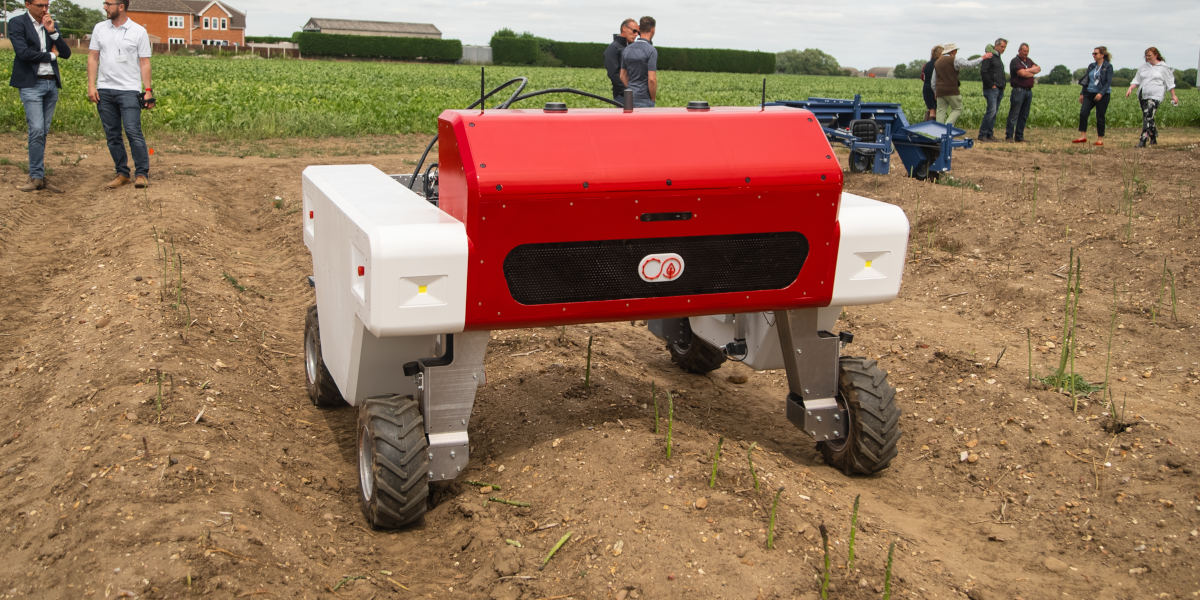
Autopickr presents Gus, its adaptable asparagus harvester, at REAP
“Shortage of labour is forcing smaller asparagus growers out of business, so they ask us three things: how much does our robot harvester cost, does it work and is it reliable?” explains Robyn Sands, Co-founder and CEO of Autopickr, the developer of Gus, an affordable, robust robot for field and undercover operations. Designed to solve a major challenge for the industry, it also offers potential to extend the harvesting season and shelf-life of this high-value crop.
Robyn is looking forward to meeting other agri-tech start-ups and potential end-users at REAP. She says: “We are very open to collaboration, as we have also designed a rugged, farm-proof and low-cost farm vehicle to carry our technology around – and this is attracting the interest of other early-stage companies. It would be possible to repurpose this technology for other equipment.
“We are always interested in feedback from end-users, particularly now as we approach a final commercial product, and of course meeting new investors is also useful as we are starting to prepare for our seed raise in February.”
Wednesday 8th November, 9:30 am – 6:30 pm Rowley Mile Conference Centre, Newmarket
Surviving and thriving under increasingly extreme and unpredictable challenges is the theme of the 2023 REAP conference. To build a productive, profitable and sustainable agri-food industry, we must move away from the comfort zone and become open to the new opportunities that exist when we ‘stretch’. Be a part of that future – bring yourself and your ideas to REAP.
Get the latest agri-tech news, events and opportunities direct to your inbox
REAP – farmers at the heart of innovation
Meet the Network
Agri-TechE
Farmers and growers play a crucial role in co-developing agri-tech solutions, and REAP provides a prime opportunity for their involvement. At REAP, farmers can engage with scientists to understand the practical value of their research, explore the latest innovations with tech developers, and share their valuable experiences. The day begins with the Farmers Breakfast and concludes with the Farmers Panel, ensuring their input is integral from start to finish.
Co-development of agri-tech
The farmers’ perspective is represented throughout REAP. The welcome is given by the chair of the Agri-TechE stakeholder group and it is no accident that he is a farmer. John Barrett, Director of Sentry Ltd, has managed Ditchingham Farms Estate in Norfolk for over 20 years, and introduced many innovations, most recently a robotic cultivator for root vegetables following a demonstration at REAP last year of Robotti. The driller and harvester is being co-developed by family-owned farm Frederick Hiam.
In a time of challenge, a good scientific understanding is vital. There will be an opportunity to discuss the agri-science strategy with Defra Chief Scientific Advisor Professor Gideon Henderson and livestock farmer David Exwood, and also to hear James Green, Group Director of Agriculture at G’s, ask scientists in The Emerging Agri-TechE session to explain “so why is this of importance to farmers?”
The Farmers Panel comes at the end of REAP to provide a summing up and discussion of the take-home messages. Farmers want actionable insights and this is the time to review what these may include.
The Farmers Panel this year includes:
Andrew Pitts – second-generation arable farmer working 2,000 acres in Northamptonshire. He hosts the Hutchinsons Helix Technology Development Farm at Whiston and has trialled soil and yield mapping to direct interventions and support a move to a more regenerative approach to farming.
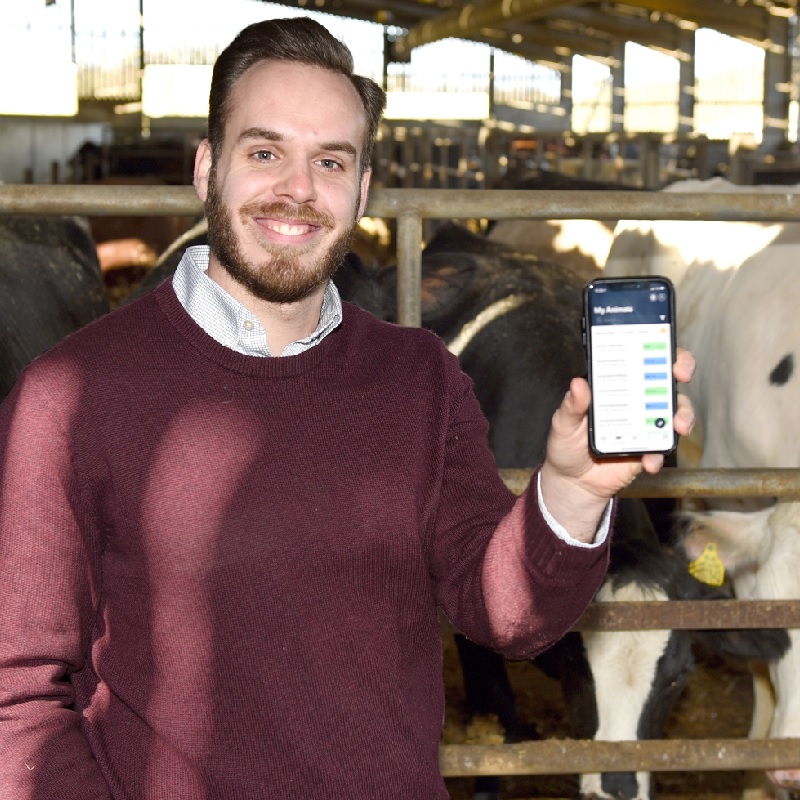
James Wright – first generation beef and sheep farmer based on Exmoor. His particular interest is precision livestock management and he is the UK Country Manager of Breedr, an app and online trading platform for beef.
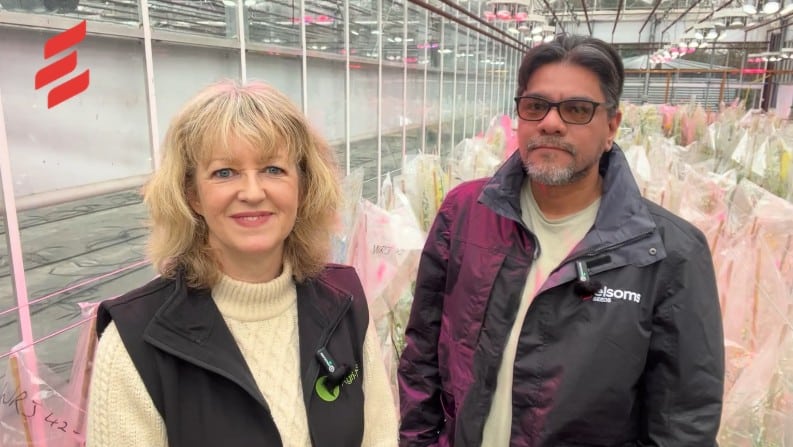
Heather Oldfield – mixed arable and beef farmer in Lincolnshire. The family farm grows a range of cereal crops, oil seed rape and legumes and Heather is using her wealth of knowledge within her roles as an appointee to the NFU combinable crops board and Elsoms Seeds Business Development Manager.
Tom Clarke – fourth generation Fenland farmer. He took over the farm unexpectedly in 2009 after a career in business consulting with Deloitte and Accenture and this has given him a fresh perspective on managing the farm. He is the AHDB Cereals and Oilseeds Sector Council Chair and a member of the NFU Net Zero steering group.
The Farmers Panel is chaired by Vicky Foster, CEO of BBRO (British Beet Research Organisation).
Wednesday 8th November, 9:30 am – 6:30 pm Rowley Mile Conference Centre, Newmarket
Surviving and thriving under increasingly extreme and unpredictable challenges is the theme of the 2023 REAP conference. To build a productive, profitable and sustainable agri-food industry, we must move away from the comfort zone and become open to the new opportunities that exist when we ‘stretch’. Be a part of that future – bring yourself and your ideas to REAP.
Get the latest agri-tech news, events and opportunities direct to your inbox
Improving storage of carrots and parsnips
Meet the Network
Agri-TechE
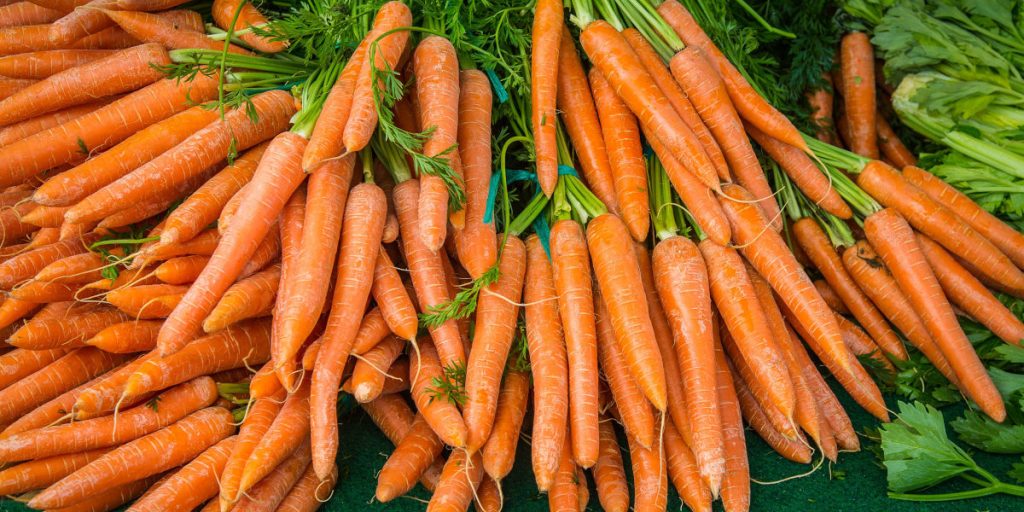
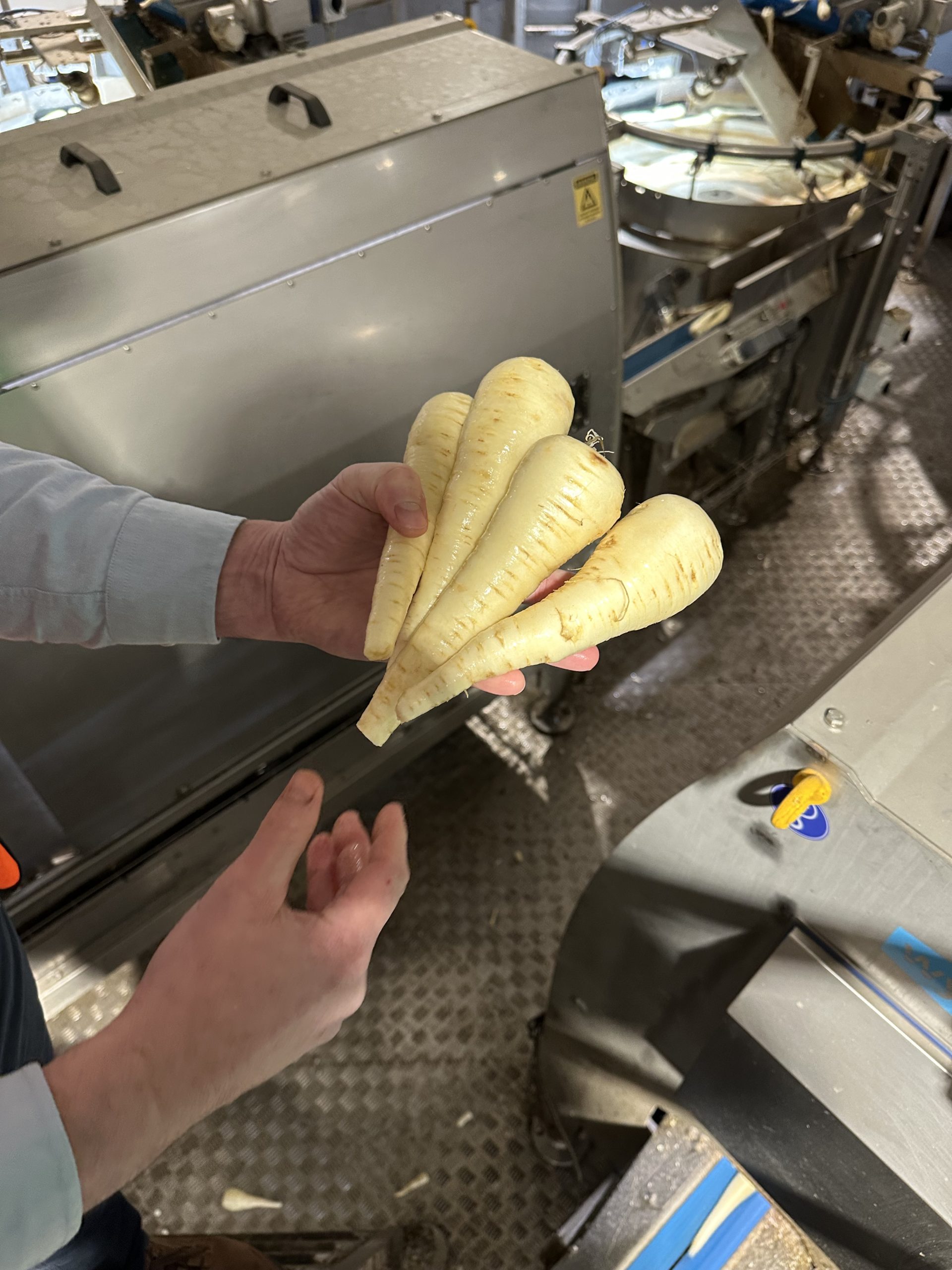
Improving the storage of carrots and parsnips post harvest would help maintain their nutritional value and increase the availability of vegetables grown in the UK over a longer period.
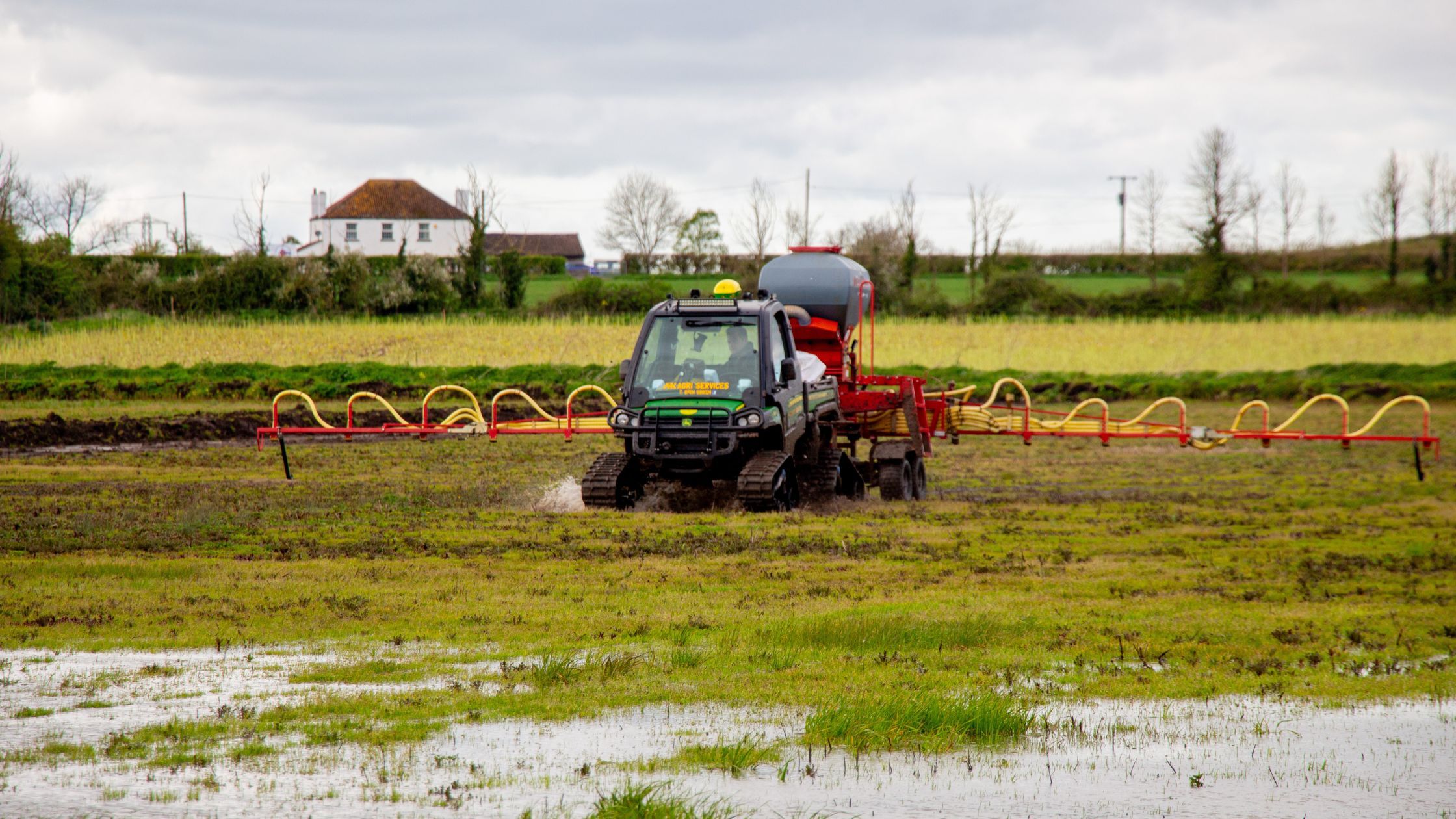
Currently, it is not unusual to store root vegetables in the field covered in a thick layer of straw to protect them from freezing.
James Fortune of VCS explains that this leads to wastage and loss of quality: “The root vegetables are left in the soil, which makes them vulnerable to soil-borne disease and pests and also damage from freezing.
“Harvesting is also problematic. The peak time for harvest is in the lead-up to Christmas but the soil can be too wet or frozen to get the crop out of the ground and this activity causes soil damage and compaction. Strawing is also very expensive and has a significant effect on the cost of production.
“The project will focus on investigating new post-harvest storage practices to remove and minimise the current need for in-field storage for carrots and parsnips. It will also explore technologies such as advanced sensors and software systems to monitor the crops throughout the supply-chain journey.”
Dr James A Fortune
Better Food for All: Innovation for Improved Nutrition
The project is funded by Innovate UK through the Better Food for All: Innovation for improved nutrition, early-stage competition. Other Agri-TechE members have also gained funding including Antler Bio.
The funding is aimed at enhancing food quality and includes:
innovative technologies and processes to improve the nutritional quality of foods and ingredients
functional foods: foods with specific health benefits
stratified nutrition: products aimed at particular demographics or groups
fortified and biofortified foods: including processed foods, convenience foods and raw materials produced at farm level
plant-based and alternative proteins: alternative protein sources for healthier and more sustainable diets, and processes that are accepted by consumers to incorporate these alternative protein sources into food products
preservation, packaging and storage technologies: to increase shelf life including for healthy convenient foods and nutritious perishable foods
Get the latest agri-tech news, events and opportunities direct to your inbox
Diageo sees positive impact of regen agriculture
Meet the Network
Agri-TechE
Climate-sensitive farming is an important element of Diageo’s sustainability planning. With 30 percent of its Scope 3 emissions coming from agriculture, the beverage company is introducing a number of ambitious regenerative agriculture programmes with its wheat and barley producers to improve resilience and reduce emissions.
Andy Griffiths, Head of Sustainable Procurement at Diageo, is a speaker on the REAP Supply Chain panel, and ahead of the conference we asked him about these projects.
Quantifying the impact of regenerative farming on soil carbon
The first phase of the Scottish programme will focus on approximately 20 farms in three key barley and wheat sourcing regions. It aims to support a reduction in scope 3 carbon-emissions as part of Diageo’s 10-year ESG action plan.
AgriCarbon will help Diageo build the baselines of how much carbon the soil currently holds and track soil carbon changes over time across both geographic contexts, while James Hutton Limited will investigate how regenerative farming practices can improve soil structure, biological activity and water retention rate.
Andy says: “We are still in the early stages of the project in Scotland, we are however leveraging the learnings from our Guinness programme in Ireland to inform this project and using one of our key technical partners, AgriCarbon, to build deeper insight into soil carbon levels and rates of change.
“Many of the GHG emissions benefits from regenerative agriculture come from aspects such as reduced fuel usage and chemical inputs. These can be assessed through farmer reporting and modelling,
“While practice based modelling can be a useful first step in determining soil carbon, we are working with AgriCarbon to conduct physical sampling and analysis of the fields involved.
“AgriCarbon’s solution is more cost efficient than traditional soil sampling and analysis, but there is still a need to further reduce costs and the invasive nature of sampling. This will help to scale farmer uptake and assess the performance of different regenerative agriculture interventions, more efficiently.
“Changes in soil carbon can take a number of years to measure confidently and credibly, the measurement processes we are using are enabling us to assess directional comparisons.
“Based on recent assessments, it would appear that the practices deployed by the farmers engaging in this programme are having a positive effect.”
Co-funding farmers to implement regen agriculture
Andy is also involved in the Landscape Enterprise Networks (LENS) model. Its focus is to enable organisations with a dependency on a landscape, to collaborate with farmers and land managers and co-fund regenerative agriculture interventions.
This will support landscape transformation, and is not limited to organisations within the agri-food chain. Others – such as the leisure and hospitality sector – who have a dependency on the landscape, will also be able to collaborate.
He explains: “The LENS model is outcome focussed. It puts farmers, land managers and communities at the centre of decision making, enabling them to identify what they need in order to deliver the outcomes identified by the funders.
“By creating a ‘green commerce’ model, LENS enables funds to flow into and within the landscape and associated communities.
“This approach enables organisations to address the dependencies and impacts they have within their value chains (insetting / within value chain mitigation), in an efficient and scalable manner.
“The East of England programme is a great example of LENs in action and is continuing to grow in scale and impact, providing insights from which the other LENs programmes can leverage.”
Wednesday 8th November, 9:30 am – 6:30 pm Rowley Mile Conference Centre, Newmarket
Surviving and thriving under increasingly extreme and unpredictable challenges is the theme of the 2023 REAP conference. To build a productive, profitable and sustainable agri-food industry, we must move away from the comfort zone and become open to the new opportunities that exist when we ‘stretch’. Be a part of that future – bring yourself and your ideas to REAP.
Get the latest agri-tech news, events and opportunities direct to your inbox
Influence of nature and nurture – Antler Bio provides insights
Meet the Network
Agri-TechE
Subclinical signs of stress are difficult to detect but the new platform EPIHERD, developed by Antler Bio, is harnessing gene expression data to reveal the impact of nature and nurture on the status of the herd. Farmers are given advice on targeted interventions.
Maria Jensen, CEO of Cambridge-based Antler Bio, says that results from its recent collaborative research project have exceeded expectations.
“Using EPIHERD we are able to do a deep dive to investigate, for example, why genetically similar individuals in the herd have lower milk yield, and to report this back to farmers so they can take action.”
The company was recently awarded follow on funding from the Innovate UK Better Food for All.
Benefiting from the Agri-TechE ecosystem
After presenting in the REAP 2022 Start-up Showcase, Antler Bio joined Agri-TechE . The membership organisation supports innovation in agricultural technologies, and Maria was keen to benefit from the network.
Director Dr Belinda Clarke comments that Antler Bio is a welcome addition to the innovation ecosystem.
She says: “Changing climate patterns are making our crops and livestock vulnerable to new strains of disease and to a shortage of resources – such as water.
“Identifying stress at an early stage can help improve livestock performance in suboptimal environments. Antler Bio’s technology answers a key question in animal welfare and provides insights for pragmatic interventions.”
Maria Jensen of Antler Bio
Impact of nature and nurture – Antler Bio can give the answer
Cows with the same genetics may perform very differently to one another; this means that gene expression may be influenced by environmental factors.
Maria says: “By measuring which genes are actually active in an animal, and their level of activity, we can bridge the existing data gap between the animal’s DNA and its performance.
“Our project aimed to understand the gene expression profiles between top and underperforming dairy cattle. We have succeeded in identifying novel biomarkers that are linked to productivity, and these are being patented. We have also developed a highly sophisticated data analysis and validation methodology and have built this into our EPIHERD reporting platform.
“By understanding events that promote desirable or undesirable gene expression we can give precision recommendations regarding habitat, animal husbandry and feed in order to unlock the herd’s full potential and support herd health in a natural way.”
Signatures that indicate dehydration
Maria gives an example of one herd where they were able to determine that the significant difference between high and low performing individuals were signatures of dehydration between these groups.
“When we presented this to the farmer, he thought it was most likely due to the combination of herd dynamics and the positioning of the water troughs. He immediately bought a water unit and installed it at a strategic spot, enabling better water access to the high-potential but submissive animals.
“The data from another herd revealed a need for omega-3 fatty acids and choline, which previously had gone unnoticed even though they conduct routine analysis on the forage with nutritional experts. This farm started supplementing the herd and have reported an increase in milk yield ever since.
“Another example was a farm where herd data indicated that the cows were stressed due to suboptimal hygiene conditions in the barn. Although the animals were healthy and unaffected on a visible level, our data showed that they were constantly diverting energy that could be used for milk production towards counteracting infections. Through simple hygiene improvements the farm was able to increase milk yield.
“These few examples highlight the power and the potential of the data that we bring to the farmers’ fingertips.”
Creating opportunities from challenge at REAP 2023
The theme of the 2023 Agri-TechE REAP Conference is ‘Adaptation Through Innovation; Beyond the Comfort Zone’ and it will explore strategies for creating opportunity from challenge. It includes a carefully curated Start-Up Showcase of early growth companies with promising technologies.
Antler Bio presented last year and Maria reports that since then they have been delighted with the response from farmers to their decision support platform.
The company has since attracted further funding. Antler Bio is building towards a seed round, has recently closed a bridging funding round with the Nest Family Office, and secured a Women TechEU award from the European Commission.
The Start-Up Showcase at REAP has provided profile for many exciting early-stage businesses with collaborators, end-users, and investors – here we ask some: where are they now? This year’s line-up is being kept under wraps until the conference on 8th November 2023.
Wednesday 8th November, 9:30 am – 6:30 pm Rowley Mile Conference Centre, Newmarket
Surviving and thriving under increasingly extreme and unpredictable challenges is the theme of the 2023 REAP conference. To build a productive, profitable and sustainable agri-food industry, we must move away from the comfort zone and become open to the new opportunities that exist when we ‘stretch’. Be a part of that future – bring yourself and your ideas to REAP.
Get the latest agri-tech news, events and opportunities direct to your inbox
Explore the exhibition at REAP 2023
Meet the Network
Agri-TechE
Agri-tech to support the journey to Net Zero is included in the REAP 2023 exhibition, which is an integral part of the Conference. It features technology and research demonstrations from across the agri-tech ecosystem.
ADAS – agricultural R&D and consultancy
Decision support systems to improve yield, nutrition efficiency and pest management
The Yield Enhancement Network (YEN) was initially focused on increasing crop yields, but now it addresses issues such as nutritional efficiency (YEN Nutrition) and carbon intensity (YEN Zero). YEN enables members to share quantitative field-specific intelligence anonymously. This enables benchmarking against grain yield or soil health, for example, and to use this information to help inform enhancements.
ADAS will be showcasing FarmPEP, a knowledge exchange Performance Enhancement Platform that aims to connect people, organisations, projects and resources to enable knowledge across farming to be shared, found, discussed, distilled and developed; YEN and also IPM Decisions, an online platform which assesses risks from diseases and invertebrate pests. IPM Decisions uses weather and farm-specific crop information to assess the likelihood of crop damage and the need for protection or treatment.
Decarbonise and support food businesses in meeting net zero targets
Almost 50% of food emissions occur within the farm gate but the lack of engaging financial incentives means 75% farmers aren’t actively reducing their carbon footprint, resulting in insufficient low carbon produce for food businesses to hit imminent net zero targets.
Agrasta’s online marketplace (think eBay) connects food businesses who want to reduce their carbon footprint to farmers looking to capitalise on their low carbon produce. We broker farmer/food business connections and provide a price discovery service using a radically simpler approach than carbon credits: a precise carbon intensity figure to enable decarbonisation without greenwashing.
Our platform introduces transparency, trust and fun in a traditionally abstract and confusing market. Agrasta leverages the latest technology to enable optimal carbon footprinting, maximum yield-to-carbon revenue and a tailored roadmap highlighting the most effective carbon reduction initiatives. Gamification drives farmers to outperform their peer group. We will demo our marketplace app and our conceptual model of carbon intensity. We will also discuss leveraging cloud-based data pipelines, remote sensing, satellite imagery and even eco-acoustics.
Whether you’re an innovator in the AgriFood space seeking specialists to join your organisation (or simply in need of some advice on where to start!), or an individual looking for your next career move in this arena, AgRecruit would love to hear from you.
AgRecruit will be joined by Pondus, high tech technology for automating, scaling the monitoring and measurement of poultry for better welfare and better returns. Created by farmers for farmers.
Aponic International Ltd – vertical farming systems
Aeroponic vertical farming for sustainable diversification
Aponic has developed an aeroponic, vertical farming system that uses 90% less water and 30% greater yield than traditional growing systems and has been optimised to reduce power usage.
The company is aimed at diversifying farmers and can convert unused barn space into fully Controlled Environments for 365 food/pharmaceutical production providing full time jobs for local people rather than relying on seasonal labour and sporadic income.
Transforming Farm Waste into Energy and Fertilizer with the BioNomad™
The BioNomad™ is an innovative micro-scale solution that empowers smaller livestock farmers to maximise the value of their own livestock wastes by turning them into valuable resources.
Developed around a core anaerobic digestion process, the BioNomad™ enables farmers to capture and extract valuable biogas from slurry/manure, which can then power a range of proprietary biogas equipment to generate clean renewable electricity and heat. At the same time, the liquid slurry is transformed into a high-quality biofertiliser that can be used to enrich compost heaps, enhance soil health, and improve crop yields.
Understanding the unique challenges faced by small and medium-sized livestock farms, EcoNomad Solutions has designed the BioNomad™ to be user-friendly and cost-effective, as well as scalable to adapt to the changing needs of the farm. EcoNomad Solutions is currently developing a number of BioNomad™ commercial pilot sites across the UK, ahead of a targeted commercial launch in 2024.
Cambridge Consultants – product and service development
Carbon monitoring and nutrient measuring
Cambridge Consultants will be discussing how they work with agritech clients to embrace and scale regenerative agriculture practices, accurately measure soil carbon and nutrient levels, and unlock the environmental benefits of biologicals in a cost-effective manner.
Cambridge Consultants develops breakthrough products & services and provides strategic advice in technology-critical issues for clients worldwide. For more than 60 years, the company has been helping its clients turn opportunities into commercial successes, delivering world firsts in multiple industry sectors. With a team of more than 800+ staff, including engineers, scientists, mathematicians, biologists and designers, in offices in Cambridge (UK), Boston (USA), Tokyo and Singapore, Cambridge Consultants utilises its deep tech expertise to help ambitious companies deliver on the promises of tomorrow’s technology.
Drone Ag – drone experts offering training and software solutions
Use of drones for automated data collection and actionable insights
Skippy Scout is an app that automates leaf-level crop data collection using drones and interprets it using AI, and it does it in real-time.
One application of Skippy Scout is to optimise yields of Oil Seed Rape. The automated drone flight collates data and generates a report that includes a Green Area Index (GAI) measurement, this can enable targeting certain areas of the crop with fungicides and plant growth regulators.
The company’s aim is to develop automated drones to guide machinery and sprayers to target specific areas of fields at exactly the right time.
Using computational science, genomics, and data-driven approaches to answer complex biological questions
The Earlham Institute is a research centre on Norwich Research Park. Working with a range of stakeholders, EI’s expertise address major agri-tech challenges, helping to build a more productive, profitable and sustainable agri-food industry.
Accelerating crop breeding. Our research and tools help identify the genetic basis of key traits including disease and environmental resilience, and genetic resources for major agricultural crops. Using innovative genomic techniques and bespoke computational pipelines, automation and data management, we are accelerating trait screening for breeding, and tackling complex polygenic traits.
Combatting pathogens. Pathogen resistance poses an enormous threat to agriculture. EI is developing innovative approaches and technologies for early detection in field or controlled environments, or in water and soil. Our expertise can help understand evolution of pathogens in order to predict future threats, develop targeted treatments or direct breeding efforts.
Supporting biodiversity. Biodiversity losses through pollinator declines and monocultured wildflowers have wide ranging impacts on agricultural productivity. Capturing a snapshot of biodiversity status or applying population genetics allows EI to assess population health at the genetic level, to aid conservation efforts and support development of safer agrichemicals.
Rebalancing the microbiome to improve health without antibiotics
Improving gut health in animal production could significantly boost wellbeing and productivity. FOLIUM Science has developed Guided Biotics® a technology that makes pathogenic bacteria less aggressive and restoring the balance in the microbiome.
The company has recently gained Innovate UK funding to tackle the bacteria responsible for excessive ammonia production in the poultry house. The plan for the future is to support the bird’s metabolism to become more efficient at repurposing this nitrogen into protein.
FOLIUM Science is to announce its latest project, a rapid lateral flow test for Salmonella, at REAP.
Gardin – optimising photosynthesis to boost yields
Improving the economics of indoor farming
Detecting changes in the rate of photosynthesis can give a fast indication of the plant physiological state. This enables optimisation of water, light, temperature and nutrient levels to boost yield.
Gardin has developed an optical phenotyping sensor, a low-cost device that gives the grower timely recommendations for action.
During a research project funded by InnovateUK, Gardin’s team of scientists were able to use their technology to increase annual yields in an indoor farm by 30-40% for three species of leafy greens; basil, lettuce and pak choi.
LGC Genomics will be discussing how farmers can use their technology to determine which of the varieties they are growing are more resilient to local conditions. Also how its services can accelerate breeding programmes for breeders of all sizes.
The company offers KASP genotyping and Next Generation Sequencing Services for Marker Assisted Selection and disease resistance and climate change resilience.
The Lincoln Institute for Agri-Food Technology (LIAT) based at the University’s Riseholme Campus is home to a working farm with specialist research facilities. LIAT’s multi-disciplinary team brings together sector-leading expertise in a diverse range of areas such as; AI, robotics, engineering, crop science, environmental sustainability, food manufacturing, product development and supply chains. Our goals include supporting and enhancing the future of food and agriculture productivity, efficiency, and sustainability through research, education, and technology.
The LIAT team will be showcasing LINCAM. LINCAM will build on the success of their Ceres Agri-TechE programme that provides translational funding and commercialisation expertise to drive agri-tech innovation by accelerating high-quality research to market. It has launched four agri-tech spin-out companies to date and created 13 licensing opportunities.
The Universities of Lincoln and Cambridge working with Ceres Agri-Tech, a collaborative initiative by Cambridge Enterprise, have been awarded a £4.9 million grant from the Engineering and Physical Sciences Research Council (EPSRC) to help fund their drive to make the Lincolnshire and north Cambridgeshire (LINCAM) region a global innovation centre for agricultural technology (agri-tech).
Cloud based farm management software to help fresh produce growers manage all aspects of their business. Includes: land mapping, seed and chemical stocks, planting and forecasting, cultivation and field records, harvest and labour costs, machine maintenance, health and safety checks plus time and attendance.
Norfolk FWAG is a not-for-profit organisation which provides conservation advice to landowners. It is led by an experienced board of directors, comprised mainly of Norfolk farmers. Norfolk FWAG offers a range of membership options to different organisations to support important conservation work. At REAP, it will be showcasing how Norfolk FWAG performs carbon audits and habitat baseline audits which will prove to be extremely useful for farmers and landowners wishing to transition to net zero, as well as benefit from the Biodiversity Net Gain scheme.
Independent electronics manufacturing from design to assembly
Working with a network of suppliers we match the build requirement to the factory and manage the whole process for you but with full transparency. With capabilities ranging from rapid prototyping through to NPI and volume production, but without the constraint of having to use just one factory. Why limit your choice. One point of contact giving access to multiple suppliers.
NanoES Benefits include: Rapid Prototyping, 12 UK Factories, 18 SMT Lines, 3D AOI & XRAY, Solder Jet Printing & Vapour Phase Reflow, PTH with auto insert, Conformal Coating & Potting, IPC Class 3 & ISO13485, Electronics design, including PCB layout, Small volume through to high volume capability, Full box build capability, No middleman fees, Sensible quote turnaround (typically 48 hours).
Also representing Flusso for small form factor air sensors, and the Blues for easy development of IoT solutions.
PES Technologies have developed a unique in-field soil health measurement tool that provides results direct to your mobile phone in 5 minutes. The tool provides 14 key indicators of soil health by analysing the Volatile Organic Compounds given off by the biological life in the soil. These indicators include biological (microbial biomass, % organic matter, respiration), Chemical (Available Phosporus, available Potassium, available magnesium, pH, Extractable ammonium, Extractable Nitrate) and Physical (Water holding capacity, Field water content, texture).
The tool enables decisions when it matters, in-field at the time of testing. All readings are GPS located and time stamped making the tool perfect for tracking change in the soils characteristics.
Agrecalc is a carbon footprint tool developed by combining the on-farm practical expertise of SAC Consulting with world-class agricultural science and research of SRUC. The advantages of Agrecalc farm carbon calculator are:
The ability to calculate carbon footprint for the whole farm, per enterprise and per kilo of product.
The ability to benchmark against thousands of customer datasets.
It helps understand mitigation options and areas for improvement.
Agrecalc is on a mission to support the transition to sustainable agriculture, whilst helping maintain and increase efficiency and business viability of food production.
The platform focuses on a visually guided robotic system that specializes in repetitive and predictable pick-and-place operations, with a primary application in the food packing industry.
Bio-inspired robotics – University of Cambridge Robotics Group / Agriforward CDT
There are only a few exhibition spaces remaining. To become a part of the Technology exhibition at REAP Conference 2023, please fill out a brief application form on the Exhibitor tab of reapconference.co.uk website.
Post Overview
17th October 2023
Agri-TechE
Agri-TechE Article
Business Support
Share this Page:
Related Posts
Goodley Farm Services, your partner on the regen journey
Get the latest agri-tech news, events and opportunities direct to your inbox
REAPing the benefits of supply chain insights
Meet the Network
Agri-TechE
Unpredictable disruptions have challenged the agri-food chain over recent months, but it has shown amazing resilience. The Supply Chain panel at REAP 2023 will hear how AM Fresh Group, Diageo and Tesco are applying innovation to help mitigate climate related risk and improve sustainability. This will include a discussion of the opportunities being created for producers and agri-tech to support them.
New legislation – Task Force on Climate-related Financial Disclosures – has come into effect this year, and that is driving the journey to Net Zero from the top of the supply chain. This global move towards sustainability is evident from projects initiated by the speakers on the panel, with reporting on their websites aligned to the requirements of TCFD.
The Supply Chain Panel at REAP 2023
Naomi Pendleton Group Sustainability Director at AM Fresh Group
AM Fresh Group is an international organisation that works with partners across a vertically-integrated supply chain specialising in citrus, table grapes, tropical fruits and superfoods.
The company uses the best traditional breeding practices with advanced biotechnology to develop new varieties of grapes, citrus and other high value fruits. It has a portfolio of patented varieties and supports a programme of continuous innovation supported by customer insights.
The company has a successful program to reduce waste in its citrus chain and Naomi reported on a pilot project with black soldier flies at an Agri-TechE meeting. Naomi says: “Between our two fresh produce manufacturing sites, we generate 5000 tonnes of food waste each year, which represents approximately 1.6% of our throughput. We started our relationship with AgriGrub in 2019 at their pilot site in Hasse Fen with a mission to be zero food waste by 2025.”
Andy Griffiths Head of Sustainable Procurement at Diageo
Diageo is a global leader in beverage alcohol with a collection of brands across spirits and beer including Johnnie Walker, Smirnoff, Baileys, Captain Morgan, Tanqueray, and Guinness.
Like many organisations, Scope 3 makes up a high proportion of the total emissions for Diageo. These come in part from the production and processing of their raw materials, such as barley, wheat, rye and dairy, and contribute almost a third of Diageo’s total value chain footprint.
Through its ‘Grain to Glass’ sustainability programme, the company is taking action to mitigate climate related risks in a data-led and systemic way. It is supporting farmers to transition to regenerative agriculture and to improve the resilience of farmers’ livelihoods to climate change. The aim is to use the analysis to identify opportunities for improvement on-farm, so the company can focus efforts where it will make the biggest positive impact.
One of these projects is in Ireland which aims to reduce carbon emissions of barley used to brew Guinness. Another is a collaboration with growers in Scotland to gather on-farm data, which together with satellite imagery and AI-informed predictive analytics, will improve baseline carbon footprint data and provide insights into other on-farm environmental metrics.
Peter Illman Sustainable Agriculture Manager at Tesco
Peter takes responsibility for delivery of the sustainable agriculture strategy within fresh produce, and has led the UK’s largest-ever commercial rollout of low-carbon fertiliser, which has won high praise from the industry.
Tesco has made a commitment to halve the environmental impact of the average shopping basket by 2030. Peter comments: “Part of our responsibility to consumers is that by adapting, learning and investing, we aim to guarantee both a secure supply of affordable, fresh food, and a healthy, thriving food system.
Following the success of its pilot, the company has recently announced that it will extend its trial of eight market-ready low-carbon fertilisers manufactured from food waste, chicken litter and algae. The aim was to determine the most eco-friendly and cost-effective alternatives to conventional fertiliser. Initial results found the alternatives were just as effective as conventional fertilisers while slashing emissions by up to 50%, with no extra cost to farmers.
The session will be chaired by:
Jon Williams Public and Governmental Affairs Manager – Agricultural Solutions, UK and Ireland at BASF
As a leading company in the crop protection industry, BASF has a broad portfolio of fungicides, insecticides, herbicides, seed treatments and pest control products. In addition, it also provides biological crop protection products and solutions for improving plant health as well as nutrient management in the soil.
BASF is currently running a number of trials with farmers to investigate ways to optimise nutrient use in the field and to measure and monitor environmental variables.
Wednesday 8th November, 9:30 am – 6:30 pm Rowley Mile Conference Centre, Newmarket
Surviving and thriving under increasingly extreme and unpredictable challenges is the theme of the 2023 REAP conference. To build a productive, profitable and sustainable agri-food industry, we must move away from the comfort zone and become open to the new opportunities that exist when we ‘stretch’. Be a part of that future – bring yourself and your ideas to REAP.
Get the latest agri-tech news, events and opportunities direct to your inbox
How accessing science is accelerating innovation at G’s
Agri-TechE Article
Meet the Network
Agri-TechE
Investing in a network of connections is the way that G’s is accessing science, explains James Green, the Group Director of Agriculture.
James is chairing the Emerging Agri-TechE session at REAP 2023, when he will be having a series of short chats with some of the UK’s leading agricultural researchers.
Science relevant to G’s
James explains the importance of science to his farming business: “The connections we seek out are those that broadly fit with what we are trying to achieve on-farm – such as regenerative agriculture, improving the soil microbiome, smart water management, better crop prediction, automation – but we also want to keep an open mind, because we are looking for fresh thinking and you don’t know what will come from left field that may be useful and perhaps disruptive.
James Green, Group Director of Agriculture for G’s
“Not every meeting will lead somewhere, but someone from outside the business will have different perspectives that are of interest.”
Importance of the innovation ecosystem
James continues: “We keep in touch with the academic community, talk to consultants and other businesses, and participate in networking organisations like Agri-TechE and grower association R&D panels.”
It was at an Agri-TechE meeting that G’s met Microsoft – and this developed into a project that now enables an accurate forecast of when a crop of iceberg lettuces is ready to harvest and signal the potential opportunity for interventions to speed up maturity if required. This led onto the use of ‘eye in the sky’ technology first to count the heads, and this year to plant-by-plant nutrition to increase consistency in the crop, thereby saving resources and improving quality.
James continues, “It is particularly important for G’s to network and share resources, because the type of equipment we need is specialised. Not many organisations need a harvester designed to pick Romaine lettuces, so we need to look internationally and work with other partners to spread the costs of innovation.”
Agri-TechE members lettuce harvesting at G’s during a members’ event
Accessing science through dialogue
In-house, G’s has dedicated teams focussed on agronomy R&D, digital ag and data science. It has a future farming team spearheading its move into regenerative agriculture, that is actively talking to experts researching ways to improve soil health.
James continues: “As we move to low input regen farming then the crop varieties, we are using haven’t been bred for that. However, it could be that there is genetic material out there that has been bypassed, and that would be well-suited to exploiting a more natural soil environment. We are starting to have these types of conversations with seed breeders and academics, who are exploring the potential of self-fertilising crops.”
“Our mantra is to produce more with less – less fuel, less fertiliser, fewer chemicals, less water – even to the extent of using no artificial fertilisers or no chemicals, which is really where we’d like to be in a few years’ time.
“We think that’s feasible, although we don’t yet know exactly how in all areas, which is where the science comes in.
Emerging Agri-TechE Session at REAP 2023
At REAP 2023 James will be asking the ‘so what?’ question to which farmers in the room would want to know the answer, to scientists including:
Dr Richard Green Harper Adams University:Grasslands
Dr Jolanda van Munster SRUC:Livestock
Dr Ewan Gage Cranfield University:Vegetable Nutrition
Dr Jacqueline Stroud University of Warwick: Soil
Jonathan Ashworth Earlham Institute:Biodiversity
Dr Myriam Charpentier John Innes Centre:Crop Traits
Dr David Withall Rothamsted Research:Insects
Dr Ali Kafash Hoshiar University of Essex:Soft Robotics
“I am really looking forward to chairing this session at REAP and hearing about what is coming over the horizon,” he concludes.
Wednesday 8th November, 9:30 am – 6:30 pm Rowley Mile Conference Centre, Newmarket
Surviving and thriving under increasingly extreme and unpredictable challenges is the theme of the 2023 REAP conference. To build a productive, profitable and sustainable agri-food industry, we must move away from the comfort zone and become open to the new opportunities that exist when we ‘stretch’. Be a part of that future – bring yourself and your ideas to REAP.
Get the latest agri-tech news, events and opportunities direct to your inbox
FOLIUM Science using Guided Biotics to reduce ammonia in poultry production
Meet the Network
Agri-TechE
Improving gut health in animal production could significantly boost wellbeing and productivity, according to Ed Fuchs, co-founder of FOLIUM Science. The company has won funding from Innovate UK to extend the application of its Guided Biotics® platform technology to tackle the bacteria responsible for excessive ammonia production in the poultry house. It is the latest in a series of initiatives from FOLIUM Science to tackle major challenges in animal production.
Announcing at REAP 2024
FOLIUM Science will be announcing a new development at the Agri-TechE REAP conference ‘Adaptation Through Innovation; Beyond the Comfort Zone’. The conference will explore strategies for creating opportunity from challenge.
Agri-TechE is a membership organisation that supports innovation in agricultural technologies. Director Dr Belinda Clarke comments: “FOLIUM Science’s approach is a good example of agri-tech that addresses an unmet need and will quickly provide a return on investment”.
Ed Fuchs says that gut health is key to performance: “Research has shown that even a short exposure to high concentrations of ammonia is harmful, and this gas is produced by enzymes from bacteria residing in the guts of the animals. Our platform technology can modulate the microbiome to reduce ammonia production and improve animal health”.
The company will be exhibiting at REAP 2023.
Ed Fuchs, FOLIUM Science
Reducing ammonia in poultry production
Ammonia in poultry houses is a major challenge. Unused nitrogen in the feed is converted to ammonia by bacteria in the gut. Many of these bacteria – Helicobacter, Staphylococcus, Klebsiella – also cause disease in both poultry and humans. FOLIUM Science’s technology is able to selectively target and silence the genes involved in ammonia generation in these bacteria, weakening them so they are less able to colonise the gut and compete with beneficial bacteria in the microbiome.
Ed explains that, critically, the Guided Biotics process does not remove the bacteria: “Our technology is making these bacteria less aggressive, restoring the balance in the microbiome, and reducing the amount of ammonia produced. The plan for the future is to support the bird’s metabolism in becoming more efficient at repurposing this nitrogen into protein.”
Protecting chicks from Salmonella
FOLIUM Science has already produced a feed additive that will protect young chicks against common bacterial infections such as Salmonella and E. coli. This was announced at the Agri-TechE REAP conference in 2018 and is to be launched in Brazil next year. It offers highly specific, targeted antimicrobial effects, with none of the bad side effects of an antibiotic. It also has probiotic properties.
FOLIUM Science’s Guided Biotics, based on CRISPR-Cas technology, has received endorsement from the Brazilian National BioSafety Committee (CTNBio) as a non-GM ‘new-breeding technique’, which is supporting the commercialisation of the company’s first product.
CRISPR-Cas is a defence system that has evolved in bacteria to protect them against invading viruses. FOLIUM Science is harnessing this natural system to manage and modulate bacteria in the microbiome.
Ed is keen for the UK to adopt a similar approach to Brazil, saying it will accelerate the development of new types of solutions.
“We have demonstrated that our Guided Biotics technology can have multiple benefits in the control of disease and improving performance in the poultry industry. We would encourage regulators to give overarching approval for the technology platform – the process we are deploying – rather than each output needing separate approvals as it does currently, as this would enable the rapid production of the products that the industry and the environment urgently need.”
Ed Fuchs, FOLIUM Science, presenting in the Start-Up Showcase at REAP 2018
To announce at REAP: rapid lateral flow test for Salmonella
FOLIUM Science is to announce its latest project developing new applications of its CRIPSR-Cas portfolio, a rapid lateral flow test for Salmonella, at the Agri-TechE REAP conference on 8th November 2023. Find out more about the REAP 2023 exhibition at reapconference.co.uk.
Wednesday 8th November, 9:30 am – 6:30 pm Rowley Mile Conference Centre, Newmarket Surviving and thriving under increasingly extreme and unpredictable challenges is the theme of the 2023 REAP conference. To build a productive, profitable and sustainable agri-food industry, we must move away from the comfort zone and become open to the new opportunities that exist when we ‘stretch’. Be a part of that future – bring yourself and your ideas to REAP.

 Agri-TechE




















 Agri-TechE