Inspirational thinkers share their views of different aspects of agri-tech.
Agri-TechE Newsletter
Get the latest agri-tech news, events and opportunities direct to your inbox
How to get quality and quantity year after year
Meet the Network
Agri-TechE
What were your results like this year? Could you do better? Getting higher quality and quantity from the crop with more strategic use of inputs is one of the benefits of precision farming and a number of the most promising developments in this area are going to be presented at our next event, co-hosted by Niab: ‘Innovations for Sustainable Intensification’.
We asked Stuart Knight, Deputy Director of Niab, about the progress that is being made by the SIP (Sustainable Intensification Platform) Project 1, a research programme funded by Defra and the Welsh Government.
He explains that the aim of SIP is to provide practical advice for farmers by bringing together a multi-disciplinary community spanning academia, industry, environment and policy to look at the issues from many angles.
Alternative cultivation
We have been evaluating a range of farm management practices which could be adopted more widely. For arable, this includes over-winter cover crops, less intensive cultivation systems and using organic wastes as fertilisers. For livestock we have been evaluating reseeding of permanent pasture with high sugar grasses, improving grassland soils and grazing systems.
Improving soil fertility through selection of the most appropriate cultivation technique is a good example of how yields can be improved, environment impacts reduced and resilience to climate change increased. We are looking for these win-win scenarios and capturing the knowledge effectively.
The project has developed new approaches to measuring the environmental as well as the economic performance of farms, without requiring large amounts of new data to be collected. Work on the different study farms is ongoing, and has already demonstrated the potential for changed farming practices to help deliver SI. The results should provide growers and advisers with additional information and tools to help meet the challenges and make the most of the opportunities of sustainable intensification.
Farm profitability
Sustainable intensification is all about trying to improve farm profitability and environmental performance at the same time. Efficiency is key to both current profitability and minimising emissions to air or losses to water. Enhancing the soil and biodiversity are important environmental objectives but can also contribute to improvements in future productivity and resilience.
Stuart will be talking at ‘Innovations for Sustainable Intensification’; find out more here.
Get the latest agri-tech news, events and opportunities direct to your inbox
How does this agri-tech revolution affect me in the Fens?
Meet the Network
Agri-TechE
“I’m not a great mover in those kinds of circles,” says William Martin, referring to his fellow presenters at the upcoming Agri-TechE REAP Conference on 9 November, with the theme ‘Innovation for an Agricultural Revolution’. “I’m a fairly classic example of somebody who can understand the techniques of precision farming and everything else, but has yet to fully understand how the applications are going to deliver financial rewards in my business.”
William is set to bring a farmer’s perspective to REAP’s Sofa Session (‘Towards a New Agroeconomy’) at the Wellcome Genome Campus Conference Centre in Cambridge. He farms a 1,000-acre family farm in Cambridgeshire, growing combinable crops and sugar beet.
William is chairman of the NFU Sugar Board, which represents the commercial and political interests of over 3000 sugar beet growers in the UK. William explained that sugar beet farmers have been keen to adopt new practices and are open to innovation but that the small profit margins mean that new developments need to be de-risked by other sectors first.
Farmers are facing a challenge when it comes to soil management. Our soil oxidised several years ago; although we are now farming a fairly stable soil, it is not as versatile or forgiving as it once was and the cropping system that we operate seems to be putting a strain on the soil. This raises many questions – is it about different techniques with the same kind of crops, or is it that the cropping we are doing is no longer appropriate? And how much of that is about how much the soil has changed and how much the weather has changed?
I think that some of what is written in the press often infers, ‘if you’d just listen for a moment you’d see the error of your ways’, but it’s not quite as simple as that. This language can put farmers’ backs up and make them less receptive to thinking about change. Sympathetic messaging is important; soil is our most precious asset and we would never do anything wilfully detrimental to its health.
Research paying back in sugar beet
Image: nfuonline.com
As for growing sugar beet, there has been a culture change in what we are aspiring to do on the farm.
I think that research is paying back for sugar beet and has improved its resilience as a crop. If you look at yield curve, numbers have continued to increase for sugar beet at a consistent rate over the last 10 to 20 years, whereas other crops have plateaued. This is because there has been a continued investment in sugar beet and a rapid uptake of the research results. This has delivered stronger results than we have seen in other crops.
There has also been quite a sharp focus for on-farm applied research, looking at quite basic technical matters. For example in the past when harvesting we used to chop the tops off the sugar beet and chop some root off with the leaves, but now we aim to recover all of the root material to increase the yield. There is quite a bit of work underway by machinery manufacturers to find new machines to reach this target – it is all about increasing recovered and delivered yield.
Disease control is also strong in sugar beet – over the last 15 years we have adopted the use of fungicides to control the foliage disease in sugar beet, which has given us longer campaigns. The leaves used to go brown and rather dismal through November, whereas now they stay bright green through until January. The sugar beet stays in the ground and continues to grow right through the autumn in a way it never did in the past. That allows photosynthesis to take place while the sunlight is there and the yields have gone up substantially as a result.
Improving profitability
Meeting the demand for a crop profitably is a continuing challenge for farmers; we are usually working from last year’s experience and will respond to the market.
This crop year, people are going to be close to spending more on producing sugar than they earn from it. Until now, sugar beet has remained overall a rewarding crop to grow and I am going to keep growing sugar, but it is an annual decision. If the pricing structure available for the next crop is unappealing, then one must consider alternative options. We have secured an agreement with British Sugar to introduce one year and three year contracts, with market linked bonus elements. This deal will provide farmers with more confidence for the future in a competitive market.
Policy makers can exert influence by the incentives they offer. If money is put into encouraging non-food activities and these become more profitable than food, then the farmers will respond accordingly. The future may be digital…. but not yet. I think there is a bit of a trap that people fall into in using technology for the sake of it, rather than considering the financial benefits.
Image: nfuonline.com
Is big data ready?
For some, the data collection aspect can be a bit of a hobby and the enthusiasm for generating data can overwhelm its use, and become a slightly more sophisticated and complicated recording system than a decision aid. There’s a bit of chicken and egg here, because unless we do generate the data we don’t know what the data might be able to tell us. I’ll leave it to people who find it much more exciting than I do, and then in five or ten years’ time when they’ve worked out all the teething problems, I will join them. It is perhaps a bit Luddite of me, but I will let them forge ahead.
Will William be convinced that the technology being discussed at REAP is ready for deployment in agriculture? Come and join the debate at REAP!
Post Overview
1st August 2016
Agri-TechE
Agri-TechE Article
Soils and Water Management
Share this Page:
Related Posts
Enhance Your Crop Yield with NutriSphere-NL, The Premier Solution for Nitrogen Efficiency
Get the latest agri-tech news, events and opportunities direct to your inbox
Farm map on your smartphone supports connected farm
Meet the Network
Agri-TechE
Mark Faure Walker, fieldmargin founder
Hertfordshire farmer Mark Faure Walker was so frustrated by how much time and money he was wasting trying to manage data about his crops that he decided to design an app that would give him access to the information he needed in the field, even without internet access or a mobile signal. (more…)
Post Overview
1st August 2016
Agri-TechE
Agri-TechE Article
Digital Farm Management
Share this Page:
Related Posts
From connected devices to a connected farm: a long way still to go?
Get the latest agri-tech news, events and opportunities direct to your inbox
‘Powerful and convincing’ evidence for better integrated black-grass control, new AHDB report
Meet the Network
Agri-TechE
The most of the black-grass control advantage came from delaying sowing of winter wheat from mid/late September to early/mid October and the use of pre-emergence herbicide at later drilling dates, a report by AHDB Cereals & Oilseeds has found.
The findings are based on a 52-month innovative programme of black-grass trials and modelling work, and have improved the credibility and relevance of black-grass reduction figures associated with non-chemical control approaches when combined with a robust herbicide programme.
Dr Paul Gosling, who manages weed research at AHDB, said: “The experimental design of the trials used in this work has rarely been used before and it allowed for a robust assessment of the effects of chemical and non-chemical approaches to be tested in both isolation and combination.”
In 2014, AHDB published a black-grass solutions publication that was based on a review by Peter Lutman and colleagues, and funded by Syngenta, of more than 50 field experiments. Dr Gosling continued that the latest research is in line with these earlier results but “the work has greatly enhanced our understanding and have produced powerful and convincing evidence of the overall benefits of delaying autumn sowing of winter wheat as part of a strategy to improve control of black-grass by chemical means.”
Key findings:
Field trials
Most of the black-grass control advantage came from delaying sowing of winter wheat from mid/late September to early/mid October.
Four out of five trials gave a positive result for reducing the number of black-grass plants and heads per plant as a consequence of delaying sowing.
However, there was a significant range in control across sites, once again highlighting there is no simple solution for black-grass control in the UK.
Herbicide performance
Consistent control advantage was associated with improved pre-emergence herbicide performance at later drilling dates.
On average, pre-em herbicides gave 26% more control when drilling was delayed by three weeks, from mid/late September to early/mid October. Improved efficacy came from lower temperatures and increased soil moisture boosting performance.
John Cussans, who was part of the team at Niab, said: “Efficacy was maximised when pre-ems are applied at the actual pre-emergence stage. If you’ve drilled early, don’t be tempted to wait until the early post-emergence stage to think you will get efficacy benefits associated with later application. Our findings show that pre-em herbicides must be applied relative to crop and weed emergence. Holding off until the early post emergence stage simply doesn’t get the most out of this chemistry.”
Seed rates, crop yields and spring crops
Increasing seed rate suppressed black-grass by up to 28%, which is similar to the 26% value presented in the black-grass solutions publication
A 1.08t/ha yield loss directly attributable to a 100 black-grass heads/ha on untreated early sown wheat plots.
Spring-sown wheat resulted in a substantial (92%) reduction in black-grass plants emerging compared with September-sown wheat.
Richard Hull of Rothamsted Research said: “The reduction in black-grass plants emerging in the spring wheat plots was very consistent between all years and trials conducted. However, this substantial reduction alone is not enough, herbicides still need to be applied to spring-sown crops to gain full advantage.”
Modelling work
The modelling studies, which assumed an initial potential black-grass population of 100 plants/m2, were a particularly useful component of the project.
Dr Moss said: “Even where high seed rates were used and drilling was delayed, the models showed that at least 50% control was still required from post-em herbicides in situations with highly resistant black-grass populations. As we need to reduce our reliance on herbicides, I recommend that all people grappling with black-grass spend some time with the report, crunch the numbers and reassess their approached to integrated control.”
The report, along with all AHDB’s black-grass control information, can be downloaded from cereals.ahdb.org.uk/blackgrass
Post Overview
11th July 2016
Agri-TechE
Agri-TechE Article
Pest and Disease Management
Share this Page:
Related Posts
How Air-seq from the Earlham Institute is making sense of agriculture
Get the latest agri-tech news, events and opportunities direct to your inbox
Will digital agriculture deliver the next revolution?
Meet the Network
Agri-TechE
“Innovative new thinking is integral to the future of agriculture and we see the digital overtaking the physical,” says David Hickie, Technology Lead for FMCG at PA Consulting and a speaker at the REAP Conference 2016 in November.
David has 20 years of experience in research and development, including senior levels in Unilever and PepsiCo, which included work across the supply chain. He now is based at PA Consulting , a global innovation, technology and consulting firm.
We interviewed David about the shift in mindset needed to tackle new challenges in the industry…
Creating a marketplace for technology
Agri-Tech is a good meeting point for the marketplace – our observation is that there is still a big gap between the large companies involved in the food supply chain and the SMEs who are driving innovation in agriculture. PA Consulting joined Agri-TechE to see if we could help in both the creation and delivery of the market; to look at ways of attracting big companies to invest in finding and scaling up technology to solve their challenges.
We are not here to compete with the guys who have created the latest and greatest device, but to help figure out the industrial application and turn theory into practice when it comes to delivering the next revolution in agriculture.
‘Digital Agriculture’
We have observed that over the last 10 to 20 years many industries have digitised. Telephones have gone from a thing on the wall with a cable to something in your pocket that connects to the internet. As for the financial industry, who remembers cheque books?
The rate determining step in the evolution of an industry is the ability of its innovators to build the business models to get new ideas into the marketplace.
As industries digitise, innovations come from surprising angles and many incumbents can’t keep up as a result large companies are investing huge sums in acquiring new capabilities. Monsanto has invested around $1 billion in recent years acquiring companies with promising new technologies.
Globally, the digital agriculture industry is forecast to be worth $15 billion by 2021. However, many companies in the agro-science, machinery and technology sectors are struggling to position themselves for the future.
Integrating and making sense of data is a big challenge for a farmer. All this information is designed to help, but it doesn’t come without risks; even small mistakes in interpreting the mountain of data available can lead to lost crops and profits. Compounding the data challenge, the world is changing around us. Whilst much agricultural knowledge is ‘passed down through the generations’, methods need to change not only to boost yield to feed a hungry world but also to mitigate the effects of climate change. Alongside all these risks, it seems to us that there are many piecemeal, incompatible technology solutions.
Our ‘Digitising Agriculture’ report looks at how other industries have reinvented themselves, with the result that the digital world has overtaken the analogue world – we predict that the same will happen to farming.
Coalescence
While some companies, particularly those focused on machinery and technology, are open to new collaborations – which undoubtedly will create new products, new services and new industries for the benefit of the whole supply chain – the agriculture industry model evolved out of the analogue world.
The challenge is that the market for digital agriculture is still nascent and there isn’t an obvious route to coalesce around new technology platforms.
It’s not yet clear where digitising agriculture will create most value, or how to overcome the many barriers to technology adoption. However, many of the required technologies exist; it’s about selection, application, proving them, prototyping them, building one, and getting it to work. This is where PA fits in: we can help reinvent industries by scaling up technologies and building markets. I haven’t yet seen why there won’t be such a revolution, but I think to create it there needs to be a bit of a push.
Physics not chemistry for crop protection
New thinking is needed; if we were to reinvent crop protection, for instance, we might consider using physics, not chemistry: perhaps we would build a drone equipped with a laser, a camera and an intelligent processor and zap the pests.
Something we are looking at for the developing world is getting greater value from mobile phone devices. On a typical large farm, there may be hundreds of farmhands out in the fields, all with a phone on them – there is no reason why their phones shouldn’t generate information that is then fed back to the business.
For instance, a microscope can be added onto a smartphone to look at leaf development. You don’t need to go to every plant in the farm, but a few plants can be chosen for a representative picture of an area. It can then be worked out what the situation is in that field and if it needs water and fertiliser for example.
This is the kind of project we are working on – creating new knowledge by making use of what’s already there.
About PA Consulting
PA Consulting is an award-winning global innovation, technology and consulting firm with over 2,600 employees operating globally. For over 70 years, it has partnered with organisations to help them innovate and grow; envisioning and delivering new businesses, brands, products and services, and helping its clients build their innovation and technology strategies and capabilities.
Post Overview
5th July 2016
Agri-TechE
Agri-TechE Article
Uncategorised
Share this Page:
Related Posts
First web portal for Brassica will accelerate improvements
Get the latest agri-tech news, events and opportunities direct to your inbox
Aussie Farmscan brings open tech from outback
Meet the Network
Agri-TechE
A technology company that has helped Australian farmers remain profitable, even in the harsh environment of the outback, is opening an office in Cambridge to become part of the Agri-TechE Cluster and to collaborate with UK manufacturers, farmers and technologists.
Callum Chalmers is Business Development Manager for Farmscan AG, providers of electronics that can be used to steer, map, monitor and control spraying, spreading, planting and harvesting machinery.
He says: “Due to the greater efficiencies that our technology can deliver, farmers are able to turn ‘break even’ farming into a profitable enterprise. We are now looking to bring that advantage to farmers in the UK and Europe by working closely with manufacturers in both areas.”
Farmscan AG’s precision control software is compatible with most types of equipment and aims to provide software solutions that are tailored for manufacturer’s needs.
The company’s flagship product is the user friendly software platform The 7000 Series, which has been designed in a modular fashion. It allows farmers to accurately manage multiple bins or tanks with individual rates. With a customizable front screen displaying user selected information, the software can be configured for a range of applications.
Open up for integration
Farmscan AG is to become one of the first agri-tech companies to provide an application programming interface (API) for its software, which will open up its product for integration by other manufacturers.
Chalmers says: “We hope by providing an API, we can empower other agri-tech businesses and software developers to integrate the advanced functionality associated with our accurate mapping and precision control systems into their own products.”
An API is a set of routines, protocols and tools for building software applications that will specify how software components should interact. A good API makes it easier to develop a program by providing all the building blocks ready for use.
Chalmers continues: “By allowing our software to run in conjunction with other applications, companies will be able to create their own technical solutions to problems, building on our investment in high quality precision control systems.”
Global response
The decision to begin trading in the UK came after the company gained an enthusiastic global response to their new product range.
Chalmers says: “After attending major trade shows around the world with growing international success, the European office became the next logical step. The UK has always had close links with Australia, with its similar business culture and proximity to Europe, and Cambridge became an attractive choice.
“Farmscan AG’s background in research and development for agri-tech makes our core business practice suitable for the UK’s economic plan, with its growing investment into the agri-tech industry and support for new technology companies.”
Dr. Belinda Clarke, Director of Agri-Tech, is excited to welcome Farmscan AG as members: “It is great to have Callum and Farmscan AG on board. Its innovative software platform and open approach to product development will be a benefit to other members and the UK farming community in general.”
Post Overview
5th July 2016
Agri-TechE
Agri-TechE Article
Digital Farm Management
Share this Page:
Related Posts
ATW 2025: A Tour of Agrii’s Flagship Throws Farm Technology Centre
Get the latest agri-tech news, events and opportunities direct to your inbox
Meeting at REAP 2015 leads to business opp
Meet the Network
Agri-TechE
Andrew Francis, Senior Farms Manager at Elveden Farms, was looking for a way to track produce from field to store electronically to replace paper records. When he heard Abby Schlageter of tech.vidacycle pitch in the Start-Up Showcase at REAP 2015 – he knew he had found a potential solution.
Get the latest agri-tech news, events and opportunities direct to your inbox
Farmers’ correct GPS to allow connected farm
Meet the Network
Agri-TechE
“We are very close now to a true ‘connected farm’. I believe the technology and software is there, it is now just a matter of working out the bugs,” says farmer PJ Walker of RTK Farming. With three fellow farmers he has developed a system that makes GPS accurate to within centimetres. (more…)
Get the latest agri-tech news, events and opportunities direct to your inbox
Tell me a good story, says Syngenta Ventures MD
Meet the Network
Agri-TechE
The big challenge for early stage entrepreneurs, seeking venture capital, is to become a compelling storyteller. To persuade a potential investor you need to create a narrative, almost like a spoken journalist, that holds the attention of the reader or listener, advises Michael Lee, Managing Director at Syngenta Ventures, who will be talking at the final of the GROW agri-tech business plan competition.
Michael Lee is based in Switzerland as part of the corporate venturing group. He helps identify early stage companies with a strong technology base or new business model for potential investment. The eight person team is spread across the UK, USA and Switzerland and its portfolio of business opportunities is mostly split 50:50 between Europe and the US, with a few investments in the rest of the world. We interviewed Michael about what is interesting to a corporate venture capitalist and what is not…
We all know by now that by 2050, there will be nine billion mouths to feed, so we would encourage entrepreneurs not to labour this too much. What we’re interested in hearing about from entrepreneurs who approach us are the tools and technologies that can help growers—and the ag industry—improve productivity and deliver on this challenge. There also needs to be a strong ‘go to market’ piece, because the way in which you are going to reach the market is a critical element of success. That is the best advice I can give to an entrepreneur. Tell us how to build a better mousetrap—and how it’s going to make its way to the market.
Actively investing
Although we are actively looking for new investments, we are selective and of the two hundred or so opportunities we see every year that are in scope we only invest in a small handful. It is expensive money and it needs to be invested in potential high growth companies. Probably two-thirds of all VC money in general is invested in California and the rest is divided up across the rest of the world, realistically, Europe and the east coast of the USA. In terms of ag-tech investing specifically, California, Holland and Israel are very strong.
The UK does well, but we could always do better: Silicon Valley is essentially built on Stanford University and we have something as good in Cambridge; we also have a load of institutes in and around agriculture, and time-zone wise the UK is more convenient for many parts of the world. Its always a great question to consider what changes could be made at a regulatory, legal and tax level to allow the east of England have even greater potential than it does now.
Syngenta Ventures’ is always juggling financial versus strategic priorities. Although I invest in agriculture, some elements would be out of scope, for example new crops or animal health, even if these might be financially interesting. We do look at companies that in time Syngenta may be able to partner with, however an equity investment and discussion of any future commercial agreement are kept separate, and negotiated by different entities inside Syngenta. You need to put money into a venture when it needs it, as opposed to waiting for a commercial agreement to be inked.
Is venturing led by open innovation?
To me open innovation is about accessing something similar, just more and better to what you already have in-house. For example, open innovation works well for the pharmaceutical industry, because basically the large pharma companies are looking to build their pipelines with new medicines. If they see something of interest it can be developed, trialled and distributed by the larger machine. They are better able to take a potential new treatment through clinical trials and commercialise it than an early-stage company, as they have the sales force and capability in place.
To some extent we also do that with corporate venturing. We are looking to gain access to technology and see where it is going. We invest in R&D platforms that the company could use – genomics, proteomics etc. In short, we use venturing as a window on the world. Other parts of Syngenta also have their own window – mergers and acquisitions, the licencing group – so collectively we might see the opportunity or threat coming, from whichever side of the house it’s approaching.
Disruptive innovation has potential to eat your lunch
However, there are other spaces in corporate venturing capital that aren’t really about open innovation, it is more about keeping an eye out for something that has the potential to turn the market on its head and could steal your lunch. An example of this could be Uber, Airbnb or Expedia – they weren’t interested in coming up with a better, faster taxi or a superior, more inviting hotel, they came up with something that sits on top of the lot; they don’t even own taxis or hotels.
If we are looking at the ‘Uberisation’ of a large company then we are challenging the status quo. The current business model for an agricultural company, for example, is relatively unchanged from the 1960s: take a promising new chemical and apply it to the whole field. With precision agriculture it is getting more targeted but it’s largely the same. But this is changing. The thinking is all about alternatives: spraying just the weeds not the whole field, targeting specific insects, avoiding chemistry altogether and using something else to eliminate the weed – lasers, mechanical hoes, detection using phenotyping technologies. This is very challenging for the incumbent industry but something I find exciting and the type of innovation that I go looking for.
Merging different technologies together may be required to deliver on these types of innovation than digging deeper into a single technology.
Tell me a good story
Open innovation is interesting because you are buying assets that feed your business model, but if you come across a disruptive asset where there is potential to partner globally then this is potentially much more exciting. To return to the storytelling analogy, two of the companies I’ve invested in recently were able to deliver a compelling story.
Phytechsaid: “There are loads of people in Silicon Valley who are trying to measure how crops are feeling and they’re doing it indirectly using measurements from satellites and sophisticated calculations. These are very clever people but it’s a difficult problem. “When you are ill you go to the doctor and they take your temperature. Why don’t we measure how the plants are feeling by taking measurements directly from the plant? Using a dendrometer, you can measure the water stress within the plant, not just day to day but if it’s changing within the hour.” We are already interfacing with lots of farmers and growers who have issues with water, we have an opportunity to help them not just with their pest or weed problems but also with their water problems.
As a company we can support Phytech not just with finance but also possibly with global access to farmers and global distribution – it’s a win-win for everybody. This is not about new chemistry but a bolt-on that adds value to the services we already offer. So it has strategic relevance to everybody. There’s a lot of water stress west of the Mississippi at the moment, and considerable water stress in the Middle East, Australia and parts of Asia, so finding innovative ways of managing water demand more effectively is a big business opportunity.
Brandtone
Another investment is Brandtone, a mobile marketing business, which appears a pretty odd business for Syngenta Ventures to be investing in. The nugget they came up with was: “Michael, do you want to be able to reach millions of smallholder farmers in emerging markets, at scale, at any particular time, to know what they grow, to know what their smallholding is and know where they live?” The answer is obviously yes. So it’s not really that they’ve got a better mousetrap or that they’re selling phones, but that they know how to get that information to market. They know I want to talk to smallholders; they may not know what I want to say, but they’re offering me a way in which I can reach millions of them when I want to. So if there are entrepreneurs in the east of England, with a disruptive technology, and a good story then we would be interested to hear it – ping us ideas on the website here.
Michael Lee will be speaking at the GROW final on 22 June 2016 at Throws Farm Technology Centre, Stebbing, Dunmow, Essex, CM6 3AQ.
Post Overview
29th April 2016
Agri-TechE
Agri-TechE Article
GROW
Share this Page:
Related Posts
Smartbell animal health system still reaping benefits of GROW agri-tech competition
Get the latest agri-tech news, events and opportunities direct to your inbox
Microbial Action at Niab
Meet the Network
Agri-TechE
Dr Lydia Smith is Head of the Niab Innovation Farm. Although much of her time is now spent managing the research, she has recently returned to her early interest the role of mycorrhizal fungi in the soil. New techniques for identifying and quantifying microbes in the soil and concerns about loss of organic matter have given the subject a new momentum, as she explains.
Many plants have a symbiotic (beneficial) relationship with mycorrhizal fungi. These microbes link to the plant roots and extend a network of fungal hypae into the soil, acting as a secondary root system. The host provides food in the form of sugars and in return the fungi releases nutrients such as phosphorus that are not readily soluble and may otherwise be locked up in the soil.
Mycorrhiza inoculation has been used effectively in horticulture to release nutrients but the benefit on a field scale is only recently being assessed.
Benefits for legumes
At Niab we have conducted small scale trials with various legumes, such as sainfoin and found that in soils where available nutrients are limited, there was a clear improvement in germination and early growth in these legumes following mycorrhizal inoculation. A new trial to quantify the impact on soya at field scale is due to start this summer – so watch this space!
However, the benefits of such symbionts in soil that is nutrient-rich are harder to assess. In the UK soil phosphate is often not growth limiting and nitrogen can be readily mobilised when the soils warm up and the microbes become active. Also, although levels of phosphate may be in short supply in mature grassland, farmers can add phosphate to agricultural land at relatively low cost.
So the question remains: is the benefit of using adjuvants such as fungi sufficient to merit its wider use? To investigate this we are looking at whether existing soil mycorrhiza has benefits for crops compared to those that don’t have associated fungi. An example project in this area is a Niab collaboration with Professor Peter Young at University of York, who is looking at the incidence of mycorrhizal fungi and impact of root growth and nutrient uptake on wheat growth.
The relationship between the soil, nutrients and micro biota is complex and influenced by many factors such as the amount of organic matter in the soil and its acidity.
Identifying microbes
With the introduction of molecular genetics we now have better methods for quantifying and characterising microbes, not just fungi but also bacteria, and this is giving new insights. This is one reason why soil biology is attracting renewed interest and we are currently bidding for a couple of major projects in this area.
Another reason driving interest is evidence that there has been a gradual reduction in the organic matter content of soil at many sites in the UK. So while the value of inoculating soil with mycorrhiza may prove to be limited in nutrient rich soils, there may well be benefits in more fragile soils; for example in the Brecklands where the soils are light and low in organic matter and clay, thus reducing their ability to retain water and nutrients.
Role in pollution
Diffuse pollution from agriculture is an issue for the Environment Agency and the water authorities, and microbial action has an important role in this. As the soils warm up, microbes become active in breaking down the organic matter and mobilising nitrates and phosphates that had previously been locked in. If this activity coincides with heavy rain then the released nutrients are flushed out.
The presence of green cover, crop rotations and management practices can therefore have a big influence on maintaining soil fertility and preventing water pollution. This is an area we are also investigating at Niab and my colleague Ron Stobart has some significant projects in this area. Of particular note is the STAR project, now in its eleventh year, which compares four different cultivation methods and their impact on the soil structure and fertility.
Geomatics meets soil health
It is important that farmers and growers recognise the role of microbes in the soil but equally it is a difficult subject to understand. Hopefully with the benefit of the new soil health research programmes and events such as the ‘Geomatics Meets Soil Health’ SIG meeting we will be able to communicate some of the recent findings and share the benefits.
Post Overview
31st March 2016
Agri-TechE
Agri-TechE Article
Soils and Water Management
Share this Page:
Related Posts
MycoNourish raises funding to improve crop production with innovative customised microbes
Get the latest agri-tech news, events and opportunities direct to your inbox
Field pathogenomics offers new insights in fight against rust
Meet the Network
Agri-TechE
Field pathogenomics, which uses genetics alongside traditional disease assessment to identify different races or groups of fungi, is giving new insights into rust fungi, a disease that affects cereal and wheat crops in unpredictable ways. This is enabling researchers to provide more informed recommendations to growers and industry.
The goal of the field pathogenomics method is to apply gene-sequencing technology to the surveillance of rust populations and undertake comprehensive global population genetic analyses of this important plant pathogen.
The UK Cereal and Pathogen Virulence Survey (UKCPVS) is funded by APHA and AHDB, and managed by Niab. It has been monitoring cereal rusts and mildews in the UK for more than 40 years, detecting and warning industry and growers of new races of disease emerging on resistant varieties.
Diseased samples are obtained by the UKCPVS from a group of regular contributors, including farmers, agronomists, breeders and official trials operators. As part of the Field Pathogenomics project, collaborations with 13 other rust pathology labs across the world has seen samples from a further five continents. Some of these samples are then used to create isolates of rust pathogens, and stored at the UKCPVS laboratories.
Changes detected
UKCPVS has seen recent changes in yellow rust and brown rust situations.
Dr Sarah Holdgate, Manager of UKCPVS gives an example: “In 2011, we saw the arrival of the Warrior race of yellow rust to the UK. Initially we thought that this was one single race; however, as part of the field pathogenomics method we found that it was more diverse, and consisted of several genetically different race groups which had a potentially different origin to isolates found in the UK previously. “Sometimes isolate rust samples from the Warrior race look like older races of yellow rust, such as the Solstice race, making it easy for researchers to misinterpret the behaviour of these two separate pathogens.
“Using the genotypic information, we have been able to show that these two isolates are genetically distinct, and it should therefore not be assumed they will behave the same way when it comes to crops in the field.” Dr Holdgate also comments that the field pathogenomics approach has been important in interpreting results from subsequent years.
She says: “As we get more results in, we can compare the different race profiles with isolates found in the UK as well as those found in other countries to track the spread of the race. Most recently, in 2014 we were able to use this knowledge to identify the Kranich race of yellow rust in the UK, which originated in Denmark and Sweden in 2011.”
Dr Holdgate stresses the importance of submitting diseased samples as soon as they’re observed in the field. She says: “The best way for the UKCPVS to identify the underlying races is to sample directly from the outbreak, so it is essential that samples are taken as soon as something strange is observed in the field.”
Rusts and other Cereal Killers
At the Pollinator on 12th April, Dr Holdgate will be talking about how to alert growers of changes in the populations of wheat yellow rust, wheat brown rust and powdery mildew. Dr Diane Saunders, Project Leader, JIC / TGAC will be talking about Field Pathogenomics and Jenna Watts, Research and Knowledge Transfer Manager, AHDB Cereals will be discussing the Recommended List disease ratings.
Get the latest agri-tech news, events and opportunities direct to your inbox
Soilless growing attracting attention from drought prone countries
Meet the Network
Agri-TechE
Aponic Ltd has developed a soilless growing system that uses 90 per cent less water than traditional agriculture, does not emit harmful run-off into the environment, and reduces the dependence on fossil fuels. These advantages have attracted both national and international interest. (more…)
Post Overview
1st March 2016
Agri-TechE
Agri-TechE Article
CEA and Vertical Farming
Share this Page:
Related Posts
Growing in a pandemic – How has indoor farming faired?

 Agri-TechE
  What were your results like this year? Could you do better? Getting higher quality and quantity from the crop with more strategic use of inputs is one of the benefits of precision farming and a number of the most promising developments in this area are going to be presented at our next event, co-hosted by Niab: ‘Innovations for Sustainable Intensification’.



 “I’m not a great mover in those kinds of circles,” says William Martin, referring to his fellow presenters at the upcoming Agri-TechE















 “Innovative new thinking is integral to the future of agriculture and we see the digital overtaking the physical,” says David Hickie, Technology Lead for FMCG at PA Consulting and a speaker at the
 PA Consulting





 Callum Chalmers is Business Development Manager for
  Farmscan AG is to become one of the first agri-tech companies to provide an application programming interface (API) for its software, which will open up its product for integration by other manufacturers.









 “We are very close now to a true ‘connected farm’. I believe the technology and software is there, it is now just a matter of working out the bugs,” says farmer PJ Walker of RTK Farming. With three fellow farmers he has developed a system that makes GPS accurate to within centimetres.

 The big challenge for early stage entrepreneurs, seeking venture capital, is to become a compelling storyteller. To persuade a potential investor you need to create a narrative, almost like a spoken journalist, that holds the attention of the reader or listener, advises Michael Lee, Managing Director at Syngenta Ventures, who will be talking at the final of the
  To me open innovation is about accessing something similar, just more and better to what you already have in-house. For example, open innovation works well for the pharmaceutical industry, because basically the large pharma companies are looking to build their pipelines with new medicines. If they see something of interest it can be developed, trialled and distributed by the larger machine. They are better able to take a potential new treatment through clinical trials and commercialise it than an early-stage company, as they have the sales force and capability in place.

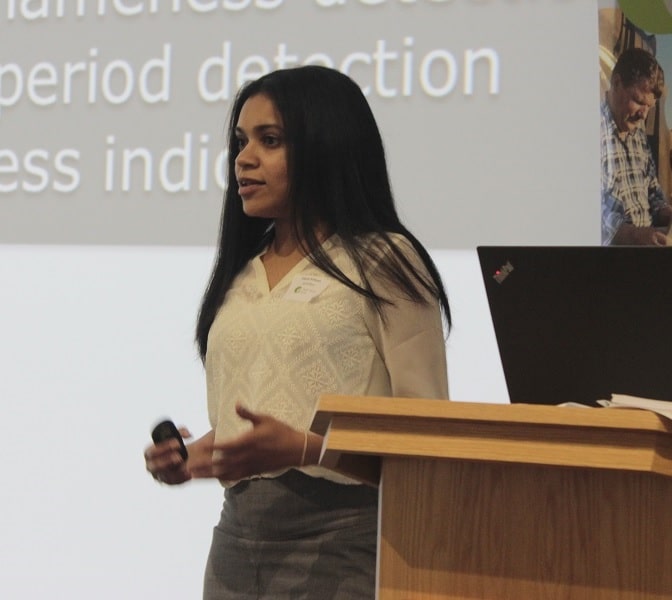





 Dr Lydia Smith is Head of the
  With the introduction of molecular genetics we now have better methods for quantifying and characterising microbes, not just fungi but also bacteria, and this is giving new insights. This is one reason why soil biology is attracting renewed interest and we are currently bidding for a couple of major projects in this area.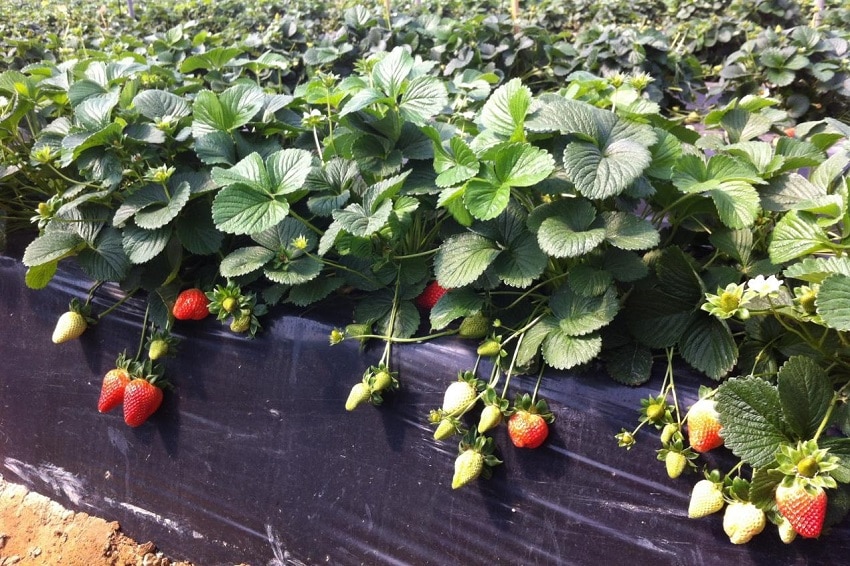
 Field pathogenomics, which uses genetics alongside traditional disease assessment to identify different races or groups of fungi, is giving new insights into rust fungi, a disease that affects cereal and wheat crops in unpredictable ways. This is enabling researchers to provide more informed recommendations to growers and industry.


 Aponic Ltd has developed a soilless growing system that uses 90 per cent less water than traditional agriculture, does not emit harmful run-off into the environment, and reduces the dependence on fossil fuels. These advantages have attracted both national and international interest.