Patenting, Trademarks, Copyright, Trade Secrets...
In the next installment of our micro-learning series, we’ll explore potential legal solutions to help you keep your ideas safe and sound.

Good vibes used to generate free energy

Meet the Network
Agri-TechE

Vibrations from motors and industrial machinery create energy that is usually wasted. Now Cambridge-based 8power is capturing this energy to run a predictive maintenance system that enables the machine to self-diagnose its own faults.

Paul Egan 8power free energy
Paul Egan 8power

Paul Egan, CEO of 8power, says that the technology is “taking existing dumb, dark machines and making them smart, intelligent assets”. He explains: “Most motors vibrate within a known range of frequencies and only a modest amount of vibration is required to generate sufficient energy to power sensors. Our solution means that a sensor can operate for 10 years without a battery.”
There are many applications for 8power’s energy harvesting. One example is work with ABB, a Swiss-Swedish robotics company, to increase the capability of its sensors.
Paul says: “We have been able to improve the performance of sensors so that they are able to sense, process and report more data, more often. Additionally we have been able to move some of the AI algorithms currently running in the cloud down onto the asset itself. This not only improves the quality of the available data, it also shortens time to fault identification and can reduce the cost of maintenance or repair.”
8power sees many applications for its technology within the agri-food industry. Drying equipment, irrigation systems, and conveyor belts for washing produce post-harvest are all examples of equipment that generate vibrations and where breakdown has a high economic cost.
Paul continues: “Currently we are using the energy to power a condition monitoring and predictive maintenance system. Our solution can produce up to 100mW with moderate vibration. This may seem like a trivial amount but is more than enough power to regularly run sensors and long-range wireless.
“We are aiming to develop systems that can predict faults and to use the skills of the existing maintenance teams to retro-fit and commission these sensors.”
Paul is one of the speakers at the Agri-TechE Pollinator “We’ve Got the Power; On-Farm Solutions to Energy Demands” being held on 23 May 2019 at 1:30 – 5:00 pm at Hethel Innovation, NR14 8FB.

International wheat award for speed cloning researcher

Meet the Network
Agri-TechE

Dr Sanu Arora WIT AwardCutting-edge research that is helping to make modern wheat more resistant to pathogens has brought international recognition for a John Innes Centre scientist.
Post-doctoral researcher Sanu Arora has been announced as a Jeanie Borlaug Laube Women in Triticum (WIT) Early Career award winner.
Dr Arora joins an exclusive group of 50 international recipients. The award provides professional development opportunities for women working in wheat.
Dr Arora is one of six winners of the 2019 award, which was announced at the International Centre for Maize and Wheat Improvement (CIMMYT) in Mexico. This year’s recipients come from India, Pakistan, Ethiopia, Mexico and Ukraine.
In making the award, the review panel of the Borlaug Global Rust Initiative (BGRI) praised Dr Arora’s “commitment toward wheat research on an international level” and her “potential to mentor future women scientists.”
Dr Arora is a researcher in Dr Brande Wulff’s group at the John Innes Centre working on a method to rapidly clone crop disease resistance genes. The technique called AgRenSeq involves searching a genetic library of resistance genes discovered in wild relatives of modern crops, so they can rapidly identify sequences associated with disease fighting capability.
By making crops more disease resistant, the cutting-edge technique outlined recently in the journal Nature Biotechnology will help to improve yields and reduce the need for pesticides.
“I am thankful to BGRI for recognising my work in speed cloning of resistance genes,” Dr Arora said. “The WIT Early Career Award will help me to achieve my target of building a catalogue of cloned R genes, which would help underpin breeding for durable resistance.”
“I grew up in the Punjab, India, where the tremendous socio-economic impact of the Green Revolution was felt by people around me. In recent years the excessive use of pesticides and emergence of increasingly virulent pathogens now threaten the viability of the farming industry. Improving this has been my driving force in developing new techniques to improve crop resistance to pathogens.”
Dr Brande Wulff said: “I am delighted to see Sanu recognised with a WIT Award. Her drive and intellect and unwavering engagement in the face of initial scepticism proved critical to the success of developing AgRenSeq. I hope she will continue to apply her energy and skill to solve new problems and bottlenecks in wheat breeding and research.”
Established in 2010, the early-career award is named after Jeanie Borlaug Laube, a high-profile mentor for scientists and daughter of the Nobel Laureate Dr Norman E. Borlaug, who is considered to be one of the founders of the Green Revolution.
Dr Arora has been invited to a WIT training course at CIMMYT, in Obregon, Mexico, and a BGRI Technical workshop taking place in Norwich in June 2020.
The awards are part of the project Delivering Genetic Gain in Wheat (DGGW) an international initiative to improve wheat that is funded by the Bill and Melinda Gates foundation and UK aid from the UK government, Department for International Development (DFID).
Maricelis Acevedo, Associate Director for Science of the DGGW said: “Building capacity within the scientific community by encouraging and supporting the training of young women scientists has always been one of our key goals. Collectively, these scientists are emerging as leaders across the wheat community.”

The future of vertical farming: the intelligent ecosystem

Meet the Network
Agri-TechE

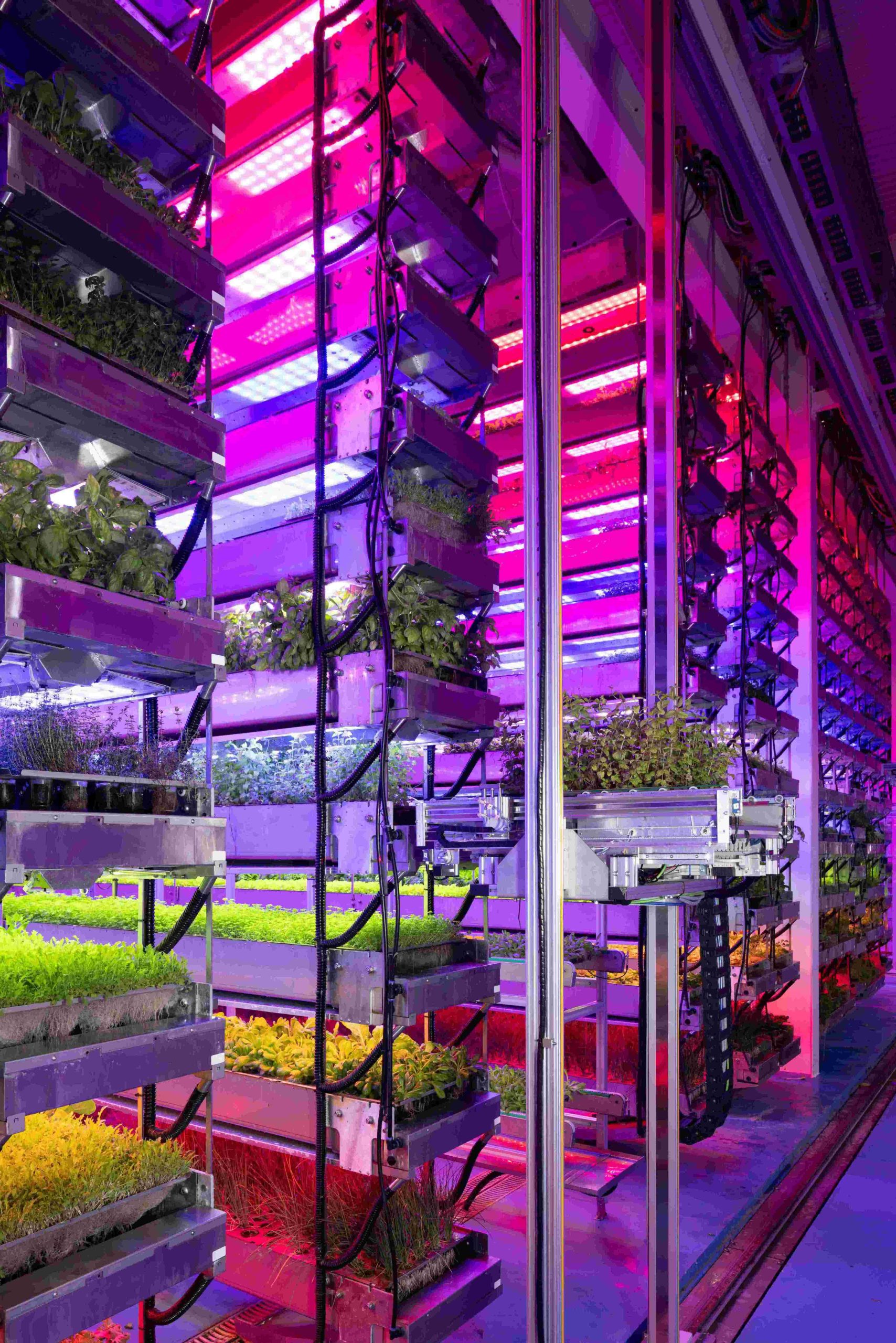
Vertical farming promises a step change in production density, providing significant efficiency savings with the additional benefit of improved product quality. Vertical farming also presents the only viable option for growing crops within urban environments where geographic footprint is limited and demand for just-in-time delivery of produce ever increasing. However while capital investment in large vertical farms delivers economies of scale, operating costs dominate the total cost of ownership.

In a new whitepaper, Roger Mainwaring-Burton of Cambridge Consultants explores real time crop sensing, air management and crop manipulation, showing how the use of off-the-shelf systems designed for other purposes don’t always provide a long-term solution. Treating a vertical farm as a complete ecosystem allows for a more efficient, cost effective and connected solution to be constructed, further enhancing crop production per square foot.
Read the white paper and Roger’s blog about vertical farming on the Cambridge Consultants site here.

Will swarm robotics for agri-food enable truly precise agriculture?

Meet the Network
Agri-TechE

“Robot swarms will enable truly precise agriculture – targeted spraying of individual plants, and selective harvesting of crops that are actually ripe – rather than treating an entire field identically,” comments Alan Millard, one of the speakers at a forthcoming Agri-TechE event which is looking at swarm robotics for agri-food.

Swarm Robotics Alan Millard
Alan Millard, a Lecturer in Robotics at the University of Plymouth, says swarm robots are inherently robust

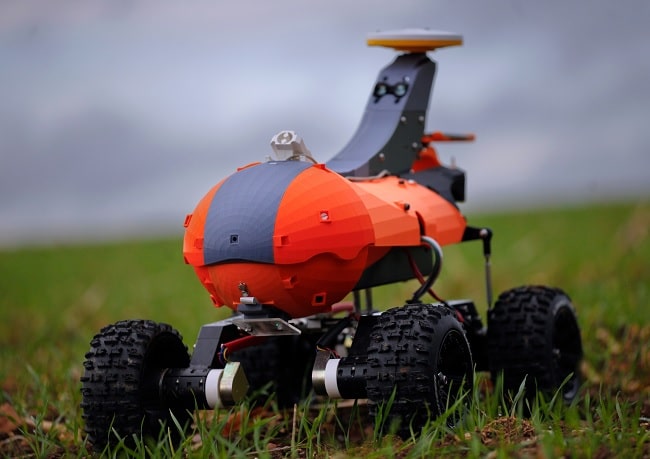
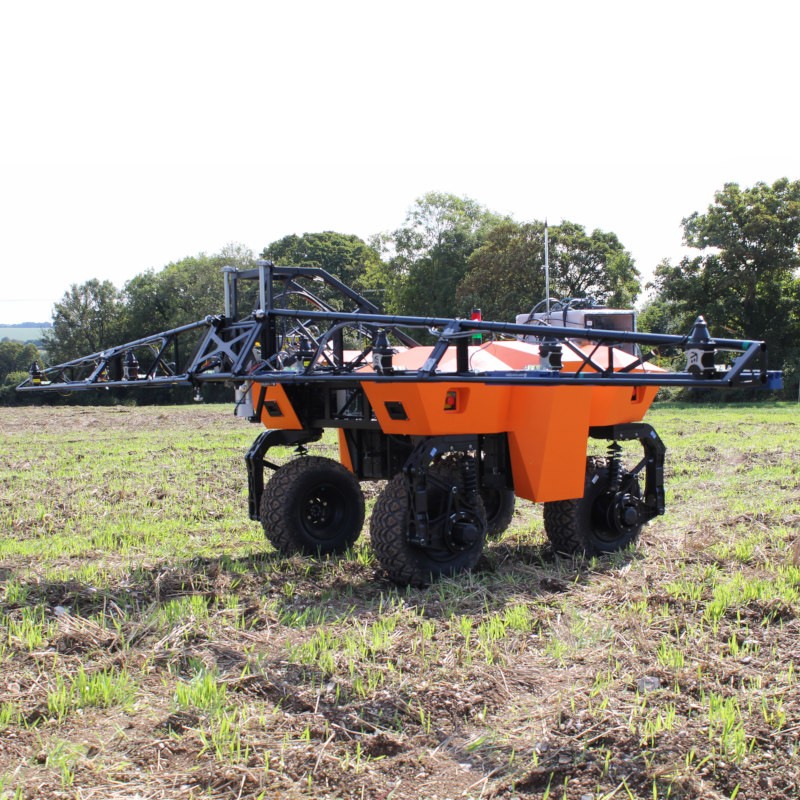
He says that the robots are moving out of the lab: “The Small Robot Company and Earth Rover are companies with the closest examples of swarm-sized agri-food robots in the UK.
Dr Alan Millard is a Lecturer in Robotics at the University of Plymouth. He is investigating methods of engineering swarm robotic systems capable of long-term autonomy, which can operate for extended periods of time without human intervention.
This involves developing algorithms that enable robot swarms to adapt to changing environments while simultaneously detecting, diagnosing, and recovering from faults in individual robots that may disturb swarm behaviour.
On the applied side, his  research focuses on agricultural applications of swarm robotic technology.  He explains: “I’m currently working on a project called ‘Automated Brassica harvesting in Cornwall’  that is investigating methods of coordinating autonomous cauliflower harvesting robots (developed by my colleague Martin Stoelen) in collaboration with Cornish food producers.
Hands free hectare
The ground-breaking Hands Free Hectare (HFHa) project, run by Harper Adams University and Precision Decisions, which was the first in the world to plant, tend and harvest a crop with only autonomous vehicles and drones

“I’m also exploring the potential of swarm robotics in cereal harvesting – simulating swarm-scale models of the Hands Free Hectare project, with multiple autonomous tractors offloading wheat from autonomous combine harvesters.
This work aims to determine whether fleets of (relatively) small agricultural vehicles (such as compact tractors) can be used to minimise soil compaction while ensuring an uninterrupted harvest.
“In addition to harvesting robots, I’m researching applications of robot swarms for soil / plant health monitoring. In particular, I’m interested in non-invasive sensing methods (e.g image processing / acoustic detection of pests) that can provide real-time on-farm feedback.
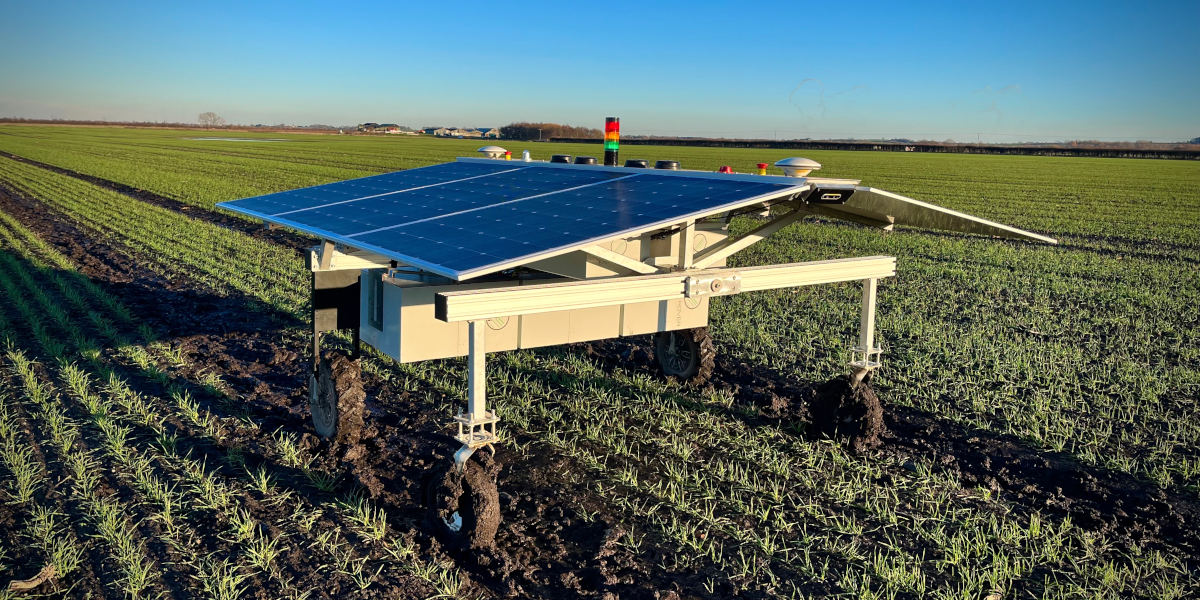
Swarm robots – small, simple and inexpensive – promise to reverse the trend in agriculture towards ever bigger machines. These little workers behave autonomously, interacting with each other and the environment to achieve the desired outcome. The benefits include less damage to soil structure and greater precision for weeding and harvesting. But how close is this to reality and what is needed to ensure their safe, responsible usage on-farm?
Experts with different perspectives will be discussing these issues at the Agri-TechE event ‘Swarm Robotics – the agri-workforce of the future?’
Speakers include Sam Watson Jones, co-founder of the Small Robot Company, pioneer of ‘robots as a service’; Alan Millard, who is exploring the potential of swarm robots in automating cereal and brassica harvesting; Mark Nicholson, a safety specialist who warns there is currently ‘inadequate regulatory oversight to support farmers’; David Rose, who calls for a mature debate about the technology; and Clive Blacker of Precision Decisions, who will provide insights from the Hands-Free Hectare project.
More information about: ‘Swarm Robotics – the agri-workforce of the future?’ being held on 25 April 2019 at Future Business Centre, Kings Hedges Road Cambridge, CB4 2HY can be found at www.agritechenew.wpengine.com/events

Debate continues about classification of gene editing

Meet the Network
Agri-TechE

The debate about new breeding techniques (NBTs), and the distinction between genetic modification and gene editing, was raised once again at the Oxford Farming Conference.
Emily Norton SavillsEmily Norton, Director of Rural Research at Savills, discusses the implications  in a blog on the Savills website.
She comments:  “Whether gene editing technology forms part of the fourth agricultural revolution, or is made redundant by it, is a moot point. Without access to it, the UK remains wedded to a version of ‘museum agriculture’, to quote Dr Julian Little of Bayer, and unable to access the productivity improvements achieved in the US, Brazil and Argentina.
“Is there an opportunity to be freed from the GMO straightjacket as we leave the CAP and will we be brave enough to allow consumers to decide?
“For the Devolved Administrations, there may well be a continued marketing advantage in remaining ‘GMO free’. But for producers looking at global commodity markets, smart deregulation by government combined with an enterprising spirit from business will give the public all that is necessary to show their opinion on precision plant breeding with their purses and wallets.”
To read the full post on Savills’ website click here.

The economic case for controlled environment agriculture – CEA 2019

Meet the Network
Agri-TechE

Ben Barnes from GsG’s Fresh produces lettuce and other salad crops to meet the highly variable consumer demand for high quality, fresh produce. Ben Barnes is investigating how controlled environment agriculture can support the business.
Two big questions 
The organisation has a large standard greenhouse facility that is used to propagate seedlings for planting out into the field. The project is looking at two big questions: Can we increase the efficiency of the propagation facility in terms of getting a more homogenous crop?  Is it feasible to produce baby leaf crops during the winter at an affordable price point?

  • Smart Prop is looking at increasing growth and making stronger plants so they transplant better back into the field
  • Winter Grow is a pre-commercial trial into wintertime growing.

Ben explains: “I’m going to be talking at the Agri-TechE event about the commercial journey in terms of the go and no-go decision-making process and what the key things are that we need to learn in order to be able to make those kind of investment decisions. “Smart Prop is a KTP, a Knowledge Transfer Partnership, partly paid for by Innovate UK and partly by G’s, in collaboration with Harper Adams University. “G’s supply baby leaf crops all year round, with much of the winter supply grown in Spain and Italy. In summertime we produce a huge amount of outdoor salad crop, particularly lettuces and celery.
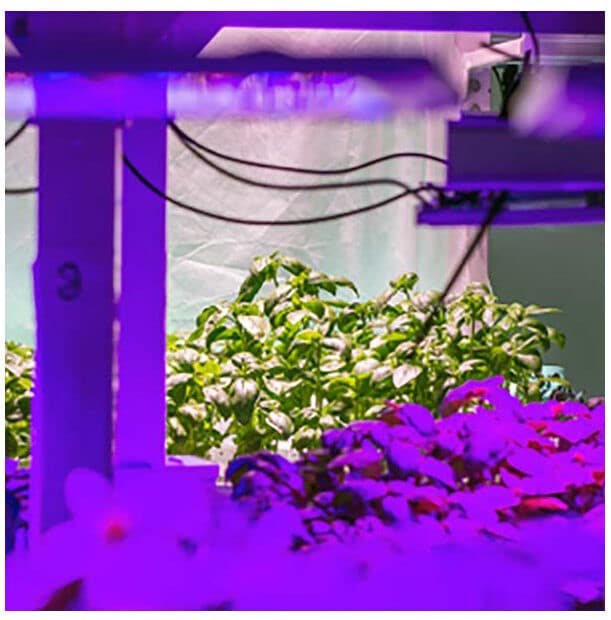
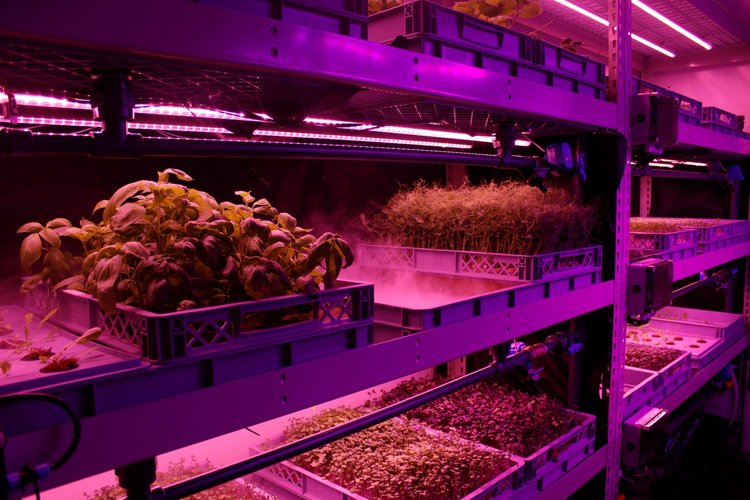
Smart Prop is looking at how we can increase the long-term viability and profitability of both of those parts of the business. “One element of this is the development of ‘lighting recipes’ to enhance plant growth characteristics. We’ve got multi-spectrum LED lights, so we can turn up the different amounts of red, blue, green and white, and even far red light. These are fairly expensive, so once we have worked out what works best we can buy fixed spectrum lights which are a tenth of the cost.

Collaboration with Growing Underground

“G’s has a relationship in Growing Underground based in Clapham, London. Although we are not directly connected, Greg, their grower, and myself are collaborating for our mutual benefit. They do supply quite a bit of produce to clients and chefs as well as some of the premium retailers.”
“In terms of supply and distribution it may actually makes more sense to have production closer to a distribution centre rather than within an urban centre, but we haven’t got that far yet.
“Within our project we have a growtainer, which is a basic hydroponic system inside a shipping container. To bring this up to scientific experimental specs we asked Cambridge HOK to refurbish it and put in new systems that are easier to use and more reliable. This is based at the Second Willow, our nursery site.
“I’ve actually just finished harvesting our first trial, a media trial; we’re testing all the different growing media and I’m going to process those results to see what comes out on top. There are so many variables!
“We’re trying to optimise those variables. You think LED’s are very efficient, but they still generate a heck of a lot of heat when you’ve got them essentially turned up to full. It is more about keeping the space cool, and the plants obviously are transpirating so we’ve got dehumidifiers in there sucking the moisture out of the air.
“Another option would be to take out heat and put it into the greenhouse, which would be a cost-saving. “Actually one of the biggest problems with the vertical farming concept is this interaction between moisture and temperature. You’ve got the two factors constantly fighting against each other and that ends up sucking huge amounts of energy if you’re not careful.”
Ben will be talking about his trials and the economic case for controlled environment agriculture ‘Bringing The Outside In – Innovating for Controlled Environment Agriculture’ taking place on 19th March from 10.00 – 16.00 at Rothamsted Research. It will look at the different growing systems, emerging technologies, the challenges of implementing a system and the logistics involved with integrating a controlled environment agriculture into the food value chain.

Actiphage test wins UK Royal Dairy Innovation Award 2019

Meet the Network
Agri-TechE

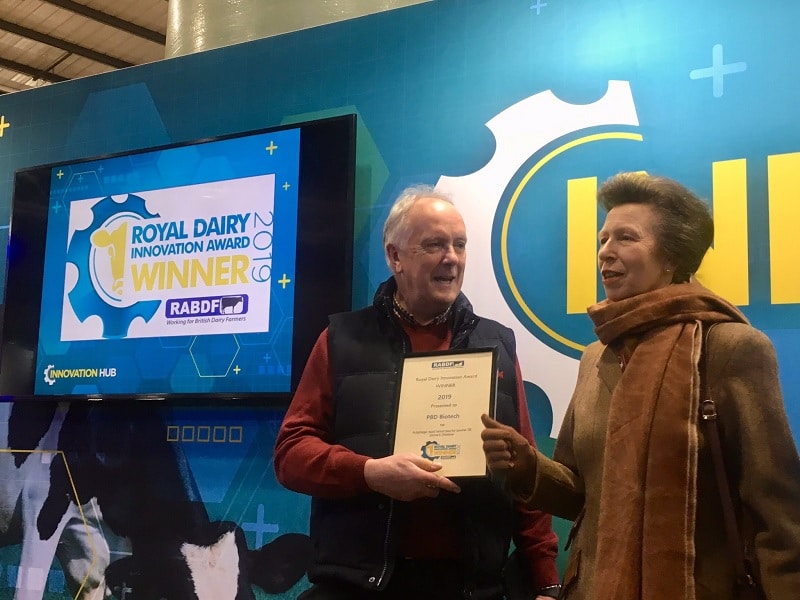
PBD Biotech’s novel Actiphage® testing technology was crowned winner of the Royal Dairy Innovation Award at Dairy-Tech 2019 (6 February 2019).

PBD Biotech win Royal Dairy Innovation Award 2019
Dr Berwyn Clarke of PBD Biotech is presented with the award by Princess Anne

The Royal Dairy Innovation trophy and certificate are awarded for research and development in the field of dairy farming. With the award going to the most practical, relevant product, which is likely to be the most significant innovation for the future of dairying.
Actiphage is an innovative new test for the rapid detection of bovine TB, Johne’s disease and other mycobacterial infections. It has the potential to expedite food safety checks on milk and dairy products; revolutionise livestock disease management; and ease the burden on farmers, the industry and wider public.
Receiving the award from HRH The Princess Royal, CEO of PBD Biotech Dr Berwyn Clarke said, “The dairy industry is known as an early-adopter of innovation, so we’re delighted Actiphage has been recognised amongst such a strong field of emerging tech and forward-thinking services.”
Every year, Johne’s disease costs UK farmers and industry at least £13million and an increasing number of retailers are removing suppliers from their milk pool if they are not engaged in Johne’s disease testing.
Again in the UK alone, bovine TB results in almost 44,000 cattle slaughtered annually and an estimated cost to the taxpayer of £100million.
PBD Biotech’s Actiphage fits into current animal health testing practices and is the only diagnostic able to detect live mycobacteria – differentiating between infection and vaccination – that delivers results within 6 hours.
Originally developed as a tool for diagnosis of human TB, Actiphage has been optimised and developed to provide enhanced sensitivity and specificity for use in blood or milk samples.
“Globally there is growing concern regarding the presence of live mycobacteria in milk that may have human health implications. This prestigious award is recognition of the opportunity this technology provides to ensure dairy products are free from these organisms as part of routine dairy quality control,” added Dr Clarke.
“We are seeing significant interest from dairy organisations throughout the world in Actiphage, and this award will significantly aid in transferring our technology into those global markets.”

World’s first Centre for Doctoral Training in Agri-Food Robotics announced

Meet the Network
Agri-TechE

The largest ever cohort of Robotics and Autonomous Systems (RAS) specialists for the global food and farming sectors, is to created  following a multi-million pound funding award for a new advanced training centre in agri-food robotics.

Thorvald in field (University of Lincoln)
Thorvald, from the University of Lincoln

The world’s first Centre for Doctoral Training for agri-food robotics (CDT) is being established by the University of Lincoln, UK, in collaboration with the University of Cambridge and the University of East Anglia.
The Engineering and Physical Sciences Research Council (EPSRC) has awarded £6.6m for the new Centre which will provide funding and training for at least 50 doctoral students. They will be supported by major industry partners and specialise in areas such as autonomous mobility in challenging environments, the harvesting of agricultural crops, soft robotics for handling delicate food products, and ‘co-bots’ for maintaining safe human-robot collaboration and interaction in farms and factories.
Professor Tom Duckett, Professor of Robotics and Autonomous Systems at Lincoln, is the new Centre Director. He said: “Automation and robotics technologies are set to transform global industries – within the UK alone they will add £183bn to the economy over the next decade.  However, the global food chain is under pressure. Addressing these challenges requires a new generation of highly skilled RAS researchers and leaders, and our new Centre for Doctoral Training for agri-food robotics will be dedicated to delivering those expertise. It will be a real focal point for robotics innovation in the UK.”
At Lincoln, the CDT represents an important partnership between robotics researchers from the Lincoln Centre for Autonomous Systems (L-CAS) and agricultural experts from the Lincoln Institute for Agri-food Technology (LIAT), as they work together to combat these pressing issues facing the global food chain.
Director of the Lincoln Institute for Agri-food Technology, Professor Simon Pearson, said: “Working with our industry and academic partners to design the 50 PhD scholarships will enable us to expand the UK’s science and engineering base, delivering a flood of skills and expertise that will drive our food and farming industries into the future.”
The Centre brings together a unique collaboration of leading researchers from the Universities of Lincoln, Cambridge and East Anglia, located at the heart of UK agri-food business, together with the Manufacturing Technology Centre, supported by leading industrial partners and stakeholders from across the food, farming and robotics industries. These include John Deere, Syngenta, G’s Growers, Beeswax Dyson, ABB and the Agricultural and Horticultural Development Board.
Dr Fumiya Iida, Reader in Robotics at the University of Cambridge’s Department of Engineering, is the Centre’s Deputy Director. He said: “ Many real-world problems in the industry such as manual handling of crops and reliable recognition of food are still regarded as considerable scientific challenges that the world-leading experts are intensively investigating today. Solutions to these problems will impact the competitiveness of UK Agri-Food businesses.”
Professor Richard Harvey, Senior Lecturer in Computer Science at UEA, added: “At UEA our expertise in Computer Vision is making computers that see. We’d like to build robots that can see when an ear of corn has ripened or be able to measure the amount of sunlight falling on a field of wheat or to tell when beans are ready for picking. This is blue skies research with an East of England flavour and we look forward to developing new systems that handle the challenge of being on a farm.”
In the new Centre for Doctoral Training for agri-food robotics, all 50 students will follow a common foundational year, studying on the new MSc Robotics and Autonomous Systems at the University of Lincoln. Then 20 of the students will carry out their PhD studies at Lincoln, 20 at Cambridge, and 10 at UEA. The wide-scale engagement with industry will enable the students’ research to be pushed rapidly towards real-world applications in the agri-food industry.
It is one of 75 new CDTs to be funded by the EPSRC (part of UK Research and Innovation (UKRI)) in what is hailed as one of the country’s most significant investments in research skills, designed to equip the UK with the next generation of doctoral level researchers it needs across the breadth of the engineering and physical sciences landscape.
UKRI’s Chief Executive, Professor Sir Mark Walport, said: “Highly talented people are required to tackle key global challenges such as sustainable energy and cyber security, and provide leadership across industries and our public services. Centres for Doctoral Training provide them with the support, tools and training they need to succeed, and the involvement of 1,400 project partners underlines how much industry and the charity sector value this approach.”
Dave Ross, CEO of the Agricultural Engineering Precision Innovation Centre (one of four Agri-TechE centres established by the UK government), said: “This exciting project has strong synergies with our existing academic partners and will help greatly in the development of advanced robotic and engineering technologies for the agri-food sector. Our consultation with industry continuously indicates that there is a critical shortage of highly trained robotics and autonomous system engineers to meet future anticipated demand. The PhDs resulting from this project will have a significant impact. We look forward to connecting the students with our wider industry and academic partners for mutual benefit.”
Apply now to be part of the CDT Programme: https://lcas.lincoln.ac.uk/wp/cdt/


Breedr improves value of dairy beef calves by up to 50 percent

Meet the Network
Agri-TechE

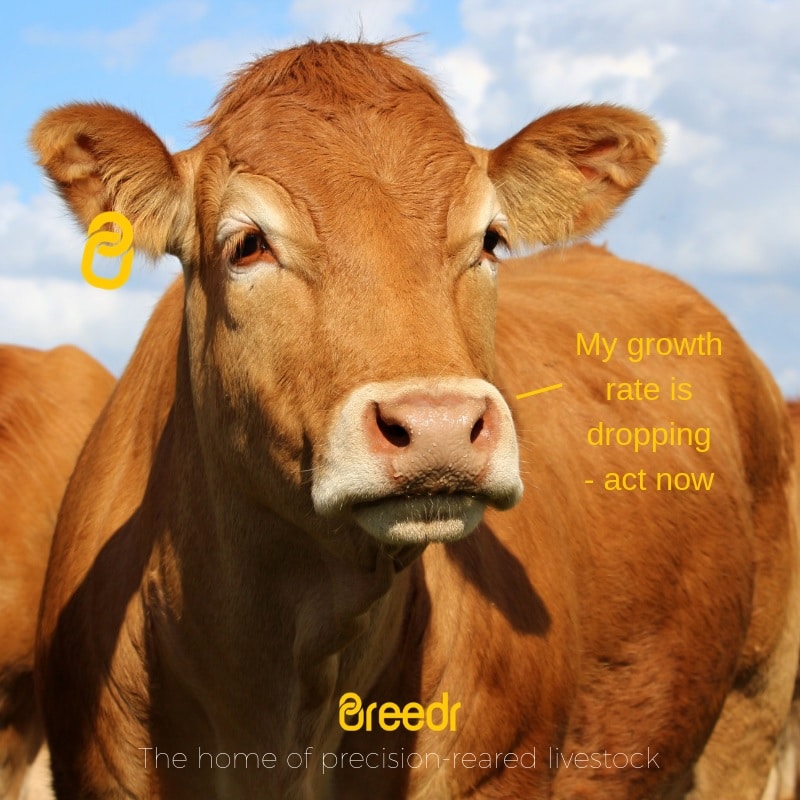
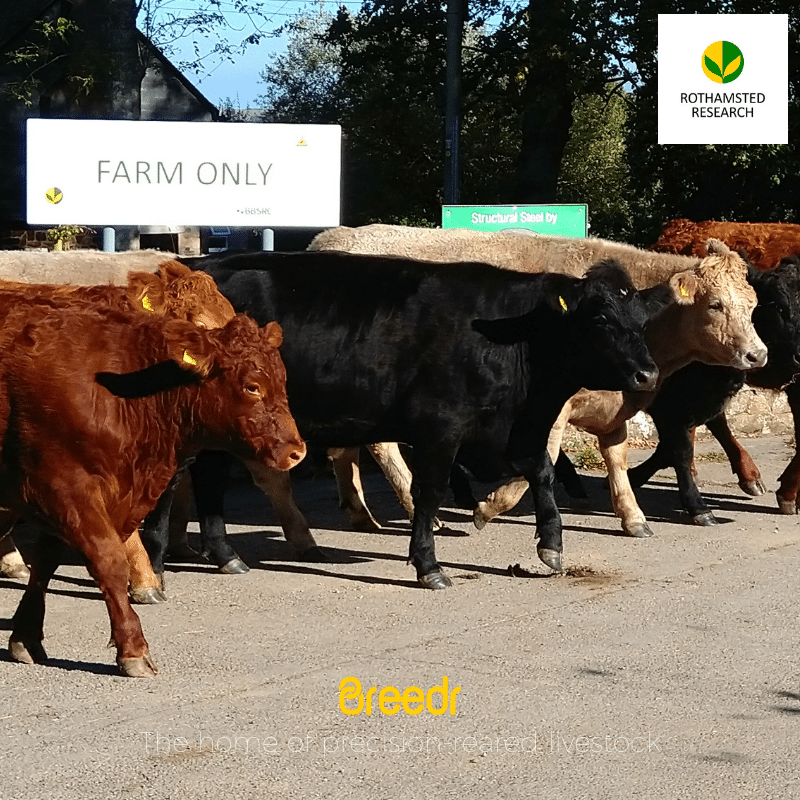
The value of dairy beef could be increased by an estimated 50 per cent per calf, if sires were selected for their meat yield as well as milk yield, according to farmers trialling Breedr.
The easy-to-use app helps farmers to finish cattle to retailers’ specifications with greater precision. James Wright, Breedr’s Farmer Community Manager, will be sharing insights at Dairy-Tech on 6 February and demonstrating on the Farming 491 stand.
Consumer tastes for beef have changed in recent years towards leaner meat, and processors require greater consistency. The Holstein Friesian breed, used widely by the dairy industry, offers the potential to provide the required uniformity of quality.

Ian Wheal, Breedr
Ian Wheal, founder of Breedr

Breedr’s founder, Ian Wheal, comments: “Dairy breeding has traditionally been done to increase milk yield, but if the cows were also selected by the quality of their bull calves, a market that has seen a massive upturn, the value could significantly increase with no additional cost.”
A number of major retailers, including the Co-operative and Waitrose, have introduced high welfare schemes to connect their dairy and beef producers. This has resulted in a rise of 59 per cent in the numbers of dairy bull calves retained within the supply chain for veal or beef.
Further increasing transparency and providing feedback to farmers on the performance of their bull calves can enhance the success of these initiatives. To assist with this Breedr has analysed six years of data from Rothamsted’s North Wyke Farm. This analysis has revealed that some cows consistently produce calves that are slow to put on weight; the difference between good and poor performers can be a much as 0.5kg a day.
Wheal explains that Breedr will alert farmers about ways to improve performance. He says: “It can highlight which animals to breed from, indicate the optimum time to sell, or provide an alert that an intervention is needed. The system will also help the farmer to know the cost-benefit of these alternative strategies; it is valuable decision-support to supplement the knowledge of the farmer.” Breedr also looked at the impact of the choice of sire.
Wheal continues: “Analysis of the sires reveals which bulls produce calves with the preferred body shape and condition for beef. Producing calves that consistently meet specifications will command a higher price. We analysed data from one beef herd and found that using data to improve productivity and meat yield could provide a benefit of up to £400 per animal.”
Breedr allows a farmer to analyse the herd to make decisions about breeding and cull date. Keeping bull calves beyond the optimum weight is a waste of feed and will increase the fat content. Historical data can be inputted from other systems and groups of farmers have pooled data to provide benchmarks. Where this data is available farmers have immediately seen ways to improve their beef yield.
Breedr has recently announced a ‘Field to Yield’ trial with Rothamsted’s North Wyke Farm, and beef and dairy farmers keen to gain an early benefit are encouraged to enrol.
Dairy-Tech takes place on 6 February 2019 at Stoneleigh Park, Coventry, CV8 2LZ. Breedr will be on the Farming 491 Stand.
More information 
 

New test speeds up mastitis diagnosis in farmyard

Meet the Network
Agri-TechE

A new rapid diagnostic for mastitis, a painful udder disease that costs the dairy industry almost £42million a year, is being developed by start-up Beosense. The device will allow on-farm identification of the bacteria that causes mastitis, enabling immediate treatment and preventing loss of milk yield.

Rapid diagnostics enable more effective treatment

Katie CavanaghFounder of Beosense, Katie Cavanagh, came up with the idea after a long wait for test results for her dog. However, it was growing up in a farming community in Northern Ireland that made her realise the potential of a point of care device that can be used to detect mastitis, a major endemic disease.
Katie developed the concept while a physics fellow at The University of Bristol. She explains: “If you can diagnose quickly, you can treat quickly. Rapid identification of the bacteria enables the use of closely targeted treatments and ensures quick recovery of the animal.”
The diagnostic is a development of a lab method that is used to detect pneumonia and salmonella in humans. Katie is working on ways to miniaturise the technology – which is normally performed in a laboratory using PCR technology – so that it can be used on-farm.

Cutting time and cost

Cow - New test speeds up mastitis diagnosis in farmyard“The current gold standard diagnostic for mastitis is lab based, so if you want a comprehensive result it will take a couple of days. Our test has slight differences to the lab-test but the principle is the same and it will provide confirmation the presence of a particular strain of bacteria in the milk sample.
“We’re not inventing new science, this kind of tech is being developed for humans all of the time, it’s just not being done for animals,” Katie says.
“As a physicist, you see all of this amazing technology in labs that could change the world; there is huge potential for a rapid test for mastitis and I am keen to work with farmers and vets develop the end product,” Katie concludes.
The mastitis test is currently at concept stage and Katie is seeking investors as well as farmers to help produce a practicable point of care device.

How the novel tech works

The Three Rs of Plant and Animal DiagnosticsCommenting on the range of new agricultural diagnostics coming to market, Director of Agri-Tech, Dr Belinda Clarke, said: “Advances in microbiology, imaging and organic chemistry are providing farmers and growers greater access to more cost-effective tools.
“We have selected a number of diagnostics that are promising to revolutionise disease management and at ‘The 3 Rs’ event the developers will explain how the novel technology behind them works.”
More information about the animal and arable diagnostics being profiled – many for the first time – at Agri-Tech’s ‘The 3 Rs of Plant and Animal Diagnostics: Rapid, Reliable and Robust (Enough)’ is available on our events page here.

Exporting High Farming and Food Standards From the UK and NZ

Meet the Network
Agri-TechE

The possibility of Brexit is creating demand for comparative analysis, writes Forbes Elworthy, founder of Map of Ag, as he compares United Kingdom farming, which has significant government and EU intervention, to New Zealand, which is subsidy-free. This article is based on a talk given by Forbes at a UK Parliamentary dinner on this topic recently.

  1. Similarities of UK and NZ agriculture

NZ and UK farming are each endowed with excellent soils, maritime climates and broadly similar farmland resources – although NZ produces a wider range of produce extending as it does from almost sub-arctic to sub-tropical latitudes. Both produce premium quality foods for demanding middle class consumers. The UK primarily for its domestic market. NZ on the other hand to middle class consumers across Asia, Europe, America and Middle East.
Both countries are developing environmental strategies for their land use sectors. In the UK this builds on the Environmental Stewardship Pillar of the EU CAP – which provides a base from which new proposed environmental services payments can be extended if Brexit takes place (something not looking quite as likely today as it did when I made my speech in Parliament last Monday).
Irrespective of the Brexit morass the UK’s farming and food industry is showing impressive environmental ambitions. At the Oxford Farming Conference earlier this month Minette Batters, President of the NFU, outlined plans for UK farmers to achieve net zero greenhouse gas emissions by 2040 or earlier “to stay ahead of the competition in the global food and agriculture market”.
NZ’s not dissimilar environmental measures have their origins in NZ’s efforts to really be that “clean green” country leading the world in greenhouse gas, water, and management of biodiversity.
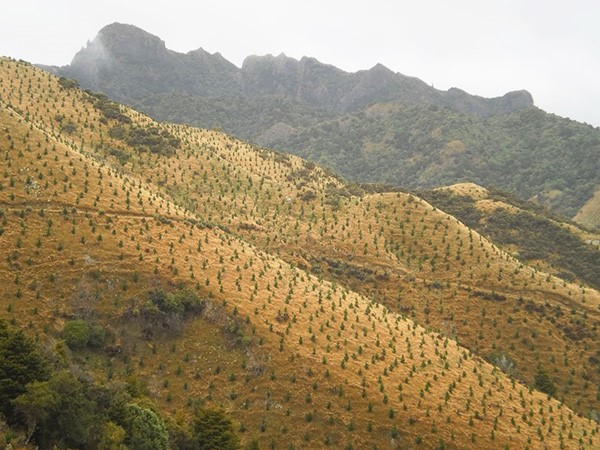
NZ takes our Paris commitments seriously. We’ve committed to establish an average of 100 m new trees per annum over 10 years. Assuming half on degraded land this will be a gain of 500,000 hectares in the NZ forest estate. Craigmore Sustainables has a major focus on forestry and hopes to contribute over 50,000 hectares to that afforestation.
NZ, like the EU, has decided not to release GM into our food production sector. Our customers simply do not want GM food. NZ farming, though strongly science-based and innovative, is ultimately market-led so we decided not to grow something our customers do not want.
More generally both countries are addressing the “de-commoditisation” of a sector that used to produce “commodity food” but is moving to “healthful nutrition”. In the widest sense including environmental health.

Some areas in which UK farming may be ahead of NZ
Exporting High Farming and Food Standards From the UK and NZOne area in which, in my view, UK and EU agriculture may be well ahead of NZ is in the process of linking farms to retailers and consumers. Unlike NZ, where farm-to-supermarket information flows are only satisfactory (many consumers are far away overseas), the UK has built over the past 20 years a world-class infrastructure of commercial and information links between farms and retailers. E.g. approximately 60% of UK dairy farms have long term, fixed price off-take agreements for their milk from retailers. An impressive achievement. As I am only too aware all NZ dairy farmers are exposed to the full volatility of the global milk market. NZ prices have ranged from 16 pence to 45 pence while most UK dairy farms received a steady 29 pence per litre.
Similar arrangements have emerged in UK beef, pork, chicken and fresh produce. These “aligned contract” relationships are not about just price, but embrace quality, security of supply, animal welfare and other values.
Another area of strength for British farmers’ is their positive relationship with the public. Perhaps because of public access to privately held farmland, taxpayers and consumers in the UK are generally supportive of their farmers and growers. Politicians on all sides in the UK are indicating that a large part of the current £3.2 bn of annual farm support payments are likely to continue, at least in some form. This is a remarkable illustration of how highly the United Kingdom values its farmers and landscape.
New Zealand, as is well known, does not subsidise its farmers. Further, attitudes of the public and government shifted in the past 20 years so that, currently, NZ farming is not as esteemed as it once was in the eyes of the public. One reason for this is behaviour of some NZ farms lagged in terms of especially nutrient pollution of rivers and streams. (Fortunately this is now being addressed by catchment-based farm nutrient loss management programs which recently lifted river water quality in Canterbury. However the NZ farming sector still has a way to go to fully regain the trust and support of our public).

Some areas NZ farming may be ahead of UK farming
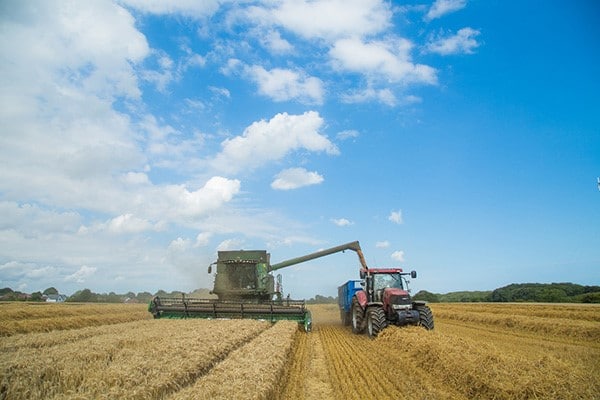
NZ farm productivity gains, in 30 years since the removal of subsidies, have been spectacular. E.g. 66% reduction in the number of sheep is now producing the same amount of meat from 23% less land with a 40% reduction in GHG emissions per kg of lamb.
Between 1990 and 2010 NZ farmers transformed large amounts of land from grazing/arable to more intensive dairy farming – increasing per hectare revenues by 4 x. And jobs/ha by the same amount. This innovation was the leading reason for the revitalisation of rural towns after a slump in the rural economy after 1985.
More recently land has come out of dairy and into horticulture, a still higher value land use, typically increasing revenues per hectare (and employment) by 8 x – however this after a 4-year delay for conversion. Craigmore Sustainables estimate another $5 to 10 bn of necessary investment will take place to fully build out the NZ horticultural opportunity. It is worth noting that export sales from NZ horticulture have grown by 7% per annum for over two decades.
Compared to this level of innovation, although there have been some honourable exceptions, mainstream British farming e.g. cereals has not seen significant improvements in yields per hectare and factor productivity. It is hard not to conclude that the uptake of innovation in the EU, including in the UK, has been curtailed by subsidies.
As an amateur economist I cannot resist mentioning, as well, that economic policies that allow property owners to borrow money at 1% are also not great for innovation. They prop up the already wealthy and goose up asset prices, so that new entrants cannot innovate.
It has not escaped Michael Gove’s notice that subsidies make European and UK agriculture school tests that nobody fails. It maybe it is no accident he was brought from education to agriculture!
Although many regretted them at the time, I don’t know a single NZ farmer who would seek to return to production or area-based subsidy support

What happened in the NZ restructure?
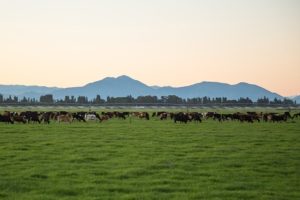
Exporting High Farming and Food Standards From the UK and NZNZ discovered very suddenly that it was unable to subsidise the most important sector of its economy. As a result, subsidies were all removed at the same time.
Despite predictions that 20% of farmers would have to go only 1% of NZ farms entered receivership – although another 4% chose to go (sold their farms voluntarily) over the next five years. In general, environmental outcomes improved as a result. My father led NZ Federated Farmers for six years in the 80’s – negotiating the de-regulation and the end to subsidies. One of the positive achievements was that e.g. fertiliser use on average fell by 30% whereas farm production only fell by 10%.
Farmers believe we are “born” to grow more crops and livestock. We will happily do this even on marginal land, given the resource. Subsidies therefore almost always lead to over-intensification of land-use. Removal of subsidies helps farms focus on what soils and landscapes really should be farmed, and which should be used less intensively or not at all.

How might UK farm/food now progress – to “play to its strengths”

It appears the UK’s restructuring, in contrast to that in NZ, will be gradual and mixed. The proposed approach if well implemented, appears broadly logical and attractive. In my view, like renewable energy, the proposed environmental services strategy is a tremendous commercial opportunity for farmers especially hill farmers and smaller operators. In my view – and my wife and I do own a small Oxfordshire organic farm – it is privilege to farm in a country where farms can get taxpayer money to do things that many of us, in countries like NZ, seek to do anyway on our farms but without the benefit of government support.
However, the environmental services payments will need to be well designed – a major opportunity for the UK research and agtech sectors

Concluding ideas

I see major commercial and ethical opportunities for both NZ and the UK to export farm and food and environmental technology and standards to the world.
Specifically, I see the imposition of standards on imported food as a powerful way to promote UK exports of these tools and services as well as to lift food quality and environmental standards.
This strategy will “play to” an area where the UK is well ahead of NZ and in my view is world-leading. That is in the sharing by UK retailers of standards and other measures to link farmers and growers with these “representatives of the consumer”.
If you would like to support progress in this area, Map of Ag (www.mapof.ag) is currently expanding in the UK, Ireland, Netherlands, France, New Zealand, Australia and Argentina. Map of Ag does not sell services to farms directly but always partners with a farm/ food value chain organisation to help them organise data flows to and from the farms they serve.
Find out more here.

Market opportunities for controlled environment agriculture – CEA 2019

Meet the Network
Agri-TechE

Rhydian Beynon-Davies, Stockbridge Technology CentreThere is a big market opportunity for controlled environment agriculture (CEA) according to Rhydian Beynon-Davies, Head of Novel Growing Systems at Stockbridge Technology Centre (STC). He comments: “The world will need sustainable solutions to an increasing extent in the future and we should be the ones to supply those solutions.

“Rather than denuding our capacity for the sake of some cheap food in the short term, a better approach would be to invest in sustainable methods of growing that will allow us to continue to ensure supply of high-quality food for our population well into the future.”
He explains that novel culture system can play an important part in improving our food production, by reducing pesticide use, nutrient leaching, water abstraction problems and the carbon footprint (depending on energy source of course!). These systems also have the potential to take pressure off the land and can contribute to improvements in the environment for everyone.
STC was launched to ensure continued technological developments for the horticultural industry. It is looking at the development of advanced lighting and control systems for indoor environments, creating a highly accurate phenotyping unit to allow faster variety screening and breeding approaches for CEA, and the commercial viability and agronomic considerations relating to specific crops, including the optimisation of air handling strategies, substrates and crop hygiene techniques.
Rhydian says: “I think we are on the cusp of some big developments in the UK. We have some really innovative start-ups here that have some really exciting technological innovations and business models, such as GrowUp, Lettus Grow, IGS, MotHive and many others. We also have software and IT companies that are thinking about ways to improve tracking, traceability and environmental audit, and offer real-time solutions across the production chain.
“Innovate UK and RCUK are starting to focus more heavily on supporting controlled environment growing and this should, over time, help to bring together companies and individuals from the disparate ‘knowledge and skills silos’ that will be required to progress the industry.”
Rhydian sees the potential for a new model for food production that would include:
“Localised distribution of fresh produce – A de-centralised approach, whereby producers can market niche varieties direct to the public via online systems that resemble those used by companies like Amazon.
“Alternative to supermarkets – There is plenty of store-front space in towns and cities that is becoming vacant. I think there is a market for a more diverse fresh produce offering that could be grown by indoor – and other – systems and coupled with online ordering and utilisation of town-centre premises that offer additional services such as prepared food and drink or even spaces for other activities.
“Diversity of crop – There is a big market for crops used to produce raw ingredients for pharmaceuticals and also opportunities to offer other crops not normally grown in the UK (e.g. herbs, novel leafy products, fruit crops) for those that are willing to put in the initial investment and R&D.
“Improving crop productivity – There is also a real opportunity for adding value or increasing efficiency in crop production by targeting different phases of growth in indoor facilities.
“Increasing variety for consumer – The ability to produce a wide variety of new-to-market varieties and crops could lead to greater diversification in the offering to consumers, as much of the selective (and targeted) breeding that has occurred up till now has acted to remove key textural and flavour diversity in a quest to improve pest and disease resistance, shelf-life and ability to grow in a tightly-defined range of conditions.”
Stockbridge logoRhydian concludes: “Going forward I think we will see systems which are sub-divided for production of individual varieties, rather than the cavernous spaces growing multiple crops that are common in most current commercial CEA systems.
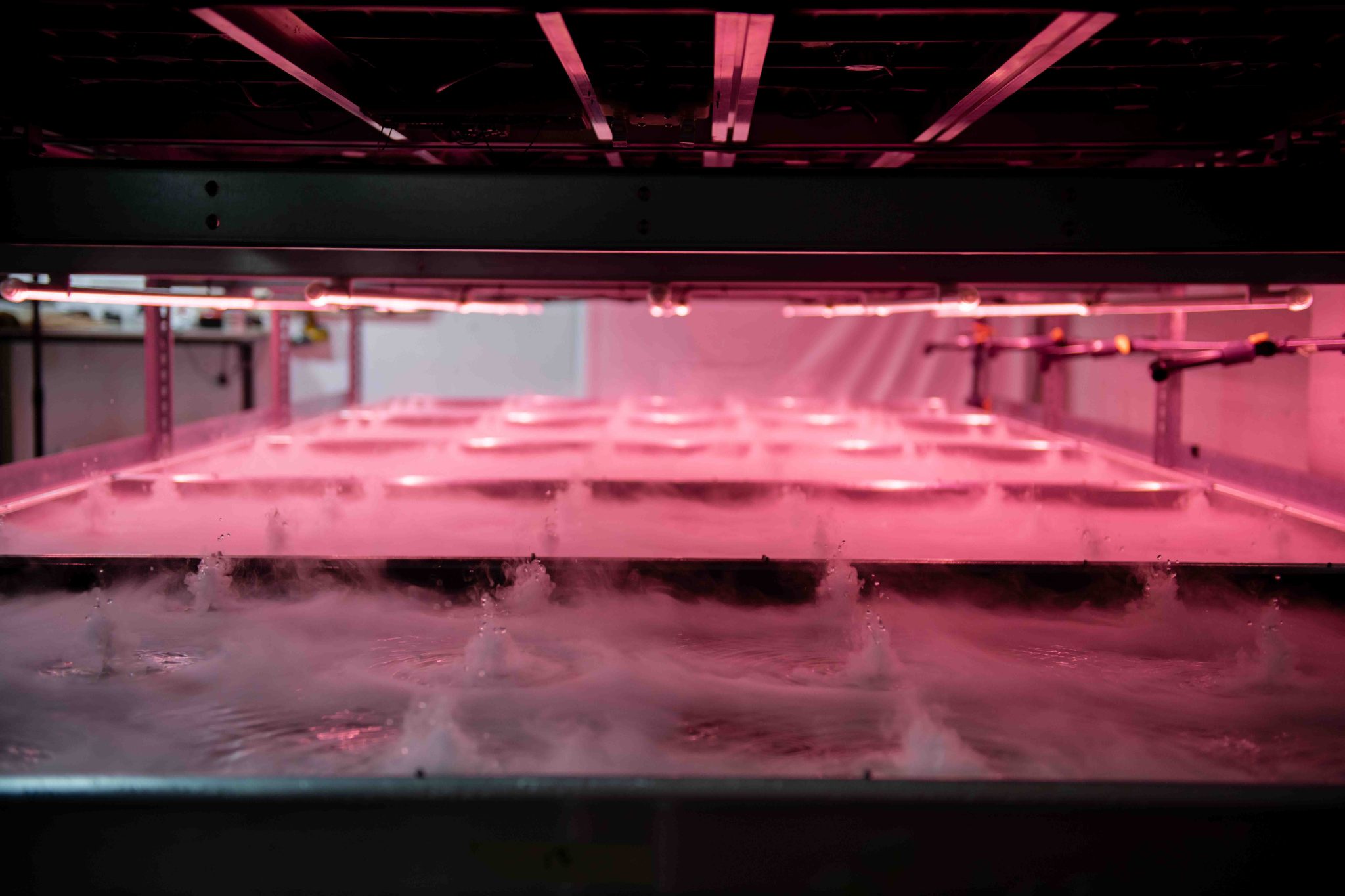
“However, there is still room to improve more conventional production systems though better sensing and decision-support technologies, automation – such as seeding, propagation, planting, de-leafing and harvesting – and engineering – e.g. photovoltaic glass, efficient low-cost HVAC technology – and we are also looking at this at STC.”
The event ‘Bringing The Outside In – Innovating for Controlled Environment Agriculture’ is taking place on 19th March from 10.00 – 16.00 at Rothamsted Research. It will look at the different growing systems, emerging technologies, the challenges of implementing a system and the logistics involved with integrating a controlled environment agriculture into the food value chain. See more information here.