Inside JEPCO’s sustainable shift to indoor leafy salad production

Member News
The views expressed in this Member News article are the author's own and do not necessarily represent those of Agri-TechE.

JEPCO is blending decades of growing expertise with cutting-edge indoor systems to drive resilient, high-quality salad production all year round.

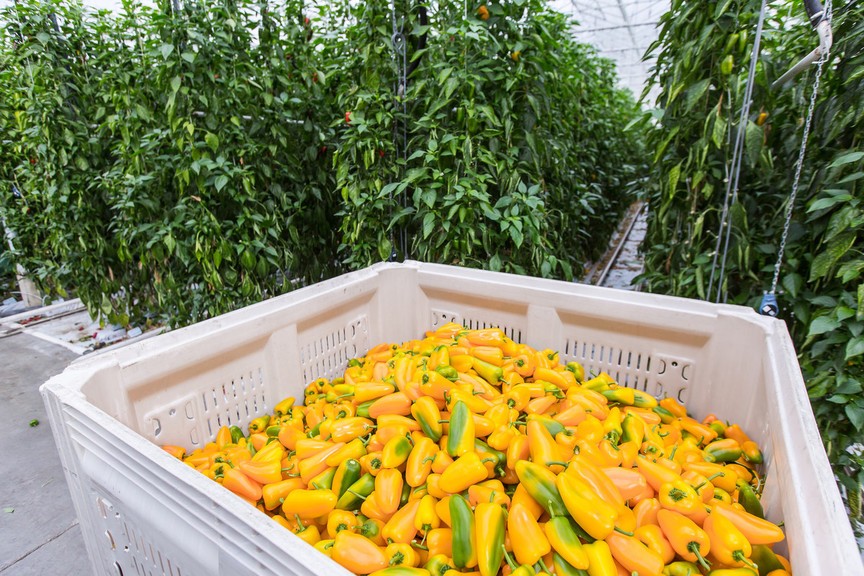
The loss of tools to combat pests, weeds and diseases in the salad sector, combined with changes in market dynamics, has encouraged Lincolnshire-based third-generation leafy salad producer JEPCO who grow 800 Ha of outdoor leafy salads to increase its glasshouse production capacity. They see controlled environments as providing an opportunity to adopt new technologies to boost output whilst improving produce quality and consistency.

As part of that programme, Jepco has been preparing production strategies with an in-house development team and research facility.

“Our goal with indoor production is to be carbon neutral, produce 52 weeks of the year and mitigate a lot of the risks we take outdoors with climate change,” says Richard Pett, development manager at JEPCO. “Producers are getting more and more extremes, with dry times, wet times, or hail. Since the middle of August, the sector have also had difficulty controlling aphids in the field.

“We’re just not getting the tools to control field pests anymore. Weed control is another example where fewer herbicides are available to us. We have been using camera guided and GPS hoes for 20 plus years, and we’re looking at robotic and laser weeders. There aren’t those options with pest control.”

Moving some production into greenhouses will allow JEPCO to remove aphids, other insect pests and foreign contaminants from their growing equation, says Richard.  They have also seen that indoor production gives them much more control over the quality needed for specific catering markets, such as sandwich production.

“Soil from outdoor lettuce is a huge problem. If we get heavy rain just before harvest, soil splashes onto the leaves. It must then be washed vigorously before being sent to customers, which affects its shelf life.

“Since moving our lettuce production destined for sandwiches indoors, we have almost eliminated non-conformities,” he adds.

The obvious challenge to increasing indoor production is the capital investment required to build the facility. That is why Richard and JEPCO’s assistant development manager, Hannah Greensmith, have been examining the latest glasshouse technology to maximise output. “There is so much technology and innovation out there at the moment. It’s about identifying it and seeing how it can help us,” says Richard.

One innovation JEPCO has been trialling is Zayndu’s ActivatedAir plasma seed priming. Based in Loughborough, Zayndu sells its on-site seed-priming system globally to vertical farms and glasshouses. Nathanael Dannenberg, UK and North America business development manager for Zayndu, introduced Richard to ActivatedAir, having previously collaborated on other technologies.

“We deploy machines into growers’ facilities that are capable of priming seeds using Zayndu’s cold plasma technology,” says Nathanael. “The process is pesticide and residue-free, and being based on-site, it gives growers control over when they prime seeds.

“The priming creates microfissures in the seed surface, which increases water absorption. It also kick-starts the seed’s biochemical pathways, stimulating germination. This makes seeds germinate quicker and more evenly.”

In short-cycle crops, the impact on output can be astonishing, states Nathanael. In JEPCO’s case, a yield increase would manifest as a shorter time to harvest. This would increase output from the same capital investment in the glasshouse, as Richard explains: “A key driver for working with Zayndu is that if we reduce the number of days to harvest by three days per cycle, then we can get another crop cycle in per year.”

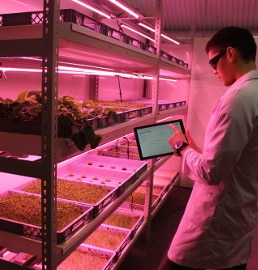
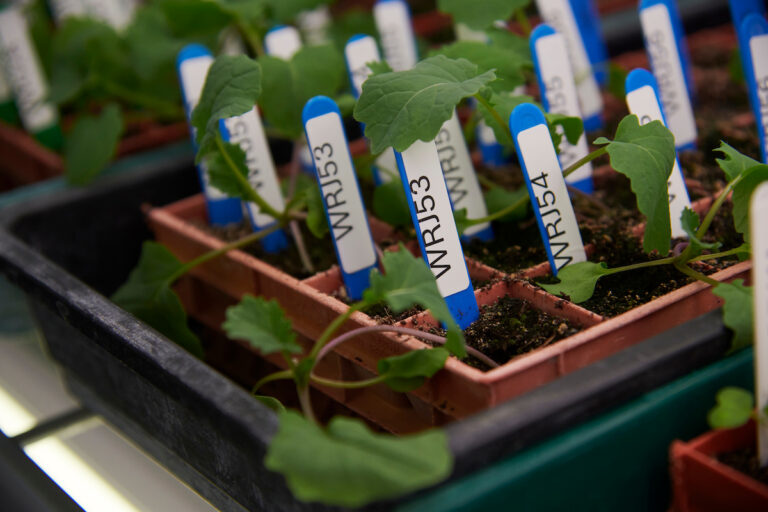
The trials on ActivatedAir were conducted in JEPCO’s dedicated research greenhouse. Smaller than a commercial greenhouse, Richard says that they can accurately replicate a production situation. In this case, he observed an average 11% increase in spinach yields and 13% in rocket across multiple replicates over a nine-month period.

“There does seem to be a definite difference, and we have done quite a few trials now across rocket and spinach. The results are reliable; we are seeing a difference every time, which is exciting.”

Richard sees all the technologies they are testing as building a cumulative effect, which supports the justification for a significant capital outlay to build more glasshouse capacity.

“You take 11-13% from priming the seed, perhaps another 3% from adding a biome to the water in the hydroponic system, plus other measures, and it all adds up. We most definitely see a role for technologies like Zayndu’s seed priming,” he concludes.

Zayndu was established in 2019, harnessing cold plasma to create the powerful plant stimulant, ActivatedAir™. Now, a world leader in the industry, the business supports growers worldwide in generating stronger, healthier plants with increased disease resistance. The seed dry priming process is simple, uses no artificial chemicals and leaves no residue.

Get in touch

Want to know more about how you can increase your yields up to 25%? Find out more on our website or book a discussion with one of our experts.

  • *I have permission from the copyright holder to publish this content and images.

How Truth Travels in Healthy Organisations-what strong leaders build so reality reaches the top intact

Member News
The views expressed in this Member News article are the author's own and do not necessarily represent those of Agri-TechE.

What strong leaders build so reality reaches the top intact

In my last piece, The Fog at the Top, I explored why senior leaders and boards so often make decisions based on distorted or overly positive information.

Information that is softened, simplified, or selectively optimistic by the time it reaches boards and executive teams. This article focuses on the flip side.

Some organisations do get this right, truth does travel. Issues surface early enough for leaders to respond, rather than react. But the difference is rarely systems or reporting packs. It is behaviour, trust, and design.

Truth does not flow upwards by default

One of the biggest myths in leadership is that truth naturally rises.

It does not, truth only travels when organisations actively create the conditions for it to move. In healthy organisations, leaders assume that:

  • Reality will be uncomfortable
  • Signals will be incomplete
  • People will hesitate before speaking

So, they design for honesty rather than hoping for it.

What healthy organisations understand

Organisations where truth travels share a few common beliefs.

Truth is fragile It is easily diluted by hierarchy, status, fear, and incentives.

Silence is data A lack of issues being raised is treated as information, not reassurance.

Messy input beats polished answers. Leaders value early, imperfect signals over late, well-rehearsed explanations.

This mindset shapes everything that follows.

How truth actually moves

In practice, truth travels through multiple, intentional channels. Not just formal reporting or the CEO updates. But a combination of structured and informal mechanisms.

Here is what I consistently see working:

1. Leaders go where the work is

In healthy organisations, senior leaders do not rely solely on summaries.

They spend time close to operations, customers, and teams.

They listen more than they talk.

They ask open questions and resist the urge to solve immediately. This does two things:

  • Leaders gain unfiltered insight
  • People learn that honesty is genuinely welcome

Presence reduces distortion.

2. Questions matter more than answers

Truth travels faster in organisations where leaders ask better questions.

Not performance questions, sense-making questions. Questions such as:

  • What feels harder than we expected right now?
  • Where are we quietly compensating to make this work?
  • What worries you that is not in the plan?
  • If this fails, where will it fail first?

These questions signal that reality is valued over reassurance.

3. Middle managers are supported, not squeezed

Middle managers are the single most important carriers of truth.

In unhealthy systems, they are squeezed from above and below. In healthy ones, they are supported to:

  • Escalate early without blame
  • Share uncertainty without judgement
  • Say “I do not know yet” without fear

When middle managers feel safe, truth flows, then they feel exposed, it stops.

4. Bad news is separated from blame

Healthy organisations are explicit about this.

Bad news is treated as information, not failure.

Leaders respond to issues with curiosity first, not consequences.

They are slow to judge and quick to understand. Over time, people learn a simple lesson: Raising problems makes things better, not worse.

5. Boards create space for reality

Boards play a critical role.

In organisations where truth travels, boards:

  • Invite dissent and alternative views
  • Ask what has been left out of the pack
  • Request direct exposure to people below the executive level
  • Treat culture and behaviour as seriously as numbers

Good boards reduce pressure to perform certainty.

They make it safe to say, “This is still unclear.”

What this looks like in practice

When truth travels well, you see different behaviours.

  • Issues surface earlier
  • Fewer surprises reach the boardroom
  • Decisions feel calmer and less reactive
  • Leaders talk openly about trade-offs
  • People trust the system, even when decisions are hard

This is not softness.

It is a strength.

A Populi reflection for leaders and boards

If you want truth to travel in your organisation, start here:

  • Where does information currently get polished?
  • Who is carrying risk silently on behalf of the system?
  • What behaviours do leaders reward without realising?
  • Where are people choosing silence over honesty?

And the most important question of all: What would change if people trusted that telling the truth would not cost them?

Healthy organisations do not eliminate fog. But they notice it sooner.

And they act before it becomes dangerous.

A practical call to action

If you want truth to travel more reliably in your organisation, treat this as something to design, not something to hope for.

Over the next 30 days, choose one deliberate intervention:

  • Ask one leader or manager for an honest view of what is harder than it looks right now
  • Invite a dissenting perspective into a live decision before it is finalised
  • Review a recent board or leadership discussion and ask what was not said in the room
  • Spend time closer to the work or the frontline and listen without correcting or reassuring

For Chairs and CEOs, make one expectation explicit:

Early, imperfect truth is more valuable than late, polished certainty.

If you would benefit from an independent perspective to help boards or senior teams design healthier information flow, surface reality, and strengthen decision-making, that is exactly the work I do.

You are welcome to get in touch for a confidential conversation.

Populi works with boards, CEOs, and senior teams to improve clarity, decision-making, and people-led performance.

  • *I have permission from the copyright holder to publish this content and images.

Global experts meet in Cambridge to advance the future of the Bambara groundnut

Member News
The views expressed in this Member News article are the author's own and do not necessarily represent those of Agri-TechE.

On 12-13 February 2026, the Crop Science Centre (CSC) welcomed world-leading researchers and development partners for the inaugural UK-CGIAR Bambara groundnut consortium meeting at St John’s College, Cambridge.

The two-day event brought together members of the UK-CGIAR Centre project for the genetic improvement of Bambara groundnut for future nutrition and climate resilience – a global alliance dedicated to unlocking the potential of Bambara groundnut (Vigna subterranea) as a flagship crop for climate resilience, nutrition and smallholder livelihoods.

Bambara groundnut is a crop with huge potential to address global food and nutrition security challenges. It thrives in poor soils, supports soil health through nitrogen fixation, and provides a highly nutritious food source – especially valuable in areas affected by poverty, malnutrition, and water scarcity.

This UK-CGIAR project aims to create genomic resources and tools to accelerate breeding innovation and develop new varieties of the crop to encourage its wider use. Project teams are working in Ghana, India, Kenya, Nigeria, South Africa and Tanzania with a focus on addressing the needs of farmers in Bambara groundnut growing areas in West and Southern Africa.


Strengthening connections for Bambara groundnut improvement

The Cambridge meeting brought together project partners to strengthen collaborations, address some of the challenges in Bambara groundnut breeding, and explore new opportunities.

It was attended by representatives from consortium members including CSC, the International Institute of Tropical Agriculture (IITA), the International Crops Research Institute for the Semi-Arid Tropics (ICRISAT), the Alliance Bioversity International and CIAT–Tanzania, Niab, the University of Nottingham, the Kirkhouse Trust, the University of KwaZulu-Natal (UKZN) in South Africa, and the CSIR–Crops Research Institute in Ghana.

The meeting was coordinated by Christian Rogers, CSC Head of International Partnerships, Aga Alexander, CSC Impact Manager, and Dr Natasha Yelina, Head of the Crop Breeding Technologies group at CSC and Co-Investigator on the project.

Dr Yelina said: “Bambara groundnut is an underutilised African gem — a highly nutritious, drought-resilient crop with huge potential to strengthen food and nutrition security in a warming climate.

“It was incredibly valuable to meet in person, strengthening connections across the project, enabling deeper discussions and helping us see how we can work even better together.

“What really stood out was seeing such diverse expertise come together around a shared vision — creating real energy, collaboration and momentum towards meaningful breakthroughs in Bambara groundnut improvement,” she said.

Addressing regional bottlenecks

A recurring theme was the ‘Bambara wish list’ – a set of goals aimed at addressing production, breeding, and adoption bottlenecks.

In a series of local perspectives, delegates highlighted hurdles in Bambara cultivation in their regions including low production rates and slow adoption by farmers.

The meeting also focused on three work packages designed to modernise Bambara groundnut breeding with a focus on smart breeding and field trials, genomics and trait discovery and precision breeding and gene editing.

Dr Kennedy Agyeman, Senior Research Scientist at the CSIR-Crops Research Institute, Ghana, said: “The two days of discussions in Cambridge were truly inspiring and broadened my perspective on the global momentum behind Bambara groundnut.

“It highlighted the crop’s untapped potential in breeding, value chain development, and farmer adoption, and reinforced that Bambara groundnut is evolving into a strategic climate-resilient crop with strong nutritional and commercial value.”

Dr Phil Howell, Research Lead for crop genetic resources at Niab said: “It was great to meet so many colleagues for the first time, hear of their experience working on this important underutilised crop, and feel part of an exciting set of projects working together to bring its improvement a step closer.”

Dr Yelina thanked the participants for their commitment to this ‘forgotten’ crop. While the challenges are significant, the consensus in Cambridge was clear: through integrated smart breeding, genomics, and international cooperation, the Bambara groundnut can become a cornerstone of sustainable agriculture in the face of a changing climate.

Professor Uta Paszkowski, CSC Acting Director and Cambridge lead for the project said: “There was a wonderful team spirit throughout the event as we shared complementary expertise across the African and British partners to advance Bambara for greater agricultural potential in a changing climate.”

Funding

The UK-CGIAR Centre brings together scientists from the UK and CGIAR to form impact-focused research collaborations.

It is funded by UK International Development and the Biotechnology and Biological Sciences Research Council (BBSRC).

The UK-CGIAR Centre’s Secretariat is hosted by CABI, an international, intergovernmental, not-for-profit organisation that improves people’s lives worldwide by providing information and applying scientific expertise to solve problems in agriculture and the environment.


You may also be interested in:

Unlocking the potential of Bambara groundnut for food security and climate resilience


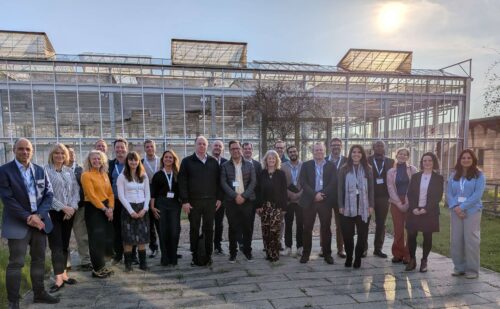
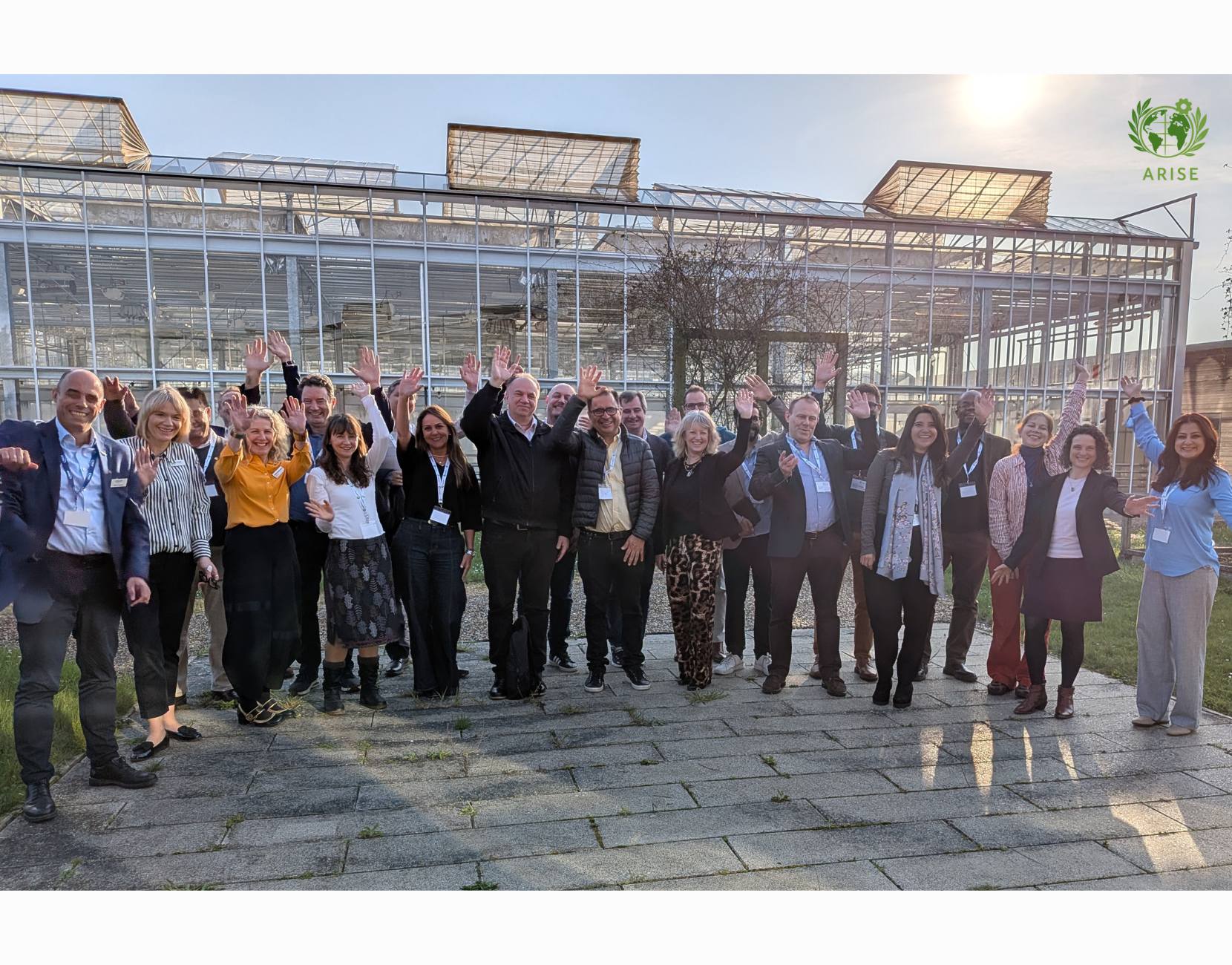
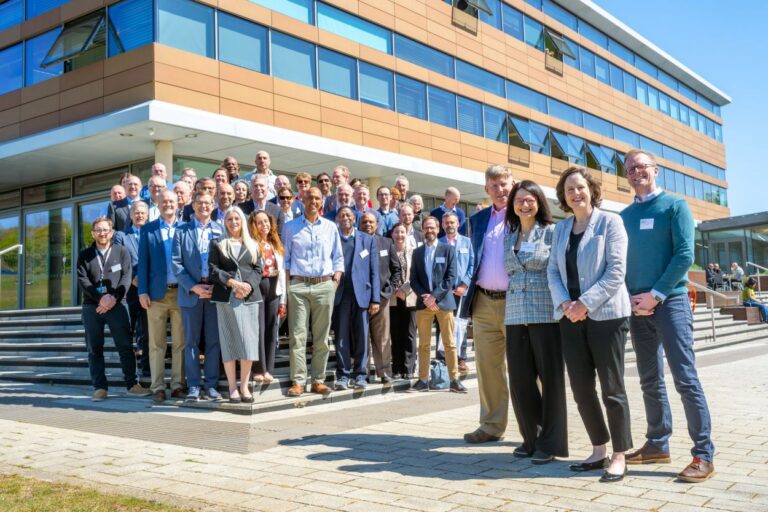
Image: UK-CGIAR Bambara groundnut consortium members outside St John’s College, Cambridge. Credit: Aga Alexander / Crop Science Centre, Cambridge.

  • *I have permission from the copyright holder to publish this content and images.

New tool unlocks non-GM routes to fast-track breeding and crop innovation

Member News
The views expressed in this Member News article are the author's own and do not necessarily represent those of Agri-TechE.

A new tool to fine-tune plant genomes without changing their DNA could offer a fast and precise alternative to GM breeding and play a key role in developing resilient crops in response to climate change.

A study led by members of the Chromatin and Memory group at the Department of Plant Sciences, University of Cambridge has uncovered a new way to reprogramme plant genomes using ‘epigenetic engineering’ to change gene activity without altering the underlying DNA sequence.

Epigenetics is the system that sits on top of the DNA and turns genes on and off. The process works by chemical tags or ‘biological switches’, known as epigenetic marks, attaching to DNA and telling a cell to either use or ignore a particular gene.

The research found that a specific biological switch, H3K4me3, can directly activate genes and encourage genetic recombination – the exchange of genetic material to create DNA with new traits – even in areas of the genome that are normally hard to access.

The work opens the door to non-GM approaches to precisely modify plant characteristics, allowing breeders to transfer useful plant features like disease resistance from wild varieties to elite cultivars.

“Increasing the resilience of crops in response to a changing climate is one of the most pressing problems of the 21st century,” said Associate Professor Jake Harris, Head of the Chromatin and Memory group at the Department of Plant Sciences and last author of the paper.

“This technology could accelerate plant breeding by increasing genetic mixing in regions of the genome that are usually locked down. It could also enable non-GM enhancement of key traits such as disease resistance, stress tolerance, and yield stability,” he said.

The paper was published in the journal ‘Nature Communications’ on 31 October 2025.

H3K4me3 causes fundamental genome changes in plants

Building on the latest advances in genome engineering technologies, the team used CRISPR gene-editing tools to precisely place H3K4me3 at specific points in the genome.

They found that directing this chemical signal to specific genes can turn on normally silent genes, enhance disease resistance by activating defence genes, and increase genetic material exchange (meiotic crossovers) in regions that are normally difficult to reach.

“We were intrigued by the long-standing question of whether histone marks like H3K4me3 actually cause changes in gene activity or merely reflect them,” said Harris. “Advances in CRISPR-based ‘epigenome editing’ made it possible to test this directly, so we built tools to do just that in plants.”

“We engineered a modular CRISPR SunTag system that recruits enzymes capable of depositing H3K4me3 at chosen genomic sites. We then measured changes in gene expression, disease resistance, and recombination using molecular, genetic, and sequencing-based approaches.”

“The study shows that H3K4me3 can directly activate genes and promote genetic recombination when precisely placed using CRISPR tools. It demonstrates that this modification can be causally linked to fundamental genome functions in plants,” he said.

Opening new opportunities to accelerate breeding

The key collaborator for this work was Professor Ian Henderson and his Genetic and Epigenetic Inheritance in Plants group – who the Harris group share lab space with.

“One of the most exciting results in the manuscript is about stimulating crossovers,” said Harris.

Increasing genetic mixing in areas of the genome that rarely recombine or shuffle could be key to speeding up the breeding process for future crop improvement.

“We have Ian Henderson and his lab to thank for this. Without Ian there is no way we would have even thought to test this and would certainly not have been able to design the guide RNAs or test them accordingly.”

“We were surprised by how powerful the modification was at stimulating recombination. With a single guide RNA we could blanket entire megabase-spanning regions, because they were repetitive in nature.”

“It suggests that chromatin marks can actively shape the genomic landscape in ways we hadn’t appreciated before,” he said.

Team effort building on previous research

Harris is keen to emphasis the incredible team effort behind this work, especially the first authors, Dr Jenia Binenbaum, Postdoctoral Research Associate, and Vanda Adamkova, PhD student – both based in the Harris lab.

The study also builds on epigenetic gene regulation work from Steve Jacobsen’s lab at the University of California, Los Angeles (UCLA) where Harris was a postdoctoral researcher until 2021.

“The initial discoveries for this work were made by researchers in Steve Jacobsen’s lab back when I was a postdoc in his group. They found that this H3K4me3 depositing version of SunTag was able to switch a reporter from silent to active – this was a key discovery.”

“When I moved to Cambridge, as my lab was going to focus on these types of marks, Steve kindly let me continue to work on and develop these approaches in my own group.”

In terms of next steps, the team hope to move some of these insights into crop species to test whether similar effects can be achieved in agriculturally important genomes.

“On the research side, we’re exploring other chromatin modifiers that might be even more effective or specific and ways to express them in particular tissues or on demand. It’s an exciting time,” Harris said.


Funding: This work was supported by a Royal Society and the European Research Council.

Reference: Jenia Binenbaum, Vanda Adamkova et al., ‘CRISPR targeting of H3K4me3 activates gene expression and unlocks centromeric crossover recombination in Arabidopsis’. Nature Communications, DOI: 10.1101/2025.02.07.636860

Image: Conceptual 3D rendering of chromosome. Credit: Koto Feja (Getty Images).

  • *I have permission from the copyright holder to publish this content and images.

Why Human Factors Will Drive Business Growth in 2026

Member News
The views expressed in this Member News article are the author's own and do not necessarily represent those of Agri-TechE.

When was the last time you abandoned a product because it was frustrating to use? When products are frustrating to use, users will abandon them, share their discontent or fail to adopt them in the first place.

For start-ups, that could mean losing customers or a potential investment opportunity. For global enterprises, this could mean millions in lost revenue and reputational damage.

The simple truth is that human factors and usability aren’t just side-lined design considerations anymore; they’re business imperatives.

The Business Case: Human Factors Drives Measurable Outcomes

Human Factors (HF) is no longer optional; it’s a strategic growth driver.

In today’s hyper-competitive market, products succeed or fail based on how well they fit into human lives. Human factors or usability engineering ensures that technology adapts to people, not the other way around. And the outcomes are beneficial to start-ups all the way through to global multinationals.

For start-ups, every dollar truly counts, which makes early investment in usability an essential part of building a successful product. Addressing usability from the outset helps prevent costly redesigns later and supports faster overall growth. By identifying critical usability issues before designs are finalised, teams can reduce time to market and avoid the rising costs that come with late-stage changes. Strong usability also improves adoption and long-term retention by creating a simple, intuitive first-use experience that removes unnecessary friction and helps new users feel confident from the start.

For multinationals, scale inevitably brings added complexity. Integrating Human Factors into development helps with the understanding of diversity across markets, whilst supporting regulatory compliance and safeguarding brand reputation. By designing for diverse contexts, languages and cultural norms, organisations can de-risk global releases and ensure products feel intuitive to users everywhere. Robust Human Factors evidence also strengthens compliance across regulated environments, helping protect brand reputation. With repeatable usability methods embedded into development, teams can scale more consistently and reduce variability across regions. Thoughtfully considered workflows also cut the support burden by reducing confusion and minimising user errors.

When products fit humans, business metrics move. Conversion improves, error rates drop, customer complaints fall, and customer loyalty rises. The return on investment is real, not theoretical.

Why 2026 is a Turning Point for Human Factors

Accelerating innovation, tighter regulations and rising user expectations have transformed Human Factors from a ‘nice to have’ into a core business strategy. It is no longer a design debate; it is now a growth decision.

Technology is evolving faster than ever. AI-driven experiences, automation and global markets are reshaping how people interact with products. Regulatory complexity is raising the bar on accessibility and sustainability, while diverse users are demanding inclusivity, clarity and calm human-centred digital experiences. These shifts are making Human Factors indispensable.

Here are just a few reasons why Human Factors matters more than ever in 2026:

AI-Driven Experiences Require Human Factors Integration
Intelligent systems demand interfaces that feel intuitive and trustworthy. The integration of Human Factors into the development of these systems, ensures clarity, control and transparency, without which adoption stalls.

Zero UI and the Rise of Minimalism
User interfaces are moving beyond clicks and towards voice, gestures and predictive interactions. Designing for intent, reducing cognitive load and prioritising simplicity over clutter is essential in a world of constant screen time and digital noise. Simplicity is a necessity; think clarity over clutter.

Ethical and Inclusive Design
The ‘average user’ myth is dead. Human Factors is championing diversity by designing for neurodiversity, accessibility and digital wellbeing. Inclusive user testing creates products that meet users where they are, not where assumptions place them. Aim for designs to be inclusive and human.

Human-Centric Automation
Careful consideration is needed when using automation to reduce user workload, ensuring it does not unintentionally add complexity. Human Factors ensures careful balance between humans and systems, enhancing efficiency with control for optimal use.

Sustainable UX
Designing for longevity and digital efficiency reduces e-waste and aligns with global sustainability goals – an area of importance for many larger corporations. Environmental responsibility ought to be a part of the initial design conversation.

Healthcare and High-Stakes Systems
Increasing complexity and compliance in healthcare demands intuitive, error-resistant designs. Human Factors mitigates risk and improves safety in critical environments.

As we move into 2026, there is an emphasis on humanising technology to feel more intuitive and integrated, while ethically navigating the challenges of AI and increased digital presence. Human factors is the discipline that keeps pace with these forces, aligning product decisions with real human behaviour and needs.

Make Human Factors Your Growth Driver: Practical Strategies

1. Integrate Human Factors Early

Integrating Human Factors early in your development is essential because late-stage usability fixes can be expensive, ineffective, and often only address symptoms rather than the underlying causes of poor UI design.

Beginning early allows teams to validate the user need before defining the solution, ensuring the problem being solved is the right one. It also enables a clear understanding of the context of use, including environmental conditions, constraints, stressors and variations in user capabilities and limitations, which shape system requirements.

At this stage, it is also useful to consider function allocation within the system architecture by determining what tasks are performed by the system versus the human to optimise overall performance.

2. Adopt Agile Usability

Adopting an agile usability approach ensures that usability is continuously improved throughout the development. The iterative nature of an agile development is ideal for allowing teams to identify and address use-related issues early, rather than after they become embedded in the design and are costly to change. This approach keeps the product aligned with evolving user needs and maintains a strong user‑centred focus.

In addition to user testing, applying analytical methods to identify high‑risk use steps and design for tolerance, recovery and prevention is also critical.

3. Understand the Diversity of your Users & Markets

To understand the diversity of your users and markets, you need to look past any ‘one‑size‑fits‑all’ assumptions and make decisions grounded in robust early‑stage user research. This helps ensure you truly understand who you are designing for and the range of abilities, experiences and contexts they represent.

Building accessibility in from the start is essential, creating interfaces that are Perceivable, Operable, Understandable and Robust (POUR), by default. To avoid biased outcomes, user studies should include representative and diverse participants across abilities, experience levels and geographies.

To scale effectively while localising appropriately, language and terminology must be culturally appropriate and should go beyond simple translation by adapting to local norms, such as date formats, numeracy conventions and other cultural expectations.

4. Align Human Factors with Business KPIs

Aligning Human Factors with business KPIs ensures that usability improvements directly contribute to measurable and meaningful outcomes, such as higher conversion and retention rates, fewer customer complaints or product recalls and reduced operational costs.

By tying usability efforts to measurable indicators, teams can demonstrate the tangible value of user‑centred design and prioritise changes that have the greatest business impact. This includes linking usability enhancements to safety‑related indicators such as incident reports, use‑error rates, training time, and monitoring and analysing costs related to user complaints, support demands and productivity impacts.

5. Treat Instructions as Part of the Product

Treating Instructions for Use (IFUs) as an integral part of the product is essential. IFUs that pass formal review but fail in real‑world use can lead to user error, non‑compliance, complaints and increased risk. Effective instructions must therefore be designed around real tasks and real conditions (not to just satisfy compliance requirements), and should be tested early for readability, comprehension and practical usability. This ensures any improvements can be made well before launch. It is also worth noting that safety‑critical or emergency scenarios require particular attention, with clear affordances and error‑proof steps designed to support users under stress.

Training and guidance should also be considered as part of the overall solution to minimise cognitive load and help users operate the product confidently and effectively.

Is Your Product Human-Centred?

Whether you’re bringing a first product to market or scaling a global portfolio, Human Factors can de-risk decisions, facilitate growth and accelerate time to market. If you’d like a practical plan tailored to your context, we can map your Human Factors strategy to the outcomes that matter – adoption, safety, compliance and brand trust.

Please get in touch with our dedicated Human Factors team to begin.

Get in touch

Contact us via email on design@egtechnology.co.uk, by giving us a call on +44 01223 813184, or by clicking here.

Written by Bec Wilkins – eg technology Ltd

  • *I have permission from the copyright holder to publish this content and images.

EU-UK dynamic alignment: what farmers need to know

Member News
The views expressed in this Member News article are the author's own and do not necessarily represent those of Agri-TechE.

As discussions progress between the UK and the EU on a new Sanitary and Phytosanitary (SPS) agreement, one proposal is gaining particular attention across UK agriculture: dynamic alignment. This would involve the UK voluntarily aligning with EU rules for plant health and pesticide regulation from June 2027.

While the proposal aims to simplify trade, the consequences for crop protection, compliance, and farm business planning could be significant. We provide a clear summary of what we know so far and what farming clients should be preparing for.

What is Dynamic Alignment?

Dynamic alignment is not a single agreement, but rather a broader regulatory framework in which the UK agrees to follow EU rules in selected areas, updating in real time as the EU updates its regulations.

For agriculture, the proposed SPS agreement focuses heavily on:

  • Plant health regulations
  • Pesticide approval processes
  • Maximum Residue Limits (MRLs)
  • Border and export protocols

If adopted, this would bring UK regulatory systems significantly closer to those of the EU.

Why is it being considered?

The primary goals are to:

  • Reduce friction at borders
  • Simplify export of agri‑food goods
  • Improve regulatory cooperation
  • Reduce the risk of shipment rejections

From a trade perspective, alignment could remove many of the current barriers faced by UK growers exporting into the EU, especially those who rely on chemistry‑sensitive supply chains.

Key Risks for UK Growers

Loss of Active Ingredients

Alignment could mean immediate or phased removal of GB-only approvals.
The NFU warns that alignment in June 2027 could:

  • Remove four recently approved GB‑only actives (e.g. isoflucypram, pydiflumetofen)
  • Ban 18 additional actives used in 100+ GB crop protection products
  • Accelerate losses as the EU conducts ongoing reviews (e.g. flutolanil, phenmedipham, fludioxonil)

Glyphosate Restrictions

New EU limits include:

  • A maximum of 1.44 kg/ha/year
  • Restrictions on pre‑harvest desiccation

GB currently still permits pre‑harvest use — but alignment may remove this.

MRL Conflicts

One of the most concerning risks for growers:

  • Crops treated legally in the UK in 2026/27 may exceed EU MRLs after alignment
  • This affects stored crops, in‑transit crops, and processed goods
  • Farmers could be left with unsellable stocks

This risk is particularly acute for combinable crops, potatoes, veg, and fruit destined for EU-linked markets.

Potential Benefits

The alignment is not entirely negative:

  • Reduced border checks could cut delays and costs
  • Access to 20+ EU-approved actives, many of them biopesticides
  • Ability to use EU systems such as mutual recognition and free movement of treated seeds

These may support integrated pest management strategies and offer new, lower‑risk products.

Potential Alignment Scenarios and Considerations for Farmers Right Now

Whilst we don’t know how this potential alignment will play out just yet, there are several options being considered. It is possible that the UK will fully adopt the EU rules as soon as the SPS agreement goes live. The UK may adopt the agreement but with some delay, or they may manage the alignment alongside existing GB approval renewal dates so that at renewal, GB and EU decisions are then harmonised at that point in time. For growers now, this means:

  1. Consider market exposure  – any business selling through EU-facing supply chains or storing long-life commodities should review contracts that extend into 2027/28 and consider MRL requirements and future spray programmes.
  2. Stock management – If commonly used actives are banned, on-farm stock may become unusable and so forward purchasing should be approached cautiously.
  3. Cropping plans – For crops at high risk of MRL or chemistry loss, consider alternative actives (or stay abreast of developments), varietal strategies and IPM options.

Summary

The EU–UK dynamic alignment proposal could reshape farm regulation in one of the most significant ways since Brexit. While it promises smoother trade and access to new biological products, the risks, particularly surrounding pesticide withdrawals and MRL compliance, are substantial and could impact cropping, marketing, and agronomic decisions as early as 2026.

Joining Ceres Research as a member gives you direct access to timely insights such as these, as we continue to monitor developments and share any early signs of how the UK wish to proceed, in Monthly Agronomy Clubs or Digests- keeping you informed and ahead in a rapidly evolving sector. 

  • *I have permission from the copyright holder to publish this content and images.

LettUs Grow joins QuBOOSTR Consortium to pioneer UK glasshouse rubber production

Member News
The views expressed in this Member News article are the author's own and do not necessarily represent those of Agri-TechE.

LettUs Grow is proud to announce its participation in QuBOOSTR. This £2.4m precision breeding project is a collaboration between lead partner QuberTech, the John Innes Centre and LettUs Grow. The initiative is funded by the UK Government Defra’s Farming Innovation Programme and delivered in partnership with Innovate UK.

The QuBOOSTR project aims to domesticate dandelions, a plant that naturally produces latex in its root system, as a sustainable source of rubber for the UK. Historically, dandelion latex levels were too low to be commercially viable. However, this consortium is leveraging gene editing and analytical tools to optimise the plants for higher-grade production at scale. By combining the John Innes Centre’s world-leading plant science with QuberTech’s gene-editing expertise and LettUs Grow’s Advanced Aeroponics™ technology, the partnership will optimise the crop for high-density, soil-less indoor farming.

For LettUs Grow, this project represents a significant expansion of aeroponic applications into “opportunity crops”. Our Aeroponic Rolling Bench™ technology provides the precise, soil-free environment necessary to enhance root growth and allow for the clean and easy access required to harvest and study latex-producing roots. By proving the efficacy of aeroponics for industrial crops, we are opening new doors for commercial growers to diversify beyond food into high-value industrial commodities.

“LettUs Grow are very excited to commence this Innovate UK project, using our unique Aeroponic Rolling Bench technology to support Qubertech in their mission to boost resilience of the global rubber supply. By boosting crop performance and enabling clean and easy access to the crop roots, we believe this exciting R&D could further expand the market for high-tech glasshouse operators worldwide.” – Jack Farmer, Co-Founder and CSO of LettUs Grow.

The programme facilitates research-industry collaborations to pioneer innovative biotech and farming solutions. The QuBOOSTR (Quality Bioengineering for Optimised Output & Sustainable Technologies in Rubber producing crops) project enables the UK to innovate new crops and break down the barriers currently holding farmers back. Crucially, it addresses the need for sustainable, UK-based supplies of global commodities, such as rubber, which are threatened by climate change and supply chain vulnerabilities.

For questions or to arrange interviews, contact: 

Portia Hill

LettUs Grow Marketing Lead

portia.hill@lettusgrow.org

£2.5m project launches first precision-bred oilseed rape on commercial farms in Europe

Member News
The views expressed in this Member News article are the author's own and do not necessarily represent those of Agri-TechE.

A £2.5m, three-year project bringing the first precision-bred oilseed rape onto commercial farms in Europe has been launched this week, marking a major step towards rebuilding the UK’s most important break crop.

The project, Light Leaf Spot Enhancing Resistance And reducing Susceptibility with EDiting (LLS-ERASED), is led by the British On-Farm Innovation Network (BOFIN) and funded through Defra’s Farming Innovation Programme, delivered in partnership with Innovate UK. It brings together farmers, plant breeders, crop scientists and agronomists to tackle light leaf spot, oilseed rape’s most damaging disease, using precision breeding alongside new disease-management tools.

Light leaf spot has become the number one disease threat to UK oilseed rape, with yield losses estimated to have risen from £94m in 2017 to more than £300m in 2022. Despite widespread fungicide use, control has become increasingly unreliable as pathogen populations evolve and resistance to azole fungicides spreads. At the same time, currently available varieties struggle to offer strong, durable resistance.

LLS-ERASED aims to change that by delivering oilseed rape varieties with significantly reduced susceptibility to light leaf spot, developed using precision-breeding techniques that accelerate the introduction of beneficial traits without introducing foreign DNA. Crucially, the project will move these traits beyond the laboratory and into farmer-led field trials on commercial farms, supported by real-time disease forecasting and decision-support tools.

“This project is game-changing for farmers,” says LLS-ERASED project lead Tom Allen-Stevens, founder and managing director of BOFIN.

“It will put precision-bred oilseed rape technology on to their farms for the first time across Europe. This is combined with risk forecasting and a new decision support tool that will bring growers effective disease control that is truly risk-based and data-driven. That is the reboot the industry needs, and that is what will help reverse the decline in the crop’s planted area.”

At the heart of the project is a newly identified plant susceptibility gene. By switching off this gene using precision breeding, researchers have shown it is possible to reduce the ability of the light leaf spot pathogen to infect the crop, offering a more durable form of protection than traditional resistance genes that pathogens can quickly overcome.

The science is being led by John Innes Centre and the University of Hertfordshire, working alongside ADAS and Scottish Agronomy to integrate the new trait into practical, farm-ready disease-management strategies. A consortium of leading UK and European oilseed rape breeders is involved in developing the disease-forecasting and testing material in elite commercial backgrounds. UK Agri-Tech Centre is overseeing project delivery and integration, supporting effective collaboration across partners and ensuring outputs remain focused on adoption, scalability and real-world impact.

A key element of the project is collaboration with US-based Cibus (NASDAQ: CBUS), whose Rapid Trait Development System™ (RTDS®), a suite of technologies including non-transgenic processes, enables precise genetic edits to be introduced directly into elite breeding lines with scale and speed, dramatically shortening the time needed to bring new traits to market.

“I am really excited to move our resistant material from the laboratory to field scale trials to see how it performs in a real-world setting,” says LLS-ERASED technical lead Dr Rachel Wells of John Innes Centre.

“Precision Breeding offers us an excellent opportunity to develop material to combat our pests and pathogens while supporting sustainable farming. Developing a trusted pipeline to streamline the process from research to variety release will be invaluable for crop improvement. Bringing this work together in an integrated pest management package looking at multiple, combined solutions, is the future of crop protection.”

For airborne diseases like light leaf spot, information on timing of pathogen spore release and virulence in pathogen populations is essential for effective disease control, adds Yongju Huang, Professor of plant pathology at University of Hertfordshire. “Combined with host resistance information about the pathogen, this project will develop an evidence-based real-time decision support system for farmers to achieve effective disease control and reduce the reliance on chemicals.”

Alongside new varieties, LLS-ERASED will deliver a farmer-led delivery platform designed to support the adoption of precision-bred crops. This includes a new disease-management tool combining weather data, pathogen monitoring and on-farm trial results to guide fungicide use more accurately, reducing unnecessary applications while protecting yield.

“The project offers a well-timed opportunity to focus on improving the control of light leaf spot, and the field-based guidance available,” comments Dr Faye Ritchie, technical director at ADAS. “Farmer collaboration and knowledge is essential to build effective disease management tools and IPM testing protocols that are practical and cost-effective.”

Farmers will play a central role in LLS-ERASED through on-farm trials across England, feeding results directly into a grower-led knowledge-exchange network. The approach is designed not only to bring the first precision-bred oilseed rape varieties to commercial farms, but also to establish a pipeline for future traits. This will include resistance to other diseases and pests such as cabbage stem flea beetle, which is widely reported as a major limiting factor for UK oilseed rape growers.

“By combining precision breeding with integrated disease management and farmer-led testing, the project positions the UK at the forefront of efforts to rebuild oilseed rape production in a more resilient, sustainable way,” says BOFIN’s Tom Allen-Stevens.

“What’s more, building on similar precision-breeding grower-led platforms, it establishes the UK as a world leader in the technology and an on-farm testbed for future traits. This has potential benefits for farm profitability, pesticide reduction and food security, not just for the UK, but across Europe, as the EU moves towards greater acceptance of new genomic techniques.”

  • *I have permission from the copyright holder to publish this content and images.

Are TRL’s “Tailored for Real Life” agriculture – or is it time for a change?

Agri-TechE Blog
Agri-TechE

“Breakthroughs don’t happen by asking farmers what they want. The come from improving things people think are already fixed.”

Provocative words from Andrew Bait, farmer, CEO and founder of SwarmFarm Robotics, the keynote speaker at the AgriFutures evokeAG conference in Melbourne, Australia.

The conference has seen many familiar discussions – including the oft-repeated lament of research excellence failing to translate to commercial on-farm improvements. So maybe it’s time to challenge the orthodoxy of Research and Development being part of the same continuum.

But more of that later.

EvokeAG BC 2026
EvokeAg OZ Belinda 2026

Going beyond R & D

Many of the conversations have referred to the need for not just R (Research) and D (Development) but also E (Extension), A (Adoption) and S (Scale). All have different drivers, motivations and require very different expertise and levels of support. When lamenting the lack of academic spin-outs that have reached commercial viability, to expect everything to sit within a University or research institute are, to say the least, ambitious.

Currently the UK government is supporting the “A” through its ADOPT programme and the pilot Agri-Scale initiative is an acknowledgement of the challenges encountered in growing a business. So that’s the “S” (hopefully) taken care of – at least in agri-automation.

But why has the “E” – Extension – become, at best, an old-fashioned word in UK agriculture? Internationally, it’s often the bridge between an evolving innovation and building confidence among farmers to adopt a tech, tool or practice.

Hence the need for the joined-up agri-tech innovation ecosystem. It is a big ask to expect the Research – which is about generating knowledge – to seamlessly segue into the Development – which is about finding a market fit to address customer needs bringing in the farmers’ views and input.

And arguably there’s another initial-based problem to contend with.

Is it time to move beyond TRLs in agri-tech?

The “Technology Readiness Level” (TRL) system was originally developed by NASA in the 1970s for space hardware. It gives a simple, standardised, and structured scale of 1 to 9, from early research (1), to proven in an operational environment (9). Usually Research is TRL 1-3, and Development can be anything from 4 to 8.

It has come to be the universal mechanism by which governments, research institutions, funders and innovation systems have described technology maturity and potential proximity to market.

But does it really apply in the diverse, biological systems within which agriculture operates? It works best where systems are engineered, controlled, and predictable and testing environments can be replicated. It also assumes that an innovation moves in a linear way from the lab to a prototype which is then validated and deployed. And going back to Andrew Bait’s point – the TRL system doesn’t take into account farmer trust, behavioural adoption, or the economic variability under seasonal, real world conditions.

Nor does it consider regulatory risks.

Admittedly it provides a helpful common language for the innovation community to understand and simplifies cross-sector comparisons. It also demonstrates the likely time (and money) needed for commercial deployment and can also give a sense of the number of validation hurdles that have been overcome.

But increasingly it seems a less-than-ideal way of describing the evolution of technologies being developed for agriculture.

Evokeag bc 2026
EvokeAG BC 2026

If not TRLs – then what?

Should we be considering a system that considers farmer adoption metrics, or some indication of industry validation? TRLs feel more about “technology push”, when we know in agri-tech it’s really about demonstrating market pull.

“Market readiness” may be more helpful – it’s a term used in the defence and aerospace industry which sees the value proposition validated, secures early customers and confirms scaleable demand.

A “Commercial Readiness Index” was developed by the Australian Renewable Energy Agency and evaluates other important parameters, such as bankability, regulatory readiness, and supply chain maturity. Especially in a complex system such as agri-tech – this feels very relevant.

“Adoption Readiness” is also crucial – this could measure parameters such as awareness among farmers, the level of interest in participating in trials, the use of demonstration plots, and the number of early adopters who go on to become customers.

Finally, “Ecosystem Readiness” would be a good indicator as to whether a supporting and enabling ecosystem exists to bring the innovation to commercial scale. These could include factors such as the availability of local farmer advice, the level of government support, access to finance, the skills and labour markets, and even parameters such as access to cold chain and logistics.

No easy answers

It’s easy to plead special cases for agriculture and argue why it doesn’t fit within the usual rules of engagement. But if we are to really become effective in R, D, E, A and S, as Andrew Bait pointed out in his talk, “The future of agriculture won’t come from those who think outside the box, but from those who realise the box was optional.”

Farmers: Share your views in a major European study on climate change and mycotoxins

Member News
The views expressed in this Member News article are the author's own and do not necessarily represent those of Agri-TechE.

Climate change is reshaping farming practices – and with it, the risks linked to mycotoxin contamination.

To better understand today’s challenges in the field, the MYMATCH Project is collecting insights directly from farmers.

By sharing your experience, you will help us design practical, science‑based, digital tools to support mycotoxin risk management and build more resilient agricultural systems.

The survey takes 15-20 minutes to complete, and responses are requested by the end of May 2026.

👉 Here’s the survey link

📢 Your voice is essential to ensure solutions that truly meet farmers’ needs.

MYMATCH Project is a 4-year Horizon Europe project that aims to predict and mitigate food safety risks related to mycotoxins in agriculture.

Cranfield University is a MYMATCH Project partner, with several colleagues from the Magan Centre of Applied Mycology (MCAM) lending their expertise.

Here are our MYMATCH project partners:

Università Cattolica del Sacro Cuore – Università degli Studi di ParmaConsiglio Nazionale delle Ricerche – EXUS SOFTWARE LTD – Nemzeti Élelmiszerlánc-biztonsági Hivatal – Universidade do Minho –  VeterinærinstituttetAsociacion Valenciana de Agricultores AVA-Asaja – Euroquality – Tinexta Innovation Hub

Thank you for your support.

  • *I have permission from the copyright holder to publish this content and images.

How we support the creation of new businesses from early-stage science-based research

Member News
The views expressed in this Member News article are the author's own and do not necessarily represent those of Agri-TechE.

Maximising the impact of the publicly-funded research being conducted at Norwich Research Park is one of the core aims of Anglia Innovation Partnership, the campus management organisation. One of the ways in which we do this is by helping scientists and researchers to translate their ideas for a business into reality.

We have been successful in doing this over the last couple of years thanks to our incubator programme which has seen 17 companies receive practical and intellectual support and advice. In addition, 40 other companies are actively receiving wider enterprise support to aid their development.

Sam Graham, Enterprise Network Manager, Anglia Innovation Partnership, who runs the incubator programme, said, “Our role is to help them get their businesses off the ground and give them the best possible chance of success.”

“The incubator programme focuses on reducing the practical and structural barriers that early-stage founders face by improving access to suitable workspace and labs, helping them navigate funding opportunities and connecting them with scientific expertise right across the Park to support testing and validation of their business models.”

To read the full article, and find out more about the opportunities at Norwich Research Park please use this link: How we support the creation of new businesses from early-stage science-based research – Norwich Research Park

https://vimeo.com/norwichresearchpark

A trip to the Tees Valley HQ

Agri-TechE Blog
Meet the Network
Agri-TechE

In January some of team Agri-TechE had the pleasure of heading to the Tees Valley to the HQ of CPI (The Centre for Process Innovation).

CPI kindly hosted the first in-person meeting of our newly refreshed stakeholder group that brought together a selection of our membership to share their on-the-ground perspectives as a valuable guide for our work and future strategy.

CPI is an independent tech innovation centre and a founding member of the UK Gov’ts High Value Manufacturing Catapult. As a process development and scale-up business they exist to help businesses transform exciting scientific concepts into industry-ready, commercial businesses.

Their portfolio includes developing novel agricultural products including fertilisers, pesticides, biostimulants, seed coatings, plant and animal probiotics. They are increasingly important as a national capability to help scale up material such as biologicals, as these products become more available their ability to scale and formulate for agricultural uses is critical.

Our stakeholders are a blended group from across the membership – tech companies, farmers, researchers from across the UK. With us, they come together for peer-to-peer learning, sharing and hearing insights, and having candid discussions about what’s needed for the industry. We use their reflections and expertise to inform and shape our strategic activities.

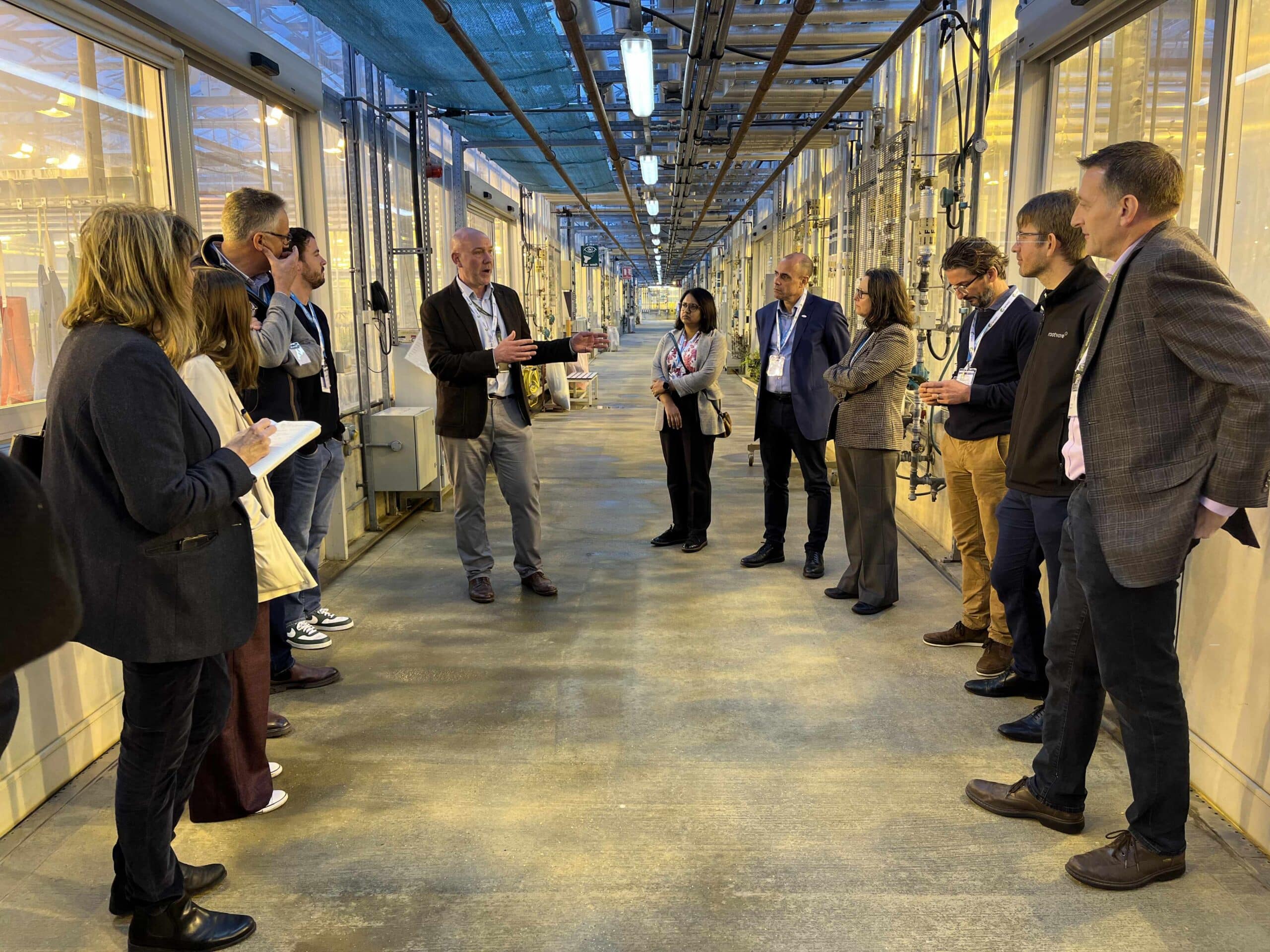
As well as the stakeholder meeting, the group were lucky to take the group on a tour of CPI’s facilities at their Wilton site to see process design and scale-up and bioprocess development.

Big thanks to CPI for hosting – especiialy Jenny Readman Alex Smith