Biostimulants: Current Outlook and Challenges Ahead

Member News
The views expressed in this Member News article are the author's own and do not necessarily represent those of Agri-TechE.

Biostimulants are gaining momentum in agriculture as innovative tools to potentially boost crop health, resilience, and yield. But what exactly are they, how do they work, and what hurdles remain before they become mainstream on UK farms? 

What Are Biostimulants? 

Biostimulants are substances or microorganisms applied to plants, seeds, or soil to enhance nutrition efficiency, stress tolerance, and crop quality – regardless of their own nutrient content. Unlike traditional fertilisers, their main role isn’t to feed plants directly but to help crops make better use of available resources and cope with environmental stresses. 

The Regulatory Landscape 

The rules around biostimulants are evolving. In the UK, there’s no dedicated regulation for these products. If a biostimulant is marketed as a fertiliser or contains significant nutrients, it falls under existing fertiliser laws. If it’s mixed with pesticides or claims to protect against pests, stricter regulations may apply. This patchwork of rules means the market is crowded, with varying product claims and little standardisation in providing evidence of efficacy. 

Types of Biostimulants 

Biostimulants fall into two main groups: 

  • Microbial: These include beneficial fungi and bacteria that interact with plant roots. 
  • Non-microbial: This group covers a wide range, such as humic substances (from decomposed organic matter), protein hydrolysates (amino acids and peptides), seaweed extracts, plant extracts, biopolymers like chitosan, and certain inorganic compounds (e.g., silicon, selenium). 

How Do They Work? 

Research shows biostimulants can help crops withstand drought, salinity, and temperature extremes, improve nutrient uptake, and boost yields. However, their effects are often variable and depend on local conditions. Scientists are still unravelling the exact mechanisms, but they can include stimulating soil microbes, enhance water retention, and triggering plant stress responses. 

Key Challenges 

Despite their promise, several challenges currently slow the adoption of biostimulants: 

  • Variable Results: Biostimulants can have less consistent outcomes than conventional fertilisers. Their effectiveness depends on matching the right product to the right problem and local conditions. 
  • Lack of Independent Evidence: Much of the available data comes from manufacturers or overseas trials, making it hard for UK farmers to judge what will work on their land. 
  • Regulatory Confusion: With no unified definition or regulation, comparing products and ensuring quality is difficult, which can undermine trust. 

Practical Tips for Farmers and Growers 

  • Seek Independent Evidence: Look for peer-reviewed studies and experiments and be cautious of bold claims without robust backing. 
  • Start Small: Trial biostimulants on a limited area before wider use. 
  • Stay Informed: The science and regulations are evolving—keep up with the latest research and guidance. 

Want to go deeper?

For a comprehensive, evidence-based review—including detailed mechanisms, regulatory updates, and peer-reviewed research—Ceres Research Members can access the full report here: “Biostimulants 101.” 

If you’re not a member, consider joining here for access to the latest research and expert insights. Agri-TechE Members receive 10% off our membership under the Members Discount Scheme!

  • *I have permission from the copyright holder to publish this content and images.

Seeing nitrogen from space: Real world results from hyperspectral imaging

Member News
The views expressed in this Member News article are the author's own and do not necessarily represent those of Agri-TechE.

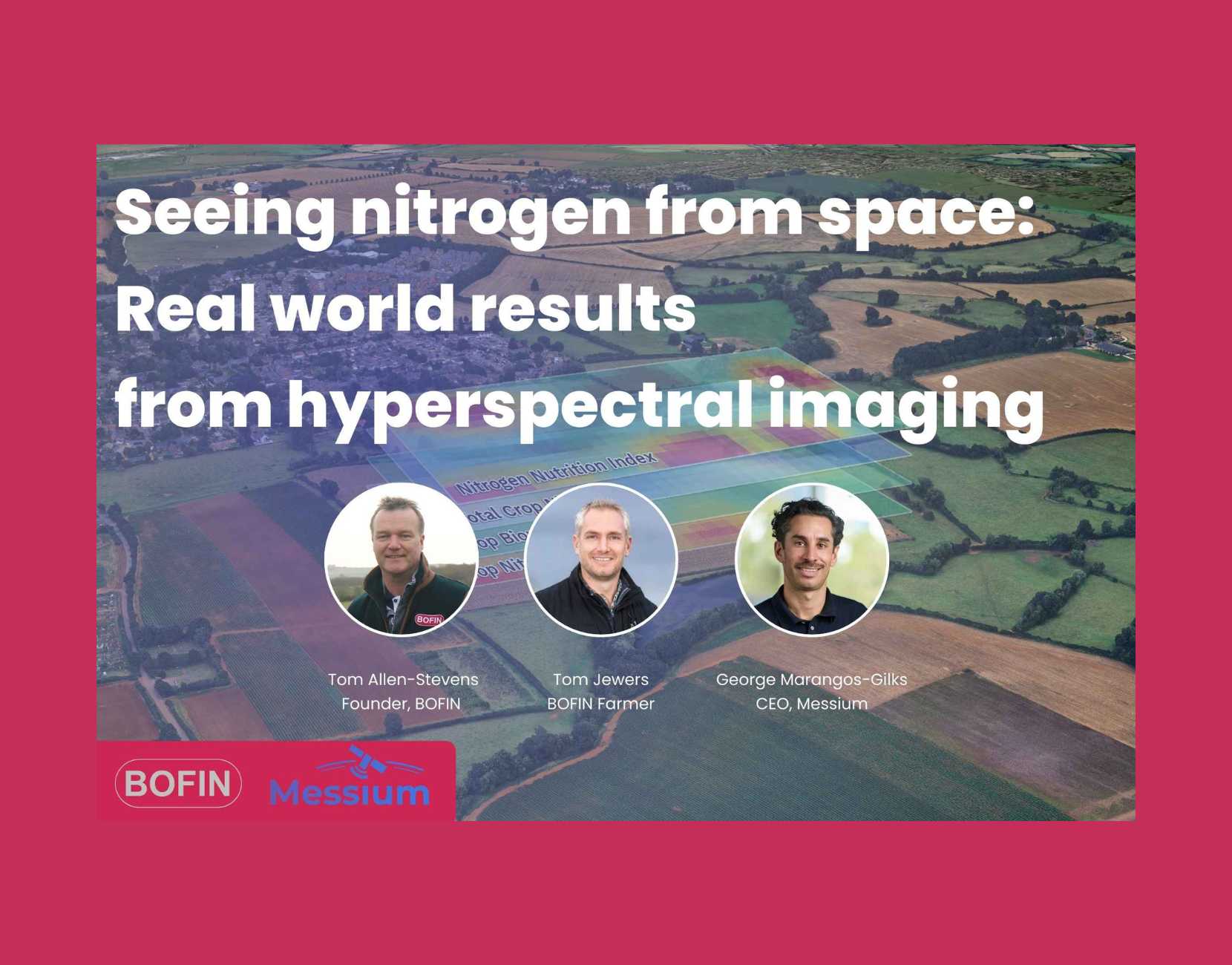
UK farmers are invited to examine new evidence on the use of hyperspectral satellite imaging to inform nitrogen management, at a webinar on Thursday 26 February (8.30am).

The British On-Farm Innovation Network (BOFIN) is working with agri-tech company Messium to explore how this next-generation satellite technology performs on commercial farms and the value it can realistically deliver.

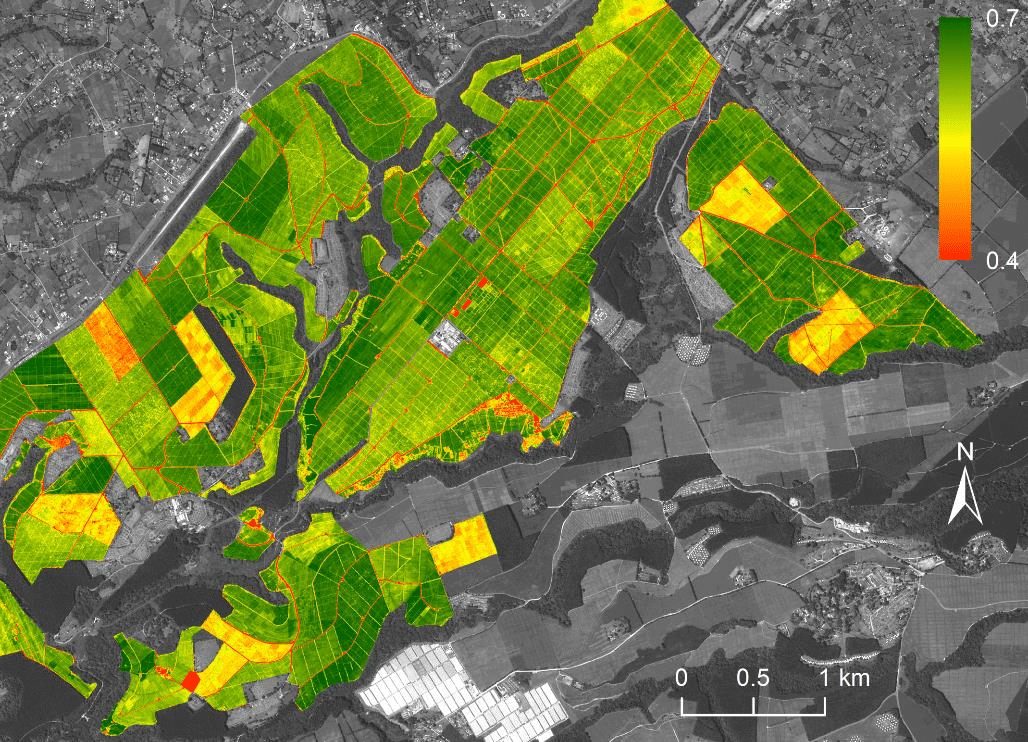
Unlike conventional satellite imagery such as NDVI, which measures crop greenness or biomass, hyperspectral imaging can detect the specific wavelengths associated with nitrogen concentration in the crop itself.

“Previous satellite tools couldn’t tell whether a crop was short of nitrogen or just low biomass,” explained Messium CEO George Marangos-Gilks. “Hyperspectral satellites can now do both. That allows us to identify where crops are under or over-fertilised and where nitrogen is likely to lead to an uplift in yield.”

Messium’s approach is underpinned by more than 21,000 crop samples analysed in laboratories and linked to satellite imagery to train its models. Independent blind testing has shown accuracy of around 85% compared with lab results, with further UK validation underway.

Results from more than 150 on-farm trials across the northern hemisphere suggest the technology can help farmers move closer to optimum nitrogen levels. Across its trials, Messium reported a net profit benefit in 65% of cases, with an average yield uplift of 0.3t/ha and margin improvements of around £50/ha.

The live online Q&A session will be held at 8.30am on Thursday February 26. It will include side-by-side comparisons with NDVI imagery and a discussion on costs, complexity and where hyperspectral data may add value. Hosted by Tom Allen-Stevens, Oxfordshire farmer and founder of BOFIN, the session will focus on the farmer experience with input from growers who have first-hand experience of Messium’s technology.

“Nitrogen is one of the biggest cost, productivity and environmental levers on farm, so any tool claiming better insight needs proper scrutiny,” said Tom. “This session is about looking at the evidence, the limitations and how it works in practice on real farms.”

To register for the live Q&A visit https://tinyurl.com/messiumwebinar26


  • *I have permission from the copyright holder to publish this content and images.

AbacusBio believes the Precision Breeding Act presents a ‘huge opportunity’

Meet the Network
Agri-TechE

Choosing the right livestock breed/line or crop variety is crucial to any farming operation. However, increasing pressures from climate change, which continue to impact disease and yield, are making these decisions more important than ever.

In this month’s member spotlight, we talk with Tim Byrne, Managing Director of AbacusBio International Limited, about how the 2025 Precision Breeding Act might provide a solution for climate-resilient agriculture.


Abacus Bio-53
Lamb AbacusBio International Limited


Growing up on a beef and sheep farm in New Zealand, Tim has firsthand experience with the essential role genetics plays in the production system. Now, as Managing Director for the agri-science consultancy firm, AbacusBio International Limited, he’s keen to help others with their own on-farm decisions.

AbacusBio centres its business on genetic improvement, with a broader offering of economic and sustainability impact assessments, business case development, financial modelling, and strategic agri-business planning. The company has offices in the UK, New Zealand, Canada, and Australia, helping various businesses make informed decisions.

“It’s hugely important that farmers consider the value that genetics can add,” Tim says.

He notes that incremental, cumulative, and permanent improvements in plant varieties or animal populations deliver profit and sustainability outcomes for farmers and the wider supply chain.

“There’s evidence across multiple industries indicating the impact we’ve had. Our advice has influenced somewhere near 14% of the global arable crop land,” Tim says. This influence has come from  AbacusBio’s work with their largest client, Bayer Crop Science.


The Precision Breeding Act – what does this mean for the future of agriculture?

The 2025 Precision Breeding Act covers genetically modified crops in the UK and, according to Tim, represents a ‘huge opportunity’ for UK agriculture to adapt to climate change and boost competitive advantage in plant production.

He points out, “We know we need climate resilience, we know we need disease resistance. The Precision Breeding Act and associated regulations enable the industry to accelerate outcomes that would otherwise be achieved through conventional breeding, helping deliver traits we already know will be critical in the future.”

Tim explains that climate change in the crop breeding system increases production pressures: “With more climate variability, there’s likely to be diseases that appear that are not present now.”

He adds, “The Precision Breeding Act, and genetic improvement in general, offers additional tools for the industry to respond to those challenges. For instance, produce more resilient crops that are resistant or tolerant to diseases.”


Cannabis Plant AbacusBio International Limited
Cattle AbacusBio International Limited

Integrating precision breeding into traditional programs

When it comes to precision breeding, Tim says AbacusBio can offer the right guidance and support.

“We have a huge amount of experience and expertise in designing and running breeding programs in all sorts of different contexts, in many plant and animal species,” Tim says.

“One important consideration is how precision-bred organisms should be included in traditional breeding programs, or how the information on precision-bred organisms should be included in traditional breeding programs.


The role of AI and data

Alongside the Precision Breeding Act, Tim highlights how AI and data management will shape future agricultural decisions, stressing the importance of expert guidance to maximise their benefits.

“We’re in a very fast-changing environment, which holds true for the climate and the physical environment. It also holds true for the geopolitical, trade, and regulatory environments, and because of that, information and data are key in driving decision-making.”

“Having the right advice, combined with flexibility in strategic decision-making, is critical, especially in an environment where conditions and priorities can change rapidly,” says Tim.


Tim Byrne, MD
Tim Byrne, MD
AbacusBio International Limited.

“We’ve had some nice connections made through the Agri-TechE platform.

We’ve had conversations with some local breeding organisations and agri-tech businesses. So, it’s been really beneficial from that perspective.”

Take a look at AbacusBio’s page in the Member Directory to find out more or to get in touch with the team.

Free Open Online Course “Integrating Food and Energy Production on Farmland” launched

Member News
The views expressed in this Member News article are the author's own and do not necessarily represent those of Agri-TechE.

A new online course “Integrating Food and Energy Production on Farmland” has just launched. Developed by the University of Reading as part of the EU funded project Value4Farm (https://value4farm.eu) it aims to build an understanding of the ways in which crop and renewable energy production can be integrated on farmland and explores the innovative ways farmers are combining crops with solar panels in agrivoltaic systems and producing biogas. 

Aimed at farmers, it explores how agrivoltaics and biogas production technologies fit alongside traditional farming. It allows learners to discover what works (and what doesn’t) and understand the real benefits and challenges farmers face when integrating energy production on their farms. 

The ecological and technical benefits of these renewable energy systems and how they impact the whole farm ecosystem from soil health to food production are explored alongside the support available to implement these technologies. The course also looks at how policy, regulations and legislation shape what’s possible on farms and how they can influence renewable energy adoption. Through providing information on farming practices and on the possibilities of renewable-based solutions, the course aims to support farmers in making suitable choices for their farm and situation. 

The course is available for free through FutureLearn – Integrating Food and Energy Production on Farmland – Online Course and runs over 2 weeks of self-directed learning. You can start, study and complete the course when it suits you. The course has also been accredited by EIT Food (EIT Label | EIT Food Learning Services) and learners successfully completing the course will receive a Certificate of Achievement. 

We look forward to welcoming you on to the course! 

  • *I have permission from the copyright holder to publish this content and images.

It’s time for Ecosystem Intelligence

Member News
The views expressed in this Member News article are the author's own and do not necessarily represent those of Agri-TechE.

At Hypernature, we’re pursuing a bold mission: to give ecosystems intelligence.

What does that mean? It means enabling ecosystems to sense, interpret, and adapt for themselves — not as passive assets we manage, but as dynamic systems with their own capacity to understand and respond to change. In practice, ecosystem intelligence becomes a new ecosystem function. A kind of nervous system. A new category of infrastructure.

If that sounds “out there,” it shouldn’t. To us, this feels like the natural evolution of human intelligence technologies applied to ecological systems. At some point, the tools we build to manage, understand and report on ecosystems begin to merge with the ecosystems themselves. This could even mark a new evolutionary transition for life on Earth (Smith & Szathmary, 1997)

The ecosystem intelligence perspective avoids the limitations of narrower foci like “business intelligence,” “nature intelligence,” or “climate intelligence.” These approaches optimise for isolated metrics, carbon, yield, biodiversity, compliance – but ecosystems don’t operate in silos. What we want is for all components of an ecosystem to thrive — jobs, production, communities, soil, biodiversity, climate resilience. Fragmented intelligence can’t deliver that.

At Hypernature, we bring decades of experience building intelligence systems that automate predictions and recommendations for complex adaptive systems. Again and again, we’ve seen ecosystems managed through narrow, oversimplified lenses — even when the real bottleneck is the absence of a system‑level perspective.

This is why we believe it’s time to build infrastructure for the ecosystem itself — a shared intelligence layer that businesses, governments, and communities can build on to make better decisions and adapt together.

So what is ecosystem intelligence made of? A hybrid of silicon‑based computation and human/institutional intelligence (land stewards, regulators, businesses, communities) giving the ecosystem the ability to sense, actuate, interpret, reason, coordinate, and adapt.

Crucially, ecosystem intelligence is notabout measuring everything or building perfect digital twins. Ecosystems are messy, incomplete, and full of uncertainty — and yet we know a great deal about how they behave.

Intelligence means making good decisions with imperfect information and recognising that desirable future states may look nothing like the present (Gunderson & Holling, 2002). Think of a degraded landscape today versus what it could become in ten years.

There is also a deep technical connection between ecosystem intelligence and the next generation of AI. The frontier of AI is moving toward world models — systems that understand and reason about the world, not just pattern‑match. This ability to interpret, predict, and reason across scales is central to ecosystem intelligence. And it’s something we’ve spent decades building and training models to do for complex adaptive systems.

One challenge with many “nature intelligence” approaches is the assumption that nature is separate from us. We see that as outdated and unhelpful. Humans are part of most ecosystems, and ecosystem intelligence requires understanding the roles our species can play within them — not pretending we sit outside them. Our relationship with living systems is still primitive. Many of the ecosystems we will eventually thrive within don’t even exist yet. Ecosystem intelligence can help us design and realise these new, resilient, productive systems (synthetic ecology, anyone?).

So where is ecosystem intelligence most needed now?

Three obvious candidates would be top of a priority list (though there are many more):

  • Global agrifood supply chains — highly exposed to ecological volatility, globally interconnected, and under pressure to transform while remaining productive.
  • Cities — which must continue delivering essential services while reinventing how they sustain themselves.
  • Degraded landscapes— over a billion hectares that need to be rebuilt into resilient, functioning ecosystems.

It’s time to think seriously about — and start building — ecosystem intelligence.

References

Smith & Szathmary. The major transitions in evolution. Oxford University Press, 1997.

Gunderson & Holling. Panarchy : understanding transformations in human and natural systems. Island Press, 2002.

Designing Hybrid User Interfaces: Bridging the Physical and Digital

Member News
The views expressed in this Member News article are the author's own and do not necessarily represent those of Agri-TechE.

As devices become increasingly complex and connected, user interfaces are being relied upon to bridge the gap between the physical and digital parts of a system. This often leads to hybrid interfaces, a blend of physical controls and digital displays. 

From complex medical equipment to dynamic pieces of consumer tech, hybrid interfaces must provide the user with the confidence and reliability of physical controls as well as the flexibility of digital displays. All must be done whilst avoiding user confusion, workflow disruption and hazards. So, how do you get the right balance?

Why are hybrid interfaces necessary?

Can’t we just put everything on a touchscreen these days? Not quite.

Physical controls provide real, tactile feedback that confirm an action has been performed without requiring visual confirmation. This tactile response reduces uncertainty and builds muscle memory for frequent and critical tasks. Hence, physical buttons are still common and necessary in medical devices, handheld tools and most vehicles.

On the other hand, digital touchscreen interfaces offer flexibility. They allow settings and controls to be stacked and hidden to reduce cognitive overload. They can also change dynamically in response to a change in user needs or the context and environment of use. This makes them ideal for devices that need to present the user with different options at different times without overwhelming the user with clutter.

When combined, these strengths highlight the value of a hybrid interface. By pairing the tactile certainty of buttons with the adaptability of touchscreens, hybrid systems can support reliable operation for critical tasks whilst still offering the flexibility to present context‑specific options when needed. This balance reduces cognitive load, prevents interface clutter, and ensures that users can work efficiently across a range of situations.

What makes a good hybrid interface?

A successful hybrid interface should feel like a single, unified system, not two separate interfaces glued together. For example, digital cameras combine physical controls for common functions (capture, focus and zoom) with digital controls for more specific tasks (mode switching and image review).

What makes a poor hybrid interface?

Hybrid interfaces can fail when the relationship between the physical and digital elements contradicts user expectations. Common issues include:

  • Poor mapping
    When a physical action (pressing a button) does not trigger a clear digital response (an on-screen confirmation), users can be left uncertain as to whether the system has registered their input, causing confusion and eroding trust in the interface.
  • Inefficient layouts
    When physical controls are positioned awkwardly, users may struggle to operate them whilst maintaining visibility of the screen. This can lead to unnecessary hand movements, breaking the flow of interaction and slowing down task completion.
  • Crowded layouts
    Clusters of buttons placed too close together increase the risk of accidental activation. Users may press the wrong control, especially under pressure or in environments where precision is difficult, specifically when wearing PPE.
  • Wrong controls for the wrong tasks
    Assigning tasks to inappropriate controls can severely impact usability. For instance, requiring precision adjustments to be made via on-screen sliders rather than tactile controls can make fine-tuning cumbersome and frustrating.
  • Sizing issues
    Controls that are too small to see clearly or too fiddly to operate compromise accessibility and efficiency. This can be particularly problematic in high-stress environments or for users with limited dexterity.
  • Ignoring environmental factors
    External conditions such as glare on screen, vibration or background noise can interfere with usability. If these factors aren’t considered during the design, the interface may become unreliable or even unusable in real-world settings.

How to develop successful hybrid interfaces

1. Start with task analysis
Begin by identifying the tasks your users need to perform. Consider how frequently these tasks occur and which ones are critical to their workflow. Assess the environment in which the interface will be used, such as lighting conditions, noise levels, stress factors, and whether personal protective equipment (PPE) is involved. It is also important to account for user limitations, including dexterity and physical strength.

2. Map the workflow
Understand the user journeys and pinpoint key touchpoints. Aim to minimise unnecessary hand travel or repositioning by arranging controls so that physical actions are spatially aligned with digital feedback and guidance. This helps create a seamless interaction between physical and digital elements.

3. Keep it simple and intuitive
Design controls so that each one serves a single function wherever possible. Use clear labelling, colour coding, and logical grouping to make navigation straightforward. Provide immediate feedback for critical actions and incorporate multisensory cues such as tactile, visual, and audible signals. Align your design with users’ mental models and familiar patterns to reduce cognitive load. Avoid duplicating controls or overwhelming users with excessive information.

4. Early user testing and iteration
Validate your assumptions early in the design process and continue testing throughout development. Frequent iteration ensures that the interface evolves based on real user feedback, leading to a more effective and user-friendly solution.

How to test hybrid interfaces with users

Testing hybrid interfaces is more complex than pure digital interfaces because they involve multiple inputs and outputs, used across varied contexts.

Key considerations:

  • Map out the full workflow and all interaction points, use this as a testing ‘checklist’
  • Use printed wireframes on physical prototypes to mimic a digital screen layout
  • Apply think-aloud protocols to capture user expectations during use
  • Simulate the environment of use (e.g. variable lighting, PPE, motion, etc)
  • Track mode switching (are users favouring physical or digital controls?)
  • Combine prototyping techniques (e.g. 3D printed buttons, paper mock ups, interactive screen, etc)
Hybrid Interfaces User Testing

The future of hybrid interfaces

We can expect even more complex integration challenges as hybrid interfaces evolve further to include AI driven features such as voice control inputs. The definition of ‘hybrid’ is expanding, it is blending traditional controls with intelligent, adaptive systems. Understanding user expectations, tasks and workflows will be more critical than ever. We, as designers, must ensure that interfaces can successfully bridge the physical and digital divide and create a cohesive, intuitive experience that supports user confidence, safety and efficiency.

Get in touch

To discuss how our skilled team can optimise your product’s user interface, please get in touch.

Contact us via email on design@egtechnology.co.uk, by giving us a call on +44 01223 813184, or by clicking here.

  • *I have permission from the copyright holder to publish this content and images.

Maternal wisdom – how mother plants prime their seeds for success

Member News
Research Digest
The views expressed in this Member News article are the author's own and do not necessarily represent those of Agri-TechE.

Whatever challenges life throws, maternal wisdom is a powerful guide for offspring through the risky stages of early development. This scenario, familiar when applied to humans, turns out to be true for plants too, according to intriguing new research from the John Innes Centre and Earlham Institute.

The study in the journal PNAS addresses longstanding questions in biology: Can plants sense the environment directly in their developing seeds, or is seasonal information acquired by their parents somehow passed down to the seed?

To investigate this, researchers took advantage of advances in single cell technology that enable molecular analysis of cells both individually and within the context of their tissue environment, in situ.

They applied this developing technology to tissue samples of Arabidopsis thaliana, a ‘model’ plant with both male and female reproductive organs.

They found that absisic acid (ABA), a plant hormone, increases in specific plant maternal reproductive tissues when the temperatures drop.

In these cooler conditions this hormone, a plant growth inhibitor, is sent early to the developing seed at a higher rate, helping it to enter dormancy (the ‘sleeping state’ that prevents seeds from growing until environmental conditions are favourable for their growth.)

In warm temperatures, beneficial to successful seed germination, researchers observed that ABA does not peak early but builds steadily, playing less of a role in inducing seed dormancy.

Other non-maternal tissues showed little or no change in ABA with temperature. Further experiments showed that mother plants unable to produce the hormone were unable to induce a dormant response in their seeds.

Together, the experiments reveal a mechanism by which developing seeds receive recent seasonal temperature and nutrient information from the mother plant, in the form of ABA.

The research is a key contribution to the debate about how long it takes plants to adapt to climate change. The message from this study is that, to some extent, they can adapt almost immediately because they are pre-adapted by their mothers to the environment they are dispersed into, using fast-track hormonal messaging.

By highlighting how hormonal transport can influence traits from one generation to the next, the study introduces a vital new tool, alongside genetic and epigenetic inheritance, for researchers and breeders looking to develop climate smart crops.

The research may also help address a big problem in agriculture relating to germinability – a seed’s ability to sprout in a timely way that leads to more predictable yields for farmers. Using the knowledge gained in these experiments may enable the development of seeds better adapted to their local environment in which the mother plant grew.

Professor Steve Penfield, Group Leader at the John Innes Centre and corresponding author of the study, said: “As humans we spend a lot of effort helping children to adapt to their social environment, and we have found a similar pattern in plants. The temperature and nutrient availability the mother plant experiences determines the amount of hormone that they transfer to the seed.

“This shows that plants don’t rely solely on evolution or changes in genetics; they can simply acquire the right amount of hormone to help pre-adapt seeds to the environment that the mother has experienced.”

An important feature of the research was the combined use of the 10X Genomics Chromium X (high-throughput single-cell sequencer) and BD FACSAria™ Fusion (Flow Cytometer) platforms at the Earlham Institute.

Dr Andrew Goldson, co-author of the paper and Manager of the Single-Cell and Spatial Analysis Platform at Earlham Institute, said: “Trying to extract information from a bulk sample is like trying to isolate individual flavours in a fruit smoothie. Single cell technology is a way of isolating those individual flavours; it allows us to get specific data from each cell within a tissue.

“Thanks to funding from BBSRC we’ve built a robust platform in single-cell and spatial technologies and expertise that’s supporting scientists to maximise their research and discoveries. This study required a huge amount of technical expertise and creative problem-solving from the team to adapt the technology to the task.”

Previously, the effects of the hormone have been difficult to detect when looking at the whole fruit tissues, but examination of individual tissues with the aid of biosensing equipment revealed sub-cellular activity, not seen previously.

Professor Penfield added: “We were able to see all the cells which the hormone is in, the movement from maternal tissues to seed, and the response of each seed cell to the maternal hormone. We have not been able to see this incredible detail before; the technology and the expertise of colleagues at Earlham Institute has been transformative in this area of research.”

‘Adaptation of seed dormancy to maternal climate occurs via intergenerational transport of abscisic acid’ appears in PNAS.

  • *I have permission from the copyright holder to publish this content and images.

Norwich Research Park companies pass £100m investment milestone

Member News
The views expressed in this Member News article are the author's own and do not necessarily represent those of Agri-TechE.

Companies currently based at Norwich Research Park, whether spinouts, spin-ins or start-ups, have collectively achieved over £100m of funding, raised from public funds and private investors.

Roz Bird, CEO, Anglia Innovation Partnership, said, “With great facilities, and a specialist skills pool, Norwich Research Park is quickly becoming known for its ability to support high-growth companies in agri-food, health, nutrition and the environment. It is great to recognise the level of private investment attracted into our start-ups. This encourages us all to continue to work hard to ensure Norwich Research Park remains one of the very best places to start and grow a company in the global markets we serve.”

Read the full article, live on our website now: Norwich Research Park companies pass £100m investment milestone – Norwich Research Park

  • *I have permission from the copyright holder to publish this content and images.

Why senior leaders often make decisions based on false information

Member News
The views expressed in this Member News article are the author's own and do not necessarily represent those of Agri-TechE.

Boards and senior leaders make high-stakes decisions every day, often unaware that the information guiding them no longer reflects lived reality.

Many boards and CEOs feel they have a clear line of sight.

-Dashboards are reviewed.
-Reports are circulated.
-Updates are confident and well-rehearsed.

And yet, time and again, organisations are surprised by issues that everyone “should have seen coming”.

This is not usually because people are dishonest but because information mutates as it travels upwards.

The problem is not ignorance, it is distortion. In many organisations, senior leaders do not lack information. They receive the wrong version of it.
By the time reality reaches the top, it has often been:
  • Sanitised
  • Simplified
  • Reframed as progress
  • Stripped of uncertainty
  • Presented as reassurance rather than truth

What arrives is not a lie, but neither is it reality. It is false clarity.

I often describe this as The Fog at the Top. The higher you go, the clearer things should become. In practice, the opposite often happens.

This fog does not appear by accident. It is created through a series of perfectly human behaviours that shape, soften, and redirect information long before it reaches the boardroom.

How false clarity is created

False information rarely starts with bad intent. It is usually created by perfectly understandable human behaviours.

Middle managers protect upwards.
Many senior managers believe their role is to absorb problems, not escalate them. Issues are “managed locally” until they become unavoidable.
People tell leaders what they think they want to hear.
If a challenge has been punished before, consciously or not, people learn to present good news only.
Status changes behaviour
When someone becomes CEO, conversations change. People prepare more. Language becomes careful. Honesty becomes curated.
Targets distort narrative
When bonuses, reputation, or job security are attached to delivery, reality is bent to fit the plan.

None of this requires dishonesty. It only requires pressure.

Over time, these small, rational adjustments compound. By the time information reaches the board, it no longer reflects lived reality. It reflects what has survived the journey.

The boardroom illusion

Boards are particularly vulnerable.

By the time information reaches the board pack, it has passed through multiple filters. Each layer adds polish and removes discomfort.

What boards often see is:

  • Performance without context
  • Risks without emotion
  • Culture without lived experience
  • Delivery without friction

This is why boards are sometimes shocked by staff surveys, resignations, whistleblowing, or sudden performance drops.

The signals were there. They just never reached the boardroom intact.

When this happens repeatedly, boards can begin to trust the absence of bad news rather than question it. False clarity turns into false confidence.

And it is at this point that one phrase often enters the conversation.

The most dangerous phrase in a boardroom

“There are no issues to report.”

In many organisations, this sounds reassuring.
In reality, it should trigger concern.

Every system has tension.
Every team has friction.
Every strategy creates trade-offs.

If nothing is coming up, it usually means one of two things:

  • People do not feel safe enough to speak
  • Leaders have unknowingly trained people not to

Over time, organisations learn what is rewarded and what is punished. If challenge has previously led to discomfort, defensiveness, or career risk, people adapt. They smooth the message. They manage the narrative. They stay quiet.

Silence, then, is not the absence of problems.
It is a signal in its own right.

And when leaders mistake silence for stability, they unintentionally deepen the fog they are trying to escape.

What strong leaders do differently

The best CEOs and Chairs I work with actively disrupt this fog.

They do not wait for truth to arrive. They go and get it.

They ask questions such as:

  • What are we not seeing yet?
  • What feels uncomfortable that no one is saying?
  • Where is reality diverging from the plan?
  • Who would disagree with this narrative?
  • If this goes wrong, what will we wish we had known earlier?

They also pay close attention to how information is delivered, not just what is delivered.

Confidence without nuance is treated with suspicion.
Over-polished answers invite deeper probing.

A Populi reflection for leaders and boards

You might want to sit with these quietly:

  • Who benefits from the story I am being told?
  • What pressures might be shaping this message?
  • Where am I confusing reassurance with truth?
  • What signals am I dismissing because they feel inconvenient?

And perhaps most importantly: What would people say if they believed it was genuinely safe to do so?

Clarity at the top is not about better reporting.
It is about better relationships, better questions, and genuine psychological safety.

Without that, even the most experienced leaders are navigating through fog.

And fog is where good people make bad decisions.

A practical call to action

If this resonates, do not treat it as an interesting observation. Treat it as a leadership risk to be actively managed.

Start with one deliberate action in the next 30 days:

  • Ask for an unfiltered view from someone closer to day-to-day delivery
  • Invite a challenge to a decision before it is finalised
  • Review a recent board or leadership paper and ask what has been softened or left out
  • Create a safe forum where issues can be raised without solutioneering or judgement

If you are a Chair or CEO, make one thing explicit: Honest signals are valued more than polished answers.

Clarity at the top is not created by better reporting.
It is created by better questions, stronger relationships, and the courage to invite uncomfortable truth.

Boards rarely need more data. They need clearer truth.

Helping leaders cut through distortion, surface reality, challenge assumptions, or design healthier information flow at the board or executive level, that is exactly the work I do.

If that would be useful, you are welcome to get in touch.

Populi works with boards, CEOs, and senior teams to improve clarity, decision-making, and people-led performance. www.populiconsulting.co.uk

  • *I have permission from the copyright holder to publish this content and images.

Innovate UK engineering biology Contracts for Innovation engagement webinar

Member News
The views expressed in this Member News article are the author's own and do not necessarily represent those of Agri-TechE.

Interested in engineering biology?

Have an innovative idea you need funding for?

Want to work with a public sector body?

Then register now for the ‘Engineering biology Contracts for Innovation engagement webinar’ on 26 February.

Innovate UK and Defra are preparing for an engineering biology Contracts for Innovation initiative to stimulate the development and adoption of engineering biology technologies. The competition is anticipated to launch this year.

Contracts for Innovation is a competitive UK government programme that enables innovators to work directly with the public sector to develop new technologies and processes, providing funding for R&D and a route to market.

This webinar is the first of a two-stage engagement process. It will help stakeholders understand the direction of the proposed competition and gain insight into Defra’s challenge areas that have been identified as having the potential to benefit from engineering biology–based solutions, including:

  • real-time, low-cost water quality monitoring
  • novel biopesticide approaches
  • next generation veterinary vaccine platforms
  • technologies to address per-and poly fluoroalkyl substances (PFAS) pollution
  • real time genomic monitoring of aquatic environments
  • AI driven eDNA based ecosystem insights

Attendees will have the opportunity to engage with Defra colleagues in breakout rooms to learn more about the specific challenge areas.

The second stage is expected to be an in-person workshop, to explore the problem statements and potential solution areas in more depth, alongside opportunities for partnership building. Details will be shared in due course.

Who should attend?

Innovators from industry and the science based sectors, with the potential to develop engineering biology inspired solutions to the problem statements identified, should certainly attend. It is anticipated that these solutions will be at technology readiness level 4 and above.

Register now here.

  • *I have permission from the copyright holder to publish this content and images.

Farmers and Scientists: Partners against Climate Change in Agriculture

Member News
The views expressed in this Member News article are the author's own and do not necessarily represent those of Agri-TechE.

Farming is central to the nation’s economy and with climate change having a negative impact on our farms’ soil health and a greater susceptibility to crop diseases, we need the brightest minds in plant and crop science to collaborate with those in agriculture. Collaborating together, they can help to remodel farming so that it can be preserved as a sustainable, attractive and profitable long-term business capable of delivering the quality and quantity of food our country needs.

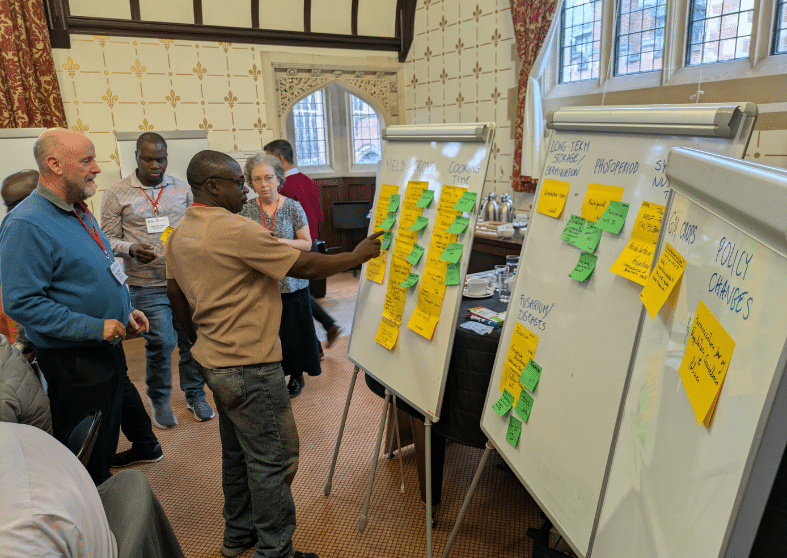
Steps have been taken already to address some of the issues facing modern-day farmers. Cohorts of farmers, agriculture organisations and research scientists here at Norwich Research Park have been working together to generate ideas to resolve some of the threats farming is facing.

A number of specialist events have been organised by Anglia Innovation Partnership, the campus management company for Norwich Research Park, to generate a series of science discovery activities, programmes and projects to ultimately deliver solutions that will bring improvements to things like the health of our soil, crop resistance to disease, crop yields and resistance to extreme temperatures.

Read the full article via our website using this link: Farmers and Scientists: Partners against Climate Change in Agriculture – Norwich Research Park

  • *I have permission from the copyright holder to publish this content and images.

Innovate UK engineering biology SPARK Award Showcase webinar

Member News
The views expressed in this Member News article are the author's own and do not necessarily represent those of Agri-TechE.

Wondering what the projects that received a SPARK Award from the Innovate UK Engineering Biology Innovation Network have been doing? Then wonder no more! Well, just until the showcase webinar on 18 March from 10:00 until 12:00.

The Engineering Biology Innovation Network funded 15 SPARK Awards designed to tackle real-world challenges faced by UK SMEs or to accelerate their journey towards developing new products, processes, or services.

Attendees will learn more about the funded projects, be able to connect with project partners, network with other attendees and understand future opportunities as part of the Engineering Biology Innovation Network.

Is this for me? If you are one of the following, then yes:

-industrial and academic innovators and researchers
-industry leaders from sectors such as health, agriculture, chemicals, and materials to identify new technologies within these sectors
-policy makers and regulators
-investors
-anyone interested in applying engineering biology

About the Engineering Biology SPARK Awards:

This funding is part of the Innovate UK Engineering Biology Innovation Network which aims to drive the development of a joined-up UK innovation ecosystem to ensure synthetic biology tools, technologies and processes can be more easily developed and adopted by a variety of industries. The network’s goal is to progress innovations, create a commercially focused community and foster new consortia to advance innovations towards commercial applications.

Register now.

  • *I have permission from the copyright holder to publish this content and images.