The Productive Landscape: NatureTech for Profit and Planet
How can technology enable delivery of food, nature recovery, and climate resilience - all at once? The Head of the Environment Agency is asked: what's the national plan for dealing with land use pressures, plus you’ll hear from technologists and land managers working on nature-based and tech-enabled solutions for water, soils and climate adaptation.

Ecometric: Nominated for the Earthshot Prize 2024

Member News
The views expressed in this Member News article are the author's own and do not necessarily represent those of Agri-TechE.

Ecometric have been nominated for the Earthshot prize 2024. Read more here.

What do UK farmers think about cultured meat?

Research Digest
Agri-TechE

What do livestock farmers think about the potential impact of cultured meat? A team, including researchers from the Lincoln Institute for Agri-Food Technology, discovered that farmers saw the opportunities offered by the new technology and wanted to explore these further.

Cultured meat, heralded as a transformative solution for sustainable agriculture, has garnered attention for its environmental and social implications. While discussions have predominantly revolved around the opportunities it presents, the voices of farmers, integral stakeholders, remain largely unheard. Until now…

The Study

A research initiative aimed at understanding UK farmers’ perspectives on cultured meat, led by a team from the University of Lincoln and Royal Agricultural University (RAU), funded by the BBSRC and published in the journal Frontiers in Sustainable Food Systems, reveals nuanced reflections and considerations about this potentially disruptive technology.

University of Lincoln

The study engaged 75 farmers through six focus groups, representing diverse sectors and regions across the UK. Questions explored their understanding of cultured meat, potential impacts, and envisioned business scenarios. Thematic analysis was applied to transcribed discussions.

The Technology

Cultured meat is a novel production method that involves cultivating animal cells in a controlled environment. While still in the early stages of development, this technology could address environmental challenges associated with intensive livestock farming. Burleigh Dodds Science Publishing’s ‘Cultured Meat Technology’ provides a deeper explanation.

Given that cultured meat is strategically positioned as a potential replacement for traditional livestock farming, understanding farmers’ perspectives on this emerging technology is crucial. The study aims to bridge the gap between technological innovation and the agricultural sector, providing valuable insights into the sentiments and considerations of farmers who may be directly affected by the advent of cultured meat.

Their perspectives are essential in navigating the potential impact of cultured meat on established farming practices, ensuring a more comprehensive and inclusive approach to the evolving landscape of agricultural technologies.

Cultured pork meat from Uncommon
Cultivated pork from Uncommon (uncommonbio.co)

Perceived risks and unexpected insights

Farmers expressed complex views, addressing ethical, environmental, and socio-economic narratives associated with cultured meat. Reactions reflected initial scepticism, emphasising the need for clear communication on health implications, market positioning, and technological intricacies. Ethical concerns and worries about power concentration in the industry also emerged as prominent themes.

However, some farmers also revealed cautious optimism; the greatest opportunities were seen for arable farming, which the participants believed could pivot more easily toward providing cultured meat inputs. Some farmers envisioned new markets, supplying raw materials or even producing cultured meat on-farm. It was generally agreed among the participants of this study that larger-scale, single-output farms would have a greater early advantage in this transition than smaller-scale, mixed farms.

Conclusions

The report makes several recommendations:

  1. Better Representation: Farmers, as a crucial stakeholder group, should be more inclusively involved in decision-making and the technological development of cultured meat.
  2. Critical Debate: Responsible innovation in food systems necessitates a thorough debate on both the opportunities and threats posed by technologies like cultured meat to different stakeholder groups.
  3. Regulation: Specific binding legislation, voluntary codes of conduct, standards, certification, and self-regulation are essential to ensure safeguards for public health and the environment.
  4. Legislation for Standards: There is a need for legislation to ensure a level playing field regarding food and marketing standards across traditional and cell-cultured meat production.
  5. Knowledge Sharing: Facilitating knowledge sharing is crucial to inform farmers and other stakeholders about opportunities for commercial collaborations.

Next Steps

The team is now partnering with nine case study farms spread across the UK and representing a wide range of farming systems. Together, they will explore how each farm could respond to this new technology, for example how it could best compete, or how it could supply ingredients, or even produce cultured meat, on farm.

The findings will be used to produce a heat map of the winners and losers in future scenarios where cultured meat is on sale in the UK.

Read the paper:

Manning L, Dooley JJ, Dunsford I, Goodman MK, MacMillan TC, Morgans LC, Rose DC and Sexton AE (2023) Threat or opportunity? An analysis of perceptions of cultured meat in the UK farming sector. Front. Sustain. Food Syst. 7:1277511.

doi: https://doi.org/10.3389/fsufs.2023.1277511

BigSis: Biological Solution for SWD soft-fruit pest beats insecticides

Member News
Agri-TechE
The views expressed in this Member News article are the author's own and do not necessarily represent those of Agri-TechE.


Trials

UK trials of a biological – and chemical-free – technique for the control of spotted wing drosophila (SWD) in soft-fruit crops have shown how it can outperform insecticides when used in commercial conditions.

Developed by British start-up BigSis, the system – using an updated version of the sterile insect technique (SIT) – reduced numbers of the damaging adult female SWD by up to 88% compared to a conventional, sprayed control.

Funded by an international company that has been working with BigSis to validate the chemical-free solution for global use, the trials also achieved an 80% reduction in signs of SWD activity on the fruit and saw fruit waste during picking cut by more than half.

Founder

“Only two years ago we completed a world-first field trial of an SWD control solution based on SIT,” says BigSis founder Glen Slade, “with results that showed up to 91% reduction of female SWD numbers in commercial strawberries.

“To achieve such good levels of control this year, again on a commercial farm, but this time compared to industry standard insecticide use, is a vindication of SIT’s ability to provide growers with a non-chemical, non-GMO, non-toxic route to effective and affordable insect pest control.”

The UK trials focused on an 11-hectare field of Maravilha raspberries divided into three maturities, a common practice that allows continuous harvesting from early July to early September. In each maturity, BigSis SIT was compared to control plots that received a single spray of Tracer (spinosad). Insect traps recorded adult female numbers in each plot. The fruit waste during picking was monitored across all plots and marketable fruit were inspected for signs of SWD activity.

First deployed more than 60 years ago, SIT – which uses sterile male insects to arrest the growth of an in-crop pest population – had always been regarded as too expensive to deploy commercially.

But BigSis has revitalised interest in the technique. Its approach, which combines artificial intelligence and robotics to raise, sort and sterilise millions of male insects in an automated production facility, has effectively reinvented SIT and slashed its cost by up to 90%, making it affordable for field-by-field control.

BigSis launched its season-long insect control as a service (ICaaS) in 2023, offering growers on-farm releases of its sterile male insects.

Results

“We’re delighted with the results, as is the company that funded the trial,” enthuses Glen. “Our SIT is a zero-regulatory approach for many of the key markets in soft-fruit production, including England and four leading states in the USA.

“Effective control of SWD addresses a major global need in high-value crops, while enabling farmers to meet the expectations of regulators and consumers by reducing the use of crop protection chemicals in food crops.”

Glen Slade, Founder & CEO of BigSis, the Reading-based agtech start-up developing chemical-free insect control solutions to farmers.

Read more about BigSis Here

Gardin: FromBoer and Gardin – a case study in plant driven growing.

Member News
The views expressed in this Member News article are the author's own and do not necessarily represent those of Agri-TechE.

Pioneers Since 1968

FromBoer, a Dutch family-owned business established in 1968 and currently led by brothers Arjan and Leonard Boer, has flourished through continuous innovation. Their current 4ha facility in Dinteloord (Netherlands) is widely appreciated in the industry as a benchmark for innovation and sustainable practices.

FromBoer grows seven different lettuce varieties directly from seed and supplies fresh produce to supermarkets across Europe. However, this diversity presents a unique challenge for Leonard as each lettuce variety has its own specific needs regarding temperature, light, humidity, and nutrients. Balancing these requirements to optimise productivity for all varieties throughout the year is a complex task, even for growers like FromBoer with extensive horticultural knowledge, demanding a nuanced understanding of each plant’s preferences.

The Boer brothers realised that a significant hurdle to enhancing their farm’s potential was the lack of direct feedback from the plants after changes to their climate strategy, which delayed their ability to fine-tune for each lettuce variety effectively. Eager to maintain their pioneering status in lettuce cultivation and bridge this gap, they turned to Gardin and its groundbreaking plant photosynthesis sensor.

Read the full article here

Barenbrug Appoints New Regional Sales Manager

Member News
The views expressed in this Member News article are the author's own and do not necessarily represent those of Agri-TechE.

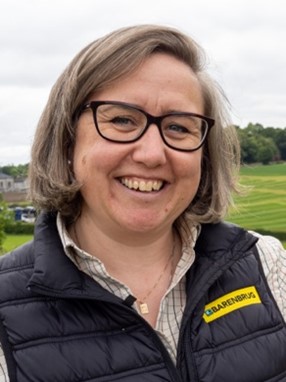
Barenbrug UK has bolstered its agricultural team with the appointment of Donna Mearns as regional sales manager for Scotland.

With 26 years of experience in the agricultural supply industry, Donna brings to Barenbrug a detailed knowledge of Scottish farming, its practices and – most importantly – its people.

“At the heart of any good business relationship lies good customer service,” enthuses Donna, “and as a ‘people person’, joining Barenbrug brings me back to a job I love doing, in a very down-to-earth way.

“I’m not one to sit behind a desk, so I’m relishing the prospect of getting out in the field and working with Scotland’s distributors, merchants and farmers.”

Donna is well-known in the Scottish agricultural supply industry, having worked for many years with the agricultural merchant Carr’s Billington, latterly as a regional operations manager. She has also served as secretary for the Scottish Seed Trade Association, a body which represents wholesale and retail Scottish seed merchants on issues relating to the herbage seed industry and in dealings with the Scottish Government.

“There’s a lot of technical knowledge within Barenbrug,” Donna notes, “and I will enjoy working with what’s a really close-knit team to build the Barenbrug brand here in Scotland.”

Barenbrug is one the UK’s largest grass-seed breeders, producing UK-bred varieties and UK-grown seed that forms the ‘backbone’ for grass-seed blends from many of the country’s leading merchants. The latest Scots-specific variety to receive endorsement from the Recommended List is Killylea, a perennial ryegrass specially selected for Scottish conditions.

Burleigh Dodds Science Publishing- Cultured meat technology: An overview

Member News
The views expressed in this Member News article are the author's own and do not necessarily represent those of Agri-TechE.

With the introduction of the cultured meat concept, the past decade has seen the remarkable rise of a new scientific field based in the food technology domain, with the potential to change our current food systems.

Burleigh Dodds Science Publishing has published a book ‘Advances in cultured meat technology’ about this subject 

Below is an abstract from one of the chapters: Cultured meat technology: An overview.

Authors: Apeksha Bharatgiri Goswami, James Charlesworth, Joanna M. Biazik, Mark S. Rybchyn and Johannes le Coutre, University of New South Wales, Australia

Published by Burleigh Dodds Science Publishing

Introduction

Cultured meat is made from animal cells grown outside an animal. The principal approach behind producing this food is based upon the idea to use cell and tissue culture techniques, originally developed for the medical science field, to grow all components of edible meat in vitro. At a minimum, this comprises muscle cells, which grow and develop into enlarged cell assemblies. Ideally, this biomass
would feature as many aspects of animal-derived meat as possible.

Briefly, the technology entails obtaining a biopsy from a live animal and growing it to the desired volume in a suitable production environment with the help of specific media to feed the development. For the creation of three-dimensionality and texture, typically a bio-scaffold is incorporated at some point during the process. The resulting material is meat, and it will have to be labelled as such. Genetically, cultured meat is identical at the cellular level to conventional meat, and in the public debate, it is also referred to as lab-grown meat, clean meat, or in vitro meat.

CellAg

The scientific and commercial domain dedicated to this innovative technology refers to itself as ‘Cellular Agriculture’ (cellAg) to highlight the idea of introducing new domestication, i.e. the scaled production of cellular material that so far had only been obtained by higher animals or plants2. The term cellAg was coined in 2015 by the New Harvest non-profit organization for animal products made without animals. The technology holds the potential to improve global food security by addressing major ethical, environmental, commercial, and public concerns.

Objectives

A key objective behind any industrial effort in the context of food is to provide food security. The emerging global food security gap necessitates the production of additional 60–70% calories by 2050, assuming a population of about 10 billion people globally3. With the intent to alleviate the burden on current food systems and to improve nutritional quality and animal welfare, the field of cellAg offers a potential solution, albeit technologically challenging to accomplish.

The technology will provide significant advantages as compared to conventional animal-based meat if the product categories are chosen well. Based upon the enclosed nature of growing biomass in bioreactors, all ingoing and outgoing material streams can be controlled.

Challenges

Still, by far the largest challenge remains scaling of the technology at an affordable cost to provide nutritious, safe, and affordable material in large and impactful quantities. Current setups and approaches are nowhere near the output of the current animal-based livestock industry.

A wealth of conceptual papers, commercial reports, and anticipated consumer scenarios are being published, although we still do not know how CellAg will live up to expectations and how the related products will be perceived. The current situation is that products will be available and even are available in minute quantities to boutique restaurants and specialty niche outlets.

Cultured meat products are being envisaged at various levels of sophistication. At the simplest level, unstructured cellular material will be available that can be diluted with water to provide for a broth or soup stock.

With increasing complexity, more texture can be introduced and minced meat or ‘ground meat-like’ structures will be available, material which at this stage already should contain additional cells or tissues such as adipocytes to provide for the organoleptic property of fatty taste or texture as well as the nutritional benefits of these cell types.

Chicken nuggets or any artificially shaped meat products from other species belong in this group as well and might be available without additional cell types. The most ambitious product form will be analogous to a meat cut. To achieve meaningful meat cut analogues, it will take considerable time and significantly more technological development.

Mimic history

The field of food science is full of examples where one material is supposed to mimic another one, from tofu-based vegetarian meat in the tenth century Song dynasty to margarine, which is designed to mimic butter, and to specific molecules that are developed to mimic the taste of salt or sugar, such as aspartame, which imparts a sweet taste.

In the cultured meat domain, it will be interesting to see if mimicking animal-based materials will be the ultimate ambition or if the derived materials will succeed to attain a food category by themselves. Why mimic animal material if you want to abandon animal-based
materials?

To make cultured meat a success story, it is not just a matter of significant advances in one technology; success is dependent on making strides in an entire technology suite if the resulting products are not just meant to serve as a gimmick in a niche market.

Read the full chapter here

Lombard Asset Finance: A roadmap for financing a regenerative agricultural transition in England

Member News
The views expressed in this Member News article are the author's own and do not necessarily represent those of Agri-TechE.


We are already in the midst of a fundamental agricultural transition, with farmers across
the country facing unprecedented levels of change and uncertainty. Farming is operating
in a system vulnerable to shocks, stresses, supply chain disruptions and price pressures,
many of which are directly caused or made worse by climate change and the loss of
nature. In the meantime, the UK remains one of the most nature-depleted countries
globally, with nearly one in six species are threatened by extinction 1. The food system is
simply not working for people or planet.

Recent polling shows that the public want to see major changes to the ways in which we
produce food, in ways that protect, not harm our nature, but actions to make this a reality
are severely lagging 2. At the same time, the UK Government has rightly recognised the
pivotal role farming will play in meeting our climate and nature goals, while continuing
to produce the food we need for a healthy and nutritious diet. Addressing the nexus of
climate, nature and food together will be the “triple challenge” of the coming decade.

Read the full roadmap here

Schneider Electric & Agri-TechE convened a workshop exploring the future of vertical farming.

Member News
The views expressed in this Member News article are the author's own and do not necessarily represent those of Agri-TechE.

Workshop Writeup: Executive Summary:

Schneider Electric & Agri-TechE

The global vertical farming industry in 2022 was worth nearly $4.2 bn and is projected to exceed $27 bn by 2030 (Fortune Business Insights, 2023). It has made significant technological advancements and inspired new thinking about the future of food production for increasingly urban populations. It has attracted significant private and public investment and has secured major capital investment to build and run extensive state-of-the-art production facilities.

Read the full report here

Intelligent Growth Solutions: IGS partners with ReFarm on game-changing GigaFarm in Dubai

Member News
The views expressed in this Member News article are the author's own and do not necessarily represent those of Agri-TechE.

“GigaFarm” capable of replacing 1% of UAE food imports set for construction in Dubai Food Tech Valley

Food Tech Valley has signed an agreement at COP28 with ReFarmTM to start construction on a 900,000 sq. ft. game-changing “GigaFarm”. The innovative waste-to-value farm will be capable of recycling more than 50,000 tonnes of food waste and growing two billion plants each year.

ReFarmTM was established in the UAE by SSK Enterprise and Christof Global Impact (CGI) as a group of companies with a focus on projects with circularity and clean technologies. The brand chose vertical farming technology developed by infrastructure supplier Intelligent Growth Solutions (IGS) and is set to start construction in mid-2024 at Dubai’s Food Tech Valley, a master development launched by His Highness Sheikh Mohammed bin Rashid Al Maktoum and being led by major Dubai property developer, Wasl. ReFarmTM has engaged its lead bank to arrange support from UK Export Finance within the UK Government’s Department for Business & Trade.

Read the full article here

Antobot expands expertise in Viticulture through Project VISTA

Member News
The views expressed in this Member News article are the author's own and do not necessarily represent those of Agri-TechE.

Antobot VISTA

Following from the successful Viticulture 4.0 Digital Infrastructure Project, Antobot is deepening its expertise in the growing viticulture sector through the VISTA (Vineyard Information System for Technology and Automation) project.  

The project is led by a consortium of industry leading partners and will start by digitally mapping vineyards at the row and individual vine level. The VISTA project is a collaboration between Antobot and other domain experts and partners including: Agri-EPI Centre, Outfield Technologies, Vinescapes, JoJo’s Vineyard, and University of Lincoln

Read the full article here

Rothamsted Research: Potential of soils to sequester carbon is being seriously overestimated

Member News
The views expressed in this Member News article are the author's own and do not necessarily represent those of Agri-TechE.

Some recent studies estimating the potential of farmland to store more carbon through innovative soil management are presenting an overoptimistic picture of what can be achieved and the analyses need to undergo a “reality check”, according to a group of leading researchers. 

In a letter to the journal Global Change Biology, the group pointed out that estimates for the potential magnitude of soil carbon sequestration (SCS) vary dramatically, from very modest to very substantial. Estimates on the high end are “unrealistic” say the team and a more rigorous approach is needed.

“When organic material is added to fields, only about one third of carbon is incorporated into the soil itself in the first year – the rest is decomposed by soil microbes and ends up back in the atmosphere,” said Stephan Haefele, a soil scientist at Rothamsted and one of the letter’s authors. “To achieve a specified soil carbon increase that persists for 30 years its necessary to add about ten times that much. So, you need to add many tons of organic matter per hectare to increase soil carbon by 1 ton per hectare.” 

Read the full article here.

Anglia Capital Group: What the Eastern Region’s Angel Investors loved in 2023 and what’s to come in 2024

Member News
The views expressed in this Member News article are the author's own and do not necessarily represent those of Agri-TechE.

It’s been a tough 12 months for start-ups seeking early-stage investment. With the UK economy battered with high interest rates, international turbulence and a slow recovery from the fallout of Covid, founders have had to work even harder to secure investment, both in the early-stage and at VC level.

Despite the tricky conditions, Anglia Capital Group have seen £1.1 million invested into early-stage businesses from across East Anglia. This is a hugely positive sign for economic development locally.

Although this year has been tough, we have seen some fantastic start-ups pitch for and receive significant investment in 2023. It has also been extremely encouraging to see a lot of our portfolio companies reporting positive growth 

Hannah Smith, Managing Director, Anglia Capital Group.

Looking at the investments made during 2023, we see a continuation of the trend towards start-ups that have a focus on sustainability and health.

Read the full article here.