The Productive Landscape: NatureTech for Profit and Planet
How can technology enable delivery of food, nature recovery, and climate resilience - all at once? The Head of the Environment Agency is asked: what's the national plan for dealing with land use pressures, plus you’ll hear from technologists and land managers working on nature-based and tech-enabled solutions for water, soils and climate adaptation.

Oxford Farming Conference vs Oxford Real Farming Conference?

Agri-TechE Blog
Agri-TechE

The existence of two simultaneous farming conferences in Oxford in January raises eyebrows to those not close to the situation. Why would there be TWO clashing events, people ask? Can they not liaise around dates and ensure they don’t compete with each other?
History shows this alignment is deliberate, with the Oxford Real Farming Conference, which started in 2010, positioning itself as a “much-needed alternative” to the Oxford Farming Conference, providing “an innovative environment for some radical discussions”.
By contrast, the Oxford Farming Conference, which started in 1936,  is steeped in tradition, attracting royalty, international politicians and many major land-owners and farm business-people.

So is there room and need for both?

Having attended OFC in 2019 and ORFC in 2020, my conclusion is absolutely. Both were sold out, showing appetite and interest in the different – but complementary – agendas.

Henry Dimbleby, National Food Strategy

As Henry Dimbleby pointed out, the frequency of footfall between both conferences throughout the two days, not least among senior policy-makers and opinion-formers, shows that there is increasing complementarity, but both provide different offerings to delegates.

  • ORFC has always been about the more ecological end of the industry, focusing on “grass roots”, often (but not always) smaller scale farmers.
  • OFC is high level, political and attracting major players in the industry.

Different target audiences

Yet as the industry evolves more towards agroecological priorities, as well as food production, it is clear that the two conferences target different industry demographics, and do so successfully.
The ORFC featured some sessions unlikely to tempt a broad audience of more traditional farmers, and the OFC features some sessions that may seem far removed from those focusing on the smaller, community and even, dare I say it, socio-economic agenda of the industry.
Culturally they feel very different events – ORFC opened with drumming from the Shumei Taiko Ensemble and the evening event was a Land and Farming Singers’ Session, while OFC hosted a debate in the prestigious “mini-Parliament” setting of the Oxford Union.

Farming Conference 2020 Evan Davis
Evan Davis encouraging debate at the Oxford Farming Conference 2020

Same goal –  regenerative agriculture

However all eyes from both conferences are really on the same prize – to make the industry regenerative for the environment, profitable for its participants, attractive to new entrants and valued by citizens and politicians.
And high impact speakers, especially politicians, have the opportunity to address two different industry groups by the concurrent nature of the two conferences.
The 2020 agendas of both addressed the major opportunities for the industry as we move away from CAP and towards a domestic farming policy.
The development of the ELMS (to reward farmers for delivering “public goods” and services), and the transition towards a net zero carbon industry, would have been a hot topic at both.
OFC and ORFC delegates are united in the call for enabling policies to incentivise and reward farmers as they transition towards a more regenerative approach to land management and food production.

Concern for wellbeing 

“We are on the verge of another revolution in how we produce our food” – Rt Hon Michael Gove MP

Both also considered in some detail the importance of supporting the overall mental health and well-being of farmers during this uncertain time for the industry.
So long may the two co-exist. You can only sell all the tickets (with waiting lists) and while it may seem odd to those outside the industry to have concurrent events, they offer different delegate experiences, networks and opportunities.
Therefore let’s raise a toast – in your tipple of choice – to an industry that showcases difference, while celebrating success. And let’s continue to keep it Real.
(To read more about sessions at ORFC click here)

Reporting from REAP 2019

Agri-TechE Article
Agri-TechE

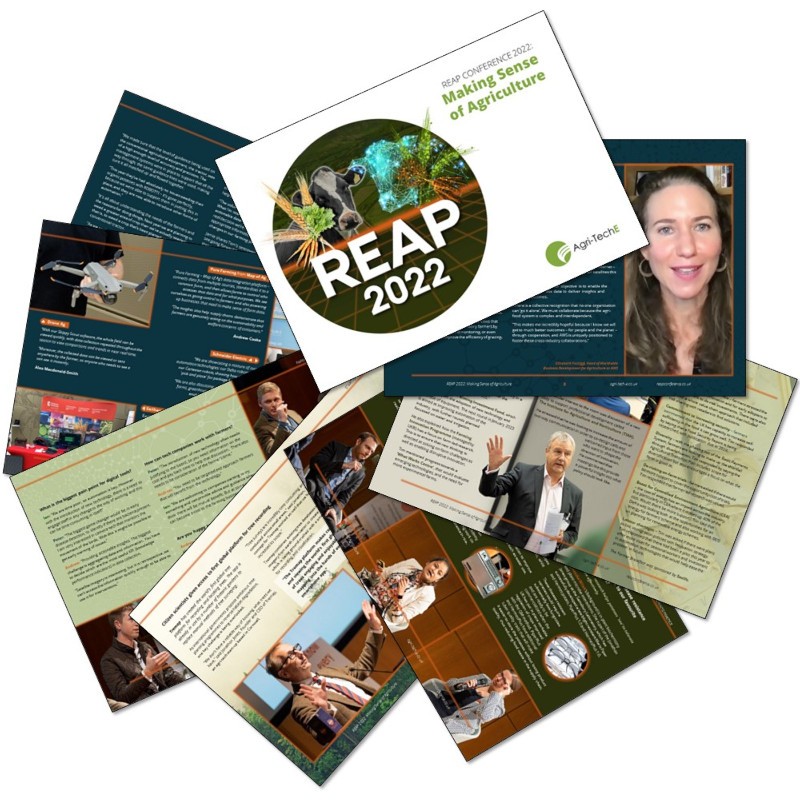
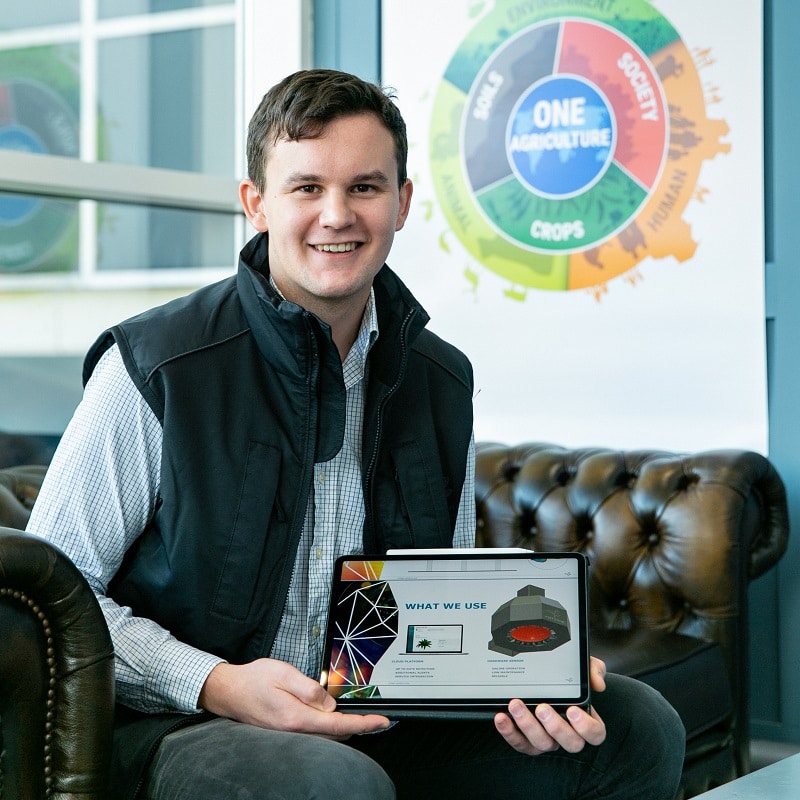
The theme for REAP 2019 was ‘One Agriculture’ with the recognition that improving the productivity of agriculture has the potential also to be good for animal welfare, human health and that of the planet.

Getting to net zero through increased productivity

The day started with a Farmers’ Breakfast, focusing on Getting to Net Zero. The interactive session was facilitated by Dr Helen Ferrier, Chief Science and Regulatory Affairs Adviser for the National Farmers Union (NFU). She commented that agriculture is uniquely placed to be part of the solution, as both an emissions source and a sink. She said: “As farmers we have a special responsibility to protect carbon reserves already in our soils and vegetation, but not at the cost of reducing our capacity to feed consumers at every price point.”
The report covers the outcomes from this session as well as the presentations and wider discussion of how food production needs to be considered as a system that is more than just the sum of its parts.
Click here to view the online version of the report.

Click cover image to view report

Innovation at the intersections

Agri-TechE Director Dr Belinda Clarke commented: “Innovation is about finding solutions to problems and this often happens at the ‘intersections’ where different perspectives give new insights.
“Our membership is united through a passion and a commitment to improving the productivity and sustainability of food systems, but bring diversity through their experiences, skills, technologies, views, and ways of thinking.
“All have major and potentially differing contributions to make to the challenges facing the industry, and bringing this together within the cluster creates the opportunity for innovative responses.
“We chose ‘One Agriculture’ as the topic for this conference soon after REAP 2018. The idea was to get people thinking about the dynamic between the natural and cultivated environment as an integrated system, with nutrients cycling between the different functions, and where change in one aspect creates an effect on other elements in the system.

Encouraging a systems approach

“It is crucial in food production that policy is underpinned by sound science. However, there are still considerable gaps in knowledge. There is need to consider science from a more integrated perspective. To broaden the reductionist approach that has characterised knowledge generation and discovery research.
“Good solutions require a cross-disciplinary approach and future solutions are unlikely to reside solely in one part of the industry The need for a systems approach to the global industry is now gaining traction.
“We have in our network the innovative farmers, the globally-leading research, the exciting new technologies and the enabling ecosystem to help make One Agriculture a reality.”

Scroll through the report below. Click a page to open the full pdf.

Farming Data, winner of GROW 2017, reports business progress

Agri-TechE Article
Agri-TechE

Access to market for perishable goods is a major problem for subsistence farmers. To address this problem Farming Data is developing a software system to enable farmers to communicate with potential buyers using SMS messaging on a basic mobile phone or via mobile broadband on a smartphone.

GROW launchpad

Farming Data won the 2017 GROW agri-tech business plan competition and co-founder Jacqui Poon says the process was highly beneficial to the company.
She comments: “One of the main benefits of being involved in GROW was the advice and guidance from the business mentors.
“They took a close look at our business model and business plan and gave some useful insights. They also connected us with potentially useful contacts in the agri-tech space, and challenged some of our thinking so that we could improve the design and execution of our product.
“Within GROW there were various types of business support available for small businesses looking to grow and seeking financial opportunities. “Since winning GROW, we have had the opportunity to develop our initial prototype at an accelerator, and have combined this development with networking opportunities with those interested in the agri-tech space.
“For example, in 2018 we went on a KTN (Knowledge Transfer Network) partnership seeking mission to Colombia, and we later won grant funding to develop our technology and test its feasibility in the field for small-scale farmers there.”

Listo provides links with buyers 

By registering on the Farming Data platform via the app Listo, the producer is given a physical location in the real world,  allowing potential buyers to see what is being grown in a particular area.
The buyers can then place orders using the platform and farmers have the opportunity to create virtual cooperatives to fulfil these orders, as well as to review market values for these crops to ensure a fair price. A number of farmers pooling their surplus will be a more attractive proposition and reduce complexity for buyers. Jacqui continues: “We are one of the seven awardees of the UK-Colombia Agri-TechE Catalyst funded by the UK Prosperity Fund and Innovate UK. In total, our 16-month pilot project gained funding of nearly £400k, which is being used to develop our digital platform technology to facilitate the buying and selling of agricultural goods.
“More recently, we have kick-started our project and have been iterating our digital platform with user-centric approaches, focusing on the needs of small-scale farmers and buyers in Colombia.
“As of November 2019, we had more than 200 registered users on the platform, spread over 3 regions of Colombia – namely Risaralda, Caquetá, and Bolívar.”
Members – contact us now to be a part of the audience for the GROW Final 2020 and be able to vote for the Audience Choice Award.
If you would be interested in finding out how participation in GROW can help you more details are available here.
More information about Farming Data – click here. 

Improving productivity in the vineyard – Vidacycle speaks at Pollinator

Meet the Network
Agri-TechE

Viticulture, among other crops, is data intensive, as Abby Rose’s family found when they started farming and found themselves having to keep track of over 8,000 olive trees and a few hectares of vines in the Loncomilla Valley in Chile. Abby had the idea of using an app to capture the information and share it with others, she pitched Sectormentor for Trees as part of the REAP 2015 Start-Up Showcase.
Since then Vidacycle, the company she co-founded, has gone from strength to strength. Now specialising in viticulture, Vidacycle’s community lead Annie Landless is speaking at the Pollinator event Nothing to W(h)ine About – Uncorking the Opportunities for Innovation in Viticulture”.
We asked Annie and Abby about how the company has grown since its launch at REAP.

How has the direction of Vidacycle changed since those early days?

At Vidacycle we are about building farm businesses of the future – we help build soil health and profitability on farms around the world.
When we spoke at REAP we were a two-person company and really just finding our feet. We are now six people strong, supporting 100 farms on multiple continents with Vidacycle services.
Customers now include: Ridgeview Vineyard; Rathfinny Wine Estate; the National Trust and the Leckford Estate (the Waitrose Farm), as well as many other pioneering small to medium scale farms and vineyards.
Our services:

  • Three apps: Sectormentor; Soilmentor and Workmentor
  • Regenerative Transition Consultancy – supporting farms in their transition to more regenerative farming
  • Software consultancy – we have also worked closely with Niab in the last year to develop a prototype soil quality dashboard for UK farms.

Thinking back over the last few years and the growth of the business do you have any learning points to share?

Looking back, we started out with too broad an offering. We were offering a tool that could do many different things.
Actually,  everything in farming is quite specific to each crop, so people aren’t looking for a broad tool.  As soon as we started focusing on providing tools for specific areas of farming, such as viticulture, we were able to provide much more value and  able to share helpful learnings amongst the community.

Please can you outline how Vidacycle supports viticulture – what problem does it address, have you evidence of the benefit it provides?

Viticulture requires a lot of close observation of the vines and generally each vine will have numerous passes by a human each season.
Many viticulturalists are already noting down these observations on paper, in notebooks and then typing it up back at home and trying to analyse it all in an endless number of spreadsheets.
People spend a lot of time looking for the right spreadsheet. Often those spreadsheets are very difficult for anyone else to discern, so data gets lost with a change of staff.
Sectormentor makes it easy to record any observations of the vines on your phone. That information is illustrated and turned into a visual immediately to help you use those observations to inform management decisions.
Sectormentor also provides flexibility for people to customise what they are recording but keeps everything in one place. As you build up data over a number of years, the tools become more and more powerful as they learn from past years data.
Sectormentor provides a tool kit for viticulture

  • yield predictor
  • ripeness indicator
  • vine health indicator
  • phenology tool
  • biodiversity and soil health trackers.

For the smaller vineyards,  it allows more than one person to go out and collect the data required to get a good yield prediction, or understand vine health, which is vital in a small team. Ripeness Indicator
For larger vineyards we have found the Ripeness Indicator to be one of their favourite tools.
We have heard numerous reports about how helpful it is to the winemaking and viticulture team to be able to look at the ripeness curve for each block across many different sites, and see the latest information on how the acids and sugars are progressing.
In the run-up to harvest everything gets quite hectic so this saves them a lot of time as well as ensures better grape quality at picking.  This helps them predict which blocks they will need to harvest when, and in what order.

Vineyards have increased in the UK – what do you think the future holds – will we need varieties able to cope with climate change or will warmer conditions be beneficial for vines?

As many of our visualisations provide an in depth analysis of historical data we can very clearly see how, for example, ripening dates have gradually shifted earlier and earlier over the last 20 years – there is no doubt things are changing and the summers do appear to be getting hotter. No one knows how the climate will change here in the UK, certainly the reality of climate change to date is that everything becomes less predictable and more extreme, so that is not helpful for anyone in agriculture.
It is likely we won’t be able to develop varieties fast enough to cope with these extreme conditions, so the best protection is to build soil health so that the plants can access all the resources they need for longer in the year.
More about Vidacycle 
To register for the Pollinator event:“Nothing to W(h)ine About – Uncorking the Opportunities for Innovation in Viticulture”, being held at Cambridge Consultants, Cambridge on 11 February 2020 @ 2:00 pm – 6:00 pm

Wine growing areas in the UK identified by UEA and Vinescapes

Research Digest
Agri-TechE

An area of land the size of the Champagne region of France has been identified as suitable for wine growing in the UK by researchers from UEA and Vinescapes.
Climate and viticulture experts have identified nearly 35,000 hectares of prime viticultural land for new and expanding vineyards – much of it in Kent, Sussex and East Anglia.
Prof Steve Dorling, from UEA’s School of Environmental Sciences, said: “English and Welsh vineyards are booming, and their wine is winning international acclaim.
“This summer’s heatwave has led to a record grape harvest and a vintage year for English and Welsh wine, prompting great interest in investment and land opportunities.
“But despite a trend of warming grape-growing seasons, this season has been quite unusual in terms of weather. English and Welsh grape yields are generally quite low and variable by international standards, so we wanted to identify the best places to plant vineyards and improve the sector’s resilience to the UK’s often fickle weather.”

viticulture in the UK
Areas of the UK could rival Champagne for wine production

The research team, with help from wine producers, used new geographical analysis techniques to assess and grade every 50 x 50 m plot of land in England and Wales for suitability.
Lead author Dr Alistair Nesbitt said: “Interestingly, some of the best areas that we found are where relatively few vineyards currently exist such as in Essex and Suffolk – parts of the country that are drier, warmer and more stable year-to-year than some more established vineyard locations.
“The techniques we used enabled us to identify areas ripe for future vineyard investments, but they also showed that many existing vineyards are not that well located, so there is definitely room for improvement and we hope our model can help boost future productivity.
“Entering into viticulture and wine production in England and Wales isn’t for the faint hearted – the investment required is high and risks are significant.
“But as climate change drives warmer growing season temperatures in England and Wales, this new viticulture suitability model allows, for the first time, an objective and informed rapid assessment of land at local, regional and national scales.”
The research was funded by the Natural Environment Research Council (NERC).
Outputs from this research are now available as a service via Vinescapes. To find out more visit www.vinescapes.com or contact info@vinescapes.com.
‘A Suitability model for viticulture in England and Wales: Opportunities for investment, sector growth and increased climate resilience’ is published in the Journal of Land Use Science.
The paper is available from the following link: https://www.tandfonline.com/doi/full/10.1080/1747423X.2018.1537312

Which flowers do bees prefer? Portable sequencer provides answers

Agri-TechE Article
Agri-TechE

To understand which flowers are important for bees, scientists from the Earlham Institute (EI), with the University of East Anglia (UEA), have developed a new method to rapidly identify the sources of bee pollen.
The rapid pollen analysis uses a method called ‘Reverse Metagenomics’ (RevMet) that can identify the plants that individual bees visit. It uses MinION, a portable DNA sequencer from Oxford Nanopore Technologies.
The portability of the equipment involved means that this type of analysis could be performed on-site where bees are collected and sampled – vastly increasing our understanding of where bees look for pollen on a national scale.
Bees are in vast decline in the UK and across Europe, as are the wildflowers on which they rely. One way to help boost their numbers is by planting the correct wildflowers, providing a better habitat for pollinators to disperse, nest and breed.
However, it is unclear which plant species are the most preferred between different pollinators, including bees, and how this might change over time and in different environmental conditions.
Historically, scientists used light microscopy to identify individual bee-collected pollen grains, which was a time-consuming and impractical method.
Ned Peel, the PhD student who carried out the research in the Leggett Group at EI says: “Importantly, from a mixed sample of pollen, we can also measure the relative quantities of each type of pollen.
“Manual methods to measure pollen and other genomics methods, such as metabarcoding, have been developed – but these can’t accurately measure how much of each different type of pollen is found in a sample.”
Prof Douglas Yu from UEA’s School of Biological Sciences, who had the initial idea for the project, said: “To support our tests, we rapidly generated 49 wild UK plant species. Assembling these genomes would have taken us months of work and required a lot of money.
“With our method, the pollen is separately sequenced with the MinION, which generates long DNA sequences – we then used the 49 reference skims to identify each of the long reads to local plant species.”
“This technique can reliably differentiate species in a mixed sample according to the amount of DNA present of each. The results showed that honeybees, and two species of bumblebee, demonstrate a high preference for one plant species per foraging trip.”
The reverse metagenomics pipeline can be applied to more questions than just what plants bees like to pollinate; we can also understand whether certain wildflowers compete with agricultural flowers for pollinators, or the behaviour of pollinators across large areas and land types.
The method could also be used to study other mixed samples, such as herbivore dung, for diet analysis; and air, to identify airborne allergenic pollen and crop pathogens.
The paper, titled: “Semi-quantitative characterisation of mixed pollen samples using MinION sequencing and Reverse Metagenomics (RevMet)” is published in Methods in Ecology and Evolution

Campaign to find world’s longest running agricultural experiments

Member News
Agri-TechE

Results from long-running agricultural experiments are being made openly available to other scientists to support greater collaboration between projects.
The Global Long-Term Agricultural Experiment Network (GLTEN), based at Rothamsted Research,  and funded by the Thirty Percy Foundation brings together long-running experiments that span nearly two centuries and six continents, as well as representing numerous climates, environments, crop types, farming practices and land-management regimes.
GLTEN represents a potential treasure trove of information – over 1750 years’ worth of data in total – that will help researchers and policymakers design “the farms of the future”.
Dr Jon Storkey is head of the GLTEN network and  helps run an experiment, which at 176 years old, is the oldest to be featured on the site. He  comments:
“The hope is that lessons learnt in one country might improve practices elsewhere – resulting in natural resources being used more efficiently, and in a way that produces a food supply that delivers a nutritionally balanced diet.
“We also hope this initiative will help us uncover ‘hidden’ long-term experiments that we didn’t know about, enabling us to mine and analyse their datasets and insights.
“This will allow new discoveries to be made, leading to a truer account of the costs and benefits of our different dietary choices.”
Dr Storkey said finding ways of farming sustainably requires an understanding of how growing crops impacts the environment over long time scales. “The natural processes that determine the sustainability of food production systems often have complex interactions and so experimental results from a single site over a short-time scale are difficult to interpret.
“With large and high-quality datasets, these long-term agricultural experiments can address these challenges. However, many of these datasets were fragmented, under-utilised or have yet not been published. Our first step has been to bring information on the experiments together in one place and provide it in a consistent, accessible format.”

Impact of man-made fertiliser

A good example of the value of long-term experiments is our understanding the effects of man-made fertiliser use – a practice that began in Europe during the Victorian era. Fertiliser experiments that started in the UK in the 1800s have helped chart the long-term impacts of this switch not just on crop yields, but also soils, water, wildlife, human-health and climate.
Dr Storkey said: “These long-term experiments are a really important global resource for designing farms of the future.”
The 65 sites span the globe, with about 20 in the Americas, a dozen or so in Africa, more than 10 in Europe and several others across both Asia and Australasia. Many of the experiments have been running for many decades – the oldest is the UK’s Broadbalk Experiment at Rothamsted Research which is 176 years old, whilst a further four have also surpassed a century.
“As the network grows, it will be an important part of the exciting new science being developed at Rothamsted and partner institutions around the world to ensure a sustainable food supply and healthy environment for future generations,” added Dr Storkey.
For more information contact  david.stevens@rothamsted.ac.uk 01582 938525 for more info.
Find out more at
http://www.glten.org/
https://thirtypercy.org/

Future Food Sources: Market Developments and Intellectual Property Landscape

Member News
The views expressed in this Member News article are the author's own and do not necessarily represent those of Agri-TechE.

Feeding a growing population in a sustainable, environmentally-friendly manner has become a major challenge that traditional agriculture cannot address. This has given way to a new industry that we refer to as the Future Food Sources industry.

This white paper looks at three key segments of the industry: Animal Product Replacements, Alternative Protein Sources and Future Farming Technologies. Academic, market and patent trends show that most segments are at a relatively early stage but have been undergoing rapid growth and expansion over the last few years.

A combination of market research and patent landscaping provides an overview of the Future Food Sources industry, with a focus on the future product developments and applications of technology in other industry areas. The white paper also incorporates details of key organisations, factors affecting the market, licensing, partnerships and collaborations.

The applications of the technologies are well-aligned with the areas of expertise of IP Pragmatics: Food & Nutrition and Agritech, and more broadly, Human Health and Animal Health. 

Click on the link below to download the full white paper.

FOTENIX puts lab-quality crop analytics in producers’ hands

Agri-TechE Article
Agri-TechE

To provide affordable crop diagnostics in real-time, agri-tech start-up FOTENIX has miniaturised lab quality technology so it can be used in the field. Spectral image data is captured with a standard camera and LED flash and transmitted for analysis in the cloud, with results delivered to producers’ smartphones. The compact device is the size of a shoebox and can be integrated into farm equipment. It was unveiled at Agri-Tech’s seminal REAP Conference on Wednesday 6 November 2019.
Crop diagnostics specialist Charles Veys has teamed up with Professor Bruce Grieve, Director of the e-Agri Sensors Centre, to make sophisticated imaging technology accessible for small-scale farmers.
Charles explains: “Our initial aim was to put the disease diagnostics technology, used in the research laboratories of agrichemical giants, into the hands of developing world farmers. However, we found that appropriate equipment wasn’t available to farmers anywhere and it could have significant impact on crop yields. “This focus on affordable technology meant that we came at developing the device from a different perspective. So, rather than sensitive equipment and filtered electronics, we used cameras similar to those in our phones. Our unique spectral imaging technique uses household LEDs, but optimised for particular colours outside our visual range. All the while, we maintain the capabilities of lab equipment that would cost about £100k.”
FOTENIX’s spectral imaging offers the ability to detect crop diseases, including those with no visual symptoms such as Light Leaf Spot, and provides improved prediction of yields – even under difficult conditions such as counting white fruit flowers amidst white table top guttering.
Charles continues: “Essentially, we’re detecting disease so producers know exactly where and when to spray. When the device is being used, it translates the raw information and creates an image so producers can choose to bring forward their application schedule and reduce crop losses.
“We intend that FOTENIX’s imaging-advice-action can be offered as a fully automated process so we’re currently working with Saga Robotics and their systems to achieve this.
“It is encouraging that larger machinery providers are starting to appreciate how open, interoperable systems are of benefit to everyone. Our goal is that FOTENIX will be integrated within equipment, as it could deliver immediate operational savings – and help continue the work of environmental stewardship, which is becoming increasingly important to the future of farming.”
The device is currently being trialled in UK and overseas projects, including at Rothamsted Research, CHAP, Lincoln Institute for Agri-Food Technology and Berry Gardens Growers cooperative. FOTENIX is currently seeking other trial partners, from machinery providers to early-adopter farmers ahead of commercial release in 2020.

REAP – Innovating towards One Agriculture not limited by age or geography

Agri-TechE Article
Agri-TechE

Emerging agri-tech offers solutions to global challenges, and new thinking on good agricultural practice is not limited by age or geography – these are some of the uplifting messages to come out of Agri-Tech’s REAP conference ‘Innovating towards One Agriculture’.

The world has found technological solutions to major challenges before – improvements in plant breeding, nutrition and irrigation created a green revolution in the 1960s that significantly increased agricultural production worldwide – now the challenge is how to work with nature to optimise the finite resources that the planet offers.

If you are unable to see the video above you can view it on YouTube here.

The REAP Start-Up Showcase and other speakers this year demonstrated clearly an international perspective. Entrepreneurs based in Cornwall, Manchester, Oxford and London, and with perspectives drawn from Argentina, Mexico and Sub-Saharan Africa, shared insights on the technologies that are on the roadmap towards ‘One Agriculture’.
Dr Belinda Clarke, Director of Agri-Tech, explains: “Food systems, human health, animal health and the environment are underpinned by innovation in the way food is produced. This brings with it a huge opportunity to create sustainable, productive and profitable farming enterprises.”
Agri-Tech’s vision is to bring together farmers and growers with scientists, technologists and entrepreneurs to create a global innovation hub in agri-tech. Belinda continues: “The east-of-England is rich in innovation but the agri-tech cluster is not restricted by geography, so we have made the decision to remove it from our organisation’s name and Agri-TechE will become Agri-TechE from January.”
The name change was announced along with other international news: Agri-TechE is partnering with the Missouri Partnership to provide a gateway to UK companies to the St Louis agri-food ecosystem, in the heart of US agricultural production. The Missouri Agri-TechE Connect Programme in February 2020 will include networking event and tailored meetings. Read more about this exciting news here.

EcoNomad: ‘Waste To Energy’ Solution Accessible For Smallholders

Agri-tech start-up miniaturises biogas production to offer affordable option
Anaerobic digestion (AD) turns waste into biogas and a nutrient rich soil additive – but the current solutions are too complex and expensive for smallholdings. To give smaller farmers the benefit of AD, agri-tech start-up EcoNomad Solutions (Ilan Adler and Alex Demenko) has re-engineered the technology to create a more affordable option that uses passive heating methods and naturally occurring bacteria.
Ilan has previously co-founded a charity (IRRI-Mexico) and an award-winning social enterprise in Latin America (sistema.bio), which seek to bring a range of solutions for communities and smallholders in developing markets. Now EcoNomad is bringing a refined version of those technologies adapted to the UK and Europe at large.

Read more here

HayBeeSee: World’s First ‘Hopper’ Robot Could Halve Farmers’ Herbicide Use

A new hopping robot that can identify, map and kill weeds for hours at a time, with minimal supervision, was launched by UK start-up HayBeeSee at REAP. Crop Hopper, a jumping-quadcopter, promises to deliver large-scale precision agriculture that could cut farmers’ herbicide use by 50 per cent or more.
HayBeeSee co-founder Fred Miller has a family farm in Nebraska, USA, and trained as an aerospace engineer. He could see the benefits of using drones, but understood their limitations. So, he set about developing a whole new classification of vehicle using the cutting-edge concept of a jumping robot with a quadcopter underneath to help it hover a short distance above the ground.

Read more here

MoA Technology: Is Time Up For Blackgrass?

Agri-TechE Start-up MoA Technology offers a rapid screening technology for herbicide development
A radically different approach to herbicide development that uses insights from evolutionary biology to offer new modes of action is being offered by start-up MoA Technology. The company has developed a crop protection discovery platform to find new herbicide leads. Co-founder Professor Liam Dolan says that its rapid screening process, which uses both whole plants and active ingredients, should fast-track the introduction of effective herbicides with low environmental impacts.
By developing herbicides with different modes of action, MoA Technology is confident that it can break the herbicide ‘arms race’ and provide more sustainable solutions to farmers. The company recently raised £8 million.

Read more here

Zelp: Capturing Cattle Burps to Reduce Greenhouse Gases

Sons of Argentinian rancher combine farming knowledge with technical expertise
Cow burps have been slammed as a major cause of greenhouse gas (GHG) – but how much methane is produced and can it be reduced? These are the questions being addressed by agri-tech start-up Zelp, which has developed a way to capture methane emissions and oxidise them in the field. Zelp was established by two brothers whose family runs a cattle ranch in Argentina.
Zelp co-founder Francisco Norris is a design technologist, while his brother Patricio is an expert in natural gas and methane treatment. They were brought up on a family farm, which rears 1,500 animals, so have significant understanding of the issues facing farmers looking to improve sustainability and profitability.
They recently closed a funding round of $1.2 million

Read more here

Glas Data: Helping Farmers Understand Patterns In Their Data

Cornish agri-tech start-up aggregates relevant data sources in one easy-to-use dashboard
Glas Data’s farm-centric dashboard, GlasCore, allows you to input agri-data from any source. GlasCore provides fully customisable visualisation and modelling without the need for specialist skills. In addition to data aggregation and visualisation, Glas Data is also moving towards offering predictive modelling. Many yield models have developed over the years, and Glas Data is making these readily available to farmers.
Rob Sanders, co-founder of Glas Data, returned to his West Country roots after working as a software engineer in London for many years. Glas Data is currently doing a project with Rothamsted Research.

Read more here

FOTENIX: Lab-Quality Crop Analytics Now At Farmers’ Fingertips

Start-up FOTENIX launches cost-effective spectral imaging device at REAP 2019
To provide affordable crop diagnostics in real-time, agri-tech start-up FOTENIX has miniaturised lab quality technology so it can be used in the field. Spectral image data is captured with a standard camera and LED flash and transmitted for analysis in the cloud, with results delivered to producers’ smartphones. The compact device is the size of a shoebox and can be integrated into farm equipment.
Crop diagnostics specialist Charles Veys has teamed up with Professor Bruce Grieve, Director of the e-Agri Sensors Centre (who works with the Gates Foundation in Sub-Saharan Africa), to make sophisticated imaging technology affordable for small scale farmers.

Read more here

REAP Conference 2020 will take place on 10th November in Newmarket.

Zelp is capturing cattle burps to reduce greenhouse gases

Agri-TechE Article
Agri-TechE

Cow burps have been slammed as a major cause of greenhouse gas (GHG) – but how much methane is produced and can it be reduced? These are the questions being addressed by agri-tech start-up Zelp, which has developed a way to capture methane emissions and oxidise them in the field. Zelp was established by two brothers whose family runs a cattle ranch in Argentina.

Methane correlates with feed efficiency. An animal that is producing excess gas could be wasting 5-12 per cent of their feed energy, which could otherwise be used for generating milk or mass. A sudden reduction in emissions can also provide an indication that the animal is unwell.

Zelp co-founder Francisco Norris is a design technologist, while his brother Patricio is an expert in natural gas and methane treatment. They were brought up on a family farm, which rears 1,500 animals, so have significant understanding of the issues facing farmers looking to improve sustainability and profitability.

Francisco explains: “The UN FAO estimates that beef and dairy production is set to rise by 70 per cent over the next 30 years. Already agriculture accounts for one-tenth of anthropogenic emissions of greenhouse gas, so we see methane production as a growing issue.

“However, the majority of livestock production in Argentina and also the UK is on grassland, so it is not possible to adjust the feed to reduce emissions. We have developed a technology that can detect when the cow burps – exhaling methane at high purity – and captures the gas to convert it to CO2 and water, reducing its global warming potential by a factor of 85 times.

“It is important that the capture device does not impact the cow’s behaviour, so we have been experimenting to devise the best method – which started as a type of nose-clip, and is now a wearable that sits comfortably on the muzzle of the cow. The idea is when cattle are grazing, data from the device, called a ‘node’, transmits automatically to a gateway, which sends the data to the cloud. We can then access the data remotely, allowing a detailed picture to be built up of the way methane is being produced, learning about efficiency and animal behaviour as well as detecting disease and trends.”

Agri-TechE member Max MacGillivray of Redfox talked to Francisco at REAP 2019 – watch the interview above or on YouTube here.

Zelp is completing a series of trials in the lab and field and anticipates that farmers will be able to use the information generated to improve productivity and decrease GHG emissions.
Francisco continues: “Methane production can give farmers a lot of information on how efficient individual cows are at digesting food and converting that energy into milk or mass. Also it can highlight health issues with the animal, a failure to thrive or bacterial infection.

“Before Zelp it was not possible to access this information. We are looking at how methane production differs between different breeds and the impact of diet. Potentially we will be able to correlate the emissions to heat, oestrous and calving and to a number of different value adds for the producer.”

Zelp has gained $1.2 million in funding and is working with one of the biggest beef processors in Europe to conduct its trials and develop an app. The company presented some of its recent data at REAP 2019.

Glas Data helps farmers understand patterns in their data

Agri-TechE Article
Agri-TechE

Glas Data’s farm-centric dashboard, GlasCore, allows you to input agri-data from any source. GlasCore provides fully customisable visualisation and modelling without the need for specialist skills.
Rob Sanders, co-founder of Glas Data, explains how he returned to his West Country roots after working as a software engineer in London for many years: “I was brought up on a farm on Exmoor and could see how the technology I was using for financial modelling could be adapted to support farmers.
“The existing software is very prescriptive. I saw the potential for an app that aggregates on-farm data and supports relevant external data sources.
“For example, our family dairy farm can access lots of data information from the National Milk Laboratory such as butterfat levels, protein content, and somatic cell count, and it works with a company that collects the milk and provides temperature and volume readings. It has support from Kite Consulting on health and wellbeing in addition to our own records. “The idea of Glas Data is to create a dashboard that brings together these data feeds with additional information on soils, weather etc. so that it is easy to see how one variable affects another on a single screen.
“The software understands and communicates with third-party data sources, which overcomes the problem of different data formats. We have asked farmers what data they want to access and in most cases have managed to agree with the data owner about access – in many cases, the information is publicly available or the user already owns it.
“We offer a user-friendly interface. Innovative data-owners see that this is a good channel for optimising their data.”
Several companies already see the value of Glas Data’s approach. Trewithen Dairy is a unique brand that works closely with its 32 dairy farmers. The processor sees the potential of using data insights through Glas Data to differentiate its products with consumers and feedback knowledge to its producers.
Rob explains that animal diet can improve the taste and nutrition of the end food product. “Soils in Cornwall are naturally high in selenium, a trace element that supports the immune system. Being able to verify this in the milk is a regional advantage.”
In addition to data aggregation and visualisation, Glas Data is also moving towards offering predictive modelling.
Rob has experience using neural networks, an artificial intelligence technology that learns from patterns in data. Rob explains: “Neural networks specialise in predicting outcomes based on pattern recognition.
“Historically, the problem with farming is the number of variables, but increasing computing power copes with this. If you can get good quality data into the system and capture the variables, the system tells you things like, ‘if you change this you’ll increase yield by 10%.’
“For us, this is really exciting. Many yield models have developed over the years, and we are making these readily available to farmers.”
Glas Data’s office is in Tremough Innovation Centre, which is run by the University of Plymouth. Rob and his co-founder Colin Phillipson are part of a nine-strong team. The company attracted seed funding and is working towards a Series A round.
“The incubator aims to create jobs and value in Cornwall, so we’ve done that, and it’s going really well. We’re focused on proving the software and generating revenue. If all goes well, we’ll be doubling the size of our team next year and bringing our (new) product to market. It’ll be commercially available on a large scale later in 2020.”