Get the latest agri-tech news, events and opportunities direct to your inbox
Alex Macdonald-Smith, Drone Ag, on the challenges of time…
Agri-TechE
Alex Macdonald-Smith is Chief Operational Officer of Drone Ag, developers of Skippy Scout, an automated drone flight app used by UK farmers to photograph broadacre crops.
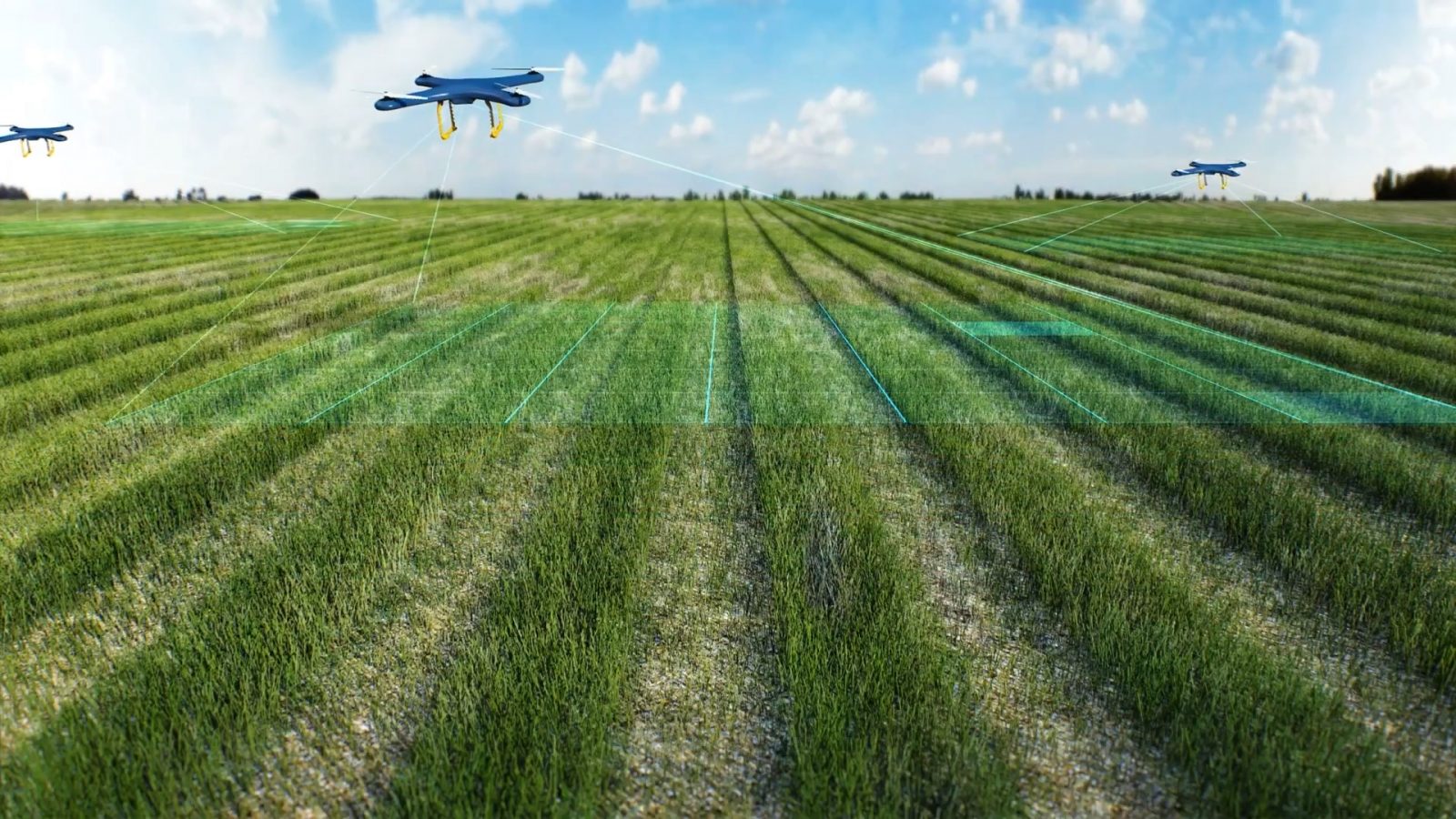
The theme of the REAP conference is time; Alex explains why this topic is so relevant to Drone Ag. “Crop walking is a critically important task that growers need to perform on a regular basis, and they spend a lot of valuable time doing it – time that they realistically cannot afford. Because of how time-consuming it actually is, they often end up not walking enough of a field to find potentially yield limiting factors early enough to deal with them. “We designed our crop scouting software, Skippy Scout, with this exact problem in mind. Using Skippy to supplement crop walking, means that the bulk of the work can be done using a drone, in a fraction of the time that it would take on foot. In Skippy’s first growing season, our users saved over 750 hours of their time using Skippy Scout. They covered more ground than they would have been able to on foot, reducing potential risk to their crops in order to improve yield overall.” More about Drone Ag.
Imagine a world where agriculture is not constrained by time. The ability to manage and manipulate time is increasing and REAP 2021 will explore the advances in technology and breakthroughs in science that is making this possible. REAP brings together people from across the agri-tech ecosystem who believe that innovation is the engine for change. The conference bridges the gap between producer needs and technology solutions and showcases exciting agri-tech start-ups.
Post Overview
18th October 2021
Agri-TechE
Agri-TechE Article
Digital Farm Management
Machinery, Robotics and AI
Share this Page:
Related Posts
SprayBot brings together Fotenix and Small Robot Company to investigate variable rate application of biopesticides
Get the latest agri-tech news, events and opportunities direct to your inbox
Adam Wolf, Arable, on the challenges of time…
Agri-TechE Article
Agri-TechE
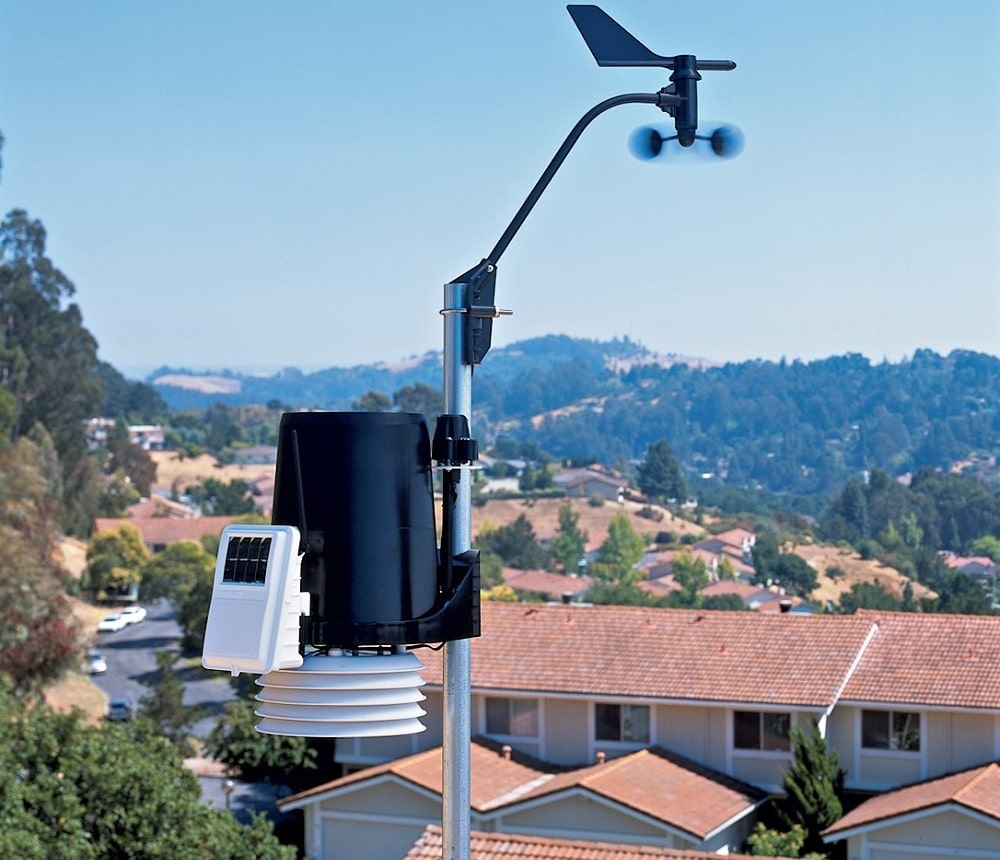
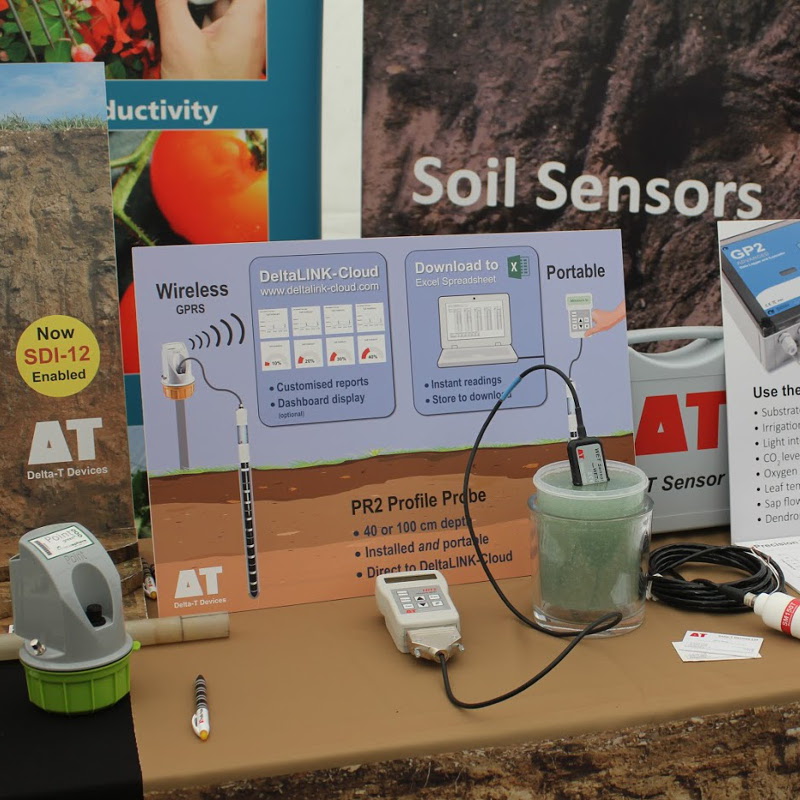
Adam Wolf is co-founder and CEO of Arable, producers of a portable weather station, Arable Mark 2, which provides localised weather and plant health status in real-time via a mobile phone. He coined the term ‘Decision Ag’ to describe how agri-tech tools could provide insights to farmers in order to improve decision making over a variety of timescales. The theme of the REAP conference is time; Adam explains why this topic is so relevant to Arable. “I often think about ‘what is the lifespan of the insight we are generating?’ Some insights like a burst pipe may require an SMS alert this moment because it needs immediate attention. Frost is also in this category, as is excess heat and risk of fire. “Irrigation usually needs only weekly, or occasionally daily data because there is not a lot of dynamic decision making on water – – – the plumbing and the labour availability impose their own limitations on an agile schedule. “At Arable we have focused our product around alerting farmers to meet these needs. “Harvest planning needs continual updating, first to organize marketing plans (including printing coupons and promotions!) but gradually this gets localized to allocating scarce labor and capital (ie storage) in the days ahead of time. To some extent we work with breeders to quantify the clock time and thermal time of their varieties for greater sensitivity in planning out planting and harvest schedules by the growers. “And then there’s the other challenge of increasing farmer returns on the time and labour they put in. Every generation half as many people are managing essentially the same amount of land, which means each person has a larger and larger set of responsibilities, less time per field, likely more drive time to get to the field as they are spread across a wide geography, and is called upon to do more different jobs (management but also reporting and data collection and such). I think one of the big roles of agtech now is providing productivity tools to increase returns to labor (yield per farmer), which basically amounts to time saving. More about Arable.
Imagine a world where agriculture is not constrained by time. The ability to manage and manipulate time is increasing and REAP 2021 will explore the advances in technology and breakthroughs in science that is making this possible. REAP brings together people from across the agri-tech ecosystem who believe that innovation is the engine for change. The conference bridges the gap between producer needs and technology solutions and showcases exciting agri-tech start-ups.
Post Overview
18th October 2021
Agri-TechE
Agri-TechE Article
Data: Collection to Management
Soils and Water Management
Share this Page:
Related Posts
Liberating soils and raising farm profits with Controlled Traffic Farming
Get the latest agri-tech news, events and opportunities direct to your inbox
Rupert Harlow of YAGRO, on the challenges of time…
Agri-TechE Article
Agri-TechE
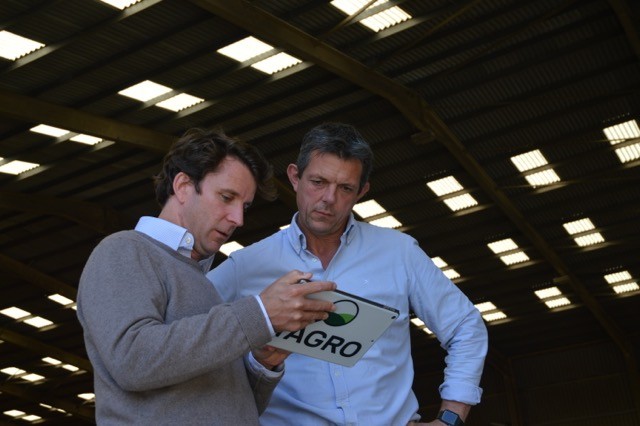
Rupert Harlow is Relationship Manager at YAGRO, pioneers in the development of analytics for agriculture. YAGRO released a ground-breaking new product in 2020 that aggregates on-farm business data into a simple online tool, and gives the farm manager incredible detail and insight on the farm’s current and historical performance. The theme of the REAP conference is time; Rupert explains why this topic is so relevant to YAGRO. “Farms have got a huge amount of data coming from various sources – their farm management software, accounts packages, sales contracts, labour and machinery details ranging from what is spent on each bit of kit, through to how many man hours it takes to get a field drilled up. What we do is collate as much of this information as possible into one place, from all of these sources – at the moment that includes ‘variable inputs’, so that’s seeds, fertilisers and sprays, and then it includes sales data as well. This gives the farmer an overview of what’s happening on the farm. And understand ‘this is where I ought to spend my time looking’. Within our Analytics system, farms can compare themselves against the averages from our dataset of other farms, so they can see if what they’re spending their time and money on is in line with others. We also have Virtual Groups, where a farmer can get together directly with another farm and compare their data. This works like a LinkedIn or Facebook request – where one side asks to connect with the other, and if the other accepts, the data will be shared between the two. We’ve got a case study of a farmer we worked with who is spraying 17% less and drilling 40% less than nearby farms without seeing a reduction in yield – now each farmer is an expert on their own farm, so if they then speak to each other and share that knowledge, that’s got to the best way of farms all progressing.” More about YAGRO.
Imagine a world where agriculture is not constrained by time. The ability to manage and manipulate time is increasing and REAP 2021 will explore the advances in technology and breakthroughs in science that is making this possible. REAP brings together people from across the agri-tech ecosystem who believe that innovation is the engine for change. The conference bridges the gap between producer needs and technology solutions and showcases exciting agri-tech start-ups.
Get the latest agri-tech news, events and opportunities direct to your inbox
Coming of age for Agri-TechE members
Agri-TechE Blog
Agri-TechE
Agri-TechE is growing up
In agriculture a lot of time is spent waiting for things to mature – fruit to sweeten, grains to fill, vegetables to ripen and livestock to grow up – this month we have seen evidence that agri-tech is growing up.
Raising crops and animals through that crucial development period – providing the best environment for their growth – is usually expensive, hard work, and sometimes stressful.
Nurturing a company through its birth, growing pains and scale-up, is no different – with one of the major goals being that someone else (customers, investors, other businesses) recognises and reward the value you have built in the business. That value hopefully increases as the business matures and attracts more revenues, investment and opportunities, leading to growth and expansion.
Big wins for British agri-tech
This month there have been some big wins for British agri-tech. These successes demonstrate the investment in time and money resulting in several home-grown businesses which are making their mark and showing that UK agri-tech is, indeed, growing up. Yagro (featured in our REAP Start-Up Showcase in 2015) and Outfield have both revealed major developments this month – Yagro has joined forces with the Frontier Group and Outfield has raised £750,000 in a funding round, while Breedr (Start-Up Showcase 2018) has launched a crowd-funding campaign building on its success to date in the livestock / beef supply chain. Index-based insurance scale-up business Stable (featured in our Weather event March 2020) has also just announced a massive new investment of $46.5m after several years of building global leverage in insurance.
Maturing innovation ecosystem
Although the UK has an impressive track record in R&D and frequently punches above its weight in terms of its research outputs, it is important to show this maturation to build investor confidence and demonstrate a flow of ideas and talent to attract the money – and more talent. And so the circle continues, resulting in a functional innovation ecosystem. Global investment into agri-tech – particularly farm-focussed technologies (rather than downstream food / consumer-facing businesses) is buoyant despite the pandemic, and investment success is largely a matter of timing. The UK routinely ranks in the top 5 of countries in terms of investment into agri-tech. Capturing the value that has been created is exactly what building a business is about – just like farmers when they sell crops and livestock.
Like agriculture, growing a successful business is a large part of being in the right place at the right time. And waiting for time to pass – while working hard to protect, support and provide the right conditions for growth – is a much about growing a business as it is about running a farm.
Perseverance and resilience, with a dash of innovation and harnessing data driven insights, diversifying when it makes sense, listening to your customers, collaborating where you can and going it alone when you need to.
From individual farm businesses, to agri-tech empowered companies, to an innovation ecosystem. Growing up is not easy, nor should it be taken for granted. As the saying goes – growing old is mandatory, growing up is optional.
Imagine a world where agriculture is not constrained by time. The ability to manage and manipulate time is increasing and REAP 2021 will explore the advances in technology and breakthroughs in science that is making this possible. REAP brings together people from across the agri-tech ecosystem who believe that innovation is the engine for change. The conference bridges the gap between producer needs and technology solutions and showcases exciting agri-tech start-ups. Book Now
Post Overview
18th October 2021
Agri-TechE
Agri-TechE Article
Livestock
Share this Page:
Related Posts
UEA expert calls for human vaccine to protect poultry workers
Get the latest agri-tech news, events and opportunities direct to your inbox
Clive Blacker, Map of Ag, on the challenges of time…
Agri-TechE Article
Agri-TechE
Clive Blacker is Head of Arable Produce at Map of Ag, a leading provider of insight and knowledge to Farmers, AgProfessionals and AgBusiness, delivering pioneering analytics, modelling and research.
The theme of the REAP conference is time; Clive explains why this topic is so relevant to Map of Ag.
“We work with the agri-food supply chain to address challenges in collecting and organising data from multiple sources, which allows businesses to make informed real-time decisions based on accurate information.
An excellent example of this in-practice is the use of data to advise farmers on when to apply nitrogen to their crop for the most efficient result. This not only creates a cost saving element for the farmer but also allows us to mitigate emissions, which delivers benefits throughout the supply chain.
“The granular level of data that we collect and organise through our models provides visual dashboards for our customers, where results of projects can be measured, and we can advise on sustainable pathway strategies.”
Hugh Martineau of Map of Ag will be part of the Carbon Conversation at REAP 2021.
Imagine a world where agriculture is not constrained by time. The ability to manage and manipulate time is increasing and REAP 2021 will explore the advances in technology and breakthroughs in science that is making this possible. REAP brings together people from across the agri-tech ecosystem who believe that innovation is the engine for change. The conference bridges the gap between producer needs and technology solutions and showcases exciting agri-tech start-ups.
Post Overview
15th October 2021
Agri-TechE
Agri-TechE Article
Data: Collection to Management
Digital Farm Management
Share this Page:
Related Posts
Cereals LIVE 2020 Agri-TechE members support virtual event
Get the latest agri-tech news, events and opportunities direct to your inbox
The challenge of time ignites debate
Agri-TechE
Timeliness is everything in farming, says John Barrett, Director of Sentry and Chair of the Agri-TechE stakeholder Group. John will be giving the Welcome at REAP 2021. He is looking forward to hearing a discussion of where agri-tech to manipulate time could improve productivity and reduce environmental impacts.
John’s wish list includes:
1. Better forecasting to support establishment
To farmers make better decisions now we need better knowledge of what’s going to happen in the future, so technologies that provide forecasting and prediction will have a big impact. The difference between making a profit and a loss, especially with commodity crops, is actually the timeliness of getting the crop in the ground when the conditions are right. Conditions change so quickly from being too dry to too wet and that’s only getting worse with climate change as we’re seeing more extremes of weather.
2. Early warning of disease threat for timing of interventions
In terms of interventions, technologies that enable us to detect disease or pests in the plant, before we can see problems with our own eyes are giving us time the opportunity to react ahead of time, before it has an impact on performance. Technology that allows us to remove the problem during its latent phase of development before the onset of infectiousness could potentially have a big impact on reducing our pesticide usage because we’re treating it before the disease has taken hold, maintaining the plant’s health.
3. Application of knowledge of biological time to speed up crop growth
I don’t think accelerated crop growth is something we’re seeing yet. But it could have a big impact in future. If we can achieve the same yield from a shorter growing period, that can only be a benefit.
4. Automation to achieve work/life balance
We need technology to help us to improve productivity by replacing labour units in every aspect of the industry. You always feel that you could work 24 hours a day but physically of course you can’t.
We need to adapt our businesses to reflect the labour force of today, their focus on achieving a work/life balance is something the industry hasn’t always been keen to adopt. In order to achieve our aims we expect everyone to put in 100% effort but we must reflect how our staff value their time outside work as well as their time at work to help them achieve more in all aspects of their lives.
Ahead of REAP we spoke to a number of Agri-TechE members about their views about the biggest challenges associated with time in farming, and how to approach a solution to these challenges.
“Time is central to how we operate in the world of agriculture, as our cloud-enabled cameras create a digital twin of a plant…”“I’ve spoken to farmers who are doing a 60-hour work week out in the fields and then they’re spending their Saturday afternoon dealing with the paperwork backlog…” “Being able to advise the optimum time to apply nitrogen not only creates a cost-saving element for the farmer but also allows us to mitigate emissions, delivering benefits throughout the supply chain…”“Farms have a huge amount of data coming in from farm management software, accounts packages, sales contracts, labour and machinery details, ranging from what is spent on kit through to how long it takes to get a field drilled …”“Every generation half as many people are managing essentially the same amount of land, which means each person has a larger and larger set of responsibilities, less time per field…”“The future of agriculture is all about making data-based decisions and much of that comes down to identifying exactly the right time to act. Crop4Sight is has been created to help potatoes growers do just that…”“In Skippy’s first growing season, our users saved over 750 hours of their time using Skippy Scout. They covered more ground than they would have been able to on foot, reducing potential risk to their crops in order to improve yield overall…”
Imagine a world where agriculture is not constrained by time. The ability to manage and manipulate time is increasing and REAP 2021 will explore the advances in technology and breakthroughs in science that is making this possible. REAP brings together people from across the agri-tech ecosystem who believe that innovation is the engine for change. The conference bridges the gap between producer needs and technology solutions and showcases exciting agri-tech start-ups. Book now
Post Overview
15th October 2021
Agri-TechE
Agri-TechE Article
Uncategorised
Share this Page:
Related Posts
Chance for Gen Z to influence food production for the benefit of people and the planet
Get the latest agri-tech news, events and opportunities direct to your inbox
Charles Veys, on the challenges of time…
Agri-TechE Article
Agri-TechE
Charles Veys is founder and CEO of Fotenix, developers of a tractor-mounted sensor that uses manipulated colours of light combined with embedded artificial intelligence to detect plant status, such as nutrient levels or disease. Time is central to how we operate in the world of agriculture, as our cloud-enabled cameras create a digital twin of a plant which is a four-dimensional snapshot (shape + content) in time, and can be rewound or fast-forwarded when looking to study and improve the understanding and detection of new pests and disease. “An ability to manipulate and revisit outbreaks is crucial to improving our scouting service which enables optimised timing for pesticide application both conventional and biological.”
Charles is a delegate at REAP 2021.
Imagine a world where agriculture is not constrained by time. The ability to manage and manipulate time is increasing and REAP 2021 will explore the advances in technology and breakthroughs in science that is making this possible. REAP brings together people from across the agri-tech ecosystem who believe that innovation is the engine for change. The conference bridges the gap between producer needs and technology solutions and showcases exciting agri-tech start-ups.
Post Overview
15th October 2021
Agri-TechE
Agri-TechE Article
CEA and Vertical Farming
Share this Page:
Related Posts
Cracking the secret of timing and its potential for agri-tech
Get the latest agri-tech news, events and opportunities direct to your inbox
Camilla Hayselden-Ashby, fieldmargin, on the challenges of time…
Agri-TechE Article
Agri-TechE
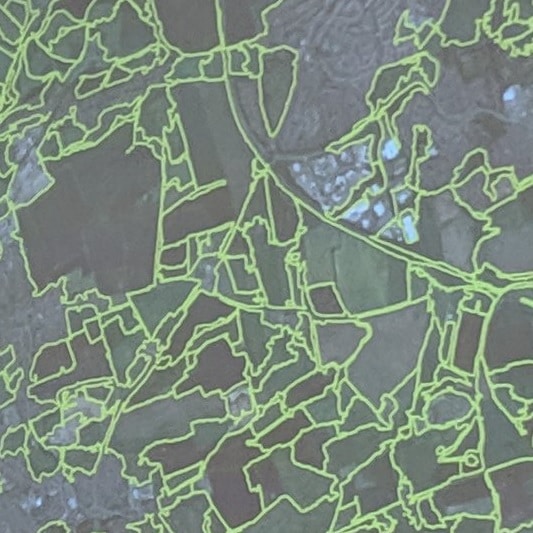
Camilla Hayselden-Ashby is Head of Product at fieldmargin, the digital farm mapping and management tool that links in with other technologies including satellite and drone imagery. Camilla works with farmers to understand how they are using the app, and what the overall challenge is that they are encountering within their business. The theme of the REAP conference is time; Camilla explains why this topic is so relevant to fieldmargin. “One of the challenges we identified was the amount of paperwork in farming, particularly on the arable side. For example, the farm office prints off a job sheet for a spray job; that gets handed to the spray operator, they go off and do the job, meanwhile the farm manager is having to call them for an update on progress, then when the job is done a spray ticket goes back to the farmer and they need to type it all up. “I’ve spoken to farmers who are doing a 60-hour work week out in the fields and then they’re spending their Saturday afternoon dealing with the data backlog. “fieldmargin cuts out almost all of that. You have your phone with you all the time, you can log information on the go, and your records are automatically updated. There really is no need for that replication of data entry. “On the livestock front, I was talking to a sheep farmer with about 1200 sheep across some rented ground and something he often has to do is provide information to the owner of the land on how many days it was grazed in that year and by how many animals. He said he has to go back through a notebook with the number of animals written and notes on where they were. “Tackling that, we have a tool that helps farmers keep track of grazing. They set up livestock herds and can record where they are; it appears as a pin on the map and when you want to record a livestock move, all they need to do is select the herd they’re moving, tap the field they’re moving it to, and that’s done. On their herd and on their field, they can see where was grazed when, and on the field when they take the herd out it begins calculating the rest period, so if they’re allowing their field a particular amount of time to rest for the grass to regrow, that’s automatically calculated for them.”
fieldmargin are exhibiting at REAP 2021. More about fieldmargin.
Imagine a world where agriculture is not constrained by time. The ability to manage and manipulate time is increasing and REAP 2021 will explore the advances in technology and breakthroughs in science that is making this possible. REAP brings together people from across the agri-tech ecosystem who believe that innovation is the engine for change. The conference bridges the gap between producer needs and technology solutions and showcases exciting agri-tech start-ups.
Post Overview
15th October 2021
Agri-TechE
Agri-TechE Article
Data: Collection to Management
Share this Page:
Related Posts
Rupert Harlow of YAGRO, on the challenges of time…
Get the latest agri-tech news, events and opportunities direct to your inbox
Cracking the secret of timing and its potential for agri-tech
Research Digest
Agri-TechE
As scientists, we know from the lab that time of day is important for treatments – herbicides are more effective when sprayed at dawn than dusk – but there is not much evidence that in current agricultural practice, timing of treatment is being considered. This is probably because it is only recently that the technology has become cheap enough to justify the investment.
The chronoculture idea is not just about the plant – it’s also about the fact that automation is now incredibly cheap.
25 years ago, it would have been ridiculously expensive and time consuming to optimise watering by computer. But now, somebody subscribing to a smart app can have automated watering for the cost of a few pounds – and suddenly these smaller benefits can start to accrue.
Professor Alex Webb, Chair of Cell Signalling in the Department of Plant Sciences, University of Cambridge
For example, if it was shown that watering at night would be more beneficial for the plant it would be possible to input this knowledge into the algorithm used to control irrigation. However, if the temperature is very high during the day and it is found that water is beneficial for cooling then the system could override these rules and sprinkle the crop. This dynamic decision making would balance the yield benefit with the cost of the water.
Fundamental research unlocks the secret of timing
Alex Webb’s team at the Department of Plant Sciences, University of Cambridge, had a major breakthrough when they discovered circadian clocks increased the size of the plants they were studying, confirming that this timing mechanism provides an advantage to plants.
Further research revealed that sugars produced by the plant regulate the clock function and calcium controls the circadian rhythm.
Professor Webb says we are at a tipping point where “we’ve got the fundamental biological knowledge and we’ve got the means to exploit it – with expensive automation like robots, cheap automation like smart irrigation, with smart data analysis tools and the ultimate: Controlled Environment Agriculture.”
Our findings about the importance of circadian rhythms in plants and the role of calcium and sugars in regulating their clocks are really fundamental discoveries that help us to understand the biology of the plant. I think this has been the exciting intellectual challenge for the past 25 years!
Now we more or less understand how plants measure time. The big excitement is that these discoveries don’t just apply to daily rhythms, they probably also apply to drought stress biology, pest resistance biology and much more.
We might be able to help adapt plants to different geographies, with different day lengths or breed for a changing environment.
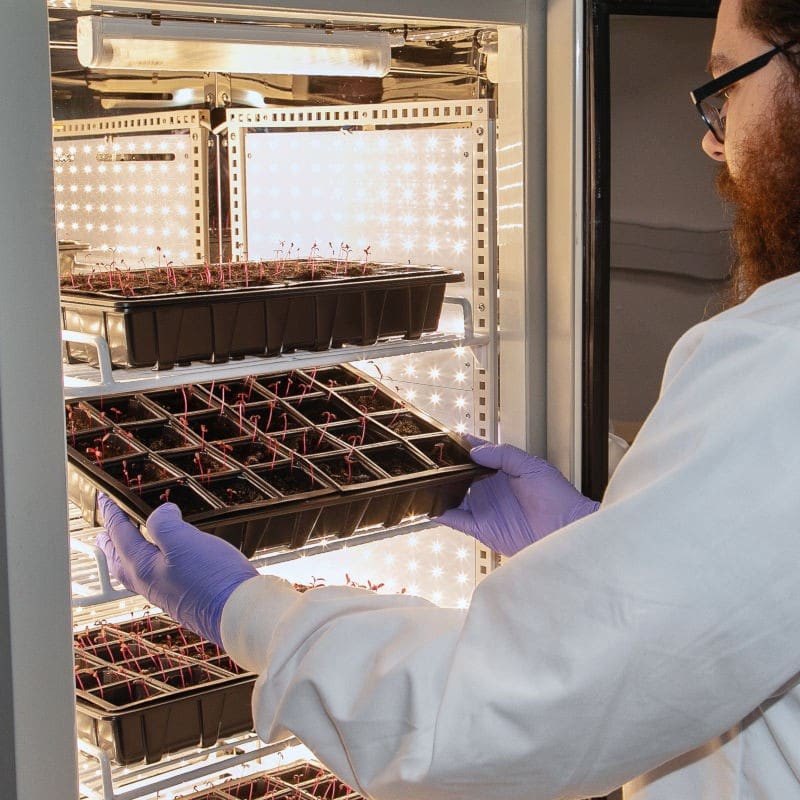
It is already possible to get multiple harvests of wheat in a year under controlled conditions. This is achieved by giving the plants 18 hours of light, four hours of darkness – extreme photoperiods. This is an example of a really radical controlled environmental condition to rapidly accelerate the generation time of wheat – a real example of chronoculture.
But is this applicable in a field environment? For this we need crop data, and my lab is currently working with Niab and BASF on field trials with wheat. We are growing plants in which the circadian clock is disrupted to see the consequence on different traits.
An application for this could be to adjust harvest time to coincide with optimum environmental conditions, particularly if we have trend towards wet Augusts and warmer drier Autumns.
We now have the opportunity to monitor the plant and control its environment 24 hours a day, which is a significant change in our relationship to farming.
This extends to storage and increasing the shelf-life of fresh produce.
For example, Beko have just released a range of ‘harvest fresh’ fridges which use blue and red lights in the vegetable drawer to simulate a 24-hour sun cycle which mimics natural light conditions ‘to maintain vitamins for longer’.
This feature came directly from fundamental research, where it was found that maintaining a light/dark cycle after harvest reduces pest attacks and maintains the quality of the fruit and vegetables because it stops them whitening and senescing – particularly in brassicas. The papers on this were only published only about 10 years ago.
The big question is: where will this new knowledge bring the best returns?
REAP 2021: Changing Time(s) for Agriculture
10th November 2021
Imagine a world where agriculture is not constrained by time. The ability to manage and manipulate time is increasing and REAP 2021 will explore the advances in technology and breakthroughs in science that is making this possible.
REAP brings together people from across the agri-tech ecosystem who believe that innovation is the engine for change. The conference bridges the gap between producer needs and technology solutions and showcases exciting agri-tech start-ups.
Get the latest agri-tech news, events and opportunities direct to your inbox
Oost NL in the International Café at REAP 2021
Agri-TechE
“We’ve seen increasingly that UK companies are become interested in establishing a European entity and the Netherlands provides a very accessible environment for that,” says Judith van de Bovenkamp, International Project Manager at Oost NL, the East Netherlands Development Agency. Oost NL will be returning to REAP to take part in the International Café and build on its relationships within the agri-tech community. East Netherlands, is home to the Wageningen UR-Foodvalley Region, a knowledge-intensive agrifood ecosystem we asked Judith to tell us more about the region and what it offers.
Oost NL is the regional development agency of the eastern part of the Netherlands. This is a very innovative region where several knowledge institutes are based, including a top global ranking university in agricultural sciences, Wageningen University & Research. East Netherlands also holds an ideal mix of multinationals, SMEs, startups and research institutes. Are you seeing interest from UK companies in establishing a presence in Europe?
Just last month we organised a trade visit for Dutch agrifood companies to ‘Local Flavours’ in Norwich. In doing so, I noticed that there is a growing interest among Dutch companies to explore and become active in the UK.
Travelling across EU borders is challenging during the pandemic, but at the same time companies cannot wait to establish new relations, explore new markets and collaborate with new partners. We feel participating in the REAP conference as an online event is a very good starting point to work towards meeting new relations physically in either The Netherlands or the UK in 2022.
And vice versa: we actively help British companies expand their presence in the EU! We offer a soft-landing programme to British businesses which guides them through each step of the expansion process – free of charge and tailor-made to their needs.
In the new relationship with Europe, having an established business abroad definitely opens new opportunities for market growth, and so we are happy to assist with that. Are there opportunities in Oost NL that you want to talk about at REAP?
Farming has always been an important sector in the Netherlands, and especially in East Netherlands. I have mentioned Wageningen UR, but surrounding this university lies Foodvalley, and this has been a major driver in the sustainable food system, offering a platform for innovative agri-food organisations – also international ones.
In these times of global changes, our aim is to keep connecting British and Dutch business and organizations.
Although times are challenging, we believe that we can help companies from our region make the world a better place by cooperating with international partners. We plan to bring several innovative Dutch companies to REAP this year, who will be eager to establish new connections.
Imagine a world where agriculture is not constrained by time. The ability to manage and manipulate time is increasing and REAP 2021 will explore the advances in technology and breakthroughs in science that is making this possible. REAP brings together people from across the agri-tech ecosystem who believe that innovation is the engine for change. The conference bridges the gap between producer needs and technology solutions and showcases exciting agri-tech start-ups.
Post Overview
15th October 2021
Agri-TechE
Agri-TechE Article
International Insights
Share this Page:
Related Posts
Food safety and harvest automation priorities for US growers
Get the latest agri-tech news, events and opportunities direct to your inbox
What if time was no constraint? REAP Conference Debates
Agri-TechE
Timing for the harvest this year is extremely challenging, said farmer Tom Pearson at the start of September. “50% of our crop is still in the ground unharvested because we’ve not been able to get any haulage to take wet grain to dryers. We can’t cut the grain and let it sit in the barn as after 72 hours, the grain quality will start to deteriorate.” Fresh produce has a tight window of opportunity, but innovations are emerging that may make it possible to stagger the harvest to reduce the pressure. Technologies to remove the constraints of time are to be discussed at Agri-TechE ’s REAP conference on 10th November 2021. Dr Belinda Clarke, Director of Agri-TechE , the leading innovation ecosystem for agri-tech comments: “One of the fascinating research discoveries has been an understanding of how plants measure time; an area known as chronobiology. The question now is how to apply that understanding. The big excitement is that these discoveries don’t just apply to daily rhythms, they probably also apply to drought stress biology, pest resistance biology and much, much, more.
“In parallel with that greater understanding of chronobiology, we are seeing advances in earth observation and satellite technologies that are making precision agriculture more precise and extending its potential application worldwide. When coupled with advances in remote sensing, prediction and risk assessment, we are looking at a perfect storm for the rapid deployment of technologies in the field.” REAP speaker, Professor Alex Webb of the Department of Plant Sciences, University of Cambridge, agrees. His team had a major breakthrough when they discovered that circadian clocks increase the size of Arabidopsis plants, confirming the advantage given by this timing mechanism. Further research revealed how the circadian rhythm can be controlled, providing the potential to overcome time. Using these principles to advance modern farming is an area of research known as chronoculture.
Professor Webb says we are at a tipping point where “we’ve got the fundamental biological knowledge and we’ve got the means to exploit it – from expensive automation like robots, cheap automation like smart irrigation, smart data analysis tools and the ultimate: Controlled Environment Agriculture.” But Professor Webb is the first to say that he is looking to REAP to gain input from progressive farmers. “Chronoculture is not just about night and day, it also includes seasons. It introduces the question: do we aim for potentially high-benefit, high-risk approaches, or do we go for incremental benefits, such as incorporating this clock information into smart agriculture to slightly change the timing of a few activities? That is a question for the farmers and growers.”
Tom Pearson will be one of those farmers at REAP. The conference attracts some of the UK’s most innovative farmers keen to see the direction of travel of emerging technologies and to lend their expertise to ground truthing the most promising.
He says: “An investment on the farm is for the long-term so it is helpful to know what the world will look like in 5 or 10 years’ time. I understand how difficult it is to evidence a product and I am happy to help, it is easy to underestimate the complexity. We have one season a year, and only one perhaps in seven years is comparable – trying to get proof of concept in ever changing field conditions is only going to get more difficult as climate becomes more variable. Trying to solve the challenge is being held up by the problem itself.”
Tom is one of the farming leaders of the H3 project (Healthy soils, Healthy plants, Healthy people), which is comparing regenerative agriculture to traditional farming and looking at biodiversity, soil quality and food quality. He says “Measuring each of these elements is becoming possible. There has been a lack of clarity over the future, but the wait is coming to an end. Interest in carbon sequestration, for example, is gaining momentum. We want to establish baseline data now, to be ahead of the curve when someone comes along asking to do a big collaborative natural capital project.”
Tom is part of the farmer advisory group for the Small Robot Company, which launched in the REAP Start-up Showcase and has since gained funding and widespread industry support. The company is one of many that have benefited from the Agri-techE ecosystem and will take part in the exhibition in this years’ virtual REAP conference. Dr Clarke continues: “Getting input from end users at an early stage is vital to ensure technology is fit for purpose. Over the last seven years we have seen the solutions maturing through close collaborations between farmers, technologists and researchers and this is creating models for technology adoption that are attracting international interest.”
Part of the conference this year will be an International Café, with representatives from the US, Far East and Europe talking about support for expansion in their geographies – including investment, incentives for establishing a base, and the requirements of their regional farming.
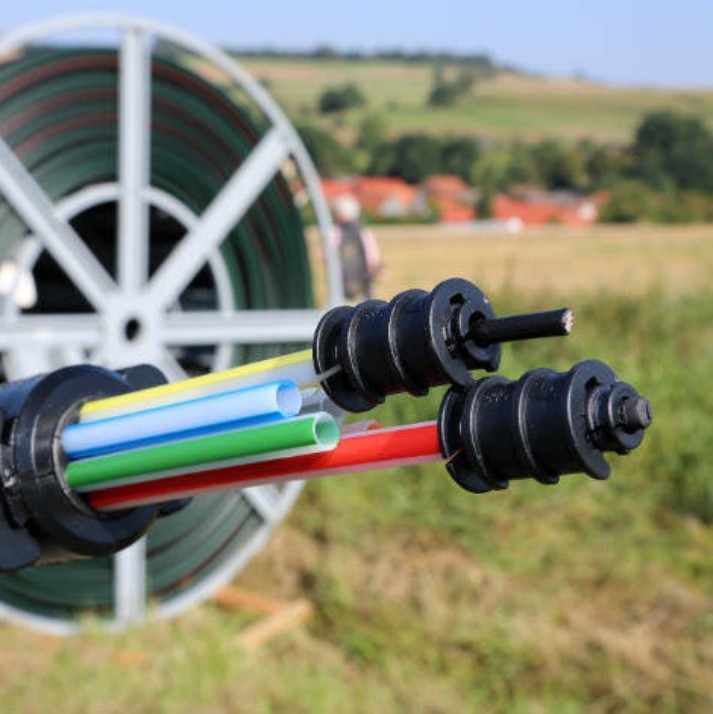
“The big facilitator for agri-tech will be the near global connectivity that is coming, with the latest satellites being launched by OneWeb and others,” continues Dr Clarke. “This will make it possible to connect multiple, low-cost sensors to the cloud and analyse the data effectively and to control automation in the field. UK agri-tech advances are driving this revolution.”
Imagine a world where agriculture is not constrained by time. The ability to manage and manipulate time is increasing and REAP 2021 will explore the advances in technology and breakthroughs in science that is making this possible. REAP brings together people from across the agri-tech ecosystem who believe that innovation is the engine for change. The conference bridges the gap between producer needs and technology solutions and showcases exciting agri-tech start-ups.
Get the latest agri-tech news, events and opportunities direct to your inbox
Breedr announces new crowdfunding campaign
Meet the Network
Agri-TechE
Breedr has announced that it will shortly be launching a crowdfunding campaign as part of its next round of investment.
Earlier this year Breedr announced a new risk-free way to buy and sell livestock, based on lifetime animal data and weights. The Breedr livestock trading platform means producers can buy and sell through the free app with certainty, with a price guarantee in case of any differential in the weight of weaned calves and stores between farms. Sellers are also ensured payment within 72 hours of collection.
Ian Wheal, founder of Breedr, says: “The ability for our customers to share in the success of Breedr is something that is really important to me, and crowdfunding is a great way for us to democratise our funding round by opening up the opportunity to everyone.
“The best part about crowdfunding is that it allows our customers and community to invest in Breedr at the same valuation as world-class investors including LocalGlobe & Forward Partners.
“Now is the perfect time to join us. The livestock & meat production market is worth $1.7tn— and we believe we are perfectly placed to positively drive sustainable change within the industry.” Find out more about Breedr.

 Agri-TechE


























 Agri-TechE