Using AI to fix fractured value chains: a path best tackled facing forward

Meet the Network
Agri-TechE

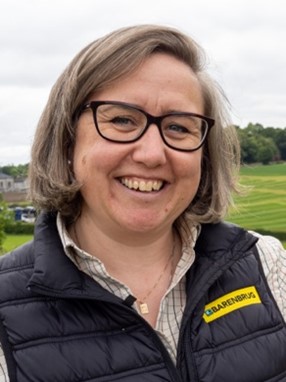
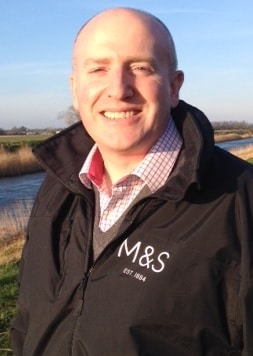
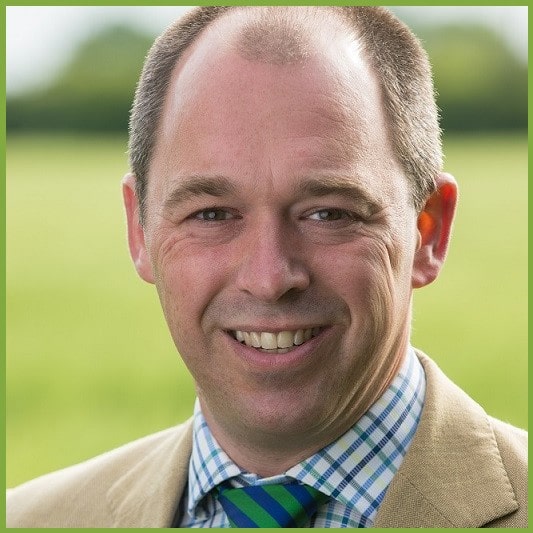
Matthew Smith, Microsoft ResearchMatthew Smith was an ecologist before he joined Microsoft to lead the development of new predictive models for environmental systems, he spoke to us a couple of years ago and in that time the digitisation of agriculture has gathered momentum.
We caught up with him ahead of the Pollinator “The AI’m of machine learning” to ask him how he sees things developing.
Q. What do you think have been the most important developments in the ‘digitisation of agriculture’ since you last spoke at an Agri-TechE meeting?
Probably the establishment of the UK centres of excellence in agri-tech. I think we’ll look back at those and see them as hugely important early incubators for much of the improvements we see in the field and further up the supply chain. Beyond that, the roll out of the multiple flavours of agri-tech services as genuine businesses or applications, rather than just ideas. Thinking here about agri robots, aerial image analysis and connected livestock.
Q The market seems to be consolidating – Do you think there is still an opportunity for young innovative companies to create businesses or is it best for them to concentrate on interoperability with the dominant platforms?
I think there are more innovation opportunities than there ever were. The prevailing platforms should provide more opportunities for innovators; and that would be the sign of a good platform. Innovators should be more liberated now, as they will need to build less from scratch and can assume that many of the building blocks exist. Instead they should focus on creating new business capabilities that will deliver value.
Q What are you working on at the moment that is exciting you?
I’ve always been excited by information services for the food supply chain. Finding ways through which the right information can get to the right people, at the right time, in the right way. Right now that information supply chain still doesn’t exist, as it should. It is fragmented and inefficient. That is having a real impact on the health of our agri-food supply chains in terms of waste, price and sustainability.
Wonderfully, technology is approaching a maturity to make the information supply chains the world needs; harnessing things like cloud computing, IoT, AI and block chain. I have the privilege to be working on how to make such systems work, from both business and technical perspectives. It gives me a great sense of purpose.
Q Do you think the future is ‘farming as a service’ – with sophisticated contractors managing much of the work remotely – or do you think the technology will improve the decision making of farmers and enable them to offer new services/ use land more efficiently?
I think both will feature heavily in future and they will interact with each other in complex ways making it impossible to know how this will play out (no one knows!). “As a service” should give more time back to farmers and landowners to develop their business and their landscapes in direction they need to go. There are many aspects of farming and wider land management that don’t get the attention they should do right now.
We need to restore our soils, we need well-balanced landscape management, we need a broader societal appreciation of agriculture and rural landscapes. That said, the minute we develop our agricultural practices in a more sustainable, more well rounded, more diverse direction than can be automated the model for “as a service” changes – there are many more things to be accounted for.
What’s for sure: this is an unknown path we are all on, so it’s best tackled facing forwards.
Matthew Smith, Director of Business Development, Microsoft, will be presenting at the Agri-TechE Pollinator “The AI’m of machine learning in agriculture” on 20 February 2018 at The Sainsbury Laboratory, 47 Bateman Street, Cambridge, CB2 1LR.

Hacking, Sprinting and Providing New Solutions for Agriculture

Agri-TechE Blog
Agri-TechE

sudo grow hackathon - inspirational thinking, problem solving and prototype developmentThe “hackathon” concept has been used in the IT industry for some time to bring together technical experts around a key problem facing a business or sector, and engaging in a super-focused effort (or “sprint”) over a day, weekend or longer, to come up with some answers.
And we think it’s time to do some hacking and sprinting to generate new solutions for agriculture and horticulture.
In partnership with Allia Serious Impact, we are jointly hosting an agri-hackathon called >SUDO : GROW to focus some of the brightest brains around some of the biggest opportunities facing our exciting industry.
A hackathon is a term coined by the computing industry to rapidly develop new software technology. The “-thon” bit of the word comes from “marathon” – which is what the participating teams feel they are doing when they are brainstorming, creating ideas and problem solving, more or less without a break, to come up with a rapid, workable solution.

>SUDO : GROW

The SUDO GROW hackathon will bring together industry experts and technology enthusiastsHeld in Cambridge over a weekend in April, the >SUDO : GROW hackathon will bring together industry experts and technology enthusiasts.
The team from Cambridge Applied Research are sourcing equipment (sensors, robotic parts, microprocessors etc), open-source APIs (that allow different bits of software to talk to each other) and copious quantities of Post-It notes and flip charts.
They are experienced hackathon organisers who know how to keep participants motivated, focused (and fed and watered).
Working from Saturday morning, through the night and into Sunday, the final solutions will be presented to a panel of judges on Sunday afternoon.

Hack for Ag

Aponic vertical growing standSo how can this work for agriculture? Surely new plant varieties, crop and soil chemistries and even imaging and sensor technologies take years to develop and be approved? Of course, no-one is expected to come up with a new type of crop or novel chemical in a weekend, but its reasonable to expect some relevant engineering, robotic or mechanical solutions to emerge.


The three focus areas will be:

  • vertical farming
  • non-chemical weed control
  • poultry management

With industry champions from Aponic, Niab, Greenvale and G’s Growers, outlining the technical challenges and opportunities facing the industry in these areas to the participants.

How can I get involved?

You can come and hack if you have some technical expertise, you can come as part of a pre-formed team, you can be an industry champion or a mentor / guide for the teams, or even a judge or sponsor.
The hackathon is all about generation of technical solutions – in contrast to the GROW agri-tech business plan competition we’ve run over the last three years, the ideas that emerge from this process should be technically feasible, but will still be a long way from even being the basis of a business plan.
The hackathon weekend is part of a longer process throughout 2018 where we and the Allia Serious Impact Team will be working with the teams developing the ideas and the industry champions to move forward the plans for commercial adoption of some of the ideas.
To find out more about the >SUDO : GROW hackathon, meet the team from Allia Serious Impact and Cambridge Applied Research
To register click here.

After the flood making information beautiful

Meet the Network
Agri-TechE

Nick Cross, After the floodTo survive in a complex world humans have evolved the skill to extract information quickly from patterns. This ability is exploited by infographics, graphics that display data as pictures. Familiar examples include the London Underground map, which supports navigation, and the Met Office maps, which allow weather prediction.
After the flood is now taking this type of data visualisation to a new dimension with artificial intelligence. It takes insights from multiple interactions (people-machine and machine-machine) and displays the findings as deceptively simple dashboards.

Personalised food production 

After the flood’s Chairman Nick Cross (pictured right), who also manages his family farming business in Suffolk, explains: “Traditional data analytics are based on collecting data and then providing retrospective insights.
“We are moving into a new era of active data that uses real-time data to provide intelligent services. Perhaps there will come a time when food production will be personalised!”
Instead of creating static images using historical data, After the flood creates a dynamic interpretation of live data. This allows fast reactions and the ability to create systems that learn from experience to respond to changes in their environment.
Within agri-food this could be using customer buying behaviours to predict demand for perishable goods, or monitoring fungal spores and weather conditions to allow preventative, precision spraying.
Nick continues: “I think there will be exciting opportunities to create intelligent data flows between customers, stores and the producers themselves, allowing farmers to be more responsive to specific consumers’ tastes and dietary needs.”

Information is beautiful 

After the flood has won an ‘Information is Beautiful’ award for its London Squared Map (see below)
London squared - After the flood
In partnership with Future Cities Catapult, After the flood turned London’s boroughs into a choropleth – or series of shaded cells – that can contain numerous types of data more effectively than a traditional geographical map.
The London Squared Map allows data to be compared across boroughs very easily, and governmental and other agencies are able to edit it to create their own versions for their web pages; for example the London Fire Brigade is one of several organisations that now use it. Some versions even place Instagram images inside the squares.

Managing for the public good

Nick says: “Who knows how the application of AI will really play out with farmers at the sharp end. If you go back 15 years or so, few people would have predicted the impact of cameras on mobile phones and how this has changed the way we live and interact.
“There is already a lot of noise about the role of AI in developing efficient crop production techniques.
“My guess is that there will also be exciting opportunities as farmers take on the challenge of managing land resources for the public good – because we will have to develop a much more sensitive, localised and dynamic picture of the impact we’re having on things like soil, climate change and invertebrates.”

Find out more 

Nick Cross will be presenting at the Agri-TechE Pollinator “The AI’m of machine learning in agriculture” on 20 February 2018 at The Sainsbury Laboratory, 47 Bateman Street, Cambridge, CB2 1LR.

Agri-TechE at Norfolk Farming Conference

Agri-TechE Article
Agri-TechE

Opportunities for farming beyond 2020 is the key note for the Norfolk Farming Conference, and Agri-TechE Director Dr Belinda Clarke, together with Professor Dale Sanders Director of the John Innes Centre will be looking at the opportunities for innovation.

(more…)

The >sudo : grow hackathon

Agri-TechE

sudo hackathon3,2,1….HACK!   We’re mixing things up this year and instead of our national GROW agri-tech business plan competition, we’re going to be running an AgriTech hackathon in partnership with Allia Serious Impact 7-8 April in Cambridge.

(more…)

Save the date – Agri-TechE Week 2018

Agri-TechE

Agri-TechE Week 2018We are planning a great programme for this year, but in the meantime a huge thank you to everyone who hosted, organised or attended events for Agri-TechE Week 2017.
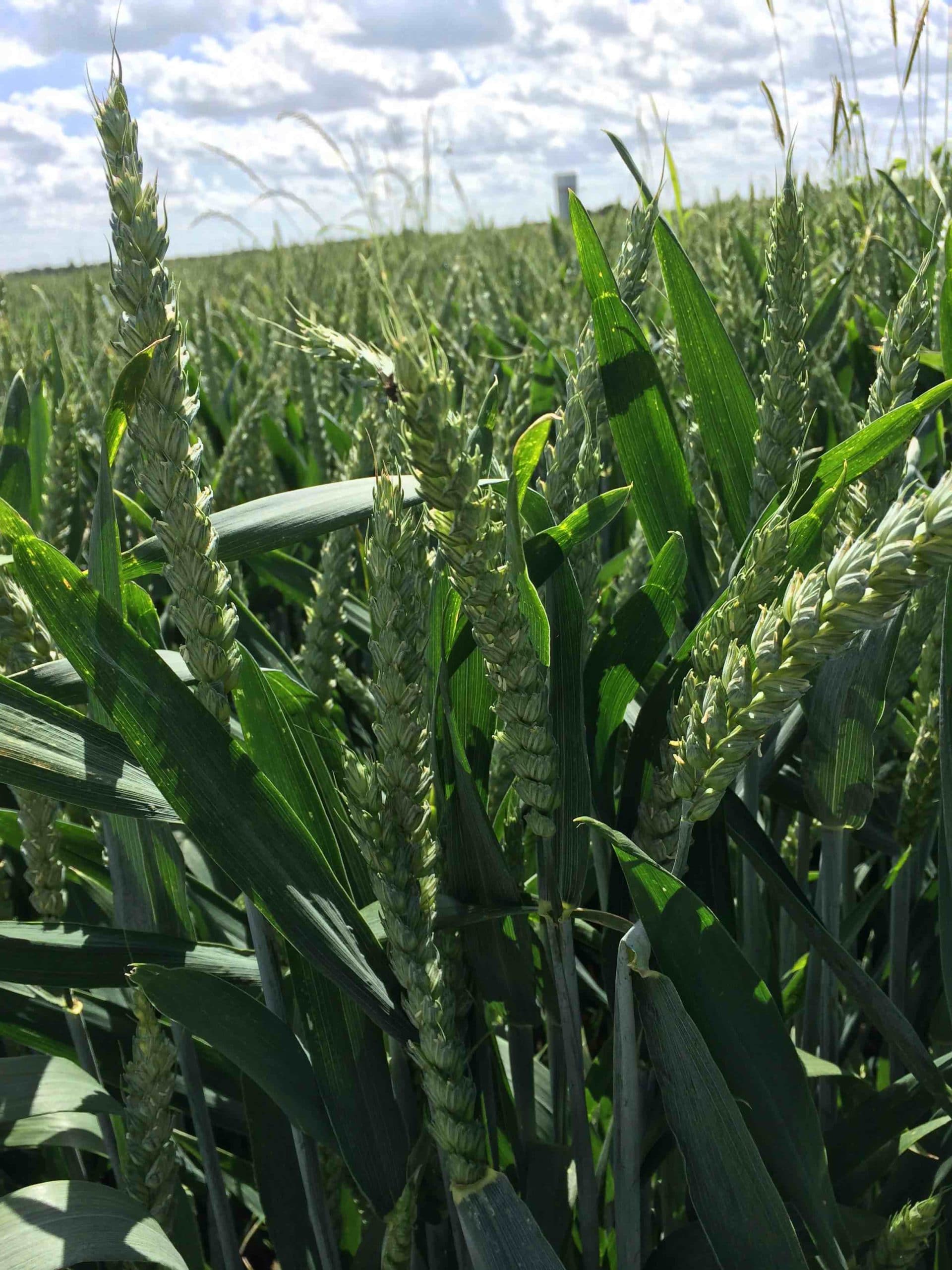

Events ranged from water catchments and metaldehyde, to adding value to horticultural waste, discussions about agricultural economics and tractor tyre innovations – we were so pleased to see so many people taking part in the week of activities.
It was an enlightening week and prompted many discussions.
Agri-TechE Week will run from 5-9 November 2018.

Could ‘flying flocks’ be the answer to soil fertility and low margins?

Meet the Network
Agri-TechE

“We know as arable farmers that we need to do something to improve soil health and structure and the inclusion of livestock in the rotation must be beneficial,” says Jamie Lockhart, Farm Manager at Honingham Thorpe Farms. But livestock farming is struggling to be profitable, and with Brexit coming many of the farmers are selling their sheep. The question arises: is there a different commercial model that would be mutually beneficial?
The farm is taking part in a novel trial to explore the benefit of introducing sheep into arable rotations for both the grazier and arable farmer.
Honingham Thorpe Farms is a contract farming business based in Norfolk. Originally a mixed enterprise with livestock and traditional Norfolk cropping of wheat, barley, potatoes, peas, beans, maize, linseed and oilseed rape, it has now streamlined its activities with less crops and more specialisation. The success of this approach has been achieved with a dedicated team and the most advanced equipment available in the sector.

Working trial

Honingham Thorpe Farms - machineryJamie Lockhart is entrepreneurial, with an interest in working with other businesses to share the benefits of spreading costs and using resources in new ways. He explains how he became involved in a pioneering trial on the farm.
“I was approached in July by Simon Wearmouth of Brown & Co who already had the backing of AHDB, National Sheep Association (NSA), the Organic Research Centre (ORC) and Frontier, to see if we were interested in running a working trial on the farm. The aim was to look at the potential benefits of having a ‘flying flock’ on an arable farm. The idea sounded exciting so we agreed immediately.”
Rather than just renting permanent pasture to the livestock farmer or growing a specific fodder crop for winter forage, the trial would look at the benefits to soil health and fertility of a grass ley (a mix of grasses, clovers and herbs) grazed and manured by livestock. If both parties achieved sufficient quantifiable benefit this could form the basis of new type of commercial relationship.
Jamie explains: “The sheep are owned by EM & JF Peacock and we would normally charge rent for permanent grazing land. Using livestock as part of rotation to build soil fertility is a different concept and it will be interesting to see if there is a yield uplift.”

Mutual benefits

Honingham Thorpe FarmsThe trial aims to demonstrate the mutual benefit for both arable and grazing enterprises of grass in the rotation, and is being conducted by Brown & Co in partnership with AHDB, NSA and Frontier Agriculture Ltd.
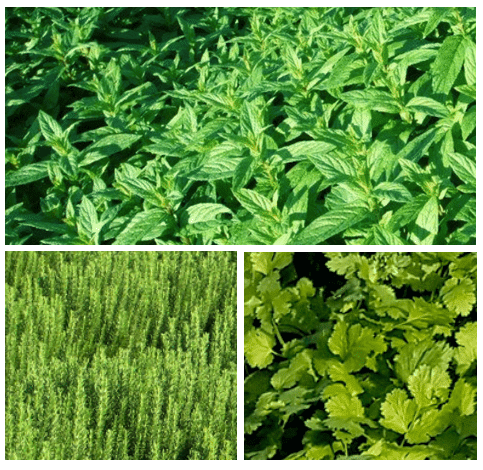
Honingham Thorpe Farms has about 12 ha of land that has previously grown wheat for 2017 harvest. This has been sown as a grass ley split into two blocks, one a grazing mixture of grasses and white clover and the other a herbal ley, which contains a diverse mixture of grasses, clovers and herbs, including plantain and chicory.
Weekly assessment of grass and forage availability will be made to track grass growth and to help decisions to be made in terms of fertiliser use and stocking rate. Two separate groups of ewes and lambs will graze the blocks and weights will be collected so live weight gain will be tracked up until the lambs are weaned in July/August. It will provide evidence on the best mixture in terms of grass growth rates and animal performance. The trial will also be looking at the benefits to the grazier of clean grazing for parasite control and animal performance.
The benefits to the soil may include increased accumulation of organic matter, improved microbial activity, the introduction of micronutrients and greater availability of mineralised nitrogen. The fields have been GPS mapped, they will be sampled and analysed throughout the trial by Frontier. These factors may lead to better soil structure, health and resilience and potentially an uplift in yield for the following arable crops.
To provide objective assessments, Frontier has developed soil maps for the field to provide a baseline comparison, and the farm has good yield data for three years and information for previous years.
Additionally, using livestock in the rotation may provide weed control. The selected field had a problem with blackgrass, which is becoming increasingly resistant to chemical control. Grazing the plants before they have a chance to seed may control and manage the problem.

Flying flocks a new model

Introducing livestock to arable farms requires careful management and an investment in infrastructure, such as water supplies and fencing. Jamie comments: “We need to do something about the soil and also to look beyond subsidies for directing land use. This trial should give us a good understanding of the true costs and benefits to our farm and for the grazier.”

Honingham Thorpe FarmsNote: Honingham Thorpe Farms is hosting a trial to demonstrate the benefit of introducing sheep into arable rotations for both the grazier and arable farmer. The trial is being conducted by Brown & Co in partnership with AHDB, National Sheep Association (NSA), the Organic Research Centre (ORC) and Frontier Agriculture Ltd. This project has received funding from the European Union’s Horizon 2020 research and innovation programme under grant agreement No 679302, as part of the Innovation for Sustainable Sheep and Goat production in Europe project (iSAGE – www.isage.eu).

>sudo : grow hackathon announced

Agri-TechE

sudo grow hackathonInnovation comes from solving a problem in a new way and a fresh perspective often helps. There are some big challenges facing the agri-food industry and traditionally innovation in this sector takes time to come to fruition.

So to speed up the ideas generation Agri-TechE has teamed up with Allia Serious Impact to host a hackathon called >sudo : grow.
This event will run this year instead of the GROW agri-tech business plan competition which has successfully identified a number of promising early stage businesses.
There is much work to be done to turn the output of a hackathon into a business idea but several early stage agri-tech companies, such as Entomics which is using black soldier flies to produce protein and POM which is encouraging natural pollinators, have grown out of student challenges.
For more information about how to register go to www.sudochallenge.com

Burying carbon in soil won’t halt climate change

Research Digest
Agri-TechE

The idea of using crops to collect more atmospheric carbon and locking it into soil’s organic matter to offset fossil fuel emissions was launched at COP21, the 21st annual Conference of Parties to review the United Nations Framework Convention on Climate Change in Paris in 2015. The aim was to increase carbon sequestration by “four parts per 1000 (4P1000)” per year for 20 years.
However, unique soils data from long-term experiments, stretching back to the middle of the nineteenth century, confirm the concept of burying carbon in the ground to halt climate change is flawed.
The findings come from an analysis of the rates of change of carbon in soil by scientists at Rothamsted Research where samples have been collected from fields since 1843.
burying carbon in soilThe Rothamsted scientists used data from 16 experiments on three different soil types, giving over 110 treatment comparisons. “The results showed that the “4 per 1000″ rate of increase in soil carbon can be achieved in some cases but usually only with extreme measures that would mainly be impractical or unacceptable,” says Paul Poulton, lead author and an emeritus soils specialist.
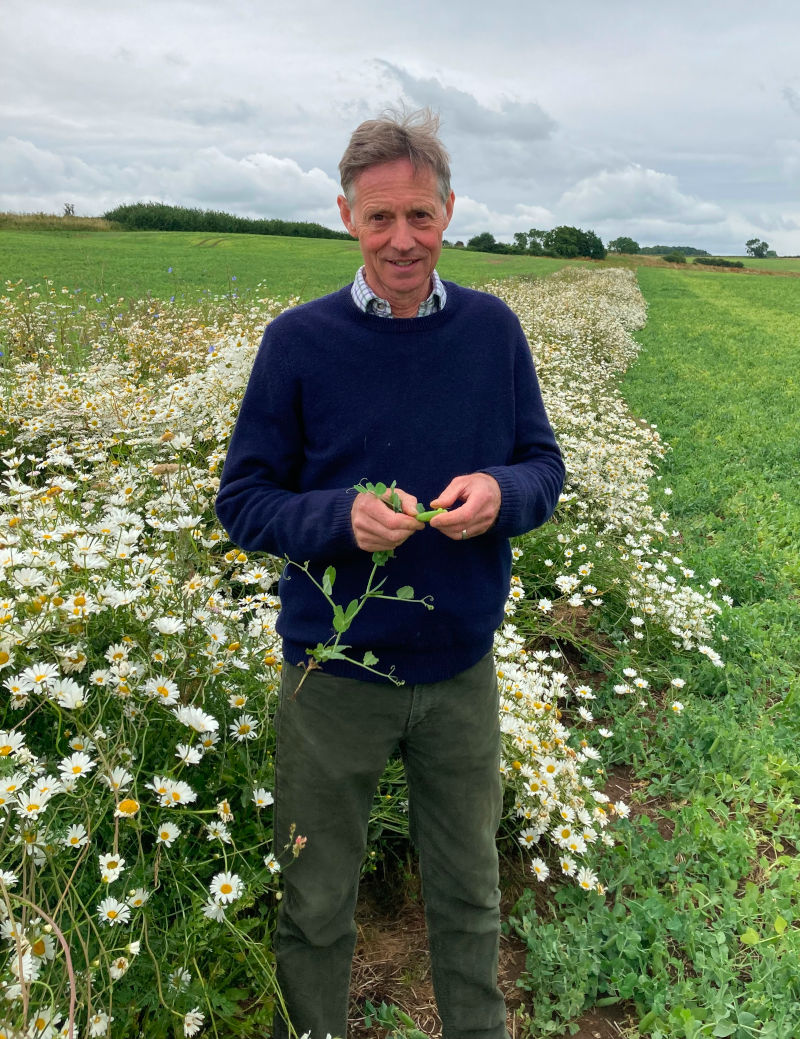

“For example, large annual applications of animal manure led to increases in soil carbon that continued over many years but the amounts of manure required far exceeded acceptable limits under EU regulations and would cause massive nitrate pollution,” notes Poulton.
Removing land from agriculture led to large rates of soil carbon increase in the Rothamsted experiments but would be highly damaging to global food security.
Although, returning crop residues to soil was effective at increasing carbon sequestration but, this is already done so cannot be regarded as a totally new practice.
“For example, in the UK about 50% of cereal straw is currently returned to soil and much of the remainder is used for animal feed or bedding, at least some of which is later returned to soil as manure,” says Poulton. “In many other countries, however, crop residues are often used as a source of fuel for cooking.”
“Although there can be environmental benefits from such a system, most farmers find that it is uneconomic under present circumstances,” says Powlson. “To make this change on a large scale would require policy decisions regarding changes to subsidy and farm support. Such a change would also have impacts on total food production.”
They suggest that a more logical rationale for promoting practices that increase soil organic carbon is the urgent need to preserve and improve the functioning of soils, both for sustainable food security and wider ecosystem services.
For climate change mitigation through changes in agricultural practices, they point out that measures to decrease emission of nitrous oxide, a greenhouse gas almost 300 times more powerful than carbon dioxide, may be more effective.
The paper: Major limitations to achieving “4 per 1000” increases in soil organic carbon stock in temperate regions: Evidence from long-term experiments at Rothamsted Research, United Kingdom. Global Change Biology, 2018; DOI: 10.1111/gcb.14066

Follow the money

Agri-TechE

Follow the moneyFunding is complex and we aim to sign-post the best opportunities for Agri-TechE on our website in the funding section.


Together with Smart- AKIS we are trying to demystify the process with a dedicated networking meeting hosted  to present and discuss the different routes.
This includes presentations from:
Eastern Agri-TechE Growth Initiative – funding of between £10,000 to £150,000 for small and medium-sized enterprises (SMEs) in the regional agri-tech sector
Knowledge Transfer Partnership – a national programme that helps businesses improve their competitiveness and productivity through collaborative research with academic and research partners. The business partner must be capable of making significant use of the knowledge, skills and/or capability to be transferred
Innovate UK – funding for UK businesses to support the delivery of game changing or disruptive innovations with significant potential for impact on the UK economy.
BBSRC – allocates funding to research projects. UK’s bioscience research base receives £16.6 million from the Industrial Strategy Challenge Fund.
Douglas Bomford Trust – Funds individuals to help advance knowledge, understanding, practice, and competence in the application of engineering and technology to achieve sustainable agri-food systems.
More information about funding.
Top Tips from a previous Pollinator.
More information is available on the events page.
This event is help in partnership with Smart-AKIS

Looking forward

Meet the Network
Agri-TechE

Norfolk broads
As the Secretary of State for Environment, Food and Rural Affairs commented at the Oxford Farming Conference last week “…if we want to preserve that which we cherish – a thriving agricultural sector, a healthy rural economy, beautiful landscapes, rich habitats for wildlife, a just society and fair economy – then we need to be able to shape change rather than seeking to resist it.”
We start the year with a Pollinator that aims to help farmers understand how to cost and value – in financial terms – the natural capital assets they have and also the contextual specificity of the land use.  For example, would a reservoir in dry Norfolk be “worth” more than one on the Somerset Levels which is prone to flooding? And how can a farmer assign a real financial value to the benefits, both to the environment and the business, to that asset? Similarly wildflower margins that encourage pollinating insects – what quantified benefits can be seen for crop yield?
From the work that we have been doing we know that farmers face real difficulties in calculating (or even estimating) return on investment (ROI)  of some new practices or technologies, and this is a real barrier to their adoption and commercial integration into their business. Farmers have invested significant time and energy over the years into environmental stewardship – but how do they quantify the benefit of maintaining a healthy balance within the ecosystem? Join us at the Norwich Research Park on January 24th to discuss it. We’ll also be talking about agricultural audit systems using blockchain technologies at our Pollinator in April.
We are also looking forward to welcoming a new member to our team to help progress projects that will allow us to better understand these complex questions.
The desire for change is being underpinned by an increase in funding for innovation. According to Saville investment in agri-tech has increased from £50m in 2010 to £850m in 2016, this shows the confidence that the investment community has in the sector and of its increasing importance.
Improving the dialogue between producers, researchers, engineers and technologists to ensure that the agri-tech being developed is fit for purpose will be a continuing theme for us in 2018.
Our developing events programme for the year can be viewed here and our growing portfolio of industry reports can be viewed here.  As always it is your involvement that makes the difference so if you are ready to embrace and direct change then get involved.

Predicting a rise in Stock-Tech

Agri-TechE Blog
Agri-TechE

Are flying flocks the future of farming?
Many of our farmer members will remember when mixed farming was routinely practiced across the region, but in recent times herds and flocks have not been economically viable for a farm business. However the role of livestock is being revalued to be seen as part of a wider ‘agro-ecology’ to improve soil fertility and weed control. This approach could be a potential model for so-called sustainable intensification.
As the role of livestock within a farming system is re-evaluated, so too are we extending the scope of Agri-TechE beyond its initial crop and plant-based focus.

Stock-tech 

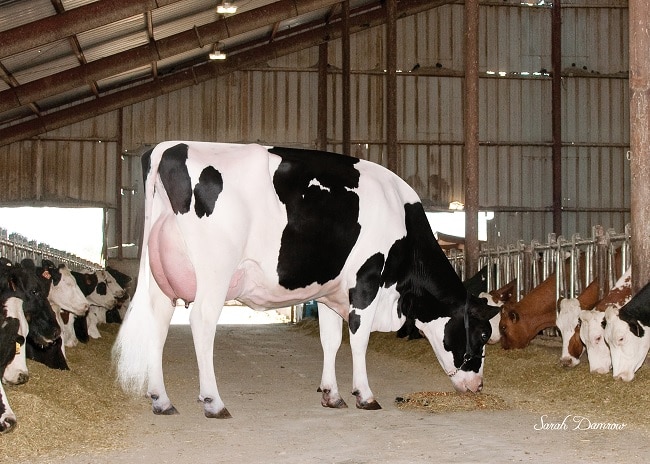
The role of livestock innovations in farming systems should not be underestimated –  already innovations such as smart ear-tags, rumen-based sensors and innovative disease diagnostic systems are entering the market.
Thinking more about the role of livestock speaks closely to our agenda to help advance new technologies for the industry. We are seeing rapid advances in “stock-tech” innovations, ranging from GROW business plan finalist Smartbell (wellness, lameness and oestrus detection), to PBD Biotech, Start-Up Showcase speaker at REAP 2016 with innovative technologies for TB testing.
While the east of England has not traditionally been known for its livestock, DEFRA’s most recent data reveal it is home to 28% of England’s pigs and 22 % of its poultry. And there are examples of leading excellence, including a dairy herd in Norfolk managed by robotic milkers, run by Emily Norton, speaker at our Young Innovators Forum Agri-Science 2017 conference. Another dairy herd in Norfolk produces starting material for the famous Mrs Temple’s cheeses, with the cattle muck feeding an anaerobic digester which then returns nutrients to the soil.

No margins?

Predicting a rise in Stock-TechBut do the economics stack up? Livestock farming is challenging, highly regulated and with notoriously low margins, and the threat of imports competing with UK-grown product.
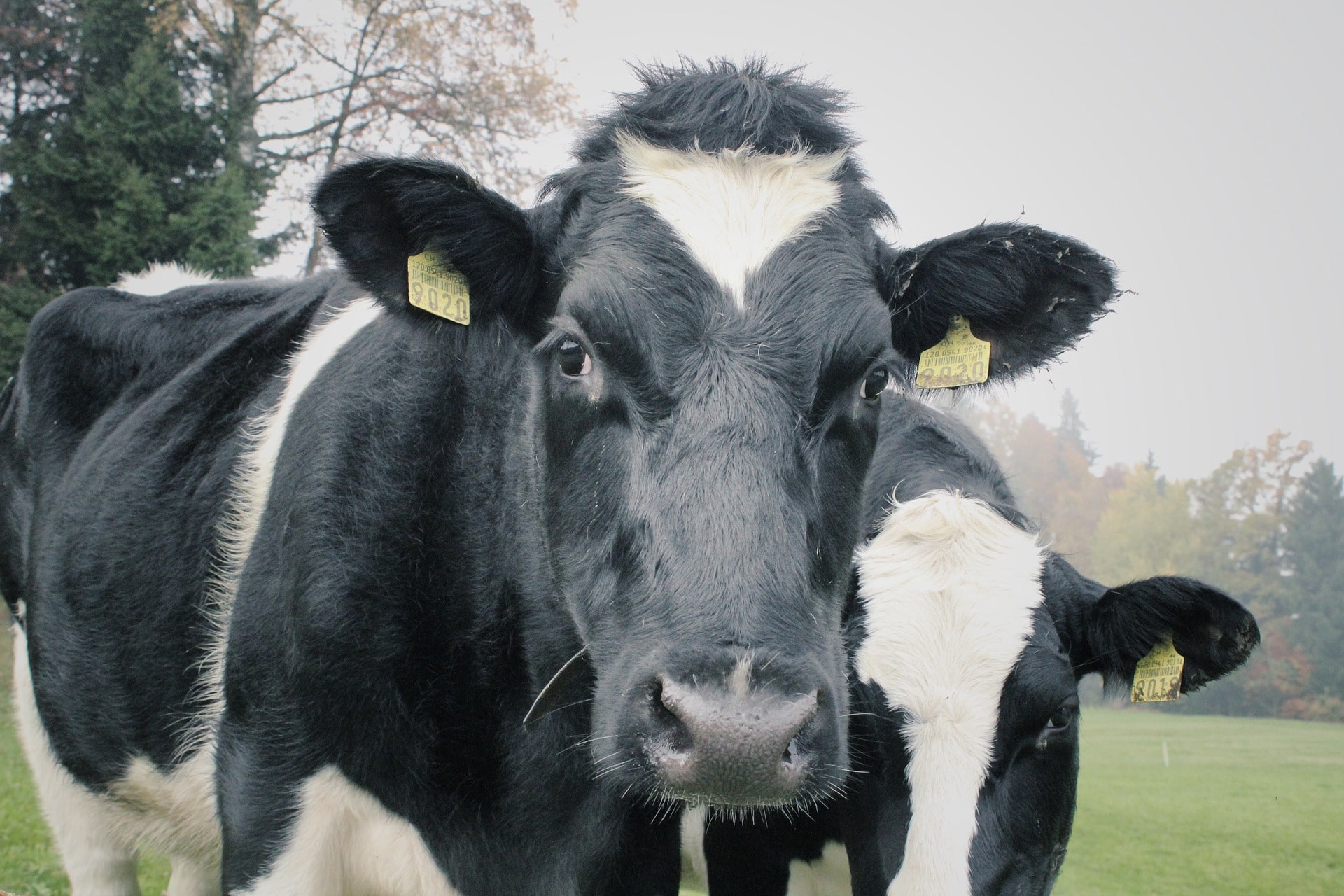
To answer that question, a number of research projects are underway looking at the financial benefits of relationships between grazing animals and soil improvements, be able to put a financial value on the benefits to arable land from grazing stock and to establish the viability of keeping animals just for grazing.
Of course many animals are also housed indoors, with the potential for innovations to help with feed and environmental management, data analysis, automated weighing and welfare support. We will be using our links with the knowledge and technology communities to explore how their use of analytics and logistics can support the agri-tech sector.

Feeding the soil

Gary Zimmer, who gave the keynote speech at our REAP 2016 conference, extolled the virtues of muck.
The effective use of organic manures supports biologically-active soil ecosystems. Soil organisms will use the nutrients in whatever form they are applied (mineral or organic) but they also need an energy source to respire and reproduce.
With mineral fertilisers, soil organisms will break down existing soil organic matter, contributing to the decline in soil organic matter levels associated with intensive cropping systems. However, with organic manures, nutrients are applied to the soil together with organic matter, providing a source of energy (from the carbon compounds) for the soil ecosystem that is not available when mineral fertilisers are used.
It is not just the manure, the use of leys for feeding livestock provides a break in the rotation to allow control of weeds. The addition of clover and other herbs in the ley add nutrients to the soil, further improving its microbial health and structure.

Calculating the value

Could we envisage a relationship between livestock and arable production where the different parties both understand the absolute financial value they bring to the table?
This also speaks to our latest thinking around Natural Capital, which we’ll be talking about in our January Pollinator. Exciting times – watch this space!