Patenting, Trademarks, Copyright, Trade Secrets...
In the next installment of our micro-learning series, we’ll explore potential legal solutions to help you keep your ideas safe and sound.

Farmable fabrics – a tailor-made diversification opportunity for UK agriculture?

Agri-TechE Blog
Agri-TechE

While we can all agree that food is a necessity, clothing is also pretty high on the list! Perhaps surprisingly, around 70% of the clothes we wear today are made from plastics such as polyester. However, more sustainable, ‘farmable’ fabrics do exist – such as linen, wool and hemp – that could offer a lucrative diversification opportunity for UK growers.

Farmable fabrics – a tailor-made diversification opportunity for UK agriculture? A picture of a flax field.

WWF research reveals that 46% of the UK’s carbon footprint comes from overseas emissions – which includes the majority of our low-cost clothing imported from countries like China, Bangladesh and Turkey.

Last month (March 2024) France’s parliament unanimously approved a bill imposing an environmental levy on low-cost fashion which would enable domestic production to compete with oversees alternatives. Given our goal of Net Zero, the potential implementation of a ‘carbon offshoring’ tax on imports seems imminent.

Hemp – a diversification opportunity for UK agriculture

Additionally, this week (9 April 2024), the UK introduced significant legislation changes in industrial hemp licensing to facilitate regulated cultivation of hemp. The change offers huge potential for UK arable farmers to pioneer a whole new crop, not only as a practical solution for sustainable fashion but also as a lucrative opportunity to sell hemp to the textile industries.

Could British agriculture take on the fabric industry and pave the way for an eco-friendly wardrobe?!

Becky Dodds, as well as being Director of Communities at Agri-TechE , is an avid hobby sewist, crocheter and even one-time denim shoemaker; so she knows more than most about the world of fabrics and textiles. This month she muses on ‘alternative’ clothing materials and how growing sustainable crops for fabric production could be a real game-changer for British agriculture.

The UK’s sustainable, ‘farmable’ fabrics

As consumer consciousness evolves, so does the demand for sustainable alternatives to plastic-based textiles. Retailers are increasingly embracing eco-friendly textiles such as ECOVERA viscose, deadstock fabrics (created from waste from fashion houses) and bamboo silks.

Linen, made from flax, and once a cornerstone of British textile production, has ceded ground to overseas cotton in recent years. Current UK linen-production is now restricted to artisan weavers, although some industry leaders – including resident Sewing Bee judge Patrick Grant – are on a mission to revive domestic linen production.

British wool is a compelling option with the few British woollen mills and spinners attracting a premium price (such as the well-known Harris Tweed). Lingering misconceptions about sustainability and ethics are being addressed by Woolmark.


Farmable fabrics – a tailor-made diversification opportunity for UK agriculture?
Viscose-linen mix fabric, with natural linen texture. Viscose is made from wood pulp and is more breatheable than cotton.

The biggest alternative to wool is acrylic yarn which does not stand up to washing and releases microplastics in the process; bamboo and alpaca are better alternatives though are generally imported.

Leather alternatives are also on the rise – utilising everything from pineapple waste to grape skins, both of which took centre stage in Stella McCartney’s recent collection. However, many still need to be mixed with plastics in some form, and the processes of both tanning leather and creating leather alternatives is often energy and chemically intensive.

Dyeing and colouring clothes is another chemical-heavy process – with some concerns over toxicity, and issues with contaminated waste-water not being properly treated. A potential solution could be in the breeding of coloured cotton – for centuries grown globally in a range of hues, we now use water-intensive and chemicals to dye our only-white cotton.

This is but a tiny snapshot into just one market that agriculture could help service. Indeed, some of our community are doing just that – Ponda is using paludiculture to produce an alternative for polyester/feather stuffing using bullrush and Fibe is transforming potato waste to a cotton-alternative textile.

Opportunities in sustainable fabric production

Whilst some research suggests only 15% of people are making consistent sustainable fashion purchases, it’s pretty safe to say we are trending towards a socially conscious future, not only with what we eat, how we fuel our lives, but also what we choose to wear.

To meet this future demand, now is the time to identify and build these supply chains. Projects such as the Centre of High Carbon Capture Cropping will help growers diversify their rotations, improve their soils and water, and profit from growing for novel biomaterials. With a newly-released government strategy for materials and manufacturing in 2050, plus dedicated funding support (BBSRC is launching a call for feasibility studies into bio-based materials), opportunity is ripe to explore the future of farm crops for clothing.


Tencel – a brand of viscose using fewer chemicals and less energy to produce than generic viscose, and with a focus on sustainable source wood and waste water recycling.
Organic bamboo silk dyed with certified OEKO-TEX certified dyes
LENZIG ECOVERO viscose, with a much lower impact environmentally than regular viscose (made of wood pulp)

Circling back to Patrick Grant… the Homegrown/Homespun project looks at how to rebuild the whole UK flax supply chain – from growing, to processing, weaving and even dyeing with UK-grown indigo.

Last year, Agri-TechE considered alternative crops at our event – sharing the work of Niab and other institutes looking in part at the profitability of using novel crops in the rotation. But perhaps for some crops, the supply chain needs to be built in order to reap the reward of introducing these soil-improving crops to our rotations.

Fashion is just one potential new market for UK-grown crops – as the world looks to reduce its reliance on synthetic materials, there is no doubt that more opportunities are to be found for plant-based alternatives that deliver environmental and financial benefit to the farm.

For further learning on this topic, Articles of Interest podcast delves deep into the history of fabrics; I particularly recommend the Blue Jeans episode.

Advances in crop monitoring will enable agri-business to respond to Net Zero transition

Meet the Network
Agri-TechE

The move to hyperspectral imagery would offer a step-change in prediction and forecasting of crop performance, according to Rémi Banquet, Commercial Marketing Director for Hyperplan, a ‘Software as a Service’ company. He explains that insights gained from its crop monitoring software will enable agribusinesses to adapt their business models and secure sustainable growth during the transition to regenerative agriculture.

Hyperplan provides decision support services to suppliers, buyers and planners in agri-businesses and agricultural cooperatives.

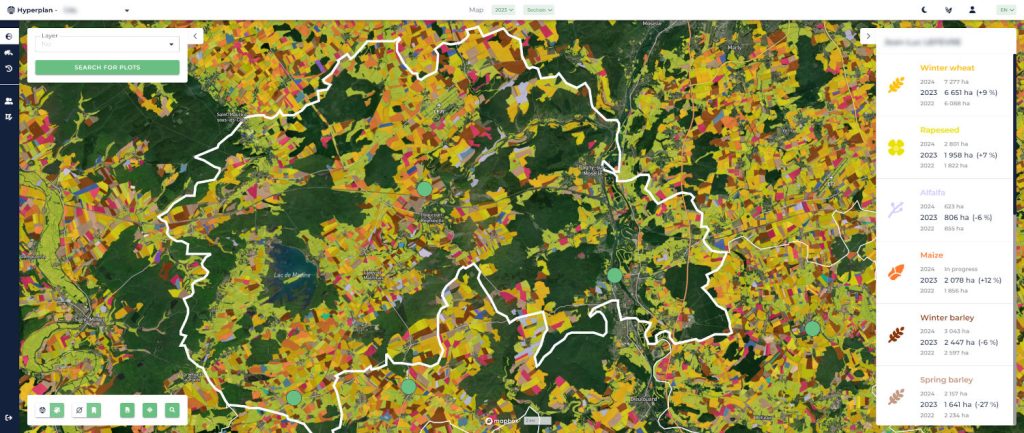
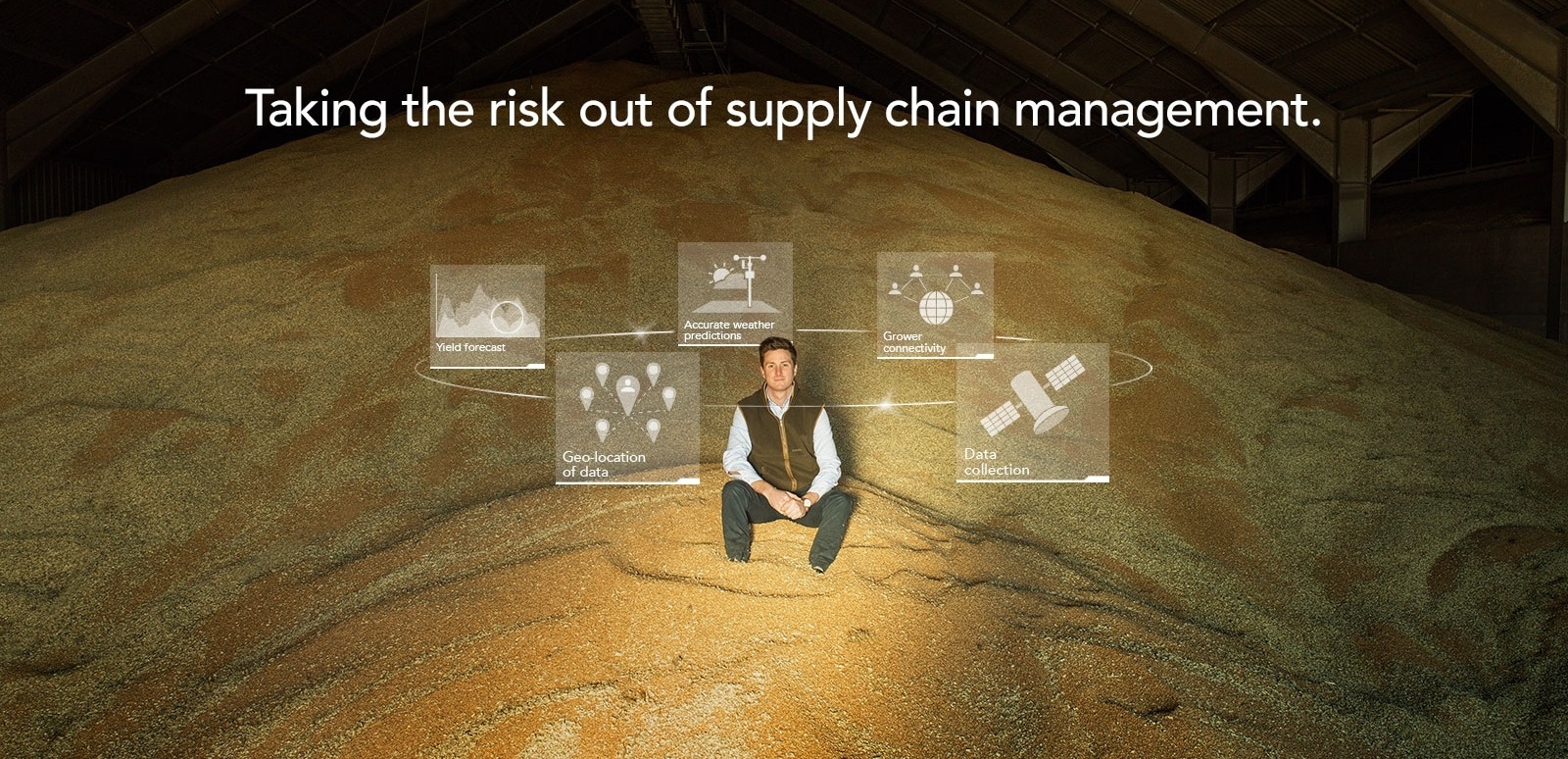
The Hyperplan platform ingests satellite data about the crop canopy, weather and soils and combines this with crop yield models to anticipate supply volatility.

The service is proving popular with agri-input businesses as it allows their commercial and marketing teams to grow their portfolio of farmers, manage KPIs and respond quickly to opportunities created by changes in production.

Remi Banquet, Hyperplan's Chief Growth Officer
Volatility in agriculture means it is difficult to gain an objective assessment, says Remi Banquet, Hyperplan’s Chief Growth Officer.

Anticipating supply volatility

Rémi explains that there is considerable volatility in agricultural production, and it is difficult to gain an accurate and objective assessment of crop acreage, performance and potential yield. “With Hyperplan our clients can determine what is grown, where, the volume, and monitor the stage of maturity through the season.”

The company was co-founded in France in 2021 by three former McKinsey consultants, each with a decade of expertise in developing supply chain operations for agri-food businesses. They saw the commercial requirement for improved crop monitoring software that could provide predictive insights.

The company now has clients across France, Germany and Spain and is looking to enter the UK market.

It works with partners to optimise the crop models. In France, the company is working with ARVALIS, an applied research organisation that works across the value chain with cooperatives and input firms, as well as feed, food and non-food industries.

By combining ARVALIS’ agronomic expertise with Hyperplan’s deep knowledge on statistical modelling, Hyperplan is able to develop advanced hybrid models and optimise the information available from its satellite imagery.

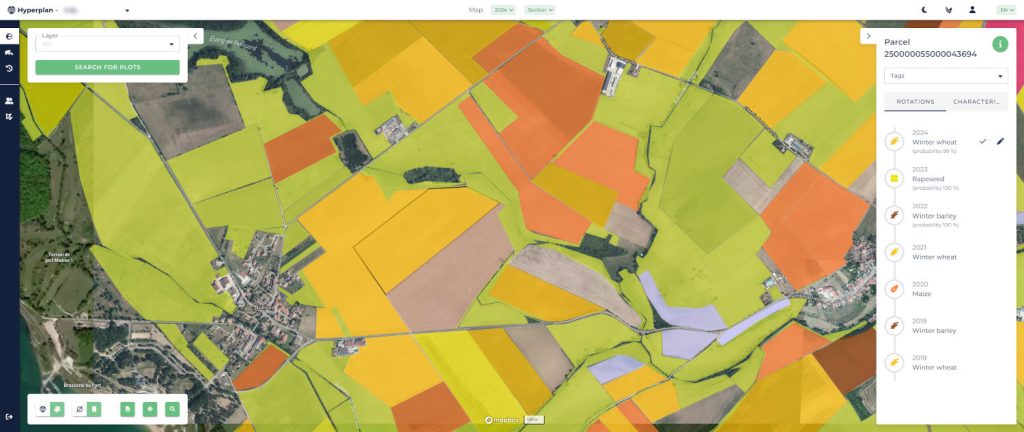
Hyperplan_screenshot
A screenshot from Hyperplan

The system currently uses multispectral satellite imaging to identify the type of crop and monitor development of the crop canopy and vegetation cover. It has access to Meteo weather data and LUCAS Soil, Europe’s largest topsoil database, with real-time information made available through a single, easy to use platform.

The company is working collaboratively with its clients to collect ground truth data and verify the crop classification and yield estimates. 

Current multispectral imaging satellites have 10 to 20 spectral bands available, but future hyperspectral imaging will give access to 10 times more spectral bands, allowing a much more detailed analysis of the crop as Rémi explains:

“For corn we have just done some trials of 3D crop modelling using hyperspectral imaging looking at the potential for assessment of micro stages of maturity. This is really exciting as it will increase the precision of our predictions and also offers the opportunity for quality analysis models in the future.”

Originally Hyperplan was focussed on providing its customers with a collect forecast on their territory. However, the agri input businesses saw the potential of using its technology to offer greater insights at a field level, as this would enable them to offer farmers and growers more personalised services.

“Being able to provide a customised service is particularly important in the transition to regenerative farming, where there is a focus on effective rotations and improving productivity with fewer inputs,” Rémi continues.

“For the agribusinesses, it means that their reps are not going in cold. They have a sufficient level of knowledge to start engagement with the farmer, to have a proper discussion and fine-tune the response.

“They are trying to sell the most efficient products that will help the farmer gain better performance and improved margin, for example a particular variety of corn that grows well in their soils. This includes using historical data on rotations to look ahead to the next season and advise on suitability of follow-on crops.

“We are helping our clients to anticipate the market for the year, and this is invaluable as they are able to plan their budgets and marketing operations very early.”

Hyperplan_screenshot
A screenshot from Hyperplan

Task Force on Climate-related Financial Disclosures (TCFD)

Topic Overview
Agri-TechE
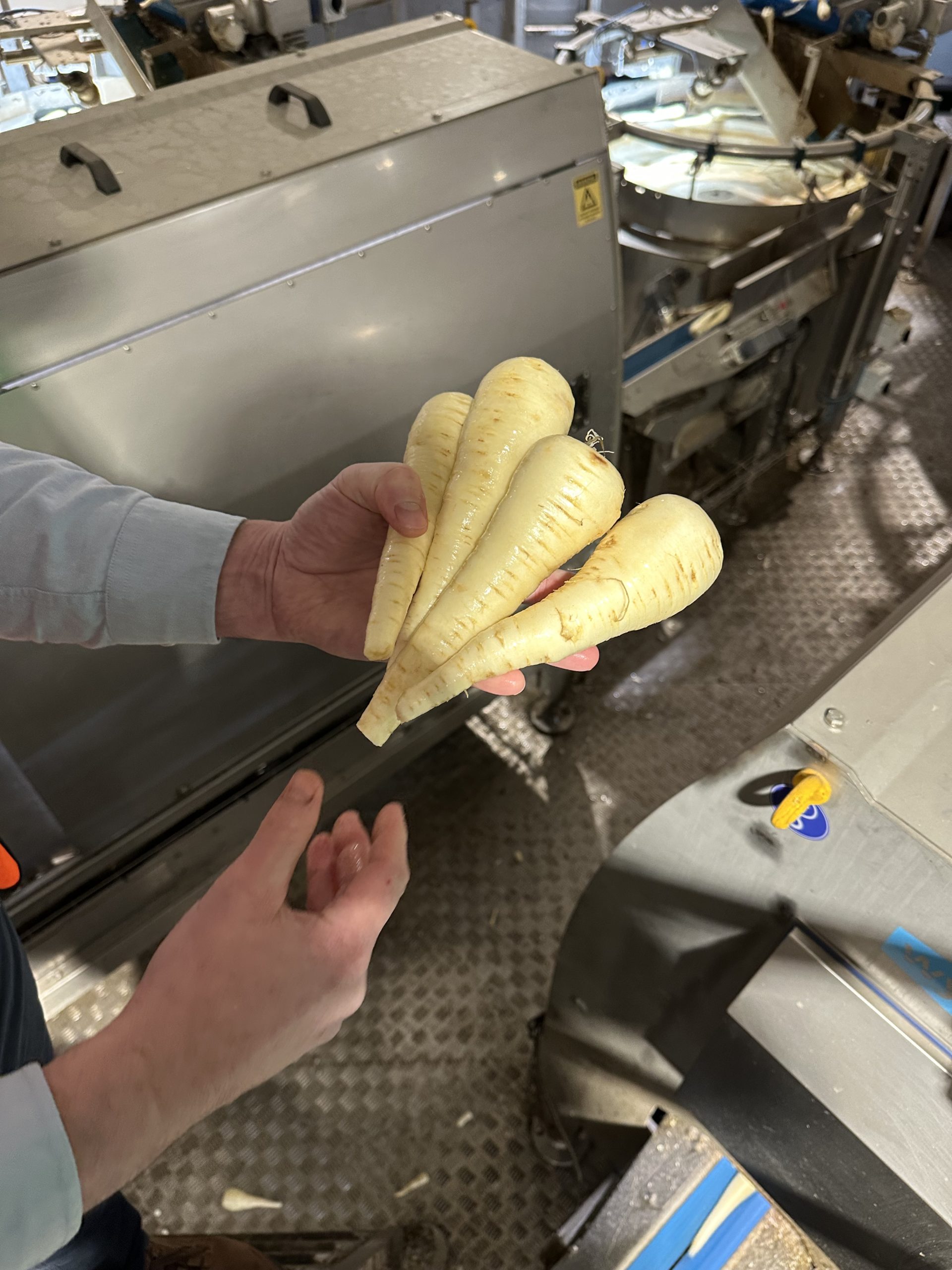
Task Force on Climate-related Financial Disclosures is driving the transition to Net Zero

Sustainability reporting has been a requirement for larger companies for many years now as it reduces their exposure to risk. Increasingly organisations will also need to report on their greenhouse gas emissions and the measures they are taking to mitigate their environmental impacts.

Financial reporting is driving the journey to Net Zero from the top of the supply chain.

Chris Brown, Senior Director for Sustainability at Asda, and a member of the Agri-TechE Stakeholder Group, has been investigating how the organisation can comply with the Task Force on Climate-related Financial Disclosures (TCFD) legislation that came into effect in 2023.

Chris says: “2023 was the first mandatory reporting year for TCFD. Although this is still quite top level, and only obligatory for the largest companies, the consensus is that it will tighten in the future and trickle down.”

Asda, in line with other progressive companies, is signed up to Science-Based Targets Initiative (SBTi) a pathway to achieving its commitment to a key goal of the Paris Agreement – to limit global warming to 1.5°C above pre-industrial levels.

The targets aim to ‘reduce greenhouse gas (GHG) emissions, helping prevent the worst impacts of climate change and future-proof business growth’.

Chris Brown, ASDA
Chris Brown, Senior Director for Sustainability, Asda

Scope 3 emissions from food production require joined up approach

As part of this companies need to disclose their Scope 1, Scope 2 and, if appropriate, Scope 3 greenhouse gas (GHG) emissions and the related risks. These ‘scopes’ are set out in the Greenhouse Gas Protocol. Essentially, Scope 1 are those direct emissions that are owned or controlled by a company, whereas Scope 2 and 3 indirect emissions are a consequence of the activities of the company but occur from sources not owned or controlled by it.

As most Scope 3 emissions in the supply chain originate from the production of raw materials, a united approach is required to techniques for measuring, monitoring and mitigating emissions at all stages.

We asked Chris how producers can prepare for this; he comments: “We are at the start of this journey and just working out what we need, but my expectation is that once government, or the EU, or one of the big brands, takes the initiative then things will happen very quickly.”

This global move towards sustainability is evident from projects initiated by the speakers on the Supply Chain Panel at REAP, with reporting on their websites aligned to the requirements of TCFD.

Find out more about the TCFD at https://www.fsb-tcfd.org/

Picking an apple
Packed apples
Transport
Apples for sale, Task Force on Climate-related Financial Disclosures

Agri-TechE ecosystem supporting the value chain
Auditing can help embed best practice. In addition to de-risking the business it can also offer efficiency improvements. Aethr Associates are supporting companies adopting TCFD and those supplying them, to audit their operations for ESG. Aethr Associates are also keen to demonstrate the other benefits that the reporting can offer.

Online markets for low carbon produce. Legislation around reducing carbon emissions in value chains is encouraging food businesses to pay a premium for low carbon produce. Agrasta is establishing an online platform that gives visibility of producers with good credentials to food and beverage companies looking to reach net-zero targets.

Predicting and forecasting – as ecosystems evolve innovation is multidimensional. The move to regen ag is also driving business process change in the agribusinesses that would traditionally provide inputs. Space-tech company Hyperplan, headquartered in France, is using satellite imagery ground truthed by its customers to provide objective information about crop performance and coverage to help inform new business models.

REAPing the benefits of supply chain insights

Meet the Network
Agri-TechE
Unpredictable disruptions have challenged the agri-food chain over recent months, but it has shown amazing resilience. The Supply Chain panel at REAP 2023 will hear how AM Fresh Group, Diageo and Tesco are applying innovation to help mitigate climate related risk and improve sustainability. This will include a discussion of the opportunities being created for producers and agri-tech to support them.

New legislation  – Task Force on Climate-related Financial Disclosures –  has come into effect this year, and that is driving the journey to Net Zero from the top of the supply chain. This global move towards sustainability is evident from projects initiated by the speakers on the panel, with reporting on their websites aligned to the requirements of TCFD.


The Supply Chain Panel at REAP 2023

Naomi Pendleton

Naomi Pendleton
Group Sustainability Director at AM Fresh Group

AM Fresh Group is an international organisation that works with partners across a vertically-integrated supply chain specialising in citrus, table grapes, tropical fruits and superfoods. 

The company uses the best traditional breeding practices with advanced biotechnology to develop new varieties of grapes, citrus and other high value fruits. It has a portfolio of patented varieties and supports a programme of continuous innovation supported by customer insights. 

The company has a successful program to reduce waste in its citrus chain and Naomi reported on a pilot project with black soldier flies at an Agri-TechE meeting. Naomi says: “Between our two fresh produce manufacturing sites, we generate 5000 tonnes of food waste each year, which represents approximately 1.6% of our throughput. We started our relationship with AgriGrub in 2019 at their pilot site in Hasse Fen with a mission to be zero food waste by 2025.”
Andy Griffiths

Andy Griffiths
Head of Sustainable Procurement at Diageo

Diageo is a global leader in beverage alcohol with a collection of brands across spirits and beer including Johnnie Walker, Smirnoff, Baileys, Captain Morgan, Tanqueray, and Guinness.

Like many organisations, Scope 3 makes up a high proportion of the total emissions for Diageo. These come in part from the production and processing of their raw materials, such as barley, wheat, rye and dairy, and contribute almost a third of Diageo’s total value chain footprint.

Through its ‘Grain to Glass’ sustainability programme, the company is taking action to mitigate climate related risks in a data-led and systemic way. It is supporting farmers to transition to regenerative agriculture and to improve the resilience of farmers’ livelihoods to climate change. The aim is to use the analysis to identify opportunities for improvement on-farm, so the company can focus efforts where it will make the biggest positive impact.

One of these projects is in Ireland which aims to reduce carbon emissions of barley used to brew Guinness. Another is a collaboration with growers in Scotland to gather on-farm data, which together with satellite imagery and AI-informed predictive analytics, will improve baseline carbon footprint data and provide insights into other on-farm environmental metrics.

Peter Illman, Tesco

Peter Illman
Sustainable Agriculture Manager at Tesco

Peter takes responsibility for delivery of the sustainable agriculture strategy within fresh produce, and has led the UK’s largest-ever commercial rollout of low-carbon fertiliser, which has won high praise from the industry.

Tesco has made a commitment to halve the environmental impact of the average shopping basket by 2030. Peter comments: “Part of our responsibility to consumers is that by adapting, learning and investing, we aim to guarantee both a secure supply of affordable, fresh food, and a healthy, thriving food system.

Following the success of its pilot, the company has recently announced that it will extend its trial of eight market-ready low-carbon fertilisers manufactured from food waste, chicken litter and algae. The aim was to determine the most eco-friendly and cost-effective alternatives to conventional fertiliser. Initial results found the alternatives were just as effective as conventional fertilisers while slashing emissions by up to 50%, with no extra cost to farmers.


The session will be chaired by:

Jon Williams, BASF

Jon Williams
Public and Governmental Affairs Manager – Agricultural Solutions, UK and Ireland at BASF

As a leading company in the crop protection industry, BASF has a broad portfolio of fungicides, insecticides, herbicides, seed treatments and pest control products. In addition, it also provides biological crop protection products and solutions for improving plant health as well as nutrient management in the soil.

BASF is currently running a number of trials with farmers to investigate ways to optimise nutrient use in the field and to measure and monitor environmental variables.


REAP 2023 logo

REAP Conference 2023:
Adaptation Through Innovation; Beyond the Comfort Zone

Wednesday 8th November, 9:30 am – 6:30 pm
Rowley Mile Conference Centre, Newmarket

Surviving and thriving under increasingly extreme and unpredictable challenges is the theme of the 2023 REAP conference. To build a productive, profitable and sustainable agri-food industry, we must move away from the comfort zone and become open to the new opportunities that exist when we ‘stretch’.  Be a part of that future – bring yourself and your ideas to REAP.

reapconference.co.uk

Creating an opportunity out of challenge – Defra chief scientific adviser to give a keynote at REAP

Meet the Network
Agri-TechE

Increasingly frequent ‘extreme’ events create a challenge but also an opportunity for agriculture if science can keep pace and answer the questions arising from farmers. The Agri-TechE REAP 2023 conference, ‘Adaptation through innovation; beyond the comfort zone’ provides a forum for accelerating innovation in agri-tech.

Professor Gideon Henderson, Defra Chief Scientific Adviser, and David Exwood, livestock farmer and NFU Vice President, are the keynote speakers and they will create a context for discussions in this highly interactive event, which also features emerging agri-tech and a start-up showcase.

Prof. Henderson will be framing the direction of travel for agricultural science and discussing the challenge of balancing net zero and biodiversity with food production.

Science and farming is a two-way conversation

Professor Gideon Henderson became Defra Chief Scientific Adviser in October 2019. In this capacity, he is responsible for ensuring that Defra’s policymaking and delivery is informed by the best possible science and innovation, across the full range of the Department’s environmental and agricultural responsibilities.

Henderson says: “I see it as a two-way conversation: science is offering new options and opportunities for farming, and farmers are asking new questions of science. The activities of organisations like Agri-TechE are very important in supporting this dialogue.

Henderson is also Professor of Earth Sciences at the University of Oxford. Before his appointment to Defra, his research looked at the viability of routes to remove carbon dioxide from the atmosphere and he led the Royal Society Report on Greenhouse Gas Removal (GGR), published in 2018.

Recommendations from the report included creating demonstration projects of land based GGR approaches, and developing techniques for monitoring and measurement that would enable verification and validation of the emerging approaches for GGR.

Gideon Henderson
Gideon Henderson

Need for science-based verification of environmental outcomes

Prof Henderson comments that such science-based verification of environmental outcomes are equally important across many areas of government agriculture and environmental policy.

“For example, in terms of soil carbon, we don’t currently have a broad enough range of measurement tools to assess soil carbon content, but we’re improving with some clever innovations in that space. There is hope that we can soon take higher-resolution and more accurate measurements.

“One pressure in our carbon budgets is peat degradation. So much of our Grade 1 agricultural land is peatland, and although we are still at the earlier part of the learning curve than we are with woodlands, we are moving along that curve with farmers.

“The simple statement ‘we want to maintain food production’ is quite a tricky concept. I look forward to hearing discussion about achieving such production in the face of environmental pressures at REAP.”

Agri-TechE ’s REAP 2023 conference ‘Adaptation through innovation; beyond the comfort zone’ is to be held on 8th November 2023 at the Rowley Mile Conference Centre, Newmarket, UK. Find out more at reapconference.co.uk.

REAP 2023 logo

REAP Conference 2023:
Adaptation Through Innovation; Beyond the Comfort Zone

Wednesday 8th November, 9:30 am – 6:30 pm
Rowley Mile Conference Centre, Newmarket

Surviving and thriving under increasingly extreme and unpredictable challenges is the theme of the 2023 REAP conference. To build a productive, profitable and sustainable agri-food industry, we must move away from the comfort zone and become open to the new opportunities that exist when we ‘stretch’.  Be a part of that future – bring yourself and your ideas to REAP.

reapconference.co.uk

Nature for finance – balancing food security with environment

Agri-TechE Article
Agri-TechE

The Norfolk Wendling Beck Environment Project (WBEP) has been used as an exemplar of the type of collaborative project between farmers, private companies (Anglia Water) and environmental groups, that will attract funding under the Natural Environment Investment Readiness Fund (NEIRF) – a fund to support regenerative farming.

Natural Environment Investment Readiness Fund (NEIRF)

Thérèse Coffey, Secretary of State for Environment, Food and Rural Affairs, announced (on 19 June 2023) the government’s intention to release additional funds for NEIRF later in the year.

To date, 86 projects across England have received development grants of up to £100,000 through two competitive rounds of the £10 million NEIRF in 2021 and 2022.

Wendling Beck is a pilot for new nature market

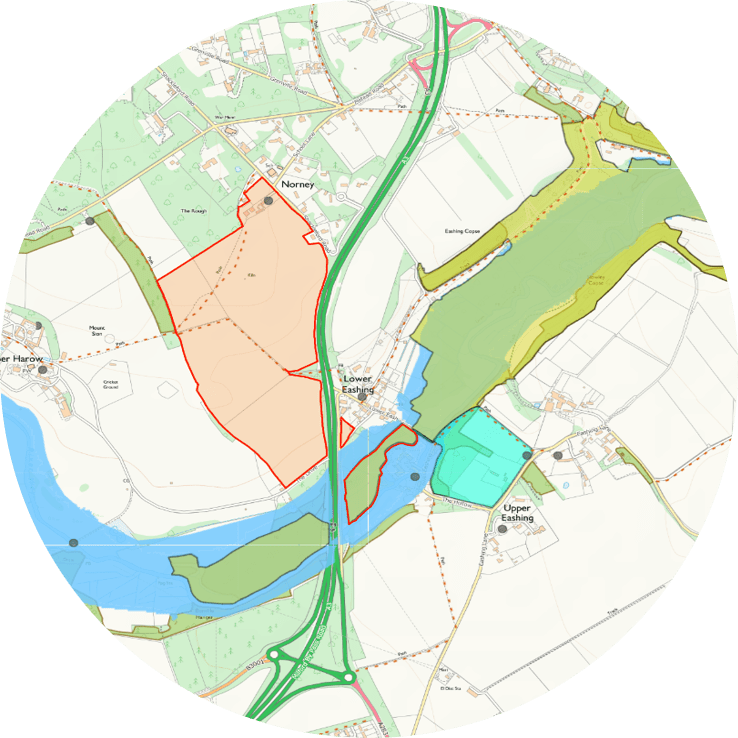
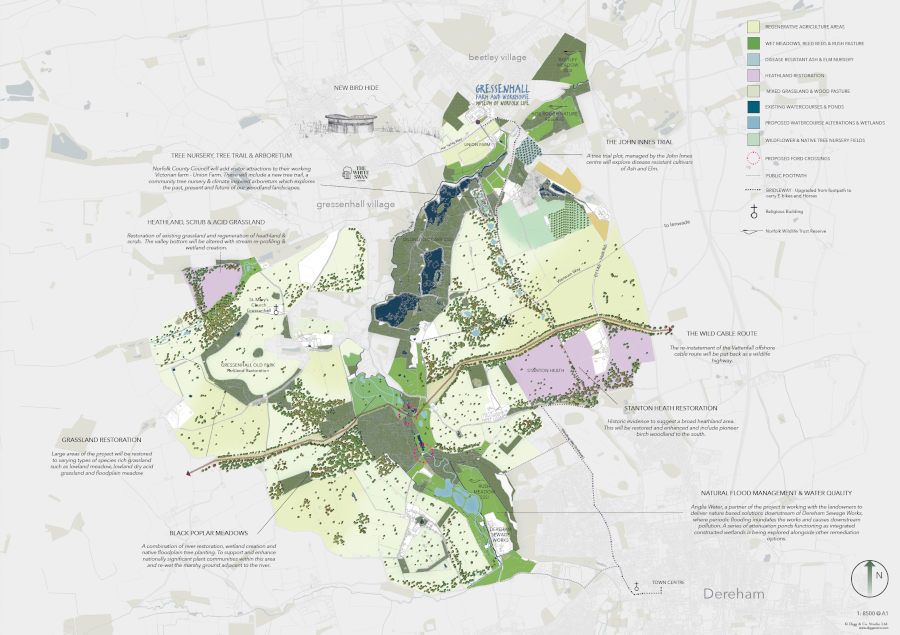
One recipient of the NEIRF is Wendling Beck, a pioneering habitat creation, nature restoration and regenerative farming project spanning almost 2,000 acres near the market town of Dereham in Norfolk, UK.

The project aims to transform land use for environmental benefit while also selling ecosystem services such as biodiversity net gain. Glenn Anderson, Project Lead of The Wendling Beck Exemplar Project explains that it is a pathfinder project for financing land-use change through new nature markets.

It includes a collaboration with Rewilding Britain to better understand how different habitats sequester carbon, along with pioneering research on soil carbon – led by the University of East Anglia (UEA).

Defra also announced the start of the piloting phase of a new version of the Green Finance Institute’s (GFI) investment readiness toolkit which provides a tailored framework for farmers giving advice on how to create investable nature finance projects.

Highlights

  • Next round of the Natural Environment Investment Readiness Fund (NEIRF) to launch later in year
  • NEIRF builds on Green Finance Strategy and Nature Markets Framework to facilitate private investment in nature outcomes such as healthy soils and wildlife supporting productive and sustainable food production
  • Builds on last month’s landmark UK Farm to Fork Summit at which the Prime Minister committed to protect farmers’ interests in future trade deals, boosted fruit and veg production and announced further investment in farming technologies
Bluebells

Ruminating on the Future of Net Zero

Agri-TechE Blog
Agri-TechE
From milk, manure and meat to fleece, eggs and honey – animals have always played a key role in farming, and they contribute significantly to global diets and incomes.

But their impact on greenhouse gas (GHG) emissions can’t be ignored. How can we make the most of the benefits they bring while reducing the impact of their digestive systems on the planet?

Farmed ruminant species – cattle, sheep and goats – are thought to be responsible for around 30% of all global methane emissions linked to human activity.

Given the global trajectory towards reaching “Net Zero” GHG emissions, including the NFU’s ambition for British farming to reach this target by 2040, this raises important questions around the future of farmed animals.

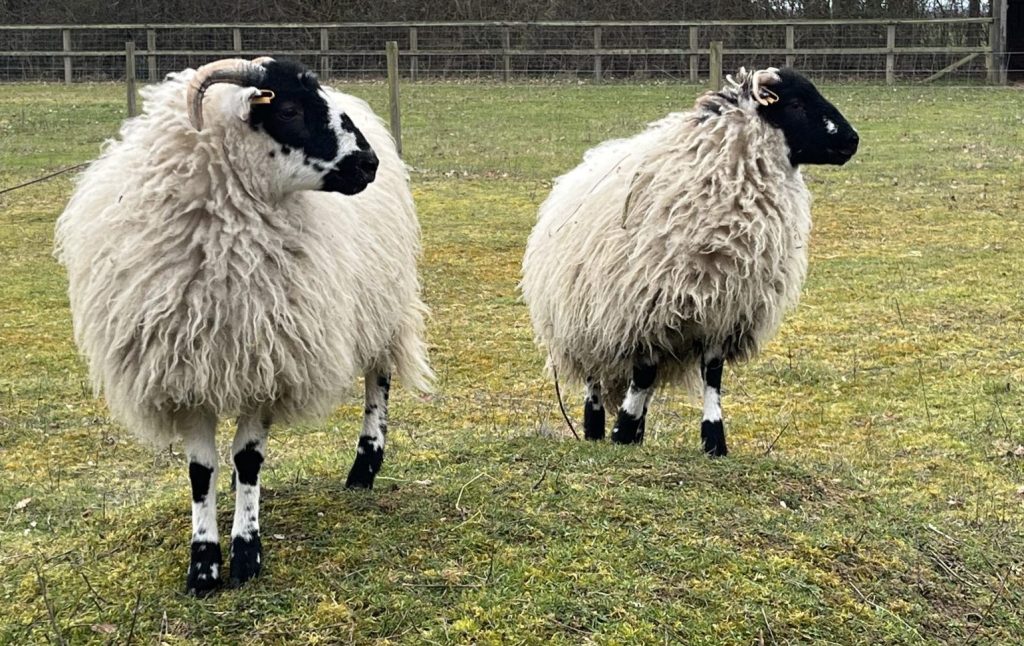
Belinda's sheep

How can we make the most of the benefits they bring while reducing the impact of their digestive systems on the planet?

Innovate to Mitigate

A recent discussion among peers and policymakers at the All-Party Parliamentary Group for Science and Technology in Agriculture explored the huge potential of innovation in mitigating GHG emissions. The focus was on animal feed production as a significant contributor to net GHG emissions from agriculture. For example, 85% of the emissions from pork result from the feed.

Innovative solutions include increasing home-grown pulses to replace imported soya, introducing entirely novel protein sources such as insects (as in AgriGrub’s Black Soldier Fly insect-meal or via Better Origin’s insect larvae container farms), and supplementing the diet with seaweeds to adjust gut bacteria in ruminant animals and reduce the production of methane. Niche devices are also being designed to address emissions “at source” – for example Zelp (featured in Agri-TechE ’s 2019 REAP Start-Up Showcase) has created a methane-absorbing muzzle for cows.

Innovation in the form of precision breeding also has a role to play. There is a genetic element to the amount of GHG that an individual animal produces, we can take an epigenetic approach to identify these animals and ensure these low emitting traits are passed on in future herds. Antler Bio are researching key genetic markers to promote sustainability through data-driven epigenomics.

There exists a suite of other technical processes that can contribute to net zero agricultural GHG emissions on livestock farms, including generating green energy on-farm, harnessing robotics to maximise efficiency, deploying AI for welfare and productivity, and using electric vehicles for feed distribution and transport.

As encouraging as these technologies are however, mitigating via innovation will never be enough.

black-soldier-fly

How does livestock fit into Net Zero?

While acknowledging the challenges of livestock, they still have an important role to play. There is an important trade-off (albeit a slightly imbalanced one) in that some animals can deliver important ecosystem services. For example, using animals in conservation grazing help grasses tiller (develop side roots), while soft hooves gently disturb soil to create micro-habitats for insects, microbes and seed germination. The right animal species can thin out, or clear, invasive vegetation and all animals reliably produce all-important fertiliser.

Understanding the role of animal production as part of healthy ecosystem delivery is a crucial element of the net zero journey. A recent report published by EIT Food (in collaboration with Innovate UK KTN) on the ruminant livestock industry and net zero targets considered the need to improve the understanding and complexity of carbon sequestration (the process of capturing and storing carbon in the soil). Unlike many industries, livestock farming has the capacity to both create and reduce GHG through regenerative agriculture practices such as soil enrichment and increasing biodiversity.

The bigger conversation about overall land management for net zero

While one can use tech at the level of individual animals, herds or even species level, the bigger conversation must also address the role of animals in land use. Farmland occupies three quarters of the land mass in the UK and Ireland, with around 65% permanent grassland. As such a huge landscape, grass-based meats have a massive role to play in sustainability, however livestock land needn’t be restricted to a single output.

In February 2023, The Royal Society published a policy report that calls for a strategic rethink of the way decisions are made about how landscapes and the services they provide are managed. The Multifunctional Landscapes report promotes a holistic approach to land management that considers both market and non-market outputs – including biodiversity habitats, flood alleviation and carbon sequestration.

landscape

By shifting to a multifunctional perspective and moving away from prioritising just those with immediate financial return, the landscape can increase its efficiency by producing a range of outputs – including those that support net zero.

Measure to Manage

To understand – and enhance – the benefits of ecosystem services we need better tools to understand and compare them. The EIT report included expected calls to incentivise, inspire and train farmers, but more crucially, it affirmed the urgent need for a standardised set of metrics and appropriate tools to measure them. The lack of standardised GHG data, including a baseline reference point from which to quantify and benchmark, continues to be a huge pinch-point.

Farmers and landowners must be able to measure GHG emissions in order to manage them.

This limitation is (slowly) being recognised. Last week, Defra published a Nature Markets Framework – a mechanism for increased investment in nature through the sale of ‘units’ of ecosystem services. The British Standards Institution (BSI) has been appointed to expediate a pipeline of investment standards which will facilitate consistent measuring, monitoring, and validation of on-farm interventions. The report acknowledges, quite rightly, that in order to make any headway in this debate, you need to be able to measure in order to manage.

Without doubt, animal production has implications for the net zero ambitions of the industry. However, with a multi-solution approach of enabling policies, targeted research and innovative technologies, mitigation is possible – and crucial.

Members are invited to join our interactive BlogChat online on 22nd May 2-3pm, where we’ll be discussing this topic in more detail. Please contact info@agri-tech-e.co.uk if you’d like to join and we will send the meeting info.

Government’s new Nature Markets Framework to create standards for ecosystem services

Agri-TechE Article
Agri-TechE

The government has announced a new arrangement with the British Standards Institution to develop a suite of high-integrity nature investment standards. The Nature Markets Framework aims to develop a new harmonised approach for measuring on-farm emissions and environmental impacts.

Wendling Beck
Wendling Beck at Rush Meadow [credit: Alex Sidney]

In a statement, Defra explained: “For investment in nature markets to grow, participants need to have clarity and confidence in the principles and standards that should be used to structure investments.

“Clarity is also needed on the governance arrangements to ensure that these new, emerging markets will operate transparently and deliver benefits for nature, the economy and local communities.”

Farming Minister Mark Spencer said: “We’ve been listening to the farming sector, and the measures announced today will not only help them to calculate their carbon footprint, but also open up new financial opportunities, such as combining private commercial opportunities with our new farming schemes support.”

Need for consistency in monitoring and reporting

The agricultural industry has called for evidence-based tools to support the robust monitoring, reporting and verification of greenhouse gas emissions on farms. Whilst there are already numerous tools on the market for farmers to assess their emissions and calculate carbon footprint, inconsistency in the results has led to low confidence from industry and low uptake.

By developing a harmonised methodology and setting out by 2024 how farmers will be supported to measure their emissions and the government can help the agricultural sector reduce emissions across the supply chain – including from livestock, nutrient management, and farm equipment.

Assessing benefits delivered

In its report Nature markets: A framework for scaling up private investment in nature recovery and sustainable farming (March 2023) the government acknowledges that:

  • units sold in nature markets should be based on a robust assessment of the benefit delivered – for example the amount of biodiversity restored, carbon captured or nutrient pollution reduced
  • the methodologies used to issue units should be defined in codes and standards, reviewed periodically – and predictably – and updated when the evidence base improves sufficiently
  • standards should be transparent in their approach to quantifying benefits and reasonable margins of error that must be tolerated to allow markets to operate.

Nature Markets Framework

The framework aims to support nature markets grow in a way that makes them fair, effective and accessible to farmers. It sets out:

  1. Core principles to ensure markets operate with integrity and deliver positive outcomes. Market development will be monitored and development of markets supported in line with these principles.
  2. Current rules for how farmers and other land and coastal managers can access markets and combine income streams, with plans to further develop policy in this area.
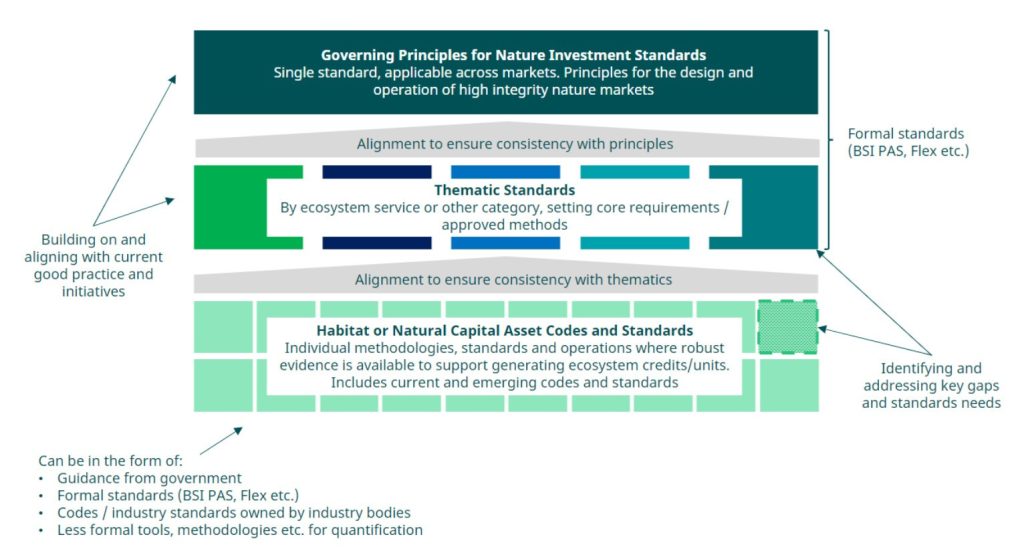
  3. A new arrangement with the British Standards Institution to develop a suite of high-integrity nature investment standards. These will enable new markets to develop and emerging markets to scale up and operate soundly.
  4. Next steps to clarify and develop institutional and regulatory roles and market infrastructure needed to ensure good market governance.

Alongside this, the Green Finance Institute will develop an online toolkit to help farmers identify and access private payments for environmental benefits.

The measures will complement the existing support that the government has in place to help the agricultural sector reach net zero. This includes support through Environmental Land Management schemes to reduce greenhouse gas emissions from farms.

As demonstrated by the successful UK-scale operation of the UK Woodland Carbon Code and the UK Peatland Code, there is a clear advantage in achieving scale and consistency of market offer across the UK.

Addressing the lack of standards

The absence of a standardisation process for quantifying the benefits of an ecosystem service (for example biodiversity, flood mitigation or carbon) in the form of credits or units is holding back investment and market development.

There has been innovation to develop new and prototype methodologies, but there is currently no pathway for successful methodologies to be recognised as sufficiently robust to underpin high integrity nature markets.

By appointing the British Standards Institution (BSI), the government seeks to facilitate an industry-led process to develop a suite of interconnected investment standards across ecosystems services, with a pipeline of investment standards for nature markets, starting in early 2023 and continuing for up to three years. This is to include:

  • Development of an overarching investment standard for nature markets and nested standards for a range of ecosystem services, habitats and land uses
  • Suitable accreditation arrangements for codes and standards
  • Support for farm-level monitoring, reporting and verification, for example carbon audits

These will include an overarching “governing principles” standard and nested standards for specific ecosystem services and/or land uses/habitats.

Wendling Beck – an example of an environmental project creating credits

Wendling Beck Rosie Begg Goregate Farm
Wendling Beck – Glenn Anderson and Rosie-Begg [Credit Simon Cleere].jpeg

The Wendling Beck Environment Project is a habitat creation, nature restoration and regenerative farming project spanning almost 2,000 acres of farmland in Norfolk.

Four farmers, local authorities, environmental organisations and a water utility company have joined forces to manage the land for environmental benefits, while enabling agricultural businesses to diversity and supplement their farming income through nature markets.

One of the farmers, Rosie Begg of Gorgate Farms, spoke about the project at a recent Agriculture 101 event.

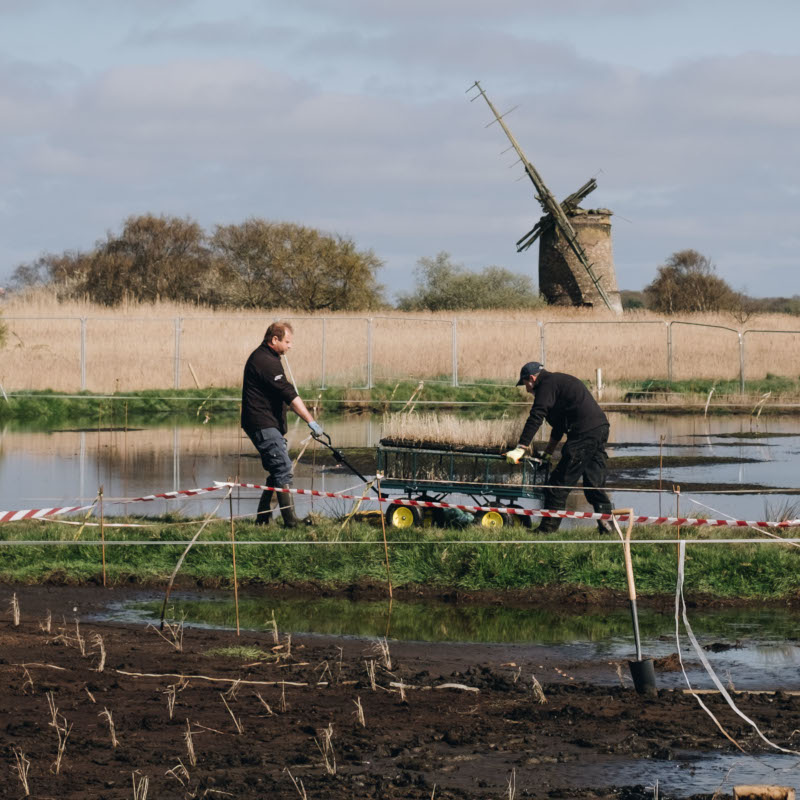
The project involves adoption of low-carbon farming systems, creation of circa 20km of hedgerows and a range of other biodiversity-rich habitats (species-rich grassland, lowland heath and woodland), and the restoration of around 5km of river and 135 acres of floodplain.

It will benefit from multiple nature markets:

  • biodiversity net gain
  • nutrient neutrality
  • carbon credits
  • additional funding from ELM

Baselines have been developed for all these markets and revenue for the farming businesses involved is expected to increase by around £30million (Net Present Value) over the next 30 years, including nature market income, the regenerative production of blackcurrants, a new livestock enterprise, farm shop and café and eco-tourism.

A new cycle and bridle path has been developed to allow local communities to benefit from access to nature and the project will also build resilience to flooding in the local area. The project now aims to use the knowledge and experience to help other landowners to follow a similar model.

More about the Nature Markets Framework.

£1,000 a hectare? Novel crops for rotation, resilience and profit

Agri-TechE Article
Agri-TechE

poppies as novel crops
Chickpeas and opium poppies are just two of many valuable niche crops that could be grown

Chickpeas and opium poppies are just two of many valuable niche crops that could be grown in the UK to help farmers diversify and build soil health within the rotation. Support for novel crops within the arable rotation has gained £1M investment from UKRI and exploratory projects from its Seeding Awards programme are to report their initial findings in a workshop coordinated by Agri-TechE on 23rd February 2022.

Dr Belinda Clarke is director of Agri-TechE , an industry membership organisation facilitating the growth of the agri-tech innovation ecosystem. She explains the opportunity to diversify: “Just 30 of the 370,000 known species of plant underpin the world’s food supply and these plants have been bred mostly for yield, not for taste, nutritional value or resilience.

“Additionally, gaining a high grade in cereals such as wheat requires intensive inputs of fertiliser and other synthetic chemicals, and we are looking to move towards reducing these inputs by building soil health through alternative patterns of cropping.

“Historically we grew a wider range of crops in the UK and over recent years there has been interest in growing more peas and beans and a wider range of cereals such as oats and rye, but there are a number of obstacles. There needs to be sufficient, reliable market demand, expertise on-farm for growing the crop and investment in specialist cultivation and processing equipment.

Convergence of technologies to overcome obstacles

Dr Lydia Smith
Dr Lydia Smith, Niab. Credit:Si Barber

“The convergence of technologies in agri-tech, such as lightweight robotics with specialist attachments and advanced breeding techniques for screening and selecting desirable attributes, means that there is now an opportunity to investigate the potential greater diversity in the rotation, but an industry-led approach is needed to include all elements of the value chain.”

Dr Lydia Smith, Head of the Niab Innovation Farm, has recently co-authored research on behalf of Defra which looks at the potential of a range of crop plants for horticulture and broad field cultivation, ranking them across a number of criteria including market potential. One of these crops is poppies.

She says: “Seeds from the opium poppy (Papaver somniferum) are used as a food ingredient for bakery and also for pharmaceutical use in painkillers. The latter has a value of £1,000/ha (2016 prices). It has potential to be grown as a break crop in cereals, enabling more effective management of blackgrass and providing much needed resources for pollinators. Additionally, as it is sown in late spring it avoids the problems of cultivation during winter flooding. There are a number of established markets and knowledge has been built up over two decades by the Poppy Growers Association.

“There are many opportunities like this for diversifying the rotation with benefits to soil health and farm profitability and I am looking forward to exploring this further at the workshop.”


Seeding Awards to support introduction of new crops

novel crops
Lupins are a potential source of protein

James Phillips, Senior Portfolio Manager for BBSRC, agrees; he has worked to invest £1M at leading ten UK Universities and Research Institutes in Seeding Awards that will support short pump-priming projects aimed at exploring the potential of new crops and varieties for the UK arable rotation. At the workshop the progress will be reported with the aim of stimulating new public-private partnerships that may progress to future funding initiatives.

James explains that the Seeding Awards are closely aligned with UK government plans to progress towards a more sustainable and biodiverse agriculture.

“Introducing novel crops with the arable rotation is recognised within ELMs as an important part of improving sustainability and resilience in the farming sector as well as meeting ambitions for soil health and biodiversity. Advances in bioscience are now giving us the opportunity to re-evaluate some of these older crops and climate change makes others viable for introduction.

“The Seeding Awards were designed to enable BBSRC to quickly invest in building capability in Universities and Research Institutes and we are now looking to gain input from a wide range of industry partners at this workshop coordinated by Agri-TechE .”

James gives the example of lupins as an alternative to imported soya that provides benefits to soil structure and nitrogen fixing. Others include: protein crops such as flava beans; fibre crops such as hemp and flax; cereals including quinoa; teff; and oilseeds like linseed.

The Agri-TechE event “Novel Crops and Fresh Thinking is to be held at Wivenhoe House Hotel, Wivenhoe Park, Park Road, Essex, CO4 3FA on 23rd February 2023. It will include presentations by Dr Lydia Smith and some of the 10 Seeding Award winners, together with a workshop for those interested in the business opportunities across the value chain that will arise from these new crops.


Making sense of carbon sequestration – Cambridge Consultants at REAP 2022

Agri-TechE Article
Agri-TechE

Niall Mottram
Niall Mottram, Cambridge Consultants

Carbon sequestration – where carbon dioxide is taken out of the air and stored – could potentially be a new source of revenue for landowners if there are reliable ways of measuring carbon uptake.

Cambridge Consultants will be talking about this issue in the Technology Exhibition at REAP 2022. They recently produced the report ‘Driving Net Zero – is agri-tech ready to capture carbon’ , by Niall Mottram and Simon Jordan, which investigates the technologies available and explores the concept of a digital twin for farmland.

Measuring carbon sequestration in an economically viable way

Simon comments: “As many know, agriculture is the only industry in the world with the potential to be carbon negative and offers a tantalising possibility of new revenue for farmers. But to realise the full potential, we need traceability regarding regenerative agriculture practices, as well as combining modern techniques (for carbon measurement) and data science in an economically viable way.”

Plants sequester carbon dioxide during photosynthesis, converting it into carbohydrates in roots, stems, leaves and fruit. If the crop is perennial, such as grassland or fruit trees, then carbon is locked in for a period of time, but for annual crops the storage is transitionary. Another way of locking up carbon for longer periods is by adding products like biochar or basalt to the soil.

Proving that the carbon is stored for a given period of time and that the amount sequestered is more than would occur anyway requires accurate sensors and an audit trail. The report discusses the design for these elements. Automating the measurement of carbon uptake in an economically viable way would enable the development of new services.

The report is available from Cambridge Consultants’ website here.

Improving development of autonomous vehicles 

Another challenge for the agri-food industry is increasing autonomy in unstructured environments just as fields.

A major limiting factor when developing autonomous robots is the volume of training data required. Cambridge Consultants has developed an algorithm that overcomes this problem by offering a highly equivalent simulation – a three dimensional environment that is incredibly life-like.

In this video, Consultant Niall Mottram, Head of Industrial and Energy, explains how the advanced simulation has the potential to accelerate development of  autonomous systems.

Find out more at REAP 2022.


REAP 2022: Making Sense of AgricultureREAP 2022: ‘Making Sense of Agriculture’ – Tuesday 8th November 2022

From yield mapping and precision livestock through to digital twins and cloud computing, at REAP 2022 we will be exploring the technology and looking at the implications from a field to landscape level. Making technology farm-centric is core to Agri-TechE ’s mission so a key feature of the conference will be a panel of farmers and producers discussing the emerging technologies and future scenarios.

reapconference.co.uk

What is ELMs and how Agri-TechE can help

Topic Overview
Agri-TechE

What is ELMs?

The three-tier Environmental Land Management (ELM) scheme is part of the UK government’s future farming policy as it seeks to move away from farm support based on direct payments towards one centred on “public money for public goods”.

It is recognised, that in addition to producing food and other goods, that farmers can make a contribution to the government’s priority environmental and climate targets.

The government targets include:

  • Reduction in greenhouse gas emissions – to reach net zero by 2050
  • Biodiversity – to halt the decline in species abundance by 2030 and to ensure that species abundance is at least 10% greater than 2022.
  • Species extinction – improve the Red List Index for England for species extinction risk
  • Habitat restoration – to restore or create an additional 500,000 hectares of a range of wildlife-rich habitat outside protected sites by 2042 (2022 baseline)
  • Pollution – reduce nitrogen, phosphorus and sediment pollution from agriculture into the water environment by at least 40% by 2038
  • Woodland – to increase total tree and woodland cover to 16.5% by 2050
  • Climate change – to adapt to climate change

Supporting farmers to deliver environmental goods

There are currently three schemes, however it is planned to combine SFI and Countryside Stewardship into one integrated online service with the option to ‘pick and mix’ according to local requirements.

Sustainable Farming Incentive – Encouraging environmentally sustainable farming

The Sustainable Farming Incentive (SFI) will pay farmers to adopt and maintain sustainable farming practices that can protect and improve the environment. 

Farmers are paid for actions on their land that help address their direct environmental impacts. These could include nutrient management, pest control, soil improvement, cover crops or planting wildflower margins to encourage sustainable farming.

There are 23 SFI actions across 8 areas in addition to an annual health and welfare review by a Vet.

  • Soils (SAM 1-3)
  • Moorland (MOR1)
  • Hedgerows (HRW1-3)
  • Integrated Pest Management (IPM1-4)
  • Nutrient management (NUM1-3)
  • Farmland wildlife on arable and horticultural land (AHL1-4)
  • Buffer strips
  • Low input grassland (LIG 1-2)

More information on Sustainable Farming Incentive.

Countryside Stewardship (CS)

This scheme pays grants for targeted actions specific to locations, features and habitats in support of Defra’s 25 year environment plan.

There is a focus on local needs and reward collaboration between land managers where a scheme encompasses more than one stakeholder. 

Note the proposed Local Nature Recovery scheme has been dropped in favour of CS. From 2024 the SFI and CS Mid Tier share the same application process.

The grants include:

  1. Mid Tier and wildlife offers – options for enhancing natural environment
  2. Higher Tier – these are of environmentally important habitats requiring complex management
  3. Catchment Sensitive Farming
  4. Farming in protected landscapes
  5. Woodland Management Plan
  6. Woodland Tree Health
  7. Implementation and feasibility studies
  8. Facilitation fund to support individuals who bring together groups

More information about Countryside Stewardship

Landscape Recovery – Landscape scale, land-use change projects

These projects would aim to deliver more ambitious environmental targets, such as nature recovery and net zero carbon emissions. It might include woodland creation, peatland restoration and the creation of coastal habitats. These projects will be funded individually.

More information about Landscape Recovery.


Investment in equipment, technology and infrastructure

Grants are available through the Farming Investment Fund (FIF) to invest in new technology, equipment and infrastructure.

More information is available at gov.uk here (April 2024)

Grants are available for specific types of agri-tech to cover a proportion of the total cost of investment.

These have included:

  • equipment and technology for storing, sorting, or processing products
  • robotic or automated technology
  • on-farm water storage infrastructure, including reservoir
  • improve productivity
  • manage slurry
  • improve animal health and welfare

The topics change so check for the open calls.

Timeline

2020 – 2024 Countryside Stewardship – those on CS will be able to transition to ELMs
2020 – 2023 ELM scheme design
2020 – 2027 ELM tests and trials on specific elements (latest report 2022)
2021 – 2027 Direct payments to be phased out
2021 – 2024 National pilot for real world testing, 5,500 farmers over 3-year period
2027                Direct payments to end


Agri-tech to support ELMs

Before launching the Sustainable Farming Incentive (SFI) a number of pilots were run to test the methods for assessing improvements.  Agri-TechE members have been involved in these trials and a meeting was held in March 2022 to discuss the pilots, the learning points and the opportunities for improved agri-tech. 

Feedback from the Test and Trial scheme is reported at regular intervals.

Among recommendations from farmers, landowners and advisors on how to structure the scheme and payments there were also a number of observations about the need for improved tools and processors to support adoption of measures to reduce negative environmental impacts.

In particular, farmers wanted a guide or template for the Land Management Plan (LMP) that could be used to identify the environmental outcomes that could be delivered on their land.

This LMP should include:

  • Map of the farm with basic farm details
  • Environmental baseline that documents and rewards existing public goods delivery
  • Public goods delivery assessment that acknowledges existing standards and certification
  • Assessment of aspirations and opportunities to enhance the quality and quantity of natural capital

Tools required to deliver this would include:

  • Digital mapping tools and those for remote monitoring
  • Natural capital data sets that are shared and can be ground-truthed
  • Baseline assessments – nutrients, soil quality, pollinators
  • Tools to support self-assessment, ie uploading photographs

A number of companies within the Agri-TechE ecosystem are work on technologies with relevance to ELMs.

The new handbook issued by Defra has addressed many of the outputs from the meeting – find it on the Sustainable Farming Incentive website.


Briefing last modified July 2023.

Soil carbon assets

Research Digest
Agri-TechE

By altering land/soil management practices, agriculture could make a substantial contribution to carbon capture and storage efforts. Sam Keenor and Brian Reid of University of East Anglia discuss what a carbon trading platform needs to be successful.  They are focussing current research on estates in Norfolk, including those involved in the Wendling Beck Environment Project, near Dereham, where plans are advancing for a pioneering landscape-scale habitat creation, nature recovery and regenerative farming project.

How to incentivise soil re-carbonisation

Sam Keenor and Brian Reid

“To incentivise soil recarbonisation practices over ‘business as usual’ a source of economic remuneration is required to catalyse the transition,” says Sam Keenor of the University of East Anglia (UEA). Sam and Brian Reid, Professor of Soil Science at UEA, are co-authors on the paper ‘Capturing a Soil Carbon Economy’.

The researchers propose that creation of a successful soil carbon trading platform to support such payments will require three key elements:

(i) To incentivise soil re-carbonisation, an attractive and fair soil carbon price will be needed.

(ii) To give confidence to both the sellers and buyers of credits, establishment of a verified and trusted soil carbon accounting and trading platform, along with a robust audit system to preclude double-counting will also be needed.

(iii) assurances on long-term soil carbon storage will be essential for credit validity and trust while ensuring against double counting and emissions leakage.

Payments need to be at least £25 a tonne to make it meaningful

Setting a unit price for a soil carbon credit is not trivial. At present, soil carbon is being traded in a fledgling market for around the £10-£15 price mark (per 1 tonne CO2e). Such a price does not reflect the true value of soil carbon, nor does this reconcile with outgoings faced by farmers in achieving this sequestration. Sam highlights that: “with the projected increases in both the price of carbon and wider adoption of carbon pricing initiatives in the private sector, financial incentives to sequester carbon will intensify. This, in turn, will drive the soil carbon credit price up.

“For meaningful large-scale sequestration to occur, payments need to increase to a threshold of at least £25 per tonne of CO2e”.

Beyond this threshold even higher unit prices could be commanded where they conflate the value of carbon sequestration and the wider value linked to uplifted delivery of soil ecosystem services. Such an approach would align with “additionality” requirements; wherewith benefits beyond carbon sequestration per se are realised. To ensure opportunities to enhance soil carbon stocks are not missed, clearly defining additionality within the context of soil carbon sequestration remains wanting.

Essential to ascribing a proportionate carbon price is the existence of a trusted platform upon which credits may be traded. Here, one approach might consider the use of direct measurement and re-measurement after an allotted period, with any carbon uplift being available to the market for trade. But, under this approach it will take time for carbon to accrue and revenue to be realised; a significant issue in a cash-flow strapped sector.

Carbon fate modelling offers alternative

An alternative approach would be if the stability of soil carbon could be predetermined then this information could support tailored carbon fate modelling (tethered to specific regimes and practices) that can quantify stable carbon stock in the future. This method acknowledges that soil carbon models have been successfully used to predict the impact of agricultural activities on soil carbon and CO2 emissions. Such an approach could prove superior to costly re-measurement of soil carbon stock increases in real time and mitigate issues currently associated with such practices.

Above all, if soil carbon is to emerge as a tradable commodity, surety on the “permanence” of carbon storage will be essential. It would be inappropriate for carbon credits to be sold if these credits were underpinned by degradable soil carbon that disappears in a few years. Worse still, if this carbon is converted to CO2 and emitted to the atmosphere; who would want to buy an emission?

Brian Reid comments: “unequivocally, soil carbon credits must be tethered to stable carbon, that is not easily degraded and therefore sustains long-term carbon sequestration. With efforts being made to develop a Soil Carbon Code we can but hope for acknowledgement that, ‘when it comes to soil carbon, not all carbon is equal!’ What really matters is distinguishing stable carbon, that can be used ascribe High Integrity Soil Carbon Credits, from degradable carbon, that delivers additionality in terms of soil biodiversity net-gains and uplift to the delivery of soil ecosystem services”.

Sam and Brian’s research is providing deeper understanding of the linkages between soil carbon and the soil ecosystem service it supports.

Royal Society “Capturing a Soil Carbon Economy” paper is available on open access here.