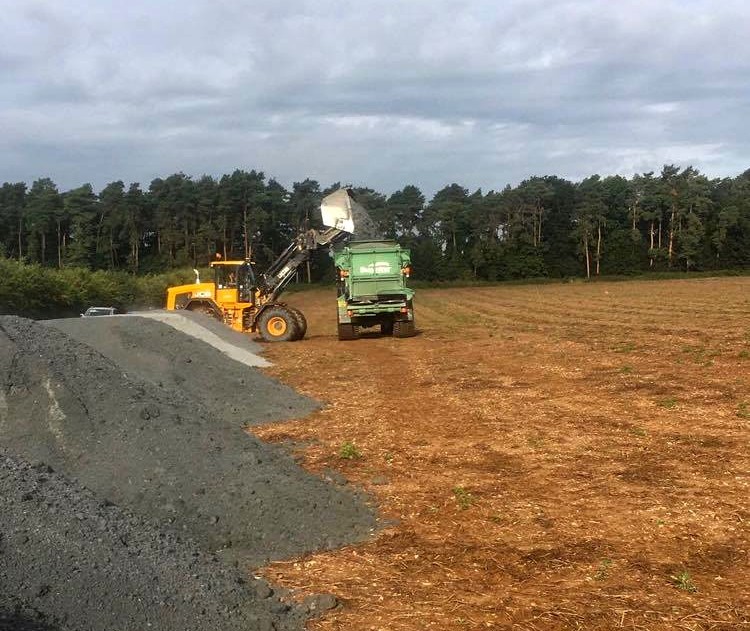
Futureproofing for Innovation with Birkett Long

Member News
The views expressed in this Member News article are the author's own and do not necessarily represent those of Agri-TechE.

As part of our “Back to the Future” project, we’re asking Agri-TechE members to reflect on how the agri-tech industry has evolved over the past decade and to share their vision for the next ten years. By compiling these insights, we aim to create a powerful outlook on the future of agriculture, a compelling call to arms for the industry driven by the diverse perspectives of our community.

This submission is part of the collection of reflections and predictions from our members, offering unique perspectives on the industry’s past milestones and future directions. Each contribution adds to a broader dialogue about the innovations and challenges that will shape the next decade in agri-tech.

Back to the Future with Birkett Long

Collaboration to Enable Change with ARU Writtle

Member News
The views expressed in this Member News article are the author's own and do not necessarily represent those of Agri-TechE.

As part of our “Back to the Future” project, we’re asking Agri-TechE members to reflect on how the agri-tech industry has evolved over the past decade and to share their vision for the next ten years. By compiling these insights, we aim to create a powerful outlook on the future of agriculture, a compelling call to arms for the industry driven by the diverse perspectives of our community.

This submission is part of the collection of reflections and predictions from our members, offering unique perspectives on the industry’s past milestones and future directions. Each contribution adds to a broader dialogue about the innovations and challenges that will shape the next decade in agri-tech.

Back to the Future with ARU Writtle

Agri-TechE Corporate Financing with Citicourt & Co

Member News
The views expressed in this Member News article are the author's own and do not necessarily represent those of Agri-TechE.

As part of our “Back to the Future” project, we’re asking Agri-TechE members to reflect on how the agri-tech industry has evolved over the past decade and to share their vision for the next ten years. By compiling these insights, we aim to create a powerful outlook on the future of agriculture, a compelling call to arms for the industry driven by the diverse perspectives of our community.

This submission is part of the collection of reflections and predictions from our members, offering unique perspectives on the industry’s past milestones and future directions. Each contribution adds to a broader dialogue about the innovations and challenges that will shape the next decade in agri-tech.

Back to the Future with Citicourt & Co

Increased funding for sustainable pulse crops in the UK

Member News
The views expressed in this Member News article are the author's own and do not necessarily represent those of Agri-TechE.

A consortium of four UK research organisations led by the John Innes Centre has won £3m Defra funding to enable the development of climate resilient legume crops.

The Pulse Crop Genetic Improvement Network (PCGIN) which started in 2008, has received the funding boost for the next five years.

The money will support PCGIN-affiliated researchers and its stakeholder network in delivering its mission: to provide improved breeding material for the cultivation of peas, beans and other pulses in the UK.

Pulse crops are an important alternative protein source, and their cultivation improves soils in rotation schemes, reducing the need for nitrogen fertilizer.

The research will address existing and new threats from pests and diseases, such as root rot in pea and bruchid beetle in faba bean. It will also target nutritional traits such as protein content, minerals and flavour components.

Professor Janneke Balk, group leader at the John Innes Centre and co-lead of PCGIN said: “Over the last 17 years PCGIN has made critical contributions to pea and faba bean development that are now close to being brought to market. In the new funding phase, we will expand our research to lentil and common bean, which could be grown more widely in the future as we see higher temperatures in the UK.”

PCGIN, led by the John Innes Centre, is in collaboration with the University of Reading, Niab in Cambridge, the Institute of Biological, Environmental and Rural Sciences (IBERS) at Aberystwyth University, and PGRO, the Processors and Growers Research Organisation, Peterborough.

The consortium will also look at future climate impacts on UK pulse crops using models from the Met Office. In addition to conventional genetic improvement, gene editing methods will be developed for pea and faba bean.

Dr Sanu Arora, group leader at the John Innes Centre and co-lead of PCGIN, said: “The next five years are key for developing new pulse crops for the UK. We need to work closely with farmers and growers to ensure that our research is targeting the traits that they need in their fields.”

Climate change poses an enormous threat to agriculture, both in the UK and around the world. Legumes, including peas, beans and lentils have a major environmental benefit because they can harvest, or fix, nitrogen from the air with the help of symbiotic bacteria in the soil. This means that they can be grown without the need for inorganic sources of nitrogen, in the form of fertilisers, which have a damaging impact on biodiversity and contribute to greenhouse gas emissions.

Nearly half of the protein in the human diet comes from plants, mostly pulses. The protein composition is different from animal protein, and less ideal for essential amino acids. Understanding the genetic basis of variation in protein enables breeding for better varieties with a more nutritious content, or properties suitable for plant-based alternatives of meat.

PCGIN will invest in gene-editing of pea and faba bean to accelerate genetic improvement and will develop new genetic resources. The latter includes resources to enable cultivation of lentils and Phaseolus (baked beans) in the UK and address questions such as: what types of genetic variation do we need to ensure resistance to local pests and diseases?

Dr Donal O’Sullivan, PCGIN collaborator at the University of Reading said: “This new phase of PCGIN comes at a critical juncture where we need to address the twin challenges of meeting growing demand for sustainably produced plant protein and at the same time mitigating the negative impacts of climate change.”

“Critically, it also enables the training of a new cohort of highly skilled pulse geneticists and brings together complementary skills and capabilities of the partners in a strong national network dedicated to maximizing the health and sustainability opportunities represented by our pulse crops.”

Dr Catherine Howarth, PCGIN collaborator at IBERS, said: “This is a fantastic opportunity to develop tools and genetic resources to enhance resilience to climate change in legumes such as peas and beans using the precision phenotyping platforms available at IBERS. These nitrogen fixing crops provide novel cropping options to enhance environmental sustainability and agrobiodiversity in the UK.”


PCGIN Fact File 

  • PCGIN 2024 – 2029 includes new objectives on climate change relevant to pulse crops in the UK and precision breeding (gene editing);
  • From its inception in 2008 until 2024 this PCGIN was led by Professor Claire Domoney, of the John Innes Centre.
  • PCGIN is managed by the John Innes Centre in collaboration with the University of Reading, Niab, Institute of Biological, Environmental and Rural Sciences (IBERS) at Aberystwyth University and PGRO (Processors and Growers Research Organisation).

The John Innes Centre is an independent, international centre of excellence in plant science and microbiology.

Our mission is to generate knowledge of plants and microbes through innovative research, to train scientists for the future, to apply our knowledge of nature’s diversity to benefit agriculture, the environment, human health, and wellbeing, and engage with policy makers and the public.

To achieve these goals we establish pioneering long-term research objectives in plant and microbial science, with a focus on genetics. These objectives include promoting the translation of research through partnerships to develop improved crops and to make new products from microbes and plants for human health and other applications. We also create new approaches, technologies and resources that enable research advances and help industry to make new products. The knowledge, resources and trained researchers we generate help global societies address important challenges including providing sufficient and affordable food, making new products for human health and industrial applications, and developing sustainable bio-based manufacturing.

This provides a fertile environment for training the next generation of plant and microbial scientists, many of whom go on to careers in industry and academia, around the world.

The John Innes Centre is strategically funded by the Biotechnology and Biological Sciences Research Council (BBSRC), and is supported by the John Innes Foundation through provision of research accommodation, capital funding and long-term support of the Rotation PhD programme.

For more information about the John Innes Centre visit our website www.jic.ac.uk


About LMU Munich

As one of Europe’s leading research universities, LMU Munich is committed to the highest international standards of excellence in research and teaching. Building on its more than 500-year-tradition of scholarship, LMU covers a broad spectrum of disciplines, ranging from the humanities and cultural studies through law, economics and social studies to medicine and the sciences. 18 percent of LMU‘s 50,000 students come from abroad, originating from 130 countries worldwide. The know-how and creativity of LMU’s academics form the foundation of the University’s outstanding research record. This is also reflected in LMU‘s designation as a “university of excellence” in the context of the nationwide Excellence Strategy to promote top-level university research. www.lmu.de/en


About Leiden University

Leiden University is an international research university that provides excellent research and teaching in the arts, the humanities, medicine and the social, natural and life sciences. It has a staff of 5,500 and a student population of over 30,000.

Leiden University
Our research


About BBSRC

The Biotechnology and Biological Sciences Research Council (BBSRC) is part of UK Research and Innovation, a non-departmental public body funded by a grant-in-aid from the UK government.

BBSRC invests in world-class bioscience research and training on behalf of the UK public. Our aim is to further scientific knowledge, to promote economic growth, wealth and job creation and to improve quality of life in the UK and beyond.

Funded by government, BBSRC invested £498 million in world-class bioscience in 2017-18. We support research and training in universities and strategically funded institutes. BBSRC research and the people we fund are helping society to meet major challenges, including food security, green energy and healthier, longer lives. Our investments underpin important UK economic sectors, such as farming, food, industrial biotechnology and pharmaceuticals.

More information about UK Research and Innovation.
More information about BBSRC, our science and our impact.
More information about BBSRC strategically funded institutes.

Future-ready agriculture: embracing bio-stimulants

Member News
The views expressed in this Member News article are the author's own and do not necessarily represent those of Agri-TechE.

As part of our “Back to the Future” project, we’re asking Agri-TechE members to reflect on how the agri-tech industry has evolved over the past decade and to share their vision for the next ten years. By compiling these insights, we aim to create a powerful outlook on the future of agriculture, a compelling call to arms for the industry driven by the diverse perspectives of our community.

This submission is part of the collection of reflections and predictions from our members, offering unique perspectives on the industry’s past milestones and future directions. Each contribution adds to a broader dialogue about the innovations and challenges that will shape the next decade in agri-tech.

The future of growing

Why should it matter

To solve our climate challenge and protect nature over the coming 10 years and beyond we must embrace, transform and accelerate innovation in agriculture. As one of the largest greenhouse gas emitting sectors of the global economy, efforts to embrace bio-stimulant technology and solutions in our global food systems need to be at the heart of change.


How can we make a difference

To reach these goals, industry’s R&D programs must close the technology gap in agriculture, with new technologies and methods of producing food which protect nature.

The bio stimulants industry today has technology and solutions that can deliver improved quality, yield and return on investment for growers around the world. However, is it fully ready to meet the challenges of the next 10 years?

Embracing bio-stimulants

If we are to meet the challenges of Climate Change by reducing the impact of abiotic stress on crops plus reduce greenhouse gas emissions over the next 10 years, then the bio stimulant industry must work more cohesively to move their technologies in that direction.

Alongside this change, the grower’s mindset also needs to embrace advancements in bio stimulant technology, as an essential part of their crop program. In Europe today only 38% of growers embrace bio stimulant technology.

Overcoming abiotic stress

New bio stimulant technologies for the future will deliver the reductions in abiotic stress and assist in reducing environmental impact.

However, as a trade-off growers may have to accept that bio stimulants alone may not be able to continue to deliver increases in crop yield but will deliver improved crop resilience and quality delivered through enhanced abiotic resistance to drought, flood, cold and heat.

Yield enhancements will come more from the domain of plant breeding and genetics.

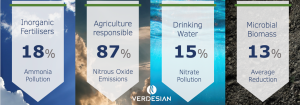
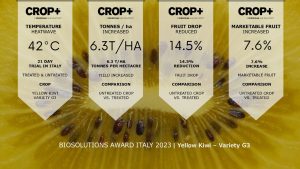
Here is an example of resilience to extreme heat stress, leading to an increase in marketable crop using a foliar bio stimulant called Crop+ from Verdesian Life Sciences.


The example above is an extract from a bio stimulants presentation about demand, growth and challenges.

Agricultural challenges

At present some 30% of bio-stimulants used globally contain amino acids and microbials. Amino acid sources are marine, animal and vegetables.

Importantly, amino acids and microbials can modulate gene expression and induce metabolic changes in treated crops.

The complex carbohydrate compounds found in these technologies are the possible future for delivering the changes growers need.

However, the bio stimulant industry needs to overcome certain obstacles which currently exist in the supply chain around the sources of amino acids, particularly from the animal and marine sector and amongst industry regulators in assessment and expansion of microbials within agriculture.

Lobbying on behalf of the industry is being conducted today primarily by members of the European Bio stimulant Industry Council (EBIC).

Closing the gap

The food retail sector of the supply chain is also the key to overcoming this sustainable farming obstacle as they are the gateway and controller to the consumer.

This gives them the power to influence the grower in a sustainability and environmental direction.

To help close the current technology gap and deliver the technology needed in the coming 10 years, the bio stimulant industry needs to create more awareness and educate the food retailers.

It is important that retailers align their policies to the growers, encouraging them to embrace bio stimulant technologies of the future. Industry platforms like Agri-TechE could play an important role in this regard.

Grower adoption

The bio stimulant industry will play its part in the coming decade alongside regulators and the food industry, but the question remains; ‘will growers fully embrace the technology advancement needed in the coming 10 years to reduce effects of climate change and environmental impact?’

Only if collectively, we can clearly demonstrate that the additional cost of adding these technologies to grower’s crop programs will provide a clear return on investment and will not be seen as a climate change tax.

That is the challenge for the industry in the coming decade.


Next – Generation Drone Systems with SEAD Artists

Member News
The views expressed in this Member News article are the author's own and do not necessarily represent those of Agri-TechE.

As part of our “Back to the Future” project, we’re asking Agri-TechE members to reflect on how the agri-tech industry has evolved over the past decade and to share their vision for the next ten years. By compiling these insights, we aim to create a powerful outlook on the future of agriculture, a compelling call to arms for the industry driven by the diverse perspectives of our community.

This submission is part of the collection of reflections and predictions from our members, offering unique perspectives on the industry’s past milestones and future directions. Each contribution adds to a broader dialogue about the innovations and challenges that will shape the next decade in agri-tech.

Back to the Future with SeadArtists

Harnessing the Power of Connectivity

Member News
The views expressed in this Member News article are the author's own and do not necessarily represent those of Agri-TechE.

As part of our “Back to the Future” project, we’re asking Agri-TechE members to reflect on how the agri-tech industry has evolved over the past decade and to share their vision for the next ten years. By compiling these insights, we aim to create a powerful outlook on the future of agriculture, a compelling call to arms for the industry driven by the diverse perspectives of our community.

This submission is part of the collection of reflections and predictions from our members, offering unique perspectives on the industry’s past milestones and future directions. Each contribution adds to a broader dialogue about the innovations and challenges that will shape the next decade in agri-tech.

Back to the Future with Wyld Networks

Enhancing water management in agriculture for sustainable growth

Member News
The views expressed in this Member News article are the author's own and do not necessarily represent those of Agri-TechE.

Irrigated agriculture accounts for around 70% of global water use, however, an estimated 60% of irrigated cropland remains highly water-stressed.

In the face of escalating climate change, water scarcity and the pressing need for sustainable agricultural practices, improving water management in agriculture has become a critical priority.

Effective water management practices that can both optimise water use and enhance soil health are absolutely essential if the agricultural sector is to transition to a more sustainable method of farming and food production.

A new book – Improving water management in agriculture: Irrigation and food production – highlights key areas where innovation is required to ensure that water use is optimised and better managed by farmers and other key stakeholders across the agri-food supply chain.

“We cannot continue to produce and consume food in the same way that we have done in the past,” says Professor Jerry W. Knox from Cranfield University, UK and editor of this new book.

“Reconciling the water needs for food, the environment, energy and society remains a significant but surmountable challenge, as well as an opportunity for change,” he adds.

Much alike many other sub-sectors of agriculture, modern water management has been revolutionised by the advent of technology, with farmers and growers now opting to invest in precision irrigation technologies to improve the productivity, profitability and sustainability of their farms.

Technologies such as variable rate irrigation systems and remote sensing platforms can be used by farmers to apply water more efficiently, which in turn reduces waste and environmental impact.

However, whilst innovations in irrigation systems are important, innovations in drainage design and management are equally as important, particularly in regions prone to waterlogging and soil salinity.

“Around 14% of the arable and permanently cropped area worldwide are irrigated,” says Dr Henk Ritzema, former Associate Professor at Wageningen University, The Netherlands and contributor to this new book.

“However, despite the importance of drainage as a component of agricultural water management, only about 22% of these irrigated lands are drained,” he adds.

So, why is drainage seemingly overlooked?

For Professor Ritzema, it’s the positioning of drainage at the end of the pipeline:

“Drainage systems clean up the ‘mess’ other activities leave behind, like salts brought in by irrigation water and residues of fertilisers and pesticides.”

Drainage is largely forgotten about – people don’t like to talk about it. However, if water use in agriculture is to be truly optimised, modern drainage systems must undergo a series of improvements which target increased control, reduced environmental impact, reuse of drainage water and safe disposal of the drainage effluent.

“The book does exceptionally well in linking the myriad of issues which are relevant to agricultural water management,” says Professor Elías Fereres, University of Cordoba and IAS-CSIC, Spain.

“In doing this, the editor and the book’s contributing authors have presented an excellent state of the art analysis of irrigation and food production on an international level,” he adds.

  • *I have permission from the copyright holder to publish this content and images.

Non – Chemical Weed Control with RootWave

Member News
The views expressed in this Member News article are the author's own and do not necessarily represent those of Agri-TechE.

As part of our “Back to the Future” project, we’re asking Agri-TechE members to reflect on how the agri-tech industry has evolved over the past decade and to share their vision for the next ten years. By compiling these insights, we aim to create a powerful outlook on the future of agriculture, a compelling call to arms for the industry driven by the diverse perspectives of our community.

This submission is part of the collection of reflections and predictions from our members, offering unique perspectives on the industry’s past milestones and future directions. Each contribution adds to a broader dialogue about the innovations and challenges that will shape the next decade in agri-tech.

Back to the Future with RootWave

Improved version of ‘Robocrop’ only picks ripe raspberries

Member News
The views expressed in this Member News article are the author's own and do not necessarily represent those of Agri-TechE.

A new version of the world’s first raspberry-picking robot, a four-armed machine powered by artificial intelligence and able to do the job at the speed and effectiveness of a human, is to be employed on farms in the UK, Australia and Portugal over the coming 12 months.

Read the full article here, on The Guardian website.

  • *I have permission from the copyright holder to publish this content and images.

Mixing Old Techniques with New Technologies

Member News
The views expressed in this Member News article are the author's own and do not necessarily represent those of Agri-TechE.

As part of our “Back to the Future” project, we’re asking Agri-TechE members to reflect on how the agri-tech industry has evolved over the past decade and to share their vision for the next ten years. By compiling these insights, we aim to create a powerful outlook on the future of agriculture, a compelling call to arms for the industry driven by the diverse perspectives of our community.

This submission is part of the collection of reflections and predictions from our members, offering unique perspectives on the industry’s past milestones and future directions. Each contribution adds to a broader dialogue about the innovations and challenges that will shape the next decade in agri-tech.

Back to the Future with City College Norwich

Gardin Appoints Produce Industry Leader As Advisor – Dorn Wenninger

Member News
The views expressed in this Member News article are the author's own and do not necessarily represent those of Agri-TechE.

Gardin, the UK based ag-tech company recently named produce-industry leader, Dorn Wenninger as an Advisor. Sumanta Talukdar, Gardin CEO and Founder said, “Dorn brings a life[1]time of experiences and connections to the most important grower/shippers, breeders and produce retailers around the world. We’re excited to add Dorn’s deep industry knowledge and relationships to the Gardin team as we ramp up our global penetration.”

Dorn is a +30 year produce industry veteran who has held senior roles with both grower/shippers as well as major retailers. As Gardin continues its expansion, Dorn brings a truly global perspective, having visited farmers and retailers in over 100 countries around the world. He spent the first half of his career as a grower shipper with Chiquita Bananas, and then leading Driscoll’s European business. Dorn has spent the second half of his career working with retailers. During his 11 year tenure with Walmart, Dorn spent 9 of those years leading the produce team for Walmart US and then Walmart Mexico. For the past 3 years, Dorn served as Sr. VP of Produce for UNFI, servicing thousands of independent retailers across the US.

Gardin and Wenninger first got connected through the IFPA Technology Accelerator program. “For years, farmers have improved yields by dialing in the use of fertilizers, water and light. Now, the Gardin sensor allows farmers to monitor the plant, in real time, to reach its maximum potential. While measuring photosynthesis (chlorophyll fluorescence) has been possible for years, the Gardin sensor and AI platform finally make it deployable at scale as an everyday tool for farmers and breeders,” said Wenninger. “I’m excited to be a part of the Gardin team as we help farmers around the world be able to consistently reach for higher yields.”

Gardin is a UK based, VC backed, pioneering company specializing in advanced sensor technology and AI for greenhouse farming, seed-breeders and vertical farms. Our innovative solutions provide precise monitoring and data-driven insights to optimize farming agricultural operations and drive sustainable practices.

Gardin: www.gardin.ag