The views expressed in this Member News article are the author's own and do not necessarily represent those of Agri-TechE.
As part of our “Back to the Future” project, we’re asking Agri-TechE members to reflect on how the agri-tech industry has evolved over the past decade and to share their vision for the next ten years. By compiling these insights, we aim to create a powerful outlook on the future of agriculture, a compelling call to arms for the industry driven by the diverse perspectives of our community.
This submission is part of the collection of reflections and predictions from our members, offering unique perspectives on the industry’s past milestones and future directions. Each contribution adds to a broader dialogue about the innovations and challenges that will shape the next decade in agri-tech.
Back to the Future with Wyld Networks
Post Overview
This story has been submitted by an Agri-TechE member.
The views expressed in this Member News article are the author's own and do not necessarily represent those of Agri-TechE.
Irrigated agriculture accounts for around 70% of global water use, however, an estimated 60% of irrigated cropland remains highly water-stressed.
In the face of escalating climate change, water scarcity and the pressing need for sustainable agricultural practices, improving water management in agriculture has become a critical priority.
Effective water management practices that can both optimise water use and enhance soil health are absolutely essential if the agricultural sector is to transition to a more sustainable method of farming and food production.
“We cannot continue to produce and consume food in the same way that we have done in the past,” says Professor Jerry W. Knox from Cranfield University, UK and editor of this new book.
“Reconciling the water needs for food, the environment, energy and society remains a significant but surmountable challenge, as well as an opportunity for change,” he adds.
Much alike many other sub-sectors of agriculture, modern water management has been revolutionised by the advent of technology, with farmers and growers now opting to invest in precision irrigation technologies to improve the productivity, profitability and sustainability of their farms.
Technologies such as variable rate irrigation systems and remote sensing platforms can be used by farmers to apply water more efficiently, which in turn reduces waste and environmental impact.
However, whilst innovations in irrigation systems are important, innovations in drainage design and management are equally as important, particularly in regions prone to waterlogging and soil salinity.
“Around 14% of the arable and permanently cropped area worldwide are irrigated,” says Dr Henk Ritzema, former Associate Professor at Wageningen University, The Netherlands and contributor to this new book.
“However, despite the importance of drainage as a component of agricultural water management, only about 22% of these irrigated lands are drained,” he adds.
So, why is drainage seemingly overlooked?
For Professor Ritzema, it’s the positioning of drainage at the end of the pipeline:
“Drainage systems clean up the ‘mess’ other activities leave behind, like salts brought in by irrigation water and residues of fertilisers and pesticides.”
Drainage is largely forgotten about – people don’t like to talk about it. However, if water use in agriculture is to be truly optimised, modern drainage systems must undergo a series of improvements which target increased control, reduced environmental impact, reuse of drainage water and safe disposal of the drainage effluent.
“The book does exceptionally well in linking the myriad of issues which are relevant to agricultural water management,” says Professor Elías Fereres, University of Cordoba and IAS-CSIC, Spain.
“In doing this, the editor and the book’s contributing authors have presented an excellent state of the art analysis of irrigation and food production on an international level,” he adds.
*I have permission from the copyright holder to publish this content and images.
Post Overview
This story has been submitted by an Agri-TechE member.
The views expressed in this Member News article are the author's own and do not necessarily represent those of Agri-TechE.
As part of our “Back to the Future” project, we’re asking Agri-TechE members to reflect on how the agri-tech industry has evolved over the past decade and to share their vision for the next ten years. By compiling these insights, we aim to create a powerful outlook on the future of agriculture, a compelling call to arms for the industry driven by the diverse perspectives of our community.
This submission is part of the collection of reflections and predictions from our members, offering unique perspectives on the industry’s past milestones and future directions. Each contribution adds to a broader dialogue about the innovations and challenges that will shape the next decade in agri-tech.
Back to the Future with RootWave
Post Overview
This story has been submitted by an Agri-TechE member.
The views expressed in this Member News article are the author's own and do not necessarily represent those of Agri-TechE.
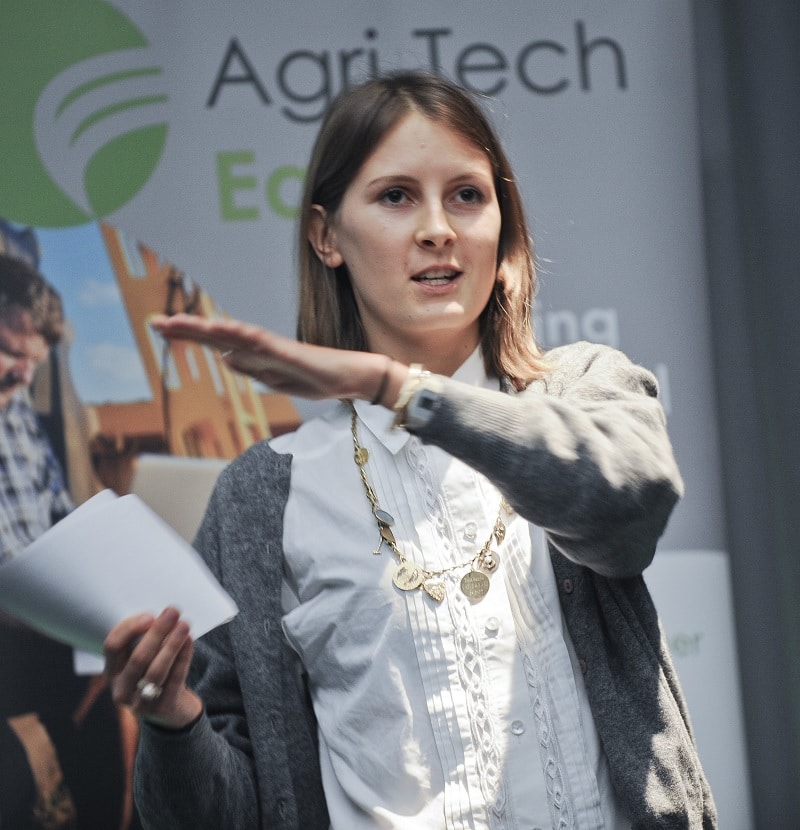
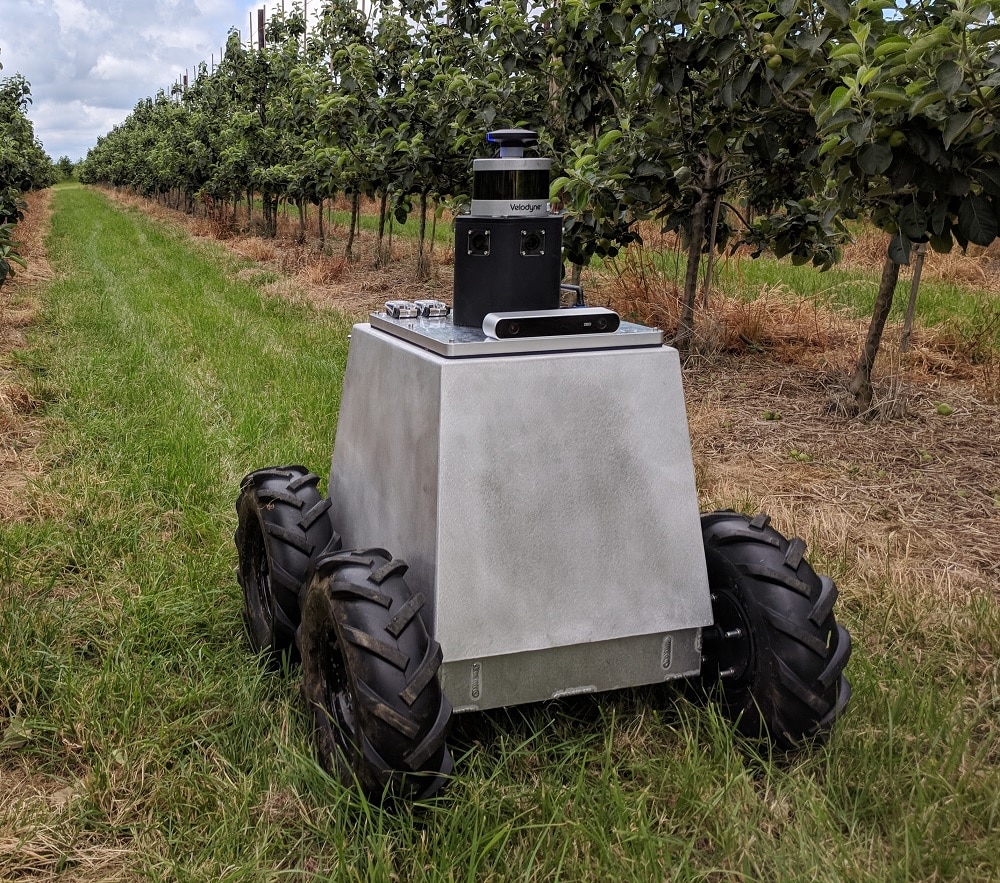
A new version of the world’s first raspberry-picking robot, a four-armed machine powered by artificial intelligence and able to do the job at the speed and effectiveness of a human, is to be employed on farms in the UK, Australia and Portugal over the coming 12 months.
The views expressed in this Member News article are the author's own and do not necessarily represent those of Agri-TechE.
As part of our “Back to the Future” project, we’re asking Agri-TechE members to reflect on how the agri-tech industry has evolved over the past decade and to share their vision for the next ten years. By compiling these insights, we aim to create a powerful outlook on the future of agriculture, a compelling call to arms for the industry driven by the diverse perspectives of our community.
This submission is part of the collection of reflections and predictions from our members, offering unique perspectives on the industry’s past milestones and future directions. Each contribution adds to a broader dialogue about the innovations and challenges that will shape the next decade in agri-tech.
Back to the Future with City College Norwich
Post Overview
This story has been submitted by an Agri-TechE member.
The views expressed in this Member News article are the author's own and do not necessarily represent those of Agri-TechE.
Gardin, the UK based ag-tech company recently named produce-industry leader, Dorn Wenninger as an Advisor. Sumanta Talukdar, Gardin CEO and Founder said, “Dorn brings a life[1]time of experiences and connections to the most important grower/shippers, breeders and produce retailers around the world. We’re excited to add Dorn’s deep industry knowledge and relationships to the Gardin team as we ramp up our global penetration.”
Dorn is a +30 year produce industry veteran who has held senior roles with both grower/shippers as well as major retailers. As Gardin continues its expansion, Dorn brings a truly global perspective, having visited farmers and retailers in over 100 countries around the world. He spent the first half of his career as a grower shipper with Chiquita Bananas, and then leading Driscoll’s European business. Dorn has spent the second half of his career working with retailers. During his 11 year tenure with Walmart, Dorn spent 9 of those years leading the produce team for Walmart US and then Walmart Mexico. For the past 3 years, Dorn served as Sr. VP of Produce for UNFI, servicing thousands of independent retailers across the US.
Gardin and Wenninger first got connected through the IFPA Technology Accelerator program. “For years, farmers have improved yields by dialing in the use of fertilizers, water and light. Now, the Gardin sensor allows farmers to monitor the plant, in real time, to reach its maximum potential. While measuring photosynthesis (chlorophyll fluorescence) has been possible for years, the Gardin sensor and AI platform finally make it deployable at scale as an everyday tool for farmers and breeders,” said Wenninger. “I’m excited to be a part of the Gardin team as we help farmers around the world be able to consistently reach for higher yields.”
Gardin is a UK based, VC backed, pioneering company specializing in advanced sensor technology and AI for greenhouse farming, seed-breeders and vertical farms. Our innovative solutions provide precise monitoring and data-driven insights to optimize farming agricultural operations and drive sustainable practices.
Gardin: www.gardin.ag
Post Overview
This story has been submitted by an Agri-TechE member.
The views expressed in this Member News article are the author's own and do not necessarily represent those of Agri-TechE.
As part of our “Back to the Future” project, we’re asking Agri-TechE members to reflect on how the agri-tech industry has evolved over the past decade and to share their vision for the next ten years. By compiling these insights, we aim to create a powerful outlook on the future of agriculture, a compelling call to arms for the industry driven by the diverse perspectives of our community.
This submission is part of the collection of reflections and predictions from our members, offering unique perspectives on the industry’s past milestones and future directions. Each contribution adds to a broader dialogue about the innovations and challenges that will shape the next decade in agri-tech.
Back to the Future with Mills & Reeve
Post Overview
This story has been submitted by an Agri-TechE member.
The views expressed in this Member News article are the author's own and do not necessarily represent those of Agri-TechE.
The Italian courts recently heard a case of infringement of a Plant Variety Right (PVR) held by Sun World International LLC protecting the Sugraone grape variety and of the corresponding trademark ‘Superior Seedless’.
The defendants: Gianni Stea Import-Export s.r.l. and Angela Miglionico, were accused of infringing both the PVR and the trademark. In response, they counterclaimed that the PVR lacked novelty and that the trademark was invalid for non-distinctiveness. The lack of novelty argument is an interesting argument given that the PVR is one of the oldest seedless grape variety rights to exist, having been filed by Sun World in 1983 and held unchallenged. The PVR was near expiry when the case was brought, but clearly valuable enough for Sun World to attempt to enforce.
The defendants argued that the Sugraone PVR lacked novelty over public marketing of the variety in the USA during the late 70s. They provided evidence in reports of significant areas of land in California being used to cultivate the variety. It is generally difficult to prove public prior use of any variety or invention, but especially so when it dates back several decades. However in this case, the proprietor of the PVR in seeking to reinforce the distinctive character of the trademark under dispute alongside the PVR, gifted the evidence to the defendant that the variety was indeed publicly available in the 70s. A testimony provided to the court by the Senior Vice President of Sun World to the EUIPO during the trademark discussions referred to use of the trademark ‘Superior Seedless’ to market the Sugraone variety in the 70s thereby admitting that the variety was disclosed to the public before the PVR was filed, and even before the available grace period at the time.
Sun World tried to escape this admission by arguing that such activities were not novelty destroying for the PVR because novelty could not be destroying by marketing harvested material of the variety i.e. the grapes themselves, however the court disagreed and held that the action of an offer for sale covered both plant and fruit and pointed out that UPOV includes harvested material in the definition of novelty.
The PVR was therefore held to lack novelty, after many years of being in force. Of course breeders must consider what marketing activities they are undertaking relative to the timing of filing for PVRs, more so this case highlights the need for an integrated defence strategy when disputes span across IP rights to ensure that arguments in defence of one right do not prejudice another.
The views expressed in this Member News article are the author's own and do not necessarily represent those of Agri-TechE.
As part of our “Back to the Future” project, we’re asking Agri-TechE members to reflect on how the agri-tech industry has evolved over the past decade and to share their vision for the next ten years. By compiling these insights, we aim to create a powerful outlook on the future of agriculture, a compelling call to arms for the industry driven by the diverse perspectives of our community.
This submission is part of the collection of reflections and predictions from our members, offering unique perspectives on the industry’s past milestones and future directions. Each contribution adds to a broader dialogue about the innovations and challenges that will shape the next decade in agri-tech.
Back to the Future with Cambridge Consultants
Post Overview
This story has been submitted by an Agri-TechE member.
The views expressed in this Member News article are the author's own and do not necessarily represent those of Agri-TechE.
Discovery-driven sustainable solutions to plant-nematode interactions
Problem we’re looking to solve
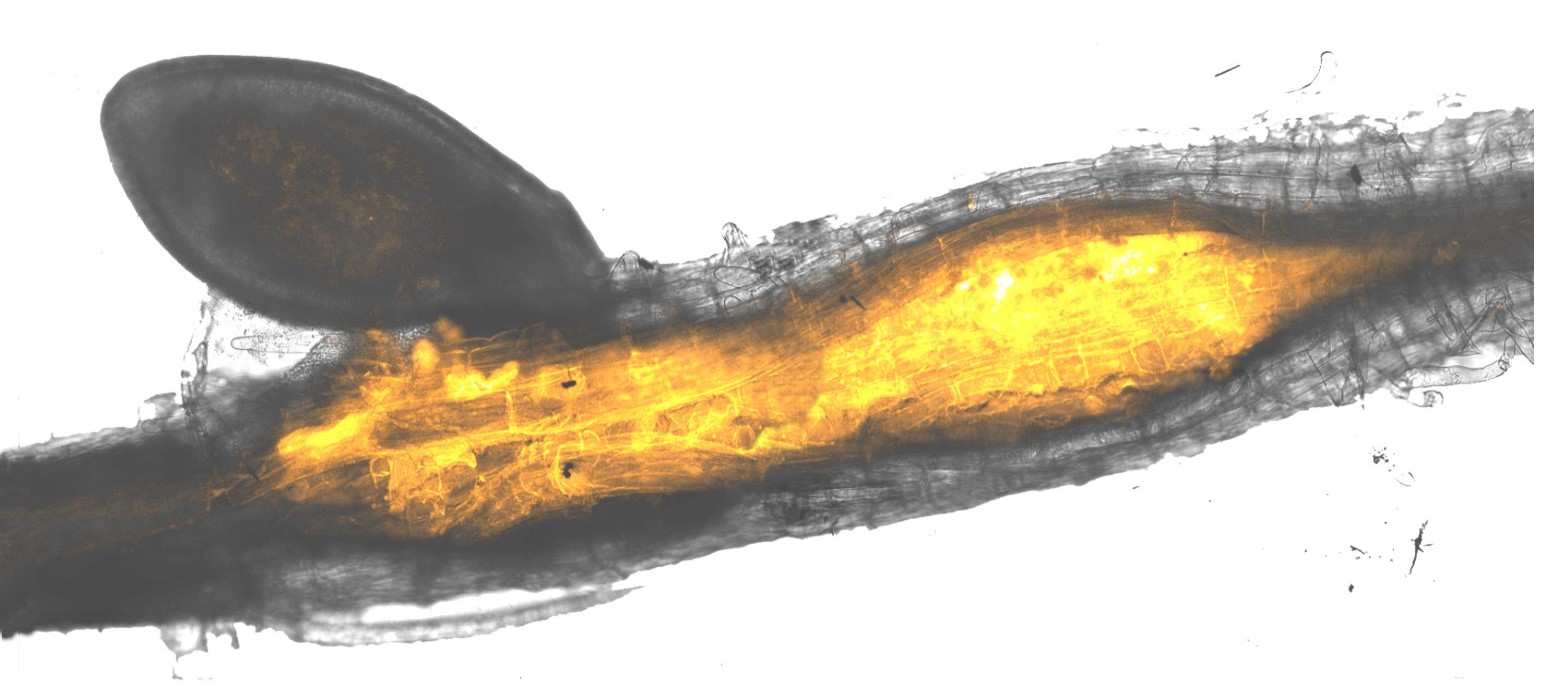
The problem we have chosen to work on is the molecular dialogue between two kingdoms of life: plants and their invading parasitic nematodes (microscopic worm-like creature).
We are driven by fundamental discovery and, given that the outcome of this molecular dialogue results in plant disease that constrain human food security, we have a profound sense of responsibility to also deliver sustainable solutions to these parasites.
To give an idea of scale, parasitic nematodes affect most crops, can cause up to 80% yield loss, and are estimated to account for $100 billion in annual loses to global agriculture.
Solution
It is widely accepted that plants which are inherently (i.e. genetically) resistant to a disease are an optimal solution in agriculture from practical, financial, and sustainability/equity-oriented points of view because no additional work/cost/inputs are required to prevent disease and thereby yield loss.
Given the scarcity of such resistant plants, we focus on identifying, characterising, and ultimately understanding the plant genes that are responsible for resistance and susceptibility to disease.
Why Cambridge, why now, and history of working in this area
While Cambridge has a not insubstantial history of plant-nematode research (dating back some 60 years), the reason why our group is based here is because of critical mass and future direction. Our research group is based at the Crop Science Centre, a recent initiative between the Department of Plant Sciences and the National Institute of Agricultural Botany (Niab) designed to deliver transformational change in agriculture, rooted in fundamental discovery.
Principles of sustainability and equity in farming unite our collective aims. In addition to this impetus, the Crop Science Centre also houses a concentration of expertise on plant interactions with other organisms (ranging from pathogenic to beneficial) that is rare, if not unique. This allows us to share thinking and resources, drawing parallels across systems, to accelerate our collective research.
What is the research – how does it work, what resources are used and who is involved?
How you get to a resistant plant is important. There are, in essence, two ways to do this: the first, and most intuitive, is to add a gene to the plant that has some negative impact on the pathogen (often so called “resistance genes” or “R genes”); the second, and somewhat unintuitive, is to remove a gene from the plant that the pathogen was relying on manipulating in some way in order to cause disease (so called “susceptibility genes” or “S genes”).
The evolutionary biologist might favour the S gene because of a fundamental rule of nature: breaking things is easy – making things is hard. Intuitively, we all know this to be true without the proof. It is easier to break your phone, than it is to make yourself a new phone.
The same is true with the interactions between proteins: mutations that change the shape of a protein are much more likely to break its function than they are to make a new function. This is important because many R genes added to plants work by recognising pathogen proteins in order to mount an immune response. Breaking this recognition is “easy”, and so pathogens readily evolve to avoid this type of resistance.
On the other hand, resistance derived by removing an S gene from the plant, that the pathogen was manipulating and relying on, requires the pathogen to regain this ability in some way (i.e. making something new), and making things is “hard”. As a result, it is generally harder for pathogen evolution to overcome a resistant plant derived from the loss of an S gene, than it is for pathogen evolution to overcome a resistant plant derived from the addition of an R gene.
The biotechnologist and the politician might agree with the evolutionary biologist because of CRISPR/Cas genome editing (termed CRISPR). CRISPR is a revolutionary technology that allows precise edits in the genomes of almost any organism. CRISPR/Cas is extremely good at making targeted deletions in crop genomes, and its approval for commercial use in many geographies is streamlined compared to other biotechnological approaches to crop improvement (e.g. genetic modification).
There is a clear opportunity to use CRISPR/Cas to develop disease resistant crops – based on fundamental understanding – provided the resistant plant is derived by making a targeted deletion (i.e. removing a gene). It is for this reason, that the biotechnologist, the politician, and the evolutionary biologist might favour the S gene.
Discovering more S genes is therefore paramount. We recently discovered a new way to find S genes – termed, “the hologenome theory of S gene discovery”. The term hologenome, coined for use in the hologenome theory of evolution, argues that we should consider the host plus all of its associated symbiotic microbes as a single entity, because they are inseparable in all practical senses.
We used this definition to consider the host and the plant-parasitic nematode – a plant-pathogen of global agricultural importance – as a single unit. Conceptualising them in this way, we could ask, “what is the metabolic capacity of the plant-nematode hologenome?”
Identifying metabolic pathways that were in part contributed by the host genome and in part contributed by the parasite’s genome would highlight genes in the plant that the nematode relies on – and thereby new S genes for CRISPR-mediated crop improvement.
What are the milestones, timelines and what happens next?
Our current work in this area is progressing on two fronts:
1) Discovery of additional S genes based on hologenome theory; and
2) Translating these discoveries into crops using genome editing. Recent legislation (The Precision Breeding Bill) accelerates the approval process, so we anticipate rapid deployment of new material in field trials in the coming years.
If we solve the problem what can we expect?
Most plants, and all crops, can be infected by one species of plant-parasitic nematode or another. These parasites have a profound impact on global agriculture – affecting both the richest and the poorest farming systems with equal vigor, but of course unequal outcomes.
Addressing plant diseases is therefore a problem of not just sustainability, but also of equity.
Post Overview
This story has been submitted by an Agri-TechE member.
The views expressed in this Member News article are the author's own and do not necessarily represent those of Agri-TechE.
As part of our “Back to the Future” project, we’re asking Agri-TechE members to reflect on how the agri-tech industry has evolved over the past decade and to share their vision for the next ten years. By compiling these insights, we aim to create a powerful outlook on the future of agriculture, a compelling call to arms for the industry driven by the diverse perspectives of our community.
This submission is part of the collection of reflections and predictions from our members, offering unique perspectives on the industry’s past milestones and future directions. Each contribution adds to a broader dialogue about the innovations and challenges that will shape the next decade in agri-tech.
AgritechE: What do you think is the game-changing tech development we’ve seen in the last 10 years?
Farmable:
Our team works with a large number of fruit growers, who deal with high volumes of people in their operations, particularly around harvest time. It has been very inspiring to see the advancements in robotics that could automate some of the more human-intensive work happening on farms around the world.
Challenges still remain. The cost of even piloting these technologies is high and really only accessible to the largest operators out there. Network connectivity and having the necessary technology skills on a farming team are two other factors that can put these types of advancements out of reach for many farms.
So while these advancements are important for the long term viability of the industry, there are barriers to adoptions that need to be addressed first.
AgritechE: What’s the biggest challenge to widespread adoption?
Farmable: Network connectivity.
This is a real frustration for a huge number of farms globally. Our team works with farms primarily across the UK, Germany, Spain, South Africa and Australia. The number of farms who still struggle with network access out in the fields is high. And if you want to record data digitally in the field, in real time, we need rural connectivity.
Fortunately, teams like Starlink are working hard to solve this on a global scale but admittedly it’s frustrating to see that this is still such a significant barrier in 2024.
AgritechE: What do you think is the most exciting thing we’ll see in 10 years’ time?
Farmable: It will be very exciting to see technology empower small and medium sized farms to operate profitable, sustainable businesses.
Family farms are at risk of being left behind in a generation that uses pen and paper to operate a business. At Farmable we aspire for a future where:
All farms have network connectivity
Digital tools are accessible for all (easy to use and low-cost)
These are fundamental rights to any business that wants to survive in the long run so we feel obligated to ensure the farms that feed us also have these basic services.
If we can do that, small and medium farms have a chance at competing with the big farms. Technology can help them more easily comply with regulations, opening doors to new markets and ensuring they receive value for their products. This becomes a reality when product quality can be verified and traced using technology that is accessible to all. It will allow all farms, small and large, to receive fair payment for the products they grow.
Technology will hopefully be the great equaliser in the future of farming.
The views expressed in this Member News article are the author's own and do not necessarily represent those of Agri-TechE.
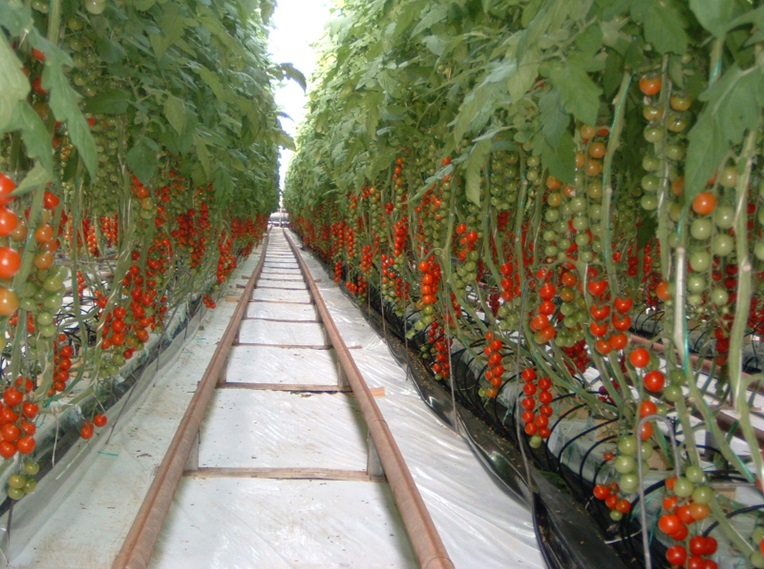
We are launching a new collaboration with Fera Science Ltd, ADAS, and the British Tomato Growers’ Association (BTGA) to explore a new application for our biostimulant technology!
This is our first big project exploring the potential of our first active ingredient for biostimulation on a high-value crop. More specifically, we will explore its potential to enhance the resilience of tomato plants to heat and drought stress and reduce the carbon footprint of food production.
Our technology was originally developed by academics from Rothamsted Research and Oxford University to boost wheat yields. On that crop, our evaluation field trials show potential to boost yields by up to 22% depending on crop variety and environmental conditions.
We aim to develop science-based biostimulants that are adaptable to existing agricultural practices. To achieve that, in our new study the BTGA will act as Knowledge Exchange Champion and ADAS will model the economic and carbon benefits under three grower scenarios.
Working the Agri-TechE Network:
As part of our project, we will be seeking expertise and insights from UK tomato growers. If that is you, check details of our project below and follow our venture page on LinkedIn for upcoming announcements on how you can contribute to this exciting project.

 Wyld Networks Ltd


 Burleigh Dodds Science Publishing Limited

 RootWave


 Fieldwork Robotics Ltd




 City College Norwich



 Gardin Ltd

 Mills & Reeve LLP


 HGF Limited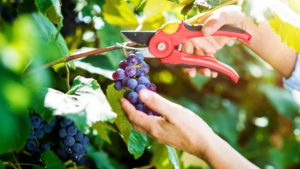


 Cambridge Consultants



 Department of Plant Sciences, Cambridge University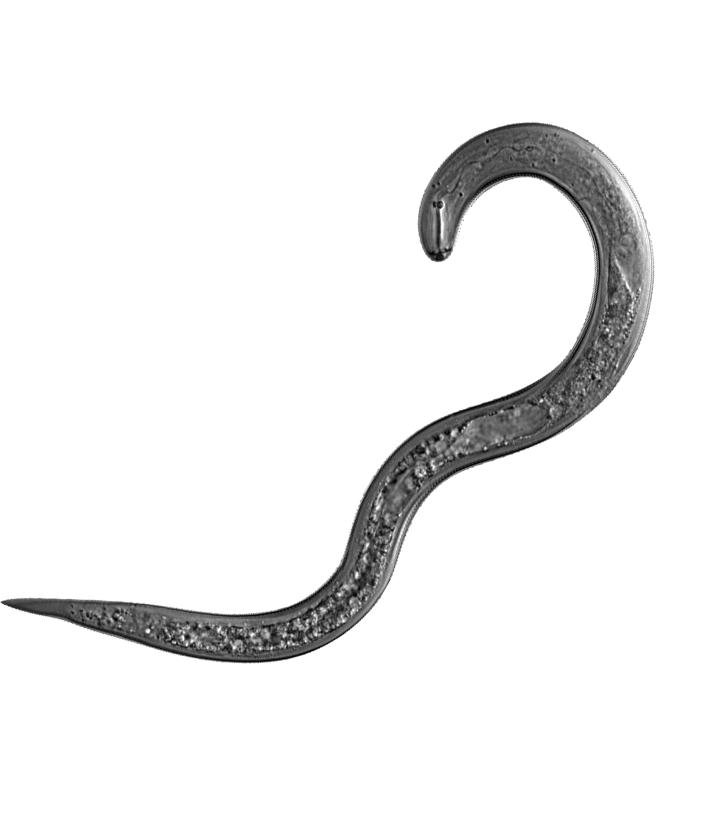

 Farmable


 SugaROx