The views expressed in this Member News article are the author's own and do not necessarily represent those of Agri-TechE.
As part of our “Back to the Future” project, we’re asking Agri-TechE members to reflect on how the agri-tech industry has evolved over the past decade and to share their vision for the next ten years. By compiling these insights, we aim to create a powerful outlook on the future of agriculture, a compelling call to arms for the industry driven by the diverse perspectives of our community.
This submission is part of the collection of reflections and predictions from our members, offering unique perspectives on the industry’s past milestones and future directions. Each contribution adds to a broader dialogue about the innovations and challenges that will shape the next decade in agri-tech.
Post Overview
This story has been submitted by an Agri-TechE member.
The views expressed in this Member News article are the author's own and do not necessarily represent those of Agri-TechE.
Years and years of recruitment experience has taught us here at AgRecruit that certain elements of effective recruitment are universal, whether in the AgTech sector or other domains. One of these elements would be the ability to vet candidates at initial contact in a way that saves a lot of pain further down the line!
For some searches, the ability to headhunt and identify niche skillsets is critical. However, we continually speak to hiring businesses who are hiring for roles where qualified candidates are, in theory, plentiful – and yet they’re still coming up empty and banging their head against a brick wall. Normally in these cases, we can identify that errors in the initial vetting process might be the cause…
It should be easy to tell within a few minutes whether or not somebody roughly has the skills for the job (and a deeper delve into specifics can be carried out later in your interview process).
However, there could still be a million and one reasons for a person and job to not be a fit…
Are they genuinely looking (as opposed to window shopping) and why? Is your job realistically going to remove the issues that they might have in their current role? Does the salary / location / culture / remote vs site-based policy (just to name a few topics) align with their expectations and needs? Are you coming in behind multiple other ongoing interview processes?
If just one of these doesn’t line up then that alone can be a justified reason for ruling somebody out at the start – saving the future headache of offers being rejected, people withdrawing from interviews, etc.
This is why we might engage with 40-50 candidates on a search that look great on paper… but only actually send 4-5 CVs to the hiring company.
This isn’t always easy – for the experienced consultants here at AgRecruit, it took years of working in recruitment to get good at this! A lot of it revolves around a ‘sixth sense’ that you develop over time. If you’re recruiting and struggling for some of these reasons, then get in touch – we can help!
*I have permission from the copyright holder to publish this content and images.
Post Overview
This story has been submitted by an Agri-TechE member.
The views expressed in this Member News article are the author's own and do not necessarily represent those of Agri-TechE.
As part of our “Back to the Future” project, we’re asking Agri-TechE members to reflect on how the agri-tech industry has evolved over the past decade and to share their vision for the next ten years. By compiling these insights, we aim to create a powerful outlook on the future of agriculture, a compelling call to arms for the industry driven by the diverse perspectives of our community.
This submission is part of the collection of reflections and predictions from our members, offering unique perspectives on the industry’s past milestones and future directions. Each contribution adds to a broader dialogue about the innovations and challenges that will shape the next decade in agri-tech.
Post Overview
This story has been submitted by an Agri-TechE member.
The views expressed in this Member News article are the author's own and do not necessarily represent those of Agri-TechE.
The Brief
In light of a funding injection, a tech start up – focused on delivering solutions to encourage more sustainable practices across the food supply chain – was looking to create a new Consulting division. This division would be responsible for delivering on bespoke and one-off sustainability projects for their client base, as well as seeking out new opportunities (thus generating further revenue) to this end.
We were engaged by said client to help them find somebody to head up this new division. The brief was to find an experienced Sustainability Consultant with 10+ years’ experience, combined with leadership and commercial nouse. However, it was also paramount to identify somebody with their finger on the pulse from a technical perspective – in particular, somebody with a strong data analytics strand to their background.
Agri/Food sector exposure would also be a big bonus!
The Process
It was apparent that candidates at this level with the specific skills required were unlikely to be floating around on conventional job boards or in other easy-to-find areas. As a first step, we therefore set about making enquiries within our network – with our years of experience working in this domain, it was likely that relevant candidates could come from those that we’d had prior engagement with…
This yielded some options and helped us build a shortlist of candidates for interview… however the successful candidate came from our further search process, designed to tap into new pools of candidates that weren’t already in our circle. This derived from identifying other businesses engaged in sustainability related activities that were likely to have relevant people working for them, and then discretely approaching specific individuals within those pools.
Eventually we were able to land upon an individual who is highly experienced in this world and, whilst his current role wasn’t AgriFood related, he had worked in this sector in his earlier career. As a result he had a sound knowledge of the dynamics of the domain and, importantly, a genuine interest in working in this world again! Whilst initially only passively looking, the role was a solid fit for his career ambitions, along with the lure of working again in the AgriFood sector.
The Outcome
After expectations for each candidate had been laid out at the beginning of the process, a batch of interviews were conducted with the previously mentioned candidate ultimately being offered the position. The offer to acceptance process was straightforward, with the role turning out to be a very strong match in both directions and both parties happy.
A testimonial from the successful candidate:
“AgRecruit connected me to a fast-growing sustainability tech company that I am now working for in an exciting new role. I received a professional service throughout – I was kept informed and updated through the recruitment process, and AgRecruit offered unbiased advice and support throughout. Would highly recommend from a candidate’s point of view”
*I have permission from the copyright holder to publish this content and images.
Post Overview
This story has been submitted by an Agri-TechE member.
The views expressed in this Member News article are the author's own and do not necessarily represent those of Agri-TechE.
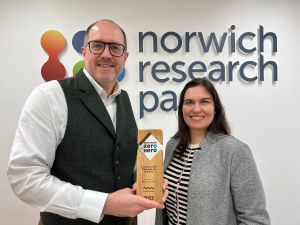
Norwich Research Park is delighted to announce a major new investment partnership with real estate investment manager, Vengrove, to construct new laboratory and office accommodation at the internationally renowned research park, a top-tier global research and innovation campus.
Norwich Research Park hosts a community of more than 30,000 members. Underpinning this thriving ecosystem are six internationally renowned institutions, all within close proximity, creating an unparalleled environment for collaboration and innovation.
Within walking distance are the Earlham Institute, John Innes Centre, Quadram Institute Bioscience and The Sainsbury Laboratory, four of the UK’s most prestigious bioscience research institutes in the UK.
Also on campus is the University of East Anglia (UEA), a UK top 20 university hailed for delivering high quality, high impact research, and the Norfolk and Norwich University Hospital, a teaching hospital undertaking high value research that seeks to improve patient care and outcomes worldwide.
This cluster of world-class facilities and expertise on a single, integrated, site means Norwich Research Park’s offer is both compelling and unique, making it an appealing proposition for prospective tenants and collaborators from around the globe.
Driving growth and innovation
Over the past two years, UK Research and Innovation (UKRI), the John Innes Foundation (JIF) and UEA (the Norwich Research Park landowners) along with members and the Board of Anglia Innovation Partnership LLP (Norwich Research Park’s campus management company) have actively sought the ideal partner to spearhead an ambitious growth agenda.
This new investment partnership will cater to the evolving needs of both current and prospective tenants, fostering the conversion of research breakthroughs into successful ventures across key market sectors, including:
Agribiotech
Food biotech
Industrial biotech
MedTech
With a clear ambition to connect industry, startups and high-growth companies with Norwich Research Park’s world-class research expertise and facilities, Vengrove’s partnership is set to secure the research park’s position as the premier location for research and innovation, both in the UK and on the international stage.
Bolstering the UK’s long-term bioscience prowess
As one of five research and innovation campuses supported by the UKRI Biotechnology and Biological Sciences Research Council (BBSRC), Norwich Research Park also benefits from BBSRC’s strategic investments in the Earlham Institute, John Innes Centre and Quadram Institute Bioscience.
Totalling £163.9 million through to 2028, this funding aims to bolster the UK’s national research capabilities in key areas such as crop resilience, food safety and security, sustainable agriculture, nutrition and health.
Looking ahead, UKRI has also committed to a significant £317 million investment in Norwich Research Park to establish a pioneering plant and microbial research hub by 2030. This venture, backed by UKRI’s infrastructure fund, promises to revolutionise JIC and TSL’s existing capacity and capability, ensuring the long-term success of UK bioscience.
Voices of support
Professor Anne Ferguson-Smith, BBSRC Executive Chair, said: “As well as marking a crucial phase in Norwich Research Park’s ambitious growth plans, this exciting new partnership represents a significant milestone for BBSRC in bolstering the UK’s bioscience research and innovation capabilities. This deal underscores the vital contributions of our strategically supported institutes and research and innovation campuses to the UK’s economic growth through bioscience innovation.”
Professor Nick Talbot FRS, Executive Director of The Sainsbury Laboratory, said: “We are very excited by the new partnership being embarked on between Norwich Research Park and Vengrove Real Estate Management. It is great to see the park developing as a vibrant centre for innovation, capitalising on the amazing discovery science going on in each of the partner institutions. At The Sainsbury Laboratory we are absolutely committed to translating our science into innovative biotechnology applications, for agriculture, healthcare and sustainable industries. Norwich Research Park can be world-leading in these areas and this investment clearly demonstrates that potential.”
Professor David Maguire, Vice-Chancellor of the University of East Anglia, said: “This is a really exciting partnership that will aid the expansion of Norwich Research Park at a crucial time when growth and innovation have never been more important. This is a very positive development to take forward the research park into a new era and I warmly welcome it.”
“We very much take a long-term view across our portfolios which means our clients get our full commitment and a stable environment in which to work. Norwich Research Park is undoubtedly world-class in its fields of science and now, with the support of Roz and the team and Board at Anglia Innovation Partnership, we are going to build world-class facilities that will attract further exciting high growth companies to the campus.”
From bench to boardroom
Andrew McLean, Partner and Head of Development at Vengrove, added: “We are very excited to be embarking on this new partnership with the research community at Norwich Research Park. With the potential to deliver 75,000 sqm of market-leading accommodation, we are looking forward to supporting the brilliant science that takes place by providing facilities that will help the transition from bench to boardroom and playing our part to unlock positive economic and social impact for the regional economy and tackling the big global challenges.”
From vision to reality
Roz Bird, CEO of Anglia Innovation Partnership, said: “This is a really significant milestone for the research campus. It will enable us to activate existing planning consent and supply new, flexible laboratory and office accommodation to meet market demand.”
“With the park full of exciting high-growth companies, the time is right to create new accommodation that will be needed to meet the demands of growing companies and help attract and retain companies that want to benefit from being located at Norwich Research Park.”
“With national asset status in engineering biology, and now with access to the necessary real estate investment, Norwich Research Park’s growth trajectory is ensured.”
*I have permission from the copyright holder to publish this content and images.
Post Overview
This story has been submitted by an Agri-TechE member.
The views expressed in this Member News article are the author's own and do not necessarily represent those of Agri-TechE.
As part of our “Back to the Future” project, we’re asking Agri-TechE members to reflect on how the agri-tech industry has evolved over the past decade and to share their vision for the next ten years. By compiling these insights, we aim to create a powerful outlook on the future of agriculture, a compelling call to arms for the industry driven by the diverse perspectives of our community.
This submission is part of the collection of reflections and predictions from our members, offering unique perspectives on the industry’s past milestones and future directions. Each contribution adds to a broader dialogue about the innovations and challenges that will shape the next decade in agri-tech.
What is the biggest game-changing development you’ve seen in the last ten years?
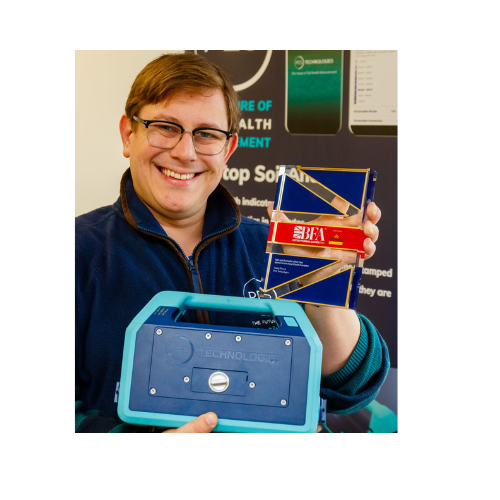
The key development for me is the improvement of microcontrollers and application processors. It might sound strange to pick these devices, but we have seen them increase in speed and capability, which has a direct effect on what larger plant and assets can do. These devices will be revolutionary once they are used in more and more products. However, they haven’t appeared in force in the agriculture sector yet and we’re still seeing manufactures using older technology.
Seeds of technology
The other real innovation is the range of sensors. We have seen these develop from a box containing one sensor and a large amount of electronics, to a signal device the size of a nail head which is calibrated and has digital interfaces. These tiny computers are the technology seeds which enable larger assets and equipment to become smarter and faster.
Whether you use the software to drive your tractor, measure soil health and nutrient levels, monitor your production line or link your phone so you can see everything operating and make precise decisions about resource allocation, the list of possibilities is endless.
What is the biggest challenge to widespread adoption of your technology in this industry?
The biggest challenge is fear of the unknown – the technology to do whatever farmers need is already here so everyone needs to embrace it and make it work for them. Looking at other sectors, you will see these sensors being used already, for instance with Pulse Width Modulation (PWM) fluid controls and laser image detection (LIDAR).
So, the biggest challenge to widespread adoption in this industry is us. We need to educate and work with the farming community and show them what is possible and relatively simple to achieve, to create solutions for their problems and implement the technology in a way which makes it easy for farmers to use.
Robust solutions
Developers like us have to deliver robust technology products that are fit for purpose and not ‘techo-dreams’. That’s why, at Greenstalk, we always start by really finding out what the farm needs. We don’t offer a ‘one size fits all’ solution, we look at how to implant our technology into existing systems and machinery to make it smarter.
The farming community needs to embrace technological advances and understand how their existing products can be transformed. Putting all this into practice will enable us to develop additional functions and quickly create something which is feature rich. So, let’s embrace the technology and see what happens. It’s coming anyway so we might as well make it work for us.
What do you think is the most exciting thing you think we’ll see in this area in 10 years’ time? OR what do you think this technology will enable in the next 10 years?
Some of the biggest technological innovations will be the use of artificial intelligence (AI) and machine learning (ML). There is a lot of discussion and hype about AI and ML at the moment. A lot of articles claim AI will do everything, but it is really just a sophisticated tool which enables complex algorithms to be calculated very quickly – and that could be great for the farming industry.
When you think that, in seconds, AI can analyse vast datasets, including weather patterns, soil conditions, and historical crop performance and provide recommendations that could optimise a farm’s performance, why wouldn’t we want to use it?
Enhanced yield and reduced cost
In the next 10 years, the systems we design and build will become locked into the core of what we do, so I see technology enhancing yield and reducing the cost base of farming. Making the processes a lot more repeatable and consistent will take the guesswork out of the business and enable food to be produced efficiently.
Using technology from other sectors such as space research and the automotive industry, farm machines will become smarter, smaller and more cost effective – but this is not a new concept. We only need to look at history to see how this has taken place in the manufacturing and car industries and, in some respects, with agriculture itself. It all started with the plough and grew into where we are today.
What is your vision of the future and how will you be responding to that?
I can see technology working in a really positive way for the farming community, with robots being used across the industry for tasks such as selective harvesting, precision planting, and weed control. I also foresee that the workforce will be enhanced by these types of products. The workforce which embraces this revolution will grow and there will be a range of skilled teams supporting and servicing the technology across the board, from software systems to autonomous vehicles.
Information exchange
If farming companies enable their computer systems to talk to each other and exchange information, then their devices, sensors, and platforms could be linked to enable farmers to manage their operations more efficiently, monitor crop health in real-time, and make data-driven decisions. Then you add on top AI, which can bring everything together from vehicles, sensors and the data to predict what needs to be done to get the best results. The future is exciting as long as we work together. If we carry on as stand-alone silos, other players will come into this sector and take control but, if we collaborate, the possibilities are infinite
Post Overview
This story has been submitted by an Agri-TechE member.
The views expressed in this Member News article are the author's own and do not necessarily represent those of Agri-TechE.
As part of our “Back to the Future” project, we’re asking Agri-TechE members to reflect on how the agri-tech industry has evolved over the past decade and to share their vision for the next ten years. By compiling these insights, we aim to create a powerful outlook on the future of agriculture, a compelling call to arms for the industry driven by the diverse perspectives of our community.
This submission is part of the collection of reflections and predictions from our members, offering unique perspectives on the industry’s past milestones and future directions. Each contribution adds to a broader dialogue about the innovations and challenges that will shape the next decade in agri-tech.
Post Overview
This story has been submitted by an Agri-TechE member.
The views expressed in this Member News article are the author's own and do not necessarily represent those of Agri-TechE.
As part of our “Back to the Future” project, we’re asking Agri-TechE members to reflect on how the agri-tech industry has evolved over the past decade and to share their vision for the next ten years. By compiling these insights, we aim to create a powerful outlook on the future of agriculture, a compelling call to arms for the industry driven by the diverse perspectives of our community.
This submission is part of the collection of reflections and predictions from our members, offering unique perspectives on the industry’s past milestones and future directions. Each contribution adds to a broader dialogue about the innovations and challenges that will shape the next decade in agri-tech.
Post Overview
This story has been submitted by an Agri-TechE member.
The views expressed in this Member News article are the author's own and do not necessarily represent those of Agri-TechE.
As part of our “Back to the Future” project, we’re asking Agri-TechE members to reflect on how the agri-tech industry has evolved over the past decade and to share their vision for the next ten years. By compiling these insights, we aim to create a powerful outlook on the future of agriculture, a compelling call to arms for the industry driven by the diverse perspectives of our community.
This submission is part of the collection of reflections and predictions from our members, offering unique perspectives on the industry’s past milestones and future directions. Each contribution adds to a broader dialogue about the innovations and challenges that will shape the next decade in agri-tech.
Introduction
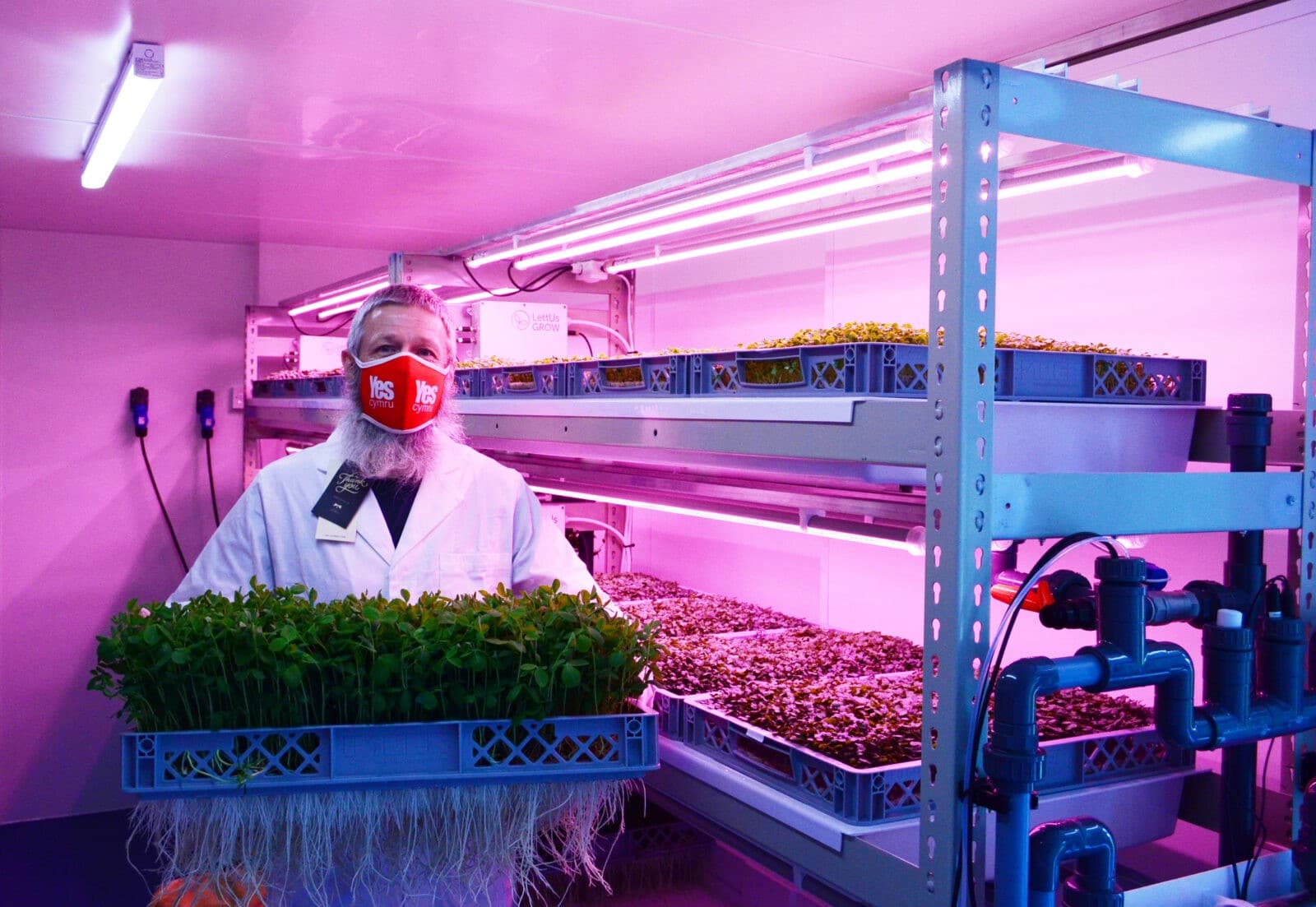
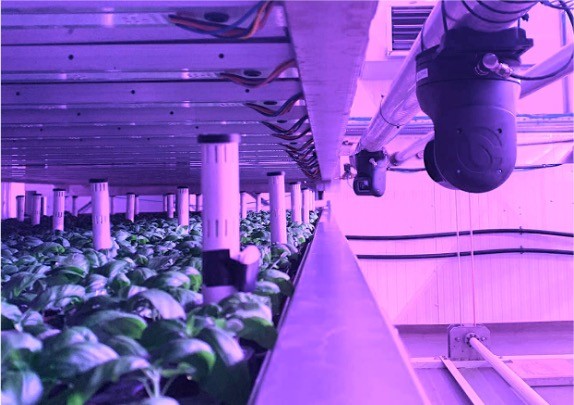
Innovation Agritech Group is developing, producing and installing totally controlled environment agriculture vertical aeroponic solutions for growers around the world. We are committed to using science and technology to develop fully sustainable farming systems allowing reliable production of food crops in an increasingly unstable environment.
What do you think is the game-changing tech development we’ve seen in the last 10 years?
Here at IAG, we consider the improvements made in the field of lighting and lighting control to be the greatest step forward in advancing the development of totally controlled environment agriculture and vertical aeroponics. Replacing fluorescent tubes with LEDs has allowed IAG to accurately manipulate both intensity and spectrum of lighting with LED lights to create and develop recipes for a variety of crops. Control of spectrum allows controlled environment farms to increase blue and red wavelengths to match the optimum pattern plants need to grow without wasting energy on unproductive wavelengths. Despite higher initial costs, lighting has advanced in terms of energy efficiency, giving savings in the longer term. These improvements are likely to increase over time as increased innovation and adoption of LED technology reduces the cost of production further.
Other advancements in lighting include simplified control via software, diffusion systems, for improved light uniformity, improved light cooling, and high frequency colour modulation. Recent efforts have also been made into utilisation of far-red light wavelengths over 700 nm to manipulate plant characteristics such as shoot elongation.
What’s the biggest challenge to widespread adoption?
The biggest challenge to widespread adoption of TCEA vertical aeroponics are the high costs, both of initial investment and running costs, particularly energy. Until these farms no longer require high capital investment, it is difficult to foresee widespread adoption without increases in available funding, limiting the benefits to only those able to afford the upfront cost. Additionally, the high demand of energy by farms of this nature means that adoption of sustainable TCEA will be limited to areas of the world where energy is already cheap, notably the Middle East.
Overcoming this hurdle is the responsibility of two major stakeholders: us technology production companies reducing the cost of our solutions to compete in the emerging market, as well as funding bodies making capital more available to growers. Perception also has a part to play in prevailing over this obstacle, as TCEA and vertical farming become more mainstream, growers will become more willing to adopt technology that has been proven, meaning economies of scale will come into play and prices will fall, hopefully leading to a snowball effect of increasing adoption. IAG are confident we, and other stakeholders can utilise new developments in agritech in the next decade to overcome these challenges.
What do you think is the most exciting thing we’ll see in 10 years’ time and what will this technology enable?
We expect the most important development in TCEA in the next decade to be the application of artificial intelligence. The wide-ranging uses of AI are impossible to fully anticipate but what follows are a few benefits we expect to be able to exploit in the coming years. AI can be used to make data collection and handling simpler and quicker, particularly useful for farmers inexperienced in data management. AI can be used in conjunction with cameras mounted on robotics and drones to record information such as leaf area, ripeness, disease presence. Automation makes it possible to constantly record this information meaning problems such as disease or mineral deficiency can be identified and remedied as early as possible. Importantly, AI may also be able to play a role in acting on this data and engage in decision making processes. These abilities are most beneficial in complex systems, including those beyond the farm gate such as supply chain management. Integrating AI together with existing and novel farm systems and devices together such as irrigation, lighting, and harvest data can be achieved using the Internet of Things.
Post Overview
This story has been submitted by an Agri-TechE member.
The views expressed in this Member News article are the author's own and do not necessarily represent those of Agri-TechE.
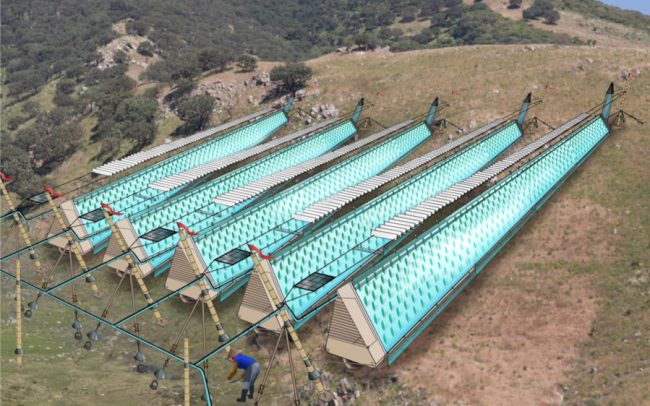
A world-first circular farming system which uses cattle waste to power a shed and grow indoor crops has opened its doors for the first time.
More than 80 members of the beef industry attended the opening of GreenShed at Easter Howgate, an SRUC research farm near Edinburgh.
Martin Kennedy, President of National Farmers Union Scotland, and Kate Rowell, Chair of Quality Meat Scotland, were among the invited guests to enjoy a tour of the new facility.
Funded by the UK Government as part of Phase 2 of the Direct Air Capture and Greenhouse Gas Removal Programme, GreenShed is seen as an important step in the road towards net zero.
It also received funding from the Scottish Government in its feasibility stage.
The event, which was attended by industry representatives from across the supply chain as well as representatives from the UK and Scottish Government and the Scottish Funding Council, also included tours of GreenCow and GreenSheep.
Sascha Grierson from SAC Consulting then chaired an insightful panel session on the Carbon Story of Beef which included Professor Steven Thomson from SRUC, Seamus Murphy from SAC Consulting and Julian Bell from AgreCalc, as well as Lisa Hislop from NFUS and Amanda Watson from Morrisons.
Professor Carol-Anne Duthie, who leads the GreenShed project, said: “Beef farming is facing greater pressure than ever before to reduce its environmental impact while also maintaining or increasing productivity as well as improving its broader sustainability.
“The GreenShed consortium offers a blueprint for the future of low-carbon circular beef farming. It’s a brilliant example of innovative collaboration between research and industry and we were delighted with the levels of engagement on the day.”
Led by SRUC, the other GreenShed partners are the University of Strathclyde, Galebreaker, UKAgriTech Centre, No Pollution Industrial Systems, Organic Power Ireland, Saturn Bioponics and N2 Applied.
The views expressed in this Member News article are the author's own and do not necessarily represent those of Agri-TechE.
As part of our “Back to the Future” project, we’re asking Agri-TechE members to reflect on how the agri-tech industry has evolved over the past decade and to share their vision for the next ten years. By compiling these insights, we aim to create a powerful outlook on the future of agriculture, a compelling call to arms for the industry driven by the diverse perspectives of our community.
This submission is part of the collection of reflections and predictions from our members, offering unique perspectives on the industry’s past milestones and future directions. Each contribution adds to a broader dialogue about the innovations and challenges that will shape the next decade in agri-tech.
What is the biggest game-changing development you’ve seen in the last 10 years in agricultural engineering?
It’s actually quite difficult to name one “single” game changing technology in agriculture in the last 10 years. What we have seen however is multiple technologies come together and become much more embedded in mainstream agriculture. The technologies I’m referring to are things like GPS guidance, on-board crop sensing, machine/farm office connectivity, sophisticated electronics and software systems on machines, and all the available data it brings. The coming together of this tech has really enabled “precision farming”. I don’t believe that the value proposition promised by this in the early days has actually been realised yet. There are significantly more gains to be made from efficiency and precision techniques applied to all aspects of the various process. One area I do continue to follow closely is min/zero-till and cover crop sowing techniques; there have been some good steps forward in this area, which are giving some great results by reducing input costs and maintaining the soil structure.
What do you think has been the biggest pinch point to the industry progressing – what needs to happen to tackle this and who should lead it?
There seems to be no shortage of money going into agricultural technology. Industry is making huge investments to create products and services to address the balance between food security, climate change and increasing farm profitability. However, there is a lack of leadership around systems thinking. This is impacting the end user, i.e. the farmer in two ways: 1. The deployment of technology on farms is too fragmented leaving the farmer to be the “systems integrator”. It needs to be more joined up so it becomes reliable and easy for the farmer to use, therefore supporting their day job, as opposed to becoming it! Data is a good example of fragmentation. 2. Because the technology is fragmented, the value proposition is hard for the farmer to obtain. Farmers then struggle to see the payback and therefore won’t invest. History shows us that if the technology is right and the payback is clear, the farmers will invest.
What do you think is the most exciting thing you’ll see in this area in 10 years’ time?
I talk to a lot of students, and I tell them all that they are starting their careers in a really exciting decade. There is a technology explosion in agriculture, even your traditional equipment such as tractors and combines will undergo significant change as we see the move away from fossil fuel to things like hydrogen and electric drive technology. The rise of autonomous solutions such as driverless tractors, drones, robotic fruit pickers, etc. is coming, there are some fantastic smaller scale solutions on the market and larger ones to come. I can see some of them have a real place in carrying out the labour-intensive jobs, whether its large scale tillage operations or smaller bed weeding/sowing work. Things like autonomous mechanical weeding systems are reducing chemical usage, along with spot spraying technology. I’m not a subscriber to the vision of tiny swarming field robots, I don’t think we could ever achieve the work rates necessary, especially when you visit the vast acreages of the US, Australia and Eastern Europe. Technology such as crop/soil sensing and vison techniques are really opening up creativity which will help with efficiency and productivity.
What is your vision of the future and how will IAgrE be responding to that?
IAgrE is well placed between industry, academia and research and we can help drive that discussion around the joined-up solutions we need to enable sustainable farming systems. Agricultural engineers are actually very good systems engineers, just think of the disciplines you need to be one; mechanical, electronic, civil, chemical, etc. and the variables that have to be considered. IAgrE’s prime objective hasn’t changed in 86 years, even back then it contained the phrases “application of technology” and “sustainable land-use”. We will continue to offer our members content on future technology development and networking opportunities, whilst promoting careers in the sector and ensuring education is right for industry. There has never been a more exciting time to be an “engineer in agriculture”, and if you think about that description, often people don’t realise that actually you’ve become an “agricultural engineer”!
Charlie Nicklin CEng FIAgrE
Post Overview
This story has been submitted by an Agri-TechE member.
The views expressed in this Member News article are the author's own and do not necessarily represent those of Agri-TechE.
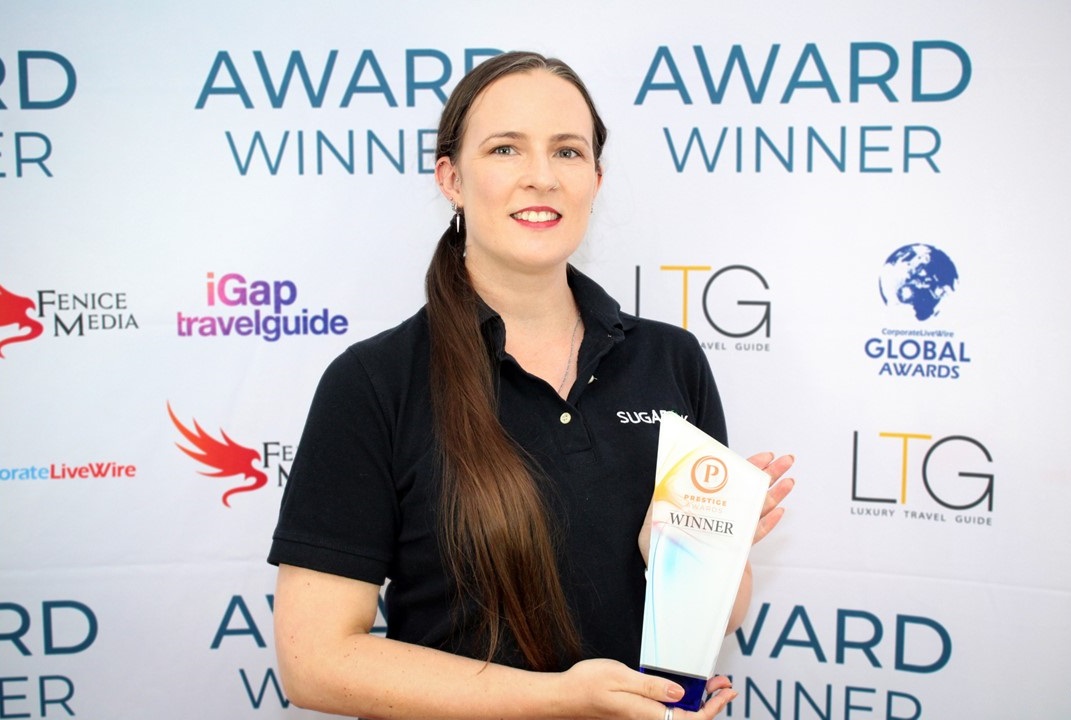
We did it again! After celebrating our recognition as a top biostimulants solutions provider, our chemists and plant biologists have added another accolade to the trophy cabinet – the CorporateLiveWire Innovation & Excellence Award 2024 for Agriculture Chemical Manufacturer of the Year! Our mission is to develop novel approaches to crop stimulation, and then partner with GTM channels to address unmet needs of farmers. It seems the industry experts who nominated entries to this competition agree that we are going to shake things up!
So, what’s so special about our approach? Well, traditional biostimulants are typically extracts from algae or plants or acid-based formulations products from organic waste. As mixtures of ingredients, it can be difficult for manufacturers to optimise their performance. We’re developing single-molecule formulations whose active ingredients are inspired by the powerful molecules found naturally in plants and whose mode-of-action are well understood by us. In this way, we aim to deliver more precise and effective crop stimulation.
For example, our first AI, a modified version of trehalose-6-phosphate (T6P), can boost wheat yields by up to 22%! That’s a massive jump compared to the 2-5% improvement offered by most traditional biostimulants. By tweaking the natural molecule so it’s easier for plants to absorb, our chemists and biologists have found a way to unlock its full potential.
Working the Agri-TechE network:
We are building SugaROx to become a world-leading venture focused on the science of crop stimulation and early stages of product development. Our first product is 2-3 years away from launch. Through a B2B business model, we want to partner with go-to-market channels to accelerate R&D and sell our products to farmers in the UK and key agricultural countries.

 Sentry Ltd


 Anthology





 Manufacturing Technology Centre (MTC)








 Norwich Research Park




 GreenStalk


 Frederick Hiam ltd

 ADAS
ADAS

 Innovation Agritech Group

 SRUC
SRUC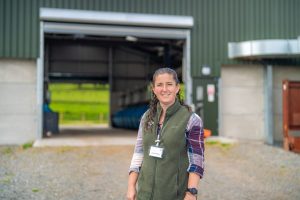



 Institution of Agricultural Engineers (IAgrE)


 SugaROx