Fintech, space-tech, agri-tech – Citicourt CEO excited about the potential

Agri-TechE
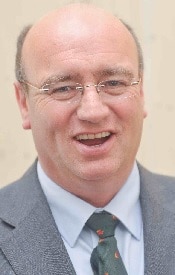
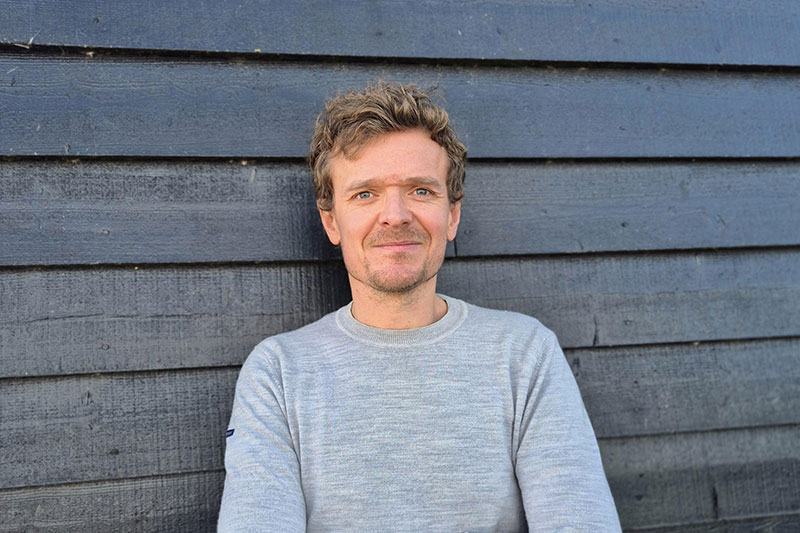
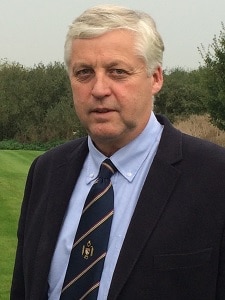
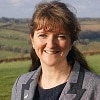
Jodi Bartin, Citicourt CEO

The intersection of different technology sectors with agriculture piqued the interest of Jodi Bartin, CEO of Citicourt & Co Limited, to the extent that the financial advisory firm has become involved in the Agri-TechE ecosystem and has recently joined as a member.

Jodi is chairing the Focus on Agri-Finance event on 18th May 2022. 

Current trends

Jodi talks about the current trends in investment.

“Our background is in finance for technology, particularly in space-tech and complex areas such as cyber security and deep-tech. It was while working with Dominic Keen of the Britbots EIS Fund that we saw the huge appetite for robotics, automation and AI coming from agriculture.

“Similarly, we have seen during our deals in space-tech – particularly in Earth observation – how satellite imaging and positioning is being adopted on-farm to great effect.

“My colleague John Ballard runs an estate in Norfolk, and he suggested that we get more involved in Agri-TechE , so I am delighted to be chairing the ‘Focus on Funding’ event.”

Companies then realise they have other options 

“We mostly work with institutional investors, so for funding we are looking at companies over £5m, however I am happy to advise companies of all sizes and help point them in the right direction.

“Companies we work with are typically looking to raise funds for growth, sell a business or buy another firm. We help to finance companies through raising equity or debt financing and provide full end to end management of merger and acquisition processes We generally start off by having a look at the company’s aspirations and business plan and give the owners some guidance; it is not unusual for someone to come in thinking they want to do one thing – to sell up, for example – and then realise they have other options after they have spoken to us.

Relevant strategic expertise

“Angels and other investors looking at early-stage companies usually prefer to work directly with the entrepreneurs, but we do also bring angels and family offices into our deals, so we have a good network of investors with relevant strategic expertise and interest in agri-tech, so that they bring more than just cash to our clients.

“This finance is also coming from overseas, with family offices in the Middle East showing interest in UK agriculture, particularly where there is something tangible to see.

“We work with a pan-European accelerator for space-technologies and the Earth observation sector is growing rapidly, particularly in low Earth orbit satellites, where the costs have fallen recently. This is where we are seeing some of the most exciting technologies emerging from start-ups such as Constellr and Agricolus.

Great potential for satellite enabled agri-tech

“I see great potential, particularly in automation and Earth observation, for improving knowledge flow and increasing efficiencies

“Farmers are already using satellite-enabled technologies, so bringing these space-tech entrepreneurs together with those with a domain knowledge of the challenges of agri-food production creates a real opportunity for Agri-Tech.”

Focus on Agri-Finance’ will take place online on 18th May 2022. For more information and to book your place visit the event page.

Wheat crisis opens door for huge indoor farming potential, says AgTech specialist

Agri-TechE

As wheat prices continue to surge amid a deepening conflict in Ukraine, lasting damage threatens an already weakened global food system. Governments must urgently prioritise food security through championing indoor vertical farming as a sustainable, long-term solution, urges leading AgTech company Light Science Technologies (LST).

As grain supplies are impacted, as well as disruption to natural gas and fertiliser markets, a lack of bread is just the tip of the iceberg in terms of their impact. Increased hunger, an escalating refugee crisis, soaring prices and climate change now pose much bigger threats, which some would argue are bordering on catastrophic.

The International Food Policy Research Institute estimates that combined, Russia and Ukraine exports represent 12 percent of all the food calories traded in the world, with the two countries accounting for almost a third of global wheat exports. There is no current contingency plan to bridge what amounts to a colossal gap in international food production.

What this equates to is an urgent need for a rethink on food – to find an alternative method of farming to reduce reliance on the way this vital global commodity is sourced. While indoor vertical farming is predominantly used to grow increasing varieties of leafy greens, salad and fruit crops, can this sustainable growing method change the world’s ability to grow wheat? In short, there is at least one AgTech industry expert who thinks so.

“Although more needs to be done until indoor wheat farming becomes the norm, there have been some encouraging signs in proving that this is a viable, sustainable method that can help solve some of these major issues we’re currently facing with wheat shortages”, says Simon Deacon, CEO and founder at LST. “A recent study modelled wheat growth in a 10-layer, indoor vertical farm. The study predicted that an indoor vertical farm could potentially produce an enormous annual hay yield of 1,940 tonnes – up to 600 times greater per hectare than current farming methods. And that’s not all – the study further predicted in a 100-layer farm there is the opportunity to produce a staggering 19,400 tonnes of hay per year.

He continues: “We are also harnessing the expertise of one of our plant scientists who as part of her PhD in Plant Physiology is specialising in wheat photosynthesis, identified as a key target for improving future wheat yields and is an important research area.


“Overall, what this presents for the industry is a significant opportunity to not just establish a greater foothold in sustainable food production and food security for the long-term, but move towards a decentralised, localised food system through harnessing innovation in AgTech. It’s an urgent shift in thinking, one that needs to happen now.”


Decision-support agri-tech on show as LAMMA celebrates 40 years

Agri-TechE

“Farming income rose last year by 14 per cent, mainly because of the continuing high level of production, high returns on some crops, and the fact that the cost of all inputs rose less than the value of sales.” 

LAMMA 2022What were you doing in 1982? According to Hansard, British farmers were warmly welcoming renegotiation of the Common Agricultural Policy (CAP).

Peter Walker, who was to become the longest serving member of the Thatcher administration, was Minister of Agriculture, Fisheries and Food (remember MAFF?). He reported that:

“Since this Government took office in May 1979, the industry has benefited from successive devaluations of the green pound and from the favourable Community price settlements which we have negotiated.”

How the world has changed! 

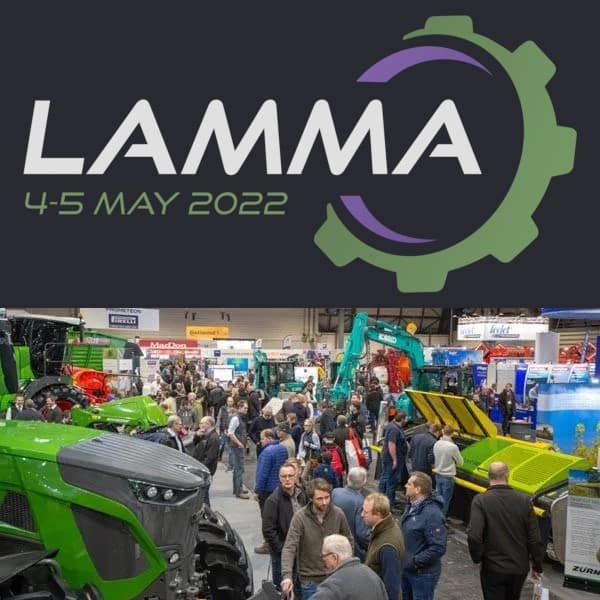
LAMMA is celebrating its 40th birthday at the Birmingham NEC, where some of the latest machinery will be on show, from combines to tractors, for arable and grassland – exciting new machinery will be on display for farmers to literally kick the tyres and assess viability and return on investment on their farm.

Arguably, one of the most interesting trends in machinery has been the integration of other technologies – GPS navigation, AI-enabled analysis of data collected, the introduction of aerial imaging and sensing.

This is evidenced by a number of Agri-TechE members attending LAMMA, the first of the big trade show of 2022 – expect weather stations, agchem solutions, drone technologies, on-farm data platforms and more.

Below is a taster (if you are a Agri-TechE member at LAMMA do share your news)

Bayer strategic partnership with Microsoft GPS data transmitted to tractor
The GPS data are transmitted to the systems in the tractors that work the fields. Image author: Bayer AG

Bayer Crop Science (Hall 11 Stand 11.220) is to show FieldView, a digital farming platform that allows users to collect, visualise, share and analyse their farm data, all from a single platform. The tools provide support for choosing next year’s varieties, understanding the performance of a particular product, or managing harvest.

Crop4Sight (Hall 8 Stand 8.726) offers a tool that accurately predicts the development of a potato crop from first emergence, enabling growers to better plan crop inputs, labour, burndown, irrigation, and storage.

Farmers are also able to benchmark their crops against other UK growers of the same variety and manage customer expectations around size fractions, quality, and contract fulfilment.

A new feature is a live water management system that enables growers to react immediately to changes in weather conditions.

The Hutchinsons soil pit at Cereals 2018

Hutchinsons (Hall 10 Stand 10.712) will be showing tools for carbon management. TerraMap Carbo is the first carbon mapping service to provide an accurate baseline measurement of both organic and active carbon in the soil.

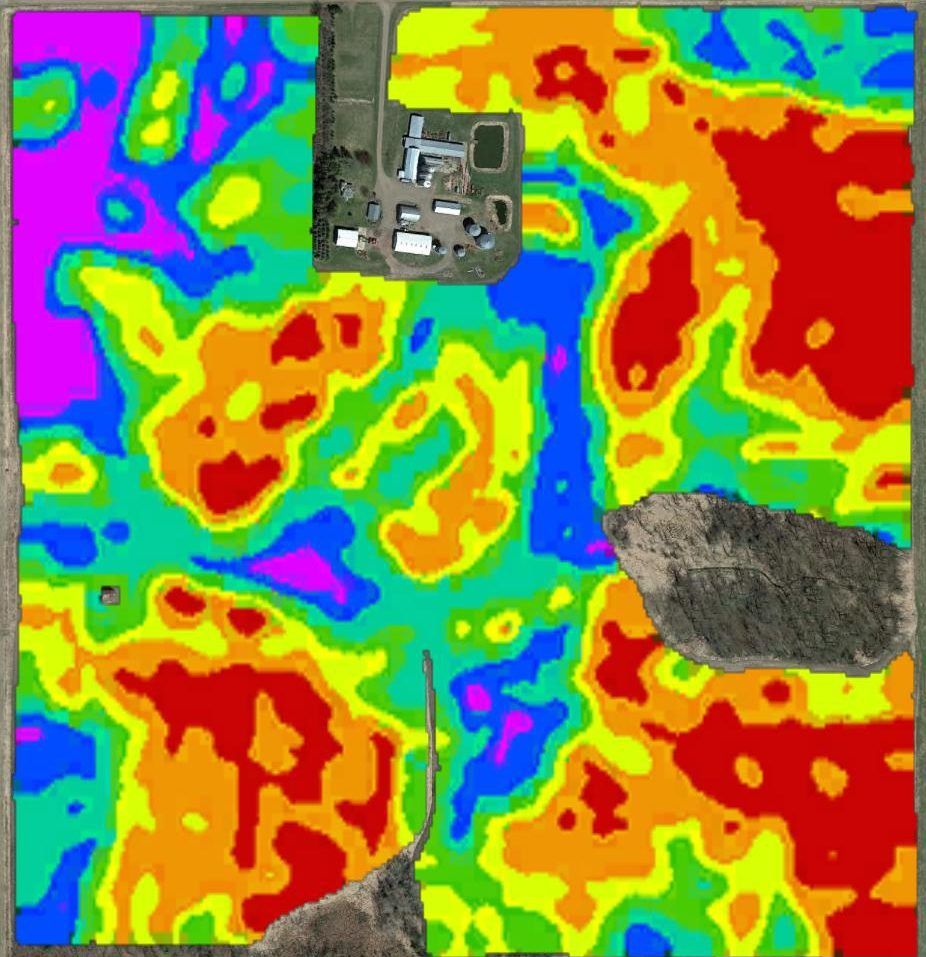
Within the Omnia Carbon management tool it is now possible to create different rotation scenarios from types of cropping and variety to stewardship and management practices and see first-hand the projected CO2 impact and financial performance for each scenario.

Agri-TechE members also exhibiting at LAMMA include:


More information about LAMMA can be found at lammashow.com

Note: quotes from HC Deb 24 March 1982 vol 20 cc964-1045

Agri-TechE Event Feedback

Agri-TechE

Event Feedback

Please enter a number from 1 to 10.
What were the best things about the event?
(For example: event structure, time for networking vs sessions, your favorite features, location, venue, catering, anything you disliked or would change?)
Leave this field empty to make it anonymous

Diego Durantini joins Agri-TechE as Interdisciplinary Manager

Agri-TechE
Diego Durantini
Diego Durantini joins Agri-TechE in a new role as Interdisciplinary Manager

New technologies for earth observation, automation, sensing and prediction are just a few of the innovations that are revolutionising agri-food production and attracting fresh thinking into the sector.

To further encourage innovations with potential for application in agriculture, and to help even more organisations with exciting technologies explore the opportunities that the sector offers, Agri-TechE is expanding its team and has appointed Diego Durantini in a new role as Interdisciplinary Manager.

Historically, agriculture and horticulture innovations have resided in companies developing new agchem, undertaking crop or livestock breeding programmes, or producing machinery to manage farms, crops and livestock more efficiently. Today the landscape is more complex, with many of these organisations diversifying and new entrants exploring the market, bringing their technologies proven in other sectors as varied as fintech, defence or automotive.

An exciting time for Agri-TechE

Agri-TechE has been instrumental supporting the growth of the agri-tech innovation ecosystem and its director, Dr Belinda Clarke, says that Diego’s appointment reflects the next step in the evolutions of both the industry and Agri-TechE : “Diego is joining us at an exciting time and his expertise in business management and deep knowledge of the opportunities will be hugely beneficial to our members and those companies exploring the agri-food market for the first time. We are delighted to have him on board.

“We have supported the growth of the agri-tech ecosystem for over eight years and many of the innovations that we helped profile just a few years ago are now in operation on commercial farms – such is the speed of adoption when the technology is appropriate.

“Domain knowledge is vital, so as the sector matures and consolidates, we are now looking to leverage our expertise internationally and with non-traditional players to provide a gateway to the industry. Diego’s expertise will add value to this activity and his breadth of knowledge will be greatly appreciated.”

Diego comments: “I have always had a strong interest in the intersection between technology, industry and agriculture, and my MBA was focussed on problem-solving.

“I am very excited about joining the Agri-TechE team and working in such a diverse and evolving sector.”

Using advanced tech to boost productivity

Diego has had a life-long interest in agriculture. As a child in rural Italy, his school had an experimental farm and agricultural science was integrated into the curriculum. His friends included the son of one of the largest privately owned farms, and holiday jobs on a range of farms have provided a context for his academic interests.

He worked for many years in plant breeding in Germany, with interests in vegetables and ornamentals. He led the molecular breeding research programme for Ernst Benary Samenzucht GmbH, the market-leading producer of begonias, and established customer relationships internationally. As part of his role, he looked at using advanced technologies to create efficiencies within the organisation while boosting productivity, an interest that has continued to this day, using knowledge gained through his MBA to solve real world problems in food manufacturing.

Diego’s projects have included increasing the milling efficiency at the ingredient manufacturer Condimentum, where he introduced visual stream mapping to the mint production line. This operations model helped increase production and generated significant savings for the company.

Adding value 

In previous roles he developed business plans for early-stage companies exploring bio-lubricants, biocontrol and advanced pea breeding, looking particularly at how to add value to existing processes.

Working within the John Innes Centre business development office, he had a key role in identifying potential industry collaborators for research projects.

Soft landing for newcomers to the sector

His new role as Interdisciplinary Manager will build on these experiences to support existing members – big or small – and provide new-to-agriculture businesses with a “soft landing” to the sector and offering strategic insights to help build their confidence in agri-food as a successful new market opportunity.

SucklerClub unlocks breeding knowledge to succeed
Agri-TechE

SucklerClub unlocks breeding knowledge to succeed


Spring calving is in full swing as autumn herds are in the midst of weaning, and the precision livestock network, Breedr, is busy helping farmers to boost their productivity. It has launched a practical program of breeding guides and webinars to complement the free performance recording tools in its mobile and web app.


Aligned with AHDB Key Performance Indicators (KPIs), Breedr’s SucklerClub has published comprehensive calving, weaning, service and pregnancy diagnosis (PD) guides. These show how farmers can easily measure vital metrics like age at first calving, calving ease and percentage of calves weaned, and then take action to improve genetics, productivity and profits.


“We have drawn on expert advice from across the industry to create practical, impartial guides for producers,” says Ian Wheal, founder of Breedr. “Collecting just a few data points at key times of the year can provide a wealth of information to drive genetics and culling decisions. Any farmer who signs up for the free app will be sent an A3 wall planner to show them exactly what to do at each phase of the cycle.”


AHDB has supported the project, joining Breedr to produce three free webinars – on calving, weaning and PD, with service to follow in April. Sarah Pick, knowledge exchange manager at AHDB, is sharing theory and best practice with Chris Freeman from Breedr demonstrating how to capture and analyse performance in the Breedr app.


Key objectives which Breedr can help farmers to meet include calving heifers at two years – saving £43 per heifer for every month delay – and maximising weaning weights, which in a 100-cow herd would increase output by nearly £2,000 for a 10kg average rise.


According to Rebecca Small, animal health and welfare scientist at AHDB, weaning should be led by feed supply and cow condition. “At 200 days calves are getting 75% of their nutritional needs from somewhere other than milk.


“The timing to wean can be led by feed supply and cow condition. If body condition score is starting to drop then farmers might consider weaning a bit earlier. Alternatively, if the cow is looking over fat, keeping the calves on a little bit longer can help pull that back.”


SucklerClub member Charlie Beaty – who farms in partnership with her father and uncle at the Dairy Farm near Coventry – will be charting her journey in managing their 85-cow suckler herd. They started using Breedr last year in a drive to boost efficiencies and adapt to changing farm support payments. As part of this, Ms Beaty is planning to use the SucklerClub guides and hopes they will help with the overall transition to a digital management system.


“We’d been looking at going more digital for a couple of years, but most tools we found couldn’t be used across three phones like we needed,” says Ms Beaty. “Most also felt quite clunky. We signed up to Breedr in 2020, but it wasn’t until calving last year when we really started to use it to input information, make notes, and create our own dataset,” she adds.


“We want everything to be at our fingertips, and the app has already made information more accessible. It makes it easier to spot under-performers, as we have the data to hand 24/7.”


SucklerClub member Rob Halliday and his wife Louise have 70 predominantly Aberdeen Angus suckler cows at Hepwell Farm, Liskeard, Cornwall, and are breeding for a more even herd and strong growth rates. Weighing regularly, Mr Halliday records everything in the app and selects the strongest performers to breed from.


“We’ve been using dam measurements to decide which heifers to keep: The offspring from the best are growing at double the rate of the worst,” he says. “The AHDB KPIs are very useful. There’s definitely value in information sharing.”


  • Farmers can join SucklerClub by downloading the free Breedr app at www.breedr.co. Breedr is also offering a 25% rebate on Tru-Test scales and equipment with its new Get Weighing Grant. For more information visit www.breedr.co/shop or call 03300 436327.


Royal Norfolk Show 2022 – Innovation Hub

Agri-TechE

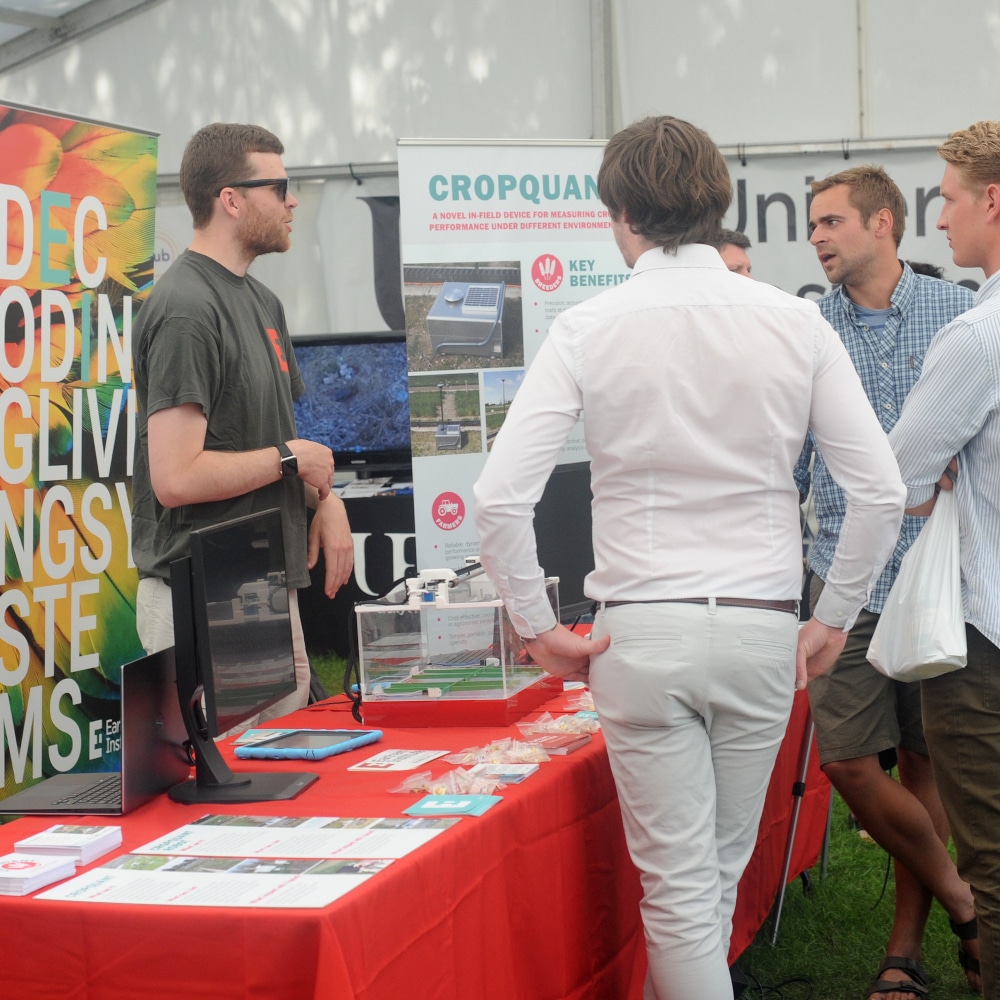
The Royal Norfolk Show was established to showcase new farming practices and technologies – so we are looking forward to contributing to its 175th anniversary celebrations with an Innovation Hub showcasing today’s emerging agri-tech.

Join our networking event ‘President’s Time for Tech’ on Wednesday 29th from 2pm-3pm to meet with exhibitors as well as Show VIPs, industry experts and Dutch delegation.

Defra Funding: Farming Innovation (multiple competitions)

Agri-TechE

Farming Futures R&D Fund – Theme 2: Sustainable proteins (Expression of Interest)

Opening Summer 2022

This competition is for UK businesses and research organisations who want to work on longer-term projects that will benefit farmers, growers or foresters in England.

Projects should focus on reducing emissions in agricultural practices and adapting to a changing climate.


R&D Partnership Projects

If you have a new farming product or service you want to develop, you can apply to be funded as a ‘Research and Development (R&D) Partnership’ project.

It’s your chance to pitch something that could improve farming methods and help the environment.

You need to be a business registered in the UK to lead a project. Research organisations and other businesses, including farmers, growers and foresters, can collaborate as part of the project team.

Large R&D Partnership Projects 

Theme 1: Climate smart farming

Opens 30 March 2022

Closes 29 June 2022

You’ll need to collaborate with at least one other business or research organisation (Agri-TechE can help members identify partners). Projects can last up to 4 years and need to cost between £3 million and £6 million.

Apply here

Small R&D Partnership Projects

Round 2 opening Autumn 2022

You’ll need to collaborate with at least one other business or research organisation (Agri-TechE can help members identify partners). Projects can last up to 4 years and need to cost between £3 million and £6 million.


Research Starter Round 2

Opens 23rd May 2022

Closes 6 July 2022

If you, or a group of farmers, have an idea you think could improve farming and solve a long-term practical challenge, you can apply for funding for a ‘Research Starter Project’. The funding is for farmers, growers and foresters to explore ways to bring benefits across the whole farming community. You’ll be able to investigate a problem you know exists to work out what could best be done about it.

£28-56k for a project length of up to 1 year. UK Businesses can lead these projects.

Apply here


Feasibility Studies Round 2

Next round opening Autumn 2022

If you’ve been researching an idea that could improve farming, you can apply for funding to check if it will work in practice. The ‘Feasibility Studies’ competition is for projects that cost between £200,000 and £500,000.

Projects can last for up to 2 years and should help you decide if it’s worth investing more in the development of a product or service.

You need to be a business registered in the UK to lead on a ‘Feasibility Studies’ project. Research organisations, farmers and growers, and other businesses can be part of the project team as collaborators.


Find out more information on the Farming Innovation Programme page.


SHAKE Climate Change Cohort 4

Agri-TechE

Cohort 4 for SHAKE Climate Change (now in its final investment year) is open for applications providing:

  • seed capital funding for entrepreneurs and start-ups in food and agriculture with a positive impact on climate change
  • up to £100k of funding available per venture as a social investment into a UK company (the plan can be international)
  • 6 months of business plan training and mentoring / 12 months of business aftercare funded by the programme

Applicants should preferably have an innovative idea, early thoughts about their plan and climate effect, know who would run the business, confidence they can access any IP.

So it is of relevance to later stage, in-scope innovation opportunities that may be looking for start-up seed funding or have recently spun-out and seeking seed co-investment.

We require participation in all phases in order for us to provide you with: a) a peer-to-peer learning network: b) time with your scientists and mentors c) capability to monitor, assess and demonstrate impact

Company funding scheme

Shake Climate Change uses a return on investment venture funding scheme. Start-up funding is provided in Phase 3 of the programme in the form of a convertible, interest-free loan. Equity investments may also be considered, although only for companies that are more advanced or require capital to overcome short-term, growth barriers. In such cases, the Programme will call on external investment advice as needed to agree companies’ valuation and suitable equity investment structures. Prior to entering Phase 3 all the participants in the programme will be asked to review and approve to the terms of an investment agreement.

Eligibility to enter the Entrepreneur programme

Eligible start-up companies must meet two criteria: 1) Start-up companies that target the agriculture sector with an innovative idea and new products and services that deliver a tangible, positive impact on climate change. 2) be incorporated in UK (registered with Companies House).

Terms and conditions of the financial support

The financial support provided by the programme is to cover start-up operating cost such as the cost of building a prototype demonstrators, outsourcing software, hardware or other development; conducting customer trials and interviews; patent filing; marketing related cost; staff costs, etc. No additional grant is provided in support of salaries or any other expenditures. These costs will have to be managed and funded from the single funding allocation provided to each team or individual funder.

Confidentiality

By summiting your application to Shake Climate Change (SCC) you agree to share your application with SCC staff and the Programme Steering Group (SGF) and Investment panels (IVP) members (both jury members). All the above mentioned have signed a Non-Disclosure Agreement.


Extended to 20th May


Here is the link to the SHAKE application: http://www.shakeclimate.org/.


Hierarchy of (Agri-Tech) Needs

Agri-TechE Blog
Agri-TechE

Humans have a well-established “hierarchy of needs” which dictate our behaviour. And, with apologies to Maslow (who came up with the theory), discussions this month have inspired a new version – specifically around agri-tech adoption by farmers.

Maslow’s “Hierarchy of Needs” states that our most basic need is to be fed and clothed followed by being safe (followed by relationship needs, esteem and then self-actualisation – or realising all you can be).

 Knowledge, access to finance and certainty

Two Agri-TechE members – NFU Mutual and Lombard – have recently been asking the question of a large cohort of farmers around barriers to adoption and implementation of new technologies in the industry.

Nearly half of survey respondents in a new report by NFU Mutual cited lack of knowledge as the main reason preventing them from investing in agri-tech. A third replied that lack of access to finance was their main barrier.

This was backed up by a straw poll during a recent webinar by Lombard aimed at helping farmers think more about agri-tech on their farms, where half of the audience cited cost of implementation, and a quarter saying they “didn’t know where to start” as their constraints.

In both surveys, uncertainty featured as well the NFU Mutual survey found 17% were too uncertain about the future, and the Lombard audience either didn’t know the benefits of the tech (10%) or they were worried the technology would fail.

Although these were relatively unscientific surveys, the outcomes shouldn’t come as a surprise. But they are a clear flag to policy-makers and funders of the needs of the industry.

Benefits are understood, implementation less so

Agri-TechE is here to help tackle the knowledge issue, but as we know, every business is different and risk appetite varies across the industry. However, as further questions in the Lombard survey revealed, a massive 90% of respondents were “somewhat” or “very” confident that technology could help their business in the very near future.

Despite this, the NFU Mutual survey revealed only 14% planning to invest in agri-tech. Drivers to encourage people to invest further, Lombard’s audience suggested, include labour shortages, availability of grant funding, being more profitable and responding to the sustainability challenge – with nearly 60% of people saying all these would trigger more investment decisions.

Many drivers for innovation

In fairness to the public purse, there are currently grants available to help de-risk acquisition of new technologies for farmers. And there is also support for farmer-led R&D projects (the results of one of Innovate UK’s competitions here are soon to be announced).

Based on our experience over the years, we’d like suggest that“Ability-To-Gain-Value-From-Data” and “Understanding-The-Business-Model.” are added to the Knowledge, Finance, Certainty pyramid, once those basic needs have been met.

Over to you!

Young Innovators’ Forum – Visit Expression of Interest Form

Agri-TechE

Young Innovators' Forum - Attendee Form

For any individuals wanting to attend any Young Innovators' Forum events. Please note: this does not guarantee you a place at the event, we will confirm with you if you have a space within 3 days of receiving this form.

  • This field is for validation purposes and should be left unchanged.
  • Please enter a valid email address so that we can confirm your place via email.