Royal Norfolk Show 2022 – Expression of Interest Form

Agri-TechE

Thank you for your interest in participating in the Innovation Hub at the 2022 Royal Norfolk Show, delivered in partnership with the Royal Norfolk Agricultural Association.

Please complete the form below with as much detail as possible, a portfolio approach will be taken with regards the selection of organisations invited to take part in the Hub, based on market readiness, geographical location, technology scope and anticipated quality of the interactive / visuals. Please also note the terms and conditions at the end of this form.


TERMS AND CONDITIONS

The Royal Norfolk Show is a flagship activity of Agri-TechE along with the Royal Norfolk Agricultural Association (RNAA); this is the 7th Innovation Hub we have hosted and we are keen to showcase high profile, good quality activities that will attract the interest of farmers and growers, as well as the media.

  1. Full RNAA ‘Trade Stand Operators Terms and Conditions’ can be found on their website which includes cancellation information.

  2. Please note your stand must be staffed at all times throughout the Show. Please allow enough people supporting your stand to ensure this is the case.

  3. Each exhibitor will receive 2 tickets and 1 car park pass per day. Any additional tickets will need to be purchased from the RNAA.

  4. The Innovation Hub is on the agenda of visiting dignitaries to the Show. We may not hear until the last minute the specific timings of these visits, especially politicians. Please therefore ensure you will be on your stand for the time of the visitors, even if it is a last minute call!

  5. All stands must be set up by 8am on the morning of Day 1 of the Show and may not be broken down until after 4.30pm on Day 2.

  6. All press and media activities will be handled via Holdsworth Associates on behalf of Agri-TechE , and may also feature on the RNAA’s own media / promotion. You are therefore asked to cooperate as fully as possible when asked to provide information for press releases and other interviews etc. We usually also get visits by the print and broadcast media during the Show – again, please ensure you are around when they need to talk to you.

  7. You are encouraged to make your stand as enticing and exciting as possible. Not only will this attract the press, but the more there is to show and talk about, the better the reputation of the Hub and the more footfall we will get.

  8. You will be asked for a full risk assessment of your stand; we will send out a form for this, please complete it and return it when requested.

  9. The Hub is located with other stands of direct interest to farmers, which is our main target audience. That said, we do sometimes get visits from the public and schoolchildren. You are advised not to give out anything that is too attractive to small hands, and also to be mindful when designing your stand not to have anything that can cause damage to excitable unsupervised Small People. We advise against giving out sweets, pens etc – they will take all your valuable marketing resources within seconds, then word will spread that you are giving out cool freebies and you’ll be inundated!

  10. Please note we have limited options for secure storage overnight for equipment. We can make some provision but please let us know in advance if you have anything of real value which is a security risk which will need secure storage between Day 1 and Day 2.

  11. An administration fee (£85+VAT) is charged by the Royal Norfolk Agricultural Association to those who are exhibiting with a 3mx2m stand. If you need wifi on your stand, please note this will be charged separately.

  12. Sadly, we cannot guarantee that all applicants will be offered a stand in the Hub. Applications are usually over-subscribed and we only have a limited amount of space in the Innovation Hub. We will, however, bear you in mind for next year.

  13. Please complete this proforma by February 18th 2022. We hope to be able to confirm the successful organisations by COP on February 25th 2022.

  14. Any questions, please email fiona.rust@agritechenew.wpengine.com

  • This field is for validation purposes and should be left unchanged.
    https://www.dropbox.com/scl/fi/cbpfkb11xwjj5ifk7nit8/Terms-and-Conditions-Trade.pdf?rlkey=dbzvwlqjd5xt3f39hjrkcgi9j&dl=0

We welcome Erica and Allie to the team

Agri-TechE

We are delighted to have two new people joining our team at Agri-TechE : Allie Rukin and Erica Hawkins.
Allie will be an Events and Admin Assistant working closely with Fiona and Becky. Allie joins us from the equestrian clothing company EQUUS, where she was the customer and operations team leader.

We asked Allie about her interest in agriculture.
Allie Rukin Agri-TechE
Allie Rukin

“I have always had a passion for agriculture and will always be out on a farm as much as I can. When I was younger, my mother kept her horse on a working farm and that is where the spark came from. I would either be feeding the lambs, checking out the tractors or helping with the horses.

“Later, I spent time on a citrus farm in Queensland, Australia and learnt all about budding new trees and creating new citrus varieties to suit the climate. It was there that I experienced first-hand the challenges farmers face in extreme climates and how farmers need to be innovators to survive natural disasters and changing climates.

“I was attracted to the role at Agri-TechE because it meant I would be spending time with like-minded people and being part of a team which are leading the way to bring new tech ideas, and share a vision to create positive change for farming.

“I am most looking forward to meeting members and researchers, learning about what goes on behind the scenes. Agriculture is always a topic that is open for discussion when it comes to climate change and I am excited to be a part of a team which enables the chance for change in a positive way.”

Erica is joining us as a Post-Doc placement from the John Innes Centre, as she is part of the FTMA scheme (Flexibility Talent Mobility Award scheme) that offers researchers short-term placements in industry.
We asked Erica about her work at JIC.

Erica Hawkins
Erica Hawkins

“I was working on a project – split between the labs of Prof. Cathie Martin (JIC) and Dr Jelena Gavrilovic (UEA) –  to engineer a tomato to produce high levels of two compounds: resveratrol and pterostilbene. These compounds both have a huge range of beneficial medical properties and I was also investigating the effects this tomato juice would have on humans using a skin model.
“I then joined the lab of Dr David Seung as a postdoctoral researcher to look at how starch is made in wheat.
“Starch is super important for us, it is the main carbohydrate in our diet and can be used in a wide range of industrial processes. Despite this, there are still many  unknowns surrounding how starch is made-particularly in cereal grains.
“By improving our understanding of how starch is made, we may be able to identify targets that would enable us to manipulate starch properties such as shape, size and number of granules and tailor its structure for specific end uses.

Sharing skills between industry and academia

“I am coming to Agri-TechE as part of the FTMA scheme (flexibility talent mobility award scheme), it is designed to help early career researchers, like me, gain experience of industry, and also to share skills between academic and industrial settings.  The short, 3-month placement, in  an industrial setting, gives us the opportunity to learn more about industry in general and gain skills which we wouldn’t be able to in the lab.
“I know of several postdocs who have participated in the FTMA scheme and they have had placements in smaller companies, such as Leaf Expression Systems based in Norwich. There have also been people coming  from other direction – from industry to academia. There is more information about the scheme on the JIC website: What is the Flexible Talent Mobility Award Scheme?

Agri-TechE bridges the gap

“I first heard about Agri-TechE during my PhD, as I participated in a outreach event that had been organised between researchers at the JIC and young farmers. During my time in academia I have seen really amazing science being undertaken at the JIC, and can see the great potential for this science in the commercial setting. However, taking research from lab through to the field can be hard, and there are often a lot of barriers in the way. I was particularly interested in Agri-TechE as they are helping to bridge this gap between academia and industry, and really improve the communication between these two settings to help develop connections and translate science from the lab to the field.
“With this internship I hope learn more about the interface between agri-business and academia and also to develop a great understanding of what and why limitations occur.
“It will be particularly interesting to see this from a different perspective to understand my own preconceptions and the more general academic misconceptions of industry needs. I hope as well, that I can in turn offer a different perspective – as someone who has worked within academia and understands how science within the lab works and progresses.”

Agri-TechE Week 2021 round-up

Agri-TechE

The time for action is now – and Agri-TechE Week 2021 demonstrated that challenge is an opportunity for change.
We heard inspirational stories from farmers, researchers and technologists about innovation in the field and lab that will not only improve efficiencies but also enable us to use fundamental resources, such as light, water and soil in new ways.
Agri-TechE Week 2021 attracted participation from across all time zones, including a presence in the REAP International Café from Abu Dhabi, North Carolina, Singapore, Western States of US, Netherlands and Missouri – demonstrating that there is appetite and funding for agri-innovation across the world coming into the UK.
REAP this year demonstrated the opportunities in the agri-tech ecosystem right now – talk to the team about making the most of them! Increasing fertiliser prices and the ambition to achieve net zero have focussed attention on the importance of good nutrient management – particularly Nitrogen fertiliser Use Efficiency – and its financial and environmental benefits. Recent developments in the tools and strategies that are available to help farmers reach that goal were discussed at the ADAS event. “A collaborative approach is vital,” explained Stuart Catchpole, investment manager at New Anglia, the local enterprise partnership (LEP) for Norfolk & Suffolk.
This event focussed on case-studies of the Eastern Agritech Growth Initiative, including Fielding Farm Cottage and AgriGrub Ltd, and Dr Louise Sutherland discussed CERES, a collaboration between five UK universities and three agricultural research institutes highlighting major inward investment opportunities in the region’s agri-food sector. Robotic Highways is – for the first time – demonstrating multiple robotic systems on-farm, and between them the robots have travelled over 8,000km since March. Amid the huge success remain some technical challenges which were discussed at the University of Reading event. Timeliness is everything, says farmer John Barrett, Director of Sentry and Chair of the Agri-TechE Stakeholder Group. John introduced the eighth REAP, hosted by Agri-TechE , which included a discussion of where agri-tech to manipulate time could improve productivity and reduce environmental impacts. Revisit:
Start-Up Showcase – meet exciting technology companies
Emerging agri-tech – inspirational glimpse at cutting edge research
International Café – funding & support for international expansion
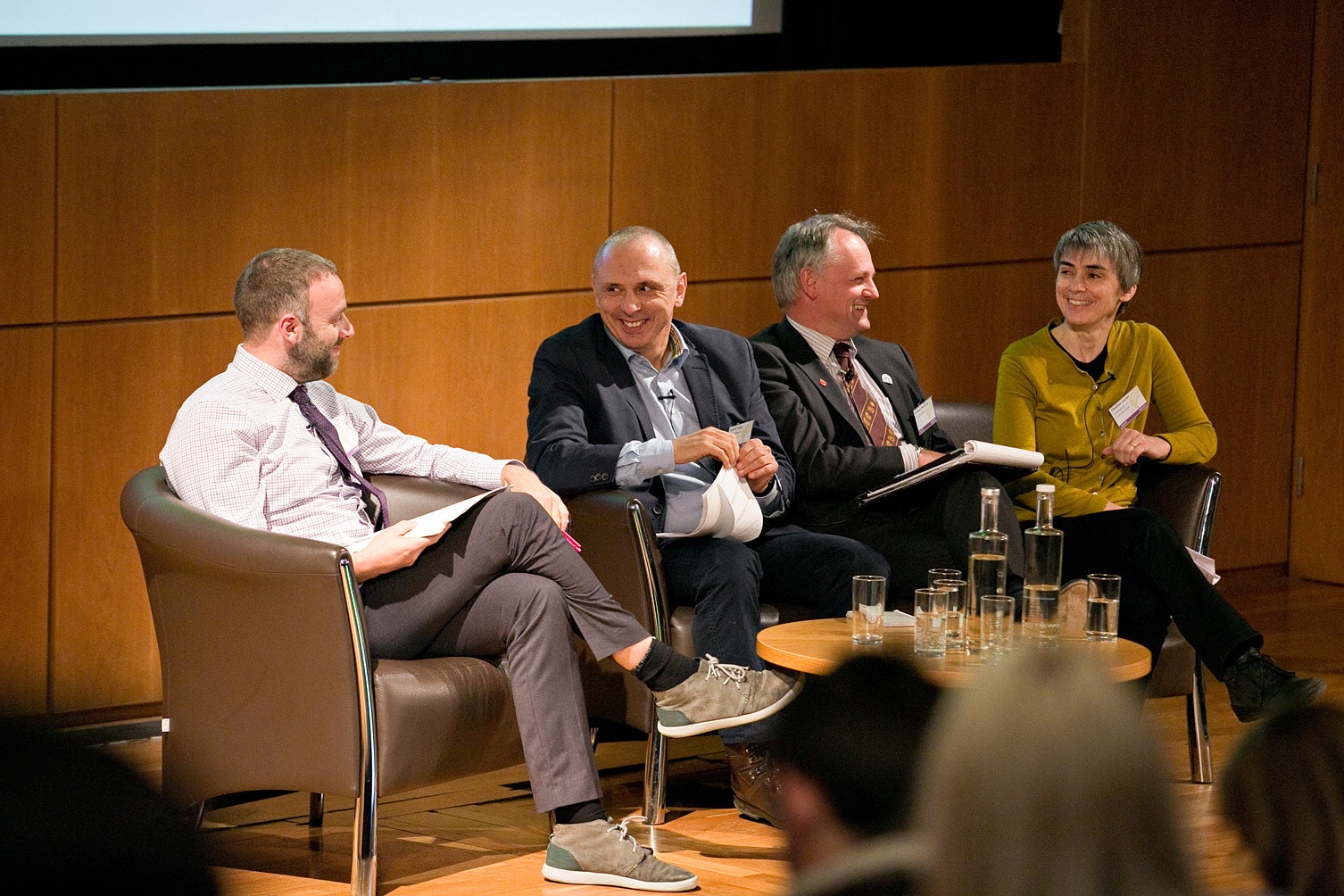
Sofa Session – experts from across the ecosystem provide perspectives on the challenges and opportunities
Thank you to our Exhibitors and Sponsors. “An open science approach enhances data integrity. It fosters transparency, encourages cooperation among researchers to accelerate scientific discovery, and realises the benefits of research much more rapidly,” explained Dr Joe Win of the Sainsbury Laboratory, who joined speakers from Earlham Institute, John Innes Centre and University of East Anglia in this Norwich Research Park event. The “Five Golden Days” in the farming year are becoming easier to spot with historical data, according to Catalyst Farming data scientist Dominic Swan: “The trick now is to ensure we are ready for them.”
This event was hosted by the Royal Norfolk Agricultural Association and showcased a unique partnership of data sharing and benchmarking across four major Norfolk farming businesses “What is the best strategy for Net Zero in agriculture?” The final Agri-TechE Week event of 2021, hosted by Niab, showcased approaches to reducing emissions using innovative tech-based solutions, and different agricultural practices to capture and/or storage carbon and nitrogen and to improve the efficiency of water use. A number of the technologies are currently in development at the Eastern Agri-TechE Innovation Hub near Soham. You can still claim your BASIS points for events you attended during Agri-TechE Week – a total of 13 points were on offer so make sure to claim now on our website.
Many of our events attract BASIS points. If you are BASIS registered, you can also collect 2 points (up to a maximum of 8/yr) for receiving our newsletter and all staff in our member organisations can claim 2 points/yr for membership.To claim your BASIS points for the newsletter, use reference  CP/111935/2021/g on the BASIS website.

In the Beginning – there is Emerging Agri-Tech

Agri-TechE
At REAP 2021 we heard first-hand from scientists about how they hope their research will make a difference in the industry. We asked all our speakers to share their discoveries, based around a specific date, time or event that has inspired their work.

Click the links below to read more about their work.

Breakfast:
A good breakfast sets you up for the day…

…it also provides energy in a timely manner, just like nutrient additives do for crops. But can the next generation of nutrient pellets also help us move toward net zero?

1978:
The summer of flares and disco glitz…

… also saw the first steps toward facial recognition for humans. Fast forward 30 years and researchers are applying this technology in sheep to better understand their behaviour and assess their health.

1660:
Newton’s prism was key…

…in his discovery of the colour spectrum, and went on to grace the cover of Pink Floyd’s classic album “the Dark Side of the Moon”. But can splitting light into its component colours also provided a spotlight into the production of high density salads?

1843:
A humble crop of wheat was drilled…

…in what was to become the world’s longest running field experiment, revealing the importance of nitrogen to crop development. Now AI and computer vision are revealing new insights to nitrogen use by plants for more efficient input application.

1970s:
A decade that saw the “Great British Heatwave”…

…as well as challenges in the availability of power and commodities such as sugar. Plant hormones were also discovered – and have now helped inspire a new approach to smart irrigation.

1982:
The year blackgrass herbicide resistance was first detected.

After 40 years of resistance to commercial herbicides, are there viable alternatives to manage this weed?

1950:
Sci-fi writer Aldous Huxley made a bold prediction…

…farming would be autonomous by the year 2000. So what is the latest for robotics and automation on farms and how close is it to widespread commercial reality?

1880:
The first electric train was tested…

…GMT was invented, the Gilbert and Sullivan classic “Pirates of Penzance” was first staged, and Charles Darwin published his seminal book on plant movement, where he first eluded to the notion that plants can sense time. How are these circadian rhythms today informing key activities in the farming calendar?

1980s:
Whilst the UK and Europe were dancing away…

…to the new sound of techno, a surprisingly different type of techno was emerging on the opposite side of the globe. How does intensive ‘Techo-Grazing’ compare to more conventional methods of livestock grazing?

Autumn:
Falling leaves look pretty…

…but as the climate changes, how are warmer autumns changing the patterns of disease transmission in crops such as oil seed rape?

Date Night:
With Tinder, Uber and Deliveroo…

…all of which have been enabled by satellite GPS. But how will advances in satellite applications enable tomorrow’s farmers to embrace precision agriculture?

Emerging Agri-TechE at REAP 2021 is sponsored by BBSRC.

REAP 2021: Changing Time(s) for Agriculture10th November 2021

Imagine a world where agriculture is not constrained by time. The ability to manage and manipulate time is increasing and REAP 2021 will explore the advances in technology and breakthroughs in science that is making this possible.
REAP brings together people from across the agri-tech ecosystem who believe that innovation is the engine for change. The conference bridges the gap between producer needs and technology solutions and showcases exciting agri-tech start-ups. 

Agri-TechE Week 2021: 8th – 12th November

Agri-TechE

8th – 12th November

Agri-TechE Week is an opportunity to gain an insight into agri-tech developments across the ecosystem. It includes a range of events hosted by partners including ADAS, New Anglia LEP, University of Reading, Norwich Research Park, Royal Norfolk Agricultural Association and Niab. All of this in addition to REAP, the flagship conference of Agri-TechE . Timing is crucial in agriculture. REAP 2021 on the 10th November will explore where agri-tech innovations – new approaches to cultivation, advances in technology and breakthroughs in science – are creating the opportunity to manipulate time, improving productivity and providing environmental benefits.
The day concludes with an interactive Sofa Session, featuring speakers with expertise including regenerative farming, precision agriculture, animal health, genomics and investment, drawn from Airbus, Dyson Farming, Kew Gardens, and more. Together they will review the challenges facing food production, the potential of the technology solutions discussed during the day and widen the discussion to the floor.
Highlights also include:

Register now at reapconference.co.uk. Read more about the REAP sponsors. Monday 8th November 2021 09:30 – 11:00 Online – free
Increasing fertiliser prices and the ambition to achieve net zero have focussed attention on the importance of good nutrient management.
This virtual event, hosted by ADAS, will showcase technologies and management strategies to maximise crop nutrient use efficiency.
More information Monday 8th November 14:00 – 15:00 Online – free
Opportunities for greater collaboration across the region will be profiled in this Agri-TechE Week event. Hosted by three local enterprise partnerships – New Anglia LEP, Lincolnshire LEP and the Cambridgeshire and Peterborough Combined Authority – it aims to share a new regional perspective on the strengths and assets of the agri-food sector in the East of England.
More information and book now. Tuesday 9th November 10:00 – 11:00  Online – free
Robot Highways will deliver what is widely considered to be the world’s first robotic farm. A fleet of robots will perform a multitude of on-farm functions as one operation, powered by renewable energy. The project aims to ensure industry sustainability by addressing labour shortages, the need for global food production and reduce the environmental impact of the farming sector.
The consortium draws together Saga Robotics, the University of Lincoln, the University of Reading, Manufacturing Technology Centre Limited, Berry Gardens Growers, BT, and Clock House Farm.
In this free virtual Agri-TechE Week event there will be an opportunity to gain an update on this exciting project.
More information Thursday 11 November 09:30 – 12:30 Online – free
As extreme events intensify, the need for sustainable agriculture increases.
The Norwich Research Park has a strong track record of work in this area over many years – researchers at the University of East Anglia were among the first to warn of the consequences of global warming several decades ago.
Discussion will include soil biodiversity, the breeding of climate-resilient plants, global plant pathogen surveillance and more.
This virtual event offers a great opportunity to learn about innovations from Earlham Institute, John Innes Centre, University of East Anglia and The Sainsbury Laboratory.
More information Thursday 11th November 14:00 – 15:30 – in person at Salle, Norfolk – Free (refreshments from 13:30)
This event will provide a deep dive with Poul Hovesen and Dominic Swan of Catalyst Farming to explore the collaboration of people, technology and data and its impact on enhancing the productive, financial and ecological results of our farming
Catalyst Farming was founded by four Norfolk farming businesses: Holkham Farming Company, NE Salmon Ltd, Raynham Farms and Salle Farms Company, covering over 7,000 hectares with 700 fields across different parts of Norfolk.
It aims to harness the power of data to inform decision-making and to scrutinise, discuss, adjust and monitor current and alternative techniques and varieties.
More information. Friday 12th November 10:00 – 13:30 – in-person at Park Farm, Cambridge, and online – Free
This event presents two alternative approaches for achieving Net Zero:

  • Carbon avoidance strategies focus on adding value by reusing materials that would otherwise have been sent to landfill or degraded to produce low value material
  • Carbon capture has the aim of storing or sequestering carbon, locking it up in biomass or the soil

In addition to experts from Niab there will be contributions from the NFU and organisations including CamBond, InsPro and British Hemp Alliance.
The event will finish with a discussion about whether the two strategies will result in either true Net Zero or a compromise.
More information.

8th Dec (online) Agri-TechE xpress with Barenbrug UK – a deep dive into grassland breeding and an understanding of how to make more of this hugely under-rated crop.

12th Jan (online) Agri-TechE xpress with Silal – a major government-backed company in the United Arab Emirates looking to procure new technologies for their food production systems. Hear their “wish-list” and discover the route to this expanding market.

19th Jan (online) – “A Focus on Nutrition” – Supplementing and Fortifying Crops, Livestock and Soils. A chance to learn about conditioners, amendments and supplements to boost the nutritional status of your key farm-based assets.

22nd Feb (in person) – “Let There Be Light” – we explore the technologies and practices helping growers make the most of the light in their lives to boost crop yields and quality.

REAP Conference: “Changing Time(s) For Agriculture”

Agri-TechE

Wednesday 10th November, 9am – 5.15pm

Book now
The passing of time gives crops, livestock – and even companies – time to mature.
As REAP 2021 advances on us, it’s time to celebrate the recent successes of three home-grown companies in our membership which demonstrate how the UK’s agritech ecosystem is growing up. Stable has raised $46.5m to protect agrifood companies from volatile prices, previous REAP Start-Up Showcase participants Outfield has raised £750,000 for its orchard management system and YAGRO has joined the Frontier Group of companies.
We discuss the implications of this investment in this month’s Opinion and look forward to continuing the discussion at REAP 2021.
Basis Registered? 5 points are available for REAP attendees.
Highlights include:

  • Farmer-exclusive “Carbon Conversation”, a round-table discussion of the hype and hope of carbon management
  • Inspirational keynote addresses from Jan-Erik Petersen of the European Environment Agency, and Professor Alex Webb of University of Cambridge
  • Exciting Start-Up Showcase, which has proved a launchpad for leading agri-tech innovation
  • Bite-sized research updates on Emerging Agri-TechE from the UK’s leading scientific institutions
  • International Café with representation from Europe, the USA, the Middle East and Asia – discussing the opportunities and challenges of their regions
  • Sofa Session with experts from AirBus and Dyson Farming giving their different perspectives on overcoming time constraints in agriculture

Thanks to the AF Group there are a limited number of bursaries available for farmers, growers and students in full-time education to attend REAP 2021 for just £50+VAT. Deadline to apply is this Friday, 22nd October.
Apply now! Professor Alex Webb from the University of Cambridge will explain the possibilities of ‘chronoculture’ in his keynote address at REAP.
The time of day is important for plants: for instance herbicides are more effective when sprayed at dawn than at dusk. This knowledge of how plants are controlled by time can enable new types of farming systems and create opportunities to adapt plants to different geographies, with different day lengths or breed for a changing environment.
Find out more Accurately determining how carbon is being used or lost across the farm can provide insights that enable better management, and ultimately support for climate neutrality.
There are lots of unknowns, but for landowners it offers the promise of alternative revenue streams and for producers, healthier soils and a reduction in inputs. Agri-TechE is inviting farmers and growers to join a ‘Carbon Conversation’, hosted by Savills the evening before REAP. This virtual round-table discussion will explore this much-hyped subject and will see farmers that are already managing carbon along with others working in the field will share their learnings with the group. Together we’ll capture what needs to happen to enable the carbon agenda to move forward.
Read more What are the biggest time constraints in farming? Where should be the solutions be directed? John Barrett of Sentry is Chair of the Agri-TechE Stakeholder Group, and offers his top four challenges. John is looking forward to a lively debate at REAP and to warm it up we have asked others in the ecosystem where they think technology is providing some of the answers now.
Read more 8th – 12th November 2021
Agri-TechE Week is an opportunity to gain an insight into agri-tech developments across the ecosystem, hosted by a range of partners including ADAS, New Anglia LEP, University of Reading, Norwich Research Park, Royal Norfolk Agricultural Association and Niab.
Events this year include an update on the world’s first robotic farm and insights from four Norfolk farming businesses into their use of big data and a comparison of different strategies for reducing carbon emissions.
More info Discount for AgriVest for Agri-TechE members & REAP Attendees.
This year FoodTechIL and AgriVest are joining forces for a 3-day virtual event between October 25th – 27th, 2021.
This is your opportunity to network with leading entrepreneurs, investors, senior executives, and thought leaders from around the globe.
Find out more at agrifoodsummit.co.il
Contact us for the discount code. Read more about the REAP sponsors. REAP 2021, 9am – 5.15pm
Wednesday 10 November 2021
For more information on how to join this virtual event:
reapconference.co.uk

The challenge of time ignites debate

Agri-TechE

Timeliness is everything in farming, says John Barrett, Director of Sentry and Chair of the Agri-TechE stakeholder Group. John will be giving the Welcome at REAP 2021.  He is looking forward to hearing a discussion of where agri-tech to manipulate time could improve productivity and reduce environmental impacts.
John’s wish list includes:

1. Better forecasting to support establishment

To farmers make better decisions now we need better knowledge of what’s going to happen in the future, so technologies that provide forecasting and prediction will have a big impact. The difference between making a profit and a loss, especially with commodity crops, is actually the timeliness of getting the crop in the ground when the conditions are right. Conditions change so quickly from being too dry to too wet and that’s only getting worse with climate change as we’re seeing more extremes of weather.

2. Early warning of disease threat for timing of interventions

In terms of interventions, technologies that enable us to detect disease or pests in the plant, before we can see problems with our own eyes are giving us time the opportunity to react ahead of time, before it has an impact on performance. Technology that allows us to remove the problem during its latent phase of development before the onset of infectiousness could potentially have a big impact on reducing our pesticide usage because we’re treating it before the disease has taken hold, maintaining the plant’s health.

3. Application of knowledge of biological time to speed up crop growth

I don’t think accelerated crop growth is something we’re seeing yet. But it could have a big impact in future. If we can achieve the same yield from a shorter growing period, that can only be a benefit.

4. Automation to achieve work/life balance

We need technology to help us to improve productivity by replacing labour units in every aspect of the industry. You always feel that you could work 24 hours a day but physically of course you can’t.
We need to adapt our businesses to reflect the labour force of today, their focus on achieving a work/life balance is something the industry hasn’t always been keen to adopt. In order to achieve our aims we expect everyone to put in 100% effort but we must reflect how our staff value their time outside work as well as their time at work to help them achieve more in all aspects of their lives.

Ahead of REAP we spoke to a number of Agri-TechE members about their views about the biggest challenges associated with time in farming, and how to approach a solution to these challenges.

“Time is central to how we operate in the world of agriculture, as our cloud-enabled cameras create a digital twin of a plant…” “I’ve spoken to farmers who are doing a 60-hour work week out in the fields and then they’re spending their Saturday afternoon dealing with the paperwork backlog…”
“Being able to advise the optimum time to apply nitrogen not only creates a cost-saving element for the farmer but also allows us to mitigate emissions, delivering benefits throughout the supply chain…” “Farms have a huge amount of data coming in from farm management software, accounts packages, sales contracts, labour and machinery details, ranging from what is spent on kit through to how long it takes to get a field drilled …” “Every generation half as many people are managing essentially the same amount of land, which means each person has a larger and larger set of responsibilities, less time per field…” “The future of agriculture is all about making data-based decisions and much of that comes down to identifying exactly the right time to act. Crop4Sight is has been created to help potatoes growers do just that…” “In Skippy’s first growing season, our users saved over 750 hours of their time using Skippy Scout. They covered more ground than they would have been able to on foot, reducing potential risk to their crops in order to improve yield overall…”

REAP 2021: Changing Time(s) for Agriculture10th November 2021

Imagine a world where agriculture is not constrained by time. The ability to manage and manipulate time is increasing and REAP 2021 will explore the advances in technology and breakthroughs in science that is making this possible.
REAP brings together people from across the agri-tech ecosystem who believe that innovation is the engine for change. The conference bridges the gap between producer needs and technology solutions and showcases exciting agri-tech start-ups. 
Book now

What if time was no constraint? REAP Conference Debates

Agri-TechE

Timing for the harvest this year is extremely challenging, said farmer Tom Pearson at the start of September. “50% of our crop is still in the ground unharvested because we’ve not been able to get any haulage to take wet grain to dryers. We can’t cut the grain and let it sit in the barn as after 72 hours, the grain quality will start to deteriorate.” Fresh produce has a tight window of opportunity, but innovations are emerging that may make it possible to stagger the harvest to reduce the pressure. Technologies to remove the constraints of time are to be discussed at Agri-TechE ’s REAP conference on 10th November 2021. Dr Belinda Clarke, Director of Agri-TechE , the leading innovation ecosystem for agri-tech comments: “One of the fascinating research discoveries has been an understanding of how plants measure time; an area known as chronobiology. The question now is how to apply that understanding. The big excitement is that these discoveries don’t just apply to daily rhythms, they probably also apply to drought stress biology, pest resistance biology and much, much, more.
“In parallel with that greater understanding of chronobiology, we are seeing advances in earth observation and satellite technologies that are making precision agriculture more precise and extending its potential application worldwide. When coupled with advances in remote sensing, prediction and risk assessment, we are looking at a perfect storm for the rapid deployment of technologies in the field.” REAP speaker, Professor Alex Webb of the Department of Plant Sciences, University of Cambridge, agrees. His team had a major breakthrough when they discovered that circadian clocks increase the size of Arabidopsis plants, confirming the advantage given by this timing mechanism. Further research revealed how the circadian rhythm can be controlled, providing the potential to overcome time. Using these principles to advance modern farming is an area of research known as chronoculture.
Professor Webb says we are at a tipping point where “we’ve got the fundamental biological knowledge and we’ve got the means to exploit it – from expensive automation like robots, cheap automation like smart irrigation, smart data analysis tools and the ultimate: Controlled Environment Agriculture.” But Professor Webb is the first to say that he is looking to REAP to gain input from progressive farmers. “Chronoculture is not just about night and day, it also includes seasons. It introduces the question: do we aim for potentially high-benefit, high-risk approaches, or do we go for incremental benefits, such as incorporating this clock information into smart agriculture to slightly change the timing of a few activities?  That is a question for the farmers and growers.”
Tom Pearson will be one of those farmers at REAP.  The conference attracts some of the UK’s most innovative farmers keen to see the direction of travel of emerging technologies and to lend their expertise to ground truthing the most promising.
He says: “An investment on the farm is for the long-term so it is helpful to know what the world will look like in 5 or 10 years’ time. I understand how difficult it is to evidence a product and I am happy to help, it is easy to underestimate the complexity. We have one season a year, and only one perhaps in seven years is comparable – trying to get proof of concept in ever changing field conditions is only going to get more difficult as climate becomes more variable. Trying to solve the challenge is being held up by the problem itself.”
Tom is one of the farming leaders of the H3 project (Healthy soils, Healthy plants, Healthy people), which is comparing regenerative agriculture to traditional farming and looking at biodiversity, soil quality and food quality.  He says “Measuring each of these elements is becoming possible. There has been a lack of clarity over the future, but the wait is coming to an end. Interest in carbon sequestration, for example, is gaining momentum. We want to establish baseline data now, to be ahead of the curve when someone comes along asking to do a big collaborative natural capital project.”
Tom is part of the farmer advisory group for the Small Robot Company, which launched in the REAP Start-up Showcase and has since gained funding and widespread industry support. The company is one of many that have benefited from the Agri-techE ecosystem and will take part in the exhibition in this years’ virtual REAP conference. Dr Clarke continues: “Getting input from end users at an early stage is vital to ensure technology is fit for purpose. Over the last seven years we have seen the solutions maturing through close collaborations between farmers, technologists and researchers and this is creating models for technology adoption that are attracting international interest.”
Part of the conference this year will be an International Café, with representatives from the US, Far East and Europe talking about support for expansion in their geographies – including investment, incentives for establishing a base, and the requirements of their regional farming.
“The big facilitator for agri-tech will be the near global connectivity that is coming, with the latest satellites being launched by OneWeb and others,” continues Dr Clarke. “This will make it possible to connect multiple, low-cost sensors to the cloud and analyse the data effectively and to control automation in the field. UK agri-tech advances are driving this revolution.”

REAP 2021: Changing Time(s) for Agriculture10th November 2021

Imagine a world where agriculture is not constrained by time. The ability to manage and manipulate time is increasing and REAP 2021 will explore the advances in technology and breakthroughs in science that is making this possible.
REAP brings together people from across the agri-tech ecosystem who believe that innovation is the engine for change. The conference bridges the gap between producer needs and technology solutions and showcases exciting agri-tech start-ups. 

Times are a-changing

Agri-TechE

Harvest is a crucial time in the agricultural calendar: a poor year directly impacts farm incomes, and indirectly affects supply chains, global prices, import/export balances and even the cost of food. A successful harvest depends on the timing of many factors – including the weather, immediate availability of equipment and people, hauliers and storage facilities.

What will the harvest of the future look like?

Technologies are emerging that can automate not just the processes, but there are also new insights into how to influence the responses of crops and livestock to time and the environment.
We are discussing the potential of this agri-tech in the REAP conference which brings together the crucial end-users on-farm with those who are creating and capturing the value by generating knowledge and transforming it into actionable insights, tools or practices. Agri-TechE Director Dr Belinda Clarke says: “Technologies that will enable us to influence time are possible now; a key question is how these could be reliably delivered at scale to farmers? A lot of moving parts need to come together to make this a reality, such as application of new knowledge in the farm context, development of relevant new skills to integrate them into current practice, availability of de-risking finance to incentivise adoption, and an over-arching enabling policy landscape.”

REAP 2021: Changing Time(s) for Agriculture10th November 2021

Imagine a world where agriculture is not constrained by time. The ability to manage and manipulate time is increasing and REAP 2021 will explore the advances in technology and breakthroughs in science that is making this possible.
REAP brings together people from across the agri-tech ecosystem who believe that innovation is the engine for change. The conference bridges the gap between producer needs and technology solutions and showcases exciting agri-tech start-ups. 

Chance for Gen Z to influence food production for the benefit of people and the planet
Agri-TechE Blog
Agri-TechE

A perfect combination of a cohort of young people embarking on the next step of their career ladder, and pressing, urgent needs facing the agri-food industry means there is a unique opportunity to more creatively match supply of talent with industry needs.
September marks the time for the education sector to welcome the latest generation of students into the myriad of courses and training opportunities on offer across further and higher education. With a record number of vacancies, and the UK agri-food sector making national headlines with its labour shortages, the time is right for the industry to be embedded in courses across all sectors, and harness the multi-disciplinary potential needed to drive the sector forward.

You don’t have to study agri-food to make a difference!

From computing to telecoms, and physics to engineering, the importance of using case studies, worked examples and projects based around the potential for agri-food can’t be under-estimated as a way to bring fresh new talent into the industry.
The traditional educational routes into agriculture will still remain and the HE and FE sector is working hard to keep the offering current and fresh for employers. However the pandemic and Brexit – plus the fast-pace of technology innovation – are coming together to create a new and exciting set of opportunities that are relevant beyond the traditional courses.

Potential to make a difference

The agri-food industry is facing a major workforce challenge as the skills and knowledge that are needed are either in short supply or are being snapped up by other sectors.
There are pinch-points all along the supply chain, from R&D and agricultural production, to food processing and logistics. These are posing a serious threat to the resilience of the UK food system as well as cost and even potentially availability of product on supermarket shelves.
So, how can we better align those emerging from all stages of education with the changing demands – and increasing opportunities – of the sector?

Patchy Provision In Education

A recent paper by Sims et al. (2021) has highlighted that agri-food remains seriously under-represented in education and training, from school through to higher education.

  • Primary schools – There are a number of great initiatives that are helping to embed knowledge and excitement around agriculture and food production into the general curriculum.
  • Exposure at secondary level is patchy, regionalised and often depending on energetic local volunteers and /or funding.
  • in Further and Higher Education land-based training and skills development is under even more pressure – as colleges and universities grapple with years of under-investment, a challenging business model for their funding, and the need to present exciting courses and career opportunities to students.

Sims and colleagues note that increasing diversity, promoting agri-food placements and industry exposure, more industry-led recruitment, and, crucially, more funding for agri-food research is needed.
The 2019/20 academic year saw 16,725 students studying ‘Agriculture, food and related studies’ according to the Higher Education Statistics Agency. An analysis of Universities and Colleges Admissions Service (UCAS) degree courses offered in agri-food related disciplines revealed 274 courses in this field.
Many universities have separate departments for agri-food related disciplines such as Agriculture and Food Nutrition, but only two UK universities have separate Plant Science departments. Beyond specialist degree disciplines, such as Agricultural Sciences and Nutrition, agri-food related topics appear infrequently in degree courses.
This needs to change in order to make agri-food more ubiquitous across all disciplines.

Making agriculture high-tech career option

Agriculture is not all about the actual growing of plants, or husbandry of livestock – it is also now a high-tech business.
The quality of the jobs, and the need for people to fill them, are increasing and while the opportunities become ever more exciting, the people to fill them are in short supply or, more tellingly, are drawn to other sectors.
A great example of this is robotics, which remains high on the agri-education agenda – thanks in part to the University of Lincoln’s recent Doctoral Training Partnership and the research and teaching underway at Harper Adams University. These are notable leaders in the UK, showing the role industry needs to play in attracting the engineering and automation talent and providing opportunities for them to develop in the sector.
We need to be MUCH better at embedding an awareness of agri-food across non-traditional sectors, including throughout education.

Making agri-food attractive

A more creative and holistic approach to education and career planning is going to be vital. Agri-food provides relevant and purposeful context for multiple subjects across the curriculum, with the STEM subjects being the most obvious and is surely the way forward to enable the next generation to be exposed to as many possible career choices as possible throughout the education journey.
In biology, “form follows function” – and the same is true in education. The needs of the industry must inform funding, which must in turn drive more appealing, diverse and exciting curriculum development. As a sector, our shared objective should be to help ensure a concern about the environment translates into individuals moving into related courses as they move towards being part of the workforce.
We have literally no time to lose.

Relevant website links

Agri-TechE

Agri-TechE is bringing together farmers and growers with scientists, technologists and entrepreneurs to create a global innovation hub in agri-tech.
Click the buttons below to start exploring our website:

Agri-TechE is a business focused membership organisation, supporting the growth of a world-leading network of innovative farmers, producers, scientists, technologists and entrepreneurs who share a vision of increasing the productivity, profitability and sustainability of agriculture.
Together we aim to help turn challenges into business opportunities and facilitate mutually beneficial collaboration.

Farmer centric technology development

Agri-TechE

Farmer-centric innovation is core to the REAP conference and rate of technology adoption is increasing, judging by the speed in which cutting-edge agri-tech featured in the Start-Up Showcase is becoming operational in the field.  The farmer-tech session last year, in which early adopters discussed the challenges of introducing new tools and processes, was particularly insightful.
REAP has been the launchpad for many successful collaborations and having a good representation of farmers to shape the discussions is key. To enable as many farmers as possible to attend we have a number of REAP bursaries available for farmers and students in full time education in agriculture or a related science, sponsored by AF Group.
“The REAP conference is a great opportunity for farmers to keep on top of, and engage with, the numerous emerging technologies in Agriculture, helping to direct and shape farm businesses for the future,” says Cambridgeshire farmer Tom Pearson, who is speaking at REAP 2021 having attended last years’ conference with help from the AF Group’s sponsorship.
Outfield and BeeSecure were among the companies that featured at REAP2020 and both have made significant progress this year gaining funding and starting trials.
Big thank you to all of our REAP sponsors AHDB, the AF Group, Missouri Partnership and Rothamsted Enterprises for their generous support.
Apply for the REAP 2021 bursary here. These are some of the responses from bursary applicants to the questions:
Why is agricultural innovation important in your business or future career and what are the opportunities you see to implement the thinking from the REAP conference in your future?

“Innovation will be the only way we can meet our climate objectives, be it collaboratively or with personalised data. Real-time management will take more centre stage going forward as we react to changing weather.”

– Farmer

“Our role is to advise our landowners and help them achieve their aims. These include rebuilding soils, carbon capture and net zero for their farms, alongside sustainable profit and biodiversity. My aim is to bring opportunities, innovation and ideas to them to help them achieve their goals.”

– Contract farmer

“I’m always interested in ideas for the future as farming needs to change.”

– Farmer

“I am keen to use my scientific background to contribute towards making positive changes in this area in my future career. I believe the REAP conference would be an opportunity to learn more about current innovations and future goals and ideas. I would really appreciate the chance to hear from experts from both sides, science and agriculture, as I believe that sharing knowledge and collaboration is key to making progress in the right direction”

– PhD Student

“Agriculture innovation is hugely important in giving us as farm managers the tools to efficiently and effectively manage our farms in the modern farming era. It is fast paced, with hugely important weather-restricted decisions needing to be made at the drop of a hat. Understanding and then using data is everything – if we cannot measure it we cannot manage it. I can see the success of our innovators over the next few years is going to play a huge part on our farm and determine how successful our farm will be in years to come.”

– Farmer

REAP 2021: Changing Time(s) for Agriculture10th November 2021

Imagine a world where agriculture is not constrained by time. The ability to manage and manipulate time is increasing and REAP 2021 will explore the advances in technology and breakthroughs in science that is making this possible.
REAP brings together people from across the agri-tech ecosystem who believe that innovation is the engine for change. The conference bridges the gap between producer needs and technology solutions and showcases exciting agri-tech start-ups.