The Productive Landscape: NatureTech for Profit and Planet
How can technology enable delivery of food, nature recovery, and climate resilience - all at once? The Head of the Environment Agency is asked: what's the national plan for dealing with land use pressures, plus you’ll hear from technologists and land managers working on nature-based and tech-enabled solutions for water, soils and climate adaptation.

Building soil carbon for healthier soils

Agri-TechE Article
Agri-TechE

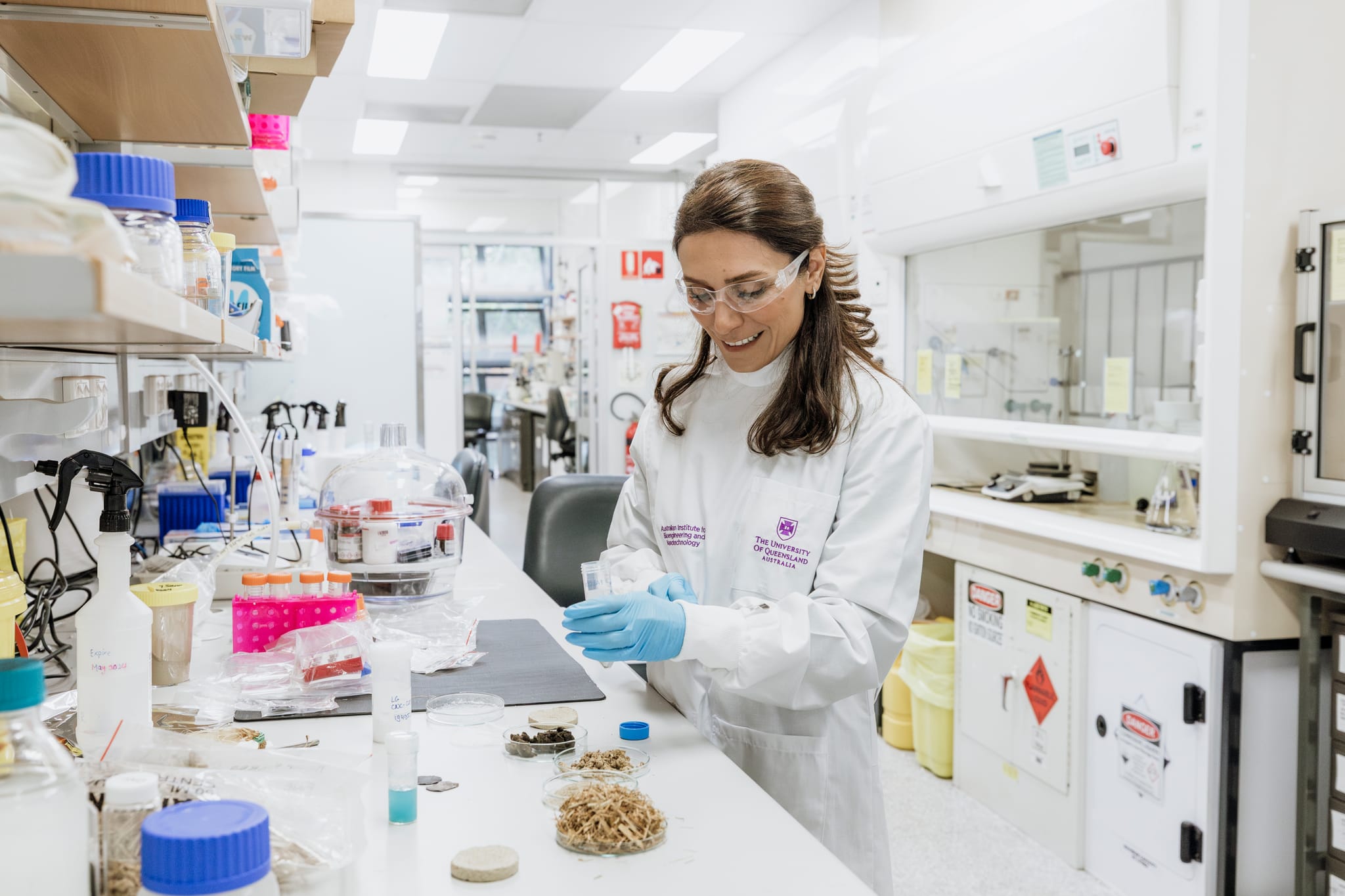
Could a co-product from paper recycling help farmers to improve soil health and building carbon stocks? Greenworld Ltd, a recycling and waste management company, together with The University of East Anglia (UEA) are to discuss how Paper Crumble can be used to enrich soil, giving arable farmland a boost of nutrients, organic matter and increase its potential as a long-term carbon sink.

Recycled paper for healthier soils
Can recycled ‘paper crumble’ give healthier soils whilst reducing emissions?

Brian Reid, Professor of Soil Science and Associate Dean for Science (Innovation) at the University of East Anglia, explains that as the Agriculture Bill unfolds farmers will be paid to ensure land management is optimised and to increase soil carbon stocks.
While fossil fuels are often highlighted as the main protagonist of climate change, in actual fact losses of soil carbon have had an equally important impact on the levels of CO2 in the atmosphere.
“Soil carbon enables soil to self-structure, and thus increases water infiltration, increase water storage and decreases the risk of flooding,” says Brian. “It is also the cornerstone to soil health and soil function. Soil microbial communities drive the transformation of soil nutrients and supply these nutrients to the crops, they regulate pathogen population that infect crops and they degrade chemicals such as herbicides and pesticides, thereby stopping their build-up in soils. But to function properly these microbes need soil carbon.”
Collectively, these ‘services’ are considered in today’s vernacular as ‘goods’. DEFRA is seeking to use public money, under the new Agriculture Bill, to pay for public goods. This could be a win-win for farmers, as increasing soil carbon stocks is a short circuit to improving soil health and delivering public goods. “We are at an exciting transition where governments are appreciating the role soils have in re-sequestering and storing carbon”.
UEA is working with Greenworld to explore the potential of Paper Crumble (PC) to improve soils and improve the delivery of public goods. Although PC has been applied to land for many years, with varied trials on soil structure, limited research has been done with regard to carbon capture.
Steve Kilham, Director of Greenworld based in Kings Lynn, explains: “PC can be applied to land under agreement from the Environment Agency. Permits for land spreading are granted where there will be no detriment to the receiving soil and where benefits can be asserted. We were keen to work with UEA to quantify the benefits to farmers of using PC and the results are promising.”
Brian continues: “The NFU has a Net Zero 2040 aspiration to neutralise the carbon footprint of farming. Within this aspiration is the vision to make gains through improved soil carbon management and interventions that will build soil carbon stocks. We are looking forward to talking to famers and growers about the opportunities to increase soil carbon and achieving Net Zero on the farm to help realise this vision.”

Hockley Agro’s super-spreader offers eco-fertiliser application

Agri-TechE Article
Agri-TechE

Precision application of foliar fertilisers is more effective if the product can coat the leaf, so Hockley Agro is offering an innovative biodegradable super-spreader that promotes rapid coverage of hydrophobic leaf surfaces at concentrations of 0.1% or less for potential eco-fertiliser application.
Peter Rosevere of Hockley Agro, producers of herbicides, fungicides and insecticides for UK farmers, explains that that the product SILILO EVO helps reduces the cost of fertiliser and protects watercourses.
He says: “Many farmers use wetting agents to improve the absorption of fertilisers and plant protection products, but many are not currently biodegradable.
“SILILO EVO is formulated to reduce the surface tensions of a liquid to offer improved wetting, targeting, cuticular penetration and stomatal flooding.
“By enabling super-spreading the spray can reach locations that are not conventionally accessible, even from an angle of zero degrees, and results in better uptake of products, which reduces spray volumes and run off.”
After an hour of application, SILILO EVO also offers improved rainfastness, so there is no need to re-spray.
Extensive field-testing has proven its effects with herbicides, fungicides, insecticides and acaricides, PGRs, and micronutrients.
Hockley Agro will be discussing the benefits of foliar fertiliser application as part of the Virtual Innovation Hub.

CamBond’s reusable coffee cup ‘wasbeans’ turns waste into plastic alternative

Agri-TechE Article
Agri-TechE

Cambond’s bioresins replace toxic chemicals responsible for ‘sick building syndrome’
A reusable coffee cup made from spent coffee grounds is just one of the products created using Cambond’s bioadhesive. The Cambridge-based company is explaining how agricultural waste such as straw, fruit and vegetables could provide a replacement for plastics in the Virtual Innovation Hub.
Cambond’s Head of Business Development Dr Gareth Roberts explains: “We have developed a bioadhesive that can replace the toxic urea-formaldehyde glues that are widely used in the construction industry to make plywood and fibre boards.

Cambond reusable coffee cup
Wasbeans: Bean waste into reusable plastic

“Not only are these glues oil-based and give off noxious vapours during their energy intensive formation, but they continue to release these toxins after construction, contributing to ‘sick building syndrome’.
“Our technology platform can make bioresins that are safe, low carbon and environmentally sustainable.”
Cambond’s resin is made from Dried Distiller’s Grains and Solutes (DDGS), a by-product of whisky distillation or bioethanol production and widely used as an animal feed, so it is a familiar ingredient in agriculture.
The resin can be combined with straws, nutshells, pineapple tops, used coffee grounds, palm oil-wastes and other agricultural by-products to produce biocomposite construction materials such as MDF-type boards.
However, the company is diversifying and a recent Cambond product is the carbon neutral WasBeans reusable coffee cup. It looks and feels like heavy-duty plastic but is made from 30% coffee grounds, 68% bio-resin and bio-degradable polymer, and a splash of recyclable silicone to ensure it is watertight.
Cambond is looking for business partners in the biomass supply chain and for end-users of its materials including manufacturers of packaging and other biocomposite materials.
One application is 100% biomass moulded or formed products like plates, trays and bowls. The bioresin can be used to make an excellent alternative to plastics like melamine or polypropylene and has been shown to meet US FDA and EU requirements for food safety.
Cambond has set up a development facility at the Niab Innovation Hub in Soham, Newmarket, where it is able to demonstrate these innovative materials to potential customers and partners.

Crop4Sight benchmarking enables potato growers to improve yields

Agri-TechE Article
Agri-TechE

As extreme conditions seem to be getting more frequent, tools that enable growers to mitigate the impacts within the growing season will be invaluable. Crop4Sight is a digital product for potato growers that uses imaging via the camera-phone and Bluetooth enabled scales to allow farmers to benchmark crop development and make interventions to improve the marketable size yield. The benefits will be discussed in the Virtual Innovation Hub.
Paul Coleman of Crop4Sight explains: “Our analysis shows there is considerable scope for increasing saleable yield through better control and understanding of tuber populations. If the crop is performing differently to that intended then understanding optimum yield potentials and crop value increases is key to making the greatest financial return.

Benchmarking potato yields
Benchmarking potato yields with Crop4Sight could boost profits

“For example, Jelly is a high yielding variety of potato for pre-pack and chips. In the 2019 season the median tuber population was 15% down on the long-term average, This was caused by a late planting seed crop season in 2018 followed by an early planting main crop season in 2019, meaning the seed was chronologically young. However, crop planning didn’t account for this so stem populations – an indication of the size and quantity of tubers – were lower than required.
“If growers had taken these factors into account – the youth of the seed and the early planting – and increased the seed rate, this impact would have been reduced and saleable yield maintained.” Crop4Sight’s dynamic seed calculator takes account of this as well as the target yield and tuber size required.
Benchmarking yields for potato profit
Crop4Sight offers a ‘toolbox’ of insights from emergence, stem numbers, tuber numbers, scab control timing, ground cover benchmarking and optimum size yields that allow in-season benchmarking of crop planning and development to support decision-making. Crop4Sight is able to now forecast the date of likely dormancy break using the date of emergence for many varieties.
Growers simply record seed stock and crop information such as planting, emergence, canopy (via image analysis) and yield samples (via Bluetooth scales) within the app, and the system benchmarks each growth stage and forecasts the next crop milestone. By providing an update on performance through the insights and forecasts, potato growers can improve the critical selection and timing of crop burn downs. Data shows that even for well managed crops there is opportunity to increase saleable yield by thousands of pounds and Crop4Sight can help growers to realise this.
Within the Virtual Innovation Hub Crop4Sight will be demonstrating the web and app elements of the product via laptop and iPad and discussing the role of plant physiology and agronomy in agriculture.

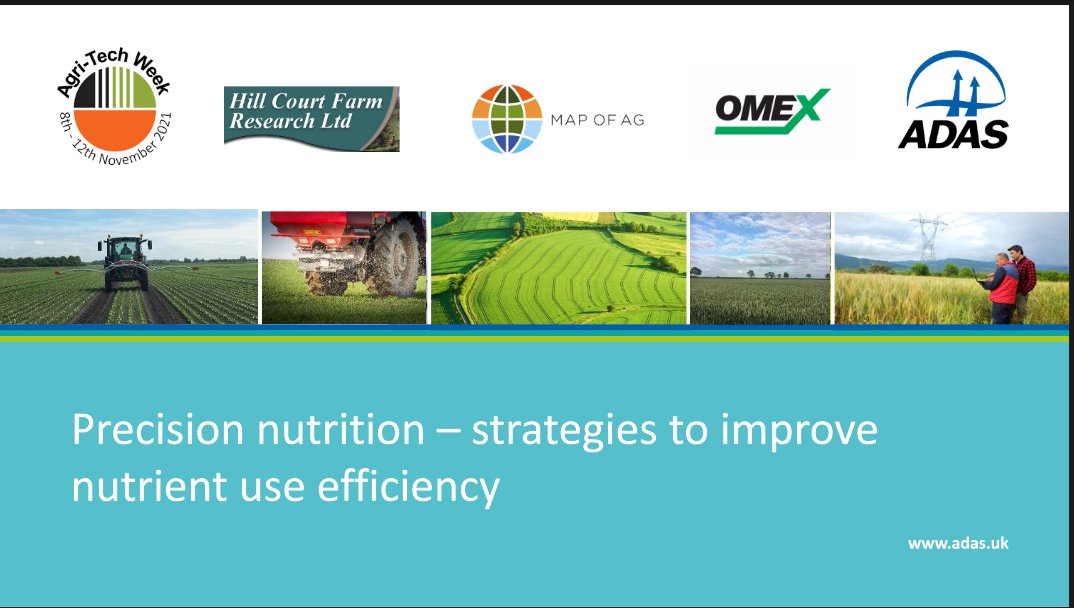
Nutrient management all-you-need-to-know: ADAS at the Innovation Hub

Agri-TechE Article
ADAS


Sylvester-Bradley on Nutrient Management
Roger Sylvester-Bradley gives lowdown on nutrient management

“Grain analysis adds particular value as it tells us about crop performance… We now advocate analysis of grain samples at harvest to gain an indication of the success of the overall nutrient management strategy”  says Prof Roger Sylvester-Bradley, Head of Crop Performance at ADAS.
At this year’s Virtual Innovation Hub, ADAS will launch ‘YEN nutrition’ to help farmers keep on top of the latest nutrient management research. The first product will be the ‘Share-to-Learn’ Grain Nutrient Benchmarking service. ADAS has used grain analysis for 2019 and the previous three harvests, and the insights on these trials will be under discussion at the [Virtual Innovation Hub].
Don’t miss the opportunity to chat to Roger and the team today, Wednesday 1st July, at the Innovation Hub.
Visit their stand in the Innovation Hub to learn more.
 

Aphids and bad weather: BBRO keen to share knowledge

Meet the Network
Agri-TechE
Improving sugar beet yields is BBRO's business
Simon Bowen, BBRO, discusses innovations in sugar beet and other crops

“The number of aphids detected in 2019 reached record levels” says Dr Simon Bowen of BBRO. “That was the first year of growing crops without the seed treatments that help protect crops against virus-carrying aphids”
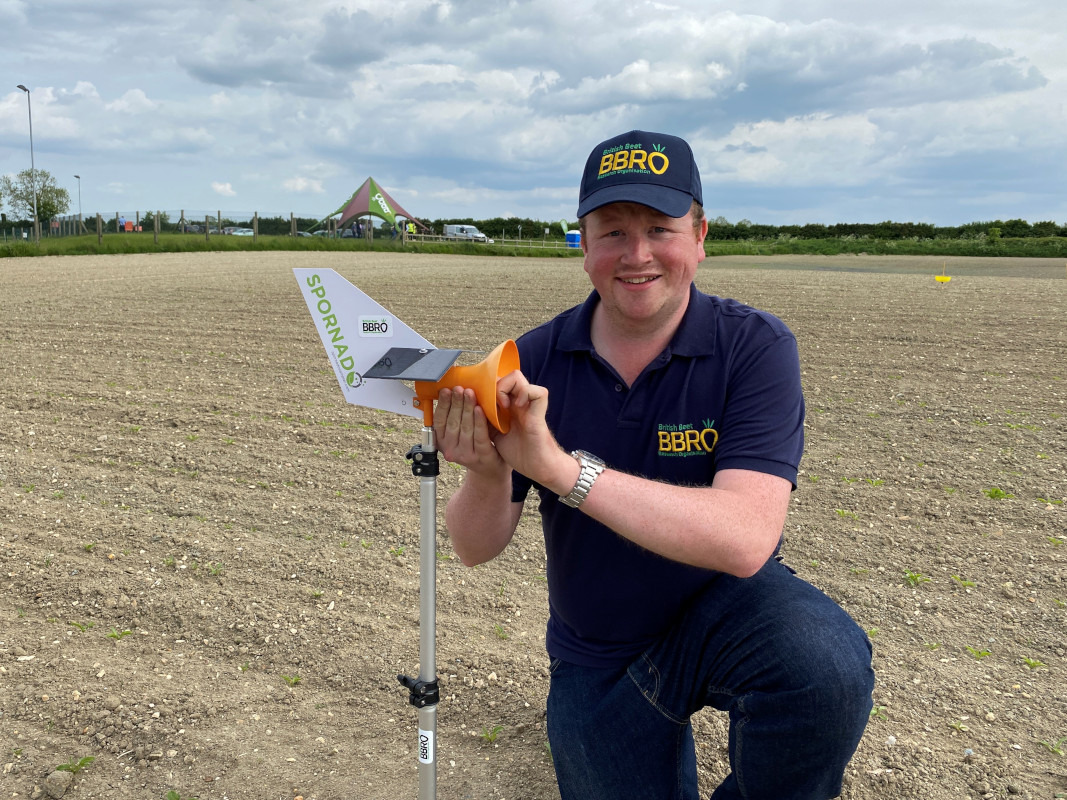
Simon is keen to talk about the BBRO research that helped sugar beet farmers deal with the aphids and the potential for virus epidemic, as well as the increasingly unpredictable weather conditions. Seeing the opportunity to provide their knowledge to the wider farming community, the company is sponsoring this year’s Virtual Innovation Hub.
The importance of discussion at this point is paramount, as the aphid problem is not going away: “Unfortunately, it looks like 2020 is going to be another record year for aphids and test our control strategies even more thoroughly”, Simon points out.
Join BBRO at the Innovation Hub today, July 1st, to have your say…
 
Visit their stand in the Innovation Hub to learn more.

Turning biomass into plastic: CamBond at the Innovation Hub

Agri-TechE Article
Agri-TechE
Cambond reusable coffee cup
Wasbeans: Bean waste becomes a coffee cup

 
“Our technology platform can make bioresins that are safe, low carbon and environmentally sustainable…” explains Cambond’s Head of Business Development Dr Gareth Roberts. A reusable coffee cup made from spent coffee grounds is just one of the products created using Cambond’s bioadhesive.
The Cambridge-based company is explaining how agricultural waste such as straw, fruit and vegetables could provide a replacement for plastics.
Don’t miss the opportunity to chat to CamBond at the Innovation Hub today, Wednesday July 1st, to have your say…
Visit their stand in the Innovation Hub to learn more.

Square Mile Farms crowdfunding to bring urban farms to workplaces

Meet the Network
Agri-TechE


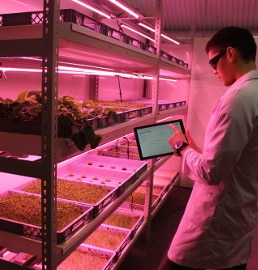
Johnathan Ransom of Square Mile Farms started with the concept of ‘flat pack farms’ for urban areas and now, through its Office Farming model, is bringing vertical, urban farms to workplaces of big businesses to help them achieve their sustainability and employee wellbeing goals.
He was due to speak at the Agri-TechE event “Controlled Environment Agriculture – The Industry is Growing Up”, which had to be postponed, and a condensed version, CEA Lite, is to be held on 10th September 2020.
A lot has happened in the industry in recent months and – as Square Mile Farms announces their crowdfunding campaign on Seedrs – we caught up with Johnathan to see what progress Square Mile Farms has made. 
STOP PRESS: Square Mile Farms are overfunding by 186% on Seedrs! But there’s still time to join their mission to transform workplaces into greener, more purposeful places through vertical farming! Find out more. After receiving an invitation from British Land, Square Mile Farms opened its flagship farm in June 2019 on the roof of Microsoft’s London HQ at Paddington Central – and then came lockdown. What has happened at Paddington Central since then?
During the lockdown we temporarily moved farm operations to our homes! We’ve since got our Paddington rooftop farm back up and running and are growing plants in order to be ready to transplant into our clients’ office farms once they are back.
With most people at home, and many trying their hand at growing at home we’ve also been using this time to share our knowledge, by producing a series of blogs including how-to guides and troubleshooting common home-growing issues. Our community is important to us and part of our mission is to help urban communities grow their own! Have your plans for the business changed at all during the coronavirus pandemic?
Coronavirus hasn’t altered our business plans. If anything it has further highlighted the debate around the future of the workplace and put the emphasis on the employer to provide a reason to be in the office. Offices, more now than ever, have to be designed around the employee’s lifestyle and provide for their wellbeing, drive engagement and foster creativity.
Our Office Farming model transforms offices and workplaces into green, inviting spaces, creating workplaces of the future. We create a workplace community centred around urban farming through engagement, workshops and knowledge sharing, helping our customers create a culture of sustainable, low impact living. Looking wider – has it increased momentum/made people consider the benefits of shorter supply chains?
Without a doubt. If food security and the damage the conventional food supply chain does to the environment weren’t a priority before COVID, they absolutely are now. The conventional food system has a devastating impact on the environment and on biodiversity.
The key to changing this is by growing closer to the consumer both to improve supply chain resilience, but also to re-engage the consumer, to encourage them to make better choices.
How many urban consumers appreciate the impact that transporting fresh produce long distances has on its nutritional value for instance?
Some of today’s illnesses can be linked back to the lack of understanding we have of the relationship between our bodies and what we put into them. We have to do more to educate ourselves on this relationship and urban farming can play a big part in that. We understand that you are planning a crowdfunding round, what is it for and how much do you need?
We’ve spent the last 16 months building a platform from which to grow our business. We have had early success with clients such as British Land, Grosvenor Estates and Vodafone and have a vision of every business having vertical farms in their office, to create a culture of healthy, sustainable living.
In order to take the business forward we need to invest in our team, technology and profile in order to deliver on the exciting opportunities in our pipeline.
It’s an exciting time to be involved in urban farming, and even more so in the context of the debate around the future of the workplace, given our Office Farming model. We want to share the opportunities this creates with others that share our passion, which is why we’re crowdfunding.
You can see more information about our crowdfunding campaign on Seedrs here.
 
More information about Square Mile Farms.
See more information about the CEA event here.

PBD Biotech gains funding from Canadian government to tackle Johne’s Disease

Meet the Network
Agri-TechE

Johne’s disease, a wasting condition of cattle, costs the Canadian dairy industry an estimated $90 million a year through loss of production. Now, advisory services and funding from the National Research Council of Canada Industrial Research Assistance Program (NRC IRAP) is enabling PBD Biotech to further research and progress development of its unique Actiphage® diagnostic for hard-to-detect mycobacterial diseases, such as Johne’s.

Mycobacterial disease in elk and deer

PBD Biotech has set up its Canadian headquarters in Saskatoon and is looking to expand its team, to validate Actiphage use for cattle and also other species important to the country’s economy, such as elk and deer. The highly sensitive test offers the potential for early detection of infection, boosting productivity within the agricultural industry, helping disease control and elevating dairy quality assurances.

Johne's Disease Luis Martin PBD Biotech to tackle problem
Luis Martin Director of PBD Biotech Canada

Luis Martin, Managing Director of PBD Biotech Canada, comments: “Actiphage is the first assay capable of directly detecting live infectious mycobacteria at such an early stage and we are unaware of any competitor that can compare in performance, cost or simplicity.
“With the advisory services and funding from NRC IRAP, supporting our own investment, we are keen to progress this test, enabling Canada’s agricultural and dairy industries to be among the first to benefit from early detection of globally important diseases such as Johne’s and bovine TB.”
There are a number of studies that suggest there may be a relationship between the mycobacteria that causes Johne’s disease in livestock and Crohn’s disease in humans (Mycobacterium avium subsp. paratuberculosis, MAP). Research also shows low levels of live mycobacteria are able to survive the pasteurisation process in milk and other dairy products, including infant formula*. Actiphage takes just a few hours to detect viable mycobacteria – unlike current tests, which can take up to three months to provide a result – offering the potential for a rapid quality assurance test for bulk milk.
The epidemiology of Johne’s disease is poorly understood, so a single-day test also opens the opportunity for field-based, pen-side or point-of-care testing in the future, allowing better insights into the progression of the disease and understanding of its potential for animal-to-human transmission.

Benefit from HARVEST programme

PBD Biotech first showcased its novel technology to the Canadian agri-food industry through its involvement in the 2017 Saskatoon Regional Economic Development Authority’s (SREDA) HARVEST Programme and subsequently decided to locate an office in the region.

Harvest - Alex Fallon and Belinda Clarke
Alex Fallon of SREDA with Belinda Clarke Agri-TechE

Alex Fallon, President and CEO of SREDA, explains how the HARVEST Agriculture Technology Programme provided an introduction to Saskatchewan for the company: “SREDA hosted PBD Biotech’s first visit to Saskatoon as part of our 2017 Agriculture Technology HARVEST Program. This allowed PBD Biotech to demonstrate its innovative technology to potential collaborators, building connections with Saskatchewan’s thriving ag-tech industry and ultimately leading to the establishment of PBD’s Canadian subsidiary in Saskatoon. We are delighted to see PBD receive NRC IRAP funding and look forward to its continued success and deepened ties with our province.”
Since establishing its Saskatoon headquarters in 2018, PBD has initiated trials with University of Calgary Professor Dr. Jeroen de Buck, as part of this Natural Sciences and Engineering Research Council of Canada (NSERC)-approved program monitoring Johne’s disease in dairy cattle, and also has a strong working relationship with the International Vaccine and Infectious Disease Organization (VIDO-Intervac).
Actiphage will be evaluated and registered with the Canadian Food Inspections Agency (CIFA) for detection of bovine TB and kits will be available for research. Canadian researchers will look to expand the use of Actiphage as a diagnostic for other infectious diseases of interest to Canadian health, such as human TB, E coli and Salmonella.
Mark Hammond, CEO of PBD Biotech, adds: “Through its support, NRC IRAP will ensure Canada is at the forefront of implementing new diagnostics, such as Actiphage, in the fight against TB and other devastating diseases; taking a lead in future innovation and establishing export markets.”

Iceni Diagnostics’ coronavirus tests wins funding from Innovate UK

Agri-TechE Article
Agri-TechE

Development of a rapid triage test for coronavirus, by Iceni Diagnostics, has gained funding from Innovate UK to help accelerate its development.
Iceni Diagnostics is one of the 800 companies to benefit from a £20 million government fund. The fund is to support the development of ambitious technologies that will build UK resilience against long-term impact of the outbreak.
Dr Simone Dedola of Iceni Diagnostics says the £50k grant from Innovate UK will help accelerate development of its test for COVID-19, which can be used for triage.
He comments: “In any infectious disease outbreak, it is important to quickly identify carriers of the disease and this is key to controlling the spread of infection. We are developing a test that will provide a simple yes/no answer to this basic question within 15 minutes and is designed to be used in the community with little training.”

Rapid triage test for coronavirus

It is intended that the test should be used for triage, to enable large numbers of people to be quickly tested on the spot. This would enable those with a positive response to be rapidly identified, quarantined and subjected to further testing, while allowing negative-response individuals to return to their normal work-life activities.
The traditional method of identifying a virus is from its genetic material. The Iceni Diagnostics device uses a different approach; it creates a sugar trap for the virus.
Viruses recognise their host using chains of sugars known as glycans on the surface of the human cell. Iceni Diagnostics exploits this virus-glycan interaction within its novel diagnostics approach.
Iceni Diagnostics has already applied its platform technology to the influenza virus, demonstrating how by modifying the glycans it could be adapted to identify different strains of the disease – human influenza, avian flu, equine flu. These insights have enabled the company to modify its technique for the new strain of coronavirus.
The key advantage of a device based on Iceni Diagnostics’ technology is that it is easy to produce and can be scaled up, using established manufacture and distribution chains. This would allow a low-cost device to be mass-produced to meet the substantial demands for immediate and recurrent coronavirus testing in the weeks and months ahead.
The company has made good progress and will work with clinical partners to enable prototype testing.

Computer vision system to predict disease risk

Agri-TechE Article
Agri-TechE

A computer vision system to predict outbreaks of diseases such as botrytis and mildew in strawberry crops, has gained funding from a Knowledge Transfer Partnership (KTP).
The joint project between fruit growers and preservers Wilkin & Sons  and academic experts at the University of Essex aims  to monitor and prevent disease. It is to use a drone to monitor the crop using computer vision and Internet of Things (IoT)  with the goal of reducing inputs and improving yield.
Wilkin’s ambition is to innovate and become more productive in terms of yield for the strawberry growing arm of the business, while minimising any negative environmental impacts from their operations across their 850-acre farm.
Chris Newenham, Joint Managing Director of Wilkin & Sons, says the company is looking to enhance monitoring of disease within the crop through solutions which are currently not available ‘off-the-shelf’. University of Essex is home to experts in computer vision, hyperspectral analysis and plant physiology that will build a bespoke system to solve their business need.
Dr Hossein Anisi is Head of the Internet of Everything (IoE) Laboratory at the University of Essex. He says: “This interdisciplinary project  gives us the opportunity to implement the latest techniques in IoT and wireless sensor networks using valuable, real world data.”

Computer vision system to predict disease risk

A full-time KTP Associate will be recruited and based at Wilkin’s Tiptree farm, to lead the research using cutting-edge hyperspectral analysis and computer vision technologies. They will be working with Wilkin’s farming General Manager to develop the novel disease monitoring and predication University of Essex collaborates with Wilkin & Sons using IoT and Computer Vision to boost strawberry cropsystem.
Robert Walker, Head of Business Engagement at the University of Essex, comments that the project to design a computer vision system to predict disease aligns with its ambition to deliver innovation across agriculture. “Essex has expertise in computer vision, embedded systems and plant science, as shown in the recent launch of EPIC – the Essex Plant Innovation Centre, which aims to harmonise the interdisciplinary challenges associated with embedding technology in this industry. I’m delighted to announce this award from Innovate UK to supercharge our ambition in this space.”

Climate impact of grass-fed herds over estimated according to new research

Research Digest
Agri-TechE

The climate impact of grass-fed cattle herds may be overestimated, as direct emissions of nitrous oxide, a powerful greenhouse gas, from certain pasture types are lower than previously thought , new findings from Rothamsted Research have revealed.
Urine from animals reared on pasture that included white clover was found to have less nitrous oxide than previously estimated. Nitrous oxide is a potent greenhouse gas that is 265 times more harmful than carbon dioxide and can account for 40% of beef supply chain emission, these findings may help farming achieve its ‘net zero’ ambition by 2040.

Benefits of growing white clover

White clover is a commonly included within grassland as it makes nitrogen more bioavailable reducing the need for additional nitrogen fertiliser. This is the first time Rothamsted scientists have quantified the climate-change related benefits of white clover, achieved both directly through lower nitrous oxide released at pasture, and indirectly by lower fertiliser requirements.
Most studies looking at the emissions from livestock arrive at their conclusions by combining data from a variety of experimental systems in addition to some estimated values. This includes data provided by the Intergovernmental Panel on Climate Change (IPCC) to scientists wishing to include it in their calculations on the climate impact of our food supply chains.
Instead, the Rothamsted researchers measured emissions from one herd on Rothamsted’s ‘farm lab’, at  North Wyke Farm  in Devon, in a realistic re-creation of real farming practices. The herds of 30 cattle were grazed on two types of pasture, the first a high-sugar grass commonly sown by farmers; and the other a high sugar grass and white clover mix.
Atmospheric chemist, nitrous oxide expert and co-author of the study, Dr Laura Cardena says: “Due to technical and logistical challenges, field experiments which measure losses of nitrous oxide from soils usually add livestock faeces and urine they have sourced from other farms or other parts of the farm, meaning that the emissions captured do not necessarily represent the true emissions generated by the animals consuming the pasture.”
Writing in the journal Agriculture, Ecosystems and Environment, the team report how they created a near ‘closed’ system whereby the circular flow of nitrogen from soil to forage to cattle and, ultimately, back to soil again, could be monitored.
Lead author of the study, Dr Graham McAuliffe and colleagues had previously reported system-wide reductions of greenhouse gas emissions associated with the inclusion of white clover in pasture. This had been primarily driven by a reduction in the need for ammonium nitrate fertiliser, which creates greenhouse gases in its production and application. The team had previously relied on figures provided by the Intergovernmental Panel on Climate Change (IPCC) which assume all cattle urine or faeces deposited to soils cause the same volume of nitrogen-based emissions irrespective of pasture type.

Climate impact of grass-fed herds less than previous estimates

The most recent IPCC figures provided to scientists estimate this ‘emission factor’ as 0.77%, the Rothamsted team found it was 0.44% on the white clover-high sugar grass mix, once the additional nitrogen captured from the air by clover was accounted for.
Dr McAuliffe said: “These differences might not sound like much, but when used in calculations of the climate impact of beef, they have a considerable effect as nitrous oxide emissions can account for over 40% of entire supply-chain greenhouse gas losses.”
According to Dr Cardenas, further research is required to explain the detailed mechanisms behind the observed complementarity between white clover and high sugar grasses – but that the data points towards an effect of sowing clover on the soil’s microbes.
“The evidence suggests that including white clover amongst high sugar grass decreases the abundance of microbial genes associated with nitrous oxide production compared with microbial communities observed under just high sugar grass.”

Reaching net-zero 

“Although white clover is unlikely to be a ‘silver bullet’ for agriculture’s net-zero ambitions on its own, adopting combinations of multiple emissions-abatement interventions, such as increasing legume-inclusion in pasture compositions and utilisation of ‘low-carbon’ fertilisers, will be essential to maximise farming’s national and international contribution to a cooler planet.”
The paper
McAuliffe, G.et al 2020. Elucidating three-way interactions between soil, pasture and animals that regulate nitrous oxide emissions from temperate grazing systems. Agriculture, Ecosystems & Environment. 300, p. 106978