The Productive Landscape: NatureTech for Profit and Planet
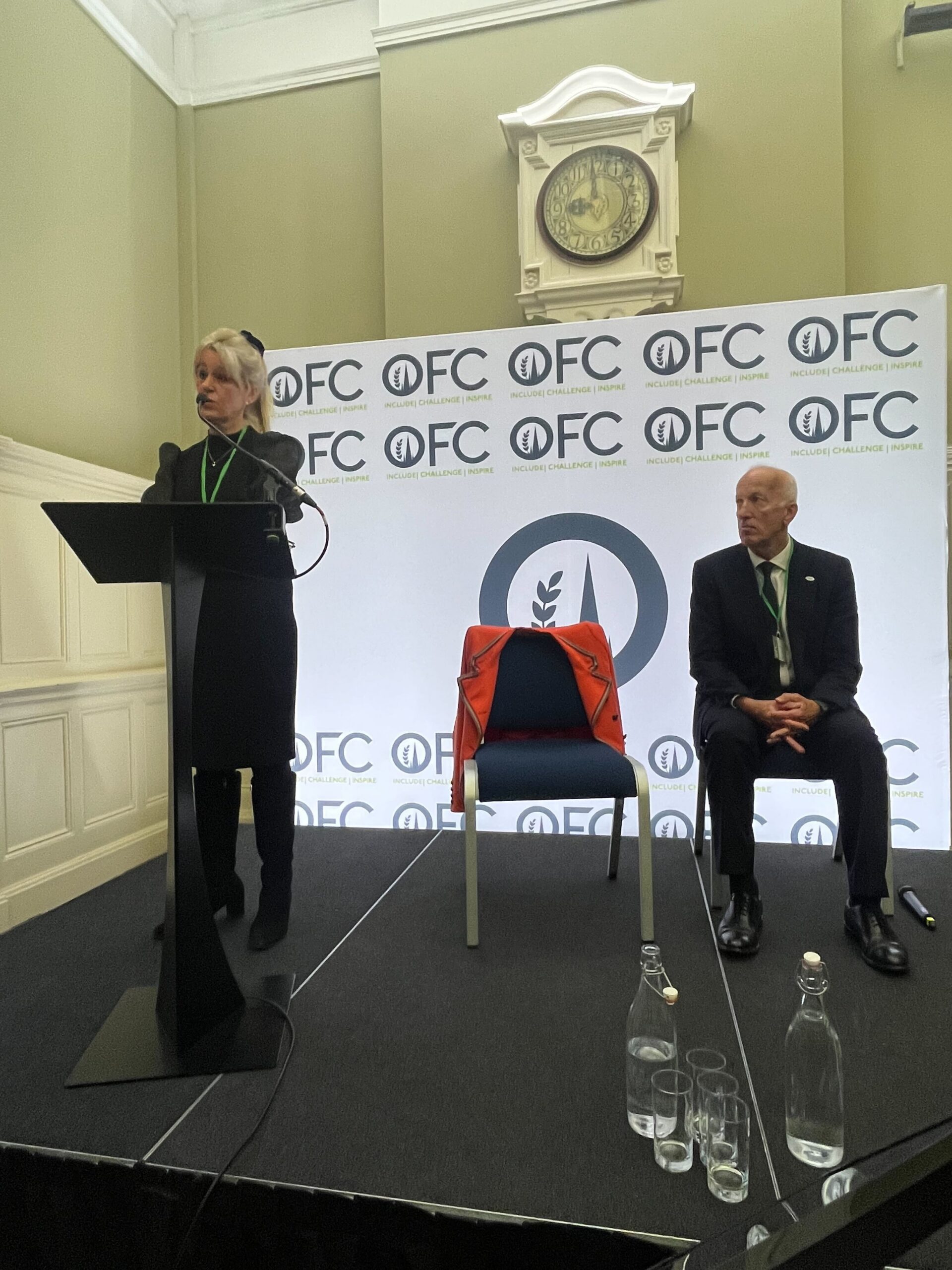
How can technology enable delivery of food, nature recovery, and climate resilience - all at once? The Head of the Environment Agency is asked: what's the national plan for dealing with land use pressures, plus you’ll hear from technologists and land managers working on nature-based and tech-enabled solutions for water, soils and climate adaptation.

Trials of Germains Seed Treatments new Xbeet enrich 200 show yield benefit

Meet the Network
Agri-TechE
Germains Seed Treatments has launched a new product in its Germains Xbeet® seed treatment range that will be available for the 2021 season.
Trialled and tested for the UK climate, new Xbeet® enrich 200  treatment includes an extra coating of bio-stimulant, derived from natural plant extracts to help with crop health, accelerate emergence, increase yield and assist the crop to reach the critical twelve-leaf stage and mature plant resistance.
The development aims to help manage yield fluctuations caused by pests and diseases, helping growers achieve consistent returns from their sugar beet crops.
Independent trials for the new Xbeet® enrich 200 have been carried out in collaboration with the BBRO and independent trial specialists and have shown an average yield benefit of 1.4% from Xbeet enrich 200 over Xbeet® enrich 100 during 3 years of trials. The independent verification of the trial results by Niab have shown the results are significant to the 95% confidence level.
Further commercial scale strip trials in 2018 and 2019 have shown an average of 2.5% increase in yield across three trial sites in the UK. Commercial scale strip trials replicate commercial practice and give an indication of the results growers can expect from farm scale use of a product.
Germains EU Commercial Manager, Richard Nicholls, says: “We are really excited to be bringing our Xbeet® enrich 200 treatment to market. It addresses many of the establishment concerns of UK sugar beet growers. Our trial results have shown a significant yield increase and we look forward to growers seeing the benefits and ultimately the additional income.”
For more information and further data on the Xbeet® enrich 200, and also for your chance to enter a prize draw for a £100 gift voucher, visit germains.com/xbeet-enrich-series/

Prodata Weather Systems announces new EnviroMonitor bundle to reduce data costs

Member News
Agri-TechE
Prodata Weather Systems, a leading supplier of the Davis EnviroMonitor environmental data monitoring system, has announced new offer to reduce data costs. 

Prodata Weather Systems are suppliers of EnviroMonitor, which collates local environmental data via over 165 sensor options, including soil moisture, soil temperature, fluid levels, pressure, solar radiation, carbon dioxide, temperature and humidity.  Designed as a flexible agriculture-based system, the data collected from these sensors can be customised, sent directly to the Cloud and made accessible via a mobile app or PC.
Peter Palmer, sales director, Prodata Weather Systems says: “It is clear that farmers and growers value the EnviroMonitor, but one question which sensibly arises is around the ongoing cost of their data plans.”
The company is including its EnviroMonitor 6894A 15-minute data plan (covering 24 months) free of charge for those purchasing an EnviroMonitor system until 31st August 2020. This includes purchases made at CerealsLIVE2020 in June.
The EnviroMonitor 6894A 15-minute data plan will be included with each purchase free of charge, saving users £440.00, ex VAT.
The data plan ensures remote field data is uploaded every 15 minutes to the Cloud and is accessible from a device of choice. This includes access to WeatherLink.com, the WeatherLink APP and Mobilize the APP that takes raw data and converts it to information they can use to make critical decisions.  The bundle saves users £440.00, ex VAT.
Pete added: “As an additional bonus we will also be including 3 years warranty with any systems purchased before 30th June 2020.”

Cereals LIVE 2020 Agri-TechE members support virtual event
Agri-TechE Article
Agri-TechE

Innovation is the key to agricultural efficiencies and productivity, and a number of Agri-TechE members will be discussing developments and emerging technologies within an online seminar programme at Cereals LIVE .

See a full list of Agri-TechE members exhibiting here,  and catch up with our twitter roundup from the two days. For the first time ever, Cereals will be a virtual event, on 10-11 June.  Agri-TechE members have always had a high profile at Cereals but this year a number will be presenting online within the Innovation and Technology Theatre, which is sponsored by the Department of International Trade.

The focus will be on how the latest developments and advice can help producers to create more from less, boosting productivity with the most cutting-edge equipment and advice.

Data and digital innovation

Data is of growing importance on farm, informing decision making and helping producers to focus on efficiencies. This session will include an insight from Matthew Smith, chief product officer at Agrimetrics, into how to get the most from data, the growing market for it and how valuable it is to agriculture.
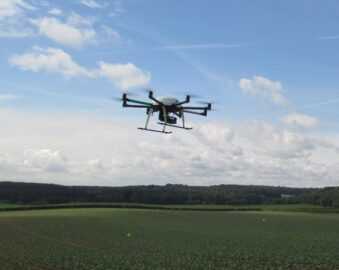
Drones are increasingly being used to create usable data, as Jack Wrangham at DroneAg will demonstrate. Its new app, Skippy Scout, gives farmers an economical and simple solution to aid crop walking. “It can take farmers less than five minutes to download the app and have their drone going,” says Mr Wrangham.
“All farmers need to crop walk, but it can be time-consuming. However, using Skippy Scout the drone can fly to points in a field and take high resolution photos faster than they could walk – with images sent straight back to the user’s phone.”

Plant breeding innovations

Plant breeding technologies open up a whole world of opportunities for agriculture, in the form of hybridisation, gene-editing and sequencing to create more resilient, productive crops that can drive the future of arable farming.
With speakers including Kim Hammond-Kosack at Rothamsted Research this session will reveal how plant breeding will deliver resistance to pests and disease and how it can address issues of resilience and climate change.

Precision farming

Already a major asset for many UK arable farmers, precision farming is progressing in leaps and bounds. Jonathan Gill at Harper Adams University will provide an update on the Hands Free Farm, giving an insight into the cutting edge of autonomous farming.

Applying precision technology

In this session, farmers will be able to see how precision farming techniques apply in practice, including Professor James Lowenberg-DeBoer from Harper Adams University, who will look at the financial and practical considerations of investing in crop robots. This session aims to answer the practical questions posed by the advancing technology.

Farmer-led innovations

Many of the best innovations come from farmers and this session will not only explore some of those, but will also look at research and answers emerging from them.
Liz Bowles, associate director at the Soil Association (partners with Agri-TechE in our Innovative Farmers digestate trial), will describe the impact of the work in their farmer ‘field labs’, and Daniel Kindred at ADAS will be discussing the key effects for farmers emerging from its farming innovation groups.

“Innovations and technology are advancing incredibly fast, so keeping abreast of the latest information isn’t always straightforward,” says event director Alli McEntyre. “With the DIT theatre, the aim is for farmers to find out the latest information, while also coming away with valuable answers to many of the questions they have about this quickly changing environment.”

See a full list of Agri-TechE members exhibiting here.

Cereals LIVE will be held online on 10-11 June 2020. For more information visit www.cerealsevent.co.uk.

SilviBio announced as winner of GROW agri-tech business plan competition

Agri-TechE Article
Agri-TechE

SilviBio is developing a ‘survival capsule’ that will improve the survival of tree seedlings. Its clearly defined proposition and route to market has made its business plan the overall winner of the GROW 2020 agri-tech business plan competition. The result was announced by Calum Murray of Innovate UK, one of the judges.
Dr Belinda Clarke, Director of Agri-TechE , also announced that SilviBio had been the audiences choice. The announcement came at the end of an exciting final on 4 June 2020 in which four early-stage companies pitched their business plans to the judges via Zoom.
Belinda comments: “The portfolio of organisations that were supported through the GROW programme this year were particularly strong. Although SilviBio was the overall winner all the finalists show promise.”
GROW 2019/20 is kindly sponsored by

SilviBio innovative seed coating improves survival rates by 40% in drought conditions

The need to grow more trees is globally recognised but germination rates are often poor, particularly where seed is applied directly to the ground in new forest projects and in bareroot forest nurseries where seedlings are vulnerable to water shortage.
SilviBio has developed a seed coating for conifers, the most economically important species, that improves germination by 40 per cent where there is drought stress. innovative bio-formulation creates a survival capsule for the seedling, providing a water source and slow release nutrition. It also creates a favourable environment for the growth of beneficial microorganisms. Read more here.

GROW supporting early-stage innovation 

GROW aims to encourage a pipeline of agri-tech innovation by providing support and guidance through a mentoring programme and then access to a range of prizes provided by service providers in the agri-tech cluster. This includes support for patent protection and management, space in incubators, membership of business clubs, access to training and marketing and business advice.

Investment potential 

The judges – Calum Murray, Head of Agriculture and Food at Innovate UK; Kerry Baldwin, Co-Founder of IQ Capital; Rob Alston, director at AF Group; and Andrew McLay, an Innovation Lead for Agriculture at UKRI – reviewed the business plans of all the entrants and selected four companies to go through to the final.
Calum Murray of Innovate UK, the sponsor of GROW, was very pleased with the calibre of each of the finalists: “The business plans presented by all these entrepreneurs show great potential and innovation. Having a sound business model is critically important if innovative technologies are to be successful commercially. Innovate UK is, therefore, delighted to support GROW and encourage the development of ground-breaking technologies and the cluster as a whole.”

AgFunder says providing an evidence-base is crucial in current economic climate

Louisa Burwood-Taylor, Head of Research and Media at AgFunder, was the guest speaker at the GROW final. AgFunder has recently released a report which shows that the UK was one of the most diverse and active agri-tech sectors in Europe. Louisa thought the line-up of finalists at GROW was exciting.
“All the finalists had something distinctive to offer and I am delighted that SilviBio won.
“For me, Farmz2U’s work in Nigeria stood out as very interesting; there is so much untapped opportunity across Africa to increase efficiencies but it’s incredibly challenging to get technologies into the hands of typically smallholder farmers. We have a company in our portfolio working in East Africa called Wefarm that’s successfully brought over 2 million farmers onto its platform by initially providing them with information on any mobile device; they’re now creating a marketplace to help them get access to inputs, so it just goes to show how important it is to create an innovative business model to ensure adoption.”
Given the global pandemic, Louisa predicts that funding will be harder to find in the coming months, and suggests start-ups across the globe focus on validating their technologies as much as possible to have decent results to show investors when capital markets open up again, but also to help speed adoption.
“Collaborations and partnerships with corporations or governments can be a great way to get these results and sometimes start-ups can be paid for that way, which in a tight funding environment will be important. Other than that, start-ups will have to hustle hard to get their technologies into as many farmers’ hands as possible for feedback; the more mature the agtech space becomes, the clearer it becomes that farmers will only consider technologies with a strong value proposition, and in a potential recession they will not entertain anything that’s not going to clearly impact the bottom line positively.” SilviBio has developed a seed coating for conifers – the most economically important tree species – that improves germination by 40 per cent where there is drought stress. The company has gained the support of Forestry and Land Scotland, the government agency responsible for managing Scotland’s forests and SilviBio is to carry out field trials at its nursery.  Read more. Glaia has developed a new class of plant additives called ‘sugar dots’ that can increase photosynthetic efficiency naturally, increasing yields by up to 20 per cent. The technology, developed by a team at the University of Bristol, has a well-defined mode of action, high efficacy and is patent protected.  Read more. AgriOptimizer is offering rapid, accurate diagnosis of nutrient and health status of growing plants. It uses the plant’s molecular signature as a way to precisely determine plant health issues at an early stage and create a fertiliser with a bespoke prescription. Its AgriOptimizer service can be also used as a testing platform for new agrochemical products.  Read more. Farmz2U aims to bring traditional Nigerian farming practices into the digital age. In a pilot it succeeded in increasing yield by 20 per cent and doubling farm sales. Much of Nigeria’s agricultural data is paper-based with little exploration of historic trends to improve future practices. Farmz2U is digitising this data and combining it with data information on soil composition, weather trends, historic crop yields and animal health to provide tailored advice to farmers delivered by phone.  Read more. Agro Mavens – one day of consultancy
Allia Future Business Centre – two months’ access to co-working space Appleyard Lees – IP advice and support
Appleyard Lees – IP advice and support
Barclays Eagle Lab – One month club membership
Cambridge Judge Business School – free place on the Ignite Course.
Eastern Agri-TechE Innovation Hub – 6 months’ free license
Incubyte – 12 weeks of hot-desk space and business consultation Kendalls PR & Marketing – PR Consultation and Audit,
Mathys & Squire – IP advice and support
Norwich Research Park – Virtual tenancy of the Centrum
PwC – free two-hour sessions with a finance partner and with an R&D specialist
Redfox Executive Selection – psychometric testing for up to four people
Rothamsted Enterprises – six months’ free hot-desking
Satellite Applications Catapult – two days of technical consultancy with a leading expert in Earth Observation Read more about the support award prizes.

A survival capsule for tree seedlings that boosts germination by up to 40 per cent

Meet the Network
Agri-TechE

The need to grow more trees is globally recognised but germination rates are often poor, particularly where seed is applied directly to the ground in new forest projects and in bareroot forest nurseries where seedlings are vulnerable to water shortage. SilviBio has developed a seed coating for conifers, the most economically important species, that improves germination by 40 per cent where there is drought stress.
SilviBio’s innovative bio-formulation creates a survival capsule for the seedling, providing a water source and slow release nutrition. It also creates a favourable environment for the growth of beneficial microorganisms.
The company has gained the support of Forestry and Land Scotland, the government agency responsible for managing Scotland’s forests, and SilviBio is to carry out field trials at its nursery. SilviBio would also make aerial sowing of seed across regions such as Latin America more viable, enabling rapid regeneration of forest.
SivioBio Founder Dr Alicja Dzieciol is an expert in the synthesis and characterisation of hydrogel materials and has commercial experience developed when leading the scale-up of start-up company IN-PART. She says: “Many governments have announced ambitious tree-planting programmes but germination and seedling development is vulnerable to adverse weather. Using SilviBio seed coating would increase the success rate of these schemes and reduce the costs of replacing lost trees.”

Enhancing photosynthesis with sugar dots to boost yield by 20%

Agri-TechE

Only 50 percent of the sun’s energy is used by plants and less than 1 percent is converted into biomass. Glaia has developed a new class of plant additive called ‘sugar dots’ that can increase photosynthetic efficiency naturally, increasing yields by up to 20 per cent.

The sugar dots technology, which has been developed by a team at the University of Bristol, has a well-defined mode of action, high efficacy and is patent protected. Studies have shown that sugar-dots are non-toxic and they are already found in food products such as beer and honey.

David Benito-Alifonso says: “Sugar-dots are water soluble and can be applied as a foliar spray or within an irrigation system and have been tested on a variety of crops from soft fruit through to wheat and sorghum. The plant performance improvement results have been impressive and the technology can be applied across agriculture.”

David Benito-Alifonso

Rapid, accurate diagnosis of nutrient and health status of growing plants to enable prescription fertiliser

Agri-TechE Article
Agri-TechE

Current fertilizer usage is not environmentally sustainable and generates high financial cost for the farmers. It is currently difficult to assess nutrient deficiencies in growing plants in a precise and timely manner. AgriOptimizer aims to address this problem by using the plant’s molecular signature as a way to precisely determine plant health issues at an early stage and create a fertiliser with a bespoke prescription. AgriOptimizer service can also be used as a testing platform to asses general plant health status under treatments with new agrochemical products.
The team includes Dr Pawel Mikulski, a post-doc at John Innes Centre (JIC) with 10 years of expertise in molecular profiling, and Dr Jonathan Clarke, Head of Business Development at JIC with a strong track record in supporting spin-outs.
Dr Mikulski says: “Healthy plants and those with a disease or nutrient deficiency have well-defined distinguishable molecular signatures. Our test would build on this knowledge, identifying how the plant growth is being impacted and providing a prescription for optimising its performance.”

Alternative proteins – big opportunity for UK farmers?

Meet the Network
Agri-TechE

Despite the increase in consumer demand for plant-based proteins and $741 million investment into US alternative protein companies in the first quarter of 2020 –  the land area used in the UK for alternative crops has barely changed for almost 40 years – is this a missed opportunity for profitable diversification? 

Mike Salter AB Agri
Dr Mike Salter AB Agri

“Protein is the big question – where do we get it from? We’re looking for novel crops and technologies that can provide more locally produced protein sources for animals,” comments Dr Mike Salter, R&D Facilitator at AB Agri, a global animal nutrition and agricultural services business of Associated British Foods, and a member of the Agri-TechE stakeholder committee. Part of his work is to look at new ingredients and he agrees there is a huge potential for innovation.
“We’re feeding protein to pigs and poultry in high levels. A lot of that is soy imported mostly from the US – Europe imports 14 million tonnes of soy a year.
The Agri-TechE webinar on 17th June 2020 ‘Novel and Alternative Crops – Improving rotation and the bottom line’ will investigate the potential of this market from the perspective of a number of growers.

Search for sources of plant-based protein

Mike is one of the speakers at the webinar, he continues:
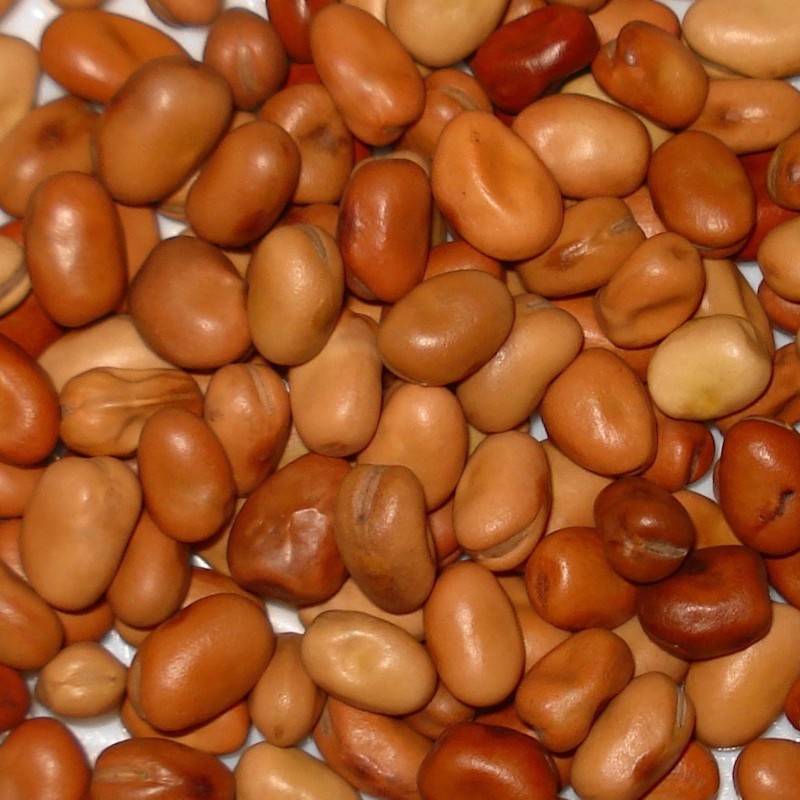
“So at AB we’re looking at different proteins… some crops like broad beans have often been stated as a decent candidate, but they don’t make sense economically for farmers. Although broad beans have triple the protein content of wheat, you’re getting less than an eighth of the yield.

Interest in pulses and lentils is increasing with flexitarian diets

Mike travels the world looking at innovations, he continues: “There is some interesting work going on at Aarhus University in Denmark, where they’re working on extracting protein from grass. Grass is about 12% protein and Danish government made a decision that it wanted the top 25% of the Jutland peninsula to be returned to grassland for environmental and cultural reasons. The issue is transportation as the grass has a high water content, so processing must be done onsite, and even so this approach is reliant upon government subsidies.
“The other big focus nowadays is looking at alternative protein sources for the human food chain, particularly in Western markets. It is not being considered as an option merely for the relatively small number of vegetarians or vegans, but rather they see it as addressing the much larger ‘flexitarian’ market.
“There are a number of new start-ups, often California based ‘Bay Area’ style businesses, who are really focused on plant-based meals and ingredients.
“For the growers, that is an opportunity for the future. If companies offering these alternative ‘centre-of-plate’ items take a significant proportion of the market, there will be a requirement for new types of ingredients in the supply chain – and that might be millions of tonnes.
“Farmers, producers and processors need to expect and prepare for a change in demand, as new plant-based food options are identified and new sources of animal feed protein are established.”

Alternative proteins, legumes, oats and herbs among the crops to be discussed

  • Edward Blanchard of Suffolk Produce
  • David Bond of Norfolk Mint Growers (part of Condimentum)
  • Bruce Knight of Legume Technology
  • Brin Hughes, Agronomy Manager for Richardson Milling (UK) Ltd.

The free Agri-TechE webinar ‘Novel and Alternative Crops – Improving rotation and the bottom line’ is to be held from 3-5pm on June 17th more information https://bit.ly/ATEAltCrops
https://agfundernews.com/us-alternative-protein-investment-in-2020-will-surpass-2019-as-q1-brings-in-741m.html

‘lowhighcovid’ tool highlights the potential impact of different disease control strategies

Agri-TechE Article
Agri-TechE

The ‘lowhighcovid’ tool is intended to highlight the potential impact of different disease control strategies on the rate of spread of COVID-19. It is designed by the University of Cambridge as an educational tool, and is not intended to be used as a COVID-19 disease management or forecasting tool.
“Our website is intended to demystify infectious disease modelling, and highlight the broad type of model behind government policies for the control of COVID-19,” said Nick Taylor, a PhD researcher in Theoretical and Computational Epidemiology in Cambridge’s Department of Plant Sciences who was involved in developing the tool.
A real-time data feed within the new tool allows users to follow the progress of the current pandemic, and to compare this across different countries. The data feed was designed by Daniel Muthukrishna, a PhD student at the University’s Institute of Astronomy.
Control measures, including social distancing and lockdown, affect the rate at which COVID-19 spreads through a population. The interactive model allows users to see the likely effects of different measures, depending on when they are started and the length of time they are in place.
Users select a country, a control measure, and how long the control is in place. The model then predicts how rapidly coronavirus will spread through the population. It illustrates how various control strategies applied today might impact the number of infections, hospitalisations, ICU bed requirements and deaths.
Explanatory videos, included alongside the interactive model, give users a greater insight into some of the science underlying disease control strategies.
“Biological systems are very complicated, and there are still many uncertainties surrounding COVID-19,” said Dr Cerian Webb, a post-doctoral researcher in the Epidemiology and Modelling Group of the University’s Department of Plant Sciences who provided the videos. “Controlling this disease is a difficult task, and there is no perfect strategy – each has advantages and disadvantages.”

Vomiting bumblebees show that sweeter is not necessarily better

Research Digest
Agri-TechE

A new study using bumblebees has found that the sweetest nectar is not necessarily the best: too much sugar slows down the bees. The results will inform breeding efforts to make crops more attractive to pollinators, boosting yields to feed our growing global population.
Bumblebees drink nectar from flowers, then offload it in their nest – by vomiting – for use by other bees in the colony. The sugar within nectar makes it appealing, and the more sugar within the nectar, the more energy it contains. But nectar also gets more thick and sticky as the sugar content rises, and this makes it more difficult for bees to drink and regurgitate – requiring more time and energy. Published in the Journal of the Royal Society Interface, the study looked at the mechanics of both nectar drinking and regurgitation in one of the most common bumblebees in the UK, Bombus terrestris. It found that the best concentration of nectar for bumblebees in terms of overall energy gain is lower than might be expected. Nectar that is low in sugar is easy for bees to drink and very easy to vomit back up. As nectar gets more sugary, it gradually takes bees longer to drink, but swiftly becomes much more difficult to vomit.
“Bumblebees must strike a balance between choosing a nectar that is energy-rich, but isn’t too time-consuming to drink and offload. Nectar sugar concentration affects the speed of the bees’ foraging trips, so it influences their foraging decisions,” said Dr Jonathan Pattrick, first author of this study, formerly a PhD student based jointly in the University of Cambridge’s departments of Plant Sciences and Zoology and now a post-doctoral researcher in the University of Oxford’s Department of Zoology.
This new information will help scientists make better predictions about which types of nectar bumblebees and other pollinators should like best, and consequently the kinds of flowers and plants they are most likely to visit. This will inform crop breeders in producing the most appealing flowers for better crop pollination and higher yields.
Current crop breeding is focused on enhancing traits like yield and disease resistance, rather than considering pollinator preference. The new results improve predictions of the perfect nectar concentration for making the most efficient use of pollinating bumblebees.
Nectar is produced by flowers to attract pollinators, and a source of food for many species of insect, bird and mammal. The levels of the sugars sucrose, glucose and fructose within the nectar vary depending on the plant producing it.
“Studies have shown that numbers of some pollinators are going down, but there are more and more people in the world to feed. We need to make better use of the pollinators we have,” said Professor Beverley Glover in Cambridge’s Department of Plant Sciences and Director of Cambridge University Botanic Garden, who led the study. “This research will help us understand the types of flowers and plants the bees are most likely to visit, which will inform crop breeding to make the best use of the available pollinators.”
This research was funded by the Biotechnology and Biological Sciences Research Council (BBSRC).
Find out more on the University of Cambridge website.

Digital Sprint to support greener future post-COVID

Agri-TechE Article
Agri-TechE

What are the environmental impacts of  ‘lockdown’ and are there are patterns of behaviour that could be maintained, such as reduced transport and travel, that could reduced greenhouse gas emissions and benefit the environment in the longer term?
Digital environmental tools that can help track, understand and predict the effects of COVID-19 are to be developed by scientists across the world in a digital sprint organised by Cranfield University to offer a greener post-pandemic future.
Scientists believe past air-quality data could be used to improve predictions of the likelihood of future acute hospitalisation of COVID-19 patients due to respiratory stress. Historical urban air quality patterns, correlated with incidence of the coronavirus and the likelihood of intensive care treatment, could be used to identify areas which may face pressure on intensive care resources.
Environmental data can play a key role in managing resources and behaviours in tackling COVID-19 and a number of studies including those underway by Cranfield University, are investigating this, for example Dr Zhugen Yang’s work looking at whether wastewater can be used to monitor incidences of COVID-19.
The collaborative digital events are being funded by the Natural Environment Research Council (NERC) and are being led by its Digital Environment Champions, Cranfield University’s Professor Ron Corstanje and Dr Stephen Hallett.
“This digital sprint will enable scientists, from across the world, to rapidly develop their ideas and turn them into practical digital solutions that can be deployed urgently,” says Professor Ron Corstanje, Professor of Environmental Data Science and Head of the Centre for Environmental and Agricultural Informatics, at Cranfield University. “As the world starts to focus on a potential second wave of COVID-19, environmental data can provide a vital early-warning system, enabling better decision-making and deployment of resources.”
Professor Neil Harris, Professor of Atmospheric Informatics at Cranfield University, added: “Understanding the spread of COVID-19 by applying data analytics approaches and bringing together data on air quality with those on human activity, such as traffic and industry, will allow us to develop better tools to manage the next steps of the pandemic, by improving knowledge of the environmental factors that can increase people’s risk to infection. For example, it might bring out in more detail the relationship between particulate matter and the pre-disposition to COVID-19 infection, as well as to its transmission.”
To sign-up for the digital sprint events, visit https://digitalenvironment.org

From Farmer to Pharma: A Teaser of Things to Come – Event Highlights

Agri-TechE Article
Agri-TechE

Last week we were joined by members Hanway Associates to offer an introduction into the landscape around hemp and medicinal cannabis. In place of our planned event, we hosted a teaser event to give people insight into the opportunities and challenges which currently exist within the sector.
To give you a taster of the event we have pulled together the highlights of the session for you.
Are you Interested in learning more?
We are hoping to host the full event next year with a whole line-up of expert speakers covering topics from the crop, to processing, markets and regulatory landscape. The event write-up will be shared with members in the next member update.
Don’t miss out on any of previous events, visit our Publications pages to see all the reports from our events. These are free to members with a small charge for non-members.

Interested to find out more? Join us on 12th May 2021.

This is your opportunity to meet the key players across the value chain and learn more about what is involved in the broadacre and controlled environment production of hemp and cannabis, new variety development, processing solutions and needs, regulatory requirements and potential routes to market.