The Productive Landscape: NatureTech for Profit and Planet
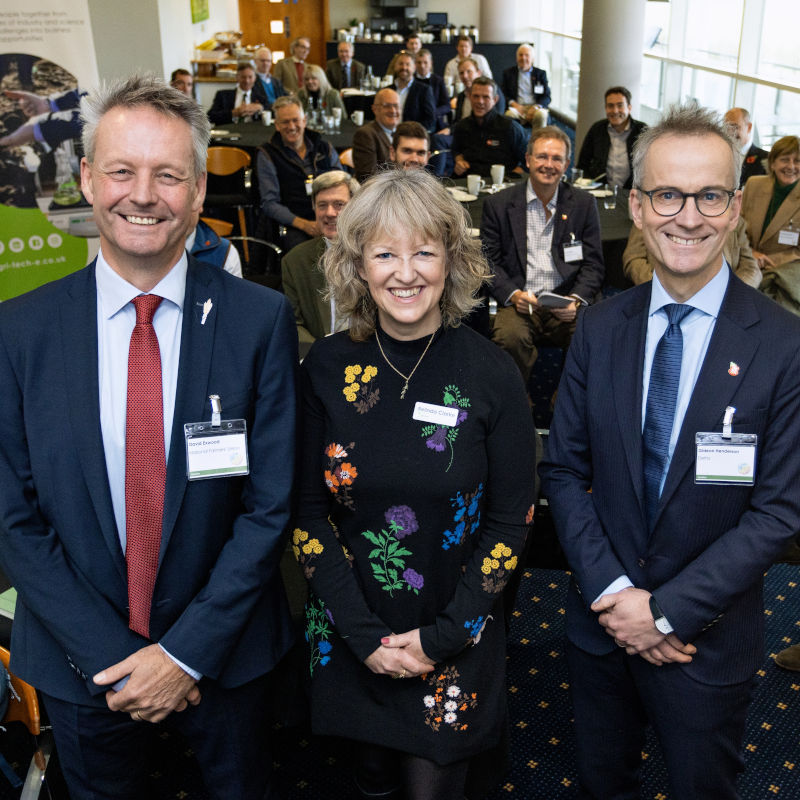
How can technology enable delivery of food, nature recovery, and climate resilience - all at once? The Head of the Environment Agency is asked: what's the national plan for dealing with land use pressures, plus you’ll hear from technologists and land managers working on nature-based and tech-enabled solutions for water, soils and climate adaptation.

Breedr’s virtual value-chain for livestock production supports NFU’s targets

Meet the Network
Agri-TechE
A virtual value-chain for livestock production that ensures quality and supply has been developed by Breedr and has the support of the National Farmers Union, major livestock producers, processors and leading supermarkets.


Breedr is a new precision livestock network that will drive up meat eating quality, help producers to increase productivity and profitability and enable others to source high quality meat online.


John Royle, Chief Livestock adviser at the NFU, comments: “The recent crisis has shown the urgency of upgrading meat value-chains so they are fit for the 21st century. The industry needs to deliver produce of high meat eating quality, consistently, with minimal waste and environmental impacts and to do so in a way that is profitable and sustainable.


“The online network developed by Breedr supports the NFU’s target to reach net zero by 2040. It is creating a virtual supply chain that builds confidence and trust between producers and processors. It will remove the need for buyers to see the animals and ensure that producers are rewarded for meat that meets high welfare and quality standards.”


Ian Wheal, founder of Breedr, comments: “Breedr aims to revolutionise the way that livestock is produced and traded. All producers need to do is share their weight data.”

This video shows how Beef Farmers of the Year 2019 Ian and Michael Sturmer maximise the DLWG of their 6,000 steers using Breedr.

Cranfield University’s new test could guarantee the perfect avocado

Research Digest
Agri-TechE

A technique for measuring the ripeness of avocados could reduce waste by up to 10% and help fulfil consumer demand for ready-to-eat fruit. Developed and tested by Cranfield University, the technology uses a laser and small vibration to test the individual fruits’ resonant frequency, giving a reliable assessment of ripeness without damaging the avocado.

Up to 30% of avocado fruit are currently wasted due to damage caused by testing during grading, with a further 5% loss at retail. The current way to test ripeness is through a pneumatic device which pushes into the fruit, or manual testing.

Cranfield University adapted a technology more often used in automotive factories to test the uniformity of large engineered parts. Laser Doppler vibrometry (LDV) beams a laser at the fruit to measure refracted light and uses small vibrations to test the resonant frequency. The vibrations are caused by a simple automated impact device which taps the fruit. The LDV test was proven to accurately predict the ready-to-eat stage of avocado fruit.

Professor Leon Terry, Director of Environment and Agrifood at Cranfield University, said:
“Hard fruits create a higher frequency than soft fruits, so we calculated the perfect frequency for a ripe avocado and accurately measured this with the LDV test. Leaving the fruit undamaged is of great benefit and vastly reduces waste. The test we have developed could be extended to other fruits.”

With the UK importing nearly 100,000 tonnes of avocados a year and the fruit increasingly in demand, predicting ripeness is of great benefit to suppliers and retailers. An expensive product, the avocados travel on conveyor belts in single file, which means the LDV can test them individually. From there, an automatic sorting mechanism which largely exists already could be used to separate the ripe from unripe fruits.

Research Fellow Dr Sandra Landahl added: “We tested the accuracy of LDV on a real factory line, under lab conditions, and the method has real potential, giving accurate measures of ripeness without damaging fruit. If developed, a simple ‘traffic light’ system could sort the fruit into those that are ripe, for discard or for storage, helping industry tackle food waste at this point in the supply chain.”

Cranfield University is co-leading the new BBSRC Quality and Food Loss Network, a new initiative to link researchers with industry to find solutions for the huge food waste challenges facing the supply chain.
The paper ‘Non-destructive discrimination of avocado fruit ripeness using laser Doppler vibrometry’ is published in Biosystems Engineering.

SlugBot aims to put an end to slimy pests

Meet the Network
Agri-TechE

SlugBot, an exciting new project that aims to develop an innovative robotic technology for autonomous slug monitoring and precision treatment of bio-molluscicides, will enter field trials next year.
SlugBot offers, for the first time,  the potential for controlling slugs after the main pesticide metaldehyde is withdrawn from use.  It is the result of a collaboration between Crop Health and Protection (CHAP), Small Robot Company, COSMONiO and AV and N Lee.
The precision-spraying prototype is due to enter early field trials in summer 2021. Slugs are major agricultural and horticultural pests worldwide. Current control methods rely on traditional chemical pellets, containing either metaldehyde or iron (Ferric) phosphate. Bio-molluscicides are also available in the form of the nematode products, however these are not economical for use in arable crops. The resulting over-reliance on metaldehyde has had a negative impact on UK water systems, as well as on non-target organisms, such as birds and mammals, and there have been moves to ban its use. The initiative is led by Dr Jenna Ross from UK Agri-TechE Innovation Centre, Crop Health and Protection (CHAP), in collaboration with the Small Robot Company (SRC), a British agritech start-up for sustainable farming; COSMONiO, a British artificial intelligence start-up; and Devon based farming enterprise, AV and N Lee. The project is funded by Innovate UK.
Dr Ross said “I travelled the world in 2018 as a Nuffield Farming scholar and noticed a gap in the market for autonomous slug monitoring. In addition, bio-molluscicides are currently too expensive for use in arable crops. Therefore, this game-changing project fills a market demand and opens up an exciting opportunity for farmers.
“The project brings together expertise from our CHAP network of partners, along with input from Small Robot Company, who will deliver expertise in in robotics, mechanical and electrical engineering, COSMONiO, who will assist with artificial intelligence and machine learning through their NOUS AI platform, and AV and N Lee, who will provide the land for field trials and input from the farming community.”
Ben Scott-Robinson of Small Robot Company comments: “Robotic slug control is a natural next step for Small Robot Company. Precision robotics has tremendous potential for agriculture across the board. Slugs are a terrible bane for farmers. They can decimate emerging crops and have a significant impact on yield. But treatment is problematic. Both water and wildlife have been impacted by chemical methods. Legislation is looming – farmers need an affordable alternative.”
James Lee, farmer and partner of AV and N Lee, said “It is brilliant to be involved with a project that has farmers involved from the get-go. This is important when addressing key agricultural challenges, such as slug control, and vital for technology uptake.”
Find out more at chap-solutions.co.uk and smallrobotcompany.com.

ImpacTrack goes undercover to reveal causes of fruit damage

Meet the Network
Agri-TechE
Results from a datalogger –  the shape of a fruit –  have unveiled how fresh produce is damaged on processing lines. Insights from ImpacTrack could help reduce the estimated 40 million tonnes of fresh produce that are being wasted each year in Europe; because it doesn’t meet strict quality control standards.

Research reveals surprising results

Martin Lishman’s  ImpacTrack  is a datalogger encased in a shape that mimics the real produce. Research by the University of Lincoln in the UK used an apple shaped datalogger to investigate the impact of grading and sorting line during commercial operation and recurring patterns of damage areas could clearly be seen. Two surprising discoveries came to light when the packing lines were running near empty, and when several stoppages occurred along route.

  • Greater damage on near empty lines – when the line is more congested nearby fruit was creating a cushioning effect as they bumped into each other and softened the impacts, when the line was near empty significantly higher impact force results were recorded.
  • More damage with repeated stoppages – there was an increase in impact forces every time the conveyor started again, indicating that repeated stoppages have a potentially damaging effect on produce.

After a successful investigation, the University of Lincoln’s research team concluded that ImpacTrack is “An easy to operate device providing instant results to which remedial action can be carried out” and a “potentially useful tool for staff training on good produce handling.”
Managing Director of Martin Lishman Ltd, Gavin Lishman adds “ We have sold a similar product, the well-trusted TuberLog electronic potato to farmers and processors for many years and it continues to be a vital tool for testing harvesters and grading lines. To bring a similar device into the fruit industry was a logical step for us to take.”

3D printing used to mimic fruit

ImpacTrack has a range of more than 16 different waterproof 3D printed shapes that mimic the size, shape and density of the produce being processed to allow it to react to handling machinery in the same way as the real thing. By linking to a smartphone or tablet via Bluetooth, data can be viewed in real time to show potential sources of damage in processing lines. Built-in memory also allows the logger to record both shocks and temperature changes independently, perfect for discreet logging of transport shipments.
Customers have embraced the opportunity to reduce waste that has been presented by ImpacTrack.
Greenyard Fresh UK’s Technical Manager, Sebastian Janik, was one of the first to use the device and it was clear after the first run through their avocado line where damage was being caused: “Following the results of the ImpacTrack tests we were able to implement modifications to the grading and packing equipment which has significantly reduced the impact force to the fruit.” “Prior to the implementation of ImpacTrack, our grading and handling processes were creating significant levels of wastage; however, with a number of straight forward modifications to the equipment our fruit utilisation has increased, with negligible wastage levels.”
“I would recommend ImpacTrack to those undertaking post-harvest grading and handling within the fresh produce sector, especially as the device can be manufactured to the shape and density of the product you are monitoring. This provides a true reflection of the process and I believe it is an excellent device for use in post-harvest handling.” Martin Lishman Ltd have worked closely with both Greenyard Fresh and the University of Lincoln to utilise their research and real-world testing to fine tune the design and range of ImpacTrack shapes, which now includes clementine, pear, kiwi and garlic in addition to a range of apple and avocado shapes and sizes. “Damage to fruit can occur at all stages of the handling process,” says Gavin Lishman, “so ImpacTrack is the ideal tool to help improve these processes and minimise the damage as much as possible.” Gaining further insight into what’s happening along the processing line gives the user not only the opportunity to increase output and reduce waste but also to gain information in advance of potential customer complaints.
Joel Capper, National Sales Manager at Martin Lishman added “It became clear that we cannot offer the customer a product such as ImpacTrack without first understanding their requirements. Growers and processors have specifications to meet and that’s why our brilliant in-house design team can reproduce almost any shape at the correct weight and density to ensure it’s as close to the real thing as possible”.
To find out more about Martin Lishman’s ImpacTrack visit their website: www.martinlishman.com
Sale enquires can be made directly to sales@martinlishman.com

Phytoponics secures £500,000 to scale commercial trials

Meet the Network
Agri-TechE

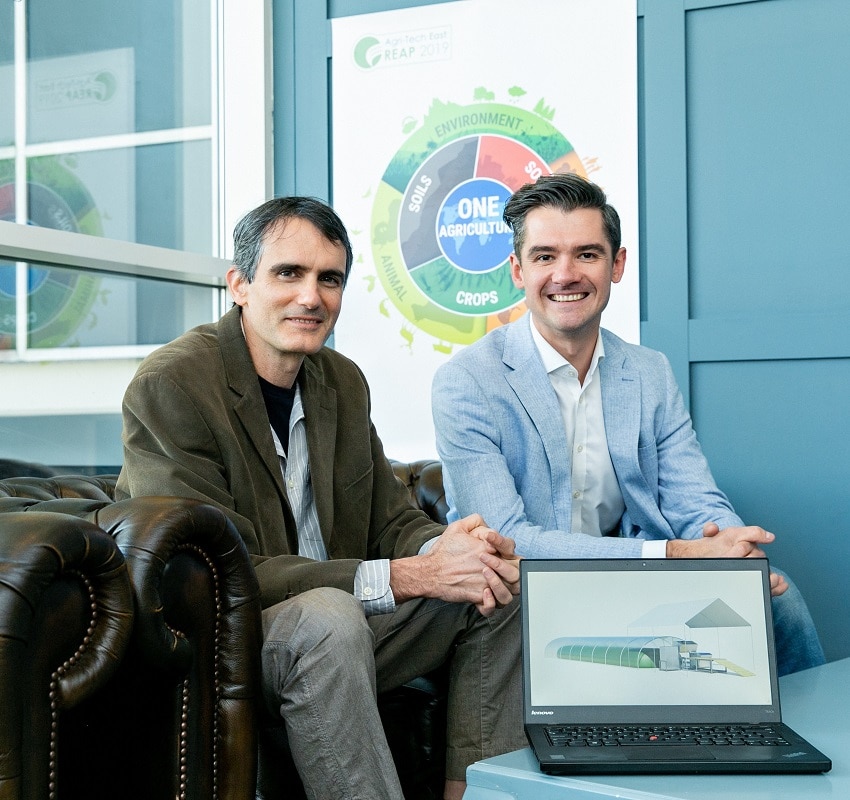
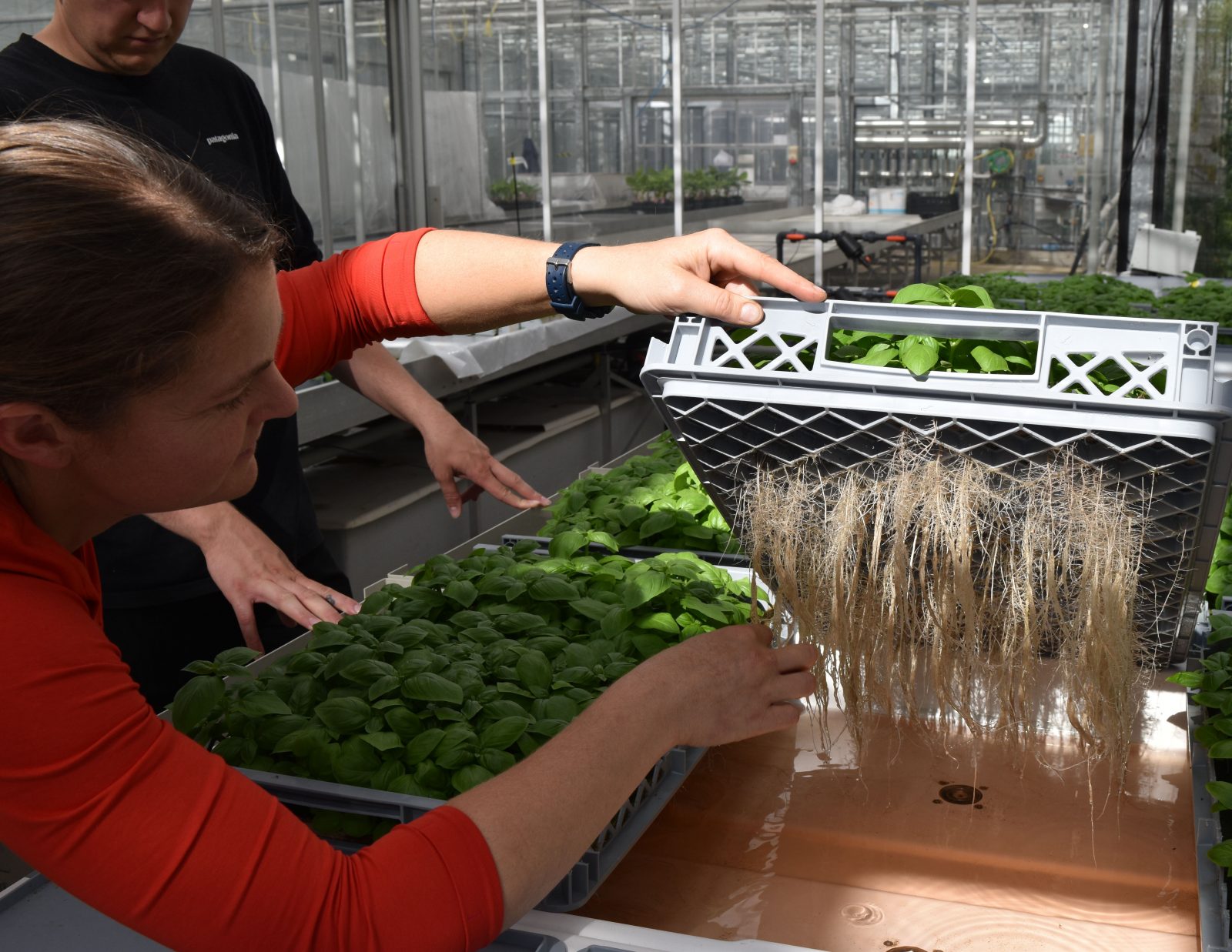
Hydroponics company Phytoponics has just completed a £500,000 equity financing round. The company specialises in the design, development and supply of Deep Water Culture systems for large scale sustainable hydroponic crop production.
In Deep Water Culture (DWC) plants are located in the growing module and the roots of the plant are suspended in the water which has the crop specific nutrient recipe and the correct amount of dissolved oxygen.
In the Phytoponics system, the growing modules are kept oxygenated by built in aerators and  serviced by a computerised nutrient control system. This maintains the nutrient and pH at optimum levels whilst also irrigating the rootzone of the plants. Phytoponics has a number of controlled-environment glasshouses equipped with various configurations of its DWC hydroponics growing different varieties of tomatoes, cucumbers, snack peppers and strawberries in additional to other experimental crops such as nutrient intensive vine crops, soft / exotic fruits and high value crops such as medical grade cannabis.
The company is also working closely with Edward Baarda Limited, a major produce grower and the first commercial grower in the UK to deploy Phytoponics technology at scale growing tomatoes hydroponically without a rockwool substrate.
Phytoponics Co-Founder Adam Dixon is thrilled to have secured the funding which provides the necessary operating cash to scale up trials of its technology whilst enabling it to innovate further. He says: “I’m excited for the future as we move a step closer to achieving our mission to deliver the sustainable benefits of hydroponic agriculture at scale through the global deployment of our substrate-less Deep Water Culture growing solutions”.
Established in October 2016, Phytoponics is headquartered in Abersytwyth and currently has a technical R&D facility in Yorkshire at Stockbridge Technology Centre, the renowned horticultural research and agriculture innovation hub.
The £500,000 investment comes from a number of existing shareholders with match funding provided by the Development Bank of Wales as the company’s first institutional investor.  Investment Executive David Blake, comments: “We are delighted to support the scaling up and commercialisation of the technology. The potential reach for this exciting new solution is global with UK wide and international opportunities already evident and we wish the team every success.”
Mark Hindmarsh, Phytoponics Chairman, added: “I’ve backed many start-ups over the years and have seen very few that have got to the point Phytoponics has with so little resource, in comparison to some of their sector peers.
“Not only have we enhanced and broadened our technology offering since the early experimental trials with the support of Aberystwyth University, but we’ve successfully proven that it works across a number of crop types.
“To close any level of funding in these uncertain times of the COVID-19 pandemic is no mean feat and I therefore would like to personally thank our new investors and existing shareholders for their continued support and belief in the future potential of the business.”
The Phytoponics investment process was managed internally and supported by the company’s legal representative, Acuity Law and Blake Morgan on behalf of the Development Bank of Wales.
Information on Phytoponics can be found at phytoponics.com

John Barrett to chair Agri-TechE Stakeholder Group which welcomes new members
Agri-TechE Article

Agri-TechE

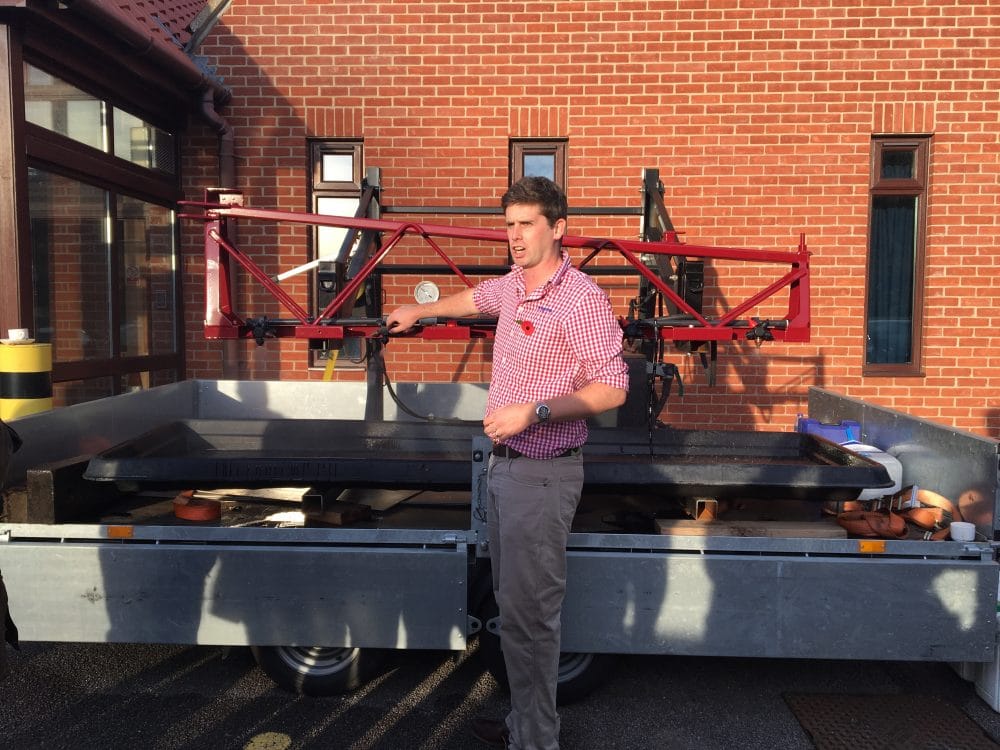
The Agri-TechE Stakeholder Group is one of the ways that we ensure that our activities are member centric and create opportunities for organisations across the value-chain to increase their productivity and profitability. So we are delighted to announce that John Barrett of Sentry Limited has become the new Chair, bringing with him a wealth of muddy boots experience and knowledge of the industry.

John has managed the Ditchingham Farms estate, near Bungay in Norfolk, on behalf of Sentry since 2001 and has been an active member of the Agri-TechE cluster, including chairing the Emerging Agri-TechE session at REAP 2016 and joining the Stakeholder Group in 2017, and he has experienced first-hand the collaboration opportunities offered by Agri-TechE . John says of his new appointment: “As a progressive organisation that empowers innovation, Agri-TechE has rightly received global recognition as a conduit of getting Technology from Laboratory to Field.

“Innovation can only flourish when accessible support is made readily available, and with continual changes in Government Policy, coupled with societal demand – now more than never – a change of field practice is needed to meet that demand. Improving business efficiencies across the industry will lead to a more sustainable industry.
“UK Agriculture offers endless forward-thinking initiatives and I hope in the future that Agri-TechE can continue broadening our members reach across as wide an audience as possible, creating the biggest impact.” We are also pleased to welcome to the Stakeholder Group James Green, Director of Farming at G’s Fresh.
James was appointed in 2019 as Group Director of Agriculture at G’s, one of Europe’s leading international salad and vegetable producers, following five years as the Group CFO and nine as the Commercial Finance Director at G’s.
James says: “I am energised by the opportunity to make a real difference as we enter a golden age of agriculture, and I am dedicated to further developing regenerative, effective farming practices and utilising industry 4.0 techniques – such as big data and analytics, AI, robotics, controlled environment, biotech, block chain and driverless systems – to meet the universal challenge of feeding more people for less.”
See more about the Stakeholder Group here.

Cambridge companies unite to meet the COVID-19 ventilator challenge in 6 weeks

Agri-TechE Article
Agri-TechE

Cambridge Consultants is one of five specialist medical device development organisations to be part of a Cambridge consortium brought together to rapidly develop and manufacture ventilators in six weeks to meet increased hospital requirements, caused by COVID-19.

This initiative unites competing businesses during an unprecedented public health emergency, with hundreds of experts working night and day. Through close cooperation, the Cambridge community has come together to address this challenge.

The consortium includes: Cambridge Consultants, PA Consulting, Sagentia, Team Consulting and TTP plc took up the challenge, with MetLase provided industrial support.

Working to a specification published by the government, established in response to the clinical interventions understood to be effective in the treatment of COVID-19, these companies are still working on separate, parallel designs, but are collaborating closely to support each other. They will apply a range of disciplines, including electronics, software development, mechanical engineering, human factors, design, thermodynamics and regulatory knowledge.

High volume supply and extremely rapid manufacture are the key objectives, while remaining subject to testing and approval through the Medicines and Healthcare products Regulatory Agency – MHRA.
A development process that would normally take 5-6 years is being attempted within 5-6 weeks, and against the background of distributed teams observing government separation guidelines.

MycoNourish raises funding to improve crop production with innovative customised microbes

Meet the Network
Agri-TechE

Around 10 percent of strawberry production goes to waste as it doesn’t meet the quality standards required for retail. To address this, biotechnology company MycoNourish has gained £150k of funding to develop its first two products that harnesses the power of beneficial microbes.
MycoNourish, a spin-out of the James Hutton Institute, has announced the completion of a £150K funding round led by Techstart Ventures which, together with a recent £125K Higgs Award from Scottish EDGE, will allow the company to grow the business and release its first two products targeted at enhancing yield and quality in strawberry and tomato crops.
MycoNourish founder Dr Peter Orrell says: “We are delighted to have recently completed this investment round, which will enable us to bring our first two products to market. We found the pragmatic approach of our investors to align well with our company, and we look forward to working with them to commercialise this exciting opportunity.”

Sustainable improvement of quality and yields

MycoNourish aims to sustainably improve crop production by taking advantage of microbes that work in symbiosis with crops. This is done with the assistance of beneficial fungi, known as ‘mycorrhizae’, which act as a secondary root system for plants, and work with crops to enhance yields.
Growers are facing increasing pressures, ranging from changes in regulations and plant protection products no longer being available to labour shortages, it is vital for growers to maximise the amount of their produce that meets the highest grade. Use of these beneficial organisms can add value for growers, increasing their margins and supporting them to be globally competitive.

Reducing losses

€143B is lost by growers to wastage each year across Europe, and technology such as that provided by MycoNourish will form an important part of a toolset of sustainable improvements to tackle food wastage at the primary production stage, and increase food security.
MycoNourish will launch its first line of products later in the year.

Open innovation in a time of COVID-19

Agri-TechE Blog
Agri-TechE

“Necessity is the mother of invention,” according to Greek philosopher Plato, and never have we had more need of invention and innovation than in the middle of a global pandemic. Suddenly, food and healthcare systems are under unprecedented pressure, global supply chains are hugely disrupted, and business models are pivoting to offer new services or technologies to different customers.
Agri-TechE has long been an advocate of  “open innovation” (OI) and encourages the development of “porous” R&D pipelines. While still on the trajectory of bringing new core technologies, tools or services towards market, OI creates an environment that enables some organisations to absorb novel concepts or technologies from outside the company or sector, and others to push out new ideas for collaborators to pick up and develop for their markets.

Access to a greater pool of ideas

The idea being that OI is faster, cheaper, more efficient and likely to yield better results through being able to access – and contribute to – a larger pool of ideas and expertise.
Key to successful OI are collaborative attitudes, agile business models, and a flexible mindset, understanding that a new idea or technology can emerge from left field and change the game. And accepting that maybe we “don’t know what we don’t know” and being willing to seek answers and insights elsewhere.
OI took a while to get embedded in agri-tech. As we have discussed before, the pharmaceutical industry is an example of an industry more advanced in its adoption of a more open approach to its partnerships and collaborations around innovation. But agri-tech is fast catching up.
So how can we keep up the momentum in a time of lockdown and social distancing?
News reports about the COVID-19 pandemic almost daily reveal new collaborations (between companies, utility providers, government and the third sector). We’ve certainly also seen agility in business models, with growers and wholesalers selling food directly to the public to fill the current gap left by the food service sector and automotive and aerospace companies pivoting their production lines to make ventilators. Norwich Research Park is using their specialist expertise and 3D printing equipment to produce Protective Personal Equipment such as face masks.
A recent webinar hosted by the Lincoln Institute for Agricultural Technologies revealed a major appetite among companies new to agriculture to apply their expertise in robotics and engineering and potentially find fresh opportunities for furloughed staff.
Companies who have traditionally been “competitors” are now working together around a common challenge – in this case, COVID-19 – but it shows the potential is there and must be harnessed post-pandemic.
COVID-19 has also revealed that it is possible to activate much-needed flexibility and agility of working between government, academia and industry, as well as the pivoting of production lines and business models. All Mission Critical at a time of emergency, but also highly relevant for effective working in open innovation.

Also role for enablers of innovation

Finally, a word about the enablers of innovation. Technologies don’t exist in isolation. Appropriate and agile regulation, safety testing, certification, protection of intellectual property and training are all needed for new ideas to reach commercial reality. For open innovation to have an early impact these enablers all need to stay equally as fleet of foot and agile as the technology develops at pace.
We hear a lot about the lessons we are learning due to COVID-19. How we will hopefully emerge from the pandemic with a greater appreciation for our agri-food and healthcare systems, for the planet and for each other.
Let’s hope the fantastic examples of rapid, effective, multi-disciplinary open innovation are another positive legacy of COVID-19.
Examples of Agri-TechE members’ responses to the coronavirus pandemic can be found here.

Uncertainty in food supply fast tracks innovation in agricultural automation

Meet the Network
Agri-TechE

The COVID-19 crisis has shown the fragility of food supply chains. It has also accelerated the labour challenges for the agricultural industry predicted for the UK post-BREXIT. Both these elements have generated interest and a sense of urgency for new methods of automating agricultural processes.

After the Brexit vote of 2016 the agricultural industry had seen the initial impact of restricting freedom of movement for agricultural labour. The lockdown has exacerbated this and brought the issue to a head.
In addition, the unprecedented situation has created chaos in the supply-chains:

  • Consumer buying behaviour has radically changed with less fruit and vegetables being purchased and more ‘stock cupboard essentials’
  • The food service sector has collapsed as demand for ‘food on the go’ and restaurants ceased overnight
  • Supermarket predictions of supply and demand have been disrupted as computerised systems try to apply algorithms not developed for the current situation
  • Lack of understanding of the whole picture and the implications has led to ‘politicising’ shortages, adding further complications to the system.

Labour and supply-chain management are driving a need for improved automation of the industry. To address this an initial webinar on ‘Accelerating Automation’ was hosted by the University of Lincoln on 9th April, attracting over 80 participants, each offering different perspectives on the challenge facing the industry, together with potential solutions. Professor Simon Pearson, Director of LIAT/Professor of Agri-Food Technology at Lincoln Institute for Agri-Food Technology (LIAT) comments: “The industry knew there would be a problem in the event of Brexit but it has become a real problem now.
“Even encouraging people into the fields is not a workable solution; the job requires physical stamina, motivation and an efficient technique. One producer commented that while an average 20-year-old would last a few hours’ celery harvesting, a 50-year-old Estonian mother of four with years of experience could keep going all day. There is also the problem of uncertainty when casual labour is used – there is no guarantee they will turn up if they get a better offer elsewhere.” Simon considers that an alternative to manual labour is required: “What is urgently needed is new methods of automation and now there is a clear recognition of the challenge and the opportunity.”
Participants of the webinar included:

  • Growers and producers of fresh produce
  • SMEs involved in automation, ie robotics companies
  • Established companies that are already using robotics within the fixed environment for example automotive engineering or for clearly defined roles in the outside such as robotic grass cutting at airports

The conclusion: the opportunity is three-fold:

  • Assess the availability of ‘off-the-shelf’ equipment that with investment and effort could be viable
  • Repurpose existing kit that has been developed for a different purpose
  • Invest in emerging agri-tech to fast-track promising solutions

The limiting factors and potential solutions

  • Fast track funding – many of the SMEs currently working in agri-tech robotics are vulnerable. Releasing funds quickly would enable these organisations to accelerate developments and to collaborate.
  • Lack of engineers and skills – although robotics is a new technology in agriculture the discussion revealed that there is a wealth of expertise in robotics in other industries – notably automotive engineering – and many of these skilled engineers have been furloughed.
  • Lack of evaluation sites – the SMEs have been struggling to find real-world sites to pilot and test the technology. Input from producers suggests that produce is being dumped, as it could not be harvested, creating an opportunity for testing technology at low risk to the producers.
  • Lack of capital to scale – the step from prototype to working product and then manufacture requires long-term finance. The robotics industry has struggled to find this commitment. Anecdotal evidence suggests that while many angels are unable to expose themselves to further risk, some VCs and banks do view this as a potential ‘quick win’ with an exit possible in four years.
  • Delay in IP protection – many SME robotics companies have in the past been unwilling to collaborate as IP protection takes years. However this may change as some IP attorneys are investigating a possible fast-track response.

Simon Pearson comments that the first webinar showed that there was appetite for collaboration across the industry and potential for government funding. He is currently preparing a bid for funding and also looking to a distributed model for progressing some of the projects.
As part of this the collaboration has invited contributions from others with an interest in this area.

Call to action – Accelerating Automation of Agriculture needs

Experienced robotics and data management engineers interested in applying their skills to agri-tech automation

Simon comments: “There is a huge resource out there of engineers that have been furloughed and might be interested in exploring the challenge of applying their knowledge to agriculture. We are thinking of some type of distributed development project that these people could contribute to.”

People with knowledge of verification, health and safety for the use of AI and robotics in the real world

Many industries have already overcome the issues that those in the agricultural sector are just facing now. Rather than reinvent the wheel it would be possible to adapt those learnings into agri-tech to accelerate adoption of the technology into the field.

IP lawyers and regulators able to facilitate freedom to operate and to fast-track collaboration between SMEs

Simplifying the legal system so that a pragmatic solution is created that protects IP while enabling collaborative working between academic institutions, SMEs and large corporations is vital for Open Innovation that is commercially viable.

Financial support for scale-up

Any solution needs to be feasible in the real world, so funding is needed immediately to ensure the viability of the existing agri-tech robotics companies and long-term funding is required to ensure that these developments move out of the lab into the field and beyond. If you are able to contribute any of the above please get in touch.

Geobotanics crop yield prediction system offered free during COVID-19 crisis

Agri-TechE Article
Agri-TechE

To help suppliers provide more accurate crop yield prediction Mantle Labs, in collaboration with Agri-EPI Centre,  is offering its unique ‘Geobotanics’ platform to retailers and others involved in the supply chain, free-of-charge for a period of three months.
Geobotanics is an Artificial Intelligence (AI) based platform that mixes imagery from multiple satellites to assess current agricultural conditions and provides early warning of potential supply issues.  The platform works seamlessly even in cloudy conditions to give a clear indication of potential problem hotspots around the country and provide projected crop yields. Jon Pierre, Mantle Labs’ Chief Business Officer, said: “The information provided by our dashboard can be factored into retailers’ procurement and inventory planning. They can work closely with their supplier farmers to tackle problem spots early, determine if issues can be remedied and therefore provide additional resilience and certainty to supply chains of individual items. Government departments can utilise the platform to flag issues relating to national food security.
“Analysis can be farm-level, regional and country level; thereby allowing for constant monitoring and forward planning for a variety of procured produce.”

Crop yield prediction

The Geobotanics platform identifies all standing crops on the ground and indicates crop health for all fields including any anomalies likely to impact the production. The total acreage under cultivation by crop type can be quickly accessed which helps in identifying any shortfall in production at a very early stage. The platform also identifies fallow land, allowing decisions to be taken to bring this under immediate cultivation to fill the gaps in overall demand.
Dave Ross, Chief Executive of Agri-EPI Centre, said:  “Innovation and collaboration are vital to identifying solutions to the issue of potential supply chain disruption and we are doing all we can to support our members, working with Mantle Labs and Amazon Web Services to deliver this offer to retailers and UK Government.”
The recent surge in consumer demand and potential trade disruptions caused by the virus pose a real threat to uninterrupted food supply. To avoid this, retailers, supermarkets, food processors and government departments need to have visibility of what is happening across UK agriculture and be able to quickly monitor food supply chains for forward planning. The Geobotanics platform runs on Amazon Web Services (AWS), which enables Mantle Labs to scale its platform quickly and easily to analyse very large volumes of high resolution crop satellite imagery across large surface areas.
Those interested in discussing this opportunity with Mantle Labs should in the first instance contact Agri-EPI Centre Project Manager, Freddie Reed.

UEA launch project to 3D print ventilator parts and masks

Agri-TechE Article
Agri-TechE

Researchers at the University of East Anglia have launched a project to 3D print ventilator parts, masks and other critical equipment to battle the Covid-19 virus.

Project lead Dr Aram Saeed, from UEA’s School of Pharmacy, said: “It is absolutely vital that universities join forces with healthcare providers and businesses to find creative solutions to fight Covid-19.
“We need disruptive technology to expedite the process of designing and developing key ventilator parts, and we hope to connect with other universities and expertise around the globe.
“It’s still very early days for this project, but the response so far has been amazing. We have a fantastic team of researchers and PhD students working on this, and we will be using our academic networks to help solve the problem.”
The team are looking to collaborate with people with software skills – particularly Solidworks for CAD design, and those trained in 3D scanners and conversion of files to STIL files (printable version).
They are also looking for printers – specifically Fused Deposition Modeling (FMD), that uses thermoplastic filaments, brands Makerbot or similar, and SLA types printers which use liquid resins.
The scope of the project may move into re-purposing or reconfiguring existing ventilators, rapidly developing new ventilators and producing other medical supplies such as PEEP valves and face shields.
Dr Saeed said: “Right now we need help with software, hardware, medical product design, and product testing. We may also need support from engineering sectors for flow sensors, pneumatic units and data processing monitors.”
The team are already collaborating with SyncNorwich (the local tech community) and the Norfolk and Norwich University Hospital.
The initiative is one of many being undertaken at UEA to help the NHS in their fight against the new coronavirus.
Dr Justin O’Grady, from UEA’s Norwich Medical School, is pioneering a portable coronavirus kit which could be rolled out to test NHS staff in weeks. The test would provide a result, displayed on a smartphone, in just 50 minutes after taking a throat swab.
Meanwhile technicians at UEA’s New Science Building have been using the facilities to make hand sanitiser gel, and they have already begun distribution to the NHS in Norfolk and beyond.
If you would like to get involved with this project, please email business@uea.ac.uk.