The Productive Landscape: NatureTech for Profit and Planet
How can technology enable delivery of food, nature recovery, and climate resilience - all at once? The Head of the Environment Agency is asked: what's the national plan for dealing with land use pressures, plus you’ll hear from technologists and land managers working on nature-based and tech-enabled solutions for water, soils and climate adaptation.

Barclays Eagle Labs providing support and guidance for businesses

Agri-TechE Article
Agri-TechE
Barclays Eagle Labs has launched a support site ‘resilience hub’ to provide start-ups with virtual events, content and tools in these challenging times.
Their programme of free virtual events cover a range of topics from cashflow management to building resilience to help entrepreneurs and start-ups navigate these uncertain times.
The help articles as part of the resilience hub not only includes extensive advice and guidance for businesses – from communication and marketing to finance and security – but also for individual wellness, such as stress management, motivation and mindfulness.
The resilience hub also includes the latest news on government support, economic impact and other business-focused coronavirus news.
Take a look at the Barclays Eagle Labs resilience hub here.

Satellite Applications Catapult signposts support for early-stage companies

Agri-TechE Article
Agri-TechE

To support SMEs, start-ups, and other small businesses working in the space industry, the Satellite Applications Catapult is compiling details of support available during this difficult time.
It is also producing, in partnership with UK Space Agency,  Department for International Trade , UKspace, , European Space Agency, ADS and the Satellite Finance Network, a fortnightly COVID-19 Webinar, which will provide an update on how UK space sector companies and academia are being impacted by the pandemic, as well as the latest advice, information and resources available.
This provides an opportunity to engage directly with senior leadership from government and industry and to share how COVID-19 is impacting your organisation.
See details of the coronovirus resources and support identified by the Satellite Applications Catapult here.
 

Remote monitoring provides alternative to field visits

Agri-TechE Article
Agri-TechE

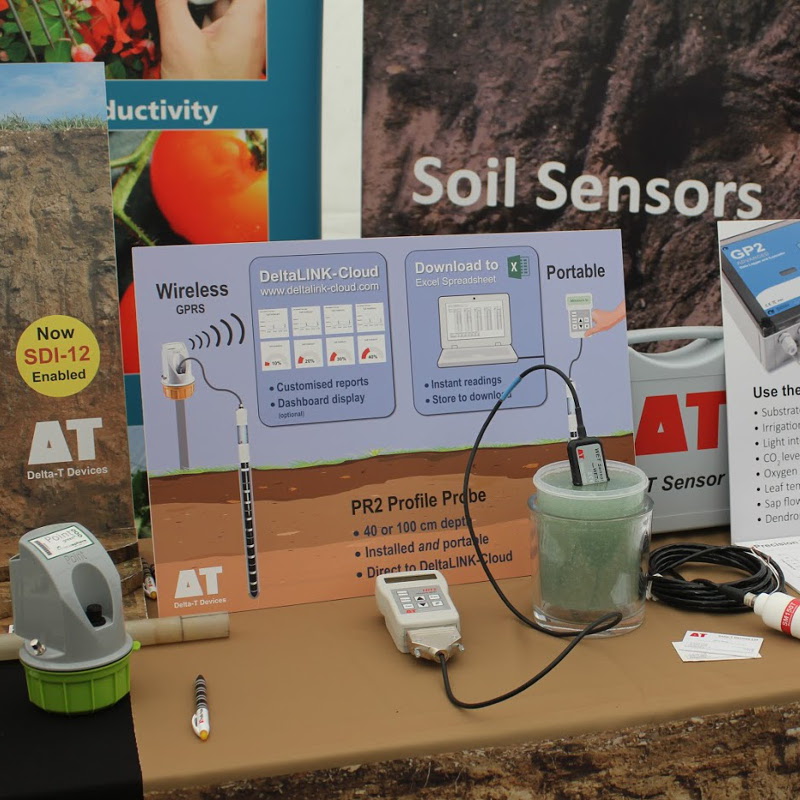
Demand for remote field monitoring has increased following the Coronavirus outbreak, reports Metos, a UK-based brand of wireless, solar powered monitoring systems.
Gottfried Pessl, President and Founder of Pessl Instruments, parent company of Metos, explains: “Every trip to the field costs time and money, but during the coronavirus outbreak it may be impossible to check on all crops. Remote field monitoring systems allow farmers and agronomists to reduce field visits to only when they are really necessary.
“We are already receiving an increase in orders. For example, large tomato growers in the US and Turkey want to install more soil moisture monitoring systems, alongside remote monitoring of insects, climatic conditions, soil nutrition and workforce tracking.”

iMETOS LoRAIN
LoRAIN sensor from iMETOS

“Installing this equipment now will allow them to improve their risk management, while protecting the crop, the environment, their workers and continue to provide food to the population.”
In the UK, the Rural Payments Agency has paused farm inspections, while globally, the GLOBALG.A.P standards setting organisation has extended certificates for six months, because inspectors are unable to travel to farms to perform audits.
“I believe that in the future, permanent and mobile Internet of Things (IoT) solutions, such as remote monitoring, will help government and standards agencies collect some of the data they need to make sure the food we eat is safe, without needing to travel so frequently,” says Gottfried.
Metos produces a range of wireless, solar-powered, remote monitoring systems and an online platform, including weather stations, soil moisture systems, insect traps, crop growth cameras, portable soil and tissue laboratories, trackers of various kinds, and the relevant decision support software.
IoT technology has been available for the past 20 years, but has only been used by a small percentage of farmers.
“Installing such IoT technology on farms will help farmers and their agronomists to identify problems immediately, without needing to visit the field. In some cases, it may even provide greater accuracy than a visual inspection can reveal. Real-time alerts from weather stations allow farmers and consultants to make immediate decisions based on actual field weather conditions.”
Conveniently, METOS® IoT remote weather stations and sensors are very easy to install. So farmers can take advantage of the technology now, to help them manage their crops during the current Coronavirus lockdown, and in the future.

Produce Quality Centre Packaging Challenge

Member News
The views expressed in this Member News article are the author's own and do not necessarily represent those of Agri-TechE.

The PQC are coordinating a network of academic and commercial experts in materials science (recyclable and compostable plastics, biocomposites, edible coatings) supply chains and postharvest plant physiology. We are interested to hear from industry stakeholders, with an interest in the efficacy of films with varied recycled content and biodegradable films for fresh produce.

Gene boost in battle against black-grass

Research Digest
Agri-TechE

A new method[i], enabling the genetic alteration of Black-grass to understand how herbicide resistance develops, has been described as ‘game changing’ by the lead scientist, Dr Dana MacGregor of Rothamsted Research.
A Blight
Black-grass is the bane of winter cereal growers in the UK. Emerging in autumn, as many cereals are being drilled, the weed competes with the crop, cutting yield by around a tonne per hectare, in many cases[ii]. Eradication of black-grass before it sets seed is essential in order to prevent rapid colonisation in future seasons, which can lead to much more substantial losses.
Whilst many weeds can be eradicated with herbicide application, this is no longer an option for many farmers in the UK when it comes to black-grass. The pest has developed resistance to most of the formulas available for use on cereal crops, with UK farmers now increasingly switching to spring cropping to avoid the pest. Recent estimates suggest that total loss of herbicidal control over black-grass could reduce annual wheat yields in the UK by 3.4 million tonnes at a cost of £1 billion[iii].
Dr Dana MacGregor, who leads a black-grass research group at Rothamsted, says “To be able to design and deploy weed management strategies that are both effective and sustainable, we must first understand what allows them to avoid the current control practices.”

Genetic Breakthrough

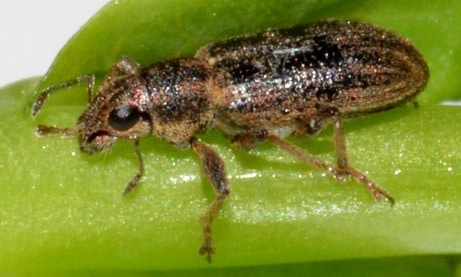
In a first for science, Dr MacGregor’s team have managed to change gene expression in the plant via a plant-infecting virus. This approach, which was originally designed for use in crops, has allowed them to discover how genetic changes allow black-grass to become resistant to herbicides.
The technique first involves editing plant-infecting viruses so that they contain a gene of interest. The edited viruses are then used to infect the plant.
The viral infection can then lead to two different outcomes depending on the virus.
First outcome –  when plants normally fight viruses, plants actively remove any genetic material that has marks indicating it came from a virus. In fighting the virus that has been edited, the plant inadvertently reduces expression of the gene of interest at the same time. This prevents the plant proteins from being made.
Second outcome – while the virus is making copies of itself it uses the plant to create its own viral proteins. When the edited virus infects the plant, the gene of interest is also made into a protein and it can give the plant new or enhanced capabilities.
The team at Rothamsted used the first approach restore herbicide susceptibility to a resistant black-grass strain. Previous studies had hypothesised the gene was involved in metabolic resistance[iv], but the new technique provides direct proof. Inserting the resistance gene into the virus causes the plant to shut down all copies of the gene including its own – and thereby switch off its resistance to the herbicide. The team used two genes widely used in biology in the second approach to make black-grass fluoresce under UV light with the insertion of a gene from jellyfish or to survive lethal doses of a herbicide using another bacterial gene that renders the herbicide inactive.
Dr MacGregor says the research is a ‘game-changer’ for weed genetics. This approach is not designed to be used as a herbicide itself, but it could lead to the design of better herbicides in future. “These virus-mediated techniques allow us to bring black-grass into the lab and ask questions about how specific genes works like we have never been able to before.”
Rothamsted Research is a global leader in crop protection research, and one of the oldest agricultural institutes in the world. This work was supported by the Smart Crop Protection Industrial Strategy Challenge Fund and the Biotechnology and Biological Sciences Research Council, part of UKRI.
Images kindly provided by Dana MacGregor and Rothamsted Research
[i] Macarena Mellado-Sánchez, Faye McDiarmid, Victor Cardoso, Kostya Kanyuka, Dana R MacGregor. 2020. Plant Physiology. pp.00205. DOI: 10.1104/pp.20.00205
[ii] https://croprotect.com/weeds/black-grass
[iii] Varah, A., Ahodo, K., Coutts, S. R., Hicks, H. L., Comont, D., Crook, L., . . . Norris, K. (2020). The costs of human-induced evolution in an agricultural system. Nature Sustainability, 3(1), 63-71. doi:10.1038/s41893-019-0450-8
[iv] Cummins I, et al. 2013. Key role for a glutathione transferase in multiple-herbicide resistance in grass weeds. Proc Natl Acad Sci U S A. 110(15):5812-7. doi: 10.1073/pnas.1221179110.


Crop4Sight has launched the UK’s first dynamic seed rate tool for planning potato crops

Agri-TechE Article
Agri-TechE

Crop4Sight is a new, simple to use App for potato crop yield management. It combines potato crop milestone data captured in the field, such as emergence, ground cover and sample digs, with 30 years of potato data and some clever software to give access to instant insights into potato crop performance.
Optimising the seed rate (t/ha of input seed) is a crucial first step in efficient potato crop production, because it controls the plant, stem and tuber population.  Crop tuber populations need to be matched to the target yield to achieve the required net yield.  To help achieve this Crop4Sight has launched the UK’s first dynamic seed rate tool for planning potato crops. It generates target benchmarks for stem and tuber populations from the very start of the season.
Defining the target seed rate requires consideration of both commercial and agronomic factors, including: commercial tuber size fractions, target final yield, planting date, size of input seed and age of input seed amongst others. Until now it has been difficult for growers and agronomists to easily account for them in their crop planning.
Now Crop4Sight’s seed module combines these factors to allow users to easily to create target seed rates.
All seed rates are fully editable should adjustments be required. Multiple seed rates can be created against each individual stock to reflect different planting dates across fields.
In addition, the seed module also uniquely defines the first benchmark for target stem and tuber populations per seed rate.
New functionality being released later in the Spring will re-forecast these crop expectations based on achieved plant spacing and then achieved stem populations. This will allow Crop4Sight users to benchmark and adjust crop expectations right the way through the season.
For further information please contact admin@crop4sight.com.
Crop4sight

Call to Arms for Pea and Bean Yield Enhancement Networks

Agri-TechE Article
Agri-TechE

Peas and beans fix nitrogen in the soil, making it available to other plants when grown in a rotation, so they are a good break crop between cereals. However, the price gained can vary greatly depending on the quality of the product, particularly its colour, and the yield can often fall short of the biophysical potential of up to 12t/ha.

The crop requires skill to grow well and, despite best efforts by the industry, yields have been falling over recent years. Lack of consistency – both in quantity and quality – mean that peas are perceived as risky by growers, and this has restricted investment in this crop.

Pea YEN and Bean YEN aim to provide growers with benchmarking to achieve a perfect pulse crop and to gain a better understanding of the common factors constraining yields in the UK. They are not competitions and are based solely on ‘Share to Learn’ principles.

To increase accessibility of the networks, entries do not require verified weighbridge tickets for reporting yield, and there are a number of fully sponsored opportunities for entrants.

Powering Pea Productivity

To better understand the UK market opportunity for peas and to create a roadmap for increasing the quality and quantity of the crop, individuals from across the value-chain were brought together in 2019 to participate in a workshop, ‘Powering Pea Productivity’, co-ordinated by the John Innes Centre with support from PGRO and Agri-TechE and sponsored by the BBSRC.

Scene-setting talks outlined the new market opportunities for pea protein, fibre and starch as nutritional and functional food ingredients, the constraints on cultivation and the external impacts on value of the crop. Then the delegates were asked to discuss the challenges and identify the priorities for further knowledge creation.

Seven key themes emerged:

  1. Soil health and improved rhizobia performance
  2. Crop nutrition
  3. Good farm practice and evidence-based technology
  4. Alternative pest control
  5. Alternative disease control
  6. Breeding for improved plant physiology and growth
  7. Development of new food markets

A detailed report was created capturing the information delivered in the workshop, it is available to read here.

Contact details for the Pea YEN and Bean Yen

Membership of a YEN includes:

  • One entrance into the annual Pea YEN benchmarking network
  • One free NRM Soil Health Check
  • A comprehensive report on your crop’s performance
  • One ticket to the Annual Pea YEN Conference

Pea YEN 2020 – visit yen.adas.co.uk/projects/pea-yen or email peayen@adas.co.uk
Bean YEN 2020 – visit yen.adas.co.uk/projects/bean-yen or email beanyen@adas.co.uk
Or contact PGRO directly by emailing roger@pgro.org
John Innes Centre is also involved in a number of projects to improve breeding – PCGIN is featured in GARNISH December 2019 / EDITION 32 PLANTED: GENE EDITING IN PLANTS

Sponsors and funders of the Pea Yen and Bean Yen:

  • ADAS
  • BASF
  • NRM Laboratories
  • PGRO
  • Lancrop Laboratories
  • Princes Group

New AI modelling to mitigate risk for food production

Agri-TechE Article
Agri-TechE

Is it possible to predict extreme events? Increasingly yes. Chris Nankervis, CEO of Weather Logistics, says the company is confident it now has the best tools in place to reliably inform growers about the likelihood of a deluge. This is one of the approaches to mitigating risk to be discussed by four experts in a free Agri-TechE webinar on 29th April.
Dr Belinda Clarke, Director of Agri-TechE , comments: “The farming community is used to managing risk but extreme weather events appear to happening with greater frequency. We are asking a number of agri-tech entrepreneurs to explain how new AI-based tools can help mitigate the impact of weather and other ‘acts of God’.” Chris Nankervis explains that large irregularities in the usual patterns of rainfall across the British Isles are largely a result of our Atlantic jet stream airflow, a high-altitude ribbon of fast-moving air that steers our weather systems. He says: “In recent years, this has resulted in a marked increase in the volatility of farming incomes.”
Weather Logistics can detect disruptions in the jet stream throughout the year and uses this, and other data, to create bespoke weather forecasts. Farmers can use this information to improve decision-making such as delaying or bringing forward drilling or other farming operations to avoid adverse seasonal weather conditions.
Chris estimates that optimising crop scheduling for those in the horticultural industry could increase profit margins by up to 20% and ensure that delivery programmes are met with food retailers. Offering location-level risk assessments is the aim of Cervest, which is developing the ability to predict extreme events anywhere on the planet.
By analysing climate and historical data, the company will be able to make predictions on an extreme event’s specific impact to any natural and built asset (crops, forest, flood plains, utility infrastructure, buildings) on any parcel of land, globally.
The result, explains Mark Hodgson, Cervest’s Chief Business Officer, is the development of meaningful ratings and metrics that can be used to help manage exposure to extreme precipitation and heat events, as well as other natural hazards such as flooding. Users are able to ‘score’ risk exposure and make objective, informed decisions on the assets they manage. Mark says: “Customers need to understand whether the situation they see now is a trend: it’s raining a lot now but is that normal for this time of the year or is it an anomaly? Is there a new weather trend that is going to last a generation? Are we in another cycle lasting 2-5 years? That’s important to know as it has bearings on longer term planning and investment.”
Read more from Mark here. Joe Brooker, Senior Analyst at Stable Group Ltd, argues that, while weather predictions are useful, the risks farmers have to deal with are interconnected – and price and yield are the largest. “Price and yield risk are linked. Weather impacts production, which can impact yield; yield can impact price but this depends on scale, timing and other factors. These factors can also occur independently. Weather can be volatile, but not as volatile as price.”
Stable Group Ltd has developed an insurance model that uses independent commodity indexes to protect against price volatility. Farmers are able to fix the price and the insurance will pay out if the price drops. The platform runs 62 trillion simulations per week to forecast prices and spot future pricing signals, balancing its risk portfolio across crop, geography, time and place.
Read more from Joe here. More information about how to participate in this free webinar ‘Keeping a Sunny Outlook – De-risking Agriculture Through Weather-Tech’ on 29th April 2020 is available from our events page.

ClearSky technique to overcome cloud cover issues

Agri-TechE Article
Agri-TechE

Cloud cover is a major problem for satellite imaging as it distorts the data reducing its accuracy for applications such as early warning of crop disease. This issue is being addressed by ‘ClearSky’, a technique being developed by scientists at the University of Hertfordshire which uses radar data to fill the gaps caused by cloud cover.
AI sees through the cloudsThe ClearSky project is led by astrophysicist Professor James Geach and enabled by Goonhilly Earth Station’s deep learning platform and supercomputer.
Professor Geach comments: “Our goal is to create a continuously updated database of land, ocean and atmospheric data: essentially, a “living Earth’ in database format.”
A commercial spinout called DeepEO is planned for later this year. Professor Geech believes that early adaptors will include insurance firms, commodity traders, retailers and the agricultural industry.
For example, Agrimetrics, plans to pre-link ClearSky to more than a billion agricultural data points and make it available for all 2.8 million UK fields on a weekly basis.
Many applications now use NDVI  (normalized difference vegetation index)  to assess the presence of live green vegetation from satellite imaging and Leaf Area Index can be used to measure the plant canopy, giving an indication of the vigour of its growth.
According to Richard Tiffin, Agrimetrics Chief Scientific Officer the use of satellite data in agriculture is “exploding” he says:  “Terms such as NDVI and Leaf Area Index are becoming increasingly common, as  people start to understand the huge potential of this technology. However, cloud cover has been a barrier to practical application.”
By using ClearSky, Agrimetrics plan to offer the UK’s most regularly updated and uninterrupted stream of agricultural Earth Observation data, with the potential to improve in-season yield predictions, crop management and agronomic innovation.
 

From Farmer to Pharma – A teaser of things to come!

Agri-TechE Article
Agri-TechE

Disruptions to business give an opportunity to try something different, and so Agri-TechE is moving into virtual conferencing for its Pollinators; first up is de-risking weather in April followed by an online webinar on Cannabis as a trailer for our ‘Farmer to Pharma – and Beyond’ event which is being postponed.
The ‘From Farmer to Pharma – a Teaser of Things to Come’  webinar on 14th May aims to give attendees a heads-up on the benefits and issues involved with growing Cannabis – billed as the new Wonder-Crop by many.

Cannabis is a ‘wonder-crop’ according to many

Cannabis has many strengths.  Its fibres can be used to create extremely resilient materials. Its seeds and fibres together are a nutritious basis for food products. And its buds or and leaves contain a highly profitable health supplement with potential medical significance, called CBD (canna-bi-diol).
However, the high potential of the Cannabis crop (Cannabis sativa L.) is not being realised in Europe, and certainly not in the UK, where one considerable hurdle stands in its way: misunderstanding.
Cannabis sativa is a single species of plant, known by many names, depending upon which parts of the plant are taken, and how they are used:

  • Hemp is the term for a cannabis crop grown for its fibres, with very low levels of CBD and other extracts present.
  • CBD is the name of the most abundant extract taken available from the leaves of the plant, touted for its health properties.
  • THC (Tetra-Hydro-Cannabinol) is the name of an extract that has psychoactive properties and is illegal in the UK and heavily regulated in most EU member states.

The conflation of Hemp and CBD and THC is a misunderstanding that filters through the general public and has ended up being captured in UK and EU law. The effect is a legal landscape that is “confusing, contradictory and illogical,” which harms market stability, consumer confidence, and simply makes it harder to produce and process the crop.

Webinar with Hanway Associates

Navigating this landscape, and exchanging thoughts on Cannabis in general, is the focus of the upcoming webinar, ‘From Farmer to Pharma – a Teaser of Things to Come’, which will be hosted on Zoom and include speakers from strategic consultancy organisation Hanway Associates, which has recently announced Crop17 – a new initiative to support the develop medical cannabis facilities, in association with Savills.
“Growing cannabis legally in the UK is difficult, but far from impossible,” comments George McBride, CEO of Hanway Associates. “The Hanway team is very excited to connect with the members of Agri-TechE for this ‘From Farmer to Pharma’ webinar. Since the legalisation of medical cannabis in 2018, excitement has grown for this nascent sector. Now is the perfect time to take a look at how UK farmers can take advantage and make the most out of this new opportunity that growing hemp and cannabis offer.”

How to join the webinar

Ahead of the conference, attendees will receive a link, which will initiate download of the Zoom app. Upon completion, the app will open and you will be given the chance to enter a virtual waiting room, where you can test your video and audio equipment before being admitted to the meeting itself.
In-meeting tools such as the ability to raise a virtual hand, or privately message another attendee, make for a really productive conferencing experience.
Agri-TechE sees online conferencing as a brilliant way to cut carbon emissions, streamline meetings and keep on going in the wake of COVID-19.
From Farmer to Pharma – A Teaser of Things to Come will take place at 14.00h on 14th May 2020, via Zoom.
Join us on the ​14th May ​to get a taste of the future, in more ways than one.
To register click here

‘From Farmer to Pharma’ is back for 2021!

After the success of last year’s teaser event, we are back this year with even more speakers working in the hemp and medicinal cannabis sector.
Join us on 12th May to meet the key players across the value chain and learn more about what is involved in the broadacre and controlled environment production of hemp and cannabis, new variety development, processing solutions and needs, regulatory requirements and potential routes to market.
Members £50+VAT/Non-Members £85+VAT with 5 BASIS points on offer

Young Innovators’ Forum Conference 2020: Innovation to Balance Conservation and Farming

Agri-TechE Article
Agri-TechE

March 2020 saw Agri-TechE host the third of our Young Innovators’ Forum Conferences. A group of early agricultural career professionals and those working in related industries met at the Morley Business Centre to hear from a great line-up of speakers and take part in a series of workshops and a farm tour. The event was kindly hosted and supported by The Morley Agricultural Foundation.
The theme of the day? Innovation to balance conservation and farming. With the ever-increasing focus on feeding a growing population as well as the need to improve the health of our environment, we wanted to consider how innovation from across industry, science and research may help to balance out these, often conflicting, priorities.  We invited experts from science, technology and agriculture to come along and talk about the work they are doing to address this balance.

A Whole Farm Approach

We started off the day with a great talk from Charlie Curtis, Head of Future Farming at G’s – Cambs Farms Growers.  After giving a short introduction to the East Anglian farming company and their values, Charlie went on to talk about why the G’s operations in the Fens is so vital to their operations.
In the summer seasons the Fenland operation produces 80% of the Summer season salads for the UK Group. The importance of this area has not gone unnoticed, and an NFU project report has been published which highlights the importance of the fens for food production, water management and wildlife with the aim to regenerate the Fens. Charlie touched on some of the strategies the business has looked to put in place to maintain this prime agriculture land whilst improving yields. One of them was looking at protecting soils, as one of the biggest issues with farming the area is the Fen Blow which can see 1cm of soil lost per year due to high winds.  A second project is looking at ‘nutrition farming’, considering and providing more about of what the plant needs, rather than what it wants, which can induce greater resistance and resilience in the plant. The final strand is focused on improving the biodiversity by creating a greater balance through a more holistic approach to farm operations.

“Conservation is not just about habitat creation – it is about creating balance between each of the areas and getting them to work alongside each other – not in competition but enhancing and protecting.”

Using the core principles of Regenerative Agriculture the business began to consider how they could plan for a more holistic approach, however, one central consideration was missing: conservation of wildlife and biodiversity. The G’s Camb’s Growers came up with their ‘Whole Farm Approach’ which considered the cyclical nature of all aspects of Regenerative Agriculture. This has meant that work has been done to:

  • Reintroduce wetland areas;
  • Plant pockets of trees;
  • Compost and;
  • Reintroduce livestock back into the rotation.

The work that has already been done has seen some positive impacts including species returning to the area, some of which are beneficial to pest control. Charlie highlighted that all the decisions have to ultimately be made to ensure that yield levels are maintained as well as profits for the business, but there is scope for on-farm activities to develop and support the wider landscape without impacting these (and sometimes supporting them!).

How can environmental conservation and food production best be reconciled in the UK?

Next up was Lydia Collas, a PhD student in the Conservation Science Group at the University of Cambridge. Opening her talk with some context for the basis of the research, Lydia highlighted the decline in wildlife, more specifically birds,  over the last 50 years, with only a few species bucking the trend in more recent times. This was presented alongside the UK’s drive to achieve net zero in order to meet the climate change challenge.
In agriculture, Lydia presented the need for a two- pronged approach,  with a combination of cutting emissions from farming as well as trying to find ways to store carbon. Within Lydia’s research she is looking at the two possible strategies for reconciling food production and conservation. These consist of land sharing and land sparing. Typically in the past land sharing has been supported by agri-environment schemes with very few supporting land sparing.
A study was conducted looking into increasing food production in two areas, the Fens & Salisbury Plain. In both locations, population sizes of varying species were higher under land sparing than conventional agricultural management but variations on land sparing performed even better (Finch et al, 2019). Across the world, research has proven that under a land sparing approach, there is greater biodiversity.  However, in the UK some may consider that we have already lost the species which are habitat specialists due to years of land change and that now we have farmland-adapted species which may then be lost under land sparing. As part of her PhD, Lydia is looking at: farmer attitudes towards sparing; the reduction in food production and the feasibility of monitoring land sharing and sparing, with input from farmers themselves. This involves farmers answering questionnaires comprising questions on options that differ in terms of spatial extent, direction and payment rate. This is intended to help researchers understand what it would cost to pay farmers to take up different approaches. This will enable a bigger picture understanding of the costs associated with delivery of the benefits associated with sparing and sharing for a fixed target.

Farm Tour

David Jones, Morley Farm Manager and John Wallace, Morley Agricultural Foundation Chairman, showed the attendees around the farm. David talked about the history of the farming at Morley as well as the Foundation. After this he discussed the on-farm research carried out by Niab TAG team, as well as the work done with the British Beet Research Organisation.
David explained the different crops which are grown, and provided some weather data gathered from weather stations which are located across the farm. Weather presents a real challenge for UK farming due to how variable it is which was evidenced by the weather station data we were shown. John then provided some context around the land needed to grow 1000 tonnes of wheat. This highlighted the need to grow as efficiently as possible in order to a) meet the growing demand for food, as well as b) provide areas for conservation purposes.
On the farm they are working on a clean water project which aims to make the water leaving the farm as clean as it possibly can be. As the farm sits at the top of the water catchment most of the water coming onto the farm is from rainfall. Work is being done to ‘slow the flow’ of the water, so that it drops its load as it leaves the farm to ensure that it is as clean as possible.
We learnt about the use of manure from a nearby farm which is spread on Morley’s fields to improve the soil quality and provide nutrition. Morley provide some hay as feed for the livestock on their neighbouring farm. This collaborative work between farms also highlights the benefits of a circular economy and making the most of all inputs and outputs.

Afternoon Workshops

Soils – David Clarke, Soils and Farming Systems Senior Technician, Niab TAG
David talked through the importance of soils and showed delegates three samples of soils to explain what a healthy soil looks like. Some of his research is on the impact of further learning around soil amendments, especially paper crumble, which could be seen in one of the soil samples. Paper crumble historically had a bad press as a soil amendment, but by using a different process to produce the paper crumble, results have shown crumble to be effective in helping retain nitrogen and improve soil structure, unlike earlier iterations. He also demonstrated how compaction of the soils can be assessed with a soil penetrometer. The soils’ absorptive capacity was demonstrated by using a specially designed tube filled with water, which when placed in contact with soil surface allows measurements of how long it takes water to drip into the soil. There was also conversation around how crops retain nitrogen over winter and the effect of cover crops and whether they can help retain that nitrogen for use in spring crops. Water – Alison Smyth, Water Sensitive Farming Advisor, Norfolk Rivers Trust
Alison talked about the role of the Norfolk Rivers Trust, mentioning the particular importance of the chalk streams in the Broadlands catchment. Trying to slow the flow of water is a focus of her work with farms. Participants learnt about different methods which farmers are being advised to use. These include:

  • The use of grass buffers (as seen in the picture) to reduce the energy of the water so that it can no longer hold any load (silt) trying to reduce the silt making it into the ditch.
  • Using different machinery to reduce compaction in wheelings and redirecting water back into the crop and away from tramlines. This avoids tramlines becoming channels for water to wash away the topsoil.
  • Silt traps (as seen in the picture) again reduce the flow of the water. A noticeable difference could be seen in the water before and after the silt trap.


Considerations which were also highlighted were the different measures which would need to be taken for different crops, growing cover crops to protect bare soils, as well as thinking about where gateways are, which can provide a direct path for water coming off the fields onto highways, for example. Hannah McGrath, Waitrose PhD student based at Rothamsted Research and University of Reading Hannah introduced the group to her PhD project which is exploring the use of flower margins in carrot crops to encourage natural enemies for the pests which may affect the crop.
As a group, the attendees then considered the costs of this approach to pest control, as opposed to traditional spraying, and how the two might differ. A key focus of Hannah’s research is in calculating the costs and benefits for carrot production of encouraging beneficial insects, in order to give growers a better idea of the financial impact of taking this kind of approach over solely relying on insecticides. Hannah also directed attendees to consider that we should care about biodiversity not just for the financial benefits it can provide but ultimately for its own sake – just because it is there.
Each speaker provided valuable insights into how they are trying to address the balance of farming and conservation through innovation. We were privileged to have such a variety of speakers from different backgrounds, science and farming, as well as real life examples of where work is being done on-farm. Throughout the sessions attendees gained insight into large scale work being done across business and research projects into balancing farming and conservation, while still ensuring a high yielding profitable business, as well as ultimately highlighting how interconnected all aspects are in the greater picture.
Thank you to all of our speakers, attendees and Morley Agricultural Foundation for their continued support.
Reference:
Finch, Tom & Gillings, Simon & Green, Rhys & Massimino, Dario & Peach, Will & Balmford, Andrew. (2019). Bird conservation and the land sharing‐sparing continuum in farmland‐dominated landscapes of lowland England. Conservation Biology. 33. 10.1111/cobi.13316.

Can AI help farmers mitigate the impact of weather?

Agri-TechE Article
Agri-TechE

New global land use mapping, jet stream led forecasting and novel ag insurance to off-set price volatility to be discussed at Agri-TechE event ‘De-risking Agriculture Through Weather-Tech

How can you manage the risk created by weather? AI and data modelling are offering new ways to mitigate the impact: bespoke weather forecasting to optimise crop scheduling; a novel way to predict extreme events, and an insurance policy to protect against price volatility are to be discussed at an Agri-TechE event ‘Keeping a Sunny Outlook – De-risking Agriculture Through Weather-Tech’.
The recent heavy rain was predicted back in December in a long range forecast by Weather Logistics, as CEO Chris Nankervis explains: “Large irregularities in the usual patterns of rainfall across the British Isles are largely a result of our Atlantic jet stream airflow, a high-altitude ribbon of fast-moving air that steers our weather systems. In recent years, this has resulted in a marked increase in the volatility of farming incomes.”

Jet stream impacts weather patterns

Weather Logistics can detect disruptions in the jet stream throughout the year and uses this, and other data, to create bespoke weather forecasts. Farmers can use this information to improve decision-making such as delaying or bringing forward drilling or other farming operations to avoid adverse seasonal weather conditions.
The decade of 2010-2019 was the hottest since records began according to the Copernicus Climate Change Service (C3S), which also revealed that each of the last five years have been the warmest on record. Chris continues: “There are now concerns that stagnation of the jet stream is leading to changes in the Arctic and more extreme weather events. The impact of this would be more frequent and intense extreme weather conditions such as prolonged heatwaves, droughts and more widespread and severe flooding events.
“Unlike temperature, rainfall is irregular in both space and time. However, using many computer models with input from several weather providers, we are confident that we now have the best tools in place to reliably inform growers about the likelihood of a soaker.”
Chris estimates that optimising crop scheduling for those in the horticultural industry could increase profit margins by up to 20% and ensure that delivery programmes are met with food retailers. He says: “Integrating long-term weather forecast data into decision-making platforms offers more efficient land use and the opportunity to optimise fresh produce supply, reduce pesticide use and improve smart water use.”

Risks interconnected

Joe Brooker, Senior Analyst at Stable Group Ltd, argues that, while weather predictions are useful, the risks farmers have to deal with are interconnected – and price and yield are the largest. “Price and yield risk are linked. Weather impacts production, which can impact yield, yield can impact price but this depends on scale, timing and other factors. These factors can also occur independently. Weather can be volatile, but it is not as volatile as price.”
Stable Group Ltd has developed an insurance model that uses independent commodity indexes to protect against price volatility. Farmers are able to fix the price and the insurance will pay out if the price drops. The platform runs 62 trillion simulations per week to forecast prices and spot future pricing signals, balancing its risk portfolio across crop, geography, time and place.

Managing risk by predicting extreme events

The use of AI to manage complexity and mitigate climate change is being taken to the next level by Cervest. Chief Business Officer Mark Hodgson says the company is developing the ability to predict extreme events anywhere on the planet, so governments, businesses and communities can better manage their current and future exposure to climate risk.
“After three years of VC-backed machine-learning research and development, global data acquisition and modelling, and market testing, Cervest is bringing to market an independent climate data platform that enables users to ‘score’ risk exposure and make objective, informed decisions on the assets they manage – be they natural assets such as crops and land, or build infrastructure assets, such as buildings, roads, utilities. “In 2020 we will be offering location-level risk by gathering discreet signals from a wide array of data sources that can be transformed into meaningful ratings and metrics that the food, agriculture, insurance and financial sector can use to help manage their exposure from extreme precipitation and heat events, as well as other natural hazards such as flooding. We will be starting with UK and Europe before extending into the US.”
Mark continues: “Our unique Earth Science AI offers anyone a personalised prediction of climatic and extreme weather events in real-time on any area of land. Anyone who owns or has an interest in a particular land-based asset – be they an individual, grower, business or government agency – will soon be able to access these personalised, dynamic predictions to make more informed decisions on how to respond.
“The platform also enables stronger collective decision-making and more resilient value chains. Climatic and extreme weather events do not discriminate. We need to make sure that everyone in a connected economy is as secure as possible from an increasingly volatile climate.” Dr Belinda Clarke, director of Agri-TechE , comments: “The falling cost of computing power and the convergence of technologies such as imaging, remote sensing and monitoring, AI and data modelling are enabling a big picture view that until now has been too complex to capture and comprehend. Weather is a great example of where a systems approach to decision making would offer immediate benefits – I am looking forward to hearing the discussion.”
The Agri-TechE Pollinator event ‘Keeping a Sunny Outlook – De-risking Agriculture Through Weather-Tech’ will be run as a virtual event, on 29th April 2020 for more information visit the event page.