The Productive Landscape: NatureTech for Profit and Planet
How can technology enable delivery of food, nature recovery, and climate resilience - all at once? The Head of the Environment Agency is asked: what's the national plan for dealing with land use pressures, plus you’ll hear from technologists and land managers working on nature-based and tech-enabled solutions for water, soils and climate adaptation.

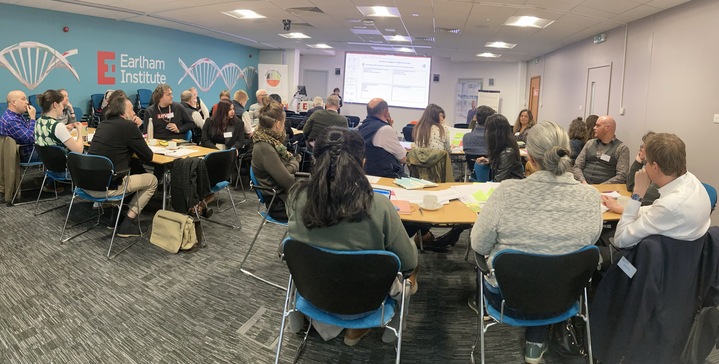
ELMs Workshop Output

Agri-TechE

PheroSyn to develop supply of novel pheromones for the pear gall midge and the pear leaf midge

Agri-TechE Article
Agri-TechE

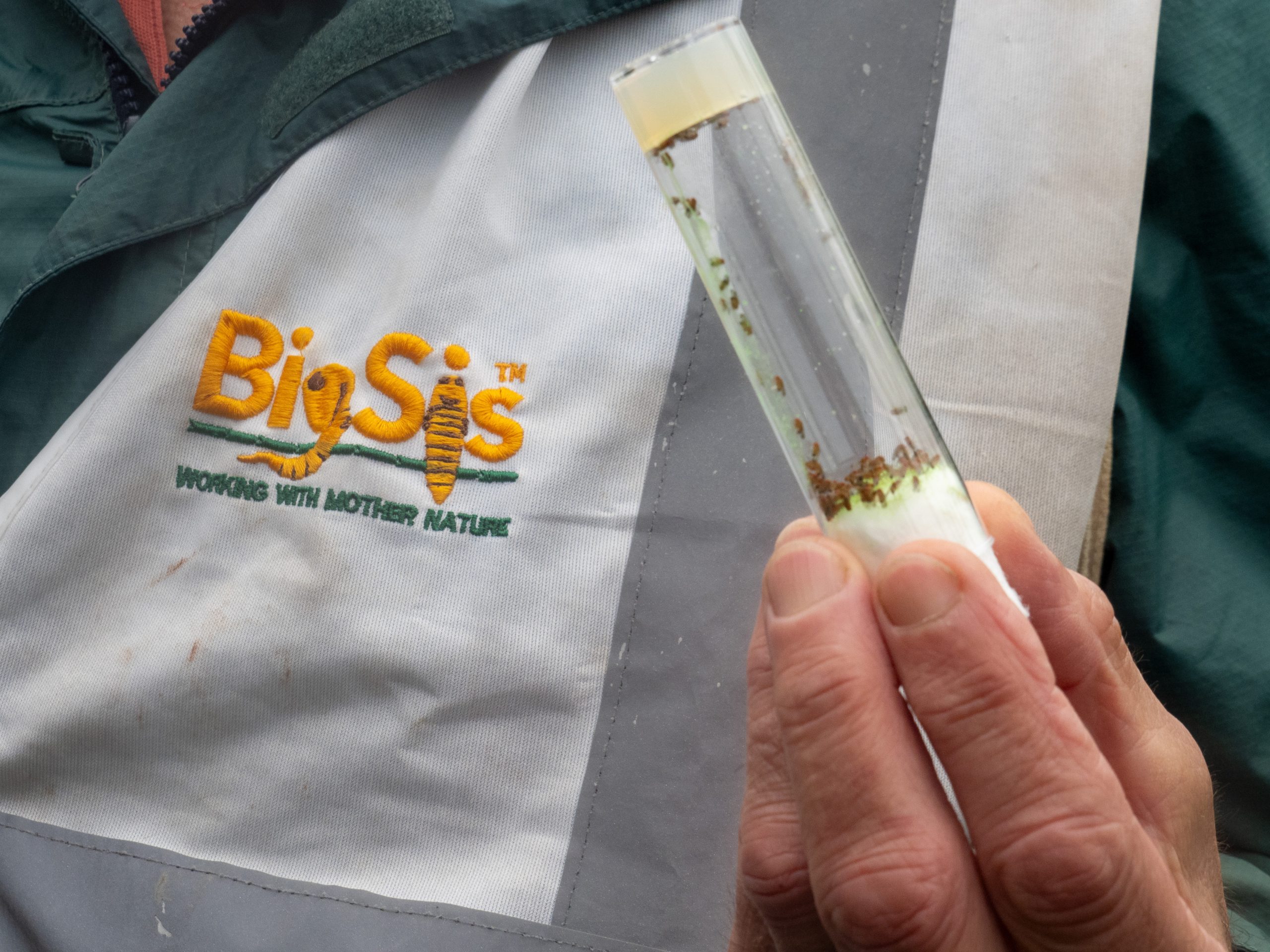
Pherosyn midge pheromone pear orchardRothamsted spinout PheroSyn has secured a £0.5m Innovate UK smart grant to develop and validate new high-value pheromones for the management of pear gall midge and pear leaf midge, significant pests in fruit production.

Insects use pheromones to communicate; synthetic pheromones can disrupt mating and lure pests away from crops, and can also be used in traps.

Pheromones form a critical component of Integrated Pest Management (IPM), but there are currently very few fruit midge pheromones available compared with other crop pests. This 36-month project is a collaboration with Rothamsted Research and Andermatt Biocontrol UK, and will build on recent technological advances at PheroSyn and Rothamsted Research.

The efficacy of the pheromone products in trapping and monitoring midge populations in fruit production systems will be confirmed by Andermatt Biocontrol, a leading supplier of biological-based plant protection and pheromone products to farmers and growers. The grant will fund three years of field validation trials with Andermatt Biocontrol.

Importantly, the project also includes end-user validation, and the establishment of a supply chain for R&D, manufacture and distribution of the products to farmers and growers.

More information about PheroSyn. 

Controlling light in farming

Topic Overview
Agri-TechE

Huge appetite for agrifood investment

Agri-TechE Blog
Agri-TechE

The much-anticipated AgFunder report for 2022 has landed, revealing the voracious global investor appetiteAgFunder 2022 for agri-food tech continues. The report reveals pretty much a steady-state position for tech for on-farm solutions but an explosion in e-grocery and alternate meats and novel foods.

Highest ever UK deal flow

UK-based deals reached £1.3bn in value, its highest since AgFunder has been collecting the data, 2020 saw £1.1bn of investment.

According to the report, a whopping $57.1 bn was invested into agri-food tech companies in 2021, an increase of 85% on 2020. This is accompanied by more investment in late-stage deals, revealing that the global sector has, indeed, grown up.

UK ranks 5th for deal value

Over the last 8 years Agri-TechE has seen the agri-tech sector mature and the investment has grown with the businesses. In fact the UK lies 5th in the global ranking of deals by country just behind Germany, India, China and the USA.

Notable UK deals among our membership that have contributed to this figure include:

Interest in different streams of Agri-TechE has shifted

So-called “upstream” technologies (which include on-farm tools, technologies and services) represented nearly $20m of investment, spread of 1846 deals.

The interest in different areas of agri-tech, however, has shifted.

Measure to manage – farm management software companies accounted for nearly 10% of deals – an increase of 29% from 2020. Investment in companies active in this area, along with sensing and “Internet of things” technologies increased by 51% year on year – revealing the continued demand for the “measure to manage” approach on-farms and the central role of data-led decision-making.

Indoor farming – globally, investors also appeared to have renewed appetite in technologies for indoor farming in 2021 (with a UK example being Scotland’s Intelligent Growth Solutions receiving a £42m Series B investment).

Given the continued expansion of indoor farming facilities in the UK, and enhanced focus about food security resulting from Brexit, the pandemic and the situation in Ukraine, it is clear that investors believe the potential for controlled environment production remains significant.

Ag-biotech – gene-editing and synthetic biology, with molecular tools secured around 5% of the global investment – the acceleration of this sub-sector will no doubt also be keenly following regulatory positions, particularly in Europe, which will affect investor confidence.

E-grocery – there is still no doubt, however, that all of this is dwarfed by e-grocery which attracted over 1/3 of all global investment.

With the impact of the pandemic, and challenges facing the supply chain, it is clear that our relationship with how consumers obtain their food has changed forever. And with the increasing focus on net zero and addressing climate change, the race is on for these technologies to deliver at all levels of the value chain.

Read the 2022 AgFunder AgriFoodTech Investment Report on the AgFunder website here.

AHDB Appoint Agrimetrics as Data Innovation Partner

Member News
The views expressed in this Member News article are the author's own and do not necessarily represent those of Agri-TechE.

AHDB has embarked on a project to make their data work harder for levy payers. To support this vital work, they have commissioned Agrimetrics as a strategic data innovation partner. The project will run from January 2021 to December 2022.

Core to AHDB’s Change Programme and Strategy 2021-2026 is bringing more data, insight and analysis together in an easy-to-use format to help farmers, growers and supply chains make better business decisions. Their goal is to be a leader in the provision of data to improve agricultural decision making.

“We’re aiming to make our data work much harder for levy payers,” says Simon Oxley, Head of Crop Production Systems at AHDB. “A clear winner for the industry lies in AHDB’s wealth of data in varieties, and crop monitoring which will be the foundation for future collaborations in integrated pest management practices, for weeds, diseases and insect pests, and their impact on improving farm businesses.”

AHDB delivers research, knowledge exchange activities and services, which create a diverse range of technical datasets. Most datasets are collected for a specific activity and comprise data from many different sources which are aggregated and delivered for a specific farmer-focused service or web tool.

FAIR data that works for levy payers

Key to making AHDB’s data work harder for levy payers will be to make FAIR data improvements: an acronym for making the data more Findable, Accessible, Interoperable and Reusable. To achieve this, Agrimetrics will apply classifications to AHDB’s data in a way that makes it far easier for humans and machines to find it, combine it and turn it into value.

Agrimetrics will bring their expertise and technology to bear in helping AHDB derive better value from these disparate datasets, both for levy payers and internal users. This will include developing a common data classification system and working to discover, classify and provide greater access to diverse technical and market intelligence datasets from across all six sectors of AHDB.

When the project concludes in 2022, users of AHDB’s datasets will be able to extract more valuable insights and make far greater use of the huge data resources that the organisation holds. Agrimetrics will work in collaboration with AHDB on two pilot programmes in the cereals and pork sectors that will show proof of concept of the added value that AHDB can provide to levy payers by integrating datasets.

Future-proofing AHDB

Agrimetrics will also conduct Horizon Scanning to provide greater insight and understanding of future data technologies from agriculture and other industries that are likely to become mainstream over the next five to 10 years. This knowledge will be essential to fully realise the potential of AHDB’s data assets and unlock the maximum value for the sector.

“As an organisation developing an advanced Data Marketplace for richly annotated agrifood data, Agrimetrics must stay abreast of the latest innovations to deliver a cost-effective evergreen service,” says Dr Matthew Smith, Chief Product Officer at Agrimetrics. “Horizon Scanning is part of our culture and we’re delighted to be able to support AHDB in ensuring they’re at the forefront of embracing future data innovations.”

“Agrimetrics’s extensive knowledge of emerging data technologies from the agricultural sector as well as related industries make them a natural partner for this task,” concludes Dr Matthew Smith.

Innovative bee delivery tech helps strawberries fight botrytis

Agri-TechE Article
Agri-TechE

A bumblebee carrying the BVT all-natural plant protection product directly to a bloom (web)
(credit: BVT)

An innovative bee delivery system that builds up the natural immunity of plants to various fungal diseases, including botrytis, a global threat to fresh fruit and vegetables, is to be introduced to the UK at Agri-TechE ‘s online event ‘Feel the Buzz’ on 26th April 2022.

Dr Belinda Clarke, Director of Agri-TechE , comments: “Insects perform a range of services as pollinators and natural predators. There is much discussion of falling numbers, but we are reviewing technologies such as AI and acoustics that can enhance their effectiveness and utility whilst discussing ways that producers can overcome the shortage.”

Botrytis can have a devasting impact on the yield of strawberries and other crops. It enters the plant through its flowers or wounds and lays dormant until the conditions are moist, or the plant is weakened. The grey mould spreads quickly in warm, damp conditions, so undercover crops are particularly vulnerable.

Canadian company Bee Vectoring Technology (BVT) uses commercially reared bumblebees to deliver a beneficial fungus that boosts the plant’s immune system, increasing its resilience to botrytis. A tiny amount, just one teaspoon of active ingredient per acre, is delivered directly to the flowers of strawberries while they are being pollinated by the bumblebees, which protects them from infection.

Ashish Malik, CEO and President, Bee Vectoring Technology (credit BVT) (web)
Ashish Malik (credit: BVT)

Ashish Malik, Chief Executive Officer (CEO) of BVT, will be speaking at the event. Previously the VP of Global Marketing for Biologics at Bayer CropScience, where he was responsible for advancing its strategy to develop integrated crop solutions that include biological products together with traditional chemical products, Ashish sees potential for the bee vectors to deliver a range of products.

He says: “Bee Vectoring is an innovative all-natural system which helps produce a better berry crop – including higher yields and better shelf life – all without the use of chemicals. The application of the plant protection product using bees does not use water, and does not require heavy machinery, so no fossil fuels are used either. It is a breakthrough environmental system which is giving excellent results.”

BVT proprietary bee delivery system on-site at a crop field (web)
BVT proprietary bee delivery system on-site (credit: BVT)

BVT uses both honeybees and bumblebees, with the former optimised for open fields, whilst the latter tend to be a better option indoors and for certain outdoor crops. Bumblebees can carry more powder, fly in colder temperatures, require no maintenance and have hives that last longer (6-10 weeks, their natural life cycle).

Ashish Malik will be speaking alongside Tasha Tucker, CEO of Olombria; Casey Woodward, CEO of AgriSound; Eric Hewitson, BDM of Wyld Networks; and Richard Rogers, Principal Scientist at Bayer. The discussion will include how to encourage pollinators, enhance their efficiency and even harness them to do additional jobs. The event takes place online on Tuesday 26th April.

Register here.

Soil carbon assets

Research Digest
Agri-TechE

By altering land/soil management practices, agriculture could make a substantial contribution to carbon capture and storage efforts. Sam Keenor and Brian Reid of University of East Anglia discuss what a carbon trading platform needs to be successful.  They are focussing current research on estates in Norfolk, including those involved in the Wendling Beck Environment Project, near Dereham, where plans are advancing for a pioneering landscape-scale habitat creation, nature recovery and regenerative farming project.

How to incentivise soil re-carbonisation

Sam Keenor and Brian Reid

“To incentivise soil recarbonisation practices over ‘business as usual’ a source of economic remuneration is required to catalyse the transition,” says Sam Keenor of the University of East Anglia (UEA). Sam and Brian Reid, Professor of Soil Science at UEA, are co-authors on the paper ‘Capturing a Soil Carbon Economy’.

The researchers propose that creation of a successful soil carbon trading platform to support such payments will require three key elements:

(i) To incentivise soil re-carbonisation, an attractive and fair soil carbon price will be needed.

(ii) To give confidence to both the sellers and buyers of credits, establishment of a verified and trusted soil carbon accounting and trading platform, along with a robust audit system to preclude double-counting will also be needed.

(iii) assurances on long-term soil carbon storage will be essential for credit validity and trust while ensuring against double counting and emissions leakage.

Payments need to be at least £25 a tonne to make it meaningful

Setting a unit price for a soil carbon credit is not trivial. At present, soil carbon is being traded in a fledgling market for around the £10-£15 price mark (per 1 tonne CO2e). Such a price does not reflect the true value of soil carbon, nor does this reconcile with outgoings faced by farmers in achieving this sequestration. Sam highlights that: “with the projected increases in both the price of carbon and wider adoption of carbon pricing initiatives in the private sector, financial incentives to sequester carbon will intensify. This, in turn, will drive the soil carbon credit price up.

“For meaningful large-scale sequestration to occur, payments need to increase to a threshold of at least £25 per tonne of CO2e”.

Beyond this threshold even higher unit prices could be commanded where they conflate the value of carbon sequestration and the wider value linked to uplifted delivery of soil ecosystem services. Such an approach would align with “additionality” requirements; wherewith benefits beyond carbon sequestration per se are realised. To ensure opportunities to enhance soil carbon stocks are not missed, clearly defining additionality within the context of soil carbon sequestration remains wanting.

Essential to ascribing a proportionate carbon price is the existence of a trusted platform upon which credits may be traded. Here, one approach might consider the use of direct measurement and re-measurement after an allotted period, with any carbon uplift being available to the market for trade. But, under this approach it will take time for carbon to accrue and revenue to be realised; a significant issue in a cash-flow strapped sector.

Carbon fate modelling offers alternative

An alternative approach would be if the stability of soil carbon could be predetermined then this information could support tailored carbon fate modelling (tethered to specific regimes and practices) that can quantify stable carbon stock in the future. This method acknowledges that soil carbon models have been successfully used to predict the impact of agricultural activities on soil carbon and CO2 emissions. Such an approach could prove superior to costly re-measurement of soil carbon stock increases in real time and mitigate issues currently associated with such practices.

Above all, if soil carbon is to emerge as a tradable commodity, surety on the “permanence” of carbon storage will be essential. It would be inappropriate for carbon credits to be sold if these credits were underpinned by degradable soil carbon that disappears in a few years. Worse still, if this carbon is converted to CO2 and emitted to the atmosphere; who would want to buy an emission?

Brian Reid comments: “unequivocally, soil carbon credits must be tethered to stable carbon, that is not easily degraded and therefore sustains long-term carbon sequestration. With efforts being made to develop a Soil Carbon Code we can but hope for acknowledgement that, ‘when it comes to soil carbon, not all carbon is equal!’ What really matters is distinguishing stable carbon, that can be used ascribe High Integrity Soil Carbon Credits, from degradable carbon, that delivers additionality in terms of soil biodiversity net-gains and uplift to the delivery of soil ecosystem services”.

Sam and Brian’s research is providing deeper understanding of the linkages between soil carbon and the soil ecosystem service it supports.

Royal Society “Capturing a Soil Carbon Economy” paper is available on open access here.

Internet of bees – Wyld Networks at insect-tech event

Agri-TechE Article
Agri-TechE

internet of bees
Smart beehive sensor enables remote monitoring

Commercial bee-keepers will be able to monitor their hives remotely with an innovative lid sensor being developed by Wlyd Networks and Bayer. The collaboration emerged after the Agri-TechE mission to St Louis in Missouri.

Mission valuable

Satellite IoT Consultant Eric Hewitson of Wyld Networks comments: “Wyld learnt an immense amount from the Agri-TechE mission to St Louis in early 2020, making great contacts in some of the key companies and organisations and gaining an understanding the immense scale of agriculture in the region. In numerous ways this reframed how Wyld perceived its place and potential in the agri-tech ecosystem.”

Wyld Networks simplifies sensor to satellite connectivity and this is a growing requirement. The new generation of low earth orbit (LEO) satellites will very soon provide near global connectivity, and this will offer a huge opportunity to deploy sensors in remote areas where there is little cellular coverage.

Its product, Wyld Connect, enables sensors to send data directly to LEO satellites – at low cost, low energy and minimal investment.

Eric continues: “Since the mission we have started projects with Bayer and KWS and have many other potential opportunities arising from people and companies we met.”

Internet of bees

Wyld, in partnership with Bayer, is designing, building and testing a satellite connected beehive lid sensor. The project will gather data from hive health such as temperature, humidity and hive weight and combine this with the lid sensor data. Testing is taking place in beehive sites in the USA, Canada and Germany.

In addition,  in collaboration with KWS it is testing satellite connected soil moisture sensors with a view to deploying across multiple field assets where cellular coverage is poor or unavailable. The need for connectivity everywhere at low power and low cost is critical for delivering granular data sets over time. Satellite IoT is the solution to meet this data demand.

Eric will be talking about the smart beehive lid sensor at the Agri-TechE event “Feel the buzz – Insect-tech explored” an online event on the 26th April 2022.

More about Wyld Networks 

Gene editing consultation – what does it mean for agri-tech?

Topic Overview
Agri-TechE

What are genetic technologies?

Genetic technologies are ways of understanding, making or adapting genetic material. This can be achieved by a number of methods and there are differing opinions over how these can be regulated.

The two key categories are:

  • Genetic modification – is when genetic material is introduced from a different organism to achieve a preferred characteristic.
  • Gene editing – involves changing or altering the original base pair arrangements within the genome of an organism so there is no introduction of foreign genetic material. Techniques include CRISPR/Cas-9.

The key debate here is whether the new characteristic or trait could have been achieved eventually through natural selection.

Traditional breeding selects plants or animals with perceived benefits and breeds from these to produce offspring with the desired traits. This process can take many generations to perfect.

Advanced breeding techniques have been developed to speed up this process by making it possible to identify at a molecular or genetic level the genes that code for these characteristics. As knowledge of the genome for each species increases then the opportunities for making changes is greater.

The scientific community is proposing that a distinction is made between the types of Novel Genomic Techniques (NGTs) to reflect advances in this field that have been made since the EU regulation in 2001.

gene editing
Image from JIC Photography

Why is a review of legislation happening now?

There are a number of drivers:

New technologies emerging
Researchers have found new ways to increase the resilience of staple crop plants to disease and also to improve the nutritional value of foods. Other work has shown the potential to use plants as factories to create new types of medicine. The potential of these advances to improve the quality and quantity of food, reduce the use of artificial fertilisers and pesticides, and overcome chronic health conditions is limited as the regulations currently prevent their exploitation in the UK and Europe.

Divergence from European legislation
As the Transition Period ends, the UK has an opportunity to review how genomic technologies are regulated. The EU regulation was created in 2001 and is considered in need of review. However, any new legislation will need to adhere to global treaties, such as the Cartagena Protocol, as well as international safety standards.

Use of genetic technologies in other industries
Gene editing techniques are being explored in medicine and a number of treatments are in clinical trials, such as a cure for eye disease which is using CRISPR/Cas.

Another example that may create a precedent is the Covid-19 vaccine developed by Oxford/AstraZeneca, which uses genomic technologies to create a ‘viral vector’, by modifying the common cold virus, to deliver the vaccine into the body. The European Parliament suspended its existing GM laws to enable the vaccine to be developed and used.

Two genetically modified foods plants – maize and soy are authorised for use in foods in the EU, as they were introduced prior to the ‘novel foods’ regulation, which includes foods developed through cell culture. Applications for nine foods containing live GMOs are currently pending categorisation as novel foods.

Brassica plants in tissue culture during the gene-editing process - JIC
Brassica plants in tissue culture during the gene-editing process – JIC Photography

Another example that may create a precedent is the Covid-19 vaccine developed by Oxford/AstraZeneca, which uses genomic technologies to create a ‘viral vector’, by modifying the common cold virus, to deliver the vaccine into the body. The European Parliament suspended its existing GM laws to enable the vaccine to be developed and used.

Two genetically modified foods plants – maize and soy are authorised for use in foods in the EU, as they were introduced prior to the ‘novel foods’ regulation, which includes foods developed through cell culture. Applications for nine foods containing live GMOs are currently pending categorisation as novel foods.

How could legislation be changed?

Currently the basis for the EU safety assessment for Novel Food Regulation is based on scientific principles developed through international consultation with agencies including the World Health Organisation (WHO), and the Food and Agriculture Organisation (FAO) and the Organisation for Economic Co-operation and Development (OECD).

The safety assessment takes into account how the plant was developed and examines the risk associated with the products of the plant. The concept of ‘substantial equivalence’ allows for comparison of the novel food that is being assessed with one that has a long history of safety. Parameters compared include levels of sugars, proteins, minerals and possible toxins.

Process based – The current EU legislation takes a ‘process-based’ approach that focusses on the technology used to develop the product. This could potentially be refined to make a distinction between GM and gene editing approaches. Moves towards this re-classification have come with the recent (April 2021) European Commission study into the regulatory status of Novel Genomic Techniques (NGTs) such as gene editing.

Product based – An alternative could be a ‘product-based’ approach that looks at the properties of the end product and is agnostic about the technology used. This product approach could be used to expand the existing system used to regulate non-GM plant varieties and seeds. This system is focussed on the attributes of each variety, not how it was bred. It provides a proven vehicle and could embrace the new technologies.

'Purple’ tomato fruit genetically engineered to produce anthocyanins - JIC Photography
‘Purple’ tomato fruit genetically engineered to produce anthocyanins – JIC Photography

What are the potential benefits of revising the legislation?

  1. Clarity – the current legislation has not kept up with scientific advances and there is a concern over damage to reputation for commercial organisations wanting to invest in the development of these techniques. Legislation that is fit for purpose would enable greater investment in technologies that have the potential for huge societal benefit.
  2. Public confidence – consensus on labelling would enable informed choices and also ensure that farmers would be able to maintain their organic status or meet the certification requirements of their customers in the value chain as appropriate.
  3. Ensuring safety and traceability – one concern is the unregulated release of genetically engineered organisms into the environment. A workable regulatory system would enable appropriate safety measures to be implemented.
  4. Competitive advantage – the UK has particular capabilities in genetic engineering that positions it as a leader in this field. The tools and techniques under development have great potential to make a contribution to sustainable food systems through the development of crop plants with more resistant to diseases, environmental conditions and climate change effects and by reducing the need for agricultural inputs such as pesticides. Also, Novel Genomic Techniques offer the opportunity to create food products with higher nutritional qualities and to provide novel approaches for therapeutics.
Brassica shoot regeneration – part of the gene editing process - JIC
Brassica shoot regeneration – part of the gene editing process – JIC Photography

What do the experts say?

The importance of the Defra consultation on gene editing has been emphasised by experts, with contributions from many Agri-TechE member organisations including the Earlham Institute, Rothamsted Research, John Innes Centre and the Sainsbury Laboratory. For more information, view the Science Media Centre article here: sciencemediacentre.org/expert-reaction-to-defra-consultation-on-gene-editing/

Briefing modified on 17 March 2022

Investing in the Future: Securing the Promise of Precision Agriculture

Member News
The views expressed in this Member News article are the author's own and do not necessarily represent those of Agri-TechE.

There are few pursuits as noble as providing food to feed a hungry world. And while you won’t find them in a field, organizations like YB AgTech, a division of Yellow Brick Capital, are vital to ensuring the future of farming. As the London-based company’s website says, “we are committed to contribute towards a sustainable future for the planet.” Yellow Brick does that by investing in “innovative private equity opportunities concentrating on food security via precision agriculture.”

The company recently named Johan van Zyl as Group CEO, replacing Johnathan Kol-Bar who will remain as Executive Chairman. van Zyl previously served as the company’s Chief Operating Officer. AgriBusiness Global interviewed van Zyl to learn what YB AgTech looks for in a company before it invests, what impact those companies will have on ag, and how it tracks and measures success. The original article can be found here.

Why/how does Yellow Brick Capital/YB AgTech view the agriculture market (why is it important and worthy of investment)?

Johan van Zyl: There is an ever-growing population that needs to be fed. The human population currently stands just shy of 8 billion people, with a growth rate north of 1.1 % year on year. That is double of what it was in 1974.

The answer does not lie in cultivating more land. Available agricultural land is decreasing. It needs to lie in utilizing more efficient, and more sustainable agricultural practices. We need to utilize our ever-evolving technologies and massive amounts of data available to us to educate and empower the more than 608 million family farms.

Governments do not know how to achieve sustainability levels, and need real guidance from role players with knowledge, experience, and the right tools. Various input and supply chain challenges, especially logistics, fertilizer costs, spiraling inflation, and the fragility brought to the forefront by COVID, are forcing countries to become self-dependent on local supply. Growers need affordable tools to empower all of them to become reliable suppliers in the food chain.

There is a need for the holistic viewing of the critical components of agriculture. And the right collaborations will allow these critical components to work in a centralized system allowing real influence on all levels of agriculture.

What makes a particular technology attractive to your organization?

van Zyl: Our specific focus is on education, empowerment, and plant nutrition, but any technology that will revolutionize the industry is always attractive. There are many start-ups, especially in agriculture, and it is a minefield navigating them all, but there are some real gems at the moment, which really do something different. Being able to bring all these services together in a single platform serving the grower, where technologies talk to each other, is a very attractive proposition going forward. We are doing it with irrigation and fertilization, and looking to grow this into other spaces.

Can you talk about your approach to investing (how involved in the management/ownership do you get)?

van Zyl: Currently we have three types of investments in our portfolio. The first is early-stage investments with potential and strong management to support that potential. Typically, these companies have products and technologies outside the scope of the operational aspect of Yellow Brick AgTech. One of our first investments was a company called PhyTech, one we are particularly proud of.

The other is investments into companies with an equity swap whereby we see the importance of the company and its technologies in our plant nutrition ecosystem. Companies such as I-Feeder Technologies and i-Plant Nutrition are examples.

The third is companies we start ourselves to fulfil a need we see in the market in our developments, such as Yellow Brick Indoor Farm, which will act as operational farm and testbed for our technologies, as well as an incubator for other agricultural technologies.

What does Yellow Brick AgTech offer these companies (money, ag expertise, management experience, etc.)?

van Zyl: All the above, and financial experience. With over 50 years in the agricultural market, another 45 years in the banking sector, and the support to invest when required, whoever is part of our portfolio knows they will get the right advice and support to make the company to not only reach its potential but be part of something special in adding value to sustainable agriculture.

What is the long-term strategy/philosophy/expectations for your investments?

van Zyl: A company needs to make money to fund its growth and operations. We will not be involved in a company if 1 and 1 does not make 11. Making 2 is simply not attractive. Although we do not only consider investments based on the balance sheet. If the company has a strong management, competitive advantage, or technology which is in-line with our vision, we will do our due diligence on whether it is a smart investment or not.

We are flexible in our outlook on investments and not adverse to risk and making a quick exit if the opportunity provides itself. Often though, especially if the company aligns with our core vision, we will take a very long-term view on it, delivering constant, predictable returns for our investors. Experience has taught us that if you are not flexible and willing to adapt, you will just be another once-successful company.

How do you measure success of your investments?

van Zyl: If the investment can make a sustainable impact that is a big plus in our eyes, whether it is directly or indirectly. Helping us succeed in this mission is something that is core around our vision. If the company has a net positive cash flow, which can be reinvested to help the company grow and innovate, we are already happy with what we achieve.

Yellow Brick AgTech has invested in Smart Fertilizer, a cloud-based sensor-less technology, I-Feeder Technologies, and PlantMetrics. What attracted you to these particular companies?

van Zyl: Smart Fertilizer was the first in the portfolio of active investments. Our Chairman, Johnathan Kol-Bar, realized that, after all these years in the banking industry, he wanted to help create a world for his grandchildren and their children. Smart Fertilizer (which has recently re-branded to i-Plant Nutrition) is a truly unique tool, where is unparalleled in the world, supporting the grower to use far less fertilizers while achieving higher yields with less risk. Since the first investment in Smart Fertilizer, the company, the algorithm, and the software have been through dramatic changes, and they are now a unique and leader in the nutrition space..

Through this investment, the realization came that it is one thing to have the software, or the “brain” as we refer to it, but you need the equipment to apply the output of the software. I was introduced to Johnathan, and as son of the founder of I-Feeder, a 40-year-old company, knew that to make the next step in the growth of I-Feeder, had to involve revolutionary technology. And that is where the partnership formed.

After the coming together of these two companies under the Yellow Brick AgTech umbrella, it just made sense to close the loop of the ecosystem. And the way to close it is to have the plant “talk” to us and tell us its requirements, while simultaneously using the Algorithm from i-Plant Nutrition, previously Smart Fertilizer Software, to ensure all environmental factors are taken into consideration. From there the start-up PlantMetrics, which was born in-house. We now have control over the whole offering from A to Z and doing so as an OEM (original equipment manufacturer) giving us a very deep level of knowledge.

We had a specific end goal in mind. A product offering with a focus on plant nutrition and built our investments around companies which can help us achieve this successfully.

We have a few more product offerings up our sleeve, which will tie into making this a more comprehensive offering, but this we will share in the coming months.

How will these companies’ products/services affect crop inputs (both traditional and biological)?

van Zyl: To be sustainable in agriculture is not an easy route. We must realize that we are asking growers to trust us to assist them in achieving their yield goals and doing it in a way which goes against what the generations before them did. Failure is not an option.

And sustainability in agriculture also evolves around protecting our natural resources. Open-field agriculture is here to stay, as much as there is a push for indoor farming. Even we are getting involved, through Yellow Brick IndoorFarm. Through i-Plant Nutrition (previously Smart Fertilizer Software), we are giving the growers recipes allowing them to apply less fertilizers, and at the right time. The more precise application has the implication that healthier crops are achieved, leading to less pesticides being required.

Interestingly enough, we just received the result back from one of our clients in Tonga, showing they took phosphorous totally out of their fertilization program after generations of doing it this way. A massive cost saving, but even more, a big win for the soil. And even having an increase in yield on top of this.

The plant sensor from PlantMetrics, will in real time send us the nutritional requirements of the plant. The implication is that no waiting from results from laboratories, getting the information straight from the plant, not soil or water, and giving the plant only that which it needs. This truly is going to shake up the industry.

GroPlant is a powerful tool that provides precise fertilization and sensorless irrigation solutions.

I-Feeder is the only hardware to have these functions integrated. The hardware is already the most efficient and precise way to apply the product and having i-Plant Nutrition as the brain of the system, and the sensors from PlantMetrics closing the loop, will lead to an ever-learning AI allowing the algorithm to become ever more data rich, and thereby more precise in the output.

We are now collaborating with a very well-known irrigation company in building a platform which integrate both irrigation and fertilization. GroPlant is truly exceptional. It is an unbiased recommendation and features two of the most data-rich algorithms available in the field, supporting the output. Along with satellite information incorporating weather conditions, this is the tool governments need to allow them to lower subsidies and achieve sustainability goals.

What other types of ag technology are your company looking to invest in?

We are not fixed in our outlook going forward. As much as we want to support and focus on plant nutrition, any technologies which will empower and educate the grower is an important growth tool.

The future in agriculture lies in finding a way to successfully utilize the data accumulated and apply this to enforce better decision making.

Artificial Intelligence will initially be a difficult sell in the agricultural realm, though various companies are making important in-roads into the sector. It is definitely a direction we are putting a lot of emphasis on.

Then also investing in the transitioning from synthetic fertilizers to organic fertilizers, chemical to biologic pest control. Good results have already been achieved, but a lot of research, trials, and data is needed to achieve this. Our experience with i-Plant Nutrition (Smart Fertilizer Software) allows us to already build our own algorithm, which will support the grower in knowing the right amounts to apply.

What else do we need to know?

Yellow Brick Capital is more than just agtech. We have a diversified portfolio, which includes real estate development, technology, and agtech. Headquartered in London, UK, with branches in the U.S., Brazil, and South Africa, and representation in Europe, Australia and other countries in LATAM, we realize the importance of local partnerships.

The change in how we utilize our resources though, needs to be technology and knowledge driven, and it is up to the people in the know to share this.

Our growth in the near term is focused on collaborating with companies who have the same mission and vision. If you appreciate the path, and know your company or technology can add value, feel free to reach out, and let’s see if we can have 1 and 1 make 11.

Trinity AgTech to discuss new sustainability support platform

Agri-TechE Article
Agri-TechE

To create Sandy, the team have drawn resources from the senior leadership of previous generation software solutions, including Cool Farm Tool and Agrecalc and the software algorithms are supported by a 35-member Scientific Board and a 12-member Industry Advisory Board.

Agri-TechE caught up with MD of sustainability Alasdair Sykes and Director of Business Development Anna Woodley for more information.

A baseline is vital to assess improvements – how does Sandy set a baseline?

Relating to carbon footprinting within Sandy, the user is able to benchmark against their own theoretical best using the Scientific Benchmarking module. If the user is engaging with Trinity Natural Capital markets, then the baseline against which the user measures improvement is based on an auditable 3–5 year baseline practice period.

We have a very strict data protection policy within Sandy which means that users’ data is never used to inform benchmarks that are shared between users; however, users have the ability to report on and share their data from within Sandy so can compare to one another directly if both parties agree to do so.

Current methods of physically measuring carbon in the soil can be inconsistent – how does Trinity AgTech overcome this issue?

As many farmers have found, Trinity’s view is that physical soil carbon measurements alone are inappropriate and insufficient to assess soil carbon improvement. The reasons have to do with (a) sampling uncertainty (depth, sampling strategy, timescale, natural fluctuations) and (b) the lack of a consistent baseline against which to compare the impact of the farmer’s practices against the counterfactual. To overcome this, Trinity AgTech uses a best-in-sector soil carbon model based on the IPCC (2019) Tier 2 methodology. The modelling approach is superior to measurement-based inference in that it is more accurate, more representative of the farmer’s practices, and provides the counterfactual. It also cannot to be biased by sampling frequency or strategy.

Even experts struggle to measure biodiversity down to species level  – how does Sandy assess biodiversity?

Sandy assesses biodiversity via a proprietary modelling algorithm based on land uses and management practices across the farm. This algorithm has been developed in partnership with the Trinity AgTech scientific board, and in particular with 17 biodiversity experts from across the country. Ground surveys are expensive, time-consuming and inconsistent; the biodiversity module within Sandy provides a standardised scoring system across five separate biodiversity categories which directly represents the user’s management practices.

Anna Woodley, Trinity AgTech
Anna Woodley, Director of Business Development, Trinity AgTech

How does Sandy’s water protection module evaluate the water pollution?

Sandy’s water protection module provides the most comprehensive nitrate leaching and nitrogen uptake efficiency model available to farms and farmers.

Certainly, users may test for nitrates; this is not, however, a required input for the module, which focuses entirely on the user’s own land management, and on soil and climate data for the user’s fields.

At REAP 2021 there was a lot of talk about the new earth observation technologies that are coming through  – is Trinity AgTech exploring the potential of this technology?

Sandy functions by combining the user’s own farm data with a variety of satellite-based and spatial datasets, including climate, vegetation, and soil data. This data is used throughout Sandy but is particularly important for the functioning of the Farm Management module which provides insights into crop health, field accessibility, soil condition, and more.

 Trinity AgTech stresses that it is based on science – are you able to name any UK members of the advisory board?

Trinity AgTech’s Scientific Board is comprised of 35 members based at universities and research institutions around and beyond the United Kingdom. The Chair of the Scientific Board is Professor Simon Potts of the University of Reading.

Trinity AgTech carbon
Trinity AgTech is creating a platform for the Natural Capital market

Sandy is set to gain ISO accreditation later this year and it is one of the technologies to be discussed at “Agri-TechE and ELMS – the Innovation Enablers” Tuesday 22nd March @ 10:00 am – 4:00 pm. Measuring, monitoring and getting paid are all challenges to be discussed, and the event will feature lightning presentations by innovators with a variety of solutions. Several farmers will be presenting at the event, which will be chaired by Andrew Blenkiron of Euston Estates.

Measuring the environment – where do you start?

Agri-TechE Blog
Agri-TechE

Many early-adopter farmers are using new technologies to do help increase efficiency and manage resources better, however there are new potential opportunities when it comes to environmental stewardship and farmers’ participation in the new ELMs programme.

The replacement of the Basic Payment Scheme in the UK by ELMs – the Environment and Land Management Scheme – is designed to support and incentivise farmers to make management decisions to benefit the environment.

Yet complexities remain in that measuring various environmental parameters can be incredibly challenging. And tracking changes in their status over a reasonable timeframe can be expensive, inaccurate, or just impractical.

Opportunity is ripe

So the opportunity is ripe for new tools, technologies and systems to help farmers, funders and policy-makers demonstrate their interventions are really making a difference.
Some already exist – such as insect traps, water quality meters, even a simple spade to carry out worm counts.

Others are in development – perhaps using computer vision, artificial intelligence and trained algorithms to identify changes in soil structure and quality, identify pollinating insects, or imaging solutions to map ground cover.

Lizzie Emmett and Jack Greenhalgh measure water quality using pond acoustics

Yet others remain still to be developed.

And most likely will be inspired from tech from different sectors – automotive, aerospace, earth observation, for example.

Technology – as we have said many times – is also agnostic as to its application, as are the crucial data analytics which will reveal the progress made by farmers’ collective efforts across the UK.

Experiences of farmers

Next month we will be at Rothamsted for an opportunity to discuss and learn about the agri-tech enablers for ELMs, and how they can help deliver more sustainable approach to production and environmental management.

We’re particularly welcoming those from other sectors to understand the potential opportunities, but we’ll also be hearing from some farmers who have participated in ELMs pilots, as well as thought leaders across the different ELMs themes of biodiversity, soils, water, woodland and ecosystem services.

Soil Moisture Sense monitoring
Soil moisture can give an indication of soil health (Credit Soil Moisture Sense)

As well as an opportunity to explore some of the technologies already delivering in the ELMs-space, there will also be the opportunity to hear about and – crucially – discuss with Defra their plans for co-design of projects with farmers, and their ambitions for roll-out over the transition period.

Technology alone isn’t the answer. But it is a key enabler – so come and join us and find how agriculture can be empowered by metrics and for “measure to manage” to become a daily reality.

Agri-TechE and ELMs – The Innovation Enablers – 22nd March 2022